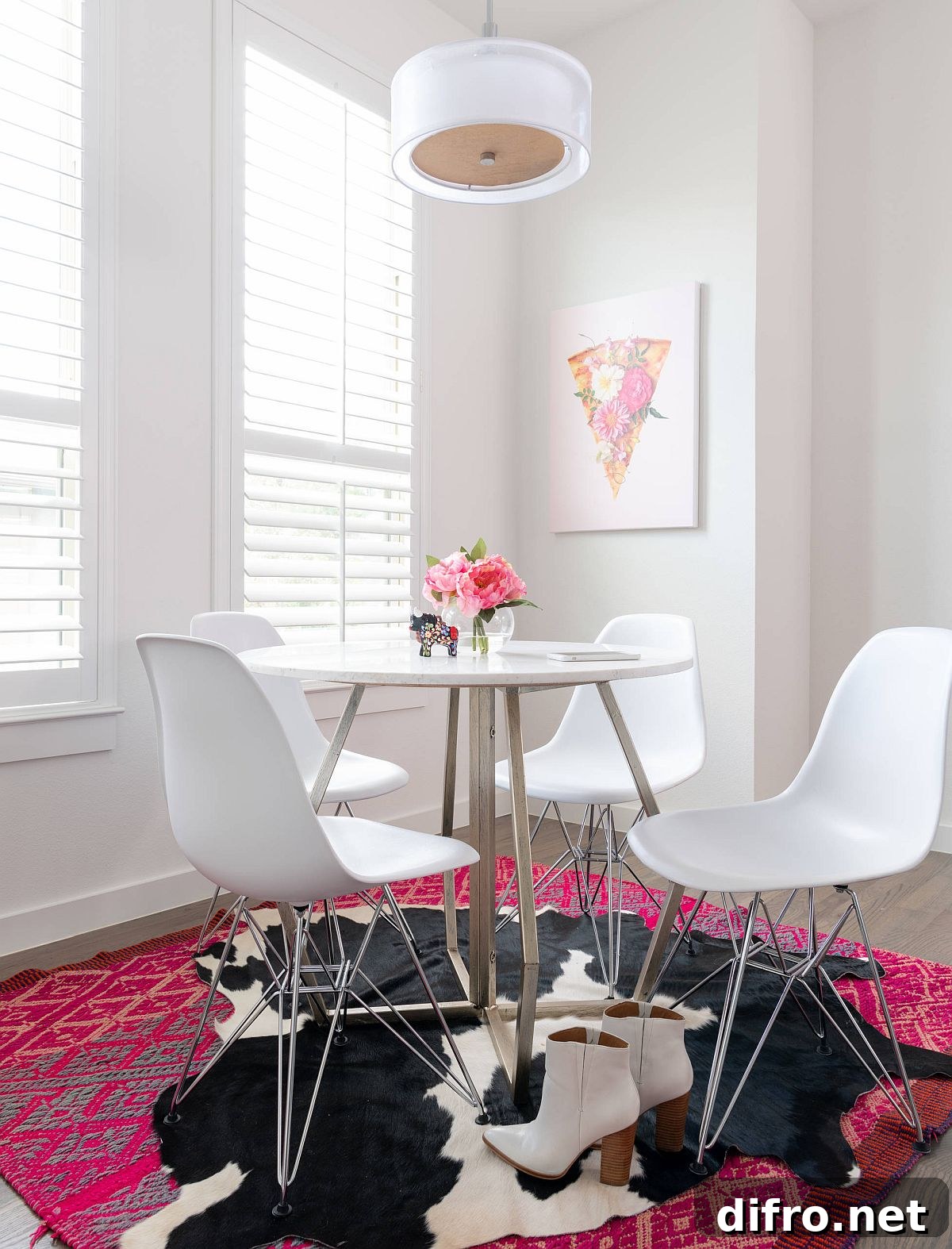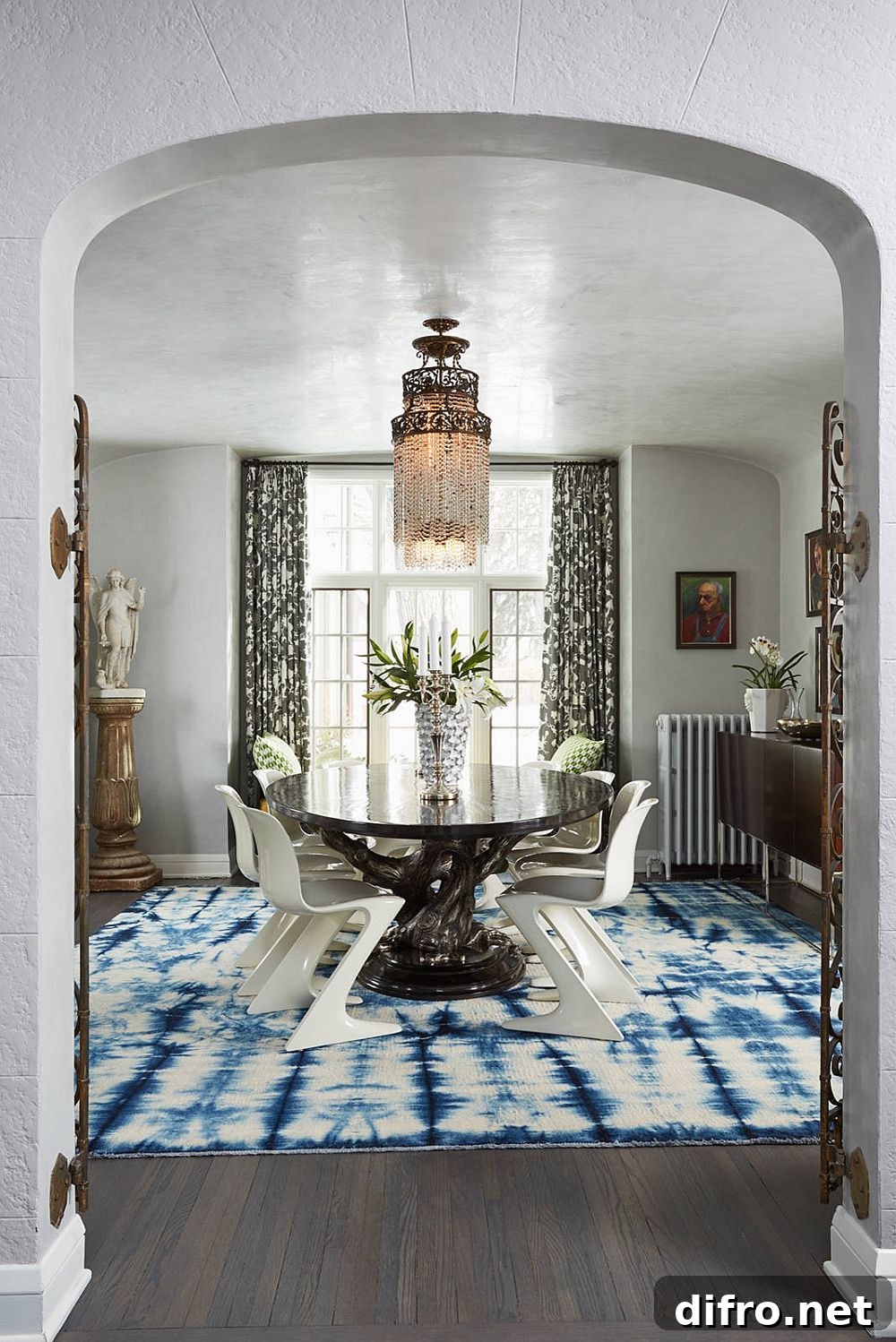
It’s no exaggeration to say that the formal, dedicated dining room is becoming less common. Many homeowners now favor an eat-in kitchen or an informal dining area, freeing up square footage for a guest room, home office, or an extra bedroom. This shift in layout also changes how we decorate. In open-plan homes, creating a distinct identity for the dining zone can be a challenge — one that a vibrant, colorful dining room rug handles with ease. A bright rug anchors the space visually, defines boundaries, and gives the dining area its own personality without the need for walls or partitions.
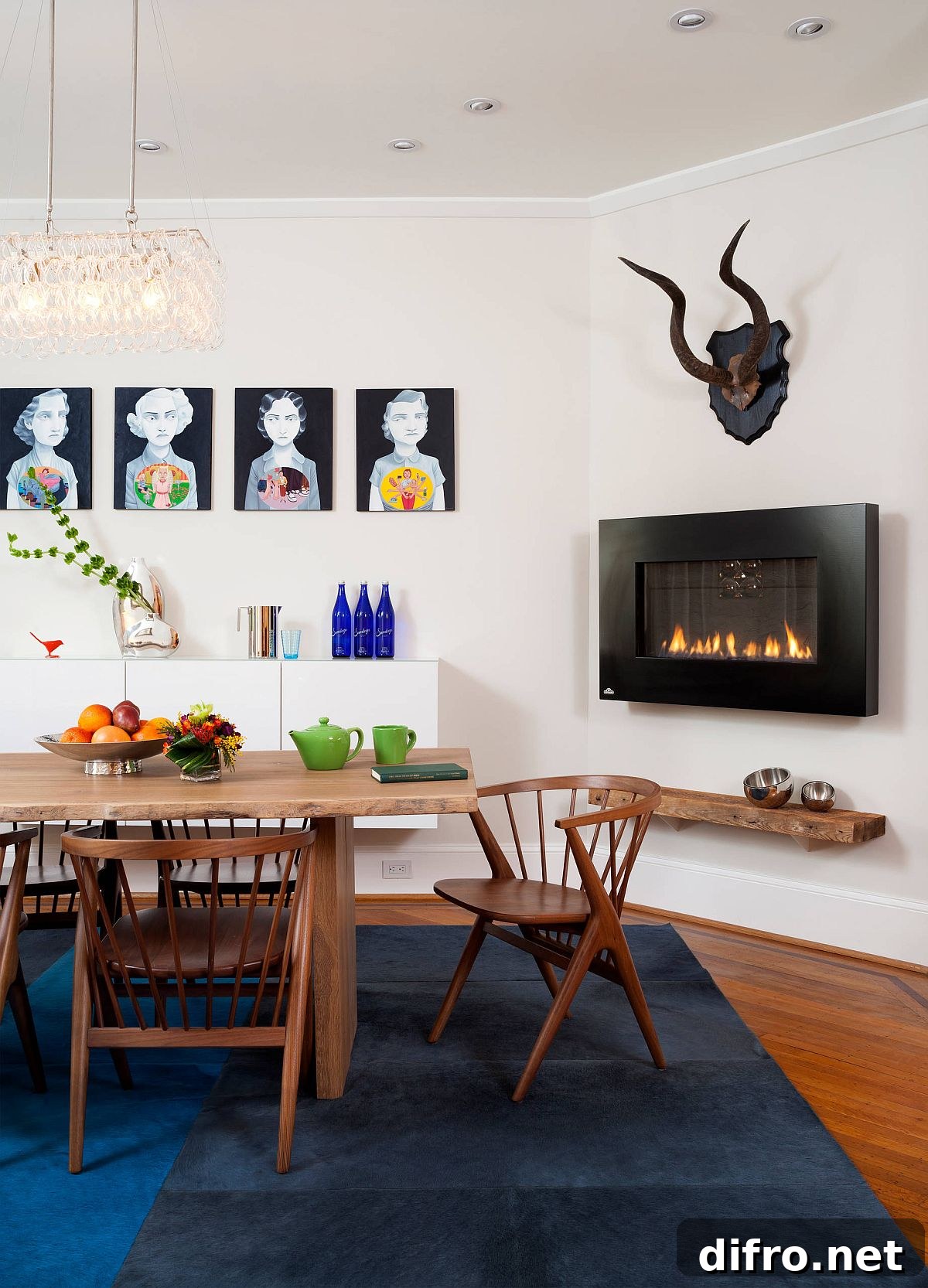
Bold, colorful rugs were a prominent trend in recent seasons because they do more than add color: they visually separate the dining area in an open plan and set the tone for the surrounding décor. While aesthetics are important, functionality matters just as much. Choose a rug that is easy to clean and maintain, durable under dining chairs, and sized so chairs remain on the rug when pulled back. Consider material and pile height — a low-pile rug or a flatweave is usually easier to keep clean in active dining zones.
Colorful Rugs Cutting Across Styles
A colorful rug can complement a broad range of interiors. Whether your home favors modern minimalism, rustic warmth, Scandinavian simplicity, or beachy casualness, a vibrant rug can tie the space together. In a neutral open-plan living area — whites, grays, natural wood, or concrete — a bright rug becomes the defining element for the dining nook. You can then coordinate chairs, lighting, and accessories around the rug’s palette. Repeat a key color in cushions, wall art, or ceramic vases to create a cohesive, curated look that feels intentional rather than accidental.
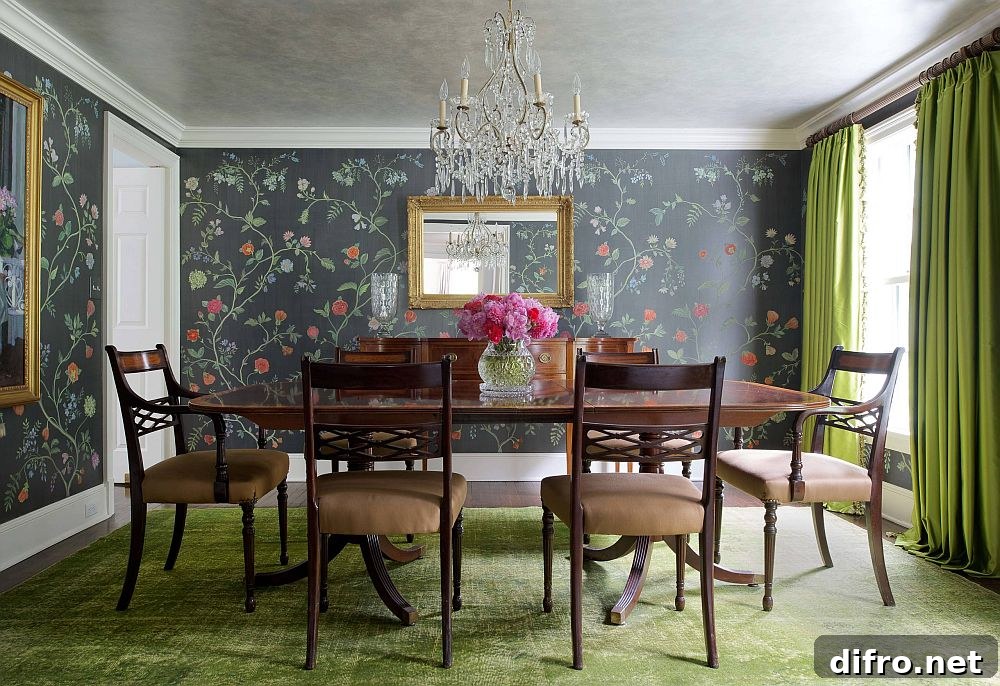
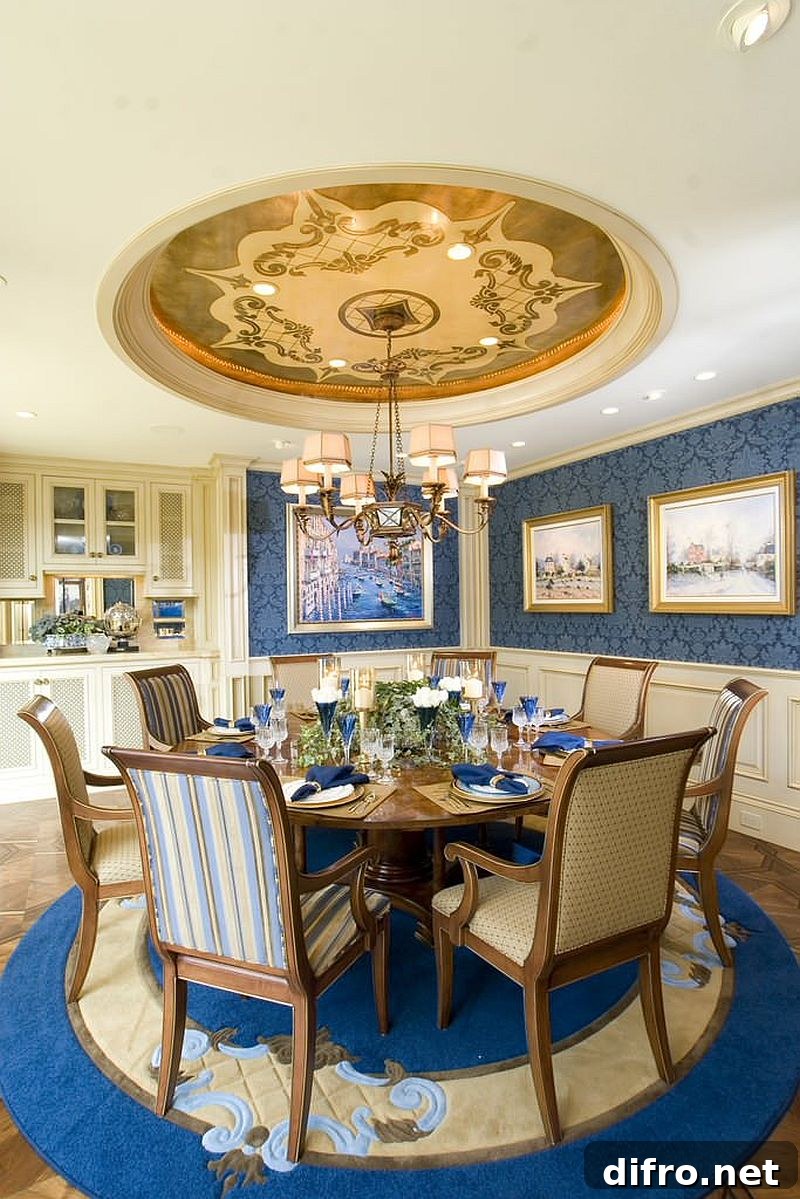
For the Neutral Dining Space
Neutral dining rooms — common in contemporary, Scandinavian, and coastal interiors — are ideal canvases for a colorful rug. Against muted walls and natural textures, a vibrant rug immediately elevates the room. Purple in its many shades can add depth and a hint of luxury; pink tones introduce a soft, feminine touch suitable for shabby-chic or eclectic spaces; and various blues remain a natural fit for beach-inspired or relaxed schemes. Bright yellows and oranges can bring energy and warmth, especially in rooms that lack natural light.
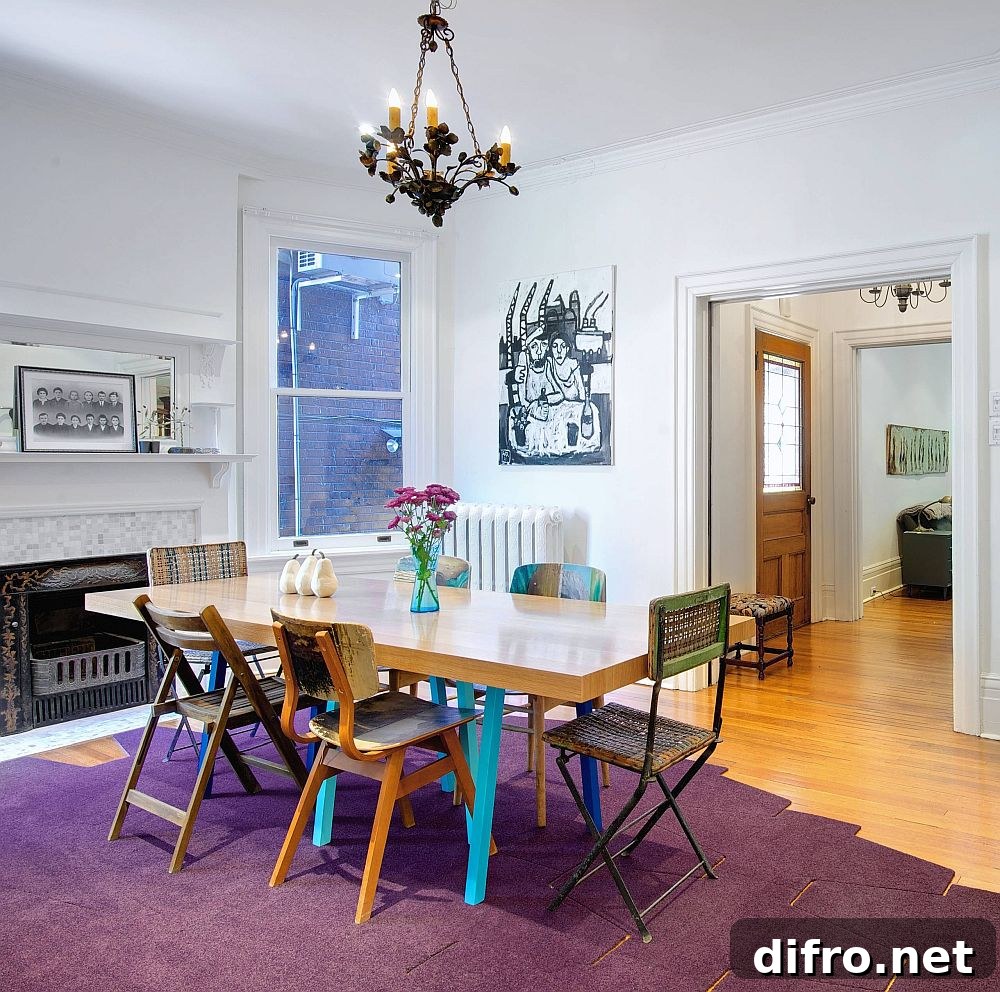
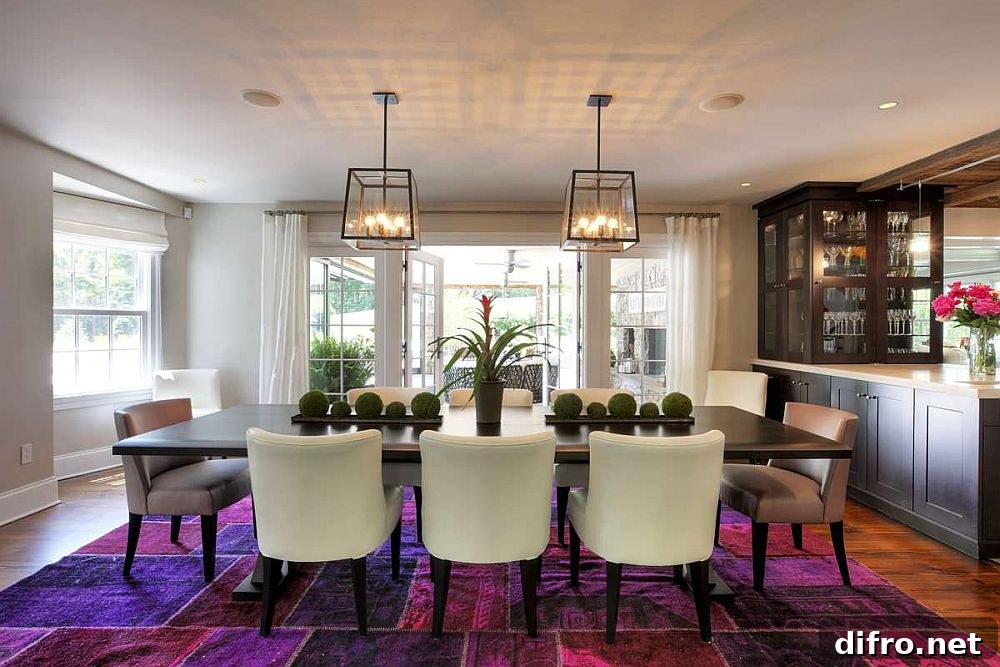
Pattern Along with Color
Colorful rugs don’t have to be solid blocks of hue. Patterned rugs can introduce texture, rhythm, and personality. Striped rugs with multiple colors create a playful, contemporary feel, while wider stripes read as more refined and modern. Geometric patterns and chequered mats complement farmhouse and modern-farmhouse interiors, while eclectic or boldly patterned rugs make a strong statement in compact dining spaces. Traditional Persian or oriental rugs, when chosen carefully, can also work in dining areas — they add intricacy and a sense of history, but require more care and may be best in less spill-prone settings.
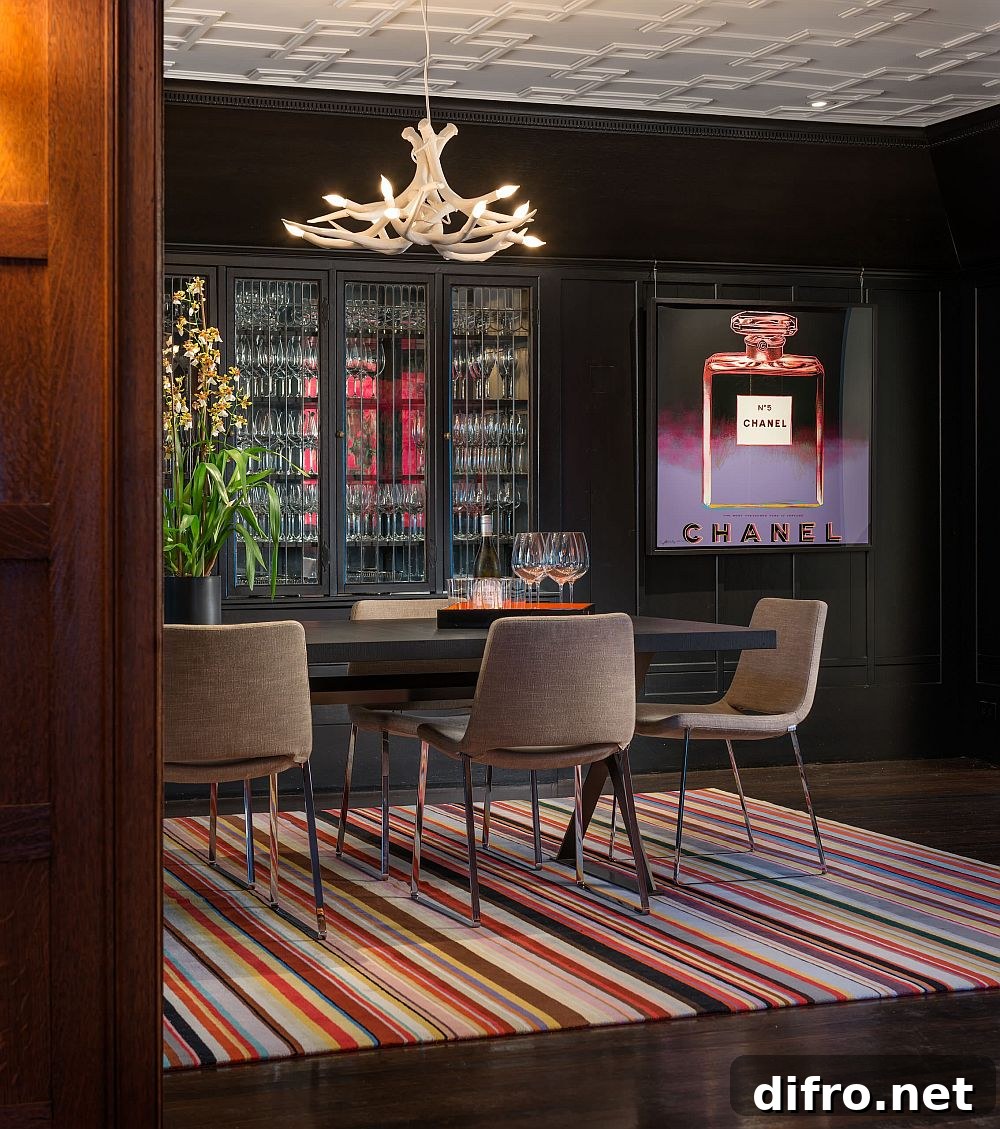
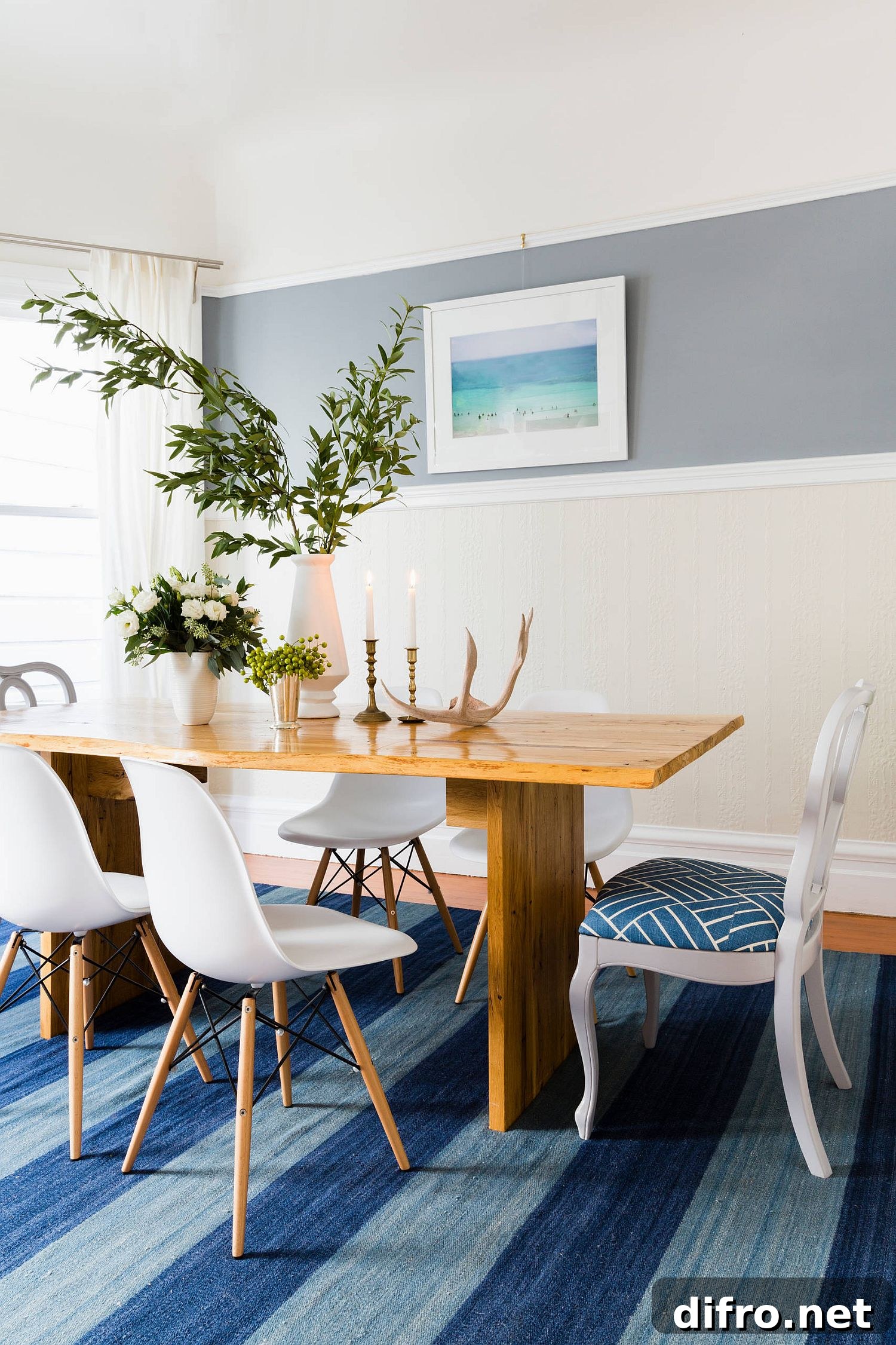
When selecting a colorful dining room rug, consider scale and placement first: a rug should be proportionate to your table and large enough that chairs remain on it when in use. Think about maintenance — low-pile, flatweave, or synthetic blends often handle spills and heavy use better than delicate hand-knotted pieces. Finally, select a color and pattern that complements your lifestyle and the surrounding décor: a rug can be a bold centerpiece or a subtle thread that pulls the room together. With the right choice, a colorful dining room rug transforms an amorphous corner of an open plan into a defined, inviting dining space.