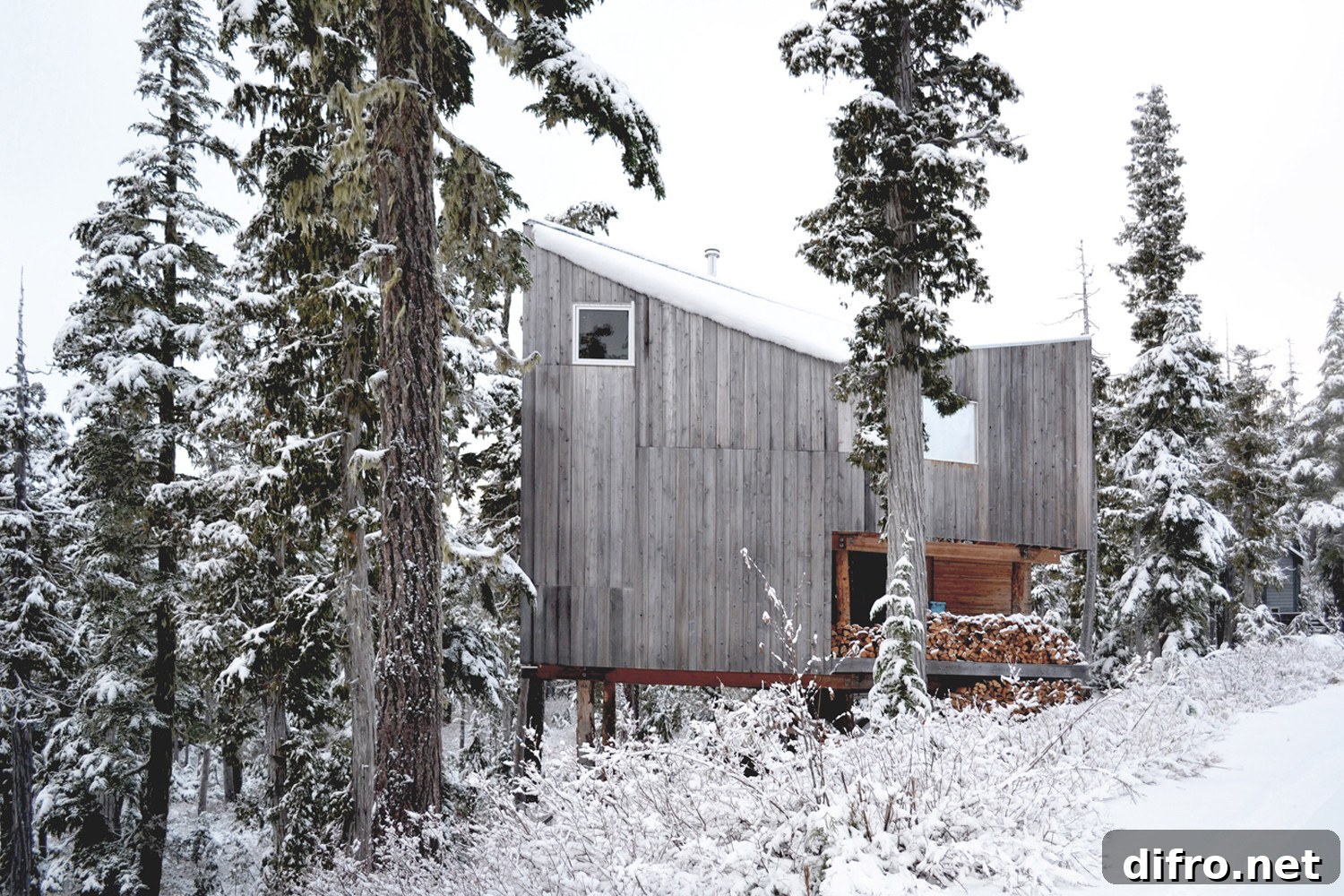
As the season turns and thoughts drift toward winter getaways, the small Alpine Cabin on Vancouver Island stands out as a quietly perfect escape. Tucked into ski country near Port Hardy and designed by Scott & Scott Architects, this compact retreat is a study in restraint: simple, robust materials and generous views combine to create a warm, calming base for enjoying legendary powder and the surrounding alpine landscape.
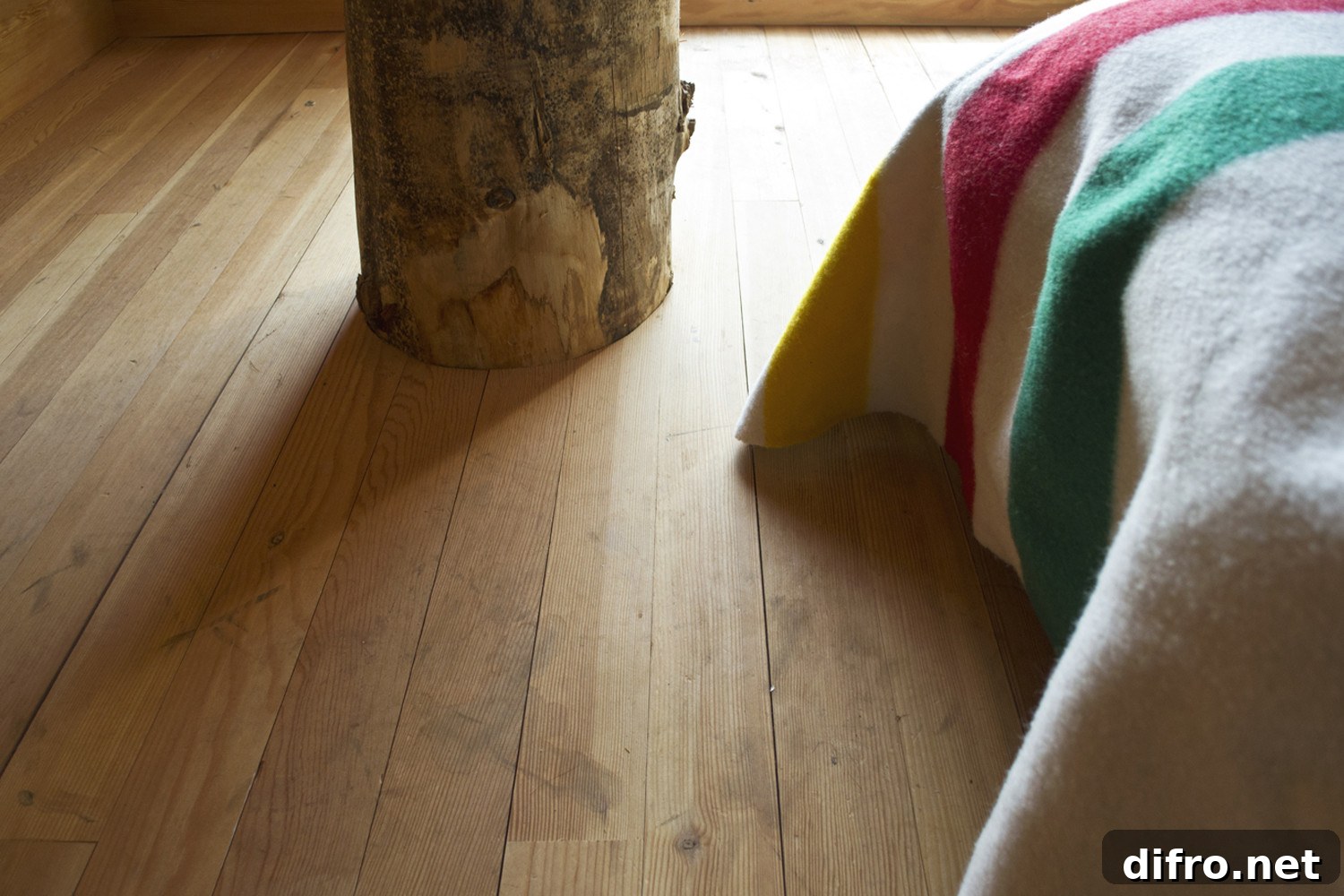
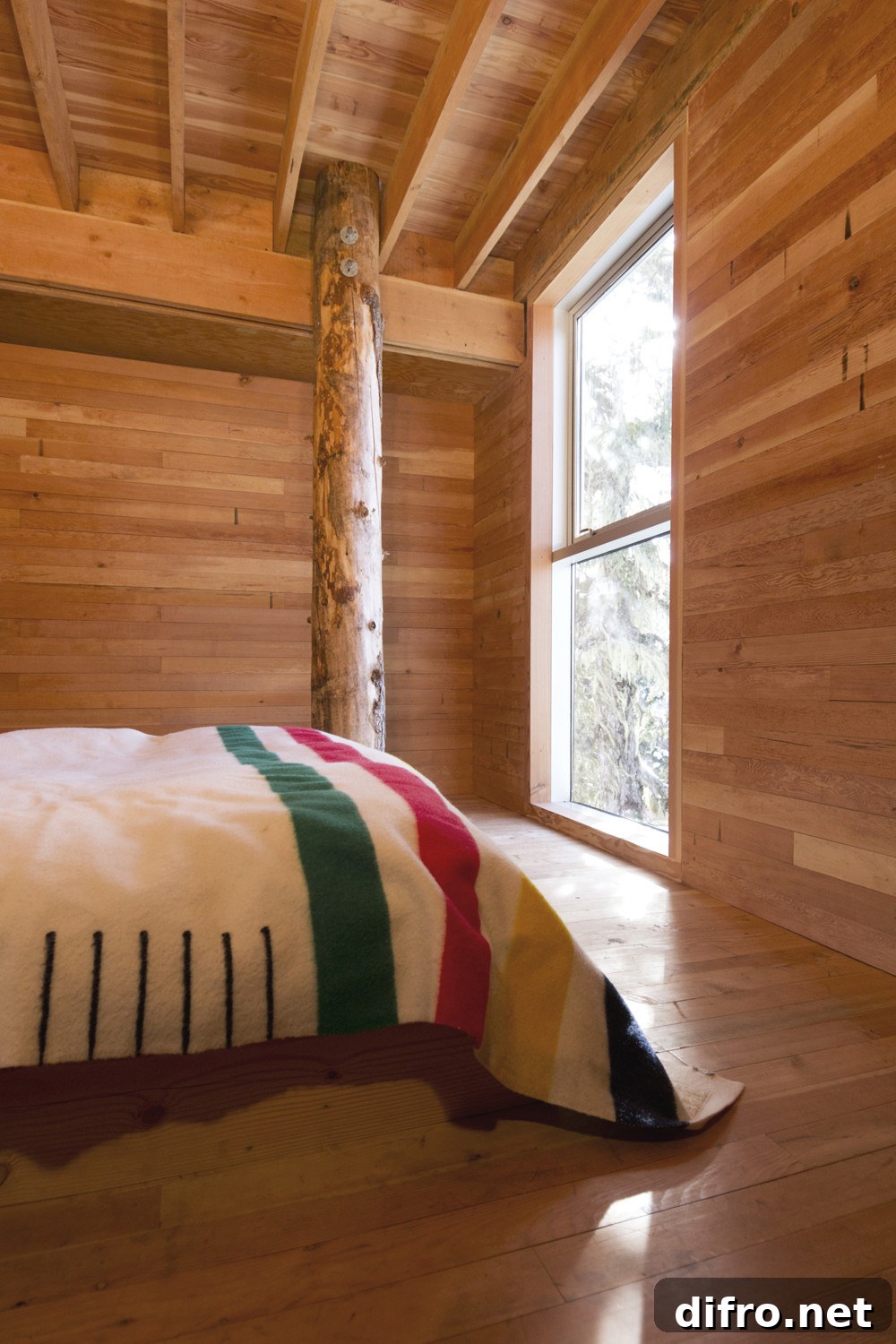
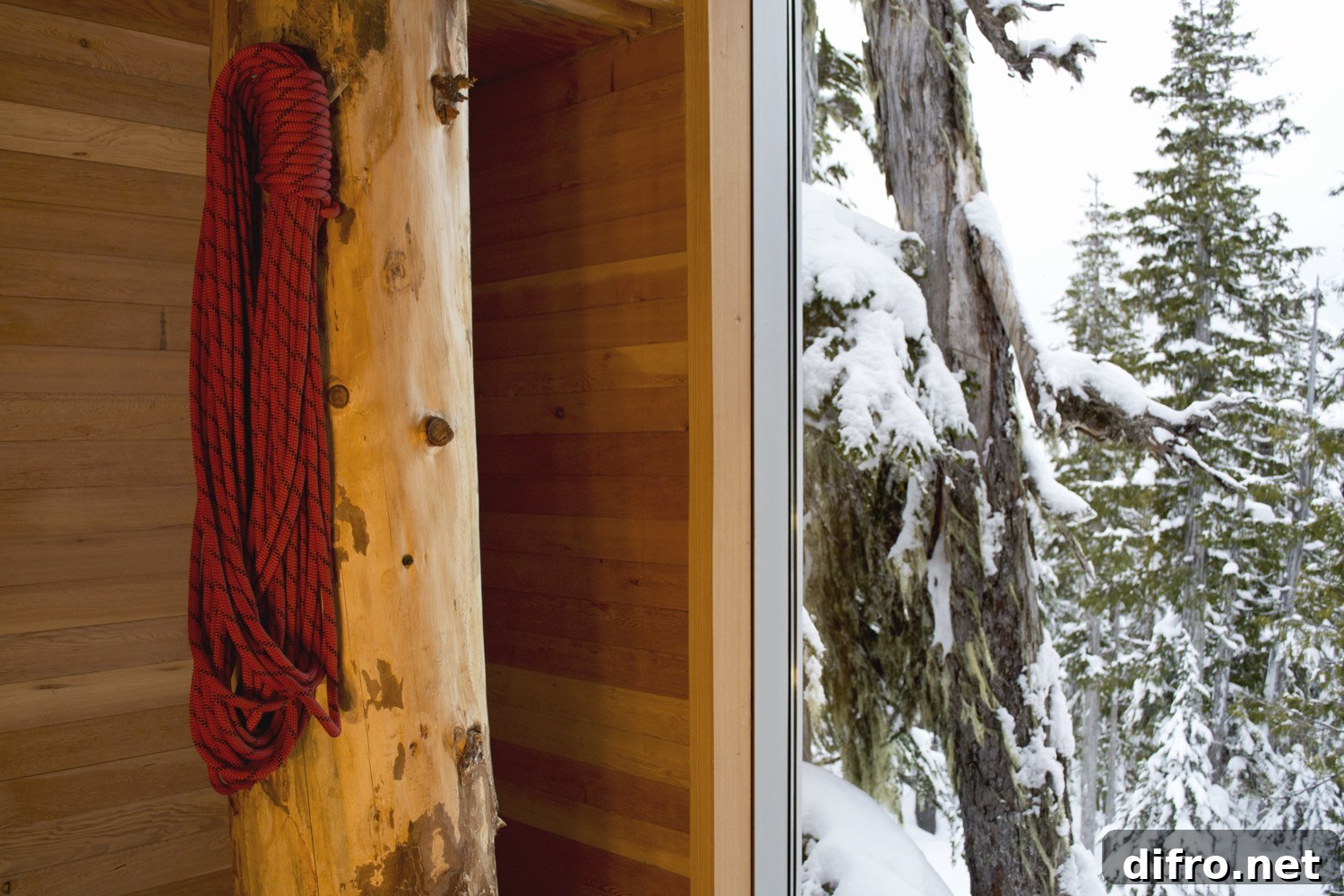
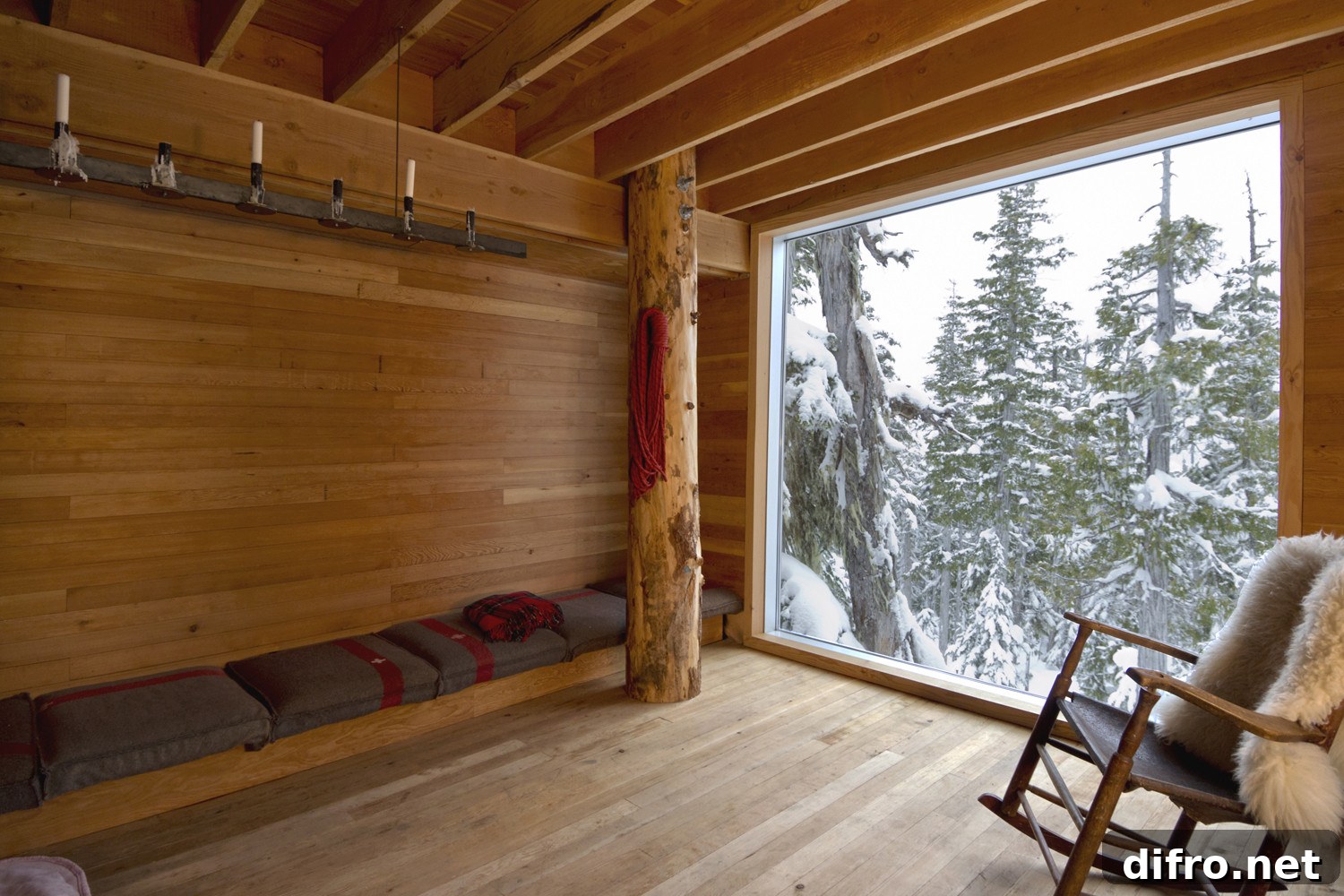
The architecture embraces exposed wood as both structure and finish. Rough-sawn fir boards, planed fir interior surfaces and stout Douglas fir columns create a tactile, cohesive interior that feels both rugged and refined. Rooms are intentionally uncluttered so every opening becomes a frame for the views: living areas and sleeping spaces alike offer direct sightlines to the slopes and forest beyond.
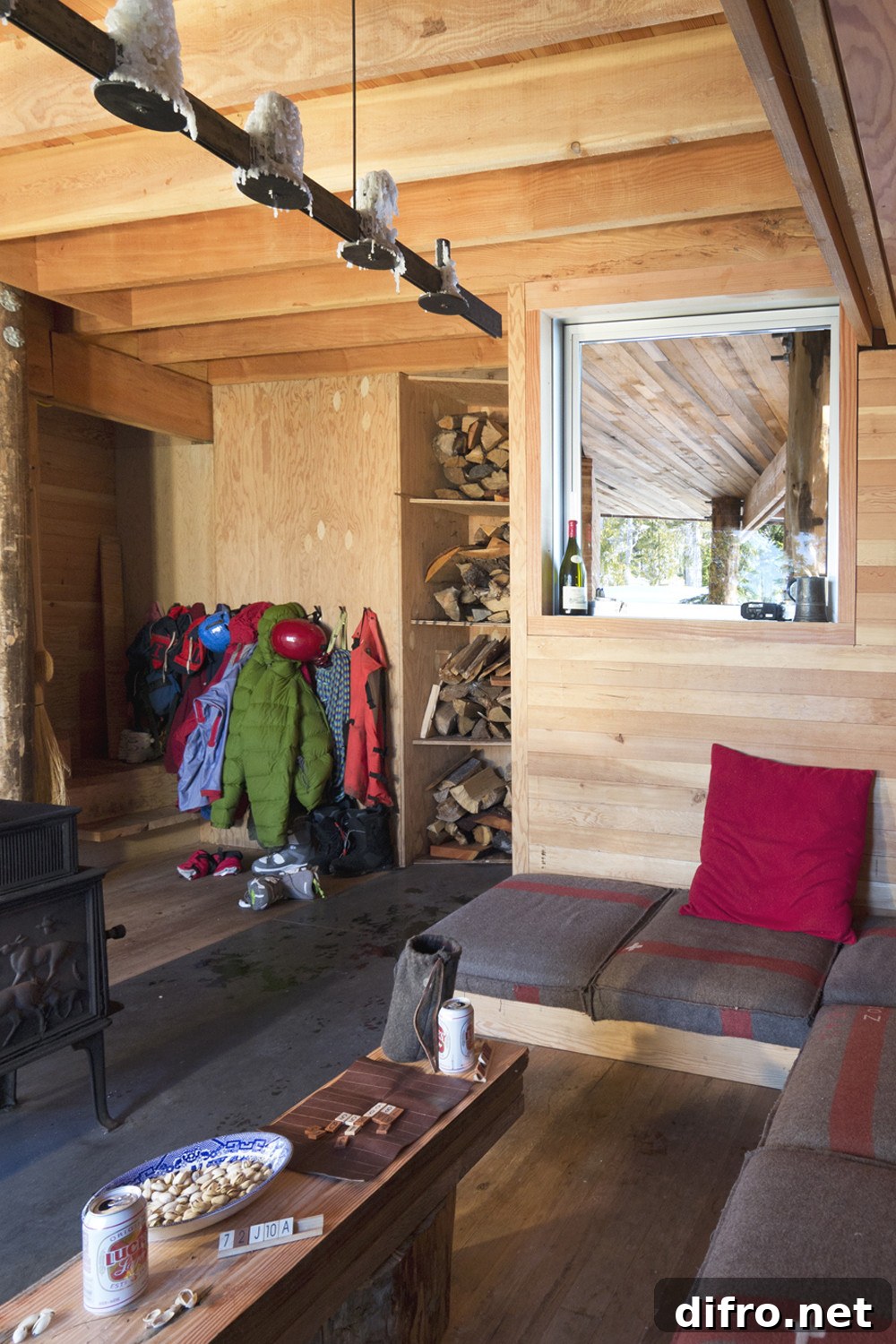
Though the exterior landscape can be severe, the cabin maintains a welcoming warmth. A wood stove provides primary heat and contributes to the cozy atmosphere that defines this type of ski outpost. Water is drawn from a nearby source and heated on demand, and the building’s modest size and systems keep its environmental footprint low. The result is a cabin that feels sustainably minded without sacrificing comfort.
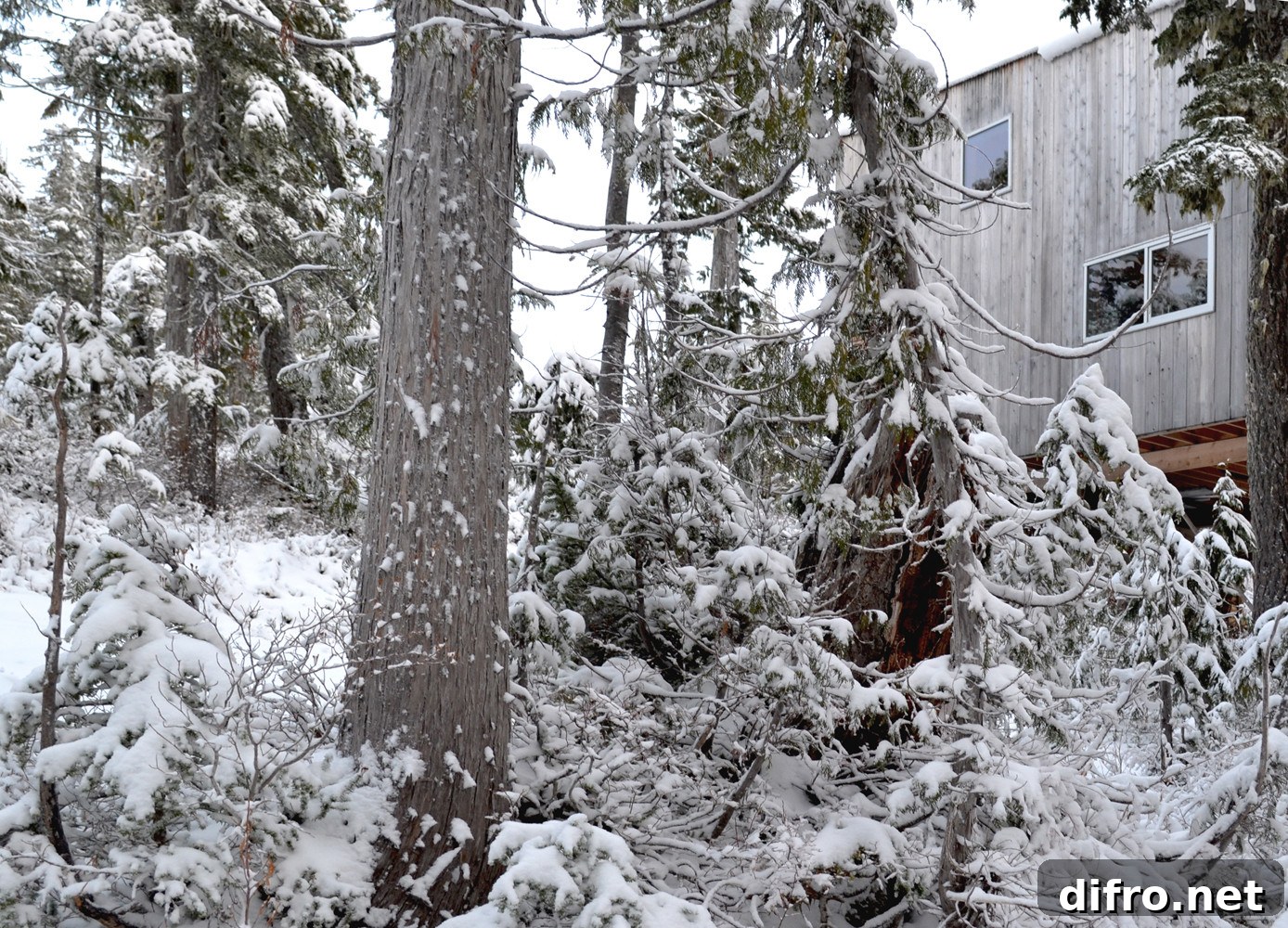
Positioned within a community-operated alpine recreation area, the site enjoys abundant snowfall. The location receives substantial annual accumulation that creates excellent powder conditions for skiers and snowboarders. At roughly 1,300 meters above sea level, the cabin is reachable by gravel road for about five months each year; in other seasons, supplies and materials are moved to the site by toboggan. These seasonal access patterns influence both construction decisions and how the cabin is used throughout the year.
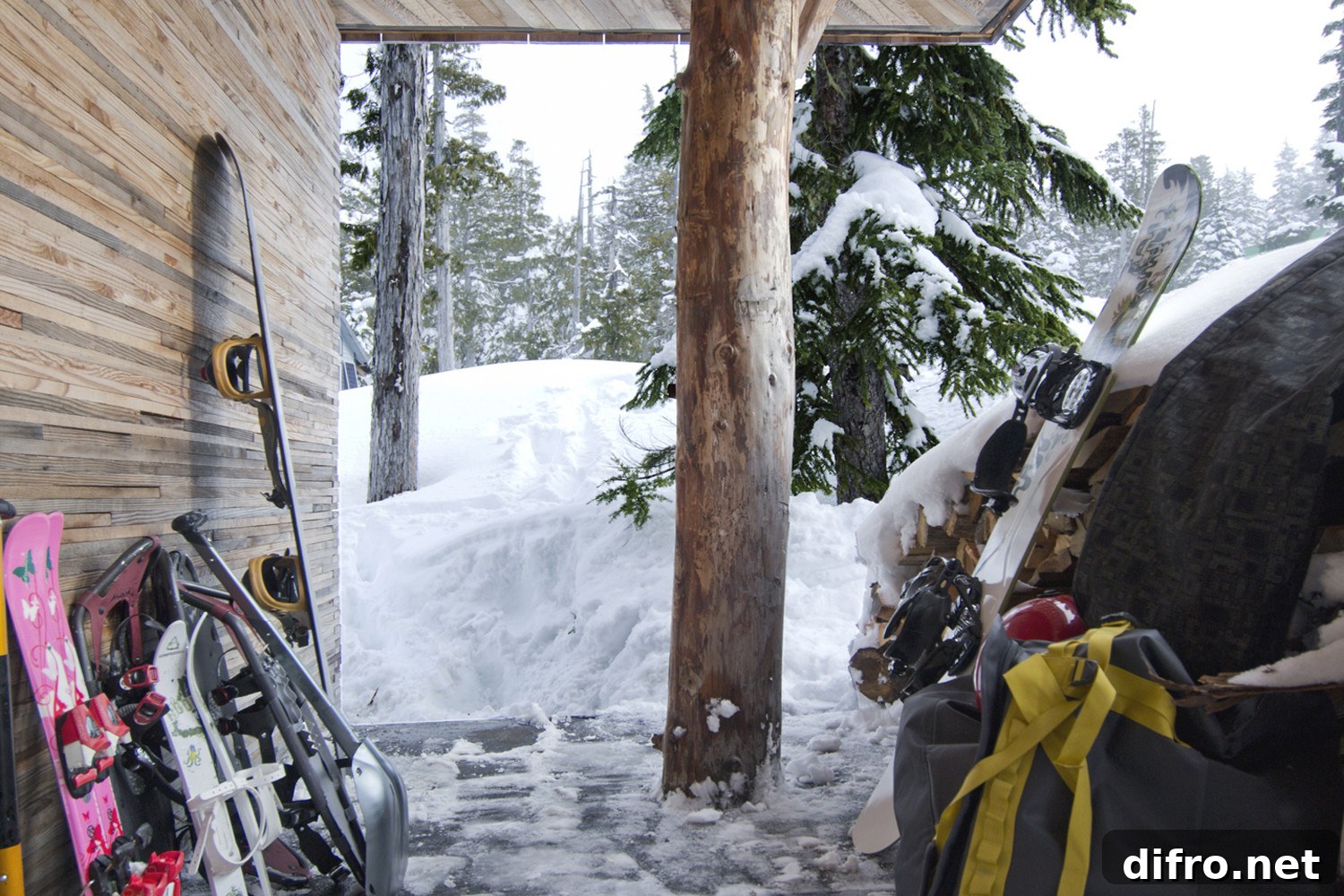
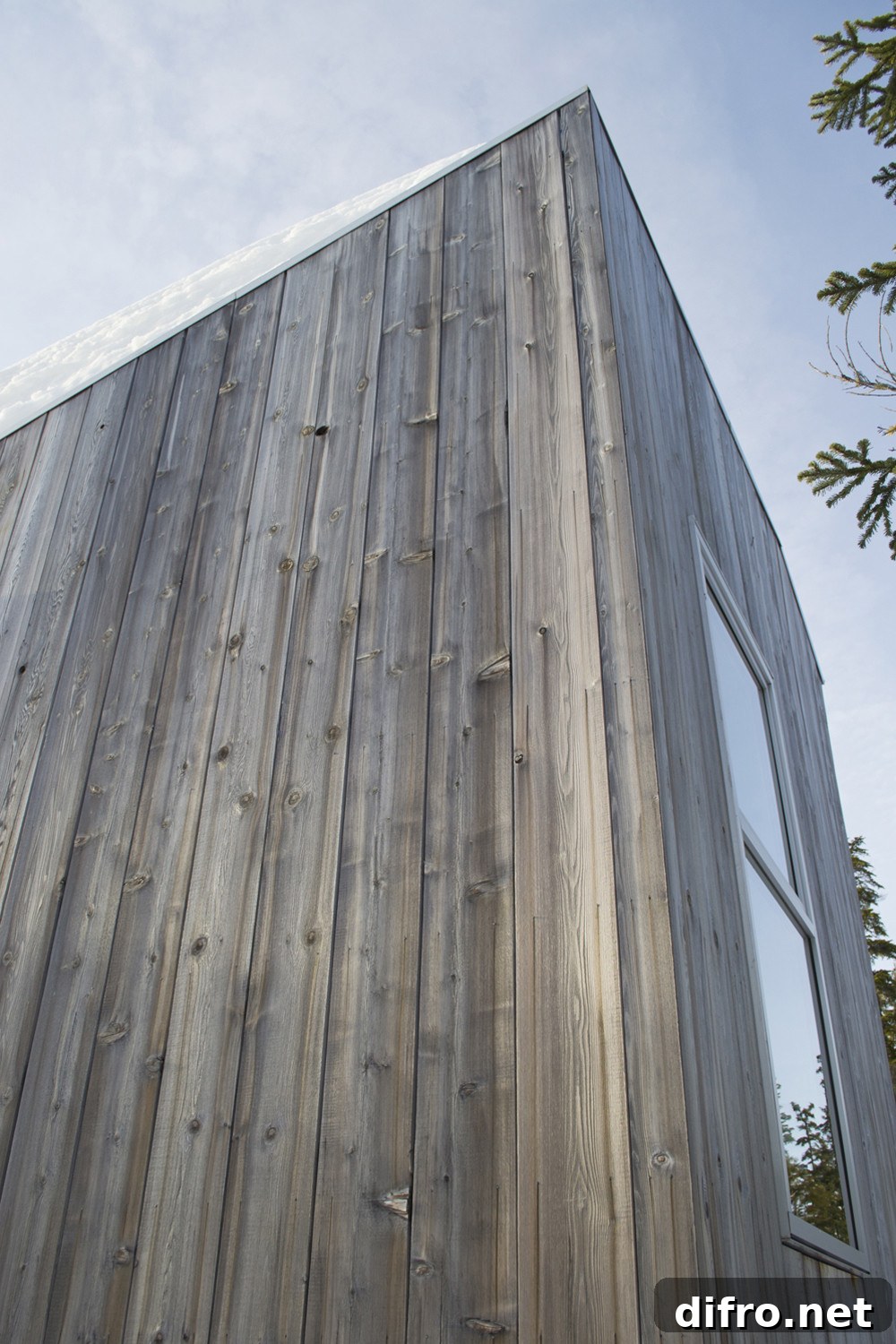
Inside, the architectural language stays consistent: exposed timber beams, simple joinery and natural finishes reinforce a sense of place. The bedroom looks out over the snowy slopes, and the living room’s large windows make the surrounding terrain part of the interior experience. Materials are chosen for durability and warmth—cedar cladding on the exterior reads as both cozy and resilient against the mountain elements.
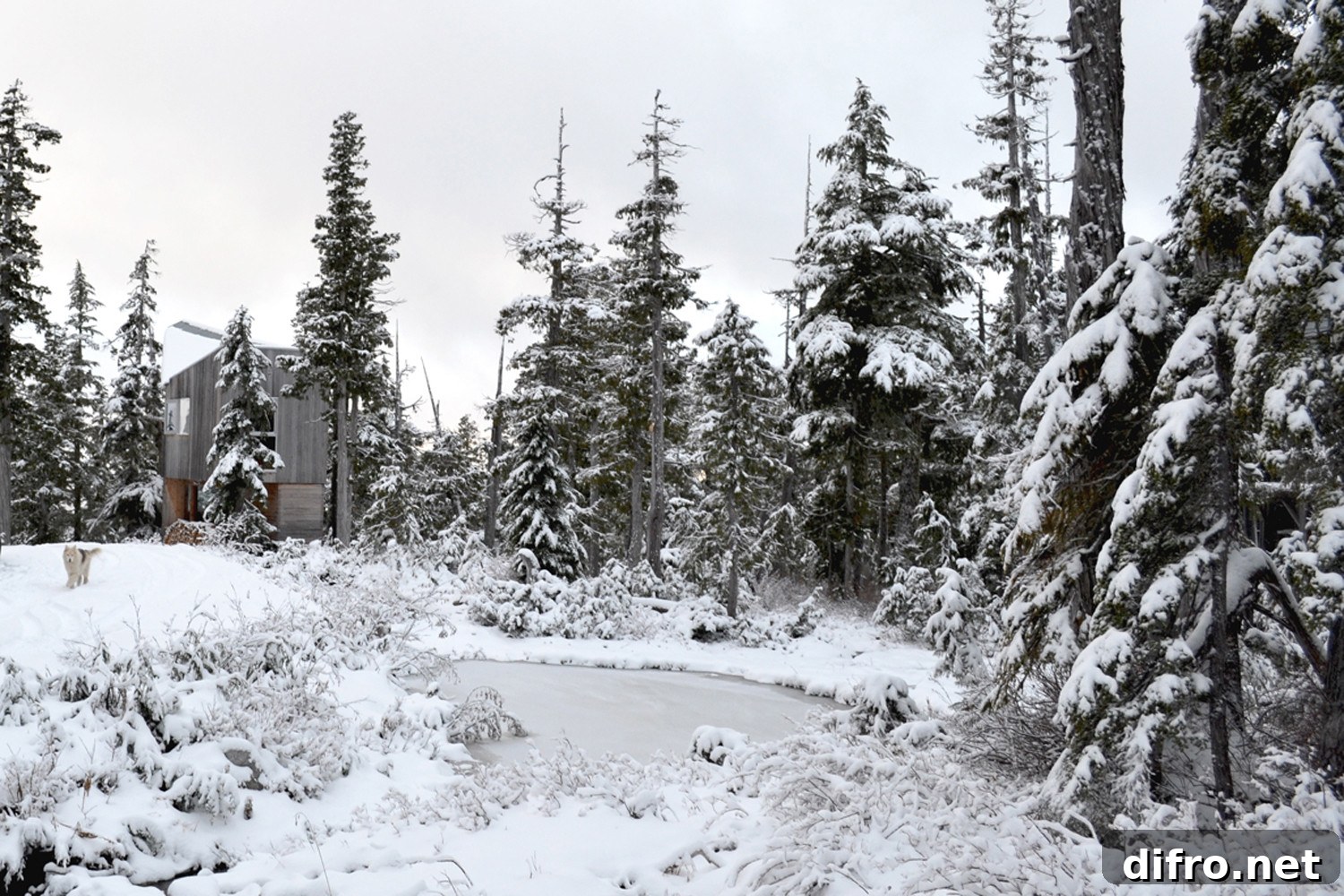
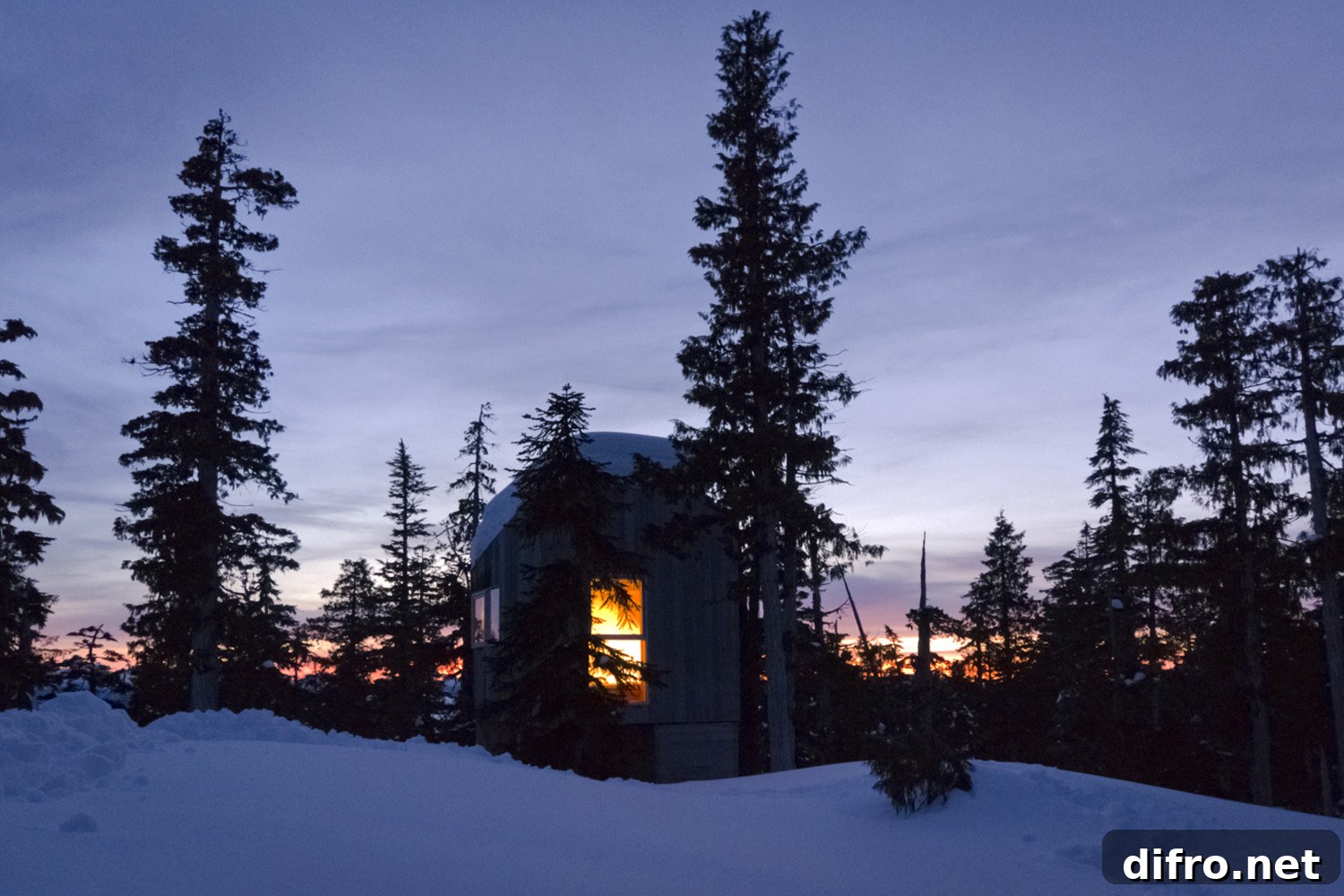
The cabin sits in a community-run alpine recreation area that receives around 1,500 cm of snow annually, creating legendary powder conditions. Located at approximately 1,300 m elevation, it is accessible by gravel road for roughly five months of the year; during the other months, materials are transported to the site by toboggan.
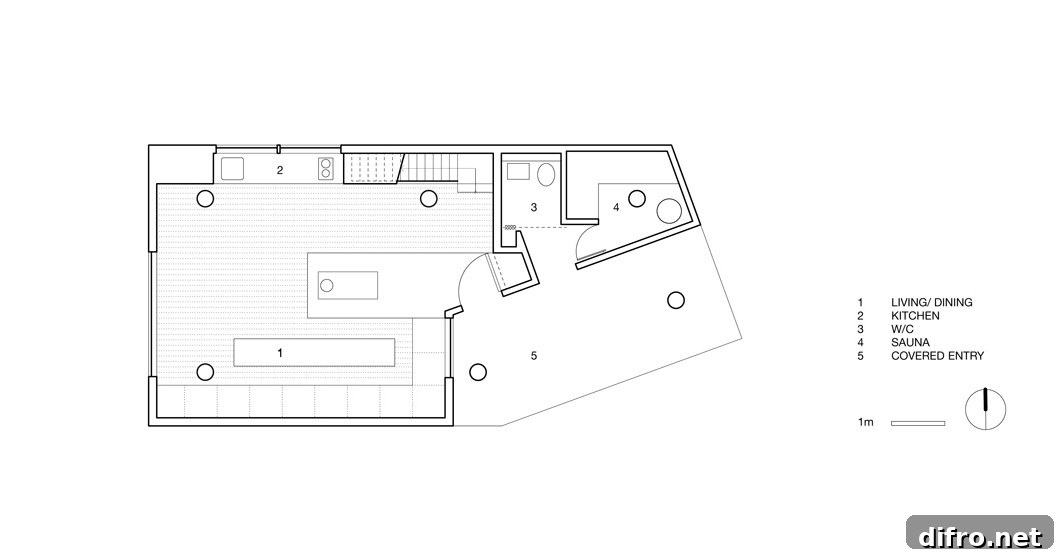
Photographs included here show the cabin’s simple ground-level floor plan, the warmth of wood finishes, the exposed Douglas fir columns and the cedar-clad exterior. Together, these elements form a coherent design that responds to climate, terrain and seasonal access while emphasizing comfort and a strong connection to the natural setting.
This Alpine Cabin exemplifies how modest scale, thoughtful material choices and careful siting can create a meaningful connection to a dramatic winter landscape. Whether used as a simple ski base or a quiet retreat to enjoy snow-draped forests and alpine light, the project demonstrates how architecture can respond elegantly to climate, terrain and community-managed recreation resources.