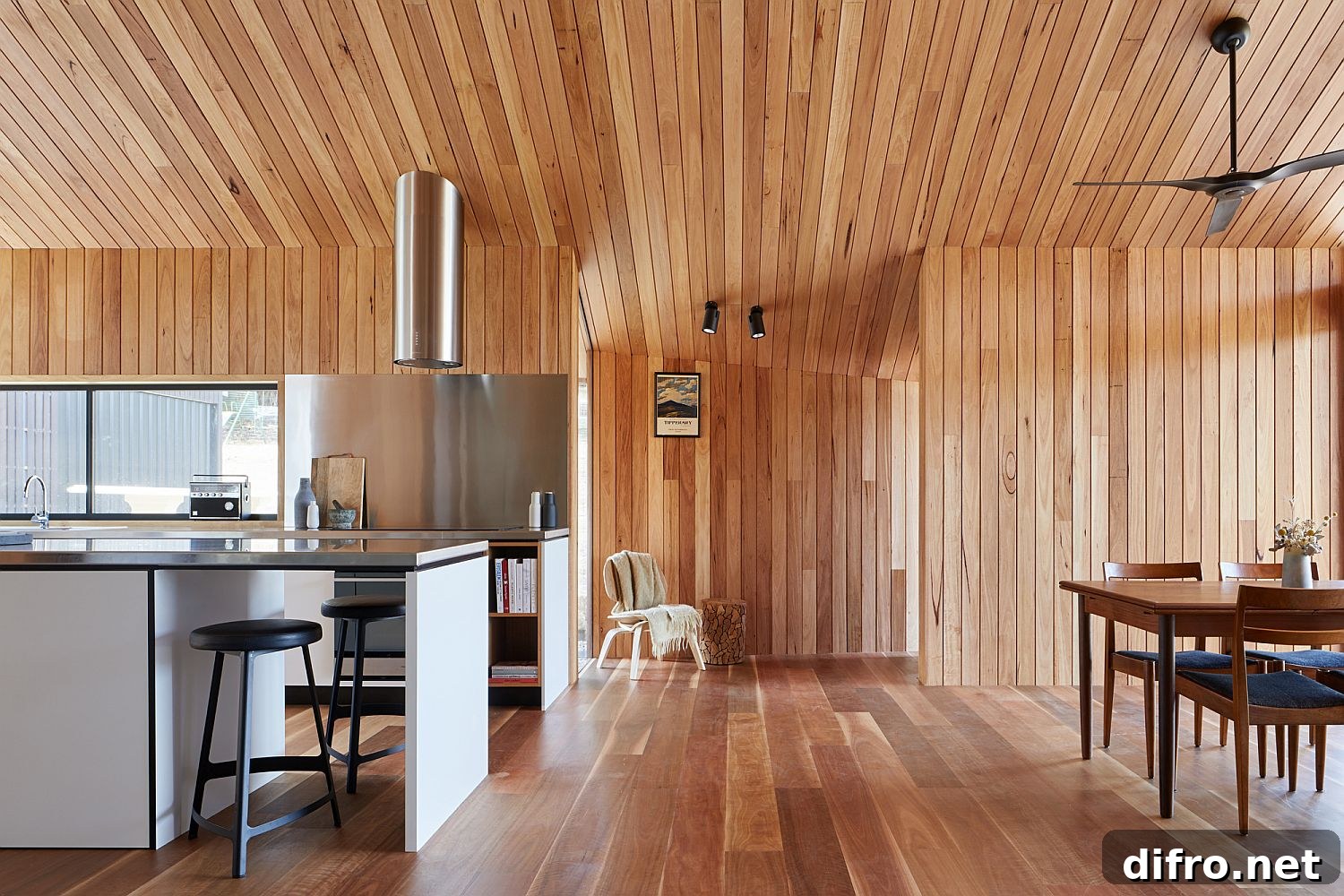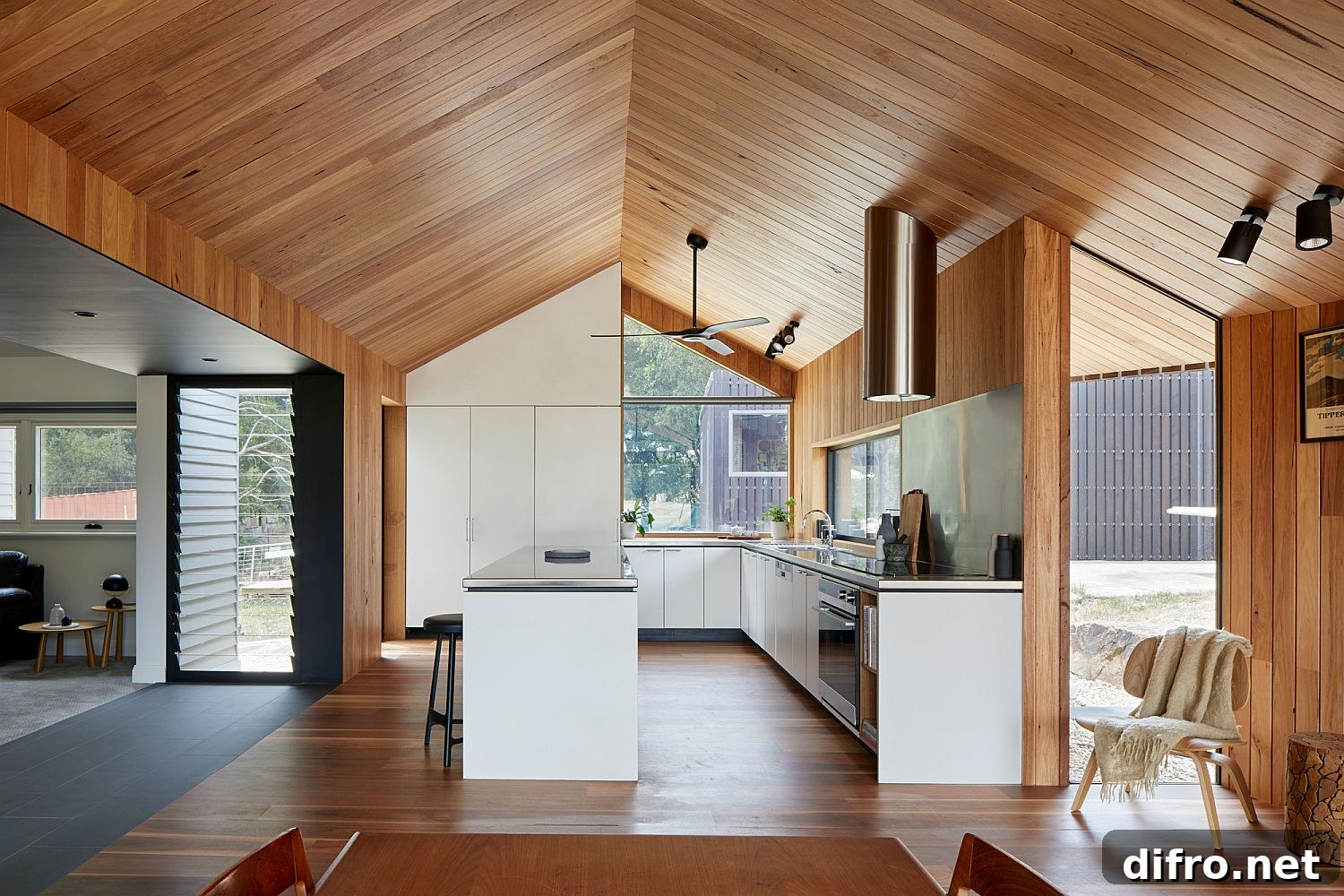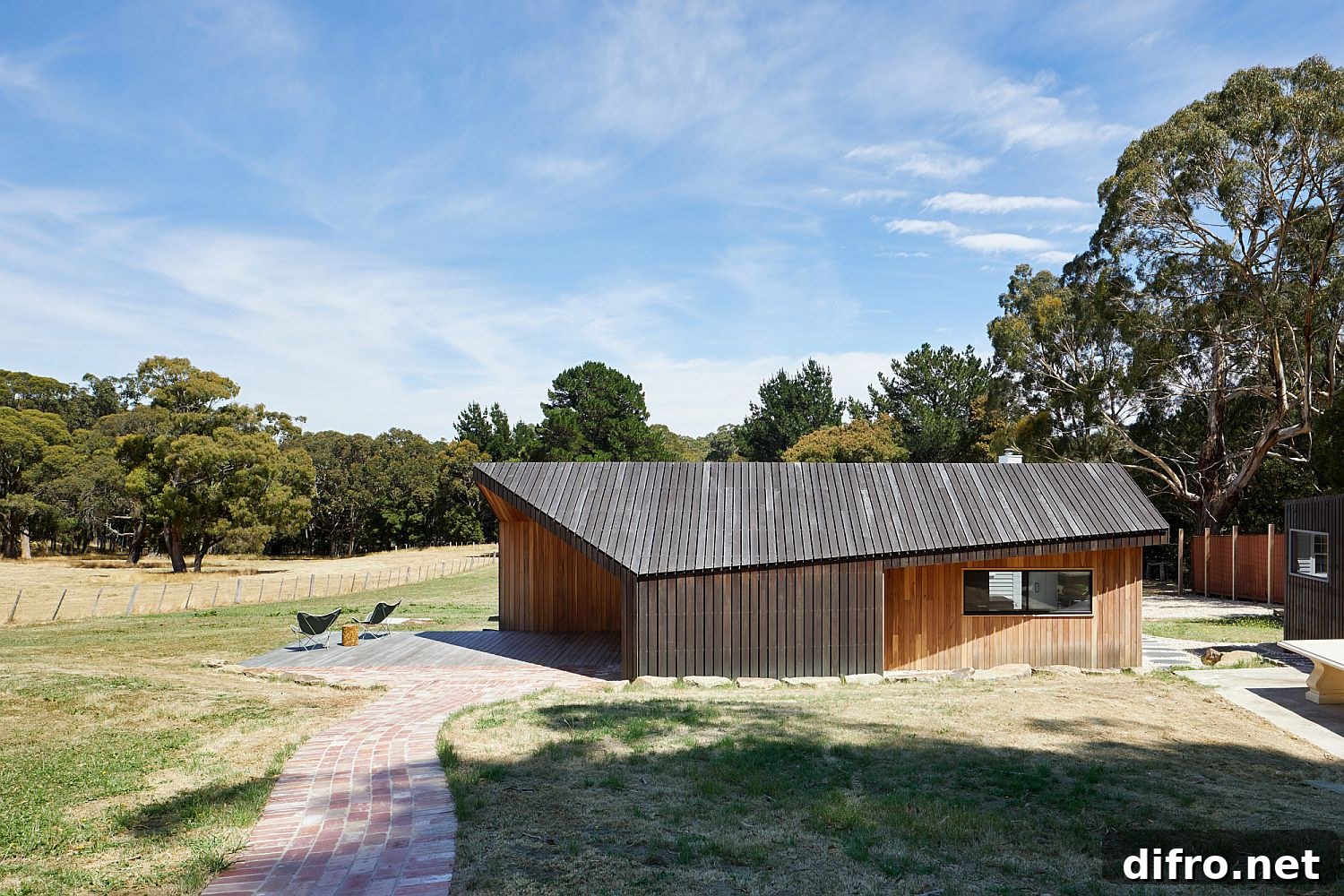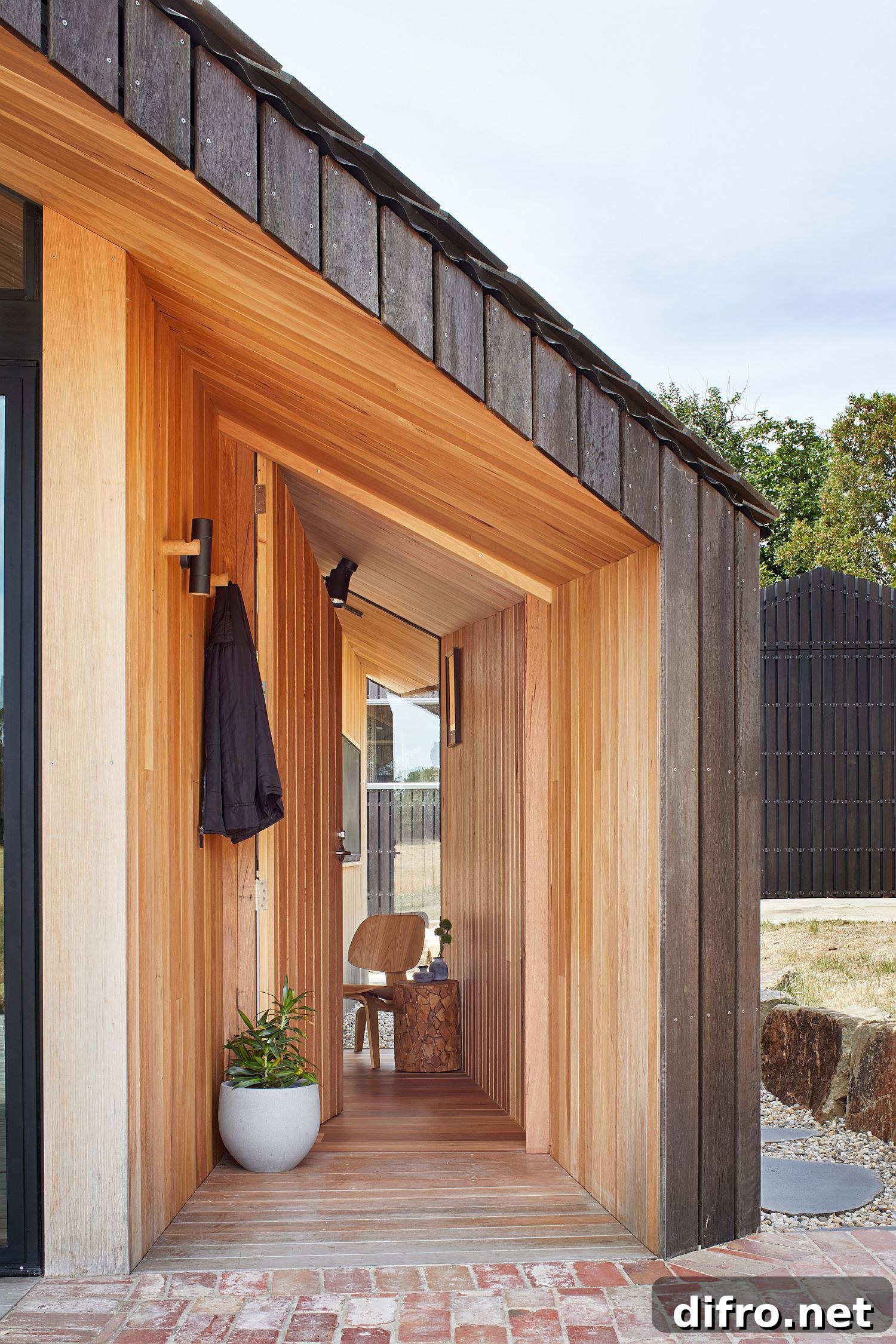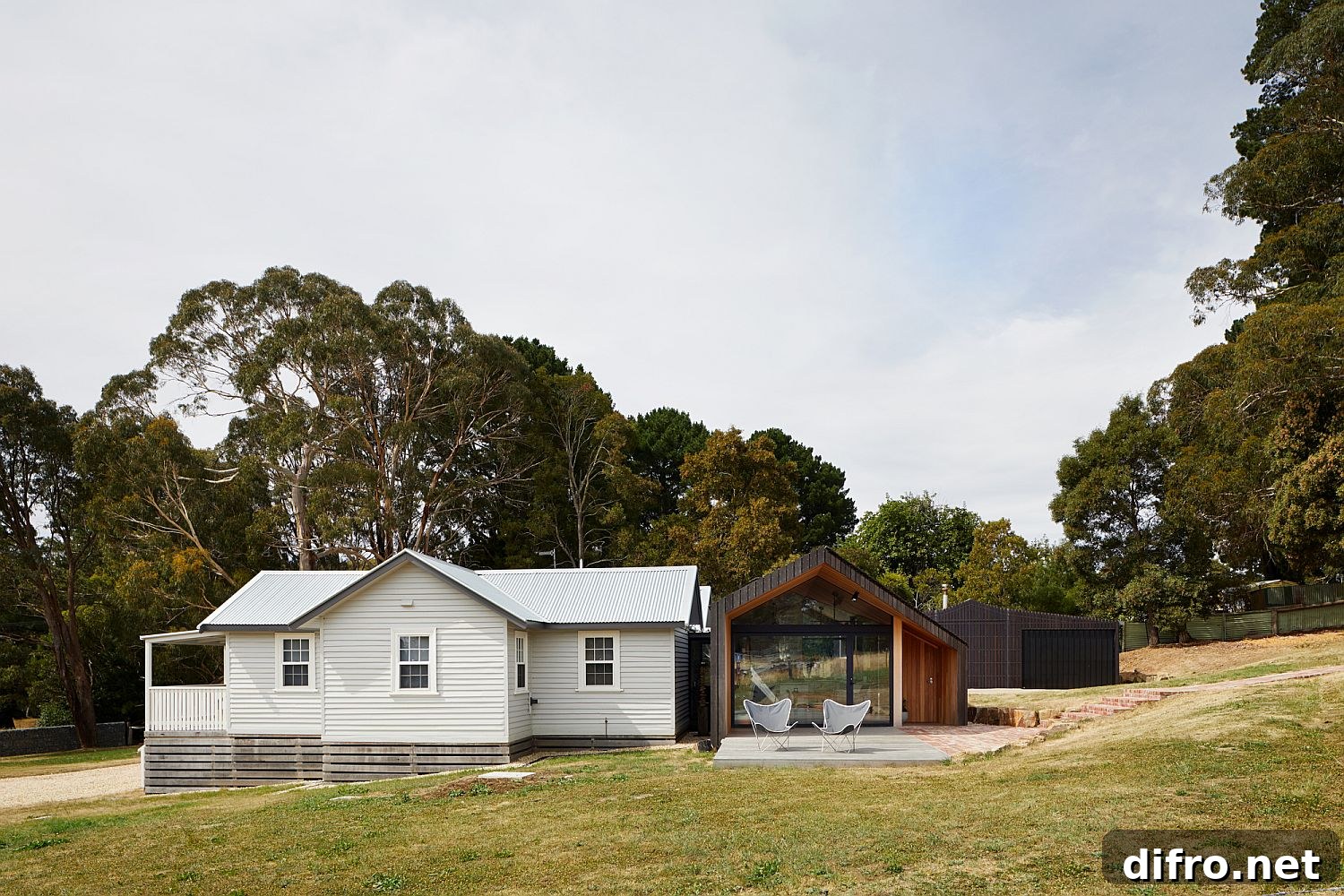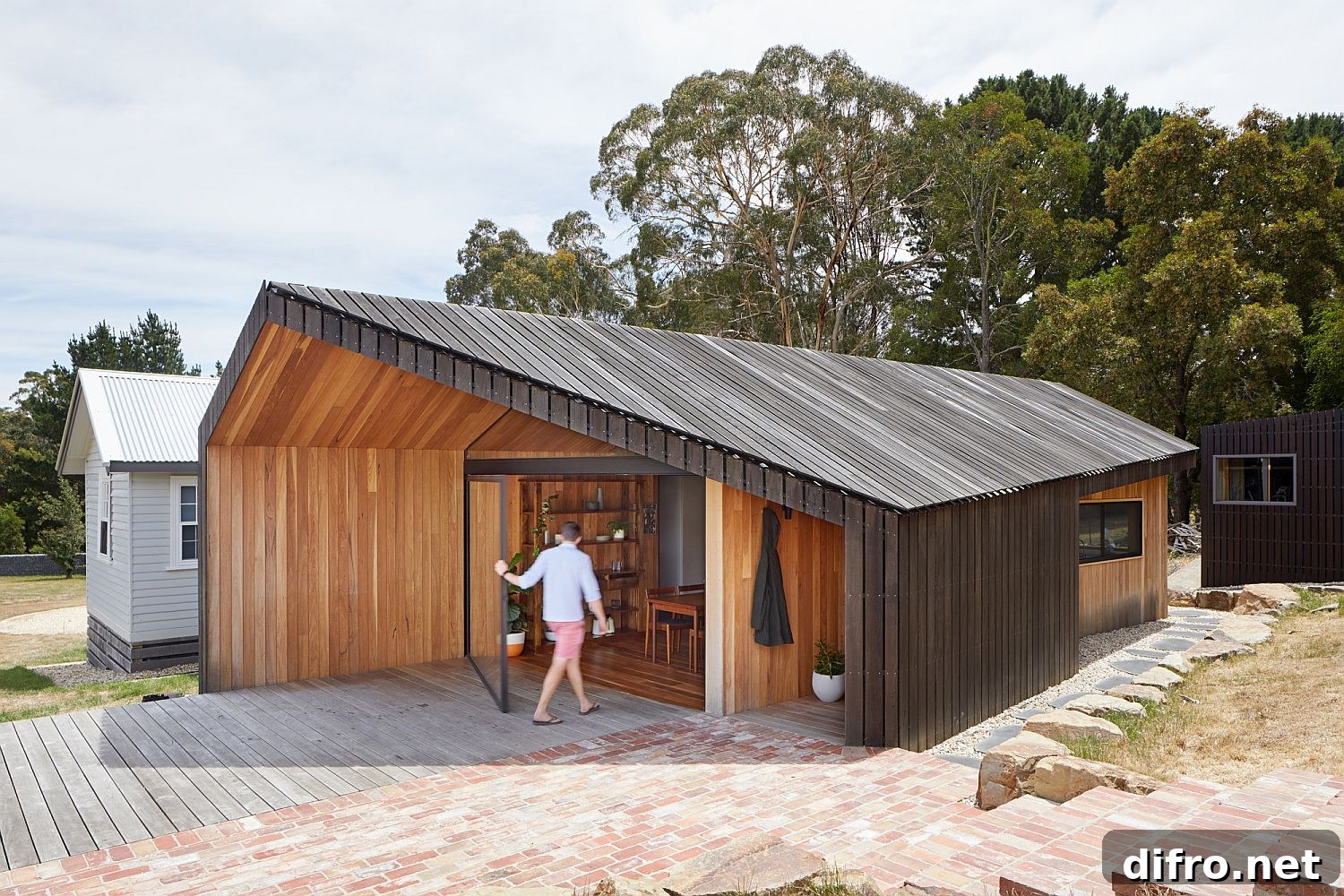
An historic house that turns its back on the landscape around it is a familiar story. At Limerick House in Eganstown, Australia, a carefully considered extension reverses that pattern. The new addition respects the scale and rhythm of the original Victorian residence while opening the interior to wide rural views. Its gabled roof and proportions reflect the existing home and its three separate blocks, creating a cohesive new whole that reads as both contemporary and sympathetic to the original architecture. The extension’s exterior is clad in black-stained spotted gum decking boards, while lighter silver oak and silvertop ash lining boards warm the interior, creating a contrast that emphasizes the transition from outside to in.
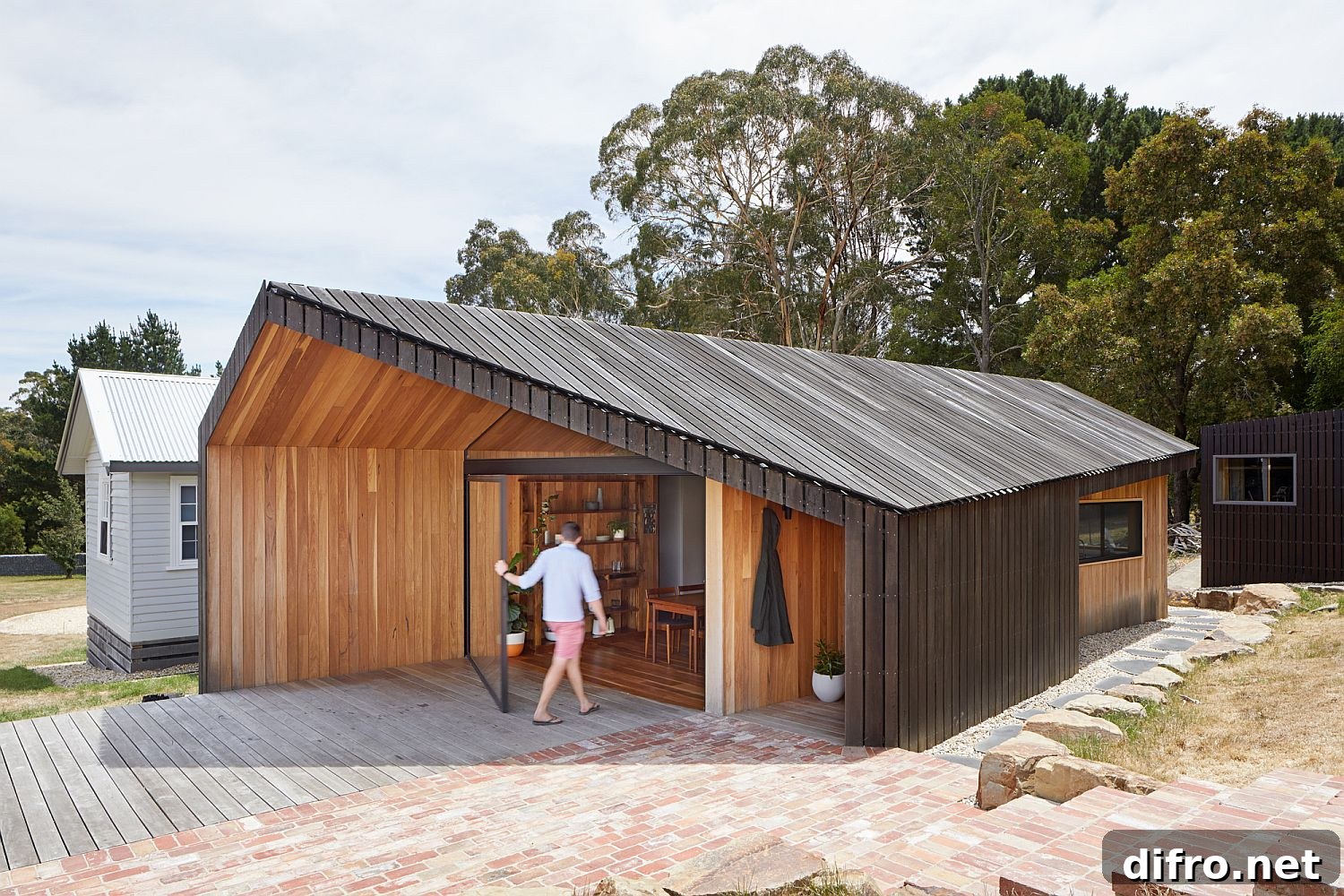
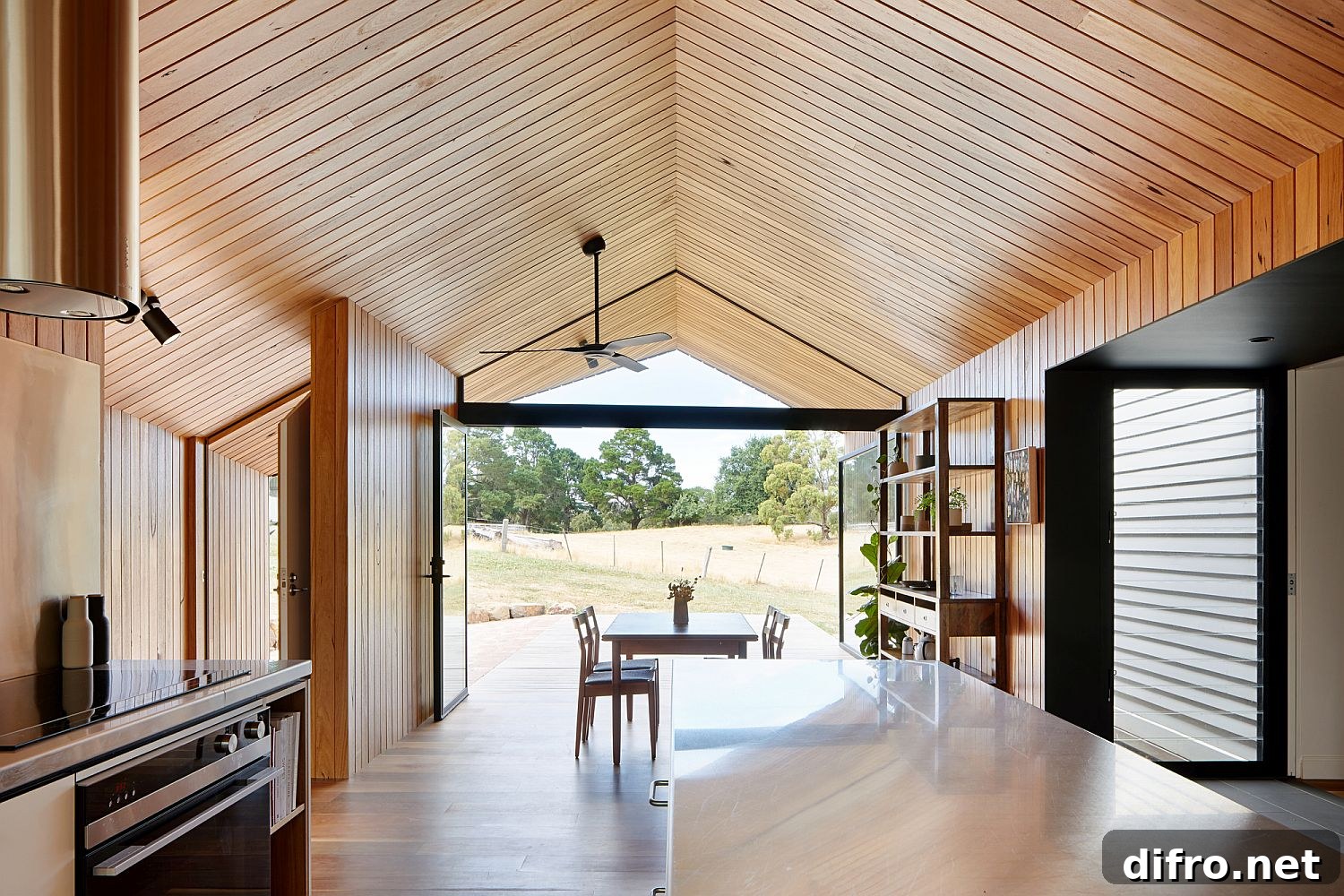
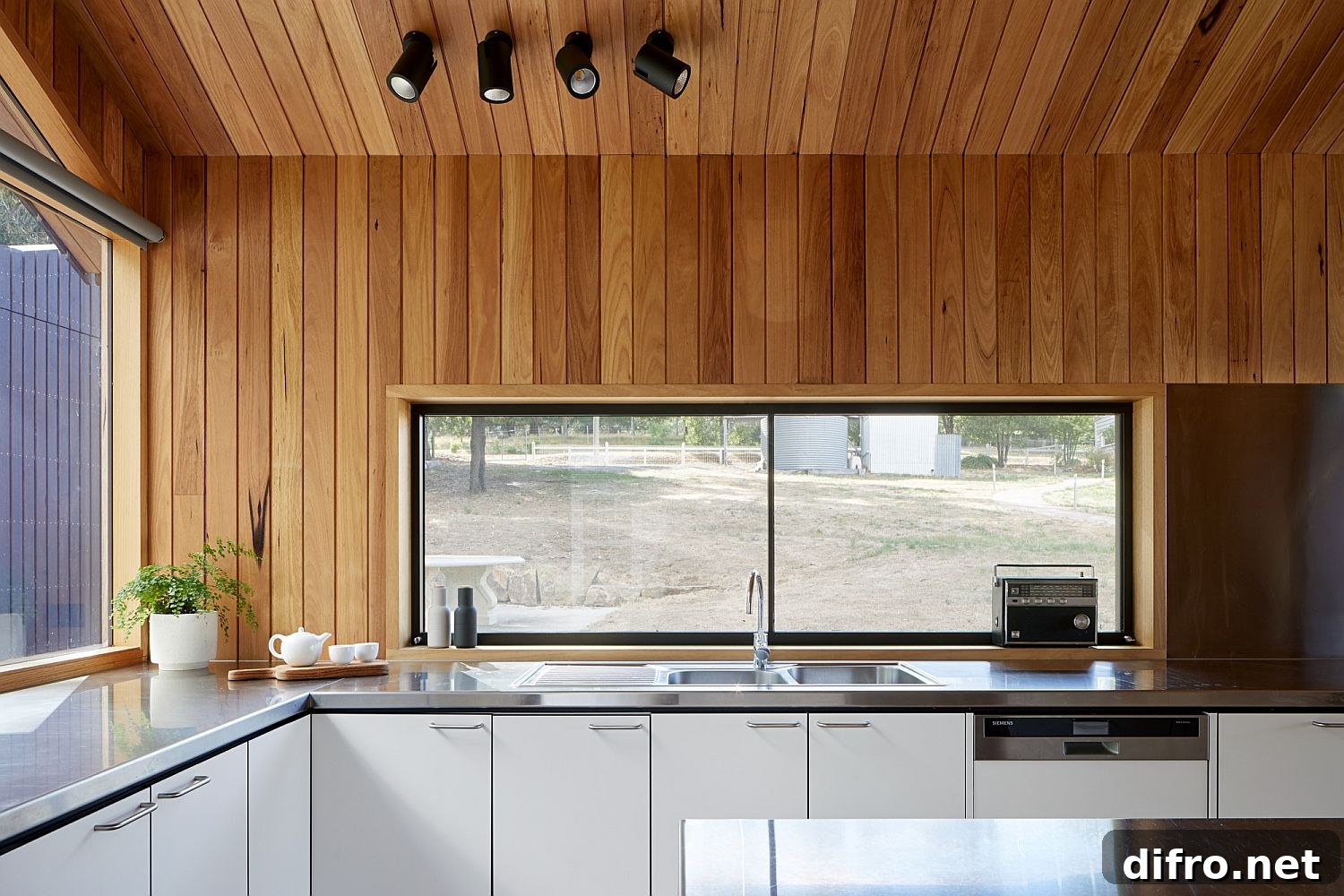
Designed by Solomon Troup Architects, the extension creates a new family-focused social space arranged as an open plan kitchen, dining and living area. The kitchen is deliberately bright and restrained: white surfaces and cabinetry combine with stainless steel countertops and fittings to deliver a clean, contemporary feel that contrasts with the richer timber lining boards used elsewhere. Large operable steel doors and generous glazing allow the kitchen and living space to fold out to a generous deck, erasing the boundary between interior and landscape and offering uninterrupted views of the rolling hills beyond.
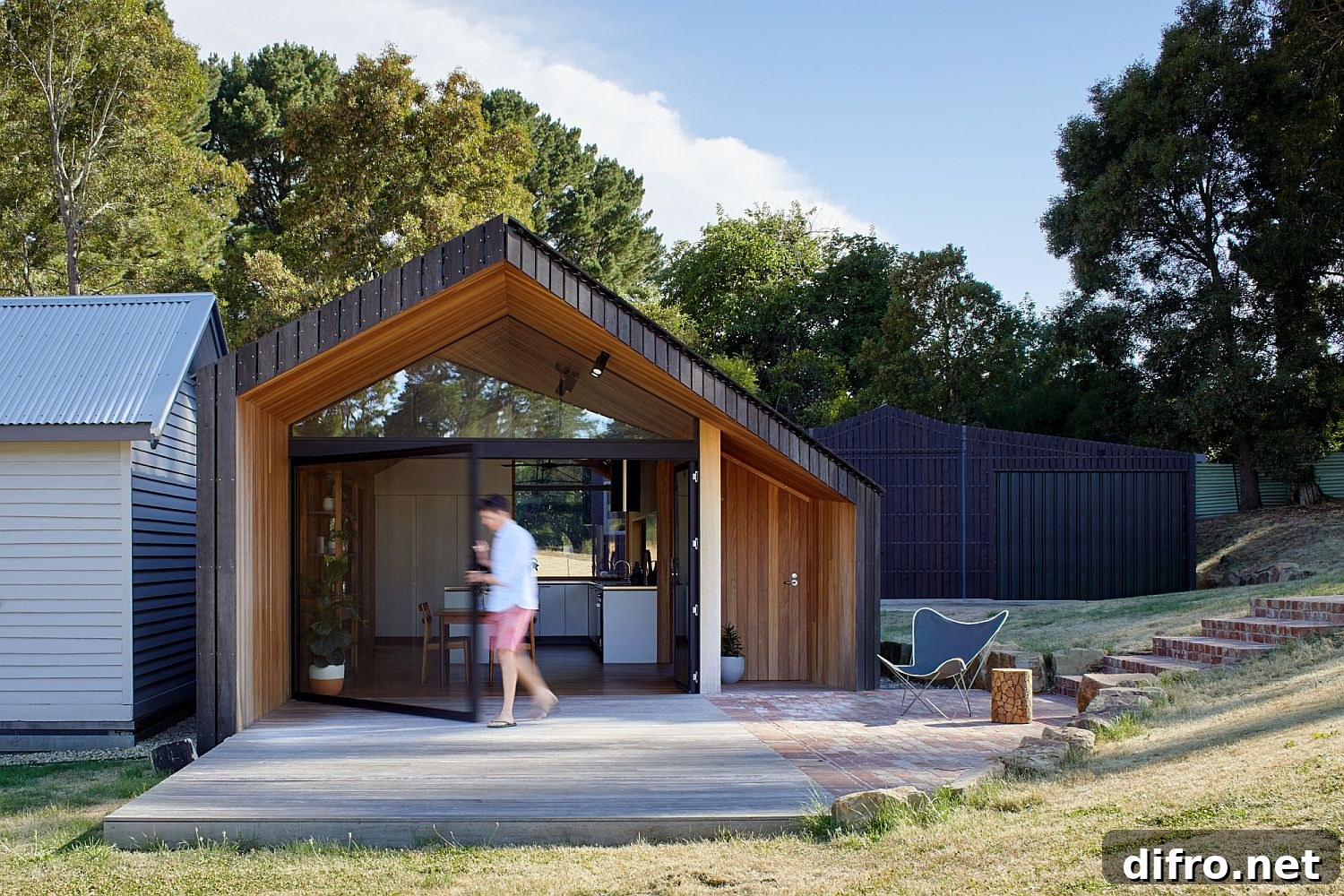
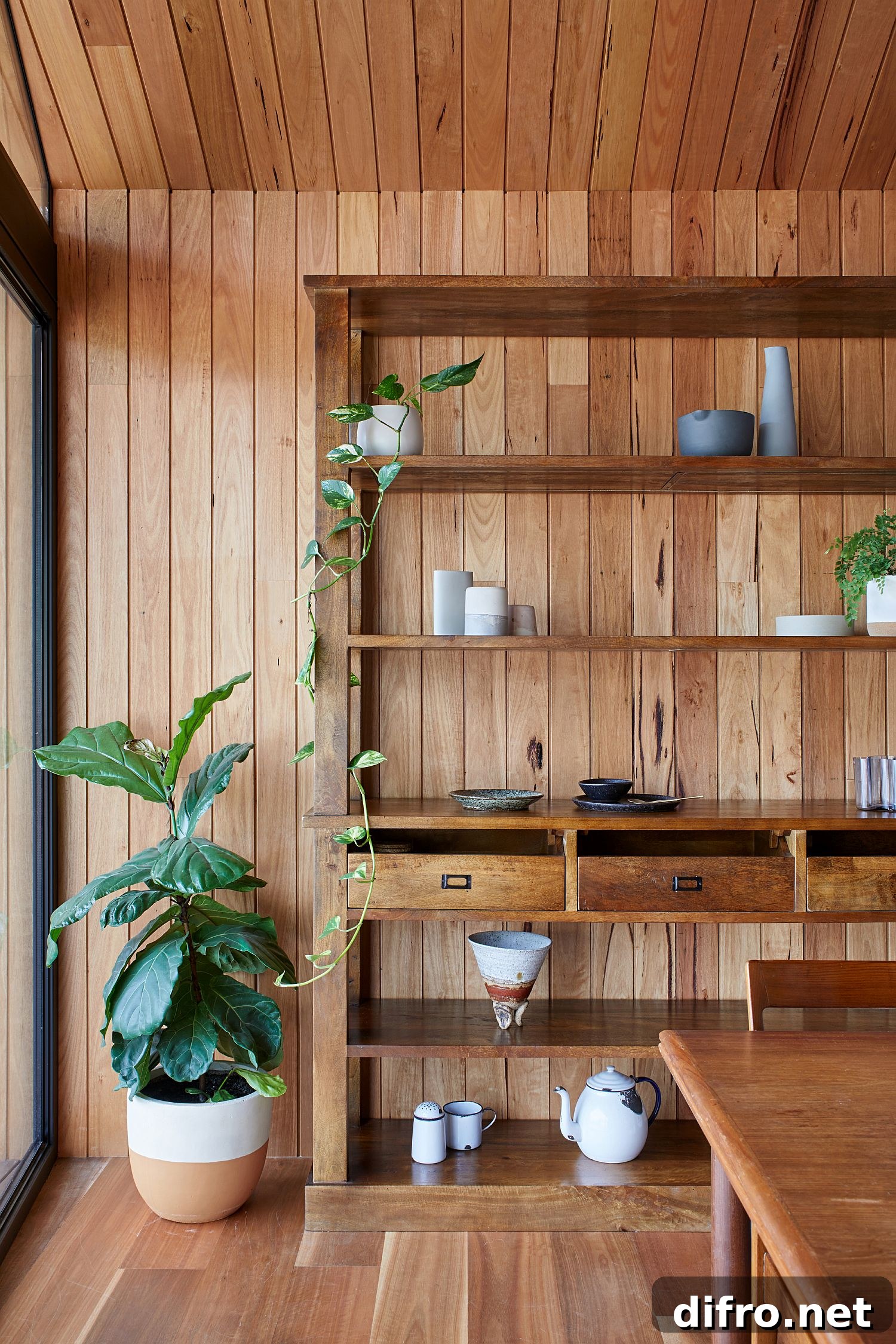
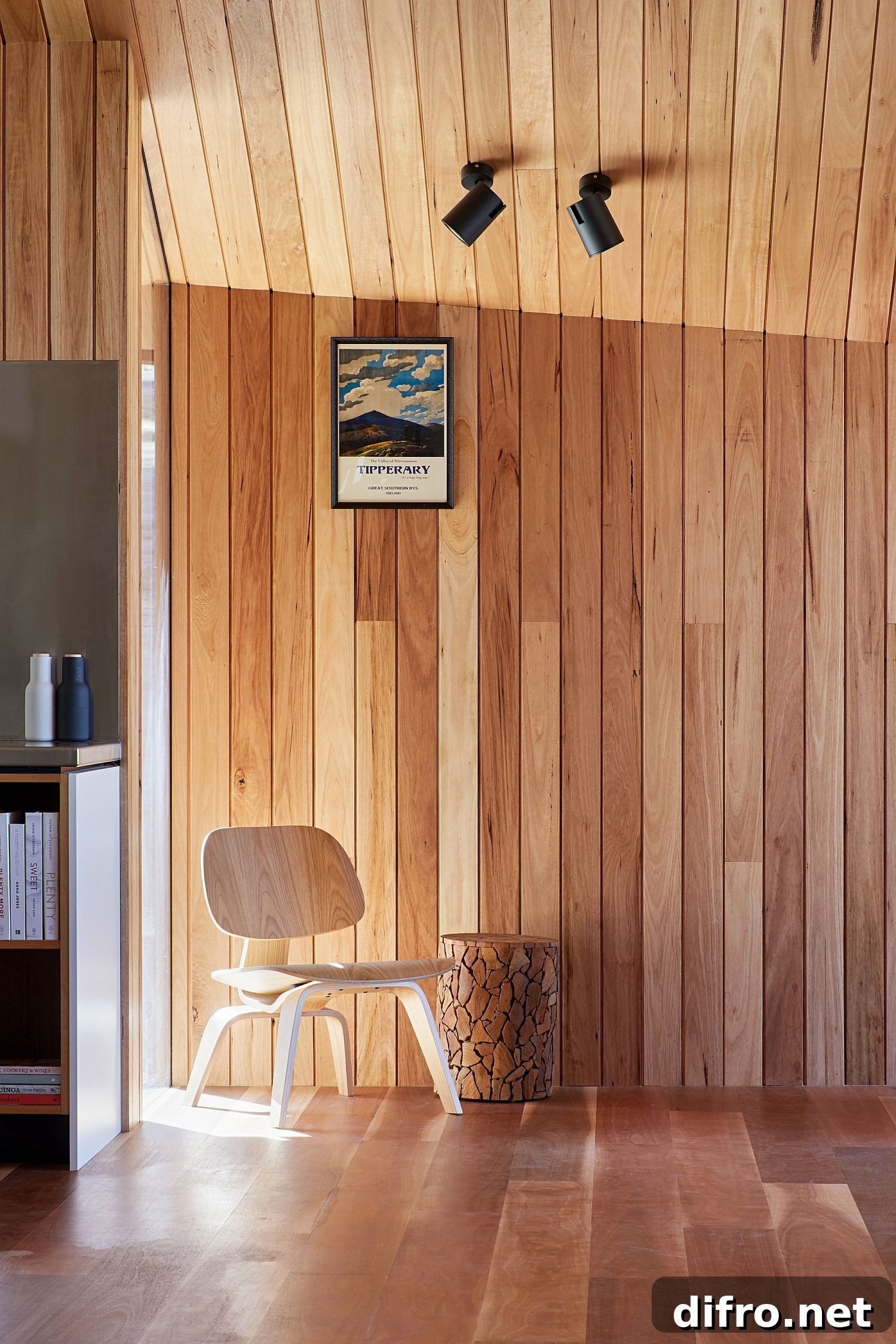
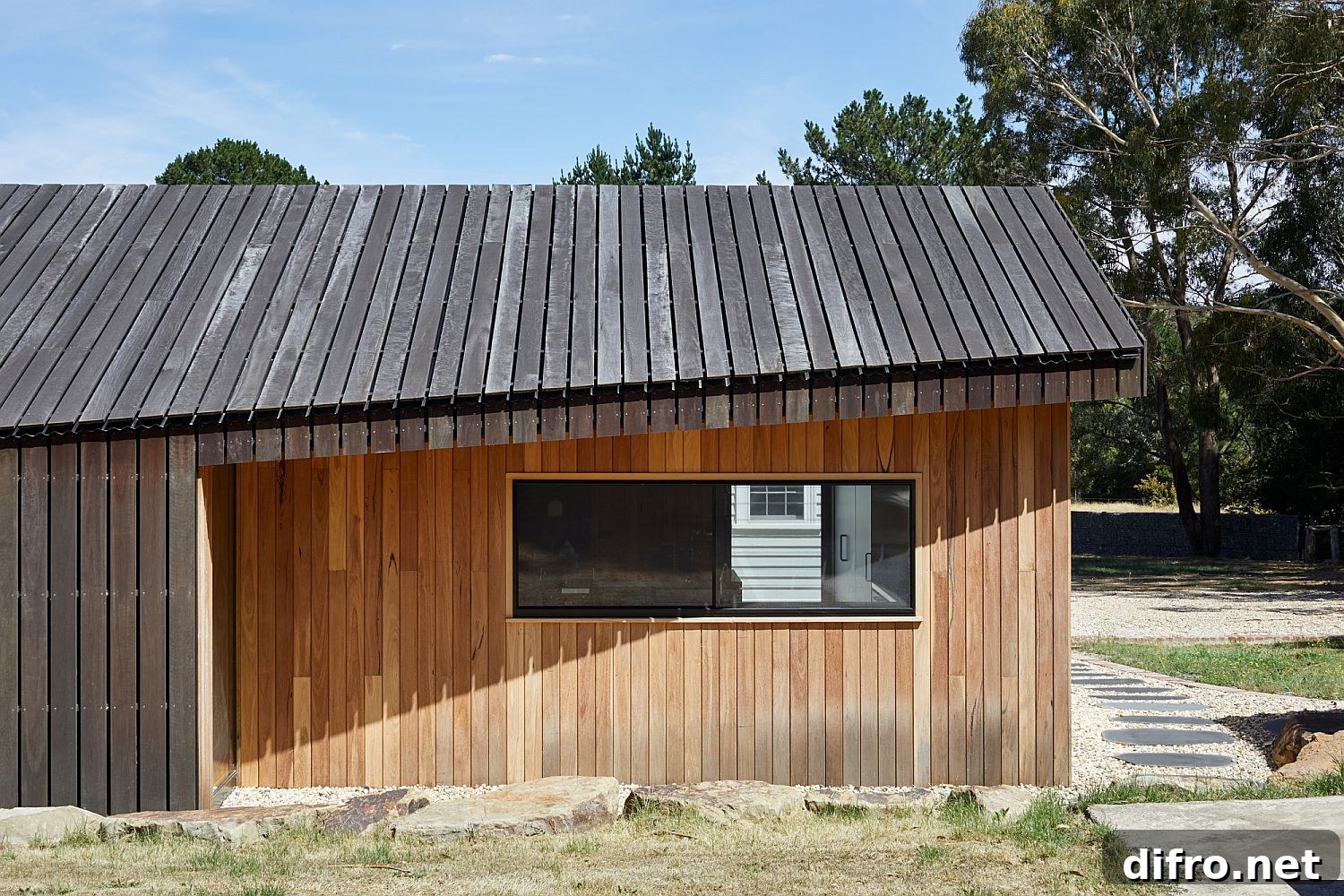
Material selection plays a central role in the project’s success. The exterior’s black-stained spotted gum creates a low-key, weathered presence that sits comfortably in a country setting, while the interior’s lighter silvertop ash and silver oak boards introduce a softer, woodsy character. These natural timbers bring tactility and warmth to the open-plan space, complementing the sleek durability of stainless steel in the kitchen. Together, these materials strike a balance between rustic authenticity and contemporary refinement.
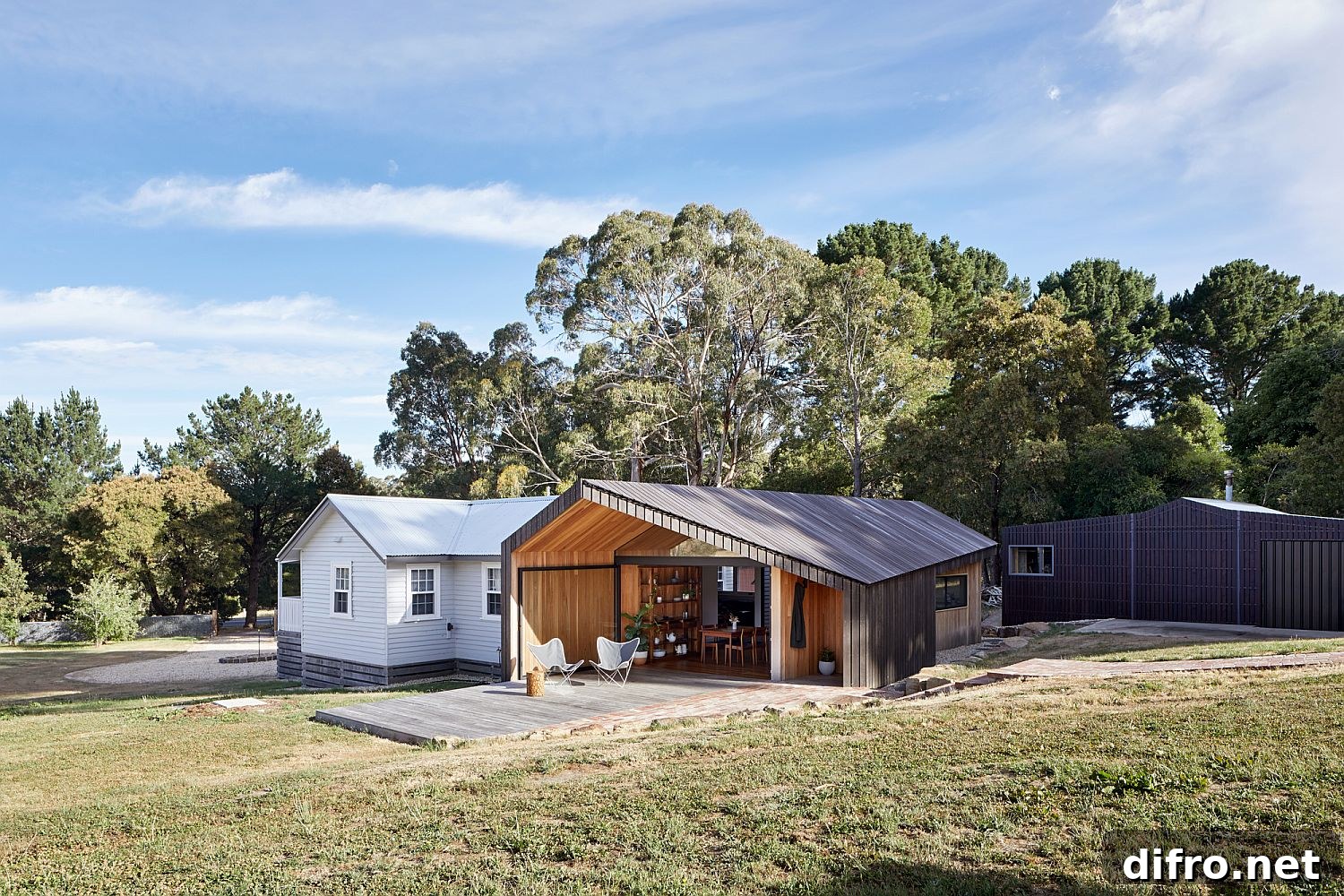
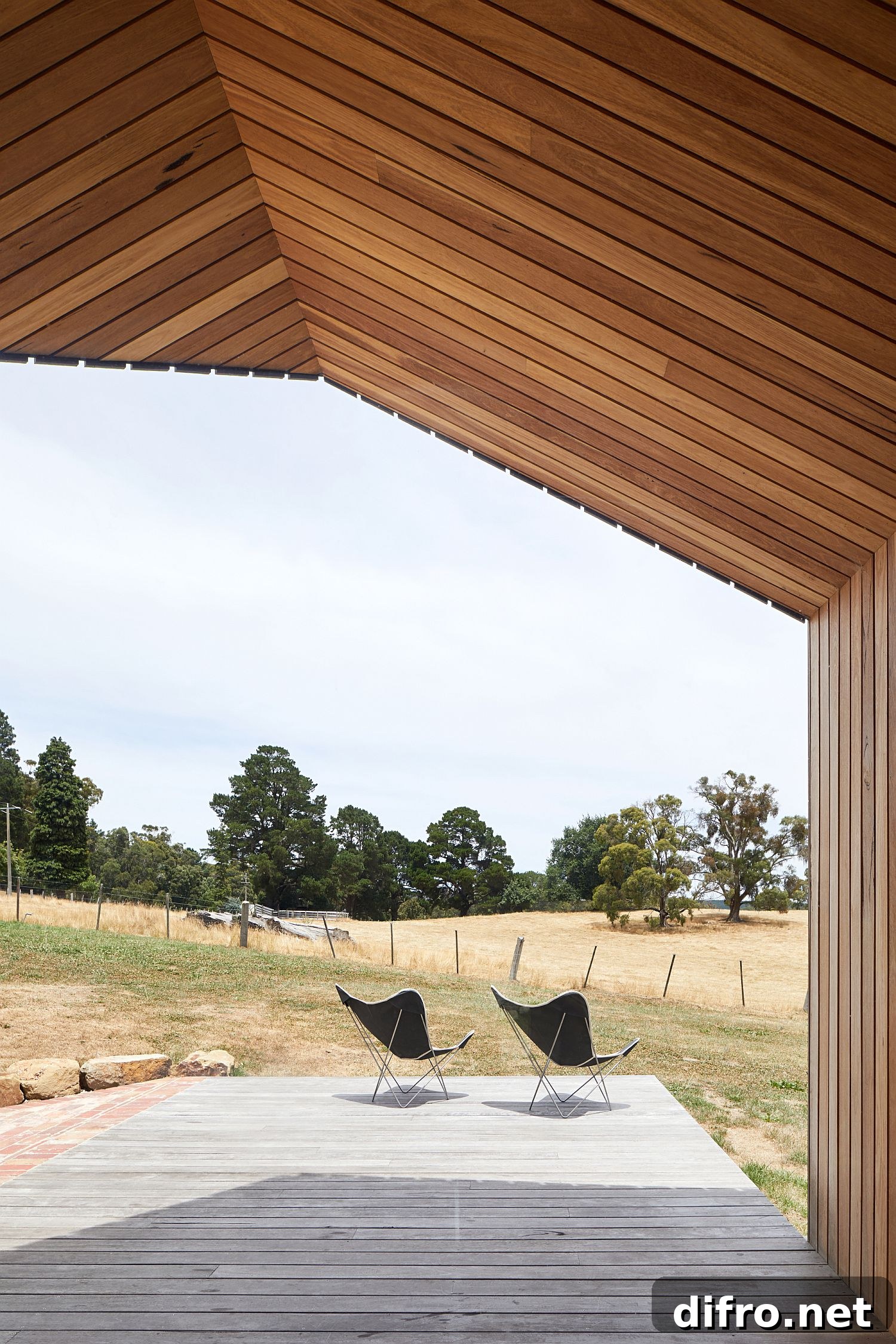
The plan prioritizes family life and flexible use. With the large steel doors open, the living and dining areas visually spill onto the deck, creating a continuous social zone for entertaining, meals and everyday living. When closed, these doors provide privacy and weather protection, making the extension comfortable throughout the year. Interiors remain intentionally simple: modern furniture sits alongside more rustic pieces to achieve a lived-in, layered look that acknowledges the home’s Victorian origins while embracing contemporary living.
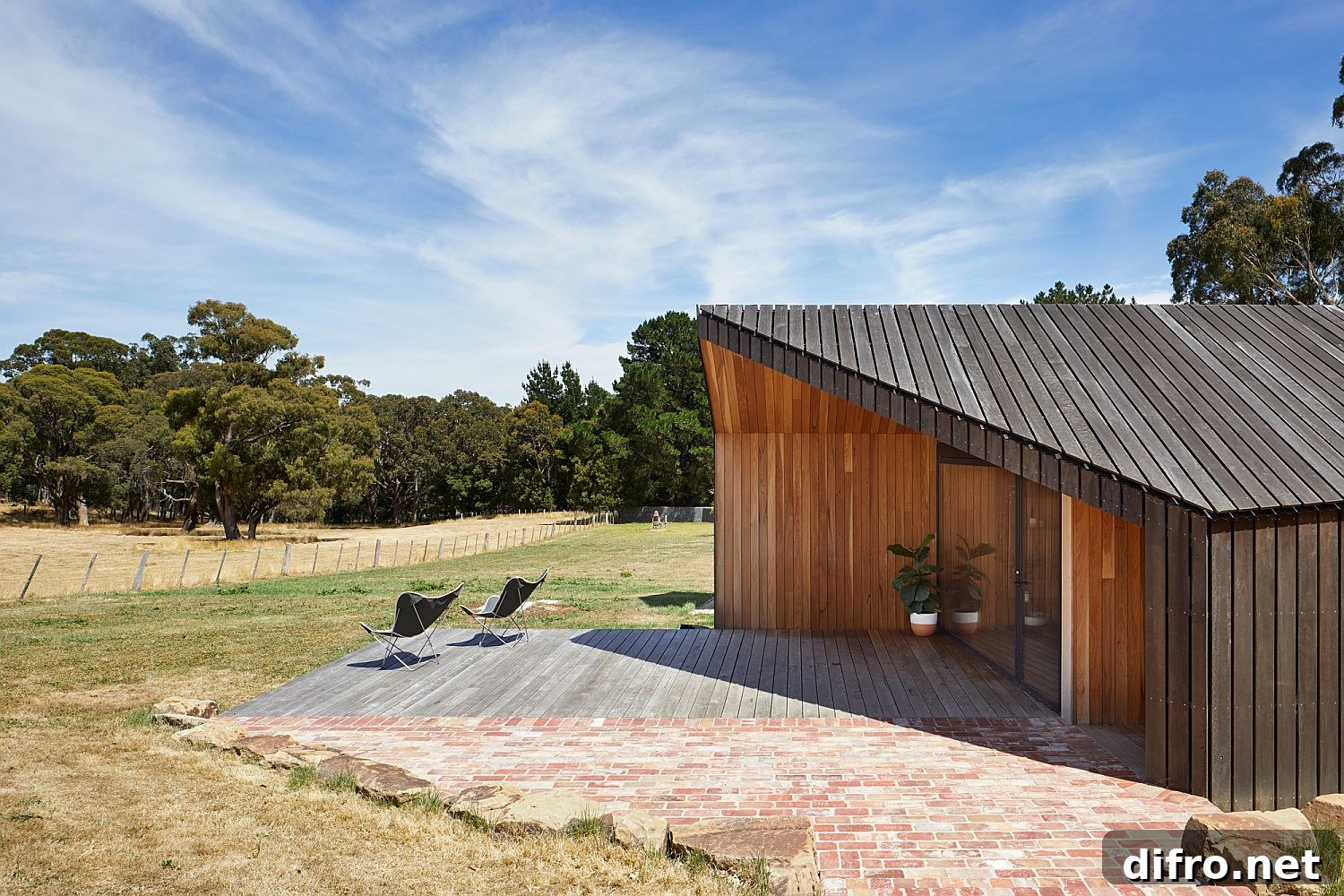
Functionality is matched with thoughtful spatial organization. A reading nook and more intimate corners within the open plan provide quieter retreats, while the main social space faces the best views to maximize daily interaction with the landscape. The exterior deck becomes an extension of the living room in fair weather, offering an outdoor living area that looks out across rolling farmland and distant ridgelines. The overall approach is pragmatic: respect the original Victorian form, add a contemporary addition that responds to site and view, and use durable, site-appropriate materials to deliver a calm, cohesive outcome.
By opening the home to its surroundings and carefully selecting complementary materials, the extension at Limerick House updates the Victorian home without diminishing its historic character. The result is a family-focused, adaptable living space that celebrates the site’s rural setting and brings everyday life closer to the landscape. Photography: Tatjana Plitt.