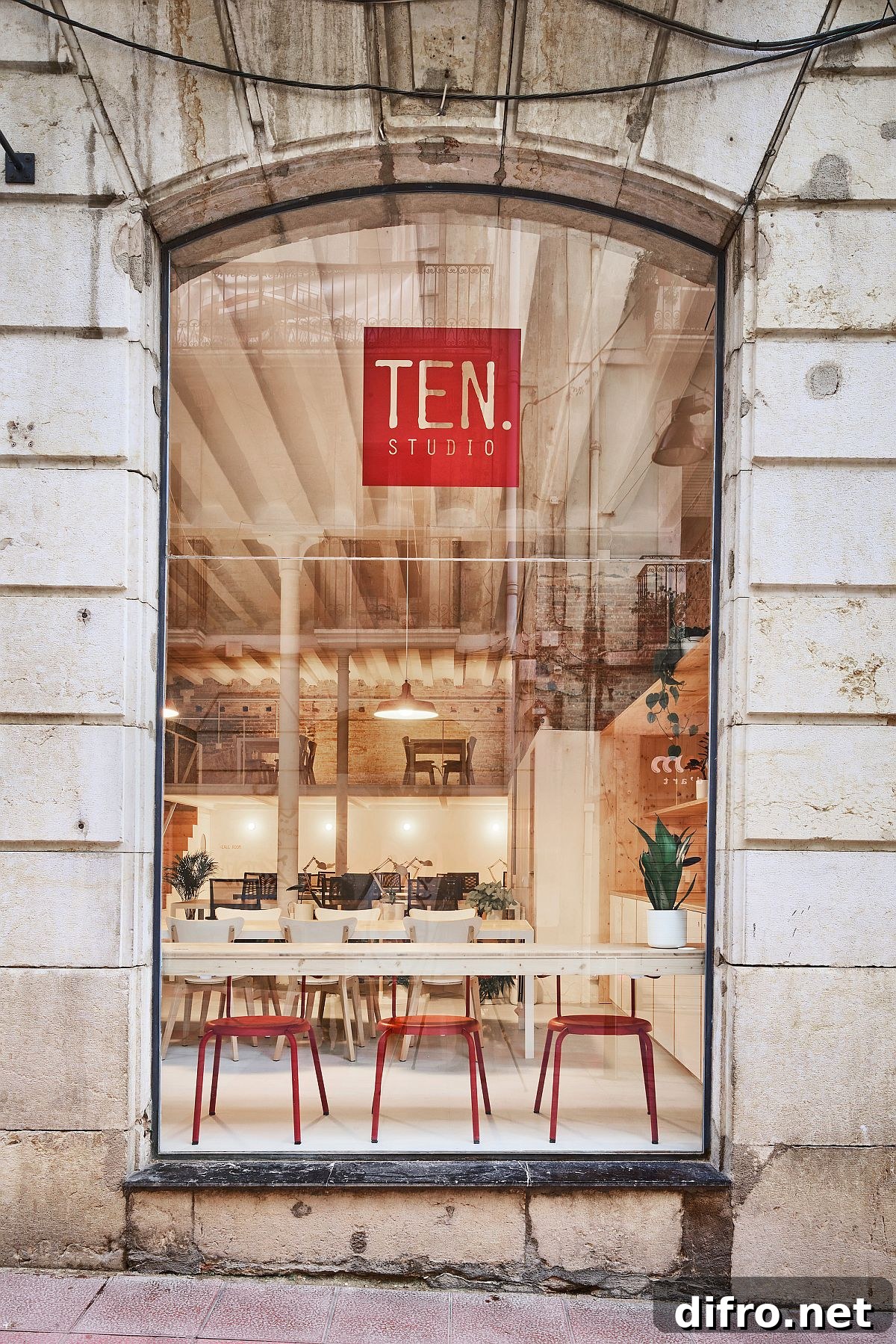
There are moments when updating a home’s walls with fresh finishes creates a polished, contemporary interior. Other times, the best approach is to remove the accreted layers added over decades to expose the building’s original structure and character. The transformation of an old art shop from the 1930s into a modern, functional office is a perfect example of the latter. TEN Studio, redesigned by NAM Arquitectura in Tarragona, Spain, uses a careful industrial aesthetic and efficient layout to celebrate the building’s original materials while delivering a bright, flexible workplace.
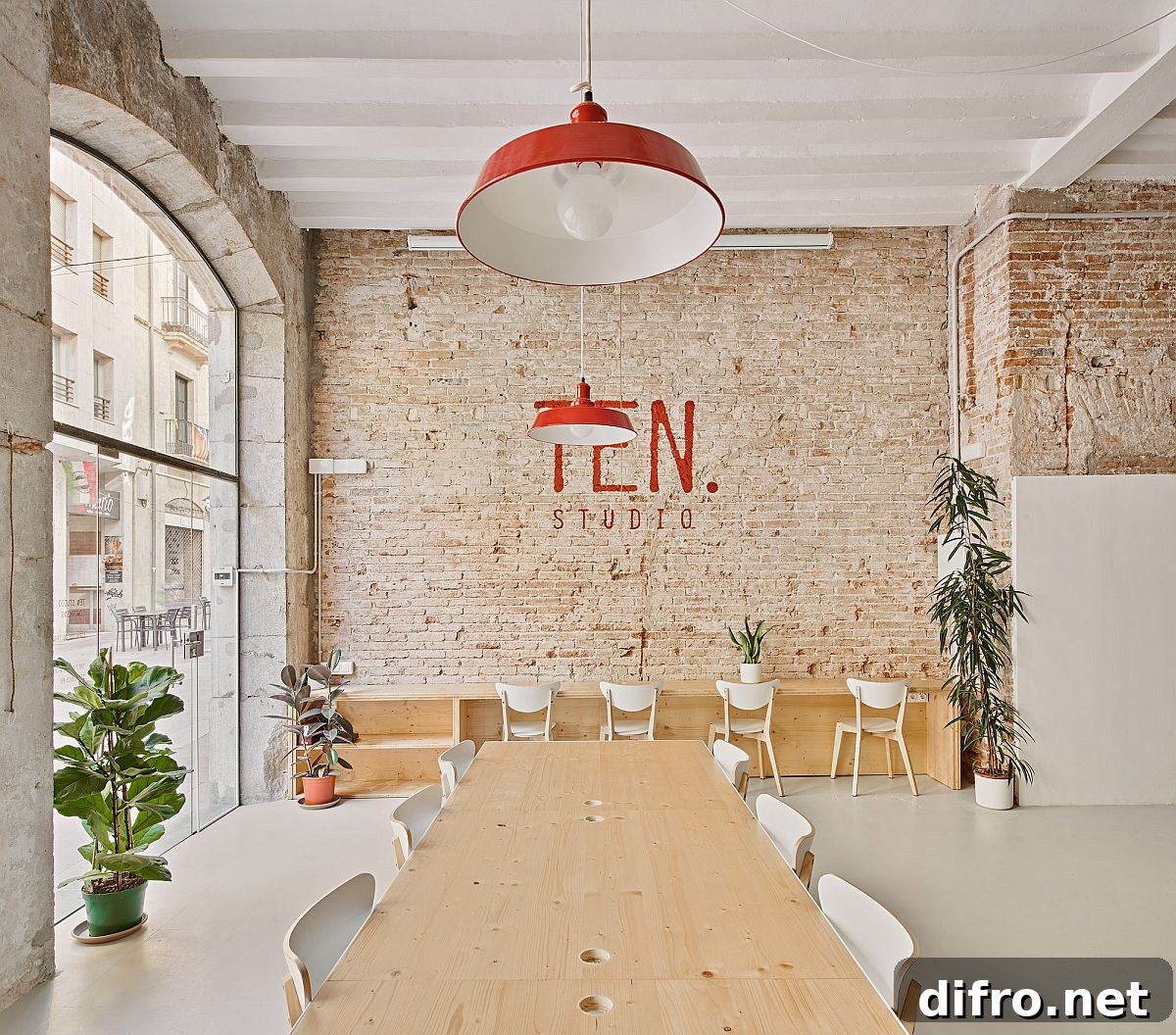
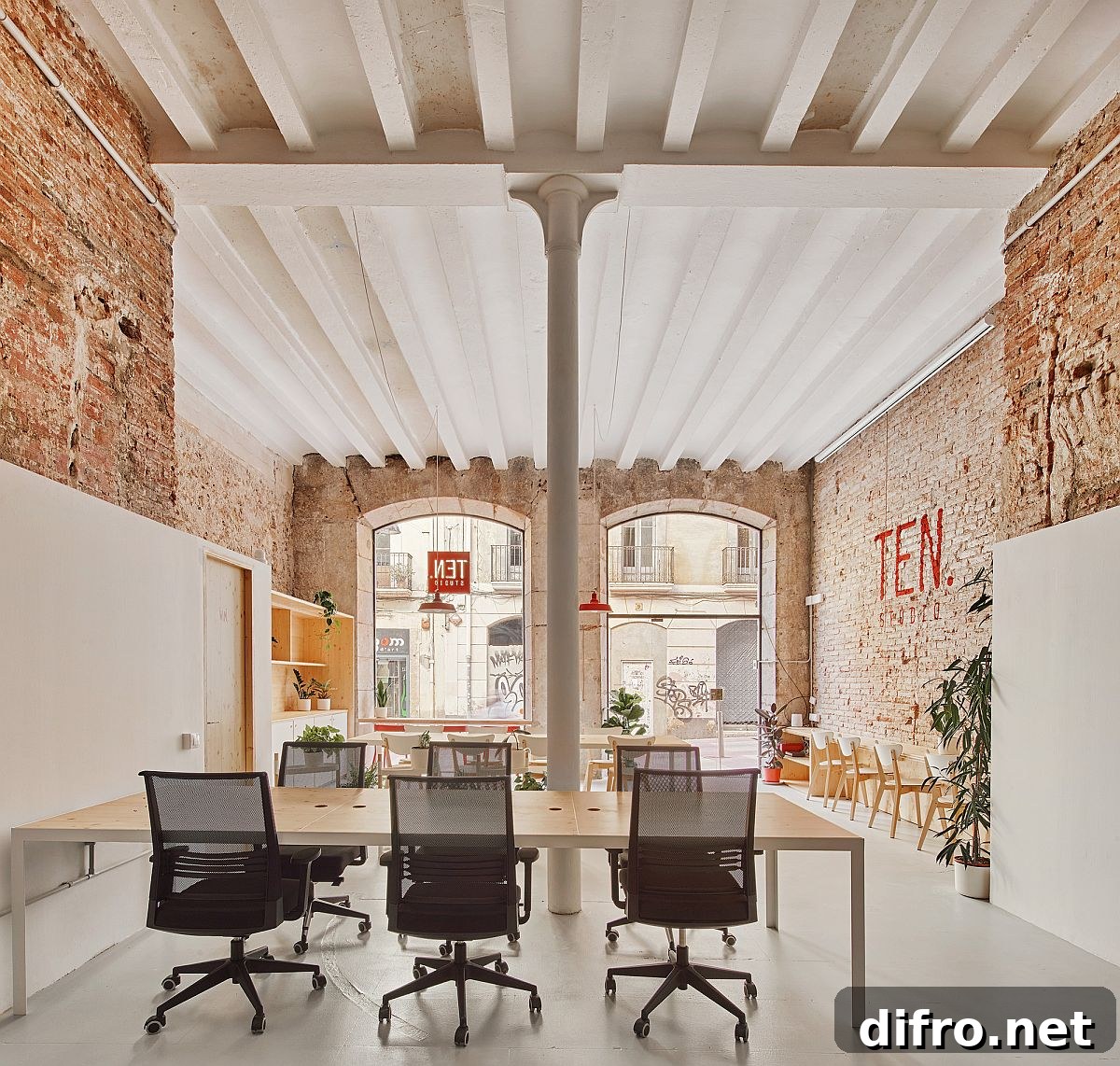
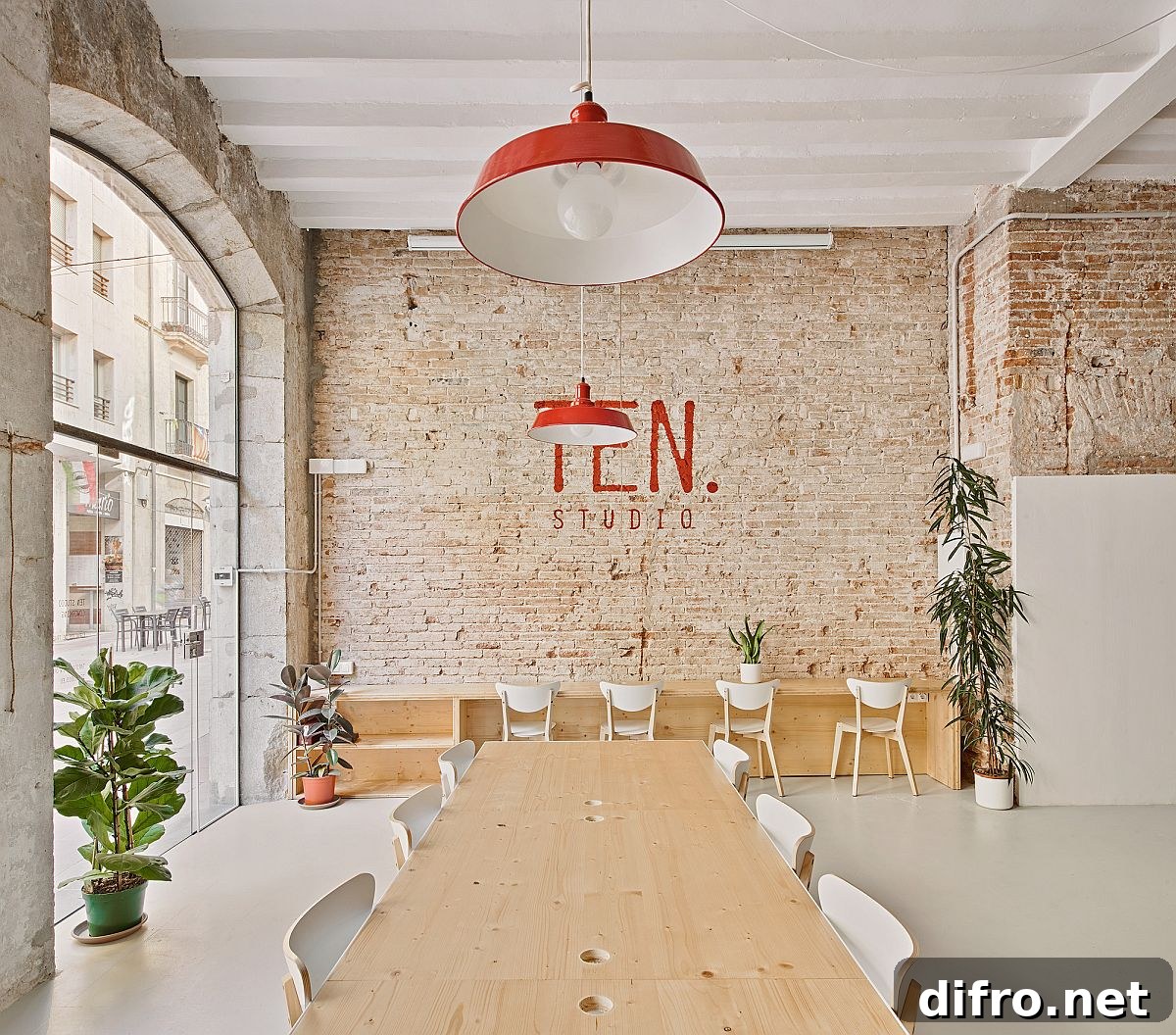
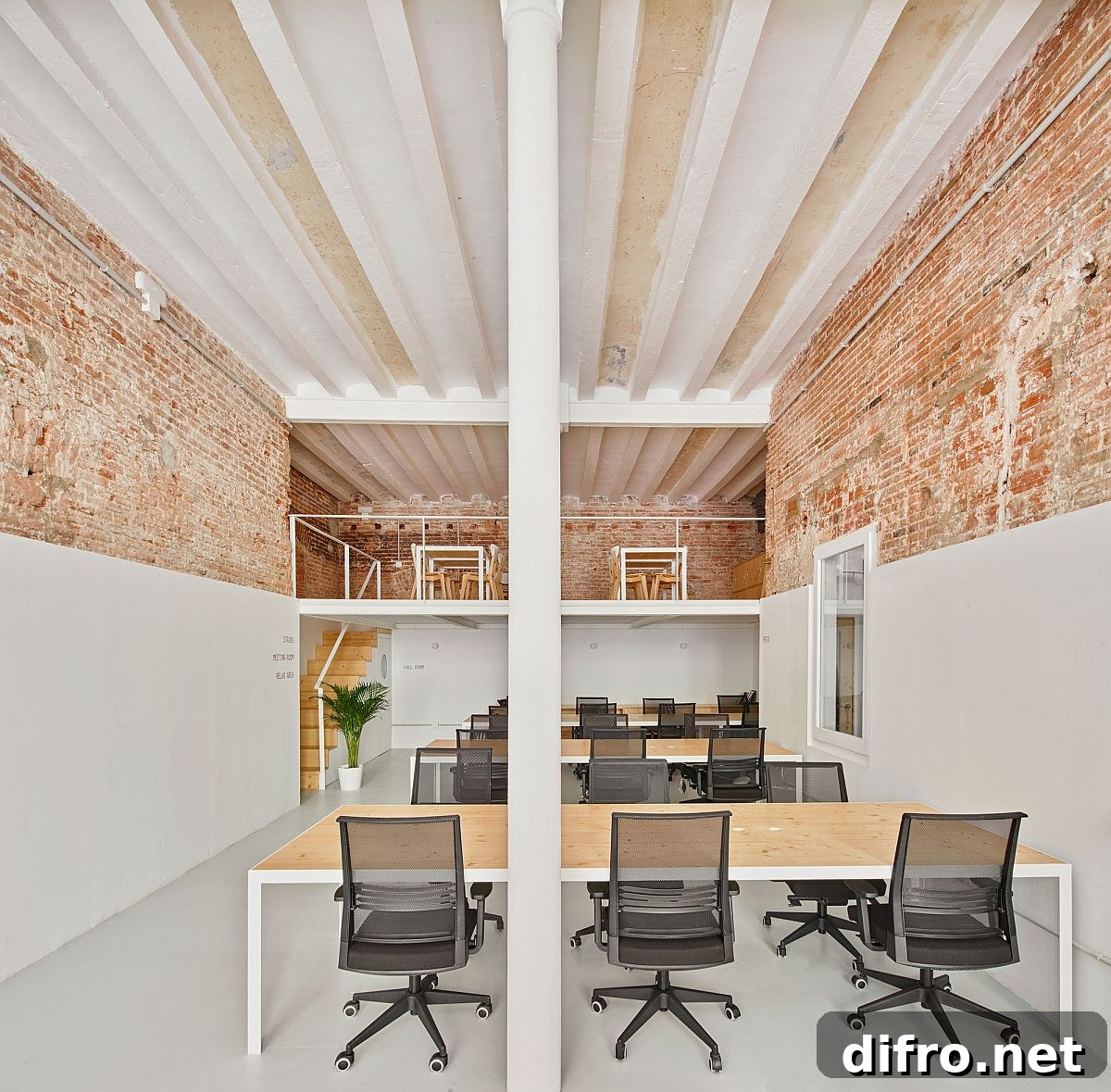
The guiding idea behind the refurbishment was straightforward: remove the extra layers of plaster and cement that had been applied over the decades to reveal the original brick, exposed stone and cast steel columns. This revealed structure anchors the new interior, linking the building’s past to its present. By exposing these elements, the architects preserved the authentic texture of the space and created a neutral yet characterful backdrop for a contemporary office.
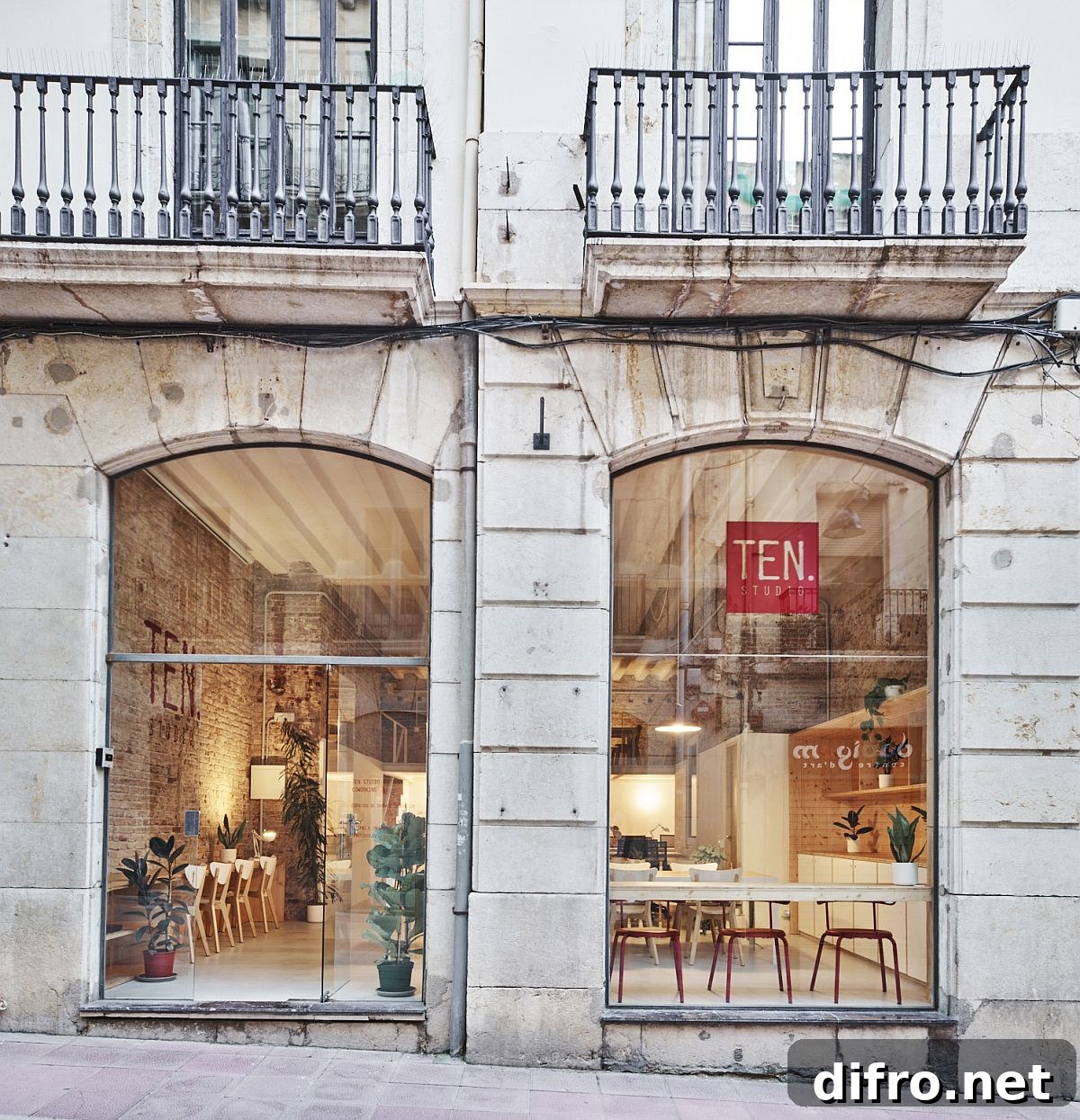
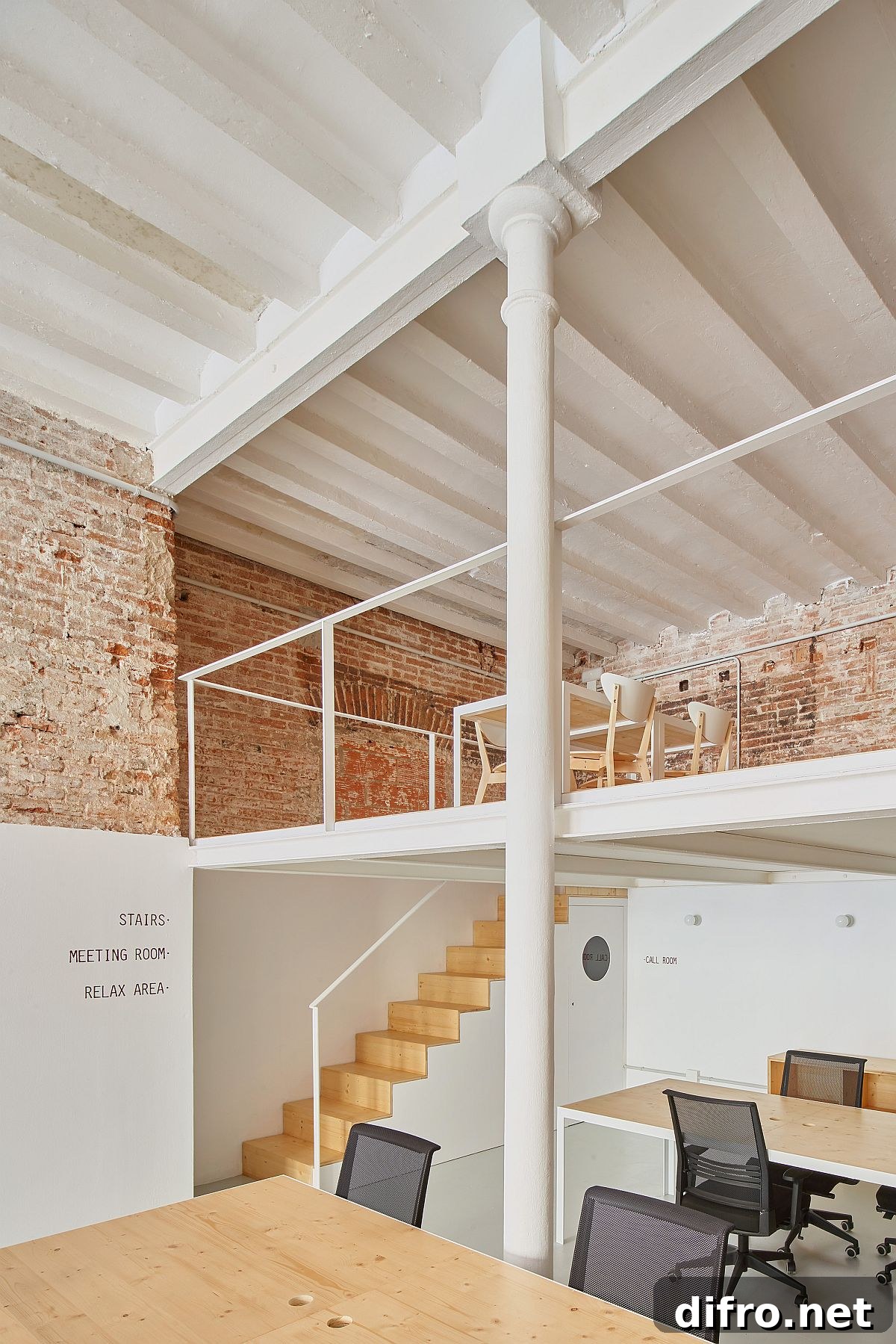
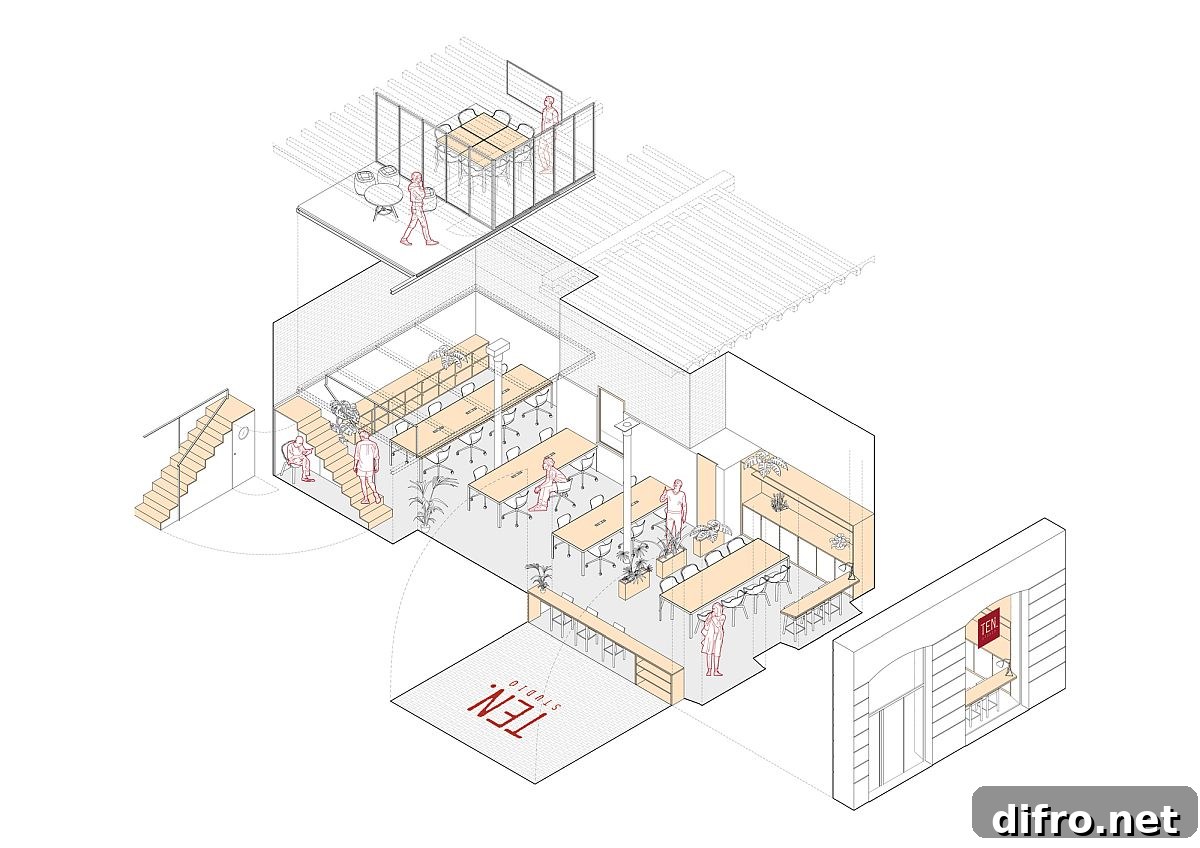
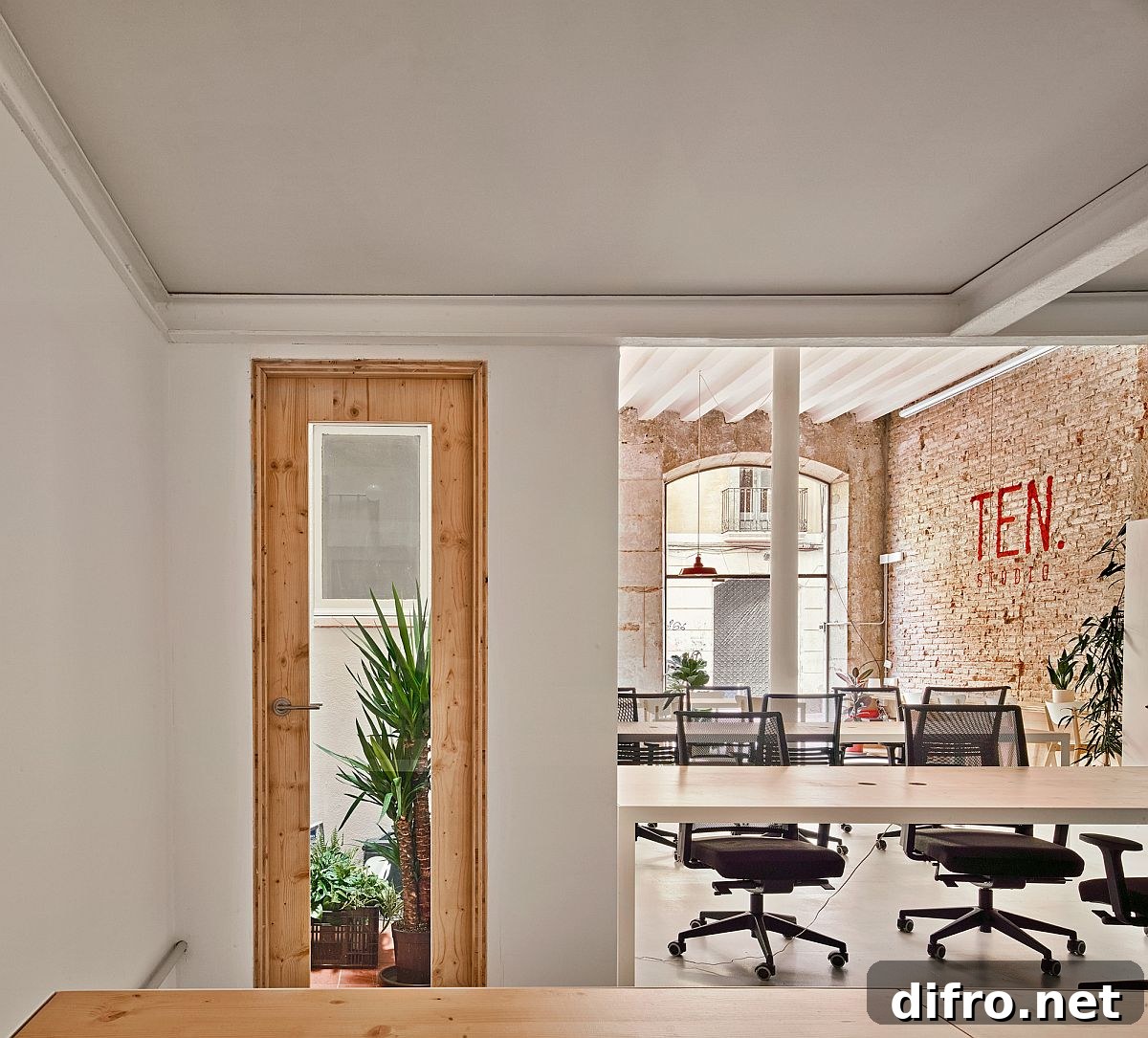
To make the most of the building’s generous double-height space, a new mezzanine level was introduced, creating an upper workspace while preserving the airy feel below. The lower level is organized around four long wooden work tables that define an open-plan layout, ideal for collaboration and studio-style work. Natural light and high ceilings reinforce the sense of volume, while the retained masonry and steel details provide the office with a distinct industrial character.
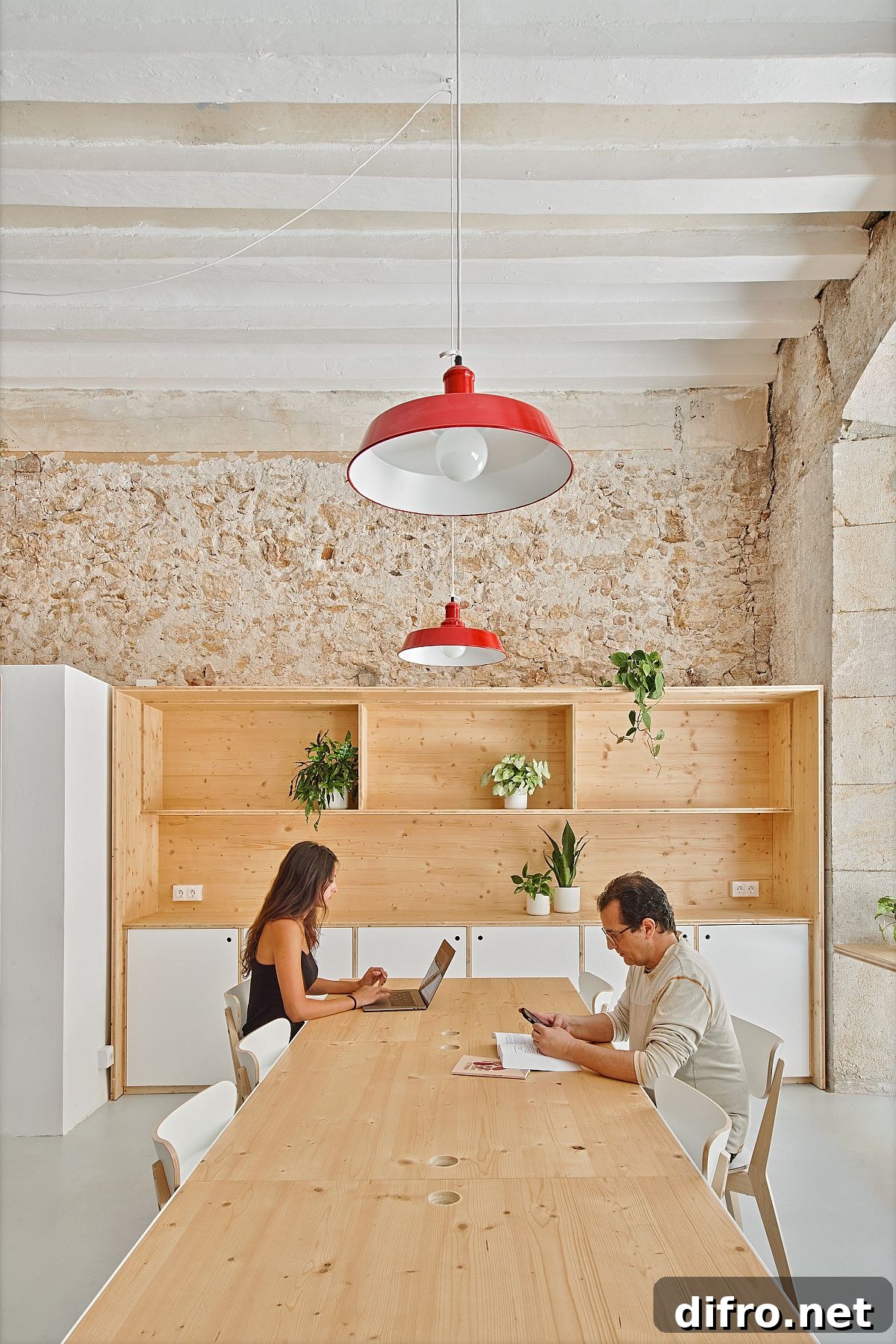
Custom wooden cabinetry provides practical storage, shelving and kitchen units while integrating with the exposed brick backdrop. The material palette — predominantly white, natural wood and original brickwork — keeps the interior calm and cohesive. Carefully placed accents of red, introduced through lighting and soft furnishings, add energy and visual interest without overwhelming the subtle textures of the space.
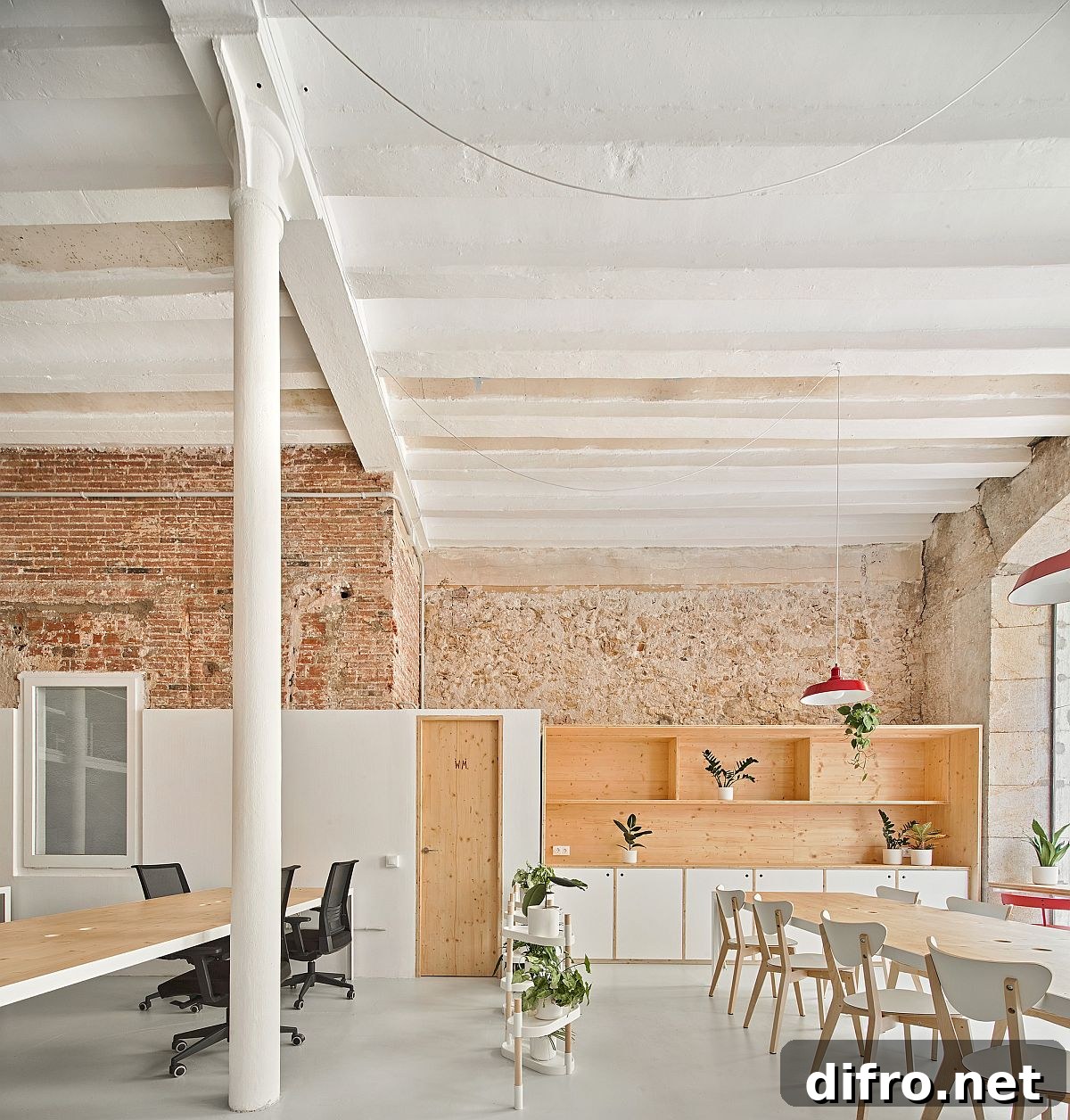
Greenery placed among the cabinets softens the industrial edges and contributes to a healthier, more inviting workspace. The lower-level communal tables encourage teamwork and flexible use, while the mezzanine provides quieter zones for focused tasks or private meetings. Together, these features create a balanced office plan that responds to both collaborative and individual needs.
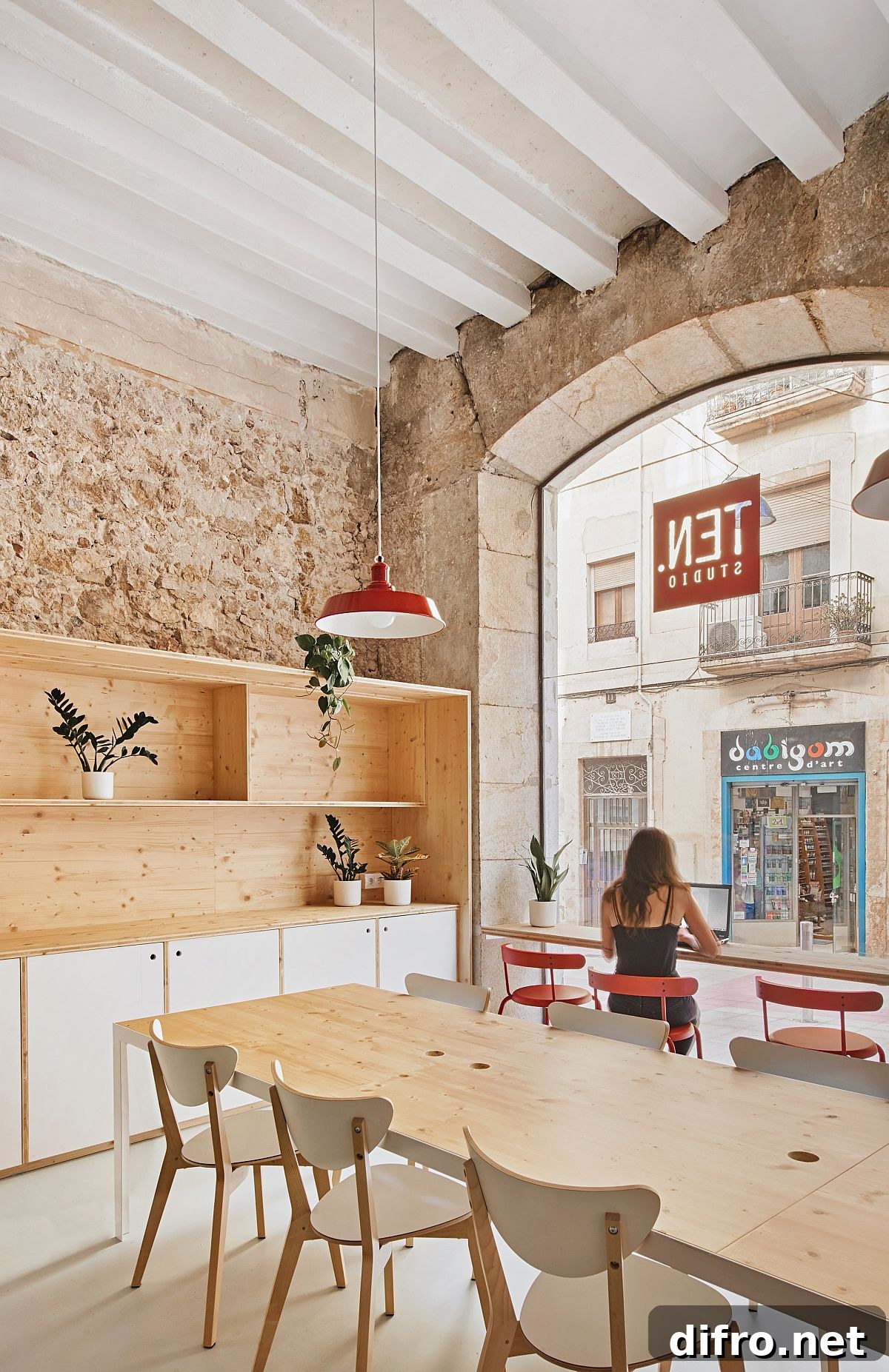
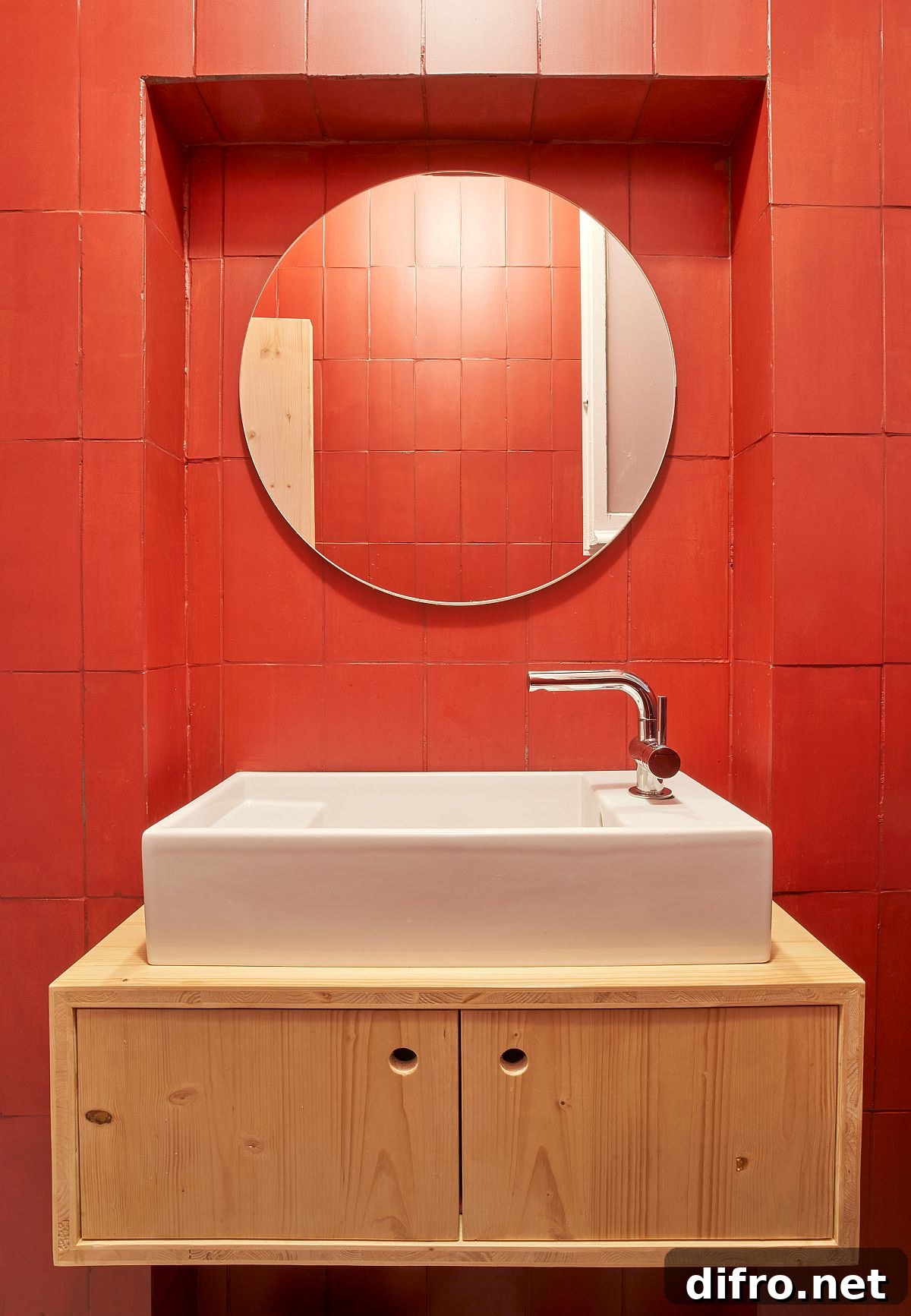
Even smaller details follow the same thoughtful approach. Pops of red repeat throughout the lighting and accessories, punctuating the neutral backdrop and guiding the eye through the plan. The restroom is treated with the same design sensibility: a red wall and a floating wooden vanity introduce color and warmth in a compact, smart layout.
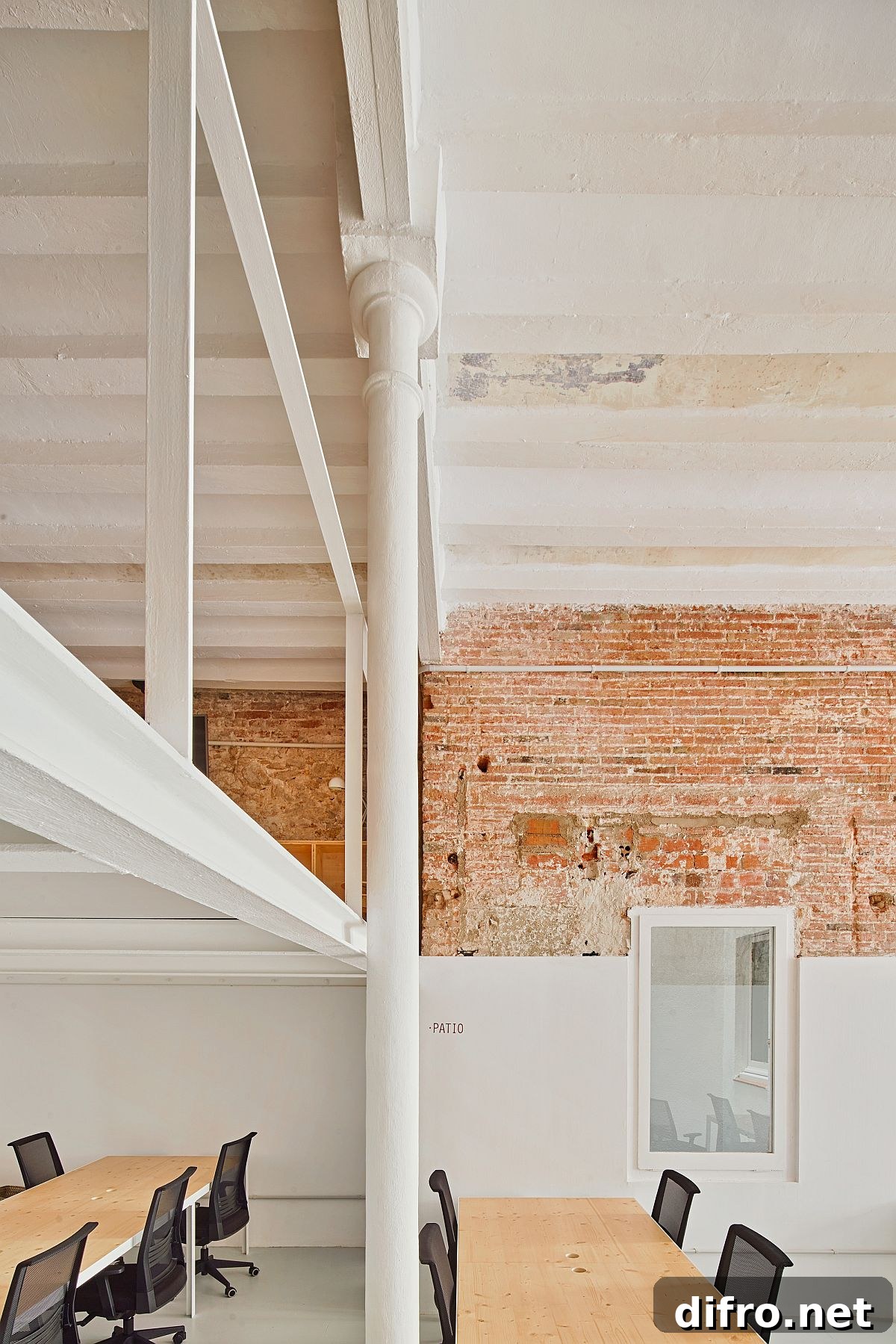
The renovation remains faithful to the original building fabric while meeting contemporary office needs: exposed masonry, structural steel, clean white surfaces and natural wood combine to create a timeless, industrial-modern interior. The intervention is restrained and respectful, allowing the building’s history to remain visible and meaningful within a revitalized, efficient workspace.
[From: José Hevia]