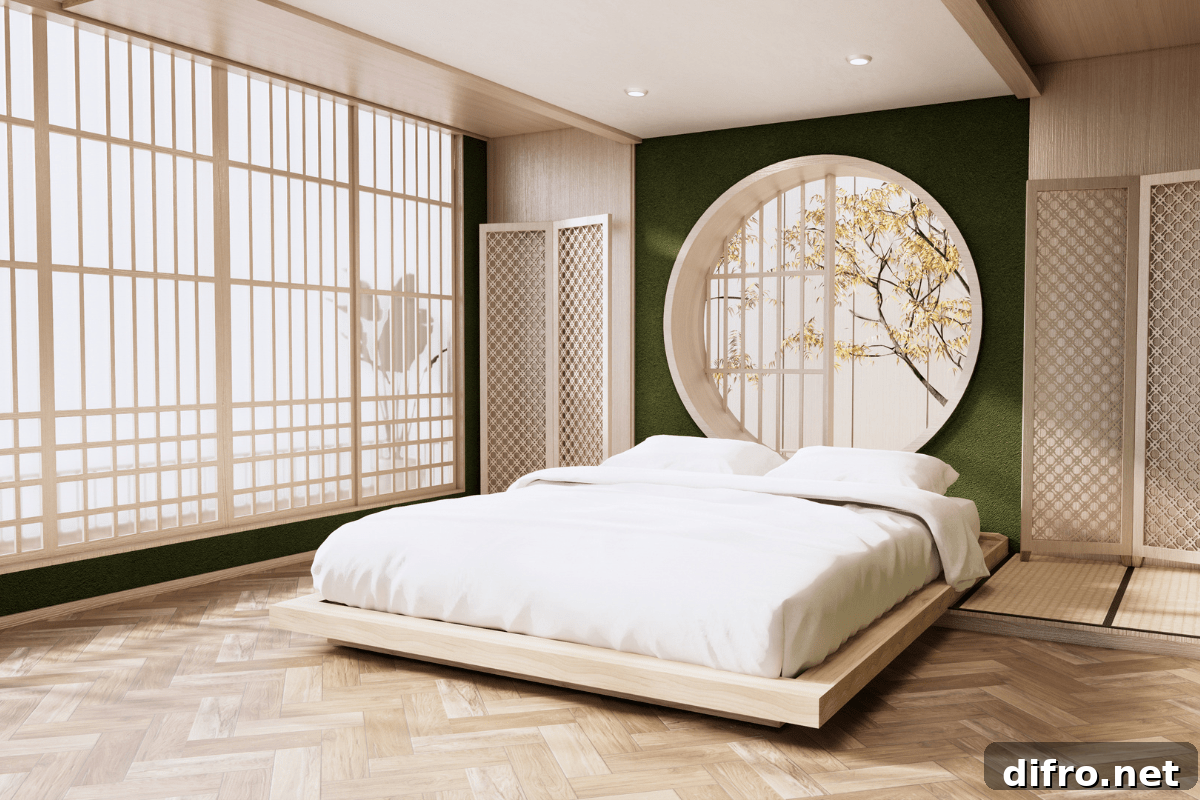
If you want to create a calm, balanced bedroom that encourages rest and clarity, a traditional Japanese bedroom is an excellent choice. Rooted in simplicity and minimalism, Japanese design focuses on natural materials, clean lines, and a serene atmosphere that supports relaxation and well-being.
What Is a Traditional Japanese Bedroom?
A traditional Japanese bedroom, often called a washitsu, is a minimalist, tranquil space designed for rest and renewal. Unlike many Western bedrooms that can be filled with bulky furniture and decorative clutter, a Japanese-style bedroom emphasizes restraint, functionality, and an uncluttered layout. The result is a meditative environment that helps you unwind and sleep well.
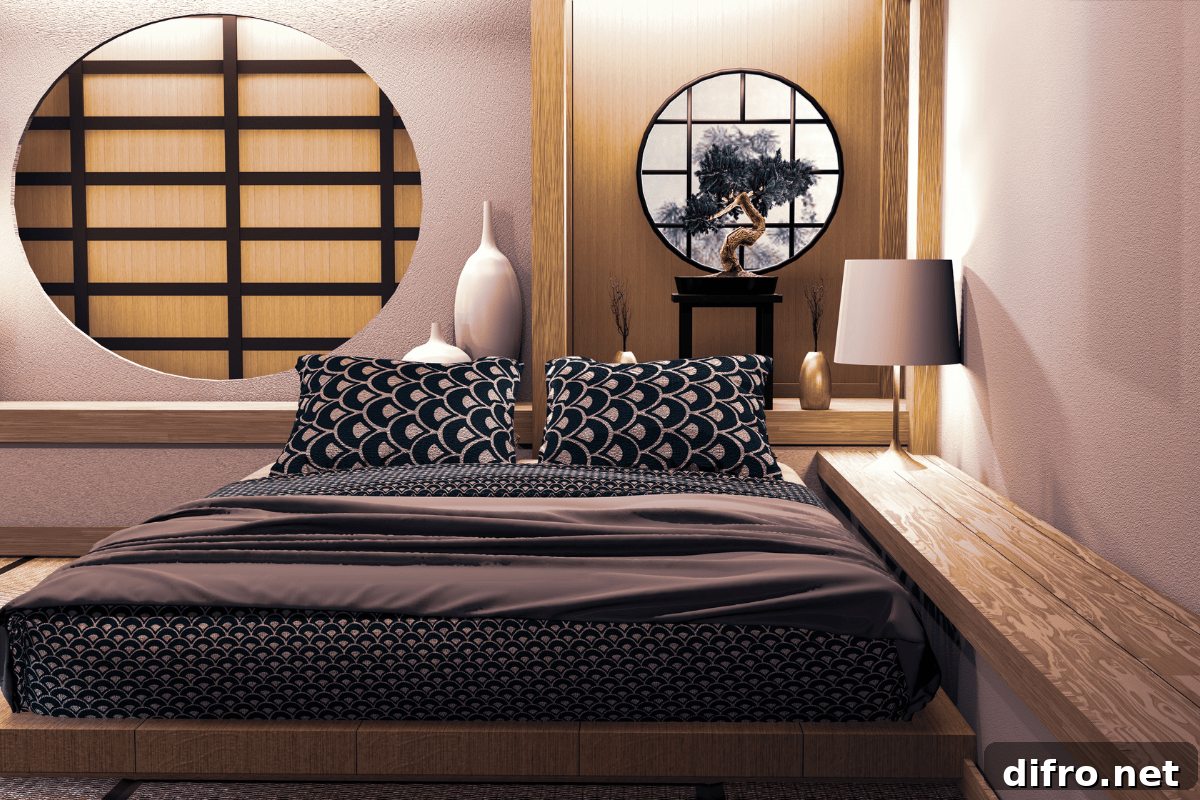
Key characteristics of a Japanese bedroom include a low bed or futon, limited and purposeful furniture, a neutral color palette, and natural materials such as wood, bamboo, and linen. These elements combine to create a quiet, restorative setting.
Design Elements to Incorporate
The Tatami Flooring
Tatami mats are a foundational element in traditional Japanese rooms. Made from woven rush over rice straw, tatami offers a soft, natural surface that feels warm in winter and cool in summer. Tatami adds texture, subtle scent, and a tactile connection to nature, helping to ground the room and reinforce a calming atmosphere. Mats come in standard sizes, so you can plan the layout to suit the proportions of your space.

The Shoji Screen Doors
Shoji screens are lightweight sliding doors made from a wooden lattice covered with translucent paper. They diffuse light gently while preserving privacy and can define different zones within the room. Shoji screens contribute to a soft, luminous environment and are both functional and decorative.
The Futon Bed
A traditional futon mattress lies directly on the floor or on a low platform. Futons are easy to roll up and store during the day, freeing floor space for movement or meditation. Available in various thicknesses, a good futon provides a supportive, natural sleeping surface and reinforces the room’s minimalist aesthetic.
Japanese Art and Decorative Accents
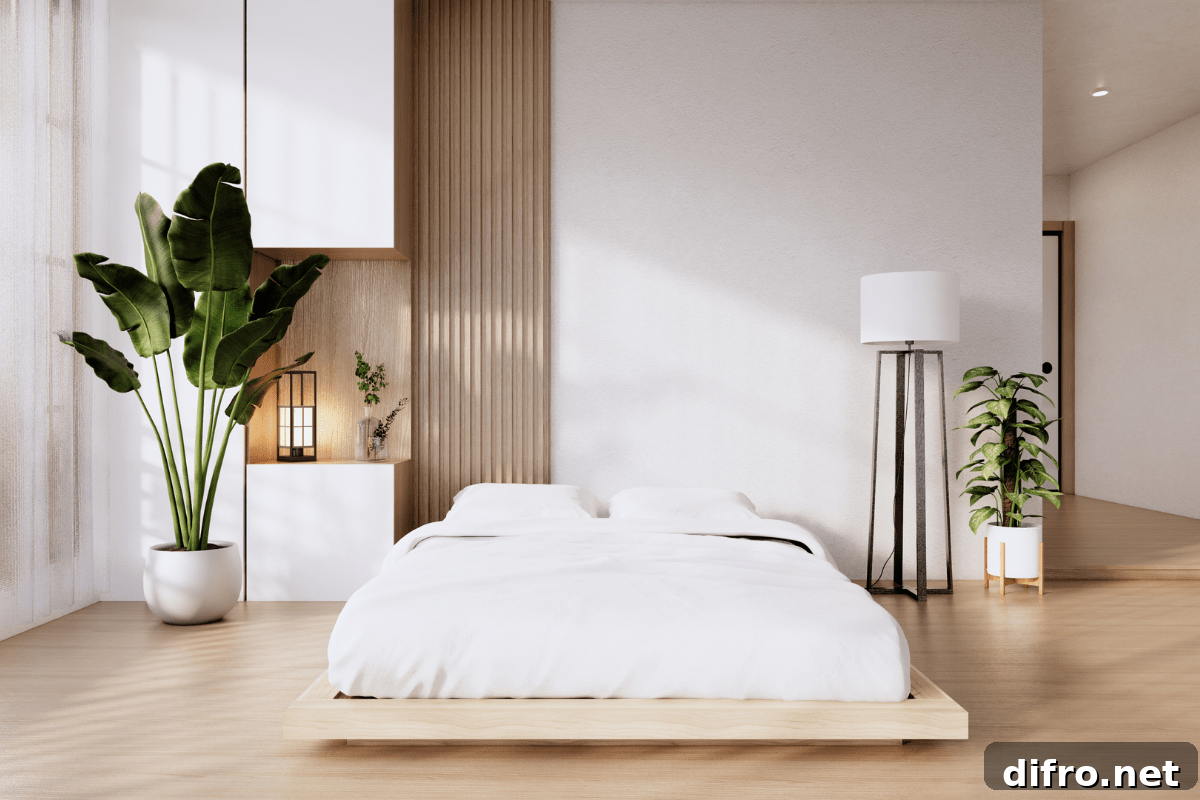
Art in a Japanese bedroom should be simple and thoughtfully chosen. Traditional pieces like calligraphy, minimal prints, or landscape paintings add quiet character without overwhelming the space. Soft paper lanterns and subtle ceramics create focal points while maintaining the room’s calm, uncluttered feel.
Natural Materials
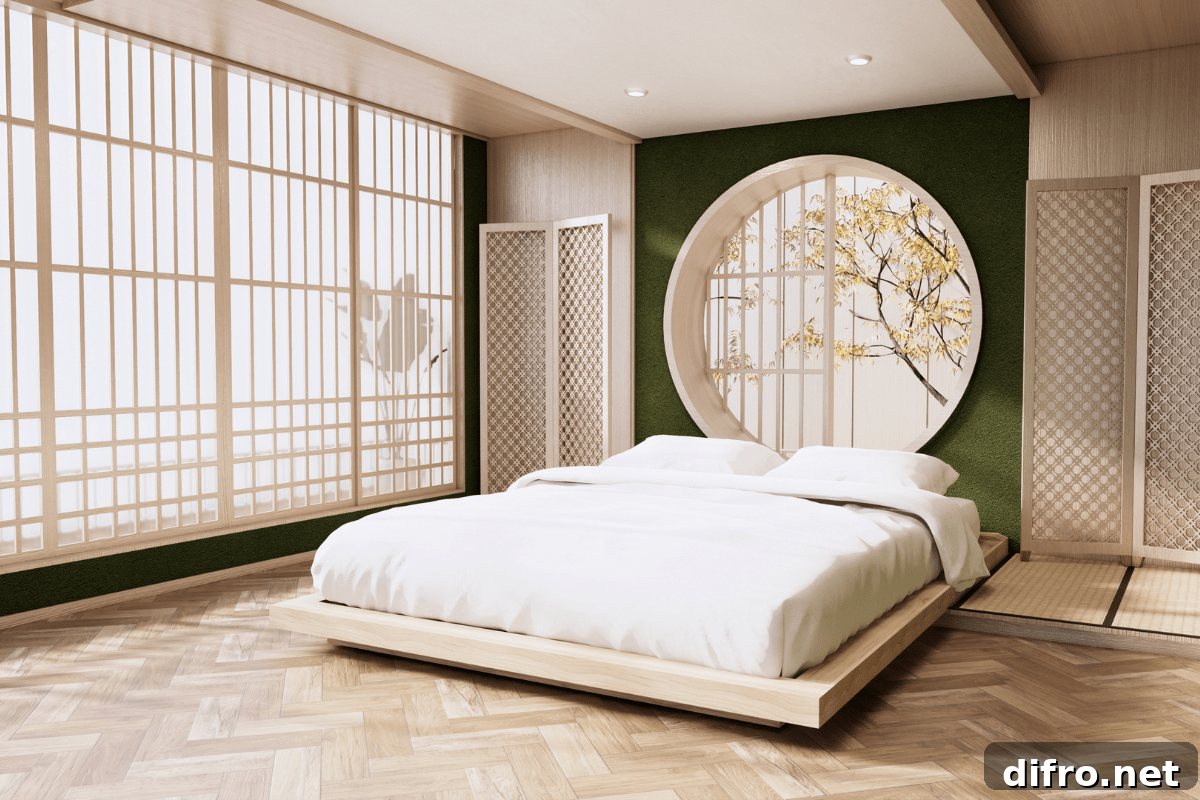
Natural materials are central to Japanese interiors. Use wood, bamboo, stone, linen, and cotton to create tactile and visual warmth. These materials are often sustainably sourced and contribute to an eco-friendly, healthy bedroom that feels connected to nature.
Choosing the Right Room
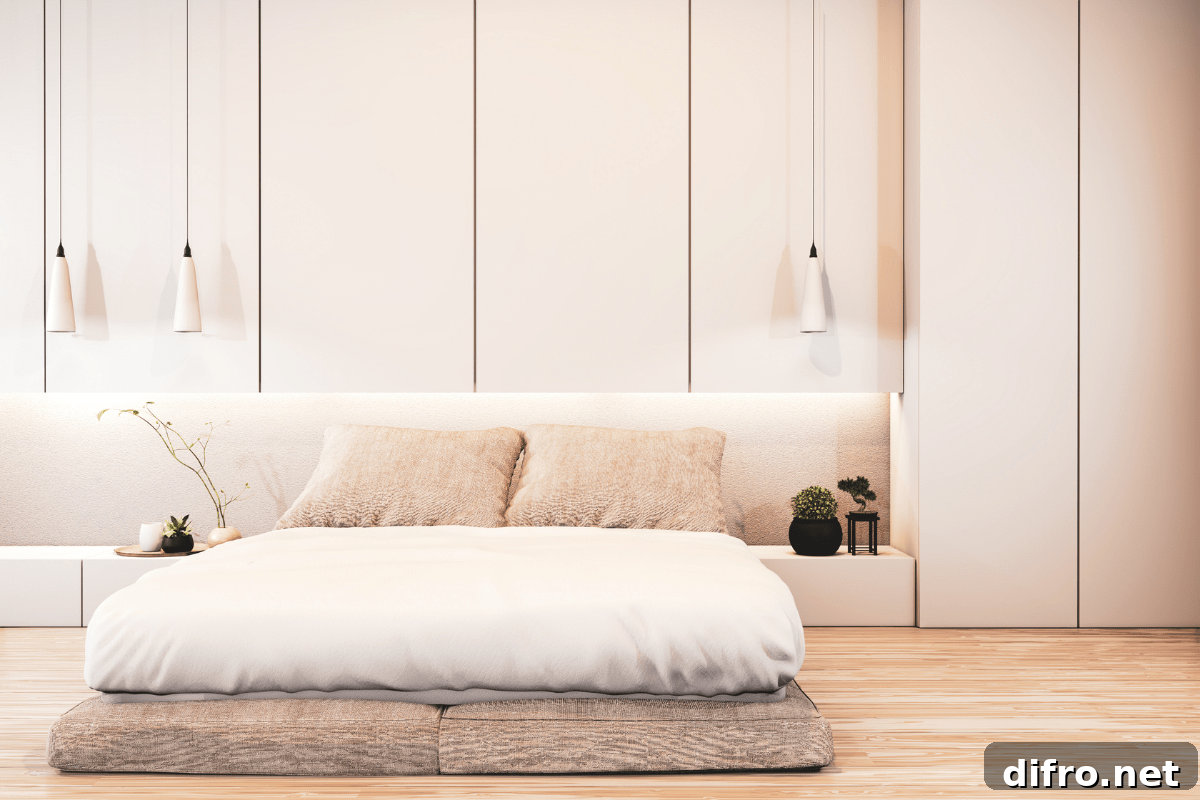
When selecting a room for a Japanese-style bedroom, aim for a rectangular layout and enough floor area to place tatami and a futon comfortably. Rectangular rooms support balanced furniture arrangements and clear sightlines, which help the space feel harmonious.
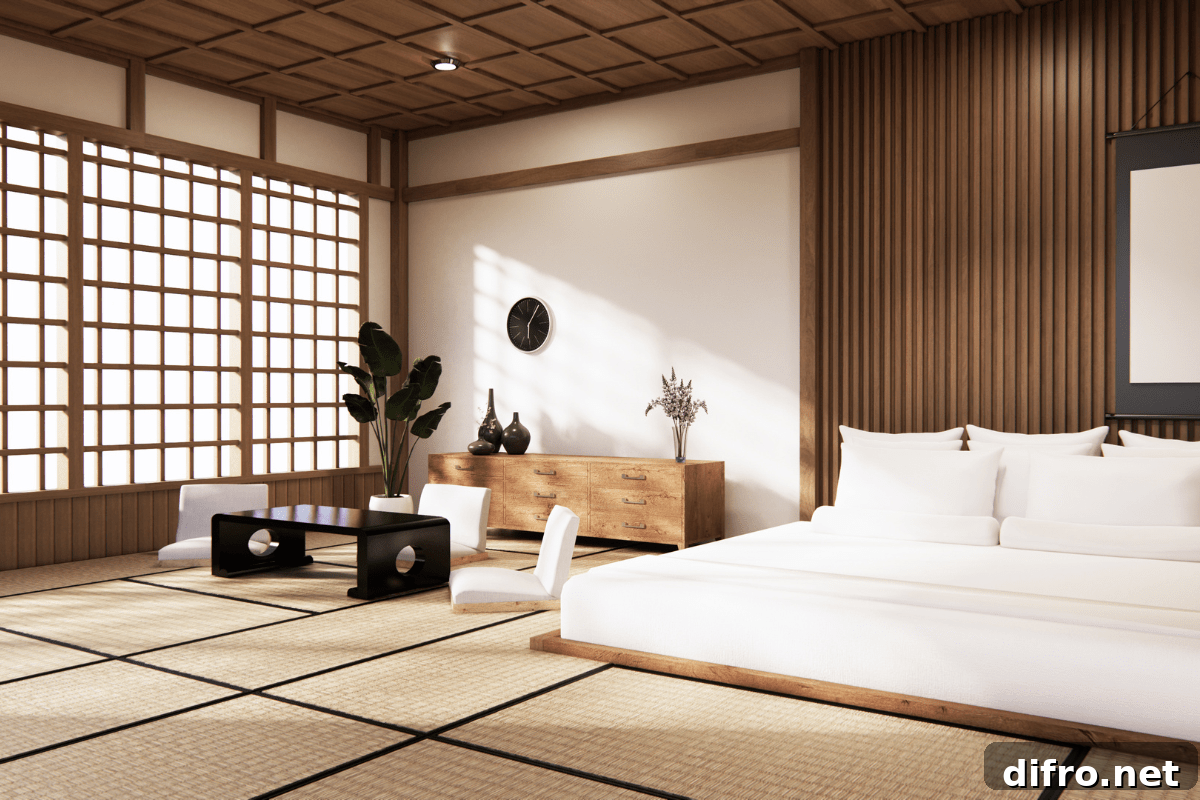
Maximize natural light with larger windows or shoji screens that diffuse daylight. Proper ventilation is also important to keep the room fresh and comfortable. Finally, apply the principles of minimalism and Wabi-sabi by removing unnecessary items and celebrating simple, well-made pieces.
Choosing Decor Pieces
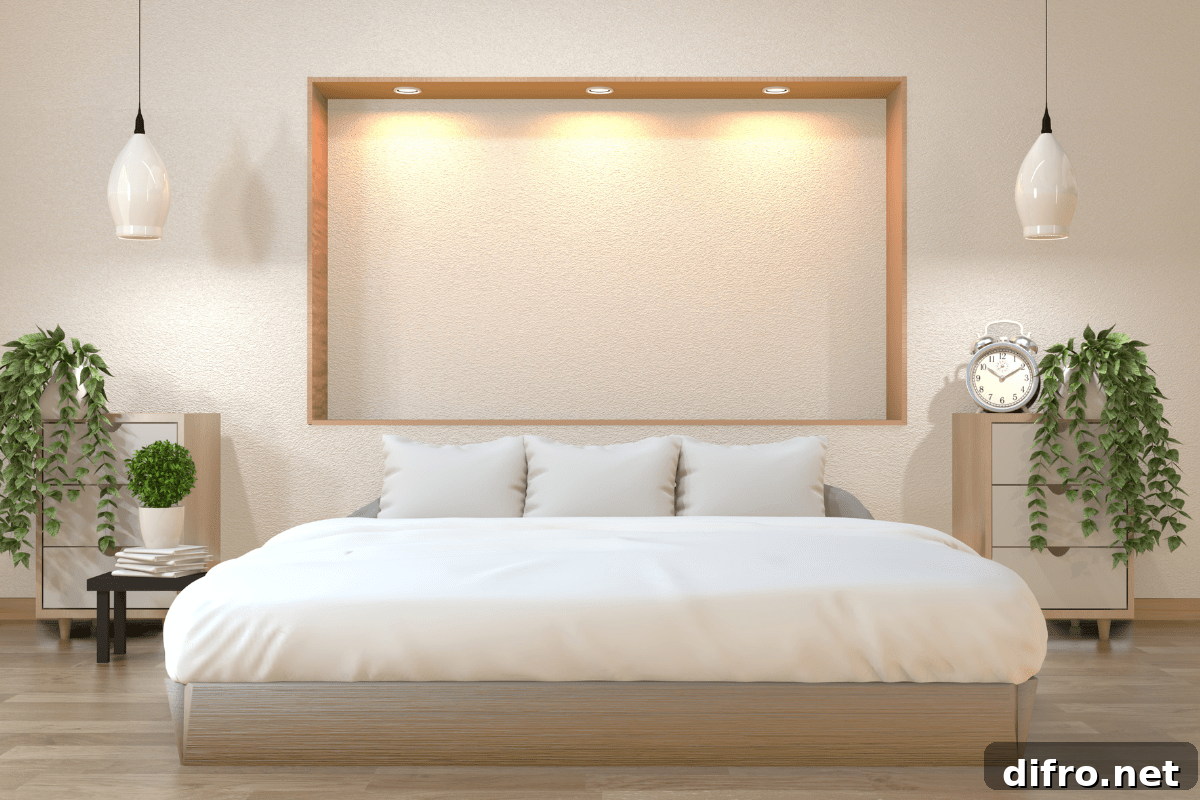
In a Japanese-style bedroom, less is more. Select a few meaningful items that serve a purpose and enhance the room’s mood. Favor neutral, earthy tones—beige, muted green, soft browns—and natural textures like wood, bamboo, and linen. A low wooden table, a single piece of calligraphy, a floor cushion, or an elegant lamp can provide character without clutter.

Too many decorations can break the tranquil mood. Keep surfaces clear and store items out of sight to preserve a sense of openness and calm.
Frequently Asked Questions (FAQs)
What are the key design elements of a traditional Japanese bedroom?
Key elements include tatami flooring, shoji screens, a low bed or futon, minimal furniture, and natural materials with a neutral color palette.
What is a shoji screen?
A shoji screen is a wooden lattice frame covered with translucent paper, used to partition rooms while allowing soft, diffused light to pass through.
What is tatami flooring?
Tatami mats are traditional Japanese floor mats made from woven rush grass over rice straw, prized for their texture, comfort, and subtle scent.
Is a low platform or futon bed necessary?
A low bed or futon is typical and helps achieve the minimalist profile of a Japanese bedroom, though you can adapt the concept to your comfort preferences.
Which colors suit a Japanese bedroom?
Natural earth tones—beige, soft greens, muted browns and greys—work best. Avoid loud, saturated colors that disrupt the calm atmosphere.
What lighting works best?
Use soft, warm light sources such as paper lanterns, low wall sconces, or concealed fixtures that produce a gentle, even glow.
How can I add Japanese-style furniture?
Choose pieces with clean lines and minimal ornamentation: low wooden beds, simple chests, small tables, floor cushions, and storage solutions that keep the room uncluttered.