Le Lupin House — A Compact, Modern Retreat by Atelier Pierre Thibault
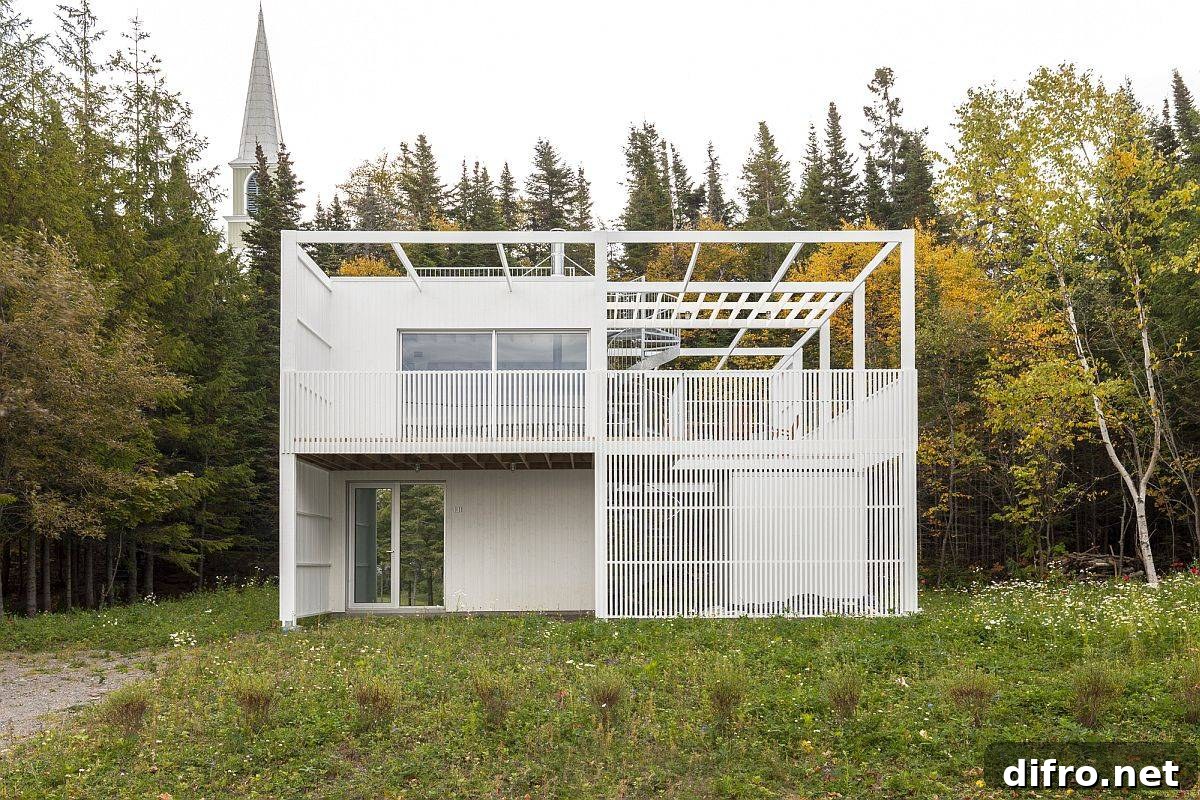
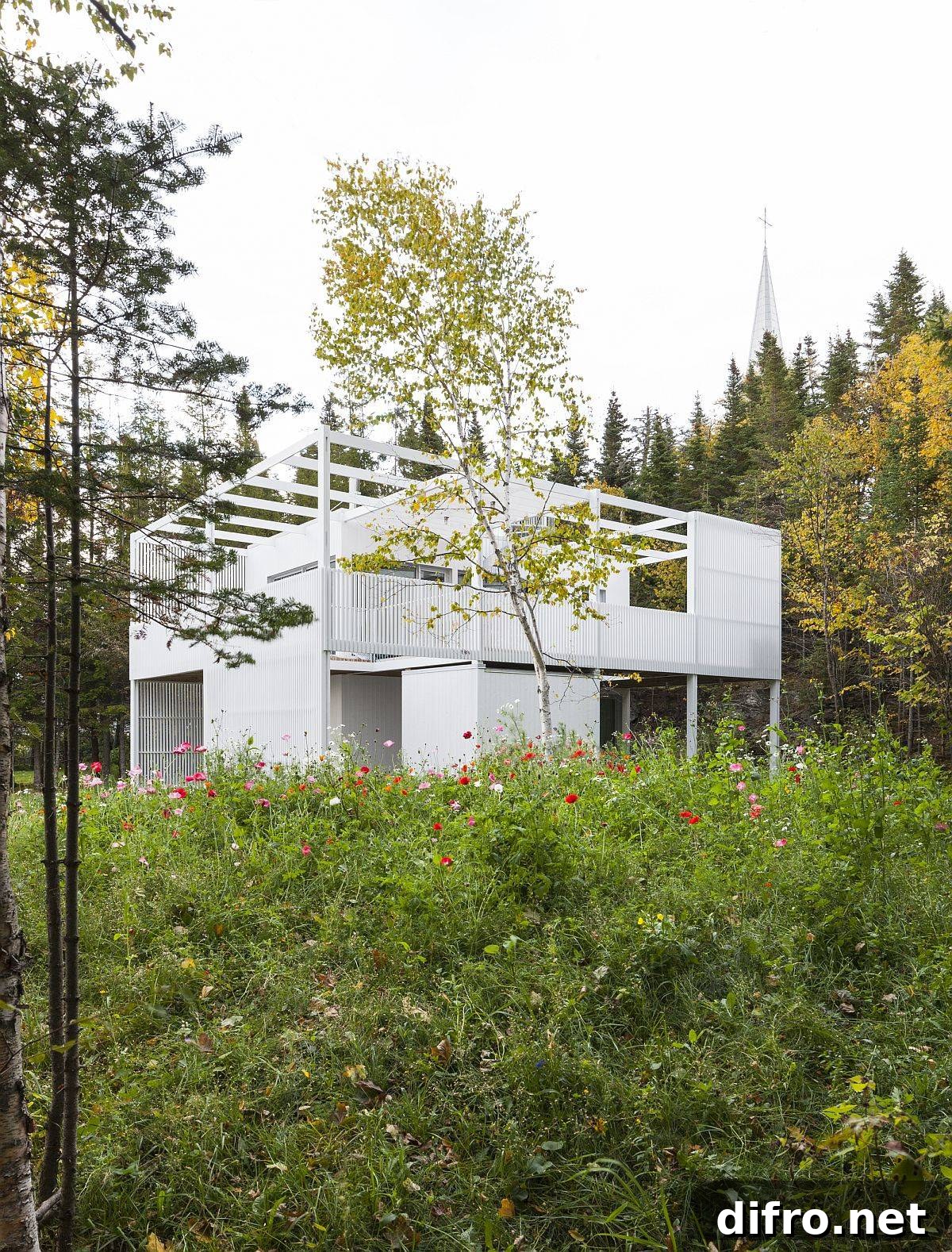
Le Lupin House, designed by Atelier Pierre Thibault, is a compact modern home painted predominantly white and set amid natural greenery. Perched near the Saint-Lawrence River, the house takes full advantage of its scenic location: wildflowers and native plantings enliven the landscape, while generous glazing and decks deliver sweeping river views. The design strikes a careful balance between a restrained, neutral interior palette and a bold, sculptural form that responds to sun, privacy and site conditions.
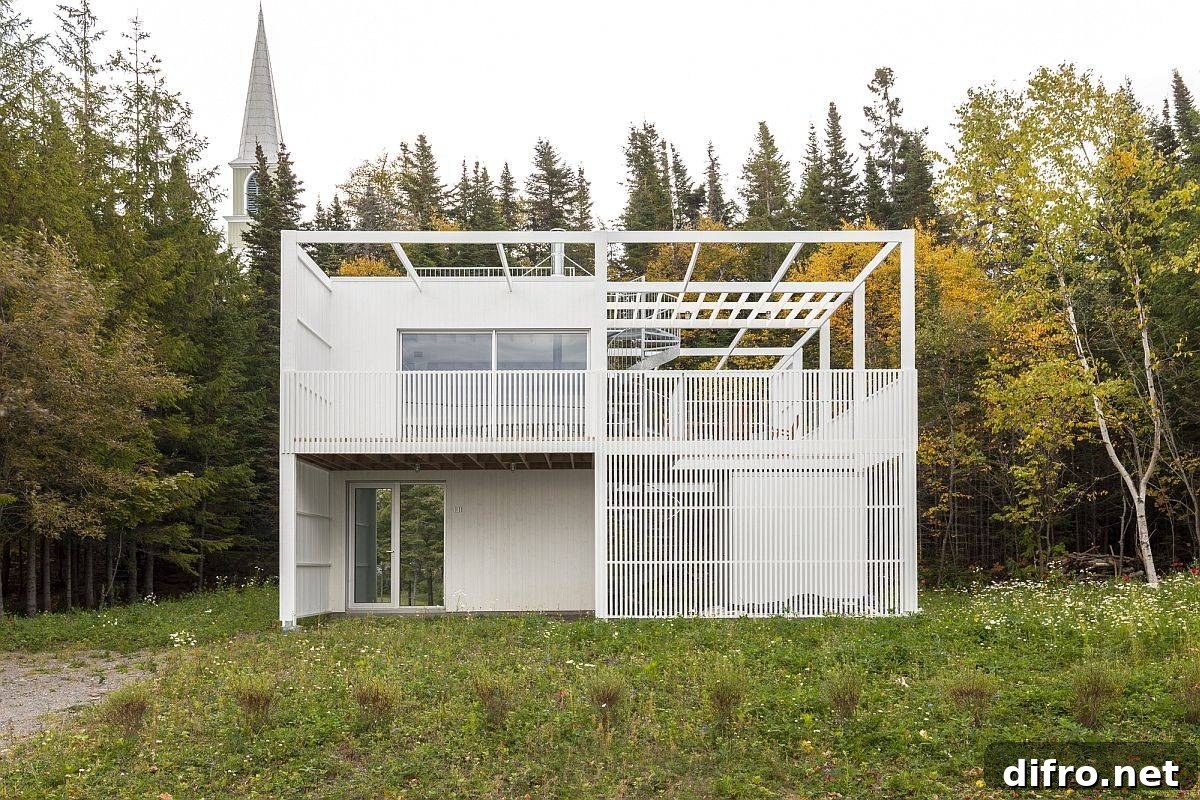
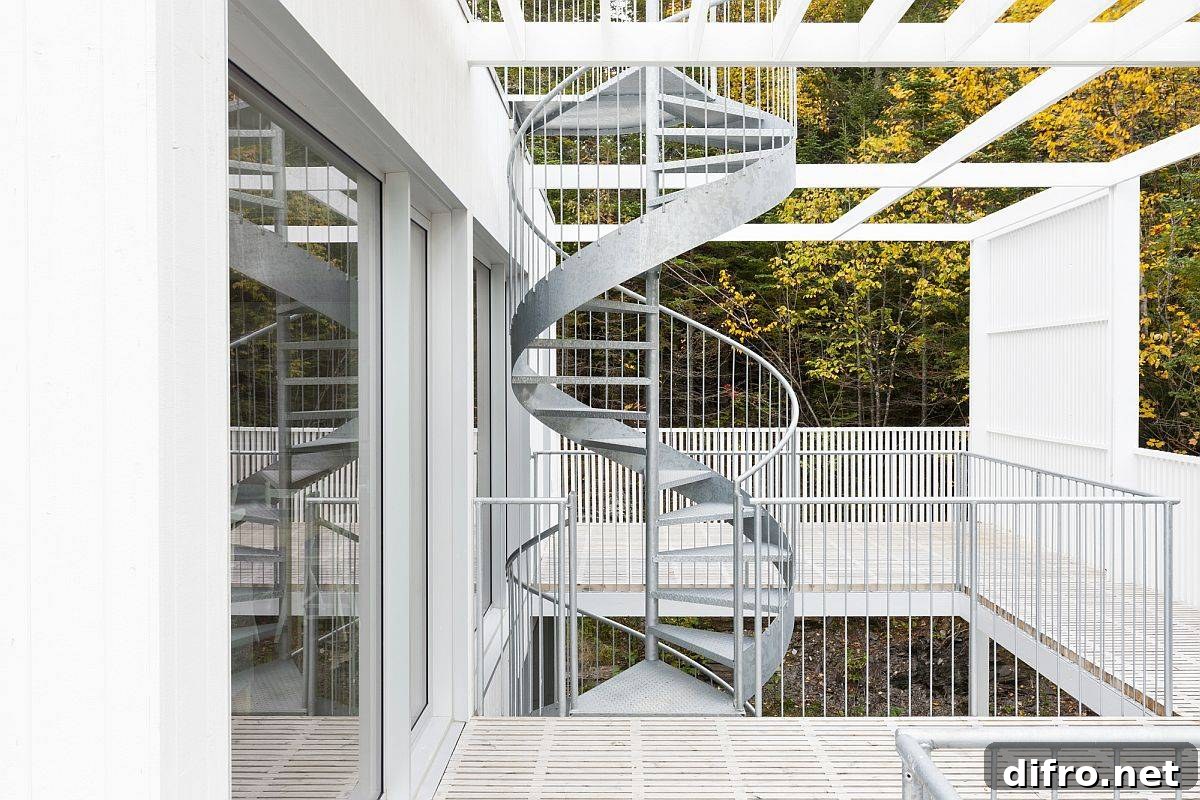
The residence sits comfortably among more traditional beach cottages, adopting a simple white color scheme that complements the surrounding homes while asserting its contemporary identity. A defining feature is the striking spiral staircase that links the three levels, creating a vertical spine that is as much an aesthetic gesture as a practical circulation element. Inside, the palette is intentionally muted; small bursts of accent colors are used sparingly to maintain calm and continuity throughout the compact plan.
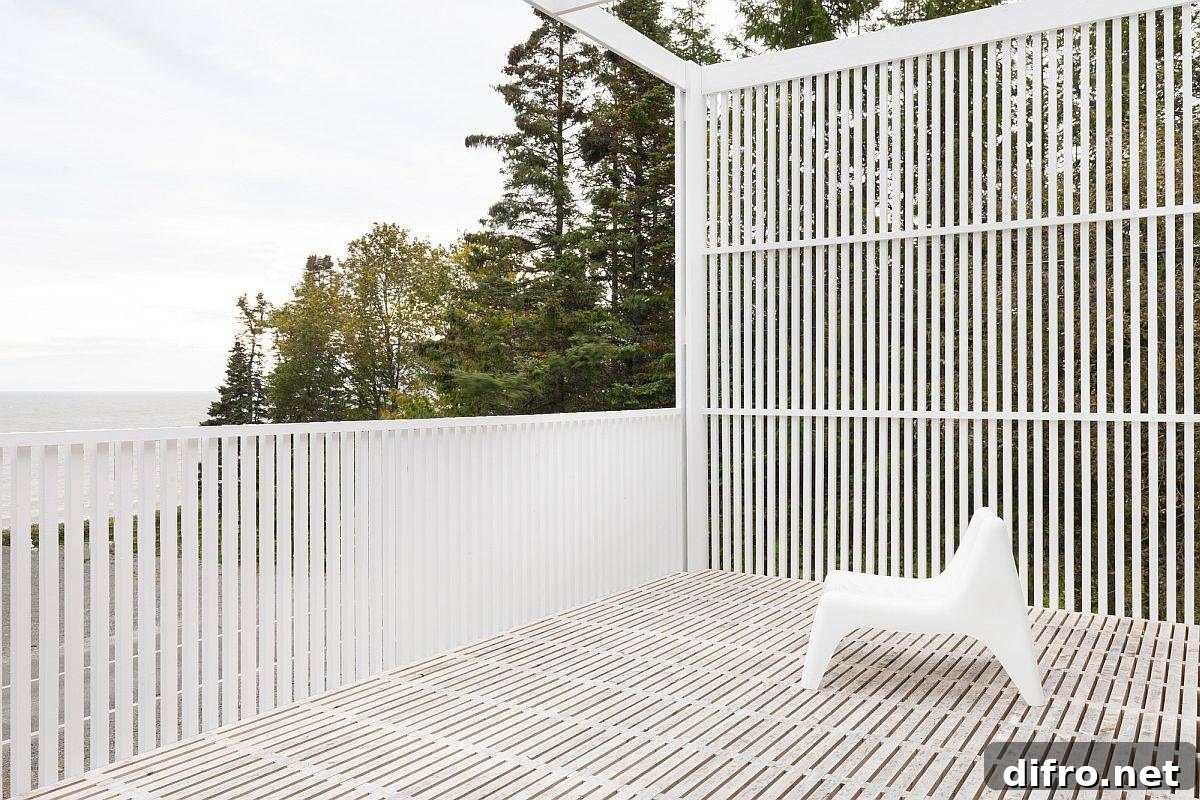
Vertical latticework wraps portions of the exterior, serving multiple practical and aesthetic purposes. This screening mitigates harsh low-angle sunlight on the lower level, provides privacy for bedrooms and helps the house read as a light, layered object within the landscape. The bedrooms are located on the lower floor, tucked below the main living areas to maximize views and daylight where they matter most.
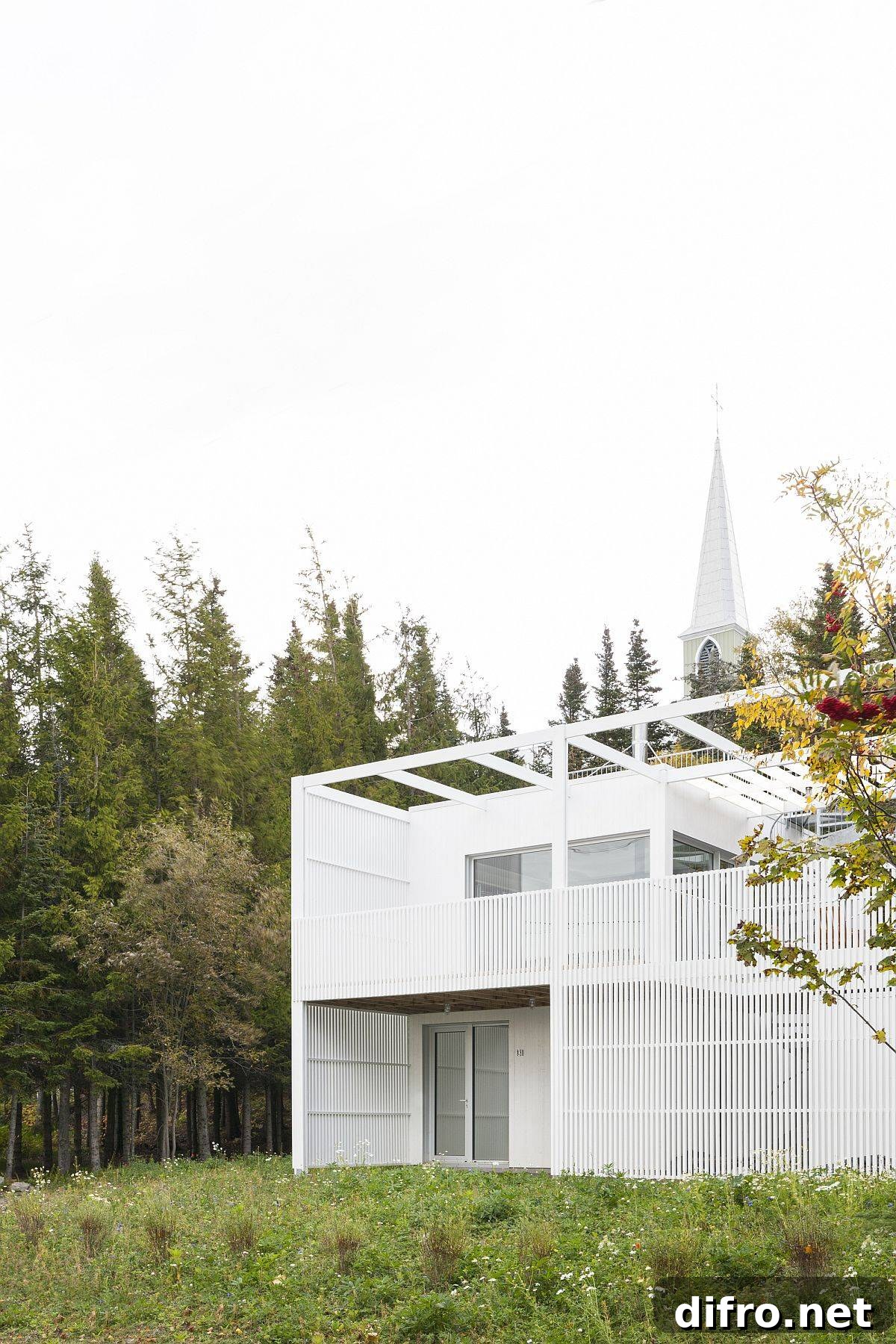
The upper level accommodates an open-plan living area, kitchen and dining space that flow onto a series of terraces and decks. Large glazed walls dissolve the boundary between interior and exterior, allowing the living spaces to open outward and capture panoramic views of the river. The sequence of outdoor platforms extends the home’s usable footprint and encourages outdoor living during the warmer months.
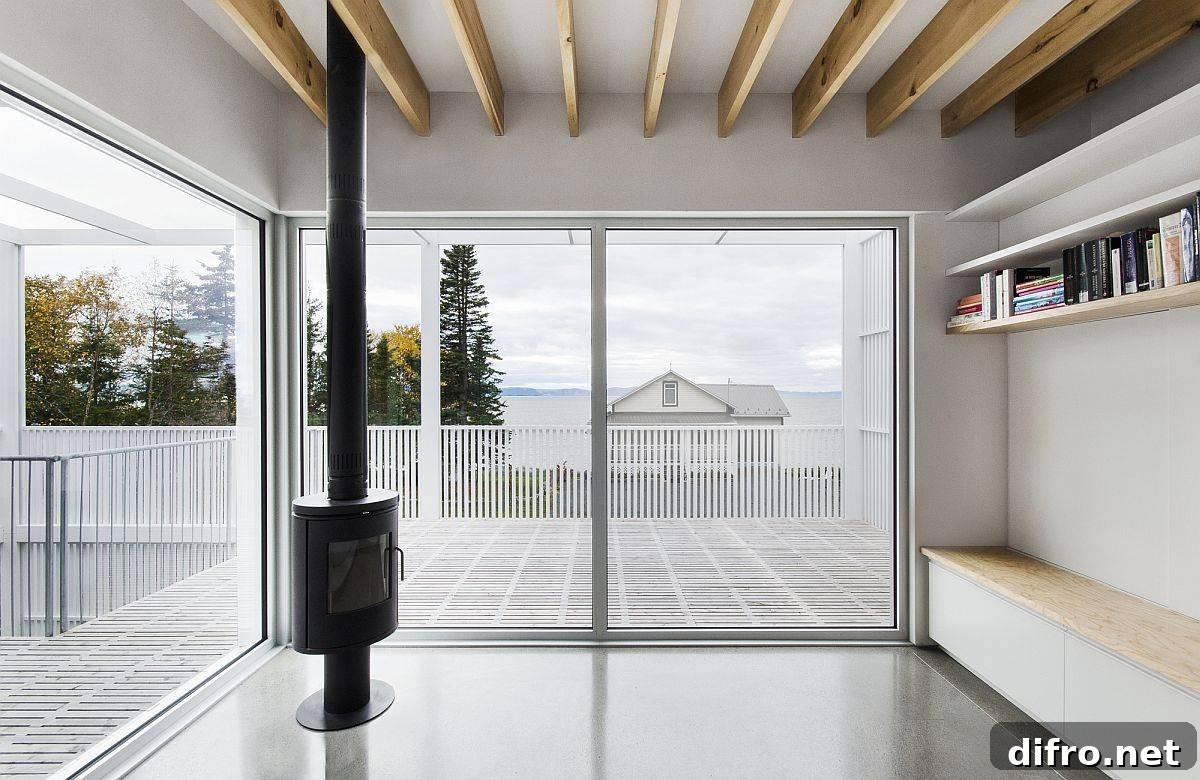
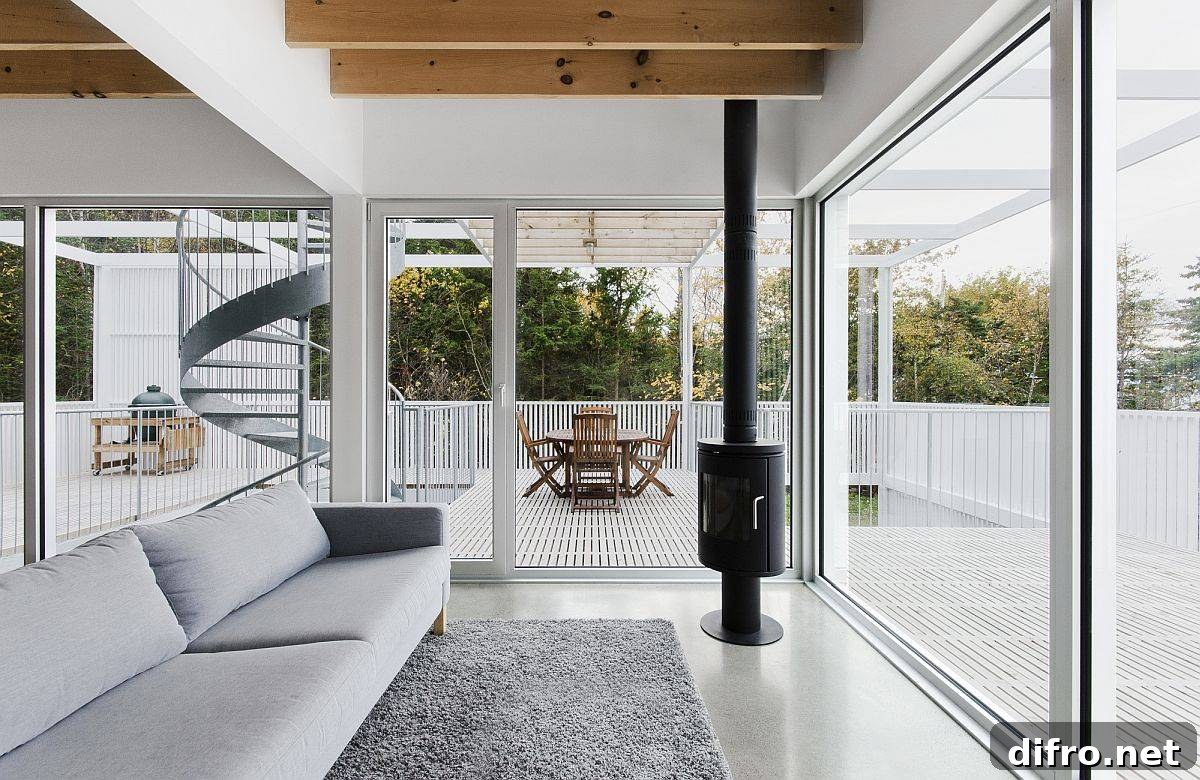
Planting is an integral part of the project. Wildflowers and surrounding grasses contribute a distinctive character to the setting, softening the building’s edges and providing seasonal color that changes through the year. These natural elements are deliberately foregrounded; with a compact footprint, the house relies on its landscape to create the sensation of space and to frame the views.
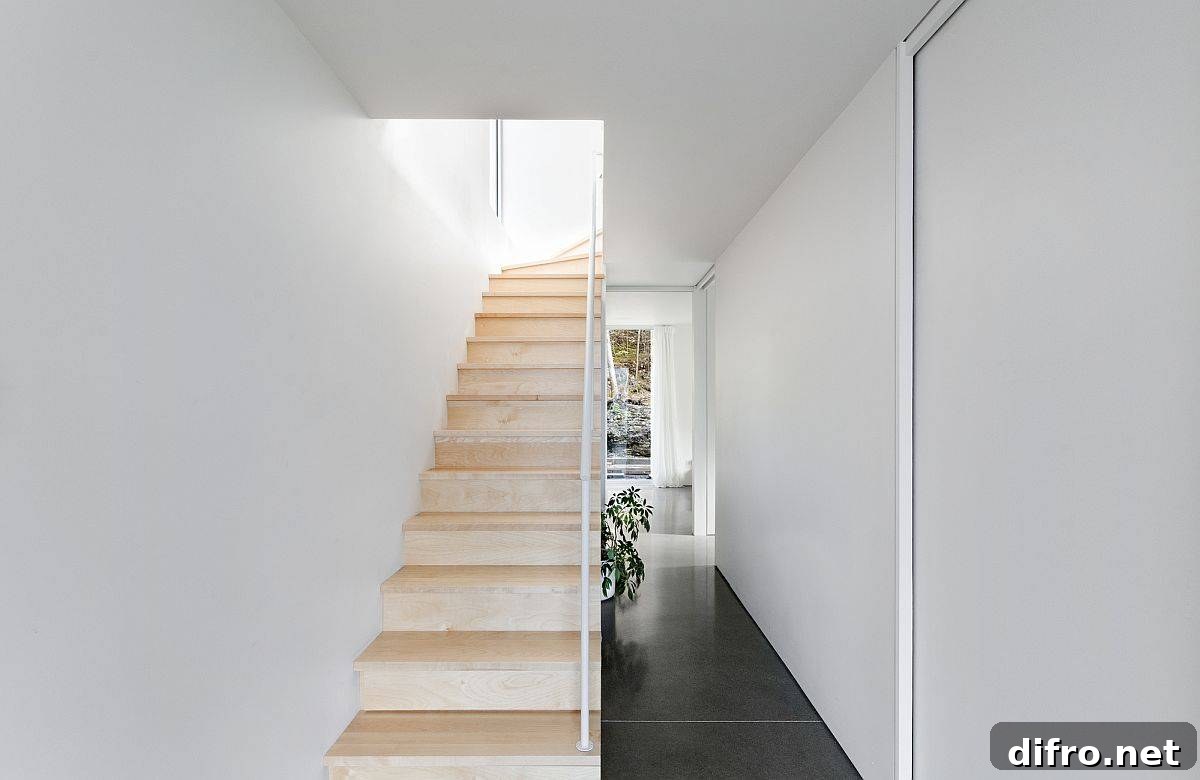
Inside, warm materials such as wood provide contrast to the predominantly white surfaces. A wooden staircase, for example, brings tactile warmth and simple elegance to the interior, complementing the metal spiral and reinforcing the home’s layered material palette. Well-considered lighting and minimal, contemporary furnishings keep the interiors feeling open, airy and uncluttered.
Terraces wrap the upper floor and are finished in the same restrained palette as the interior, reinforcing continuity between inside and out. These exterior spaces are oriented to maximize exposure to light and views while offering sheltered outdoor rooms that can be used for dining and relaxation. The overall effect is a compact, highly considered second home that feels larger than its footprint thanks to strong indoor–outdoor connections and a thoughtful relationship to its site.
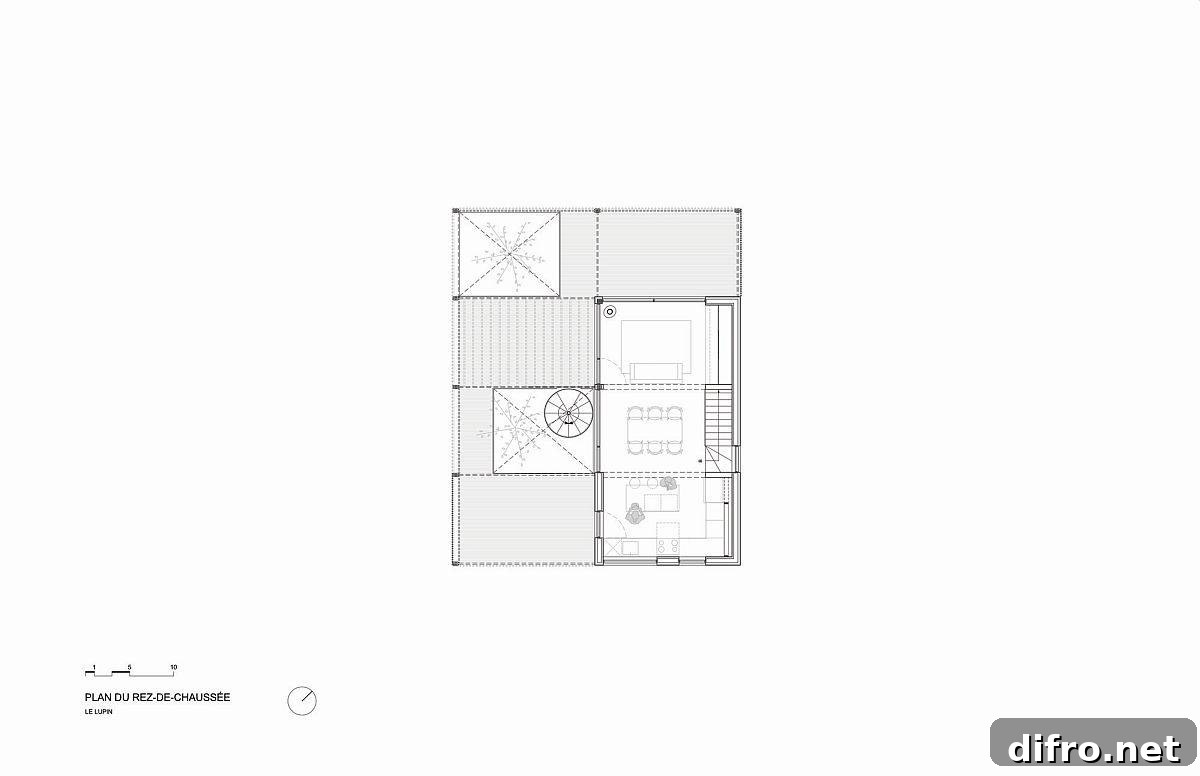
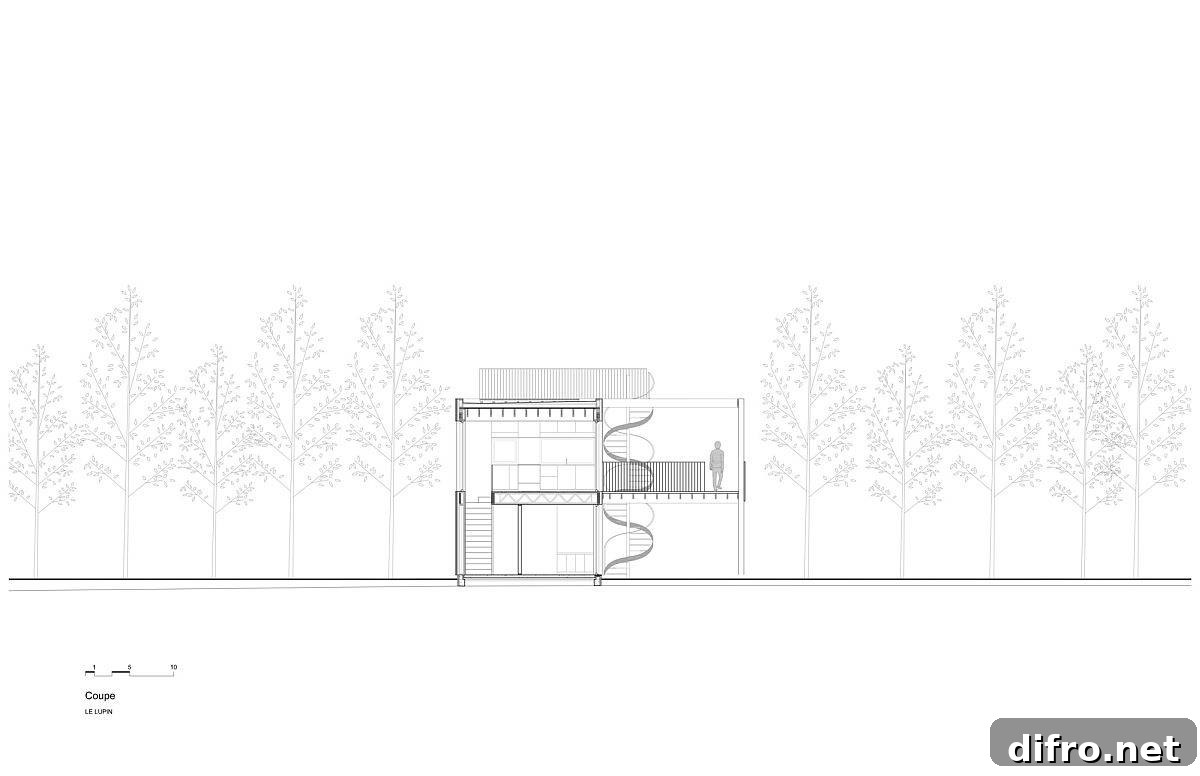
Architectural drawings included with the project show the ground-floor plan and a sectional view that clarify the arrangement of bedrooms below and living spaces above. The scheme prioritizes daylight and views where they are most valuable, while maintaining privacy and solar protection at the lower level.
Designed as a secondary home for a contemporary family, Le Lupin House is a study in efficiency and serenity. Its white exterior, considered material choices, layered screening and strong connection to the landscape together create a calm, inviting retreat that celebrates both architecture and the natural setting.
Photography: Maxime Brouillet