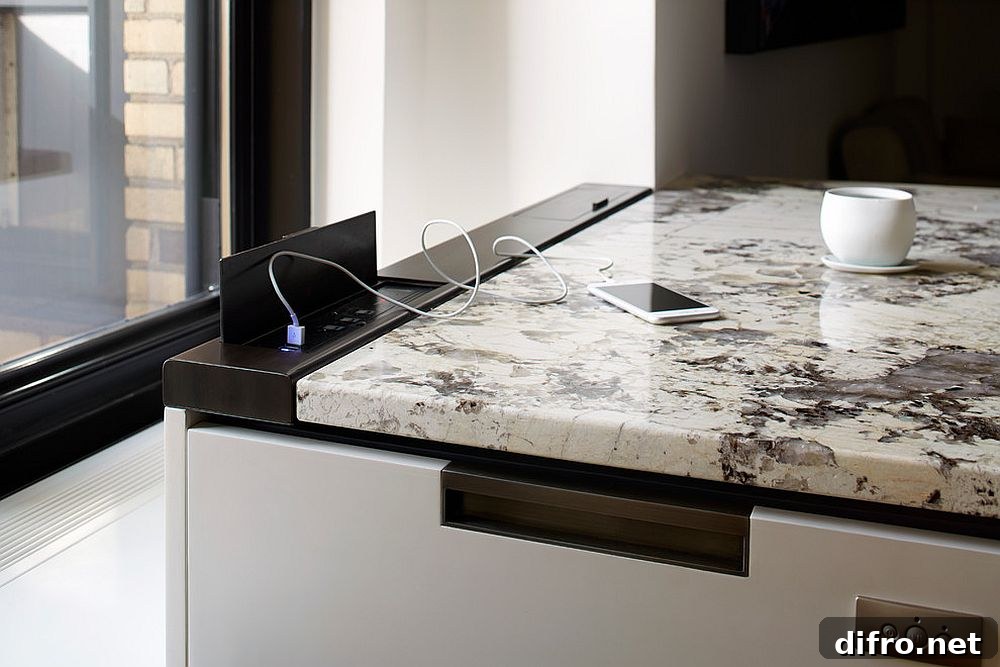
We live in an age when being away from our devices for even a few minutes feels more uncomfortable than being apart from loved ones for days. Staying connected has become central to daily life. We share details of our lives constantly, and practical needs mean our smartphones, tablets and laptops should always be within reach and ready to go. That’s where smart kitchen charging stations come in: thoughtfully designed charging solutions that keep devices powered, organized and safely out of the way while the family gathers in the kitchen.
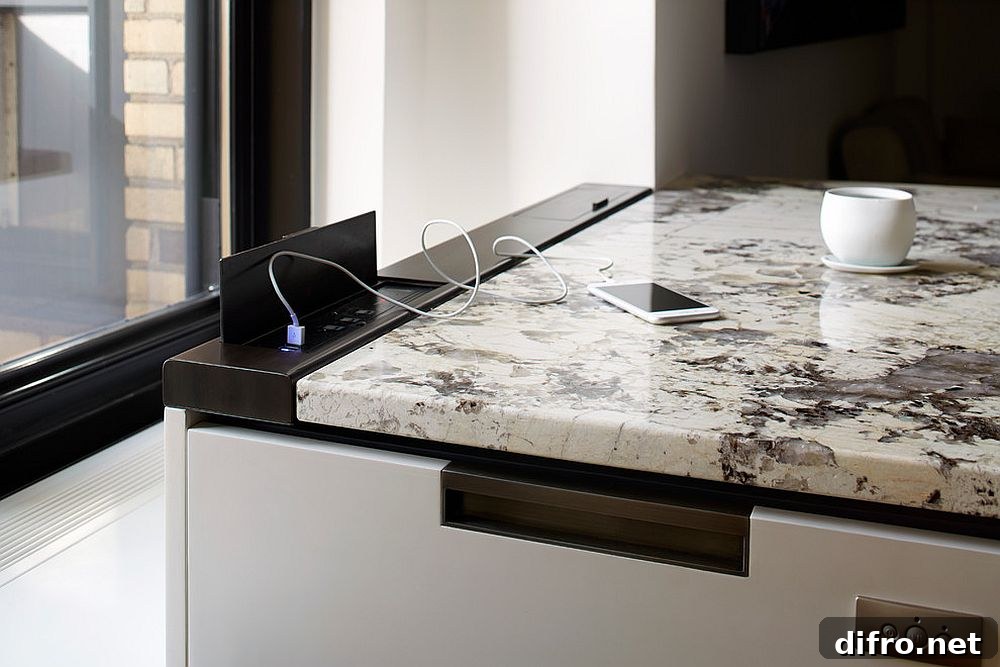
We often check our smartphones, tablets and laptops throughout the day, and the kitchen has become a natural gathering point where devices are used, charged and stored. A dedicated kitchen charging station helps you keep everything organized: no more tangled cords across the countertop, no more frantic searches for an available outlet, and fewer devices left at risk near sinks, ovens or high-traffic areas. Below are practical ideas for creating a charging station that suits your home and keeps devices safe and charged.
Kitchen Drawers Reimagined as Charging Stations
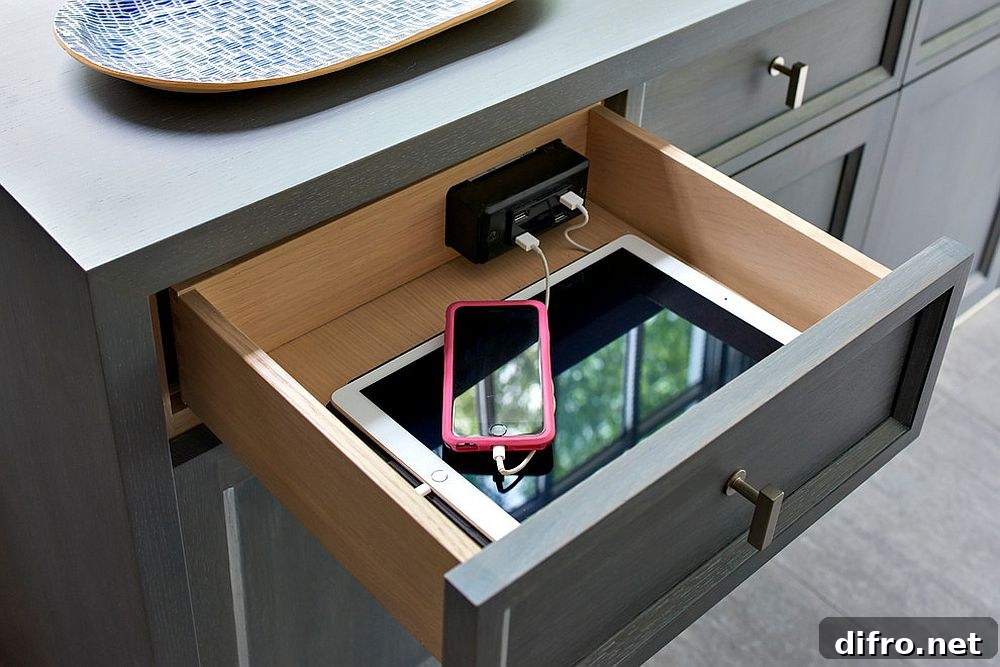
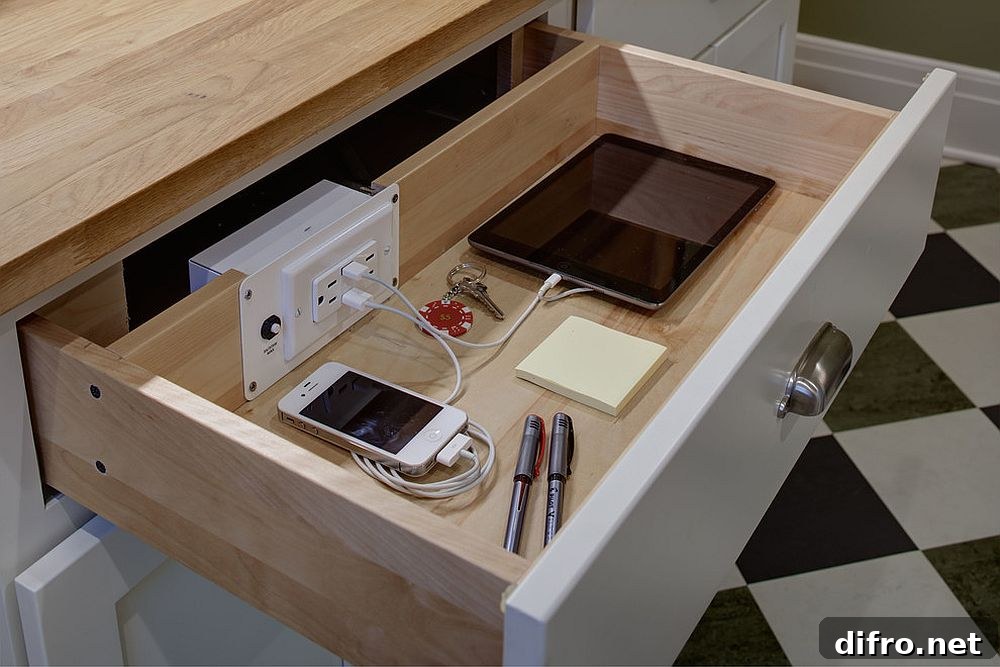
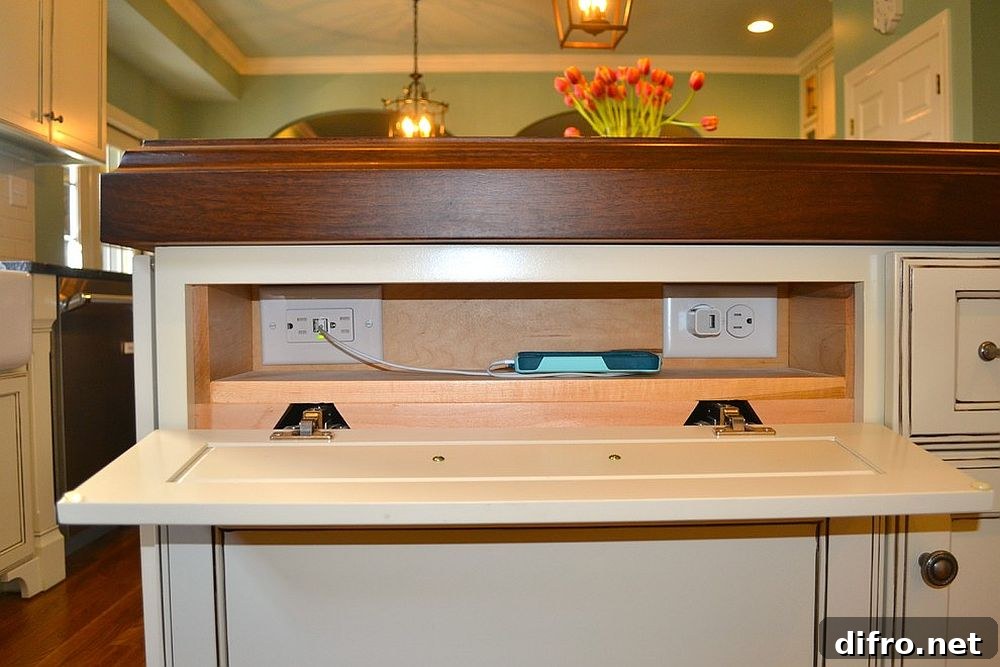
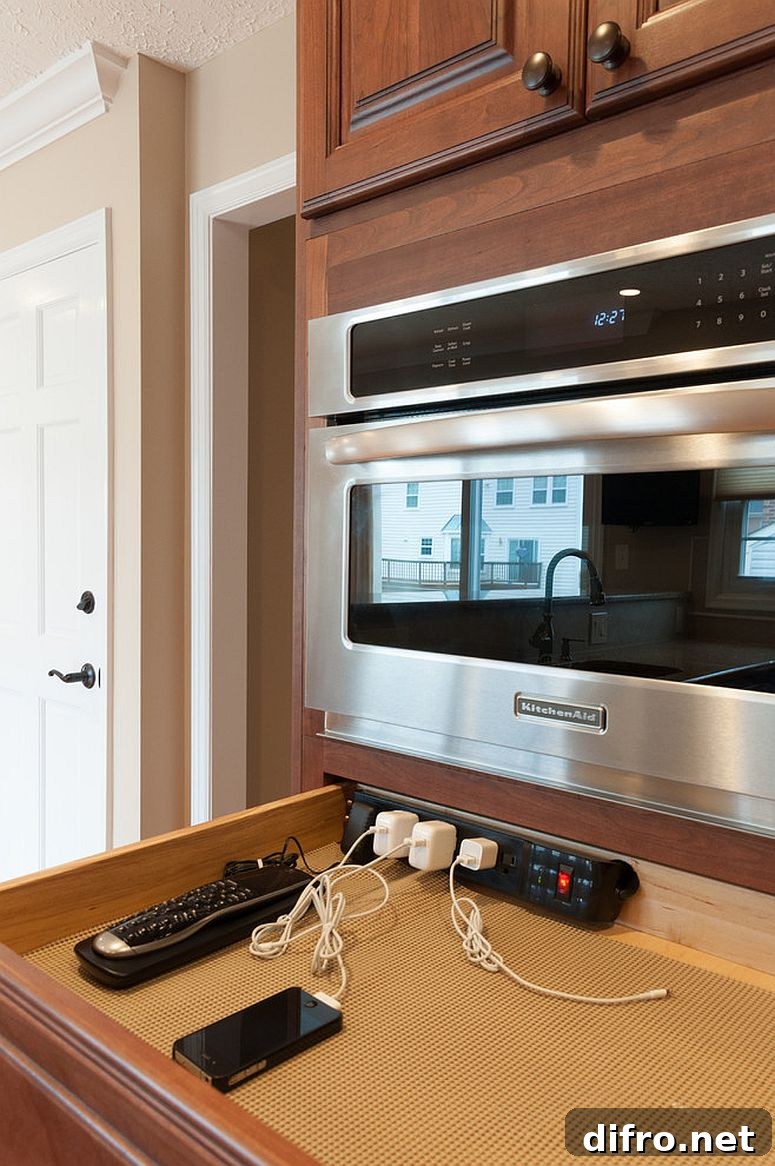
Converting a kitchen drawer into a charging station is one of the simplest and most cost-effective solutions. A single drawer can hide chargers and cables while providing a secure, enclosed place for phones, tablets and even small laptops. Fitted with a multi-port power strip or USB hub, a drawer charging station eliminates clutter and keeps devices protected from spills and heat. For families who want to keep devices out of direct sight but readily available, this approach is both discreet and practical.
Related: 24 Tiny Island Ideas for the Smart Modern Kitchen
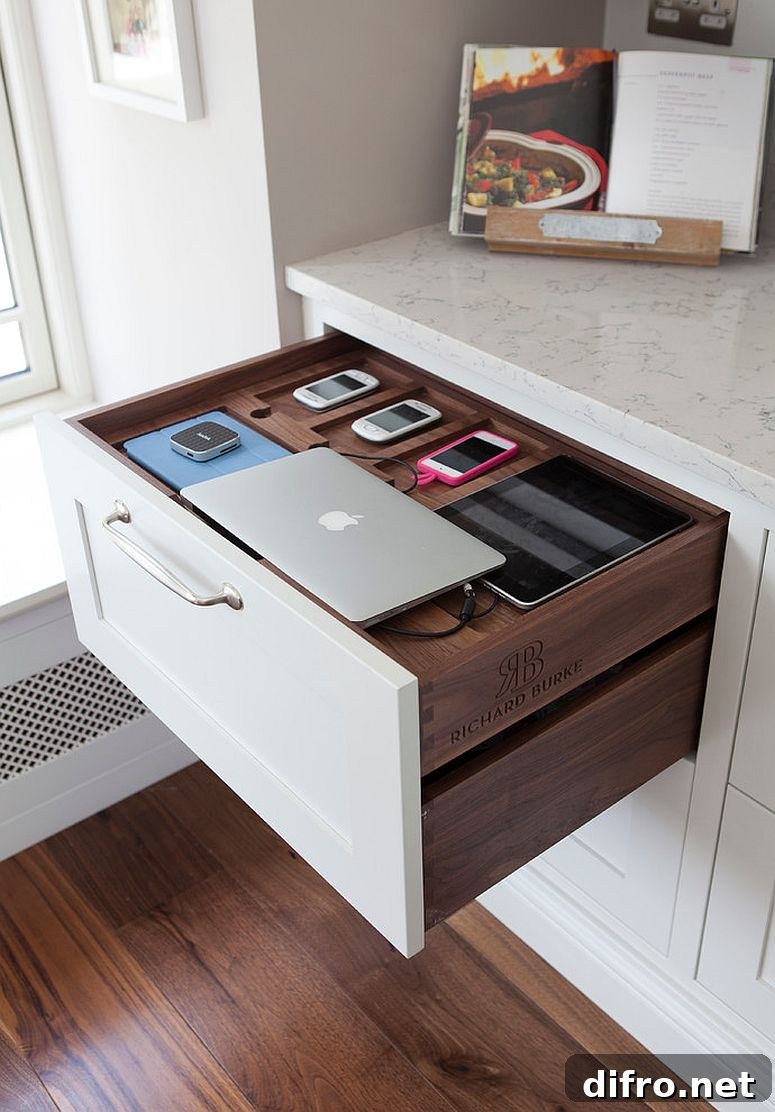
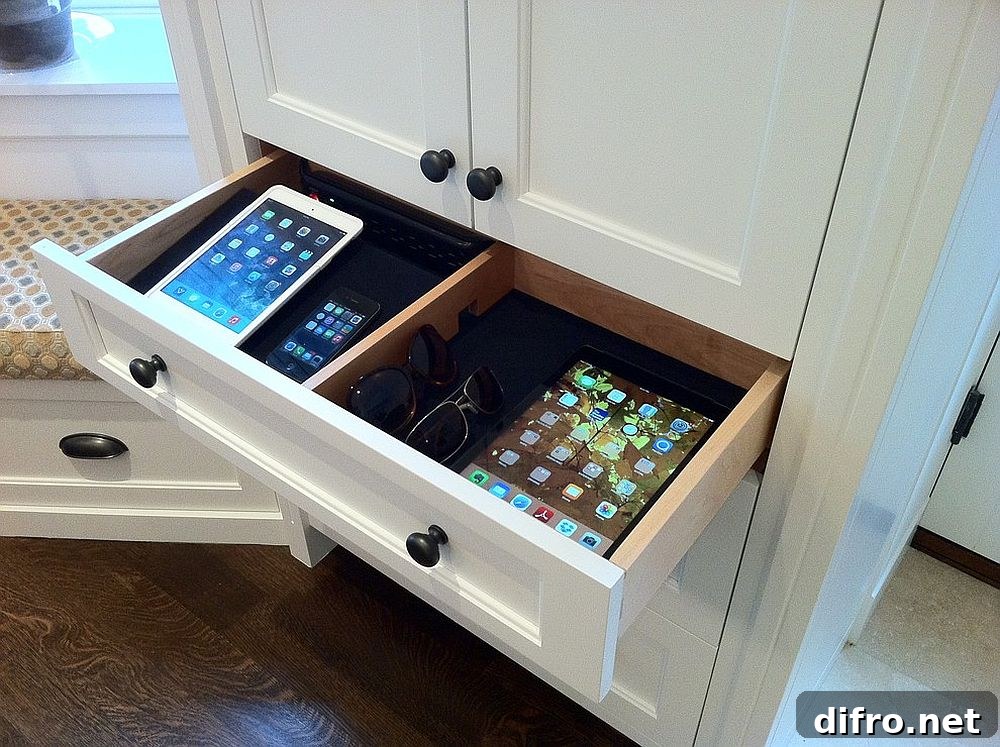
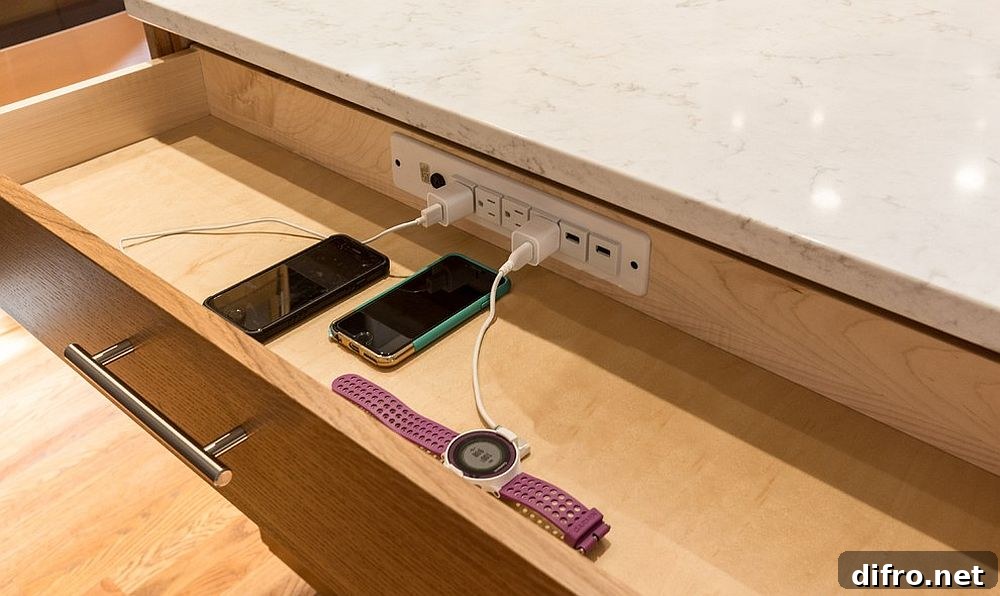
An Open Charging Station: Visibility and Convenience
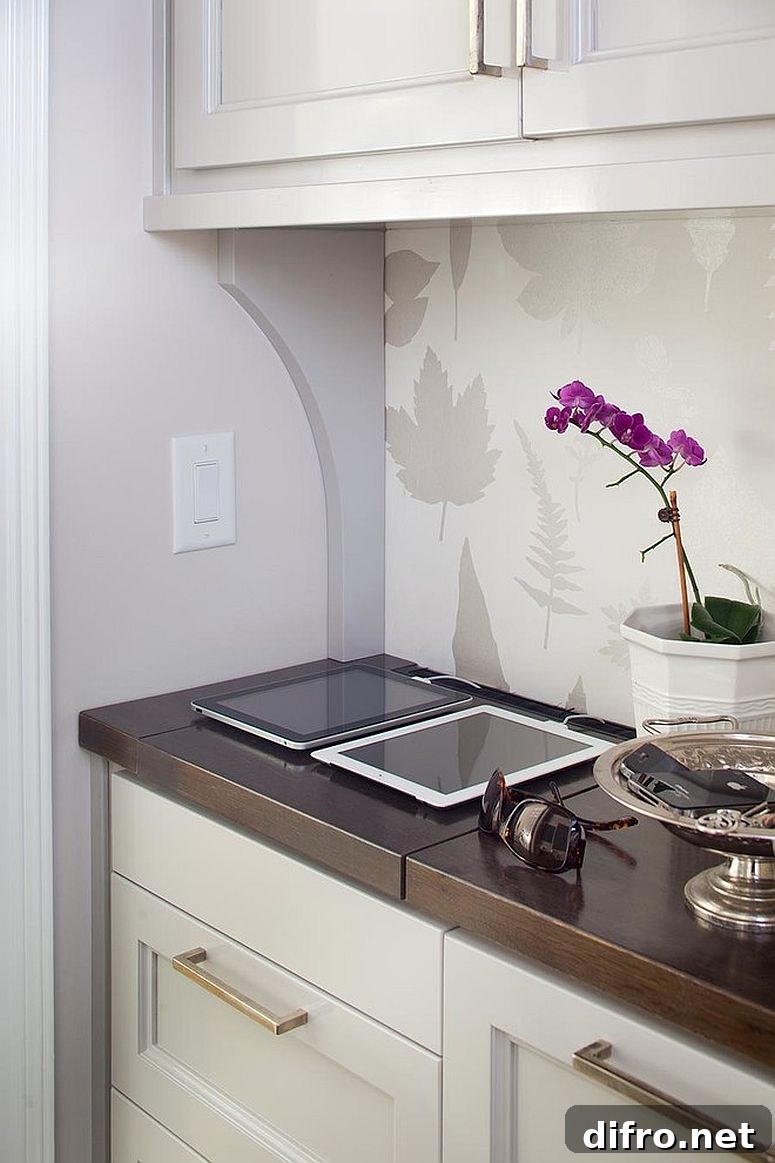
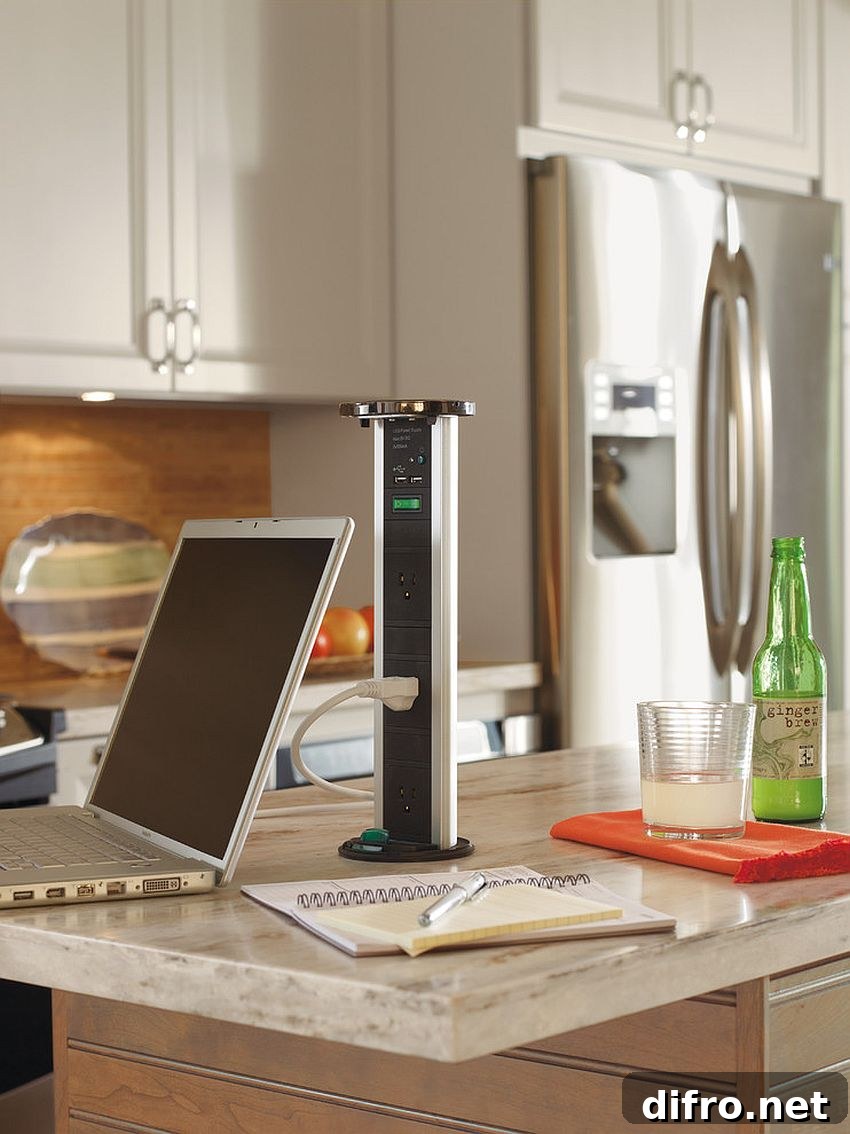
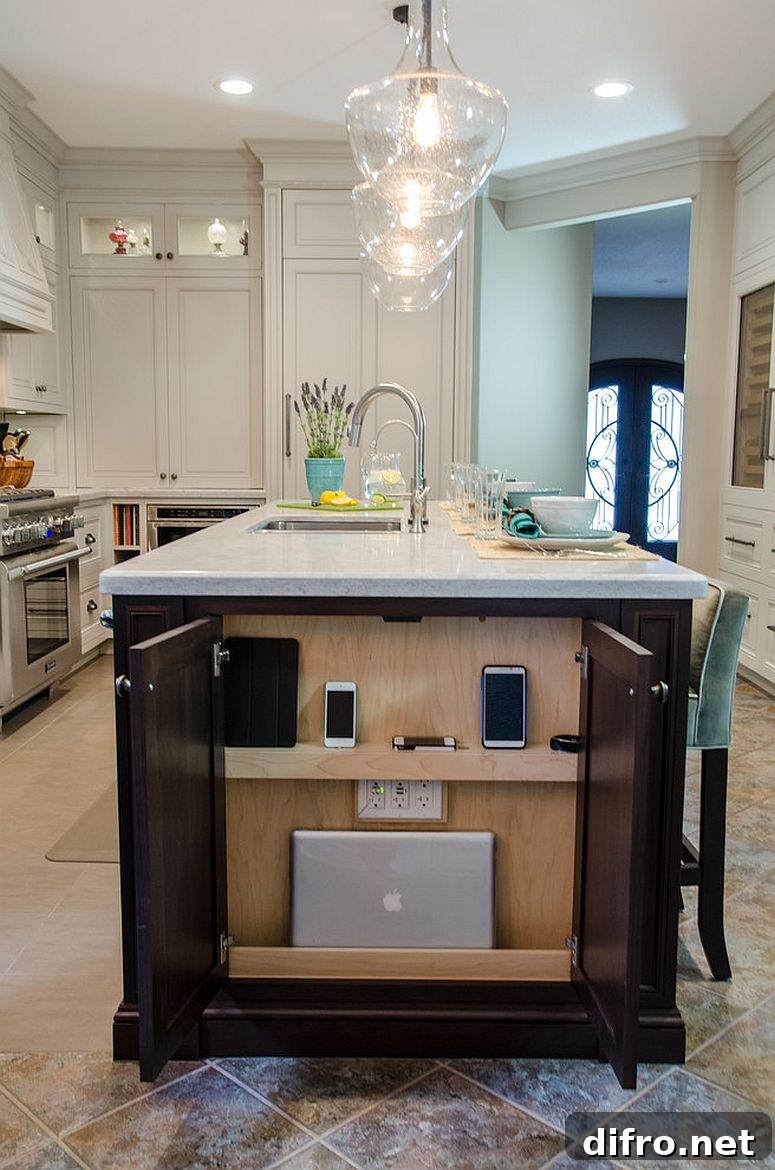
If you prefer to keep devices in sight so you can respond quickly, open charging stations work well. Corner spaces and under-counter nooks often already have nearby outlets, making them convenient spots for an open charging area. A kitchen island countertop can also serve as a charging hub, provided you place devices away from cooking and spill zones. Open setups allow you to monitor devices, keep them charged, and avoid the extra step of opening drawers or cabinets.
Related: 20 Charming Coffee Stations to Wake Up to Every Morning
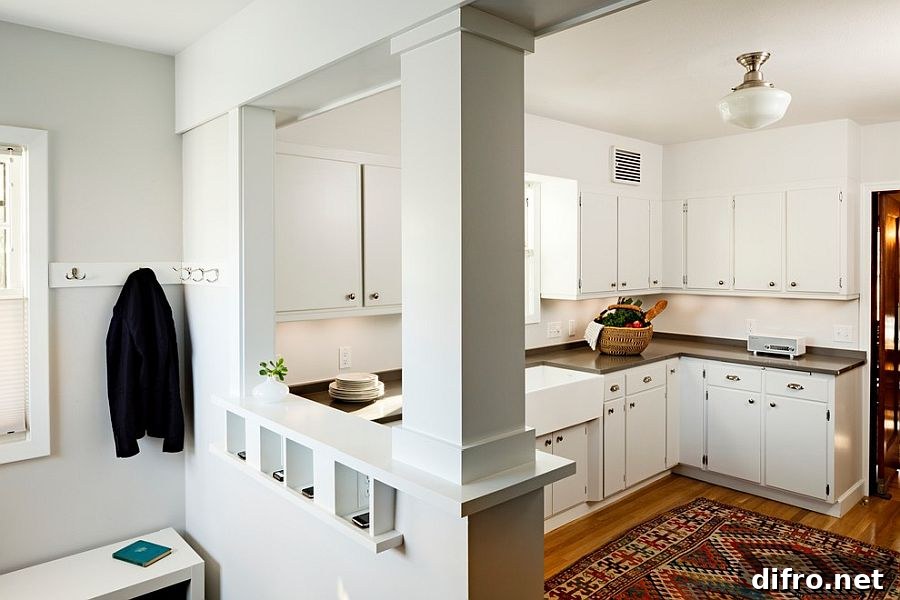
Choosing What Works for Your Family
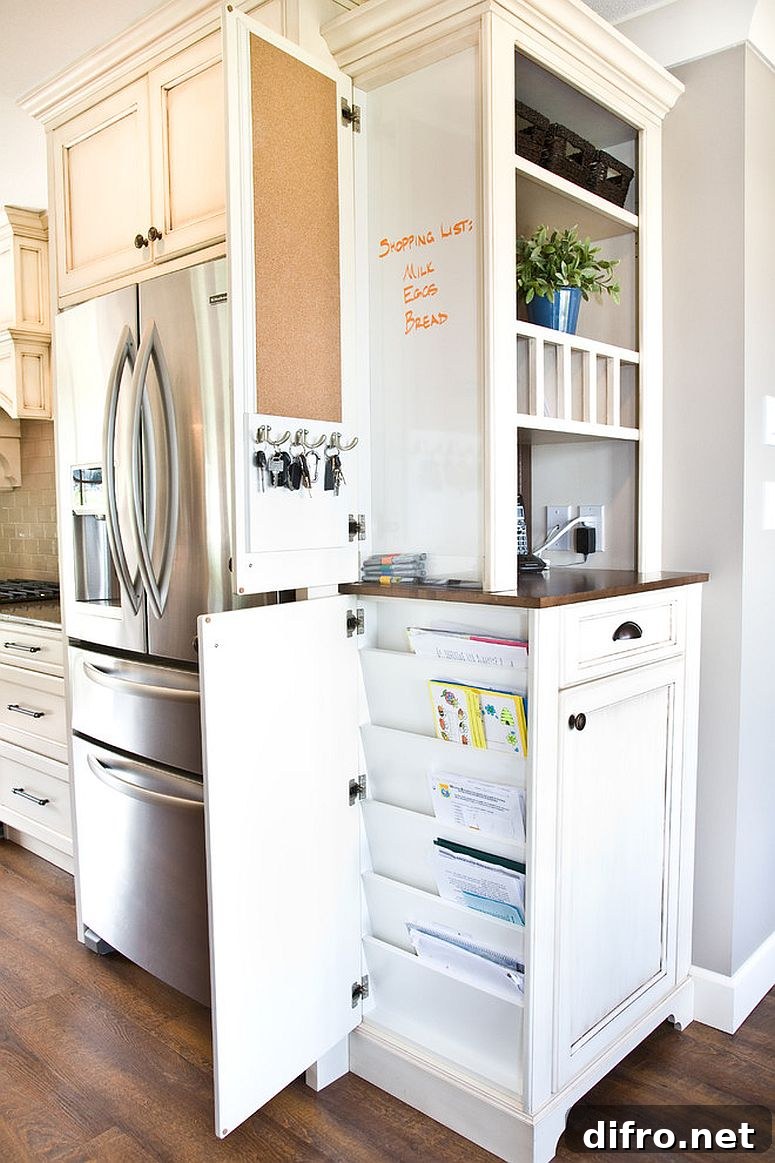
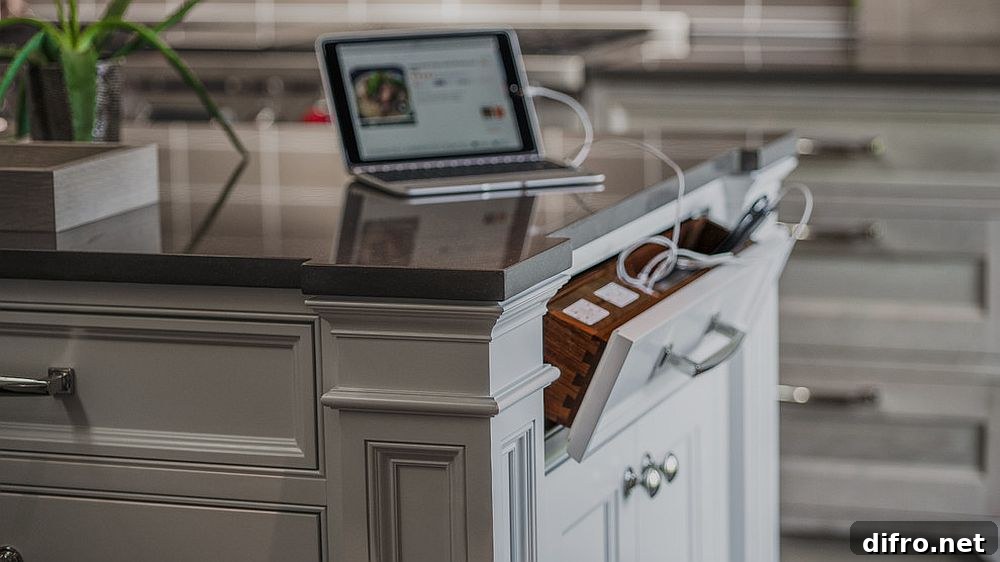
Before settling on a charging solution, consider how your household uses devices. Flip-out units with built-in USB ports are especially convenient because they eliminate the need for individual adapters and keep charging straightforward. These pop-out or tip-out modules can attach under countertops, at the end of an island, or inside cabinets. For larger families, cabinets with multiple outlets or custom charging drawers provide enough capacity so everyone can charge without competing for ports.
When planning a charging station, prioritize safety and accessibility: locate power strips away from water and heat sources, secure cords to avoid tripping hazards, and consider surge protection for expensive devices. Think about ventilation as well—closed cabinets are great for hiding cables but should still allow some airflow for devices that warm while charging.
Related: Elegant Stage Offers A Discreet Charging Shelf For Your Smart Gadgets
While countertop surfaces that charge devices wirelessly as you set them down are becoming more realistic each year, a small, well-planned kitchen charging station is an accessible upgrade today. It keeps devices powered, organized and protected—and it’s an idea the whole household will appreciate.