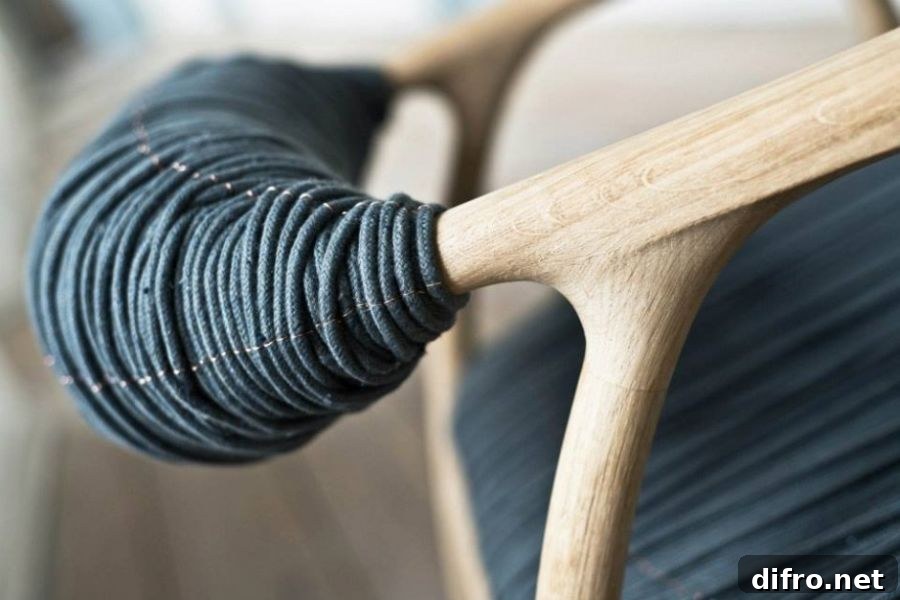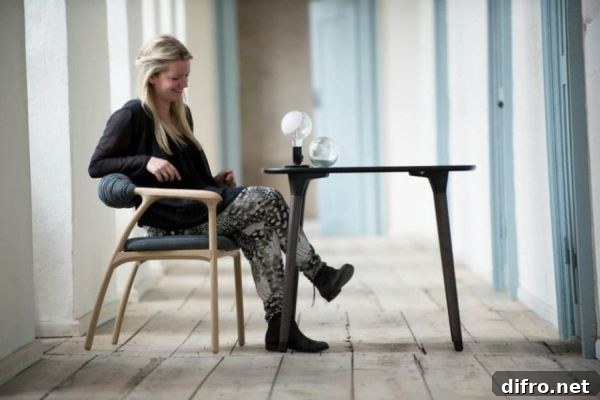
Designed with a careful balance of simplicity and inventiveness by Trine Kjaer Design Studio, the Haptic Chair merges rustic character with a clear modern minimalism. Its sculpted oak frame and textured upholstery draw the eye, while the finely finished craftsmanship encourages closer inspection and invites the sense of touch. The concept behind the Haptic Chair centers on tactile experience: by combining contrasting materials and surface treatments, the piece seeks to reawaken our awareness of texture and how it shapes our relationship with everyday furniture.
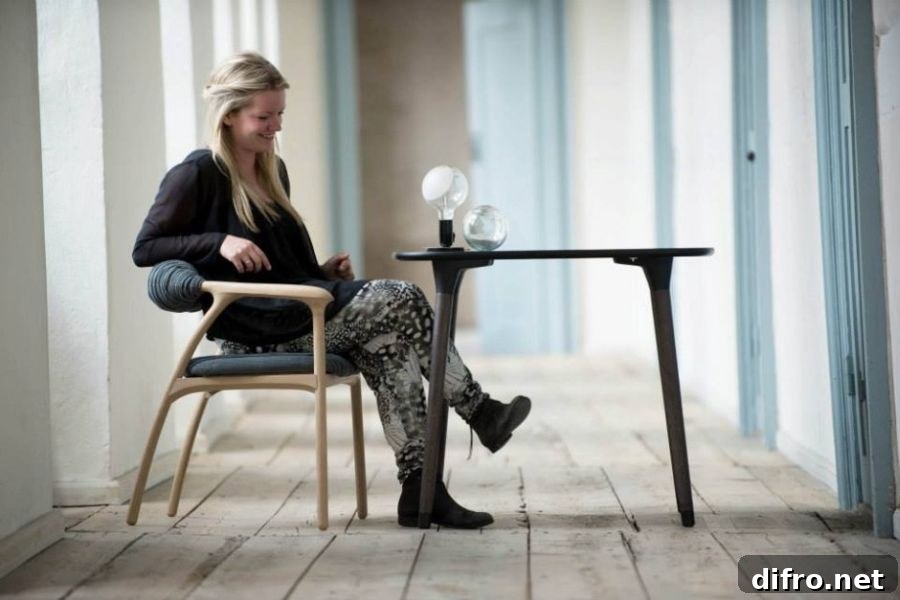
The chair is crafted from oak and fabric, a pairing that highlights the contrast between warm, smooth wood and intentionally coarse upholstery. The oak provides a clean, curving silhouette that reads as contemporary and restrained, while the textured fabric used on the seat and back offers a tactile counterpoint. This deliberate opposition of surfaces is key to the chair’s identity: visually minimal, yet rich in sensory detail. Because of its restrained form and honest materiality, the Haptic Chair adapts easily to modern interiors, adding visual interest without overwhelming a room.
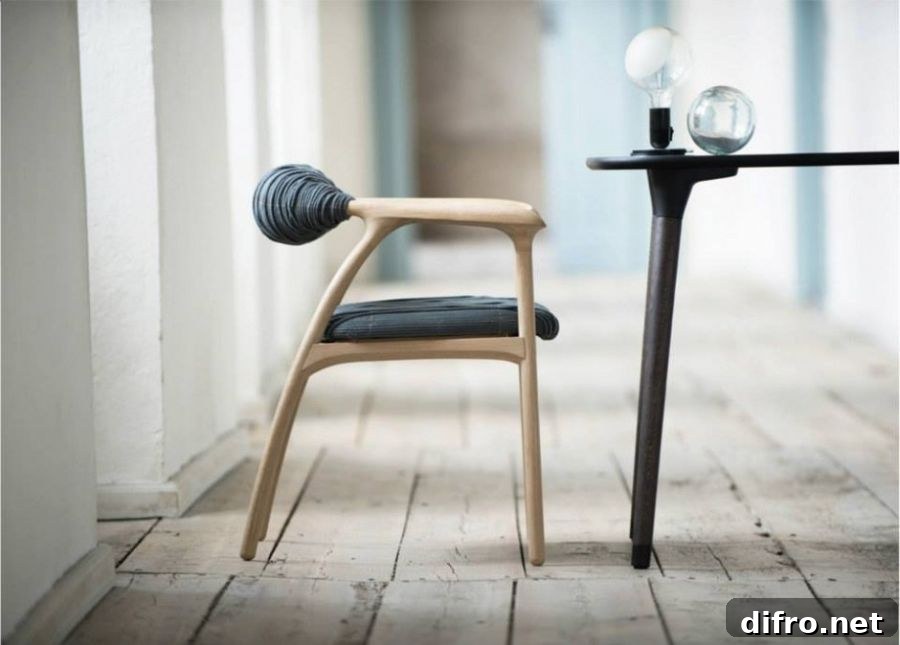
Close-up views reveal the detailed handiwork—careful joinery, natural wood grain and the surface texture of the upholstery. These details are not merely decorative; they invite exploration and a different kind of engagement with furniture. The Haptic Chair is intentionally tactile: the variety of materials encourages the sitter to notice subtle shifts in surface, temperature and feel. In that way, the piece functions as both seating and a study in material contrast, promoting a quieter, more sensory approach to interior design.
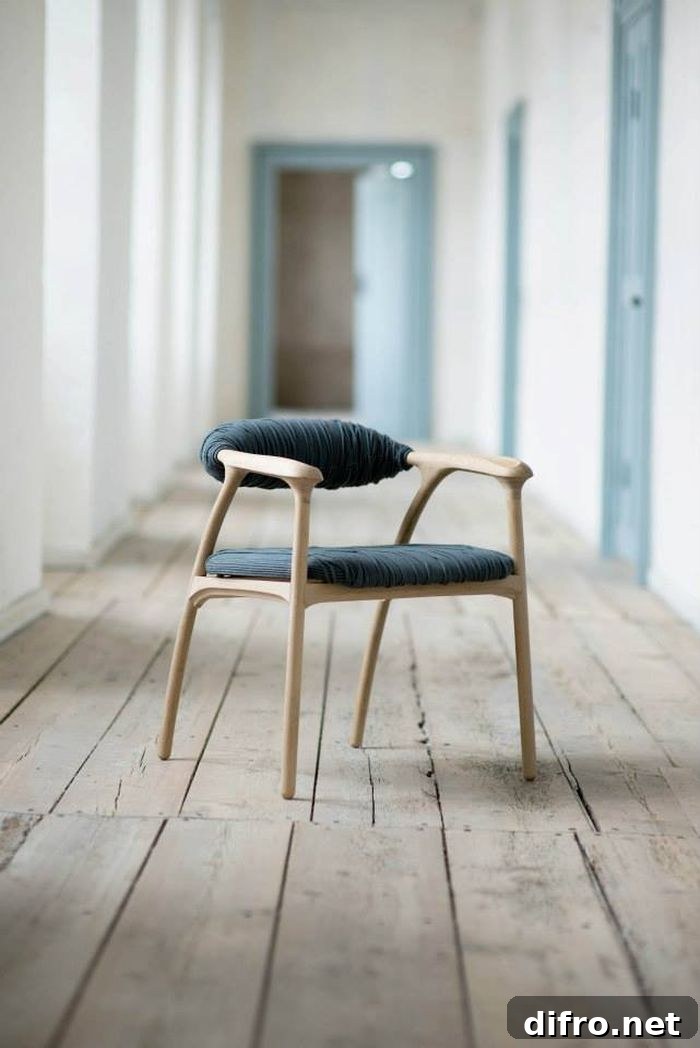
Stylistically, the Haptic Chair works well in a variety of settings. Its minimalist silhouette pairs seamlessly with contemporary and Scandinavian-inspired interiors, while the raw texture of the upholstery can add depth to softer, neutral palettes. Place it in a living room as a companion piece to a sofa, use it as an accent chair in a bedroom, or position it in a study where the tactile quality can be appreciated close up. It also makes a quiet conversation piece when grouped with other handcrafted furnishings.
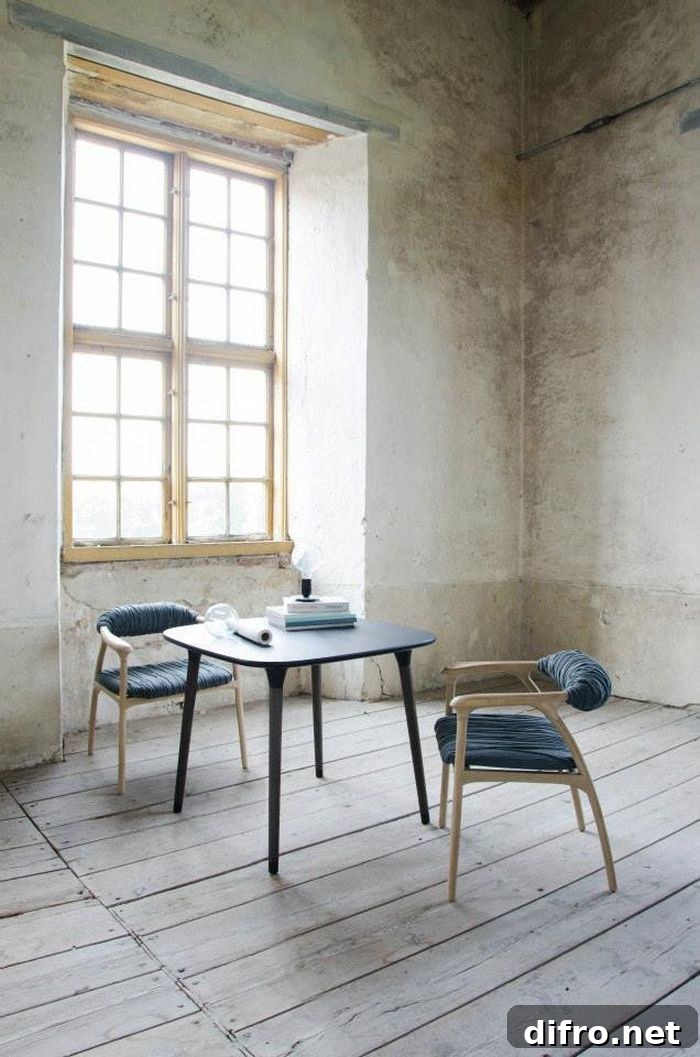
Maintaining the chair depends on the materials: oak responds well to regular dusting and occasional polishing with appropriate wood care products, while upholstered surfaces benefit from routine vacuuming and prompt spot cleaning with recommended fabric cleaners. As with most furniture that features natural materials, avoid prolonged exposure to direct sunlight or excessive moisture to preserve finish and color. These simple care steps will help the chair retain both its aesthetic appeal and tactile qualities over time.
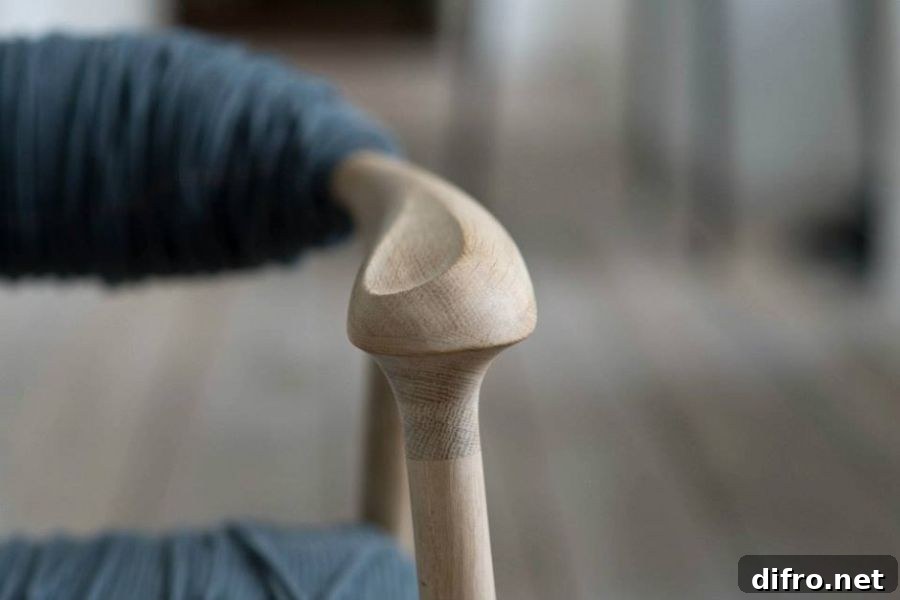
The Haptic Chair celebrates the relationship between form and touch by pairing refined woodworking with textured fabric in a considered, minimalist package. Simple and distinct, it offers a sensory dimension to interiors where material honesty and subtle craftsmanship are valued. For anyone interested in furniture that rewards close inspection and tactile engagement, this design presents a compelling option from a studio dedicated to thoughtful, handmade pieces.