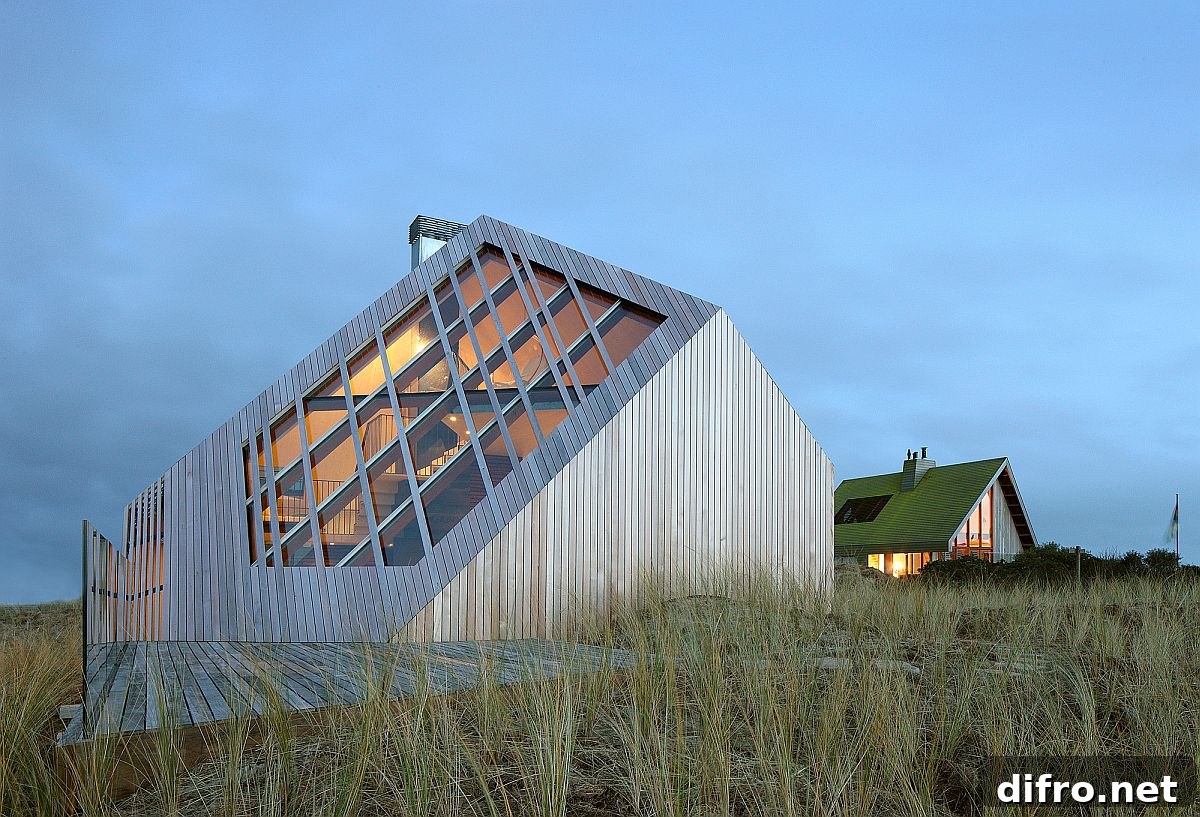
Dune House — A Sculptural, Sustainable Home on the Dutch Coast
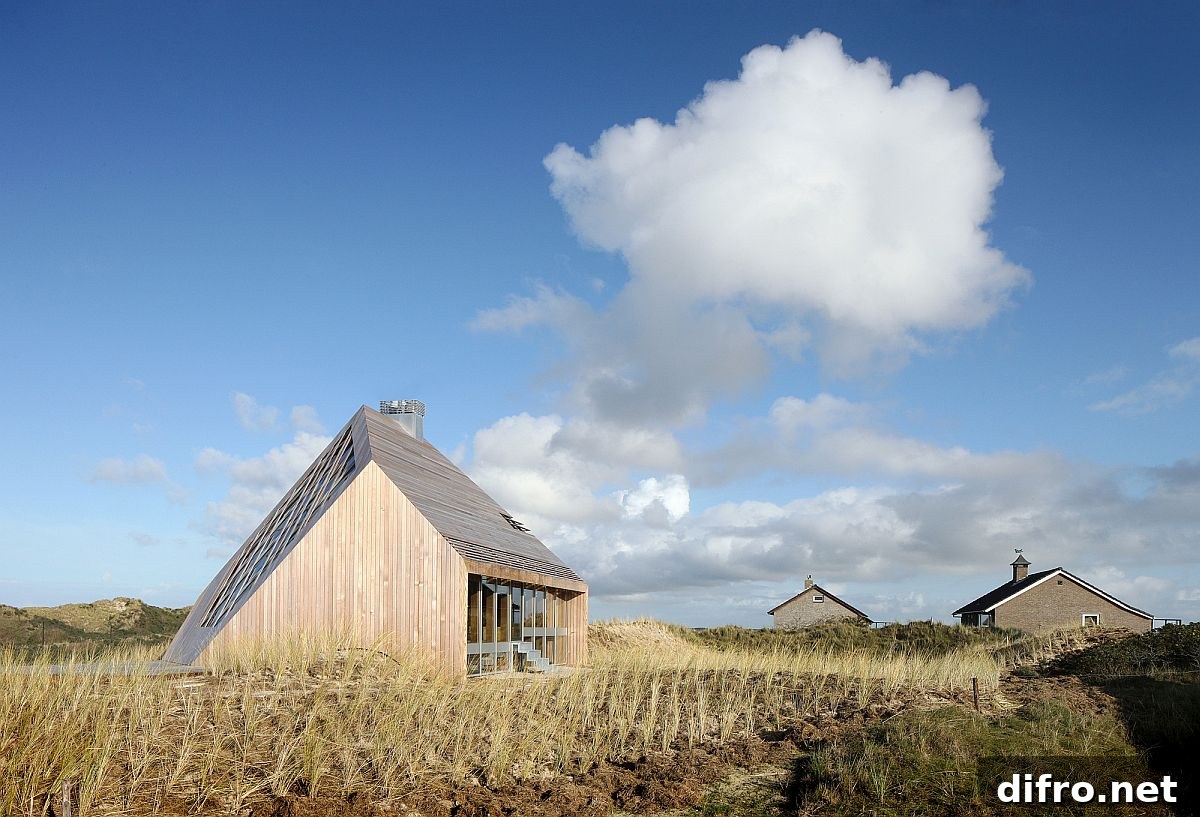
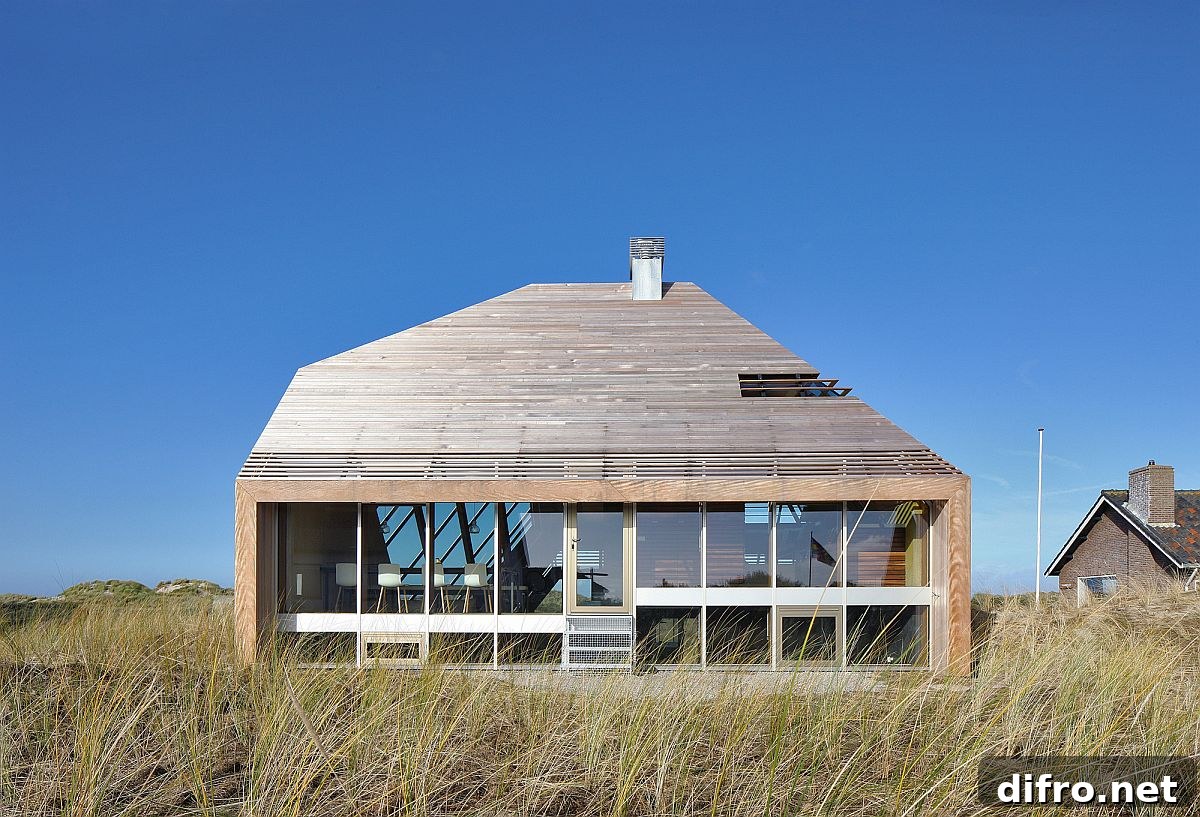
Set into the sandy dunes of the Dutch coastline with sweeping views of the North Sea, the Dune House by Marc Koehler Architects is a striking example of architecture shaped by landscape and climate. Its diamond-shaped wooden volume reads like a sculptural object emerging from the dunes, while large glazed openings connect interior spaces seamlessly to the wide, open views beyond. The house balances bold form with subtle environmental strategies, creating a contemporary Dutch home that responds to its site.
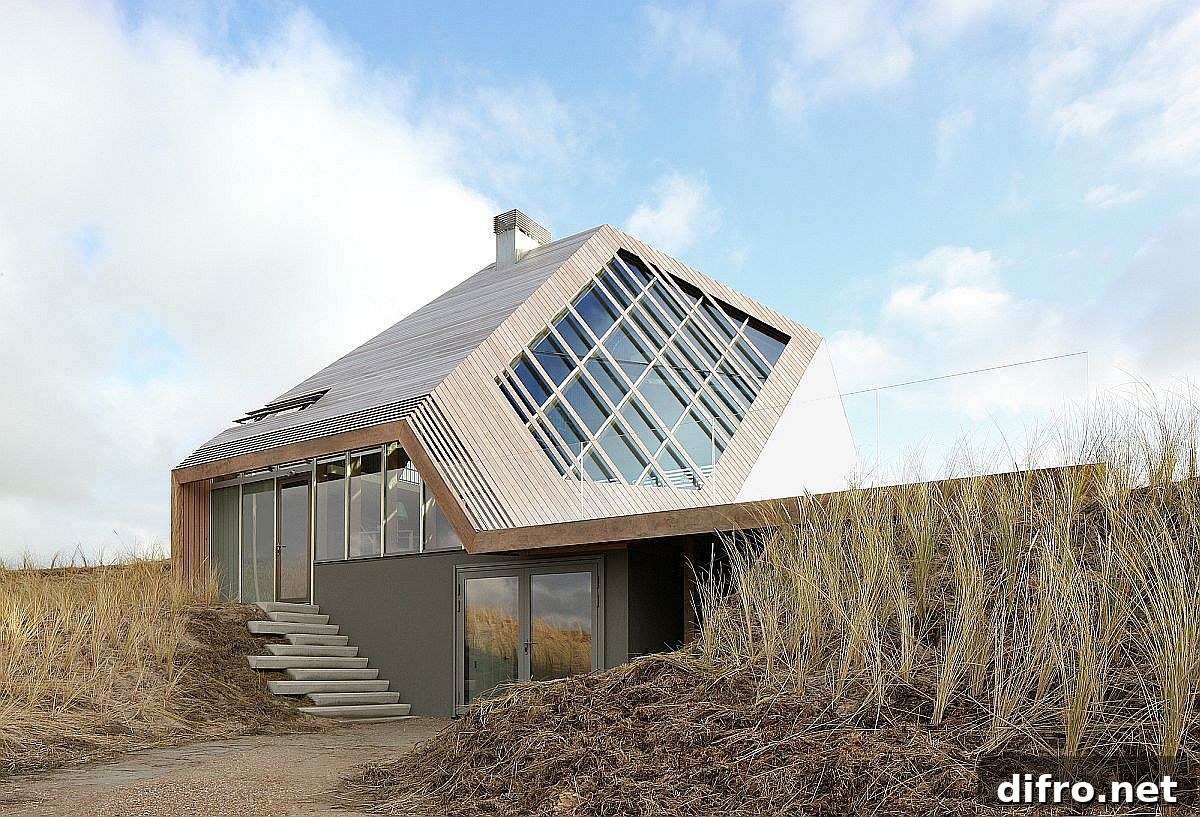
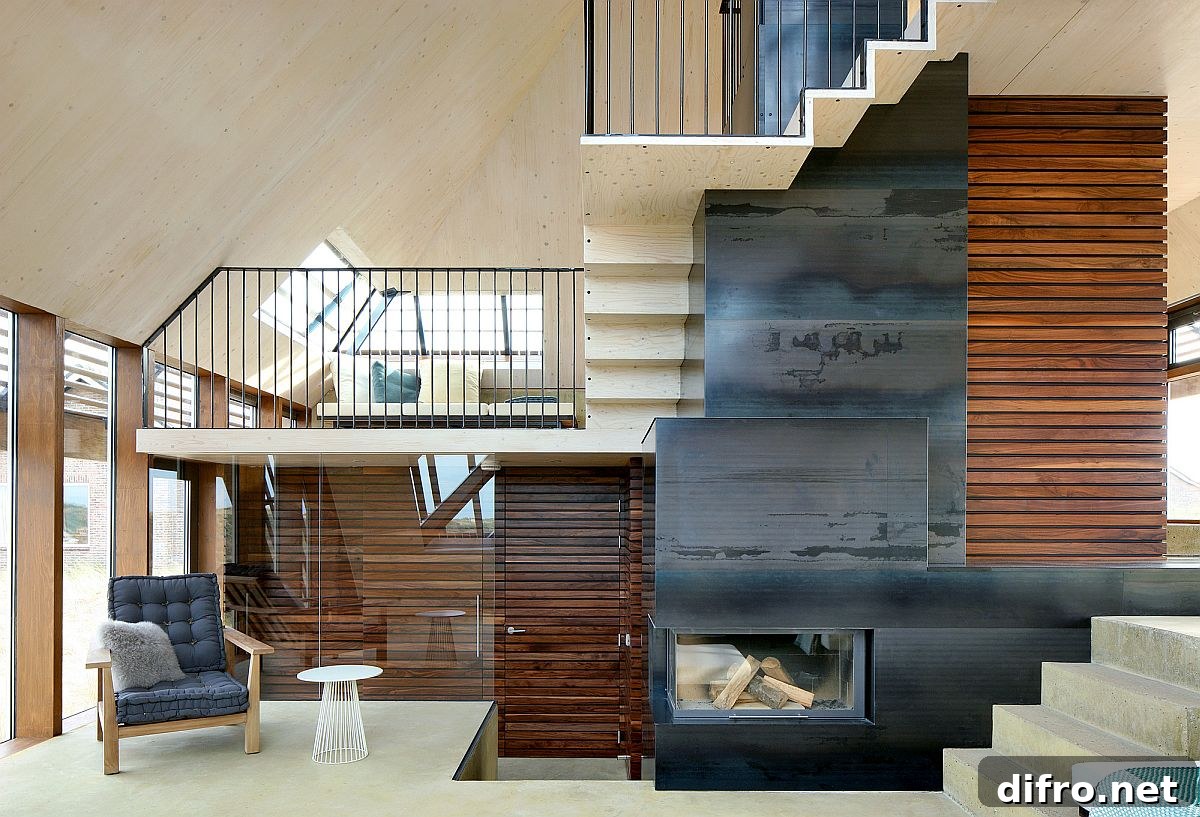
The Dune House is partially sunk into the terrain, so that the building seems to rise naturally from the landscape rather than sit on top of it. Its outer skin combines timber cladding and large expanses of glass, giving the volume both warmth and transparency. Inside, a carefully arranged split-level plan creates a stepped interior: living, dining and kitchen spaces descend gradually, forming a sequence of platforms that frame multiple sightlines toward the dunes and the sea.
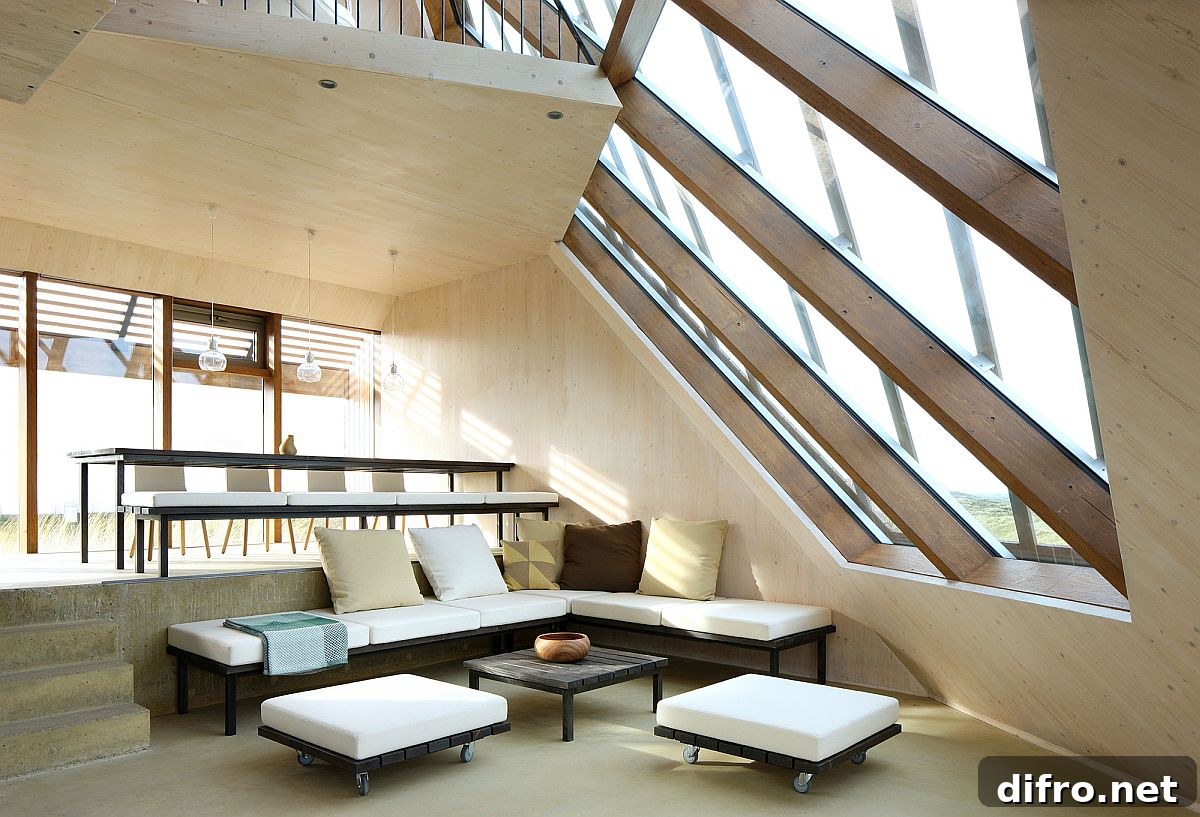
This stepped layout enhances both privacy and sociability: lower levels feel open and shared, while the upper floor contains bedrooms and private spaces finished with natural materials. A restrained palette of wood, white surfaces and glass gives the interiors a contemporary, serene character, with wooden accents tying the interiors back to the dune landscape outside.
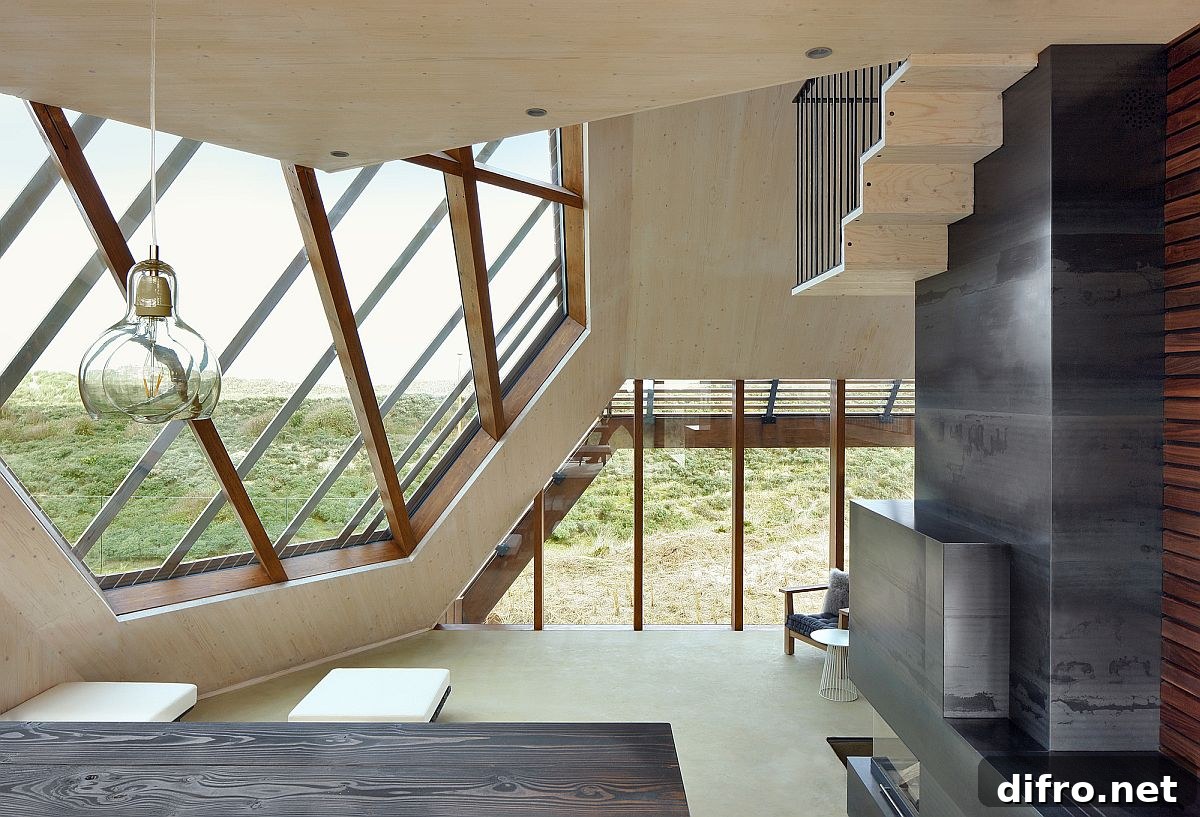
The central living area is anchored by a dark, sculptural fireplace that provides both a visual focus and practical warmth. Neutral tones and natural textures emphasize comfort and calm, while large glass doors open wide to make indoor-outdoor living effortless during milder weather.
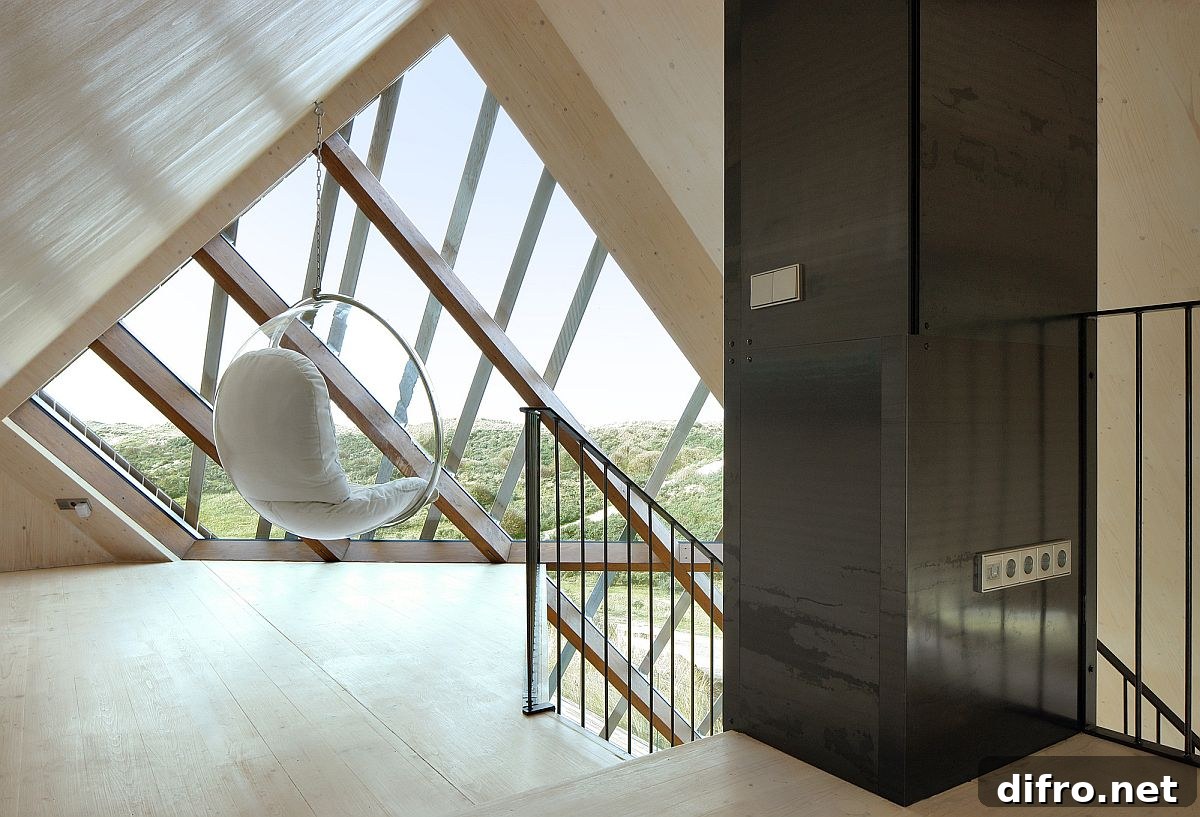
The upper level offers expansive views to the North Sea on the horizon. Floor-to-ceiling glazing frames the landscape like ever-changing artwork, allowing occupants to experience light, weather and sea from the comfort of private spaces. The relationship between the house and its setting is deliberate: the design privileges oriented views and protection from prevailing wind and salt spray while bringing daylight deep into the interior.
Construction methods were chosen with an eye to efficiency and sustainability. Modular prefabricated wooden panels—planned using Building Information Modeling (BIM)—helped reduce on-site building time. The project emphasizes timber, passive measures to control heat gains and losses, and on-site energy generation through solar panels; a biomass fireplace provides additional renewable heating.
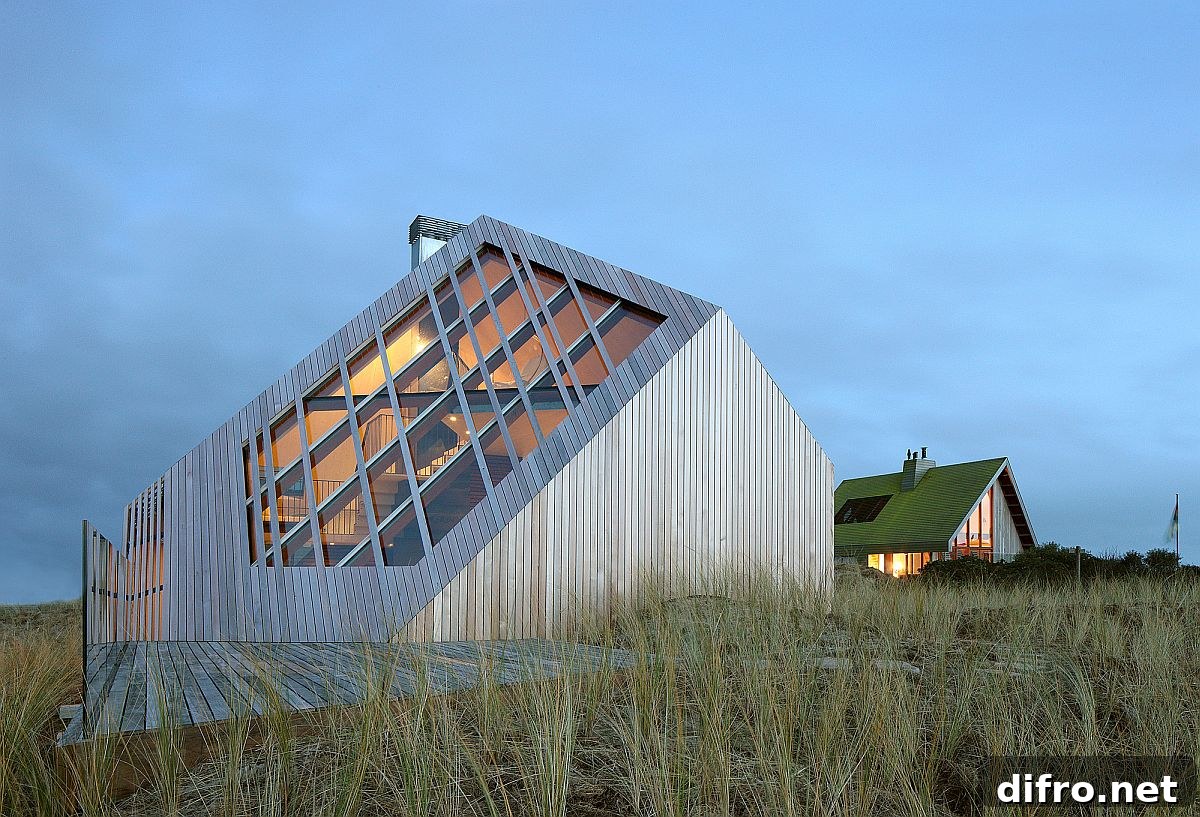
Large glazed doors and windows create a smooth visual and physical connection to the landscape while the building’s form provides shelter and sculptural presence. The combination of prefabrication, timber construction and renewable systems reflects a contemporary approach to coastal architecture—one that integrates strong formal identity with environmental responsibility.
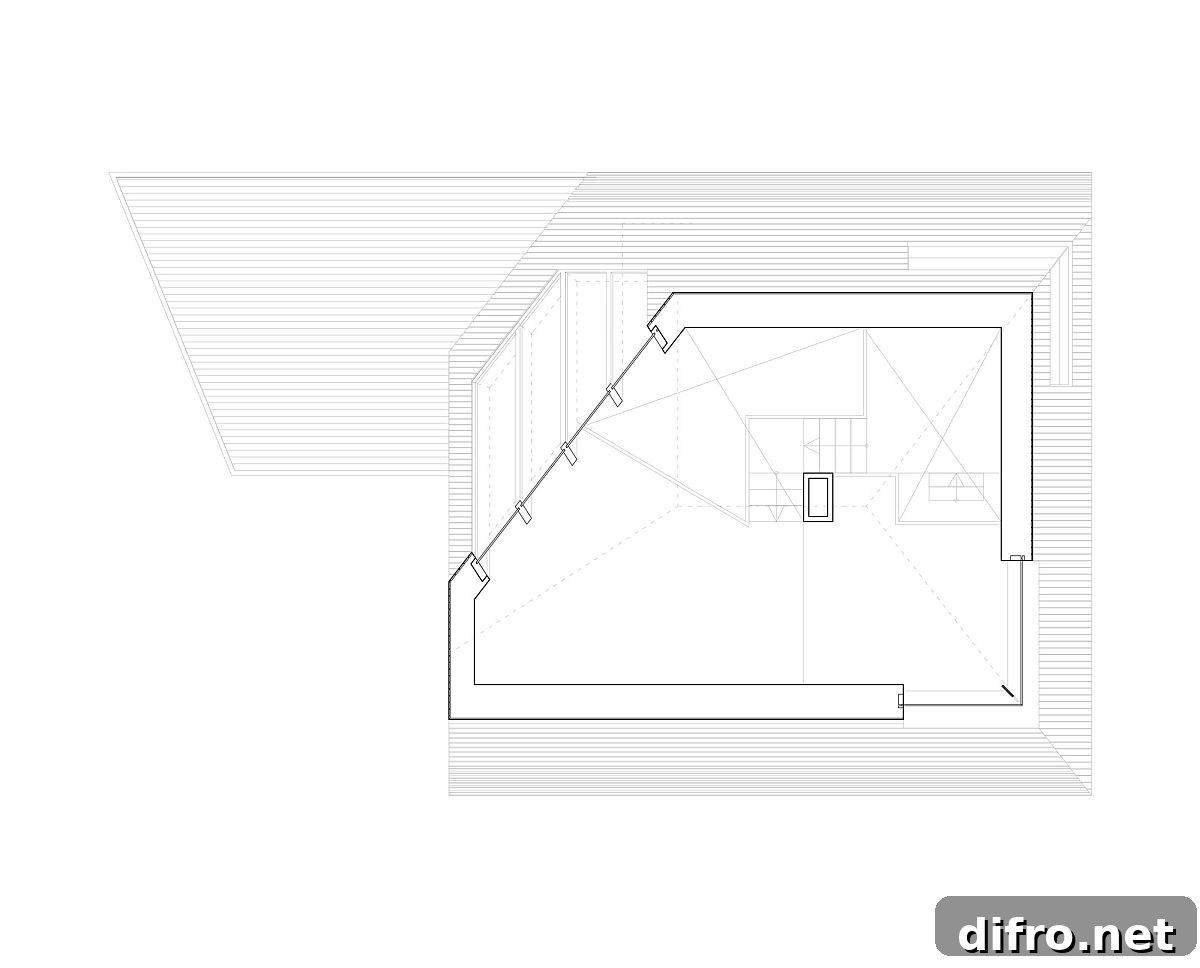
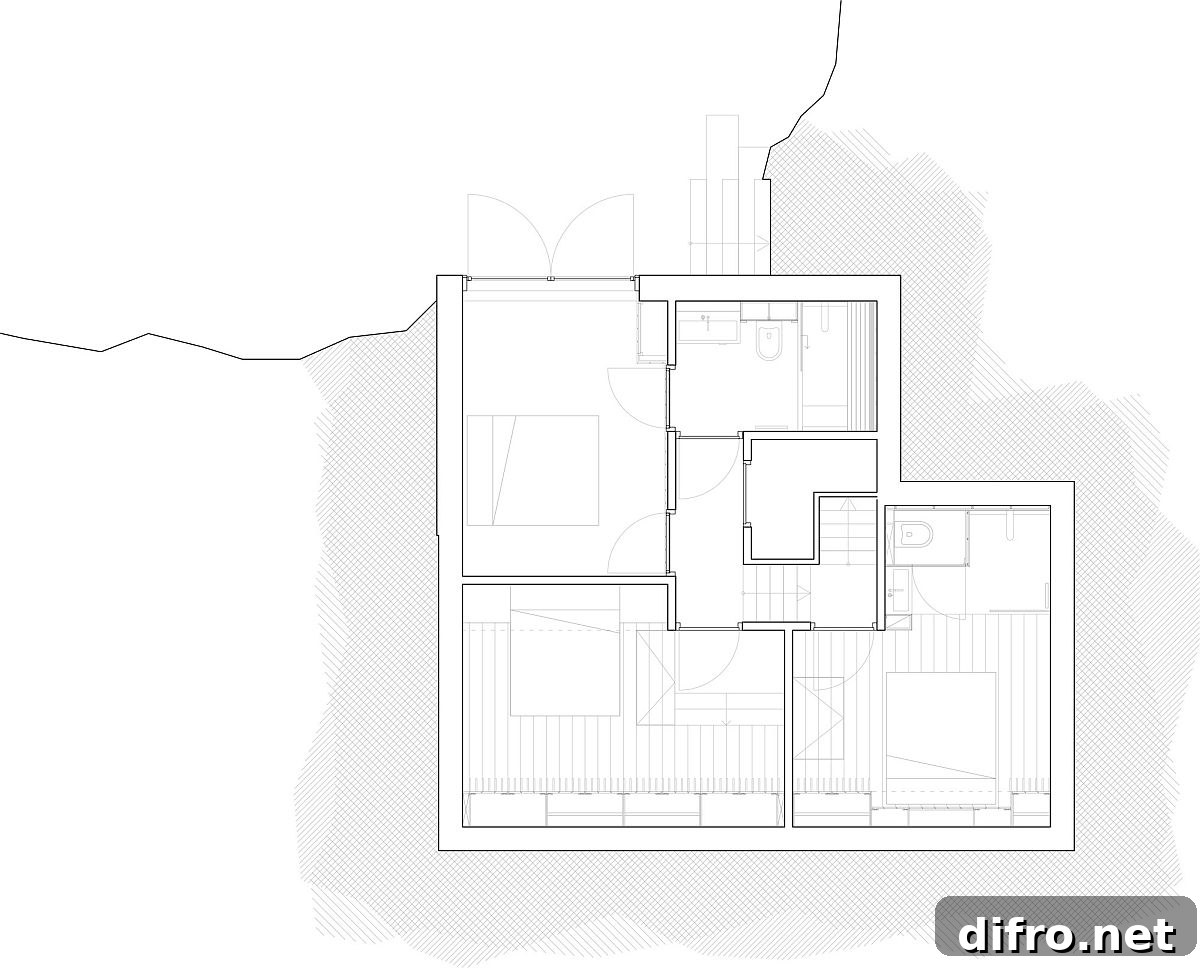
Plans for the Dune House show the thoughtful arrangement of living, sleeping and service areas across an underground level and a first floor, each carefully positioned to respond to light, views and privacy. The design demonstrates how modern, prefabricated timber construction can deliver striking architecture that is both site-responsive and energy conscious.
Photography by Filip Dujardin captures the Dune House’s interplay of form, material and landscape, highlighting how contemporary design can both contrast and belong to its natural setting. The house stands as a refined example of coastal architecture that respects place, climate and sustainable building practice.