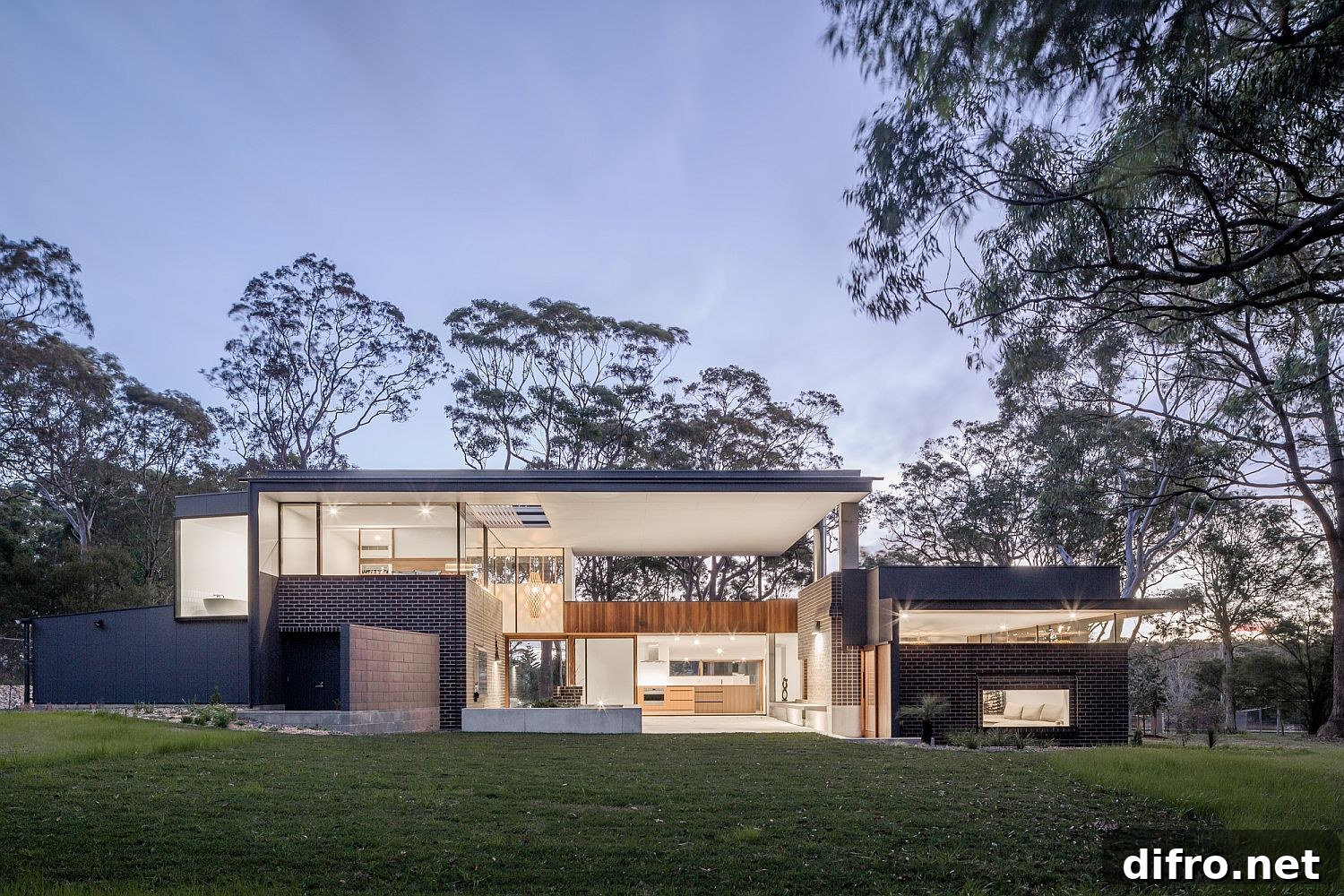
Brass House: Coastal Newcastle Home Blends Bushland Charm with Modern Living
The idea of combining urban and rural influences in architecture is risky—two contrasting worlds meet in form, function and atmosphere. Yet the Brass House, located in coastal Newcastle, Australia, moves beyond that challenge. The residence succeeds in fusing the raw, natural character of surrounding bushland and a distant coastline view with a contemporary, open-plan lifestyle. Sitting between a busy road on one side and native scrub and coastal outlooks on the other, the house reads as a threshold between different environments, thoughtfully mediating privacy, outlook and livability.
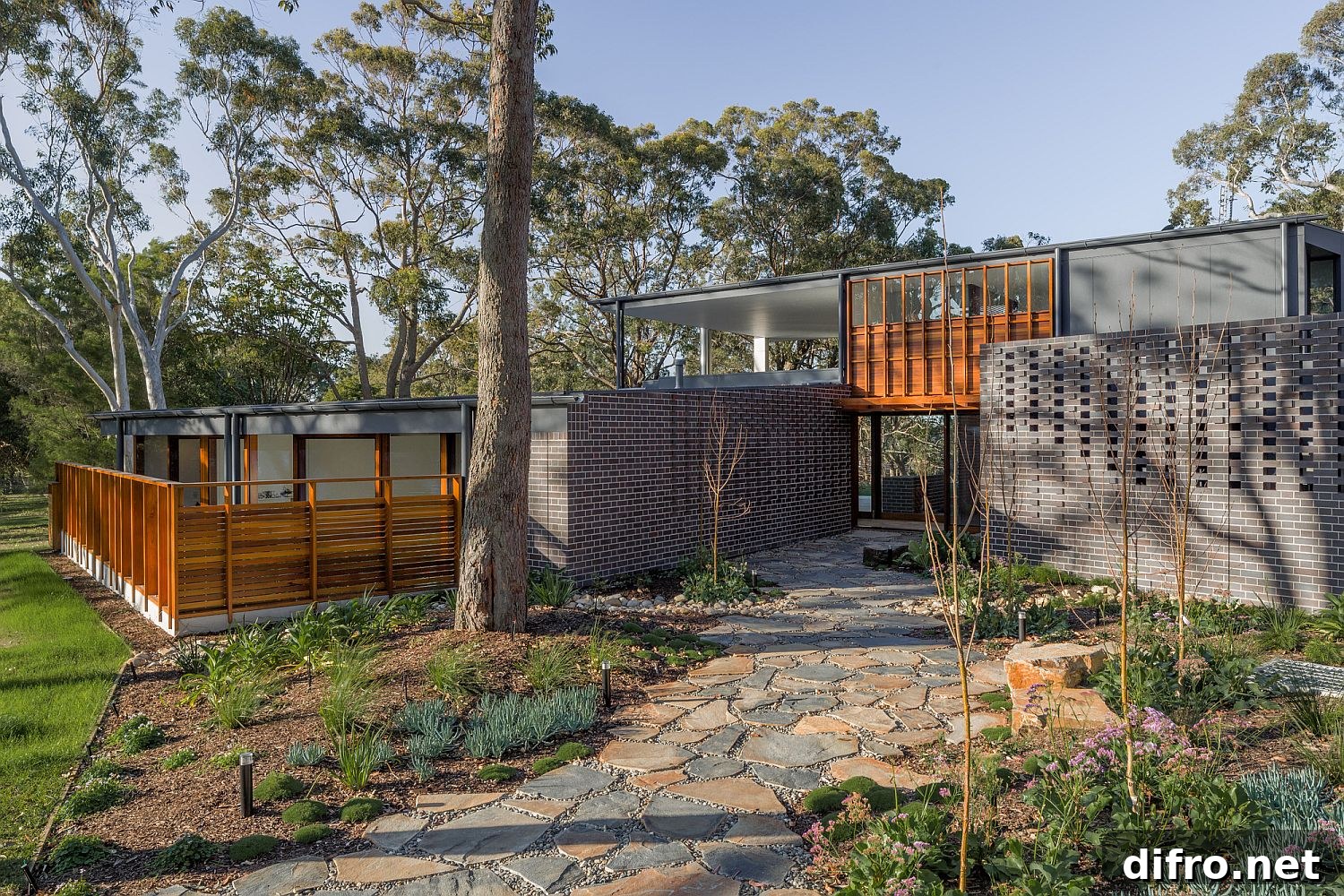
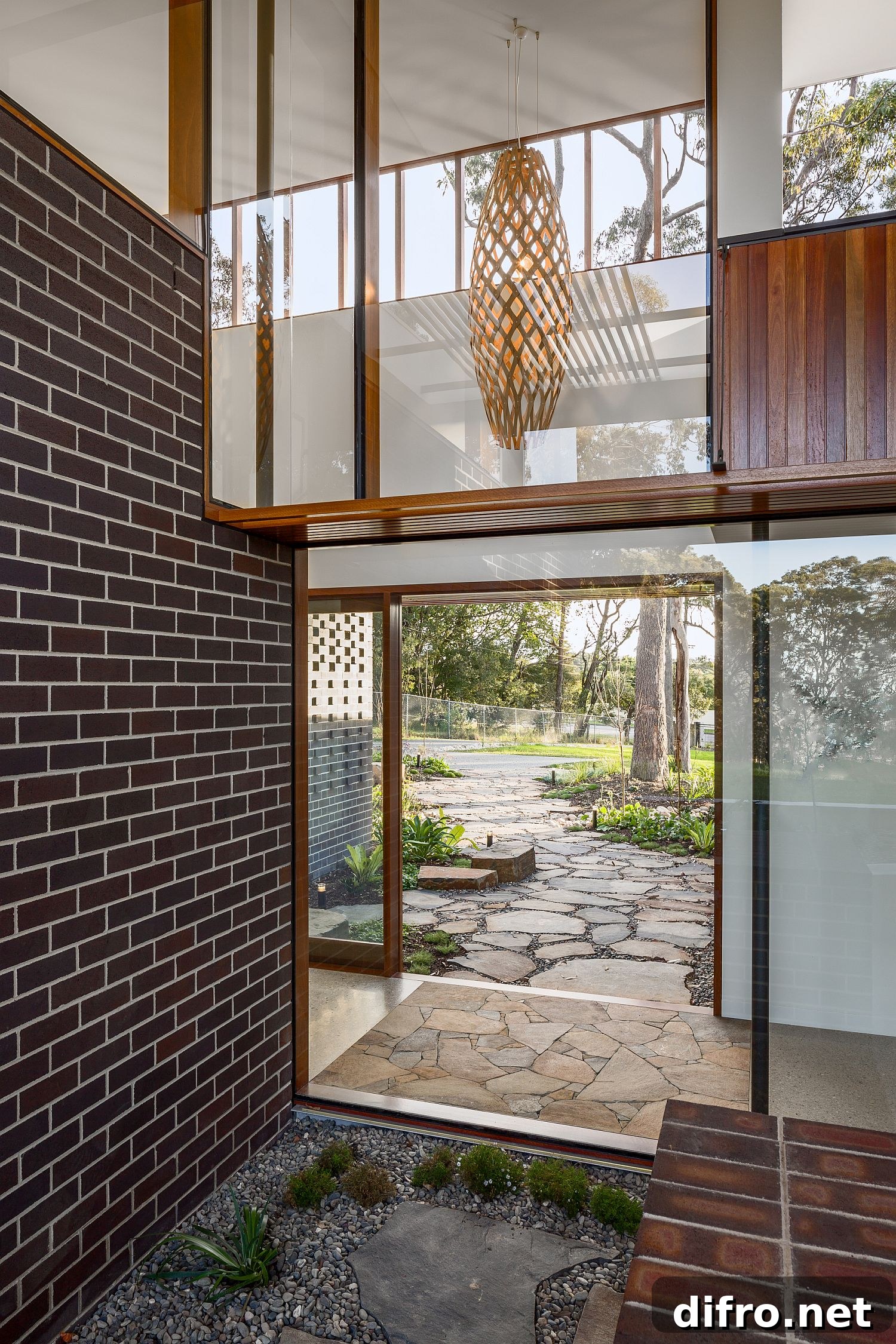
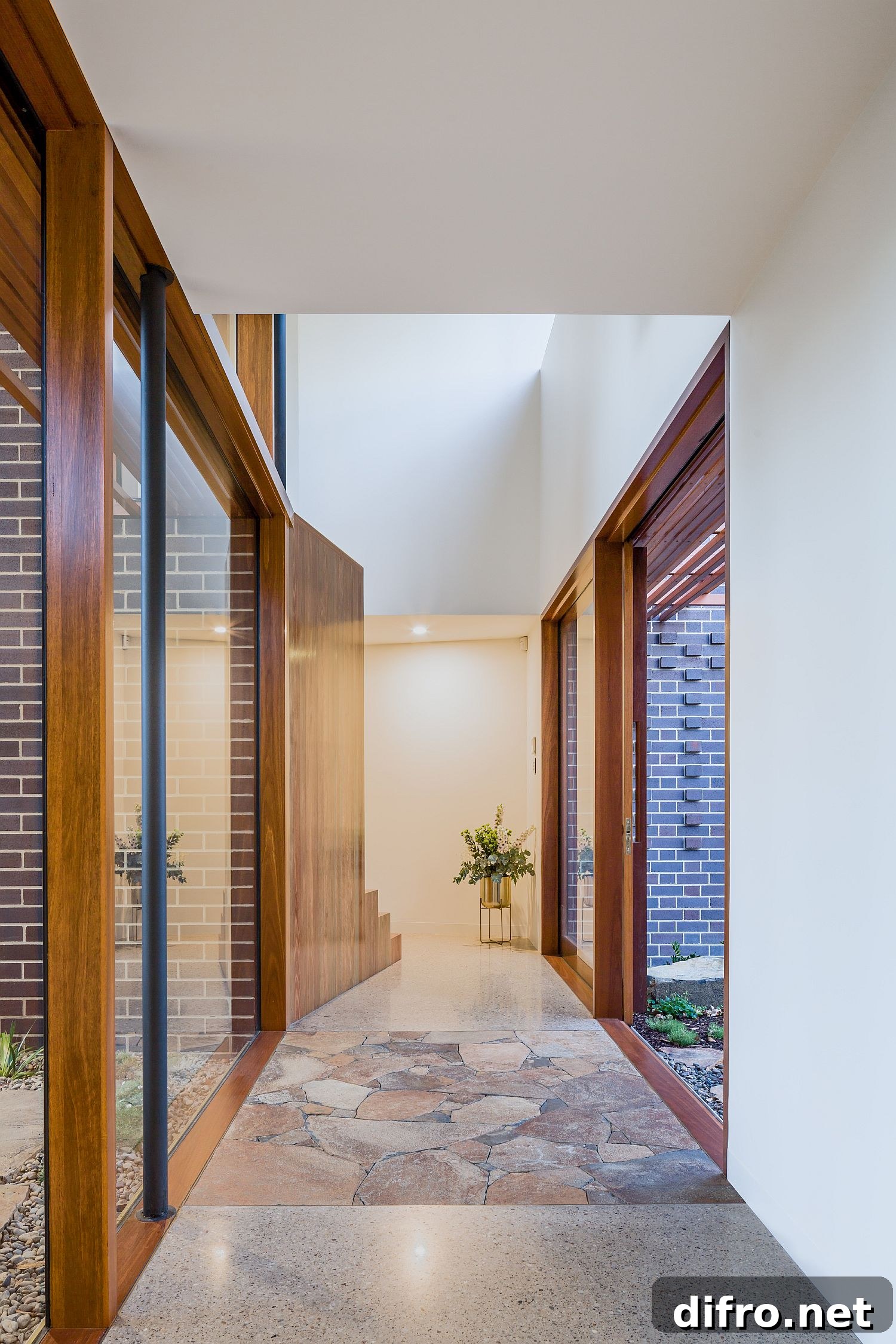
Designed by anthrosite, the home strikes an impressive balance between finishes, textures and spatial ideas. Internally, a restrained palette dominated by timber and white surfaces provides a calm, contemporary backdrop; externally, stone and brick ground the building and respond to local conditions. The material choices also reflect pragmatic concerns: the design was developed in accordance with local bushfire restrictions, influencing cladding, setbacks and external detailing.
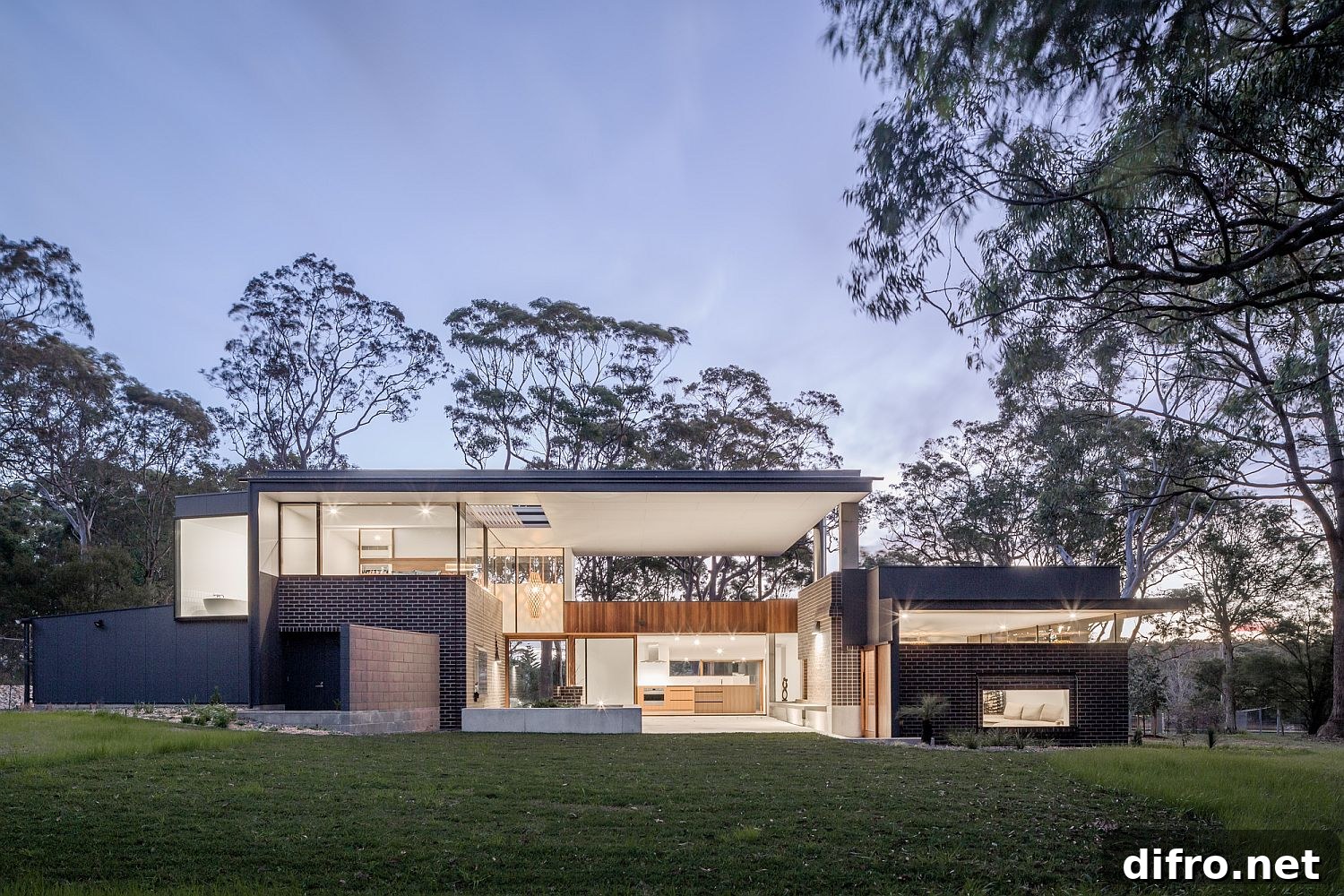
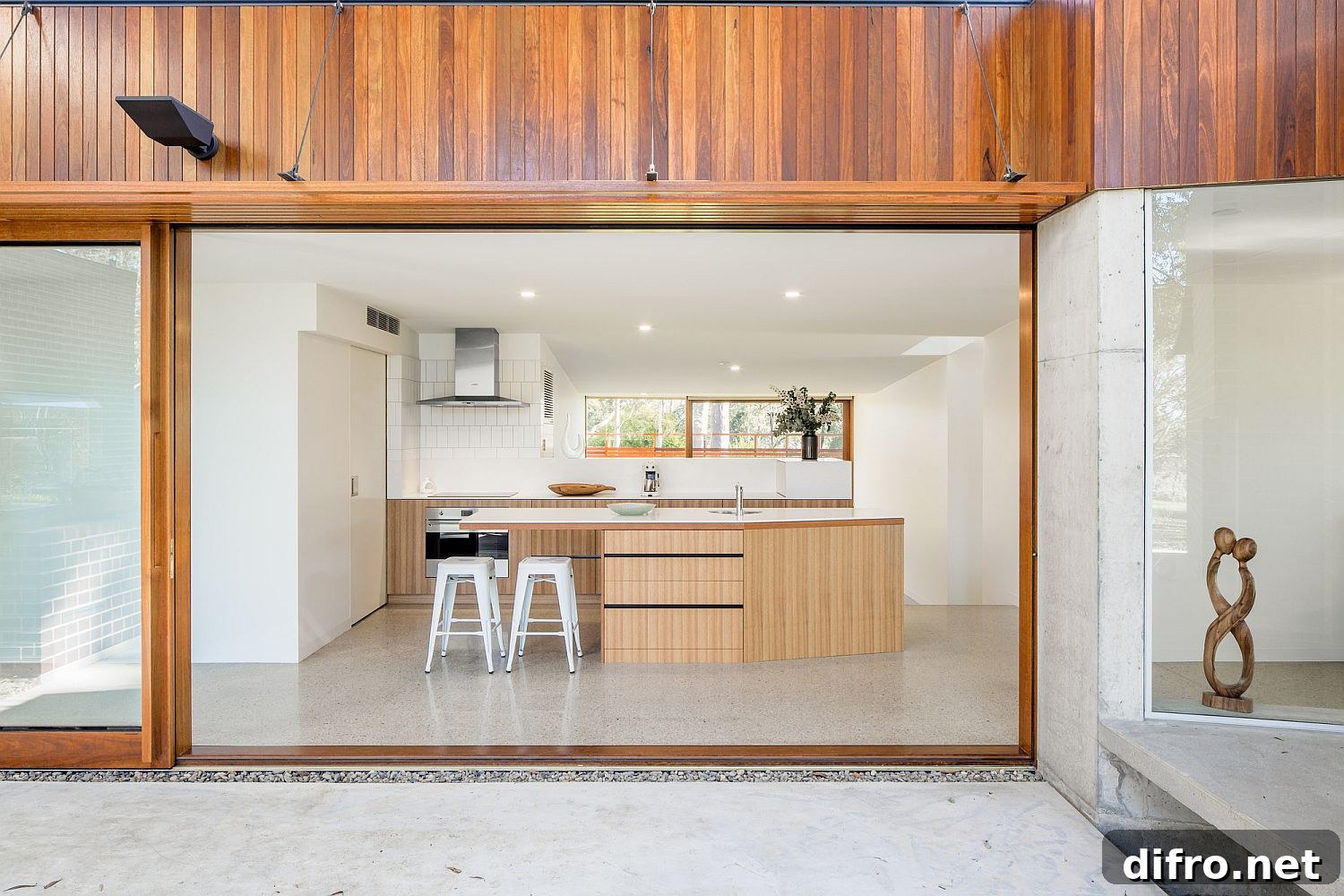
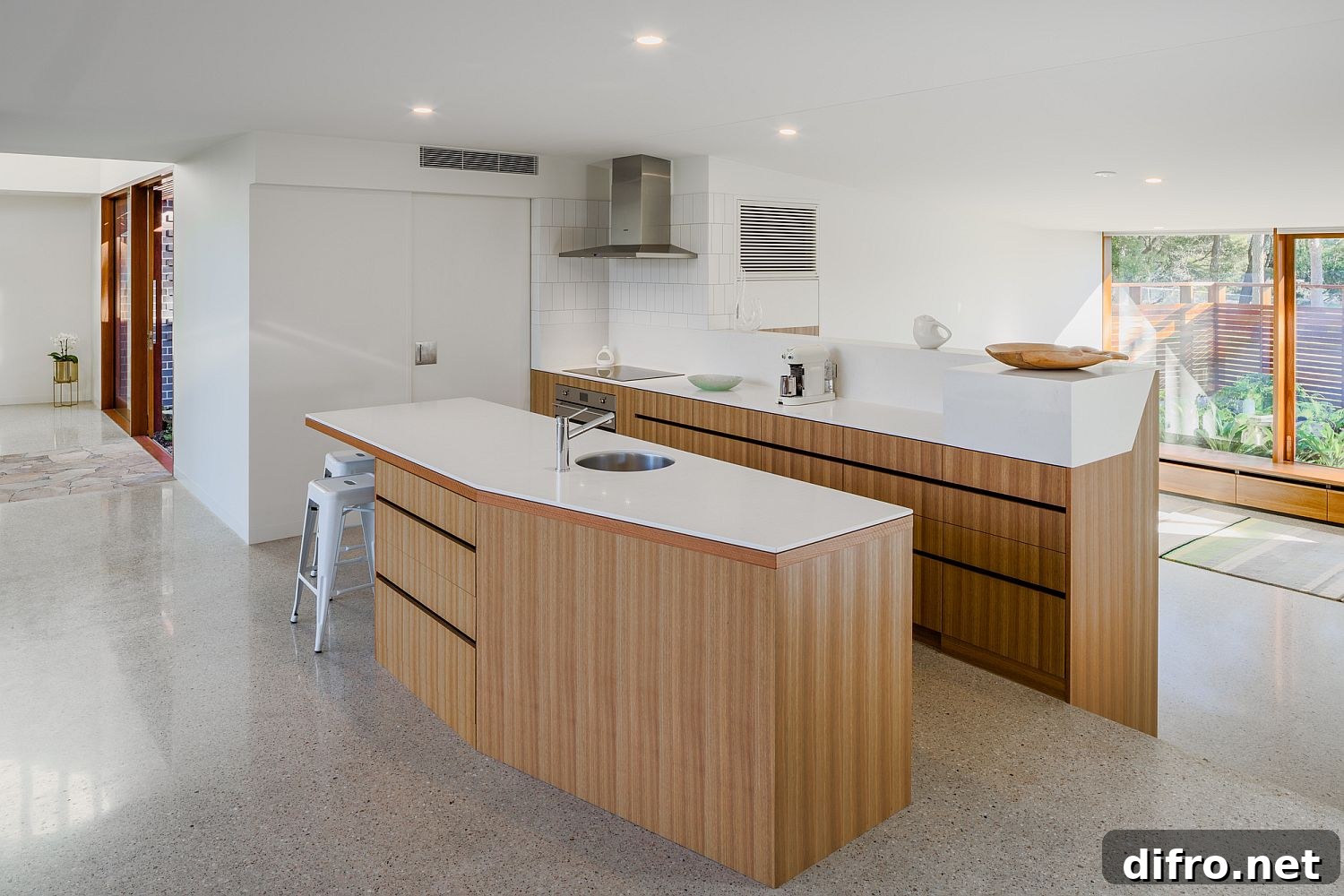
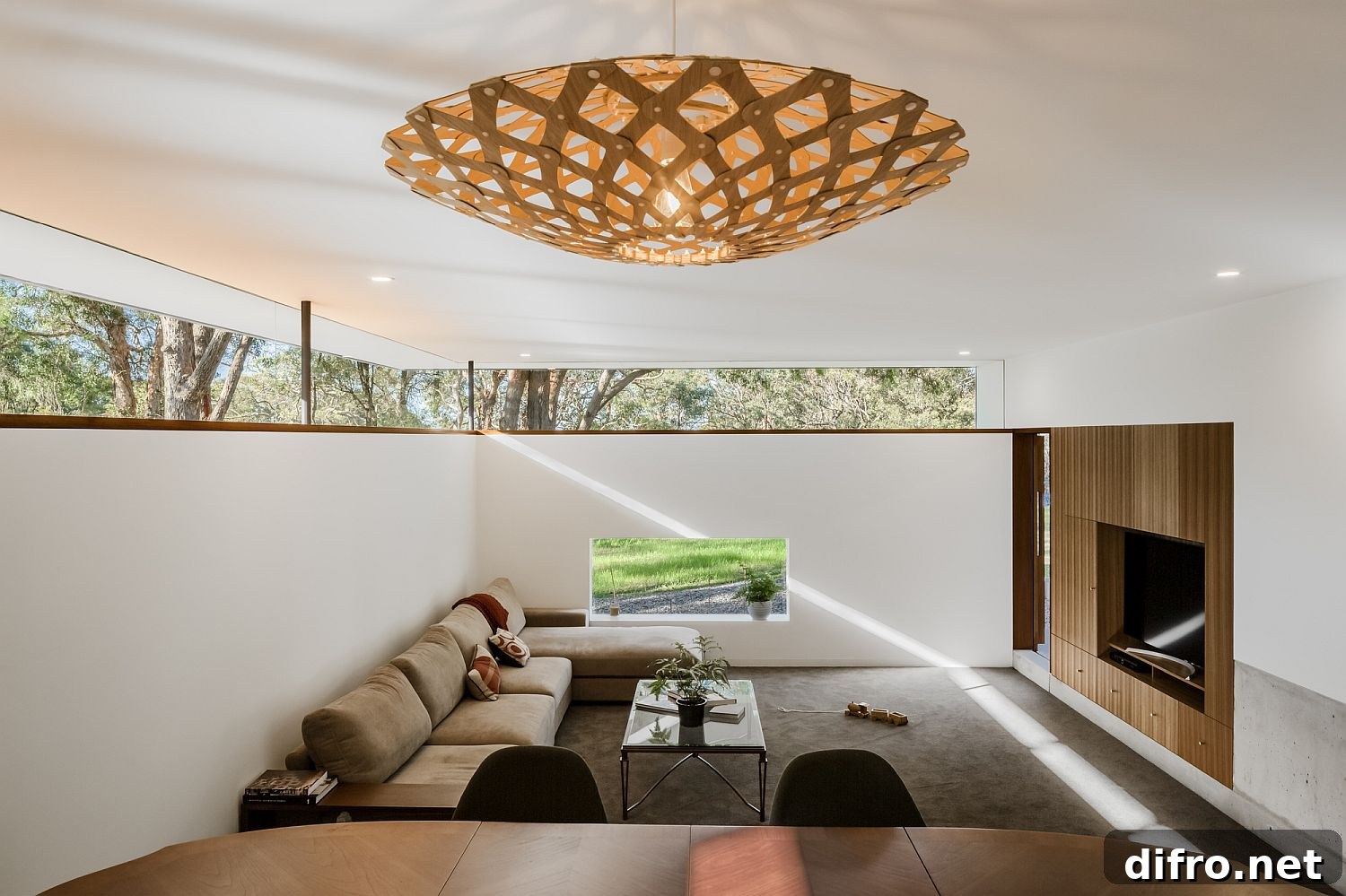
One of the house’s central achievements is the seamless indoor-outdoor connection. A covered exterior sitting area extends the living room and becomes a natural transition to the garden, while framed sliding glass walls open the interior to light and landscape. The kitchen occupies a central role in the family layout—an airy, well-lit space in wood and white that links living, dining and outdoor zones. With careful placement of windows and large sliding doors, the home captures coastal light without sacrificing privacy from the adjacent street.
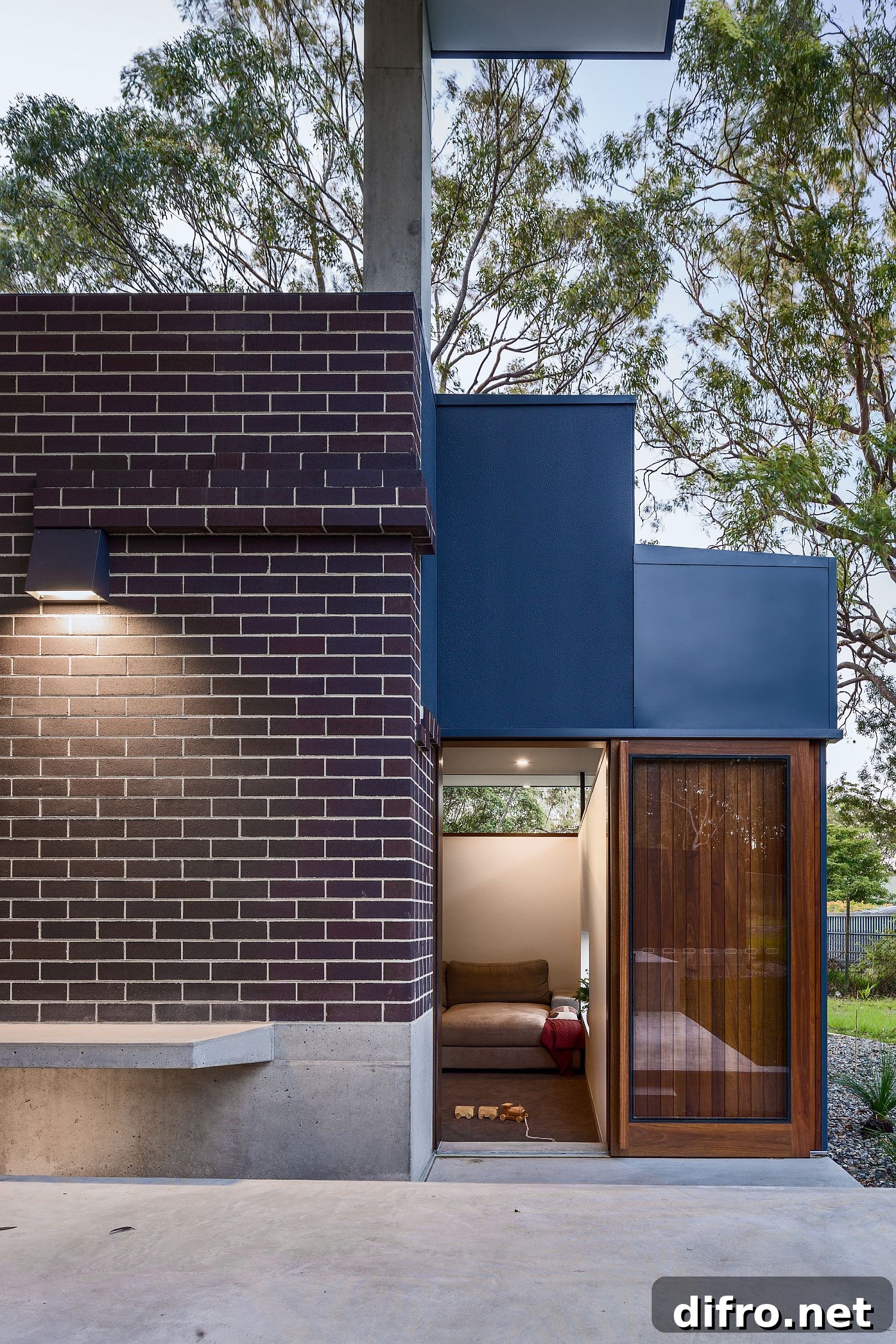
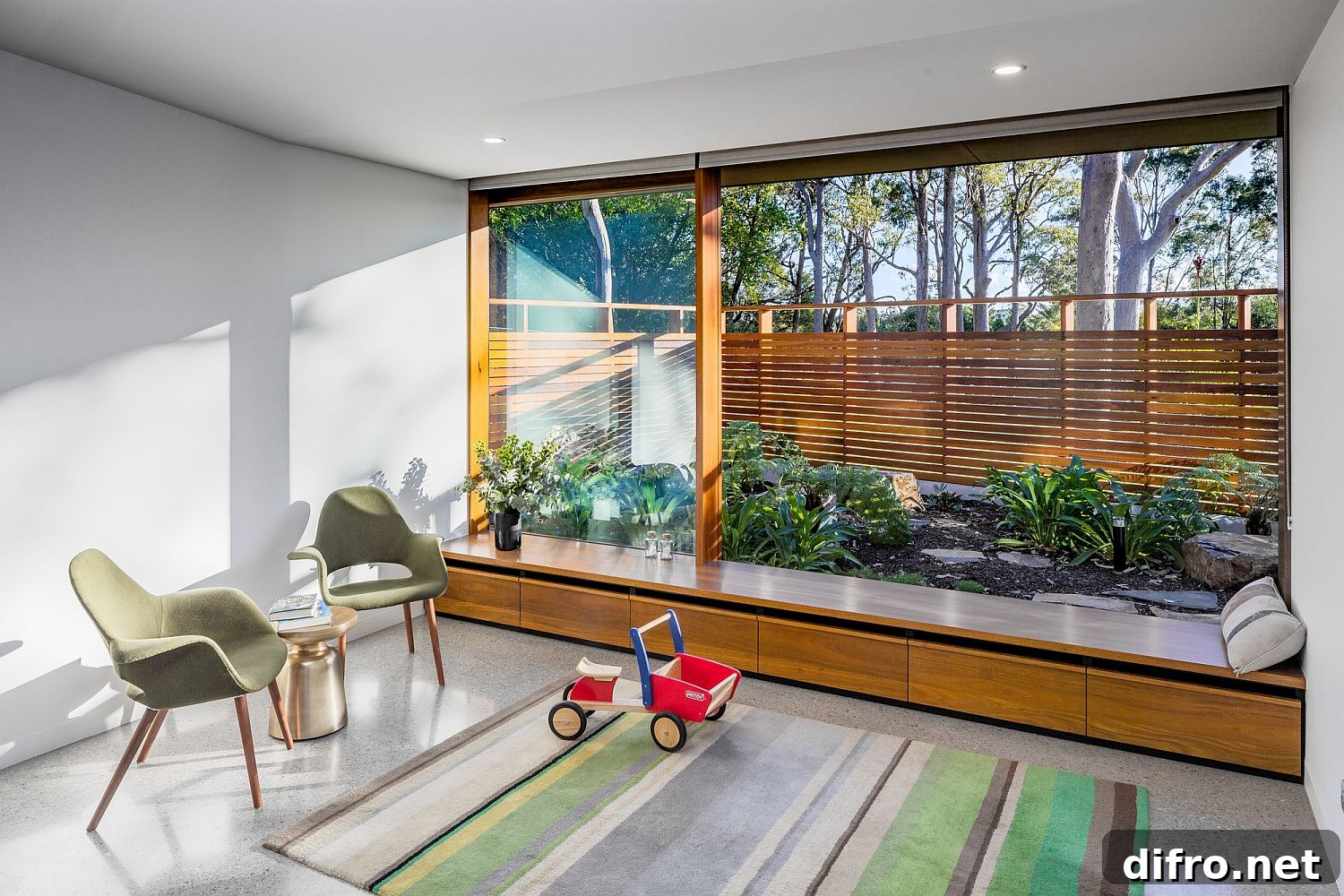
Throughout the interior, different finishes and styles are combined with restraint. Natural timber joinery and furnishings introduce warmth and texture, while white-painted walls and streamlined cabinetry provide contrast and clarity. Built-in storage and clever seating nooks are integrated into the layout, creating functional moments that enhance everyday living without competing visually with the surrounding landscape.
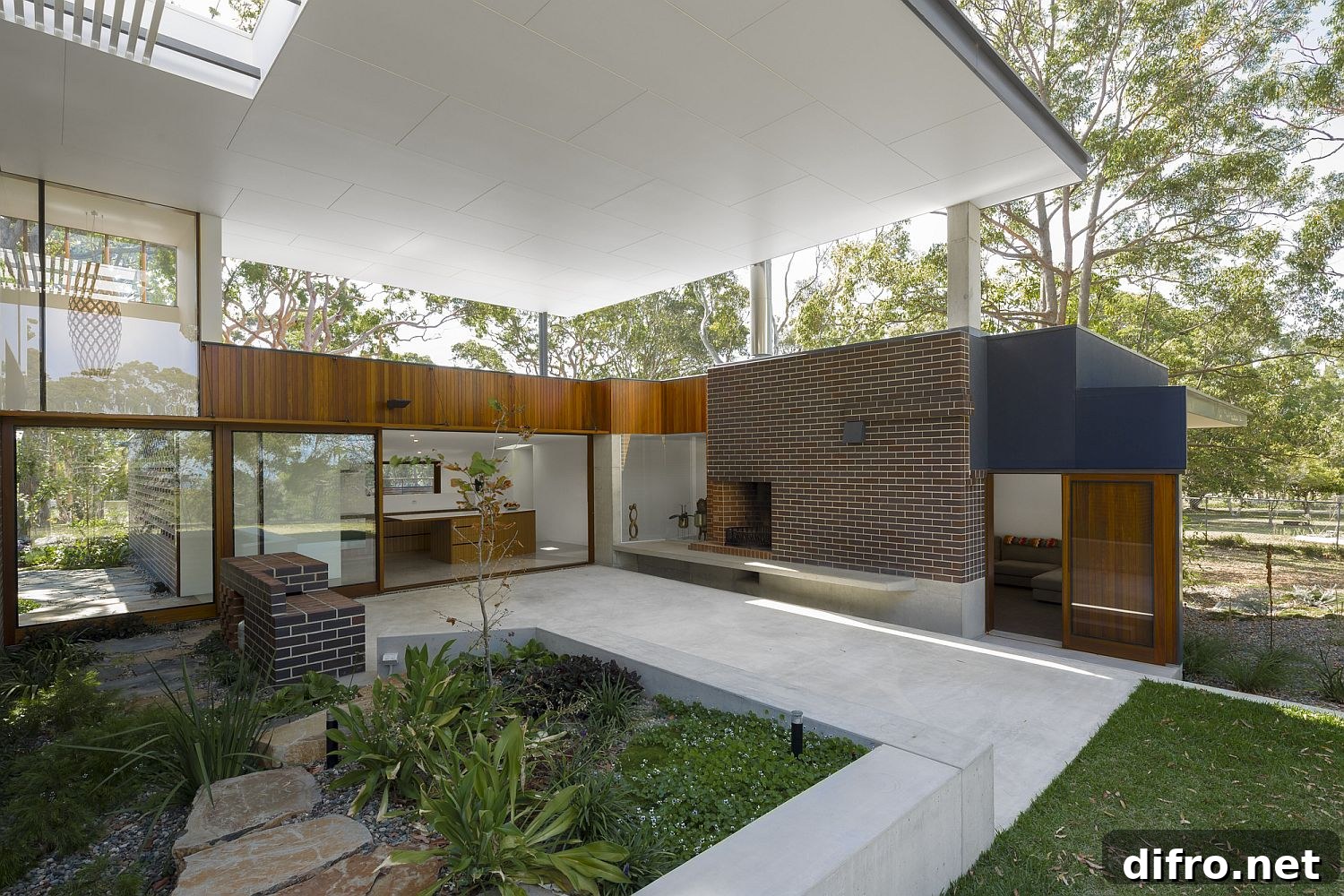
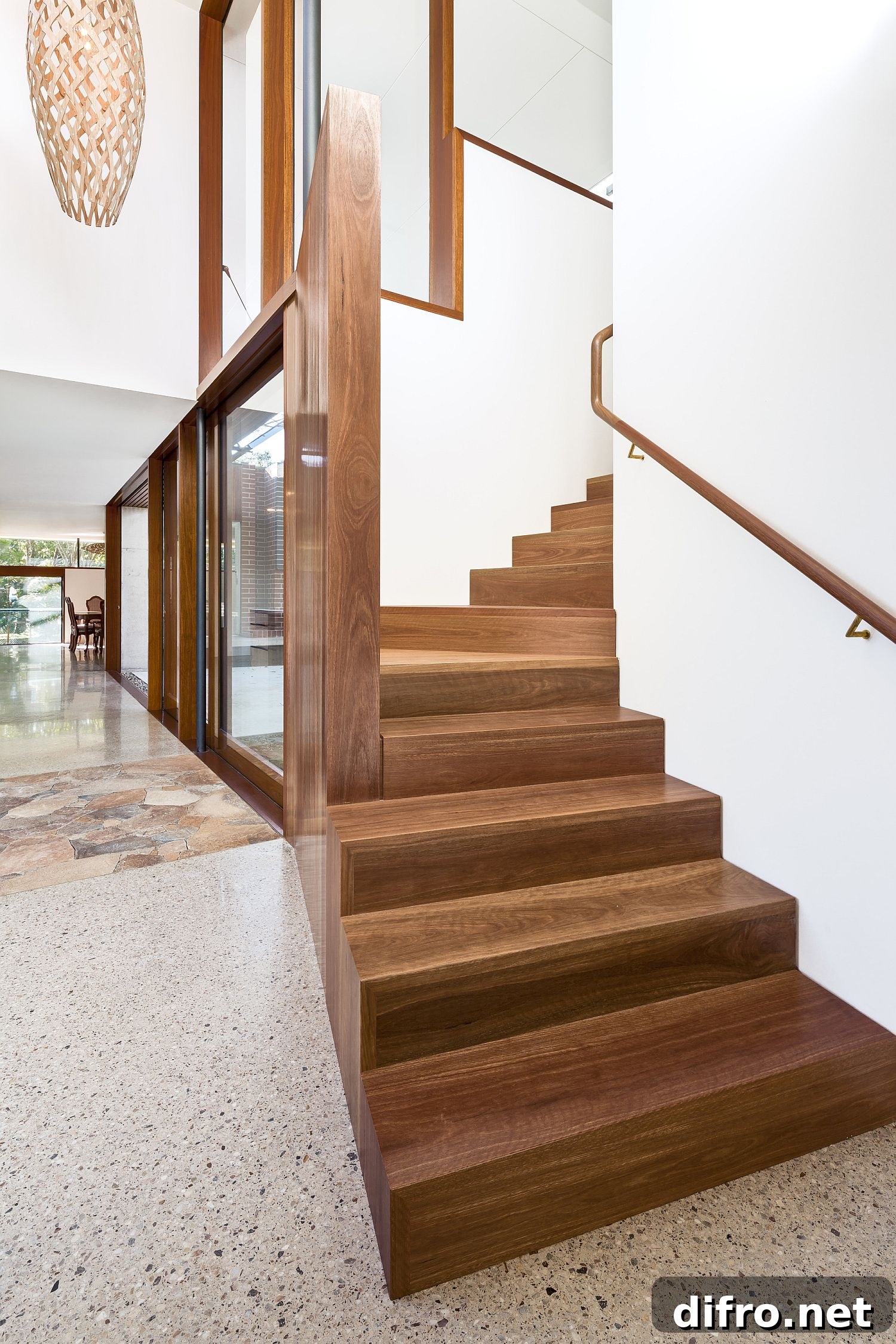
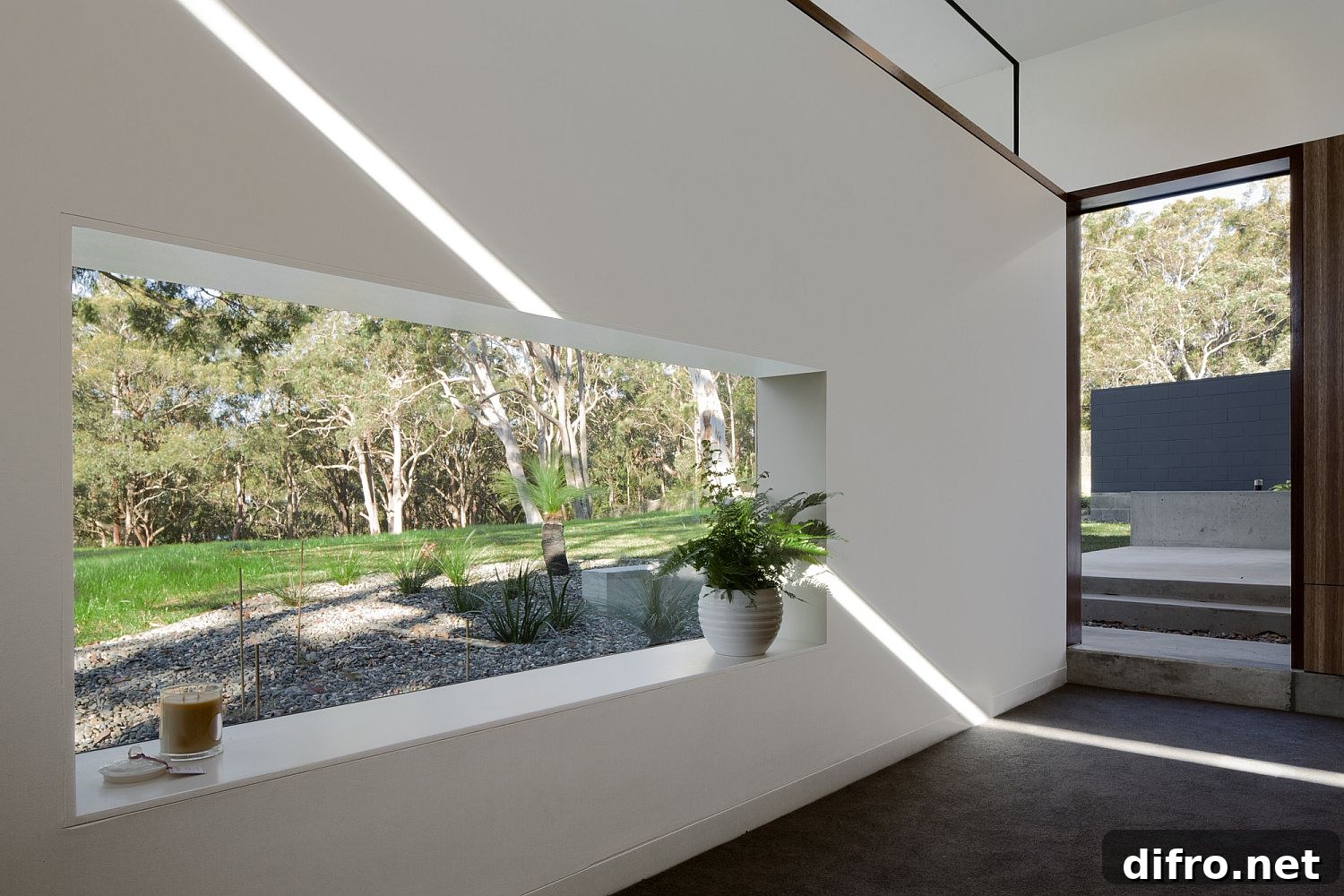
Light is considered at every scale. Clerestory windows and carefully placed cut-outs bring brightness into the sitting areas and workspace, while framed openings offer views toward distant greenery and the coastline. These apertures also help ventilate the home and animate internal circulation routes. A timber stair links the lower living areas with the bedrooms above, maintaining material continuity and reinforcing the sense of a cohesive family home.
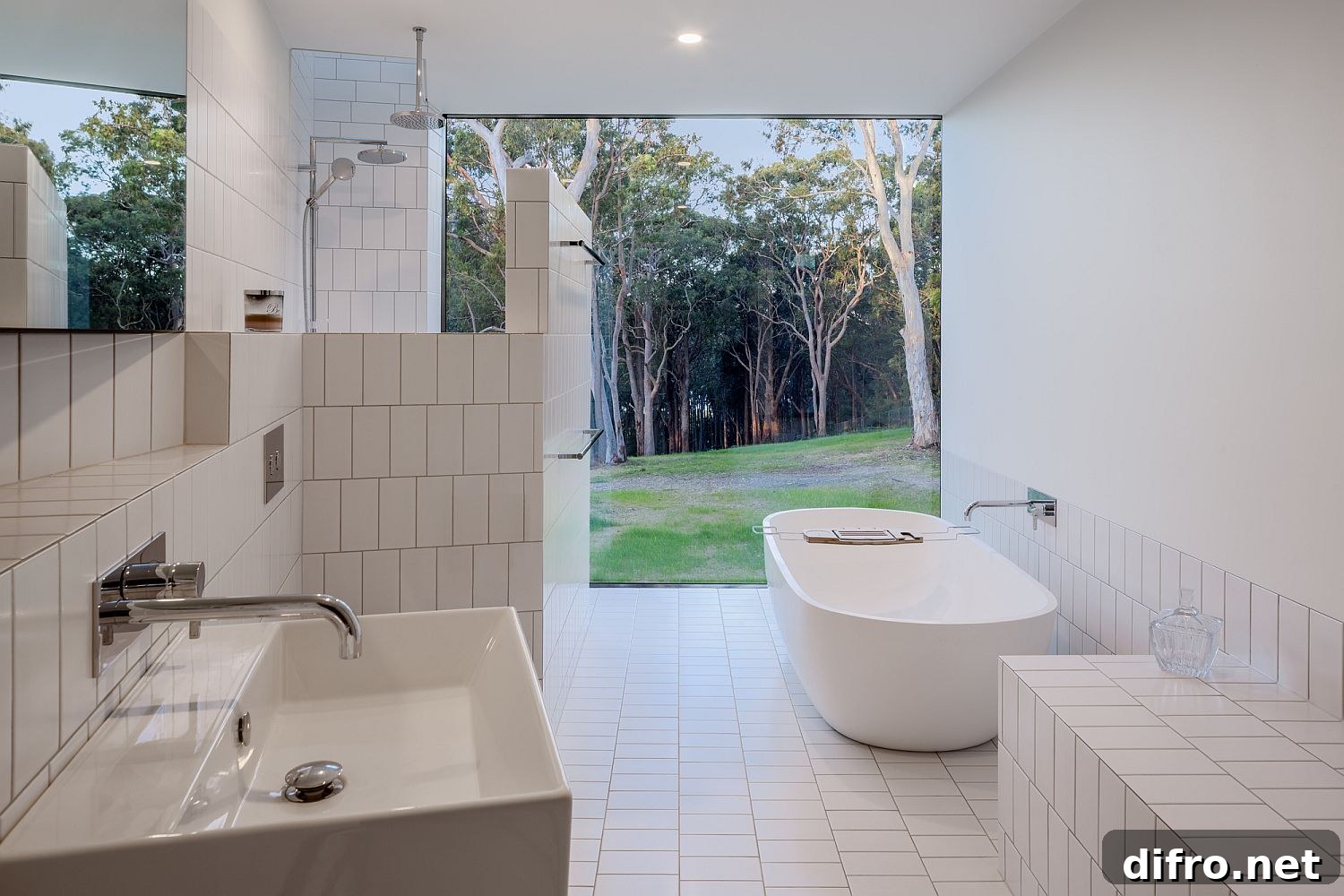
Bathrooms and intimate spaces continue the same language: simple, light-toned finishes that feel fresh and connected to the garden beyond. Landscape and planting are treated as an extension of the architecture, softening edges and reinforcing the house’s relationship to its bushland setting. The design embraces both the rugged coastal character and the comforts of contemporary living, delivering a home that reads as both modern and rooted.
Design is a process. Each project is a result of an understanding of the site; conditions and constraints, of working with people, engaging the client, with consultants, contractors and craftsmen, of collaboration to achieve outcomes not originally foreseen. Brass House follows this philosophy. The design outcome is a result of an informed response to these numerous threads.
[Photography: Jon Reid]
The Brass House is an example of careful, context-driven design: it responds to site constraints and environmental conditions while providing a comfortable, contemporary home. By balancing materials, scale and light, the architects created a residence that feels simultaneously modern, warm and intimately connected to the coastal bushland it overlooks.