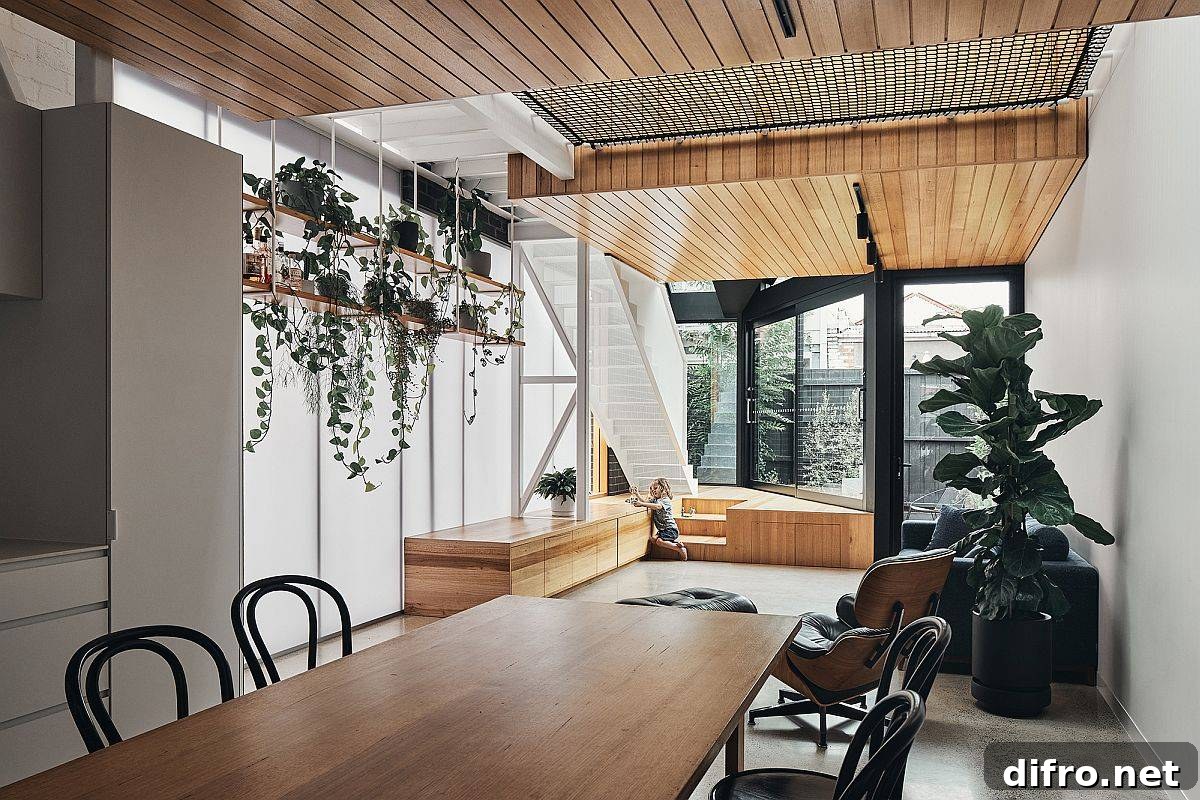
Modern homes have shifted away from overly polished surfaces and compartmentalized rooms toward interiors defined by texture, flexibility and thoughtful restraint. The Earl Street House, designed by Bloxas and located in the Fitzroy neighborhood of Melbourne, is a strong example of this contemporary approach. Here, painted brick walls, warm timber floors and custom metallic elements are woven together to create a residence that feels both robust and refined. A system of polycarbonate panels admits soft, diffused daylight deep into the plan while preserving privacy, creating an atmosphere that is bright yet intimate.
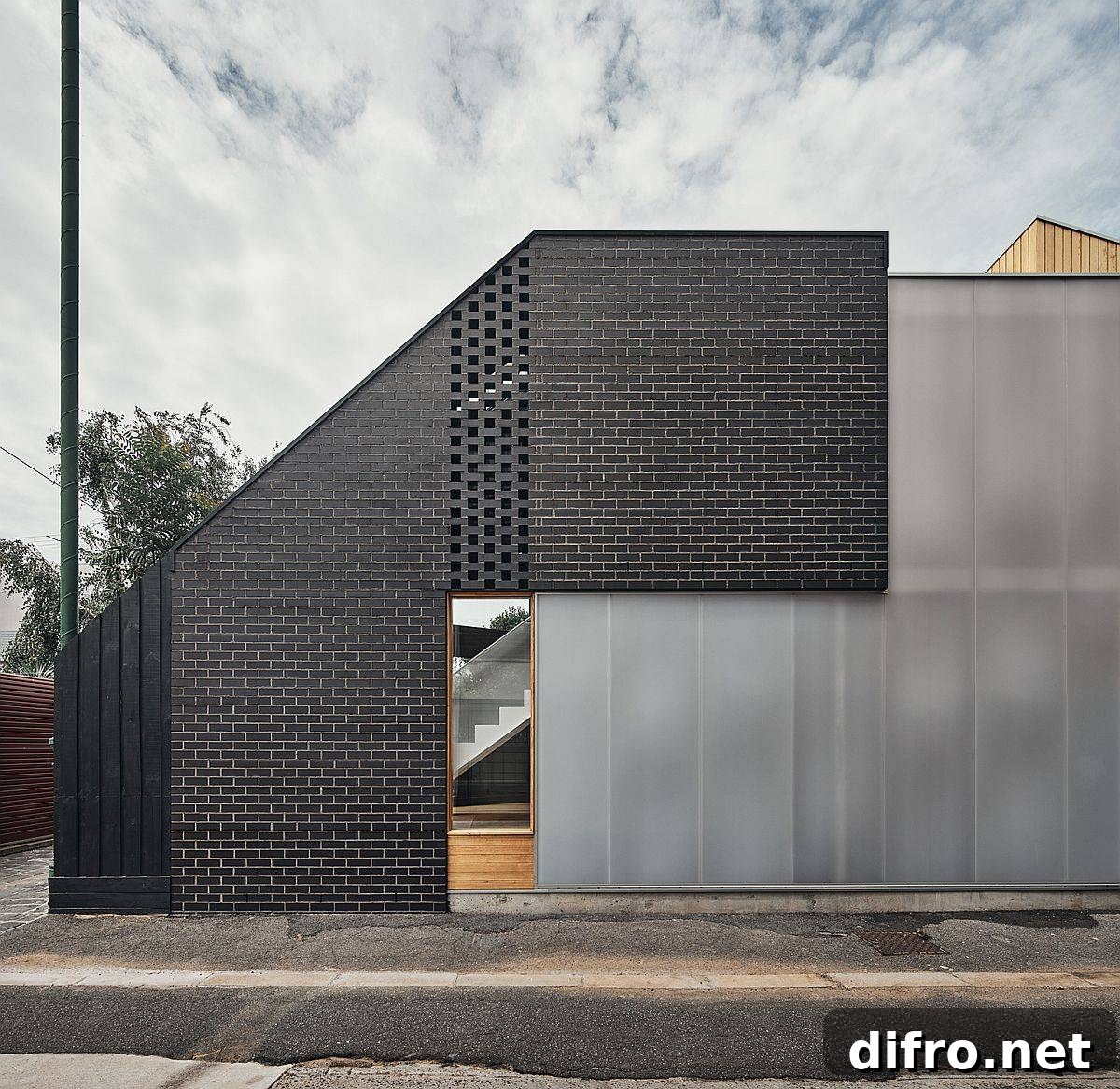
Inside, a restrained palette of white and natural wood sets a calm backdrop for daily life. The open-plan living, kitchen and dining areas are arranged to flow into one another without abrupt separation, maximizing flexibility and sociability. Custom timber boxes and built-in storage organize the space, providing generous places to work, play and relax without cluttering sightlines. These timber elements anchor the interiors, delivering tactile warmth against the cool texture of painted brick and the industrial edge of metallic detailing.
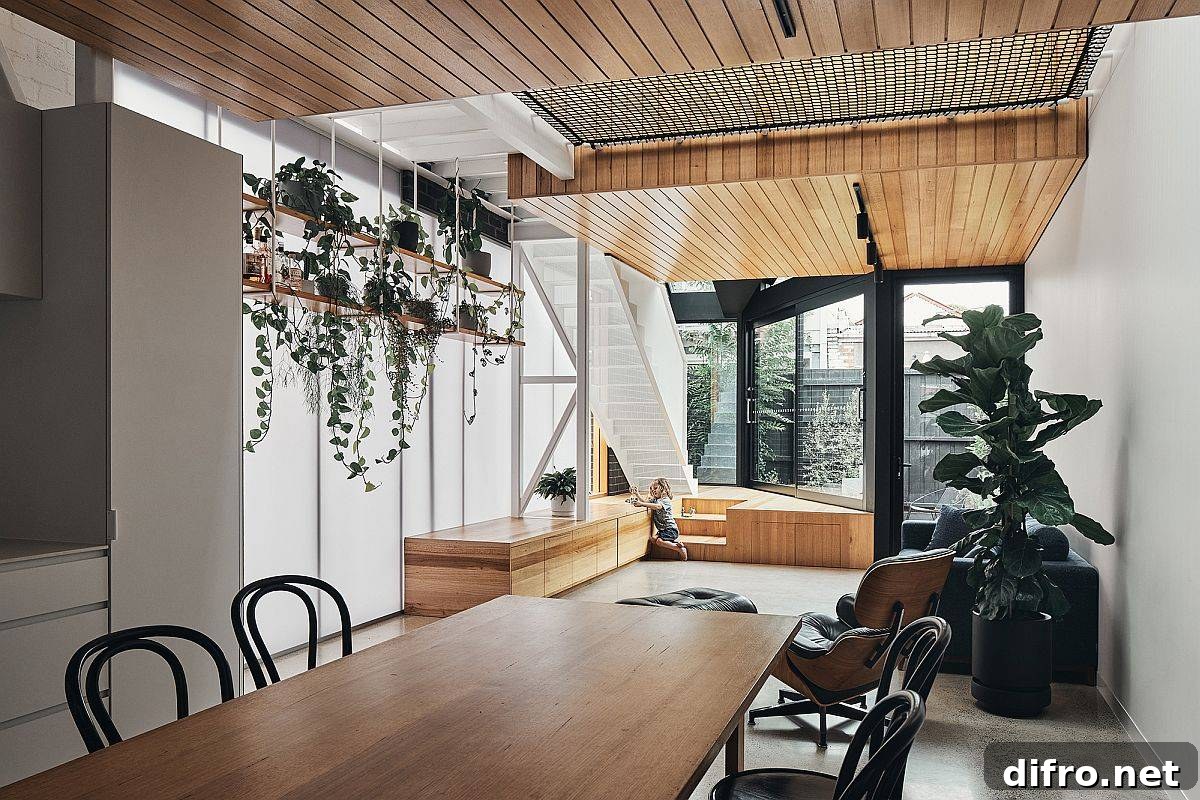
One striking feature is the use of translucent polycarbonate screening, which filters daylight into interior rooms while maintaining privacy from the street and neighboring properties. The polycarbonate panels are especially effective in the family area, where they allow abundant natural light to wash across surfaces without the glare or exposure that full glazing can bring. This approach to daylighting helps transform daylight into a material in its own right—softening edges, animating textures and creating a pleasant day-to-night environment.
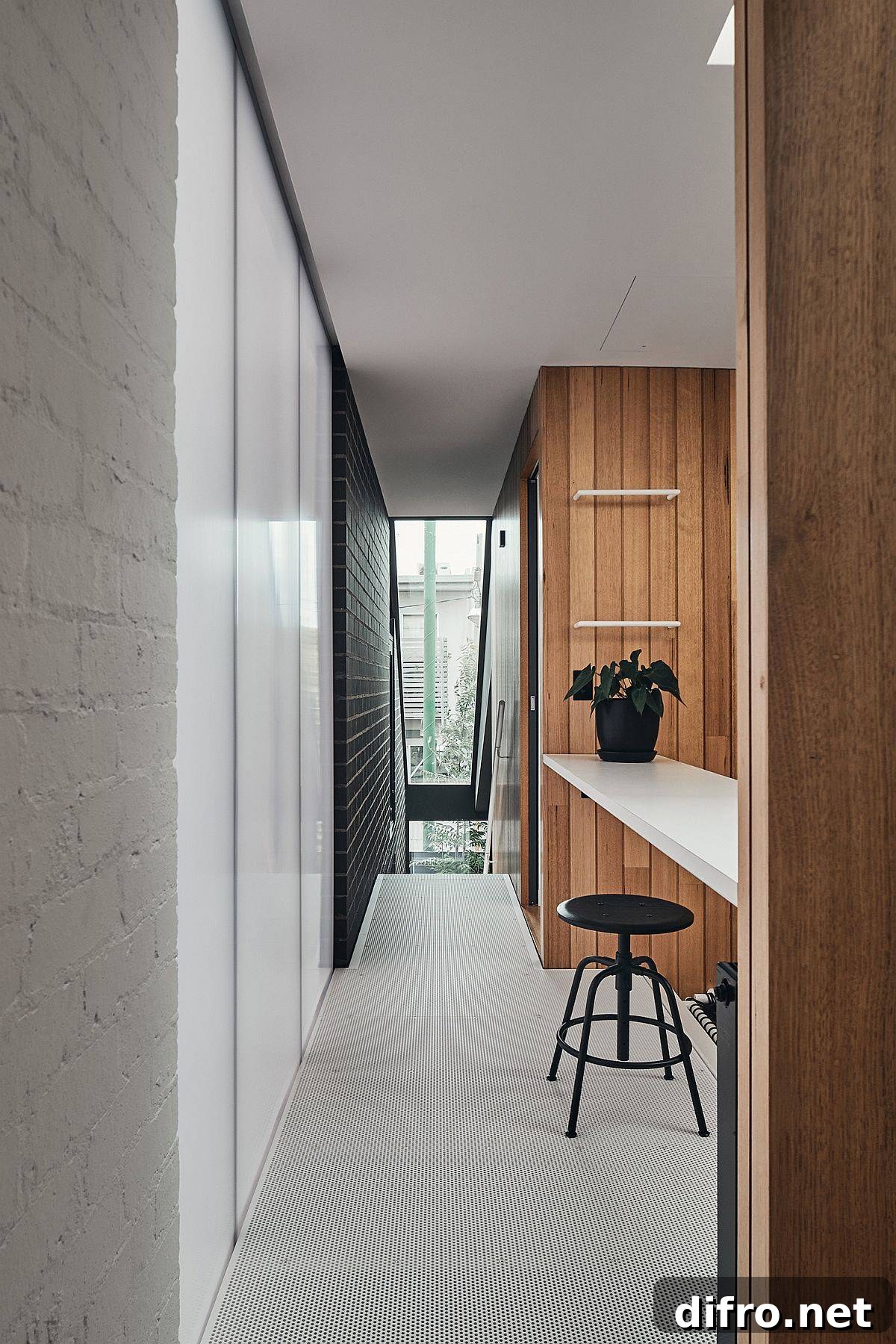
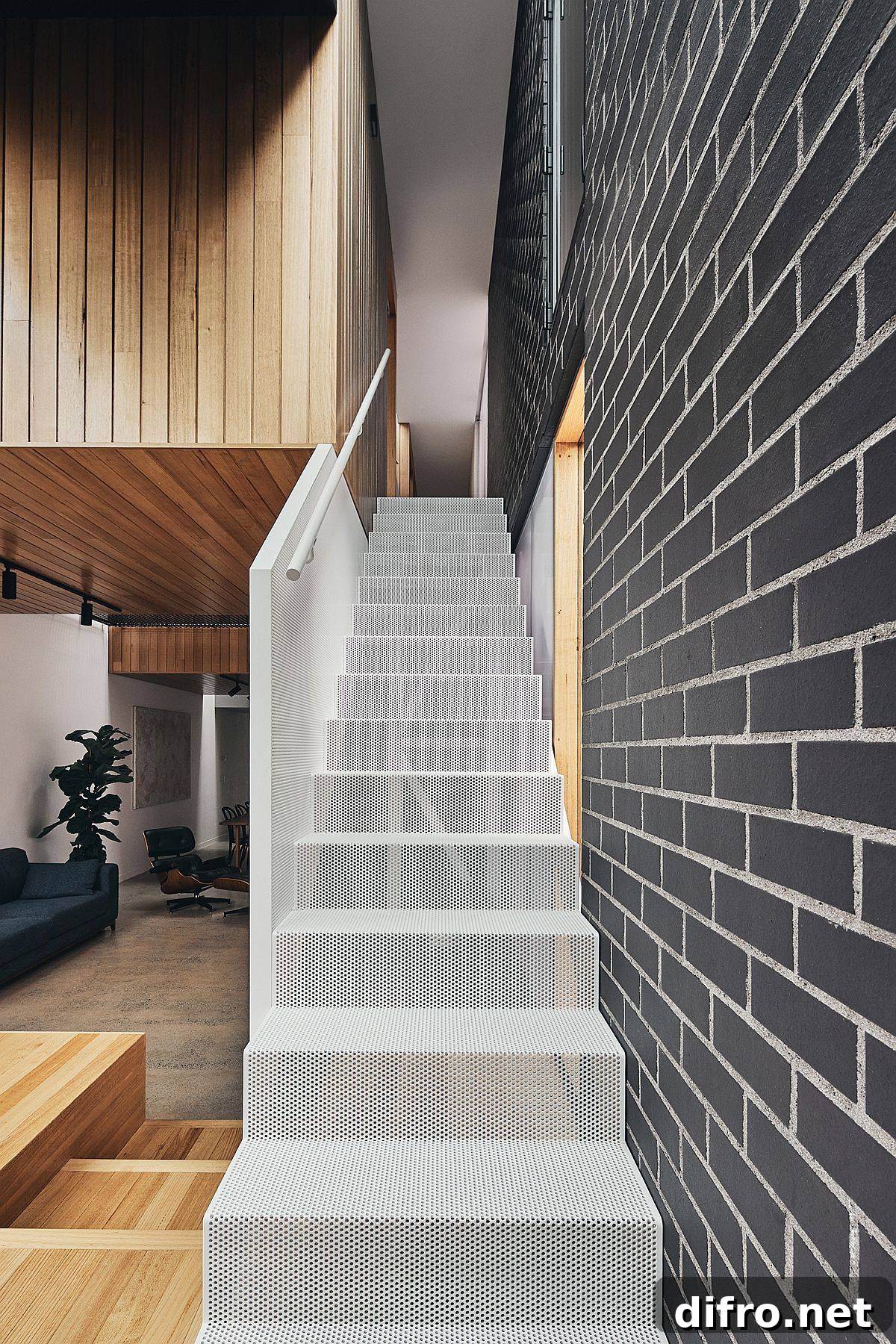
The transition from the ground floor to the bedrooms above is marked by a visually light, mesh-styled metallic staircase. Its wiry profile keeps the vertical connection open and transparent, allowing light and sightlines to travel between levels. Beneath and around the stair, custom wooden platforms and integrated storage boxes make efficient use of otherwise awkward spaces—showing how careful design can fuse practicality with aesthetic restraint.
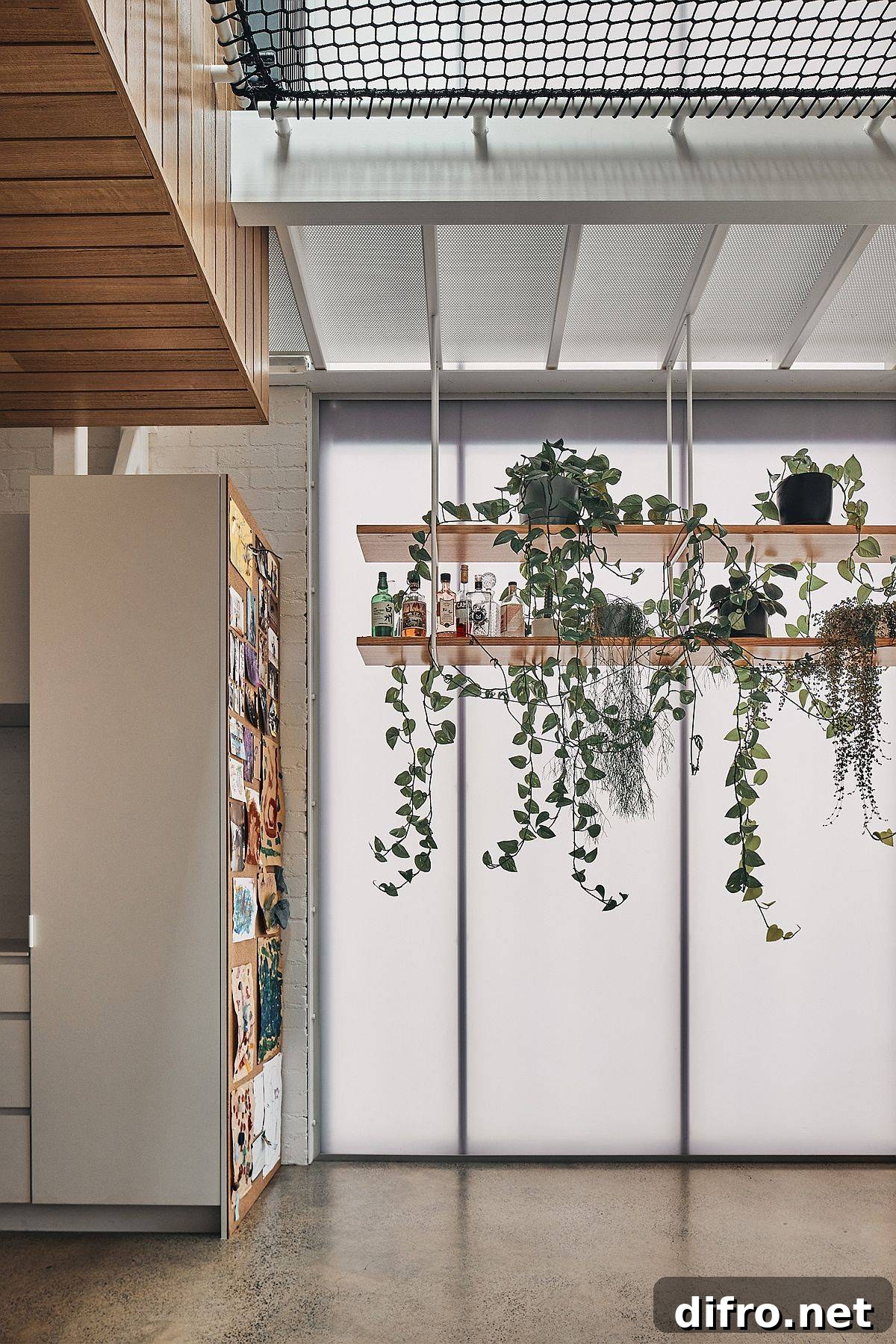
Throughout the house, bespoke shelving and hanging timber details introduce plant life and personal objects into the composition, softening the industrial undertones of brick and metal. The deliberate juxtaposition of raw and refined surfaces—dark brick against pale timber, solid masonry beside translucent panels—creates a layered interior that reads as both contemporary and welcoming.
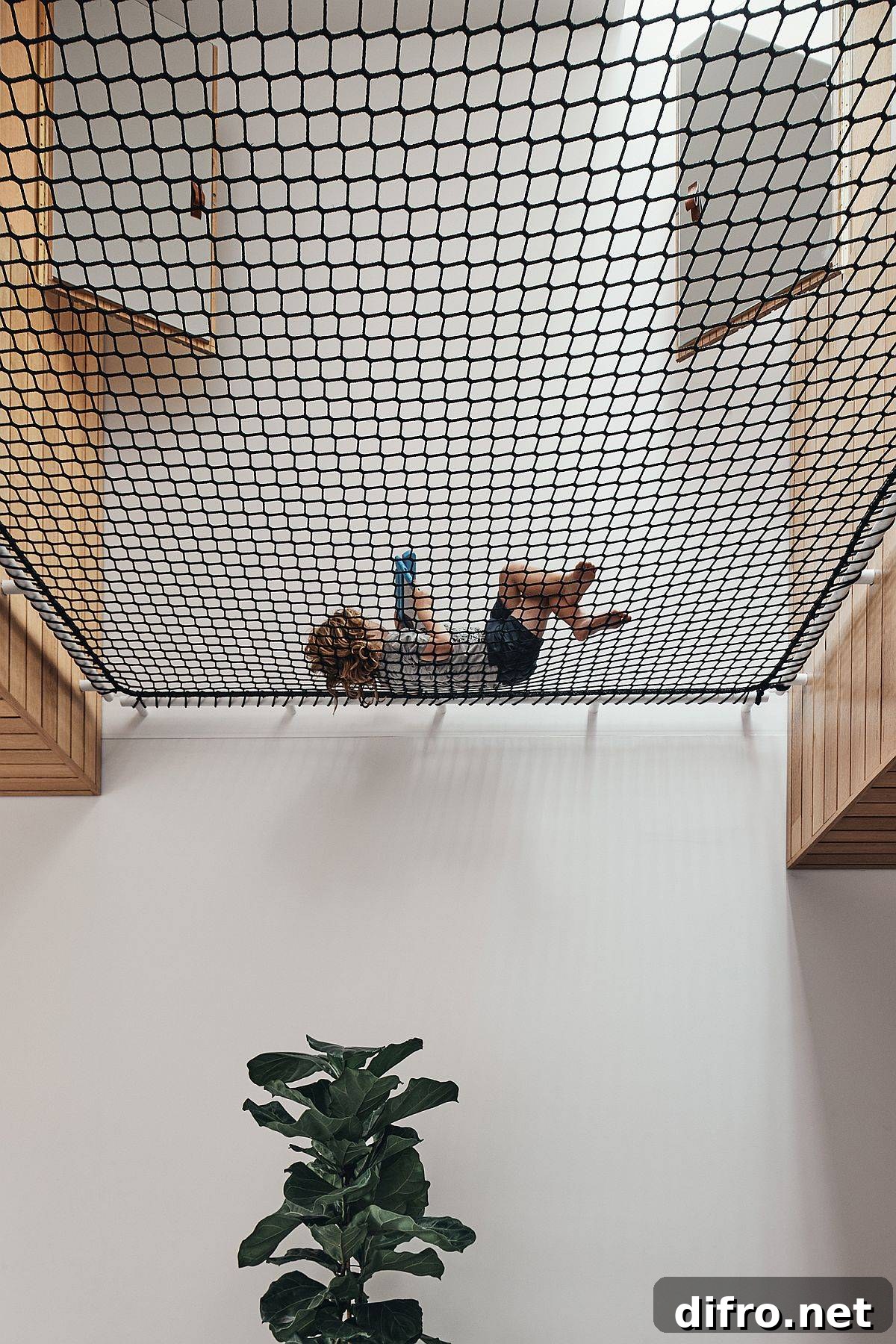
The upper level houses the bedrooms and a central void that visually connects both floors. A suspended net in this void provides a casual, communal place to lie back and relax—an inventive insert that underscores the home’s adaptable character. Rather than strictly assigning functions to fixed rooms, the design encourages varied use, from focused work to flexible family time or quiet repose.
Hot desking, mobile configurations, and virtual offices are all commercial strategies intended to break down our understanding of space. These strategies begin to pose questions about permanency and rigidity within residential architecture. How do we define space, label it, stereotype it, and become accustomed to it through past experiences?
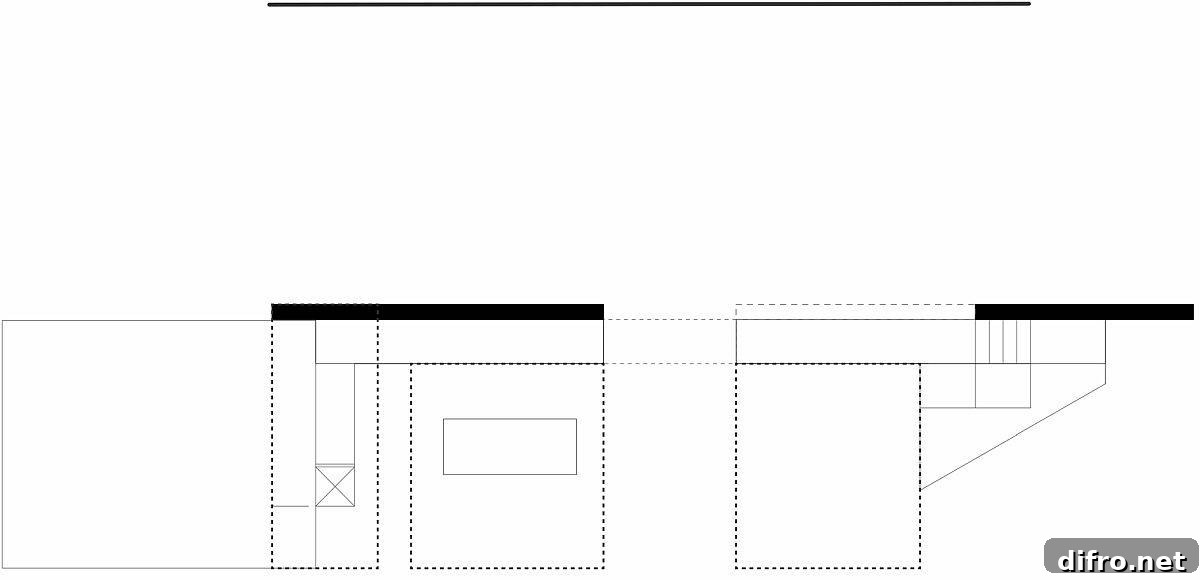
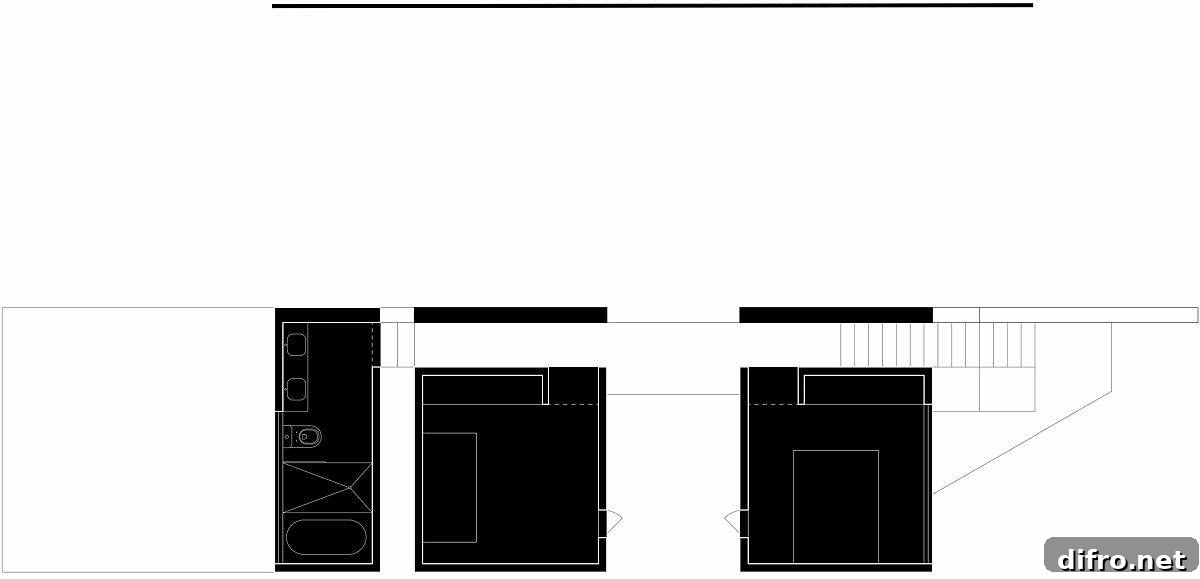
Floor plans for the lower and upper levels emphasize adaptable arrangements rather than rigid zoning. The layout supports contemporary living patterns that demand both private retreats and flexible communal areas. In sum, the Earl Street House illustrates how material contrasts, clever daylighting and integrated joinery can combine to produce a home that feels both resilient and intimate—responding to the daily needs of its occupants while offering a quietly distinctive architectural character.
[Photography: Peter Bennetts]