Adaptive reuse can transform industrial spaces into warm, functional places that feel at once modern and familiar. In Osaka, Japan, a small coffee shop tucked inside the warehouse of a company that manufactures graphic films demonstrates that potential beautifully. Redesigned by Hidenori Tsuboi Architects, the cafe preserves the building’s industrial bones while introducing a calm, contemporary interior palette of white and bluish-gray. The result is an inviting, well-crafted space that balances utility and atmosphere without losing the character of the original warehouse.
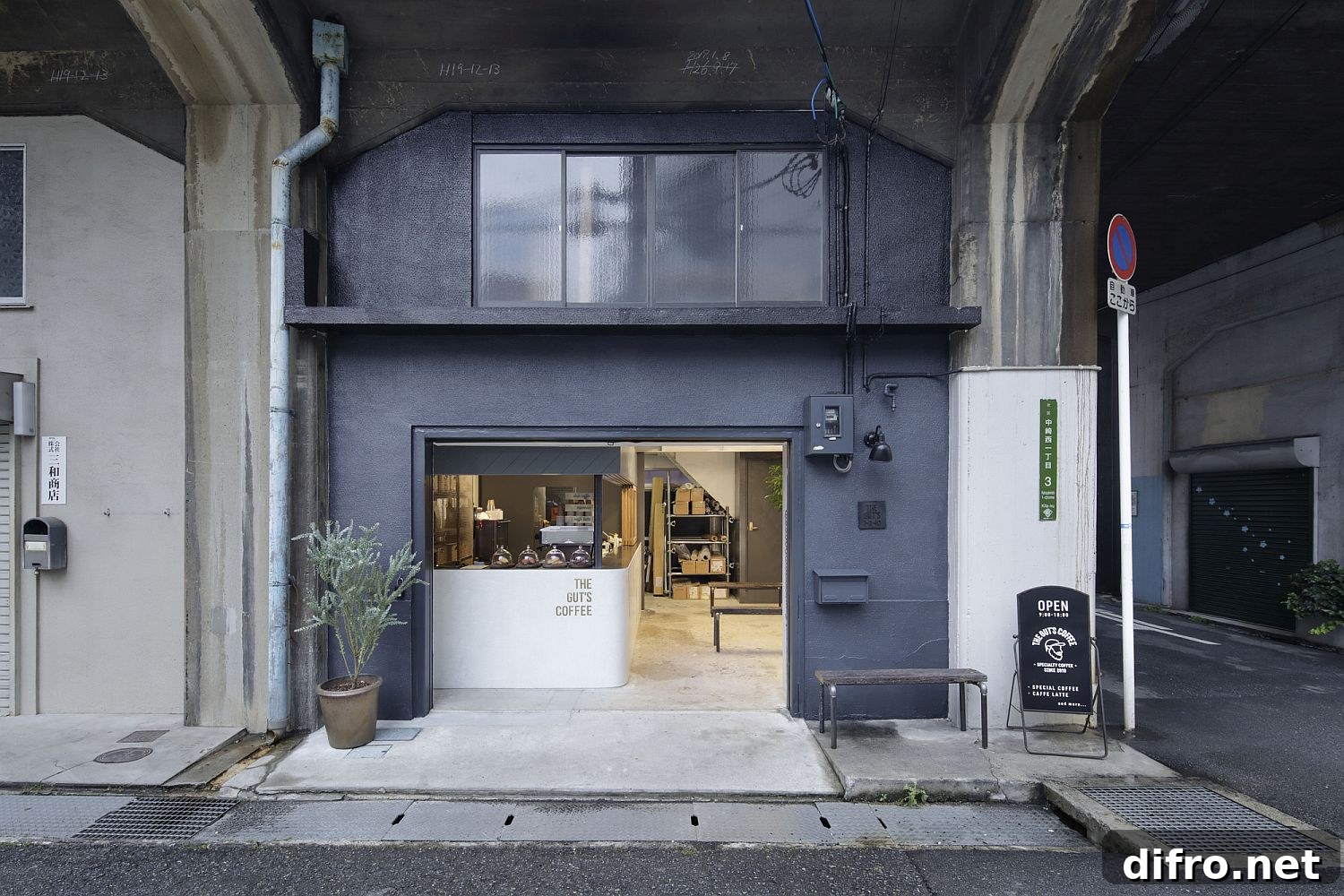
The design intentionally highlights contrasts: raw concrete and exposed metal join refined carpentry and soft colors to create a layered, tactile environment. Much of the furniture and fixtures were crafted from reclaimed timber found on site, so counters, tables and shelving feel rooted in the warehouse’s history while serving contemporary needs. This reuse of materials not only reduces waste but also gives the interior a textured, lived-in quality that complements the minimal overall aesthetic.
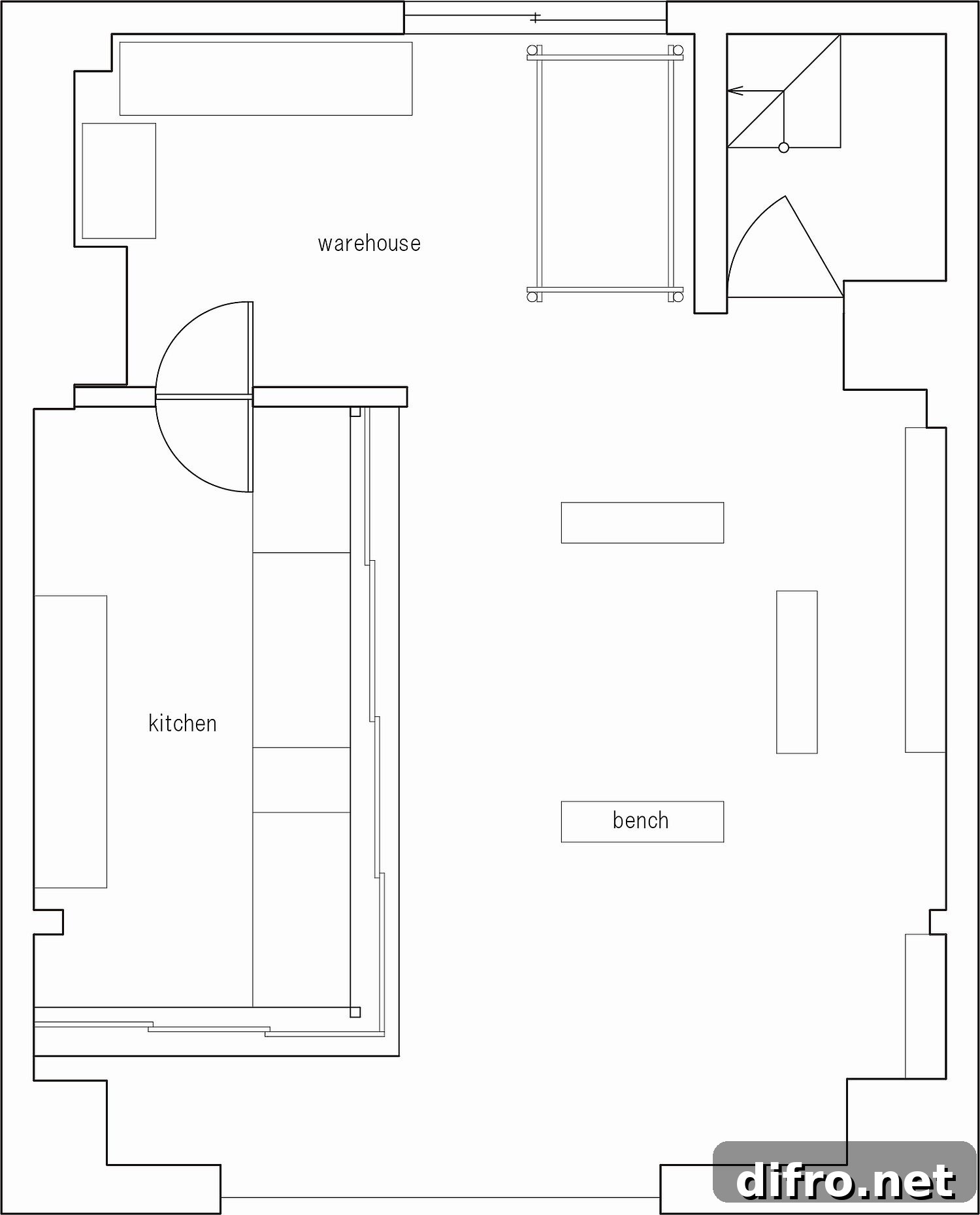
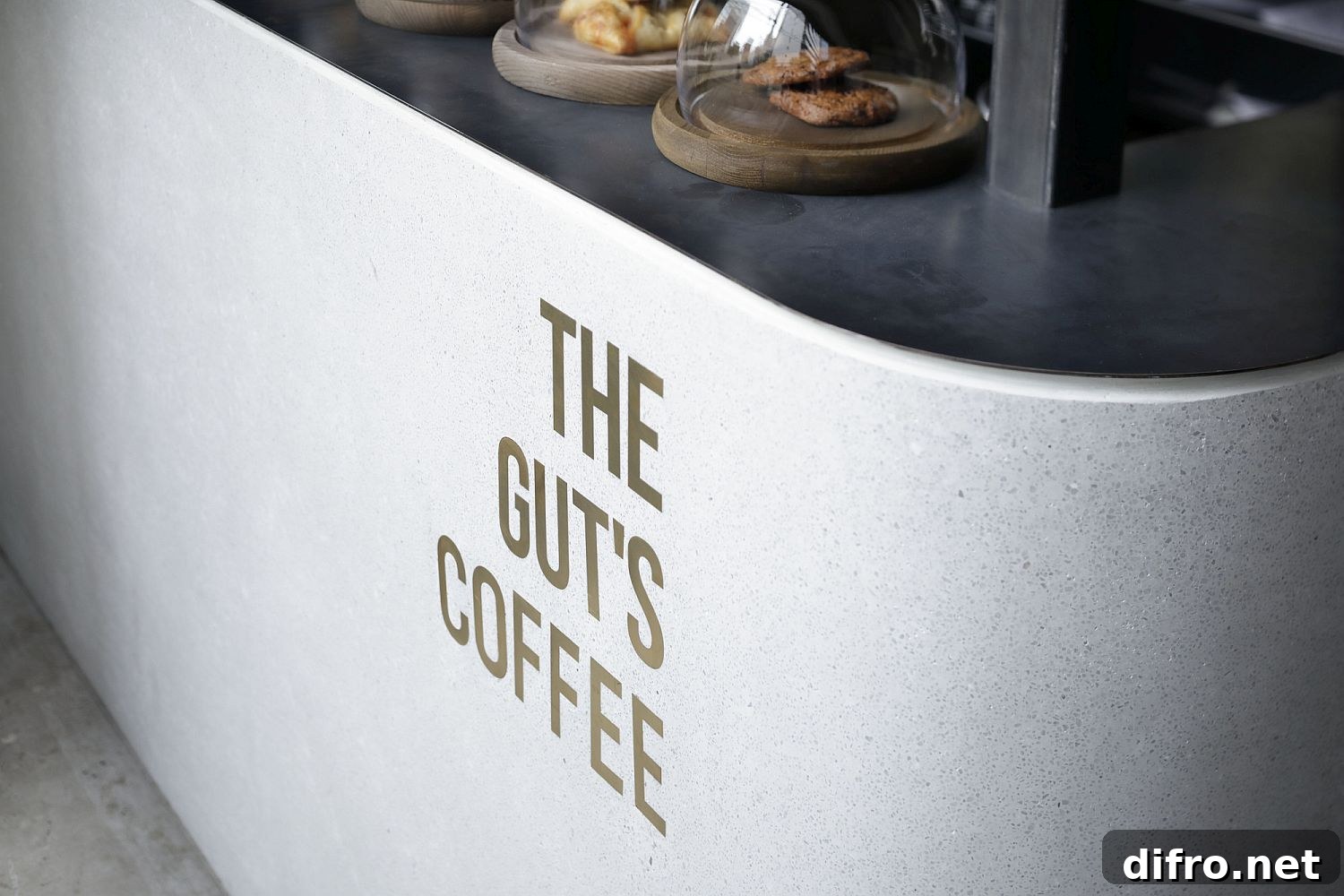
Spatially, the interior is carefully organized into three main zones: the kitchen and service counter, an area that maintains some warehouse functions, and the customer seating with benches and standalone furniture. The layout is deliberate and efficient—R-shaped counters and custom workstations maximize workflow while also guiding foot traffic and sightlines. Benches and shelving remain understated and minimal, which keeps the space visually calm and uncluttered.
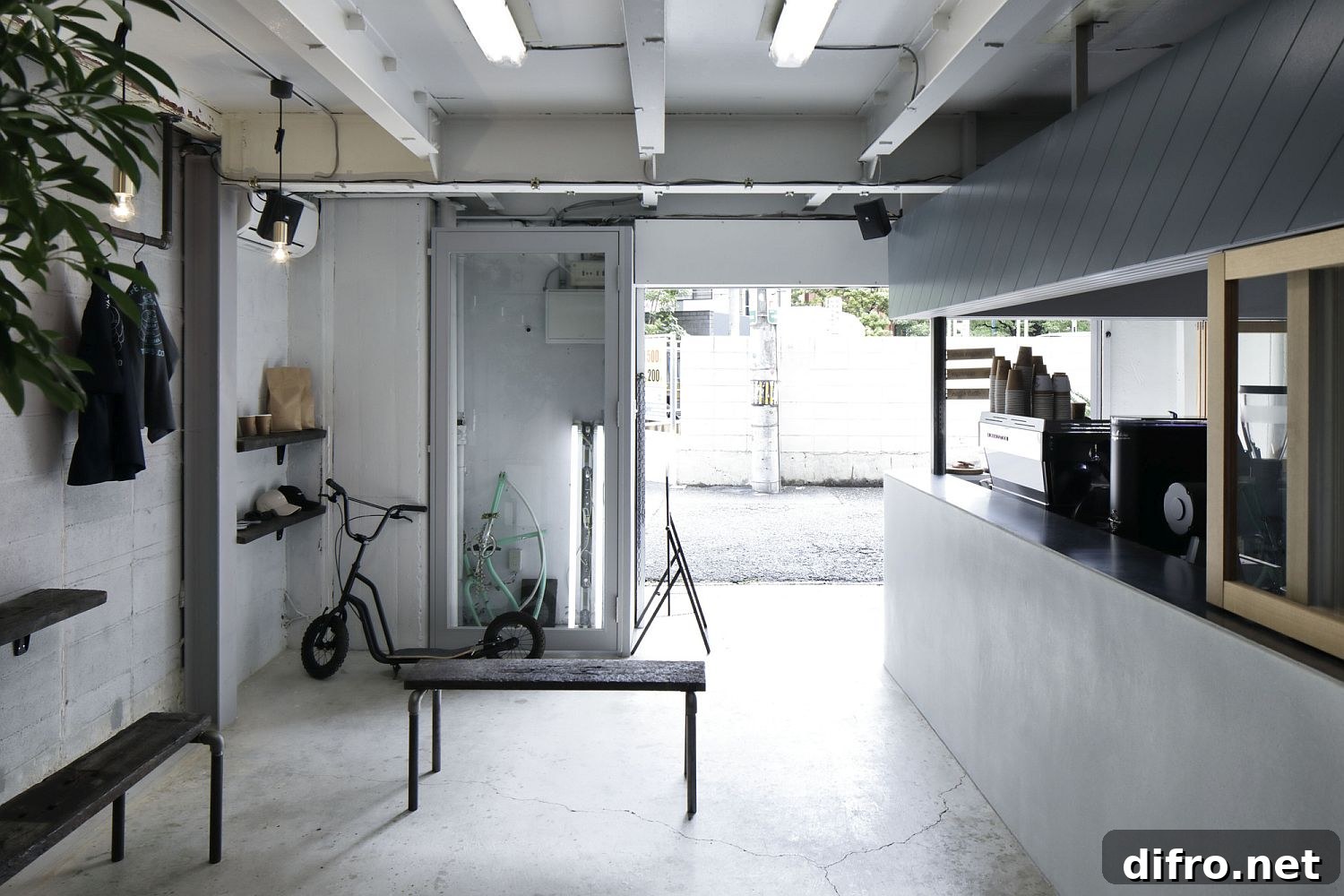
Lighting plays a central role in shaping the mood. Recessed fixtures provide even, unobtrusive illumination while daylight filters in to highlight textures and surfaces—concrete, metal and wood each respond differently to the mix of artificial and natural light. The bluish-gray and white palette keeps the interior bright and contemporary, while the warm tones of reclaimed wood add balance and comfort, giving the space a subtle Scandinavian feel without diluting its industrial identity.
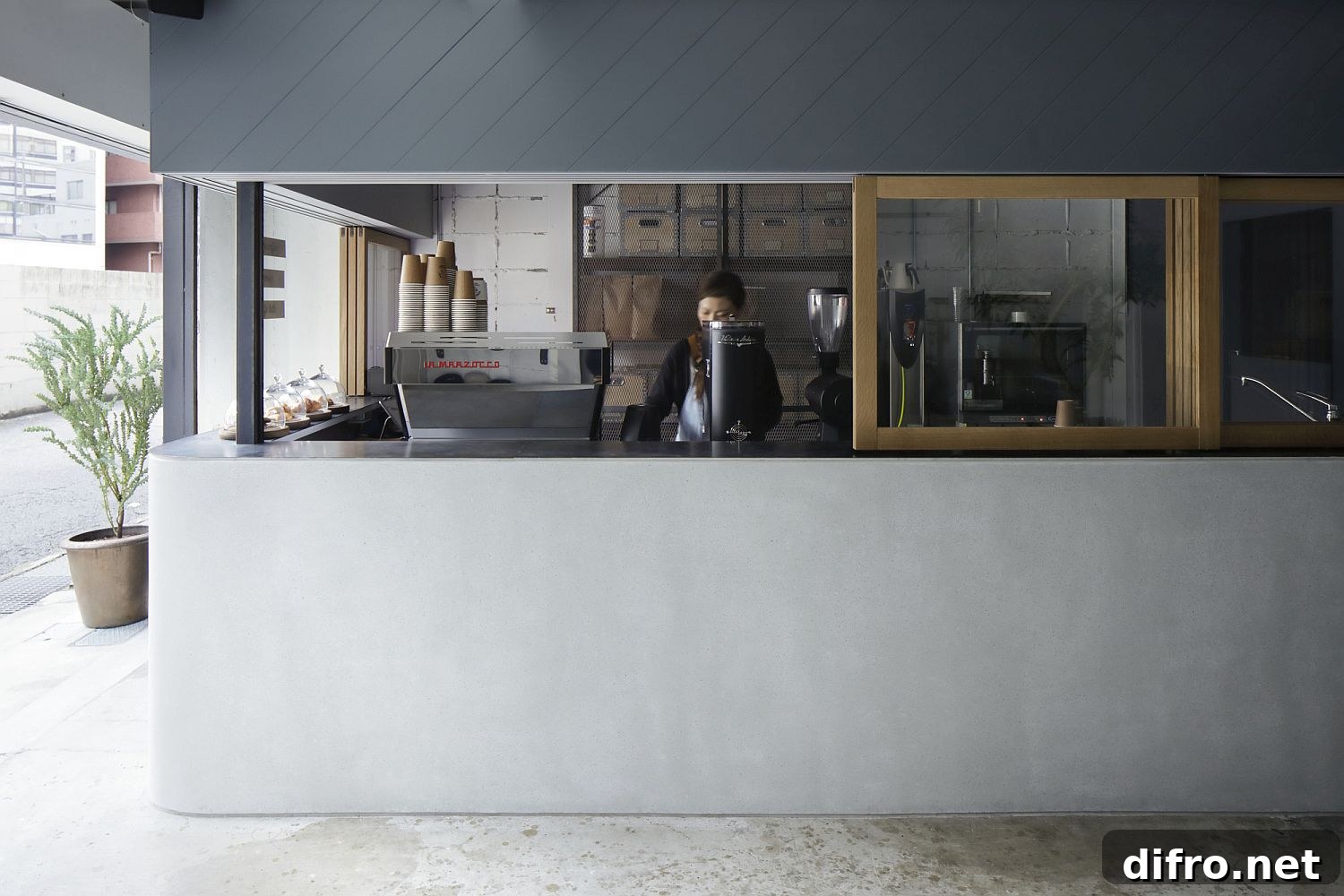
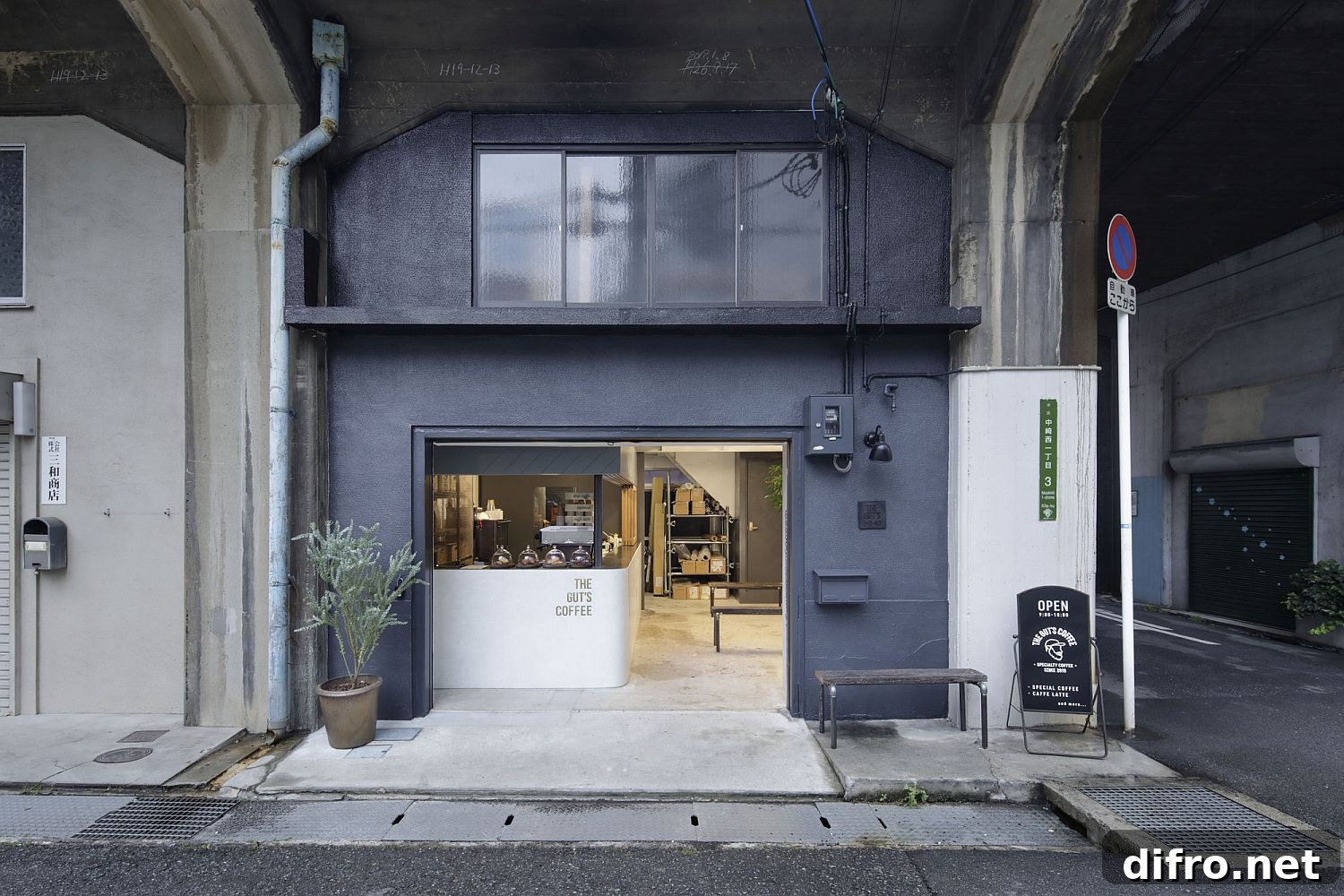
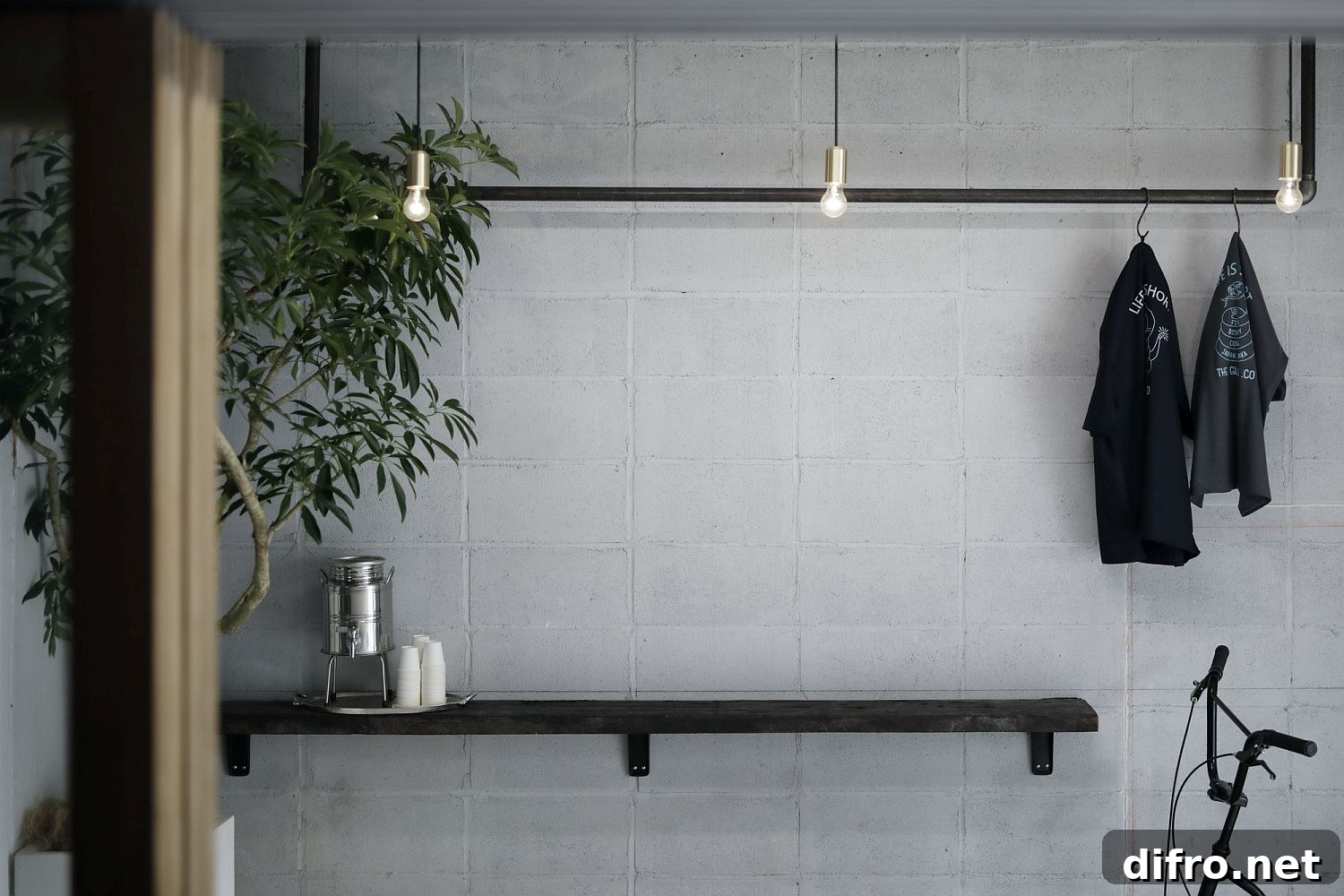
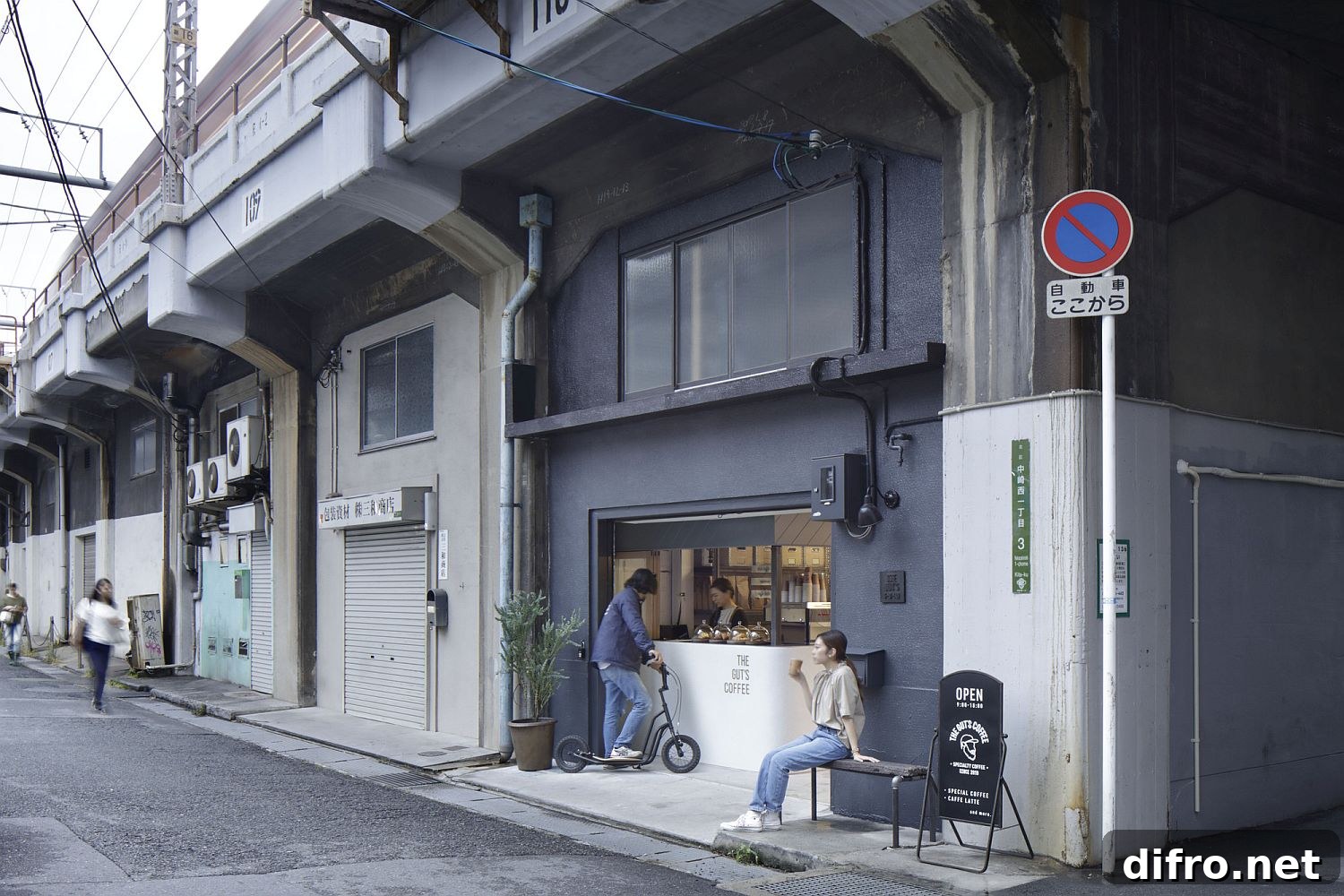
From the street, the cafe presents an understated but distinctive facade. The architects used slanted hanging walls and R-shaped counters to create visual interest and a sense of movement that contrasts with the warehouse’s rigid structure. These design moves are intended to catch the eye of passersby and invite them in, marrying the building’s industrial past with a new, approachable public face.
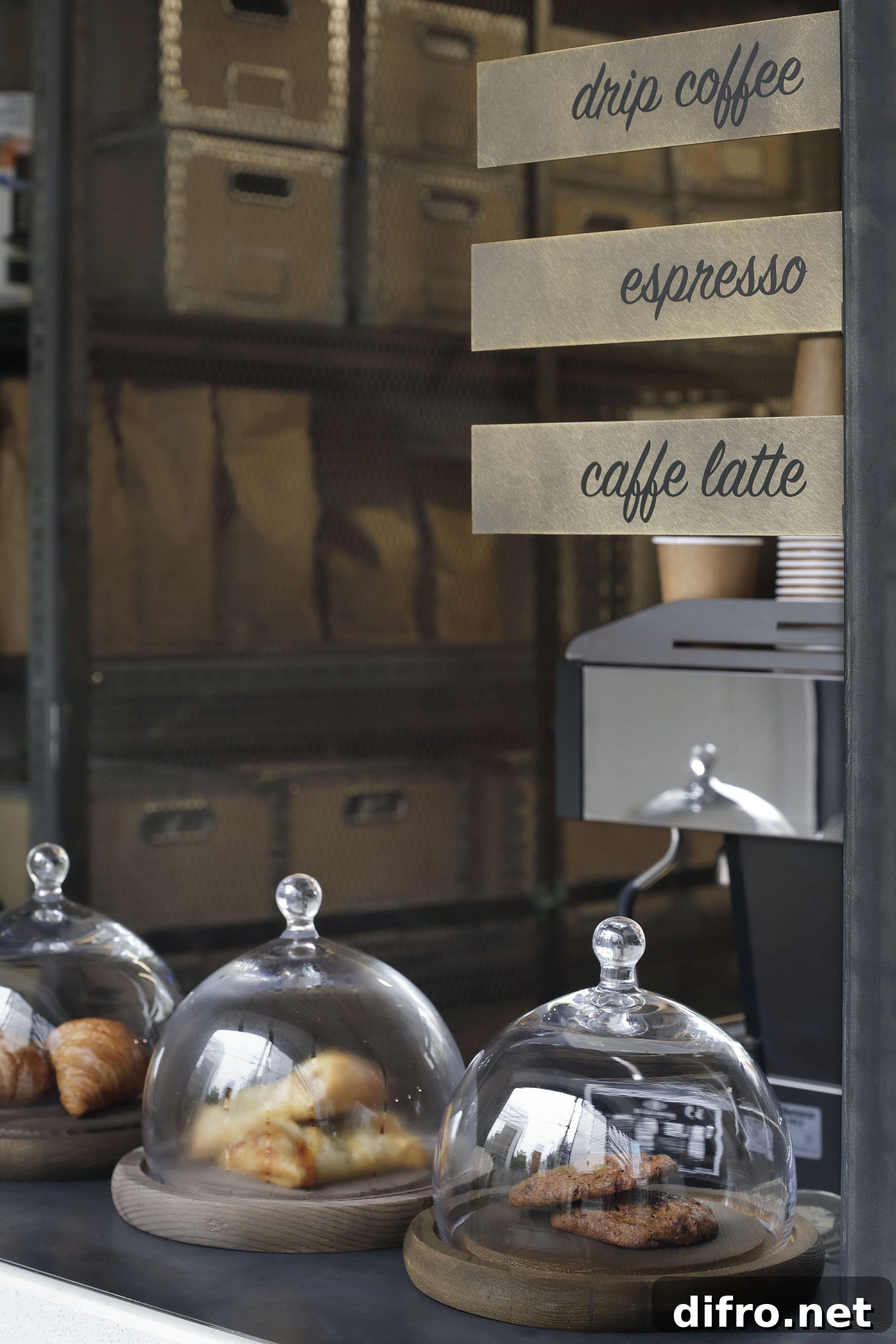
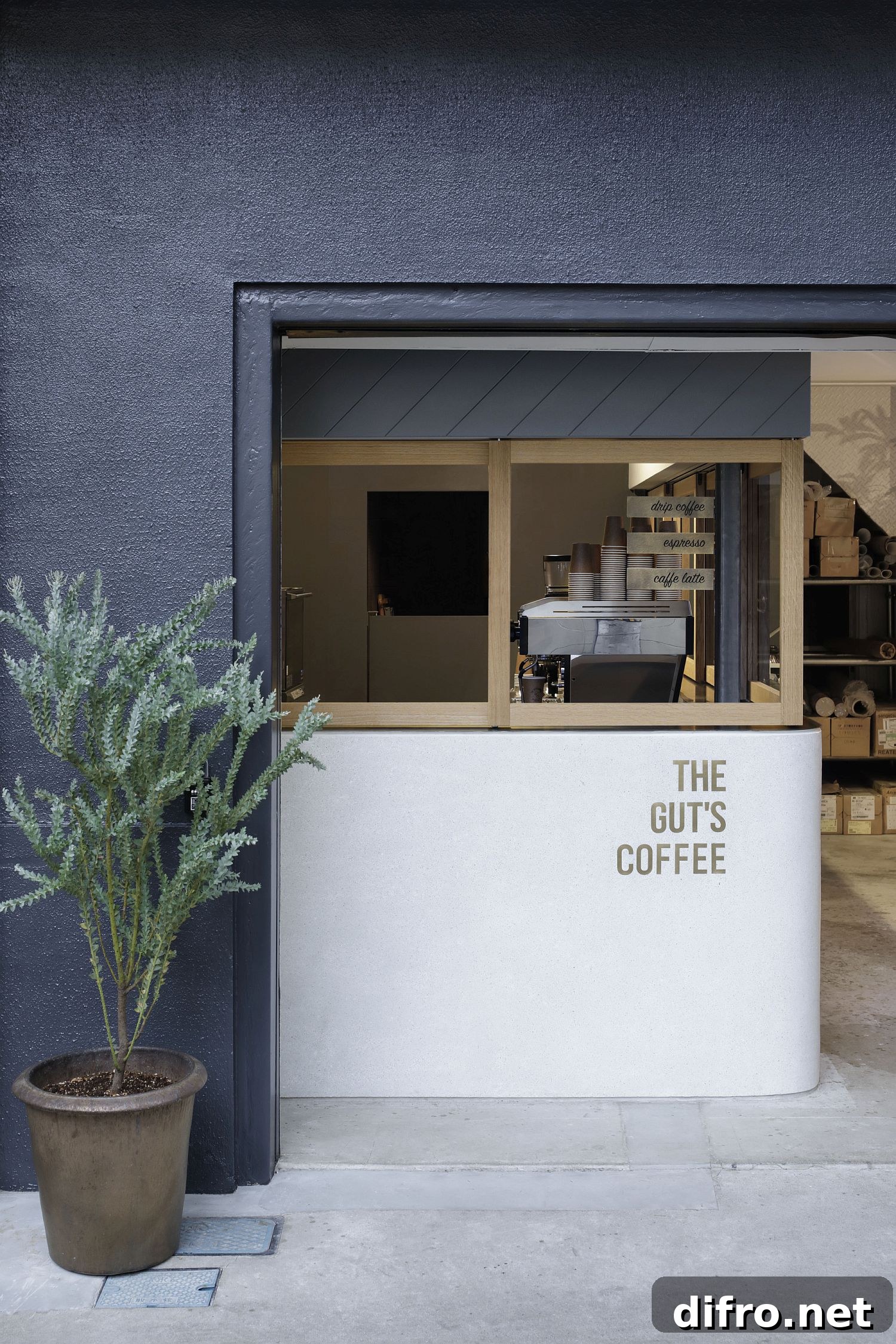
By using R-shaped counters and slanted hanging walls in horizontal and vertical spaces such as steel columns / beams and concrete block walls, the different properties of warehouses and coffee stands are also expressed visually at the same time and the sense of incongruity is intended to attract the eyes of people passing the street in front of the coffee stand.
The project demonstrates a restrained but sophisticated approach to converting an industrial shell into a small, functional hospitality venue. The careful reuse of materials, a cohesive color scheme and well-considered spatial planning ensure the coffee shop functions smoothly for staff and offers a comfortable experience for customers. It is a model of how modest interventions—thoughtful counters, strategic lighting and reclaimed timber elements—can yield a compelling, memorable environment within an existing industrial structure.
Photographs of the project capture both the spatial clarity and the tactile richness of the interiors. Lighting, material contrasts and carefully composed furniture bring out details that reward closer inspection, while the straightforward floor plan supports everyday operations. This modest, well-resolved conversion is a clear example of how adaptive reuse can preserve identity, support sustainability and create a new kind of public space within an industrial setting. [Photography: Daisuke Shima]