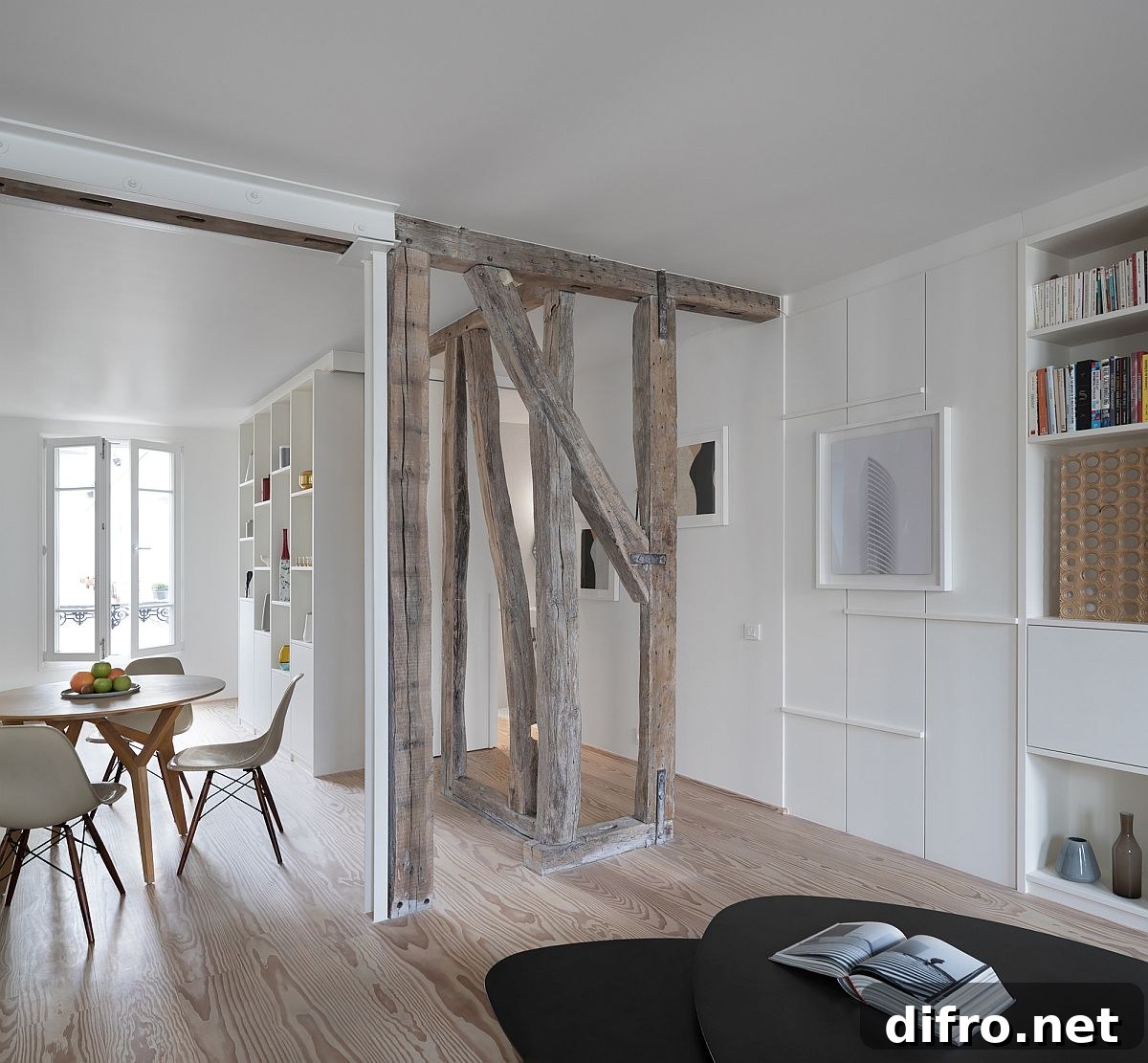
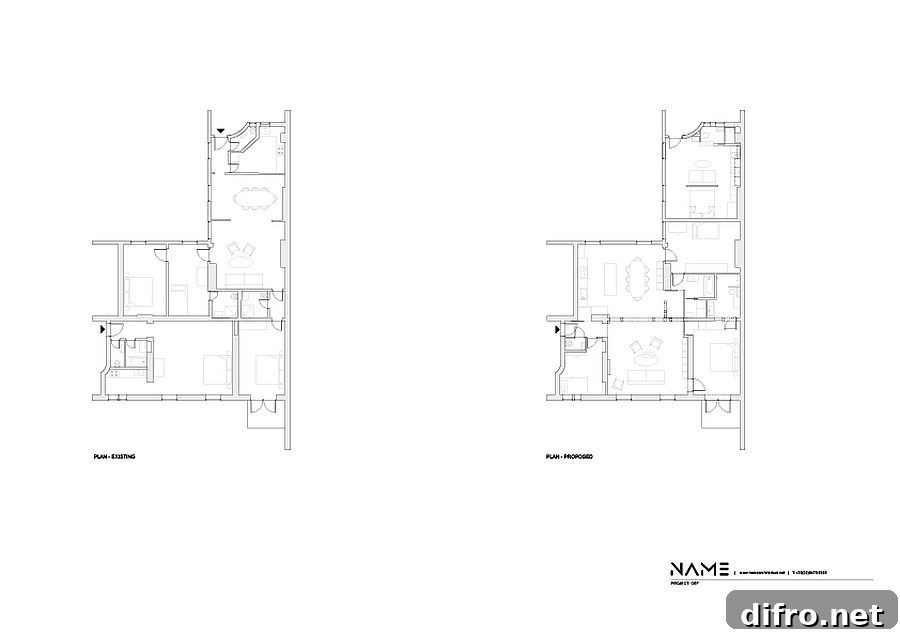
Finding enough space for a modern family inside a small urban apartment is a constant challenge. Reorganizing furniture and maximizing vertical storage helps, but in many compact units those measures still fall short—especially when the apartment’s square footage is very limited. One practical solution, when it’s possible, is to combine two adjacent apartments into a single, larger residence. That is precisely the approach taken with the OBF Residence, a thoughtful reconfiguration by NAME architecture in Paris designed to provide a more spacious, functional home for a growing family.
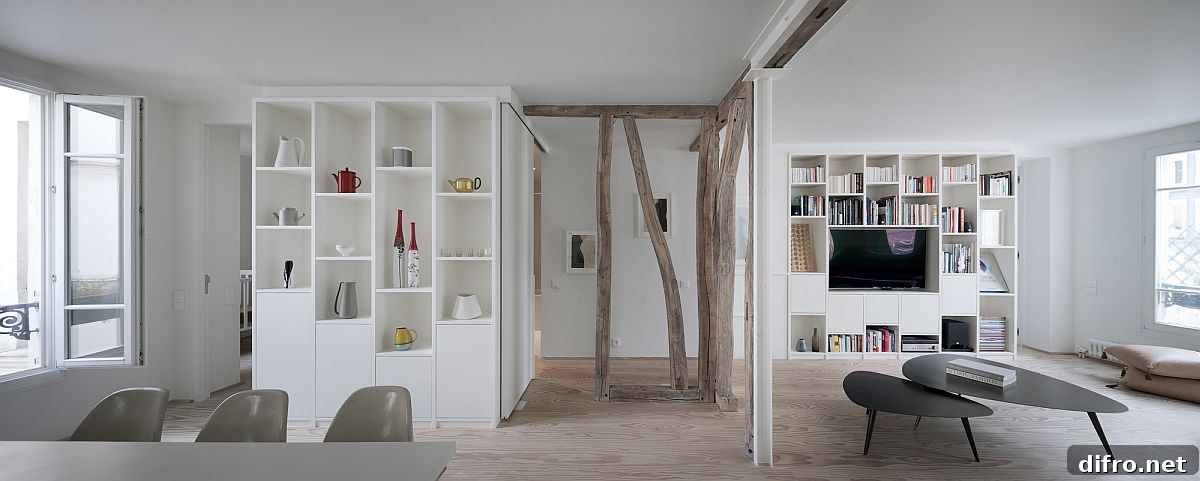
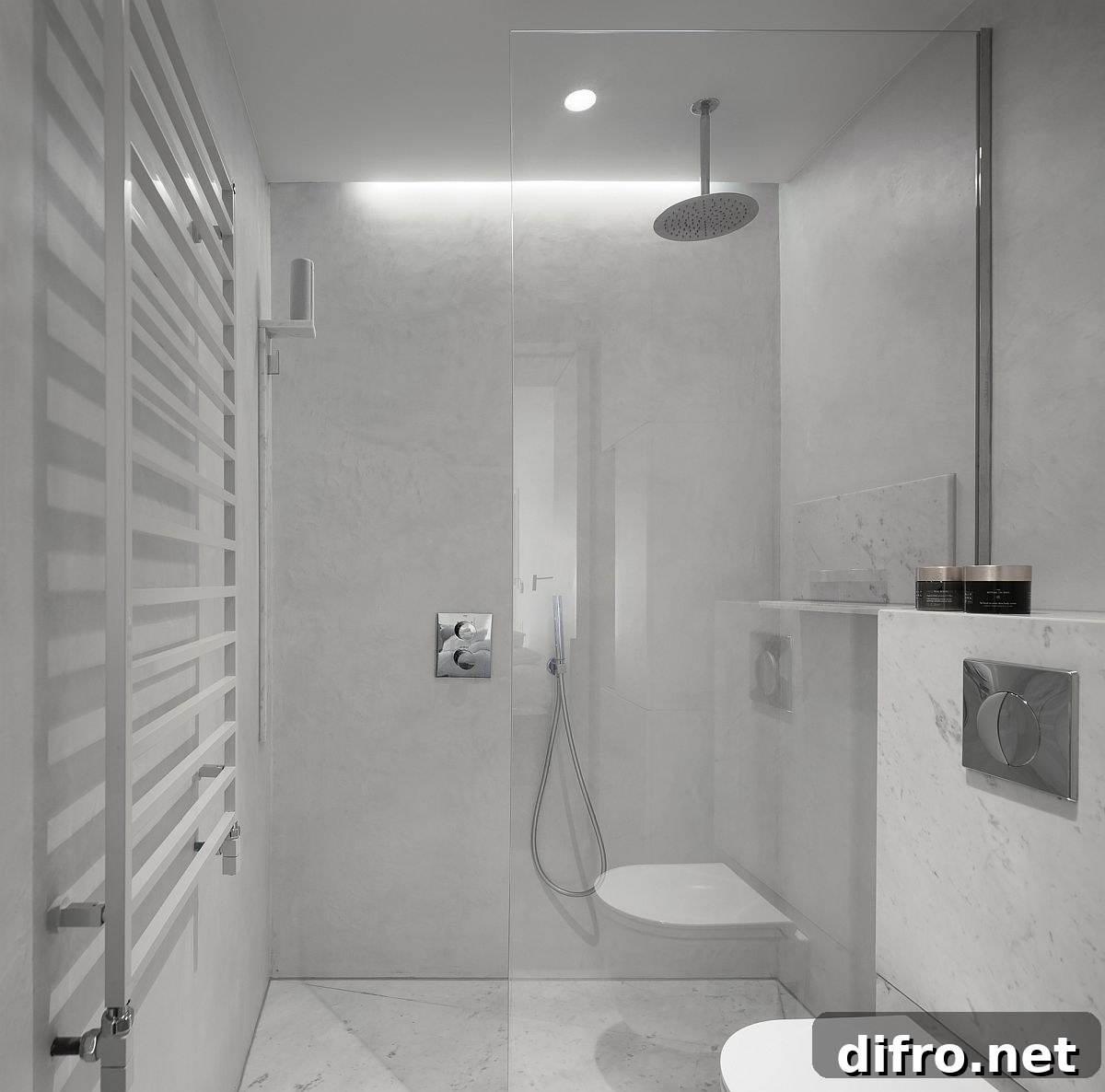
The redesign leans on a restrained, neutral palette and a deliberate mix of textures to craft a warm but contemporary atmosphere. White surfaces dominate, creating a bright, airy backdrop that amplifies natural light. This is balanced with pale wood finishes, and selective uses of concrete and Carrara marble that inject subtle contrast and visual interest without overwhelming the calm aesthetic. The result is a cohesive interior where materials and tones work together to feel both modern and comfortably lived-in.
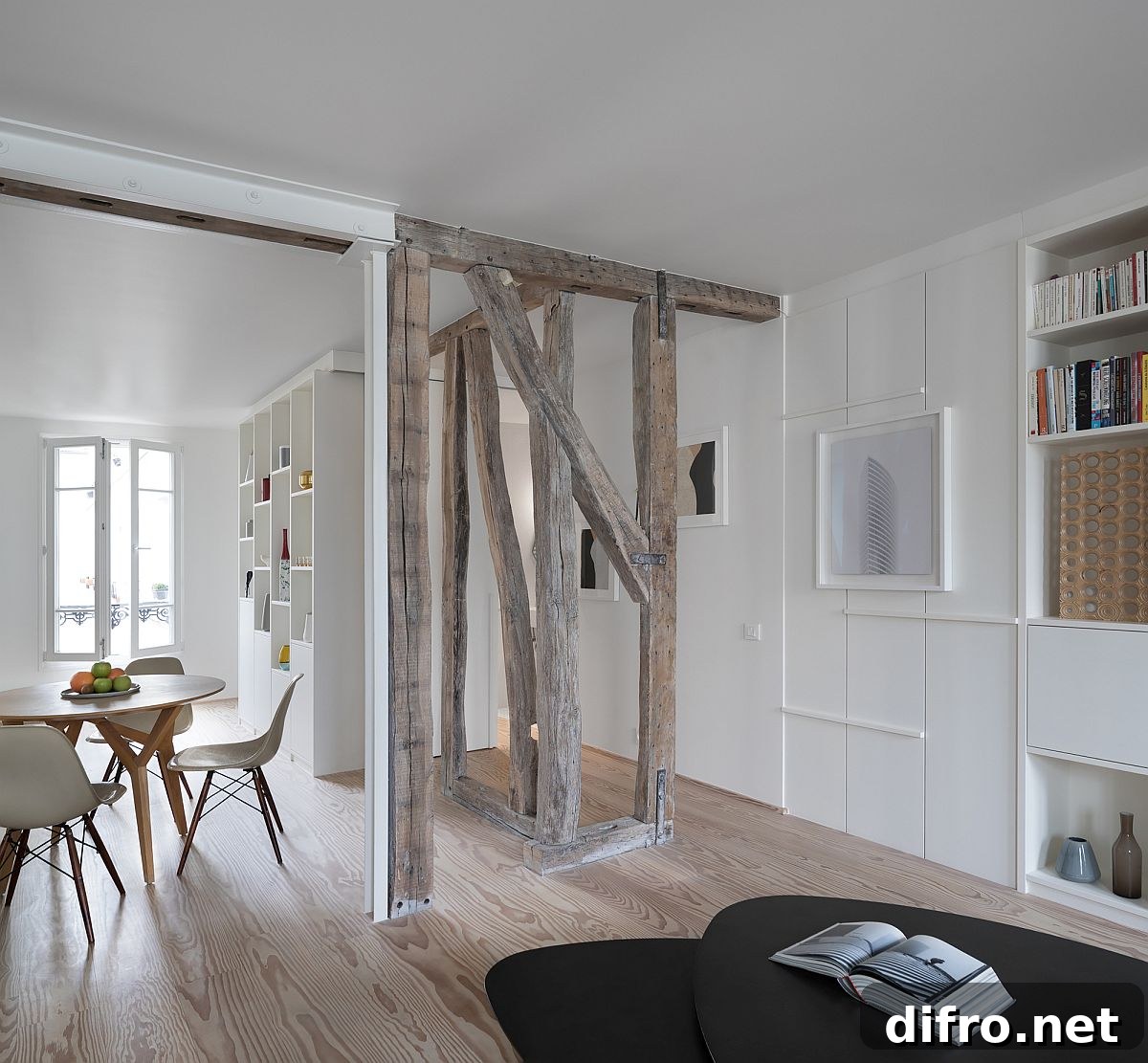
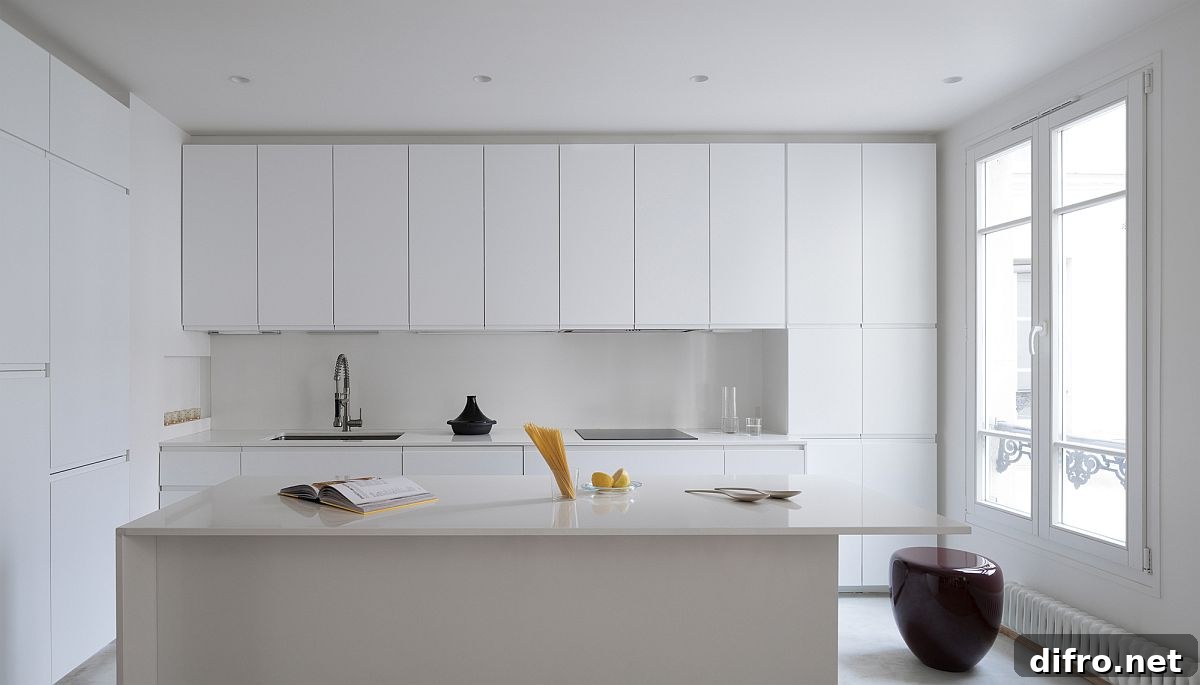
Key living areas—the living room, kitchen, and dining space—have been opened up to form a generous, light-filled communal zone that encourages family interaction. A striking central island and thoughtfully integrated shelving organize the kitchen, while multiple white cabinets and built-in units around the apartment significantly increase storage capacity without disrupting the minimalist aesthetic. These storage solutions are essential in family homes, where clear surfaces and organized spaces support daily life while keeping the overall design tidy and refined.
Wooden ceiling beams and other characterful accents preserve a Parisian warmth within the otherwise contemporary scheme. The beams offer a pleasant contrast to the smooth white walls and modern fittings, grounding the interiors in a sense of history and place. Subtle variations in texture—matte plaster, soft timber, polished stone—add depth and help prevent the monochrome palette from feeling sterile.
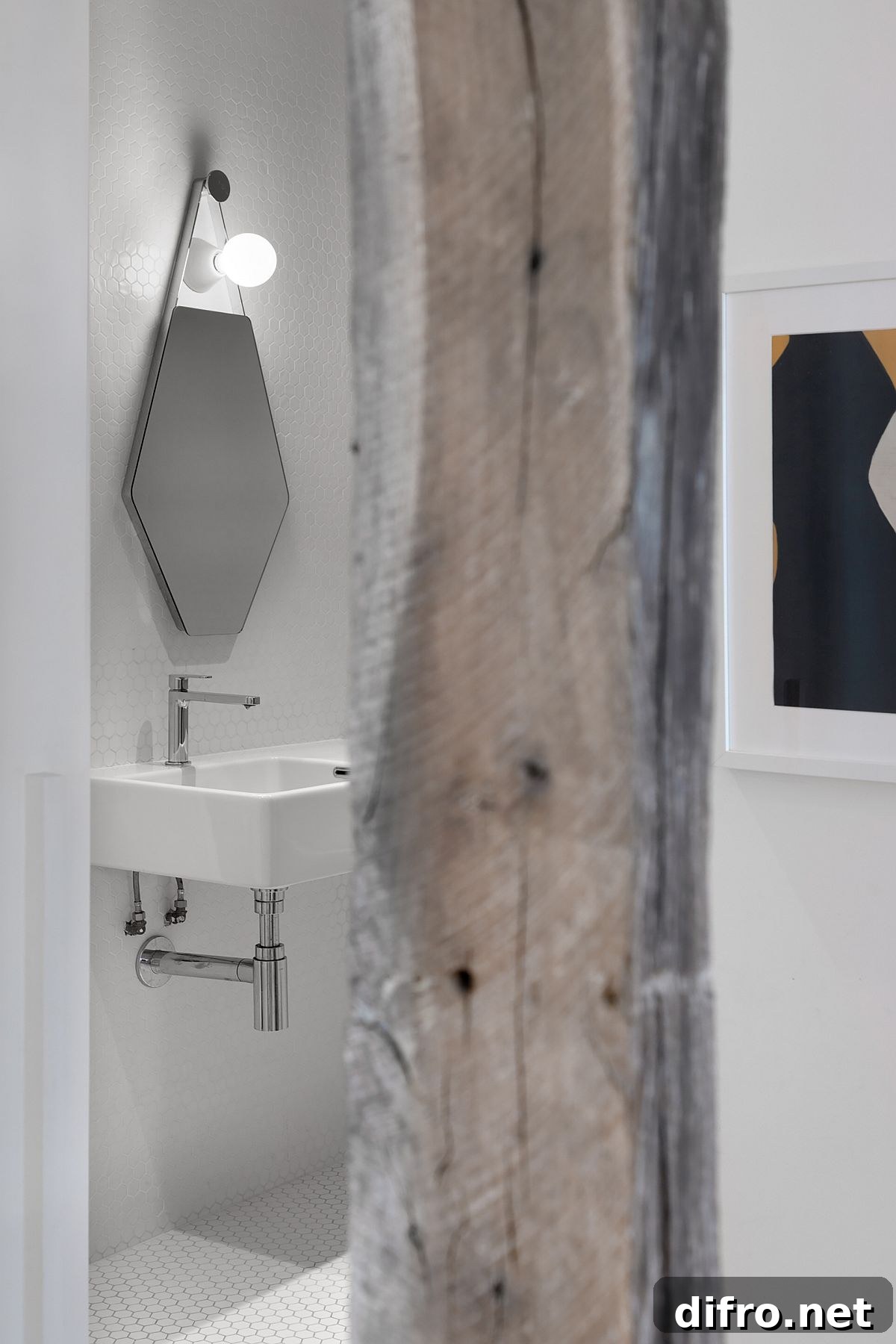
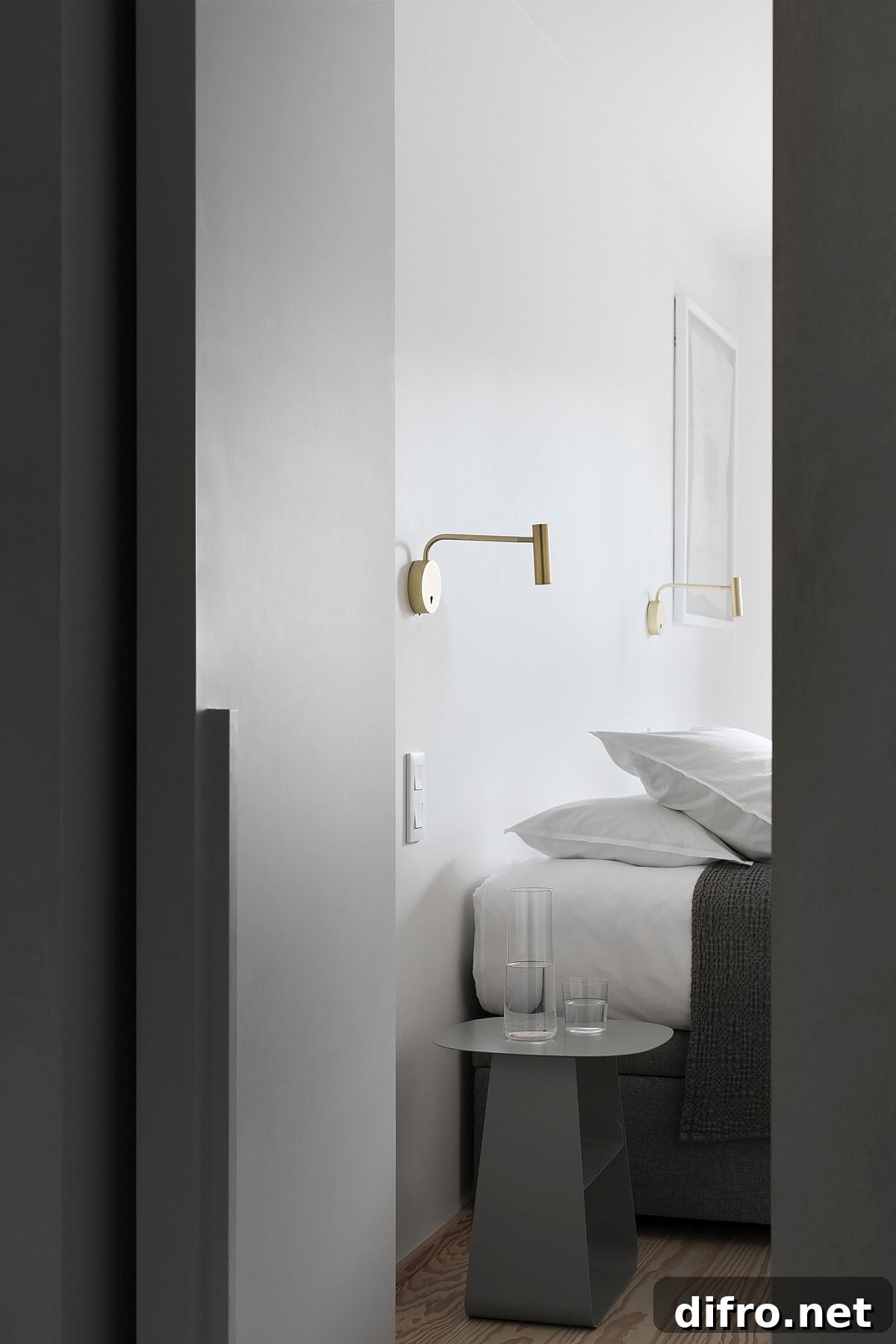
Bedrooms are kept minimalist and efficient, prioritizing restful simplicity and smart storage. A compact guest or children’s bedroom makes use of built-in shelving and integrated units to maintain uncluttered sightlines. The overall approach to furnishing is understated, with refined contemporary pieces that complement rather than compete with the architecture and materials.
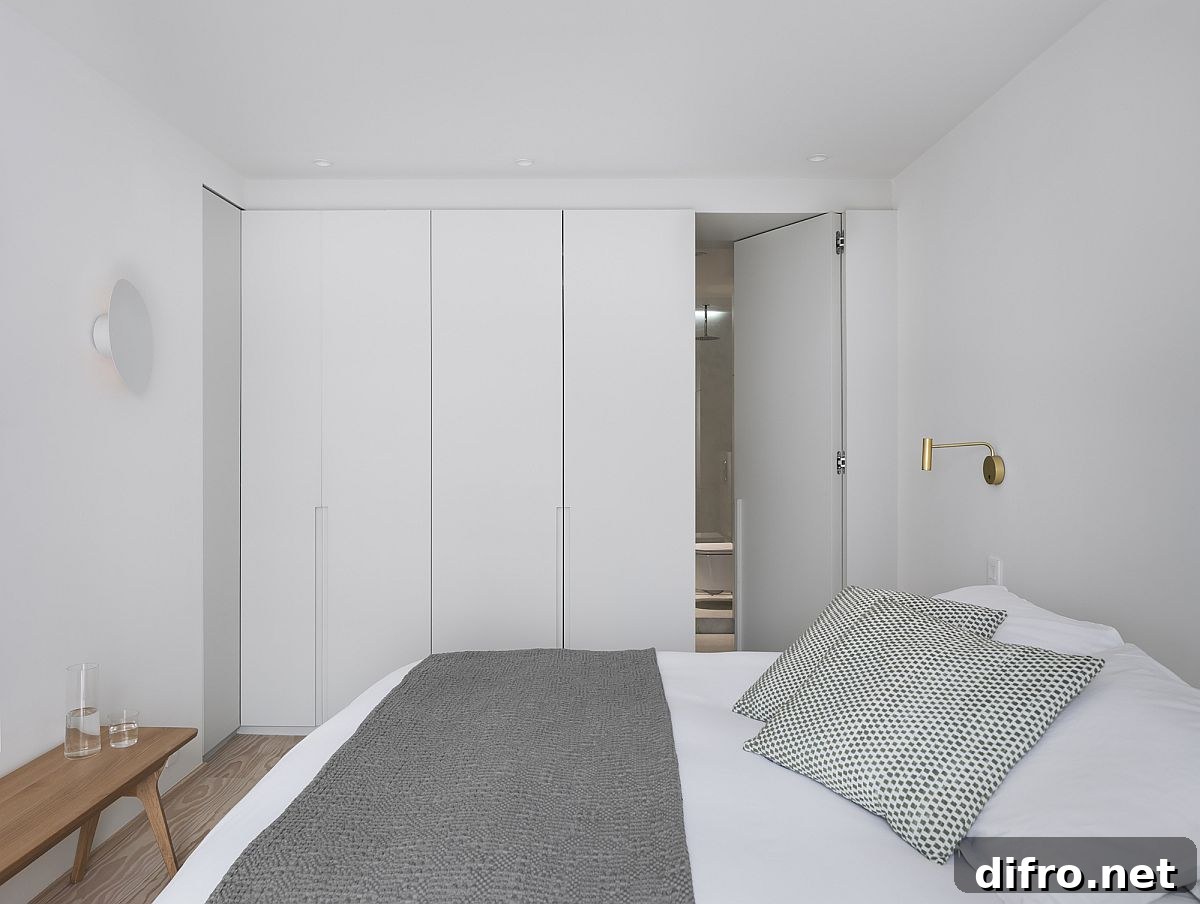
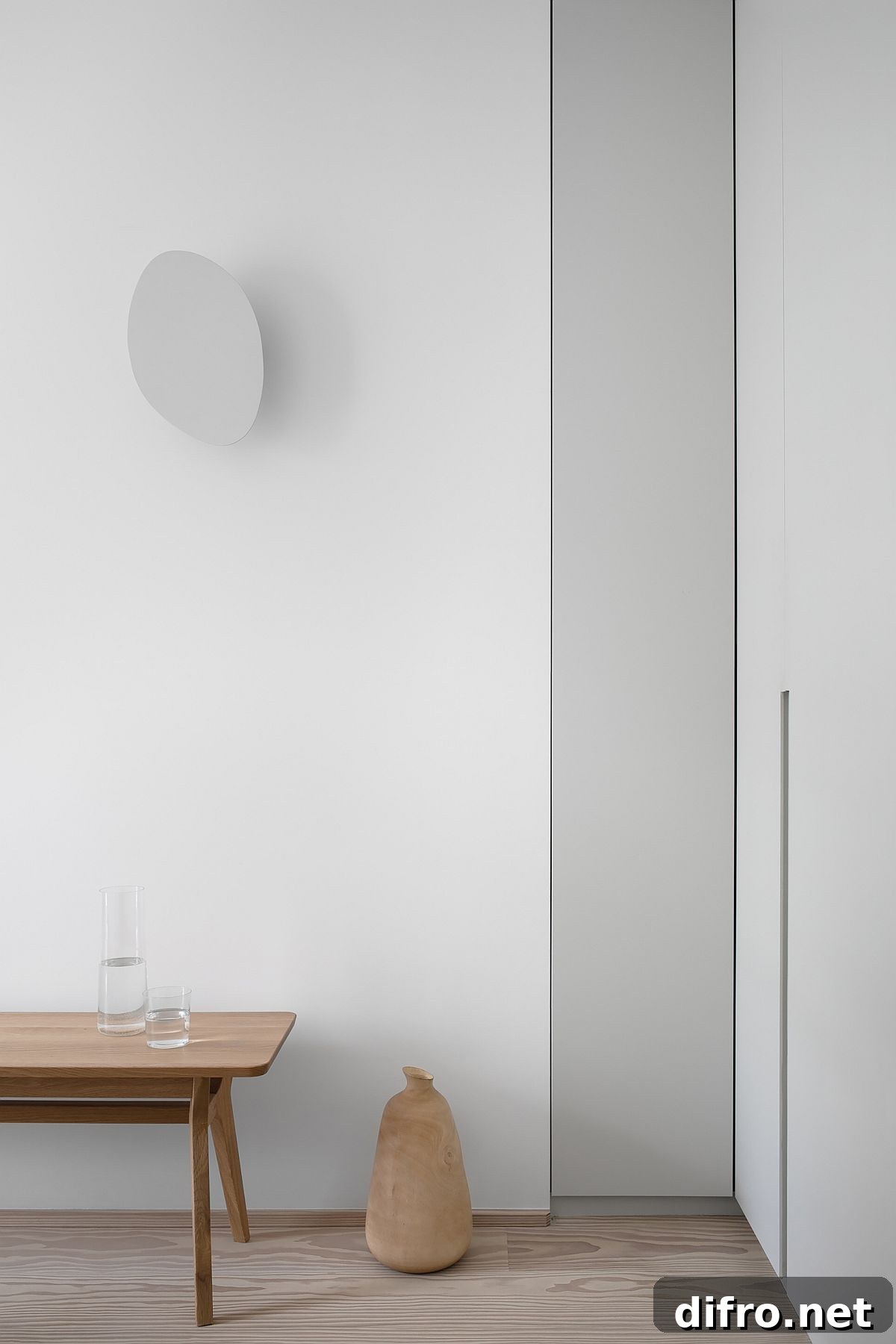
With no corridors, every square meter of available space is in use, rather than being lost to circulation. The two-doored bathroom can be accessed from both the children’s and guest bedrooms, creating a loop and providing an enhanced feeling of spatial circulation. The apartment creates the ultimate in family-friendly living…
One of the project’s most effective spatial decisions is the elimination of redundant corridors. By avoiding hallways, the redesign ensures that every square meter contributes to usable living space. A cleverly positioned bathroom with doors on two sides serves both the children’s bedroom and a guest room, forming a circulation loop that enhances privacy while improving functional flow. These kinds of spatial moves are central to designing family-friendly apartments where efficient planning and clear access matter as much as aesthetics.
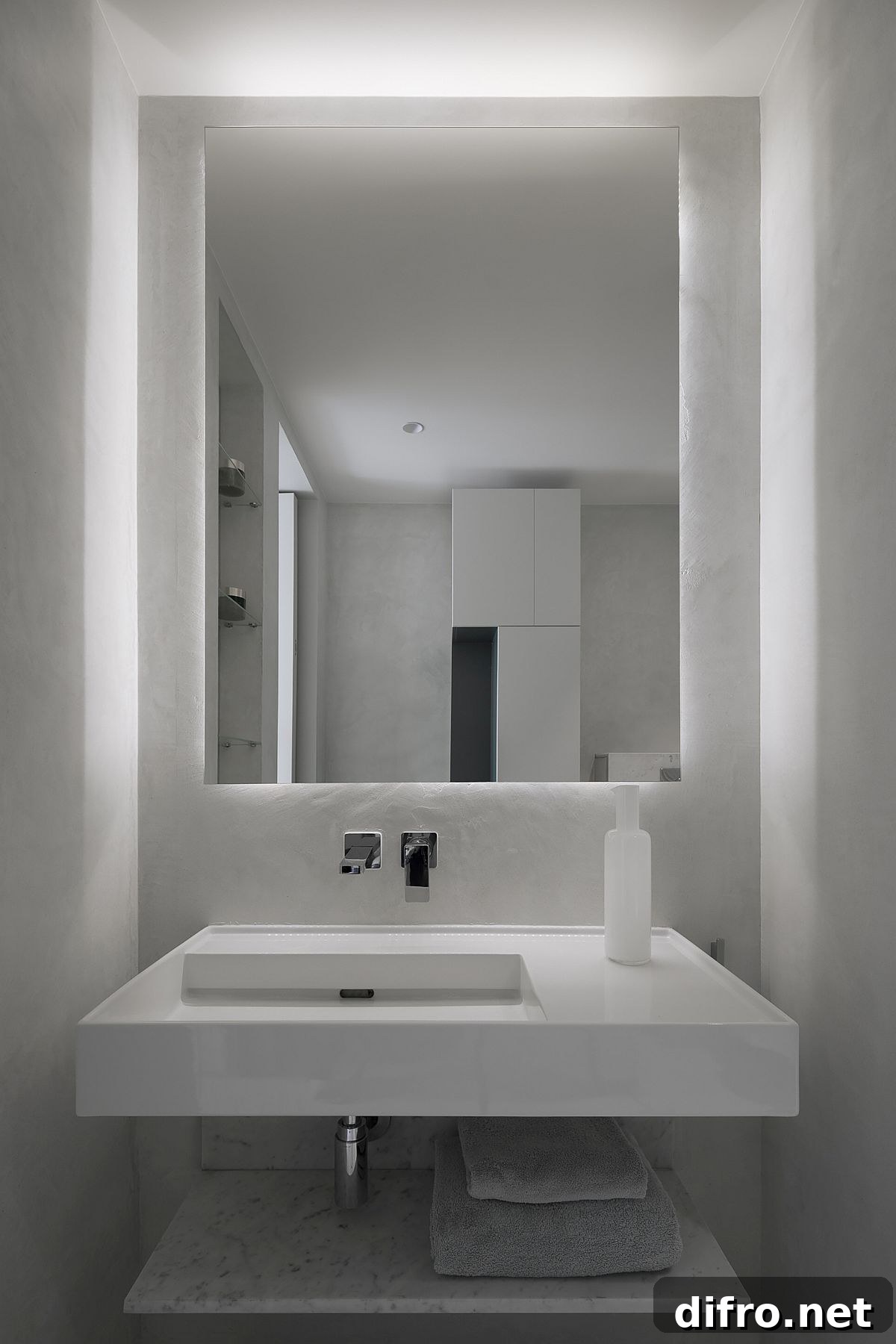
Overall, the OBF Residence demonstrates how careful planning, a curated material palette, and clever space-saving strategies can transform two compact units into a cohesive family home. By prioritizing circulation efficiency, integrated storage, and a neutral-but-textured aesthetic, the project achieves a balance between modern minimalism and the lived-in comfort that a family demands.
Photography: NAARO