Frame House: Victorian Terrace Transformed with Glass Box Extensions
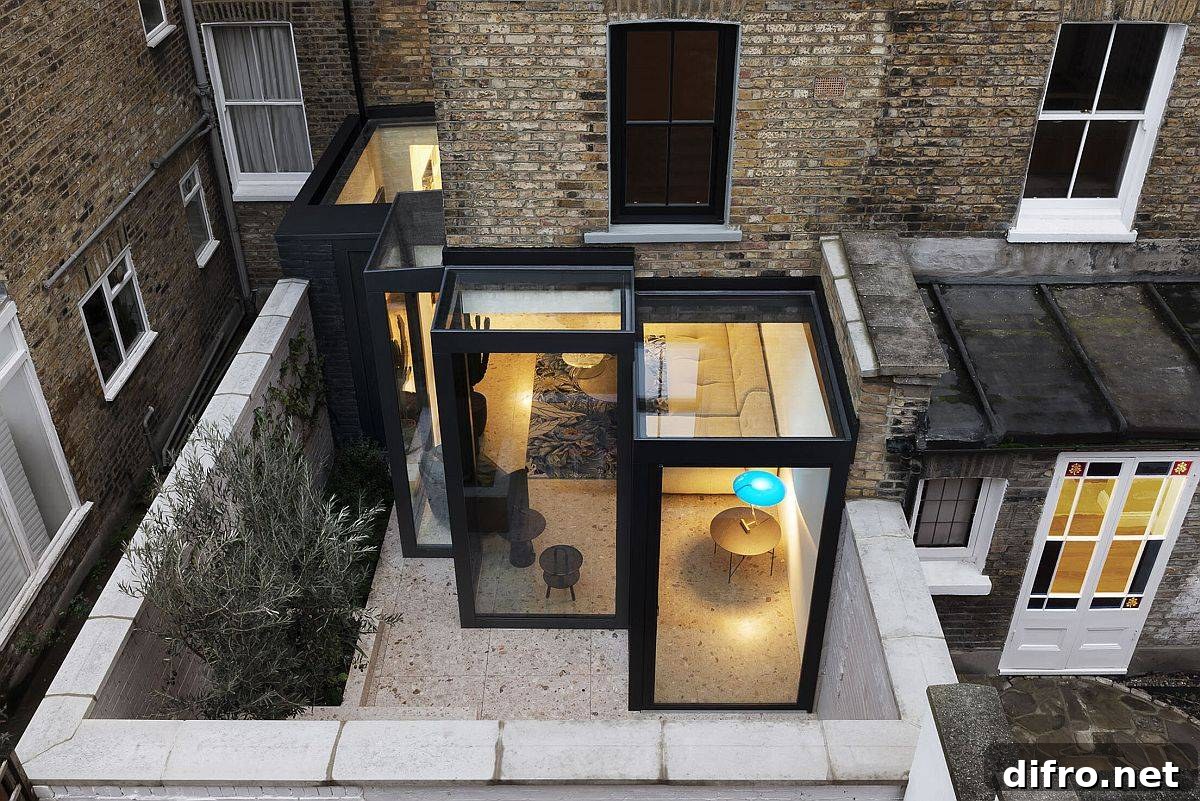
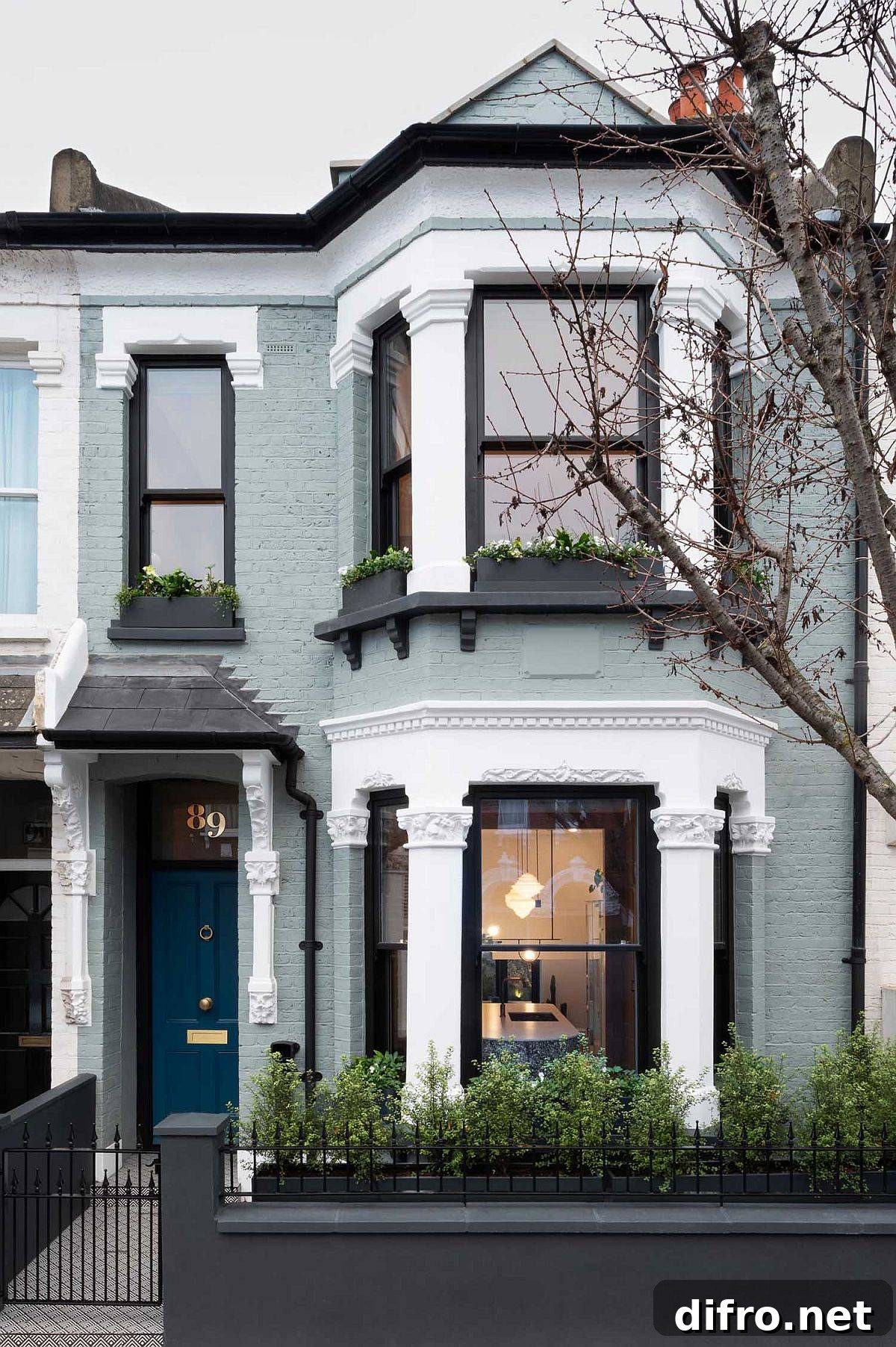
Every renovation and extension presents a unique brief: preserve the character of the original building while introducing contemporary elements that enhance everyday use. Set in a quiet South London neighborhood, the Frame House is a traditional Victorian terraced home given a lively, modern makeover. Bureau de Change Architects approached the project with a clear strategy: introduce a sequence of geometric glass volumes that contrast with the existing fabric while strengthening light, flow and connection to the garden. The result is a thoughtful, sculptural intervention that reads like a contemporary addition to a period property without diminishing the house’s original identity.
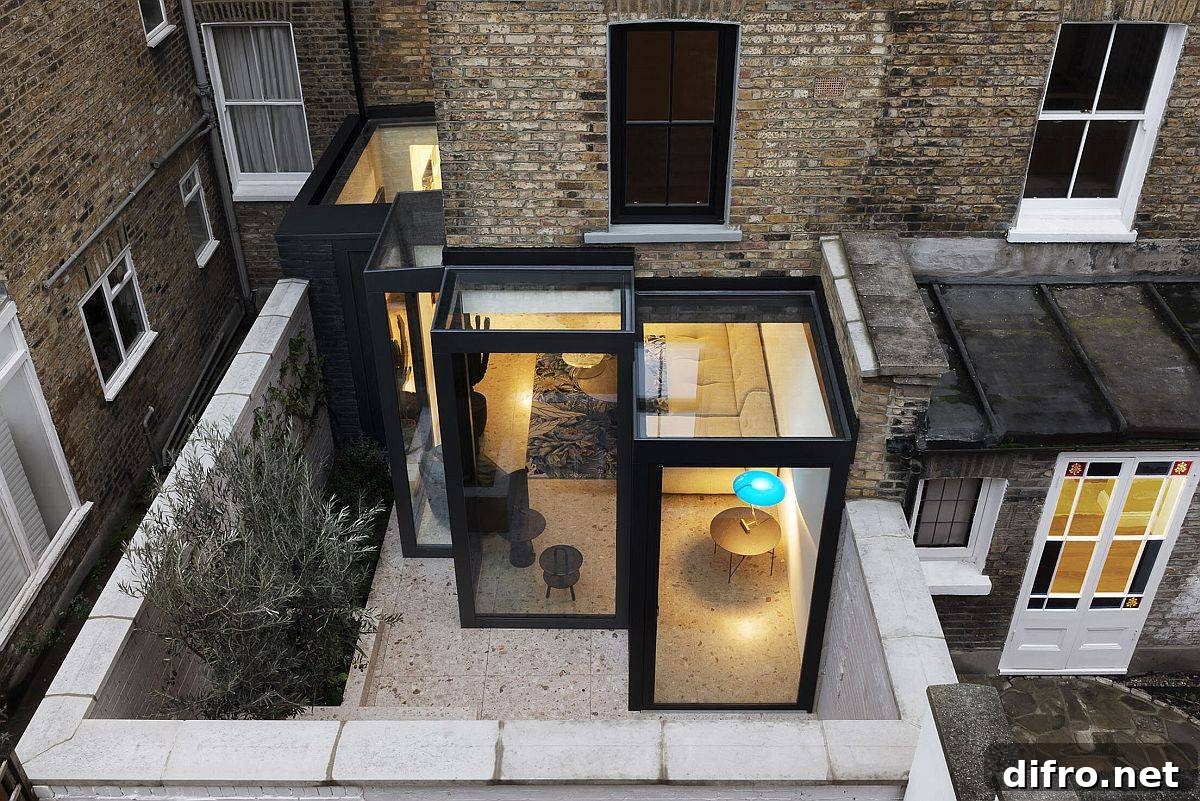
The new interventions are expressed as compact glass volumes framed in dark steel. Some of these sit beneath the original footprint, while others extend beyond the rear elevation into the garden, forming a layered sequence of indoor and outdoor rooms. Because each box is carefully scaled and articulated, the additions read as a collection of pavilion-like spaces rather than one monolithic extension. This approach preserves views of the original terrace from the street while opening the rear of the property to abundance of daylight and a stronger connection with the outdoors.
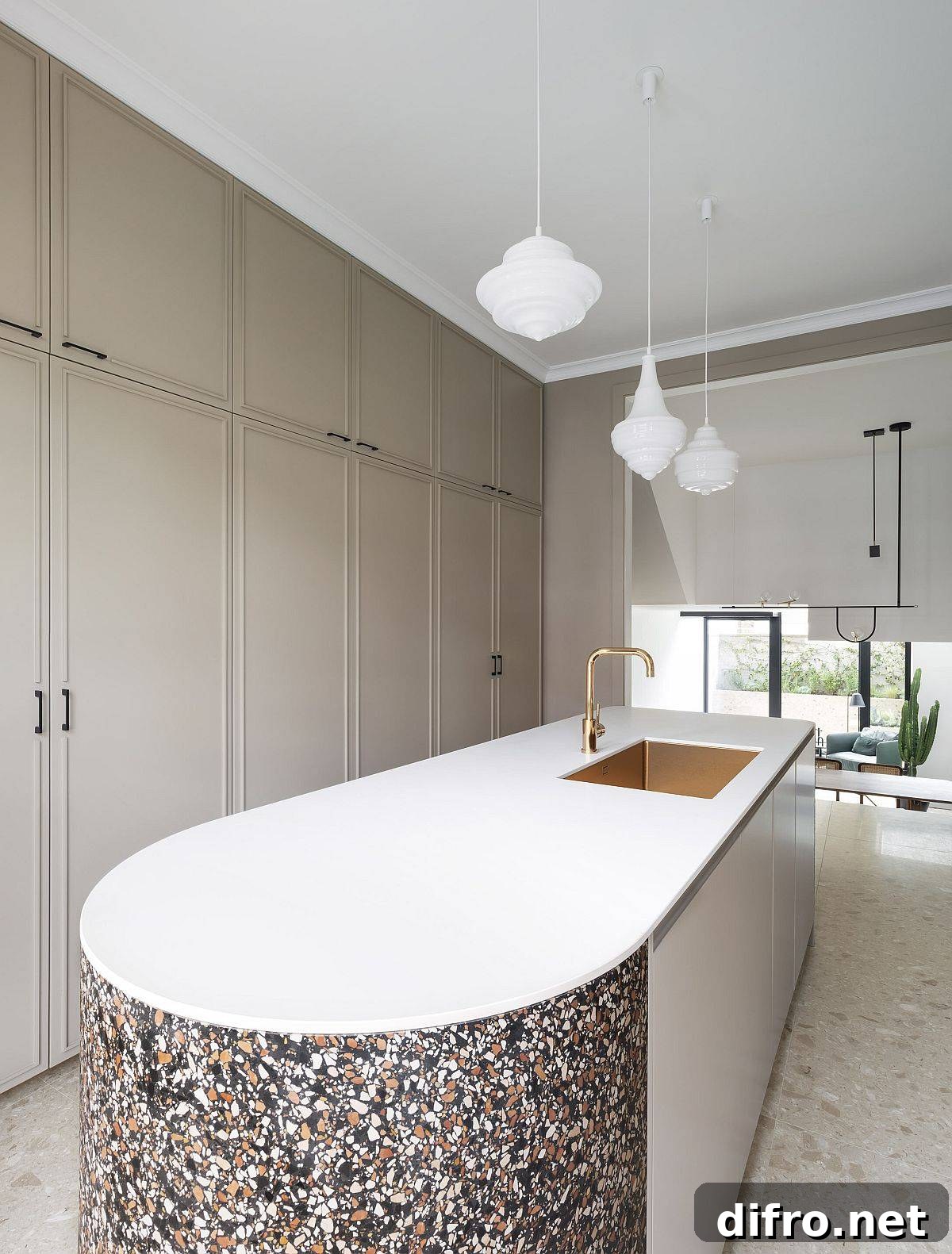
A prominent design thread throughout the house is the use of terrazzo. Terrazzo tiles appear across floors, countertops and bespoke detailing to create a continuous material palette that unifies old and new. Subtle shifts in terrazzo tone and aggregate define different zones—darker mixes ground the kitchen enclosure, while lighter compositions lead the eye toward the garden—so that the floor surface becomes a wayfinding device as well as a durable, attractive finish.
Photography: Gilbert McCarragher
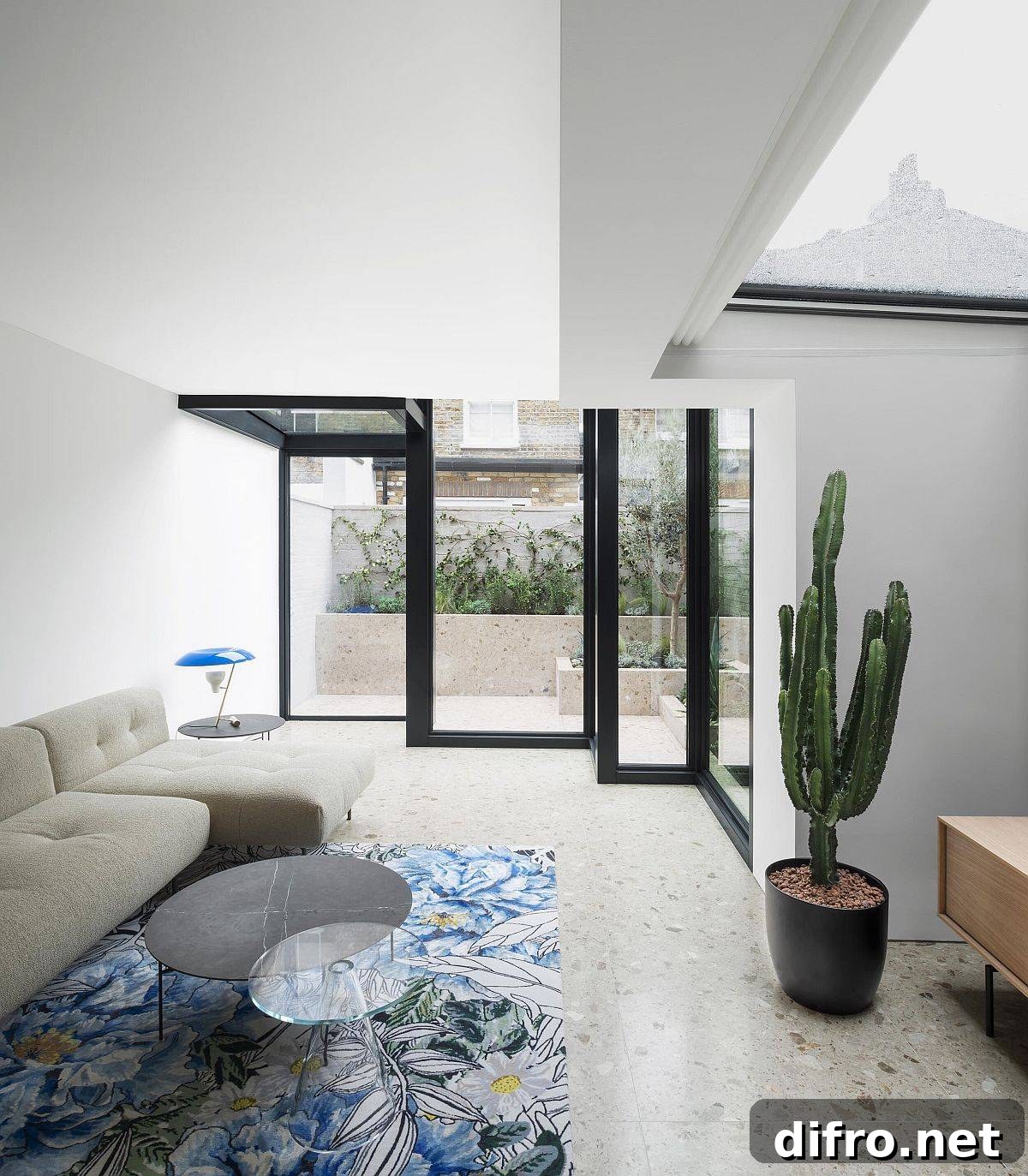
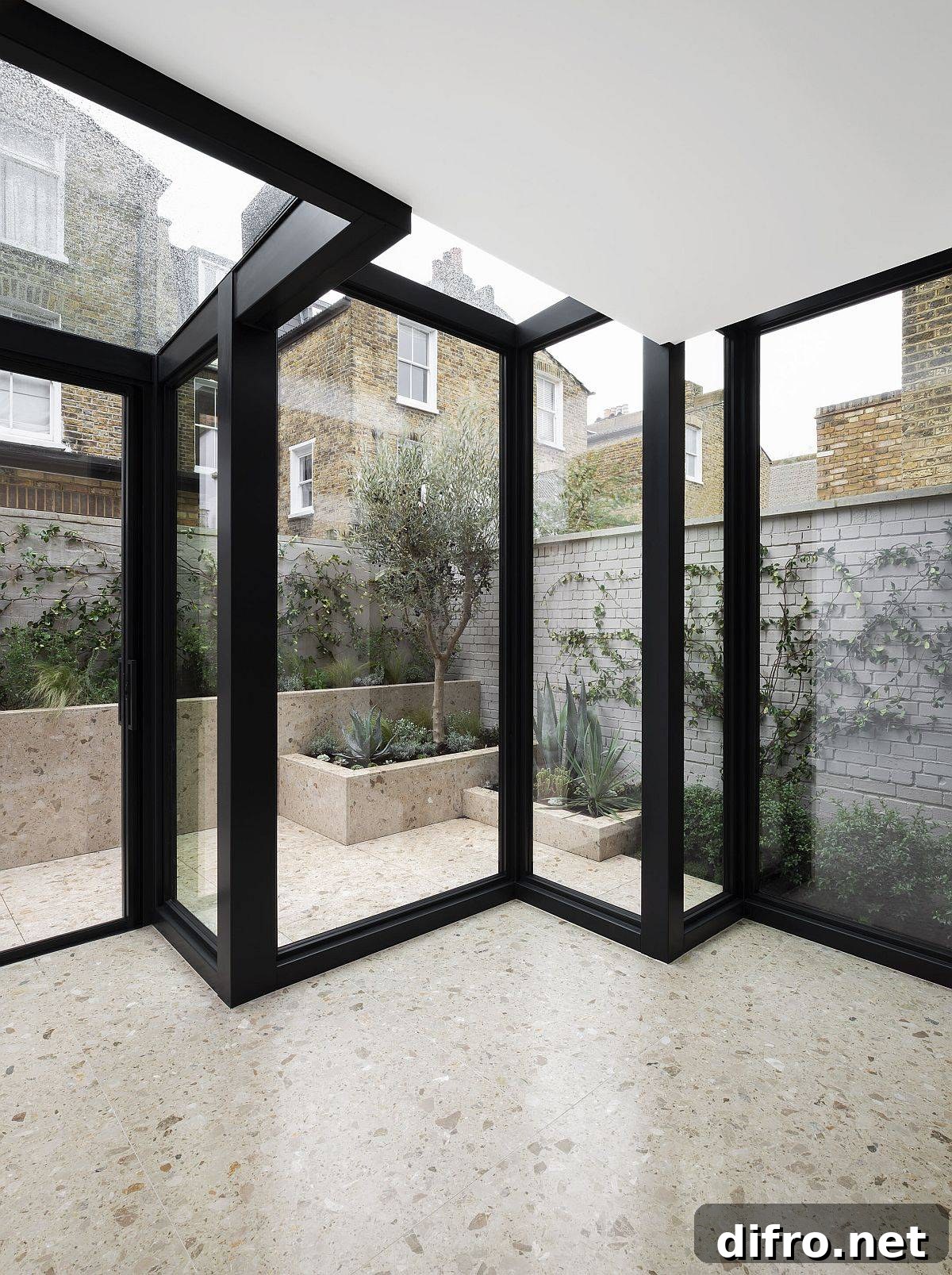
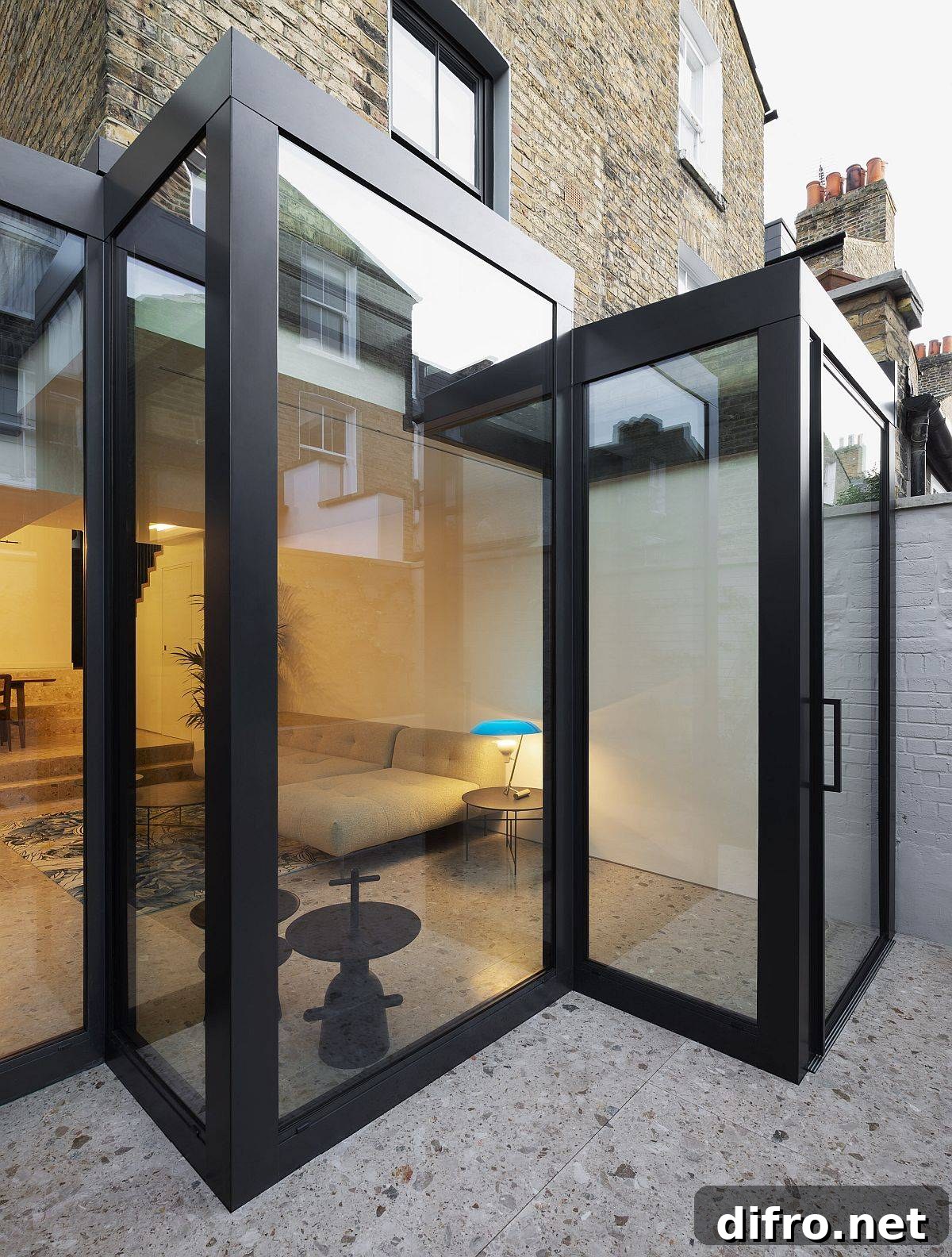
The plan is resolved as a gently multi-level sequence rather than a single flat open-plan box. Living, dining and kitchen areas step down and up in short, comfortable changes of level, creating opportunities for built-in seating, planting pockets and playful ledges. These subtle level changes help to define activity zones while maintaining visual connectivity. The kitchen sits within a more sheltered enclosure, benefiting from careful task lighting, while the dining and living areas open to the garden and receive abundant daylight through full-height glazing and a sculptural skylight.
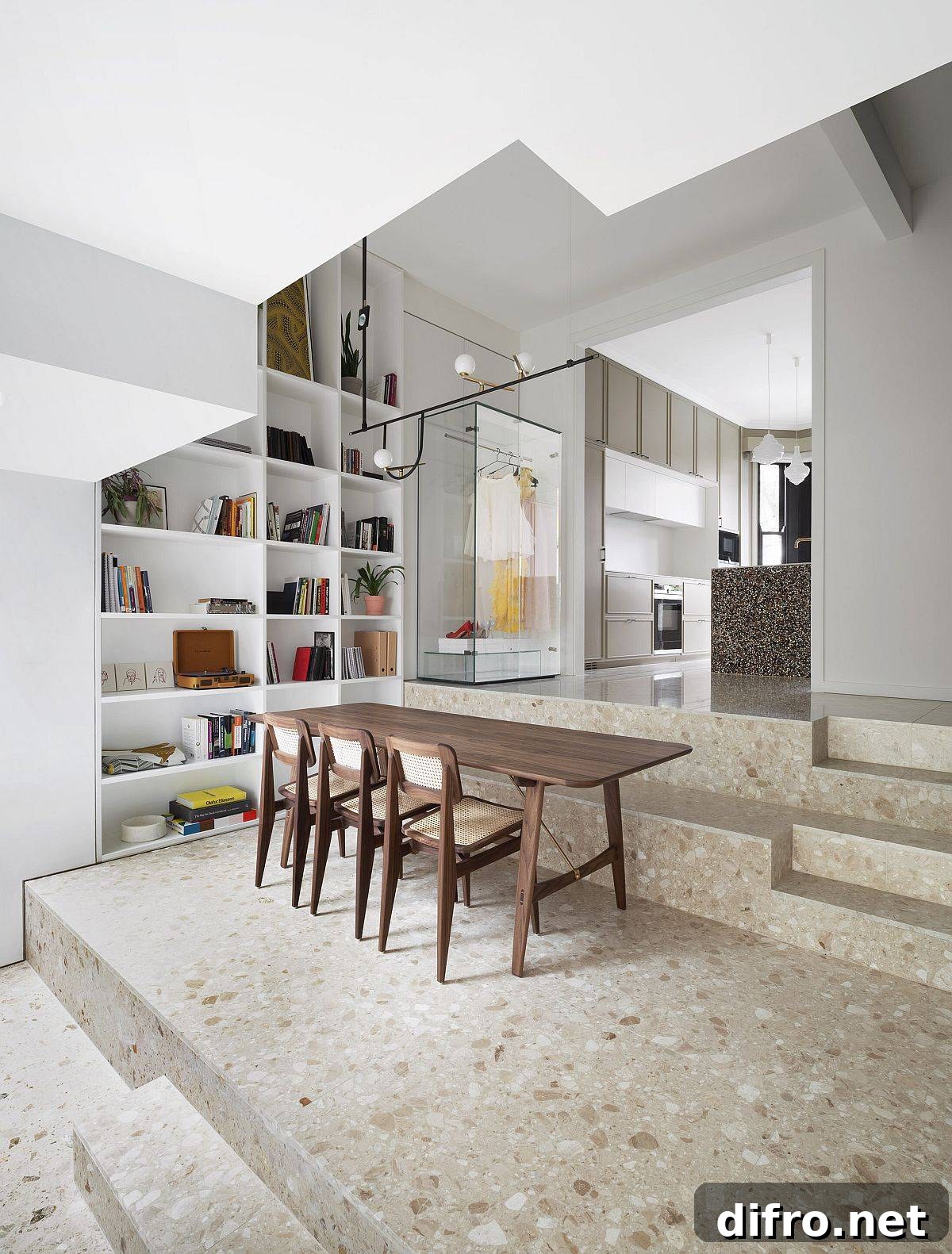
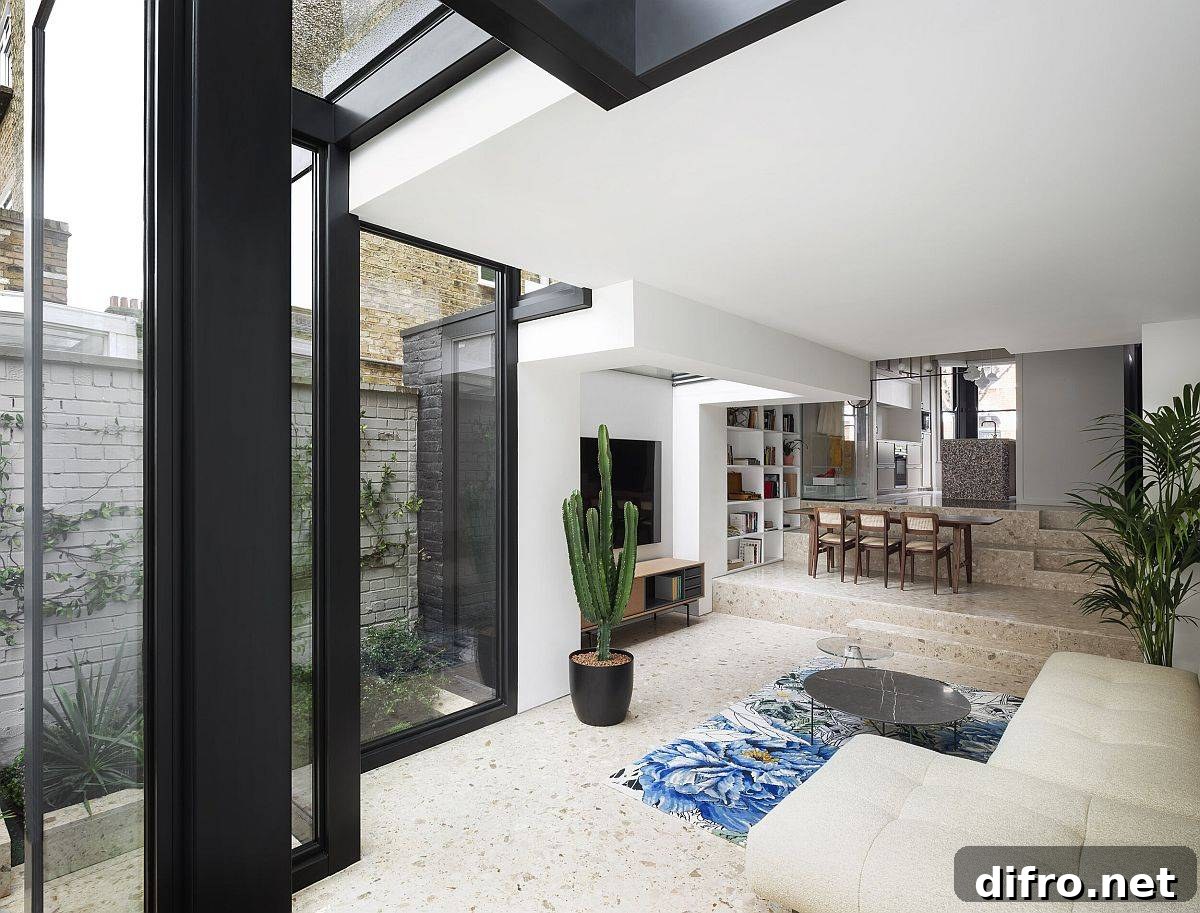
Material selection and lighting have been used strategically to guide movement and set the atmosphere from one zone to the next. Darker, more intimate tones and focused lighting define the kitchen and service areas. As you move toward the garden, surfaces brighten and natural light floods the space through generous glazing and a central skylight, creating a light, airy atmosphere for dining and relaxation. The terrazzo floor changes incrementally across levels, both unifying the scheme and subtly indicating different functions.
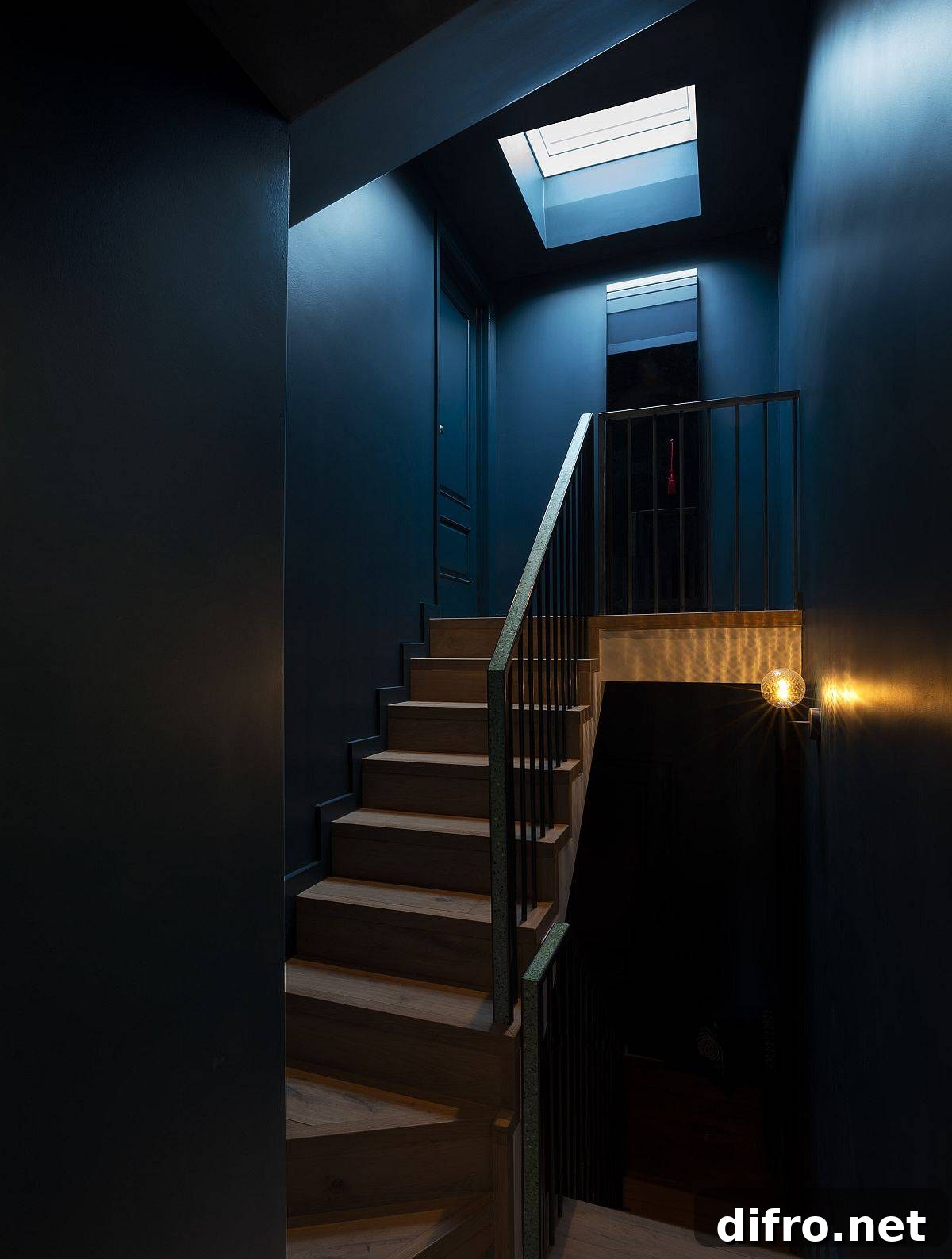
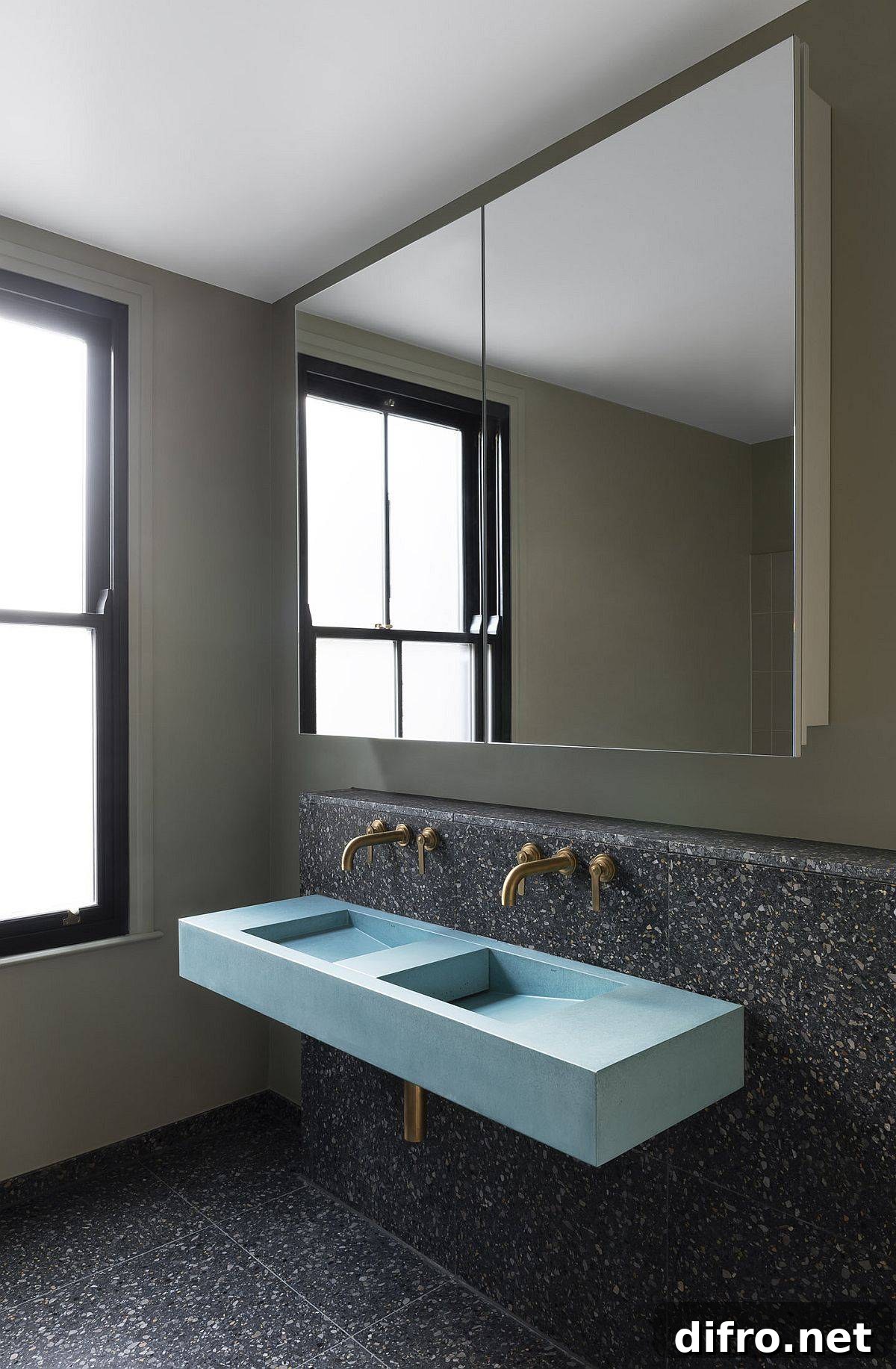
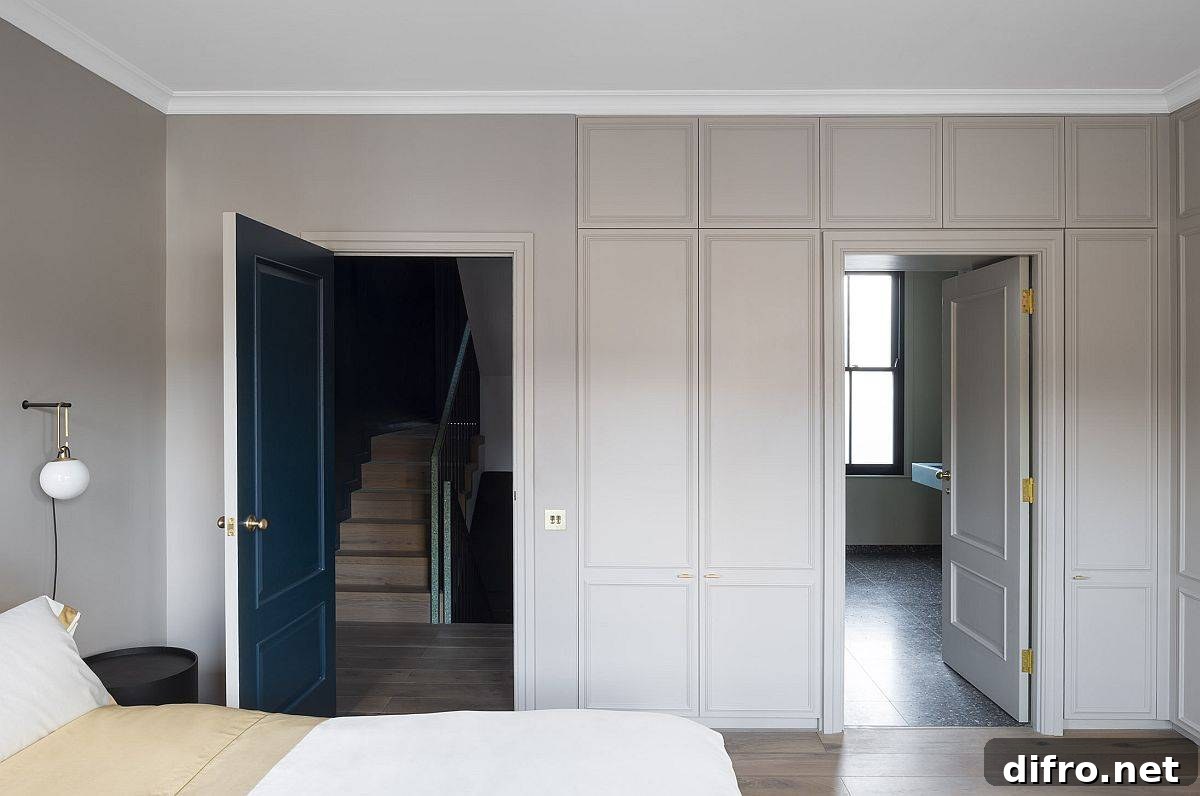
Functionally, the scheme makes everyday life easier and more pleasurable. A rounded-edge kitchen island finished in terrazzo becomes a focal point and social hub, while the dining and living platforms provide clear, comfortable places for family activities. The master suite has been rethought with renewed finishes and a calm palette that complements the stronger material gestures on the ground floor, delivering a balanced, cohesive home.
In sum, the Frame House demonstrates how carefully considered contemporary additions can enhance the character and performance of a period home. By introducing framed glass pavilions, a consistent terrazzo palette and a thoughtful sequence of levels and lighting, the architects have delivered an elegant, practical family home that prioritizes daylight, connection to the outdoors and everyday comfort while respecting the original Victorian terrace.