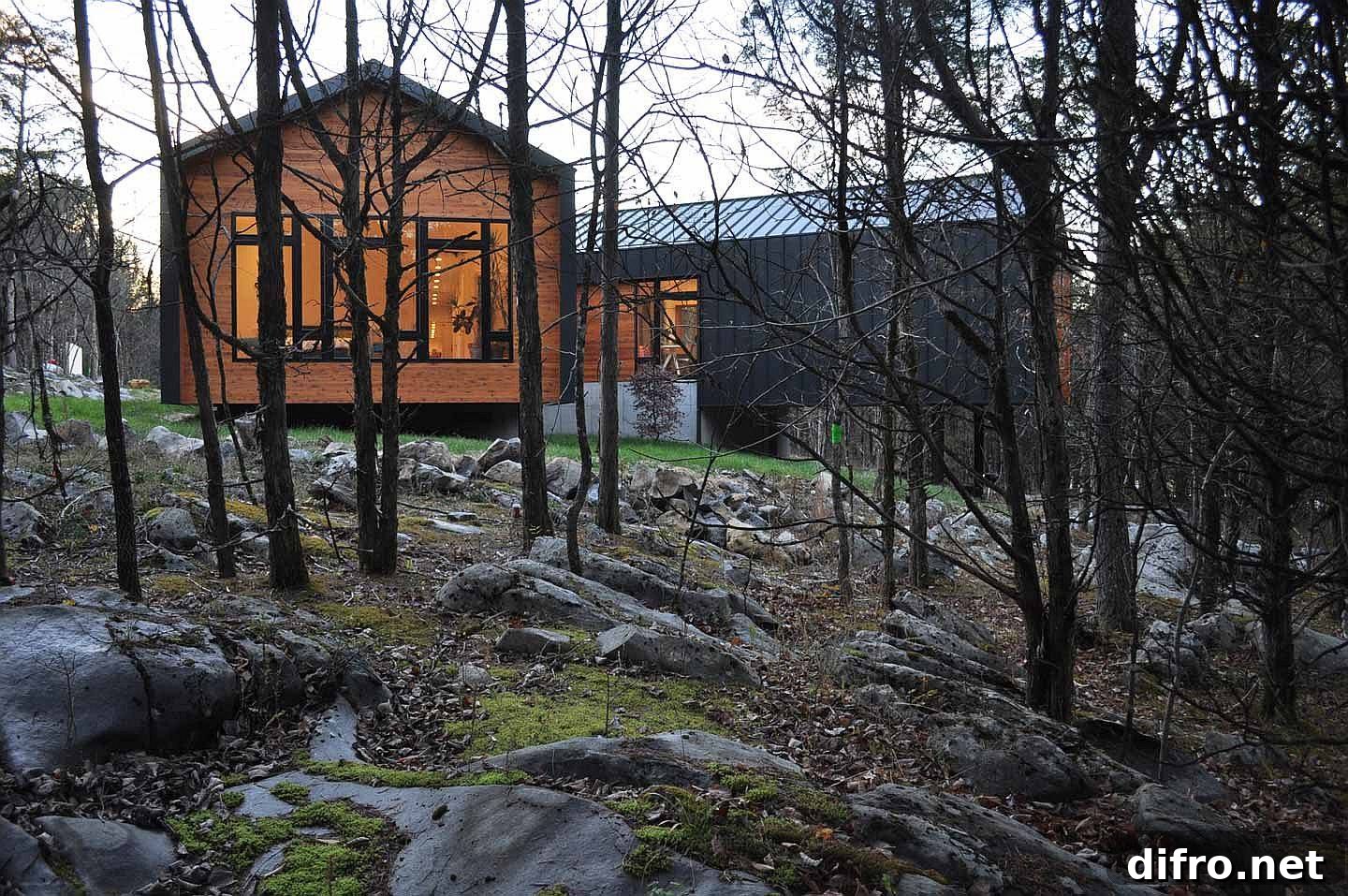
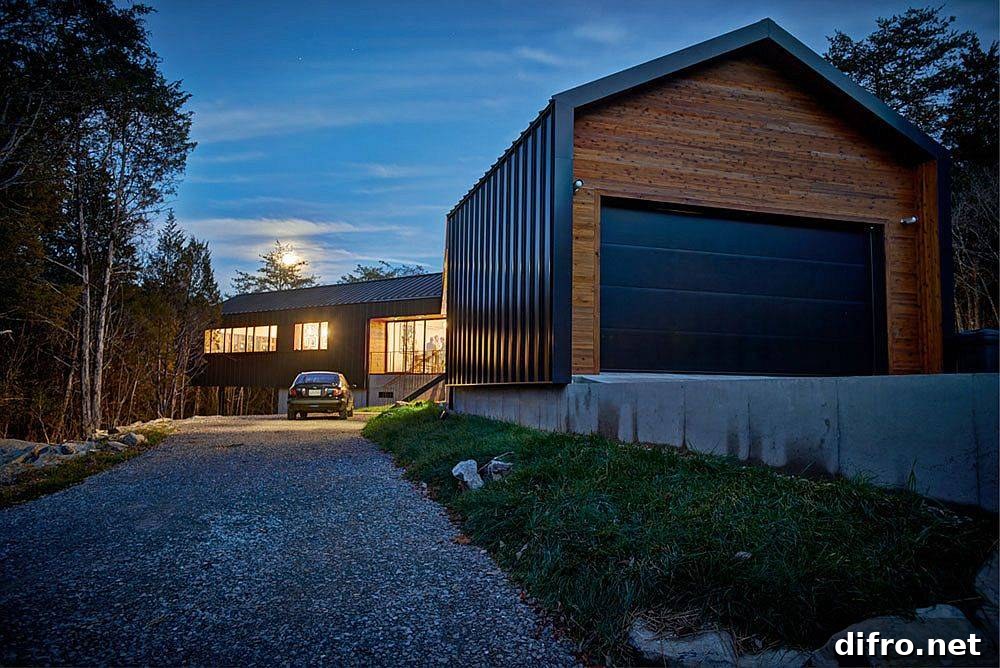
Every home has its own constraints and requirements, but few sites shape a design as decisively as the land itself. Perched on a moss-covered, rocky parcel in East Tennessee and looking out toward the Holston River, this contemporary family house by Sanders Pace Architecture is a clear example of site-first design. The uneven terrain guided the house’s overall form: a composition that sits lightly on the rocks, opens toward the river, and stretches a public wing into the landscape to capture long views and distant glimpses of the valley beyond.
A continuous, open-ended circulation spine runs through the center of the house, linking the front entry to the private spaces at the back. Large glass walls and sliding doors dissolve the boundary between inside and out, creating a seamless transition from living areas to the rugged exterior. The interiors remain visually connected to the terrain, while careful siting minimizes disturbance to the site’s natural features.
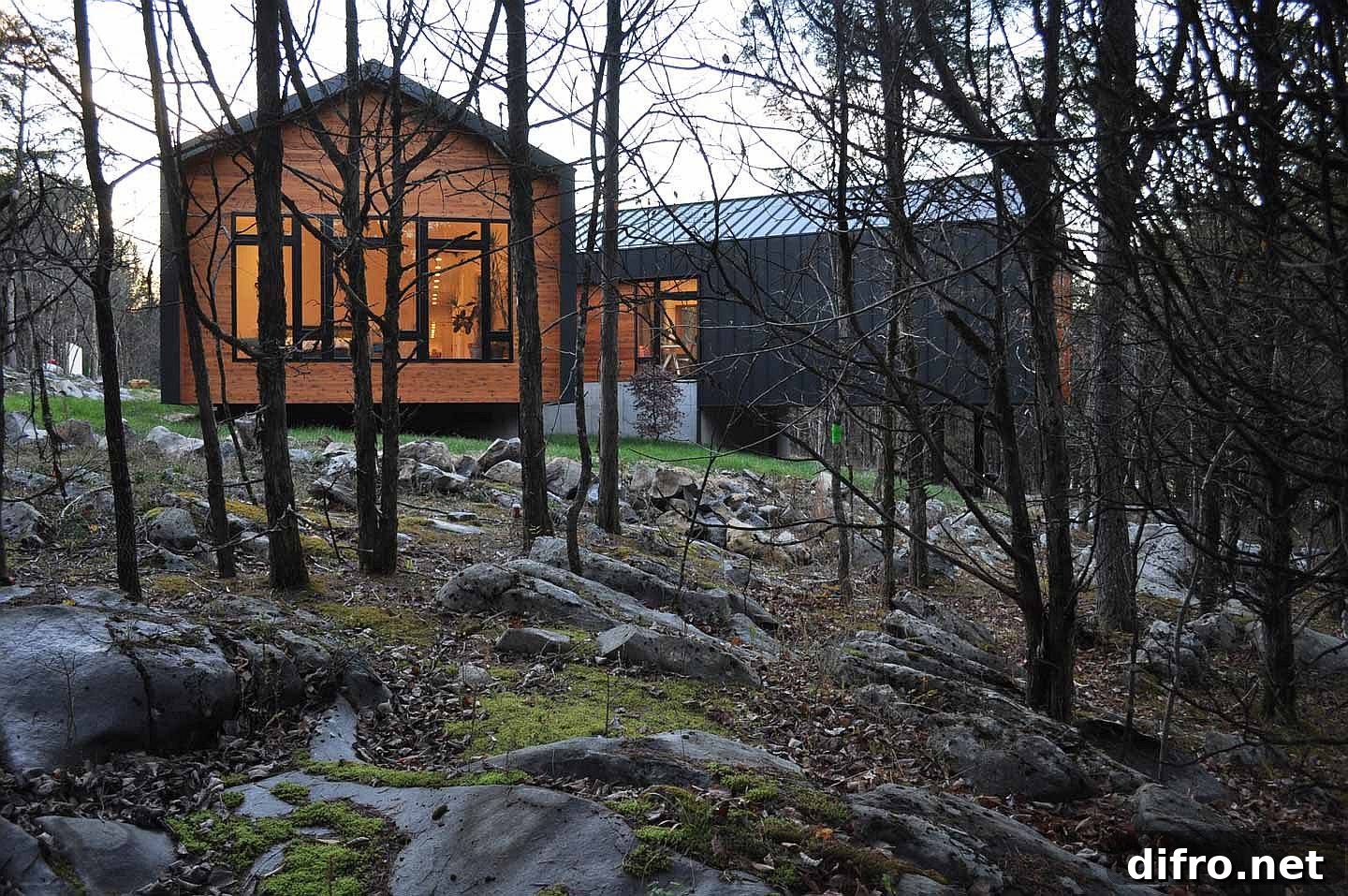
Externally, standing-seam metal cladding contrasts with warm, timber-lined walls and a restrained color palette, striking a balance between the property’s rugged character and the home’s intimate, cozy atmosphere. Inside, modern furnishings and considered detailing emphasize functionality and comfort without competing with the dramatic setting. The house is essentially a refined shelter set within a dense cedar forest, where both material choices and spatial organization respond to the surrounding ecosystem. [Photography: Bruce Cole Photography]
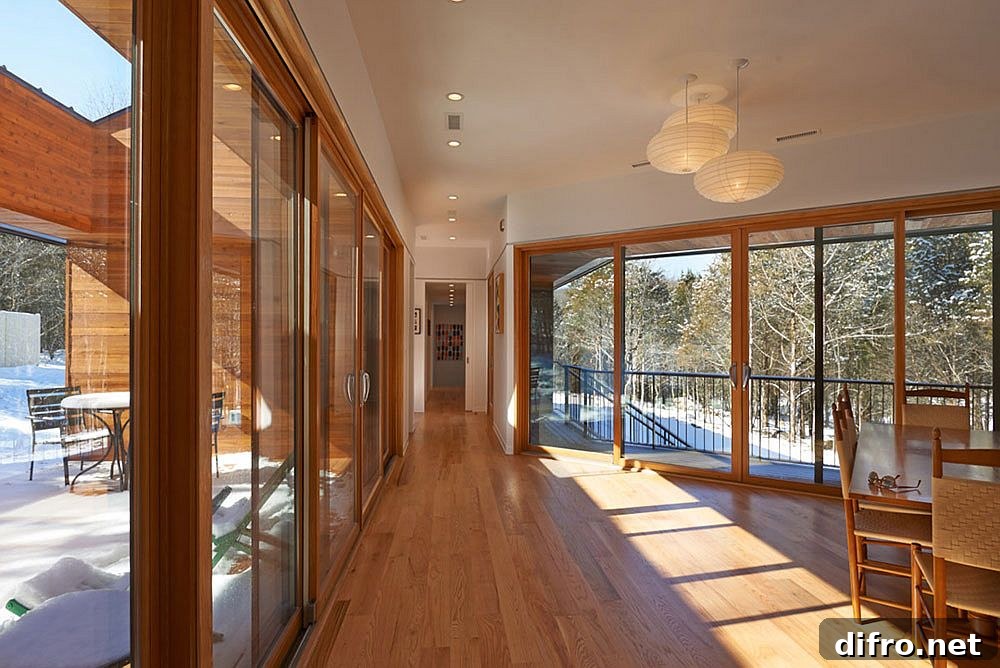
The living room and main social spaces are oriented to make the most of the views: expansive glazing frames the rugged outcrops and the river beyond, while sliding glass panels allow rooms to open directly to the exterior. This orientation not only captures light and scenery but also creates an intimate relationship between daily life and the broader landscape.
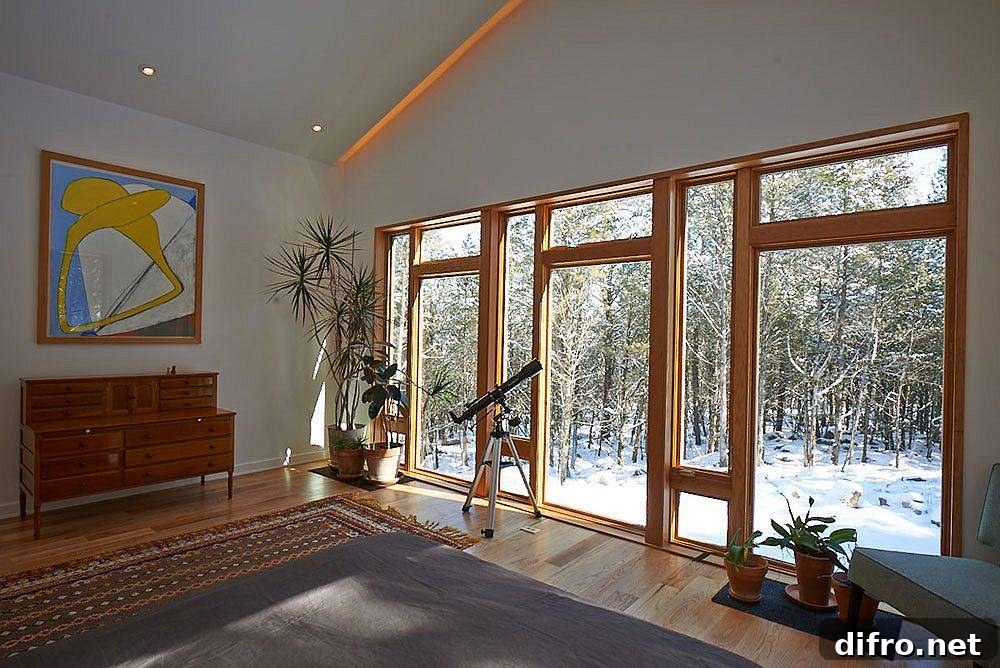
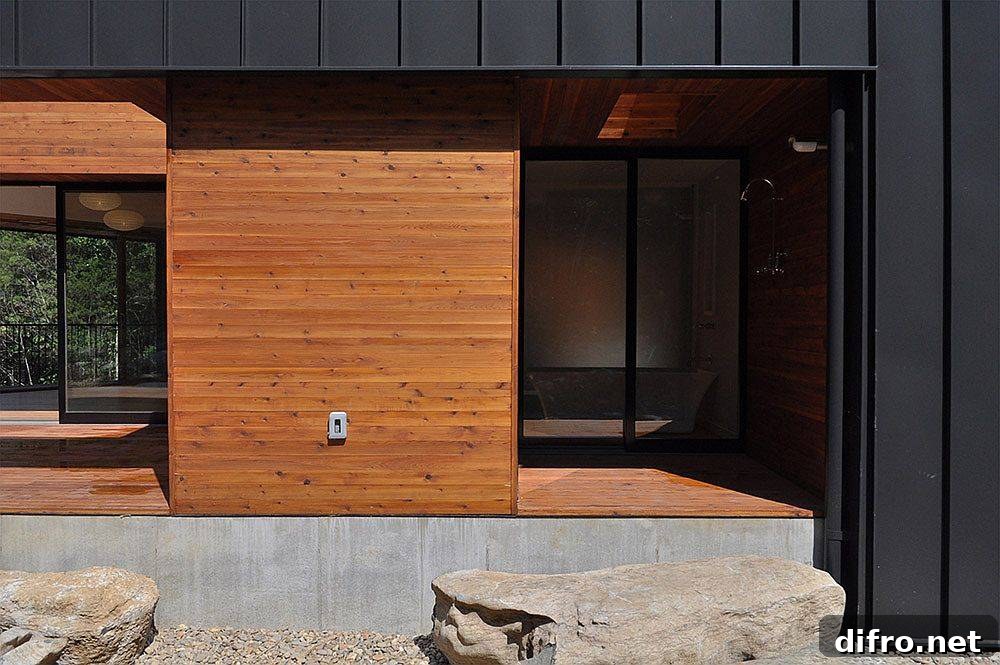
Practical elements are integrated with thoughtful design gestures: a kitchen island with open shelving provides room for books and decorative objects, while careful material selections and color tones help the house sit comfortably within the cedar-dotted site. The house alternates between grounded, earth-toned volumes and lighter, cantilevered elements that seem to hover above the rock, reinforcing a sense of balance between permanence and lightness.
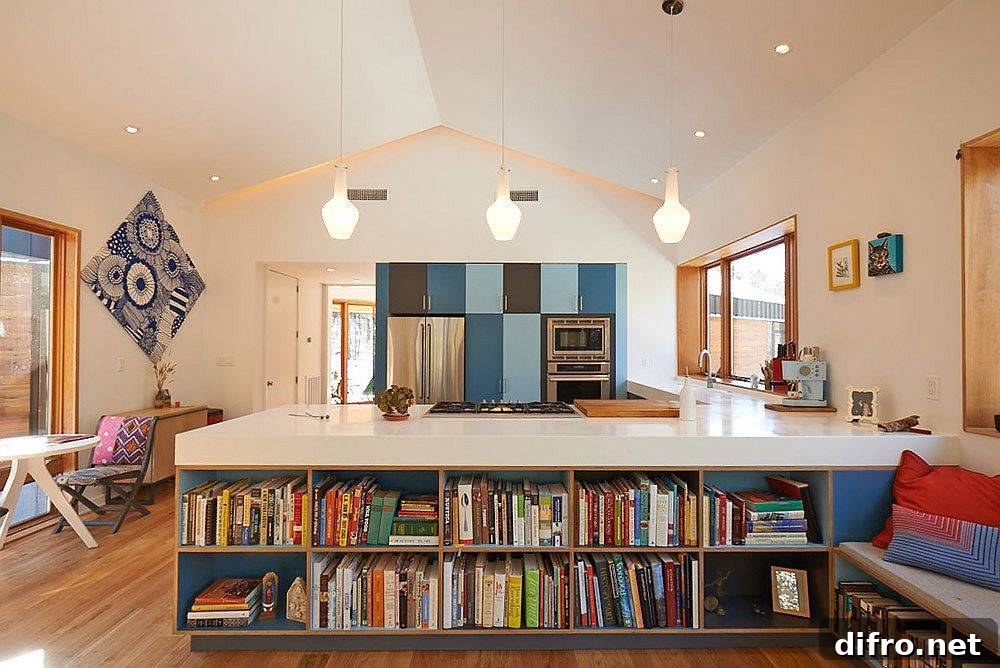
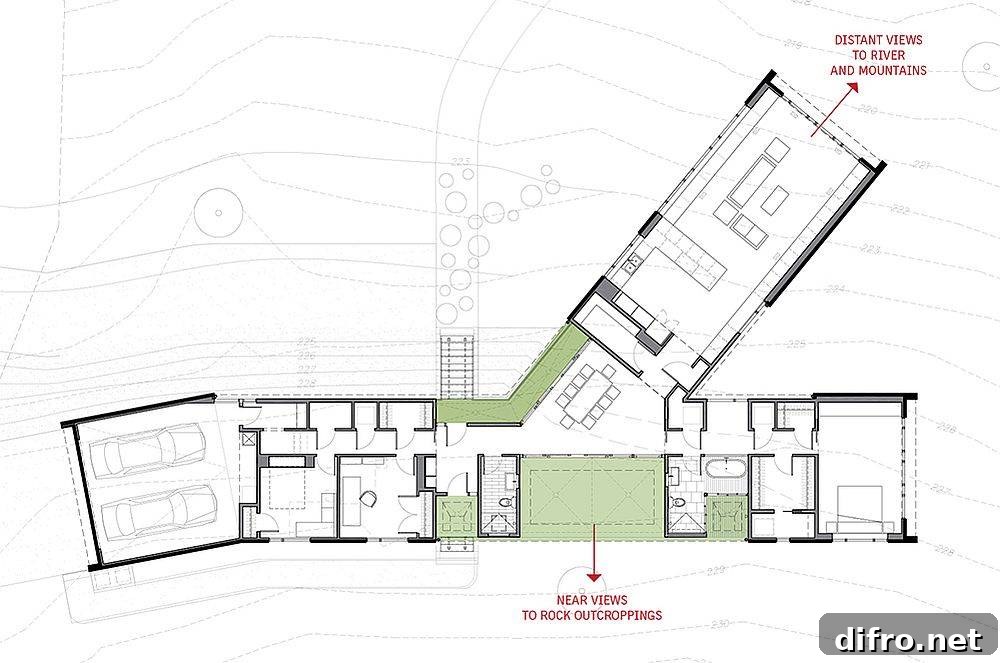
Initial conceptual design efforts focused on options that limited impact on the site while taking advantage of the unique opportunities presented by this rugged landscape. Early schemes were narrow and linear, weaving around the rock outcroppings and following the site’s contours to reduce elevation change from front to back. This siting also allowed for a series of framed views connecting the house to both the immediate and distant landscape…
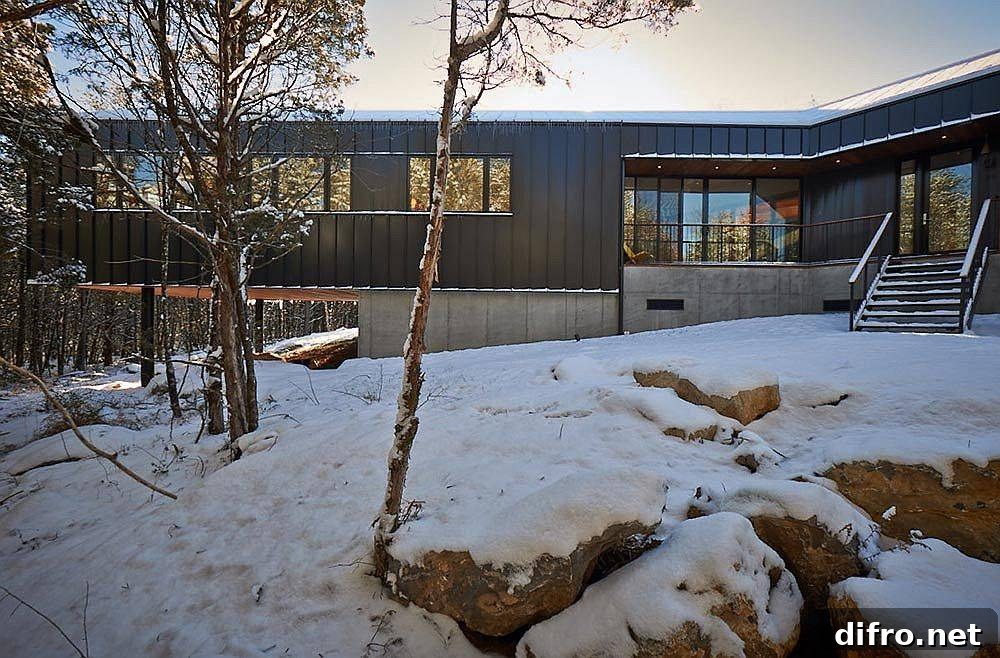
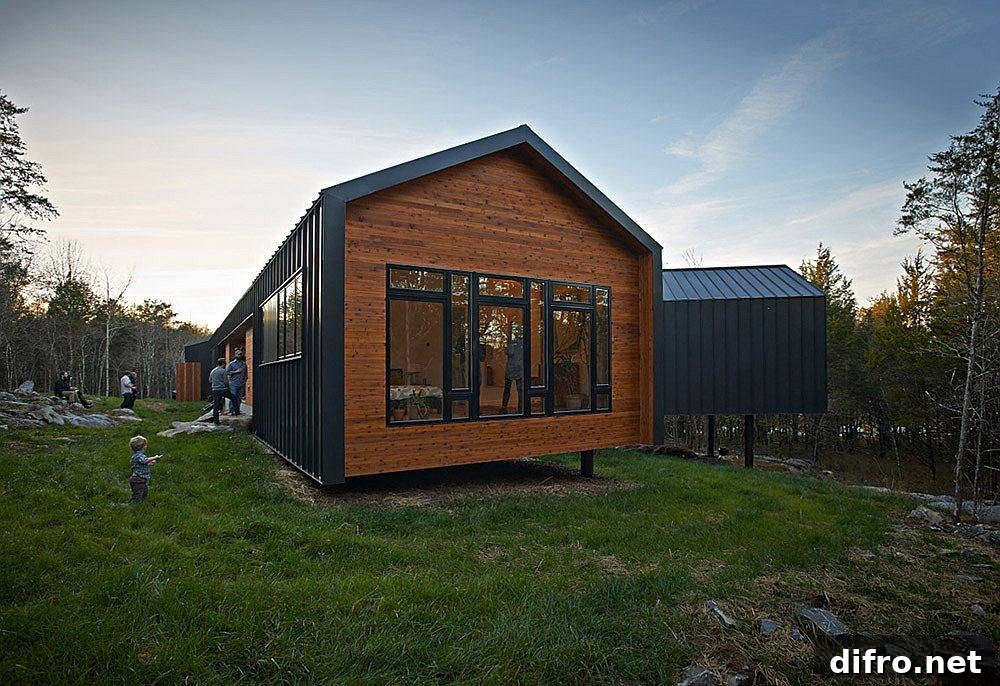
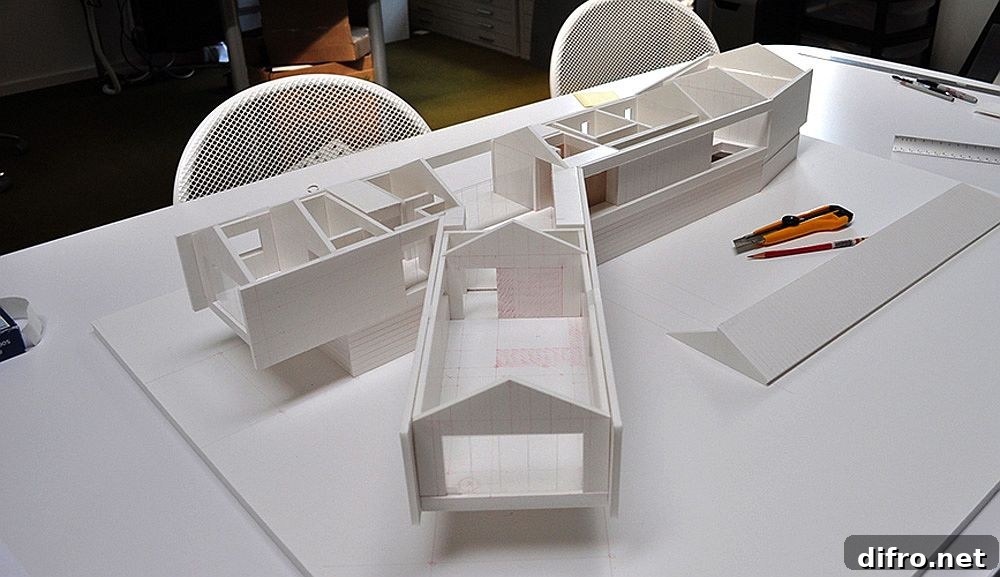
Models and plans for the project reveal a composition of linked wings that step across the site, with a prominent public wing that reaches out into the landscape. This approach frames a variety of views—some immediate and intimate, others expansive and distant—while keeping the overall footprint sensitive to the rocky topography. The architectural strategy results in a home that reads as both a response to place and a refined living environment, where structure, materials, and orientation work together to celebrate the rugged beauty of the Holston River valley.