Federation-era Home Blends Heritage Façade with a Modern Rear Extension
Updating a traditional, heritage home while preserving its character requires a careful balance between old and new. This Federation-era residence in Australia, redesigned by Studio Prineas, achieves that balance with a sensitive restoration of the street-facing façade and a discreet, contemporary extension at the rear. The project introduces a generous guest wing and entertaining spaces, a modern pool and deck, and a garden that visually integrates with the open interior.
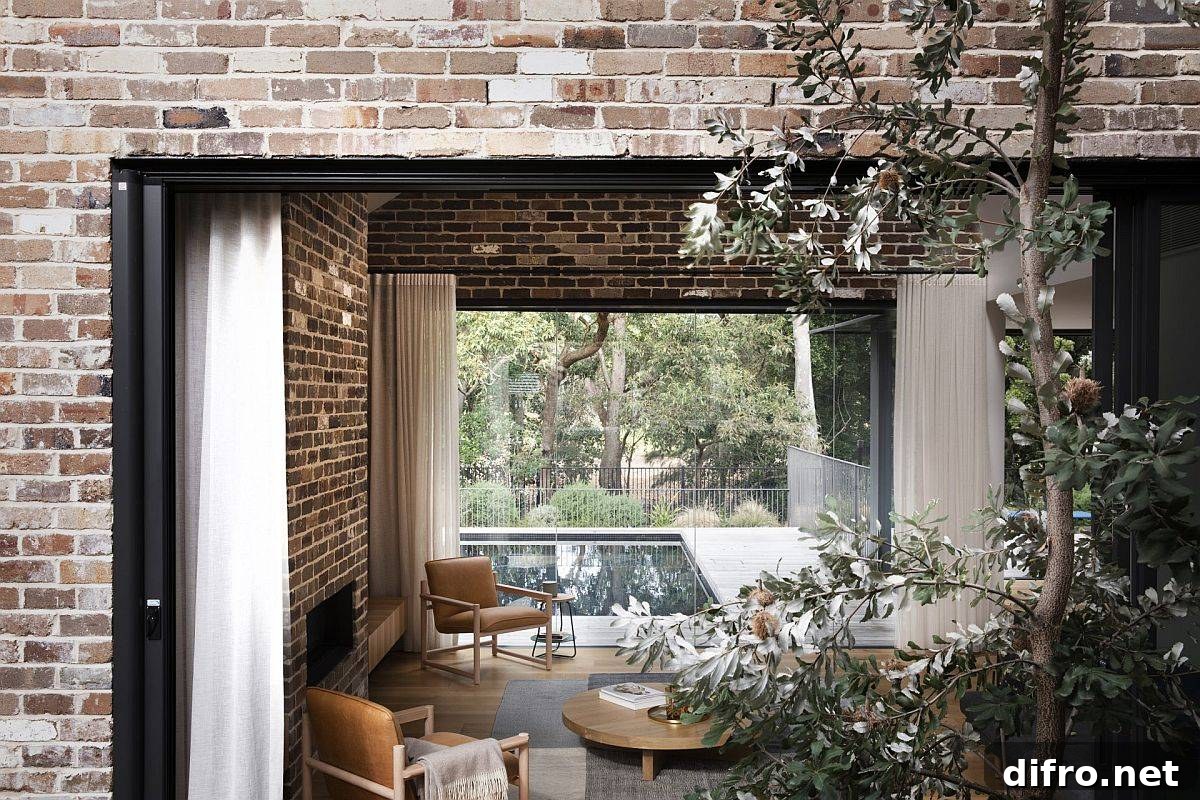
The new addition is set a few steps below the original house, intentionally concealed from the street to preserve the heritage streetscape. A glazed walkway links the historic portion of the home to the contemporary extension, and walking through this connector is enriched by the adjacent garden. Natural light floods the interiors: exposed brick, glass expanses and dark cabinetry sit comfortably together, lending both warmth and contrast to the scheme.
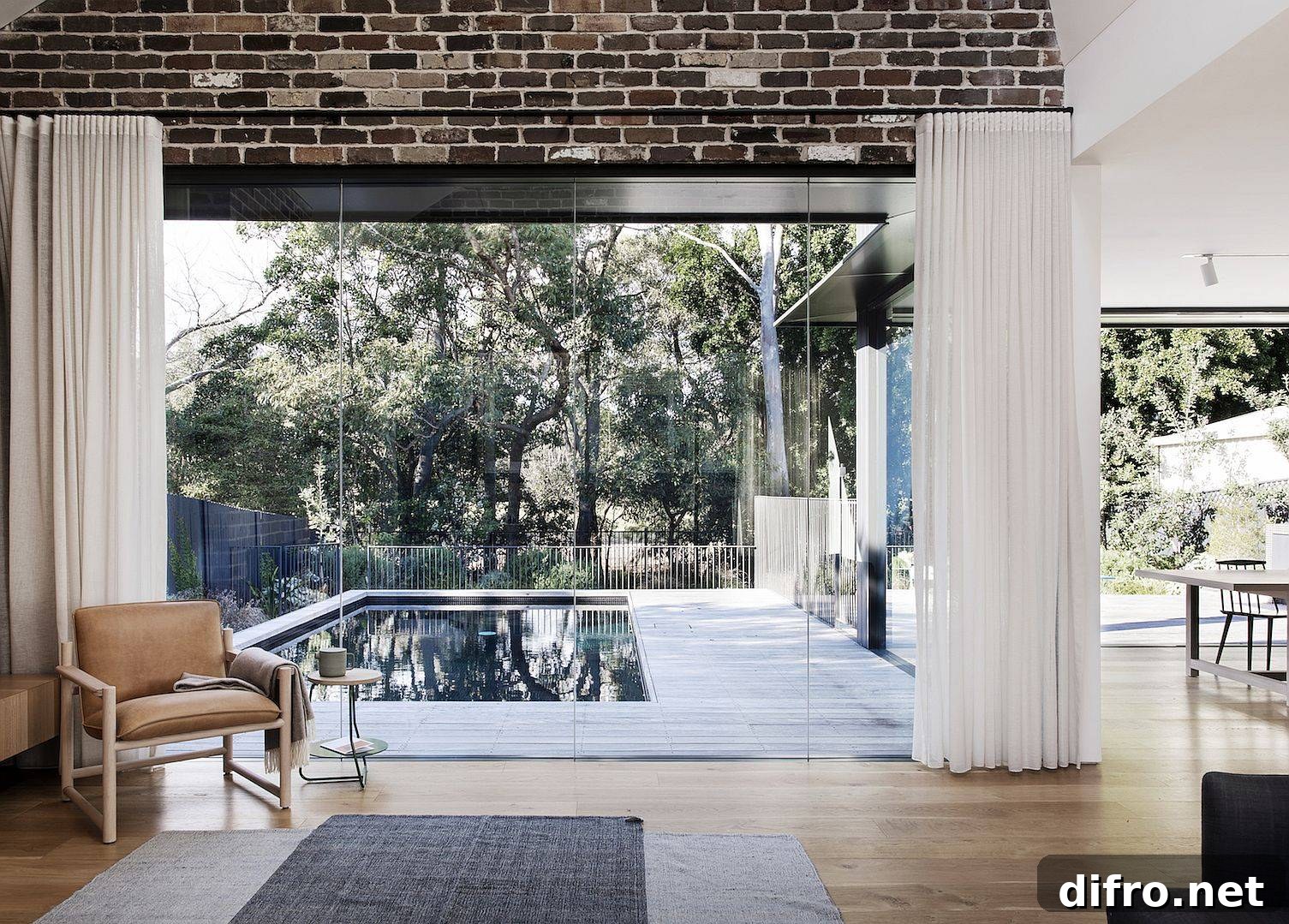
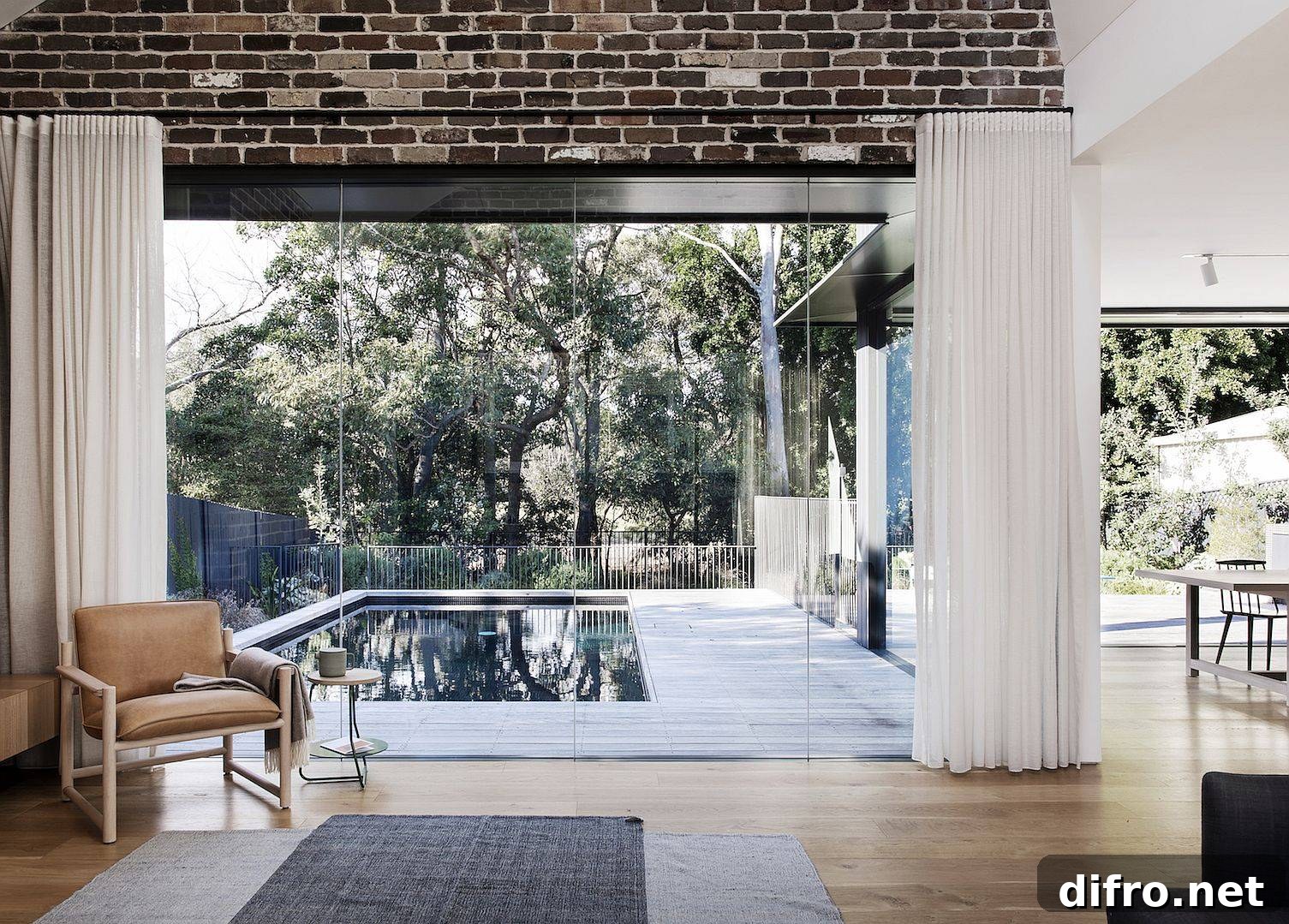
The living areas are arranged for family life and entertaining. Floor-to-ceiling glass walls and sliding doors open the kitchen and dining spaces onto the deck and pool, creating a seamless indoor-outdoor flow that makes the garden feel like an extension of the interiors. This visual and physical connection emphasizes an open-plan layout that accommodates large gatherings while maintaining a clear relationship to the house’s historic core.

Inside, the palette stays largely neutral to highlight materials and form. A bright, white living and family area contrasts with a bold kitchen that uses black, marble and tactile surfaces. The kitchen joinery is crafted from Paperrock, a dense, paper-based material that provides a smooth, durable finish. Marble countertops and splashbacks add a refined, elegant touch to the otherwise restrained palette, while modern furnishings keep the interiors feeling fresh and contemporary.
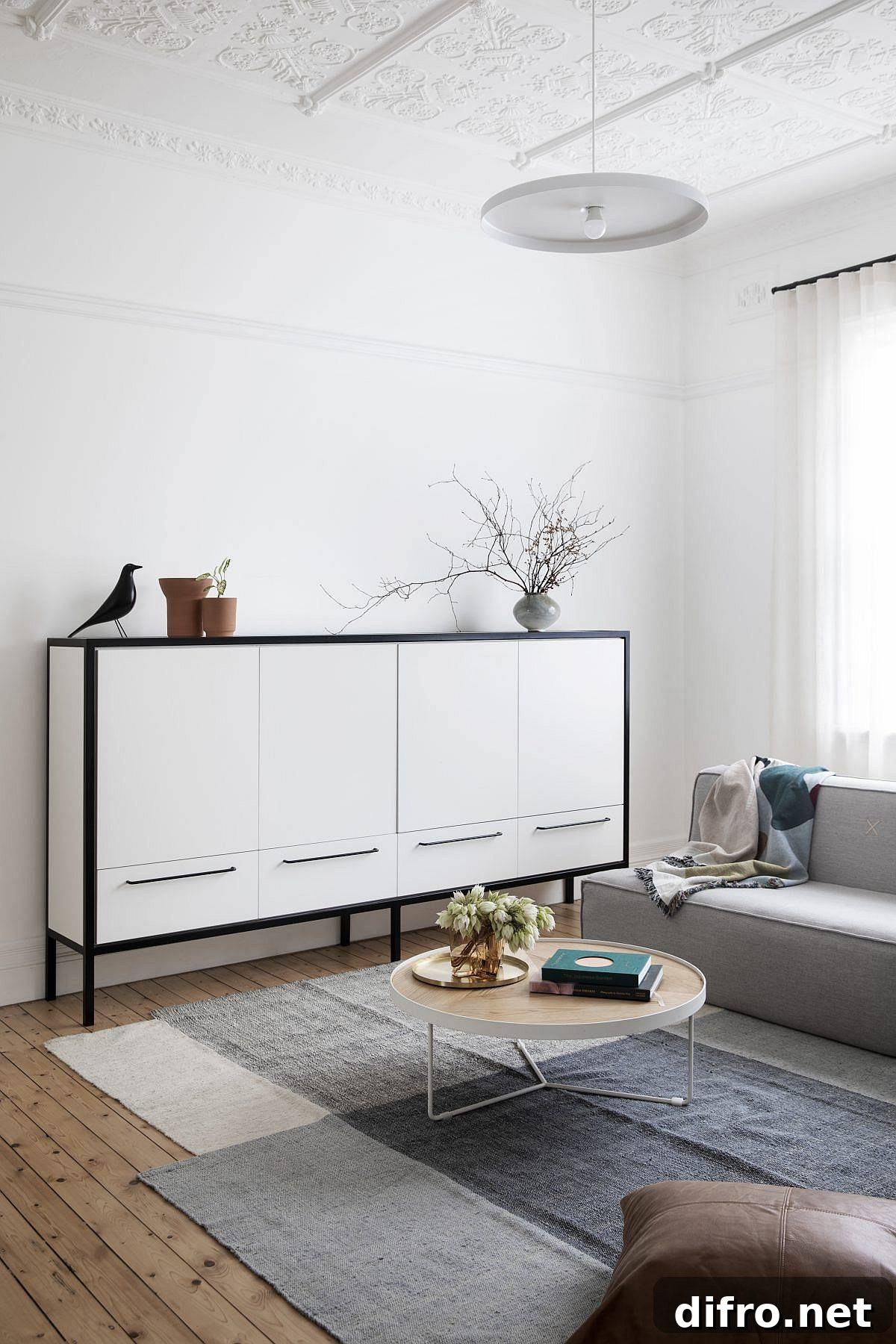
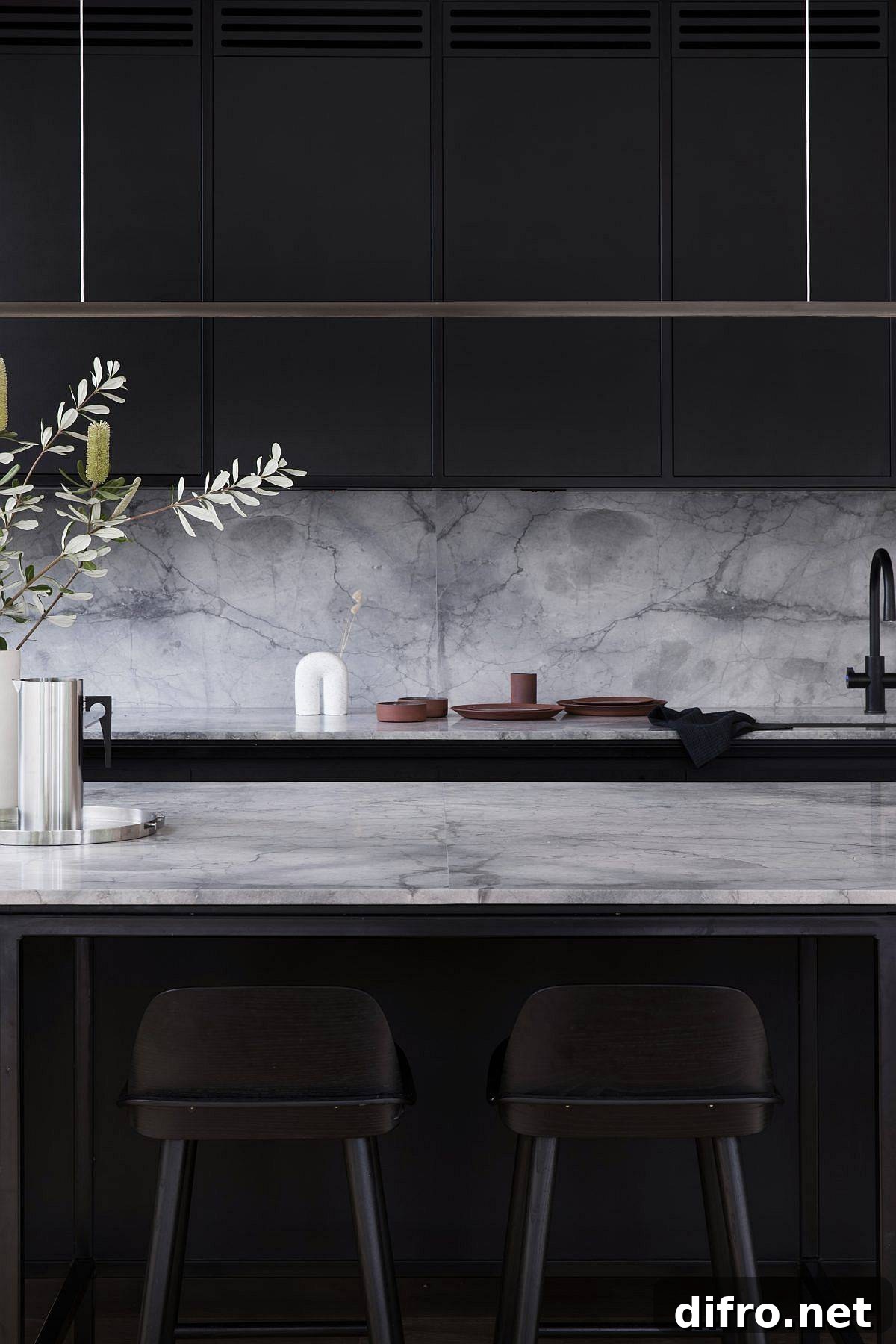
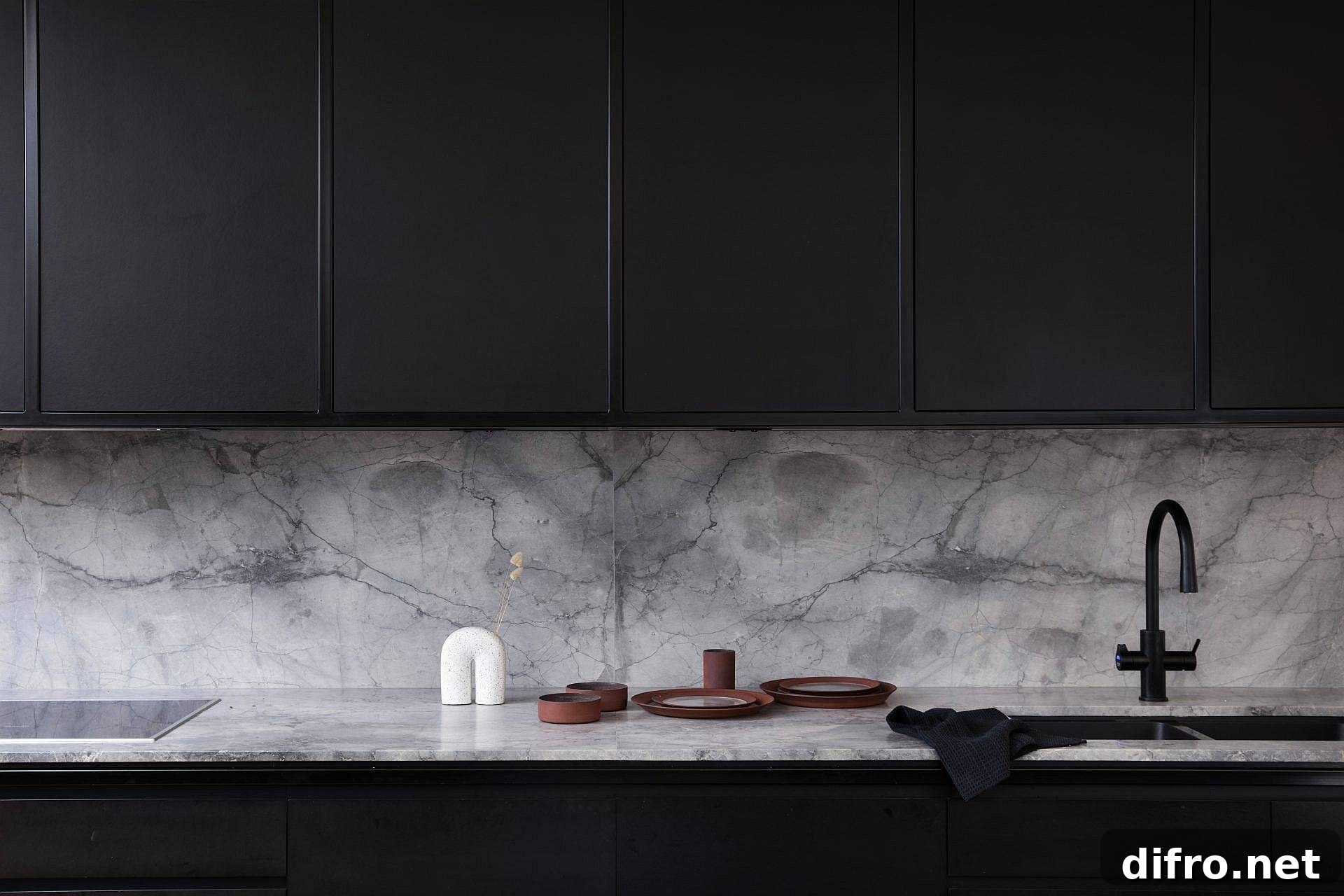
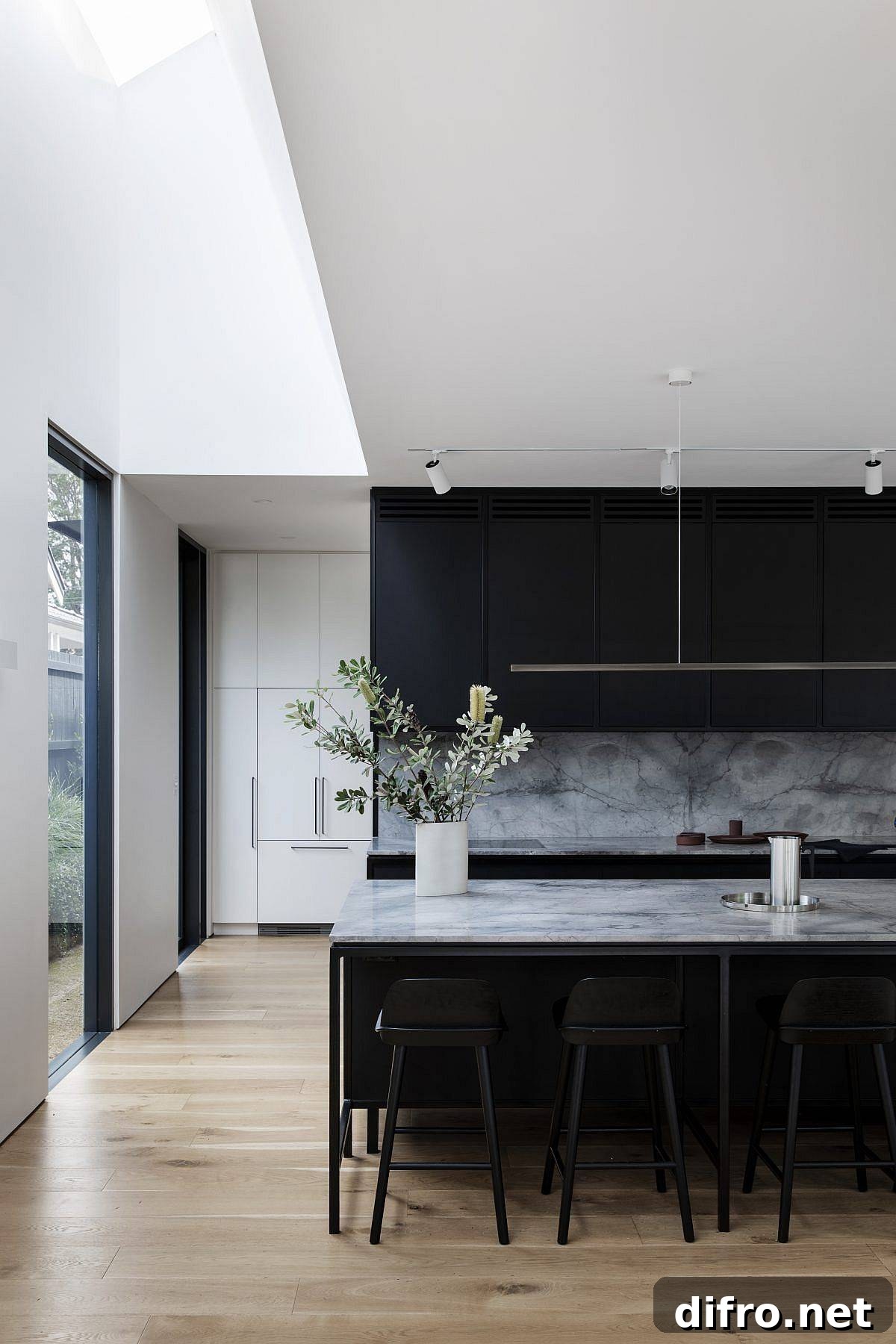
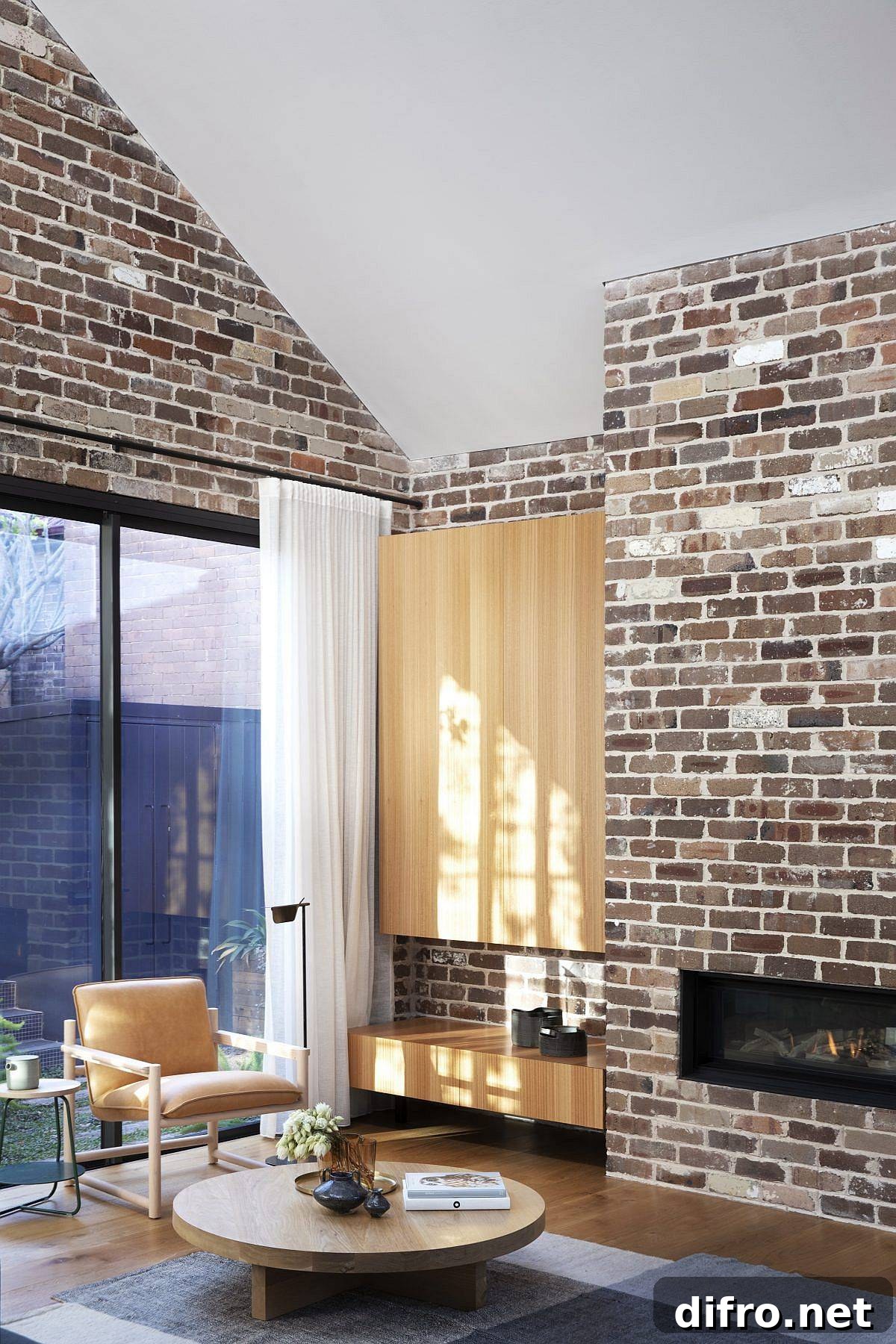
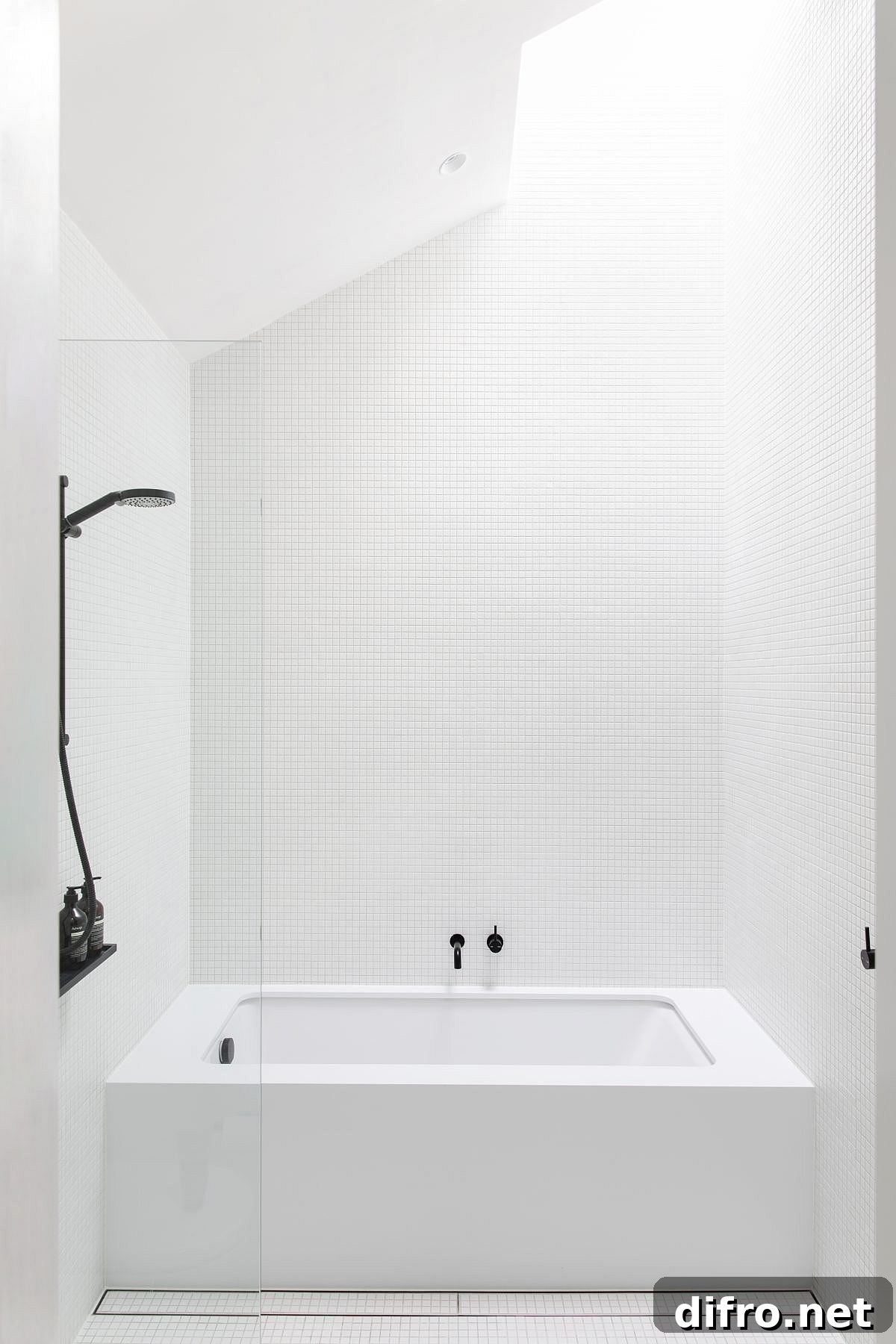
Natural light is a key design strategy throughout the renovation. Skylights and large glazing open up previously enclosed spaces, while light-coloured surfaces amplify the daylight. The use of dark joinery provides visual contrast and anchors the open-plan living zones, while carefully chosen finishes—marble, timber and exposed brick—create a layered, tactile interior.
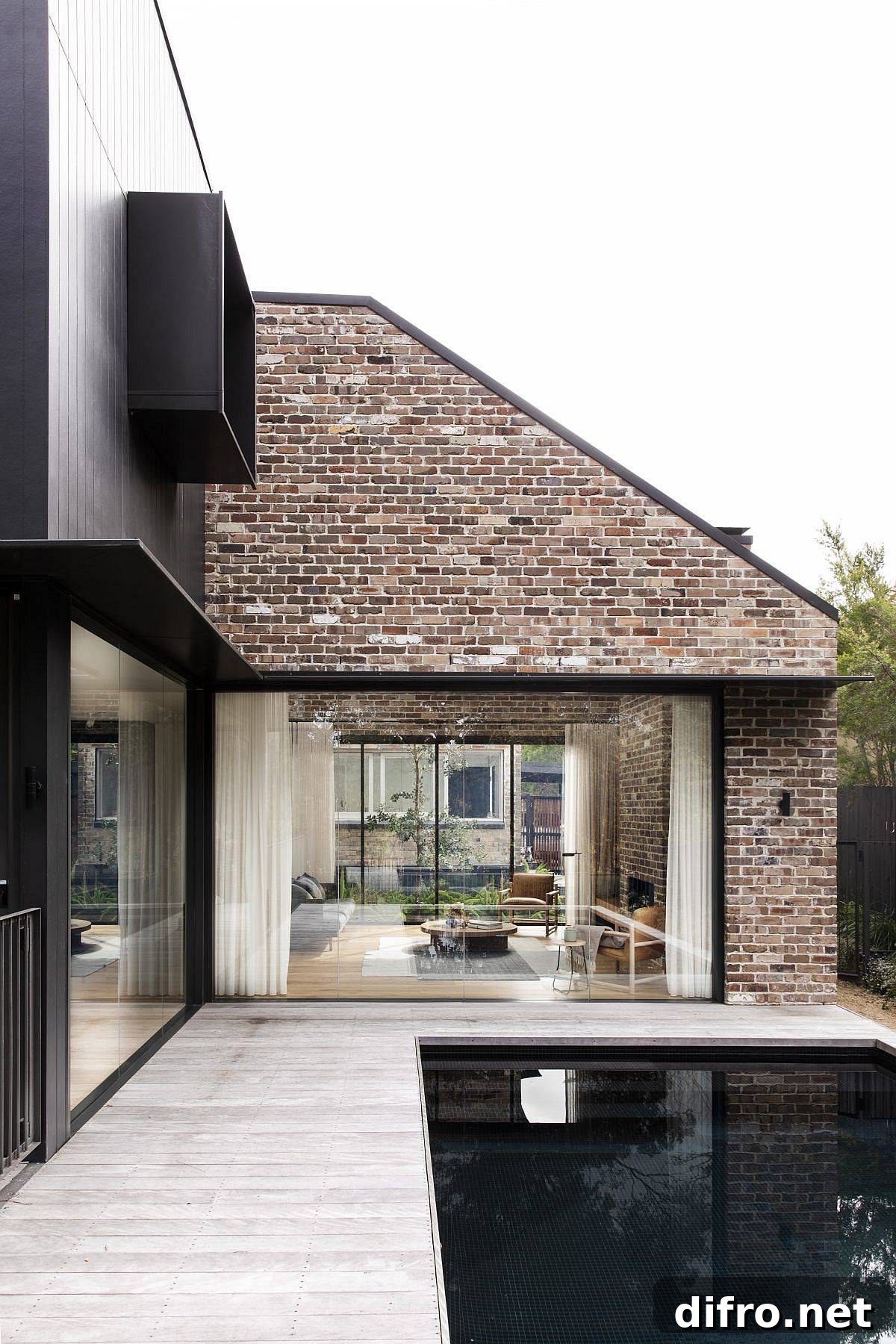
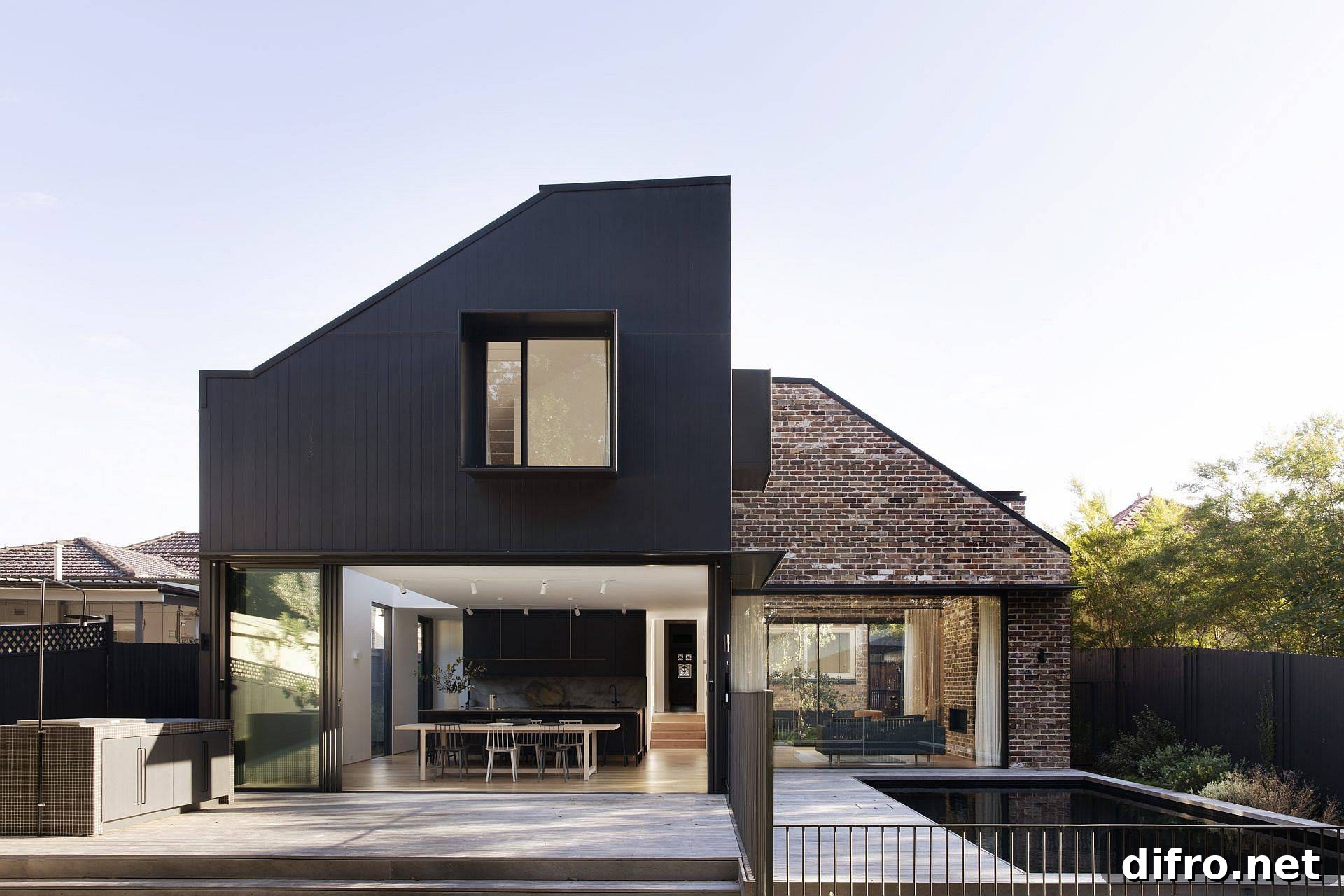
The kitchen joinery is made from a smart material called Paperrock, a very condensed form of paper; the deck around the pool is in Blackbutt, an Australian hardwood; and the exposed brick walls comprise recycled brick sourced from a nearby brickyard.
Outside, generous garden spaces and a modern pool extend the living area, offering both privacy and a relaxed setting for family life. The deck uses Blackbutt hardwood, chosen for its durability and warm tones that complement the brick and timber accents. Recycled bricks in the exposed walls add texture and a sense of history, reinforcing the dialogue between the old house and its new extension.
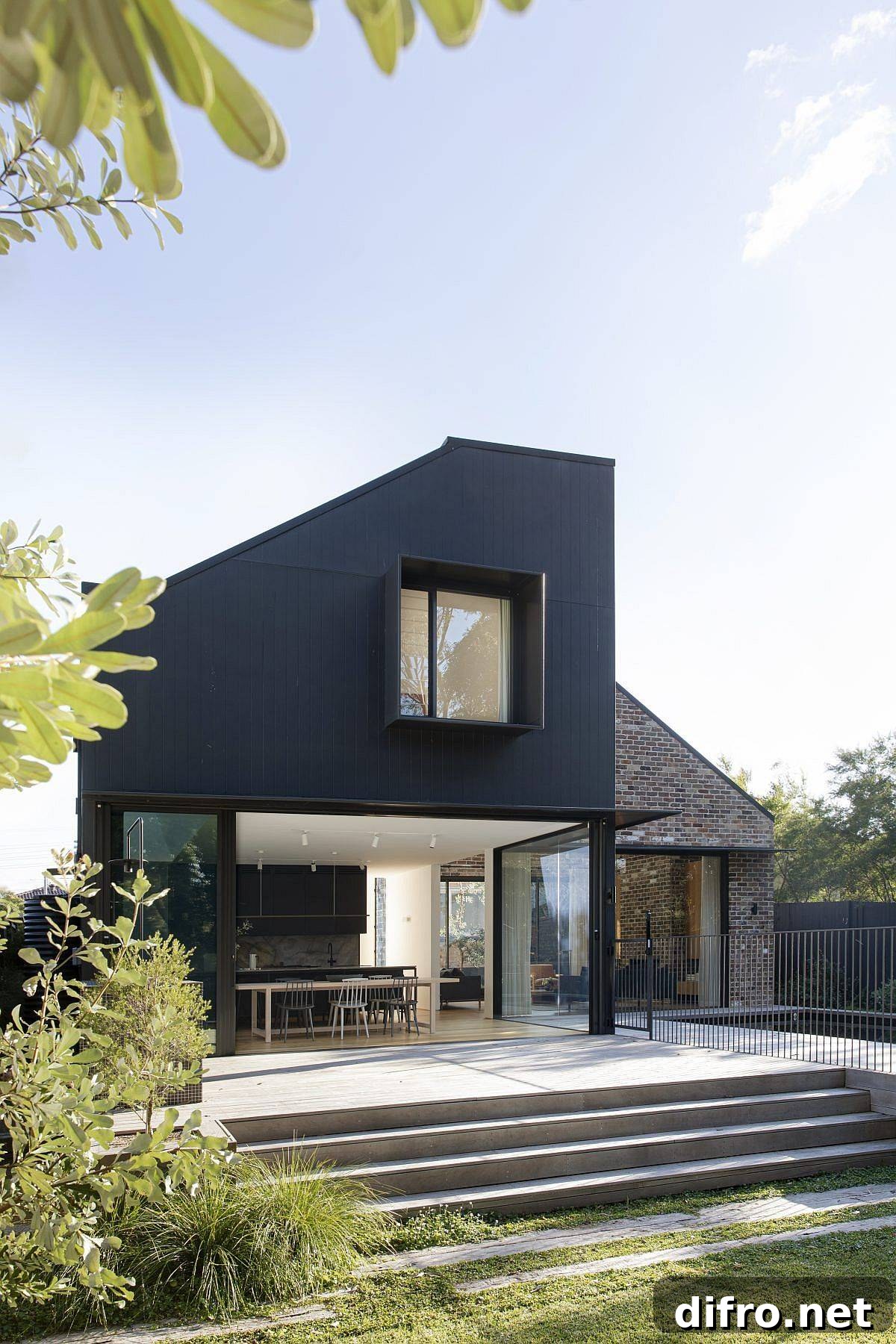
Overall, the renovation demonstrates how thoughtful material choices and considered planning can update a Federation-era home without erasing its original identity. By hiding the new extension from the street, preserving the heritage façade, and using contemporary materials and glazing to open the rear of the house, the design creates a modern family home that still respects its historic context.