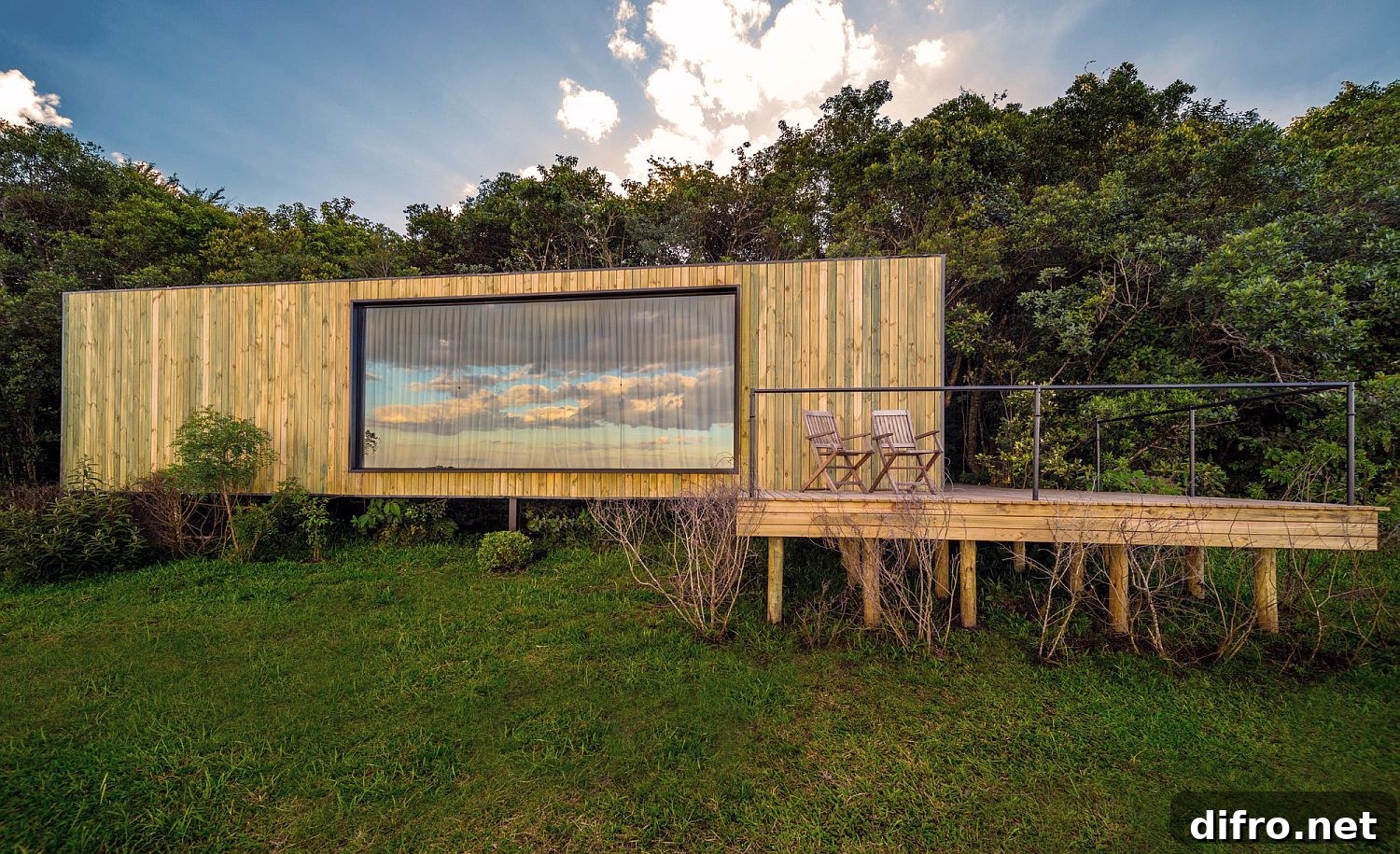
Bosque Refuge — A Recycled Shipping-Container Cabin Nestled in Brazil’s Greenery
Set against a backdrop of lush forest and distant views of the Serra do Mar mountain range, the Bosque Refuge — designed by Bruno Zaitter arquiteto — is a compact, thoughtfully designed cabin for those seeking respite from the bright lights and noise of urban life. Built around a recycled shipping container, this Brazilian cabin combines economical construction, sustainable thinking and simple, warm materials to create a comfortable retreat that feels like an extension of the surrounding landscape.
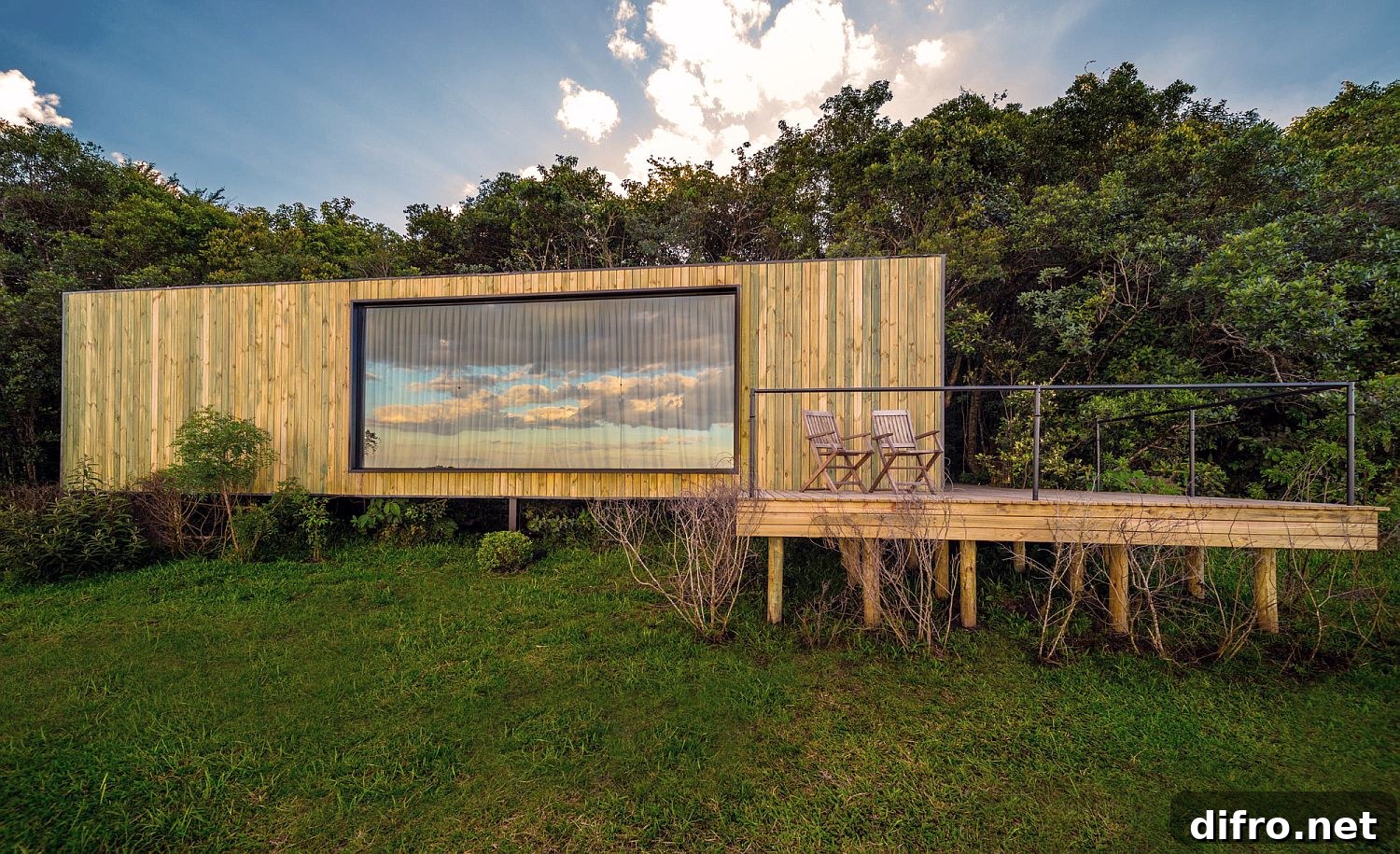
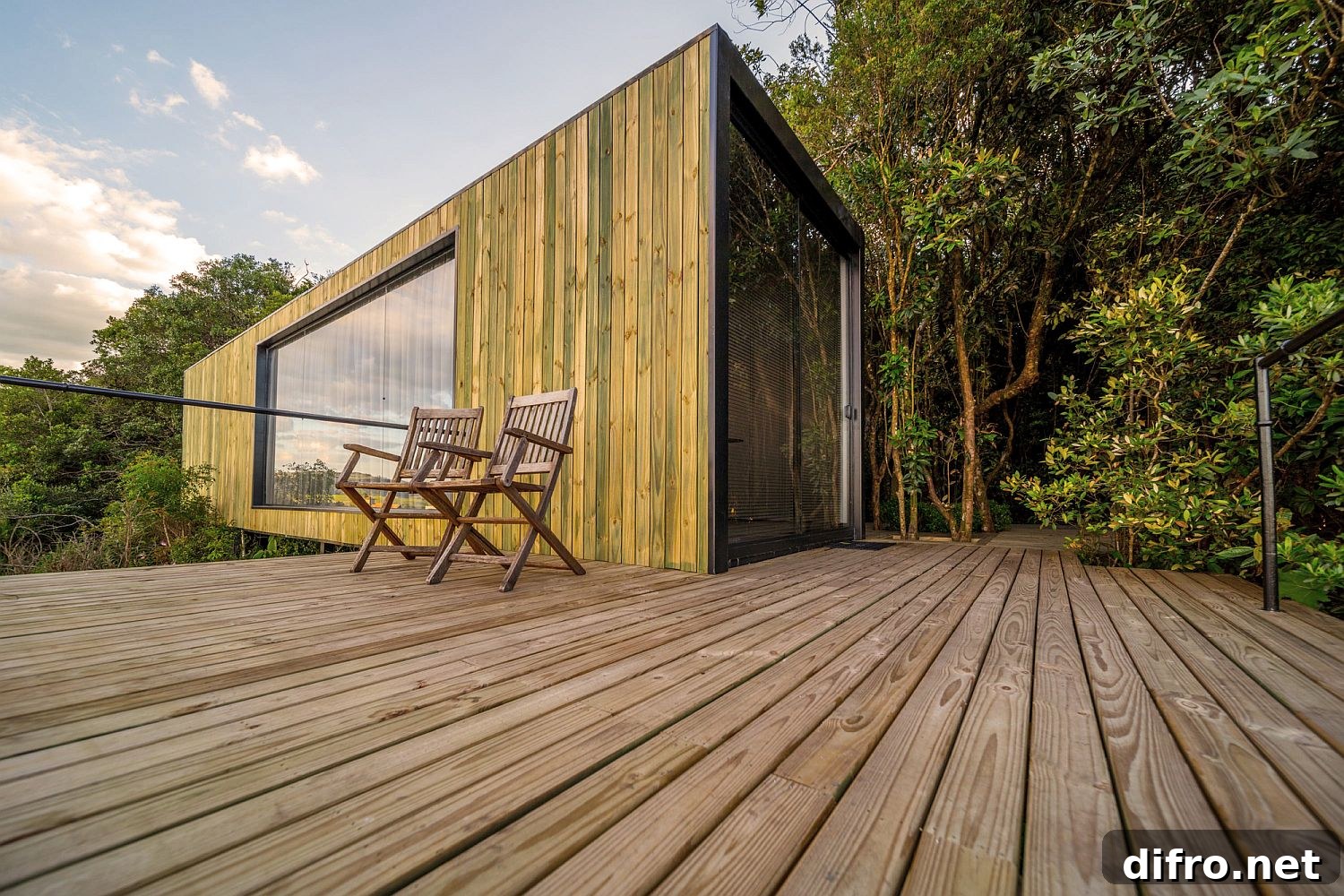
From the exterior, the container base is completely clad in timber, while additional living spaces and structural elements are expressed in concrete. The contrast between warm wood and robust concrete gives the cabin a restrained, modern appearance that still reads as natural and inviting. Large wooden decks extend the indoor living area outward, offering places to relax, dine or observe the surrounding greenery. Wide glass doors and walls visually and physically connect the cabin interior to the abundant natural beauty outside, maximizing light and panorama.
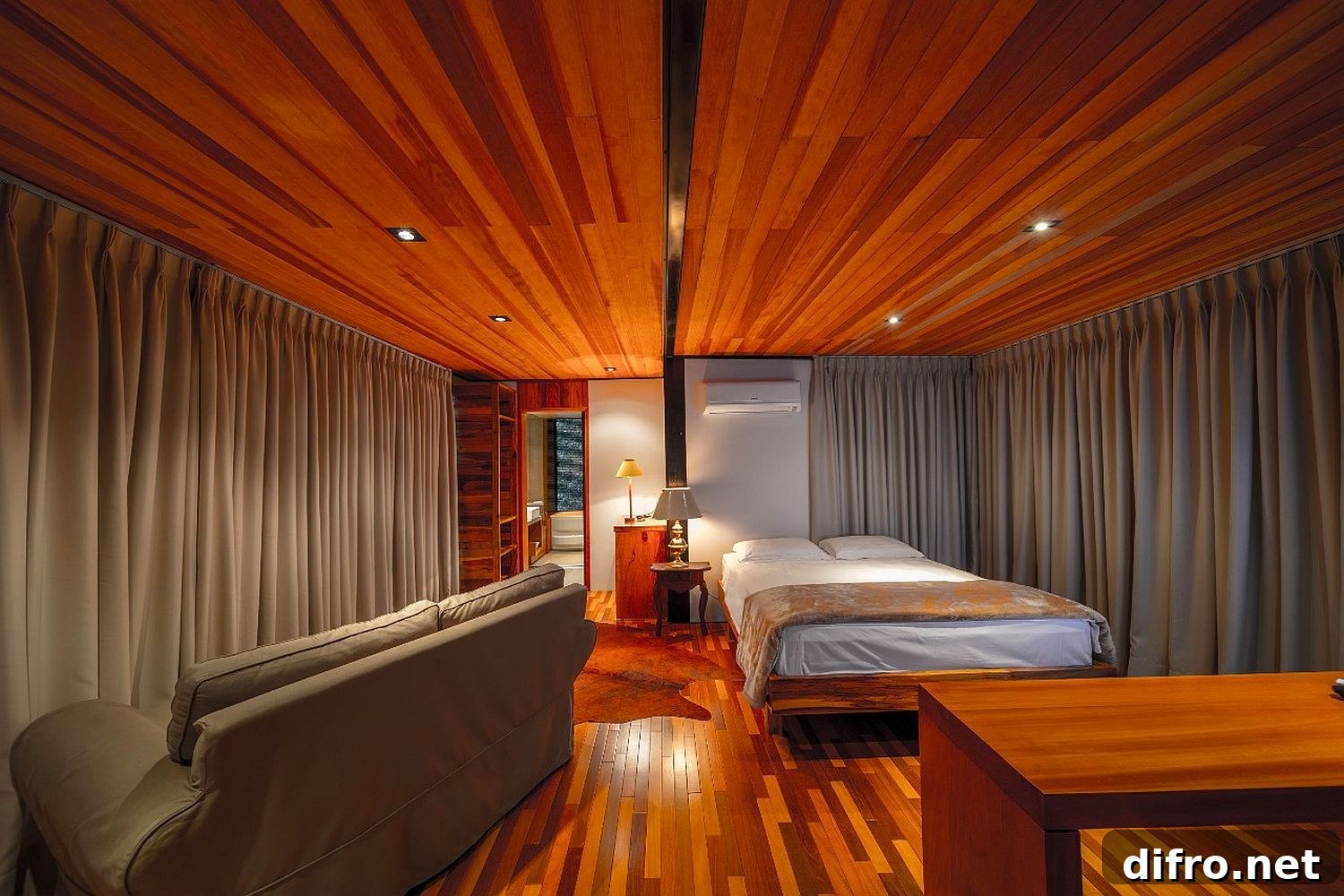
Inside, wood dominates the palette, wrapping floors, ceilings and most built-in furniture in a continuous, tactile surface that promotes warmth and calm. The interior approach is minimalist but cozy: neutral textiles, restrained decor and careful detailing allow the natural grain and texture of the timber to stand out. Glass elements bring generous daylight into the main spaces and frame views of the dense canopy and distant hills, so occupants always feel linked to the place.
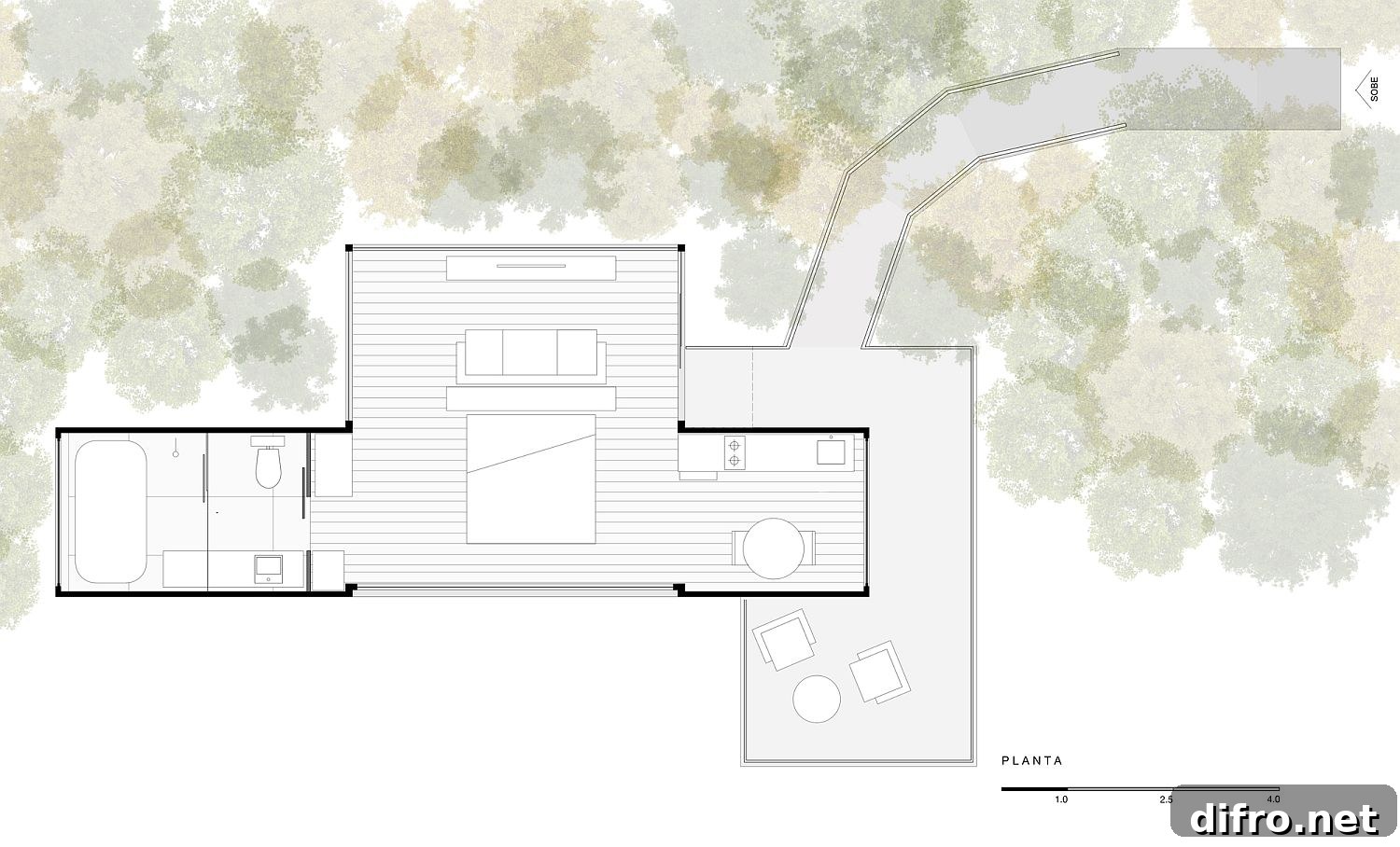
The cabin’s bathroom is compact yet carefully planned, offering a bathtub and shower area that make the most of the limited footprint without sacrificing comfort. Thoughtful circulation and the efficient arrangement of rooms make this small refuge feel larger than its footprint suggests. The floor plan emphasizes a clear sequence from outdoor deck to open living area to private bedroom and bath, enabling an easy, relaxed flow that supports slow, restful living.
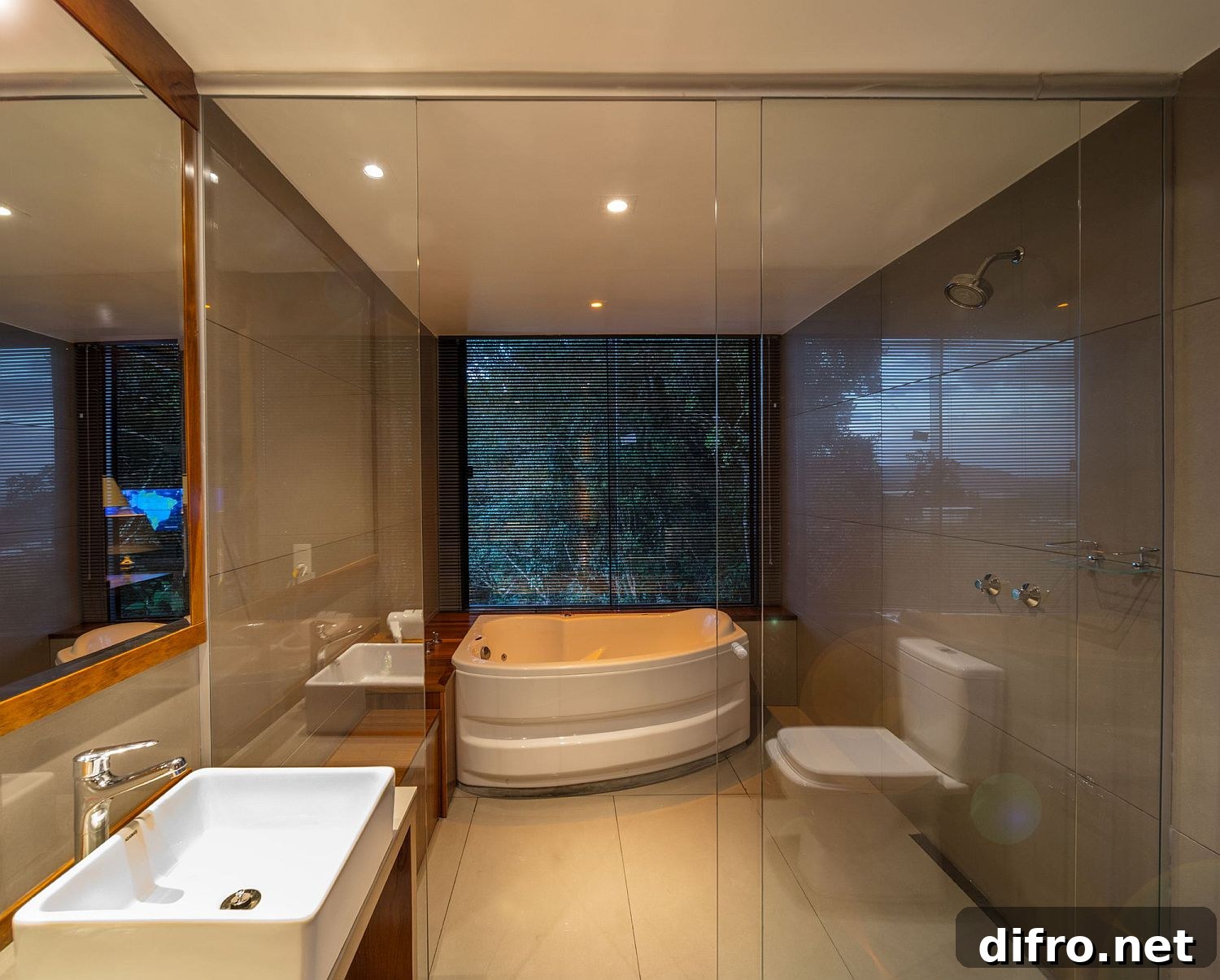
Designed with a focus on reducing environmental impact, the Bosque Refuge recycles an existing structure and uses locally resonant materials. The choice to clad the container in wood softens the industrial origin of the container and helps the cabin blend with the forest. At the same time, concrete elements provide stability and permanence. Together, these materials achieve a balanced approach to cost, durability and aesthetics.
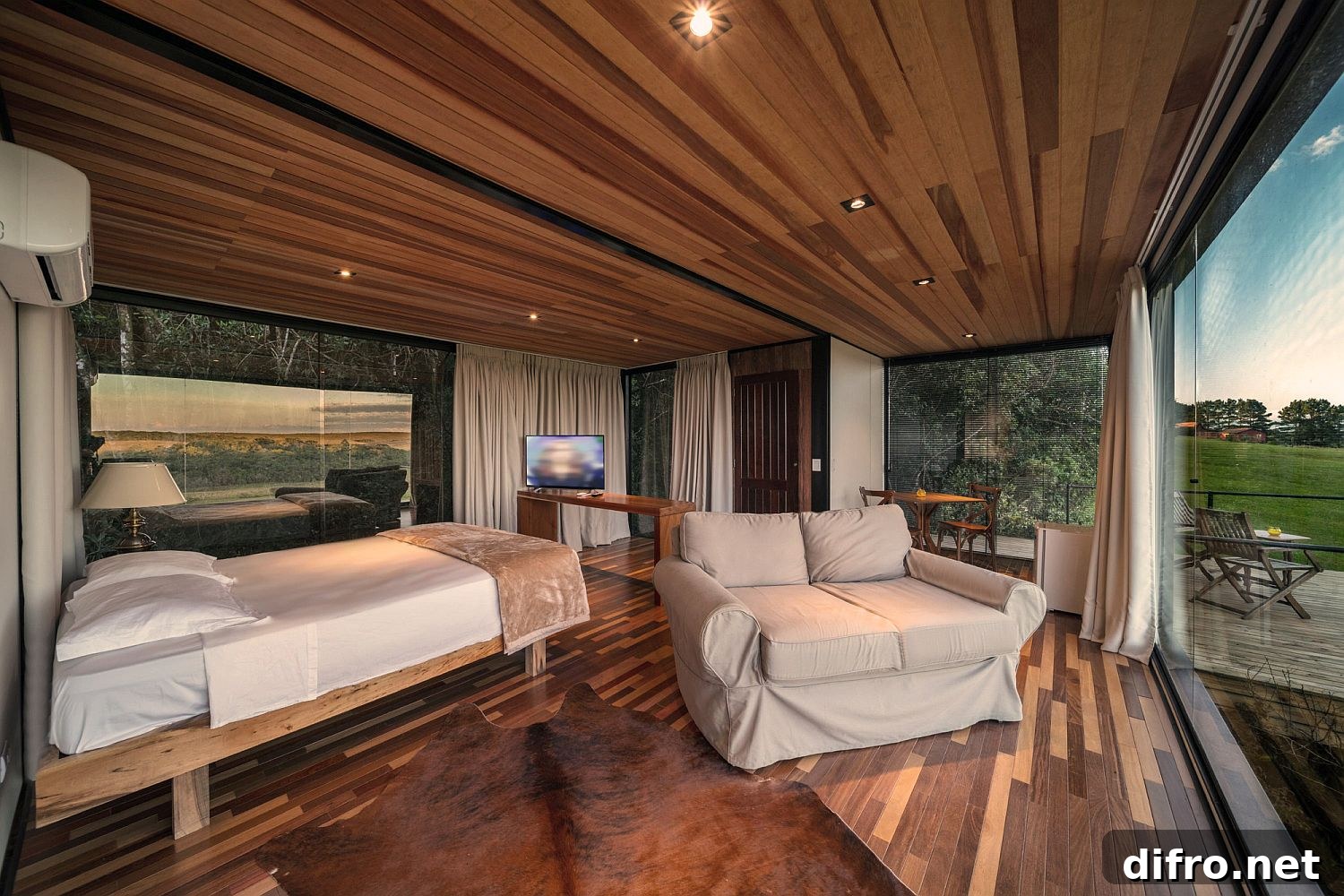
“Wood is also used as the main finishing material. On the east façade it appears boldly in vertical pine boards. From the interior, the same timber finishes provide comfort through natural texture on the floor, ceiling and furniture.”
Visually and physically, wood becomes the connecting element between inside and out. The continuous use of timber creates a coherent aesthetic and a warm sensory environment: the grain underfoot, the wooden ceiling above and built-in wooden furnishings all reinforce a sense of shelter that still feels open to the landscape. The result is a cabin that reads as modest, elegant and rooted in place — a modern, cost-effective and eco-conscious solution for short-term getaways or permanent minimal living.
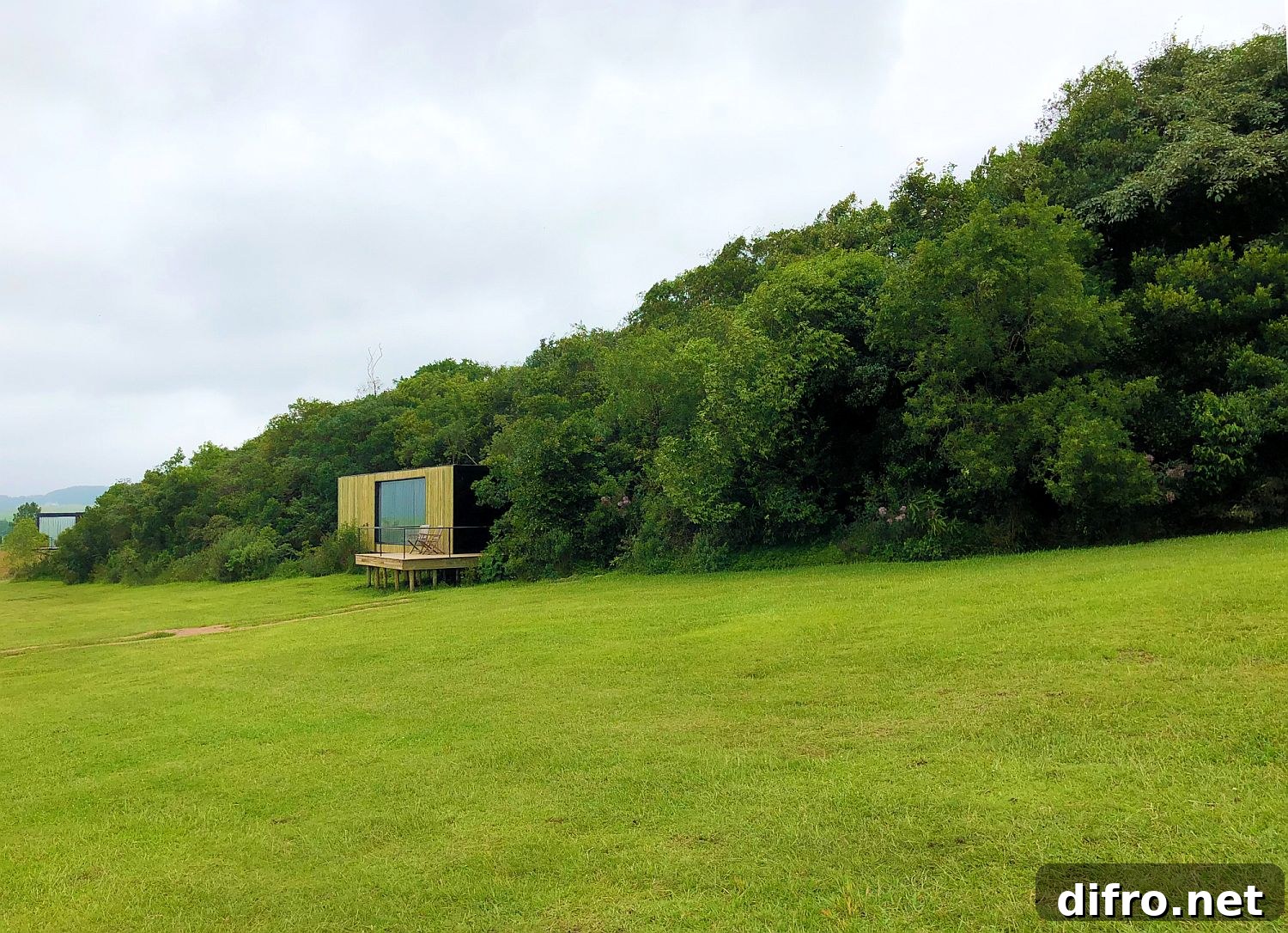
Photographs of the project were provided by Sergio Mendonça Jr., Ale Carnieri and Bruno Zaitter, capturing the careful interplay of materials, light and landscape. The accompanying floor plan clarifies how the container footprint and concrete additions are arranged to maximize usable space and views while keeping construction economical and efficient.
For anyone interested in compact, sustainable architecture that prioritizes material honesty, connection to nature and a calm, pared-back aesthetic, Bosque Refuge offers an instructive example. It demonstrates how a recycled shipping container, when combined with thoughtful material choices and simpler construction strategies, can become a serene, beautifully detailed place to rest and reconnect with the natural world.
Related design ideas: 25 shipping container homes and structures designed with an urban touch; contemporary Brazilian houses with stylish interiors and elegant material use.