Contemporary Vacation Home in New Zealand by Fearon Hay Architects
Owning a holiday home promises relaxation from the moment you imagine it. This contemporary vacation residence in New Zealand, designed by Fearon Hay Architects, delivers on that promise with a clear focus on comfort, flexibility and connection to the natural setting.
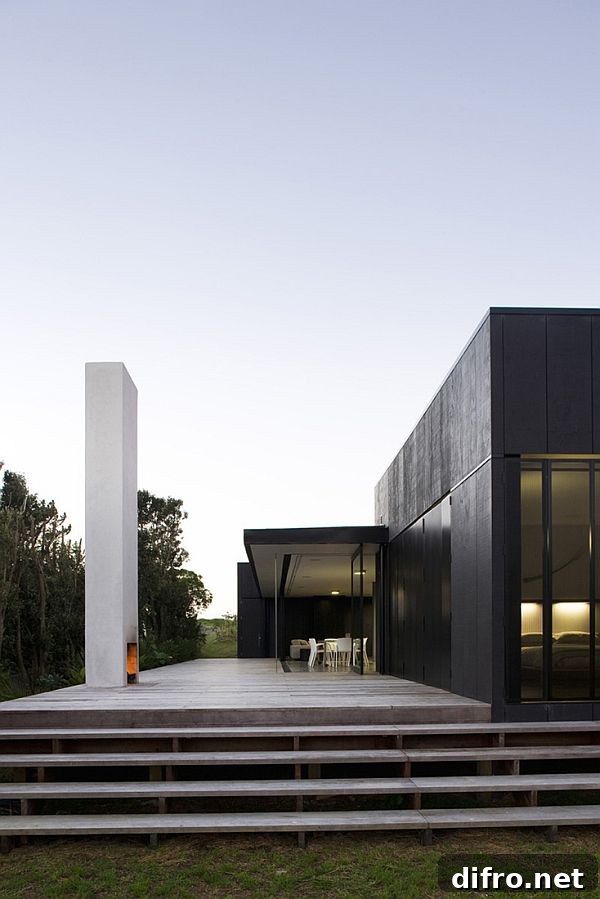
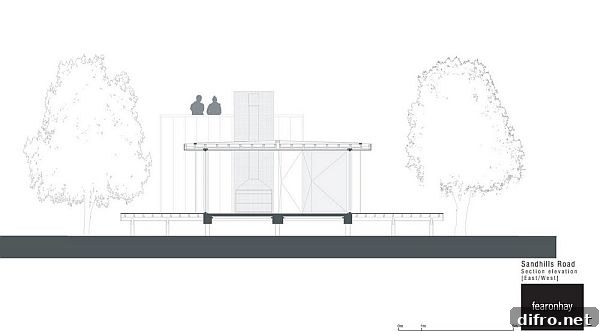
The house reads as two distinct volumes joined by a generous floating pavilion. That central pavilion, equipped with large sliding glass doors, acts as the home’s social core: a flexible, light-filled space that blurs the boundary between inside and out. The sliding doors allow occupants to open up the pavilion on warm days, creating a continuous flow between the interior living areas and an expansive outdoor deck—ideal for seasonal living and casual entertaining.
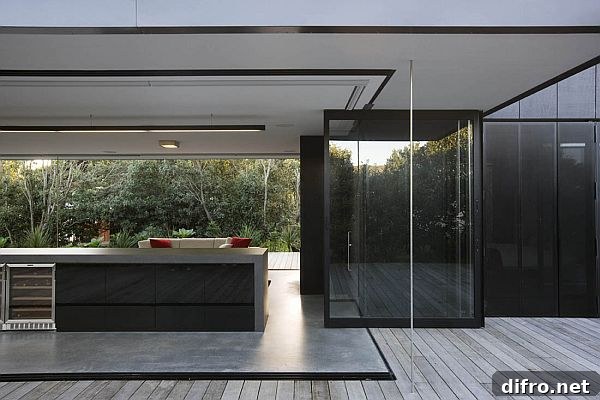
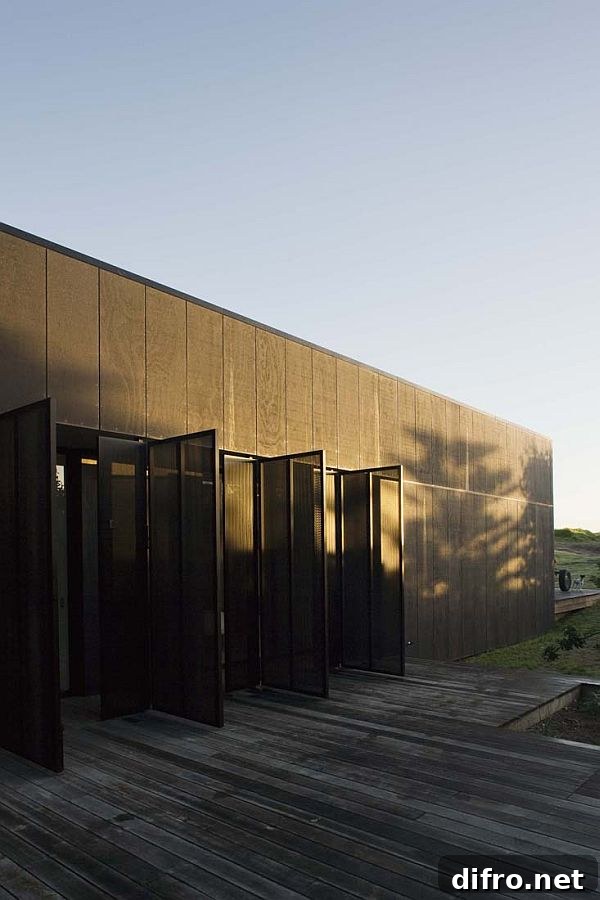
Adjustable external blinds are integrated into the pavilion design so the house can respond to varying weather and light conditions. These movable elements provide shade and privacy when needed, while still allowing optimal daylight and views when opened. The thoughtful combination of glazing and shading supports comfortable year-round use without compromising the sense of openness.
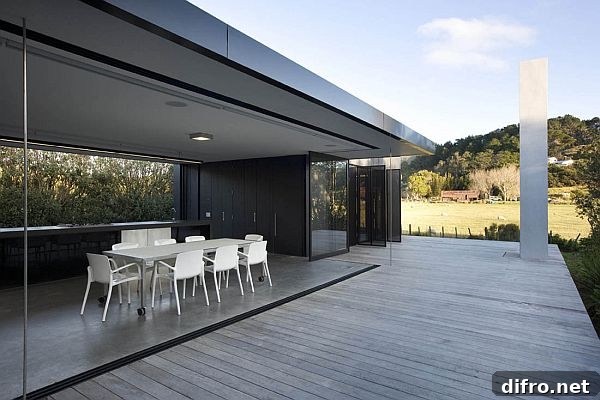
The exterior cladding is natural wood, chosen to create a material connection with the surrounding landscape. The warm tones and texture of timber help the architecture sit gently in its setting and reduce the visual impact of the built form. Timber also lends a timeless, tactile quality that suits a holiday house where comfort and calm are priorities.
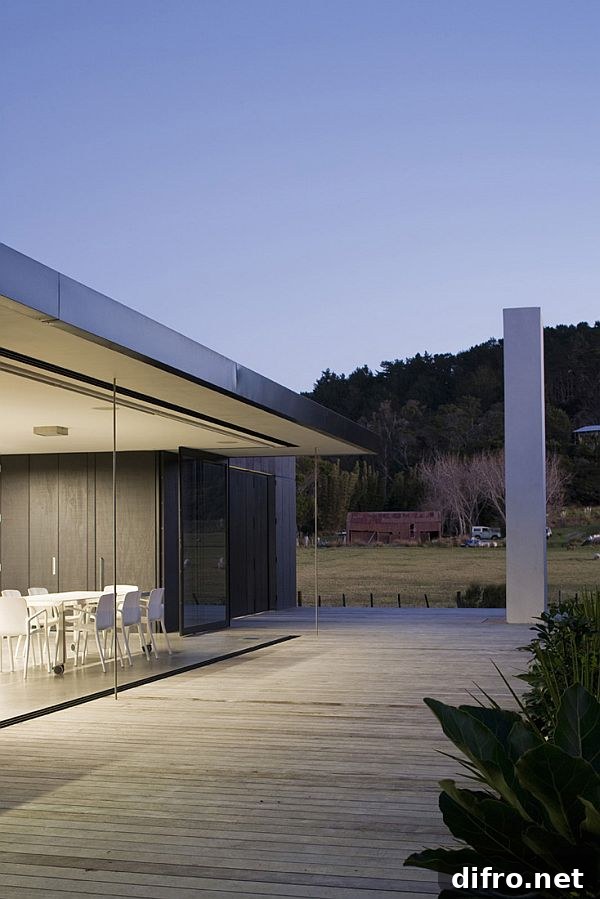
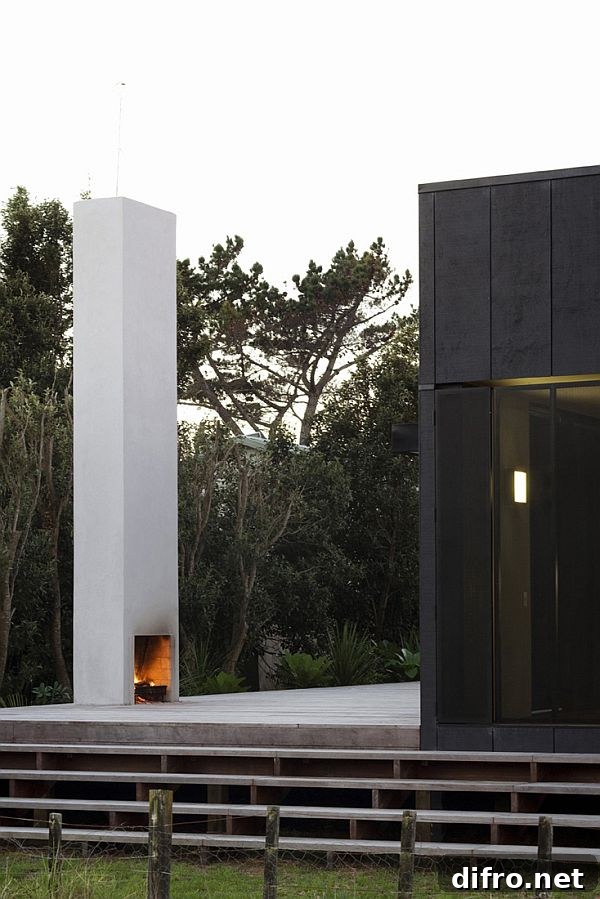
Internally, architectural features have been used to create intimate moments and generous communal zones. A contemporary, column-like fireplace is a focal point on the deck and within the pavilion, offering a cozy gathering spot for cooler evenings. Such a feature encourages outdoor living even when temperatures drop, extending the usable season and promoting social interaction around a central hearth.
Because the residence is split into two distinct parts connected by the pavilion, it can comfortably support diverse uses—private sleeping wings separated from shared living areas, for example—making it suitable both as a family retreat and as a place for guests and gatherings. The layout balances privacy and openness so family members can retreat to quiet zones without disrupting communal activities.
The architecture emphasizes adaptable living, simple detailing and robust materials that age gracefully. Large openings and carefully positioned windows capture views and daylight while the building’s modest scale and natural palette keep it visually respectful of its environment. These design choices support relaxed, low-maintenance living—exactly what one hopes for in a holiday property.
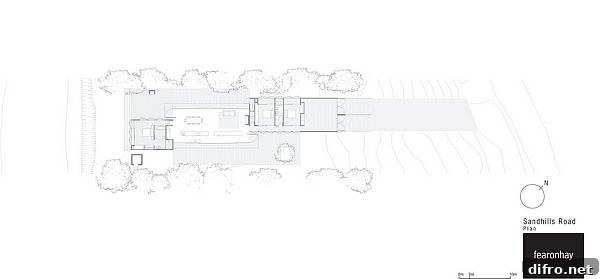
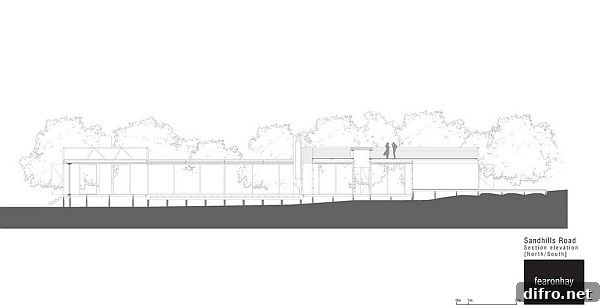
This project demonstrates how a well-considered combination of form, material and movable elements can create a holiday home that feels both relaxed and purposeful. The result is a comfortable, adaptable retreat that encourages time spent together while preserving the quiet moments that make a vacation special.
[via Arkinetia]