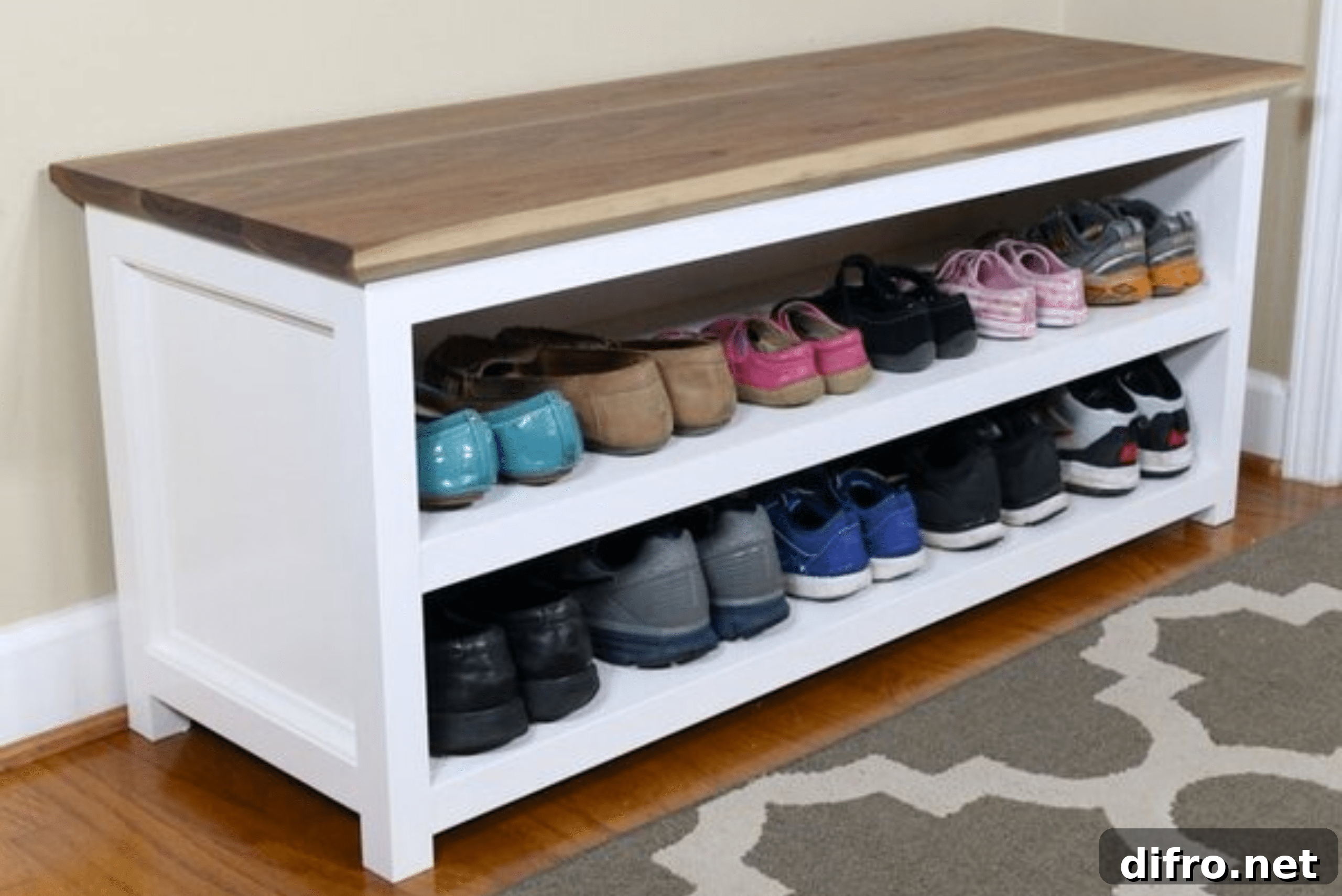
Are you fed up with shoes strewn across your entryway or closet? A well-made DIY shoe rack can solve clutter, add useful storage and give your home a personalized touch. This guide walks you through planning, materials, construction and finishing so you can build a durable, attractive shoe rack tailored to your space and style.
The Benefits of Building Your Own Shoe Rack
Making a DIY shoe rack lets you control size, style and function. Custom-built racks maximize available space, accommodate the exact number and types of shoes you own, and match your decor—whether modern, rustic or minimalist. Building it yourself is often less expensive than buying a high-quality piece and offers the satisfaction of a finished project you designed and assembled.
Planning Your DIY Shoe Rack Project
Good results start with planning. Measure the height, width and depth of the location where the rack will live. Count how many pairs of shoes you need to store and decide if you want space for boots, tall shoes, or other items. Sketch a simple blueprint showing shelf spacing and overall dimensions. Consider whether you’ll place the rack on the floor, use it as a bench with seating, or mount it to the wall.
Design Ideas and Inspiration for Your DIY Shoe Rack
Design choices are flexible. Some popular options:
- Open shelves for easy access and visibility.
- Tiered racks to fit many pairs in a small footprint.
- Built-in seating or a storage bench top for putting shoes on comfortably.
- Adjustable shelves to accommodate sandals through boots.
- Decorative trim, paint, or stain to integrate the rack into your decor.
Choose a style that balances aesthetics and function for your home.
Choosing the Right Materials for Your DIY Shoe Rack
Material selection affects appearance, durability and cost. Common options:
- Softwood (pine): affordable and easy to work with—ideal for most simple racks.
- Hardwood (oak, maple): more durable and attractive but harder to cut and more expensive.
- Metal: strong and modern-looking; great for industrial-style racks.
- Repurposed materials: crates, pallets or reclaimed boards for an eco-friendly, rustic look.
Choose materials based on intended weight load, finish preferences and workshop tools available.
Step-by-Step Instructions for Building Your DIY Shoe Rack
Follow these steps to build a simple, sturdy shoe rack. Adjust dimensions to match your measurements and design.
Materials:
- 1×12 pine boards for shelves (cut to measured lengths)
- 1×2 pine boards for frame and supports (or 2×2 for extra strength)
- Wood screws: 2-inch for joints, 1-inch for attaching shelves
- Wood glue for stronger joints
- Sandpaper: medium and fine grit
- Wood stain or paint
- Polyurethane (optional for added protection)
Tools:
- Brushes or clean rags for staining/painting
- Screwdriver or drill/driver
- Saw: circular saw or miter saw for straight cuts
- Measuring tape and pencil
- Clamps to hold pieces while glue dries
- Safety gear: gloves and safety glasses
Step-by-Step Build Instructions
Step 1: Design and Measurement
- Measure the space and determine the rack’s height, width and depth.
- Sketch a plan showing shelf count, spacing and overall dimensions.
Step 2: Cut the Boards
- Cut shelves from 1×12 boards and cut frame pieces from 1×2 boards.
- Sand cut edges with medium grit sandpaper to remove splinters.
Step 3: Assemble the Frame
- Arrange the 1×2 boards as vertical sides and horizontal supports.
- Apply wood glue to joints and secure with 2-inch screws.
- Check that the frame is square by measuring diagonals; adjust if necessary.
Step 4: Attach the Shelves
- Apply wood glue along the top edges of the frame and position the shelves.
- Fasten shelves from the top with 1-inch screws driven into the supports.
Step 5: Reinforce the Structure
- Add additional 1×2 support strips under each shelf for strength and to prevent sagging.
- Glue and screw these supports into place.
Step 6: Sanding
- Finish all surfaces with fine-grit sandpaper and round edges slightly for a polished look.
Step 7: Stain or Paint
- Apply stain or paint evenly; allow adequate drying time between coats.
Step 8: Finish with Polyurethane (Optional)
- Apply a coat of polyurethane for protection and sheen; follow drying instructions on the product.
Step 9: Mount or Place
- Decide whether the rack will stand on the floor or attach to the wall.
- If mounting, use appropriate wall anchors and screws rated for the expected load.
Tips and Common Considerations
- Always wear eye protection and follow safe tool practices.
- Measure twice, cut once—double-check dimensions before cutting.
- Consider shelf depth for different shoe types; deeper shelves suit larger shoes and boots.
- Allow glue and finishes to dry fully before loading the rack.
- If mounting, secure the rack to studs whenever possible for safety.
Finishing Touches and Organization Ideas
Customize with paint, decorative trim, baskets on lower shelves, or labeled sections to keep shoes organized by season, style or frequency of use. Use liners or felt pads to protect surfaces and reduce noise.
Building a DIY shoe rack is a practical weekend project that improves home organization and gives you a custom storage solution. Follow the plan, choose suitable materials, and take your time with finishes to achieve professional-looking results.
Want more interior design and DIY ideas? Subscribe to our newsletter for tips, project plans and inspiration to refresh your home.