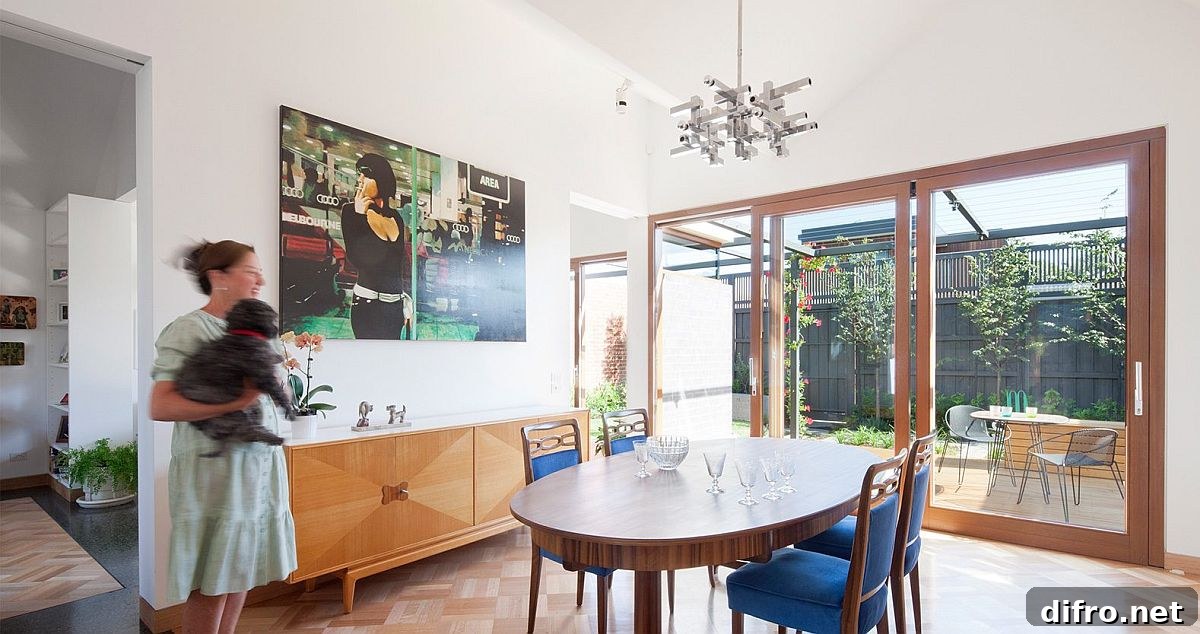
When a house feels both timeless and freshly made, it often comes from careful renovation of an older home. The House in House on a heritage street in Melbourne takes a different path: this is not a retrofit but a new, custom-built residence conceived to look and live with the character of a classic home. Designed by Steffen Welsch Architects for a couple seeking the warmth and presence of a traditional dwelling they could not find on the market, the project delivers a home that reads as both familiar and contemporary. Composed around three courtyards and five living pavilions, the layout creates a dynamic sequence of spaces that feel connected yet distinct, blending indoor and outdoor life in a restrained, elegant way.
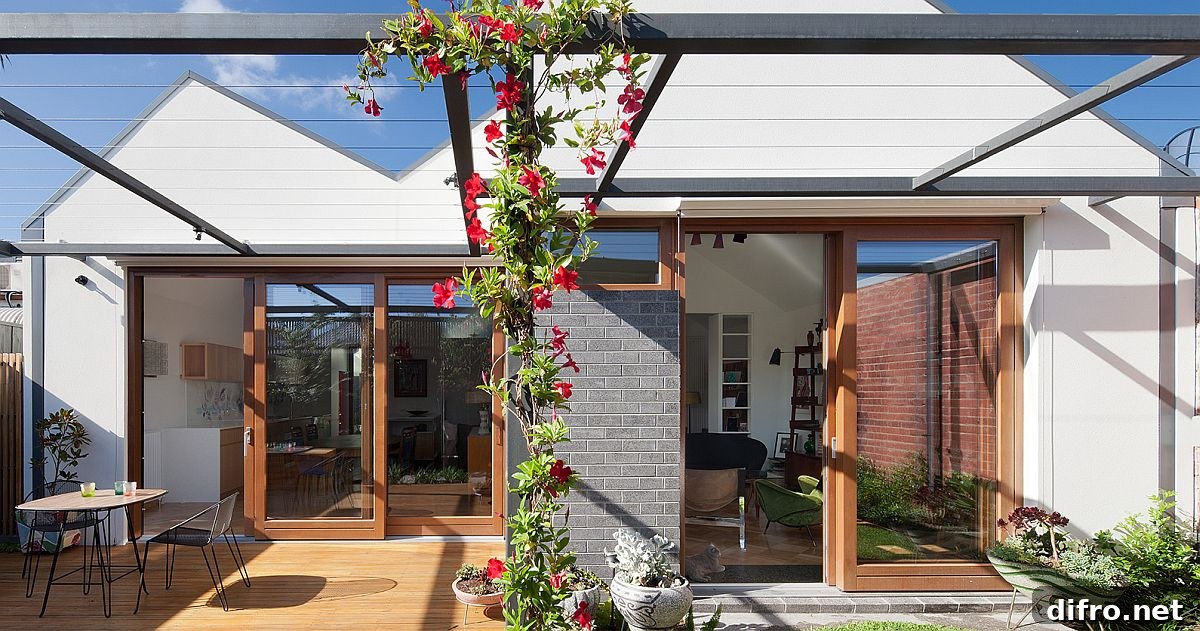
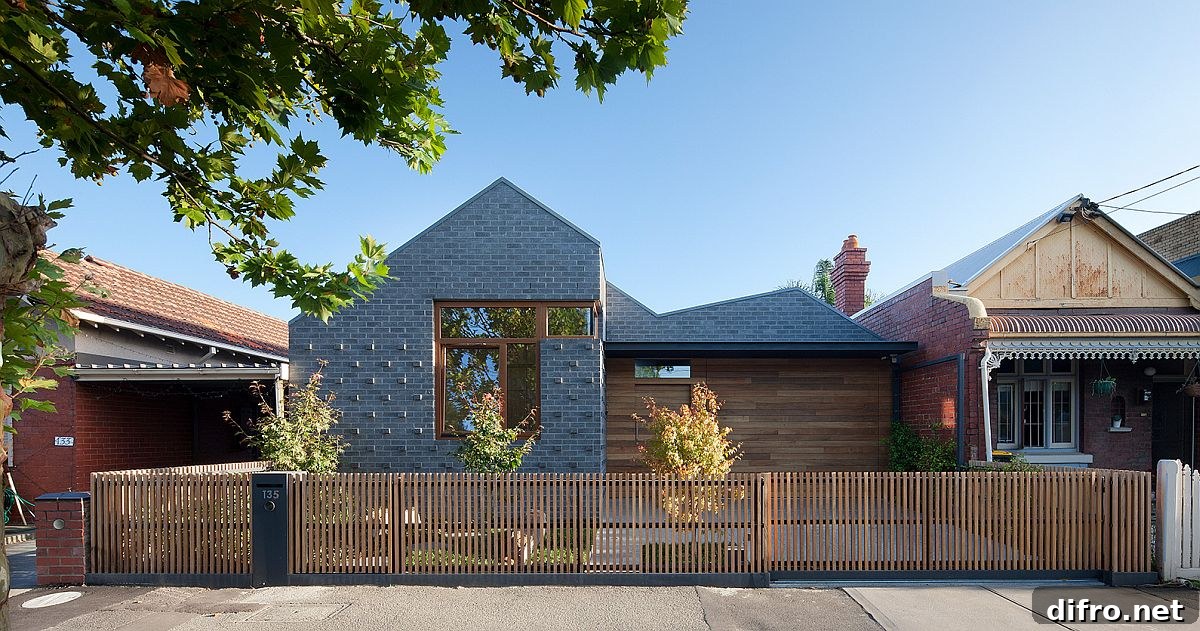
The street façade negotiates a subtle balance with the neighborhood: a gray and timber exterior gives the home a modern yet classically sympathetic presence that sits quietly among older houses. That material palette continues inside where warm timber and crisp white surfaces define the main living, kitchen and dining areas. These rooms open directly to a lush, centrally placed courtyard, so the garden becomes an integral organizing element rather than an afterthought.
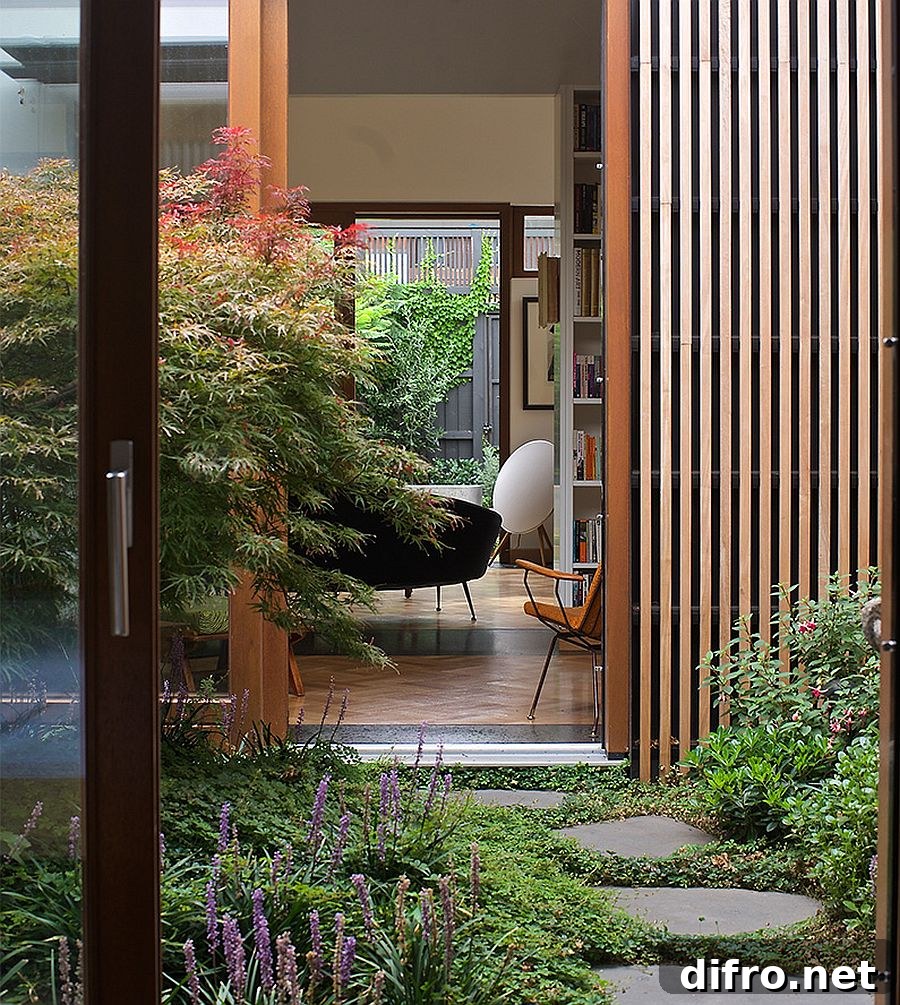
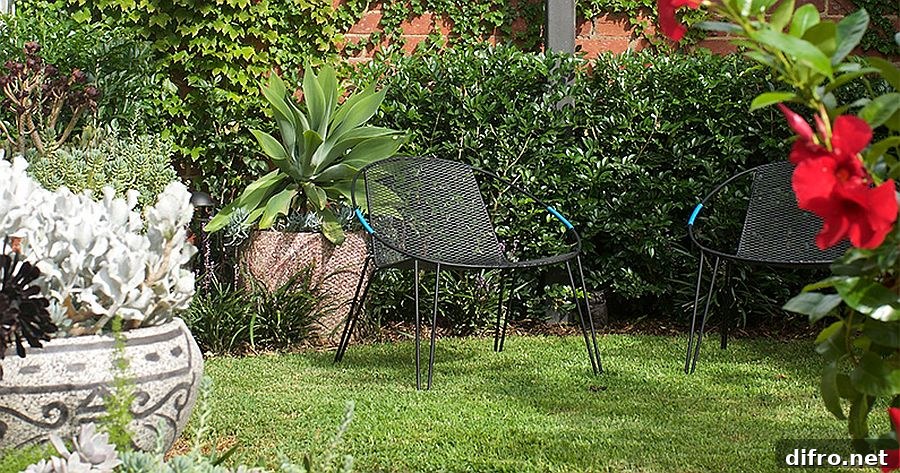
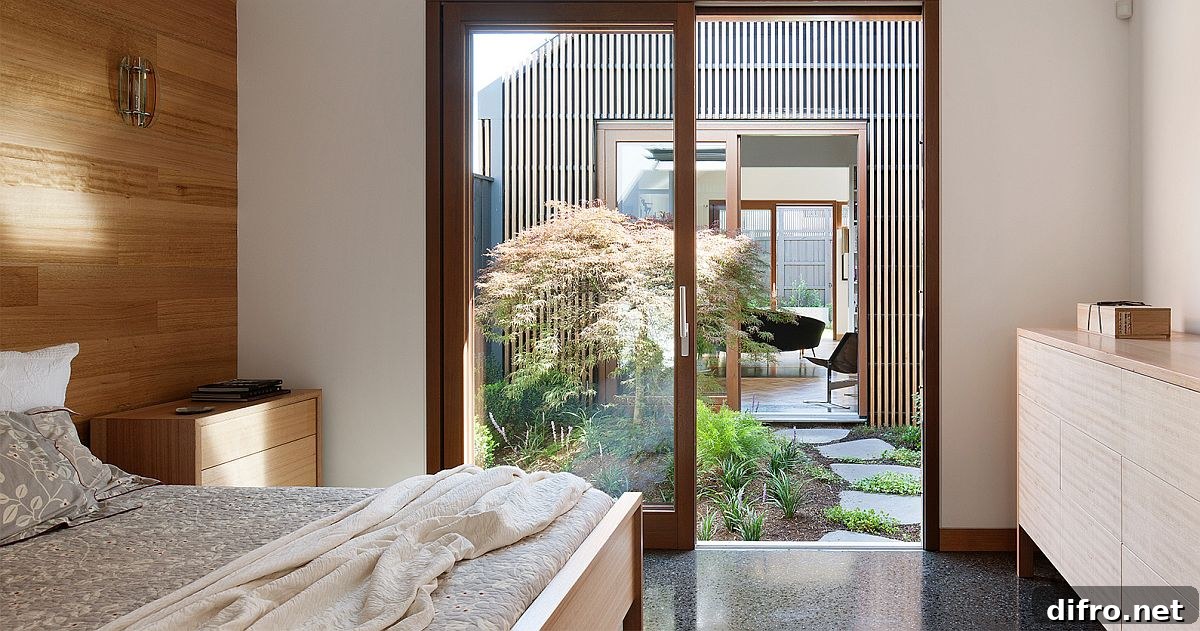
The plan is organized as a collection of pavilions rather than a single block. This approach produces a variety of scales and atmospheres: larger common pavilions accommodate day-to-day living and entertainment while smaller, quieter pavilions frame bedrooms and private retreats. The sequence of courtyards between these volumes enhances natural light penetration and frames shifting views of the garden from multiple rooms. Because the courtyards are woven through the plan, every primary space enjoys a strong connection to greenery and outdoor life.
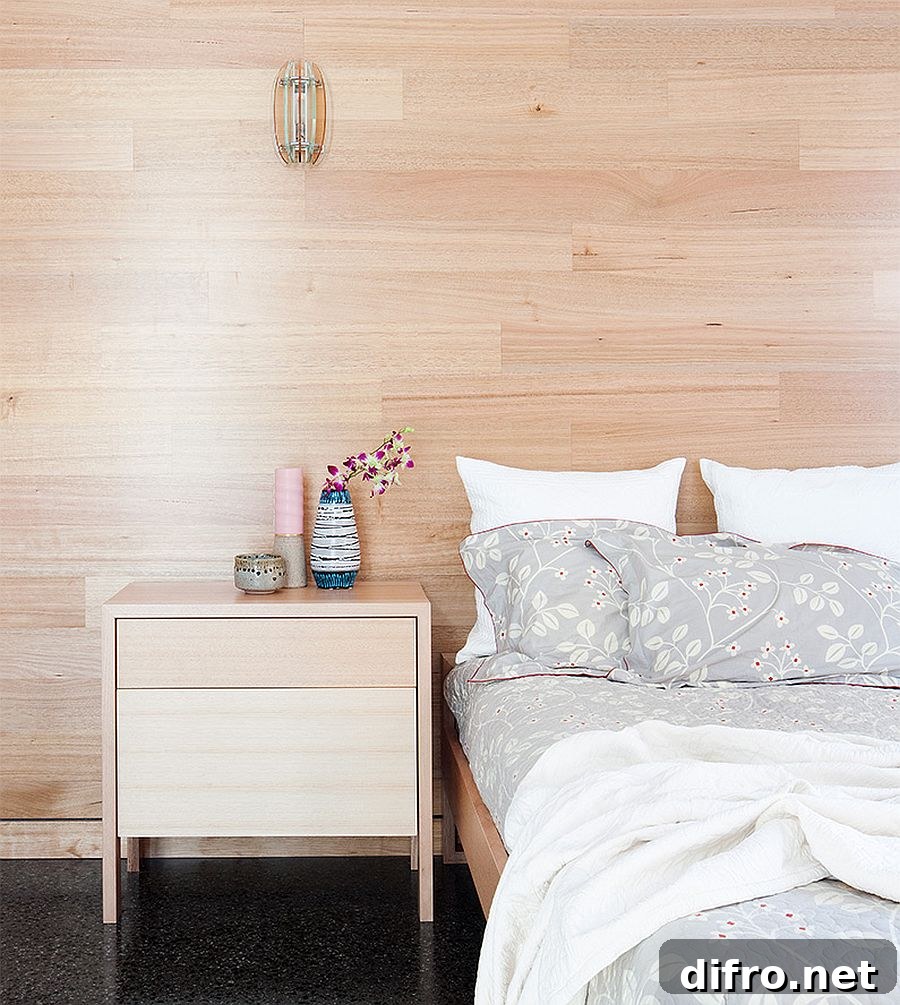
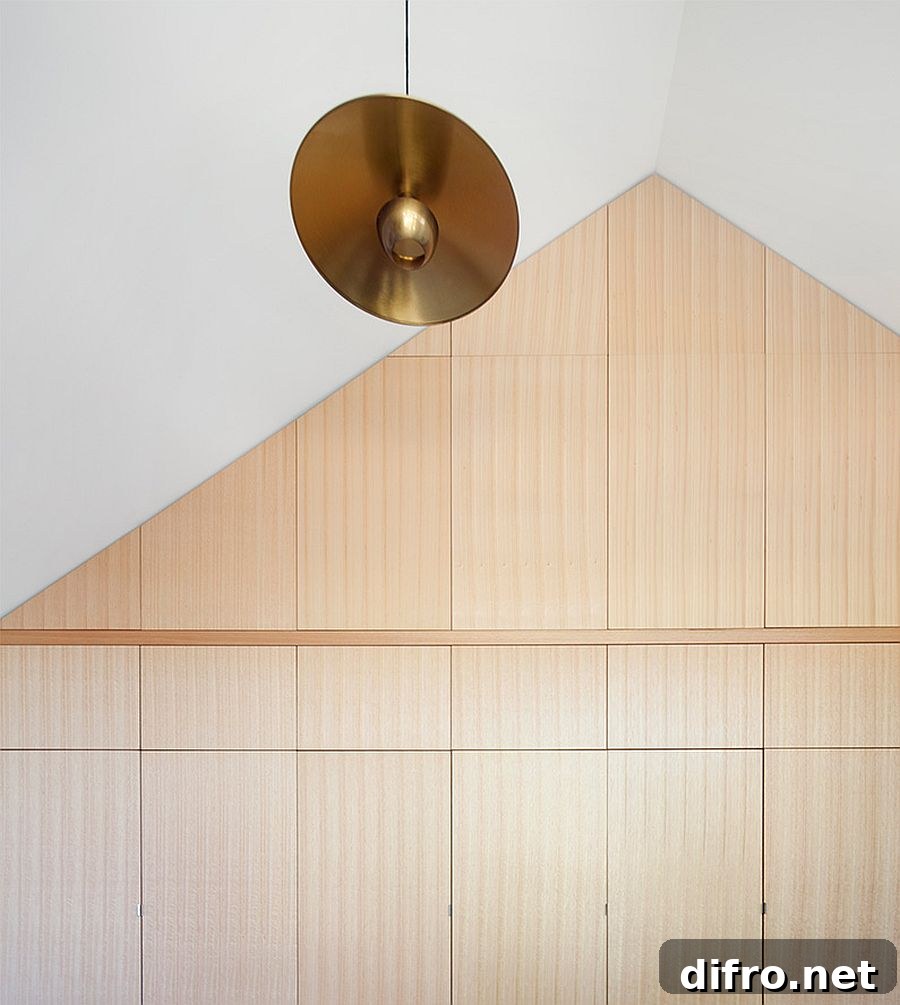
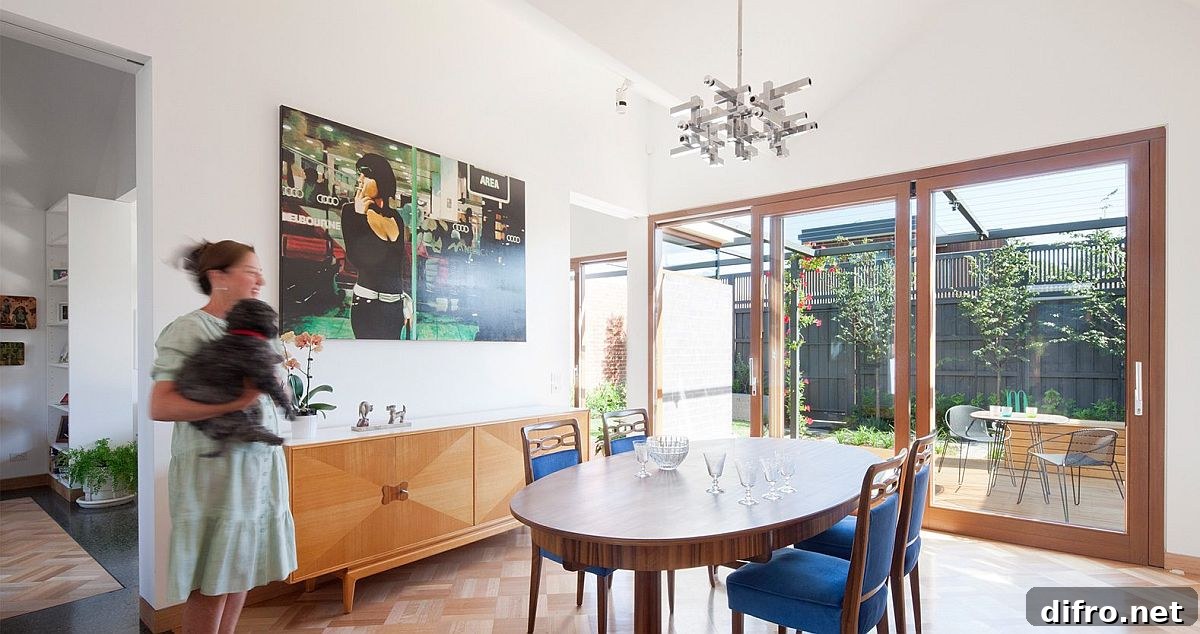
Interiors blend mid-century-modern touches with a restrained contemporary aesthetic. Cathedral ceilings in key rooms amplify volume and light, while warm timber panelling and carefully chosen furnishings—like the timber credenza and round dining table—bring texture and personality. Metallic light fittings add a refined contrast, giving certain spaces a subtle, historic reference without feeling fussy.
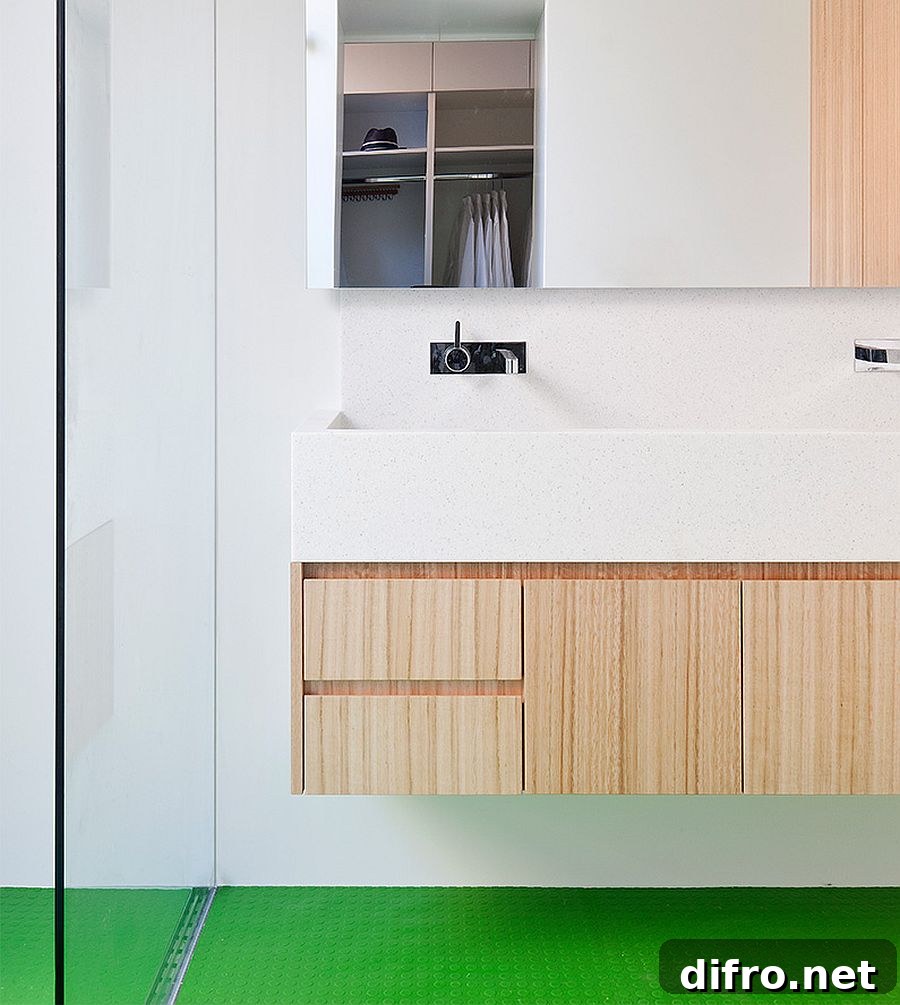
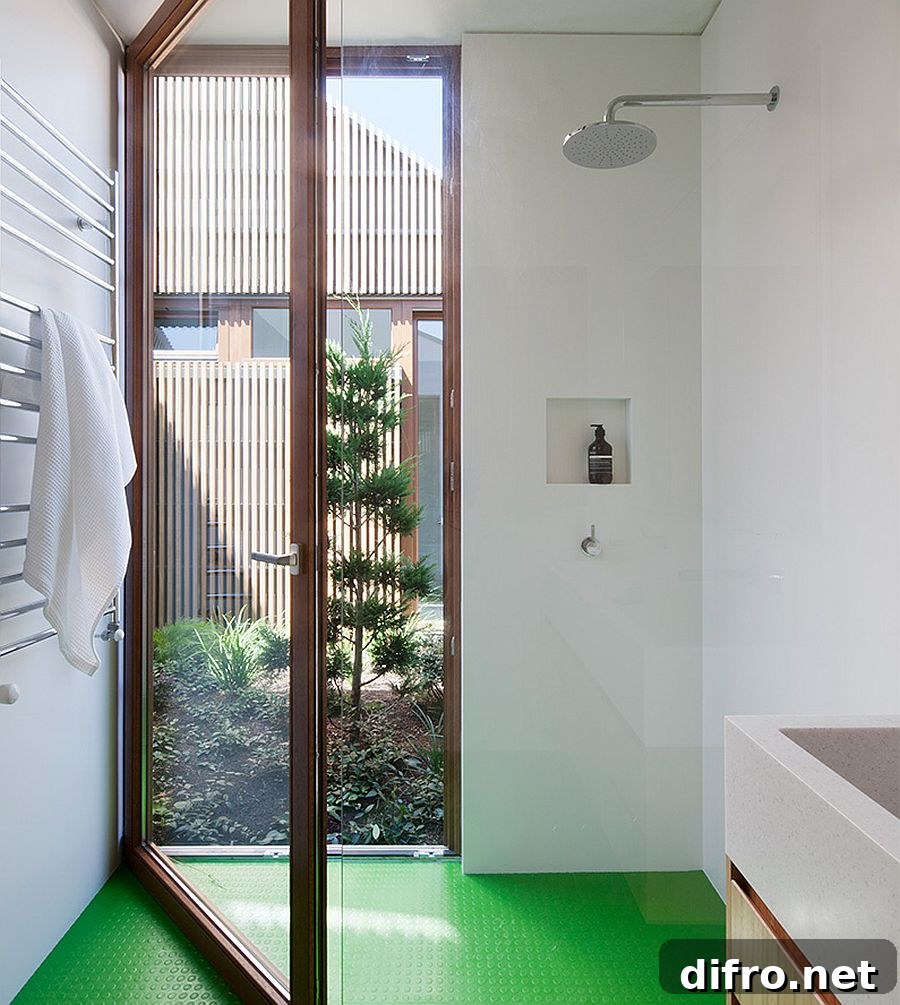
Practical details are carefully considered. Bathrooms use green, non-slip flooring and simple timber vanities that keep finishes calm and tactile. Sliding glass walls and heavyweight drapes give occupants flexible control over privacy and openness—allowing rooms to open to the gardens for seasons of outdoor living or to be enclosed for quiet, intimate moments.
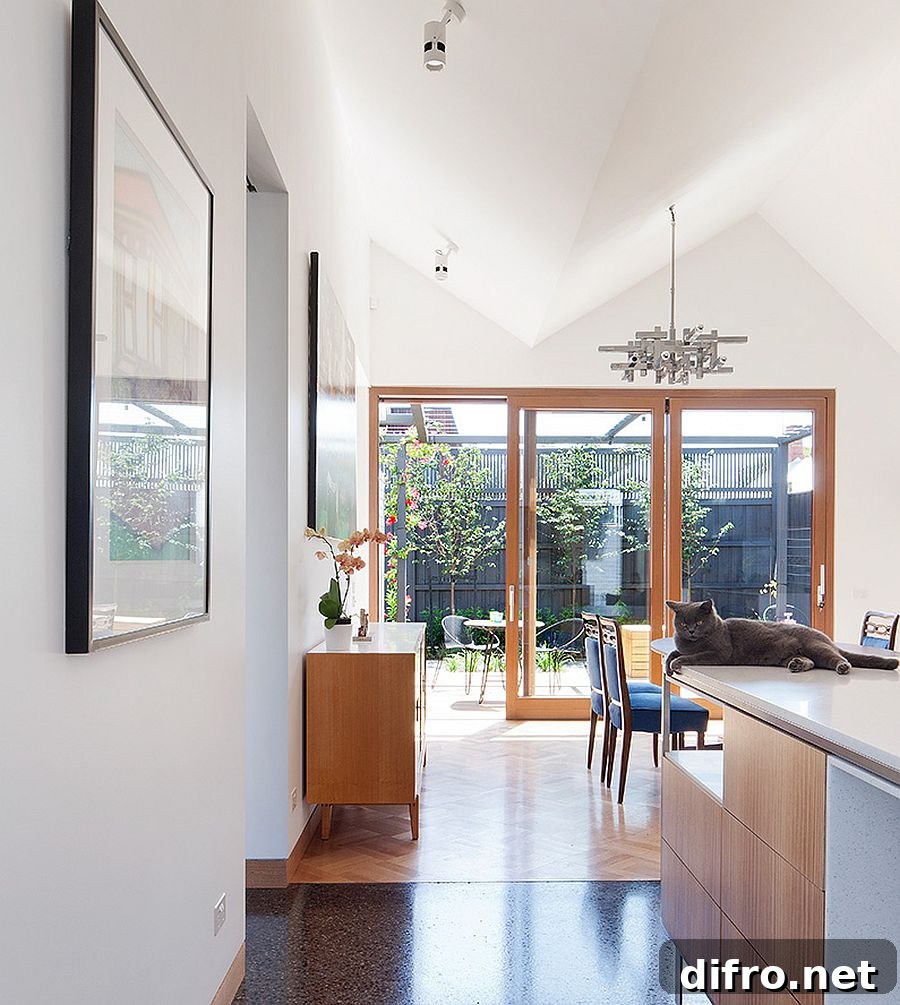
Beyond aesthetics, the home embraces understated sustainability. Passive design features keep the interior cool in summer and improve energy efficiency, while the arrangement of pavilions and courtyards encourages natural light and ventilation throughout the house. Overall, the architecture prioritizes comfort, connection to nature and a low-key, enduring appearance that feels right for its heritage setting.
Artwork, plants and carefully curated furnishings finish the interiors, reinforcing a relaxed and welcoming atmosphere. The result is a contemporary interpretation of a classic home—an intentionally composed house that reads like it has always belonged on the street, while meeting the needs of modern family life. [Photography: Shannon McGrath]