Warehouse Transformation in Barcelona: Adaptive Reuse with Modern-Industrial Design
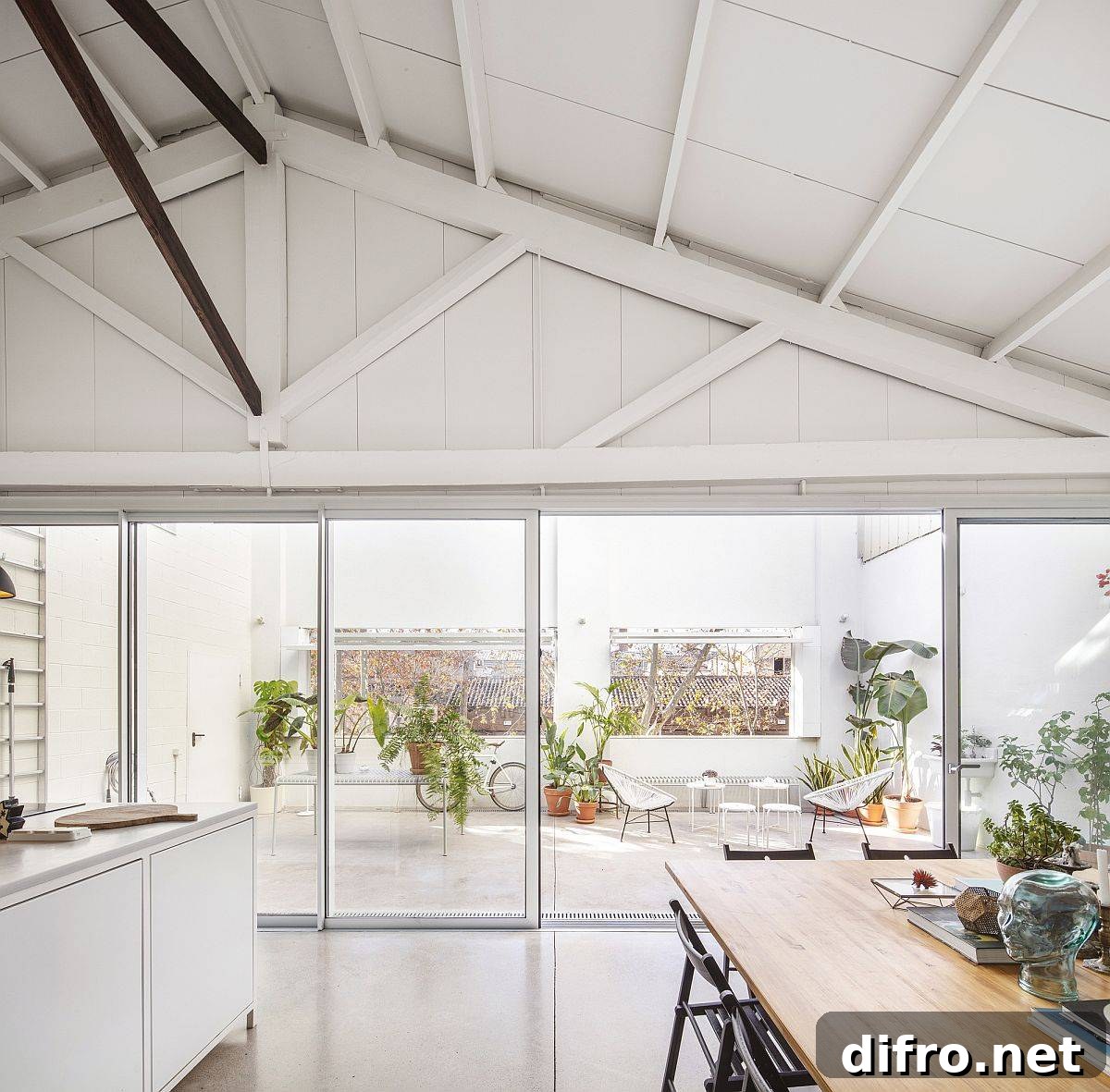
Adaptive reuse breathes new life into forgotten buildings while delivering financial, environmental and cultural benefits. This renovated warehouse in Barcelona demonstrates how careful intervention can preserve industrial character while introducing contemporary comforts: spacious workspaces, a kitchen lab, and flexible accommodation that all maintain a strong connection to the building’s past. The transformation respects original materials and structure, maximizes natural light and ventilation, and creates a comfortable, modern-industrial environment that supports both daily work and relaxed social interaction.
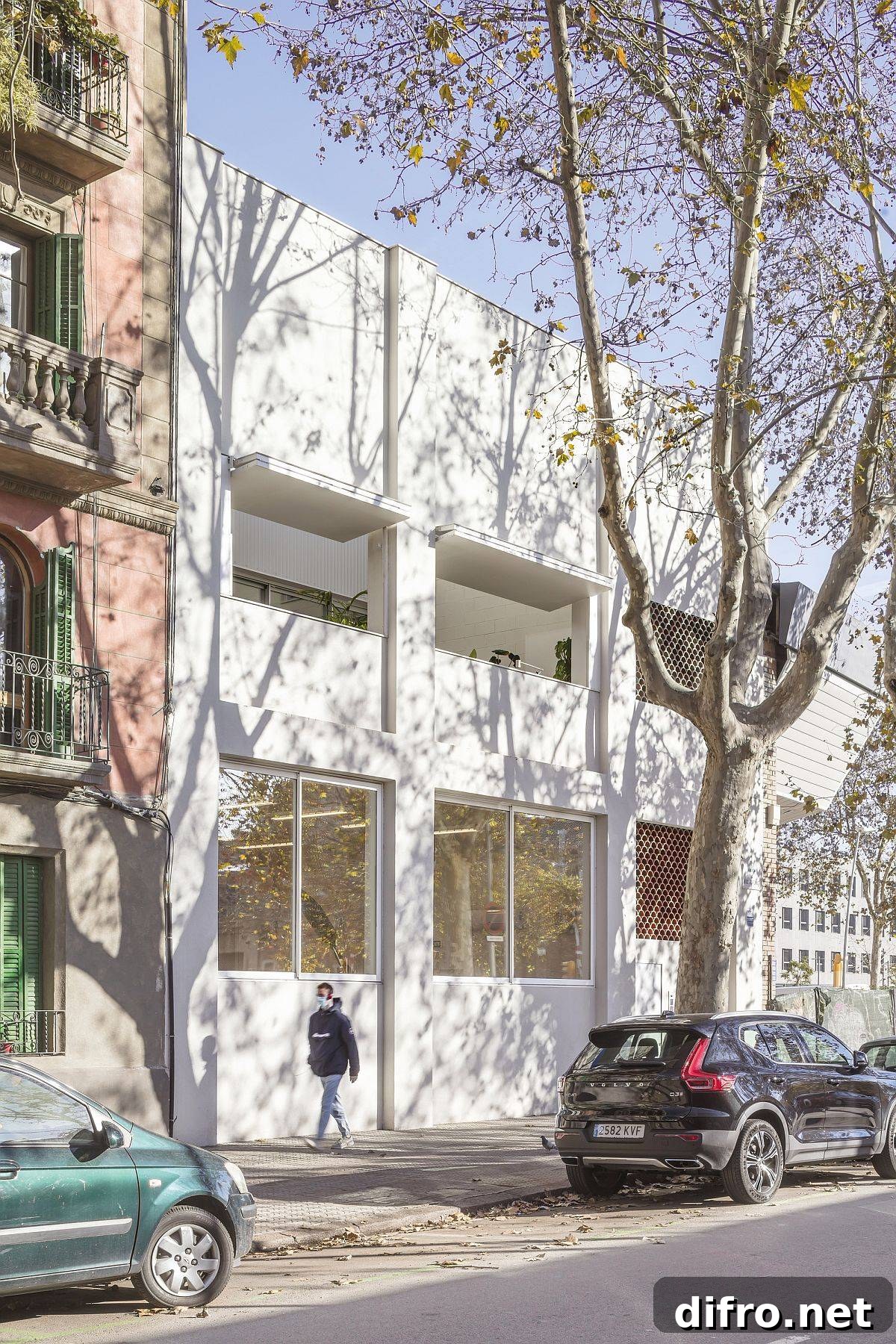
The renovation was led by architects Thomas Raynaud and Paul Devarrieux, with photography by Adrià Goula. The project prioritized retaining the warehouse’s industrial shell: peripheral brick walls, a wooden roof frame and vaulted intermediate ceilings supported by metal porticoes. Rather than erase these features, the design highlights them, setting a clean white backdrop against the original textures so the building’s history remains visible and legible within a contemporary program.
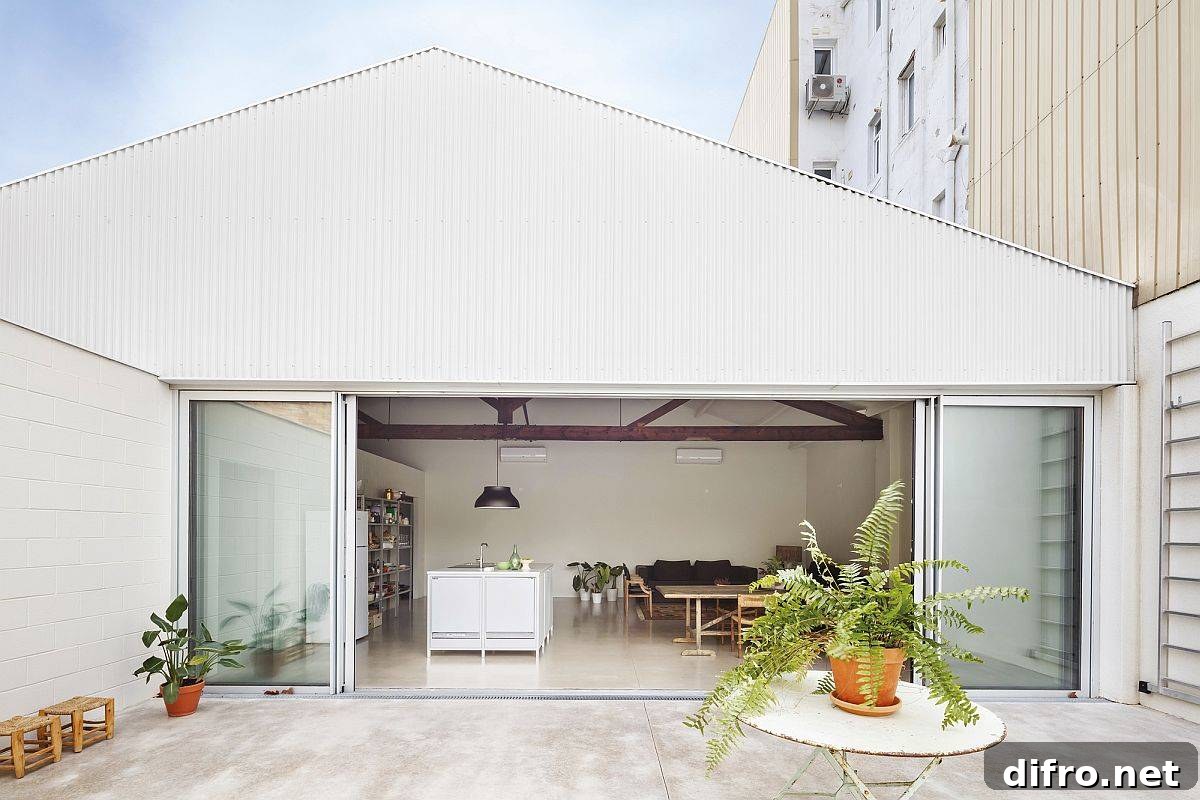
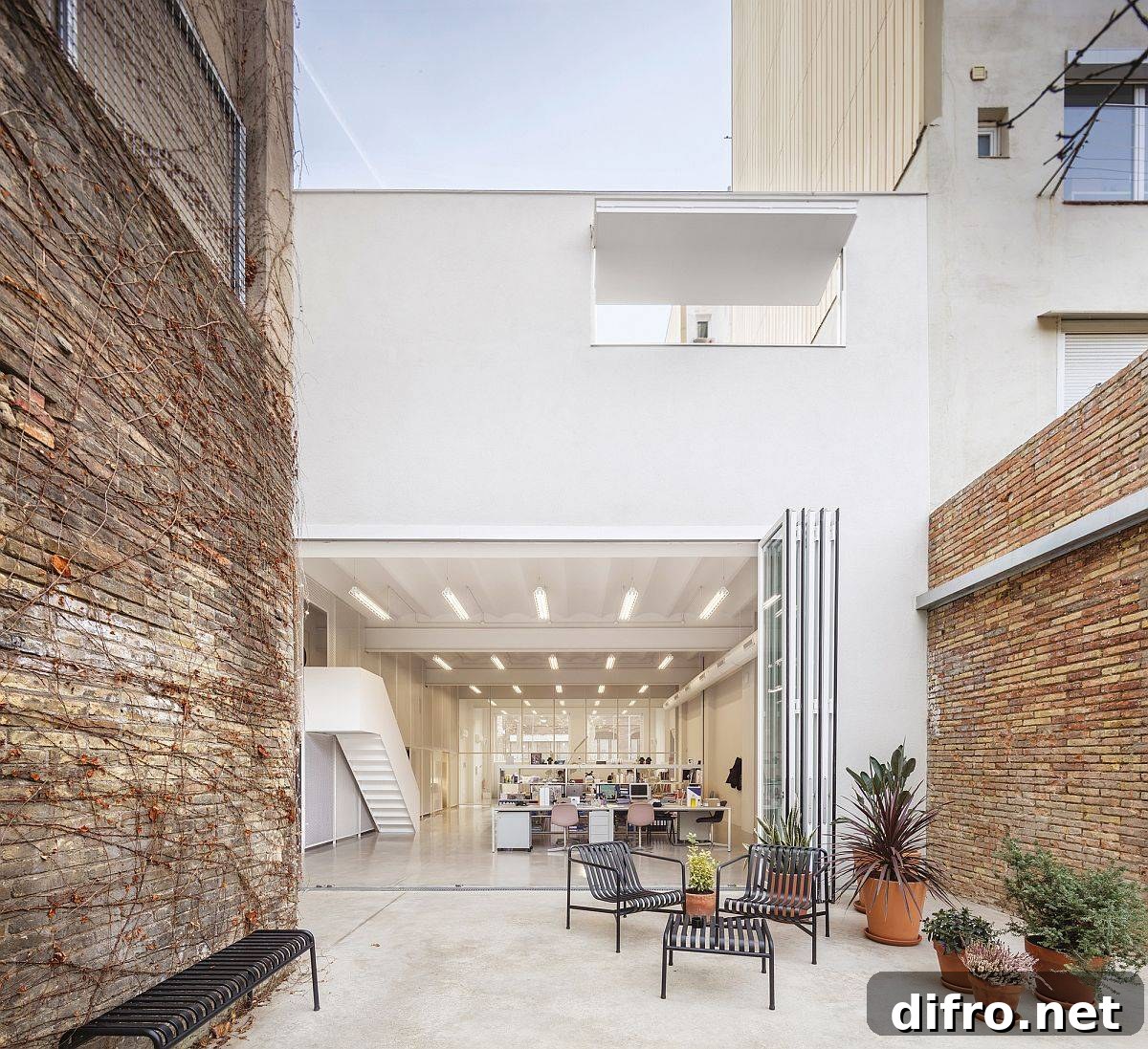
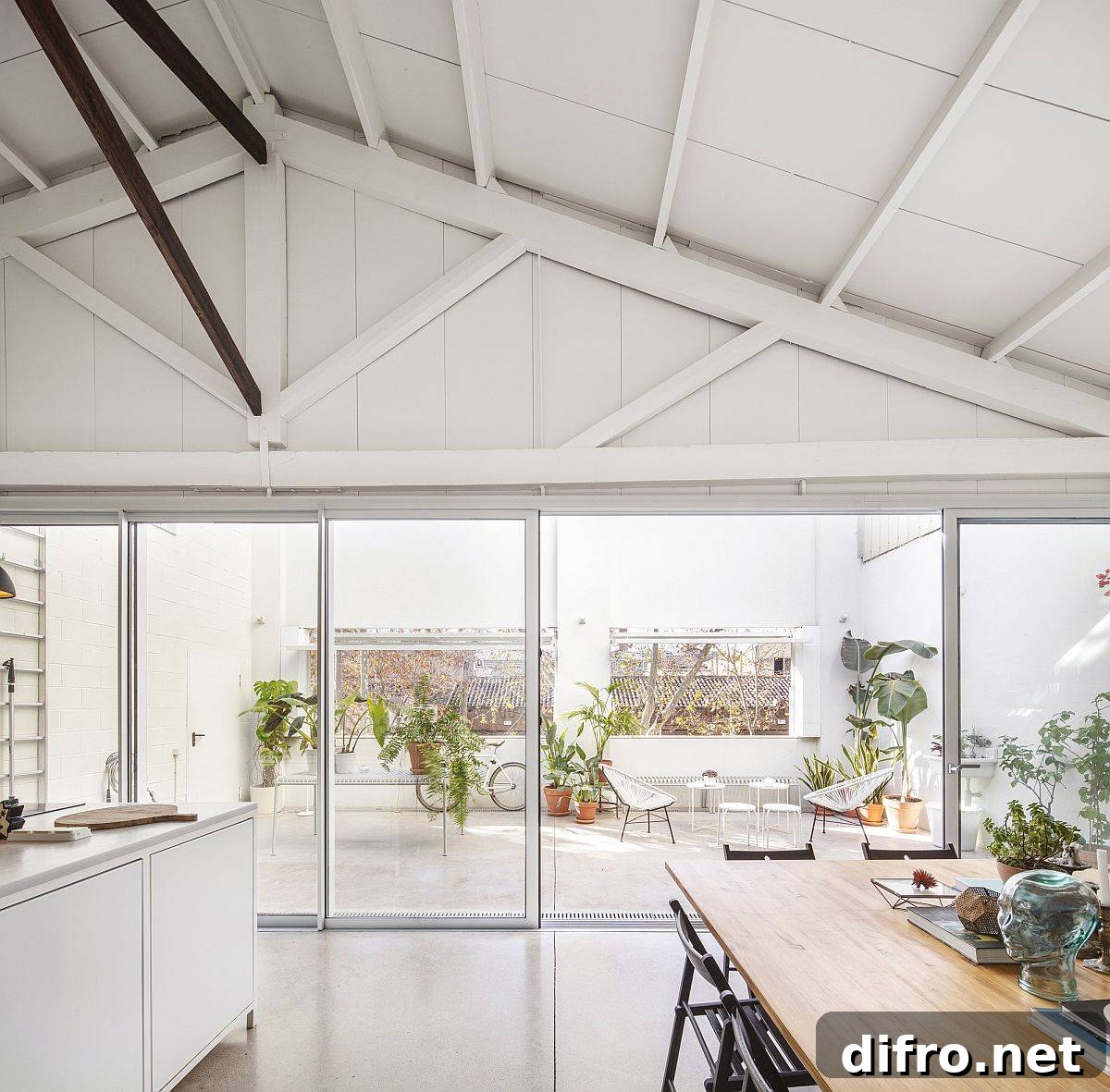
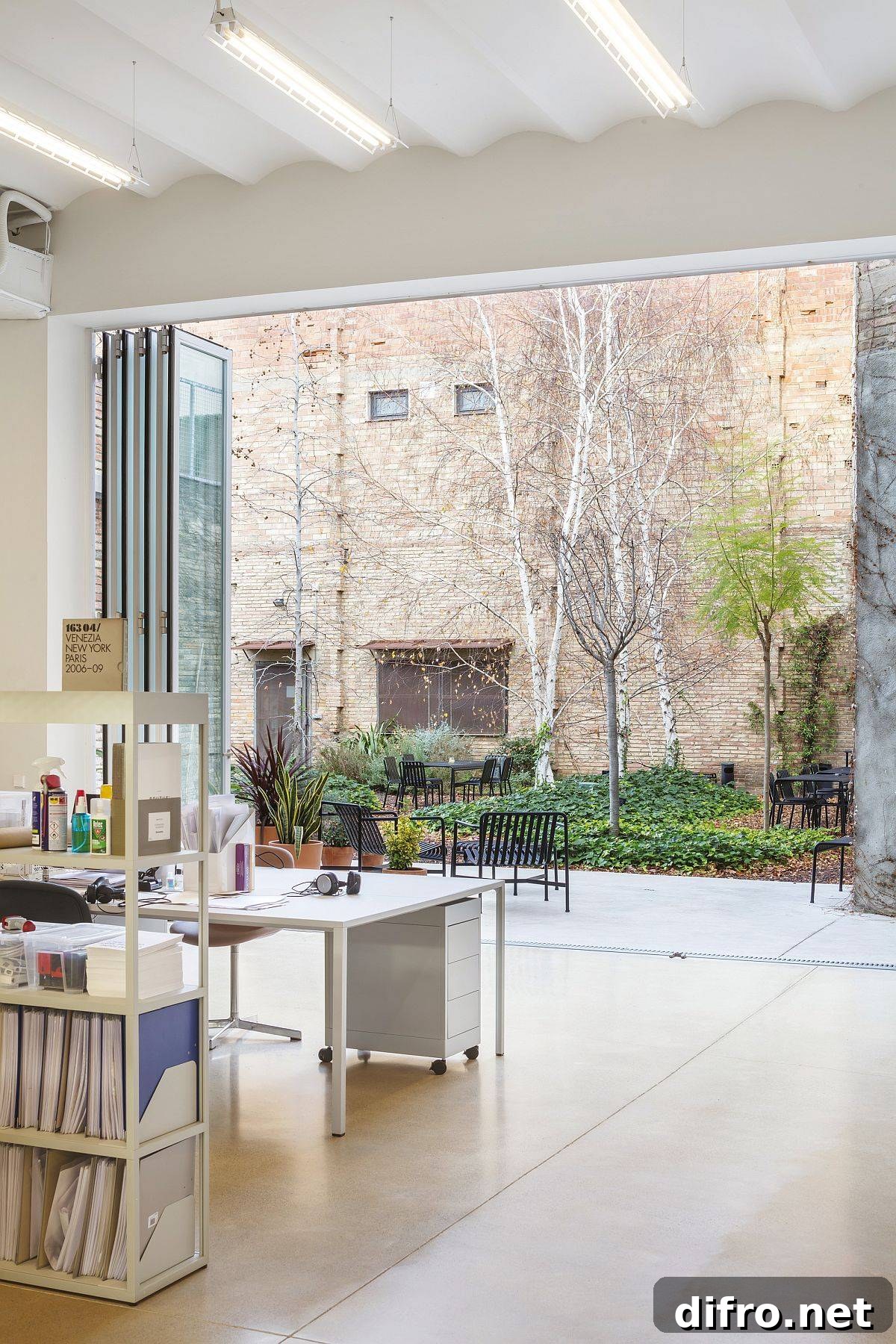
Large glazing and bifolding glass doors open the interior to the outdoors, blurring the boundary between the office and the surrounding exterior spaces. These operable facades bring abundant daylight deep into the plan and enable natural cross-ventilation, reducing dependence on mechanical systems while enhancing occupant comfort. The result is an airy, flexible workplace that feels connected to its context and responsive to seasonal conditions.
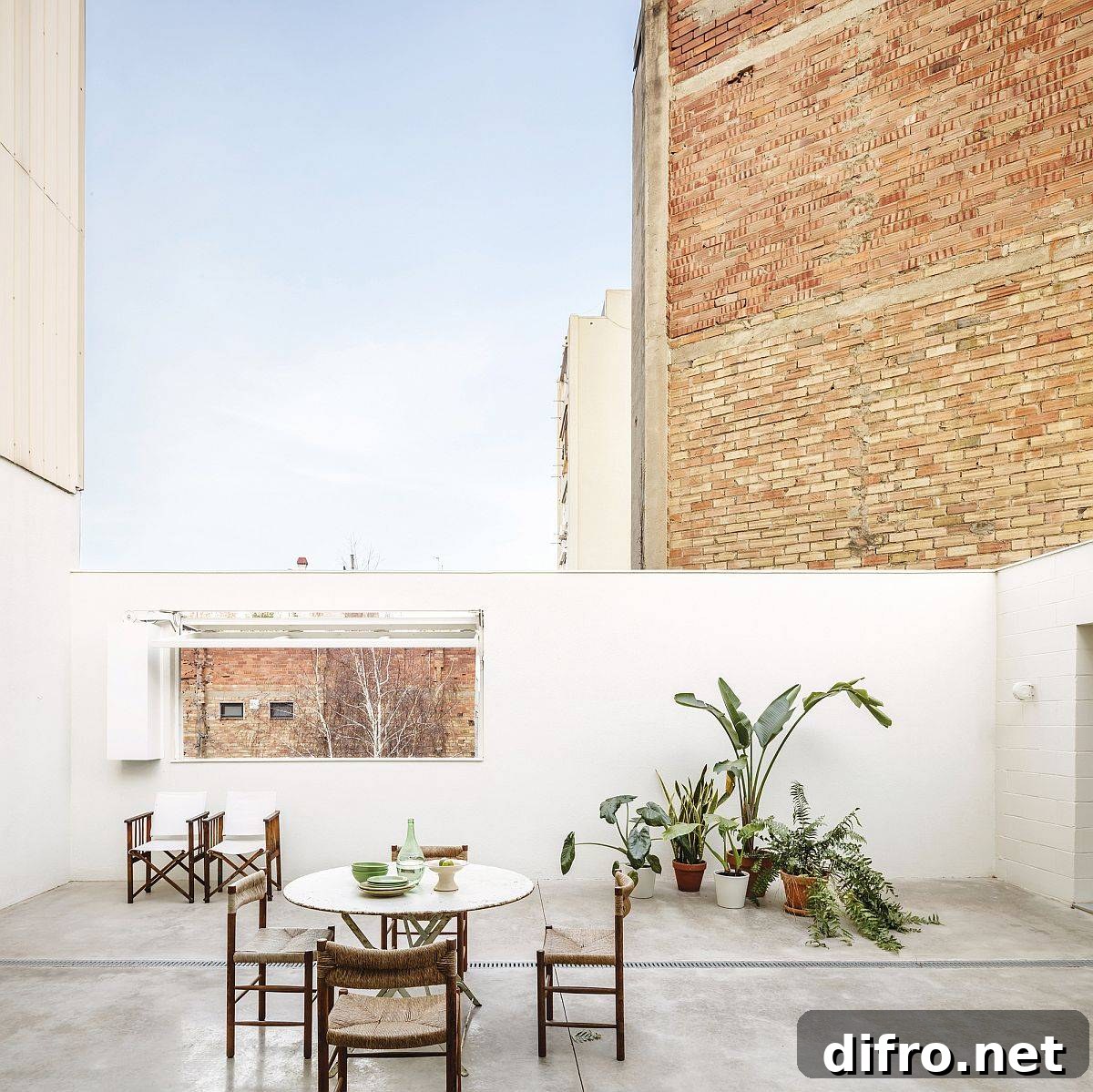
The program includes a dedicated kitchen lab that opens onto an outdoor deck, offering a place for culinary experimentation, communal meals and events. This culinary space anchors social life on the ground level and connects directly to protected outdoor areas created within the site. These terraces and decks are planted and kept intentionally simple so they complement the raw, tactile qualities of the warehouse rather than compete with them.
Within the interior, metal mesh frames and partitions are used to delineate public areas from quieter office zones. These lightweight demarcations retain visual permeability while providing a clear organization of spaces, circulation and program. The careful use of metallic elements contrasts with the warm tones of brick and timber, reinforcing the building’s industrial identity while introducing refined, modern detailing.
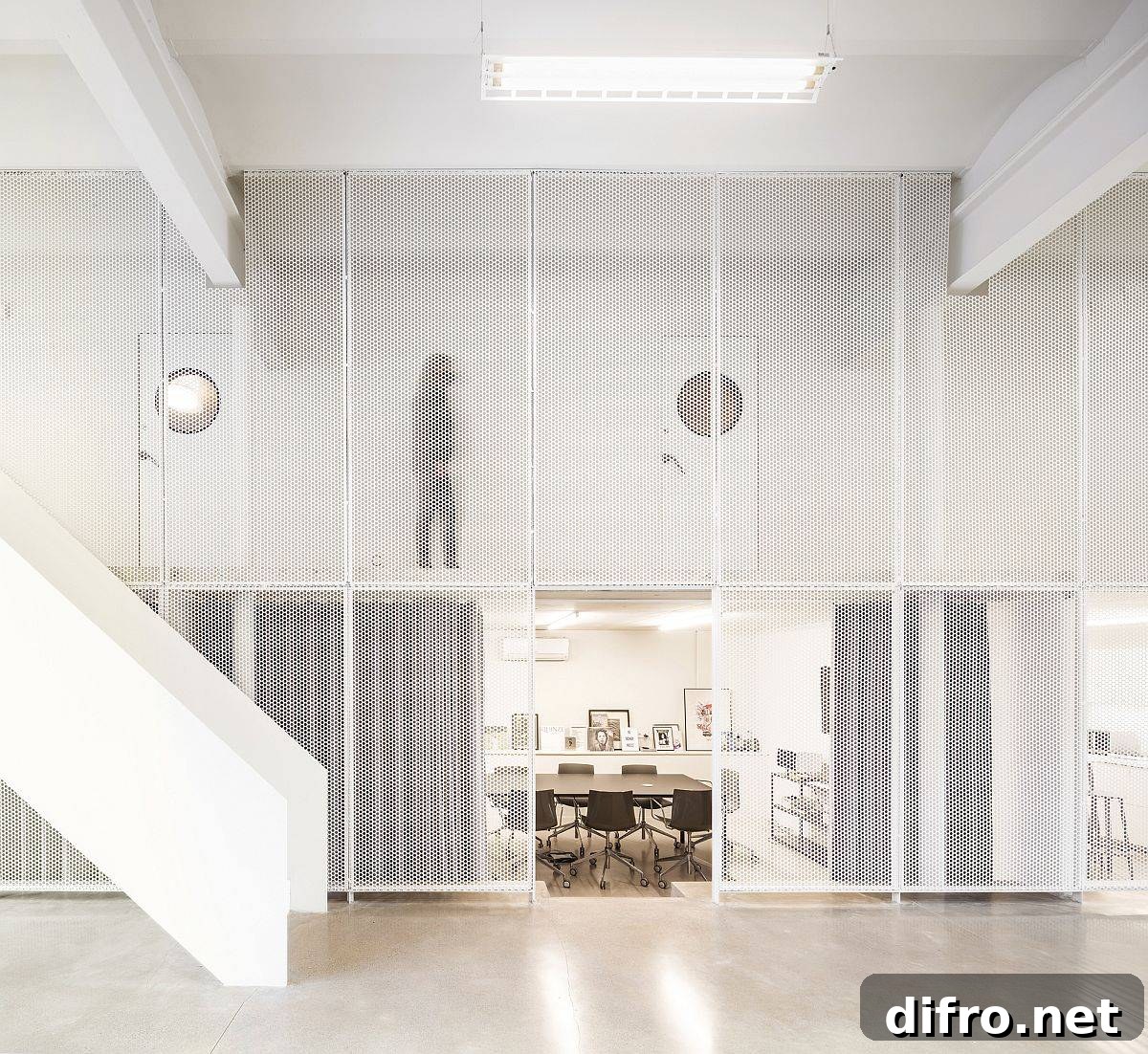
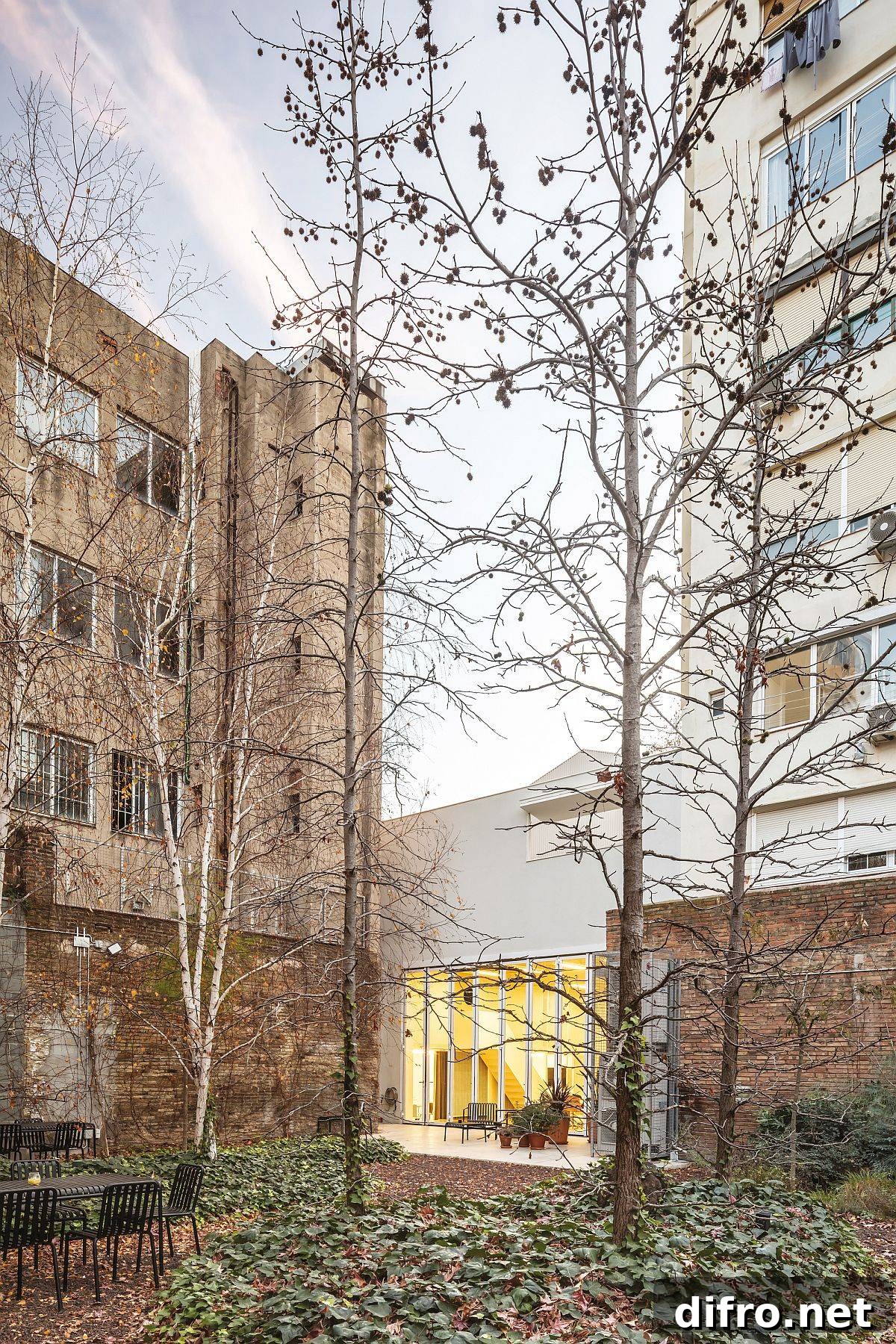
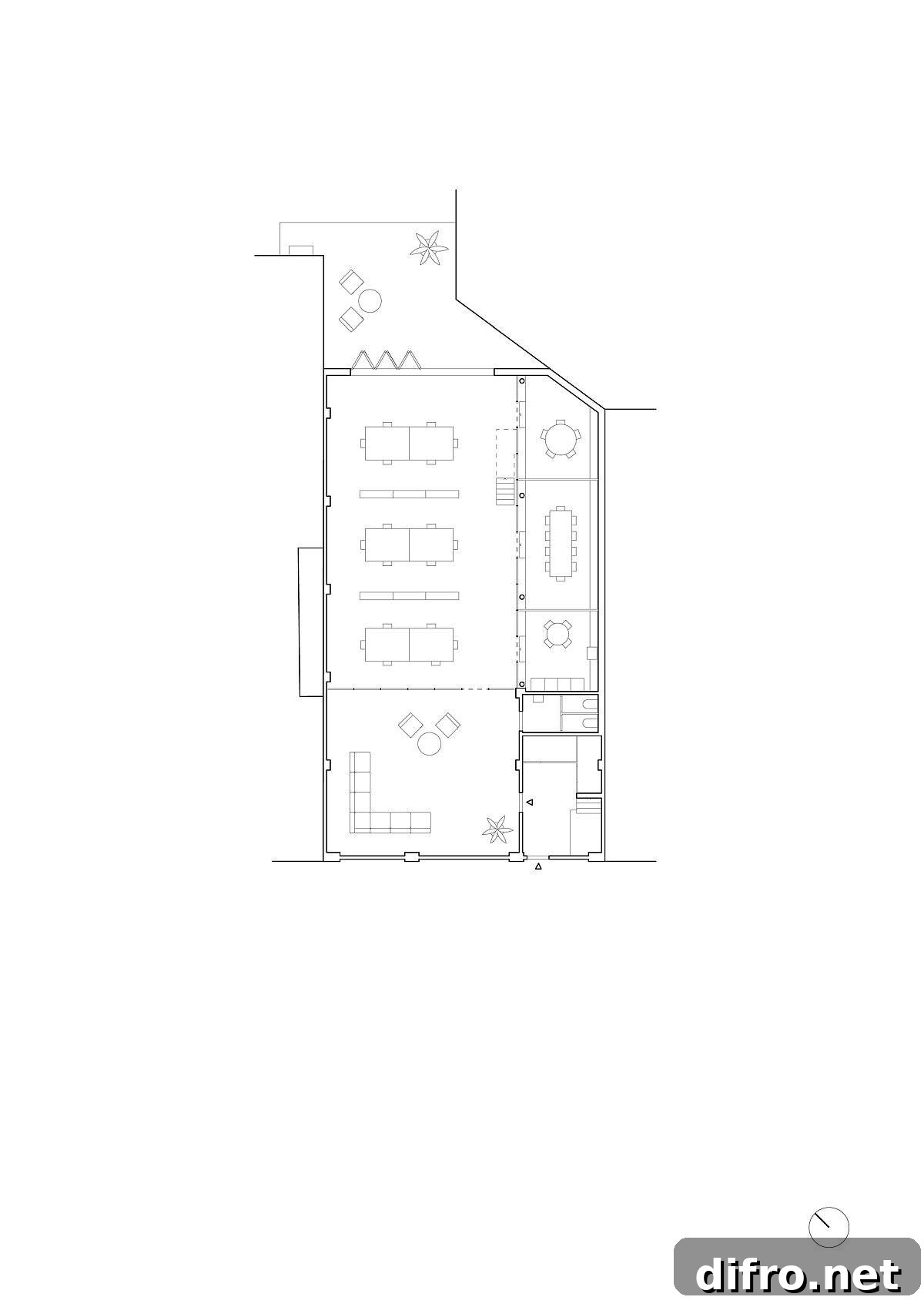
The existing structure consists of peripheral brick walls holding up a wooden roof frame and sheltering an intermediate floor made up of vaulted brick ceilings supported by metal porticoes. Emphasizing this idea of structural embeddings, the servant strip consists of a fully independent post-slab structural system. The plan is divided into two strips: a narrow one, in the extension of the existing staircase, accommodating small rooms – a large one accommodating big rooms.
The ground floor opens into a generous, light-filled office area with high ceilings and clear sightlines, creating a versatile workspace suited to collaborative and individual activities. Natural materials paired with a minimalist white palette enhance luminosity and focus attention on the original structural features. The plan is organized to accommodate both concentrated work areas and communal zones, providing balance between productivity and social interaction.
This project exemplifies the value of adaptive reuse: preserving cultural memory, reducing material waste and creating engaging contemporary spaces without erasing historical character. By combining careful conservation with strategic new insertions—clear glazing, mesh partitions, a kitchen lab and sheltered outdoor spaces—the architects achieved a balanced, sustainable refurbishment that celebrates the past while serving present-day needs.
Photography: Adrià Goula