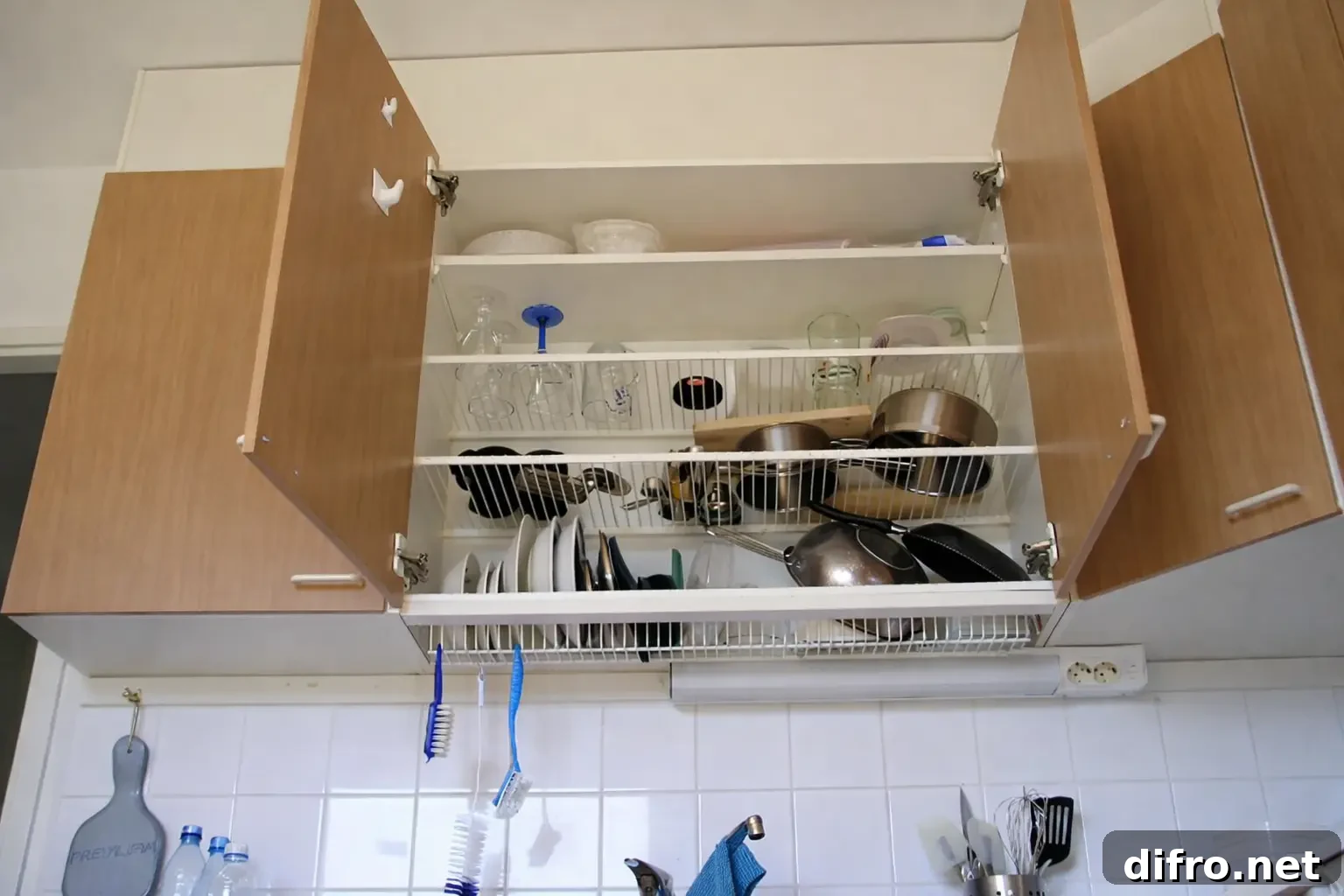
Finnish kitchens perfected a compact, highly efficient solution to a universal problem: what to do with wet dishes. The astiankuivauskaappi, an in-cabinet dish drying rack developed in the mid-20th century, tucks drying dishes out of sight and out of the way. Praised by design and lifestyle authorities, this simple, time-tested idea makes the most of limited counter space and supports a tidy, minimalist kitchen aesthetic.
A Practical Invention Rooted in Efficiency
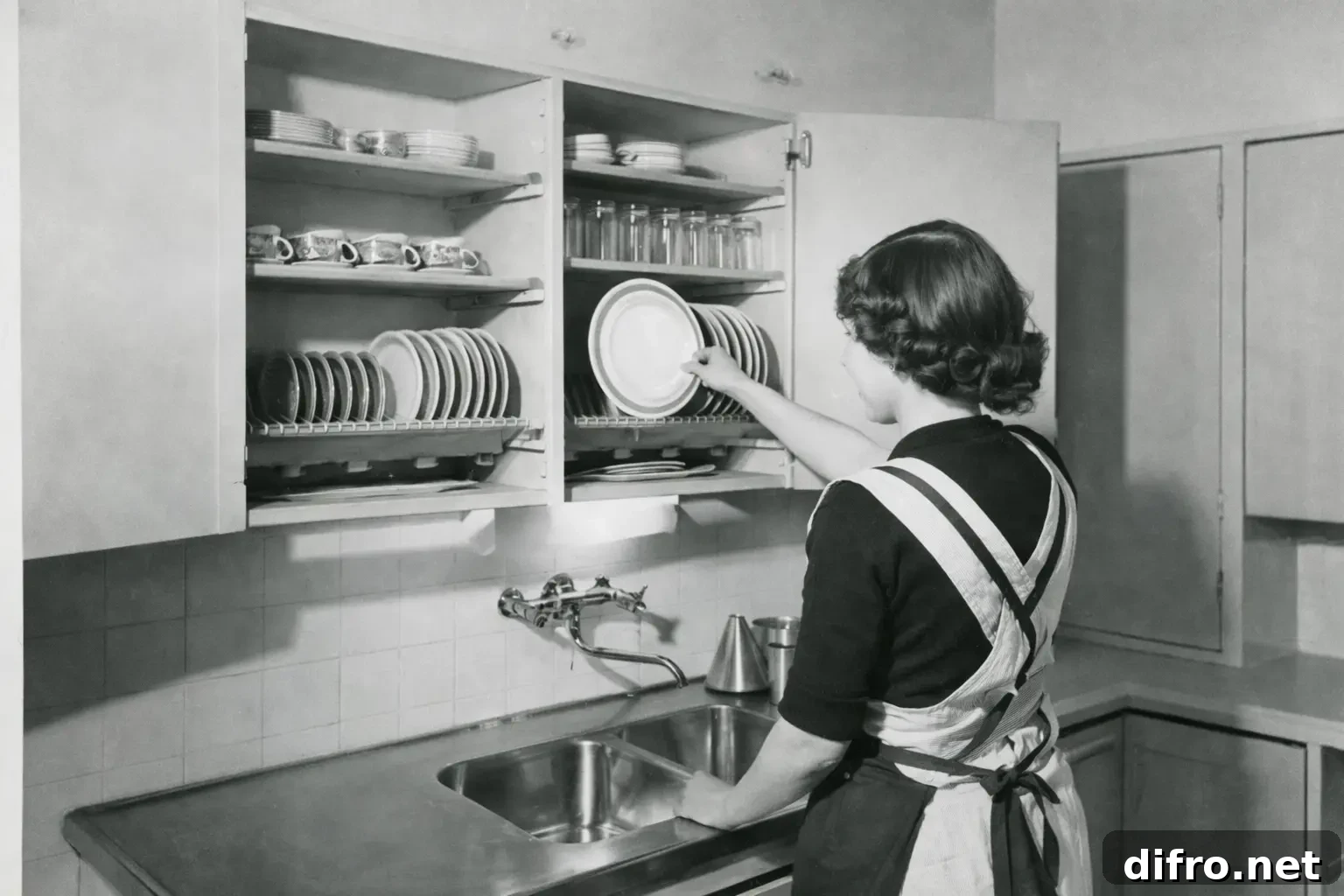
The concept was developed by Maiju Gebhard while she led the household department at the Finnish Work Efficiency Institute. Introduced in the 1940s, the in-cabinet drying cabinet aimed to simplify the repetitive chore of hand-drying dishes. Gebhard’s insight was to address the real bottleneck in kitchen workflow: not washing, but drying and putting dishes away.
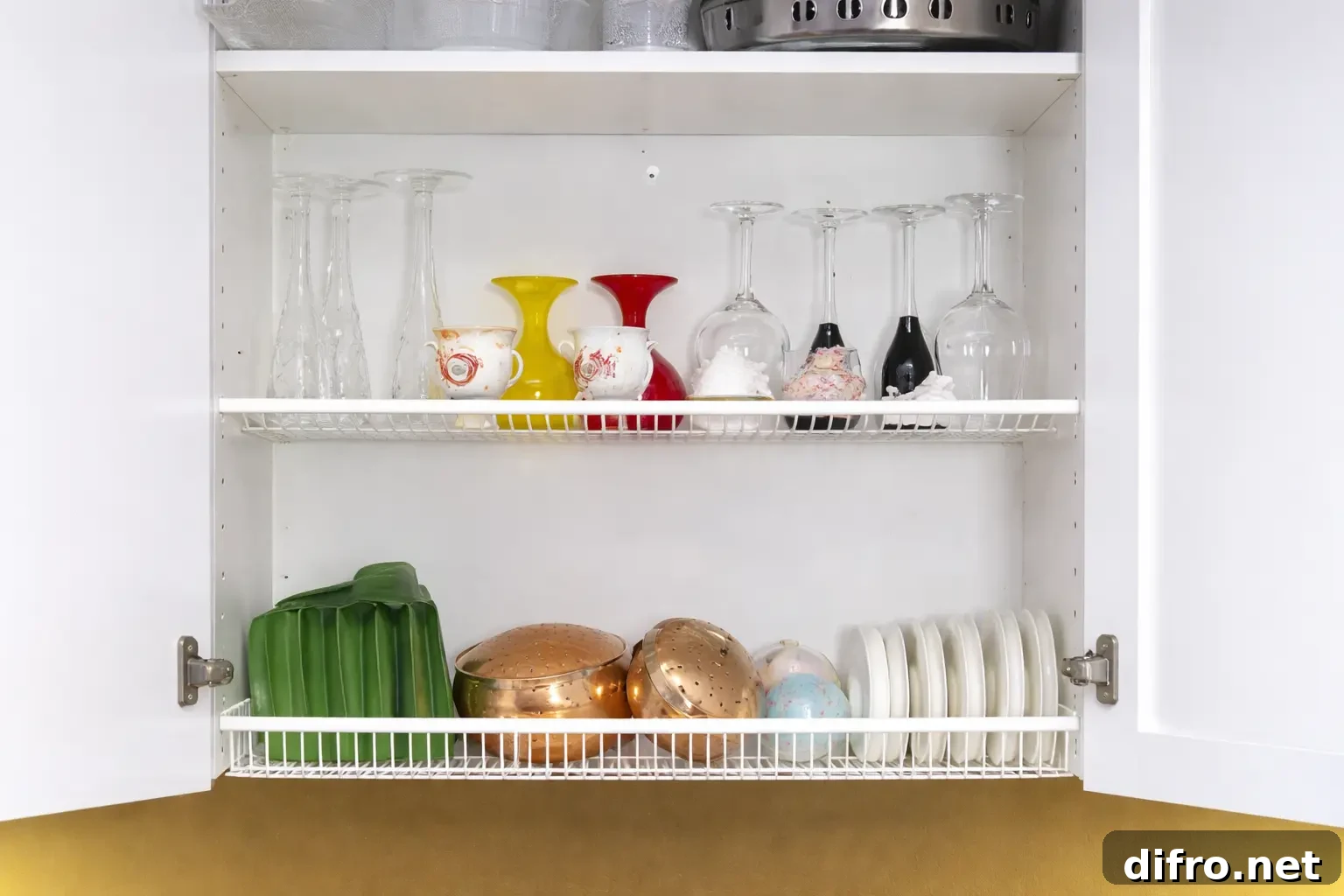
The original design used an open-bottom cabinet with wire shelves positioned above the sink. This placement allows water to drip directly into the sink and leverages natural air circulation to dry dishes. Early wooden prototypes later evolved into standardized, mass-produced units with plastic-coated steel racks. Over time the design became a hallmark of Finnish kitchen practicality and spread as a sensible alternative to countertop drying solutions.
Why an In-Cabinet Rack Improves Modern Kitchens
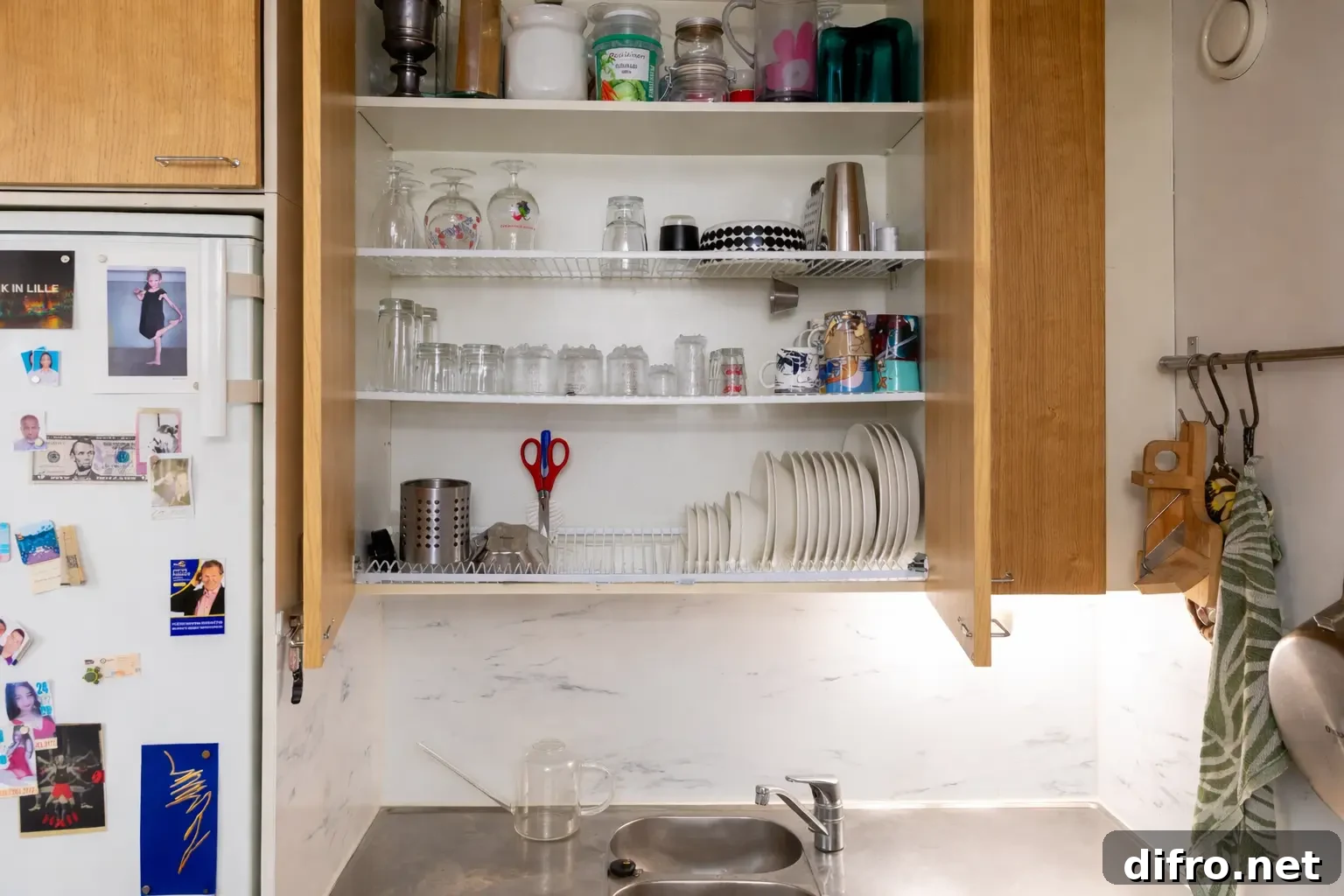
Traditional countertop racks take up valuable workspace. The Finnish approach hides the drying process behind a cabinet door, keeping counters clear and the kitchen looking organized. The advantages are practical and immediate:
- Maximized Counter Space: Especially useful in compact apartments and small kitchens where every inch of prep area counts.
- Improved Hygiene: The open-bottom design prevents stagnant water from collecting under a plastic tray, reducing the risk of mold and bacterial growth.
- Simplified Workflow: Dishes are moved once—from sink to rack—and left to dry until they are needed again, streamlining the put-away process.
Design Tip: To preserve a minimalist look while ensuring airflow, consider cabinet doors with a small ventilation gap or a breathable mesh insert so dishes remain out of sight but can still dry properly.
How to Add an In-Cabinet Drying Rack to Your Kitchen
You don’t need a full kitchen remodel to adopt this system. There are several practical routes to integrating an astiankuivauskaappi:
1. Convert an Existing Wall Cabinet
The most authentic approach is to remove the bottom panel of a wall cabinet located directly above the sink and install stainless steel wire shelves. The shelves should be angled or slotted so water drains directly into the sink. This conversion retains hidden storage while providing the original gravity-drain benefit.
2. Work Around a Window
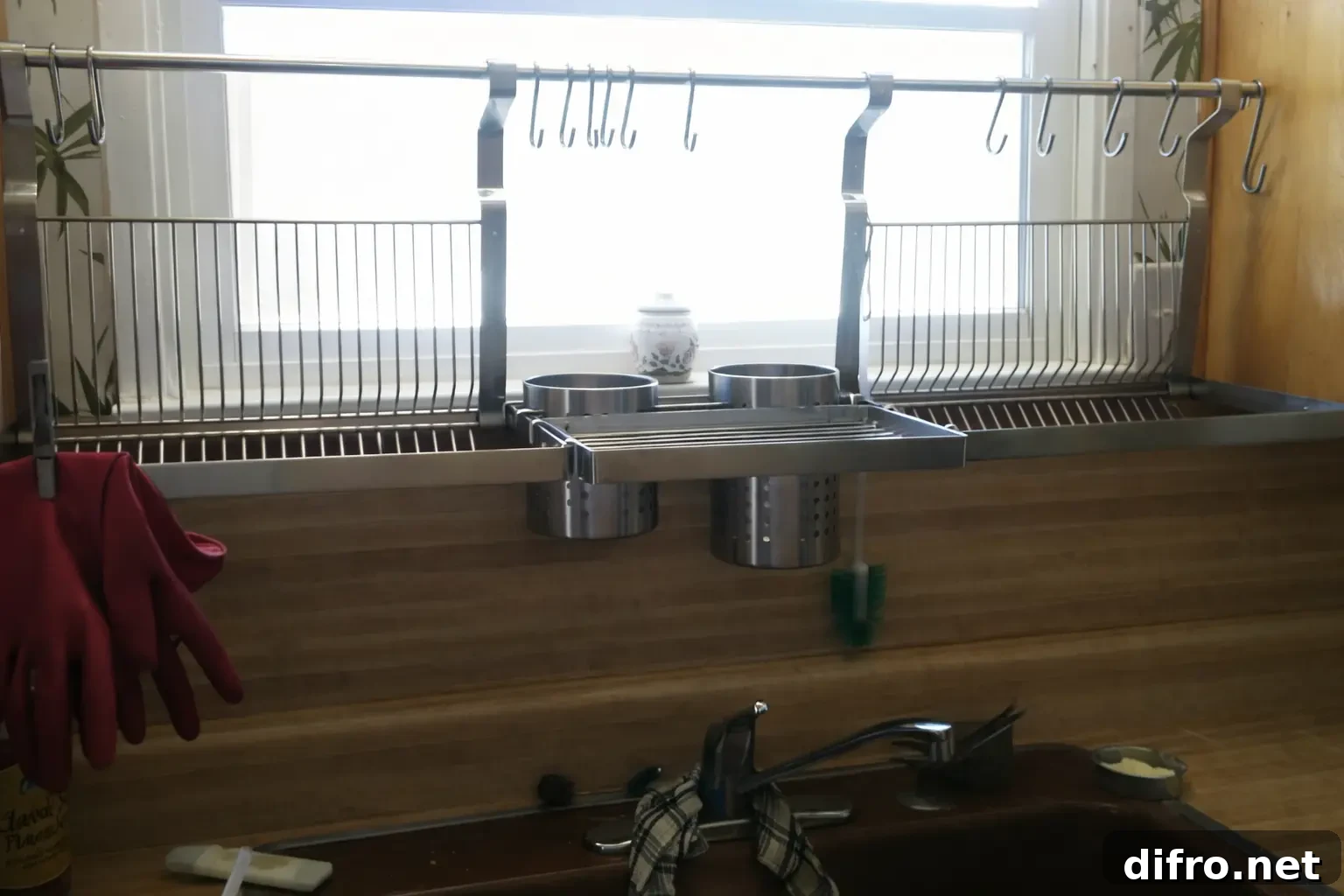
If a window sits above the sink, a full cabinet above it isn’t possible. In that case, mount the drying rack to the side wall near the sink or fit a drain-tray model inside a standard cabinet. If you use a tray inside a closed cabinet, empty it frequently to prevent moisture from damaging wood surfaces.
3. Install Custom or High-Quality Inserts
For a refined look and long-term durability, use stainless steel rods or custom metal inserts rather than inexpensive chrome-plated wire. Choose 304-grade stainless steel for wet environments to avoid corrosion and maintain a clean appearance over years of use.
Common Mistakes and Maintenance Advice
- Ventilation is essential: Closing cabinet doors when dishes are very wet can trap moisture. Ensure the design allows air to circulate—an open bottom, vented doors, or a small gap will prevent condensation buildup.
- Choose durable materials: Avoid cheap chrome-plated racks that can peel or rust. Opt for quality stainless steel to withstand constant exposure to water.
- Check placement carefully: Position the lowest shelf so it clears the faucet while remaining reachable for all household members. Proper height avoids spills, awkward reaching, and usability problems.
With thoughtful planning and attention to materials and ventilation, the in-cabinet drying rack is an elegant, low-maintenance upgrade. It preserves countertop space, improves kitchen hygiene, and supports a calmer, more efficient workflow—qualities that make the astiankuivauskaappi as relevant in contemporary kitchens as it was when first invented.