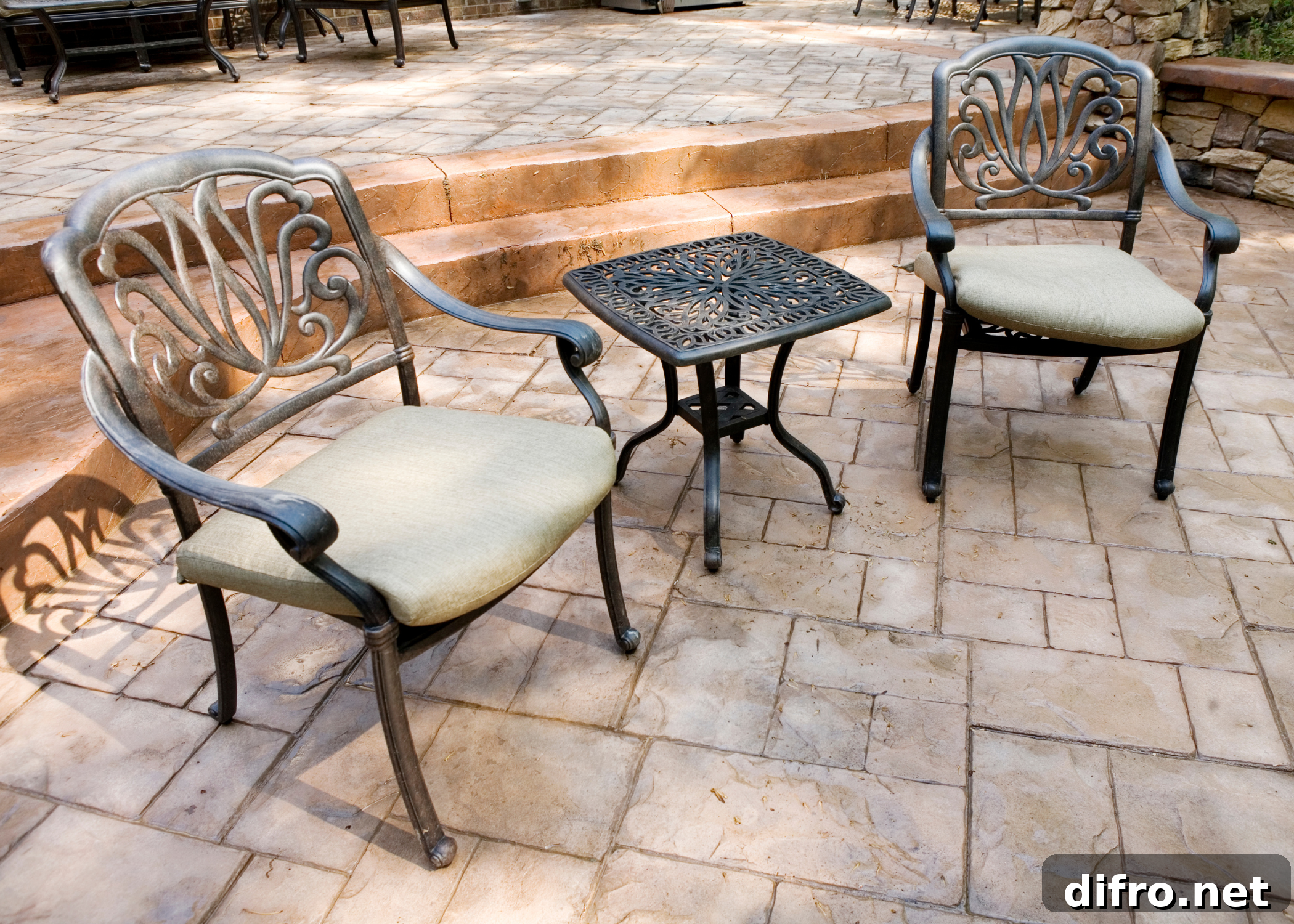
When enhancing outdoor living areas, a stamped concrete patio is a highly versatile and attractive choice. Combining durability, cost-effectiveness, and visual appeal, stamped concrete—also called patterned or textured concrete—uses molds pressed into freshly poured concrete to imitate natural materials such as stone, brick, slate, or even wood. Whether your goal is a calm backyard retreat, a lively entertainment space, or an elegant extension of your home, a stamped concrete patio can increase both the beauty and value of your property.
This article explores the advantages, design possibilities, installation steps, maintenance needs, cost considerations, environmental impact, and contractor selection tips for stamped concrete patios. Use this guide to decide whether stamped concrete is the right option for your outdoor living project.
Benefits of a Stamped Concrete Patio
Stamped concrete offers outstanding aesthetic flexibility. It can replicate premium materials at a fraction of the cost while delivering a high-end look. Homeowners can choose from numerous patterns, textures, and colors to coordinate with landscaping and architectural styles. Beyond looks, stamped concrete is prized for its durability: when properly installed and maintained, it tolerates heavy foot traffic, exposure to the elements, and long-term wear.
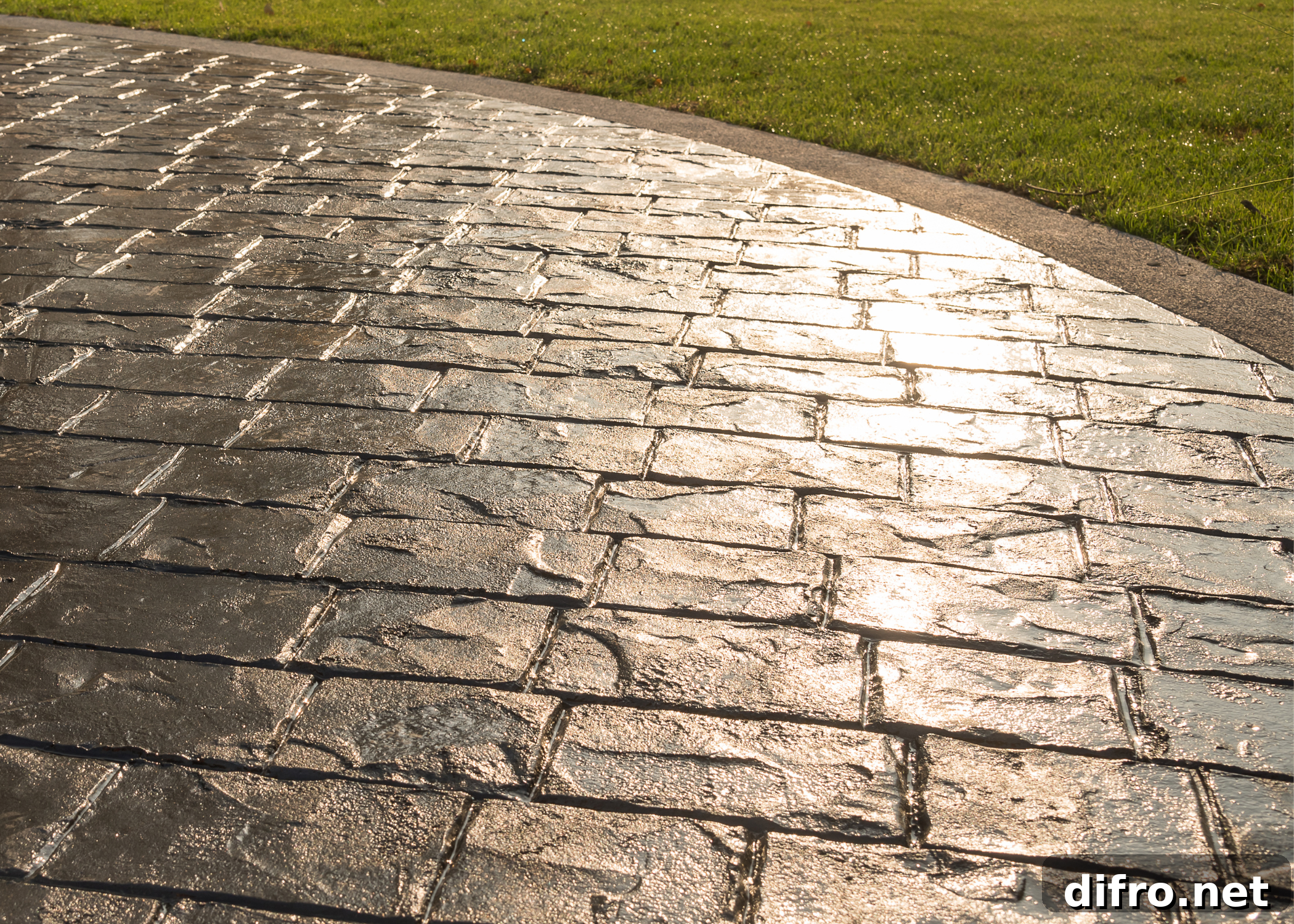
Stamped concrete is also relatively low maintenance compared with some natural materials, and its longevity often means lower lifecycle costs. Customization options let homeowners create unique layouts, borders, and focal points that fit personal taste and outdoor usage needs.
Design Options for Stamped Concrete Patios
Design flexibility is one of the strongest selling points of stamped concrete patios. Patterns range from traditional brick and cobblestone to contemporary geometric or slate looks. Options such as herringbone, stacked stone, or reclaimed wood impressions allow for targeted styles. Color selection is broad as well—earth tones, terracotta, charcoal, and tinted mixes can either blend with natural surroundings or provide contrast against your home’s exterior.
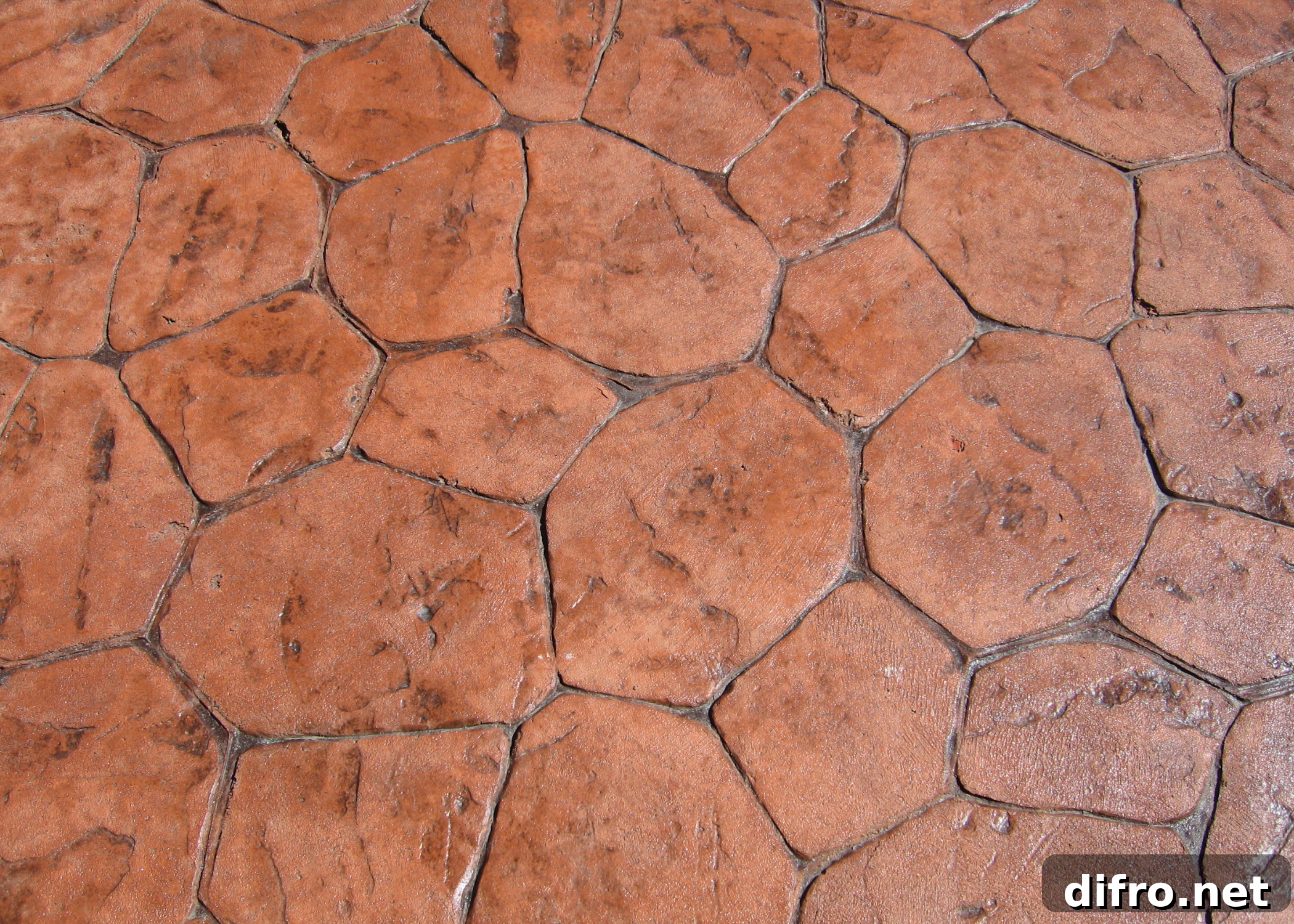
For a distinctive effect, consider combining different patterns or creating decorative borders and inset accents. Professional color hardeners, integral pigments, or surface stains can be used alone or together to achieve layered, natural-looking finishes that mimic stone or aged materials.
Installation Process
Installing a stamped concrete patio requires careful preparation and experienced execution. Key installation steps include site excavation, grading for proper drainage, and setting formwork. Concrete is poured, leveled, and smoothed before stamping. While the concrete remains workable, durable rubber or polyurethane stamps are pressed into the surface to create the chosen pattern and texture.
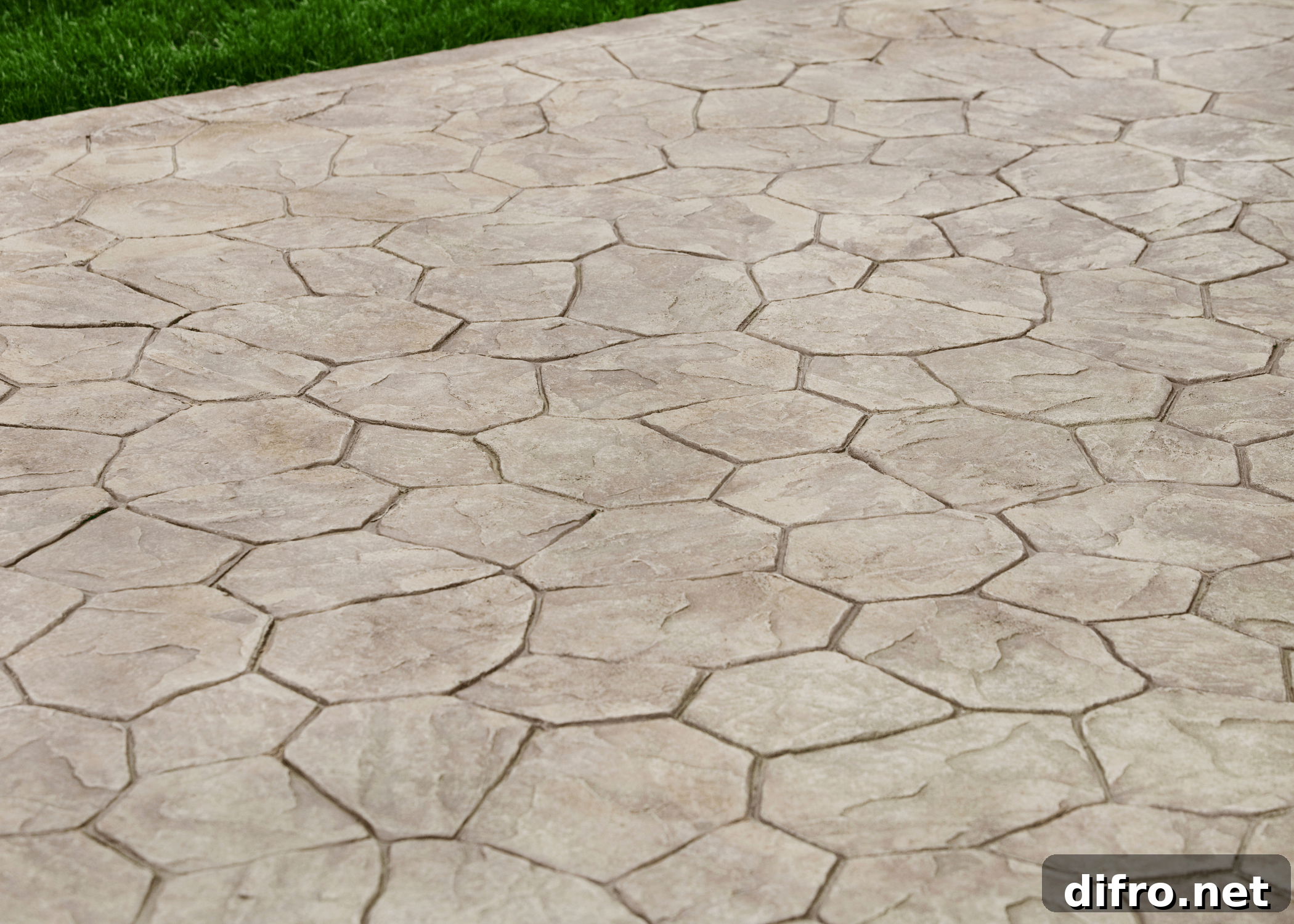
Color can be added through integral pigments mixed into the concrete, a dry-shake color hardener applied to the surface, or topical stains. Once the surface has cured sufficiently, a clear or tinted sealer is applied to protect against moisture, stains, and UV degradation. Because timing, weather, and technique strongly influence the final look, hiring skilled professionals is generally recommended to achieve consistent, long-lasting results.
Maintenance Tips for Stamped Concrete Patios
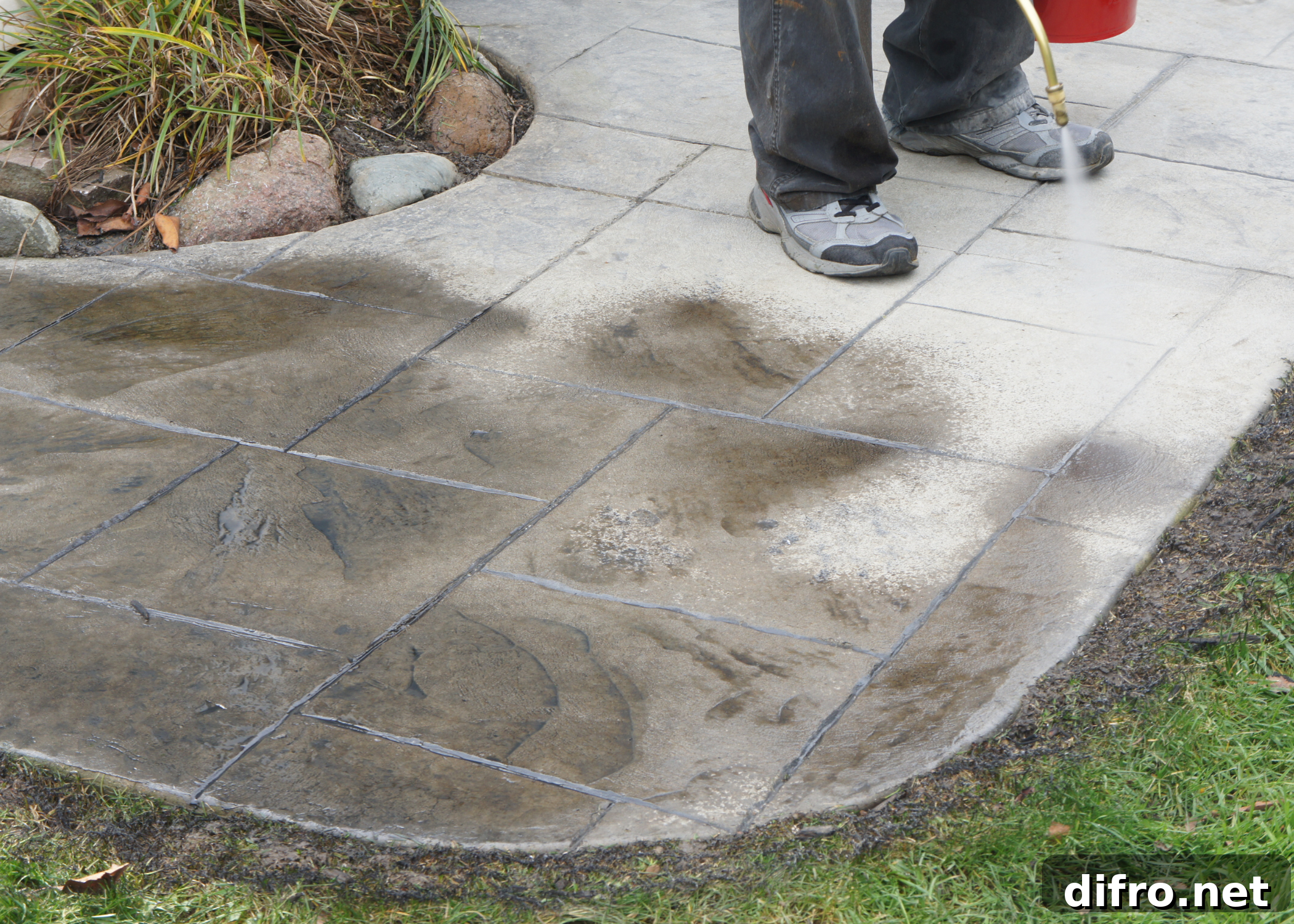
Caring for a stamped concrete patio is straightforward but important to preserve appearance and performance. Regular sweeping or rinsing with a garden hose removes dirt and debris. For deeper cleaning, use a mild detergent and a soft-bristle brush; pressure washing can be effective if applied carefully. Reapply a quality sealer every two to three years to protect against staining, moisture infiltration, and sun fading.
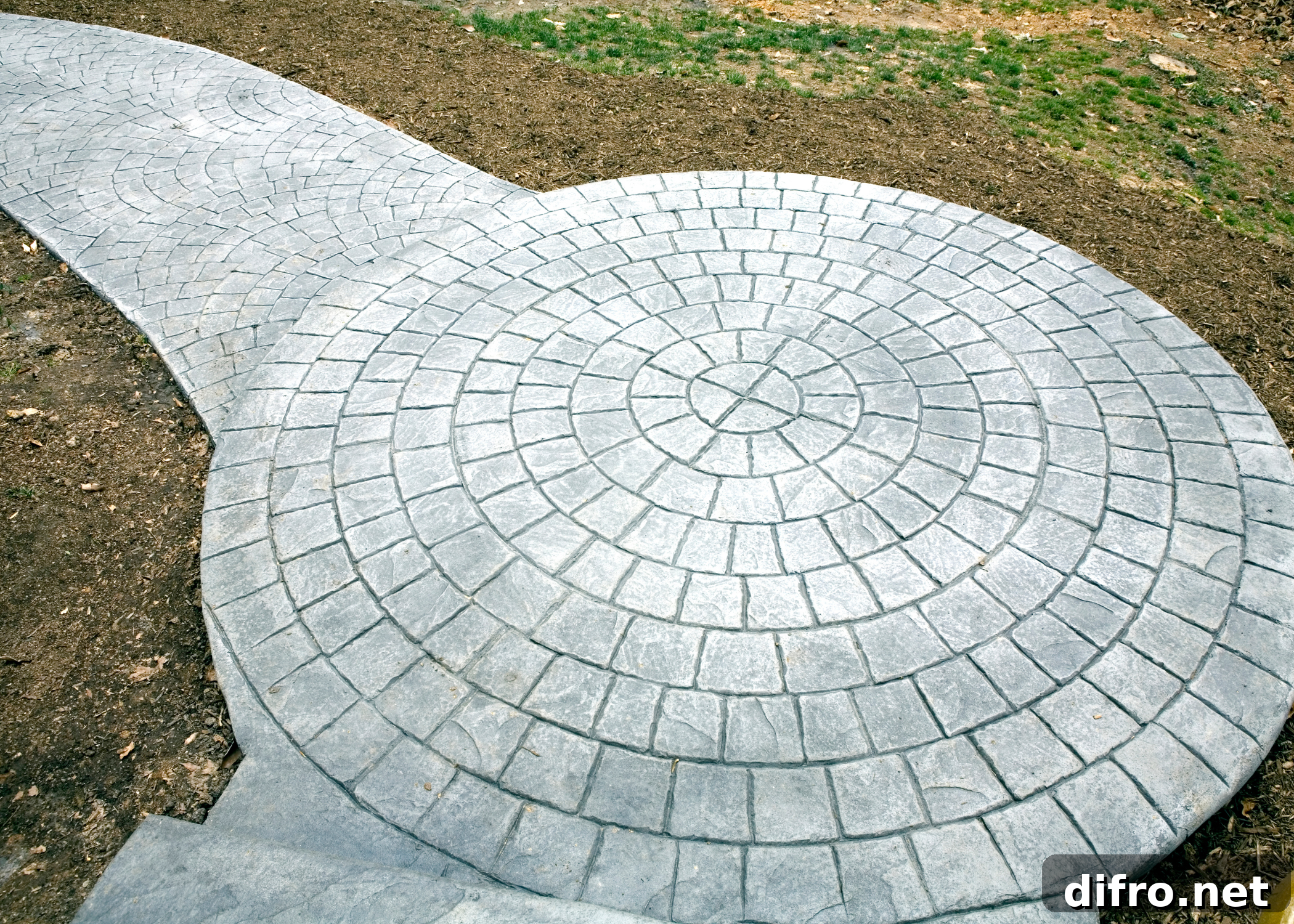
In climates with freeze-thaw cycles, choose a sealant rated for those conditions to reduce the risk of cracking. Avoid de-icing salts on stamped concrete, as they can damage the surface and degrade the sealer over time. Promptly address small cracks with appropriate patching compounds and reseal to prevent moisture entry and further deterioration.
Cost Considerations
Costs for a stamped concrete patio vary based on patio size, the complexity of patterns and borders, local labor rates, and material choices. Typical price ranges fall between $8 and $20 per square foot, though customized designs or premium color treatments may increase costs. While initial expenses can be higher than some simple paving options, the long-term durability and reduced maintenance often make stamped concrete cost-effective over the life of the patio.
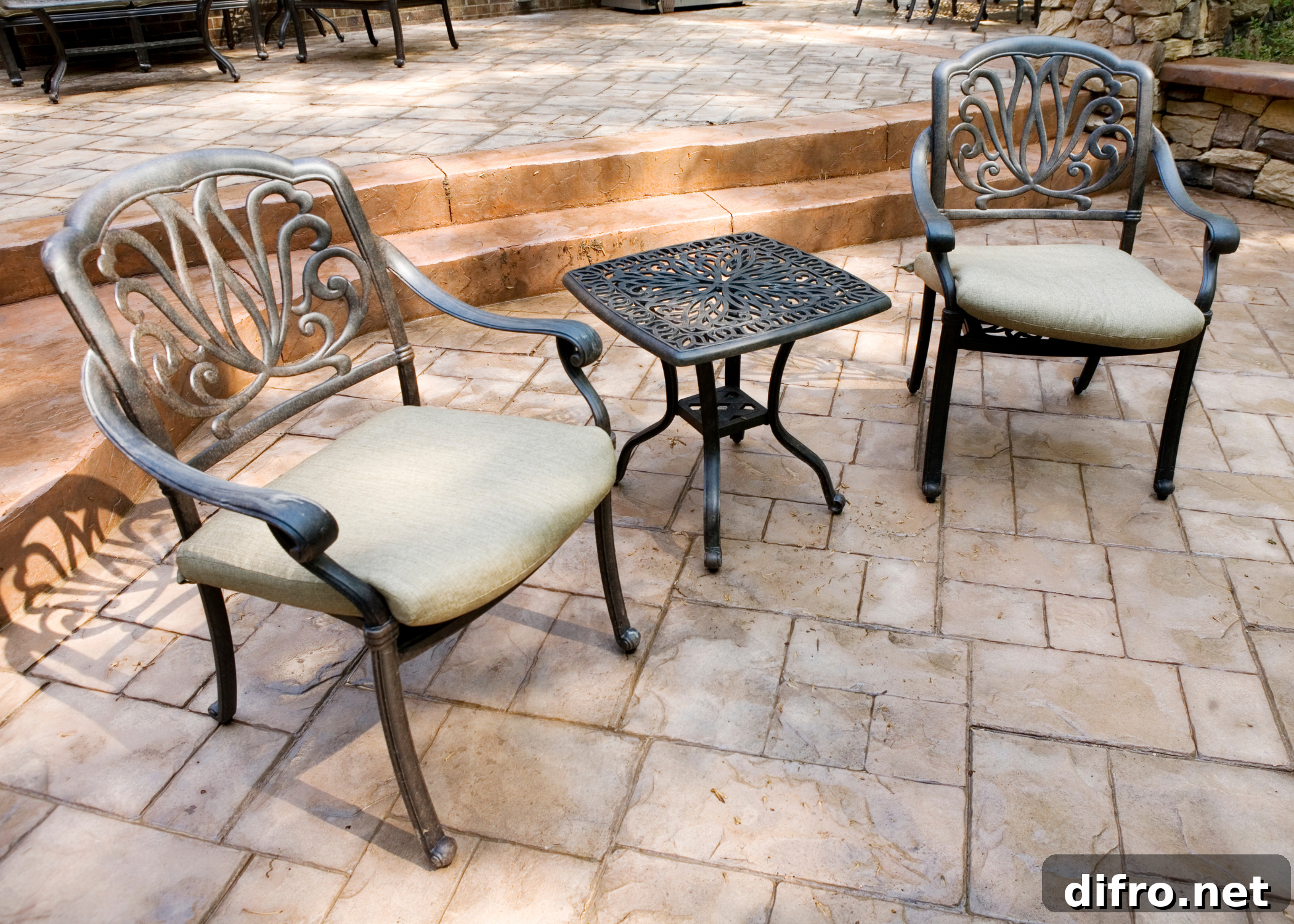
Consider the potential resale value a well-designed patio can add to your property, as attractive outdoor living spaces are frequently sought after by buyers.
Environmental Impact
Stamped concrete can be an environmentally responsible choice when sourced and installed thoughtfully. Concrete materials are often available locally, reducing transportation-related emissions. The long usable life of a properly installed stamped concrete patio reduces the need for frequent replacements, which lowers material waste and resource consumption over time.
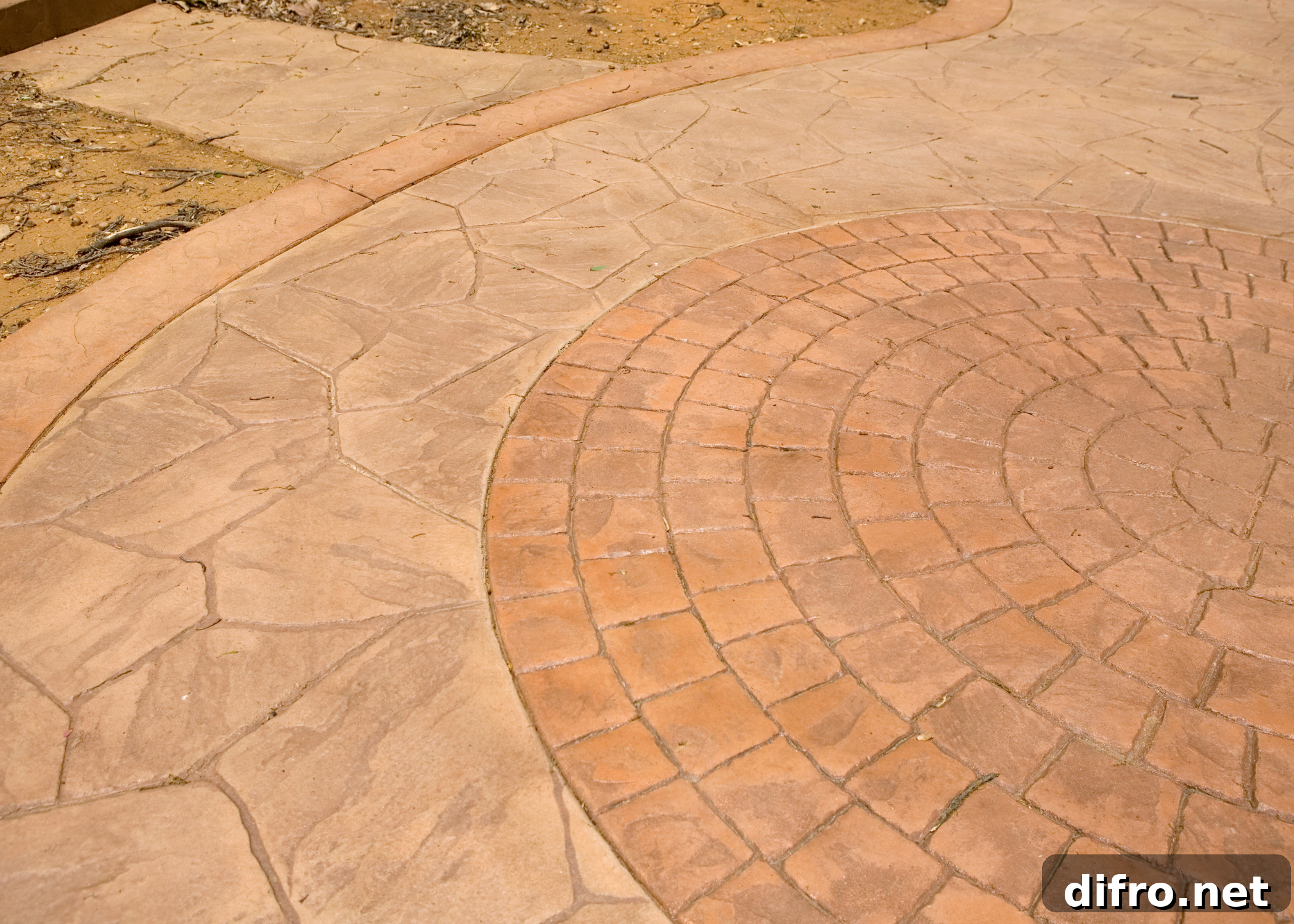
To further reduce environmental impact, discuss recycled aggregate options, permeable design features where appropriate, and local sourcing with your contractor.
Choosing the Right Contractor
Selecting an experienced contractor is essential for a successful stamped concrete patio. Look for contractors with a proven portfolio of stamped concrete work, positive client reviews, and verifiable references. Meet with potential contractors to review design ideas, confirm materials and methods, and obtain detailed written estimates and timelines.
A reputable contractor will outline the installation sequence, material specifications, warranty details, and any necessary site preparation. Clear communication up front helps avoid delays, surprises, and additional costs during the project.
Related Articles
- Maximizing Your Outdoor Space with Small Enclosed Patio Ideas
- 9 Creative Patio Extension Ideas to Elevate Your Outdoor Living Space
- Patio Season Must Haves from Target
Ready to refresh your outdoor living area? Subscribe to our newsletter for practical design tips, trends, and ideas to transform your space.
Frequently Asked Questions (FAQs)
What is stamped concrete?
Stamped concrete is a decorative technique where patterns and textures are pressed into freshly poured concrete to mimic the look of materials like stone, brick, or wood.
How long does a stamped concrete patio last?
With proper installation and regular maintenance, a stamped concrete patio can last 25 years or more.
Can stamped concrete be repaired if it cracks?
Minor cracks can usually be repaired with patching products designed to match color and texture. More significant damage may require professional repair work.
Is stamped concrete slippery when wet?
Stamped concrete can become slippery when wet. Adding a non-slip additive to the sealer or choosing a textured finish improves traction.
How often should a stamped concrete patio be sealed?
Sealing every two to three years is generally recommended to protect against water intrusion, stains, and UV fading.
Can I install a stamped concrete patio myself?
While skilled DIYers may be able to install a stamped concrete patio, the process requires precise timing, proper tools, and experience. Hiring a professional is often the best way to ensure a durable, attractive finish.
What are the color options for stamped concrete?
Stamped concrete offers many color choices, from natural earth tones to bolder hues. Colors can be added directly into the concrete mix, applied as a color hardener, or introduced with surface stains to achieve varied, realistic effects.