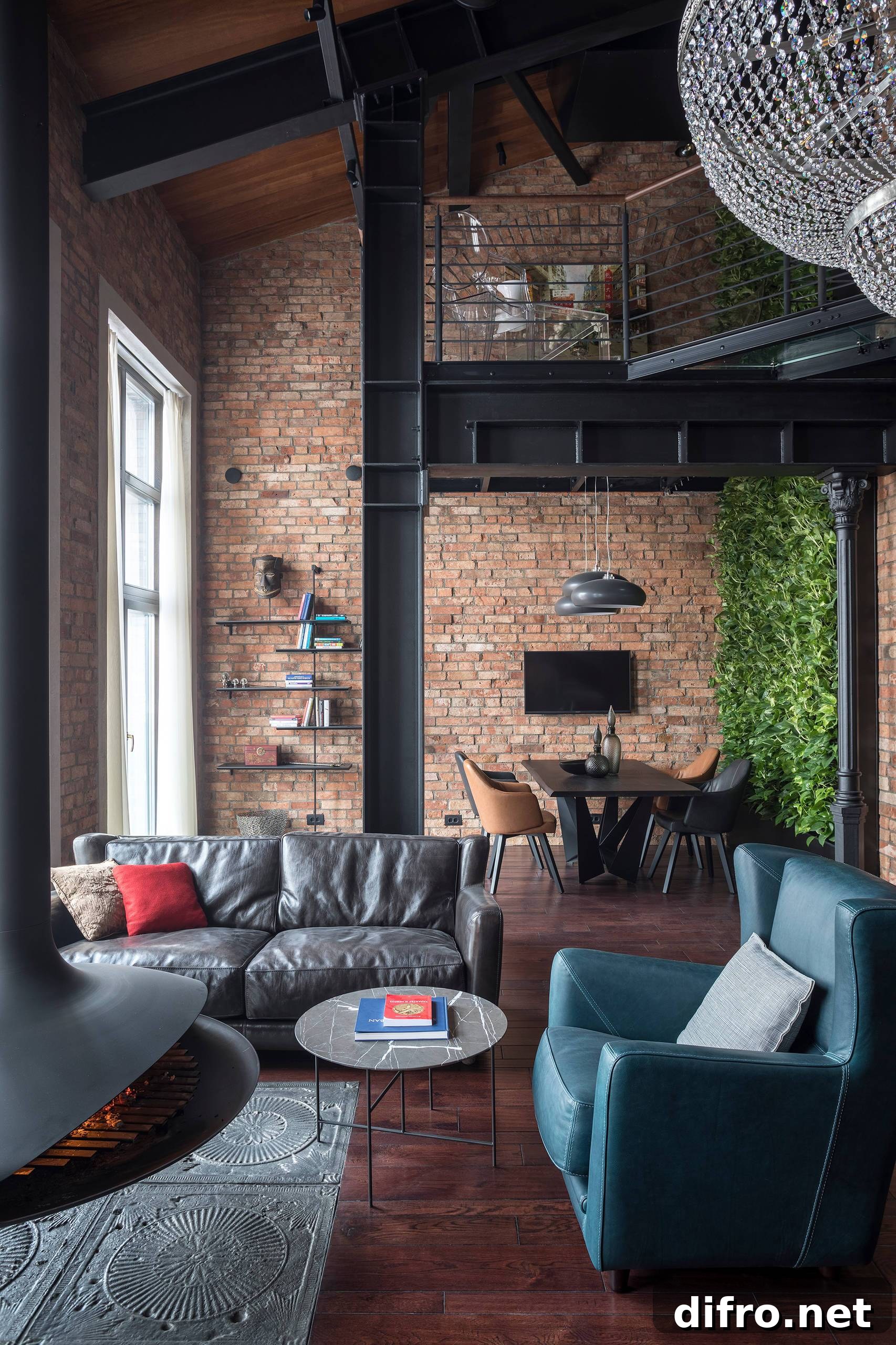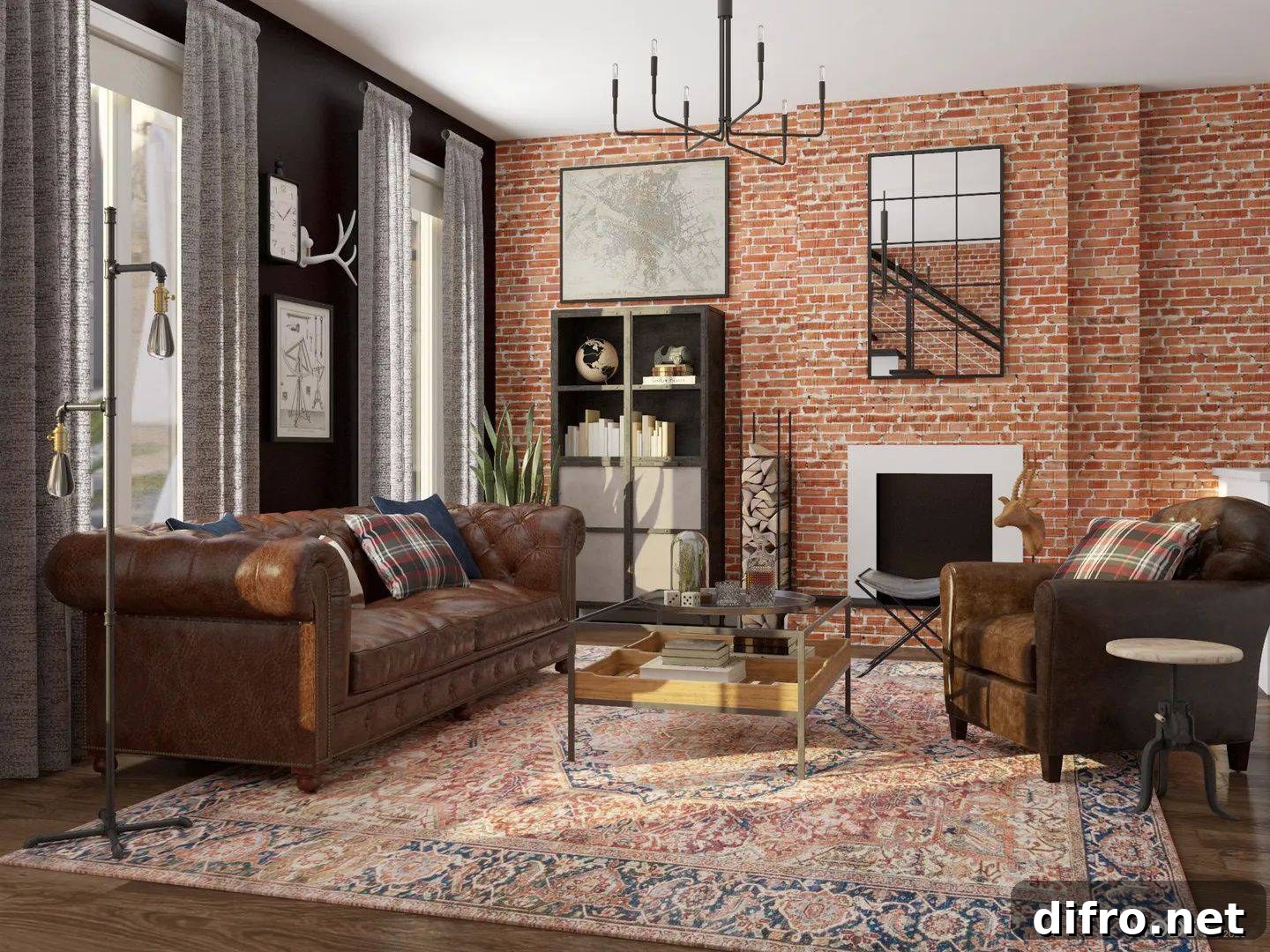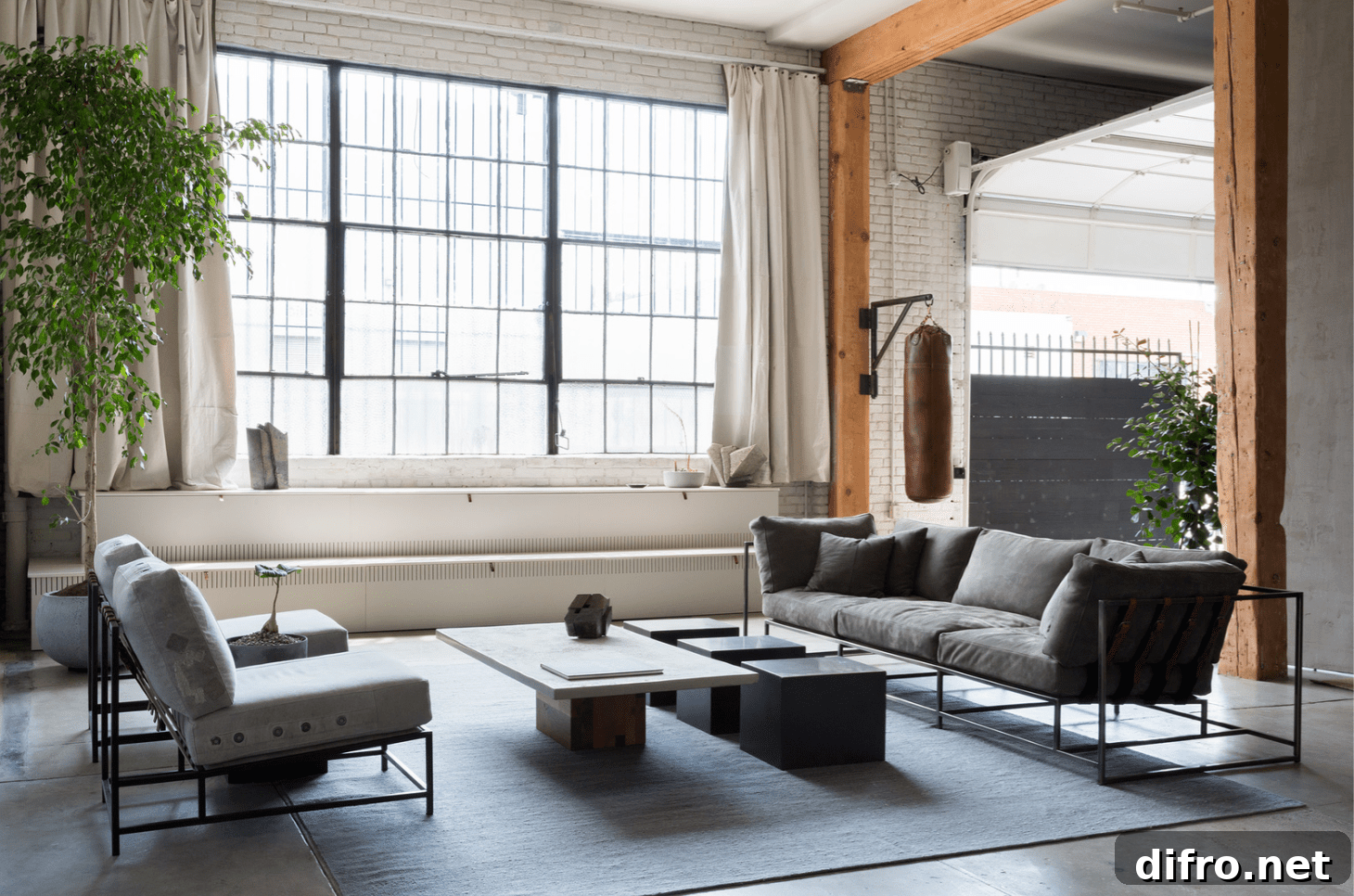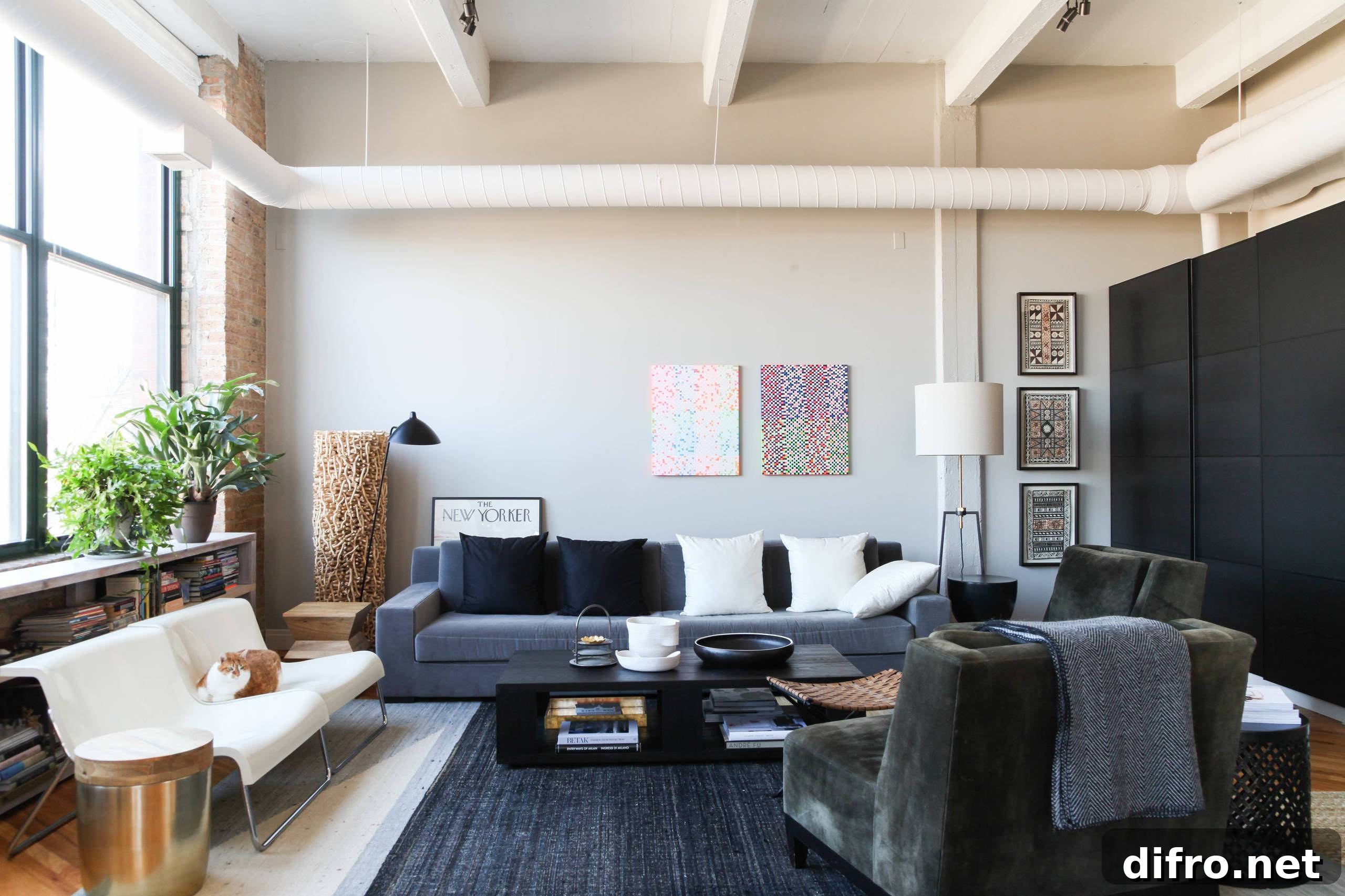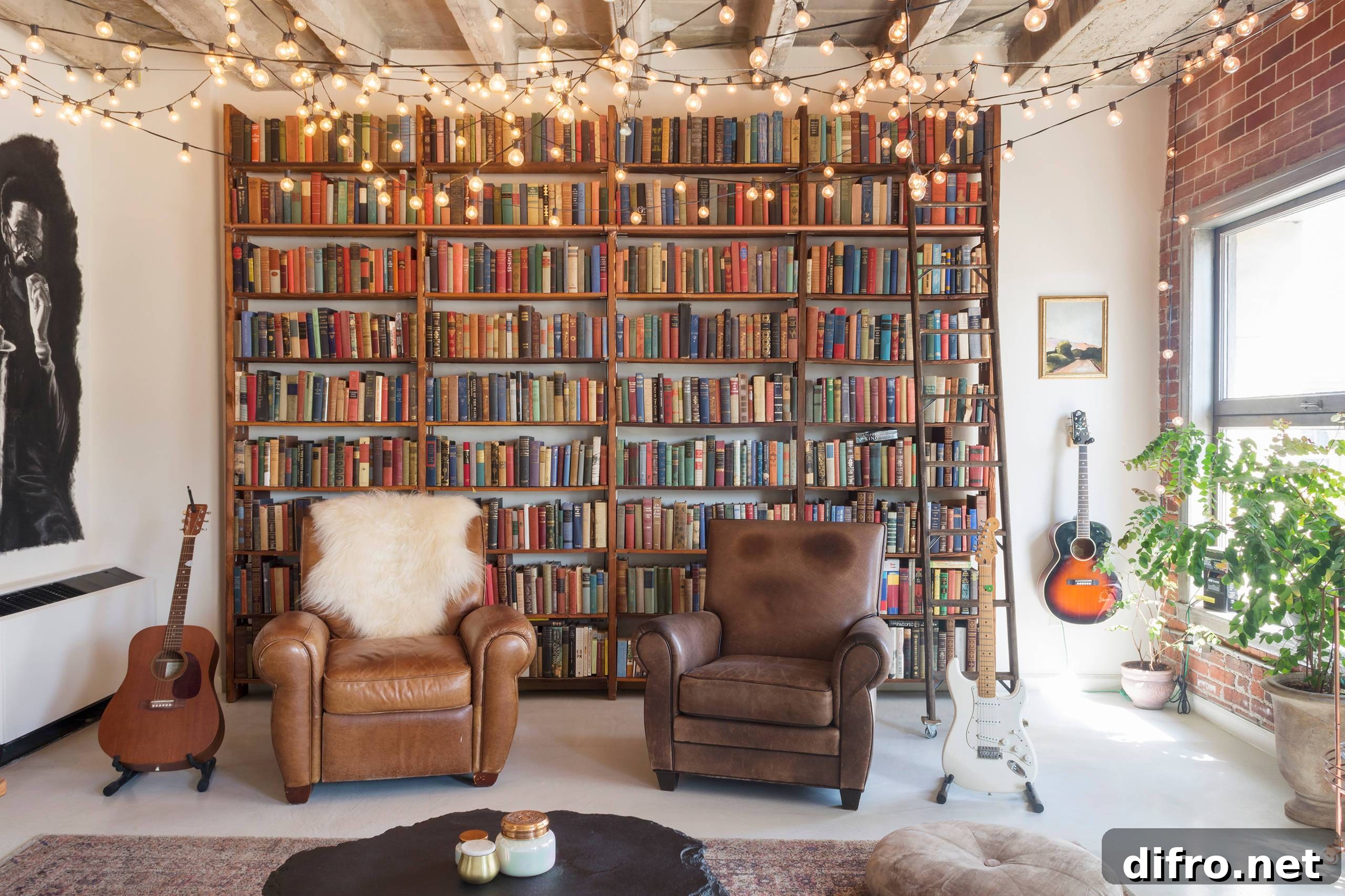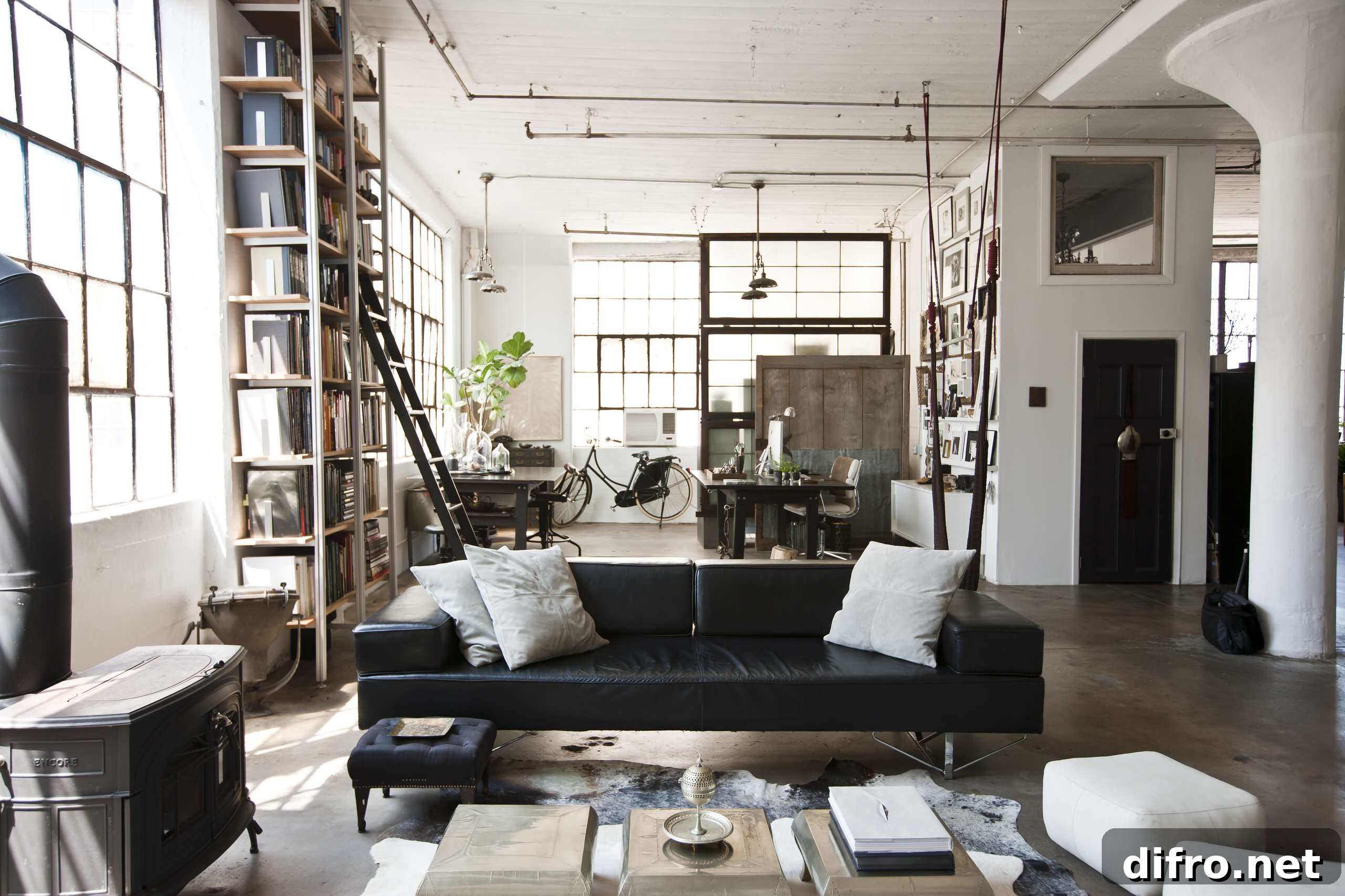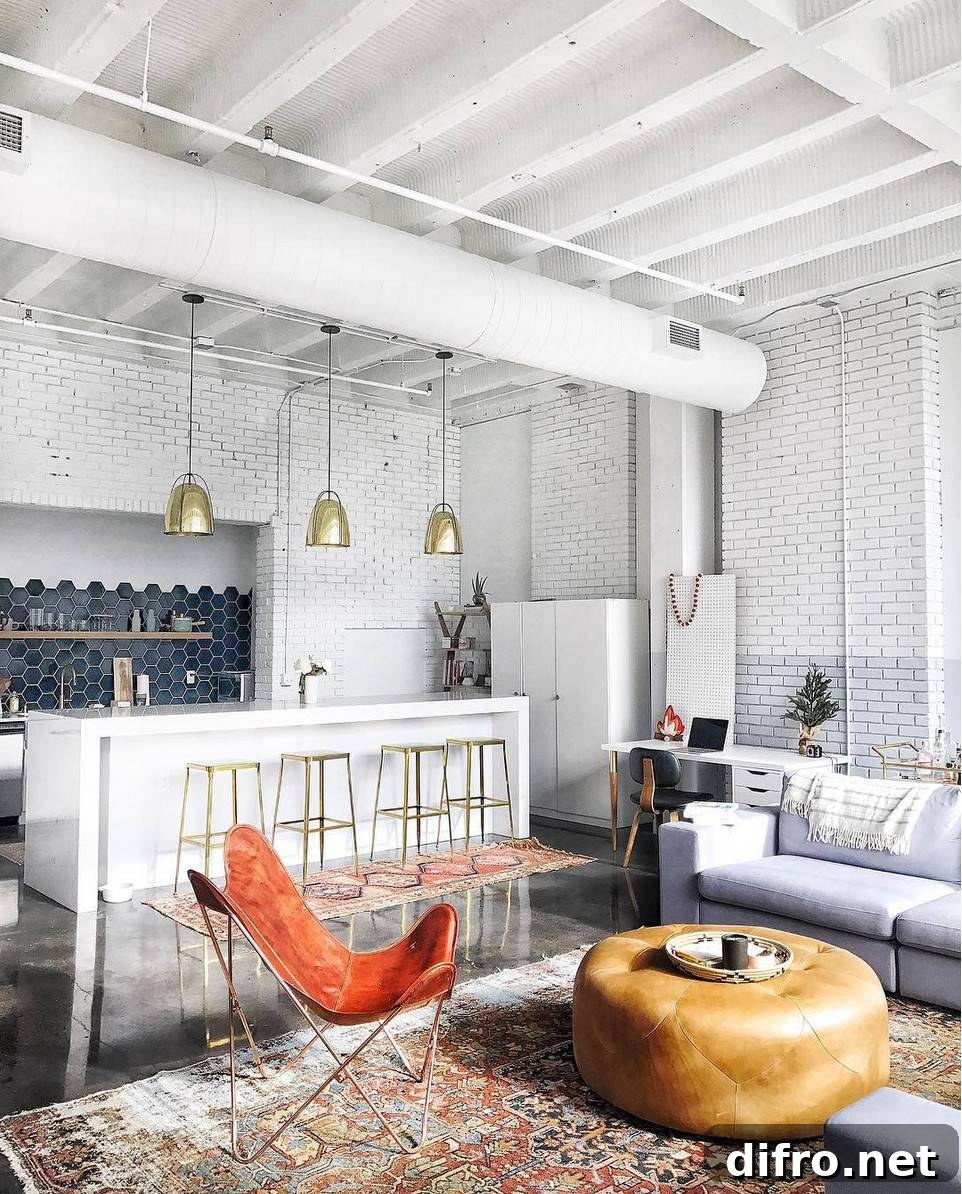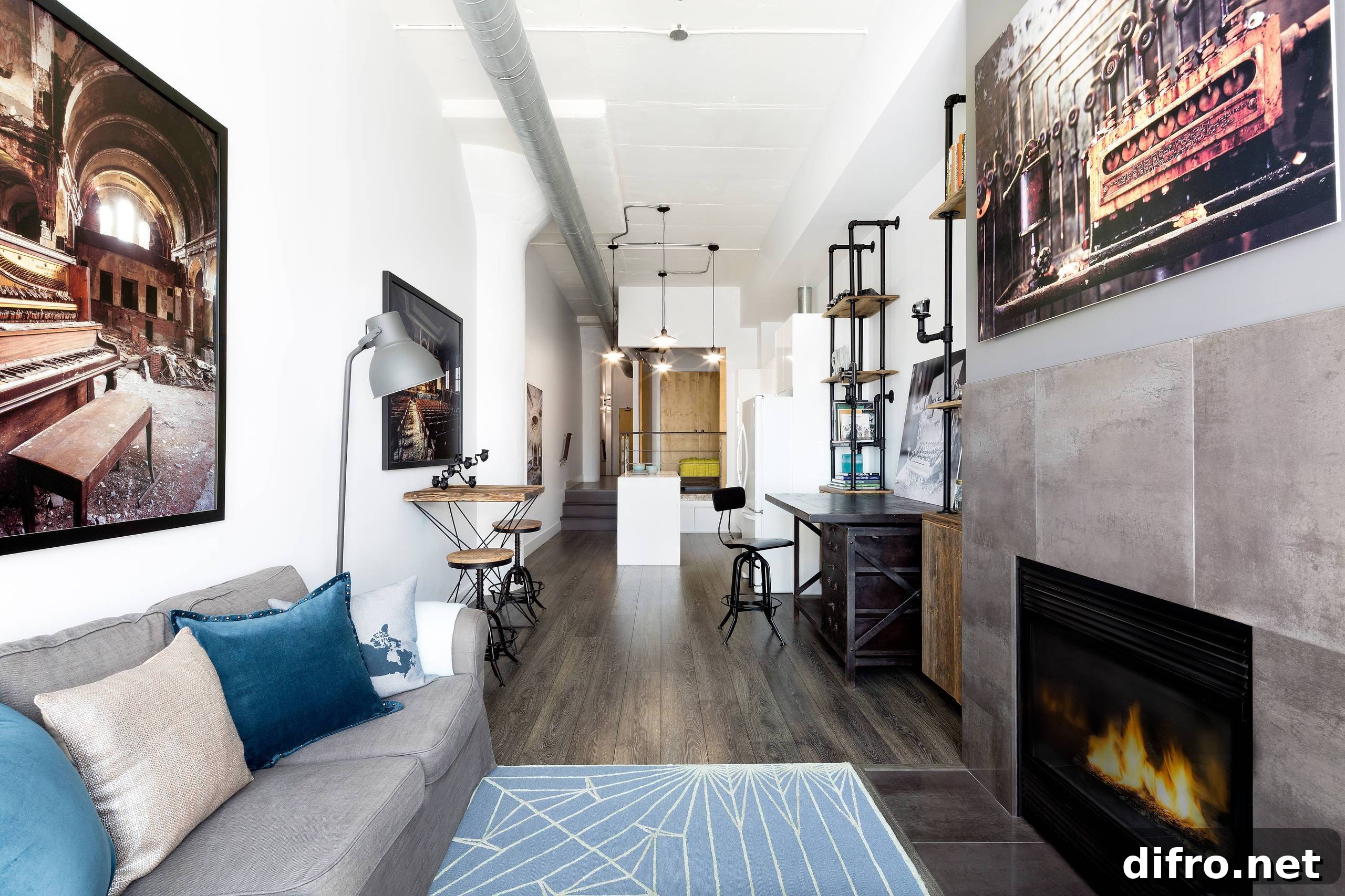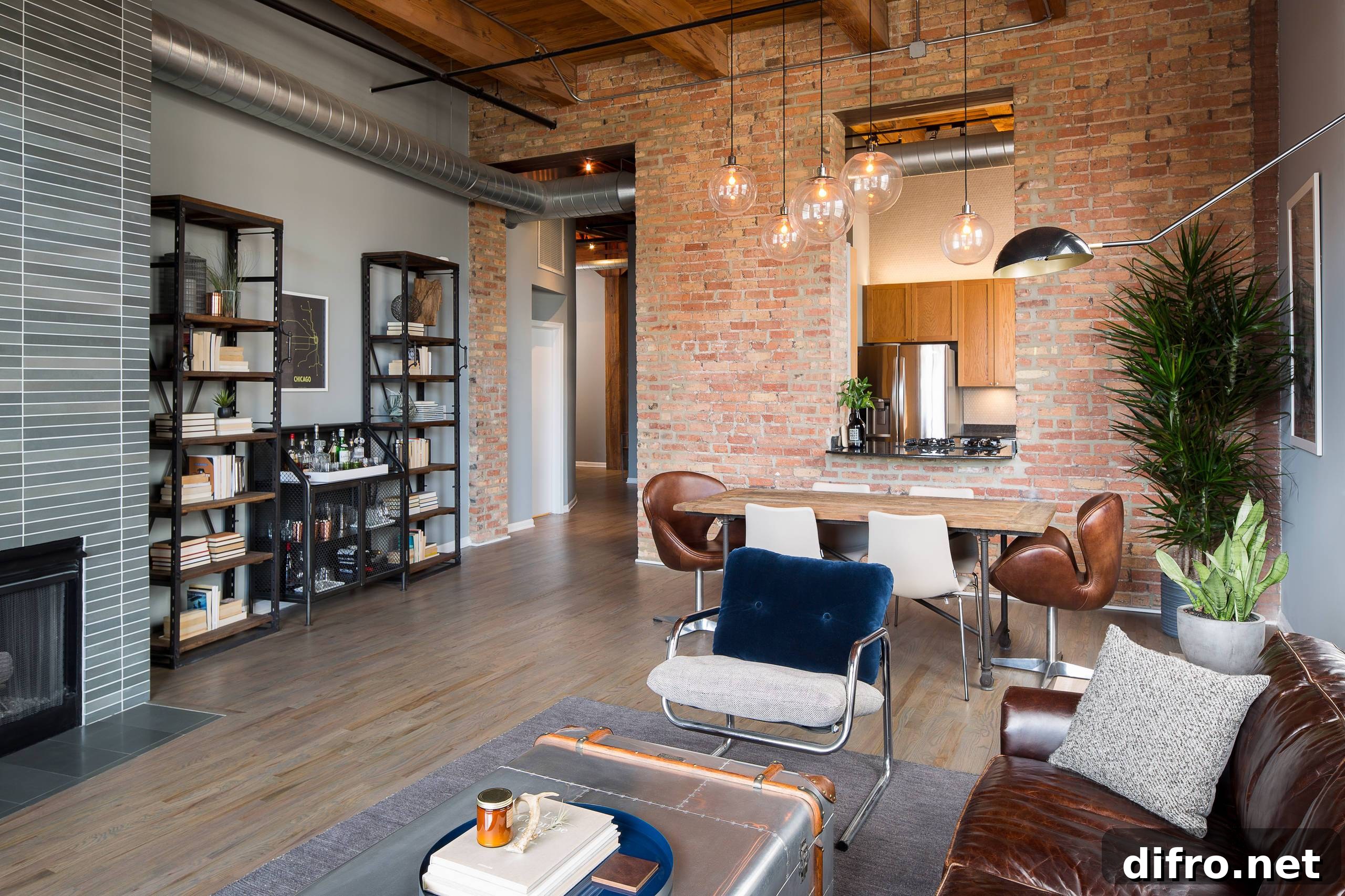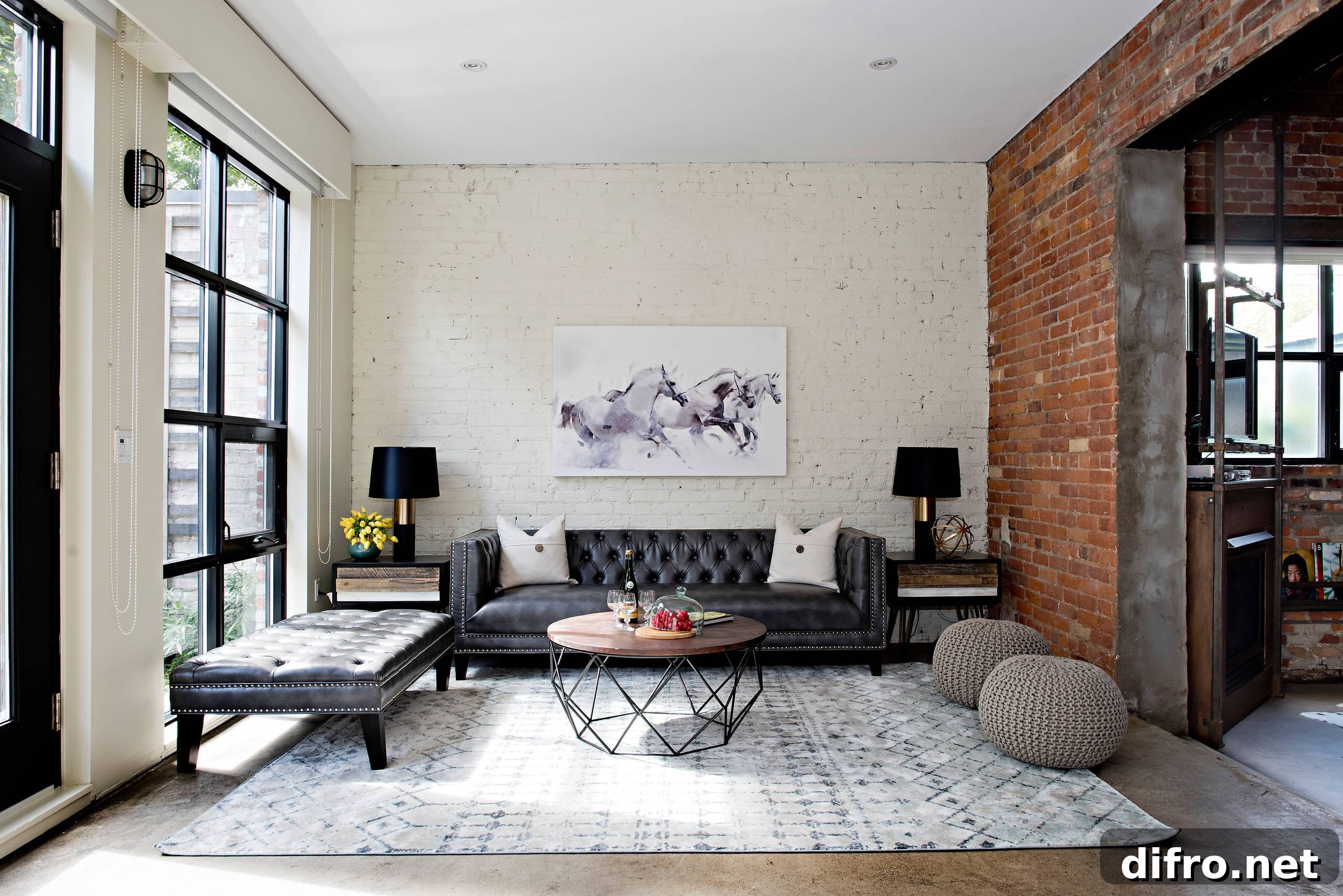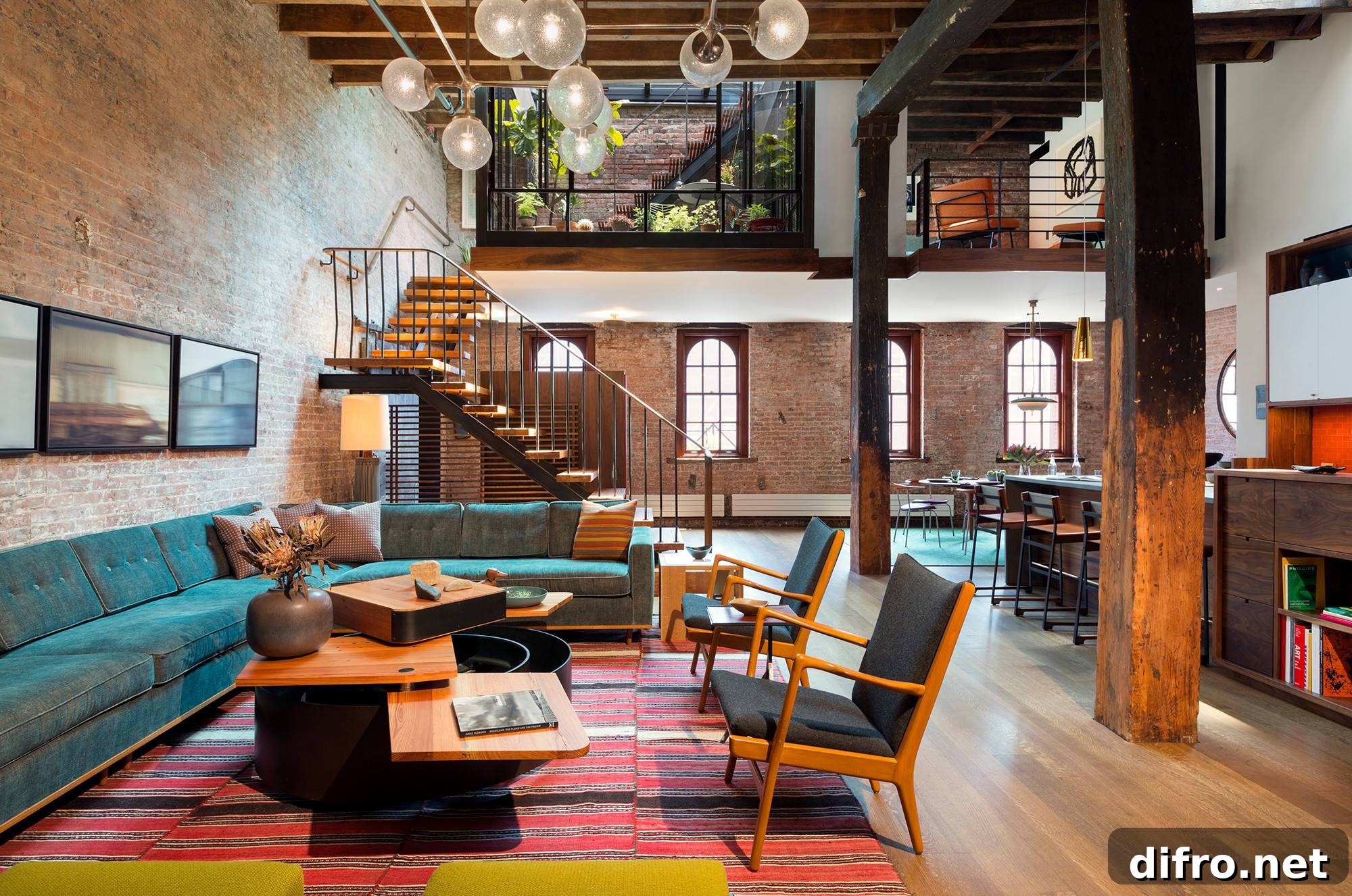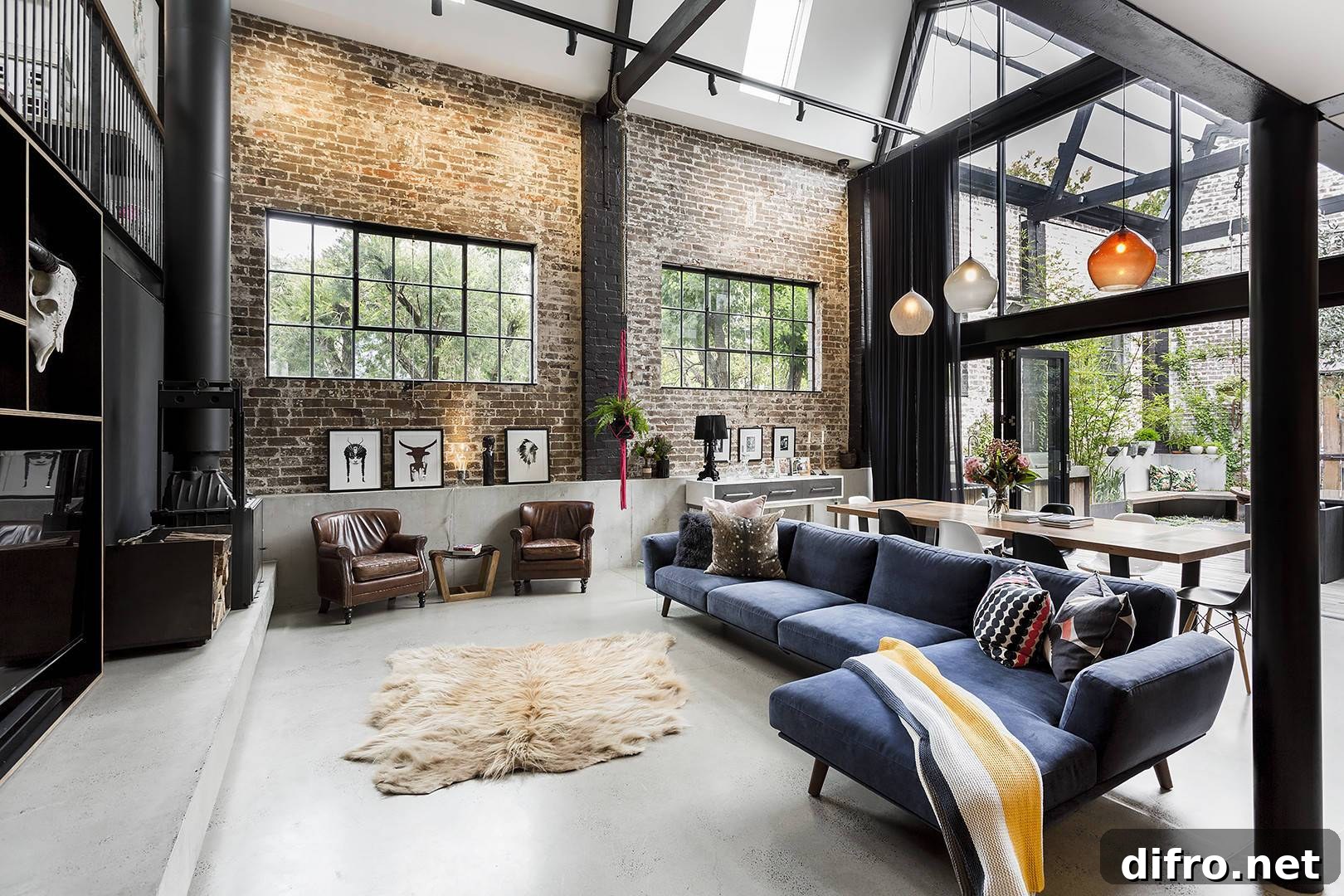
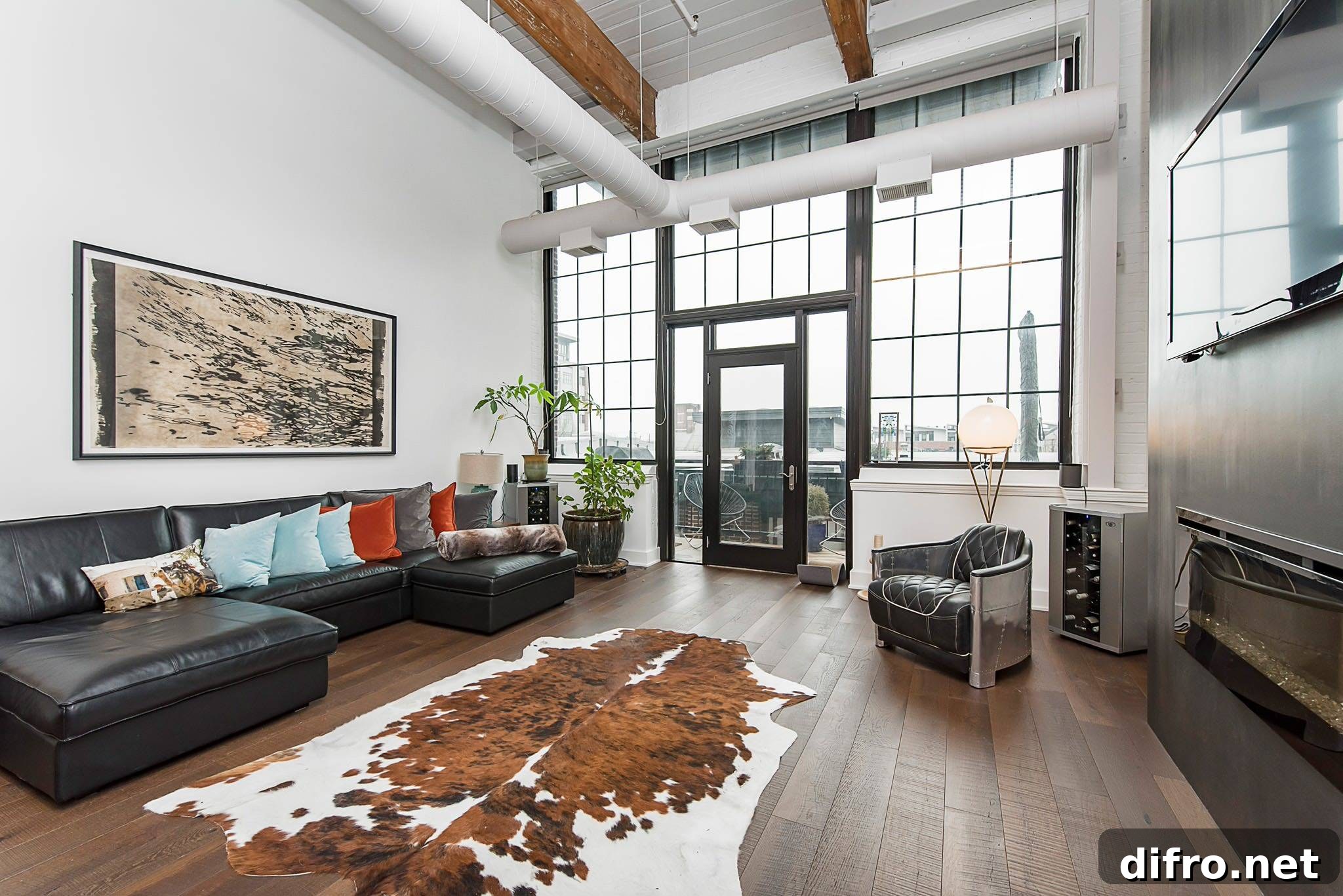
Known for its rugged, unfinished charm, industrial style remains a favorite for many homeowners and designers. Designing an industrial living room means combining those signature raw elements with comfort so the space feels lived-in, not austere. Exposed brick, leather sofas, bold light fixtures and striking rugs are common hallmarks that help create a warm, inviting industrial space.
Achieving an authentic industrial look can feel intimidating, but with a few practical choices you can design a living room that balances texture, warmth and the style’s characteristic edge. Below are professional tips to help you build a cohesive, comfortable industrial living room.
Embrace the Beauty of Concrete
Concrete’s rough, unfinished appearance is central to industrial design. Use it on floors, ceilings or walls to anchor the space. Polished concrete floors provide a durable, modern surface that complements raw elements, while concrete walls are a dramatic backdrop for furniture and art. If the concrete feels too cold, introduce warmer materials—like slate accents or wooden furnishings—to soften the look and add inviting contrast.
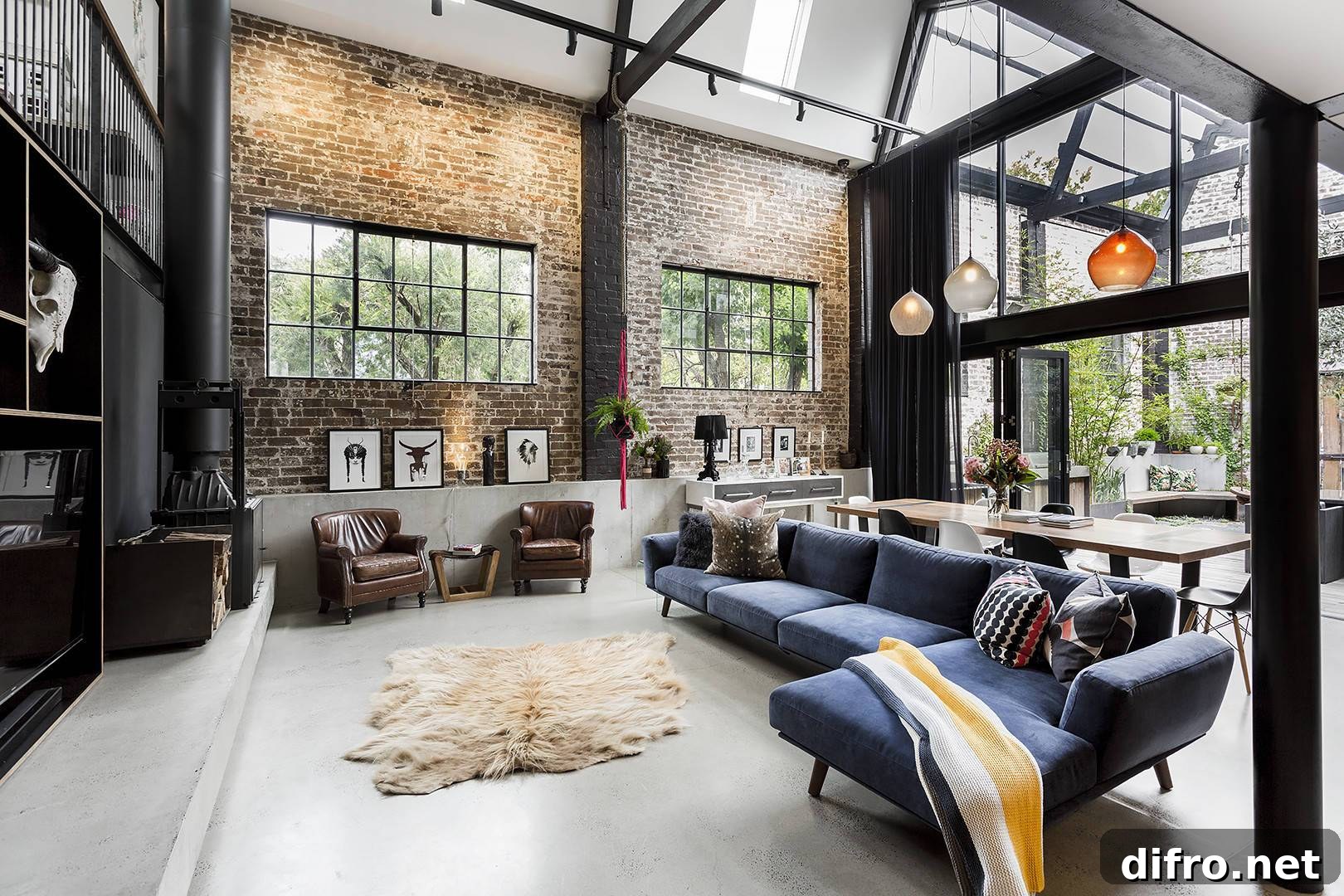
Grounding Color Palette
Industrial interiors typically rely on a palette of earthy neutrals that echo raw materials—think warm grays, reddish-browns, rusty oranges and natural wood tones. These hues make a hard-edged space feel inviting and cohesive. Use this palette as your base, and consider introducing a carefully chosen accent color—perhaps a painted section of exposed brick or an accent chair—to highlight architectural features without overpowering the aesthetic.
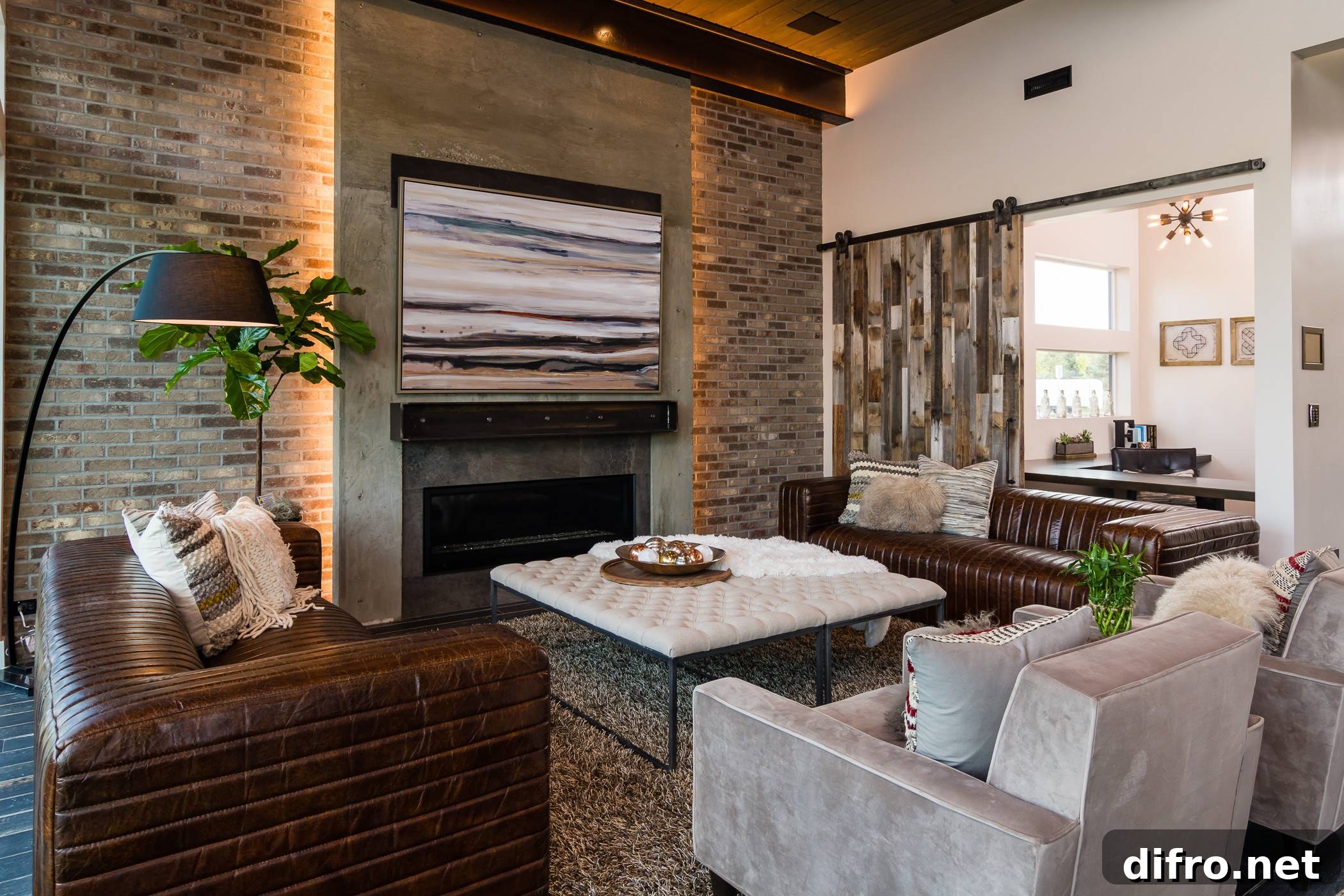
Choosing the Right Furniture
Furniture for an industrial living room should feel substantial and purposeful. Chunky, masculine silhouettes—like a leather Chesterfield sofa—add timeless character. Tables made from reclaimed or distressed wood reinforce the aesthetic, and DIY pallet pieces can introduce personality while keeping costs down. When sourcing furniture, thrift stores and vintage shops are excellent places to find items with natural wear that suit industrial interiors.
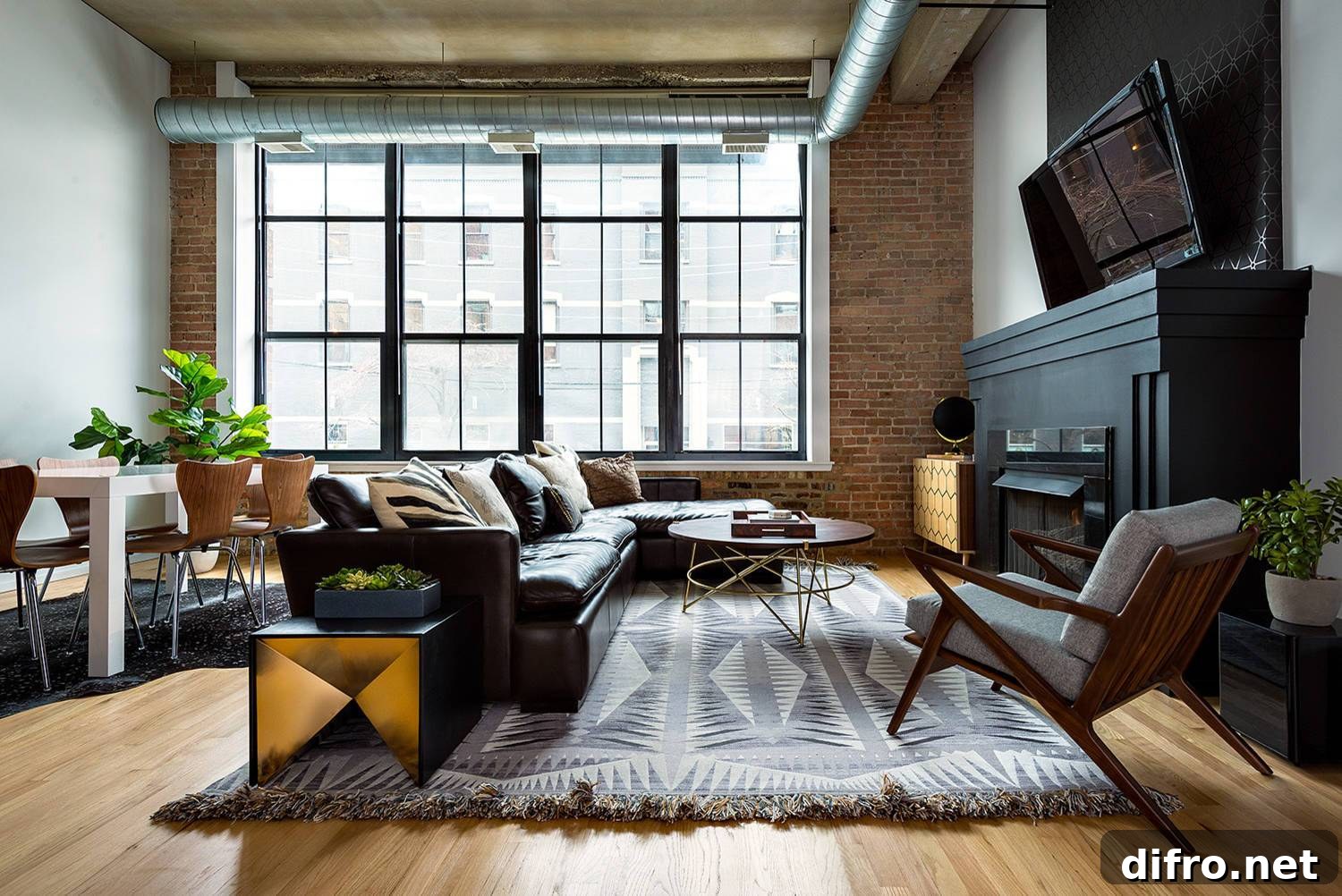
Layer Textures
Texture is essential in industrial interiors: it softens the starkness of raw surfaces and creates visual depth. Combine rough materials—concrete, exposed brick, metal—with warmer, tactile finishes like distressed wood, wool rugs and plush cushions. Mixing textures keeps the room interesting and comfortable. Don’t worry about matching wood grains perfectly; purposeful variation adds authenticity. For cohesion, repeat select materials or colors in multiple places so the design reads as intentional rather than accidental.
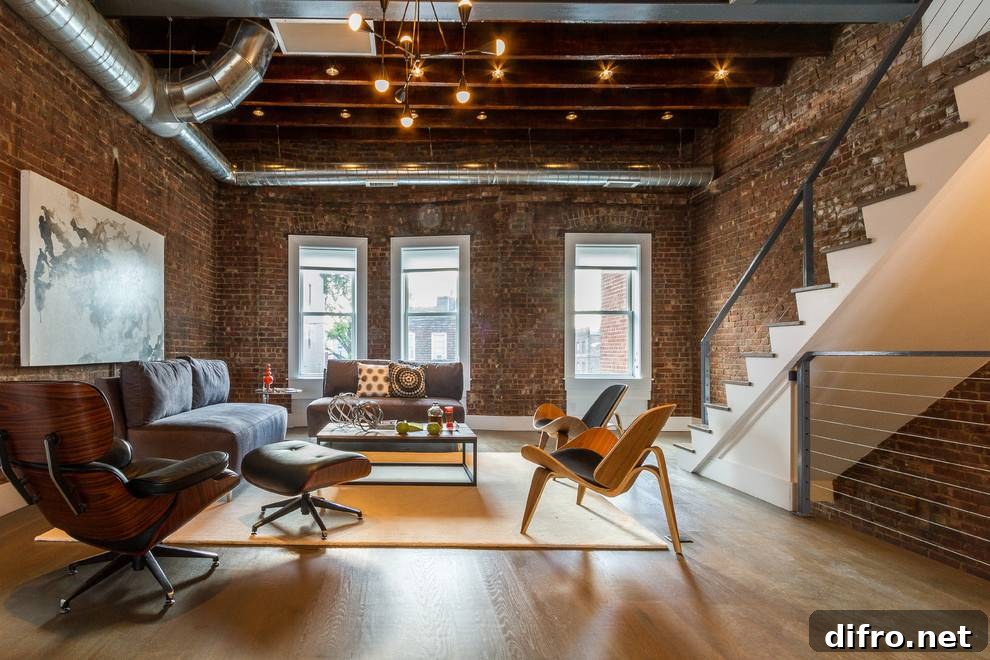
Introducing wood pieces is one of the most effective ways to balance the coolness of unfinished materials. In rooms with visible pipes or exposed ductwork, a wooden coffee table or shelving unit will instantly warm the atmosphere. To make a design feel intentional, use repetition—repeat an accessory color, metal finish or wood tone in several spots so the room feels cohesive.
Organic Materials
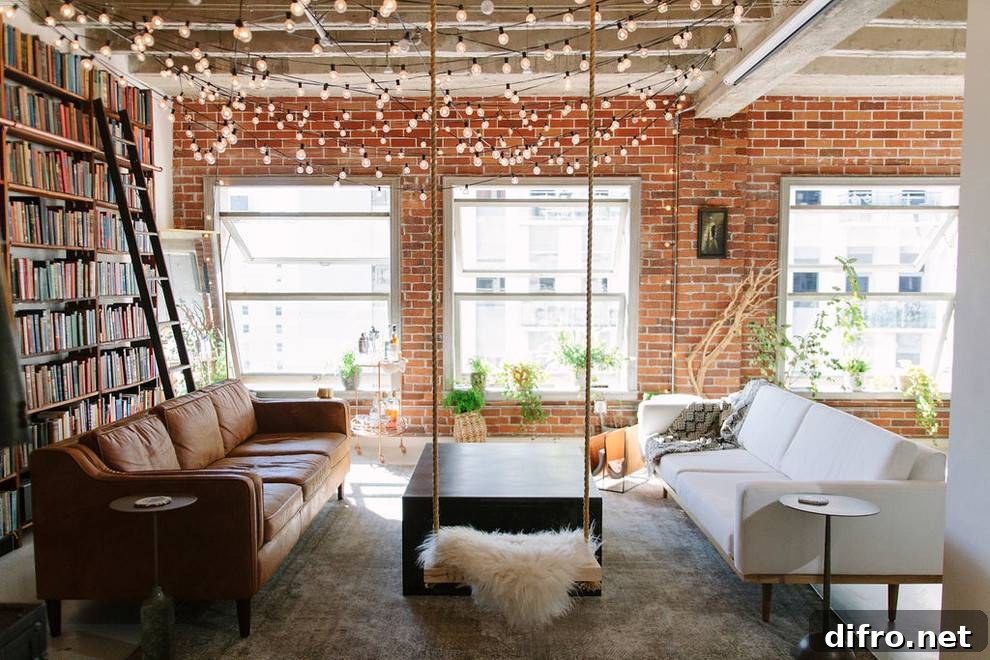
Organic materials soften an industrial living room and make it feel more approachable. Layer a wool rug over concrete floors, choose solid wood furniture, and consider a camel leather sofa to add visual warmth and comfortable seating. Natural fibers and materials balance the industrial palette and encourage a welcoming, lived-in atmosphere.
Lighting
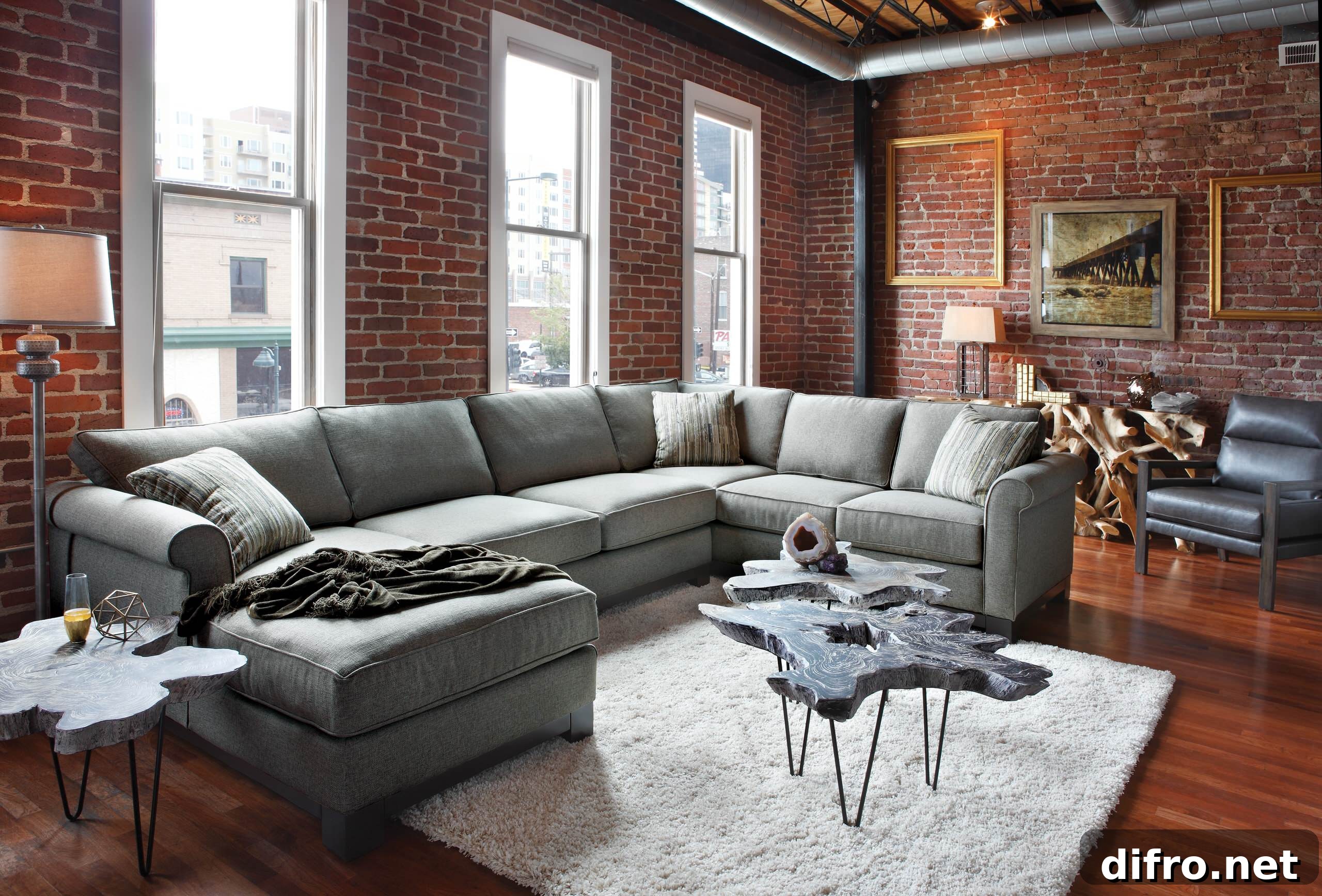
Lighting completes the industrial look. Metal fixtures—whether pared-down track lights, bold pendant lamps or rustic factory-style sconces—pair naturally with raw materials. If you prefer a modern edge, choose geometric fixtures; for vintage character, select fixtures that evoke old factories. Think about layers of light: ambient overhead lighting, targeted task lighting and accent lamps to create a comfortable, functional living room.
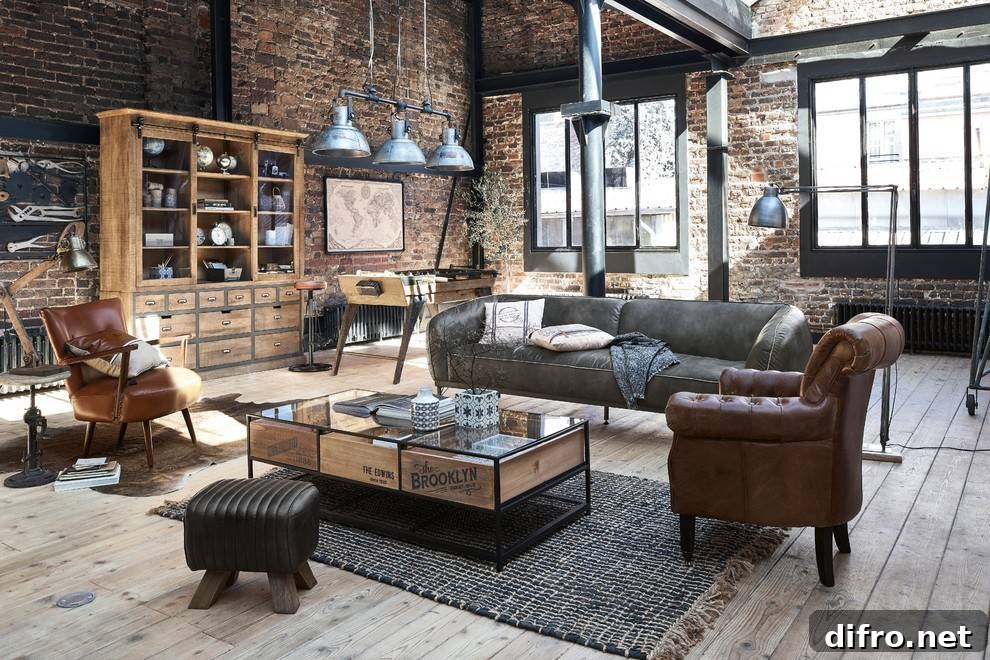
Choose fixtures that suit the room’s scale and mood, and layer lighting to enhance both function and atmosphere.
Oversized Art
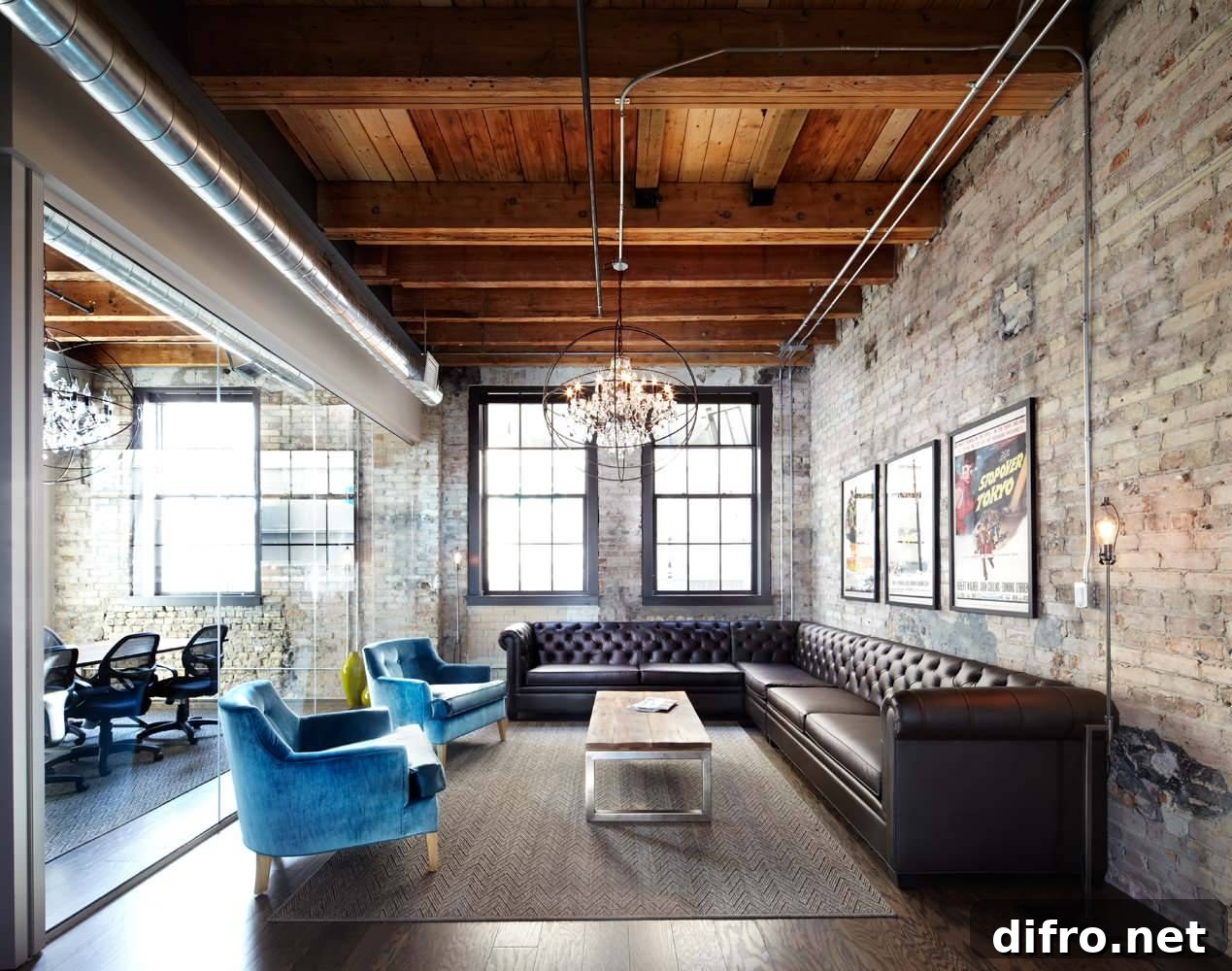
Oversized artwork is a powerful finishing touch in an industrial living room. Large typographic prints, bold abstracts or framed wallpaper make striking focal points against concrete or exposed brick walls. Choose pieces that pull colors from your room’s palette so the artwork feels integrated. If you enjoy hands-on projects, creating oversized pieces—like framed wallpaper panels—can be an economical and personal way to fill a large wall.
Keep exploring examples and adapt the elements that fit your space and lifestyle. With thoughtful material choices, layered textures, and the right accents, you can create an industrial living room that feels both authentic and welcoming.