Combining modern minimalism with sustainable design results in homes that are both striking and efficient. That balance is evident in Ethos House in Carrillo de Guanacaste, Costa Rica, where QBO3 Arquitectos transformed a densely wooded lot into a resilient, low-maintenance green residence. The project responds to the region’s weather conditions and the homeowners’ lifestyle—frequent long absences—by prioritizing durability, simplicity and passive integration with the landscape. The architects embraced a restrained, contemporary brutalist vocabulary in which reinforced concrete, clean geometry and careful detailing define the home.
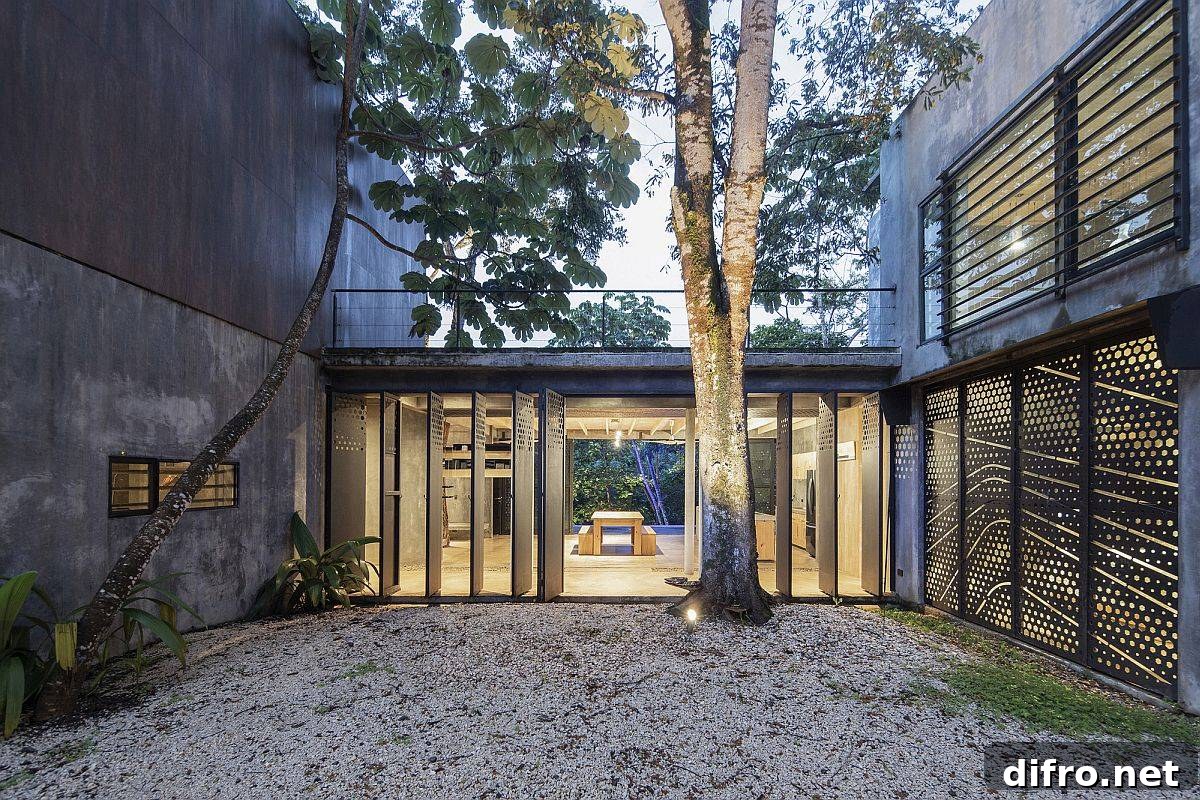
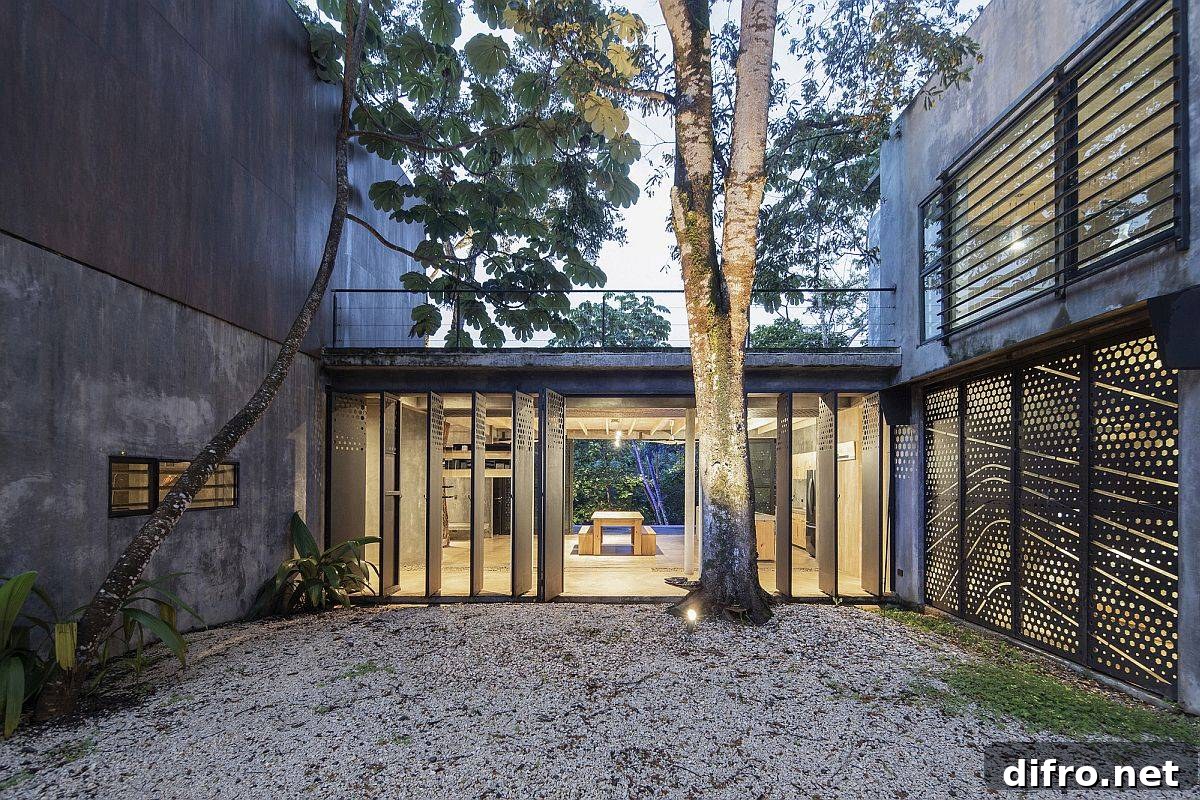
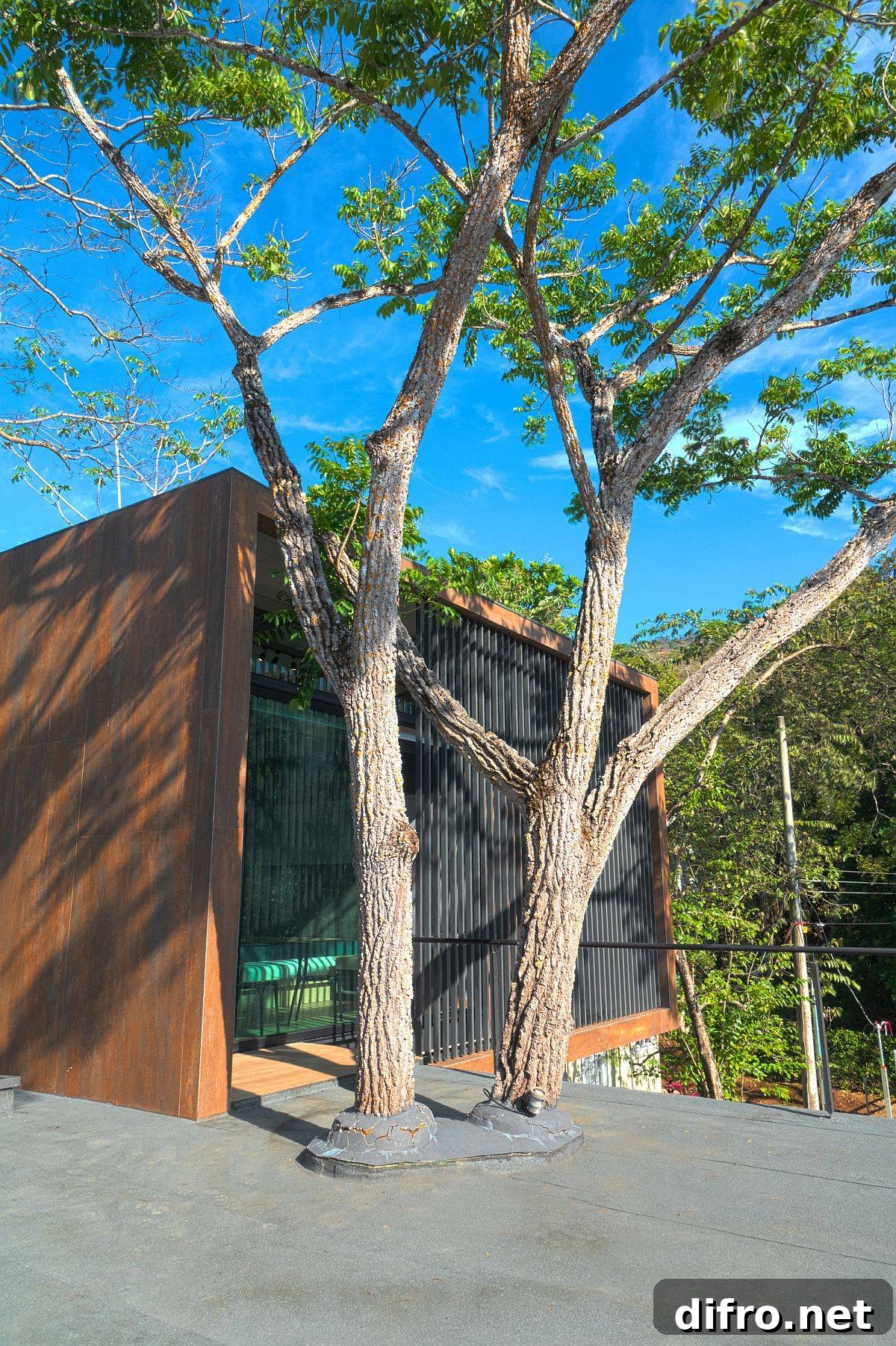
One of the most important design decisions was to preserve and work around the existing trees on the site. Rather than clearing the lot, designers folded the landscape into the plan: mature trees sit within a protected central courtyard and continue to shape the bedroom and living areas. This approach reinforces a strong connection between interior spaces and the surrounding greenery, while also reducing the environmental impact of the construction. Large glazing elements frame views of foliage, bringing natural light and ventilation into the home without disrupting the calm minimalist interior.
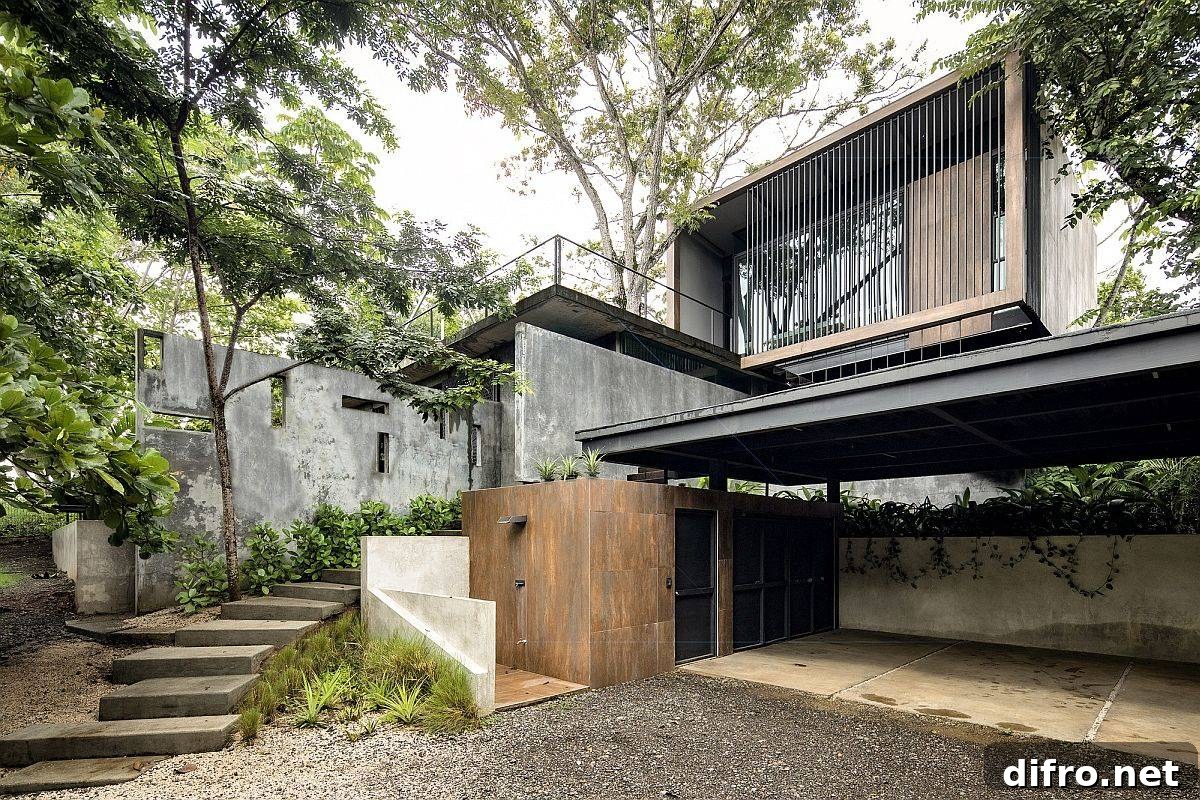
The exterior embraces a robust, weather-resistant expression. Reinforced concrete provides structural strength and low maintenance, while simple metal accents and warm wooden touches soften the overall aesthetic. Detailing such as metallic bars, wooden slats and curated natural finishes create tactile contrast against the concrete planes, adding visual warmth and a subtle layering of materials. These elements also help moderate sunlight and provide privacy without compromising the open relationship between indoor and outdoor areas.
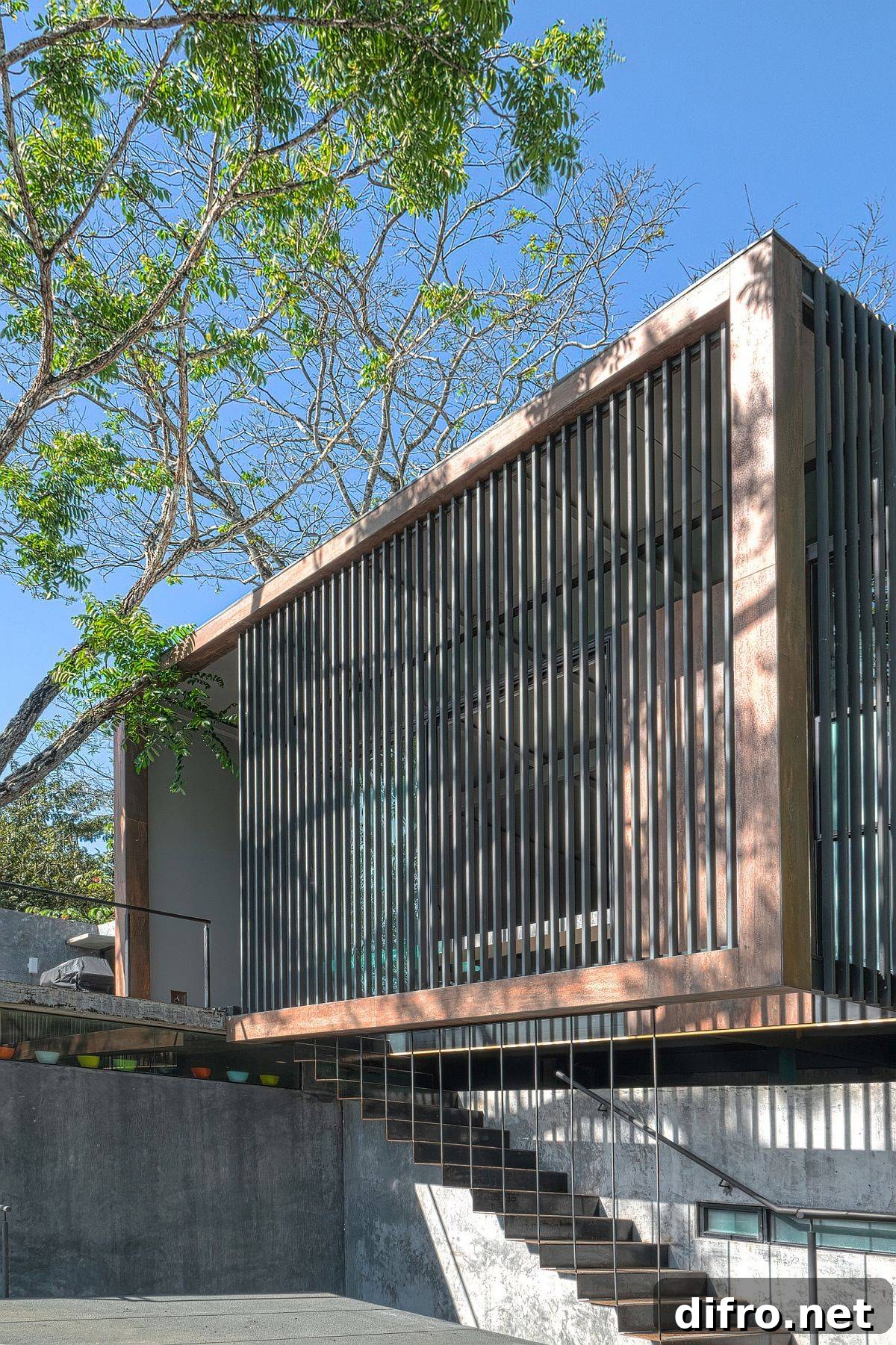
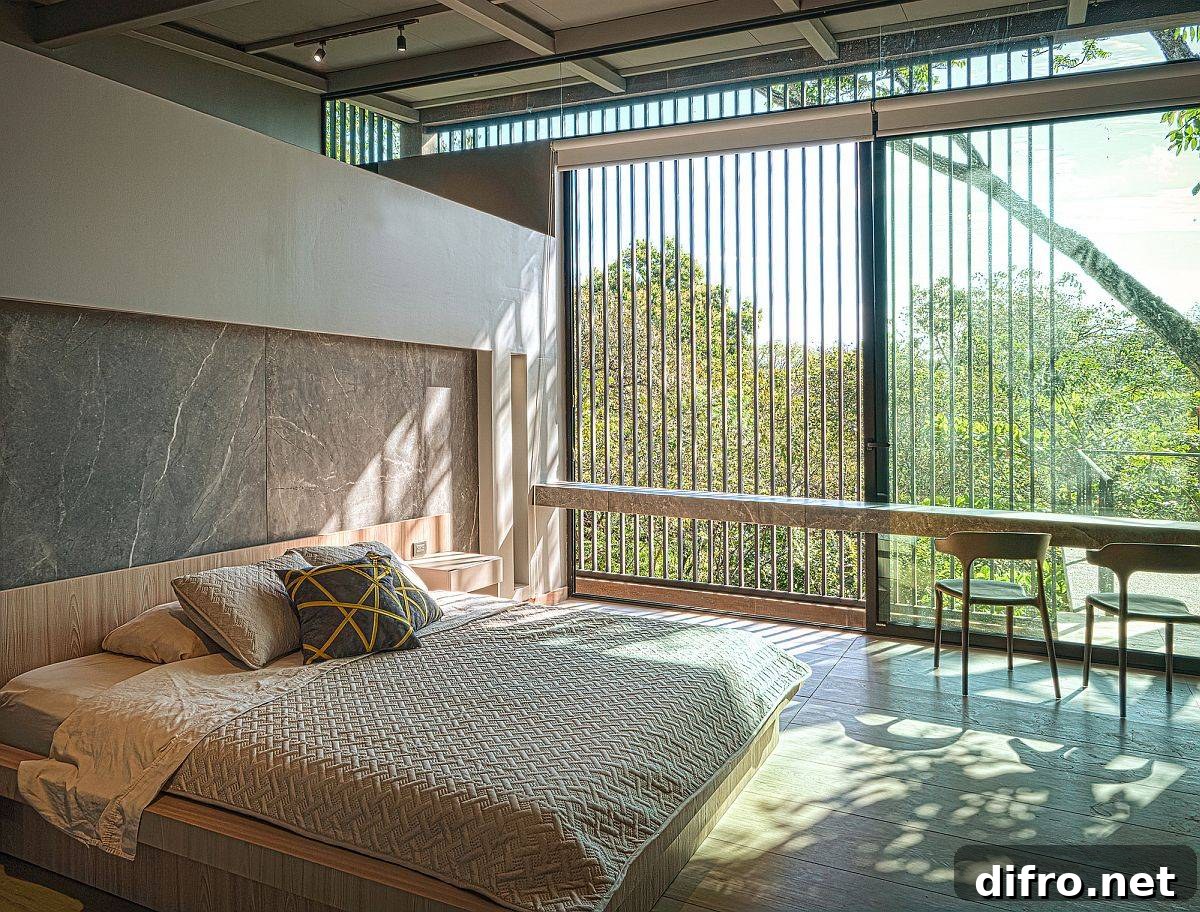
Entries and circulation spaces at Ethos House are deliberately understated. The entry sequence is calm and restrained, guiding visitors through a transition that highlights material integrity and compositional balance rather than ornament. Interior spaces favor a minimalist palette—raw concrete, dark metal, and natural wood—allowing greenery and daylight to become the primary visual features. In bedrooms and living areas, filtered light and framed views create restful, contemplative environments well suited to a tropical setting.
Beyond aesthetics, the project places emphasis on sustainable strategies that promote longevity and reduce upkeep. The building’s compact massing, durable material choices and careful siting help reduce maintenance cycles and improve resilience during storms. The preserved courtyard and retained trees contribute to passive cooling and microclimate regulation around the home, while generous glazing takes advantage of natural ventilation opportunities. These measures support comfort and energy efficiency without relying on elaborate systems.
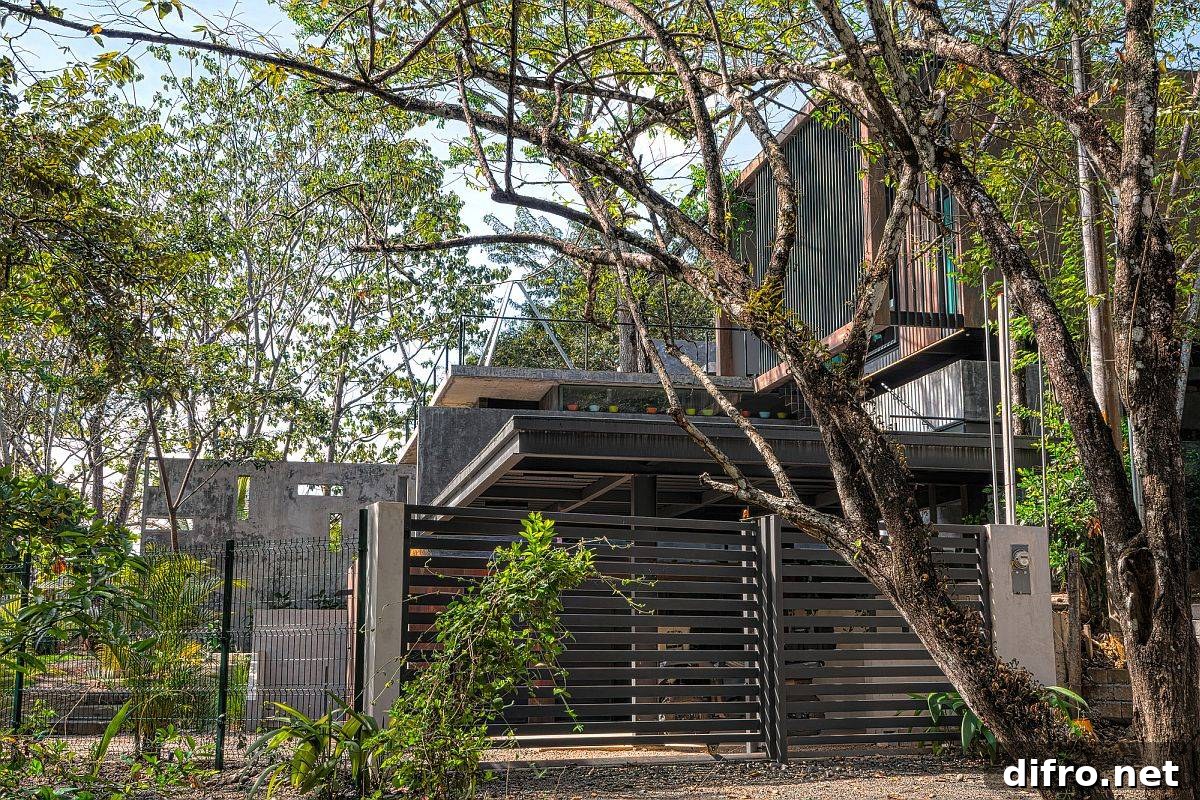
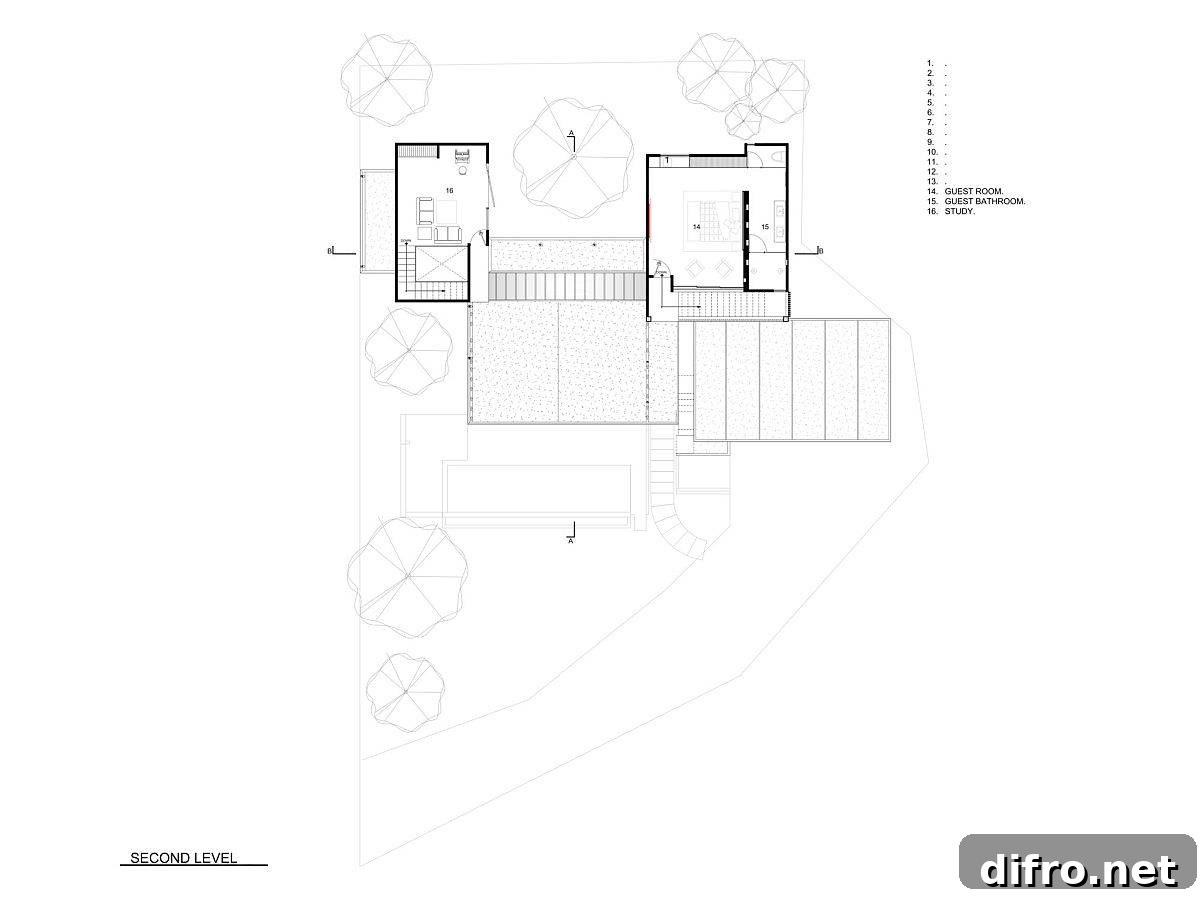
Years after the initial construction, the architectural program was expanded to include a guest room that integrates naturally with the existing structure. This addition demonstrates how a clear material language and disciplined plan can accommodate growth while maintaining cohesion across interior and exterior relationships. The spatial continuity—visible in the alignment of openings, the repetition of materials and the preserved landscape—ensures the new volume feels like part of a single, well-considered composition.
Years later, the program was expanded with a guest room that integrates naturally into the existing structure, reinforcing the strong connection between the home’s interior and exterior.
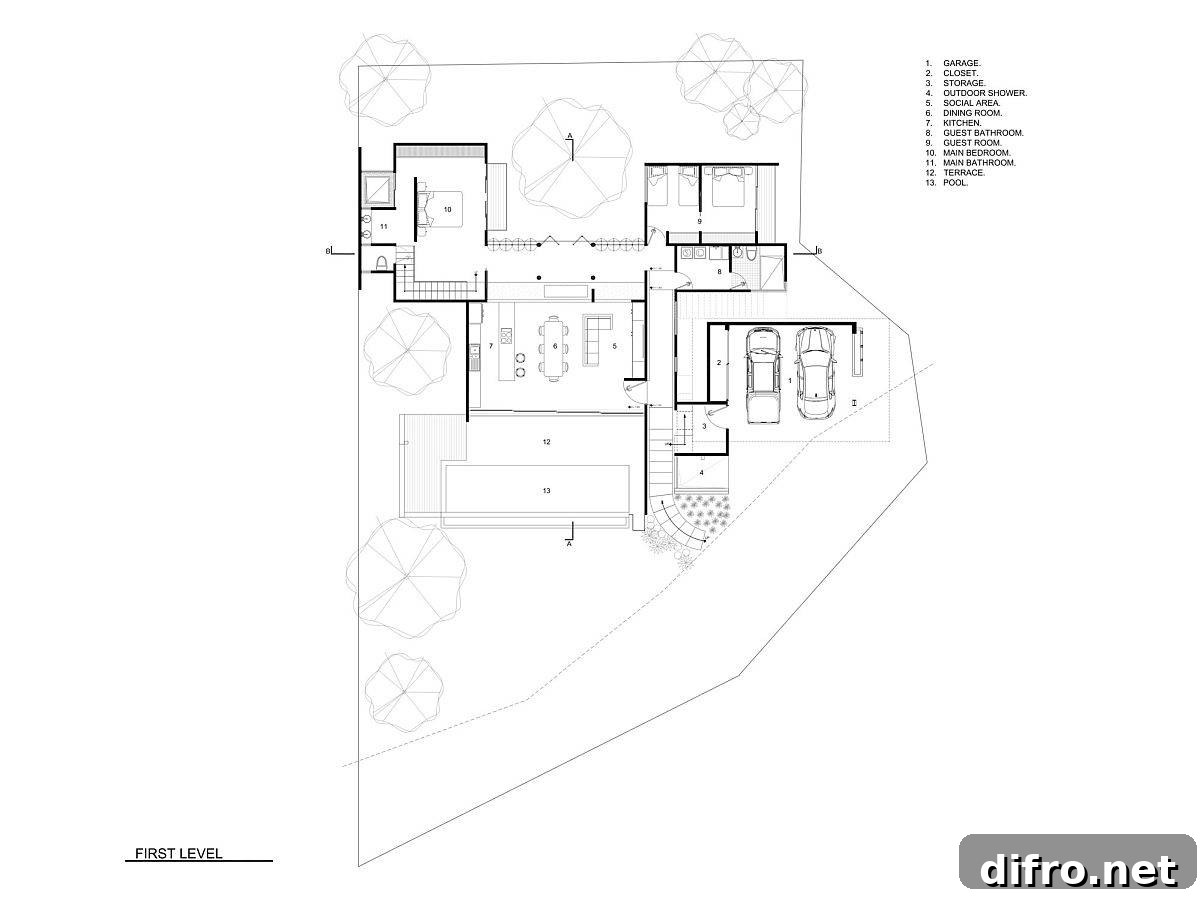
The project’s floor plans emphasize functionality, clear circulation and the preservation of sightlines to the courtyard and landscape. These plans support a lifestyle that balances privacy with openness, providing spaces for quiet retreat as well as social gathering. By prioritizing durability, passive strategies and a restrained architectural language, Ethos House stands as an example of contemporary, eco-conscious residential design in Carrillo de Guanacaste. It highlights how modern minimalism and sustainable design can produce a home that is both elegant and practical—resilient to the elements, respectful of its setting, and efficient to maintain.