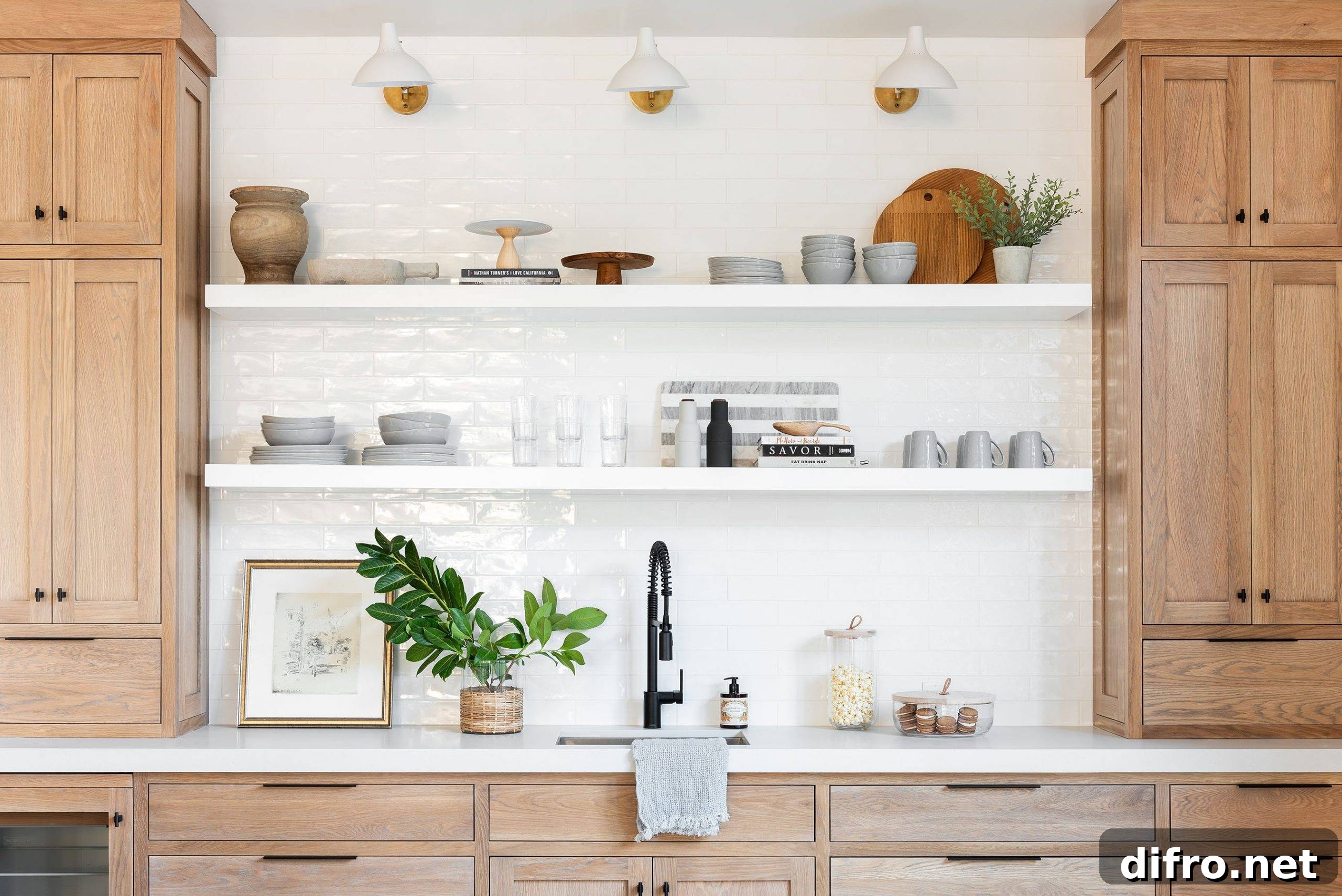
Open kitchen shelving has become a major trend in modern kitchens. Many designers are replacing upper cabinets with open shelves to introduce airiness, texture and personality into the room. Open shelving works equally well as practical storage and as a place to showcase favorite dishes, glassware and curated decor pieces that contribute to the overall kitchen aesthetic.
Styled correctly, open shelving reads as intentional and polished. Left unmanaged, it can look cluttered and chaotic. Below are clear, practical tips to help you style open kitchen shelves so they look curated, functional and cohesive with your kitchen design.
Selection
Reserve open shelves for items that are both useful and attractive. Display your favorite mugs, a set of matching plates or colorful bowls that add visual interest. Keep everyday items accessible, but store chipped, mismatched or worn pieces behind closed cabinet doors. When deciding what to show, think in terms of quality rather than quantity: a few well-chosen items make more impact than many small, scattered objects.
Accessorize
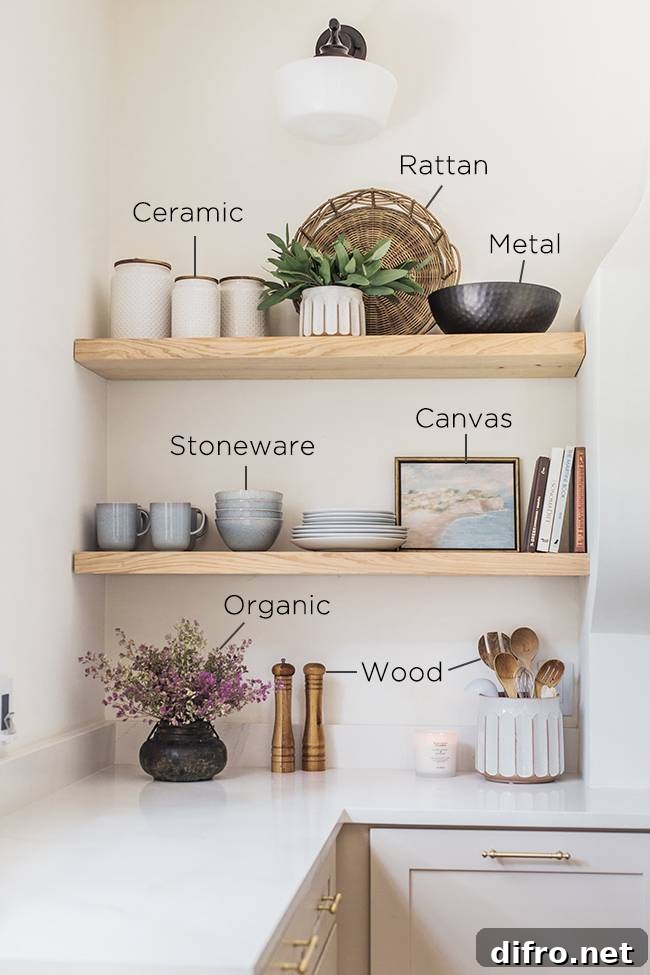
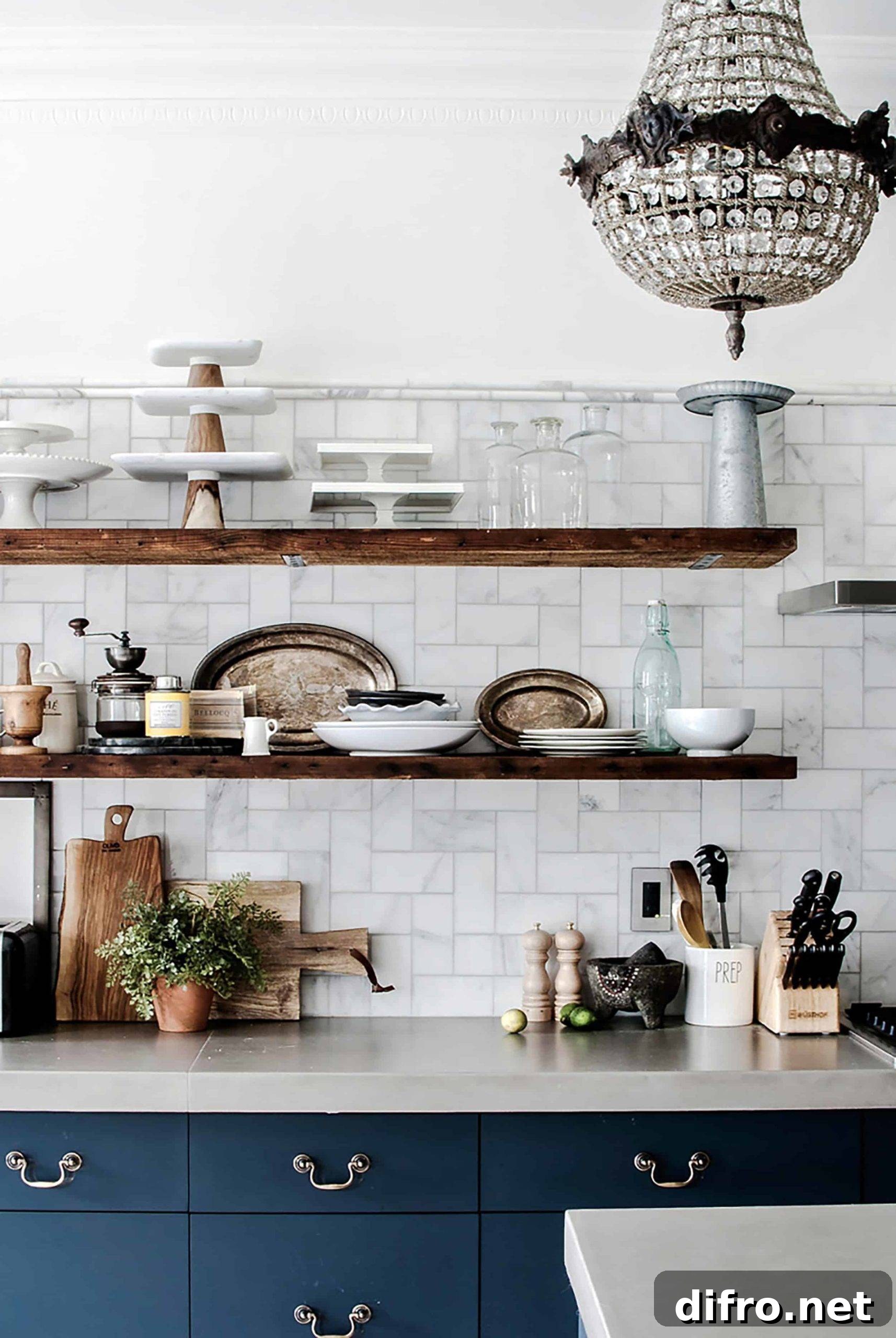
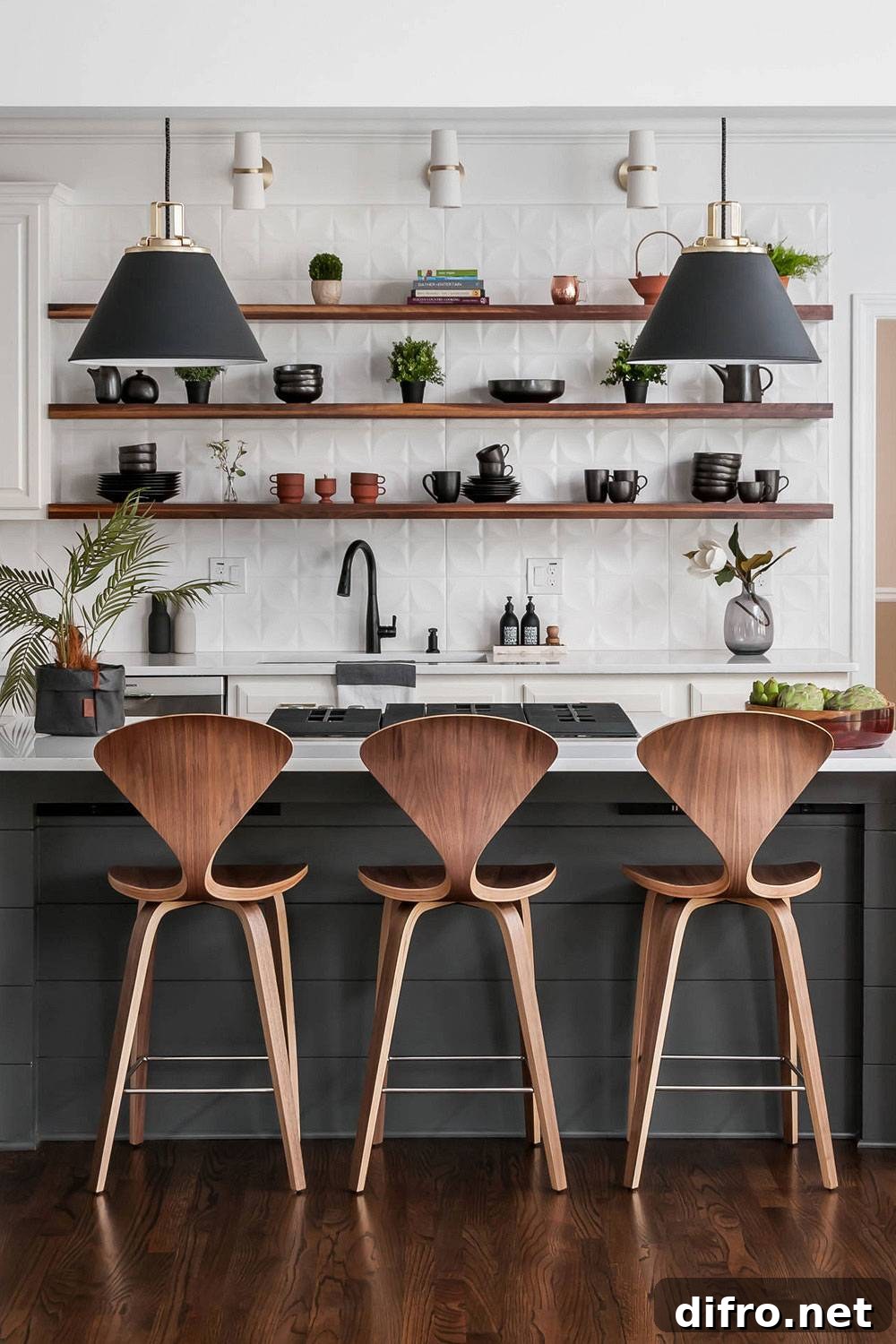
Open shelves aren’t limited to dishes. Use them to echo the decorating style of the rest of the home. Mix in cookbooks, small plants, decorative trays, stylish canisters, or a favorite candle to make the shelves feel layered and lived-in. Vary textures—ceramics, glass, woven baskets and metal—so the arrangement reads as intentional and tactile. Keep a consistent color palette or complementary tones to maintain visual harmony.
Add dimension
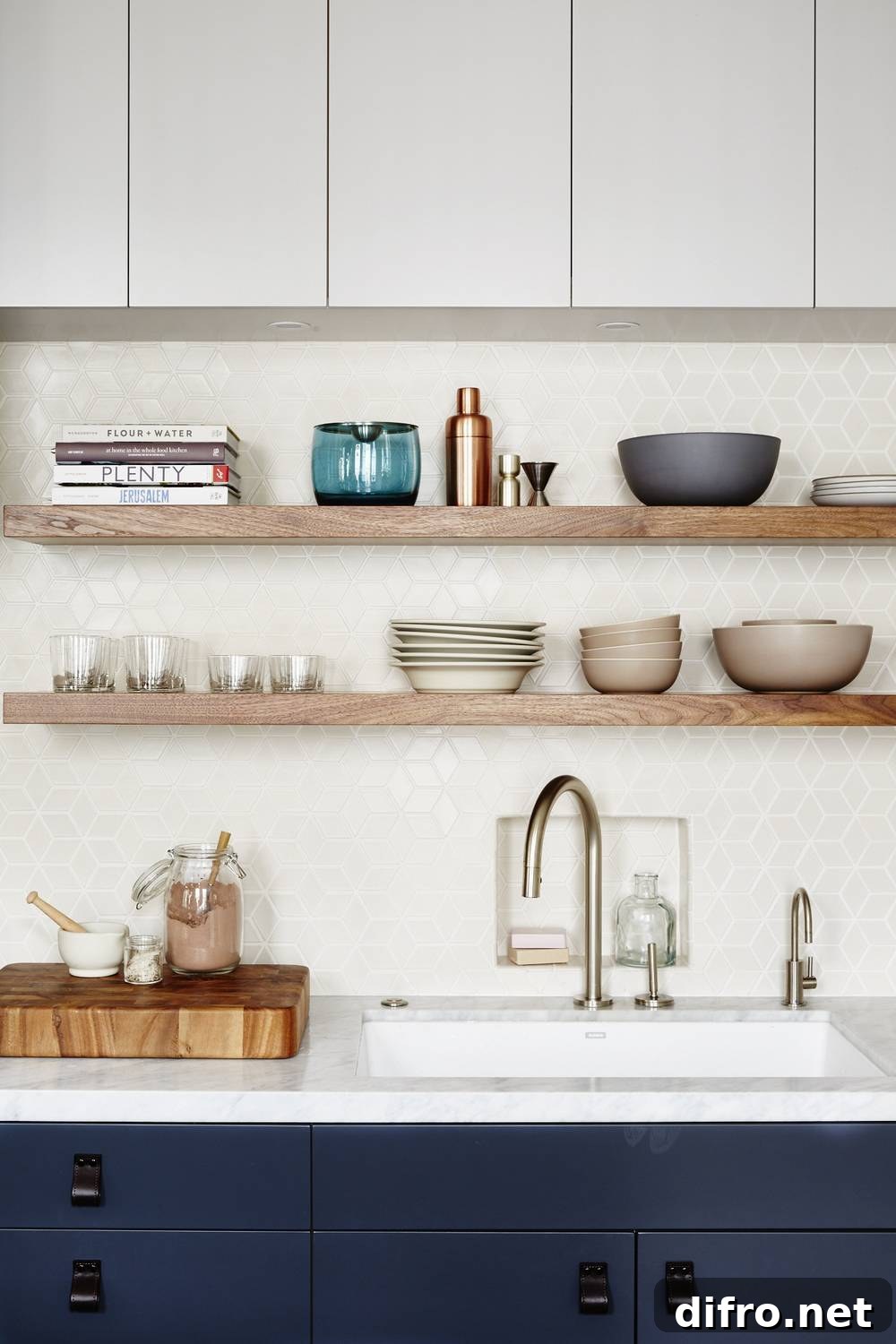
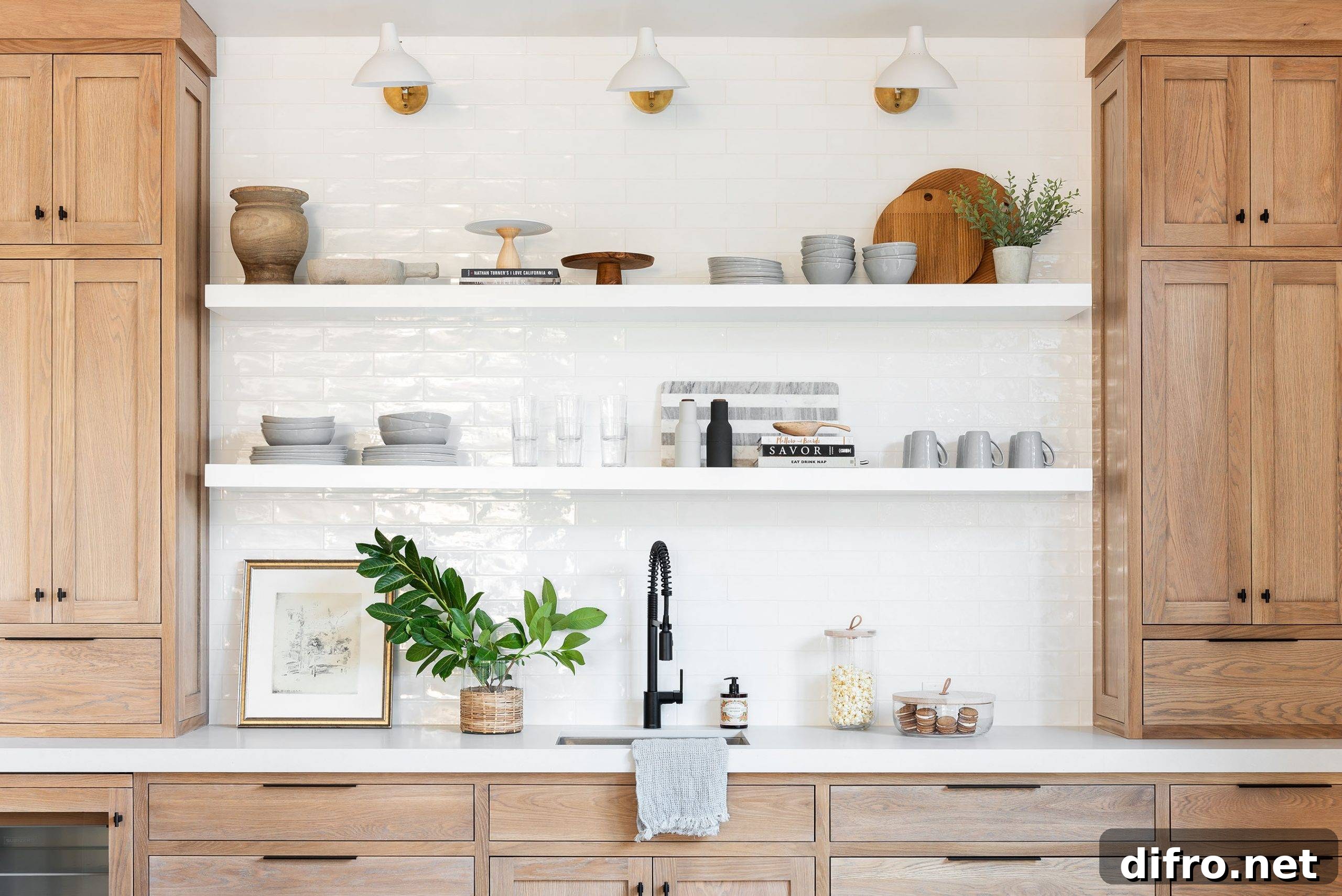
To achieve a curated look, introduce variation in height, depth and shape. Combine tall vases with low bowls, stack plates, and position some objects to lean against the wall as anchors—wooden boards, framed prints or a simple piece of art work well for this. Layering objects in front of one another adds depth and a collected feeling.
Group objects in odd numbers—three or five tends to feel balanced and natural. Within each group, maintain a common thread such as material, color or function so the arrangement feels cohesive rather than random.
Give purpose
Design your open shelving to support everyday routines. Create a dedicated coffee station with mugs, a French press or espresso accessories in one area. For bakers, display commonly used ingredients—flour, sugar, oats—in matching glass jars to combine accessibility with style. A functional purpose helps you decide which items to show and which to store away, keeping shelves both beautiful and useful.
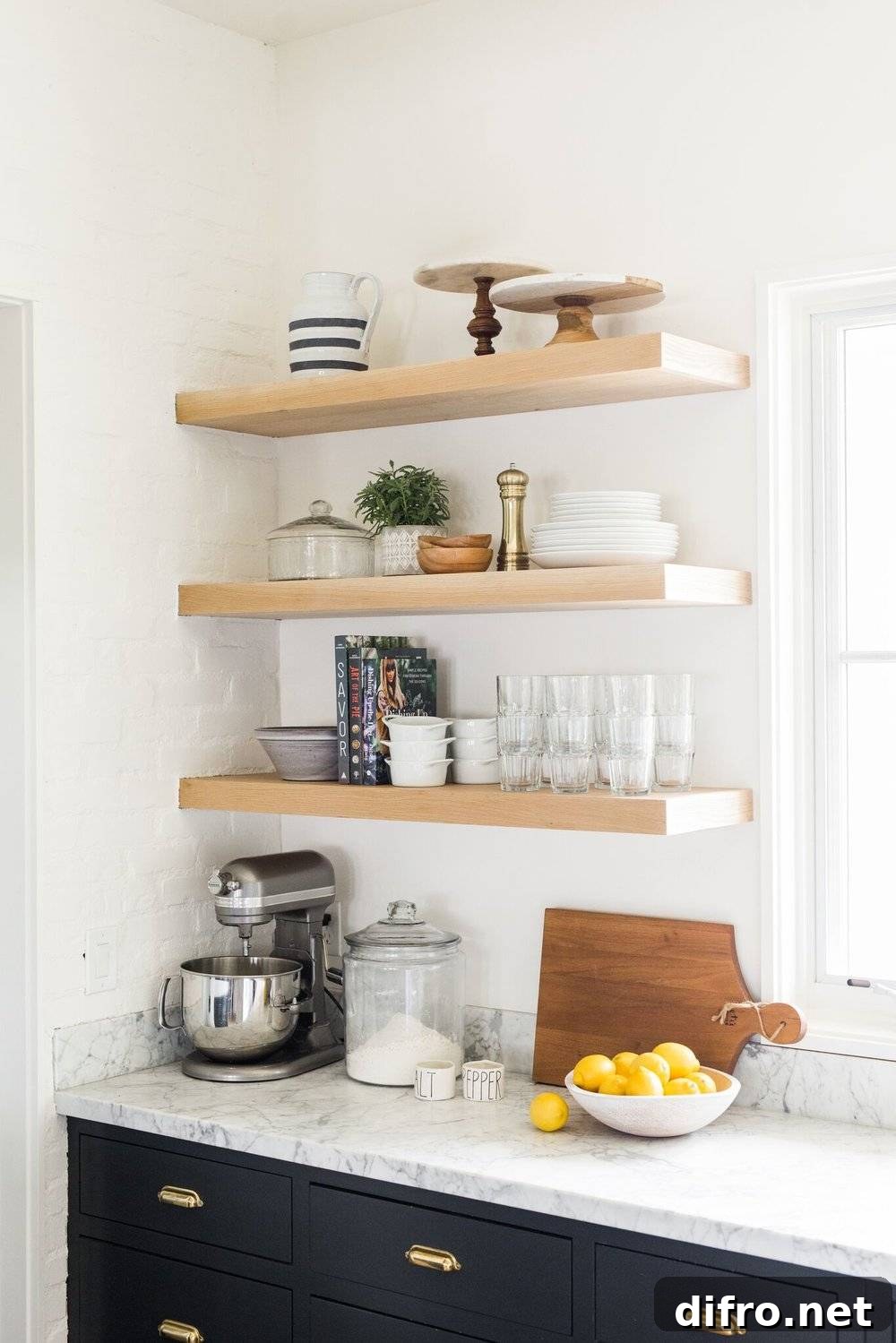
Use wooden shelving for warmth
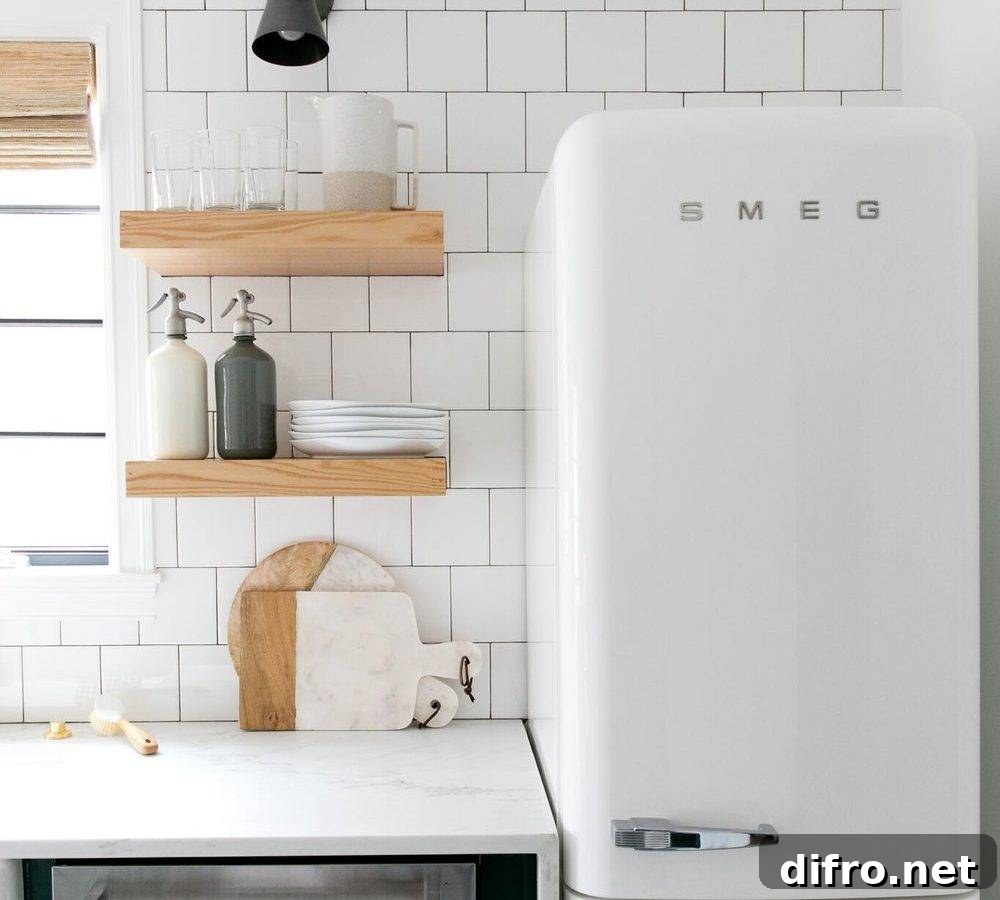
Wood shelving adds warmth and texture that complements many kitchen styles, from modern farmhouse to contemporary rustic. Warm wood tones contrast beautifully with white subway tile and neutral backsplashes, creating a welcoming focal point. Choose solid or reclaimed wood to add character and durability.
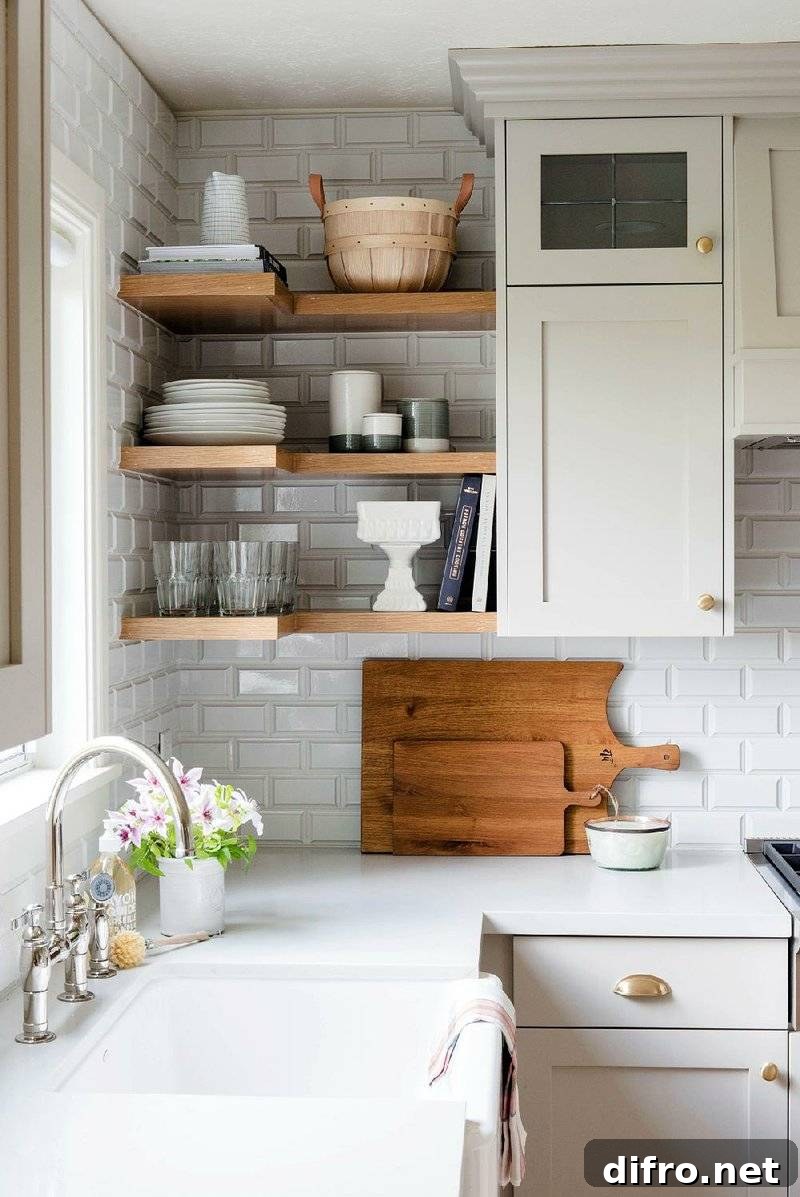
Use deeper or corner shelves to store less frequently used items and free up prime, eye-level space for focal pieces. Keep the most-used items at a comfortable reach while reserving higher or deeper shelves for servingware that is pulled out only occasionally.
Balance and maintenance
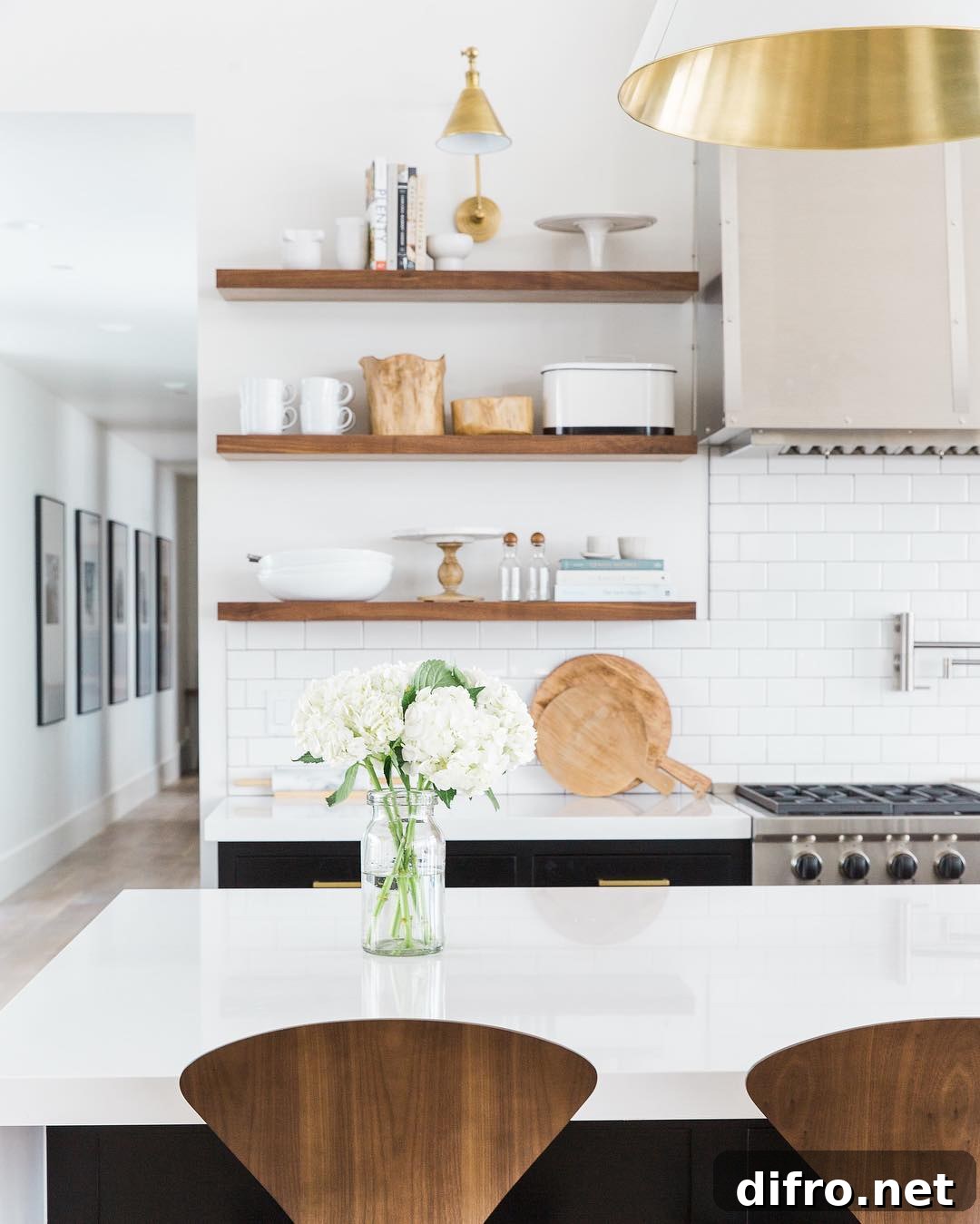
Symmetry can help create a tidy, intentional look—paired stacks of dishes or matching sets placed at regular intervals read as organized and calming. But symmetry isn’t required; asymmetrical arrangements that repeat shapes, colors or textures can look equally polished.
Keep shelves fresh by editing them regularly. Remove items that collect dust or no longer fit the palette, and swap pieces seasonally to keep the display feeling new. Wipe shelves and decorative objects when needed to preserve the clean, curated effect.
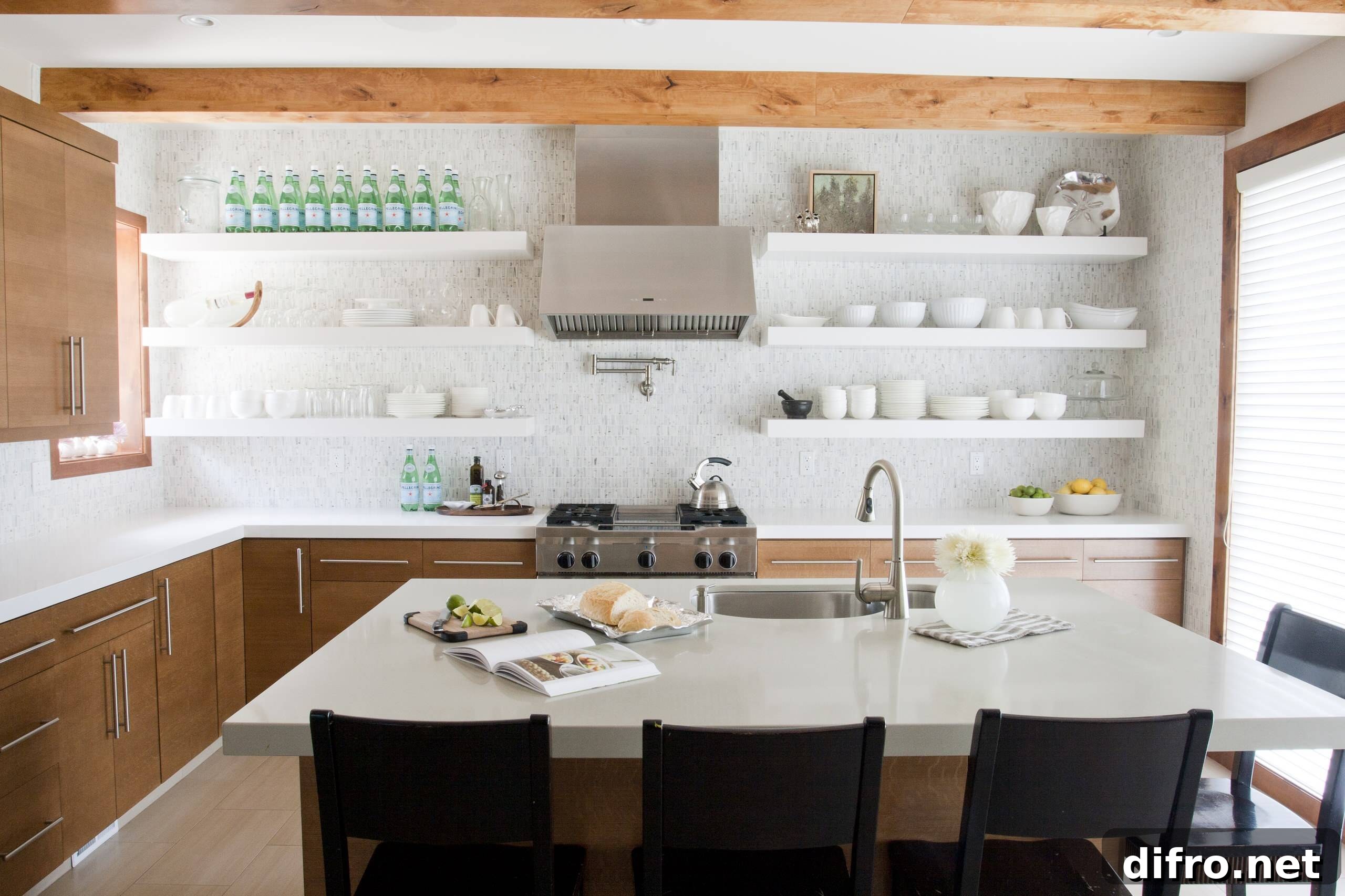
With thoughtful selection, purposeful styling and routine editing, open kitchen shelving can transform your kitchen into a functional, attractive space that feels curated and inviting. Use these practical tips to strike the right balance between display and storage, and let your shelves reflect both your daily habits and personal style.