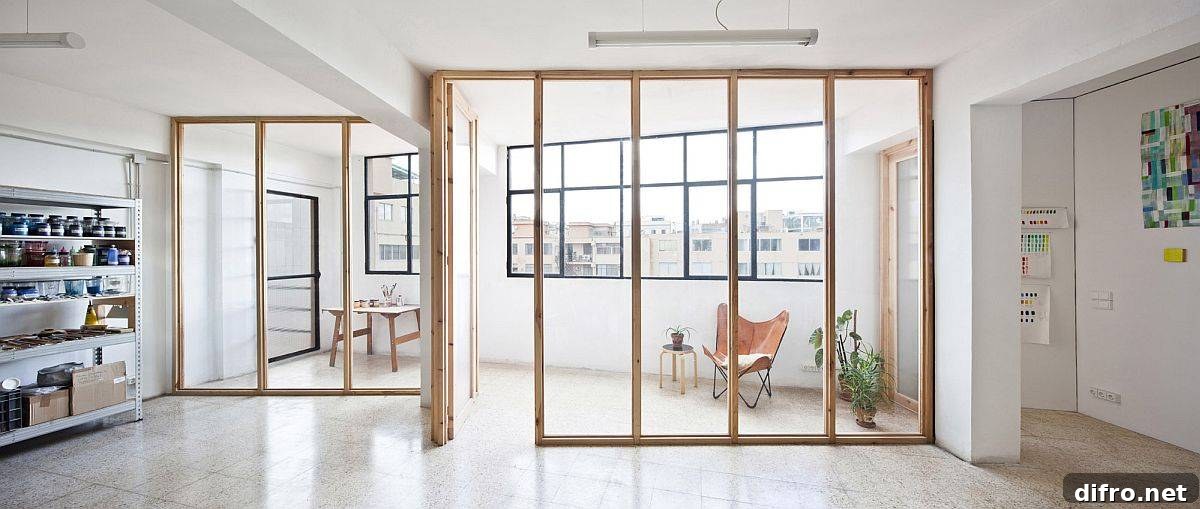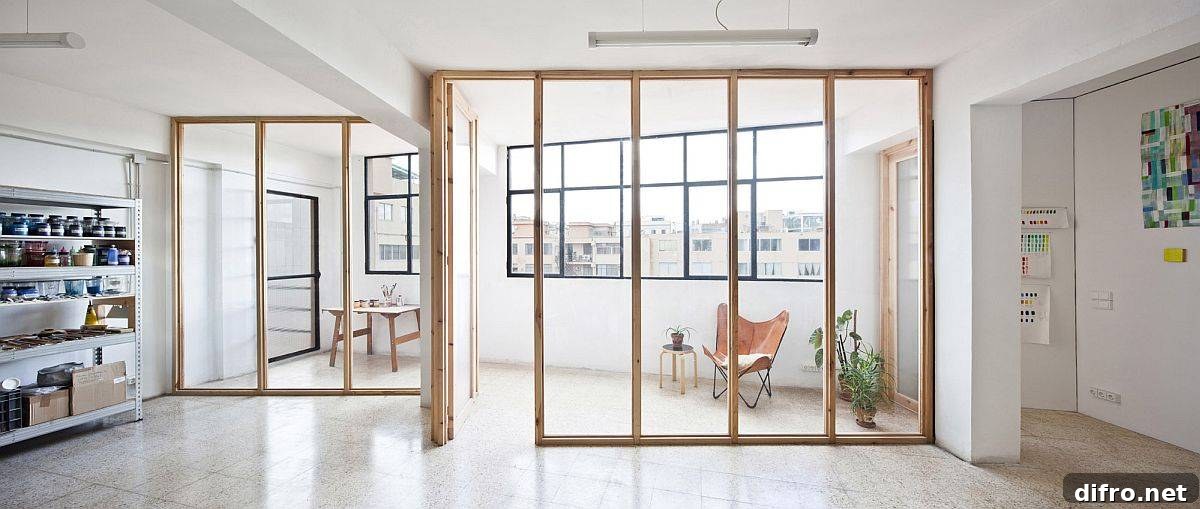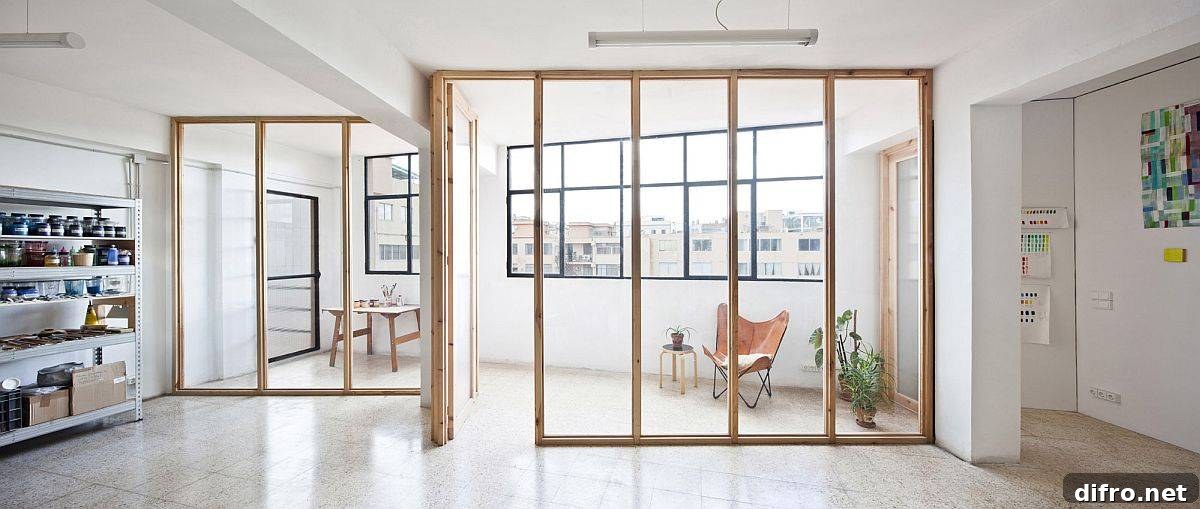
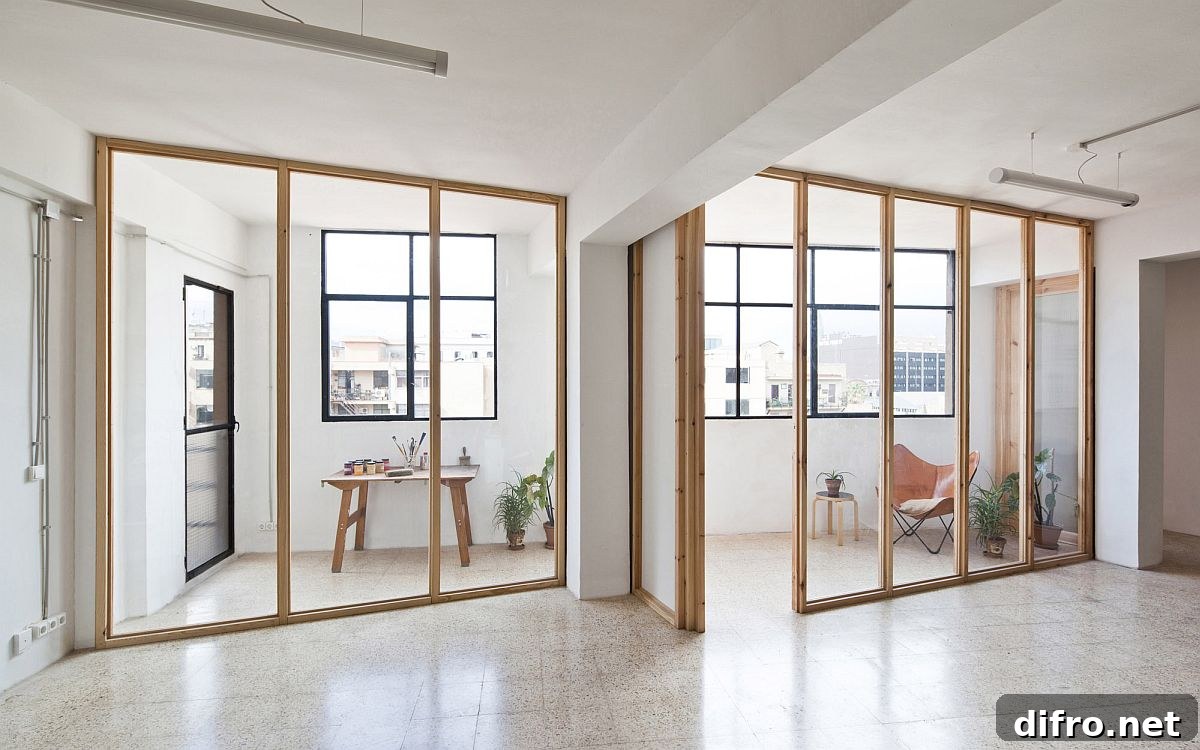
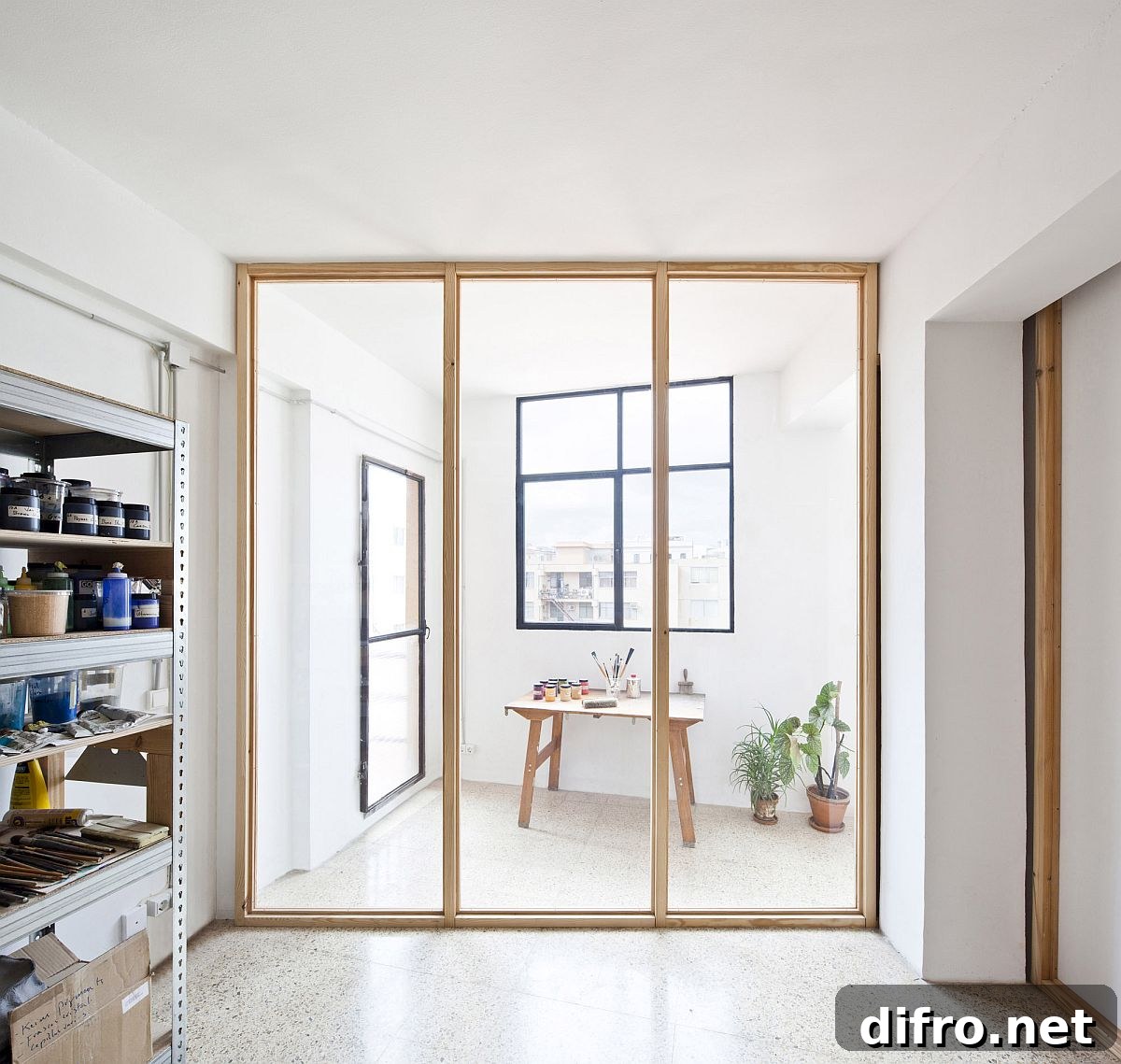
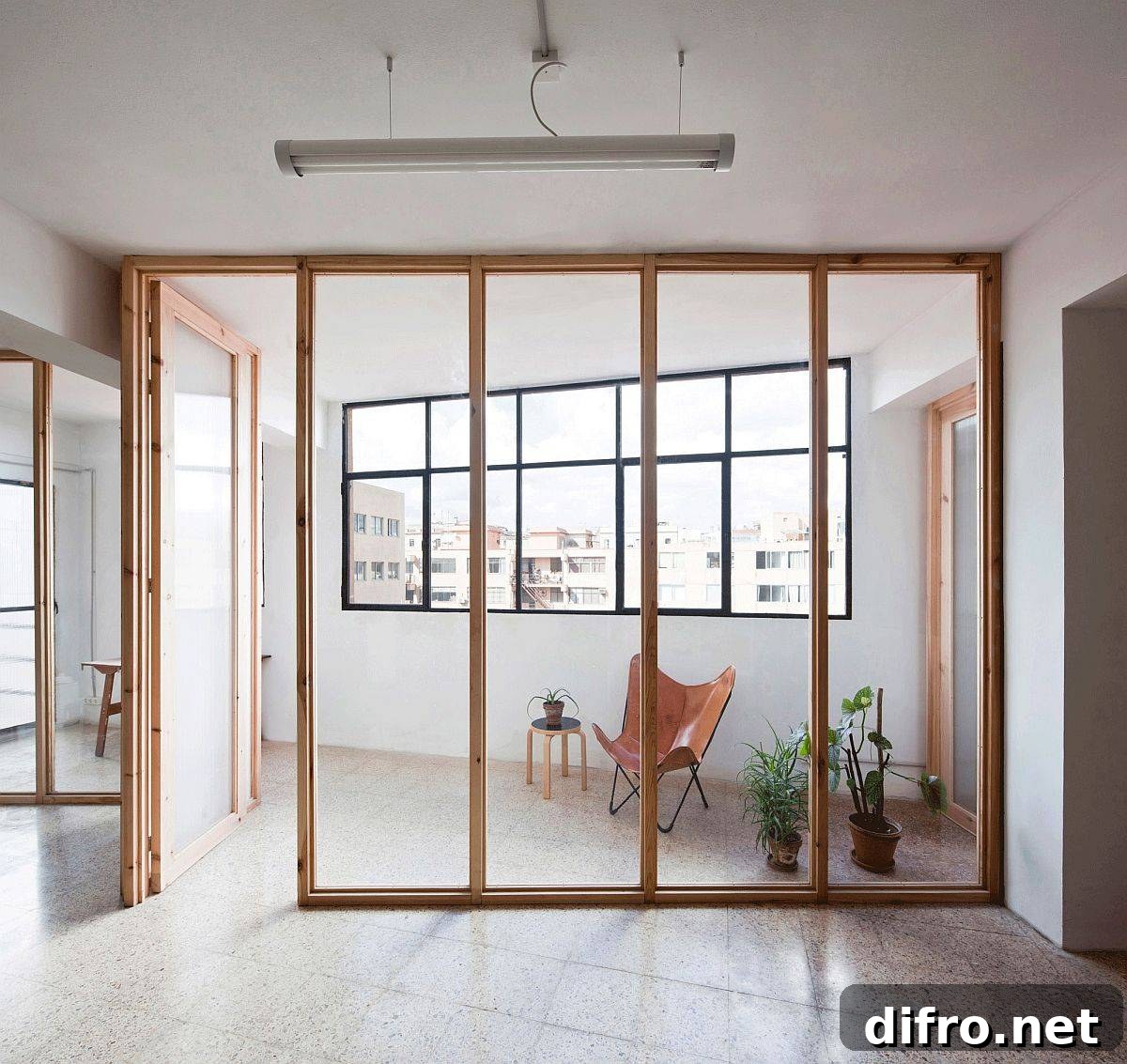
How do you transform a dim, dated interior into a bright, inviting workspace without changing the floor plan or making permanent structural alterations? The studio of artist Victor Pérez-Porro in Barcelona, redesigned by Anna & Eugeni Bach, offers a clever, economical solution to that problem. The approach is refreshingly simple: a series of sliding glass doors and glazed partitions set within a slim wooden frame form a room-within-a-room. These lightweight, movable elements create buffer zones between the exterior and the main studio while also providing useful thermal insulation.
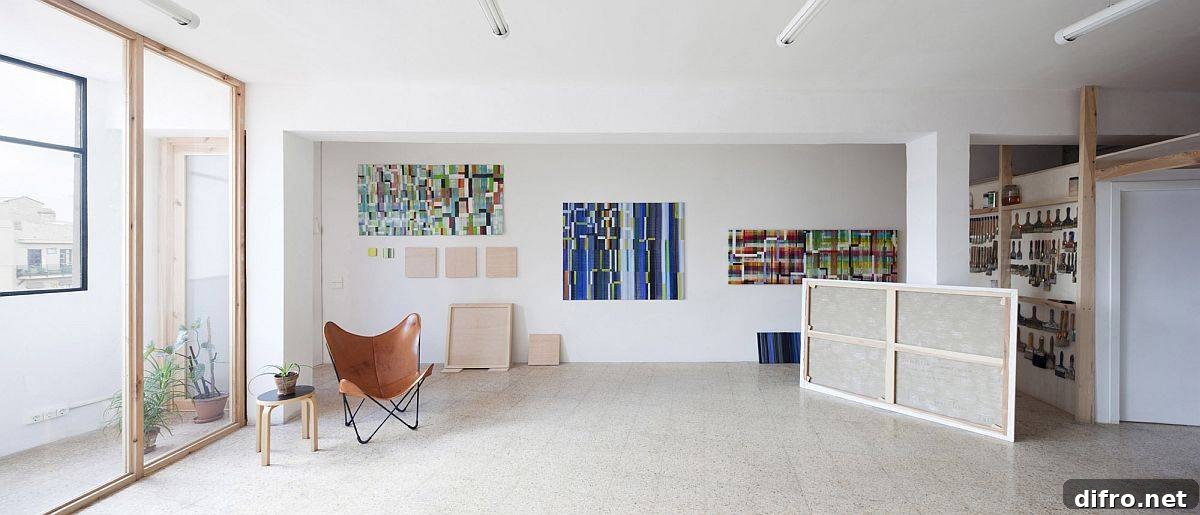
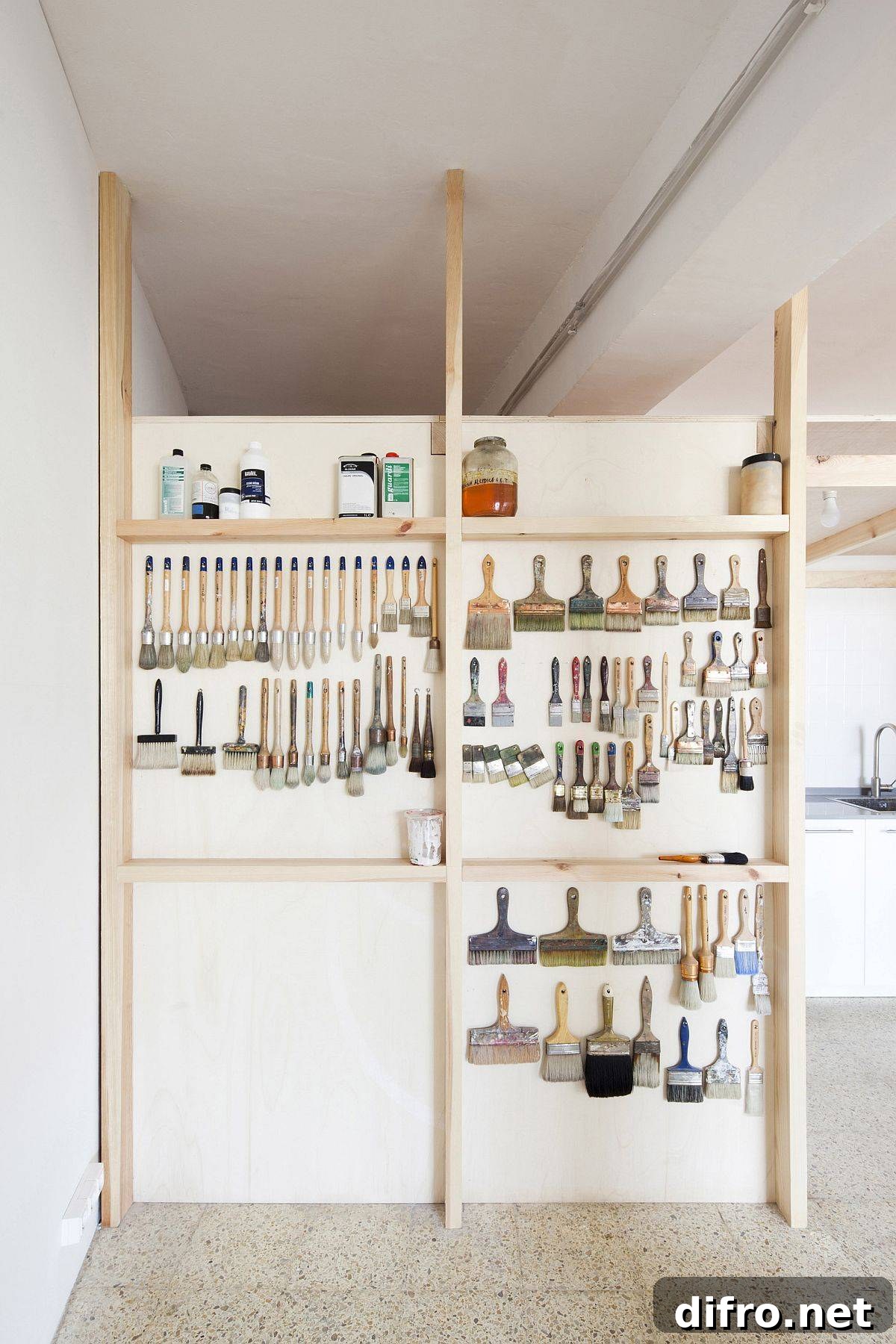
The glazed partitions slide smoothly to open or close, creating small recessed balconies that act as flexible outdoor-like spaces and can be closed off for full privacy when required. The main studio remains an open, white volume that benefits from the added daylight and the visual depth created by the glass. Along one wall a compact single-wall kitchen sits beside a bathroom and wash area. These service spaces are cleverly concealed behind a custom wooden wall that doubles as both a display for artwork and a functional storage system for supplies and tools — a restrained, highly practical fit-out that follows a “less is more” design ethic.
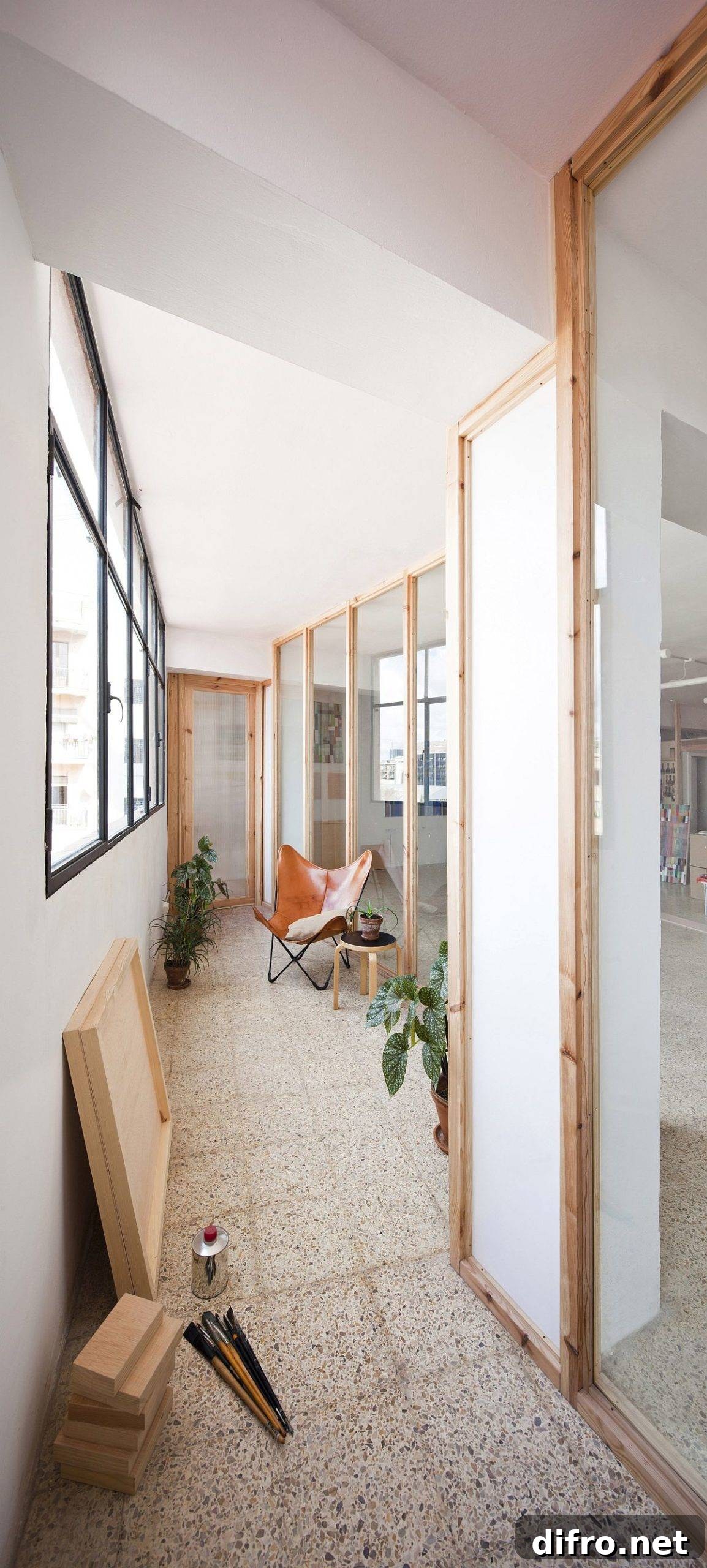
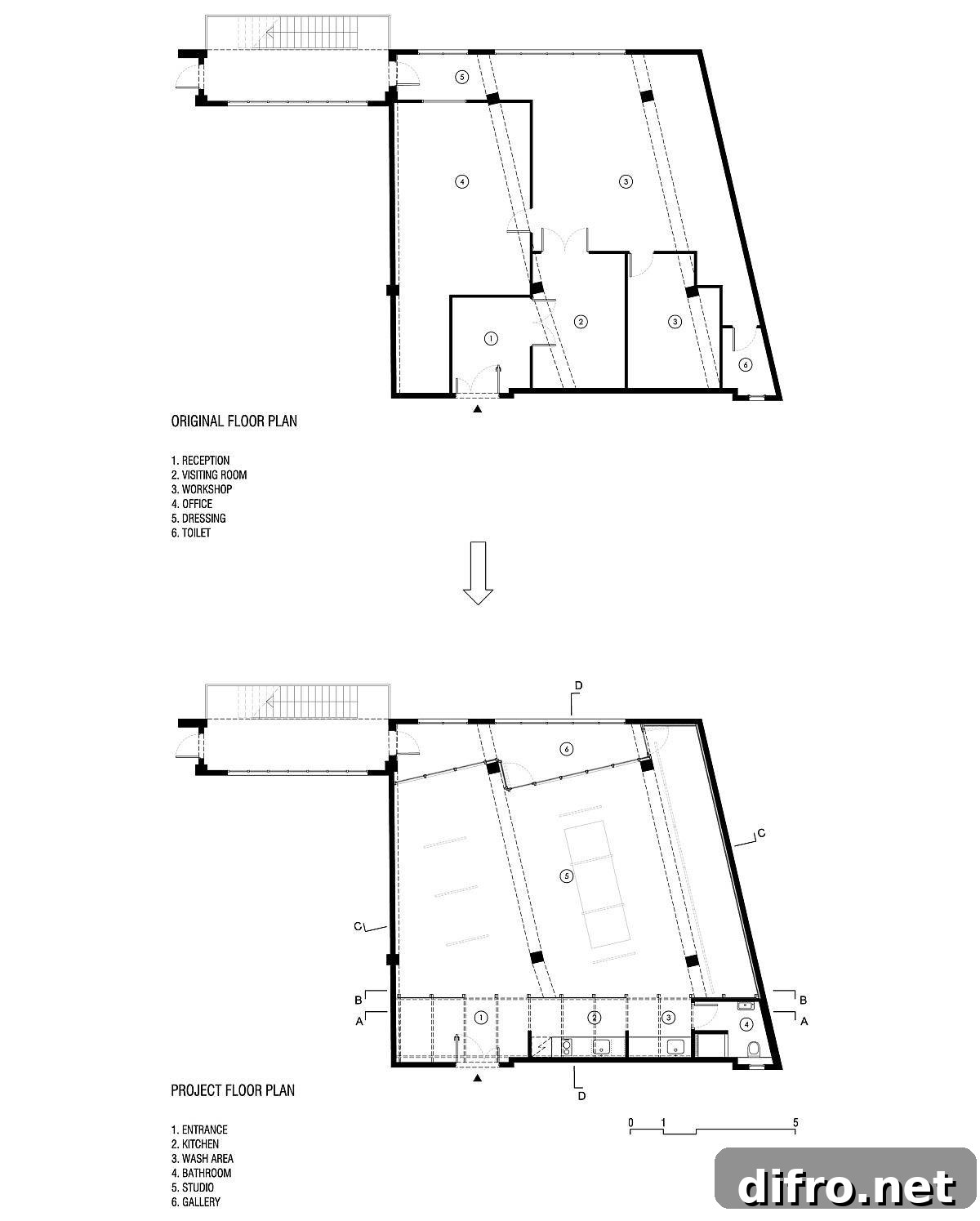
At the heart of the intervention is a rhythmic, zig-zag arrangement of glazed panels and frames that produces two narrow, sheltered areas between the main windows and the new partitions. These intermediate zones function like covered terraces: they bring an outdoorsy feeling into the interior while giving the studio a layered spatial quality. Because the glass elements are operable, the layout can adapt to different activities — open and airy for large-scale work, or more enclosed for focused, private tasks.
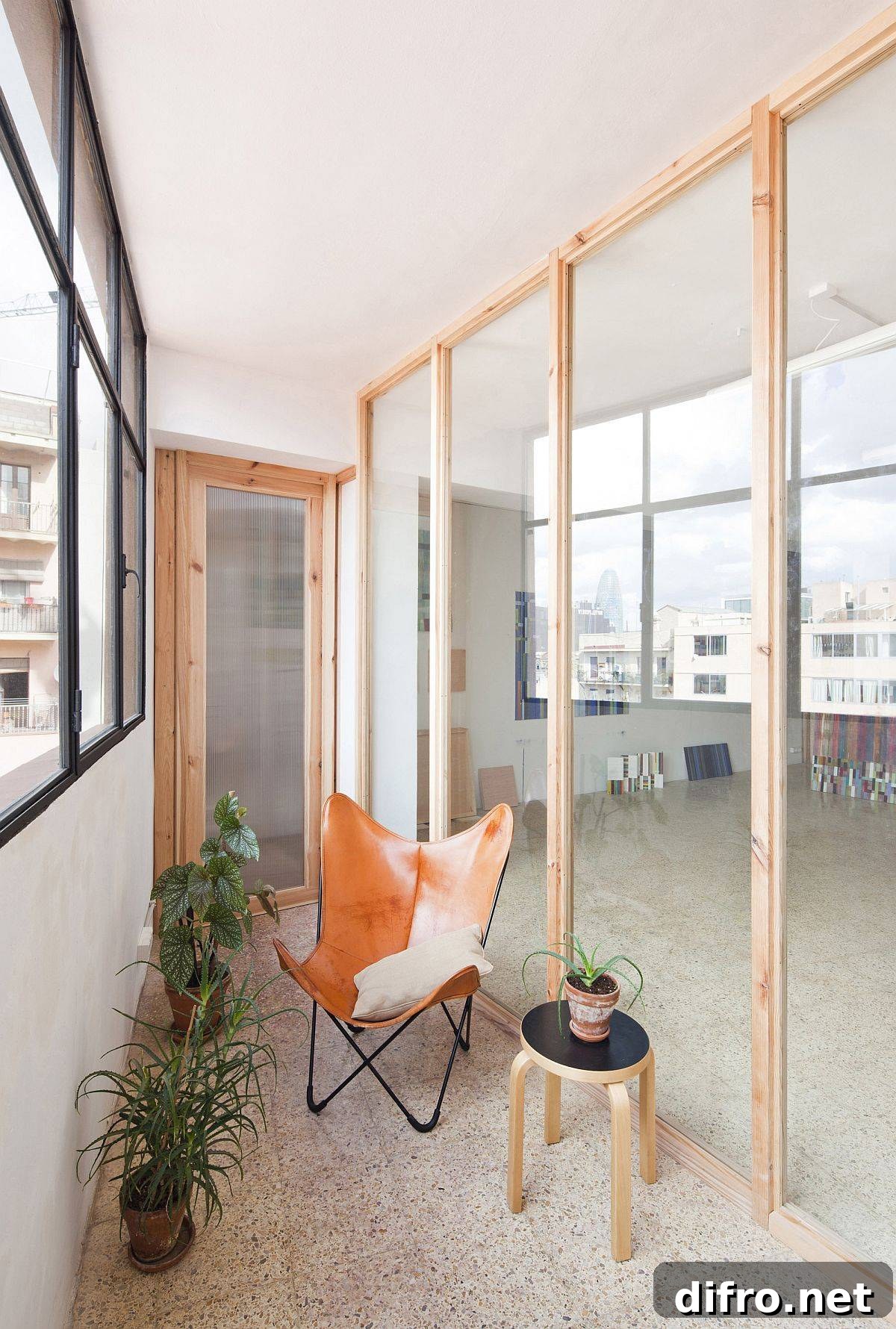
In addition to improving daylight and circulation, the thin wooden framework plays an important role in thermal regulation. By creating an intermediate buffer between the outer windows and the inner studio, the new structure helps moderate temperature swings while keeping the aesthetic light and minimal. The choice of simple, natural materials — clear glass and warm timber — preserves the visual continuity of the workspace and highlights the artwork without competing for attention.
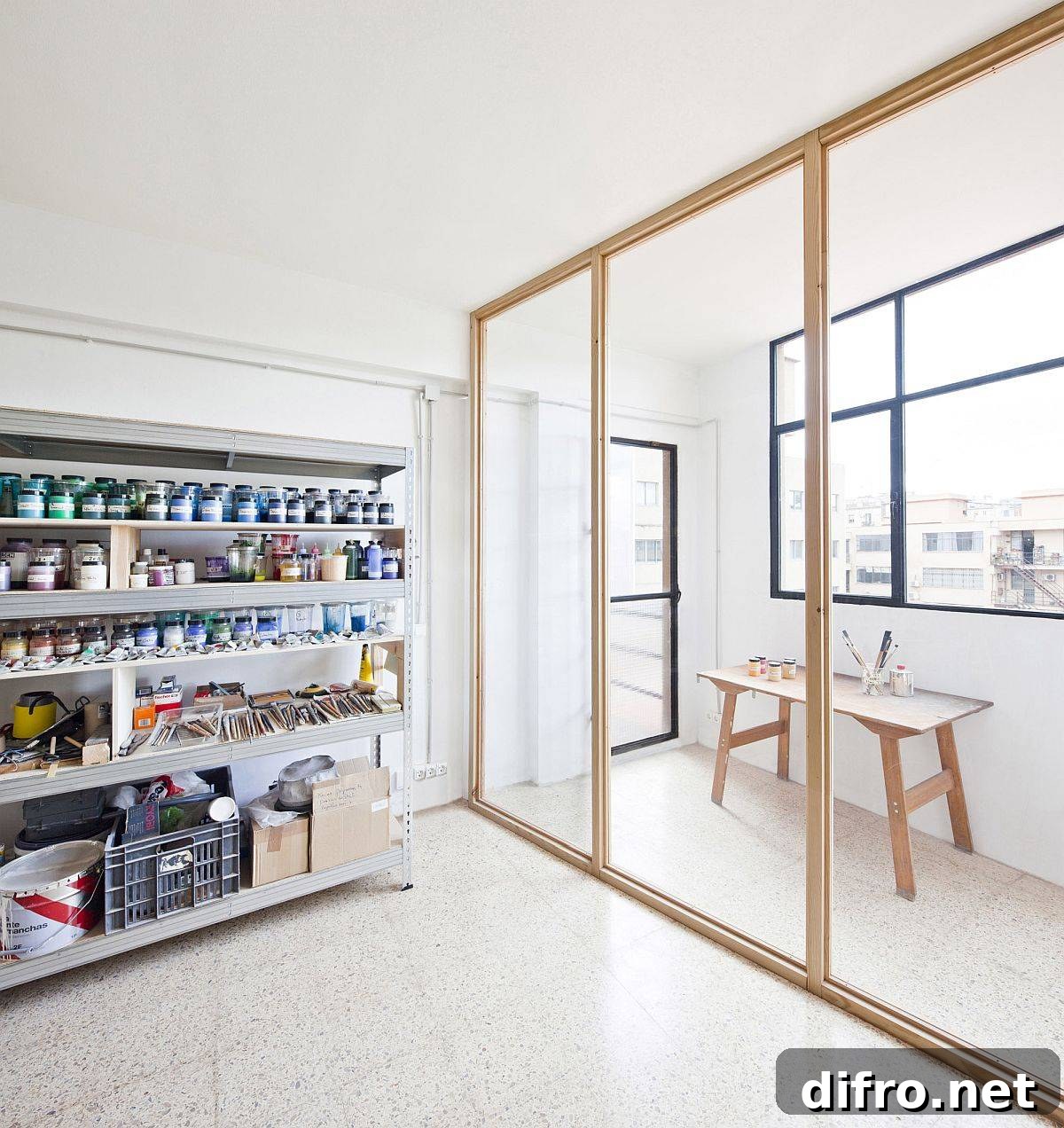
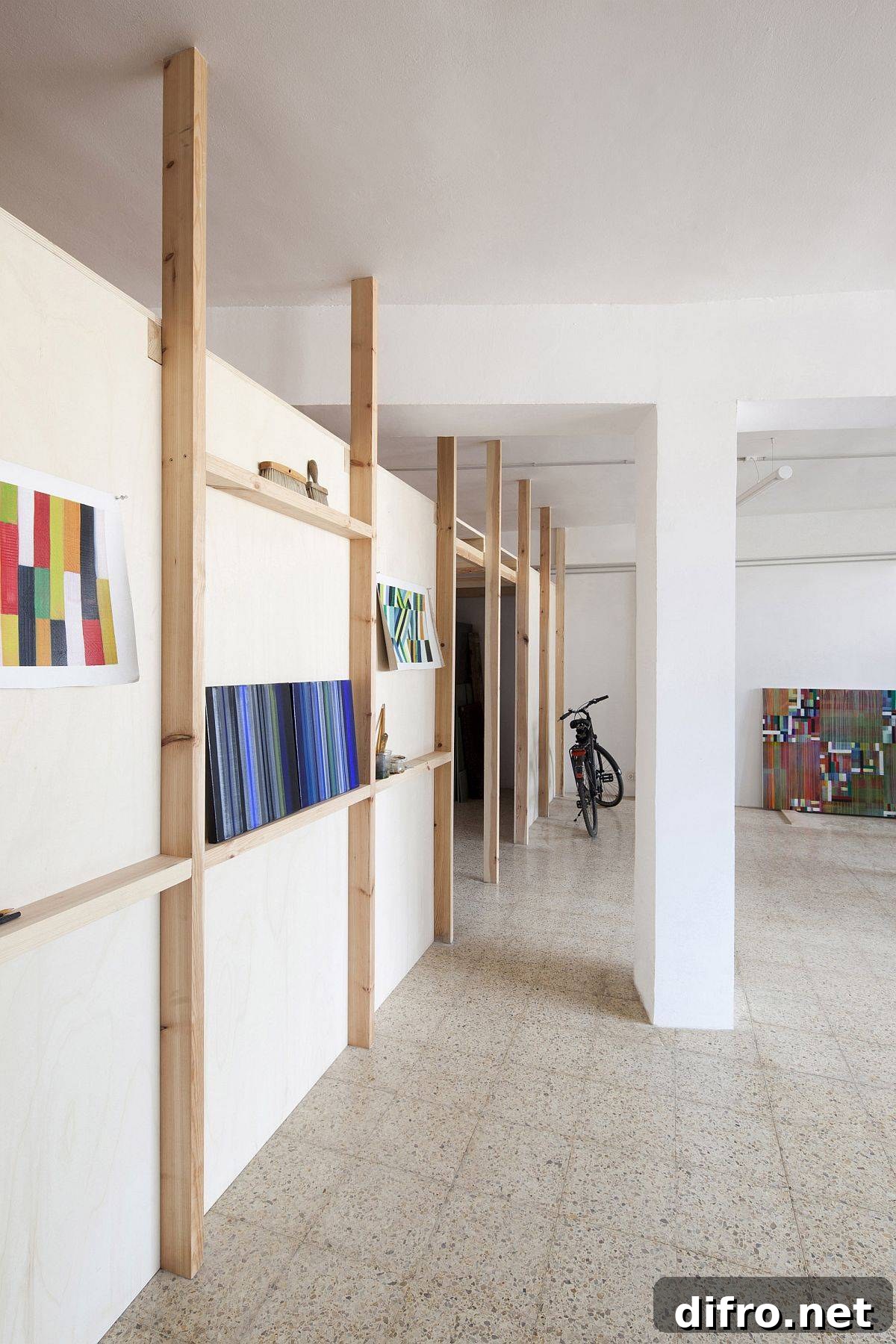
Storage and utility are resolved with equal thoughtfulness. A slim wooden wall system with hooks, shelves and recessed cabinets keeps tools and materials organized and readily accessible while presenting a tidy, intentional backdrop for works in progress. Rather than hide the studio’s functions, the design celebrates them: materials and surfaces become part of the visual identity, and functional elements are arranged to support the artist’s workflow.
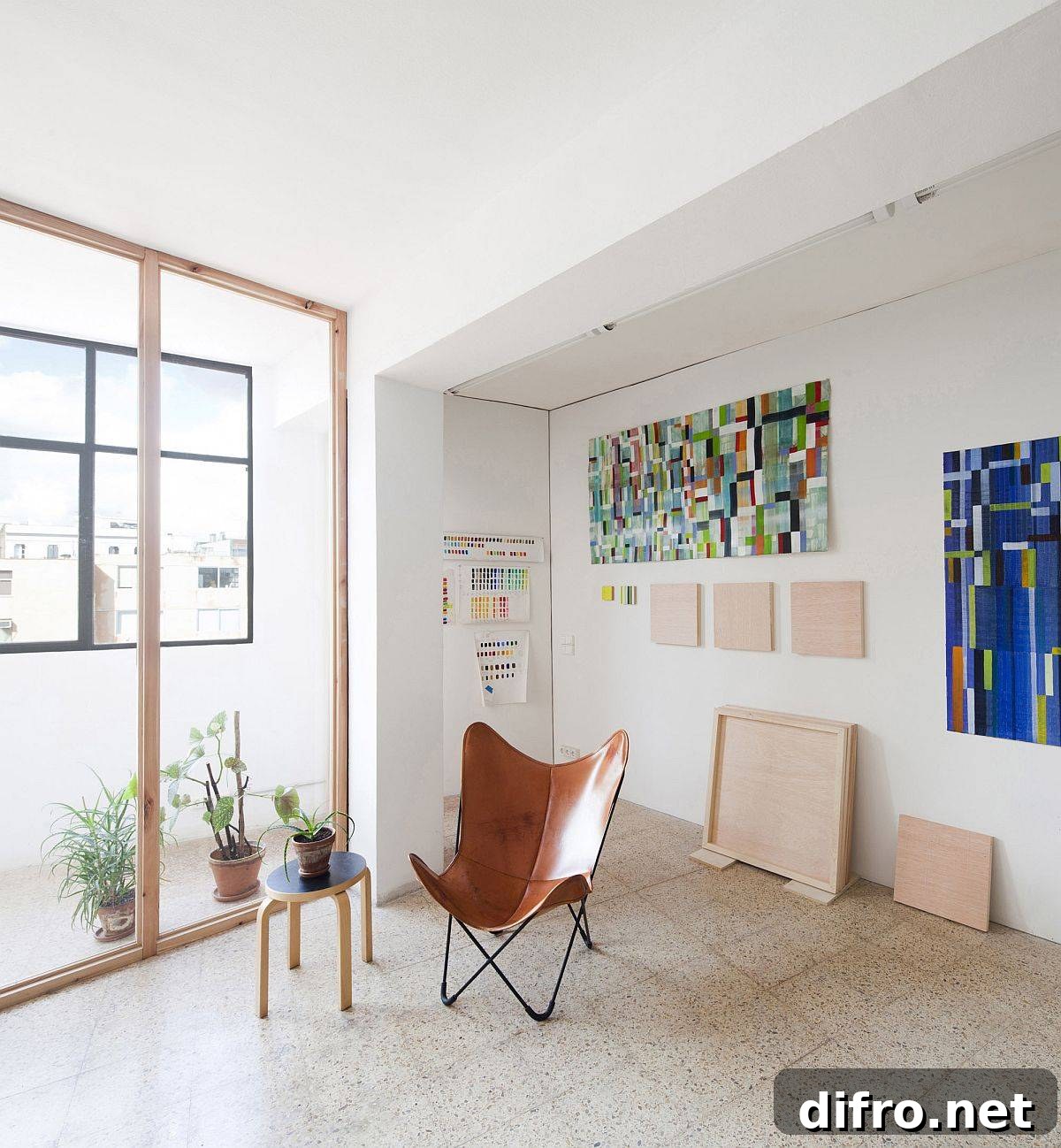
The resulting composition is a zig-zagged partition that creates sheltered zones between the glazing and the windows, adding a new “room” within the open plan. Parallel to the opposite wall, a light wooden structure accommodates the kitchen, sink, toilet and entrance, organizing services compactly while freeing the main space.
Overall, this project demonstrates how modest, reversible interventions can dramatically improve comfort, daylight and the spatial experience of an existing apartment. By introducing transparent, moveable boundaries and a concise wooden service module, the designers delivered a versatile studio where light, function and display coexist harmoniously — a practical and elegant model for converting older interiors into lively, contemporary workspaces.