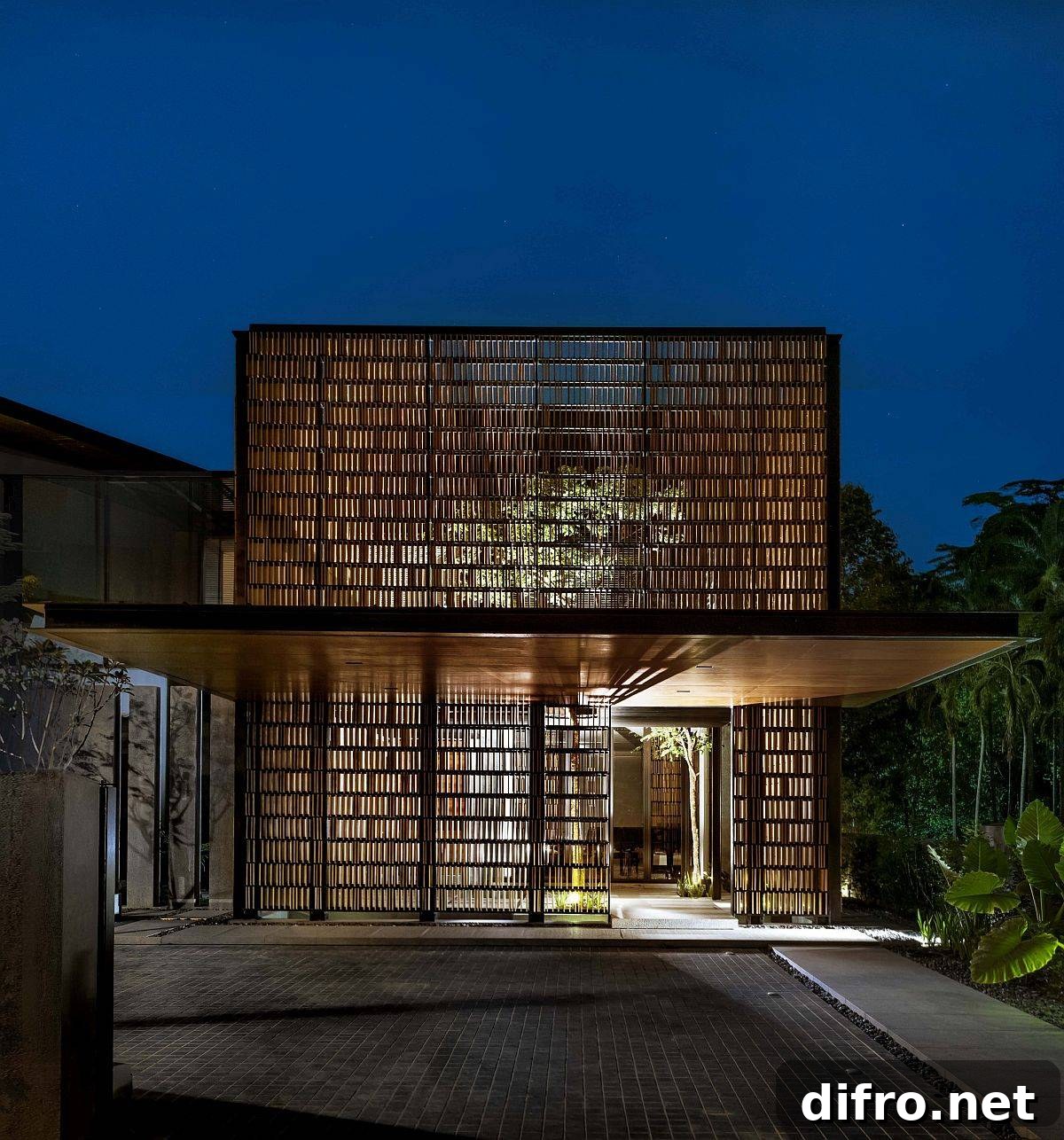
The public face of a house usually presents the home at its most polished — welcoming, striking, and designed to catch the eye of visitors and passersby. House 24 in Singapore, however, challenged the conventional idea of a street-facing façade. Sited on a triangular plot with its rear yard opening onto a lush, state-owned greenbelt, this residence required a different approach. To address the need for privacy, natural ventilation and a distinctive visual identity, Park + Associates designed a custom woven timber screen that defines the home’s street presence while responding to its unique site conditions.
The timber screen functions as more than a protective shield; it reads like a finely crafted work of architecture that balances openness with seclusion. Its woven pattern moderates sunlight and views: sunlight is filtered into the interior, producing an ever-changing play of light and shadow throughout the day. This dynamic effect animates interior surfaces and adds a poetic quality to the entry sequence. By allowing glimpses through to the courtyard while limiting direct sightlines from the street, the screen simultaneously preserves privacy and maintains a visual connection to the exterior environment.
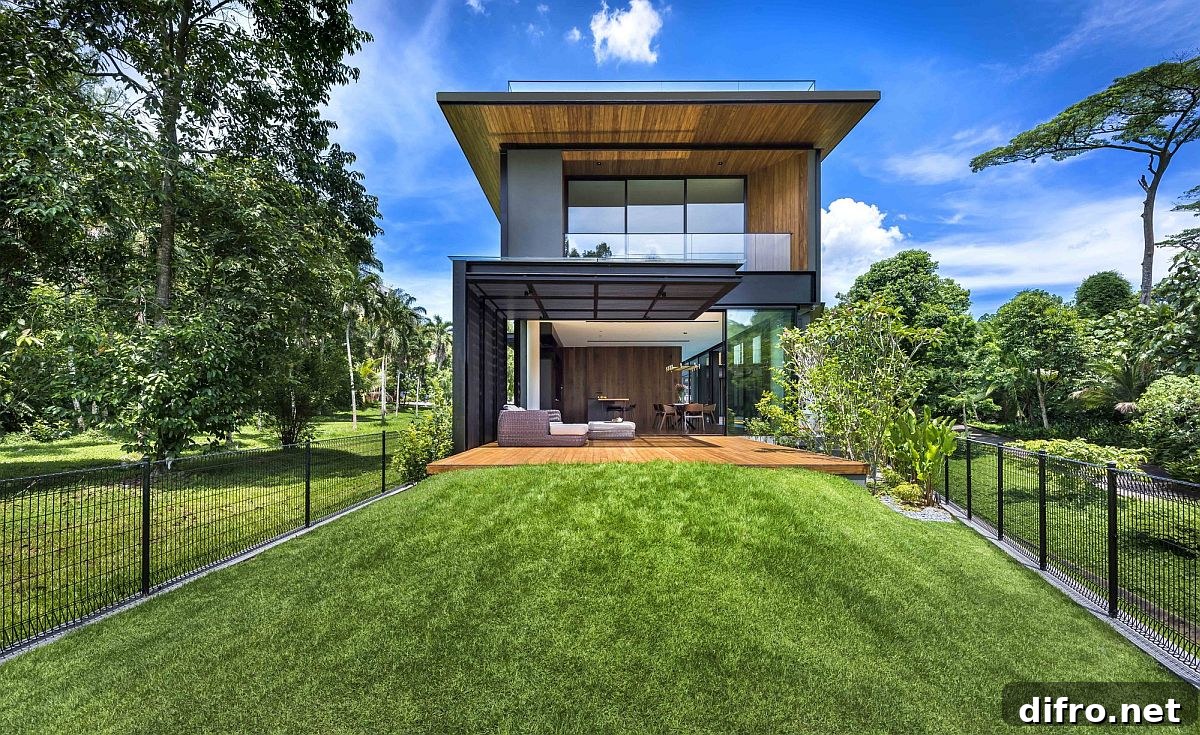
A mature tree already on the site is embraced as part of the entrance composition, softening the threshold and reinforcing the home’s relationship with landscape. The ground floor features an open-plan living area, kitchen and dining space, all arranged to open toward the rear garden. Upper-level bedrooms likewise benefit from views and ventilation toward the green expanse behind the house, allowing the rear landscape to become an integral part of everyday life.
[Photography: Edward Hendricks]
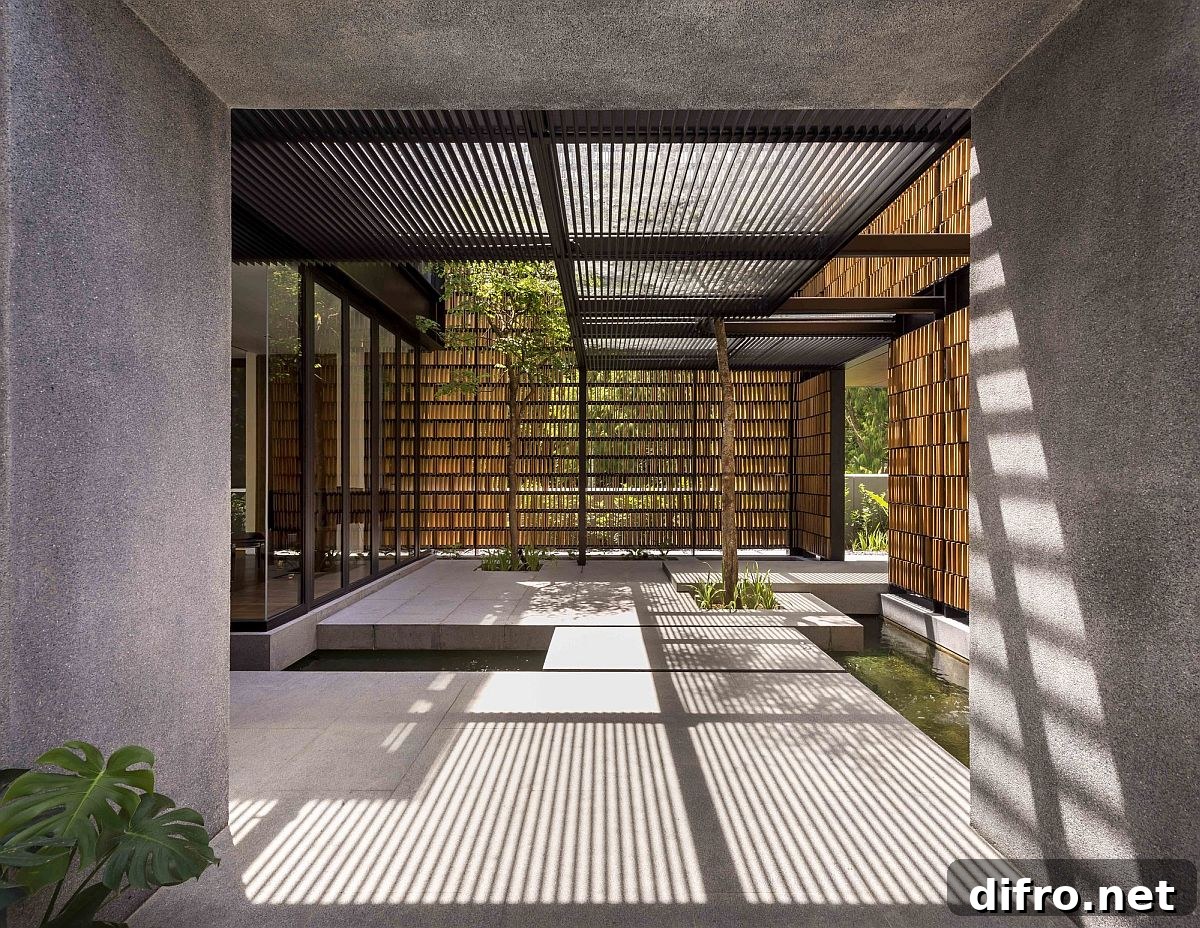
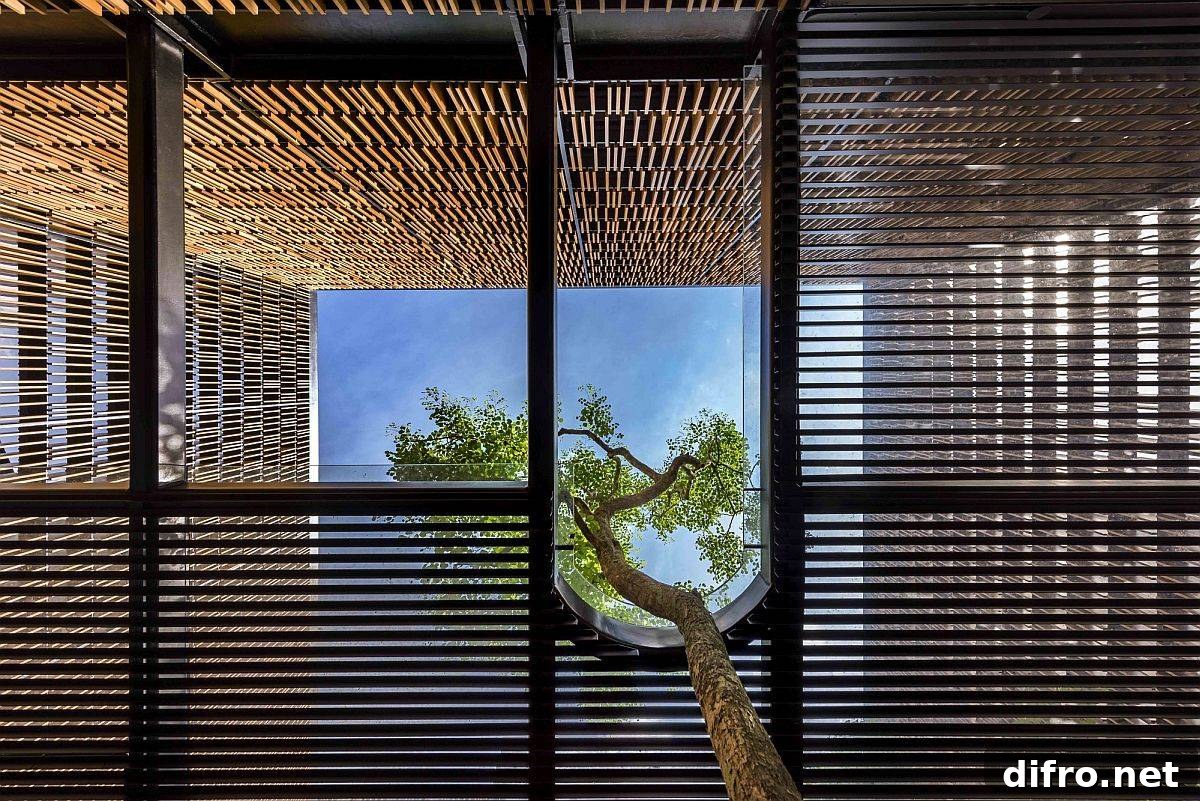
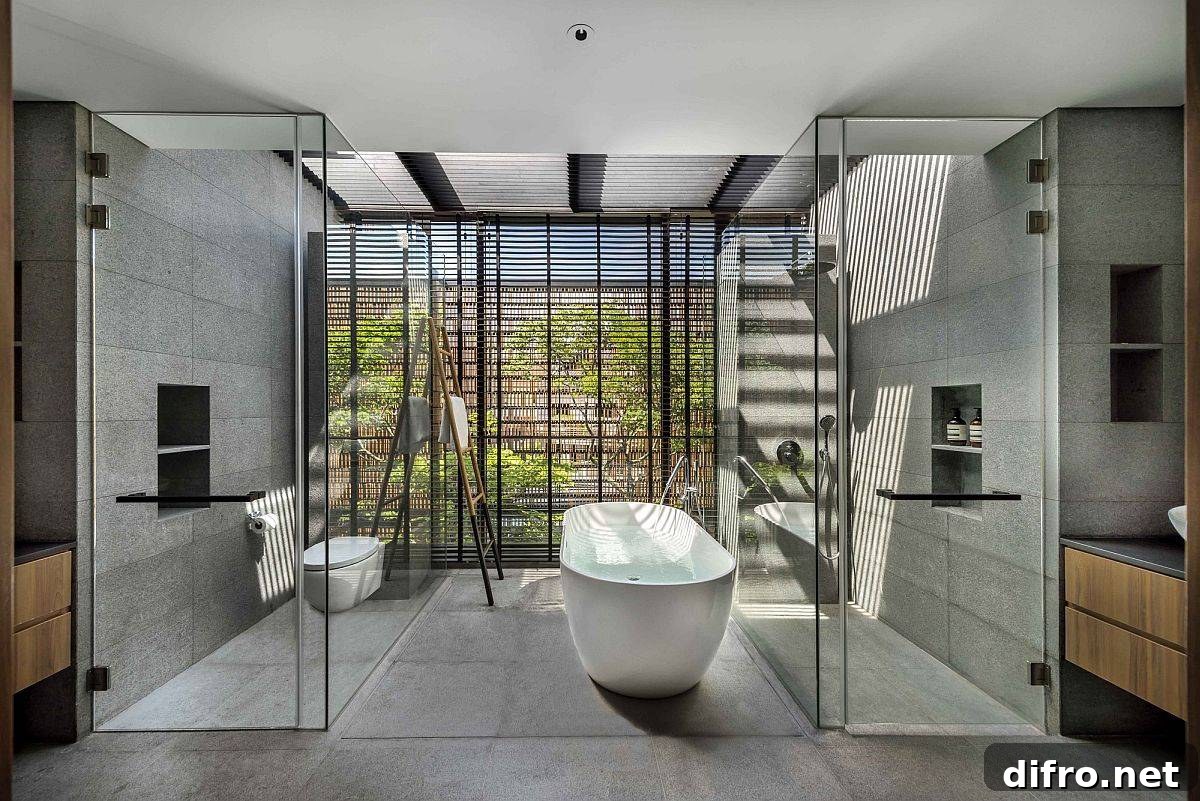
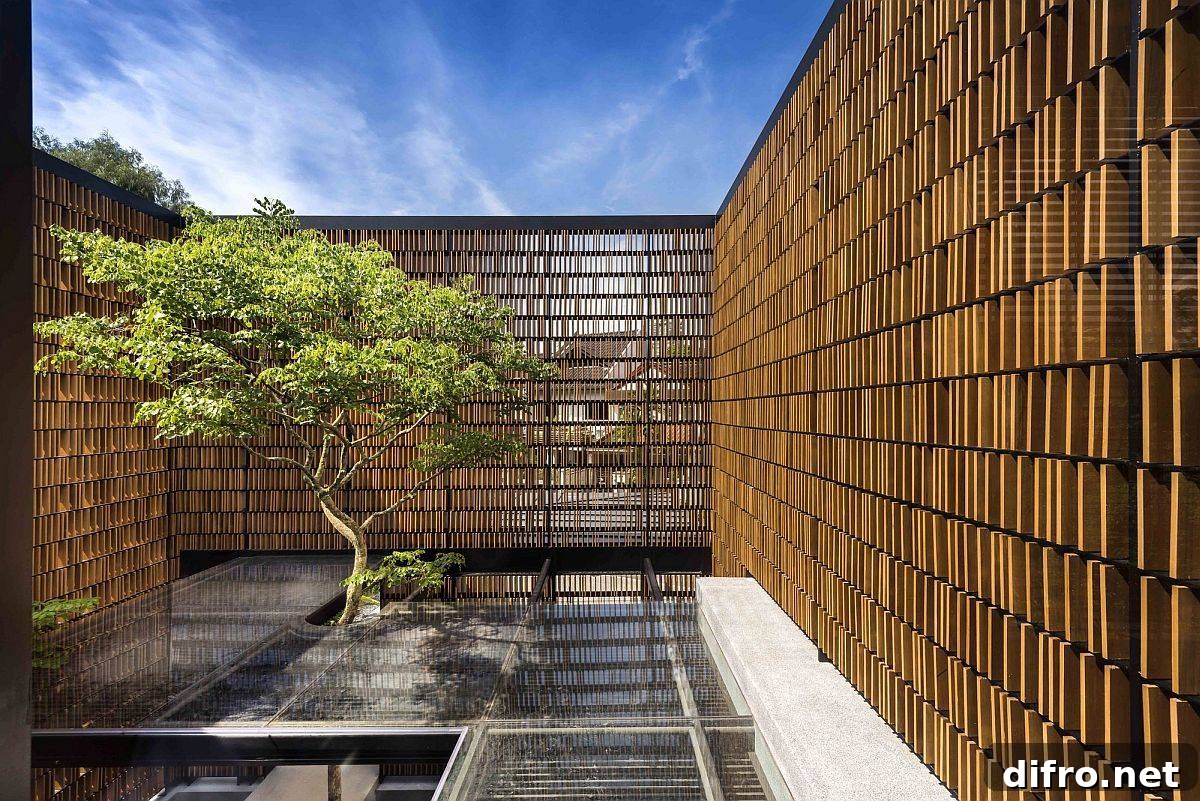
The courtyard screen fronting the street is an exercise in rethinking the conventional entry sequence of residential dwellings, and an exploration in creating a more layered and sequential experience. It is experienced almost as a ritual space – serene and tranquil – marking the transition between the public and private.
Functionally, the screen supports passive design goals. By shading the façade, it helps reduce direct solar heat gain while still admitting daylight and encouraging cross ventilation. The choice of timber lends warmth and texture to the exterior, contrasting with the clean lines and materials used inside. Inside the house, sliding glass doors open the living area to a deck and the green outdoors, creating a fluid indoor-outdoor relationship that is essential in tropical climates.
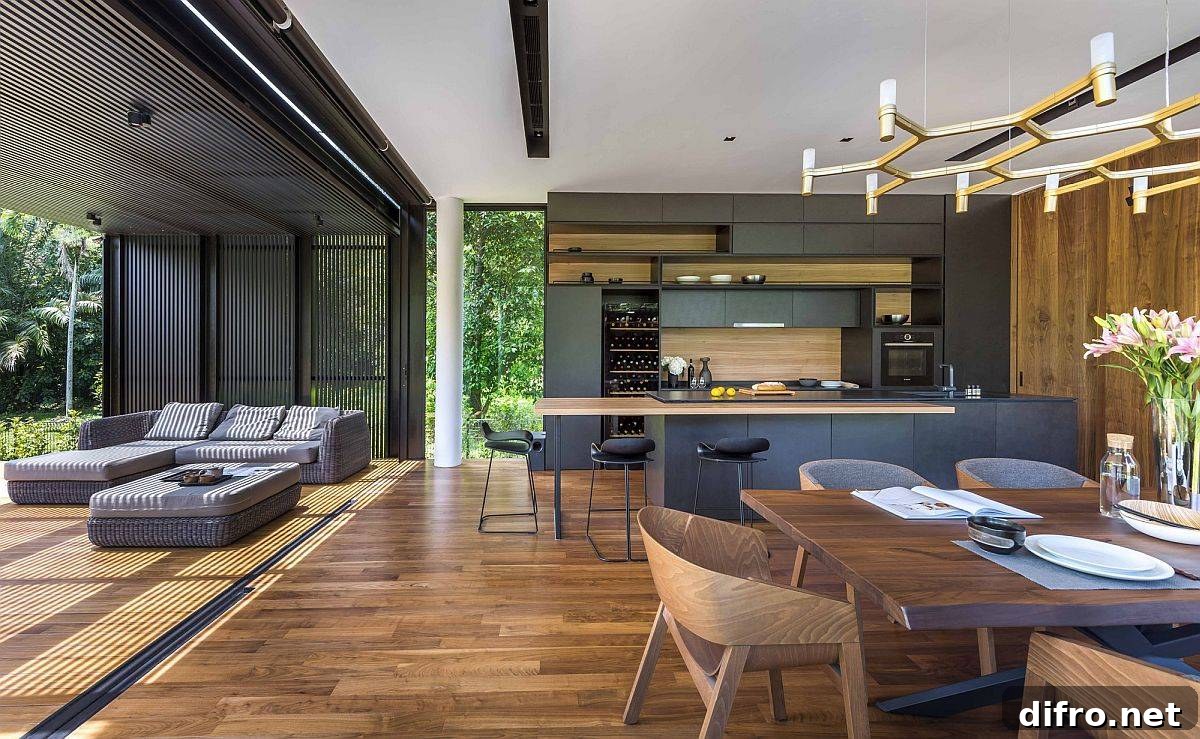
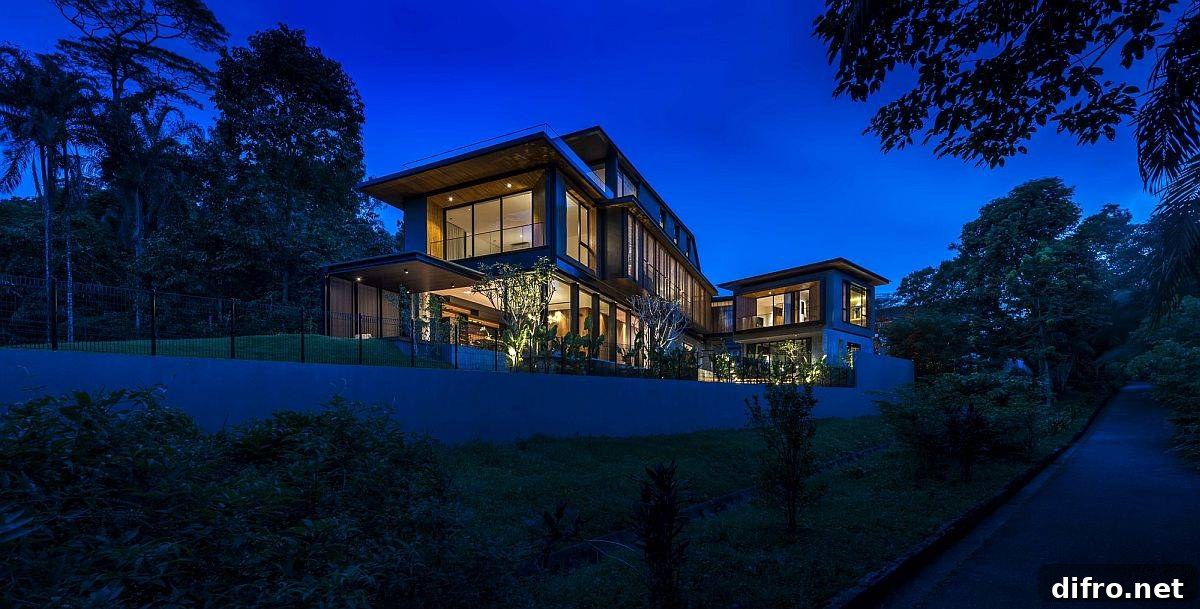
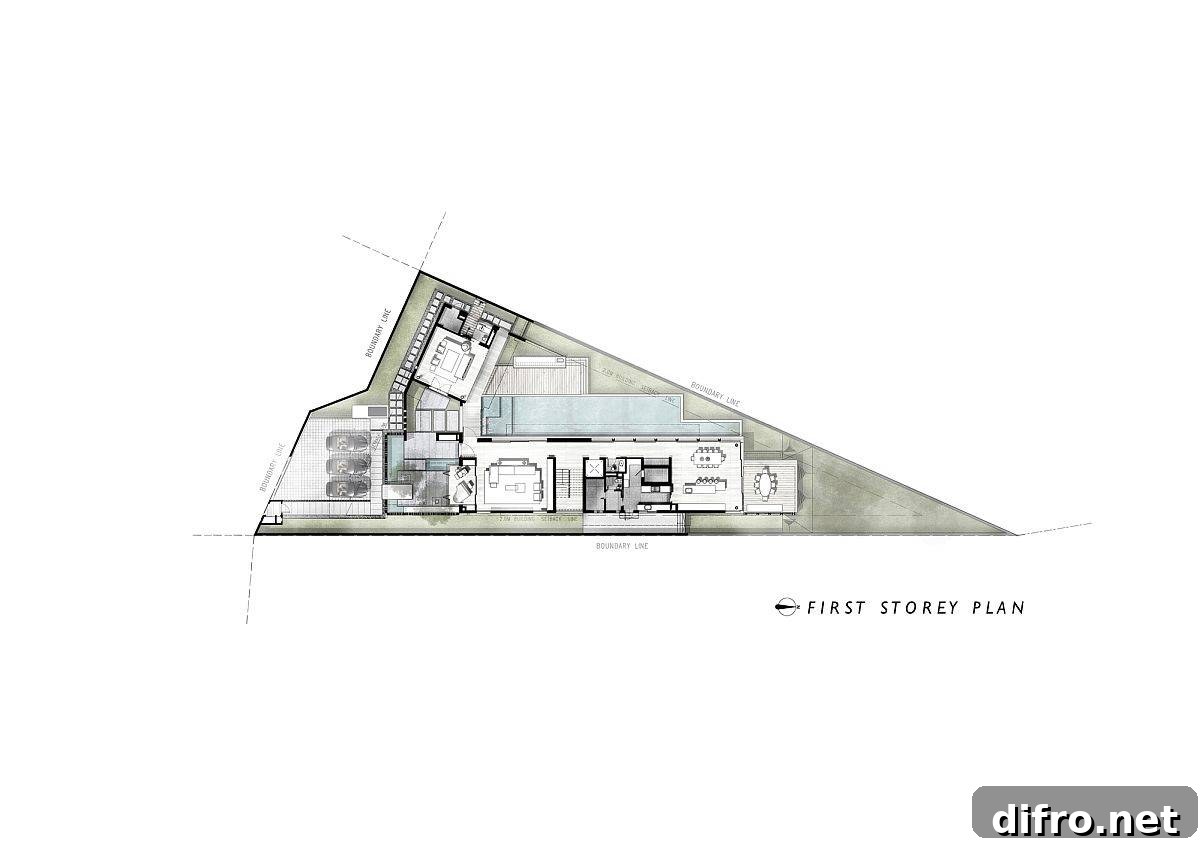
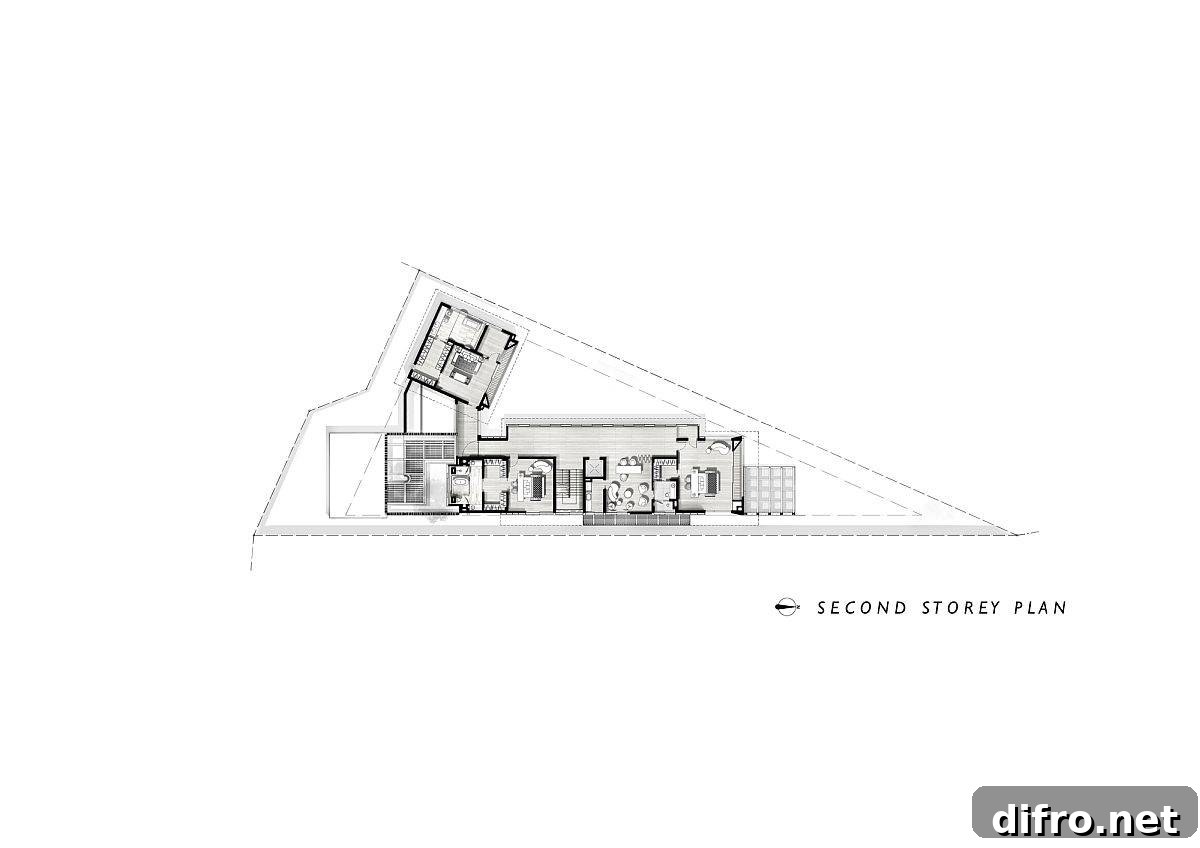
The floor plans underscore the design logic: the public and social spaces are oriented to take advantage of the rear garden and views, while the front courtyard and screen create a layered buffer from the street. The first-floor plan arranges living areas, kitchen and dining to maximize daylight and outdoor access. The second-storey plan organizes private rooms and circulation to capture greenery and breezes, reinforcing a sense of calm and privacy throughout the home.
House 24 demonstrates how a carefully considered façade element can transform a narrow urban frontage into a meaningful, layered experience. The woven timber screen establishes a clear identity for the house while addressing privacy, daylighting and ventilation — all without severing the connection between inside and out. The result is a contemporary, humane residence that responds thoughtfully to its site and climate while offering elegant spatial and visual experiences for its occupants.