Reoriented West London Home with New Garden and Light-Filled Interior
Most contemporary extensions and renovations respond to a single, familiar brief: create more internal space and improve access to the rear garden. Often this results in a straightforward rear extension that simply connects the backyard to the existing house. This West London home takes a different, more ambitious approach. Reoriented on its plot and thoughtfully reorganized, the house turns what was once a challenging relationship with a busy street and a path to the nearby train station into a calm, private garden-focused residence. The project was designed by Turner Architects and presents a careful balance between modern interventions and classic domestic character.
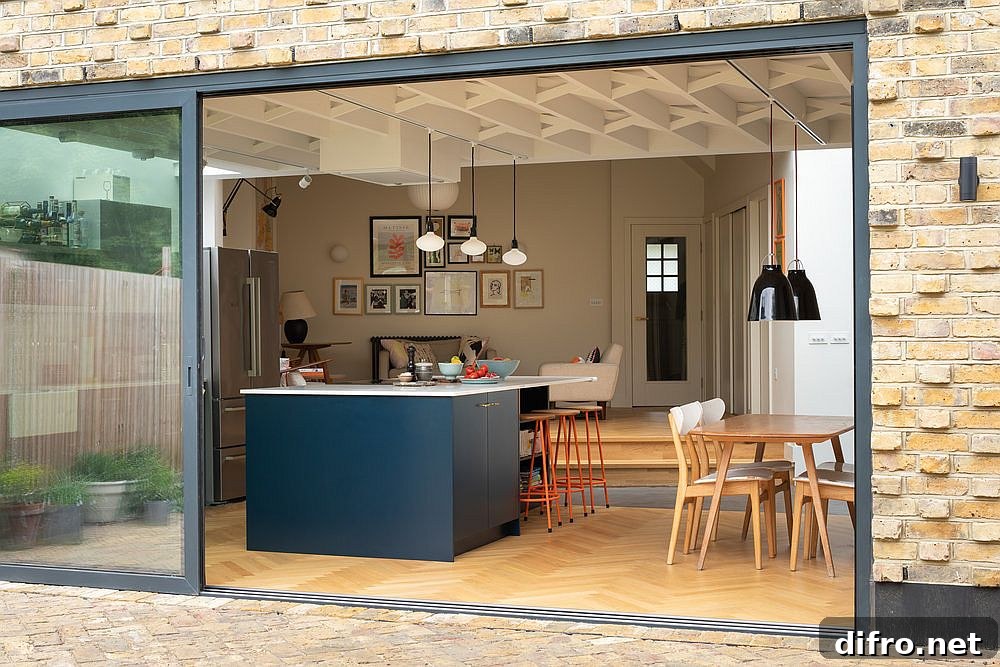
The reorientation centers the design on a rejuvenated garden that now reads as an extension of the living spaces rather than a leftover edge of the property. A patchwork brick wall provides texture and a sense of vernacular charm, anchoring the garden and offering visual privacy. Large sliding glass doors establish a strong visual and physical connection between the open-plan interior and the landscaped outdoors, making the garden feel like an integral room in the home.
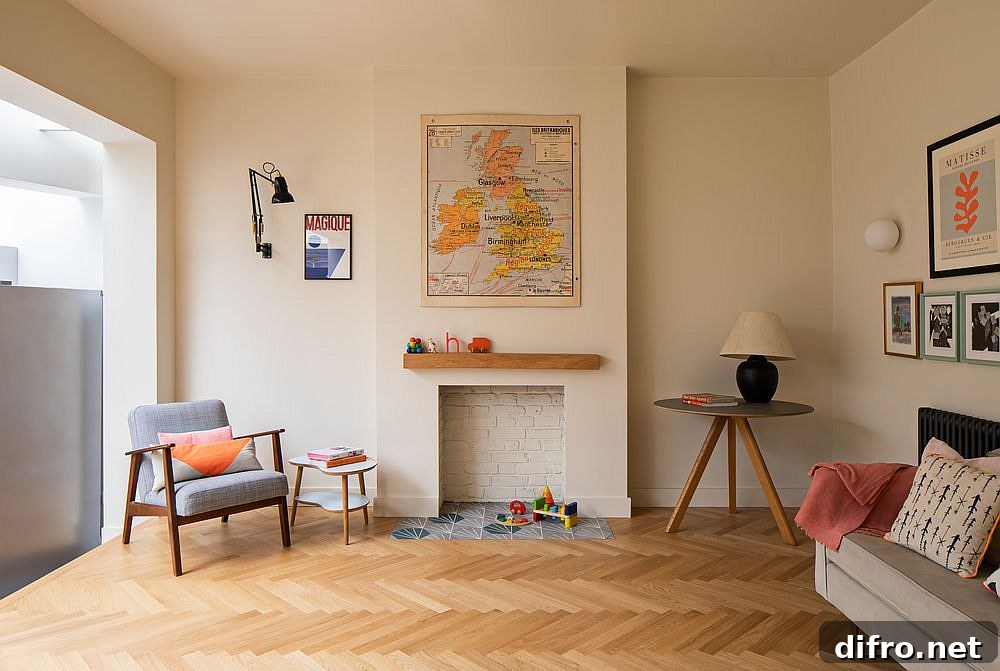
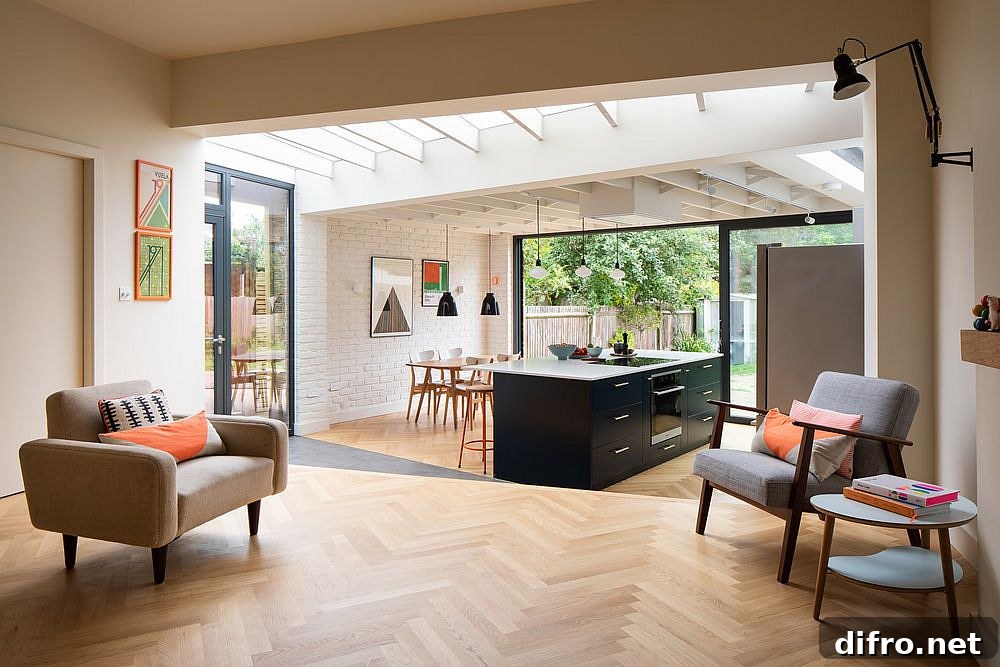
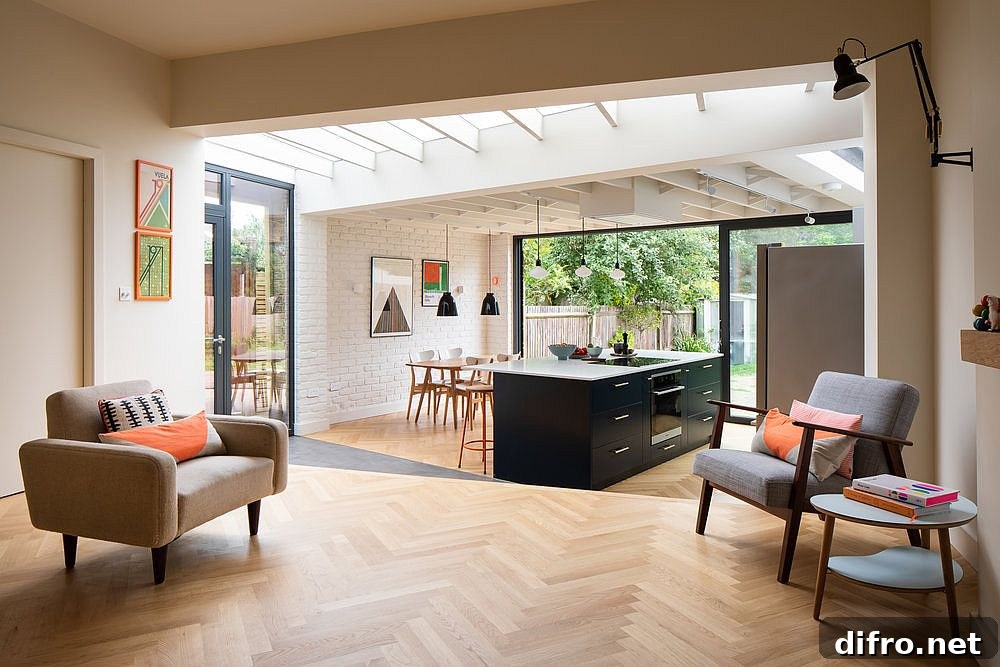
Inside, the layout is open and layered. A raised platform subtly delineates the main family area from the adjacent kitchen and dining zones, allowing sightlines to remain clear while defining distinct functional spaces. The floor is laid in a warm herringbone timber pattern that gives a sense of continuity and craft across the public rooms. Walls are kept white to provide a neutral backdrop for the carefully chosen furnishings and to maximize the impression of light throughout the day.
Daylight is a defining feature of the redesign. A large skylight brings natural light and ventilation to the heart of the home, bathing the kitchen, dining area and living space in soft, consistent illumination. This generous daylighting reduces the reliance on artificial lighting during the day and enhances the sense of openness. The skylight, combined with expansive glazing to the garden, ensures that the interior feels light and connected to the outside even in overcast conditions.
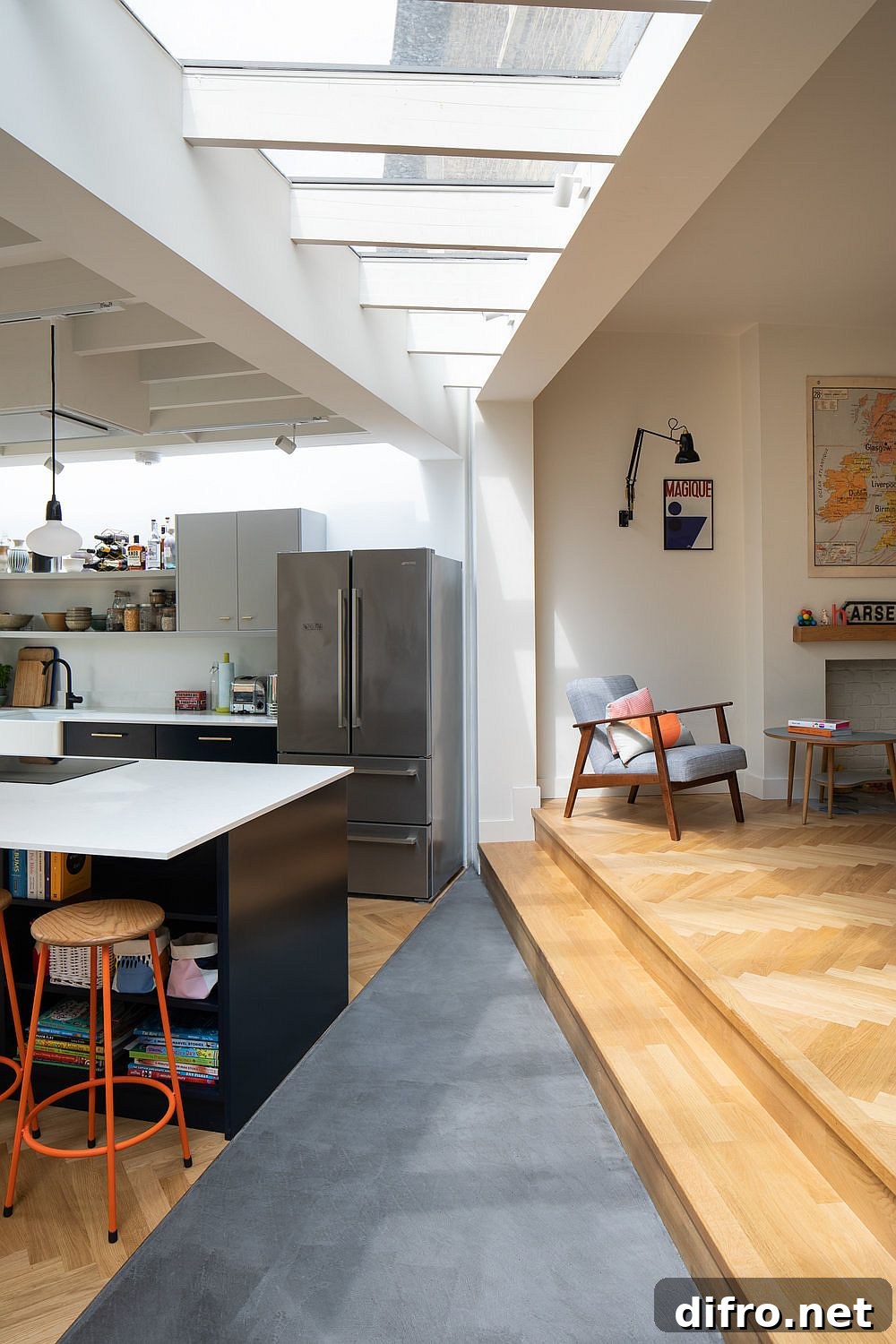
The kitchen acts as a transitional hub between the family area and the garden. A sleek, modern island in a deep blue tone anchors the space and introduces a focused color accent against the otherwise neutral palette. Its placement supports social cooking and casual dining, while sightlines to the garden keep the cook visually connected to outdoor activity. Thoughtful detailing and contemporary fixtures give the kitchen a refined, uncluttered look that complements the house’s overall restrained aesthetic.
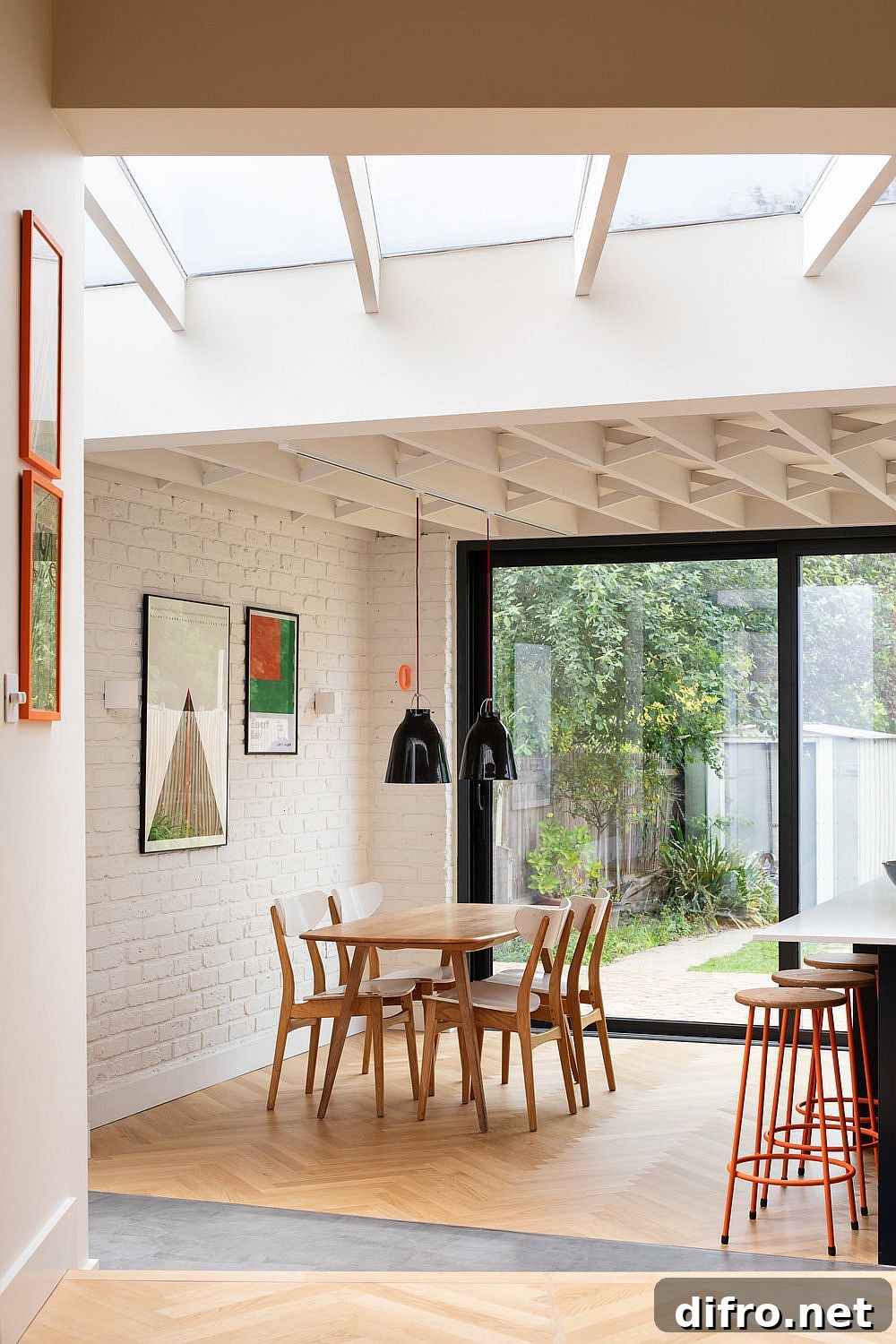
Privacy and calm were essential aims of the scheme. By reorienting the house and treating the garden as the primary external amenity, the design mitigates proximity to the adjacent street and the station path. The brickwork in the garden adds a tactile, protective enclosure while planting and level changes further screen views and create a sequence of outdoor experiences from paved terrace to softer, greener borders.
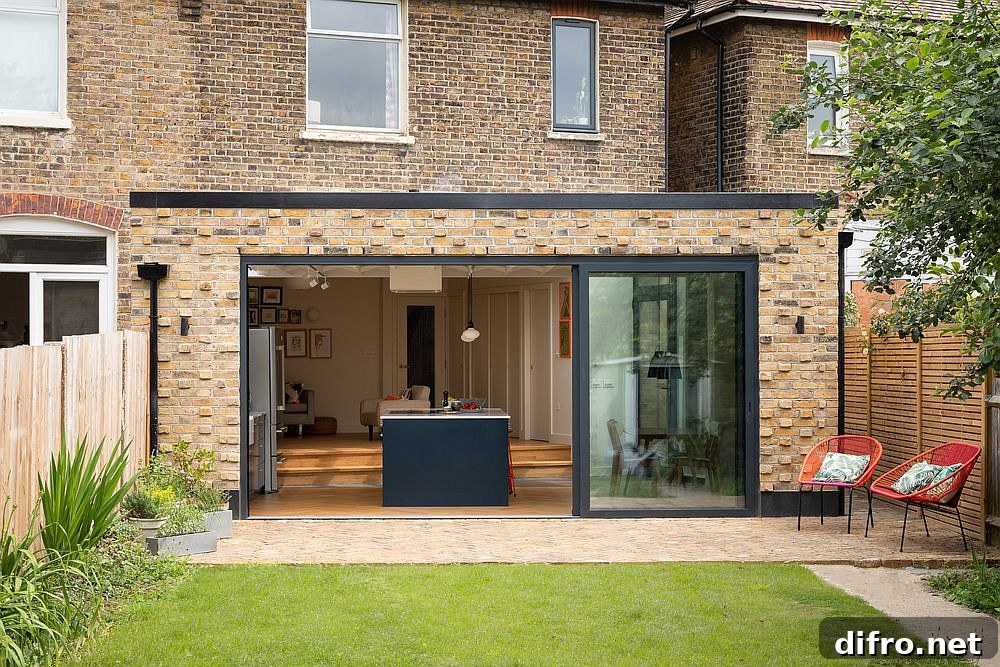
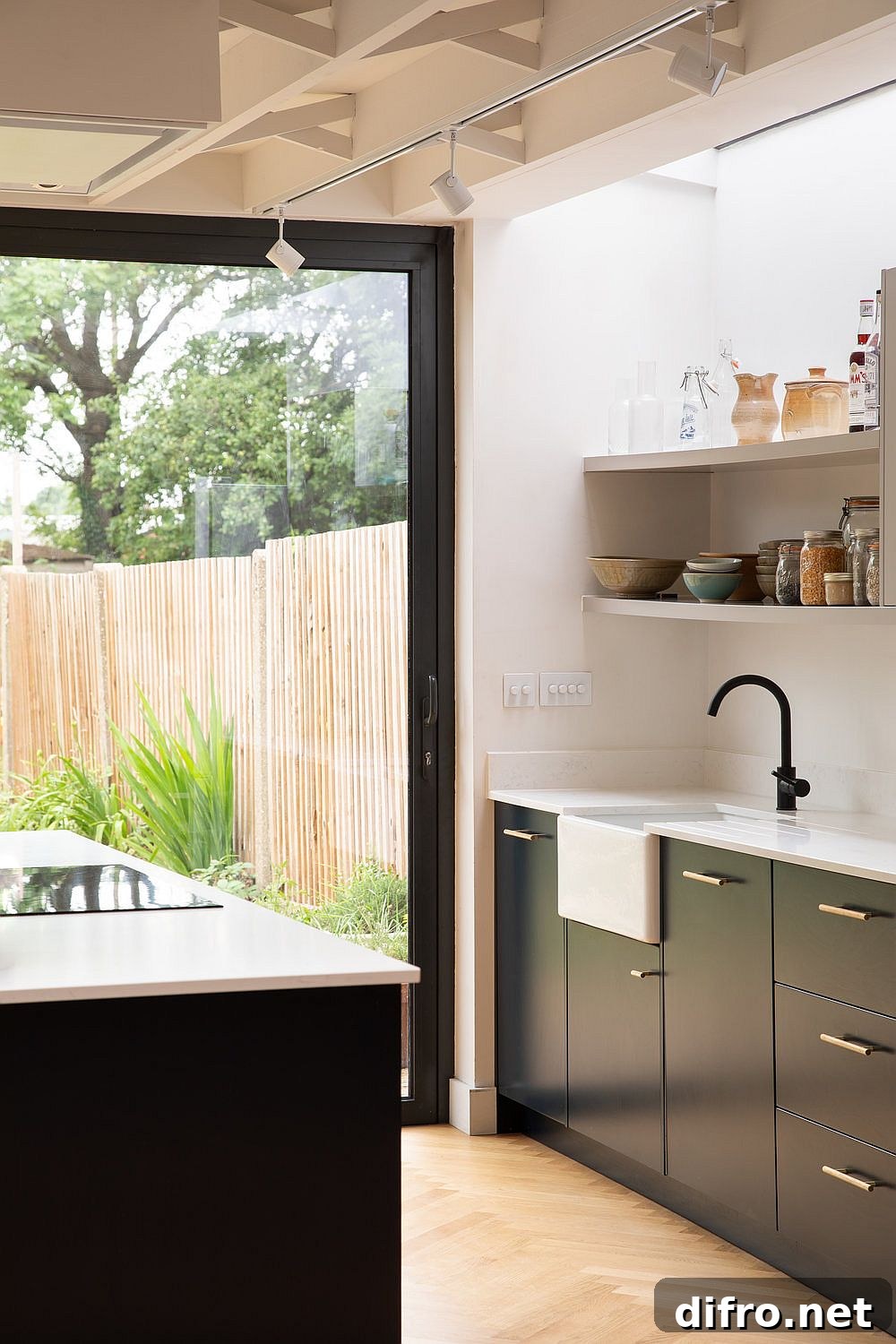

The result is a home that reads as both modern and timeless: a confident reorientation that prioritizes garden living, daylight and a cohesive internal flow. The combination of classic materials like brick and timber with contemporary spatial moves and generous glazing produces a welcoming family house that feels both fresh and rooted in its London context. Photography: Adam Scott Images.