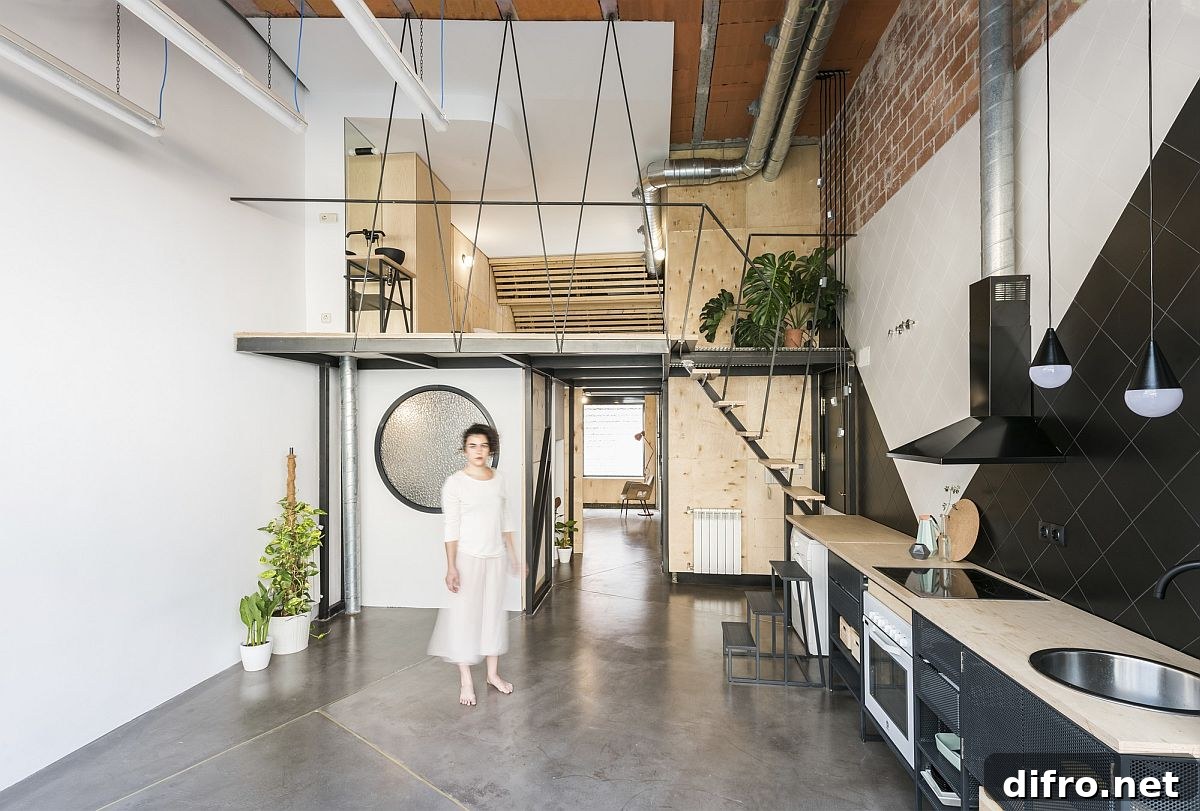
UP House: A Creative Mezzanine Transformation That Reclaims Space Upward
Our imagination is often limited by the way existing rooms and layouts shape what we think is possible. Many homeowners focus on horizontal solutions—clever storage, modular furniture and space-saving tricks—to cope with restricted square footage. Those strategies help, but they rarely generate truly new usable volume. This inventive ground-level apartment in Spain takes a different approach: it looks upward. The UP House, designed by cumuloLimbo studio (based in Madrid), adds a mezzanine level that transforms the interior by reclaiming vertical space and improving light, ventilation and spatial separation.
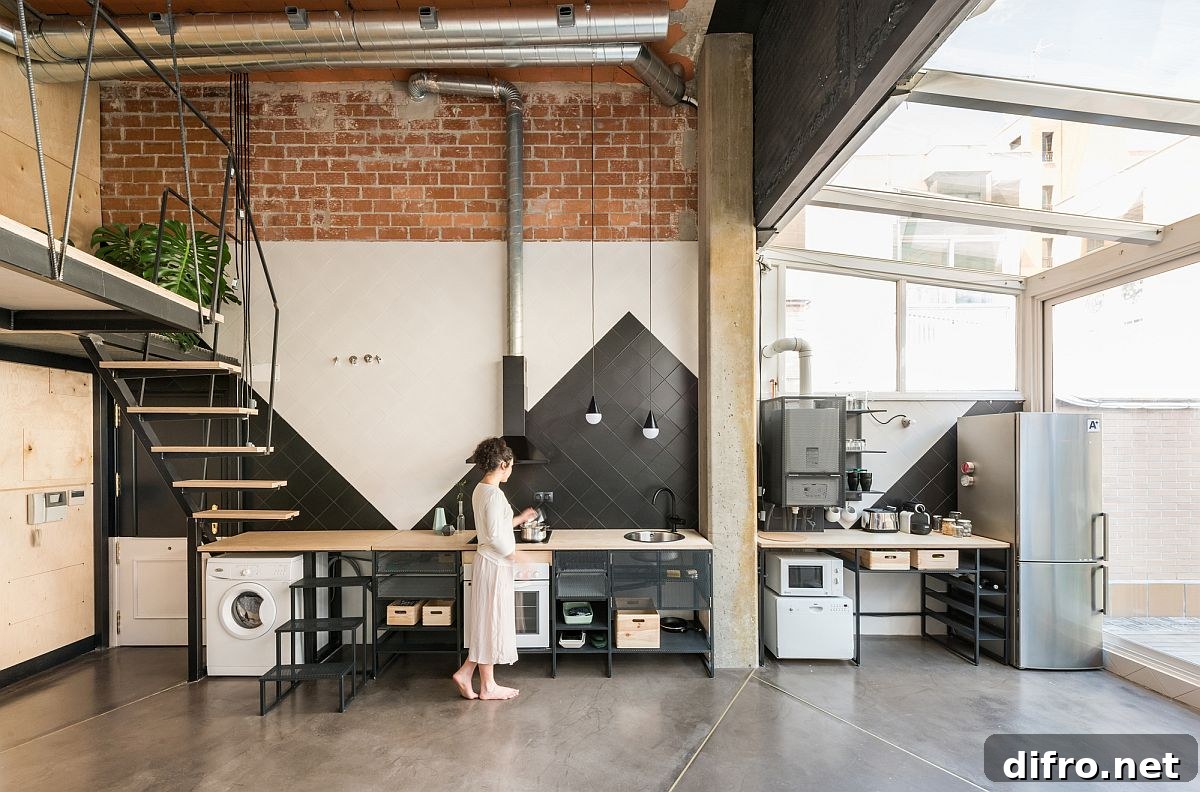
Mezzanine Strategy: Adding Space Without Expanding Footprint
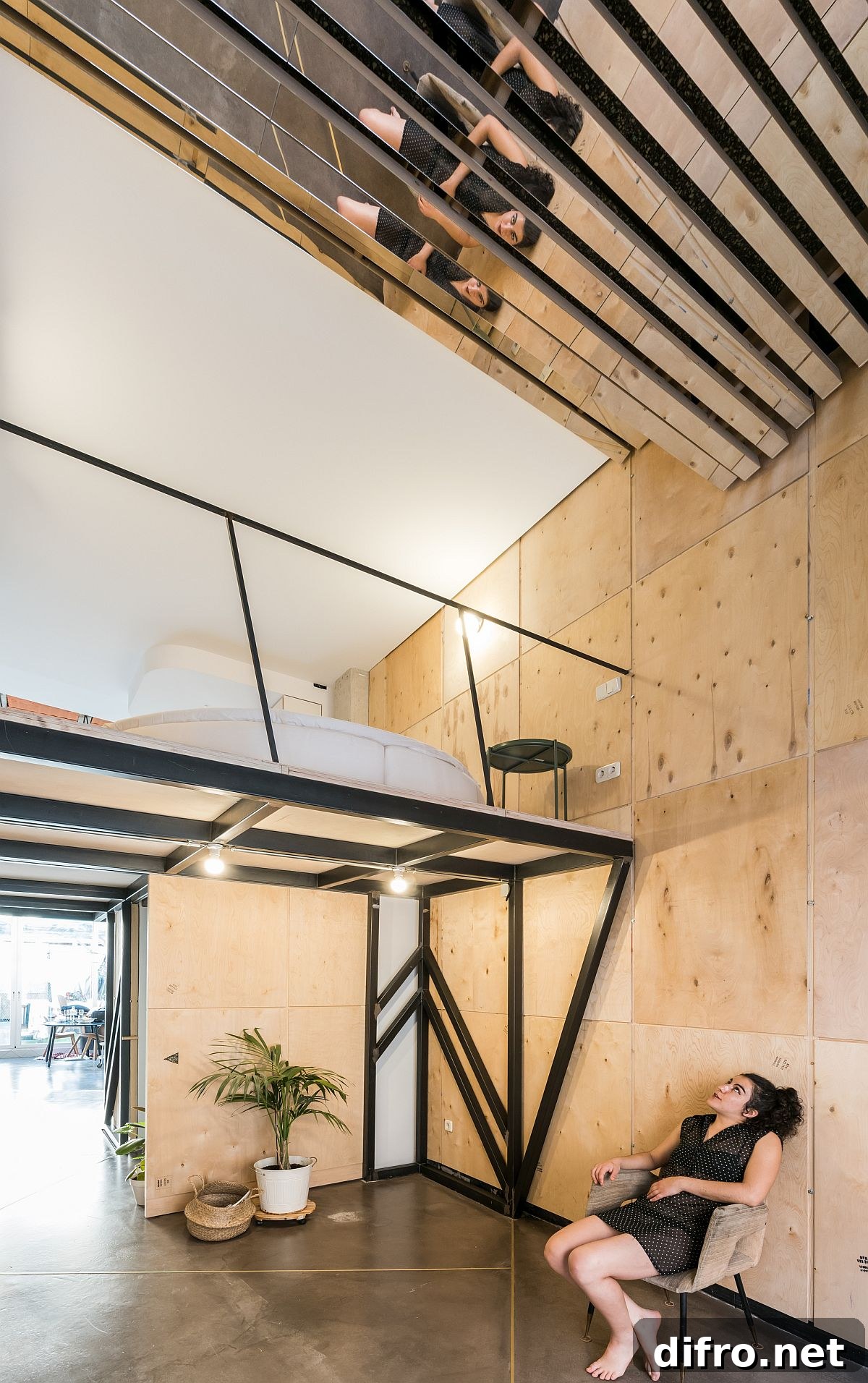
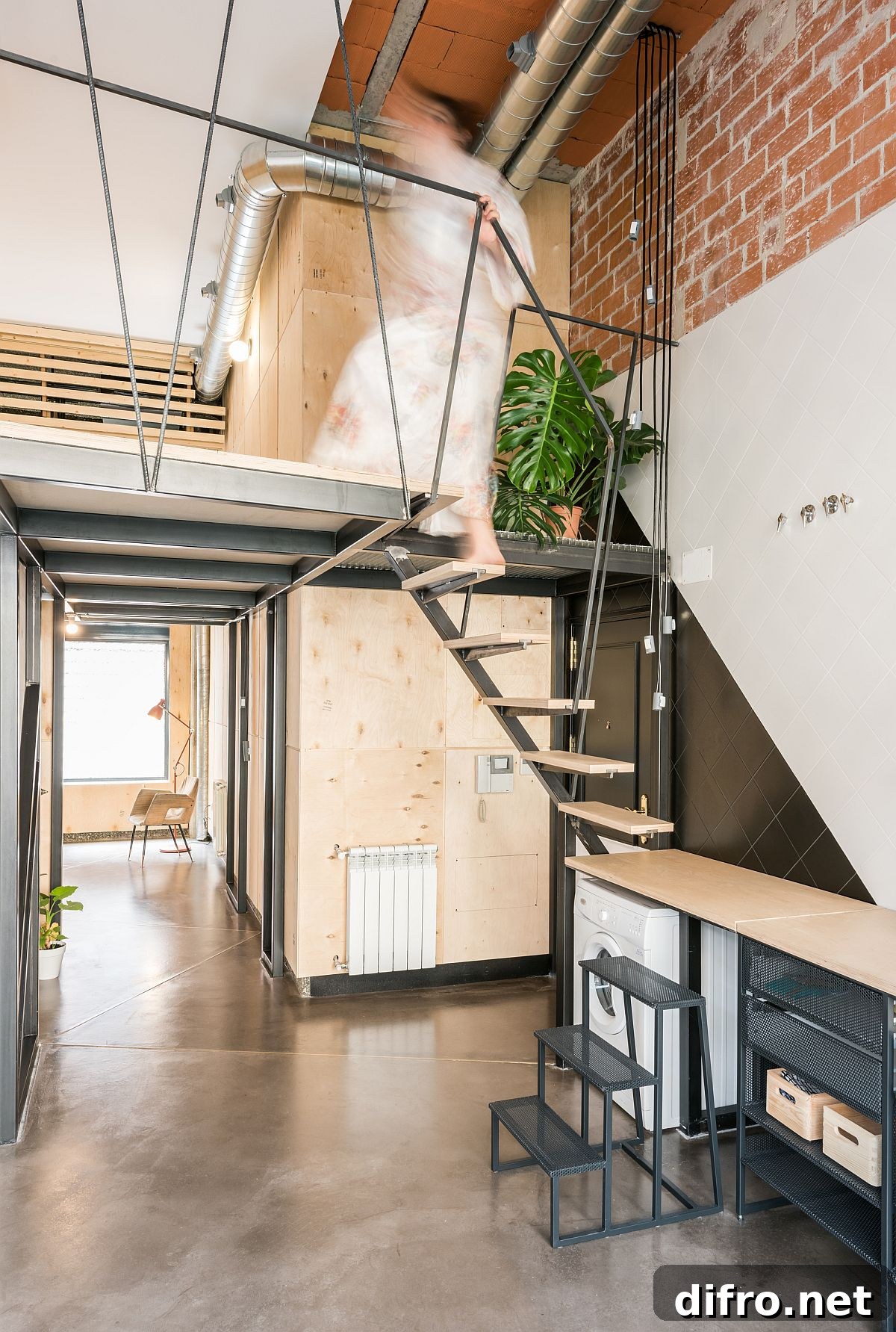
The renovation creates a mezzanine-style upper level that spans the apartment, supported by six steel columns. Instead of extending the floor area outward, the design builds upwards to create additional functional zones. This vertical insertion divides the unit into clearly defined public and private areas while producing two generous double-height volumes on either side of the new level. The approach demonstrates how well-considered vertical interventions can add practical square footage without increasing the building footprint.
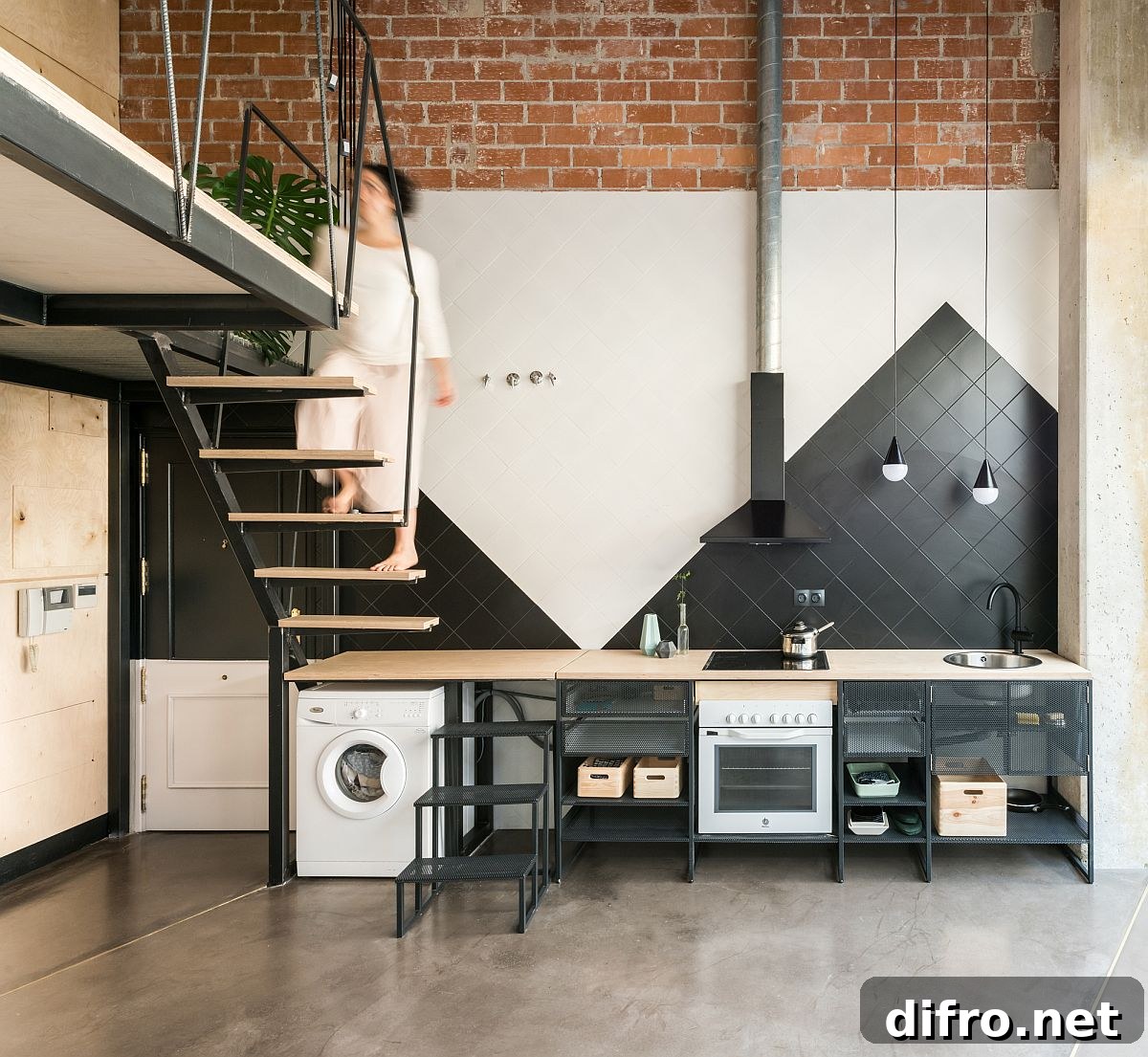
Materiality and Atmosphere: A Blend of Industrial and Warm, Eco-Friendly Touches
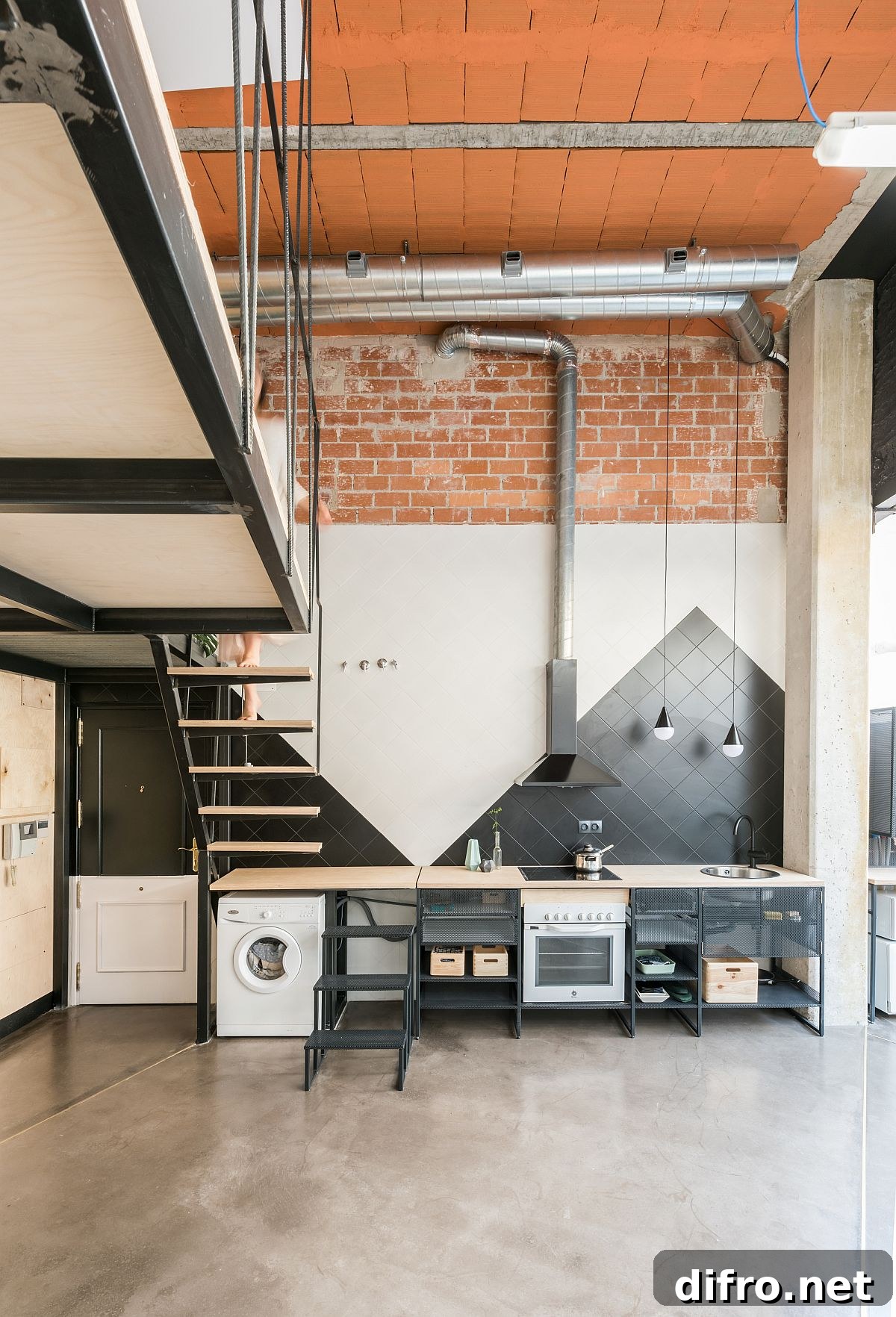
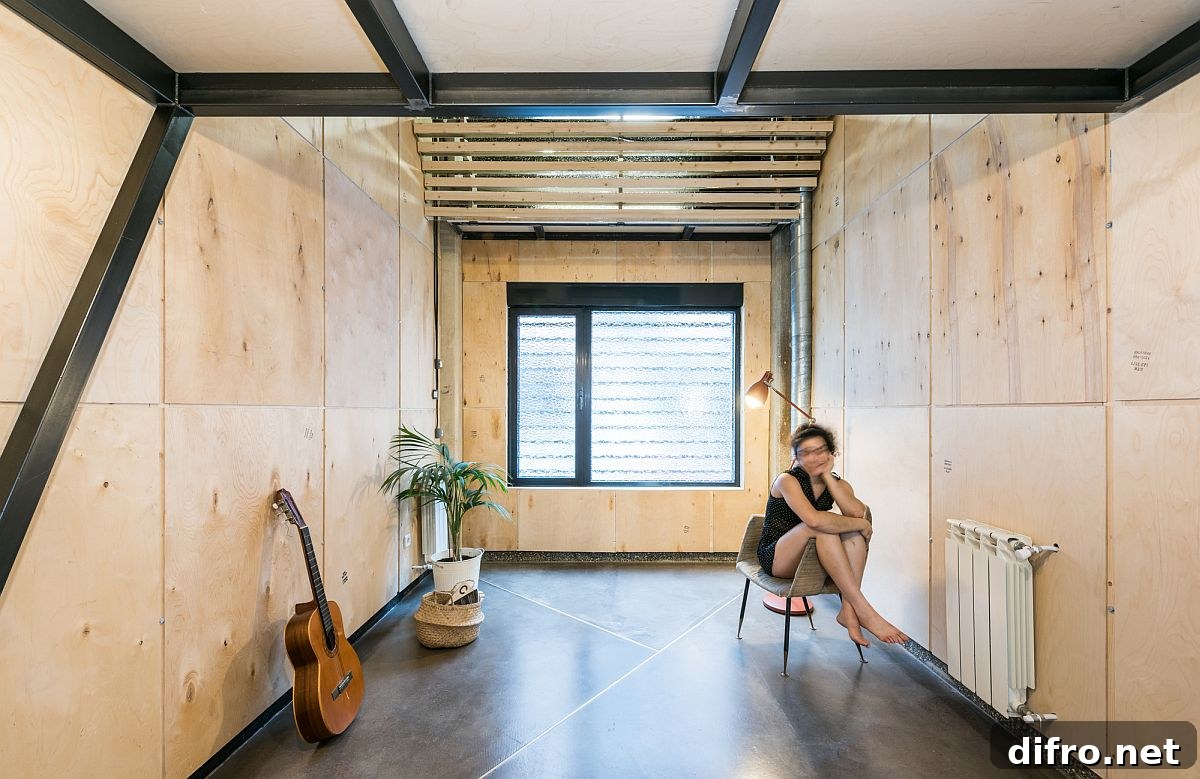
The bedroom area is wrapped in recycled plywood, lending warmth and an eco-conscious texture that contrasts with the more industrial finishes elsewhere. In the public zone—the kitchen, dining and living areas—white-painted surfaces, exposed wood and metallic accents create a modern industrial atmosphere. These contrasting material palettes help define function and mood: the plywood enclosure offers intimacy and softness, while the industrial finishes emphasize utility and openness.
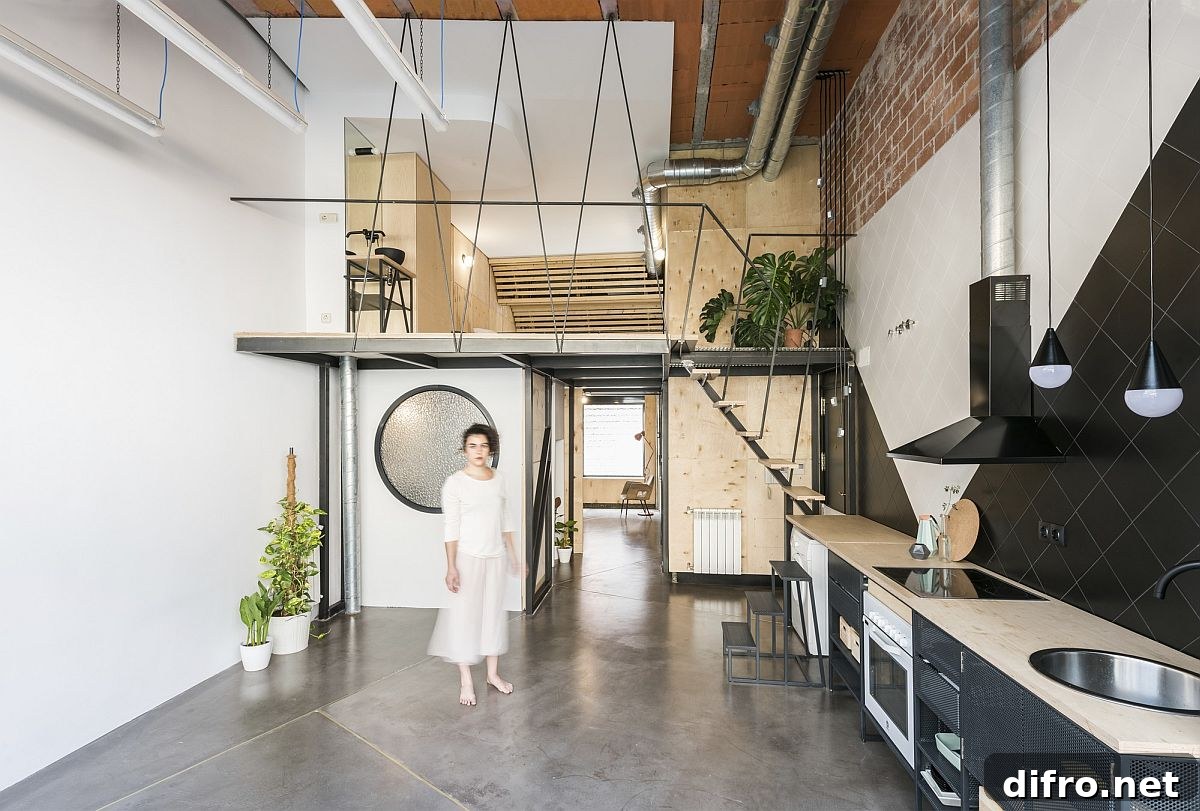
Light, Ventilation and Acoustics: Design Considerations for a Ground-Level Home
Because the apartment sits at ground level, natural ventilation and daylight were important priorities. The renovation introduces large glass walls that open up the interior to the outside, along with a glass roof section on one side and a mirrored ceiling vault on the other. These interventions flood the space with daylight and visually expand the volumes by reflecting light and removing dark corners. The combination of skylights, expansive glazing and reflective surfaces ensures every room benefits from generous natural illumination and improved airflow.
Key Features and Design Highlights
- Measured vertical insertion: a mezzanine supported by steel structures that increases usable space without expanding the footprint.
- Material contrast: recycled plywood for intimate areas, and white-painted wood and metal surfaces for public zones.
- Natural light strategy: large glass walls, a glass roof segment and a mirrored ceiling vault that reflect and distribute light.
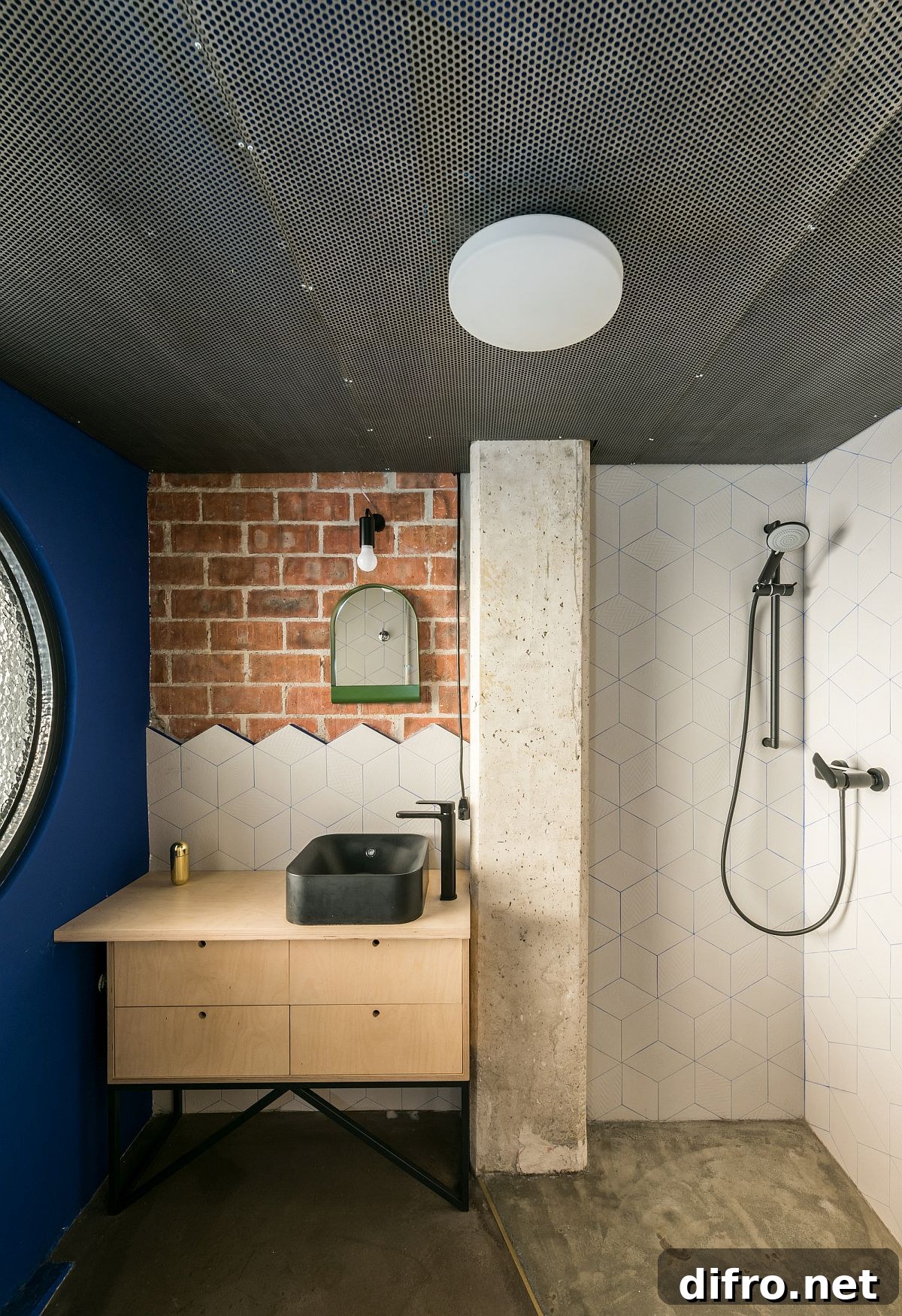
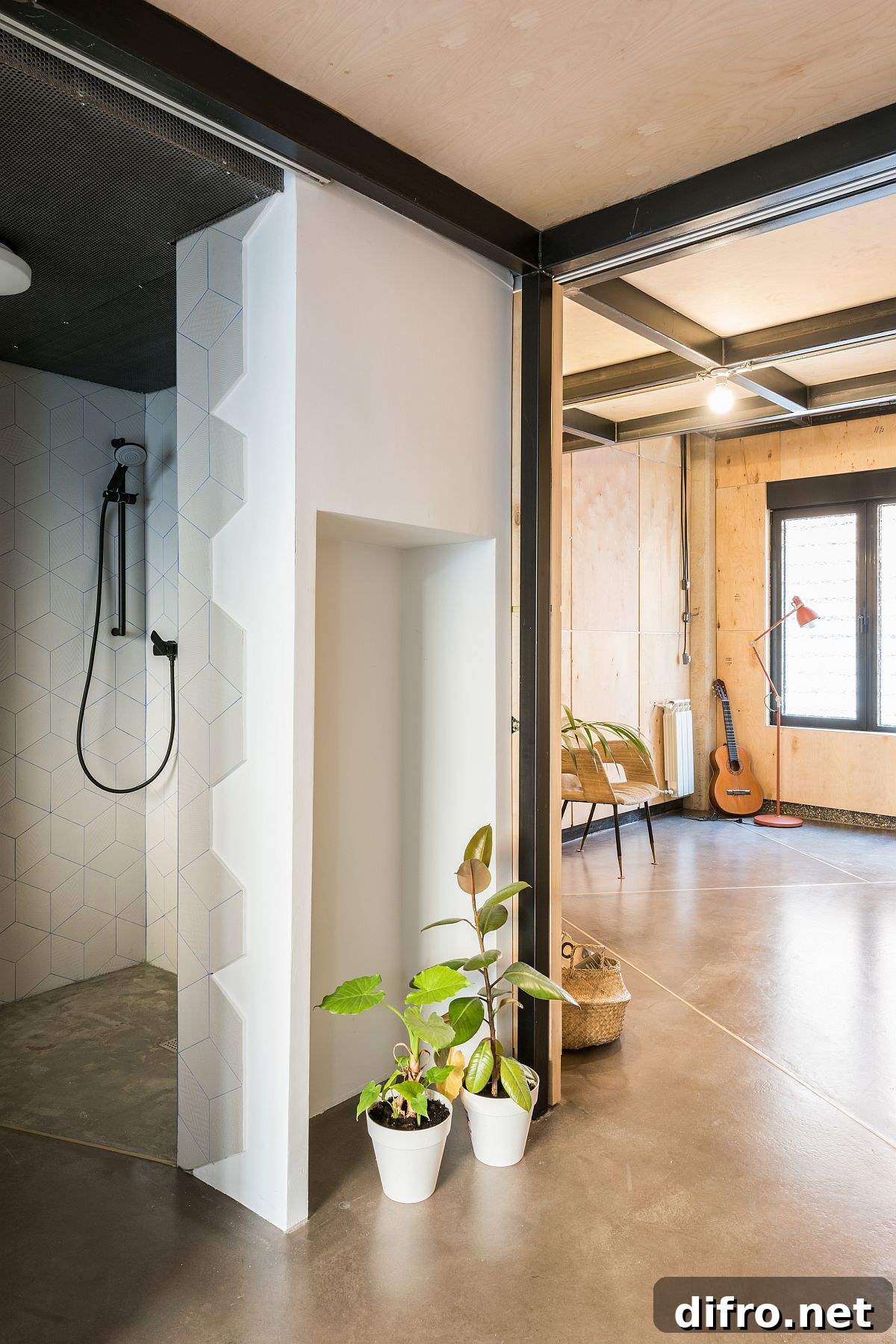
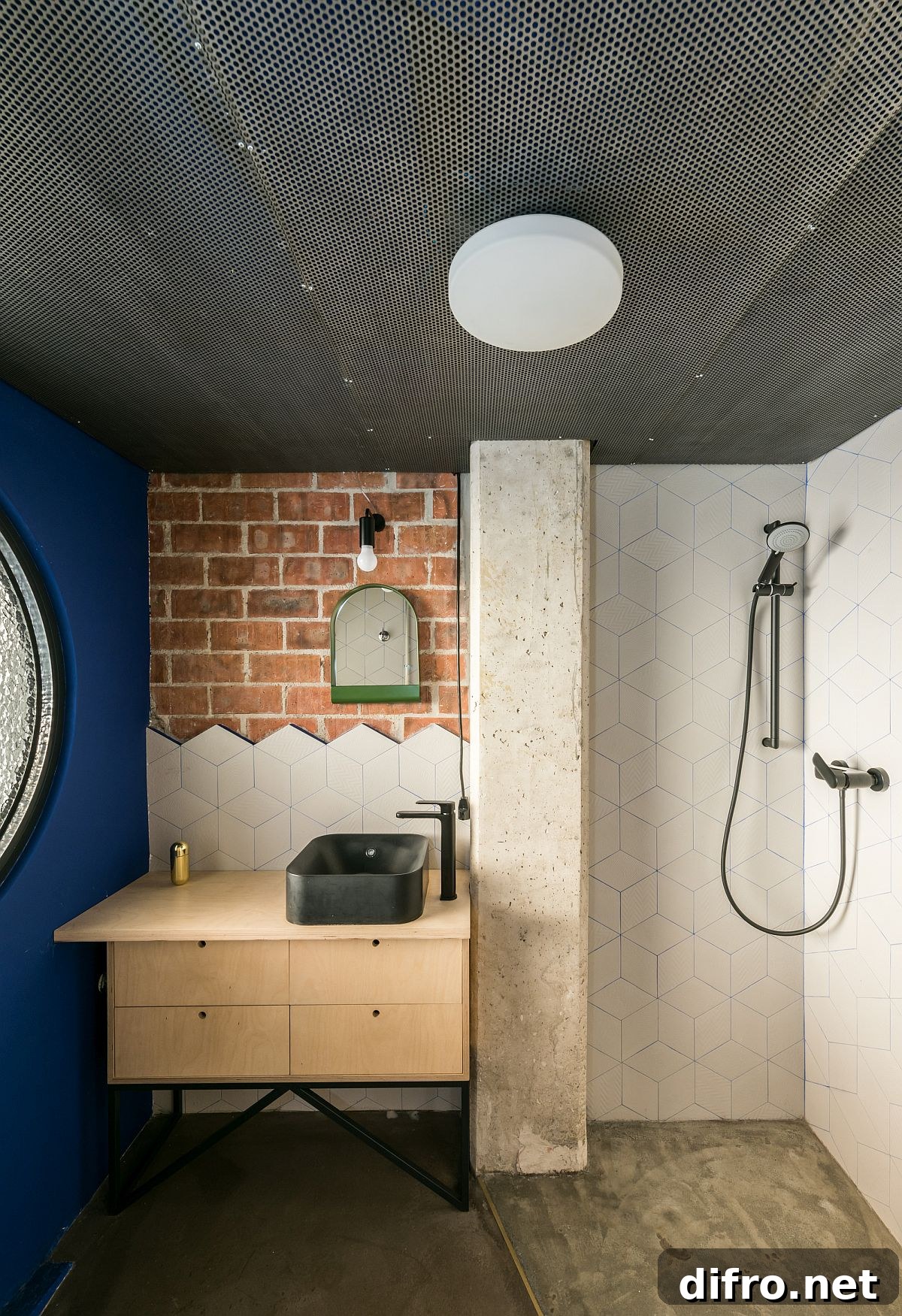
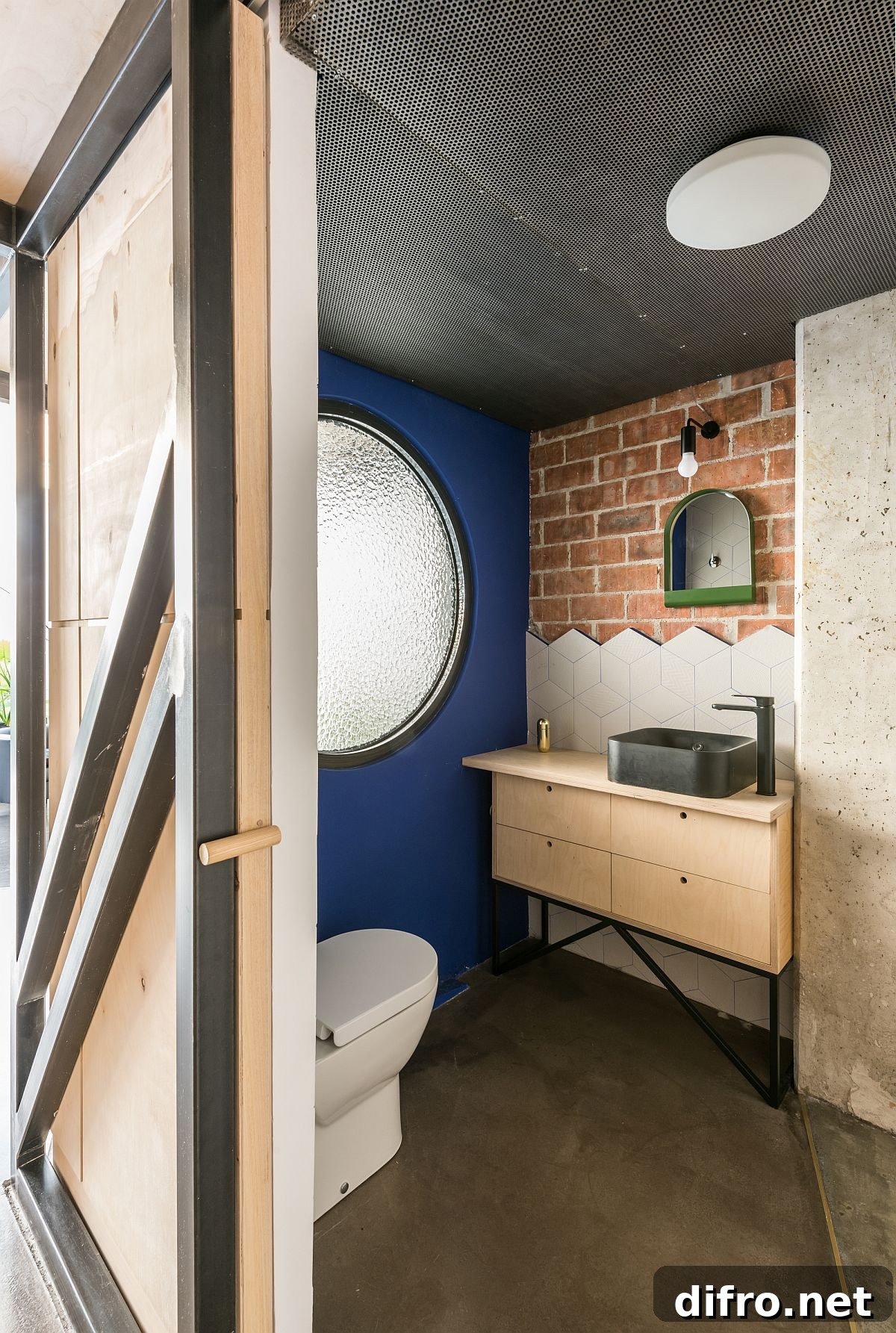
- Industrial aesthetic with thoughtful accents: sliding barn-style doors, a polished black-and-white kitchen, and a bathroom that mixes metal, brick and a standout blue surface.
- Improved ventilation and openness for a ground-level dwelling through well-placed glazing and openings.
The project is an effective example of how architectural imagination can expand small homes without altering the building’s footprint. By prioritizing vertical space, daylight and material contrasts, the design delivers both functional gains and a distinctive aesthetic. Photography credit: Javier de Paz García.