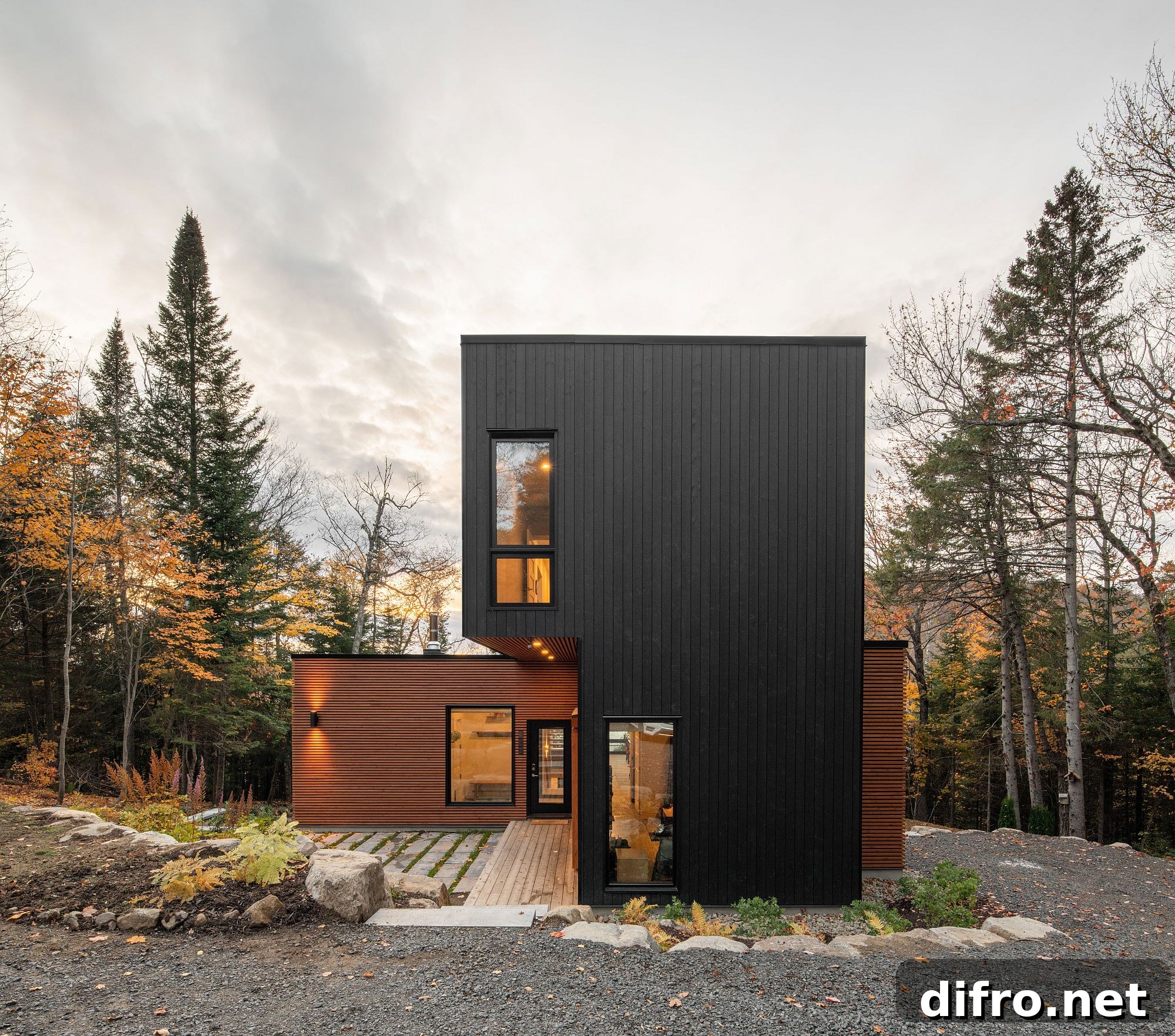
We have long believed that modular homes represent the future of smart, affordable housing. Beyond saving time and money, prefabricated construction minimizes disturbance to the land and reduces on-site waste, making these homes an inherently greener option. Nestled beside Lake Manitou in Ivry-sur-le-Lac, Québec, this Country Home demonstrates how modular design, sustainable strategies, and careful site consideration can combine into a beautiful, cohesive residence. Designed by Figurr Architects, the project shows that form and function can coexist without compromise.
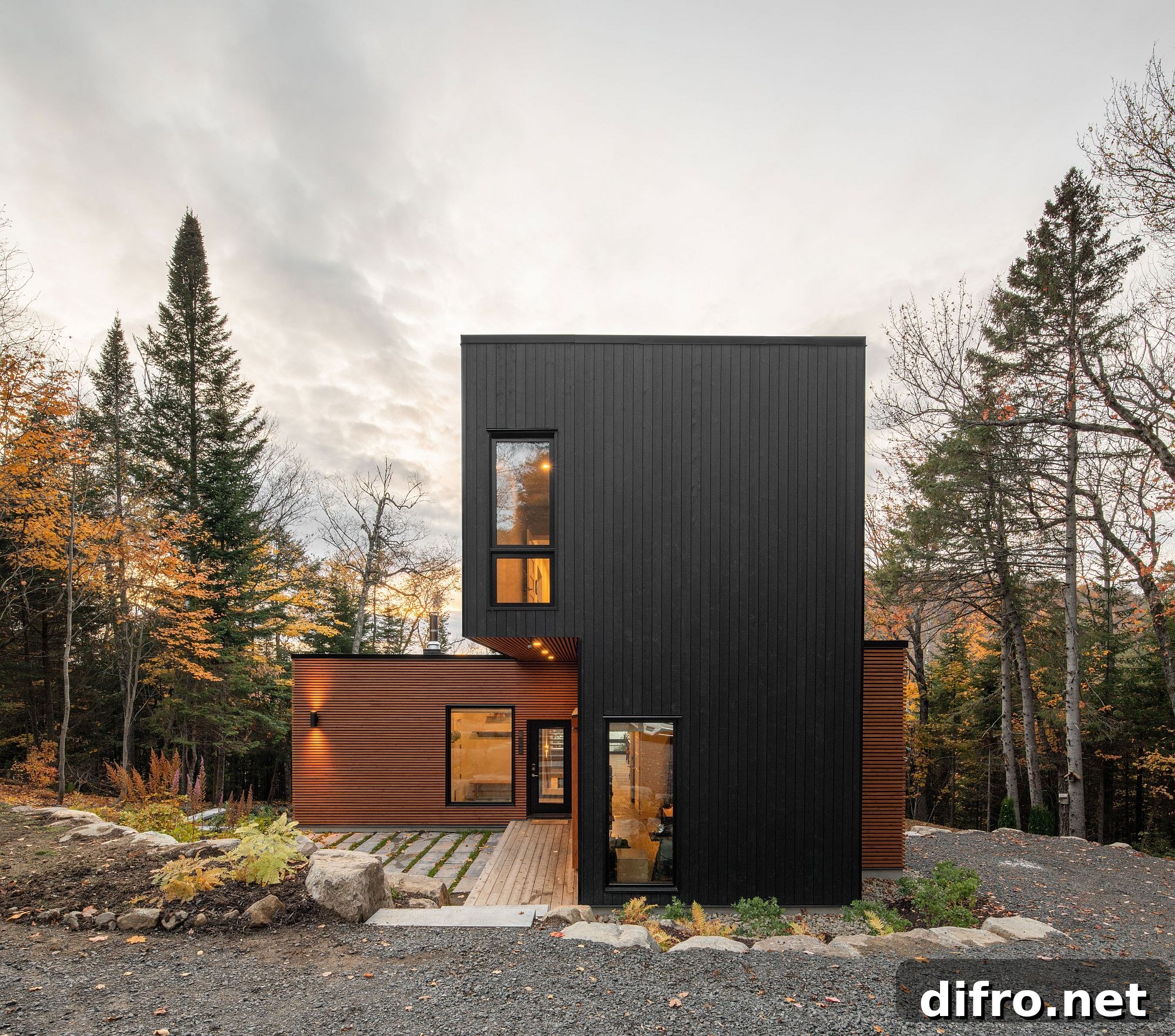
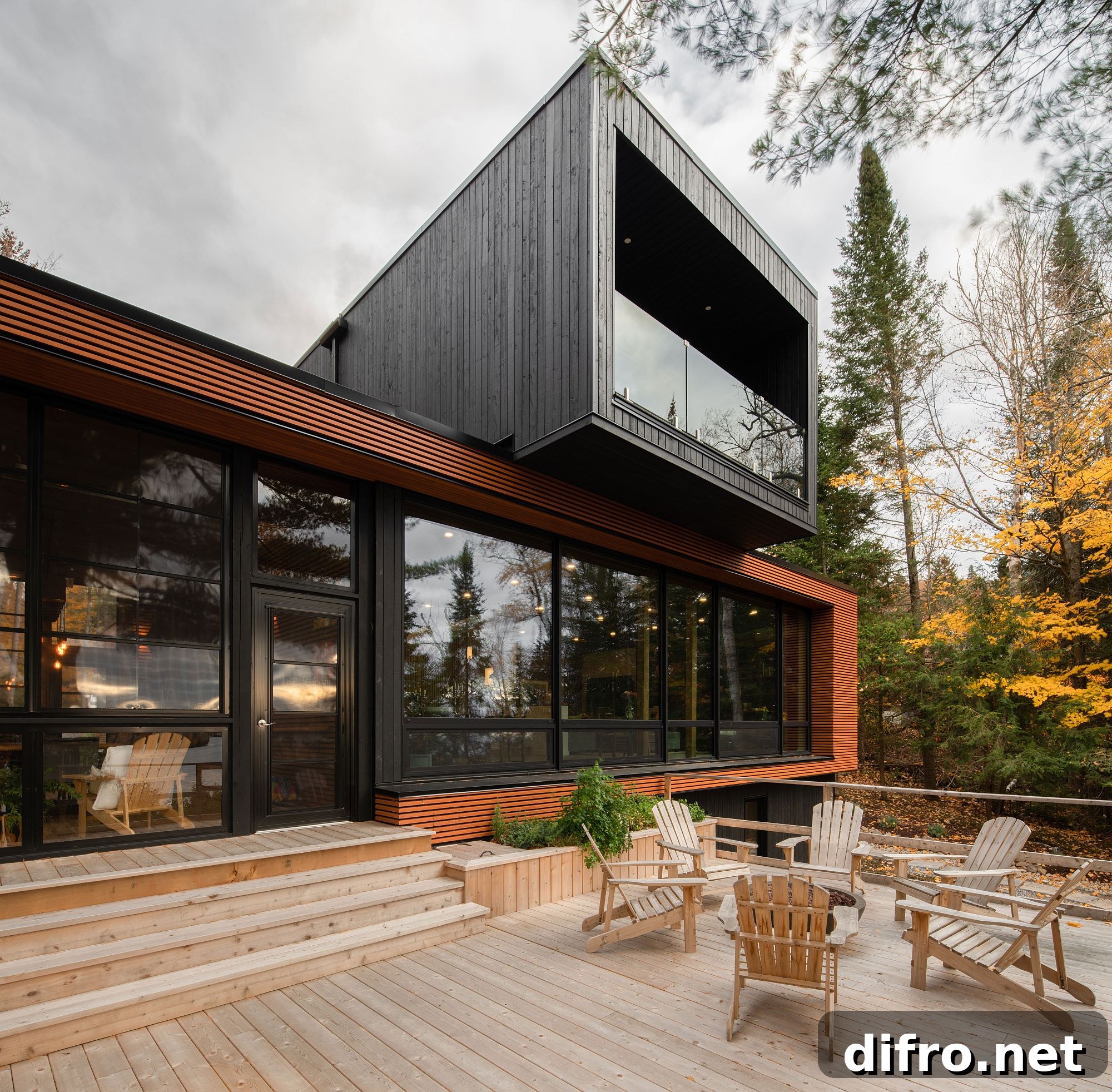
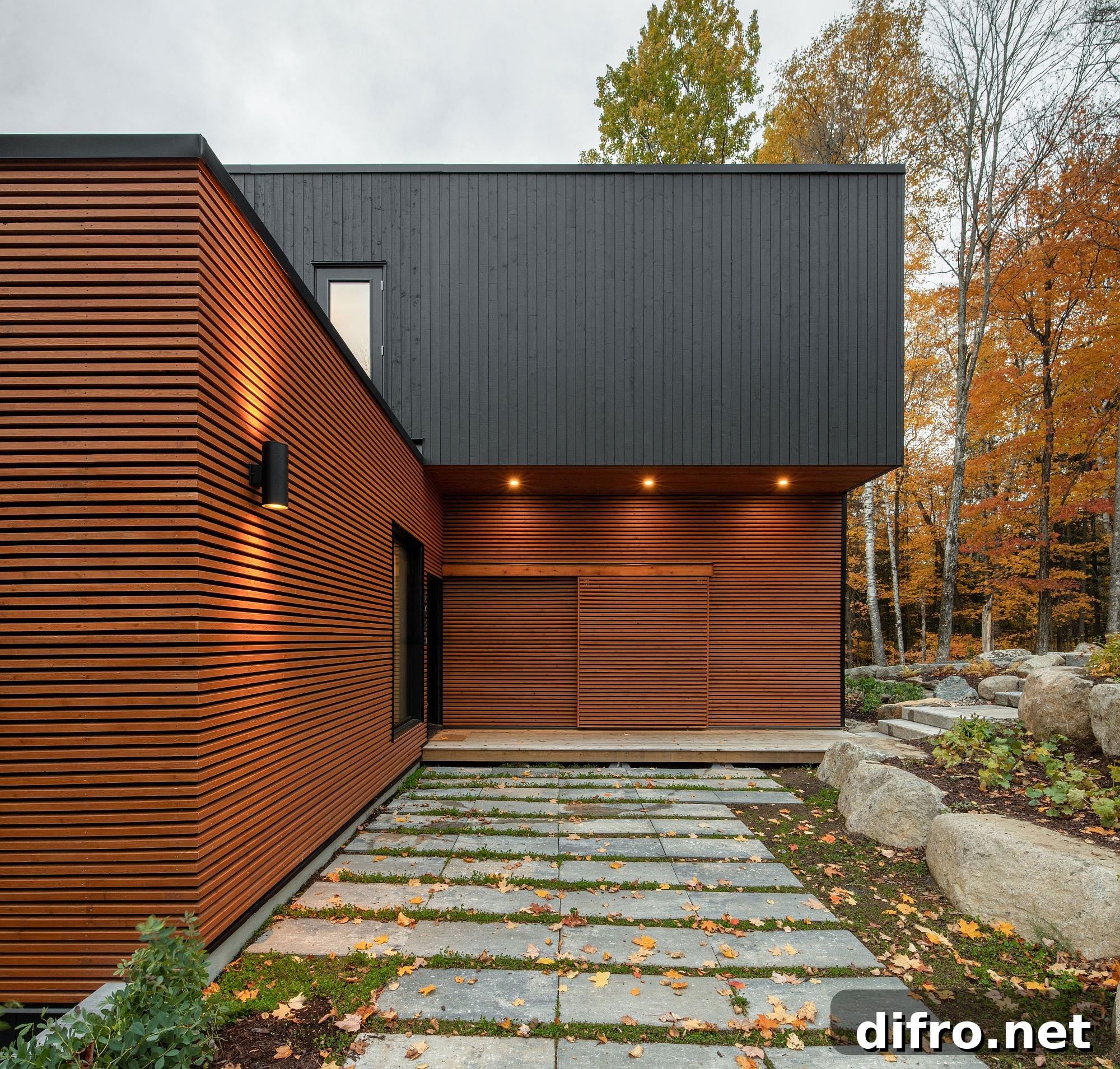
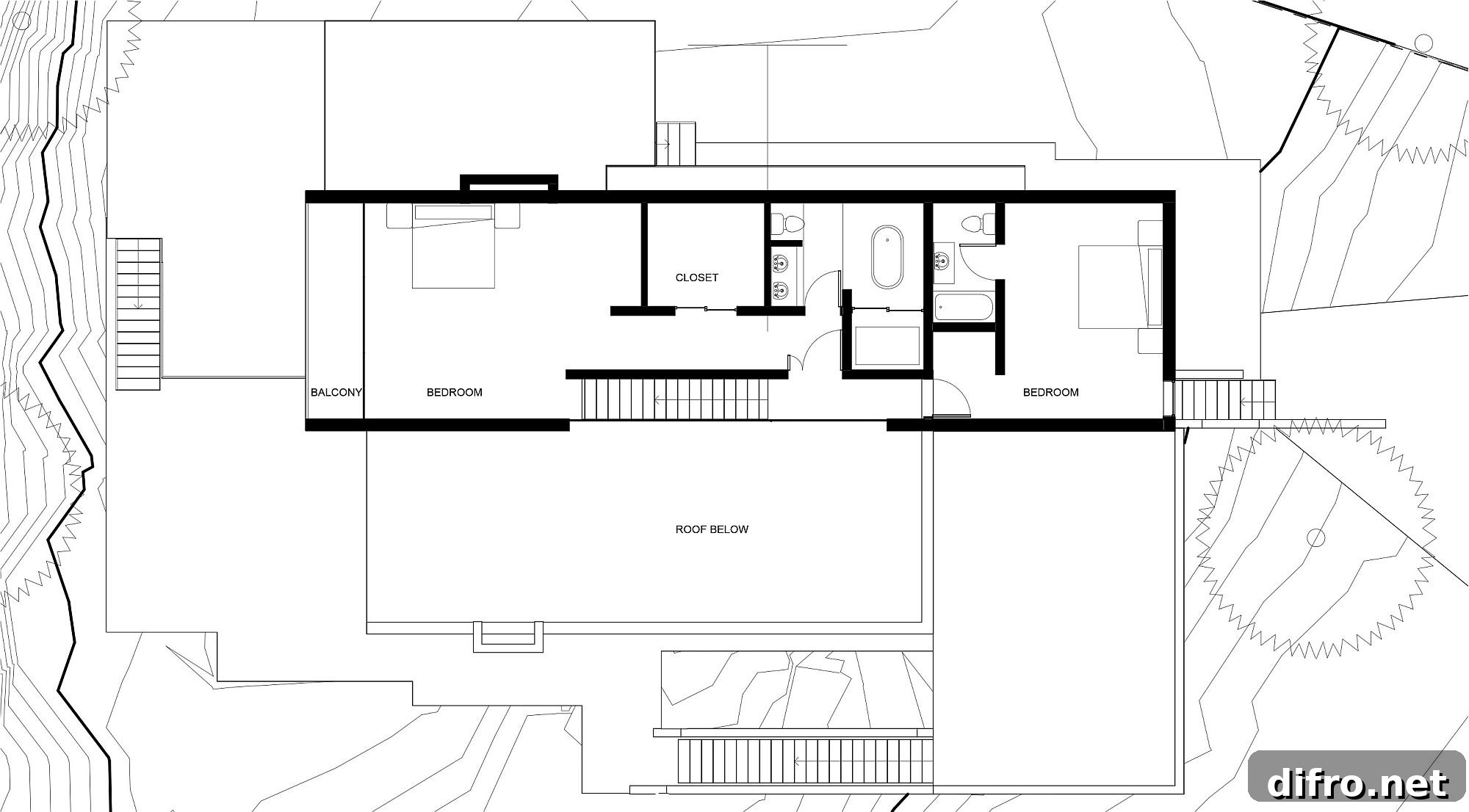
The house was assembled from five fifty-foot modular units, each completed in the factory and then installed on site in a short timeframe. Each module functions as a generous room with a clear program: shared living spaces occupy the ground floor while private bedrooms and intimate areas are grouped on the upper level. Externally, the lower volume features a natural finish accented by bold black trim, while the upper modules are entirely clad in a dark exterior skin, creating a striking, contemporary contrast that responds to the wooded lakeside setting.
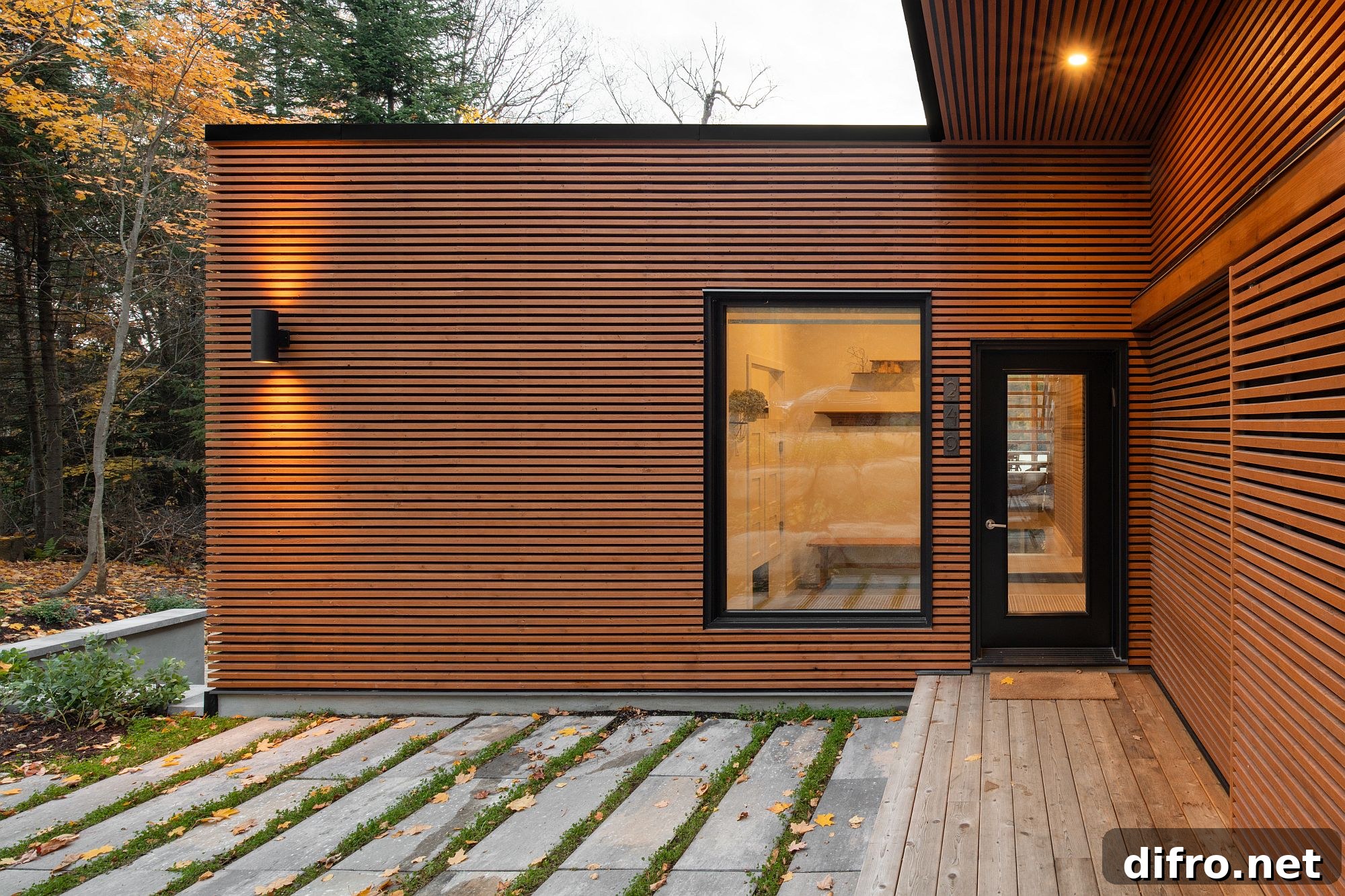
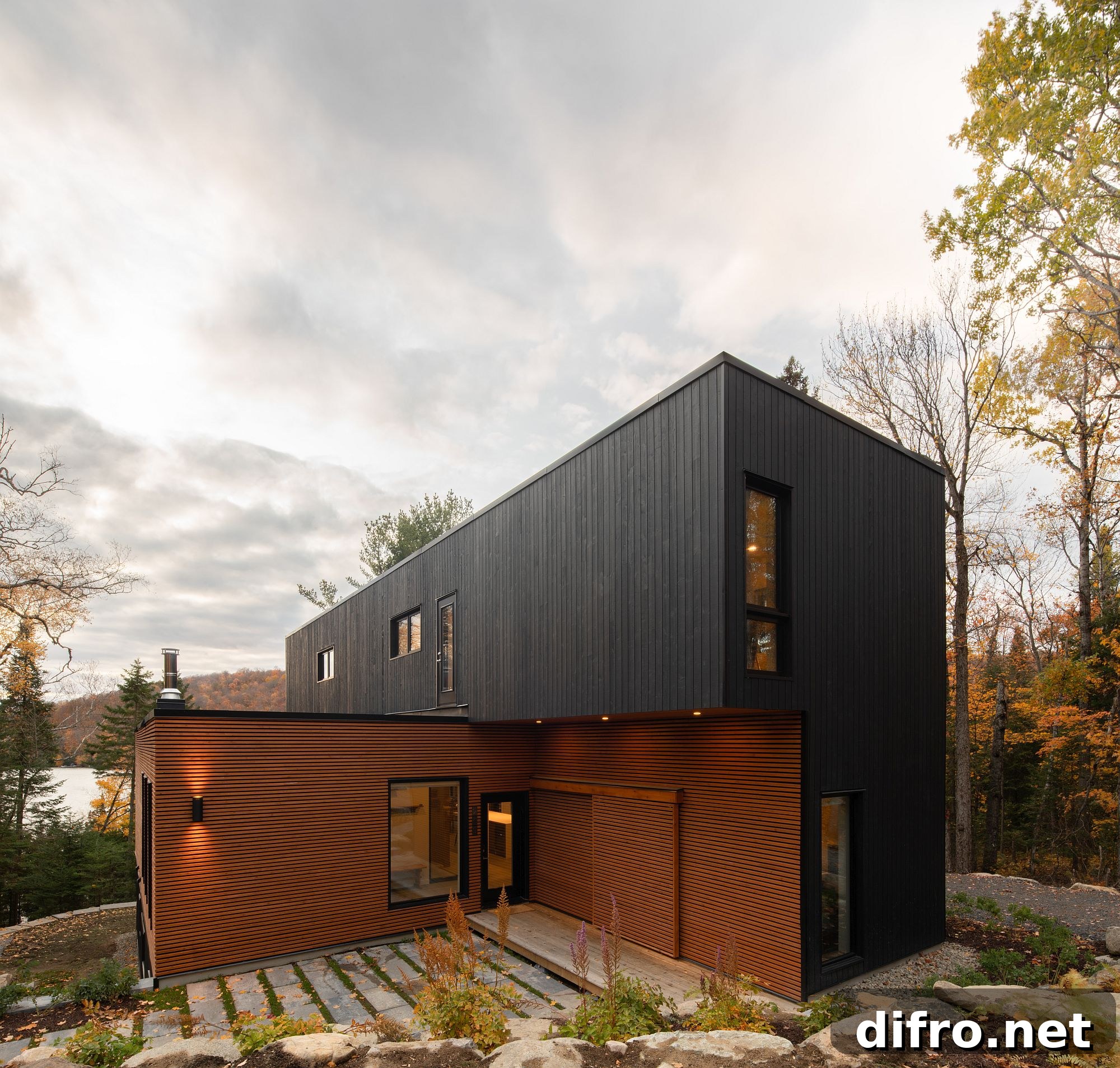
The modular design was developed to precise architectural plans. Insulation, windows, and flooring were installed in the factory before shipping. Transporting the oversized modules required extensive preparation, coordination, and careful navigation along country roads, including tight ninety-degree turns in challenging weather.
Prefabrication allowed much of the work to be completed under controlled conditions, improving build quality and reducing on-site construction time and disturbance to the property. On arrival, the modules were fitted together to form a cohesive plan that preserves the surrounding landscape while opening the interior to the lake and forest beyond.
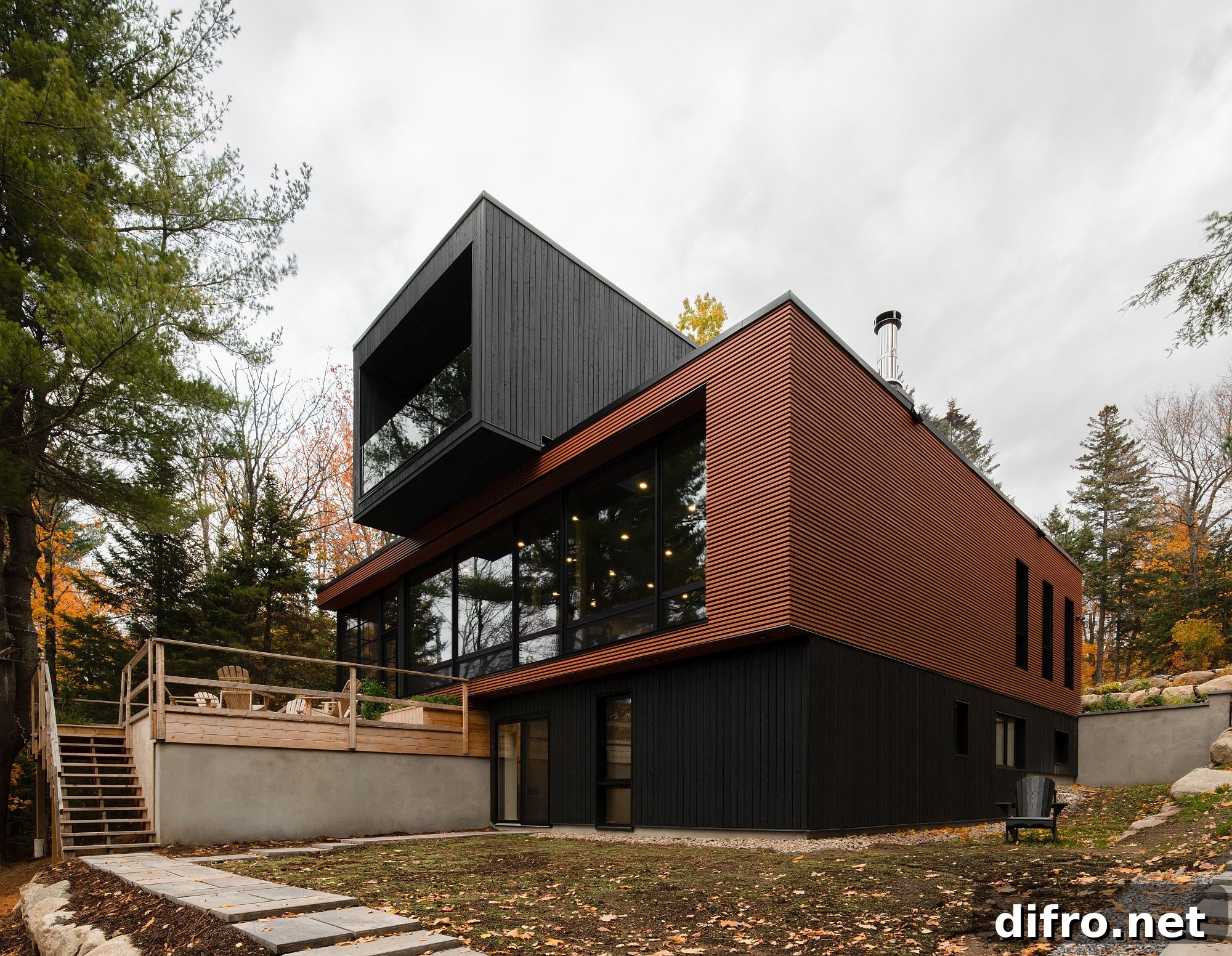
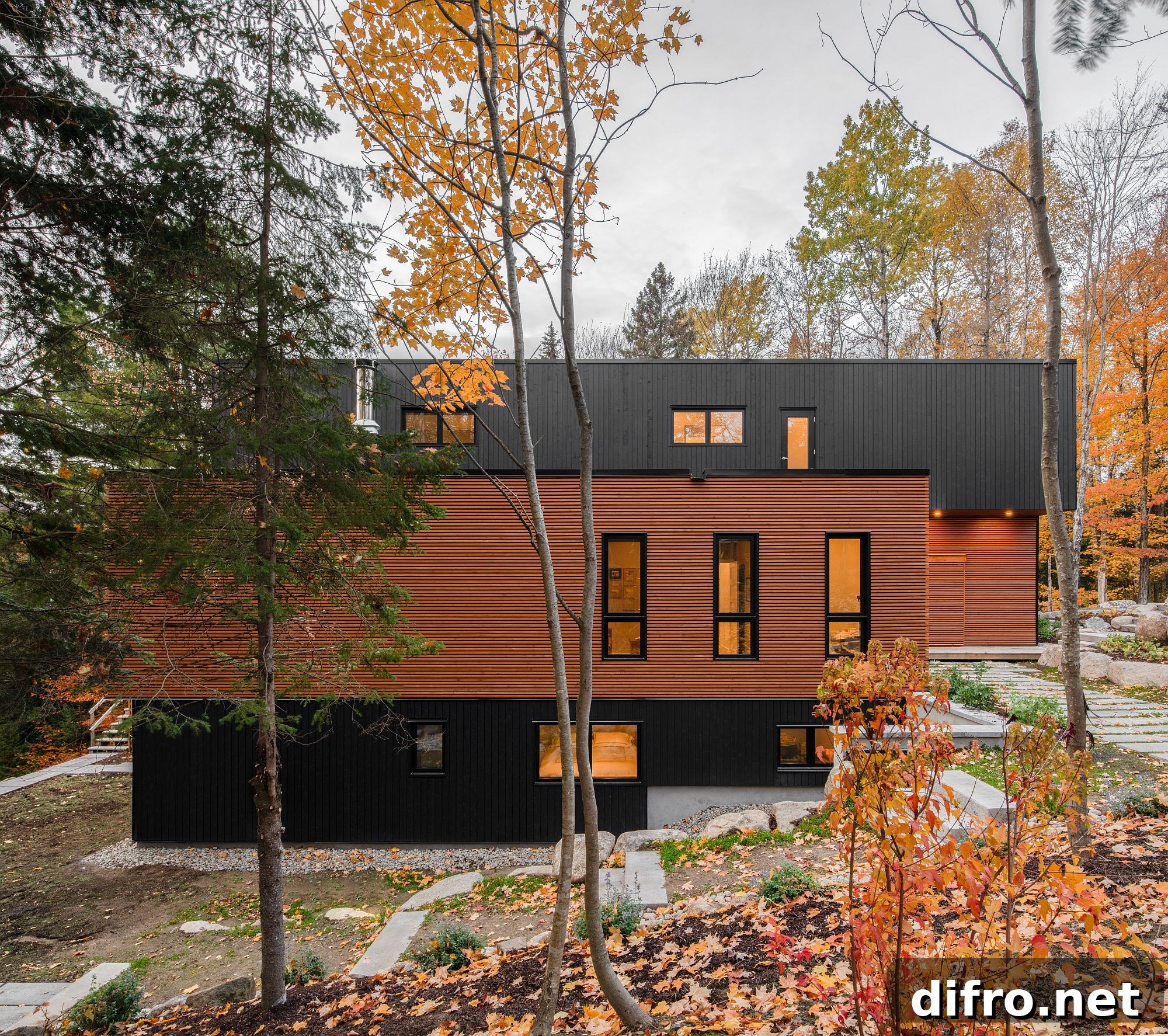
The ground floor contains an open-plan living area, kitchen, and dining space, all oriented to take advantage of the natural views. Large floor-to-ceiling glazing and dark-framed windows bring the outside in, while a screened porch and an expansive deck extend living outdoors. Upstairs, the bedrooms and private spaces are arranged for quiet and privacy, set apart from the active public rooms below.
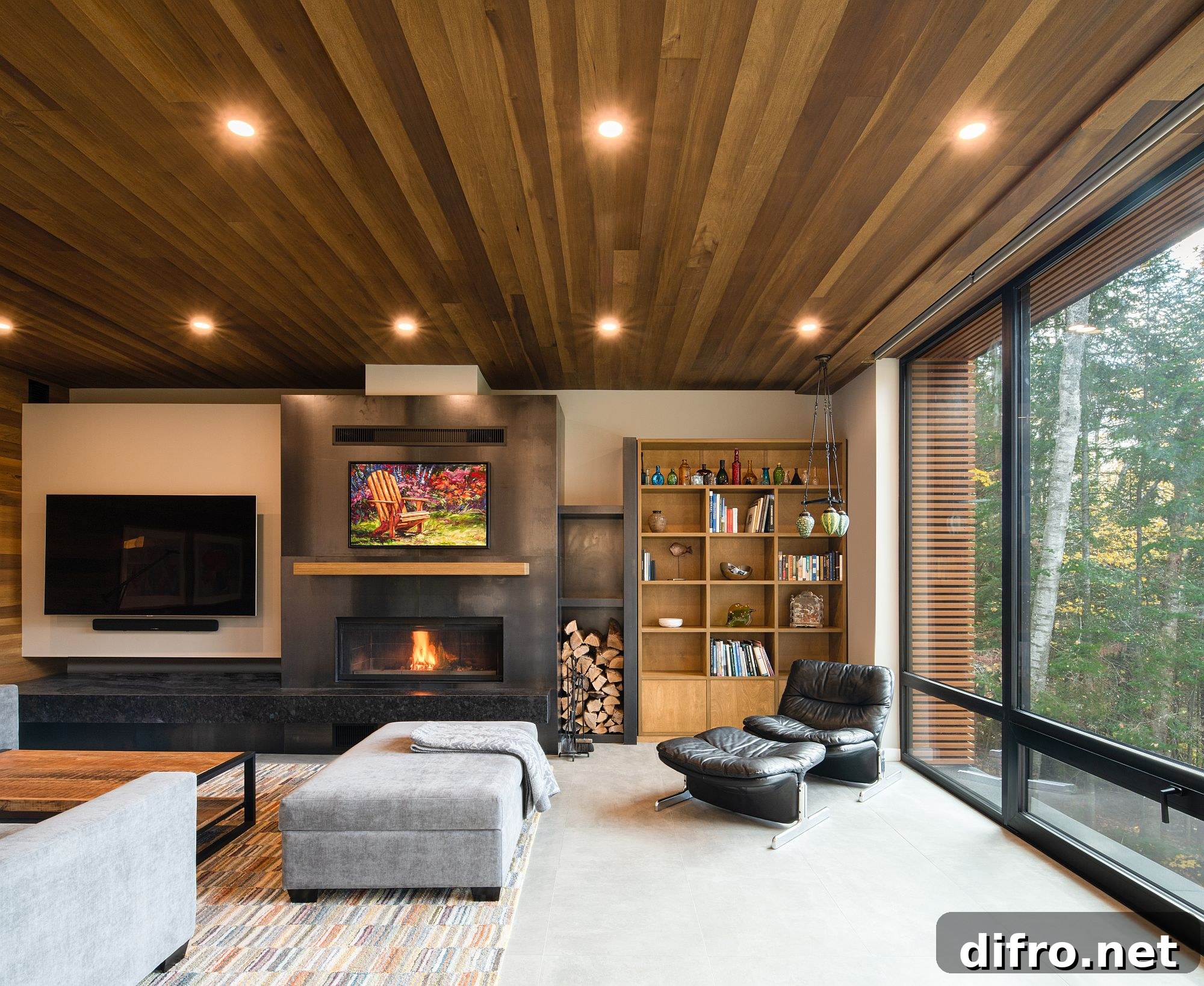
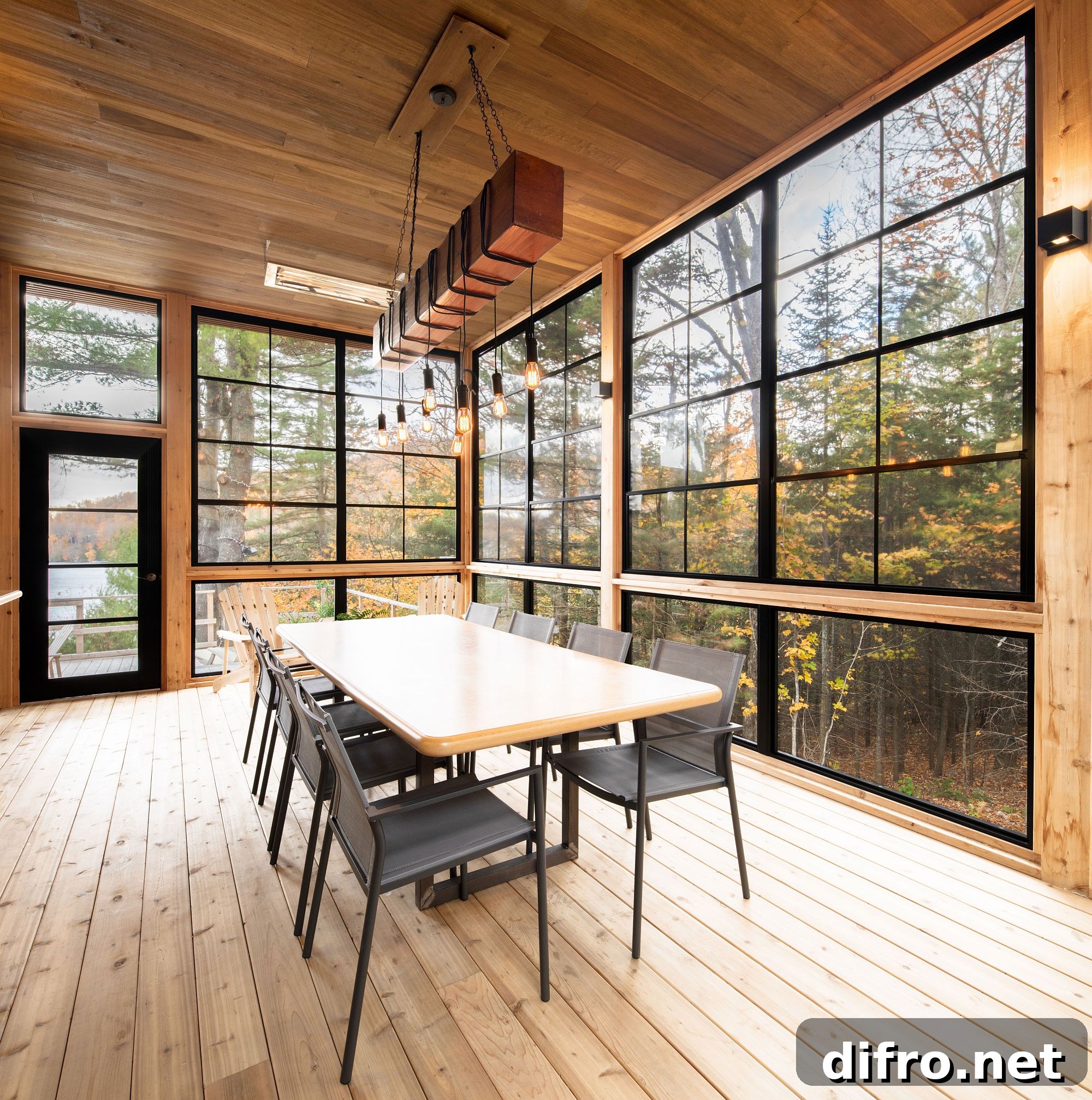
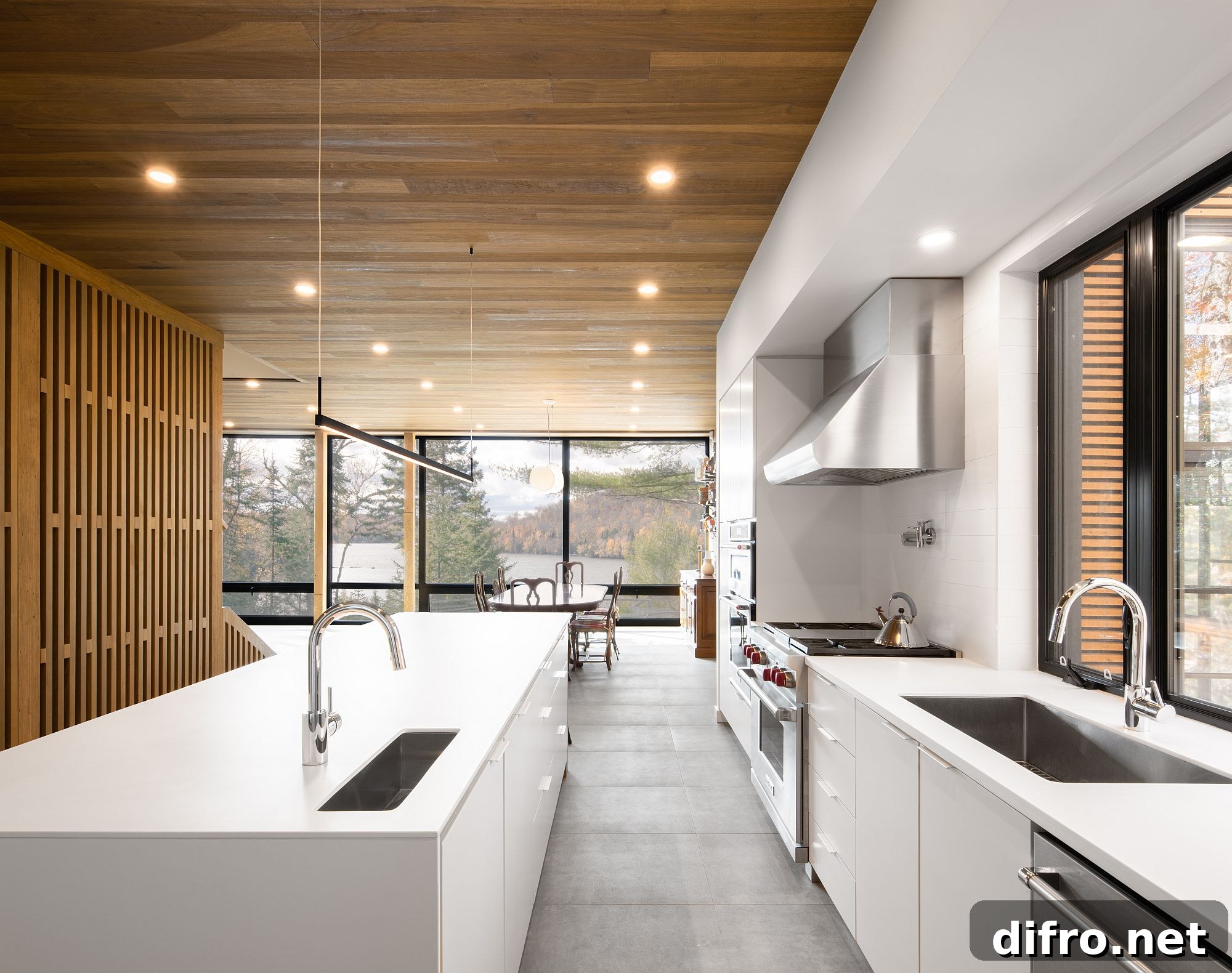
Material choices inside—predominantly wood and glass—create a warm, contemporary interior that feels connected to the site. Dark window frames frame views of the lake and forest while interior finishes remain restrained and refined. The design demonstrates how prefabrication can deliver high-quality architecture with minimal site impact and strong environmental sensitivity.
This Ivry-sur-le-Lac Country Home is a clear example of how modular construction and thoughtful architecture can produce a sustainable, site-sensitive house that celebrates its lakeside location. The project highlights the advantages of off-site fabrication—quality control, reduced site disruption, and faster assembly—while delivering a polished, modern home tailored to its natural context. [Photography: David Boyer]