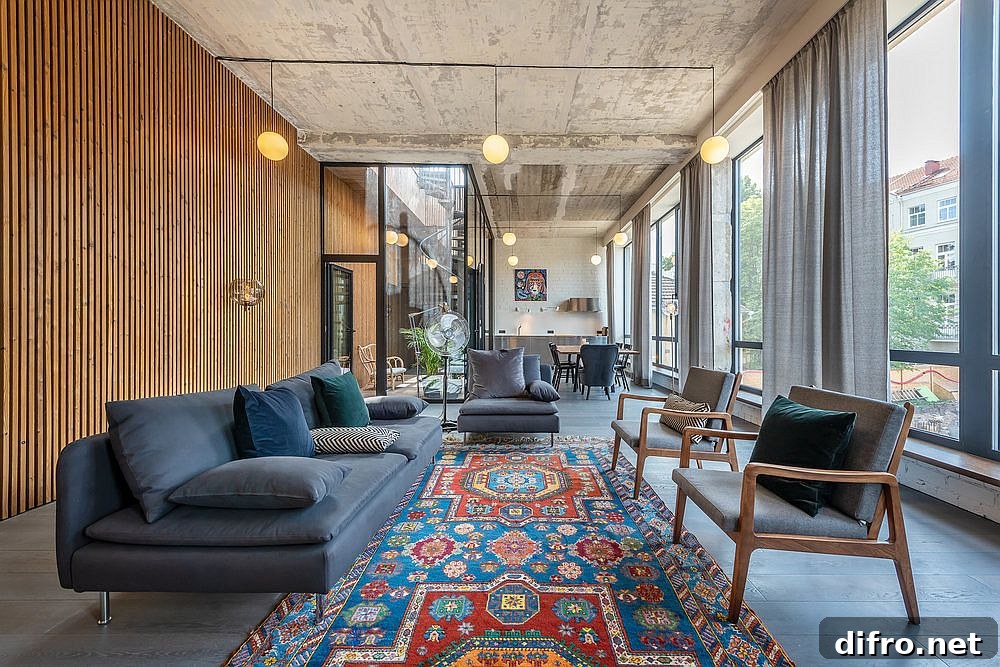
The last decade has seen a growing number of architects embrace adaptive reuse, transforming old, neglected structures into modern, livable spaces. Beyond conserving resources and making efficient use of existing buildings, this approach often produces homes and offices with a distinct character. A striking fusion of textures, raw industrial elements and contemporary finishes has reshaped interior design, producing spaces that feel both historic and fresh. One inspiring example is the Apartment on Raugyklos Street in Vilnius, reimagined by DO Architects. The project illustrates how careful renovation can preserve the spirit of an original structure while creating a warm, functional living environment.
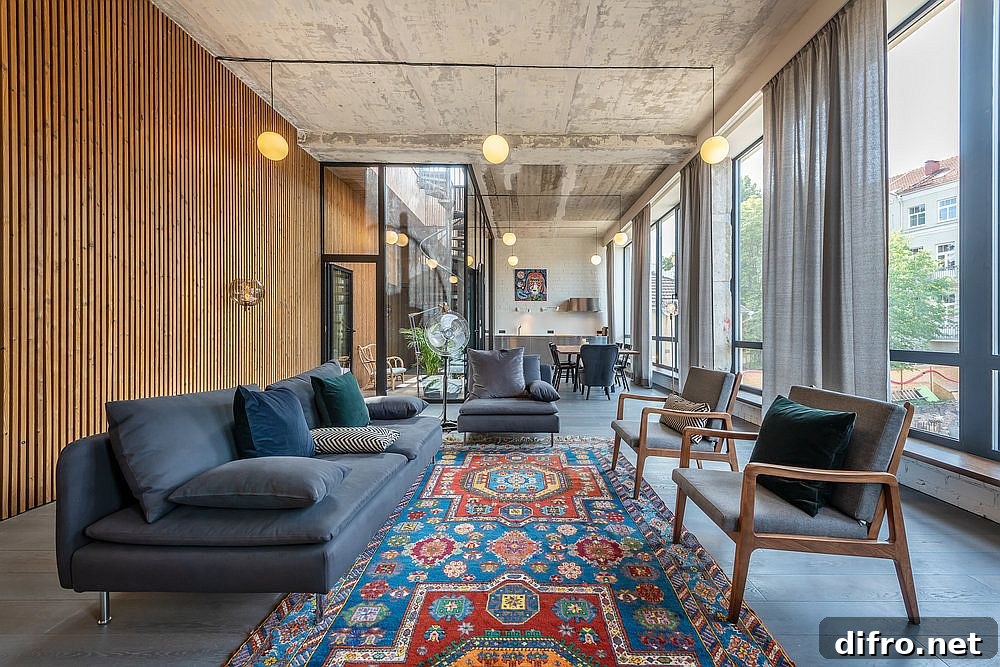
Originally a forgotten warehouse, the building has been thoughtfully renovated to accommodate a studio on the lower level and an apartment above. The conversion preserves key industrial features—exposed concrete ceilings and occasional raw wall sections—while introducing large glazed walls and windows with dark metal frames that flood the interiors with natural light. The open-plan living area flows into the kitchen and dining zones, and several patios and courtyards extend the interior space outward, creating a sense of continuity between inside and out.
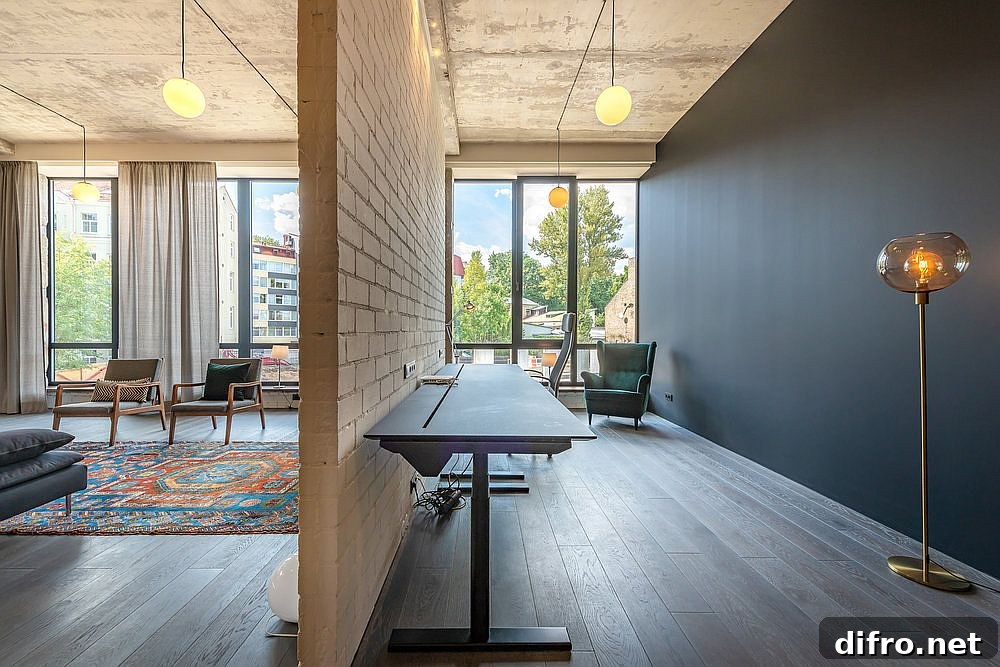
The interior combines a carefully curated collection of furnishings and artwork with clean contemporary detailing. Slim, modern lighting fixtures articulate the ceilings and highlight key areas, while a palette that pairs dark gray walls with warm wood surfaces balances the building’s industrial bones with a welcoming atmosphere. Thoughtful contrasts—polished finishes against rough textures—give each room depth and personality.
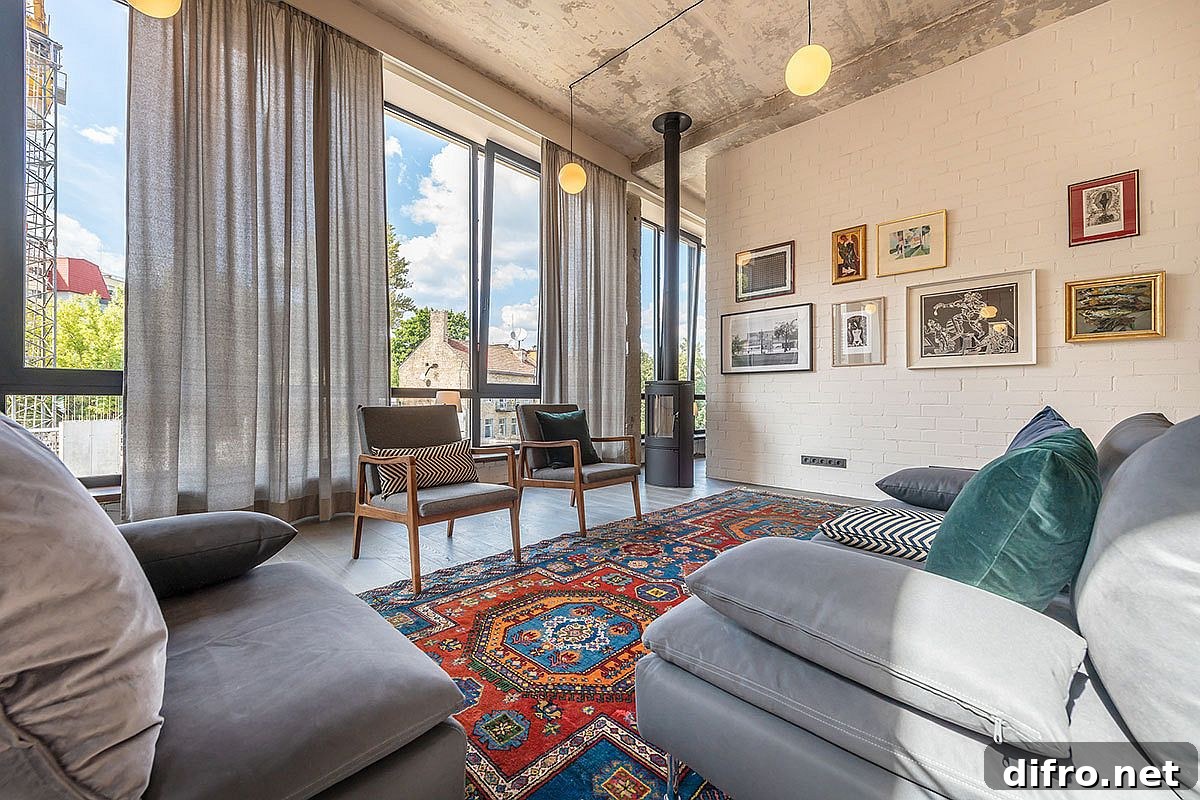
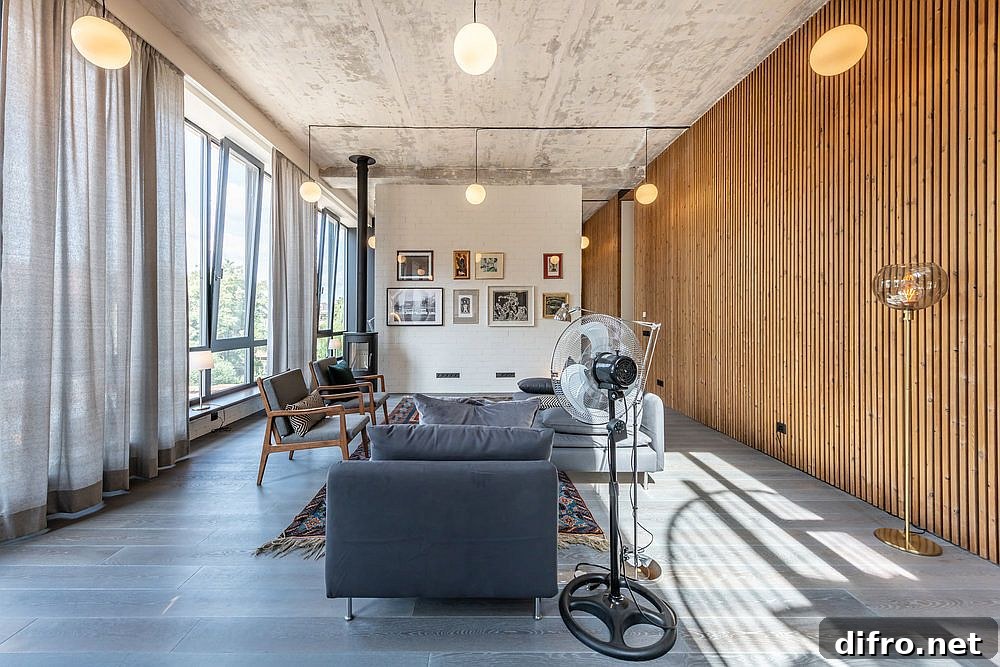
Art plays a central role in the interior design. Carefully chosen pieces are placed throughout the apartment, ensuring that the occupant encounters art in almost every space. A white-painted brick wall at the end of the living area serves as a subtle divider between the lounge and the working zone, doubling as a neutral gallery wall that showcases the collection without competing with it.
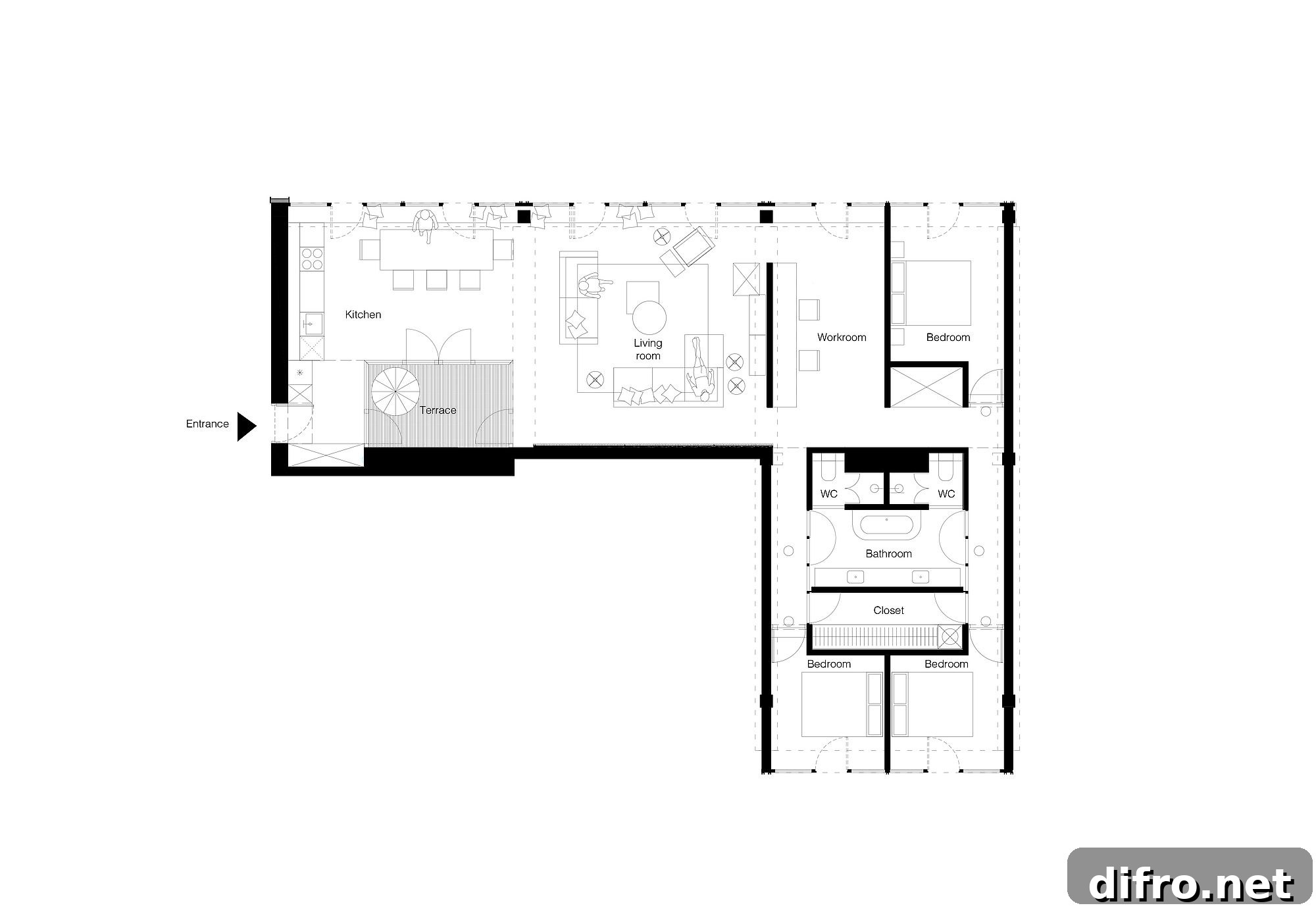
The architects introduced a number of spatial moves that enhance both function and atmosphere. A spiral staircase links the studio below with the apartment above, creating a dynamic vertical connection while conserving footprint. The kitchen features stainless-steel appliances and cabinetry that add a metallic sheen, contrasted by a textured white brick wall that keeps the space feeling bright and tactile. These materials—metal, masonry and wood—are repeated intentionally to create a cohesive material language throughout the home.
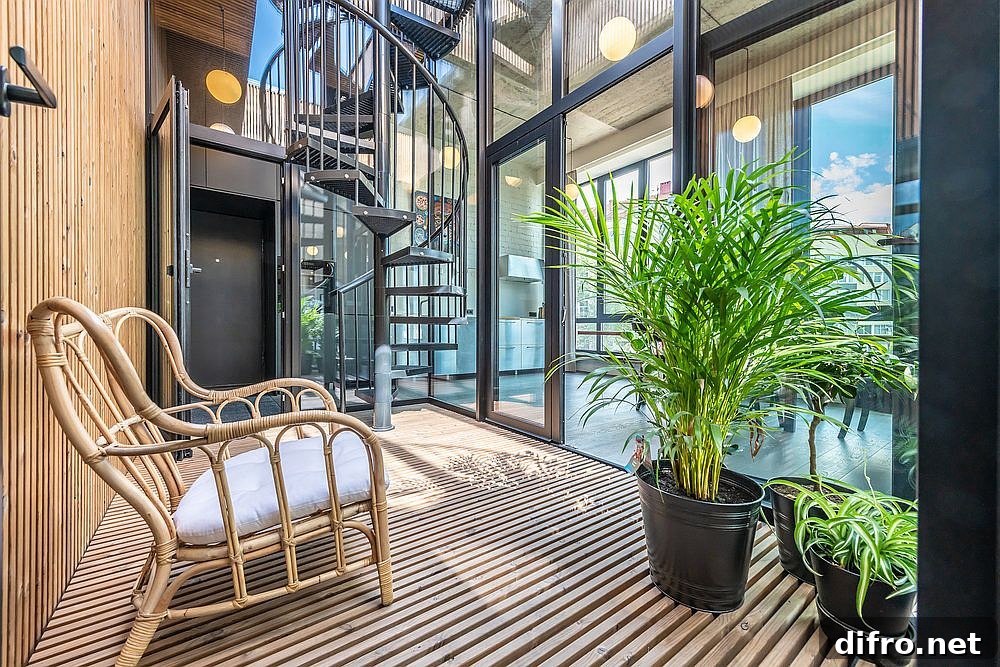
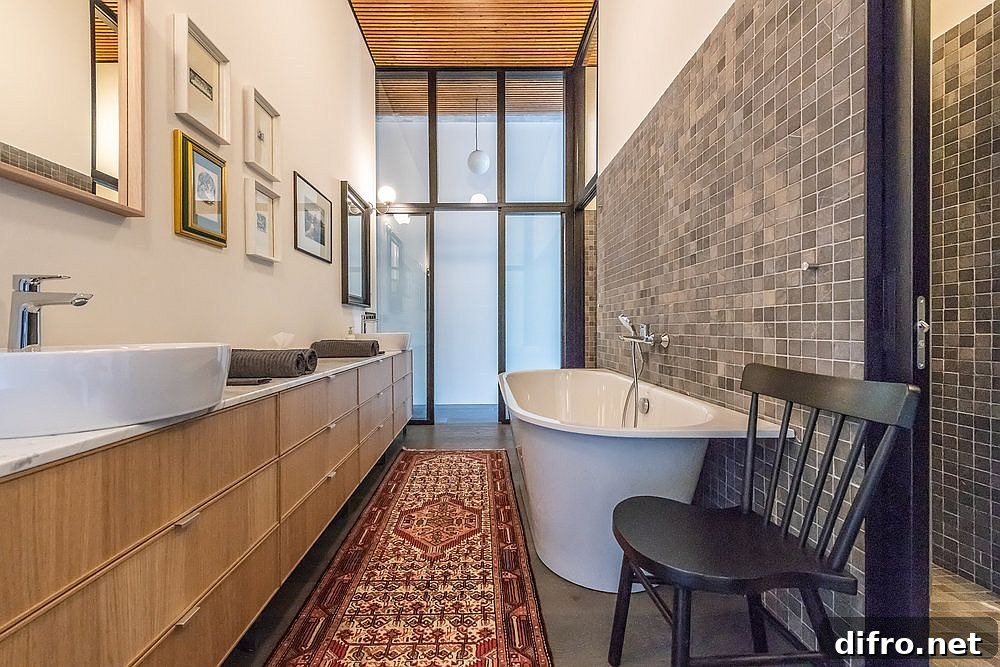
Private and semi-private zones are organized to maximize light and privacy while maintaining visual continuity. A workspace, finished in polished dark gray, offers a calm, modern backdrop for focused work. The bathroom is designed with transparency and flow in mind: open at both ends, it connects directly to the bedroom with sliding glass doors, reinforcing the sense of openness and fluid circulation through the apartment.
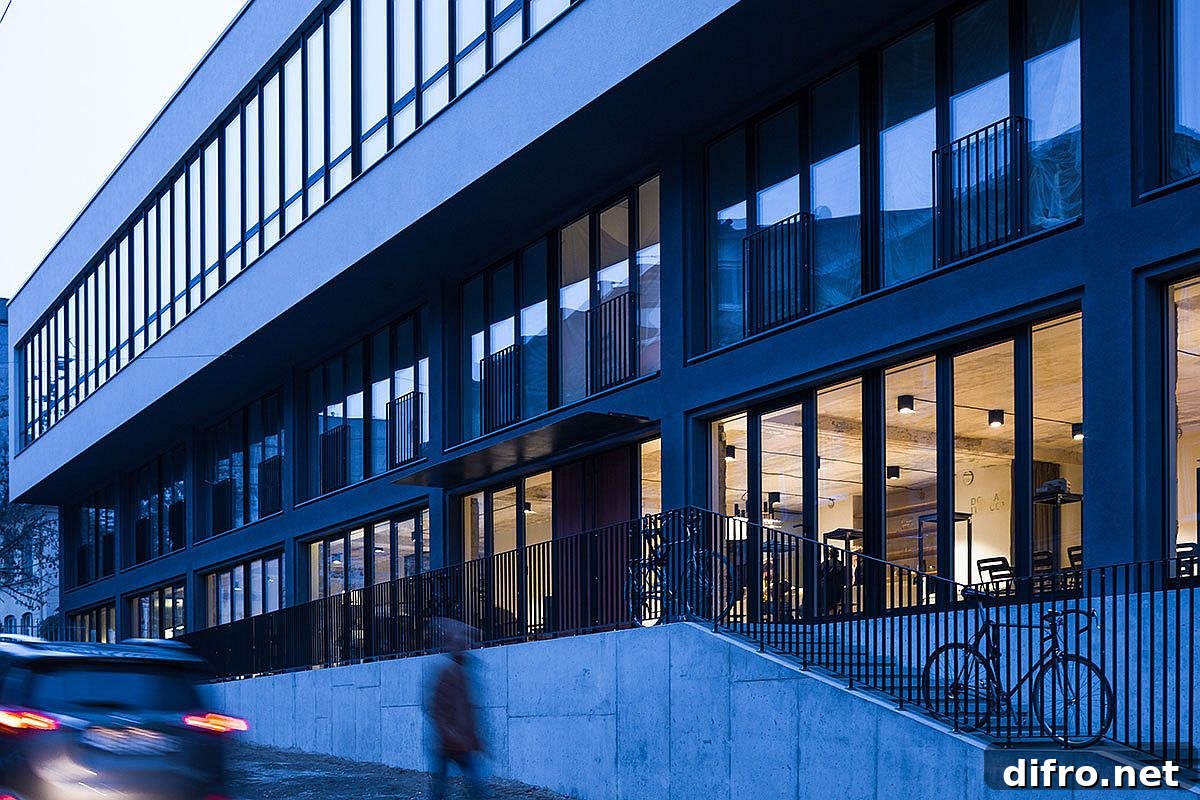
The building’s street-facing facade retains its industrial identity while displaying the careful interventions made inside. The floor plan balances communal and private zones, and the overall design demonstrates how adaptive reuse can honor a structure’s past while delivering contemporary comfort. Throughout the project, the interplay of light, texture and carefully chosen art pieces creates an apartment that feels both sophisticated and approachable.
Precious art pieces, an important component of the interior, are positioned in well-chosen spots throughout the apartment so that occupants are consistently engaged with the collection. The white-painted brick wall at the end of the living space subtly separates the lounge from the workroom while serving as a neutral backdrop for the displayed art.
Photography: Laimonas Ciūnys