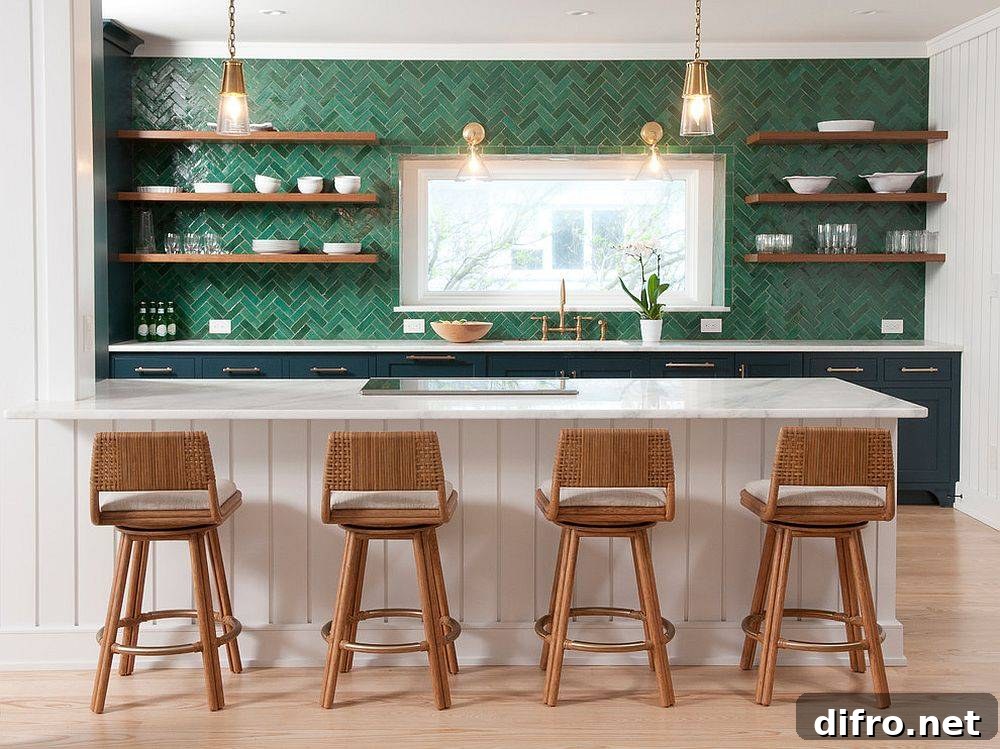
The kitchen is the heart of the home. Whether large or compact, it serves as the central hub where meals are prepared, conversations happen, and family members gather. Over the years kitchens have evolved from purely functional spaces into stylish expressions of personal taste and lifestyle. Increasingly, homeowners treat kitchen design as a way to bring character and personality to the whole house.
Neutral and white kitchens remain timeless, but introducing color can transform the room and energize daily life. Thoughtful use of color — from subtle pastels to deep, moody tones — can create atmosphere, highlight architectural details, and reflect how you want to feel in the space. Below are kitchen color ideas and practical tips for choosing hues that work well in different layouts and styles.
Pastels
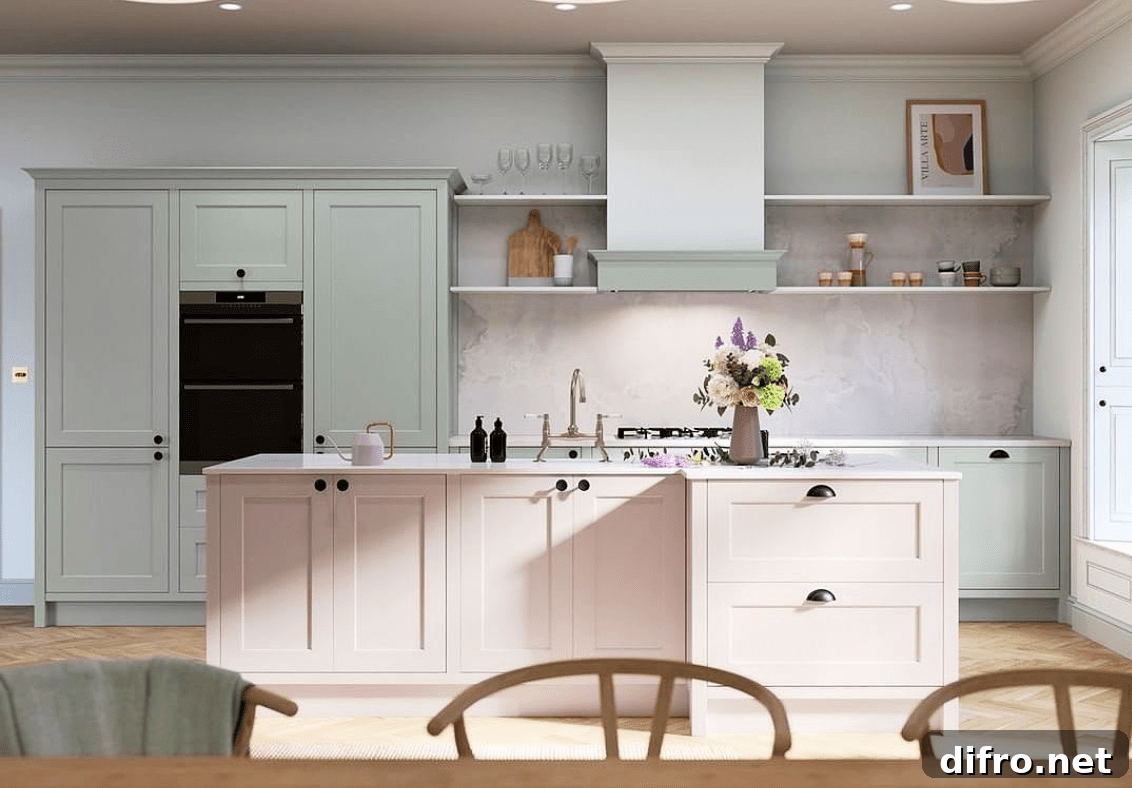
If you want to introduce color gently, pastels are an excellent starting point. Soft shades of mint, blush, powder blue, or pale lemon add personality without overpowering the room. Pastel cabinets or an island can freshen a white kitchen and pair beautifully with natural wood accents and warm metallic hardware. For an easy, low-commitment update, paint lower cabinets in a pastel and keep upper cabinets light to maintain an open, airy feel.
Deep Blue
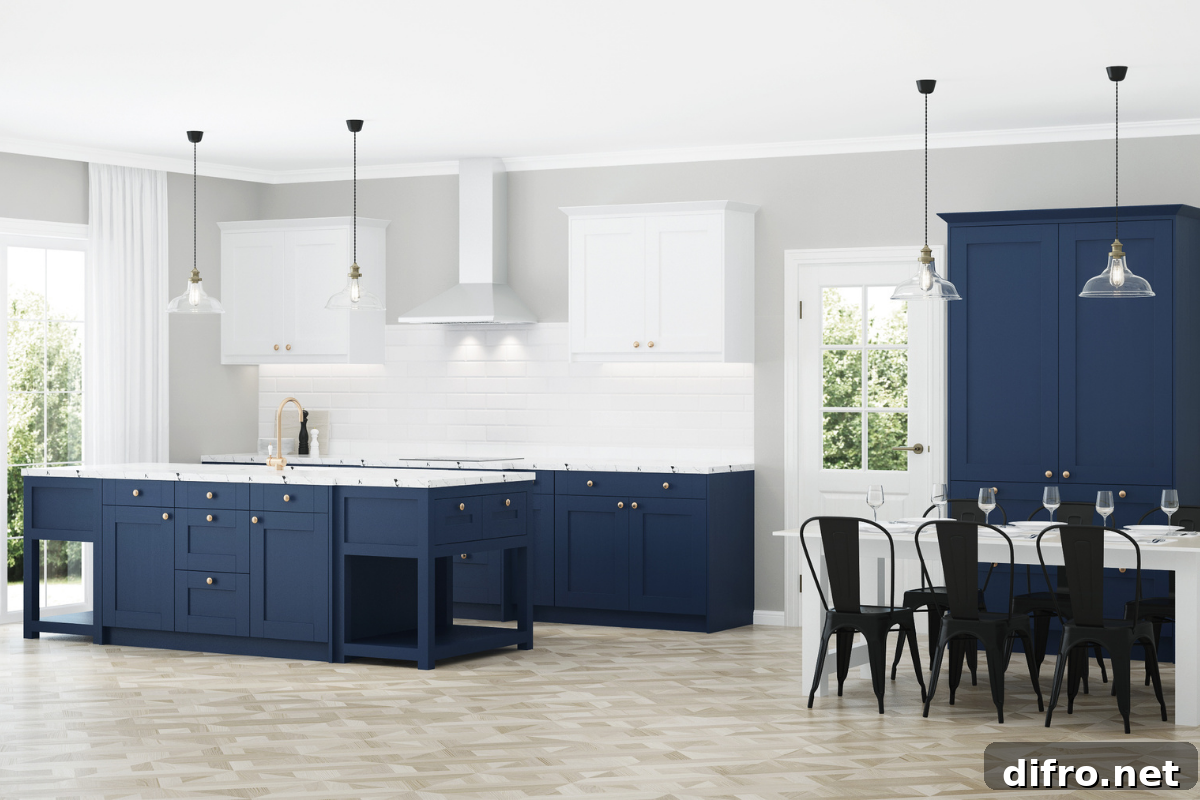
Deep blue creates a calm, elegant atmosphere while still providing color impact. Navy or indigo cabinetry works especially well in kitchens that rely on simple countertops and a neutral backsplash so the color becomes the focal point. Balance rich blue with light surfaces, brass or matte black fixtures, and natural wood flooring to prevent the room from feeling too heavy.
Refreshing Green
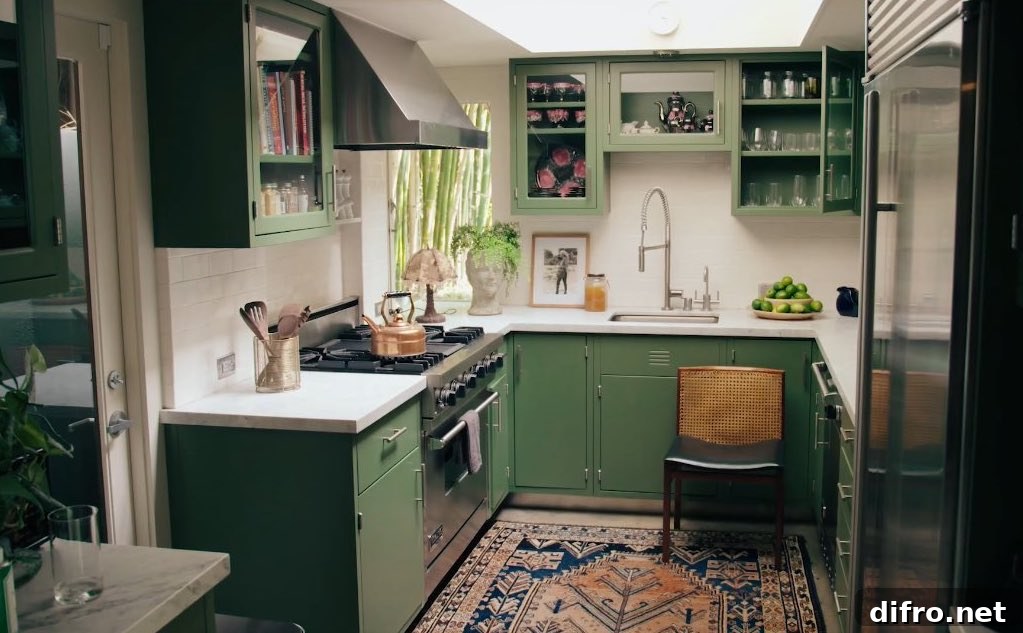
Green kitchens have grown in popularity for good reason: they evoke nature, bring warmth, and feel uniquely inviting. A medium to deep green on cabinetry or an island reads as sophisticated and timeless. Celebrity homes have helped popularize signature shades—what matters most is selecting a tone that complements your light levels and flooring. Pair green cabinetry with soft neutrals and brass hardware for a refined, contemporary look.
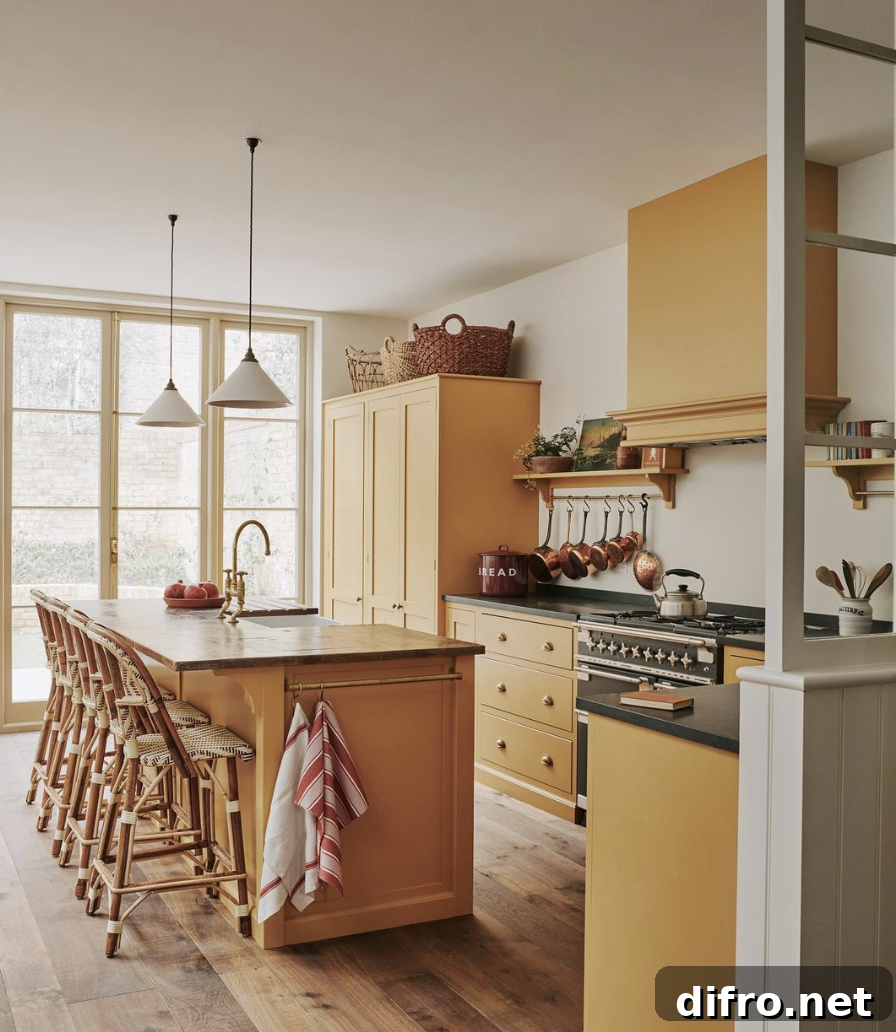
Sunny Yellow
Yellow brings instant cheer and radiance to a kitchen. When used thoughtfully—such as on an island, an accent wall, or open shelving—bright yellow adds warmth and energy without overwhelming the space. Combine yellow with crisp white trim, natural wood, and simple tile to keep the look modern and balanced. This hue is especially effective in kitchens that receive limited natural light.
Dark and Moody
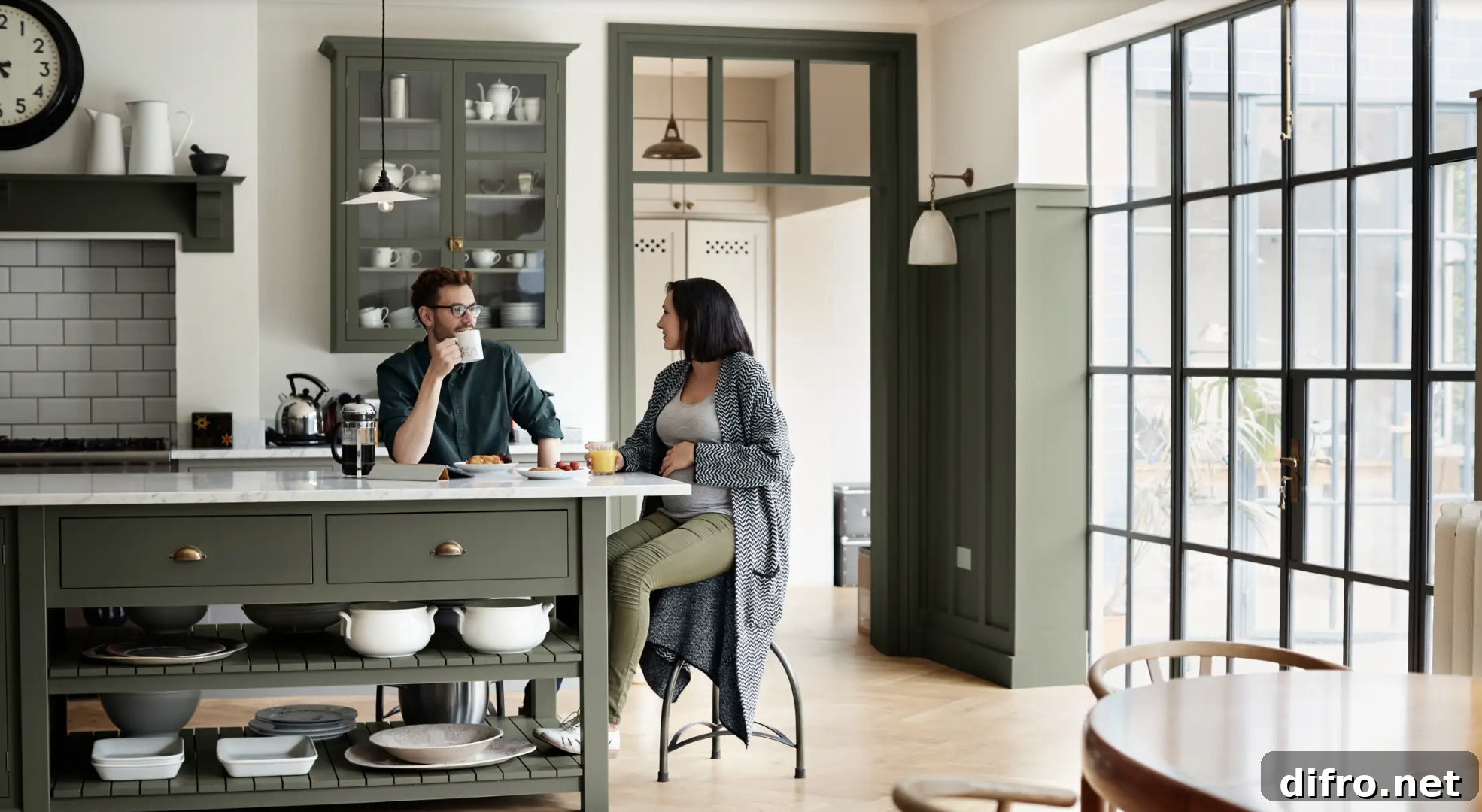
Dark, moody color schemes can feel luxurious and intimate when executed with care. Deep greens, charcoal, or nearly black cabinetry makes a strong design statement and reads as timeless when complemented by warm wood, textured tile, and layered lighting. To prevent a heavy result, use reflective materials—polished stone, brass accents, or glossy subway tile—and ensure adequate task lighting so the space remains functional as well as dramatic.
A Few Colors to Avoid
Red
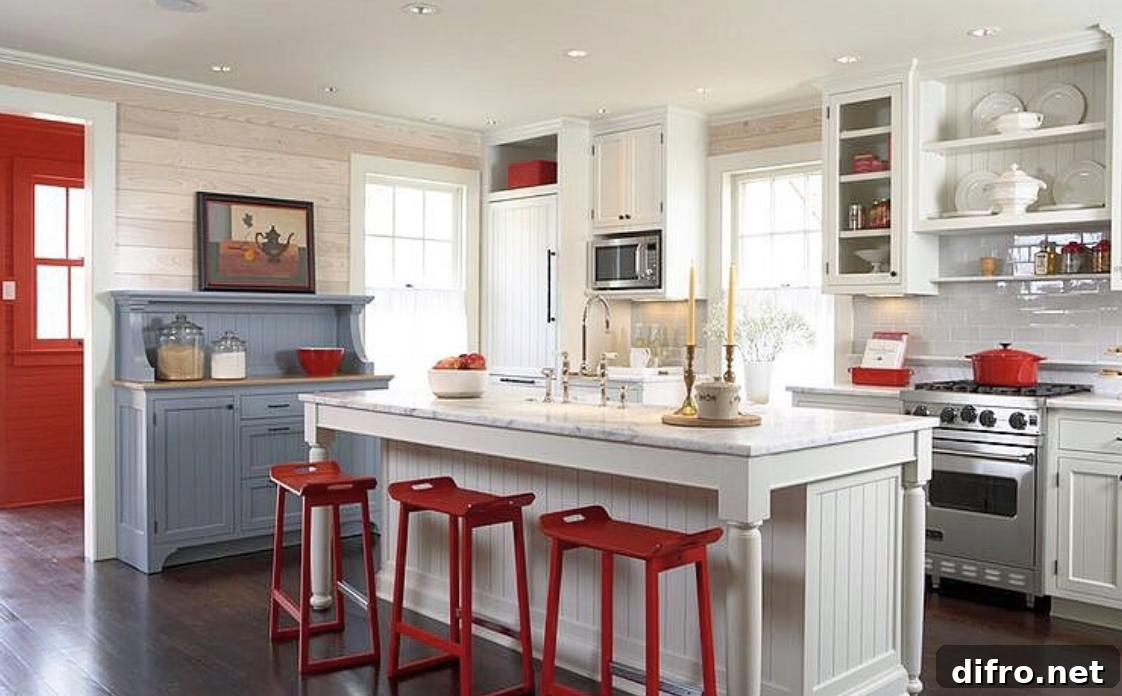
Red is bold and attention-grabbing, but in kitchens it can feel overstimulating if overused. Large expanses of red paint or cabinetry can also narrow buyer appeal if you plan to sell. If you love red, incorporate it in moderation through accessories, small appliances, or decorative accents rather than committing to full-scale red cabinetry.
Dark Browns
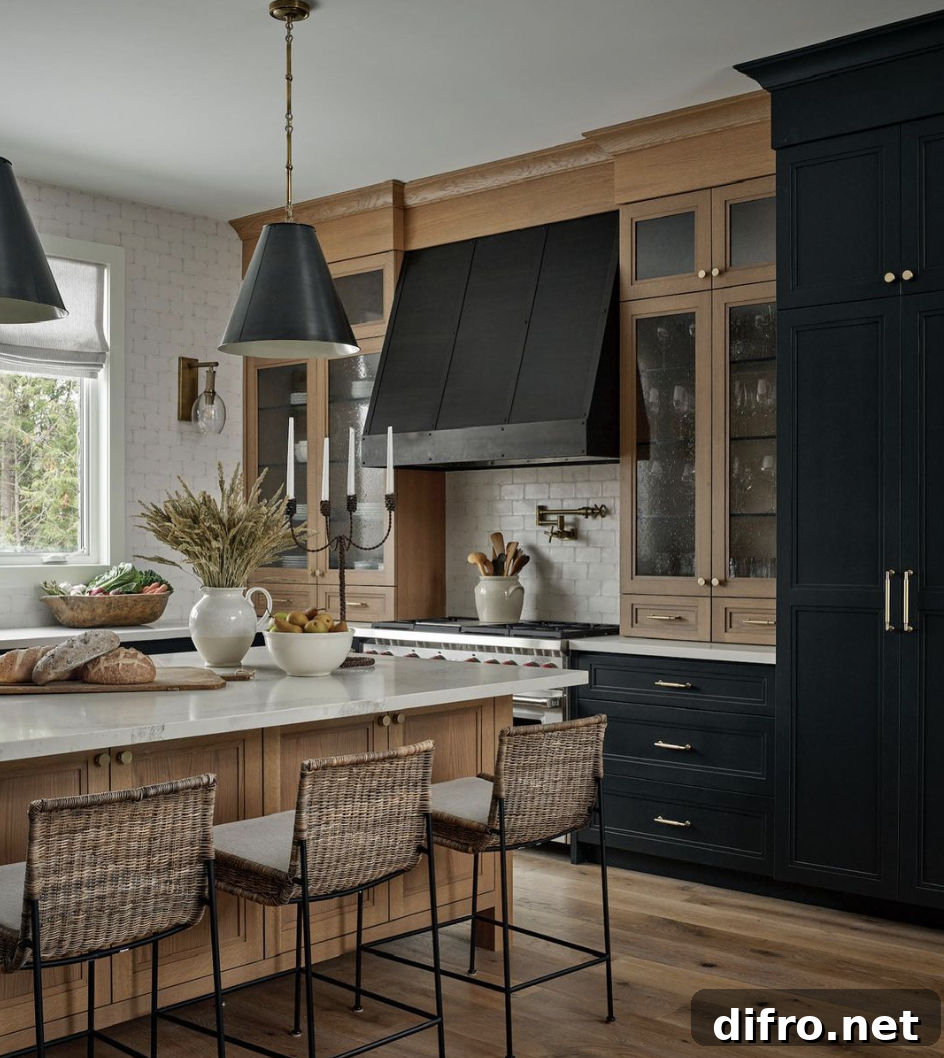
Very dark brown tones can make a kitchen feel heavy and dated if used across all surfaces. Instead of deep brown paint, consider warm taupe, light wood cabinetry, or a two-tone approach that mixes lighter wood with a darker accent color. This contrast keeps the kitchen inviting while maintaining visual interest.
Other Ways to Add Color
Appliances
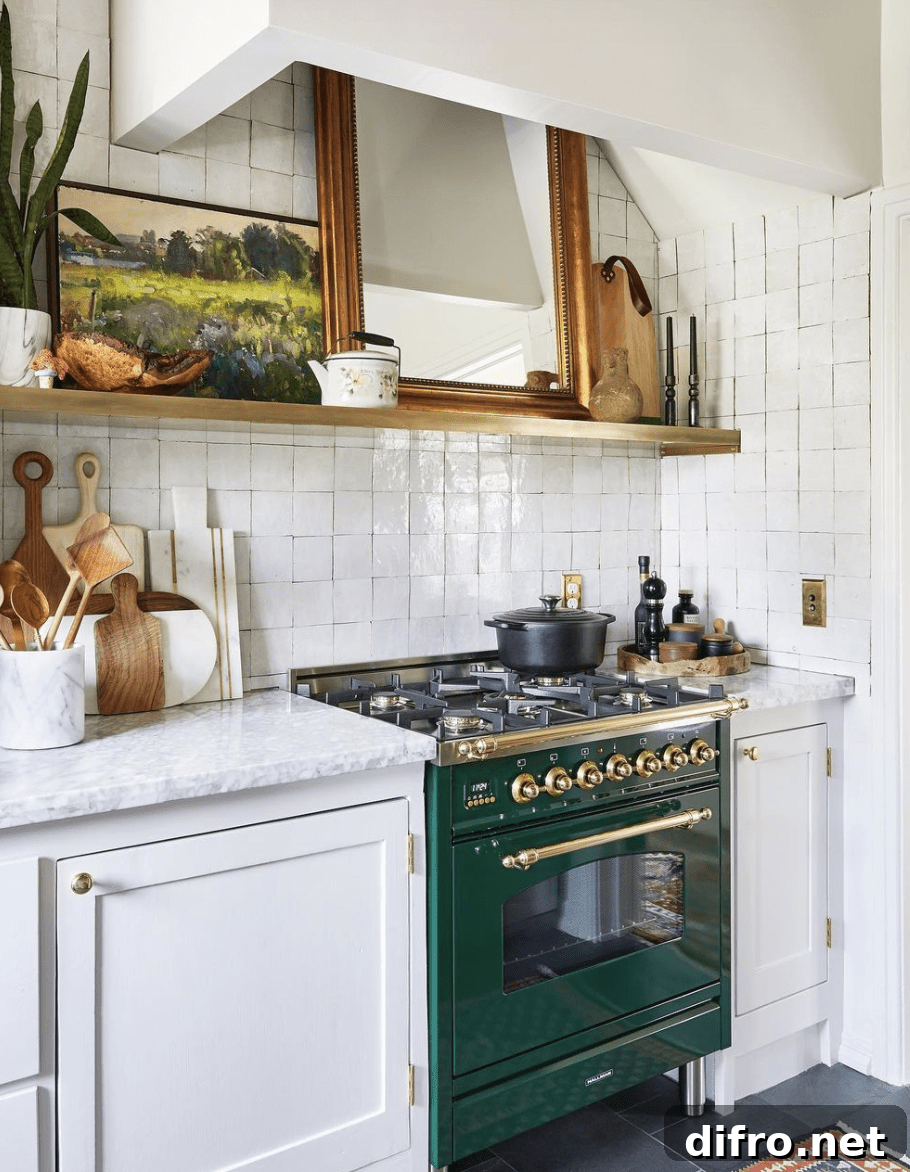
Updating appliances is an effective, lower-commitment way to introduce color. A colorful range or fridge can act as a focal point and feel intentional rather than retro if paired with modern finishes. Consider matte or enamel-colored appliances in a single accent hue to add personality without overpowering the room.
Accent Wall
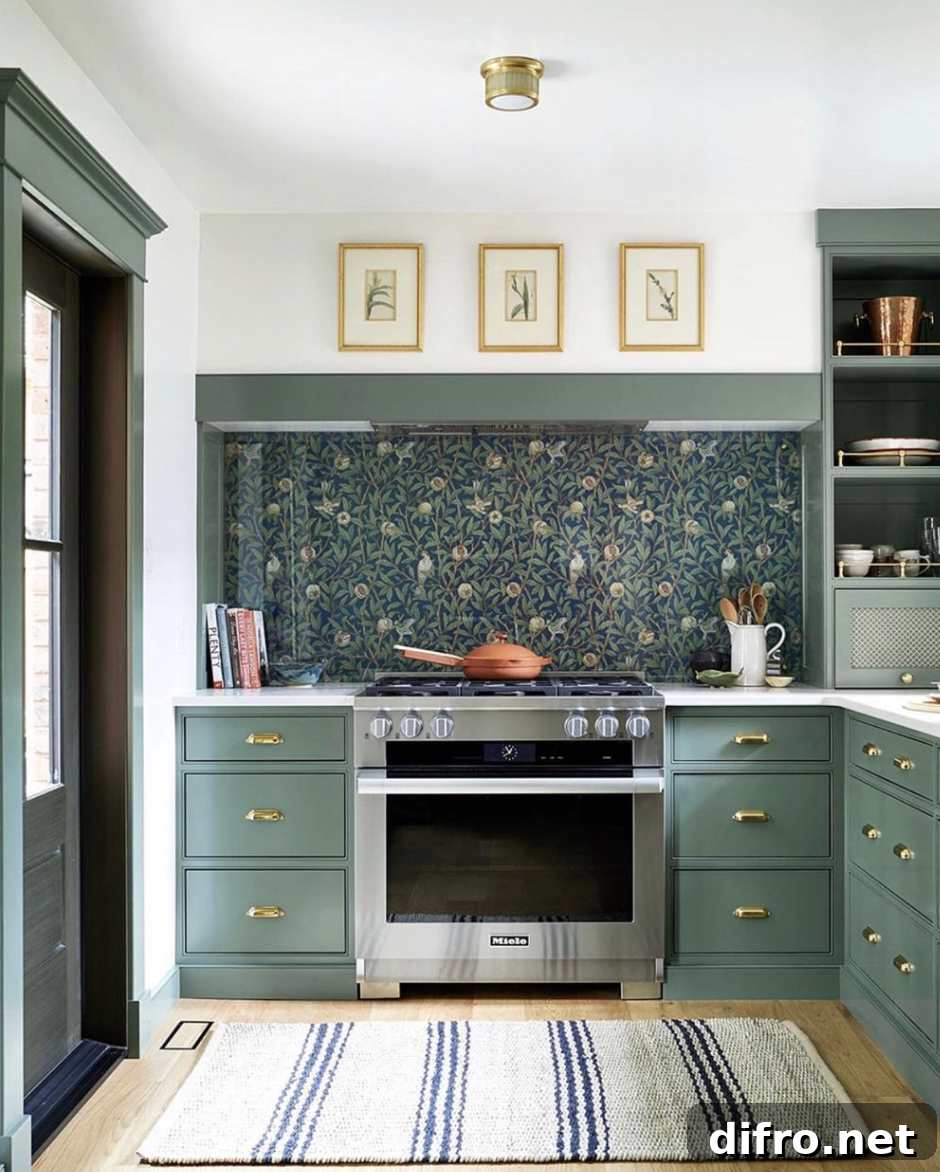
An accent wall is one of the simplest ways to experiment: a single painted wall, a bold wallpaper, or a patterned backsplash can become the kitchen’s centerpiece. A wallpaper backsplash or a painted feature behind open shelving provides visual drama while keeping the rest of the kitchen neutral and versatile.
Window Coverings
Window treatments offer an easy, reversible way to introduce pattern and color. Roman shades, curtains, or woven blinds in complementary tones can soften a kitchen and add warmth without permanent changes.
Seating
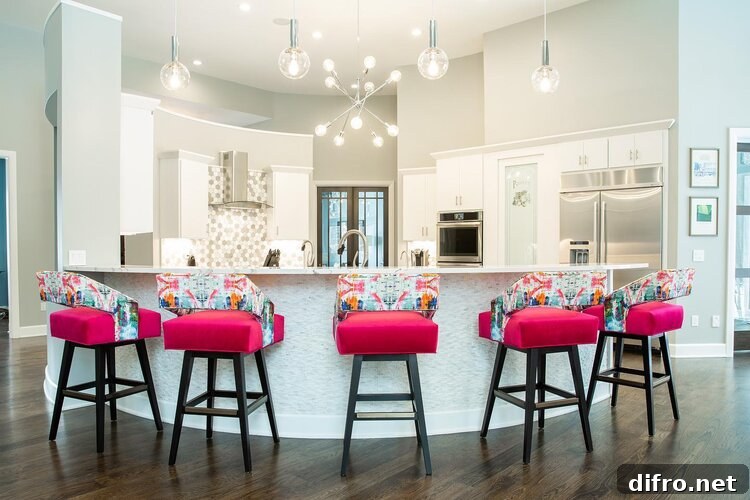
Stools and chairs are ideal color accents. Swapping neutral seating for colorful or textured pieces around an island refreshes the space and is easy to change as trends evolve.
Tiles and Backsplash
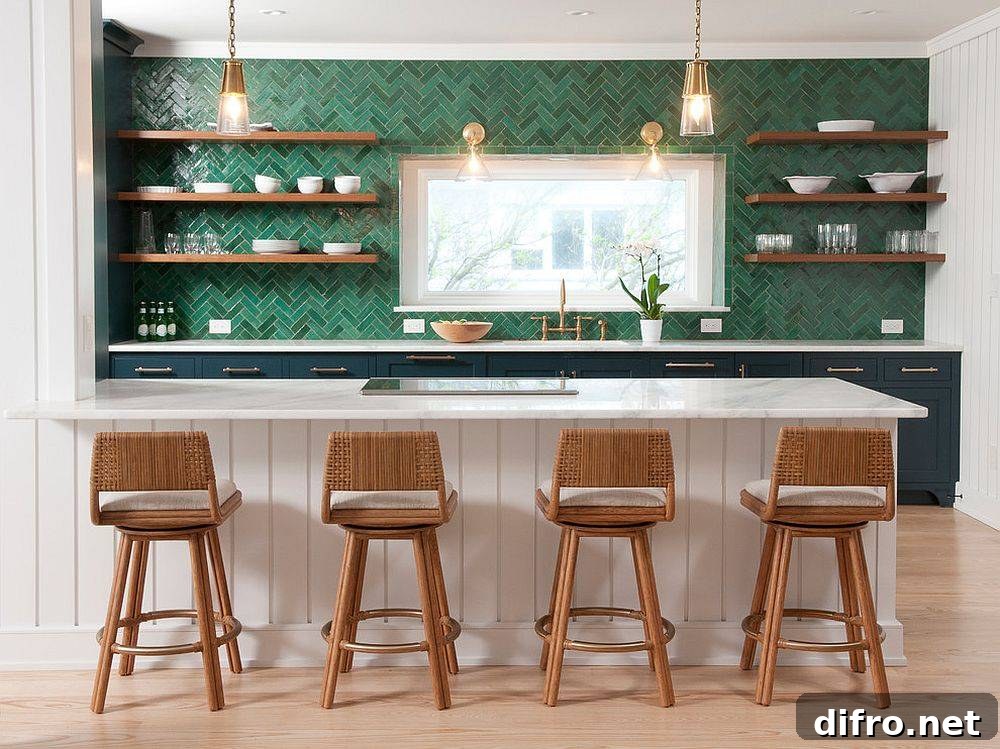
A bold backsplash is a powerful way to layer color and pattern. Colored subway tile, herringbone layouts, or graphic mosaics can transform a simple kitchen into a memorable space. Keep surrounding elements subdued so the tile remains the highlight.
Fixtures
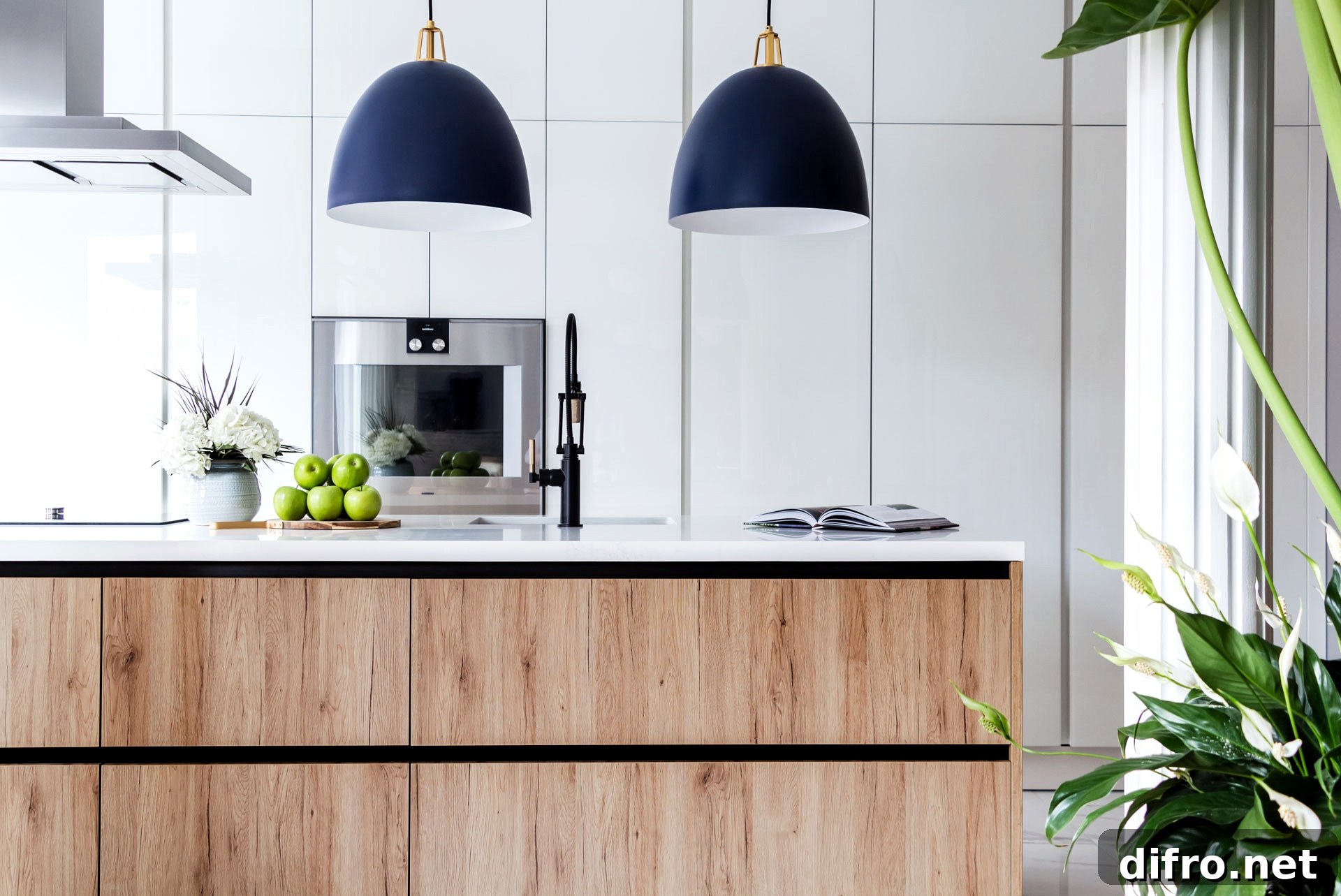
Lighting and plumbing fixtures are another practical way to add color or finish variety. Pendants are especially impactful above islands and come in many colors and materials. Swapping a single light fixture is an affordable update that changes the kitchen’s personality immediately.
A white kitchen will always be classic and safe, but thoughtfully chosen color can bring warmth, joy, and individuality to the space. Whether you commit to painted cabinets or start with small accents, use color deliberately to highlight features, enhance mood, and create a kitchen you love to spend time in.