Brick Aperture House: A Modern Extension to a Federation Home in Petersham, Sydney
Some of the most striking home renovations come from Australia, where heritage cottages and Federation-style houses are frequently reimagined for contemporary living. The Brick Aperture House in Petersham, an inner suburb of Sydney, is a fine example of this approach. Designed by Kreis Grennan Architecture, the project preserves the original street-facing heritage façade while introducing a light-filled, modern rear extension that opens the house up to its garden.
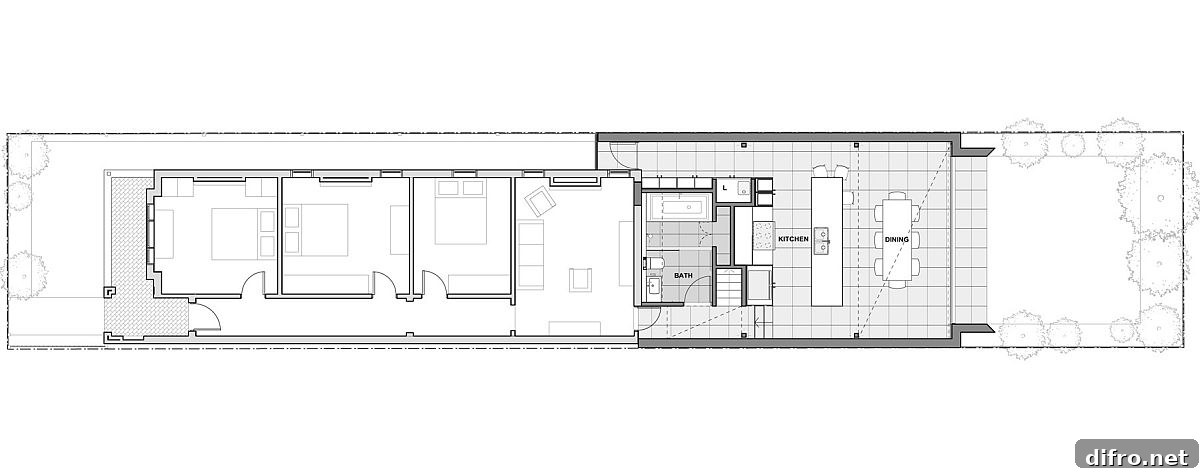
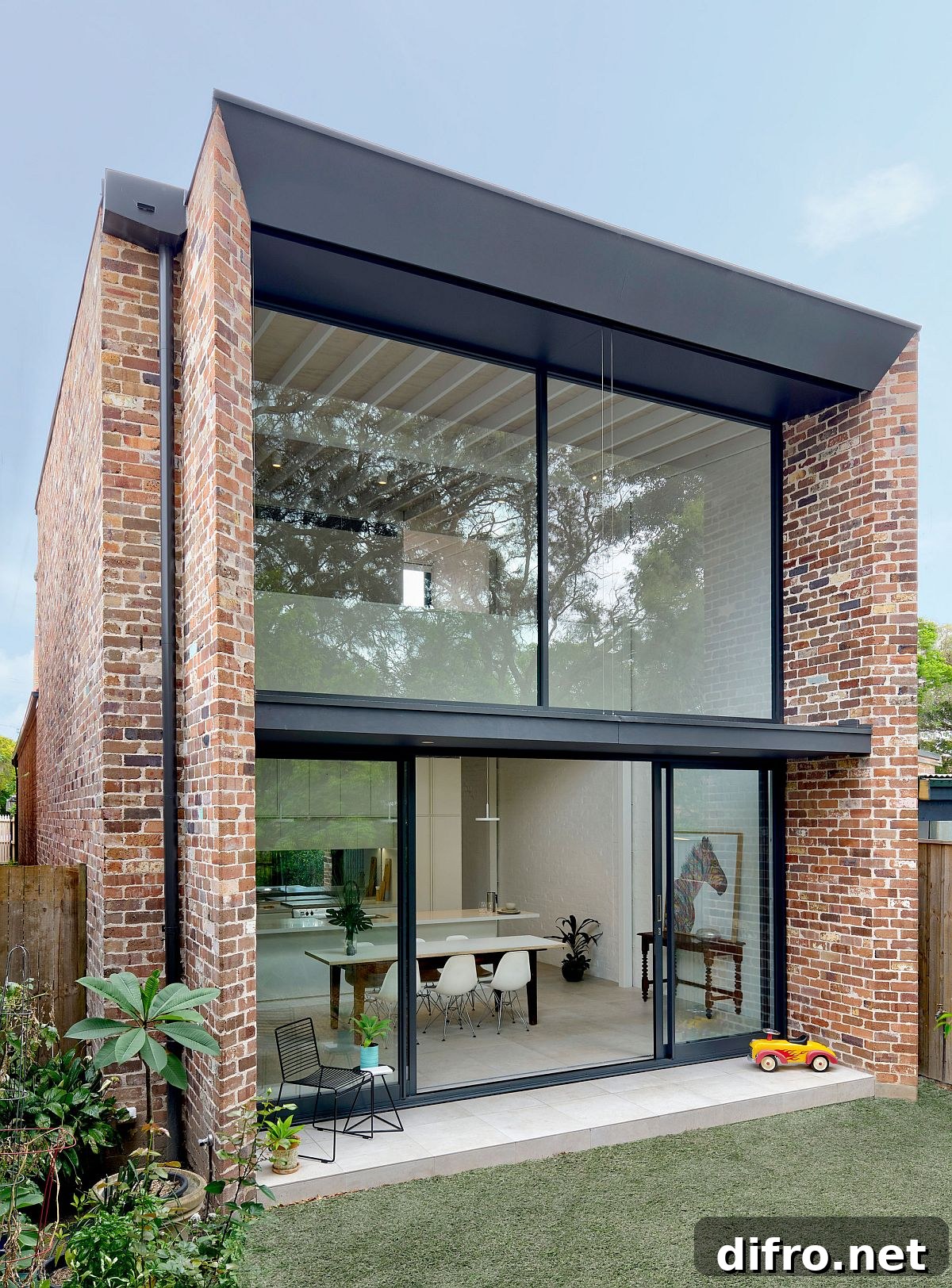
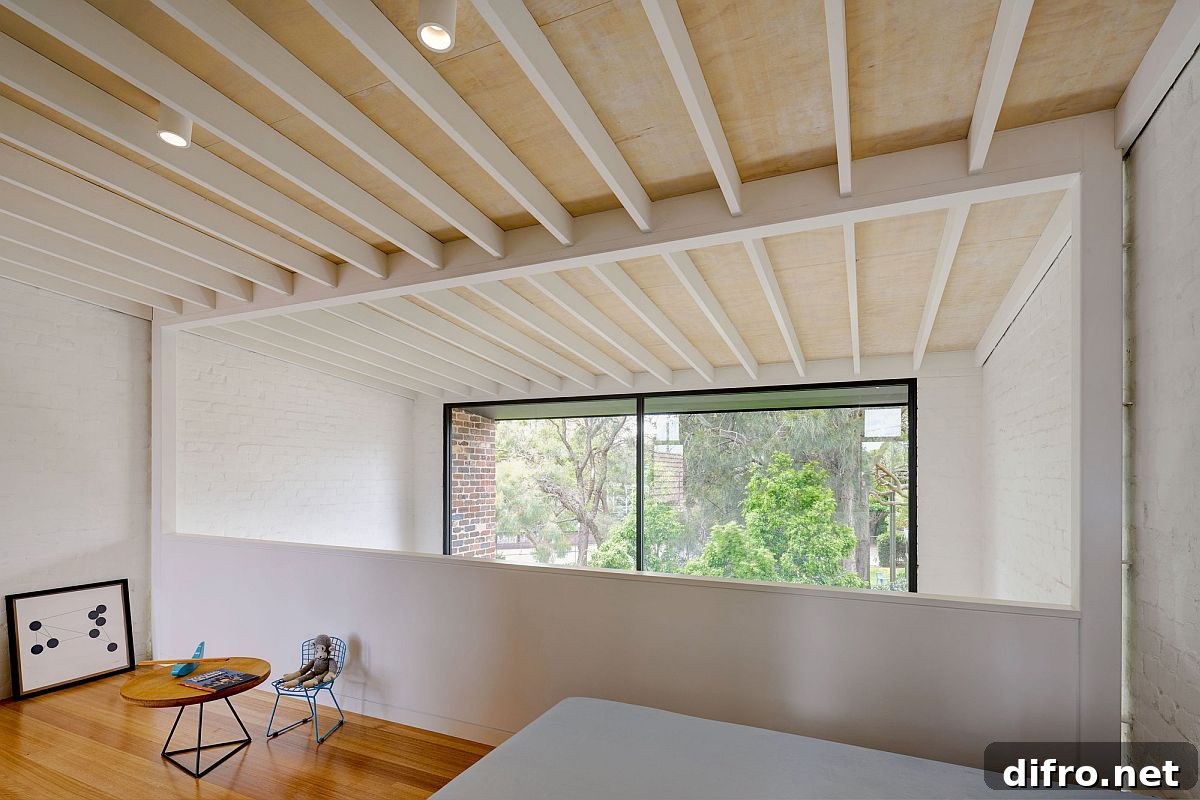
The addition is composed primarily of brick and glass. Floor-to-ceiling glazing, sliding glass doors and carefully positioned windows draw generous natural light into the new volumes, creating a bright, airy atmosphere that contrasts with the denser texture of the original façade. On the ground floor the extension accommodates a new kitchen, dining area, laundry room and bathroom, while the upper level contains a master bedroom and a small study that overlooks the dining space and rear garden.
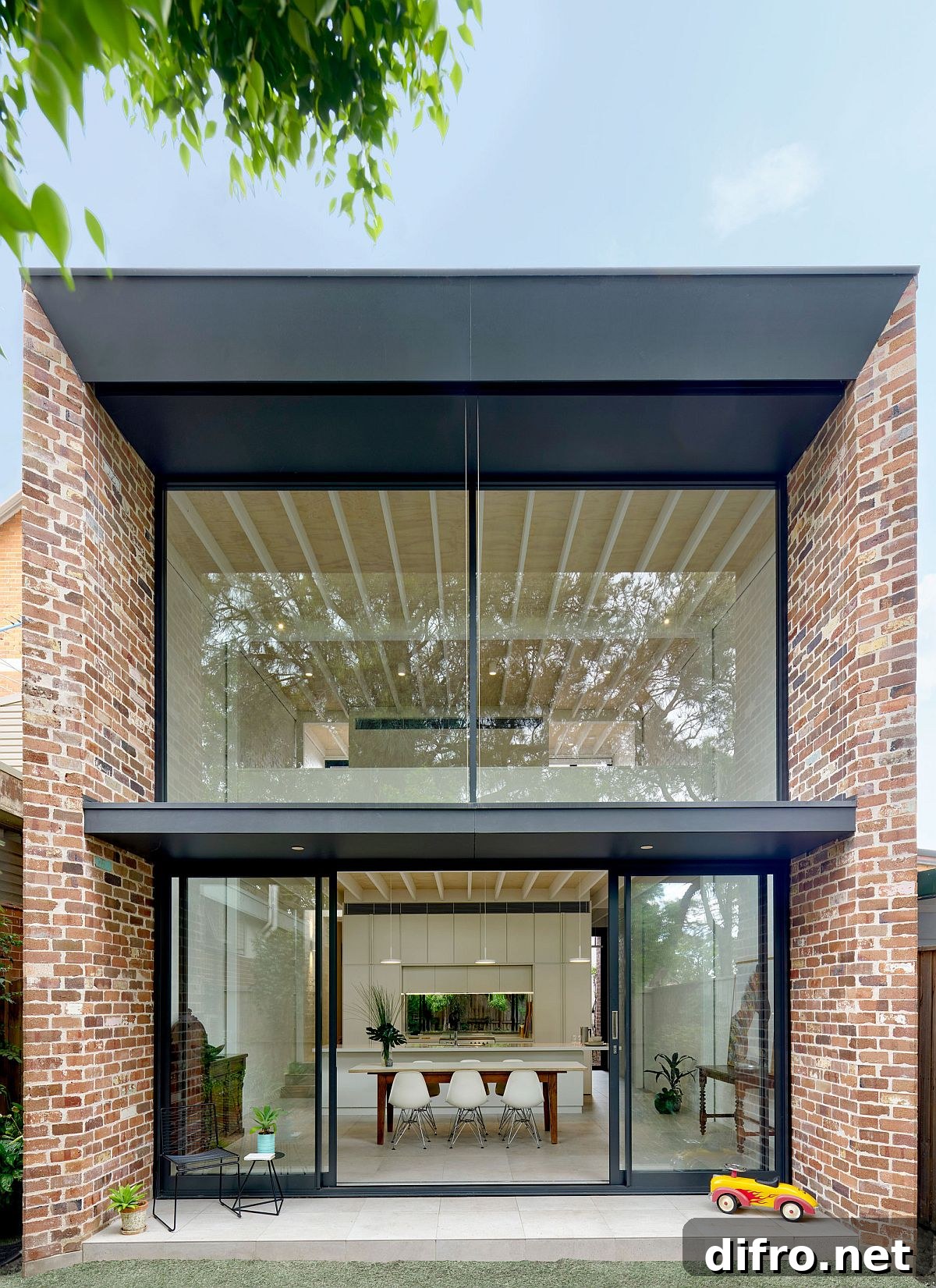
Externally, the brickwork respects the streetscape and heritage context of the neighborhood. Internally, those same brick walls are painted white to provide a contemporary, neutral backdrop that enhances light reflection and gives the living spaces a modern, welcoming feel. This balance—honoring the original fabric from the street while creating a fresh internal experience—defines the project.
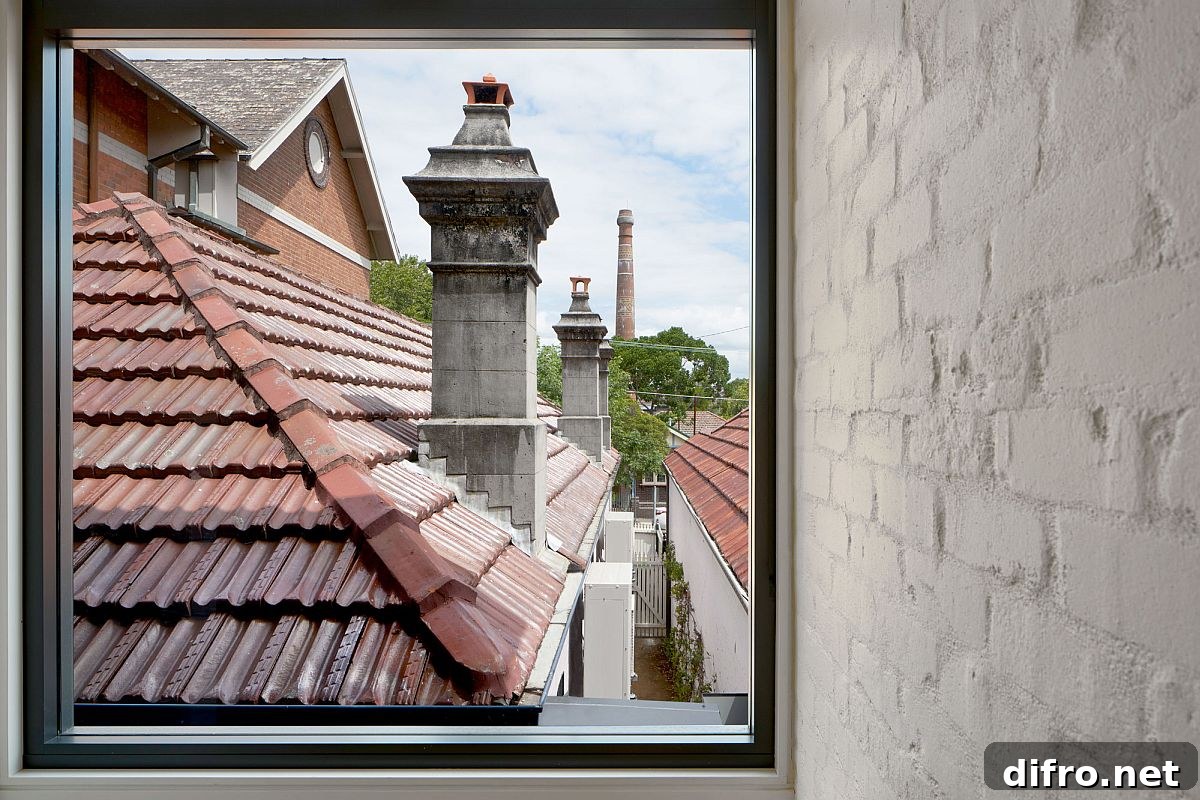
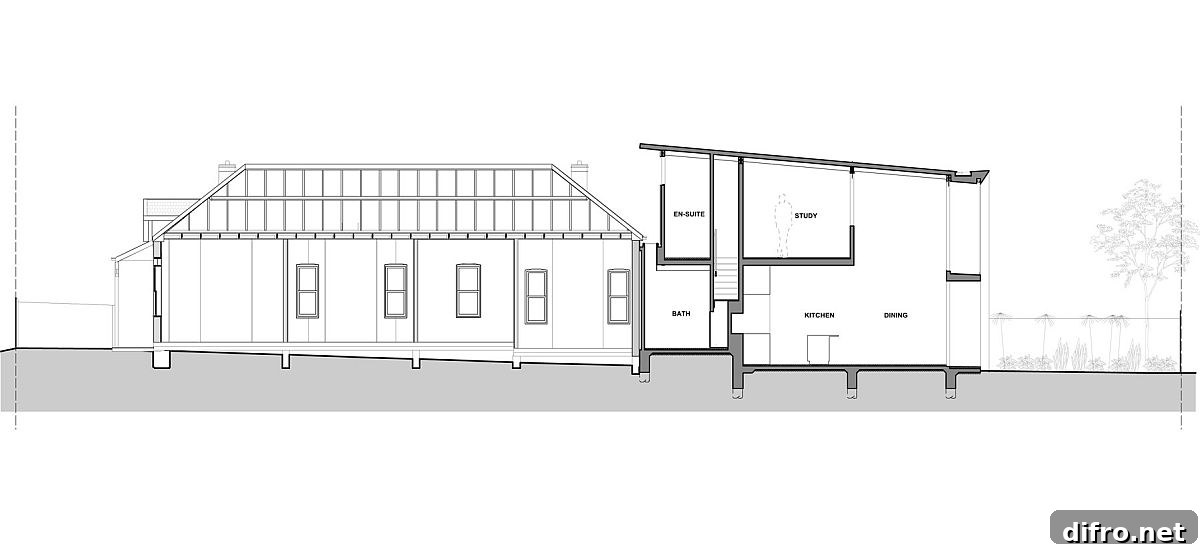
The new wing is linked to the original dwelling by an articulated connection tucked beneath the existing gutter line. This link contains a series of skylights that reveal the transition between old and new, and it frames selected views from inside the extension. Strategically placed glazing even frames a historic sewer stack so that it reads in alignment with the three chimneys of the original house—an intentional compositional decision that ties the contemporary volume back to the heritage elements.
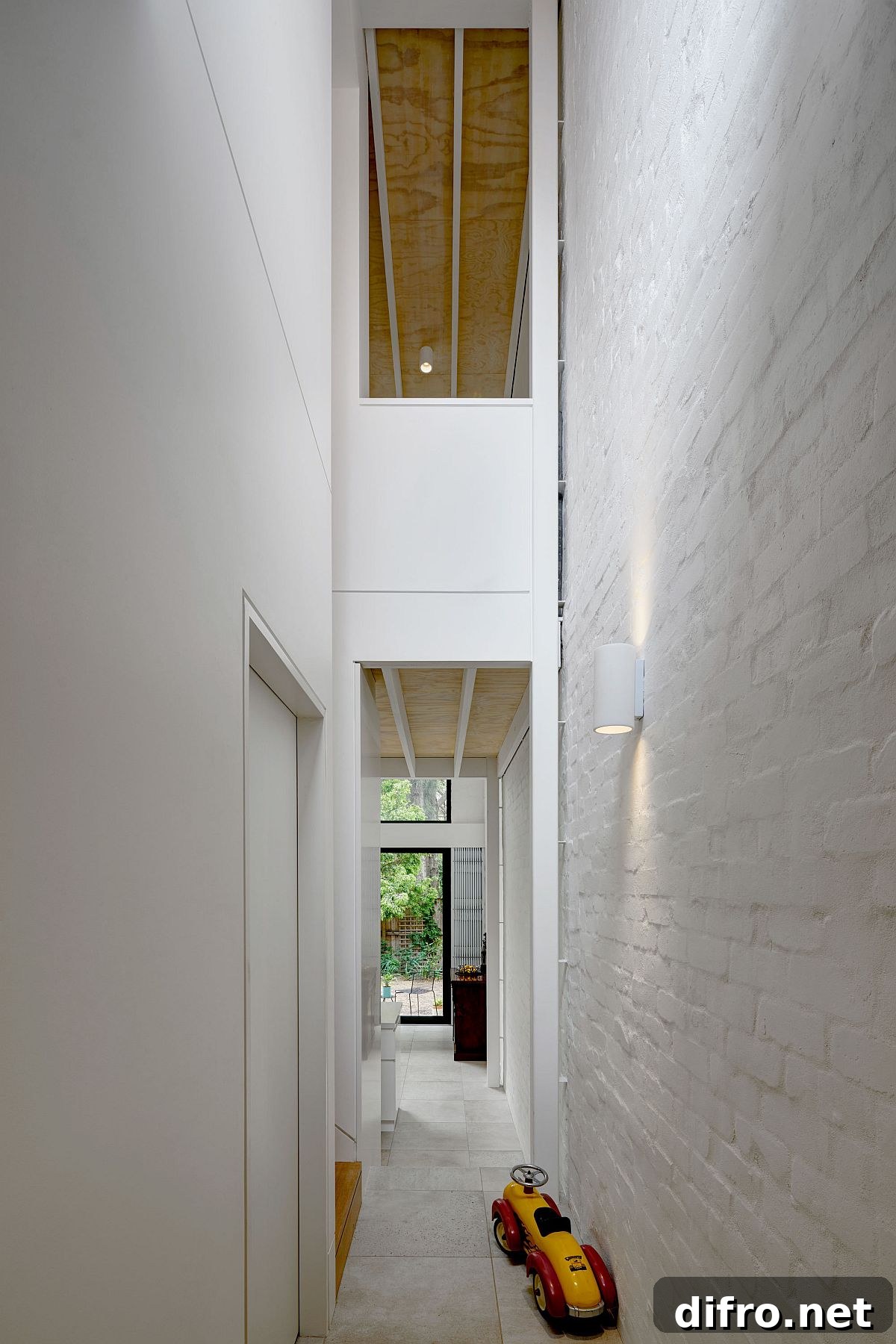
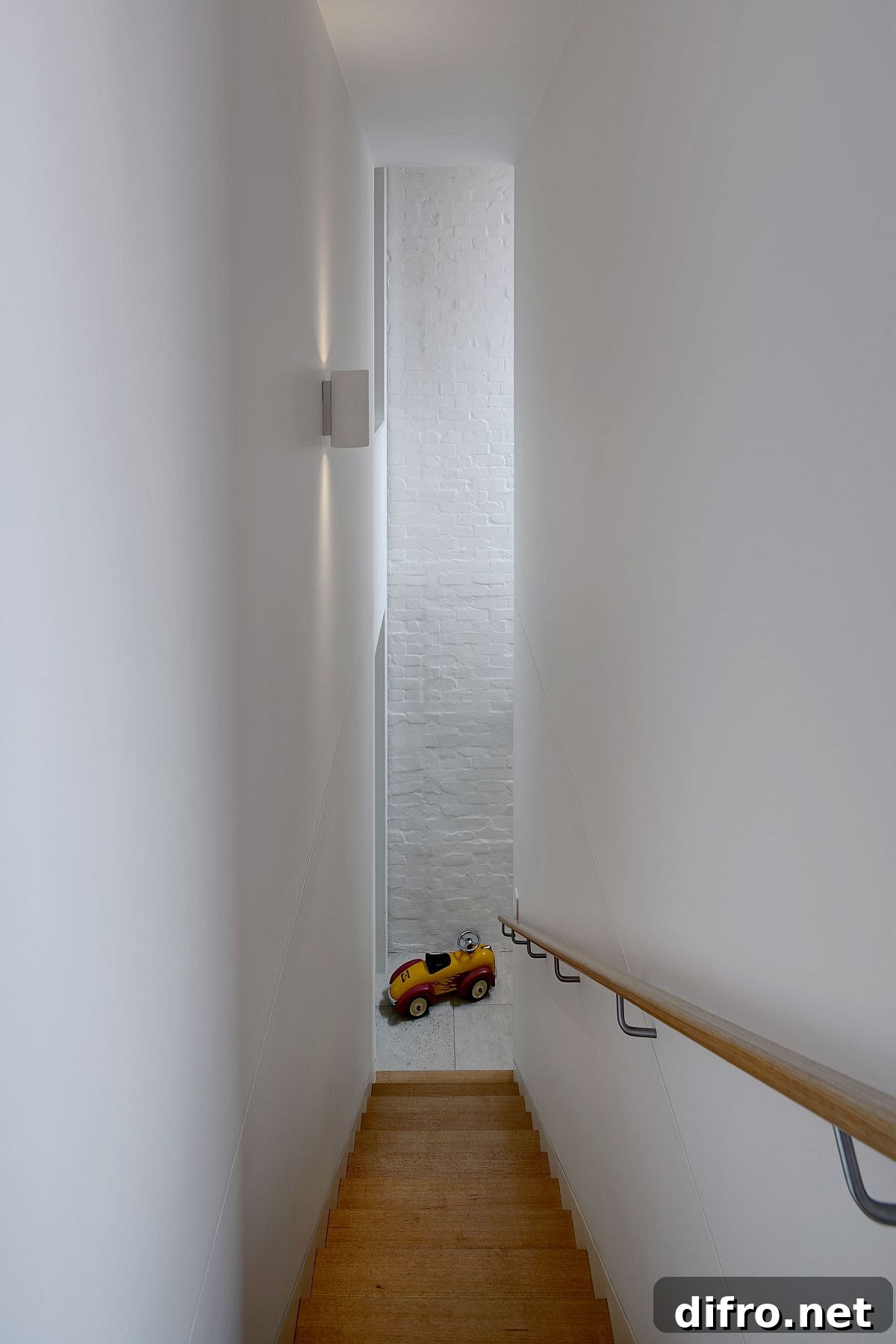
One of the project’s defining spatial moves is the brick-framed aperture that looks out to the garden. This strong, deliberate opening creates a framed connection between interior and exterior and highlights the material continuity between the old house and the new addition. Inside, a double-height kitchen and dining volume enhances the sense of openness and allows light from above to penetrate deep into the plan, while a narrow staircase provides access to the upper level and keeps the footprint compact.
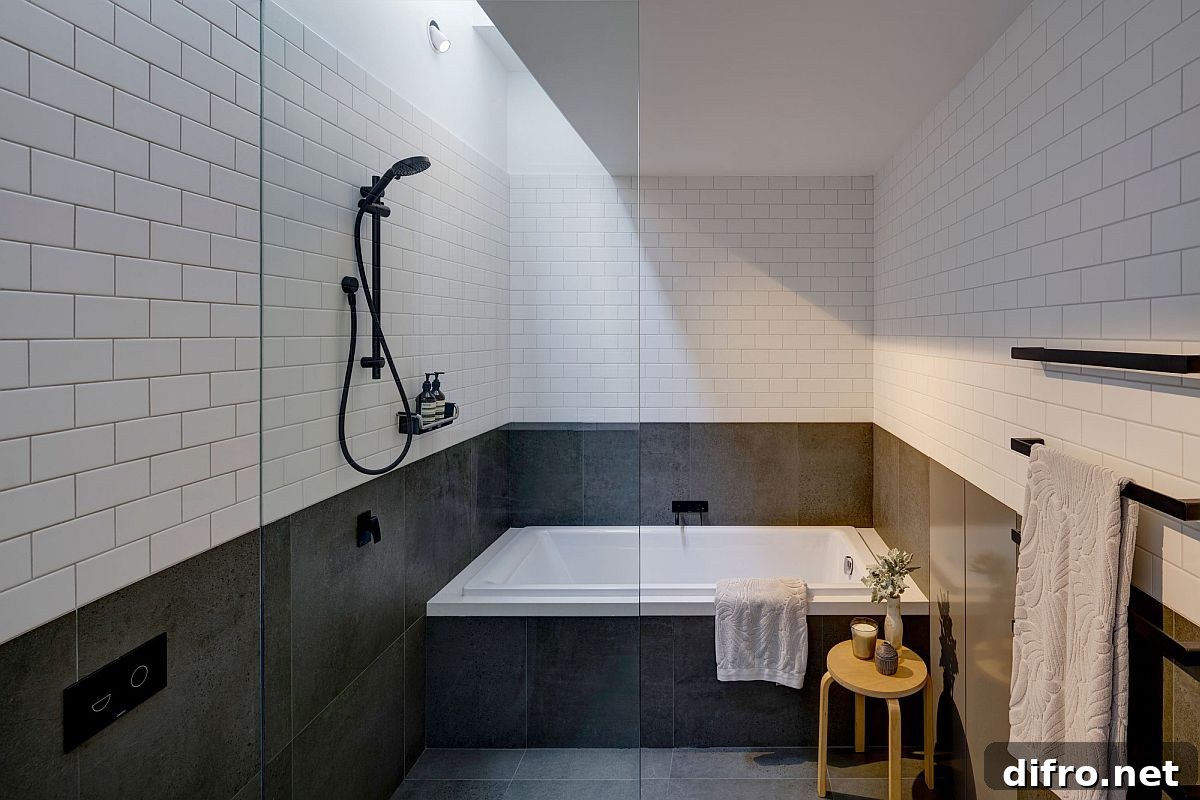
The upper-level ensuite and master bathroom continue the restrained palette. The bathroom uses a simple black-and-white scheme and benefits from abundant natural light, reinforcing the house’s contemporary yet timeless aesthetic. From the upper level, occupants can look down into the dining area below and out to the rear garden, maintaining visual connection across the house’s new and original sections.
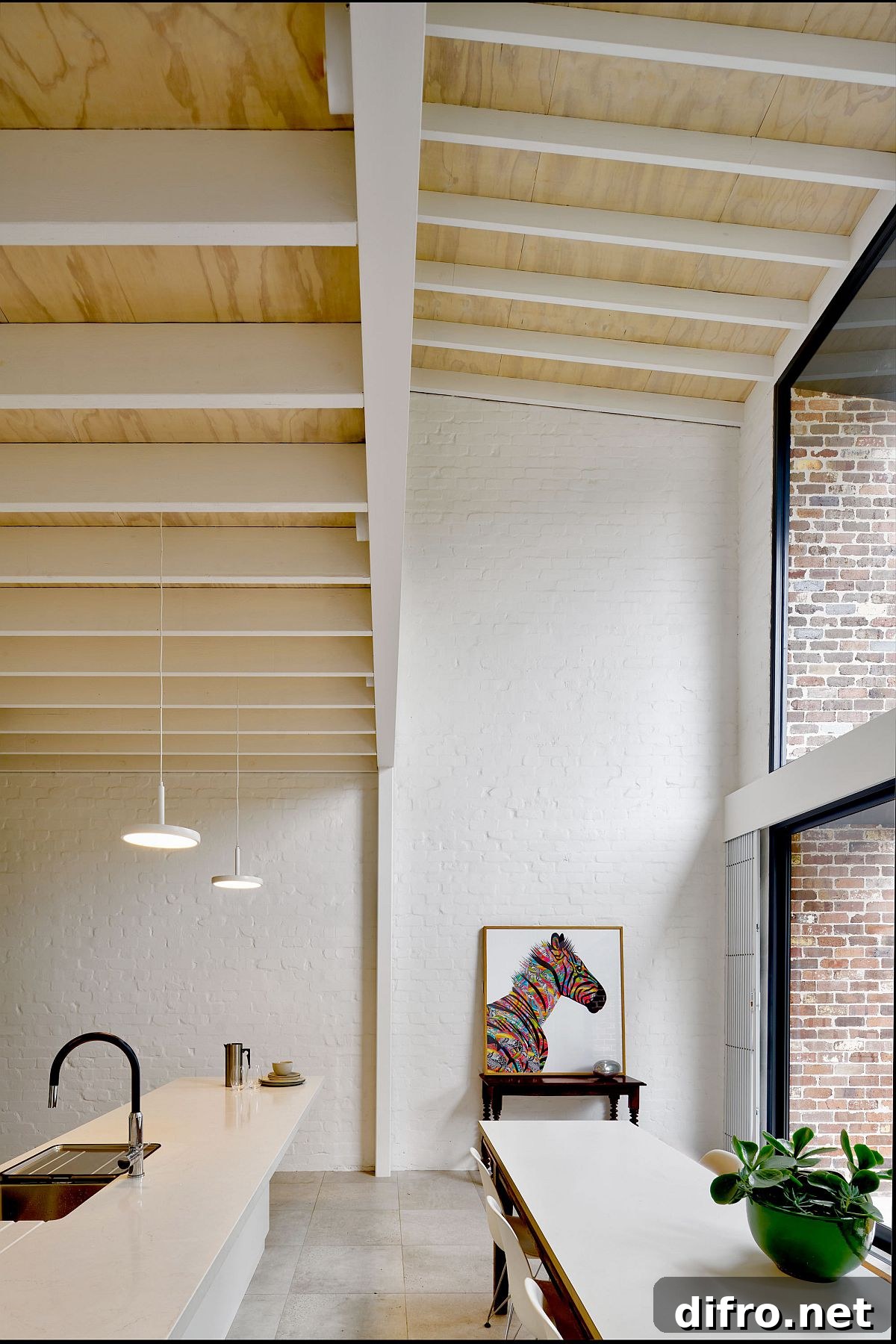
The design carefully considers privacy, daylight and framed views, all while keeping the footprint and massing respectful of the neighborhood. Concrete, brick and glass are used with restraint to produce interiors that feel both warm and contemporary. The painted brick inside links textures between the original and the addition without erasing the character of the older cottage.
Architectural drawings and plans illustrate the careful sectional relationships between old and new, and how light is channeled through the addition to enliven the core of the house. Photography by Michael Nicholson documents the completed project and highlights the measured balance between heritage preservation and contemporary living.