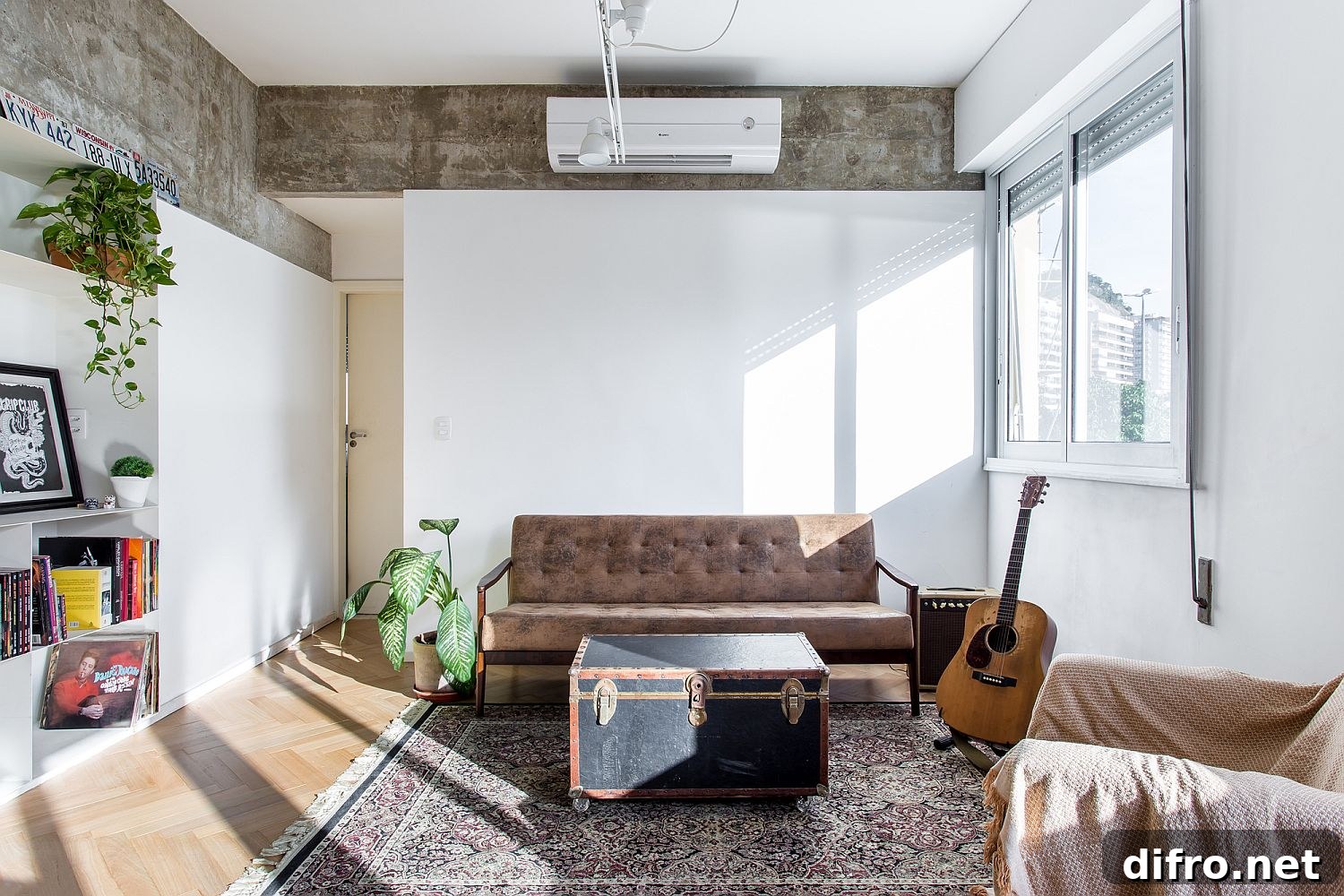
The raw, tactile appeal of exposed concrete is unmistakable, and that materiality takes center stage in the Marchi Apartment, a thoughtful renovation by Rodrigo Bocater in Rio de Janeiro. Originally built in the 1960s, the apartment has been carefully reworked to open sightlines to the lagoon, clarify circulation, and create more generous, functional living areas. The update pairs warm wood and bright white finishes with rugged concrete surfaces, producing a modern yet lived-in atmosphere that maximizes natural light and view-centric living.
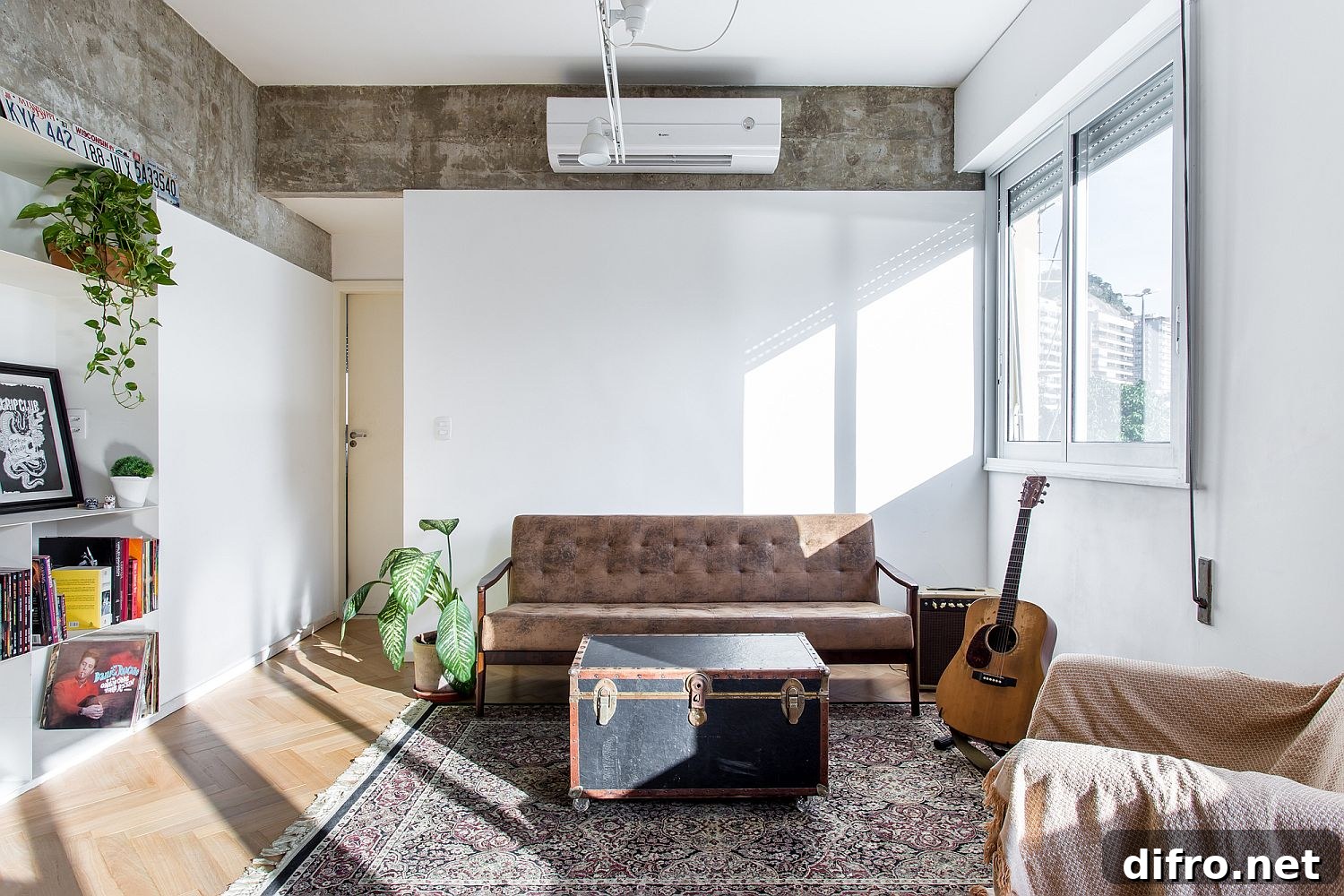
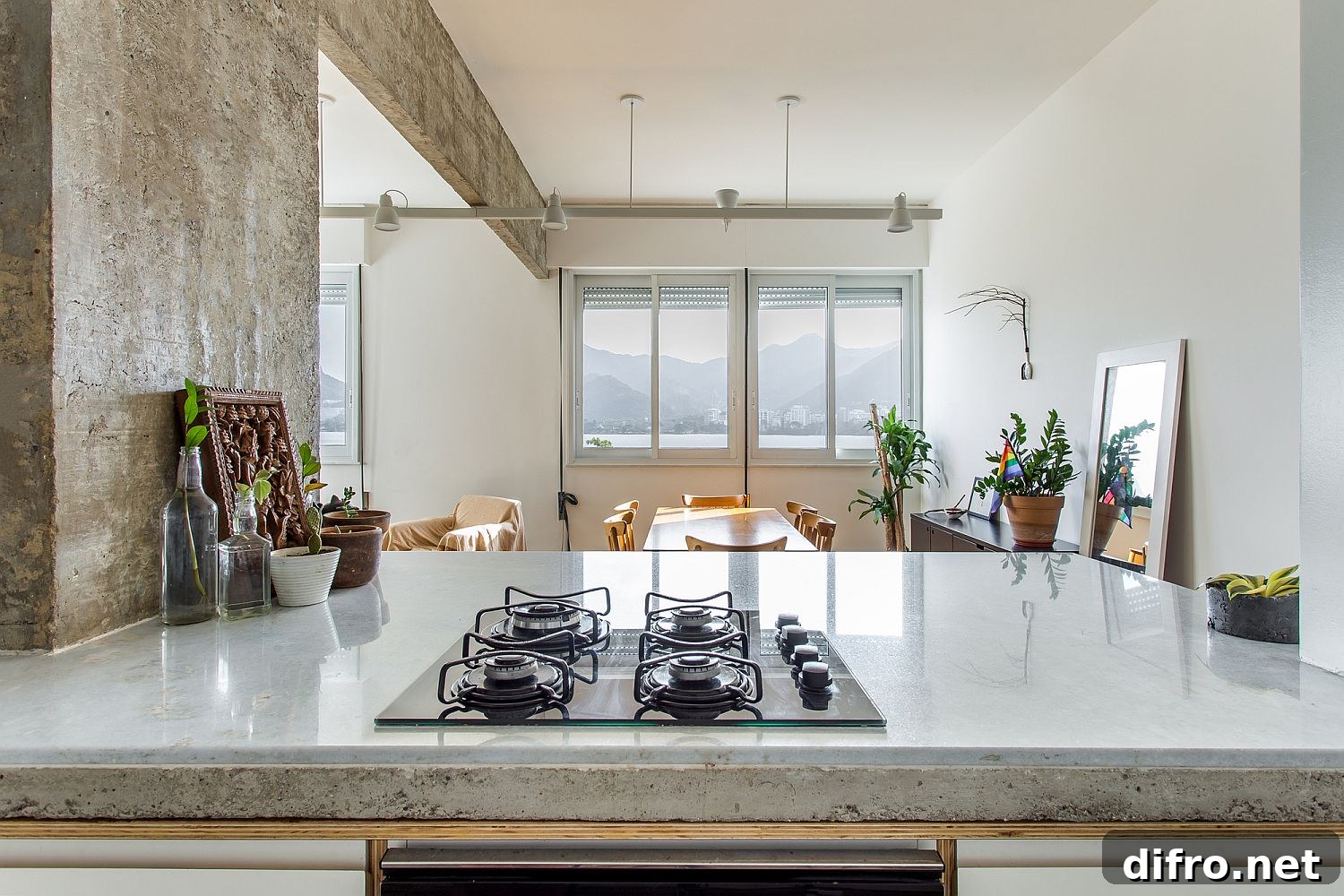
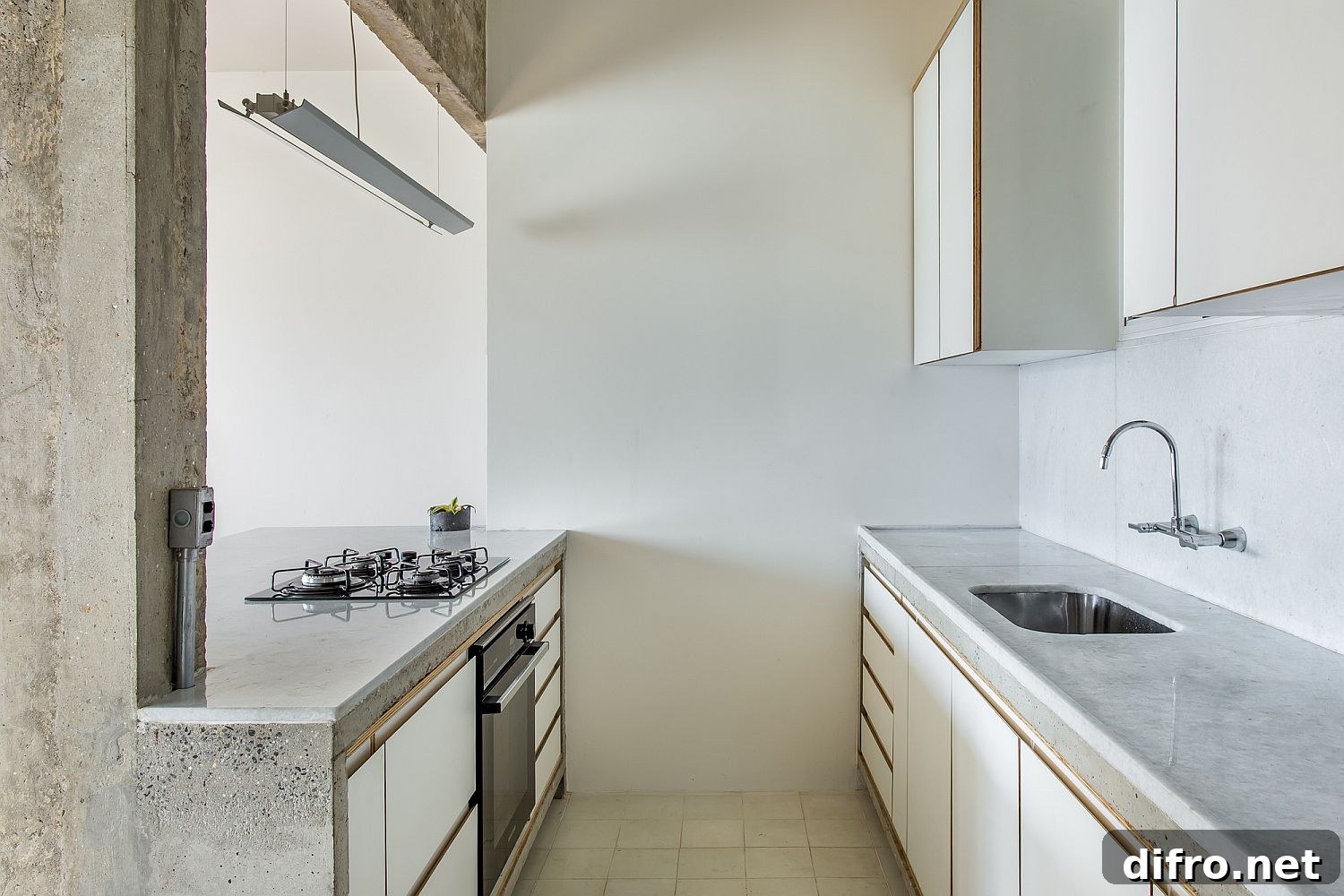
The original layout included three bedrooms, an extensive utility area and a compact living room that felt constrained. The renovation simplified this plan: the utility footprint was reduced and one of the three bedrooms was removed to extend the central living zone. The result is a more open, fluid plan that connects the kitchen, dining and lounge areas directly to the lagoon-facing windows, elevating both light and sightlines. The kitchen, finished in a clean white palette, benefits from this adjacency and receives abundant daylight from the living room, reinforcing the apartment’s sense of cohesion.
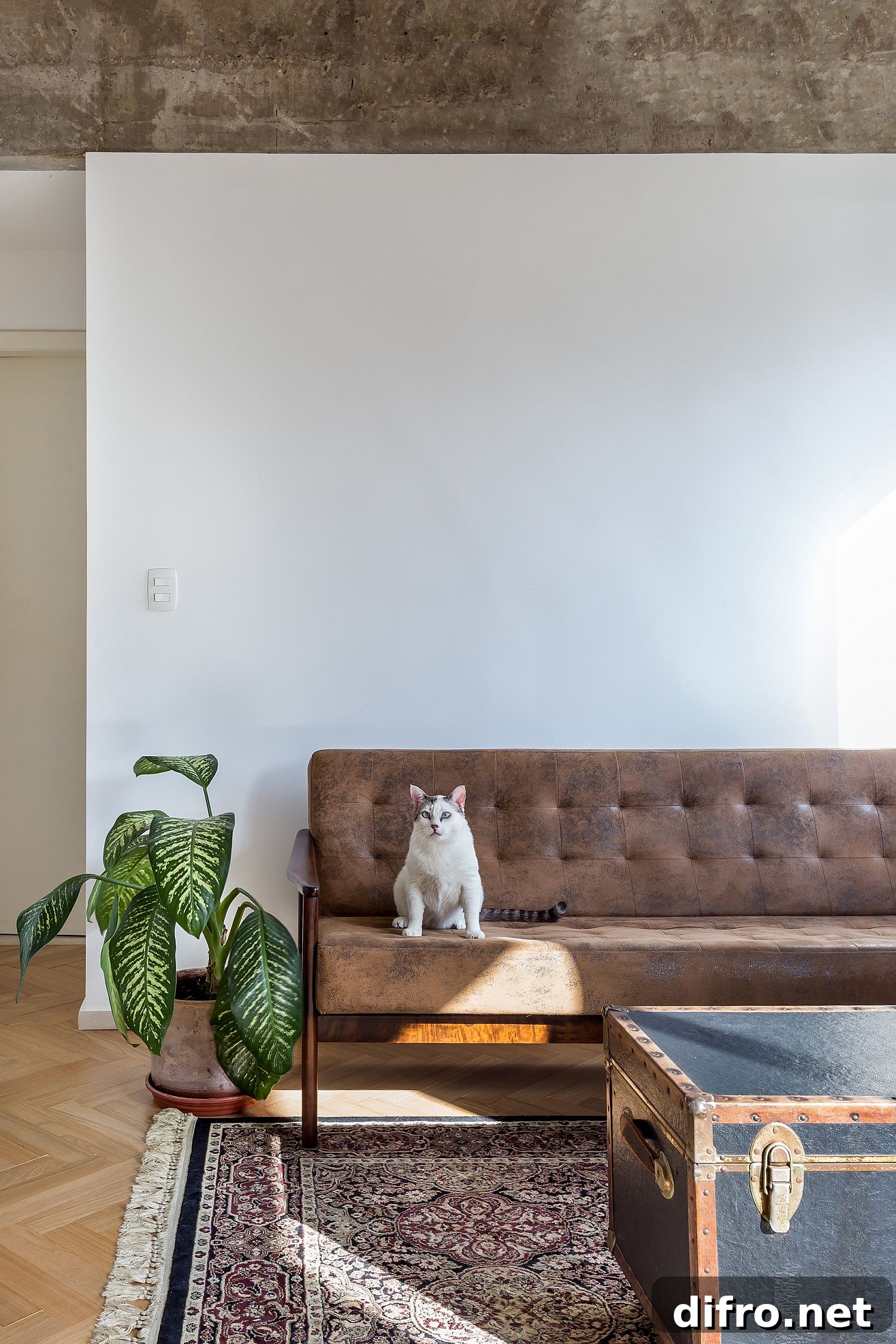
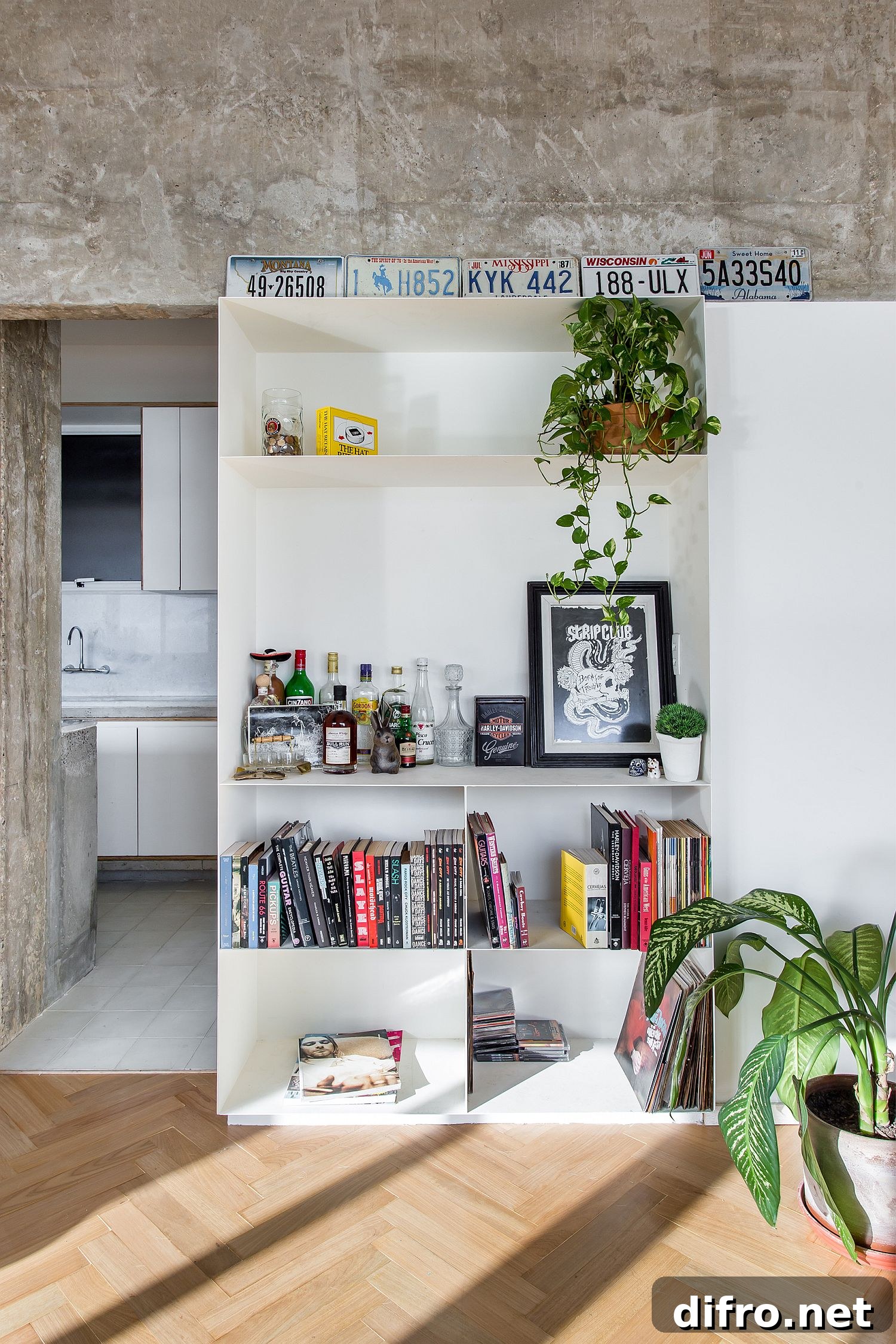
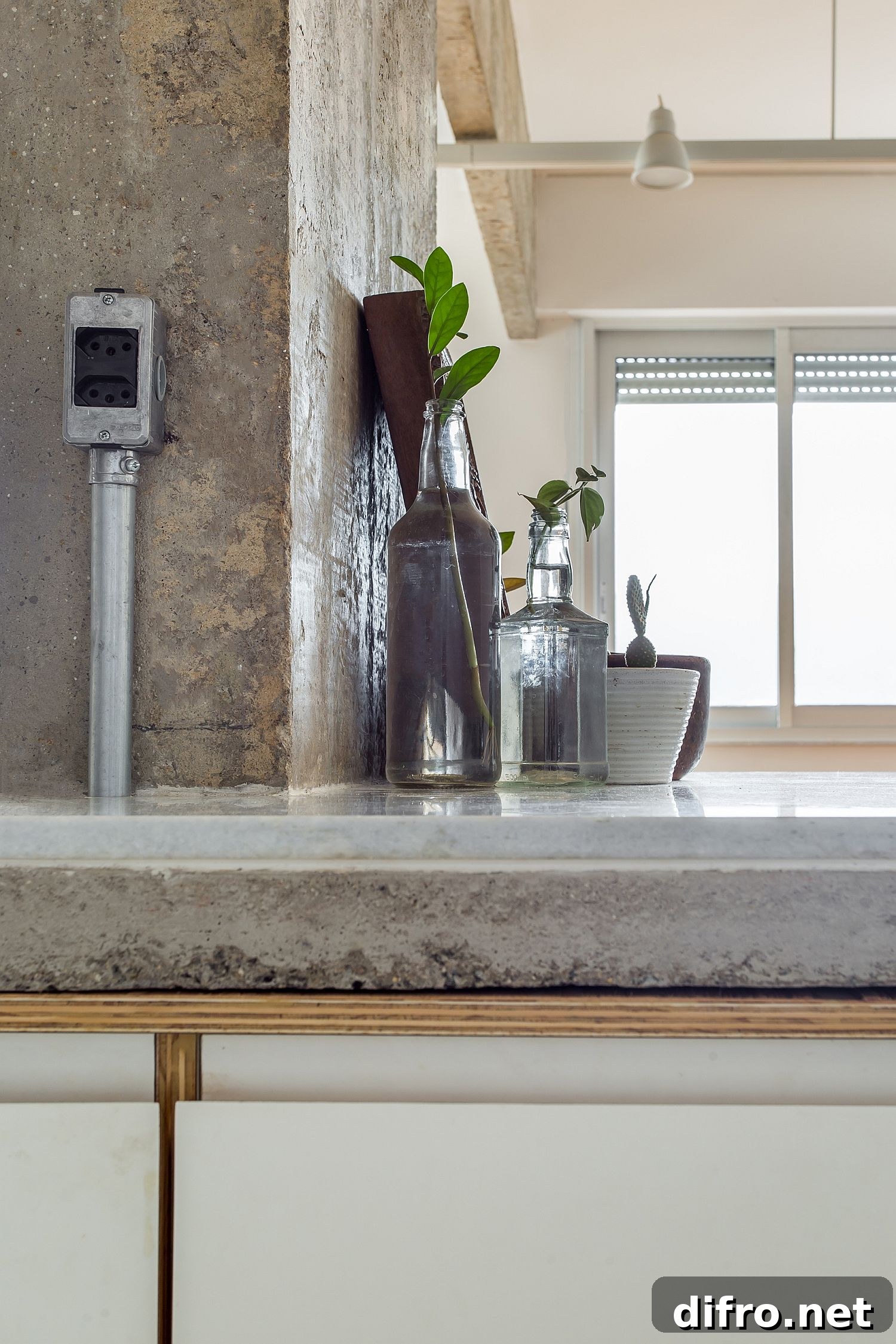
Material choices anchor the design: exposed concrete defines the structural backdrop while warm wooden flooring introduces tactility and balance. White-painted walls and metal shelving act as canvases that reflect daylight, making surfaces feel brighter and amplifying the apartment’s volumes. Carefully selected furnishings — including a vintage trunk repurposed as a coffee table — add character and a sense of personal history without overwhelming the pared-down palette.
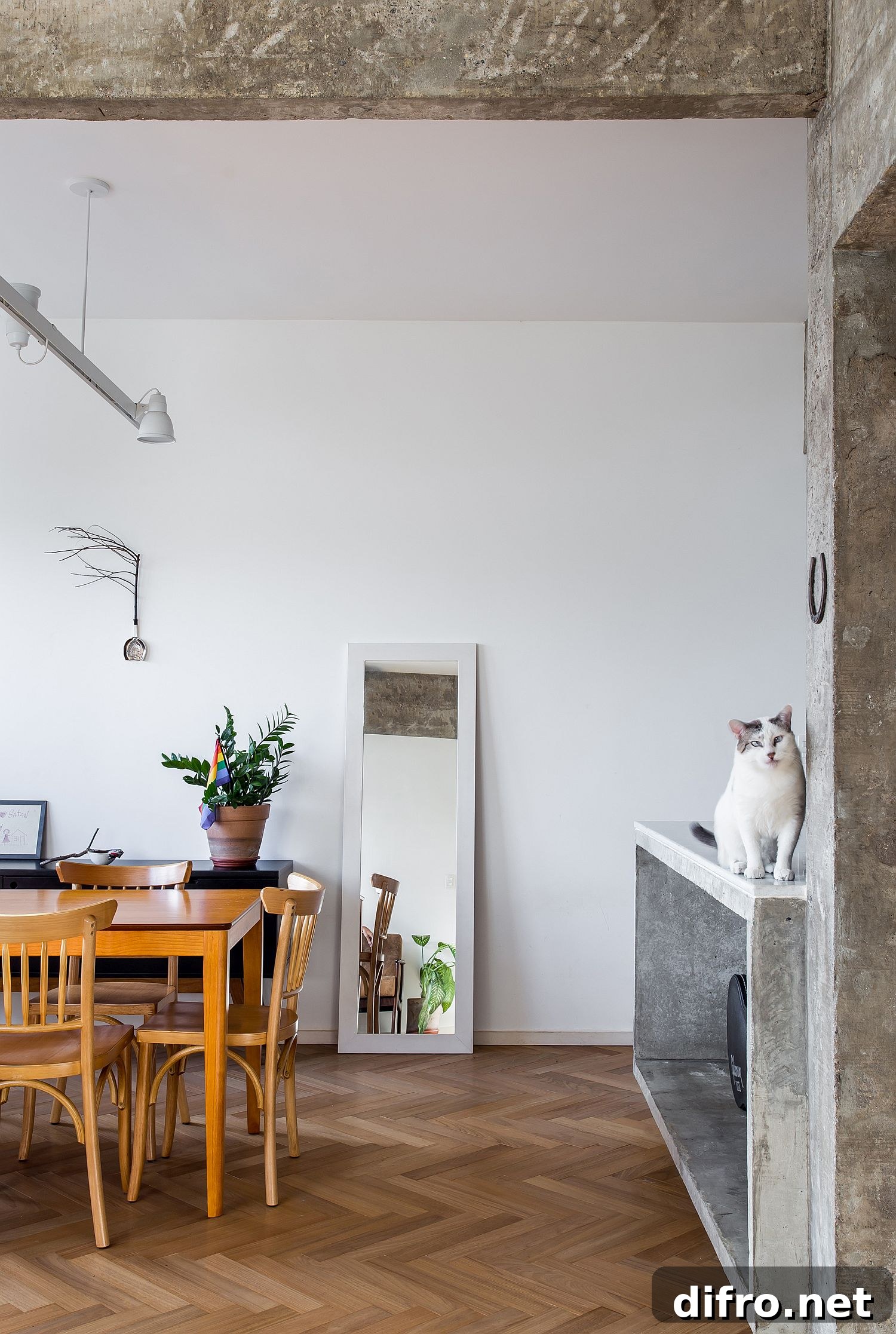
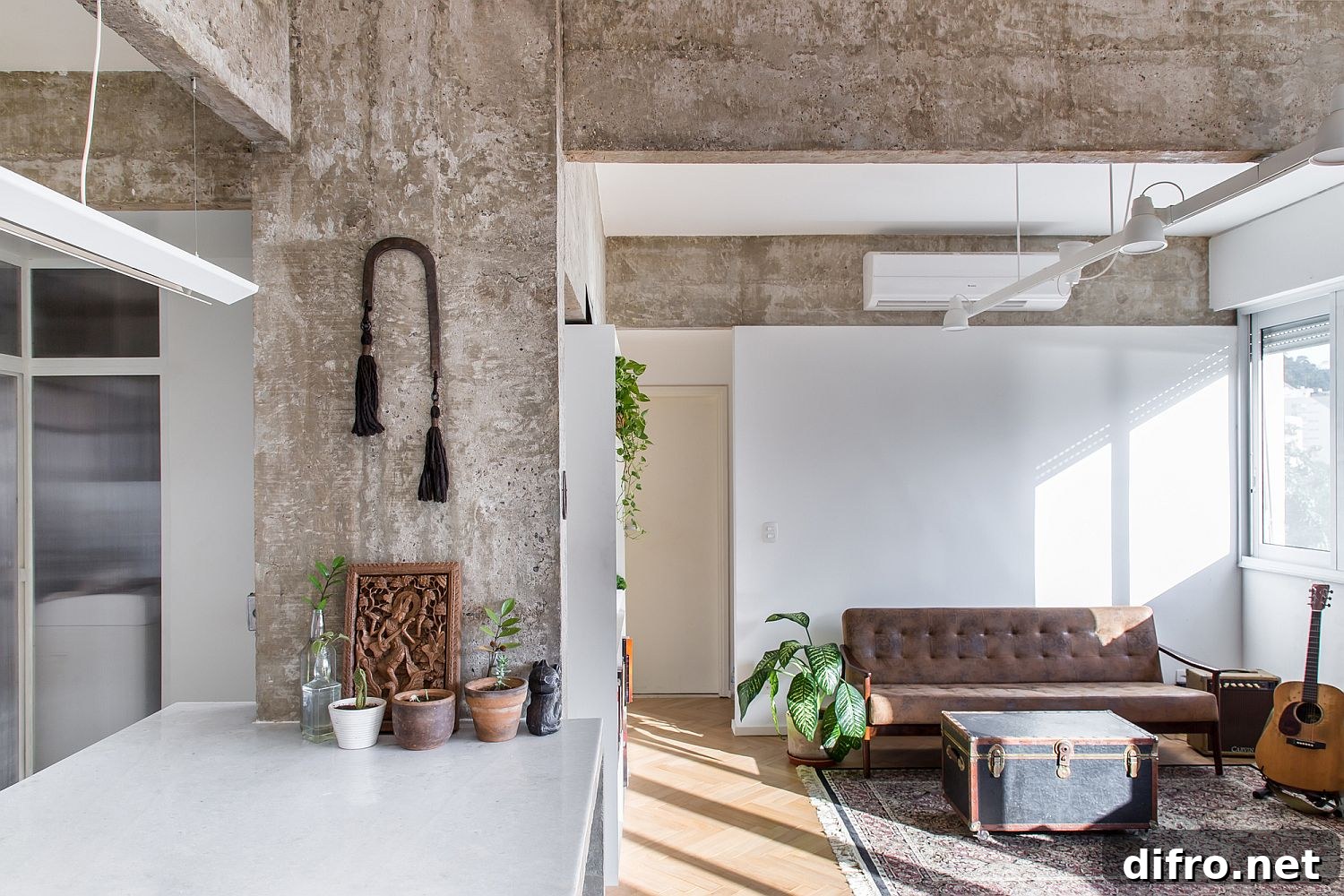
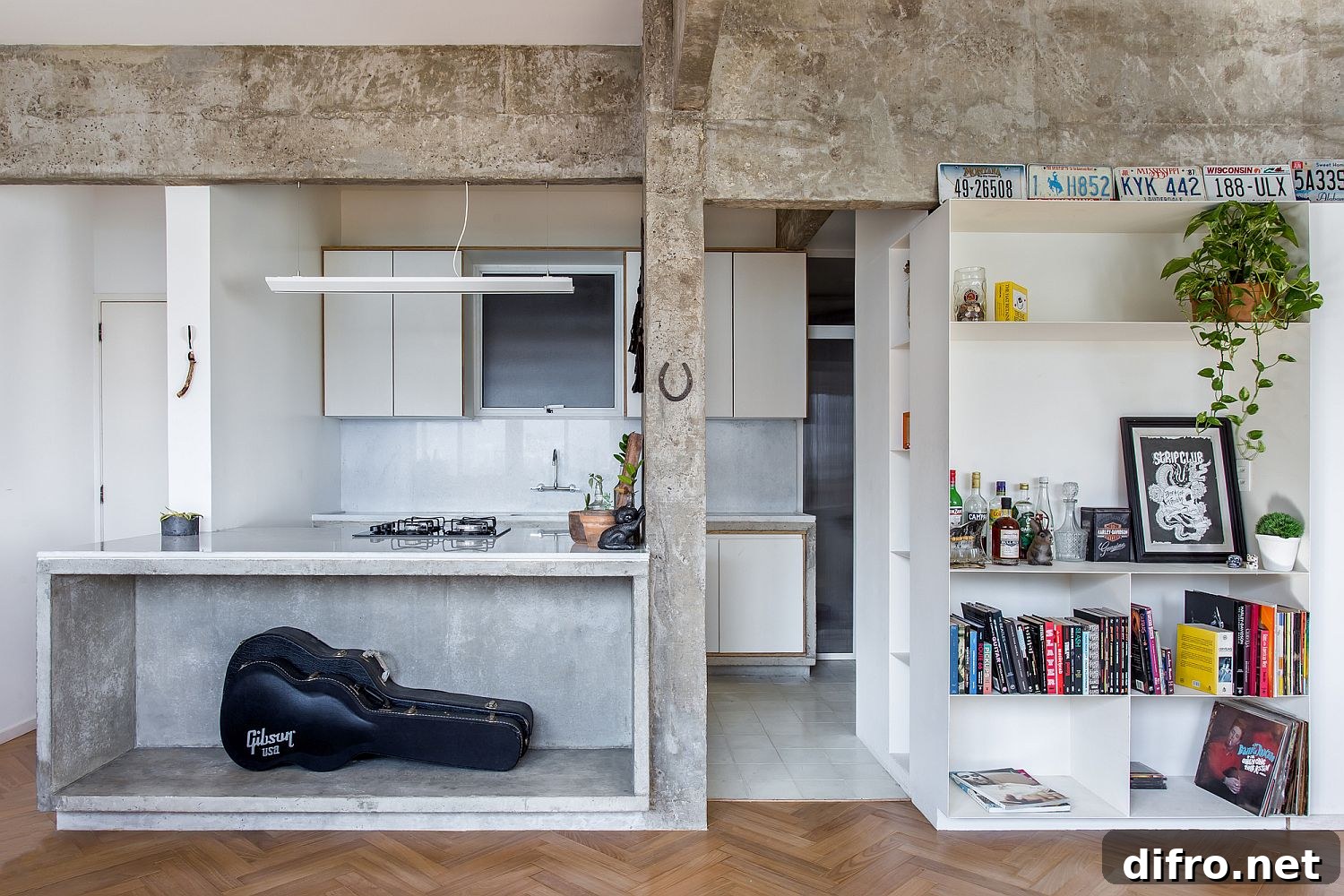
The renovation emphasizes social living. A central bench — described by the design team as the project’s organizing element — anchors seating and activity, creating a defined heart for daily life. Built-in storage and streamlined shelving help keep the open plan uncluttered while providing display space for books, art and plants. These calibrated details reinforce a restrained aesthetic that prioritizes function and calm.
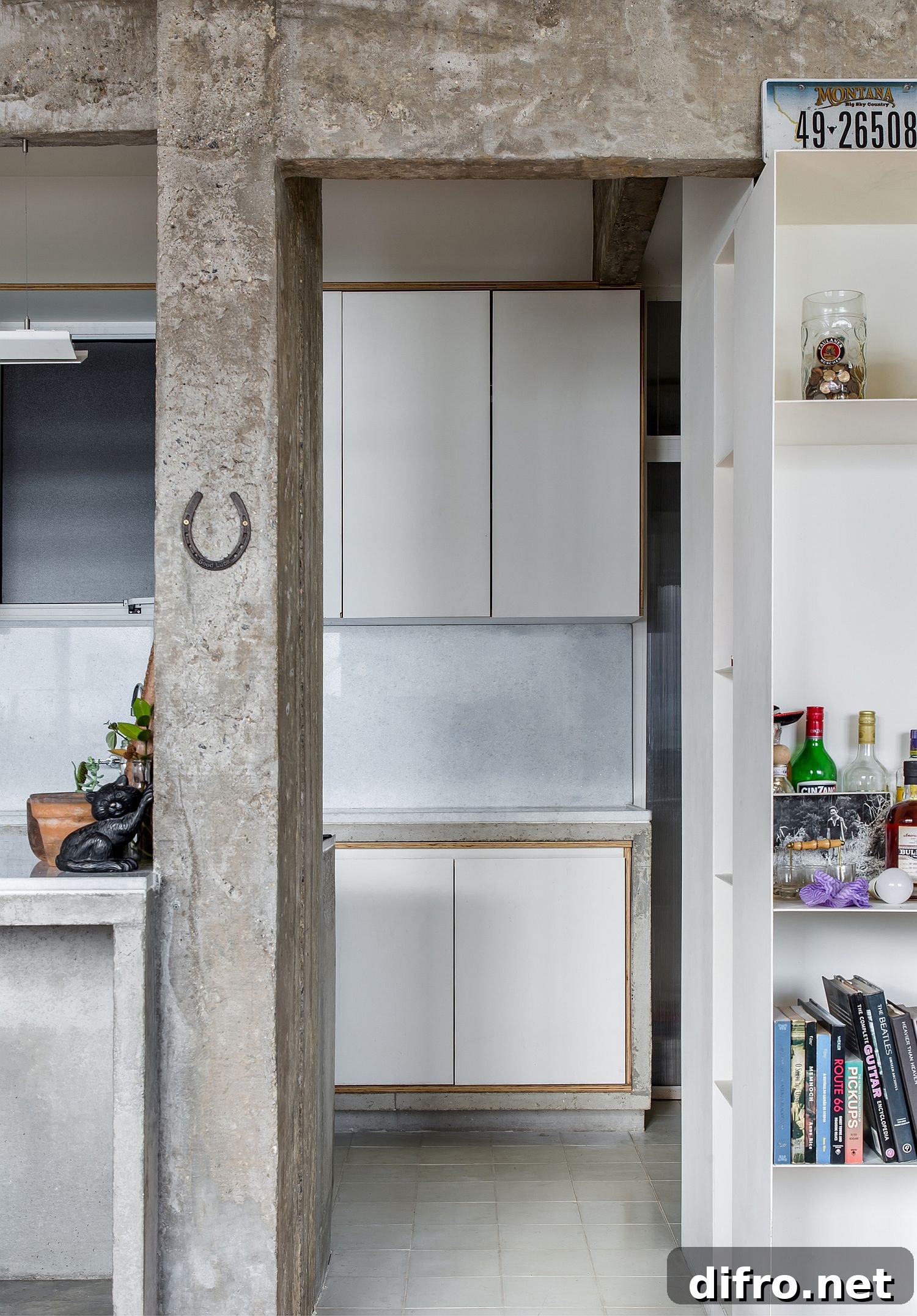
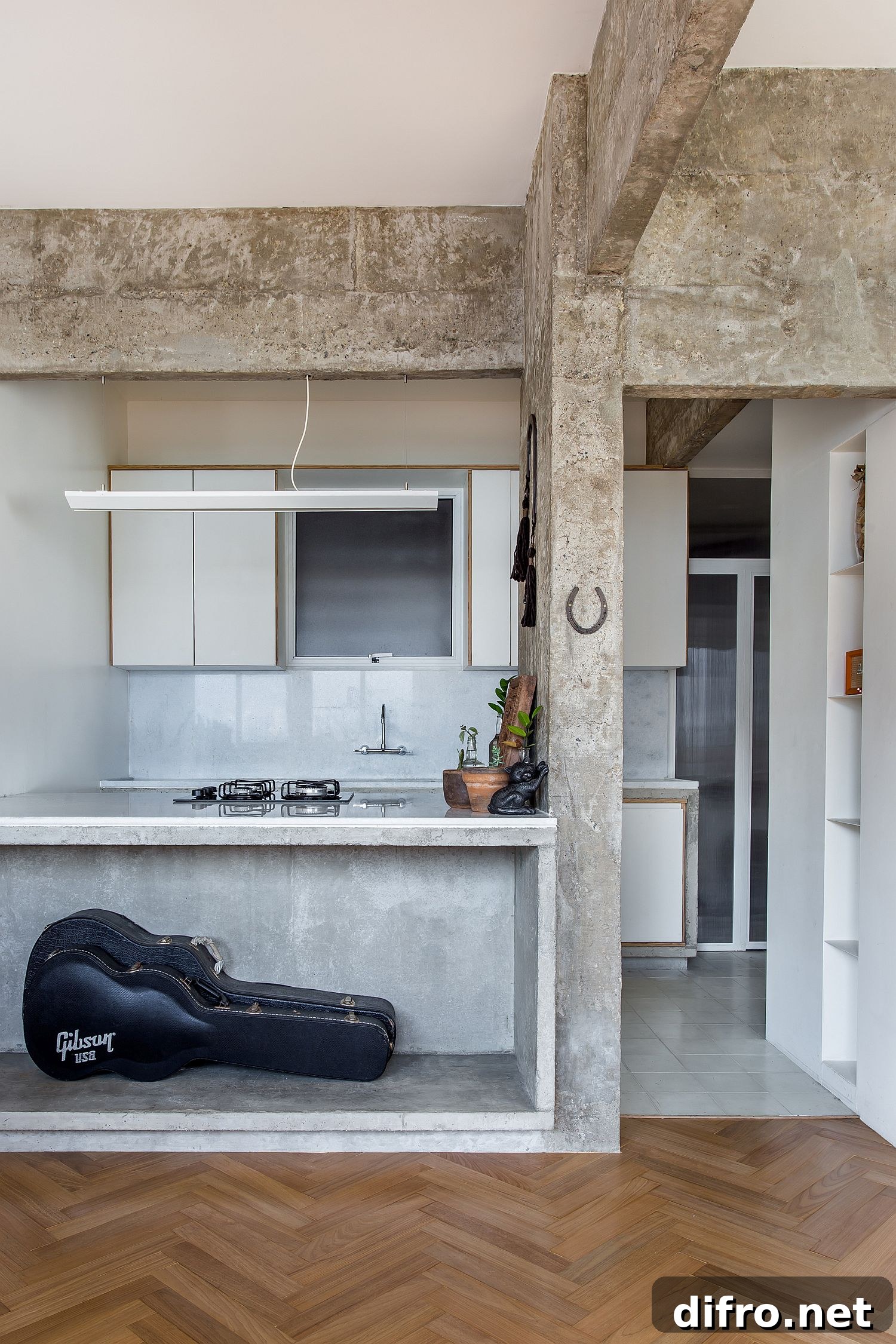
In the kitchen, the continuity of white finishes and matching countertops keeps the small footprint feeling open and efficient. Thoughtful placement of counters and storage allows the kitchen to function as part of the social core without interrupting sightlines. Throughout the apartment, metal bookcases painted white and simple decorative objects maintain a refined minimalism while providing practical solutions for everyday living.
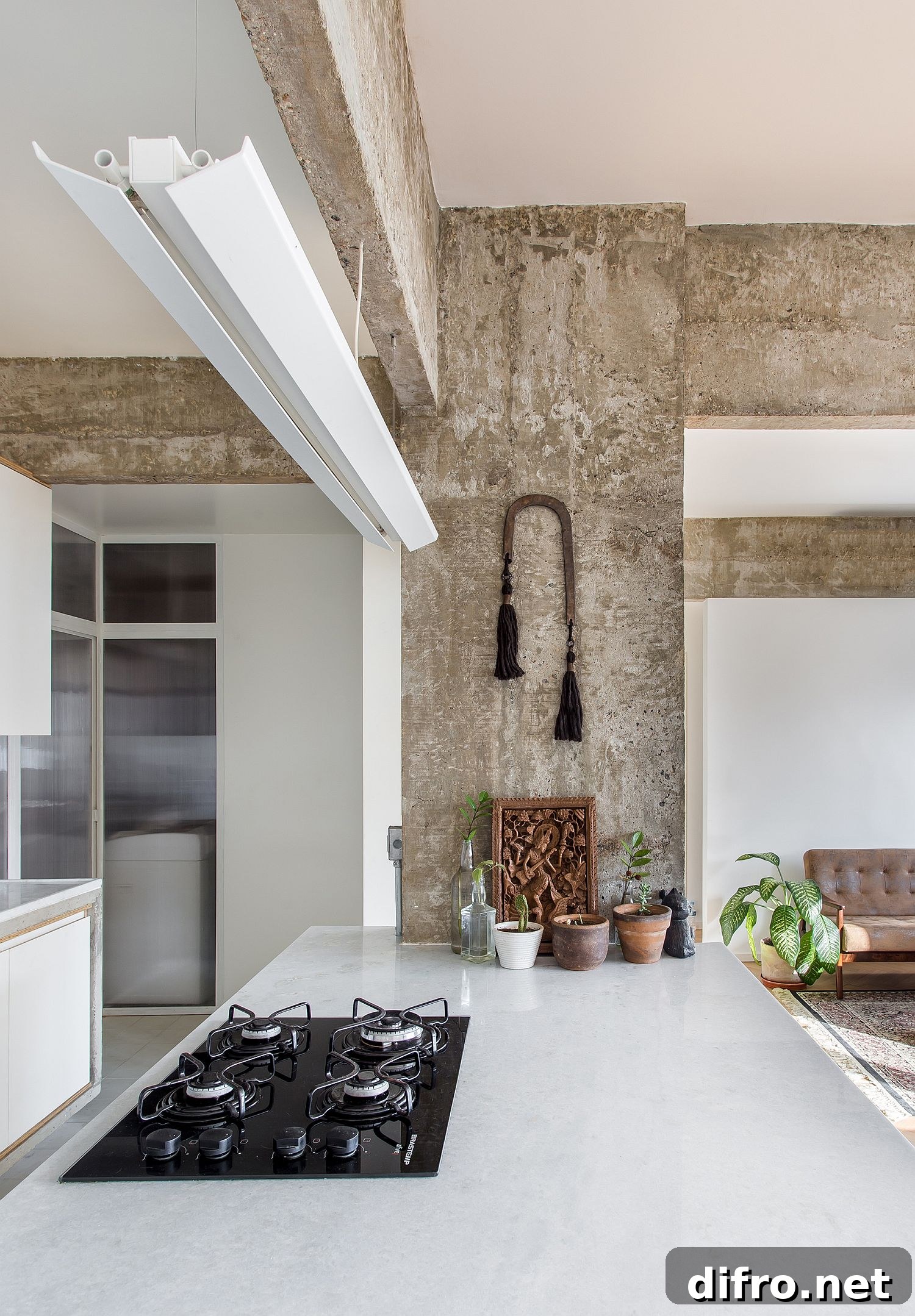
That core becomes the apartment’s main bench, which centralizes and at the same time organizes social activities. The wooden flooring complements the concrete structure as the only expressive materials in the project emphasizing the desire to receive as much light as possible so the walls surfaces and metal bookshelves painted in white, are washed by external light.
The overall effect is a balanced blend of modern and industrial sensibilities, where texture and light define character. Exposed concrete lends permanence and honesty, wood brings warmth, and white surfaces reflect daylight to make the apartment feel larger and more open. By rethinking the plan rather than simply redecorating, the design transforms a dated 1960s flat into a contemporary residence that respects its structure while addressing present-day living needs.
Photographs: Luiza Schreier
RELATED: Spectacular St. Lawrence River Views Await at this Stunning Canadian Residence