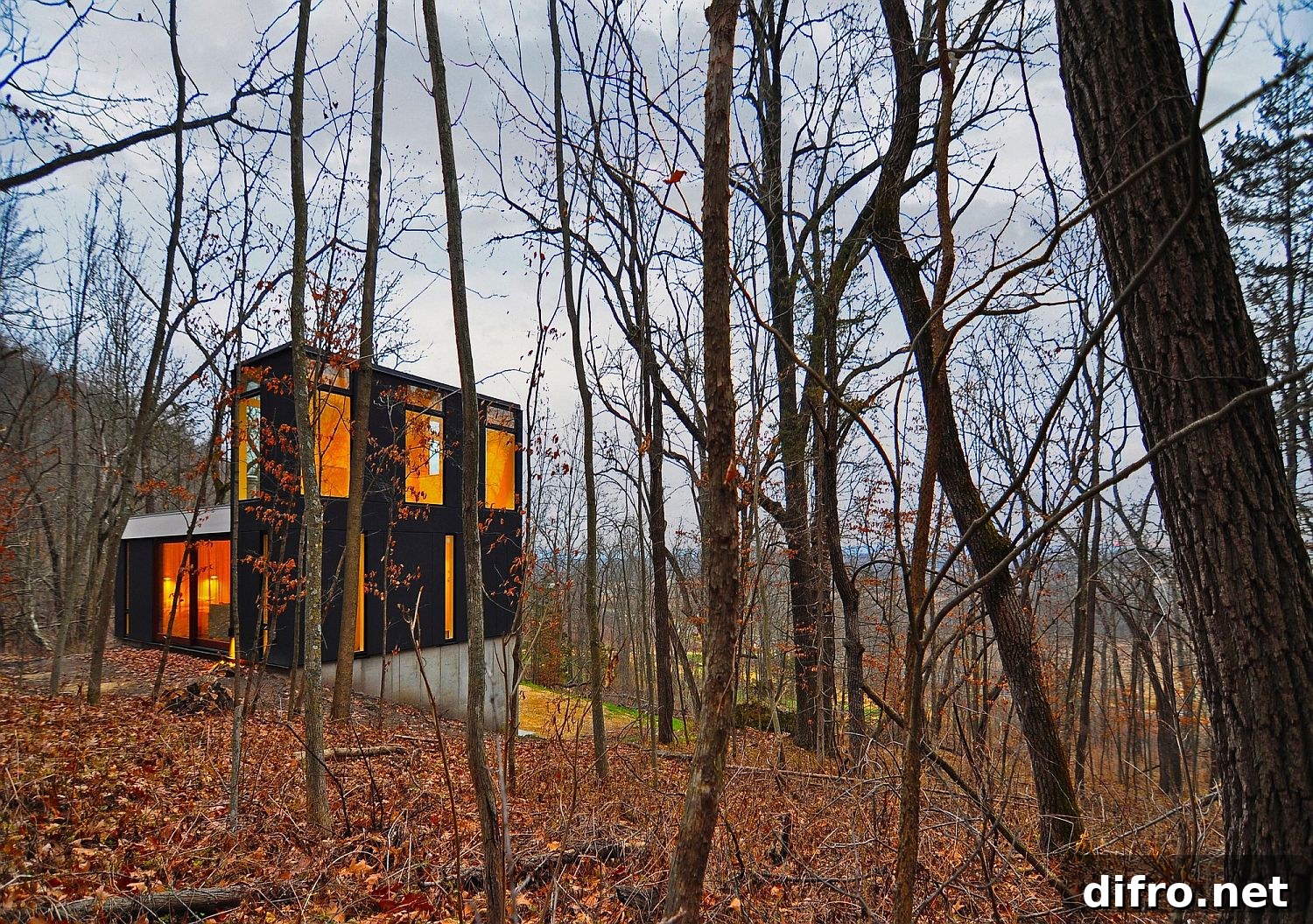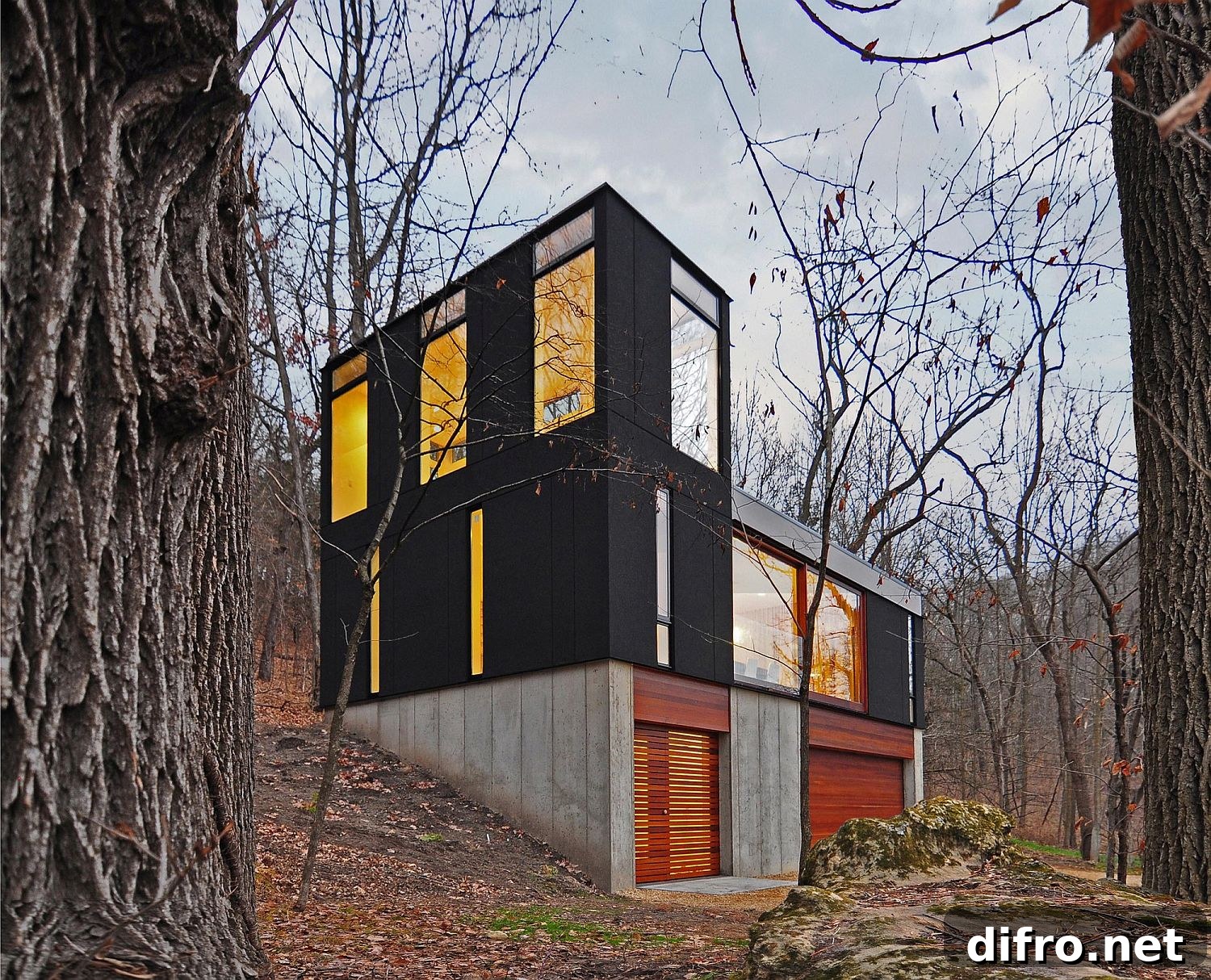
The classic cabin often stretches across a broad footprint, offering roomy family living with a warm, woodsy character and a relaxed atmosphere. The Stacked Cabin in Muscoda, Wisconsin, by Johnsen Schmaling Architects reimagines that archetype for a much smaller site. Rather than spreading horizontally, this compact 880-square-foot house stacks familiar cabin elements vertically, making the most of limited lot area while embracing the surrounding rural setting along an old logging road.
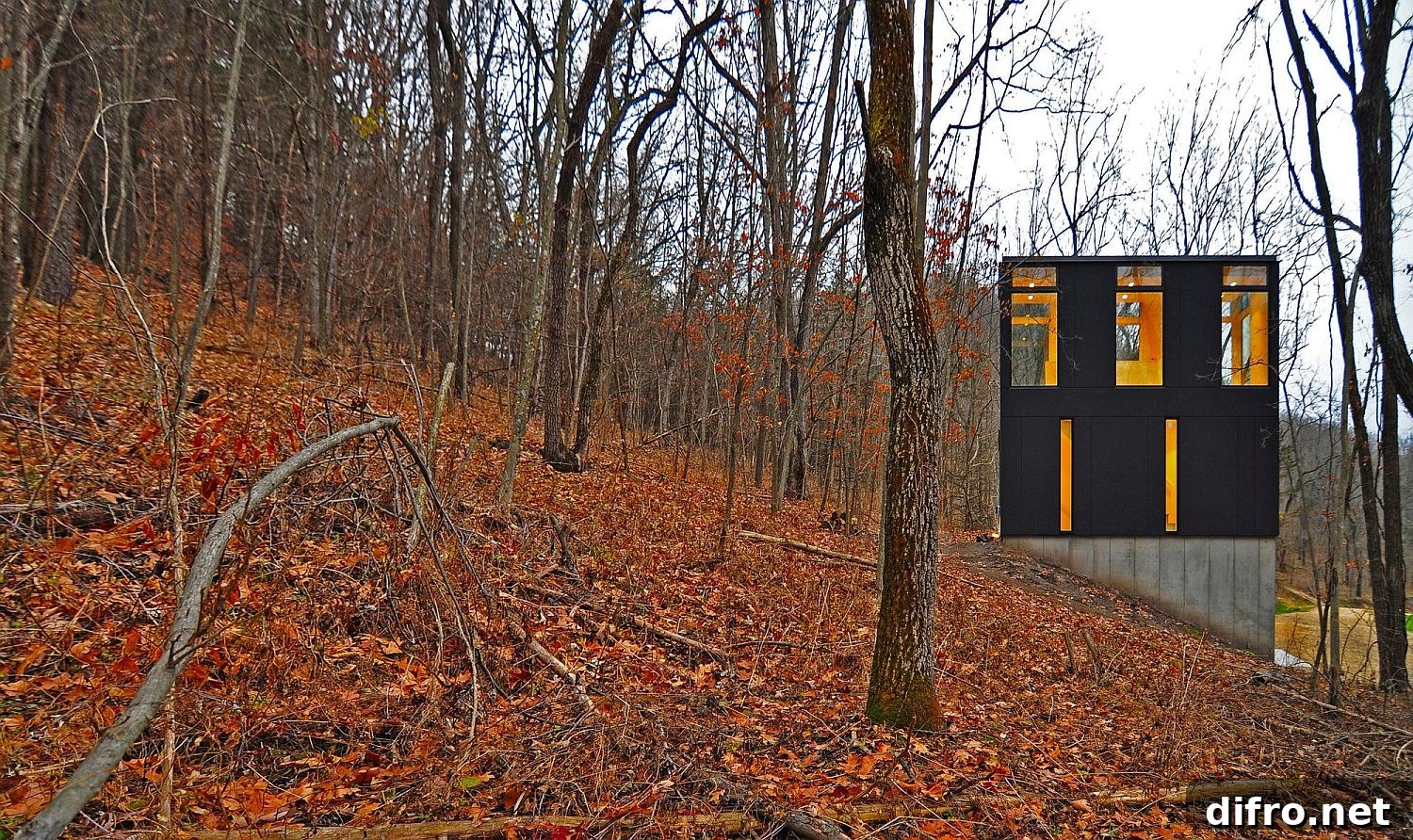
From the outside, the house reads as both contemporary and rustic: a restrained palette of black cladding and warm wood echoes the darker tones of the forest and the natural materials found nearby. The compact, vertical form preserves the rural privacy of the parcel while allowing strategic openings to frame views and capture daylight. Thoughtful siting on the old road’s edge keeps the structure connected to the landscape without dominating it.
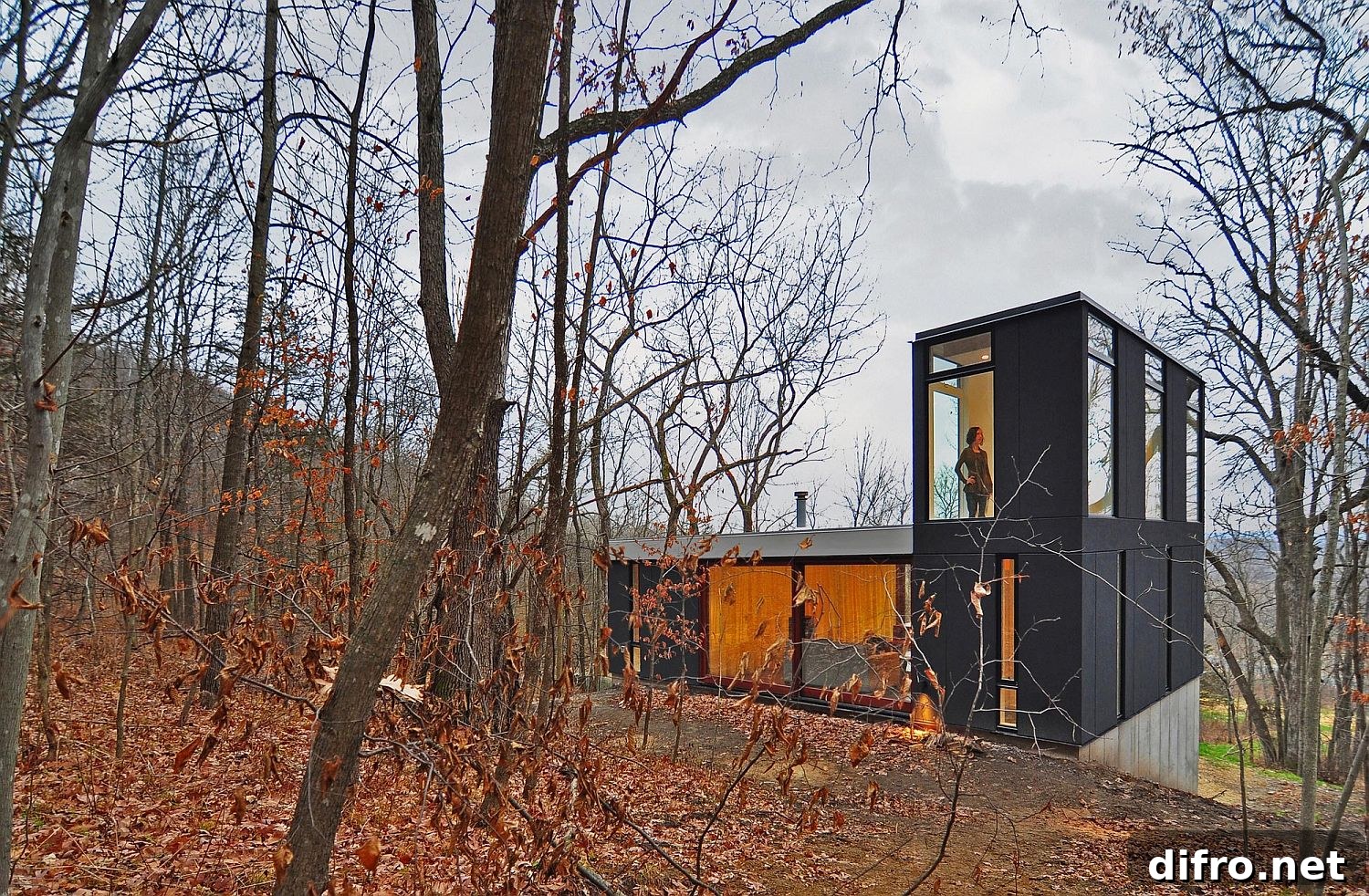
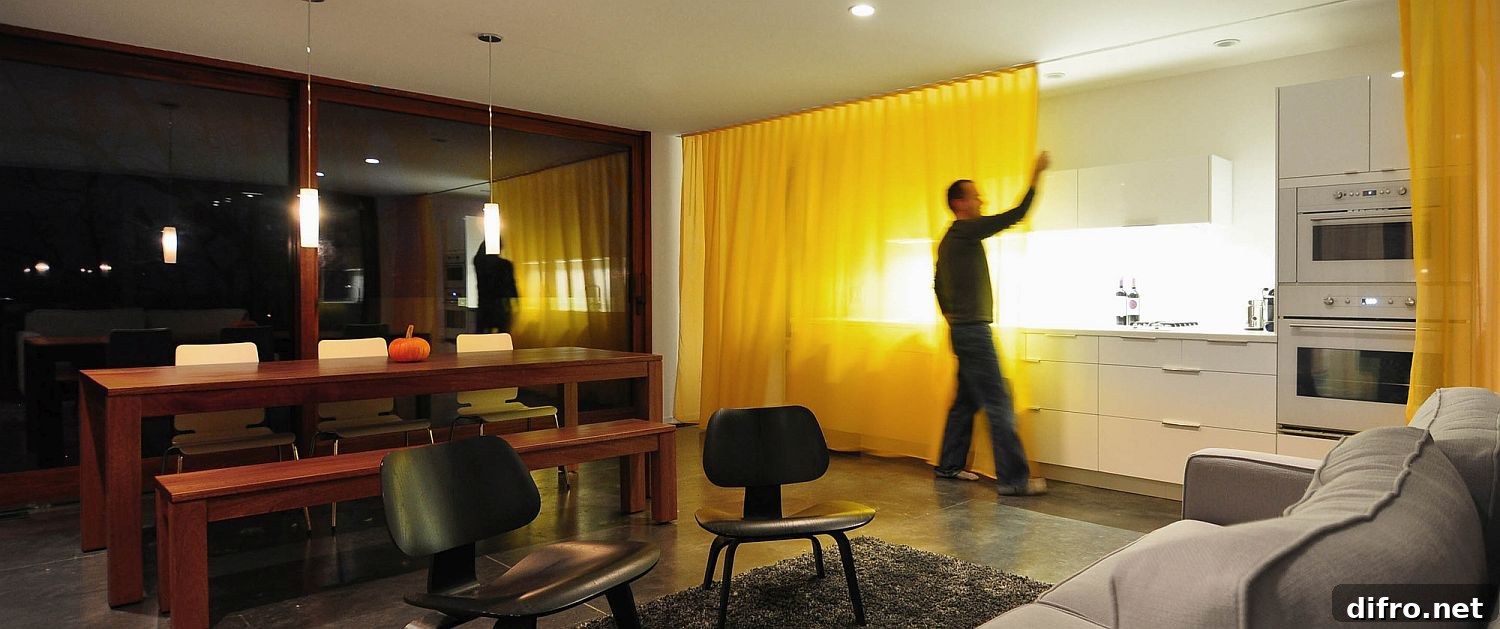
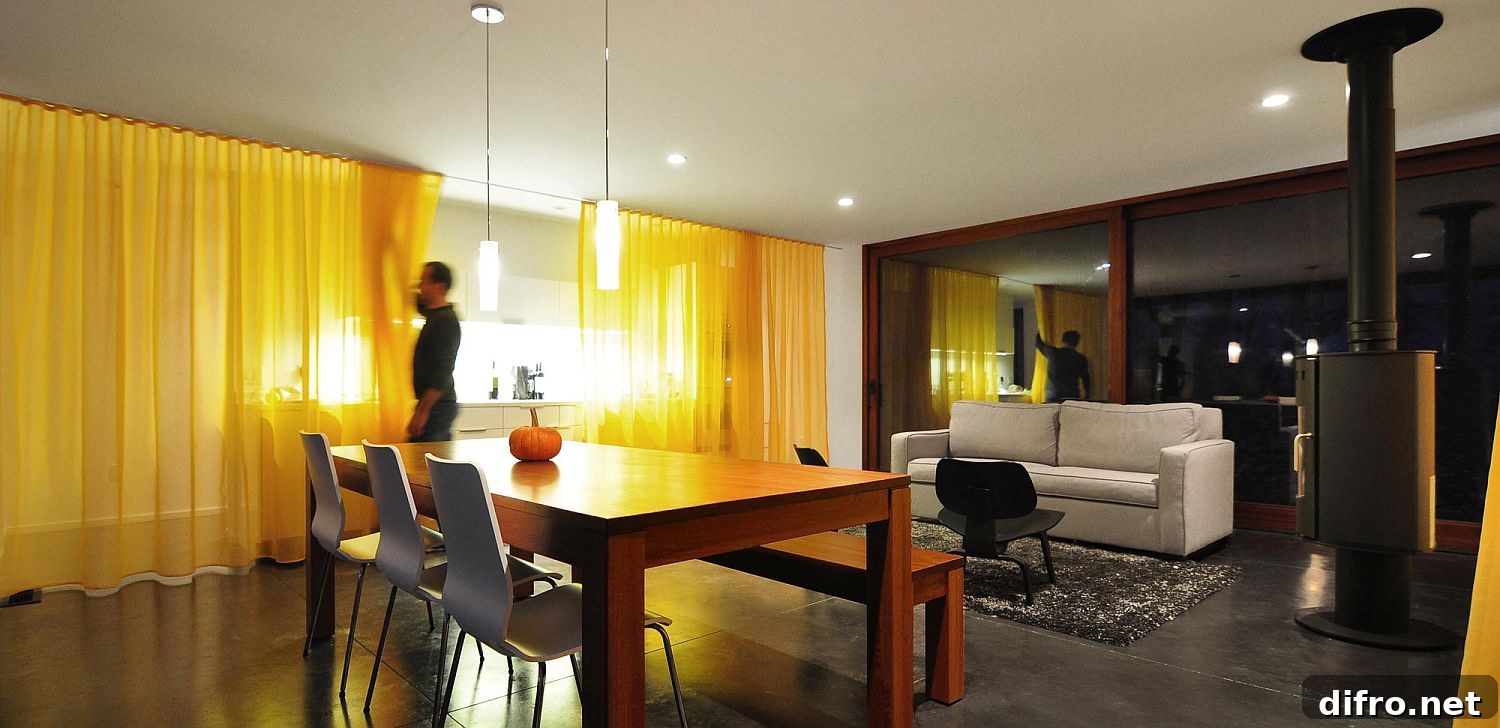
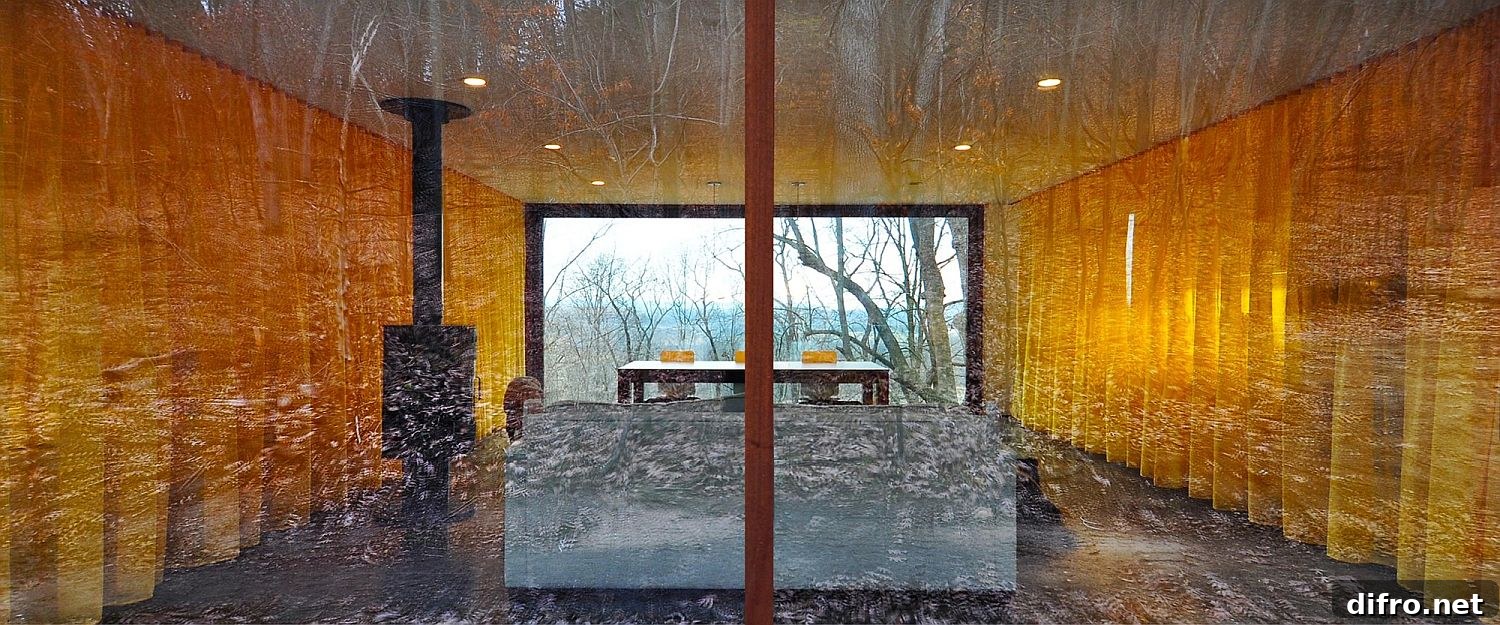
Inside, the living areas are arranged with openness and economy in mind. Large sliding glass doors and carefully placed windows blur the boundary between interior and exterior, drawing light deep into the stacked volumes and admitting framed views of trees and sky. The main living level centers on a wood-burning stove and a compact yet comfortable layout that maximizes usable space. Simple furnishings and a restrained wood-focused palette keep the interiors calm and cohesive.
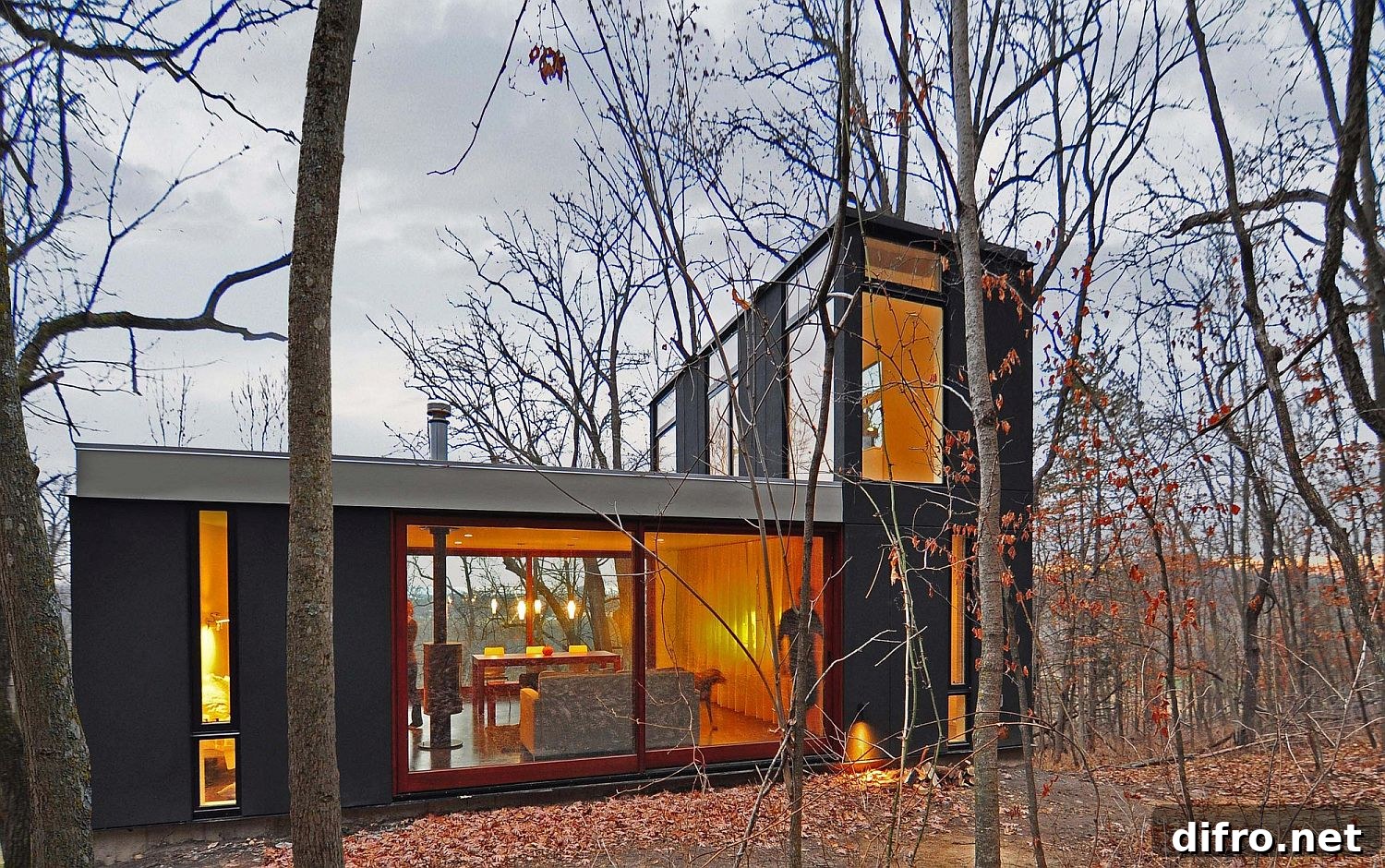
Privacy and flexibility are handled with simple, smart moves. Floor-to-ceiling drapes—shown here in a warm orange tone—can be drawn to define separate zones or left open to maintain expansive sightlines through the stacked interior. These soft partitions work in tandem with the large panes of glass so residents can switch quickly between intimate seclusion and generous views of the landscape.
Sleeping and bathing spaces are organized across the upper two levels, keeping private functions above the main living area and taking advantage of elevated views and daylight. The compact plan is efficient: circulation is minimized, and each level performs multiple functions without feeling cramped. Cozy lighting and careful material choices reinforce a homely, cabin-like atmosphere throughout.
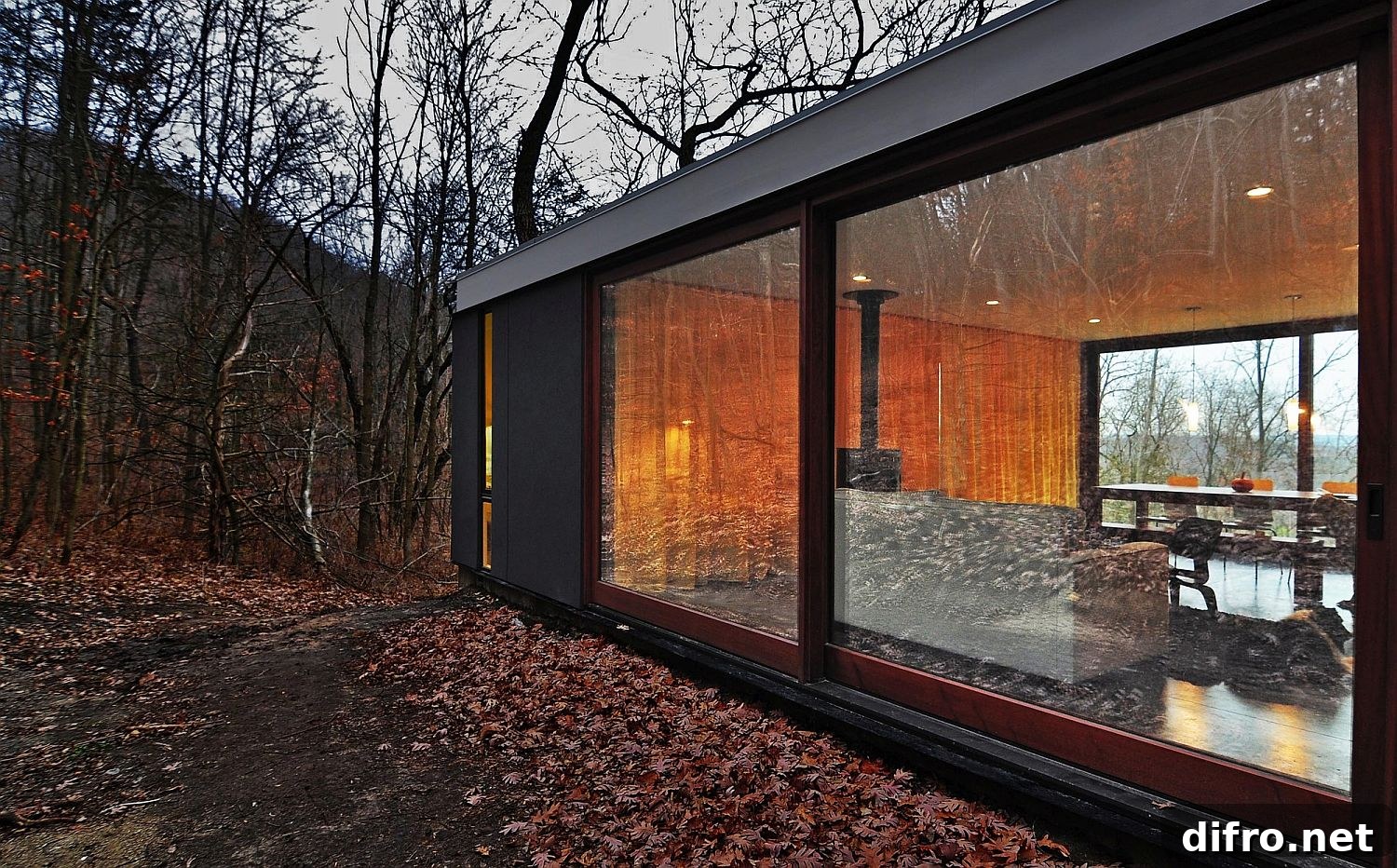
The project uses regionally available, durable materials associated with local farmstead architecture. Outside, exposed concrete, cedar, anodized metal and cementitious plaster reflect the muted, earthy tones of nearby rock and forest. Inside, integrally colored polished concrete floors on the main levels provide resilient surfaces that suit a low-maintenance rural lifestyle.
The material palette is deliberately restrained to harmonize with seasonal shifts in the surrounding landscape. In summer, the cabin reads against a backdrop of green foliage; in autumn and winter, its darker exterior and warm interiors offer a striking, welcoming contrast to bare trees and snow-dusted ground. The design achieves a balance of ruggedness and refinement—robust materials for the exterior and simple, tactile finishes inside that age gracefully.
Although compact in footprint, the Stacked Cabin demonstrates how thoughtful design can yield generous experiences. By stacking program vertically and choosing a cohesive, durable material palette, the architects preserved privacy, maximized views, and created a comfortable retreat that still reads as a true cabin: warm, understated and intimately connected to its site.