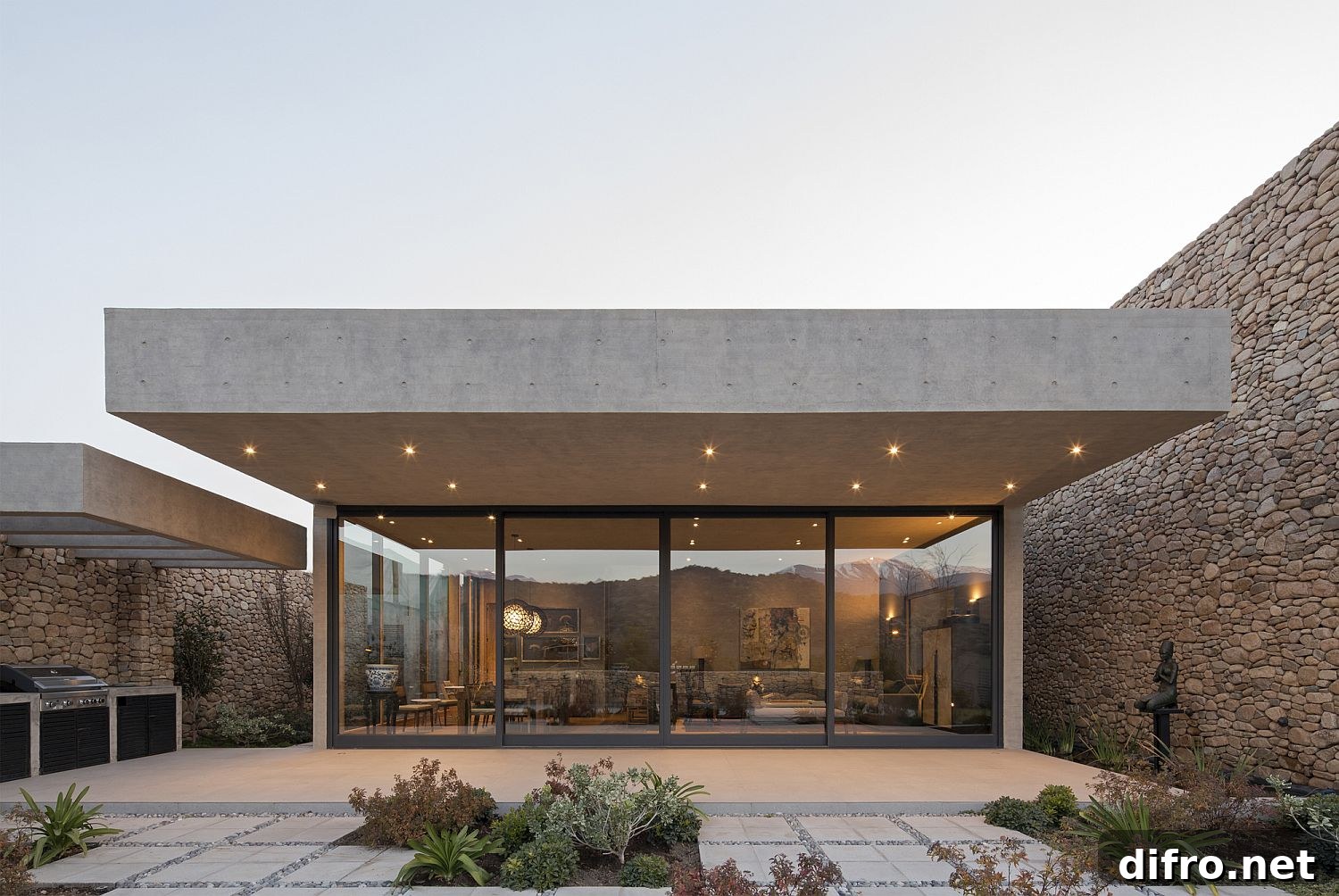
It is rare to encounter a contemporary home whose street presence is defined by a commanding stone façade on every side. Such a design offers both absolute privacy and an entrance that leaves a lasting impression. Welcoming visitors with textured stone is the Cerro la Cruz House, a distinctive residence by Turner Arquitectos in Chile. Here, stone, glass and concrete are composed together with great sensitivity, creating a balanced dialogue between rugged materiality and refined modern lines. Built on a sloped lot, the house takes full advantage of the terrain to produce a composition that feels sculptural, intimate and unmistakably site‑specific.
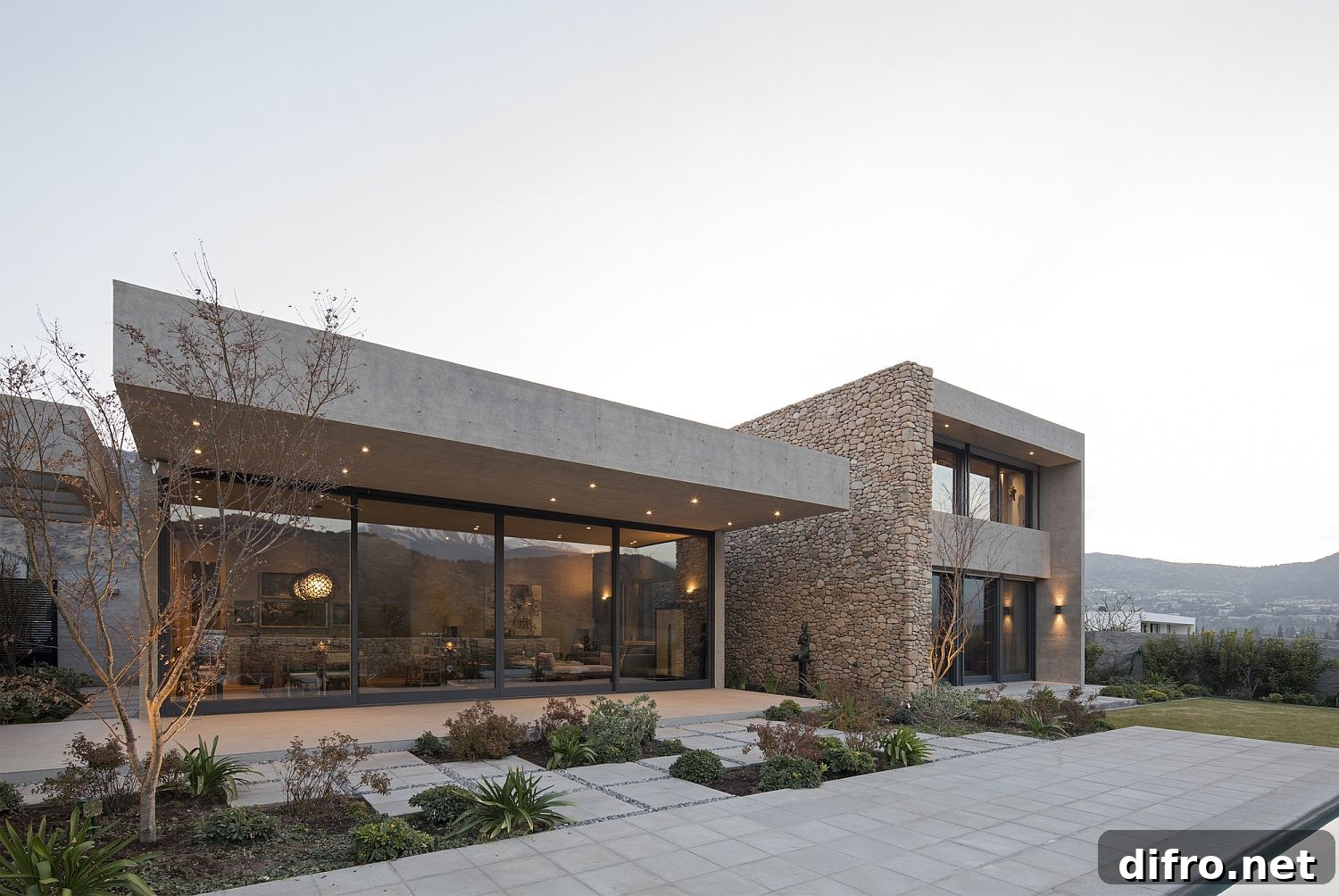
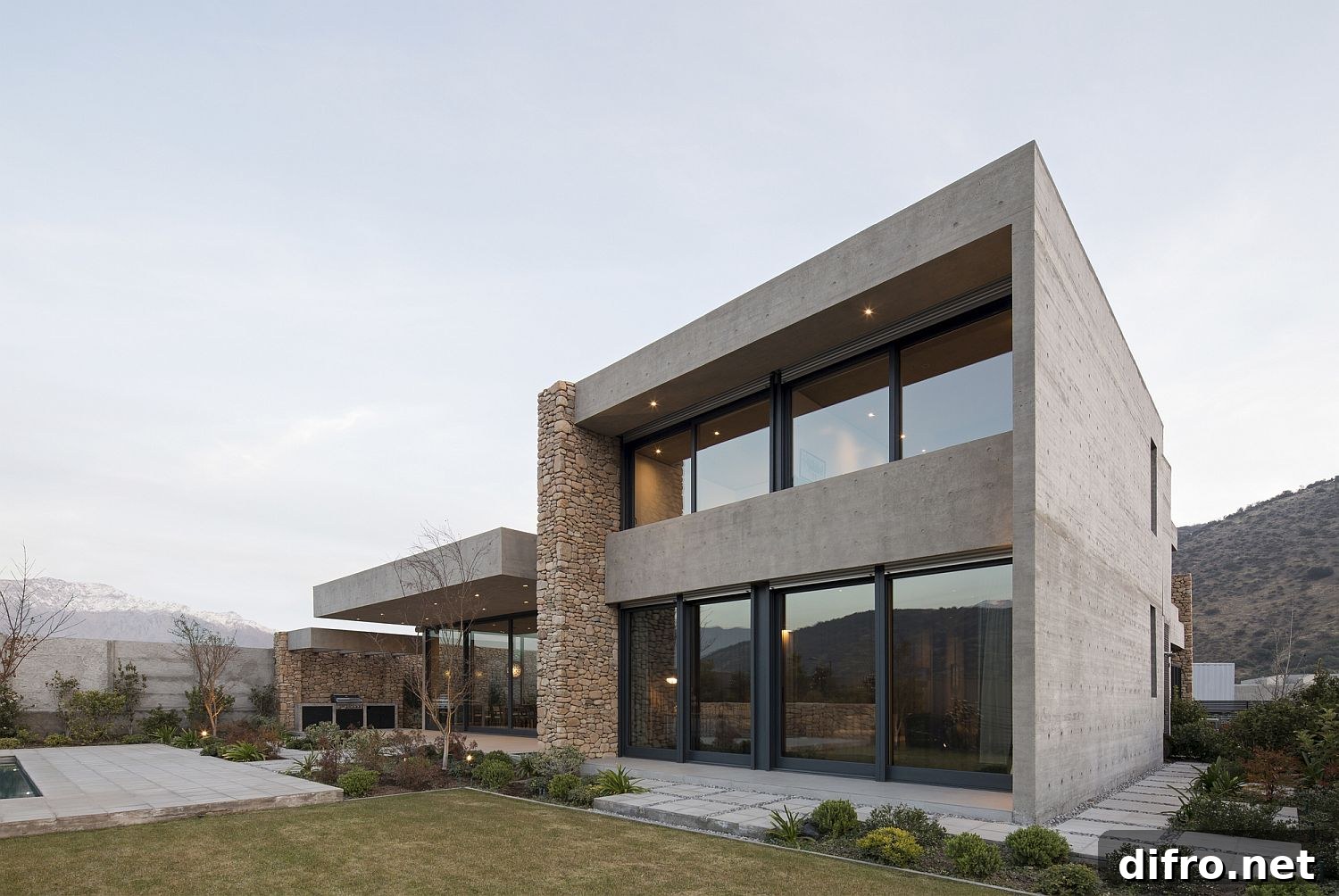
From the closed, fortress‑like street elevation to the open, transparent rear that faces the garden and landscape, the Cerro la Cruz House offers two very different experiences. The stone perimeter screens the property from the street, creating a sheltered approach and a sense of retreat. In contrast, the home’s back façade dissolves into the landscape through generous glazing, sliding windows and glass walls that connect interior rooms directly to outdoor terraces and the garden. This intentional juxtaposition—privacy on the street, openness to nature at the rear—gives the house dramatic contrast and functional clarity.
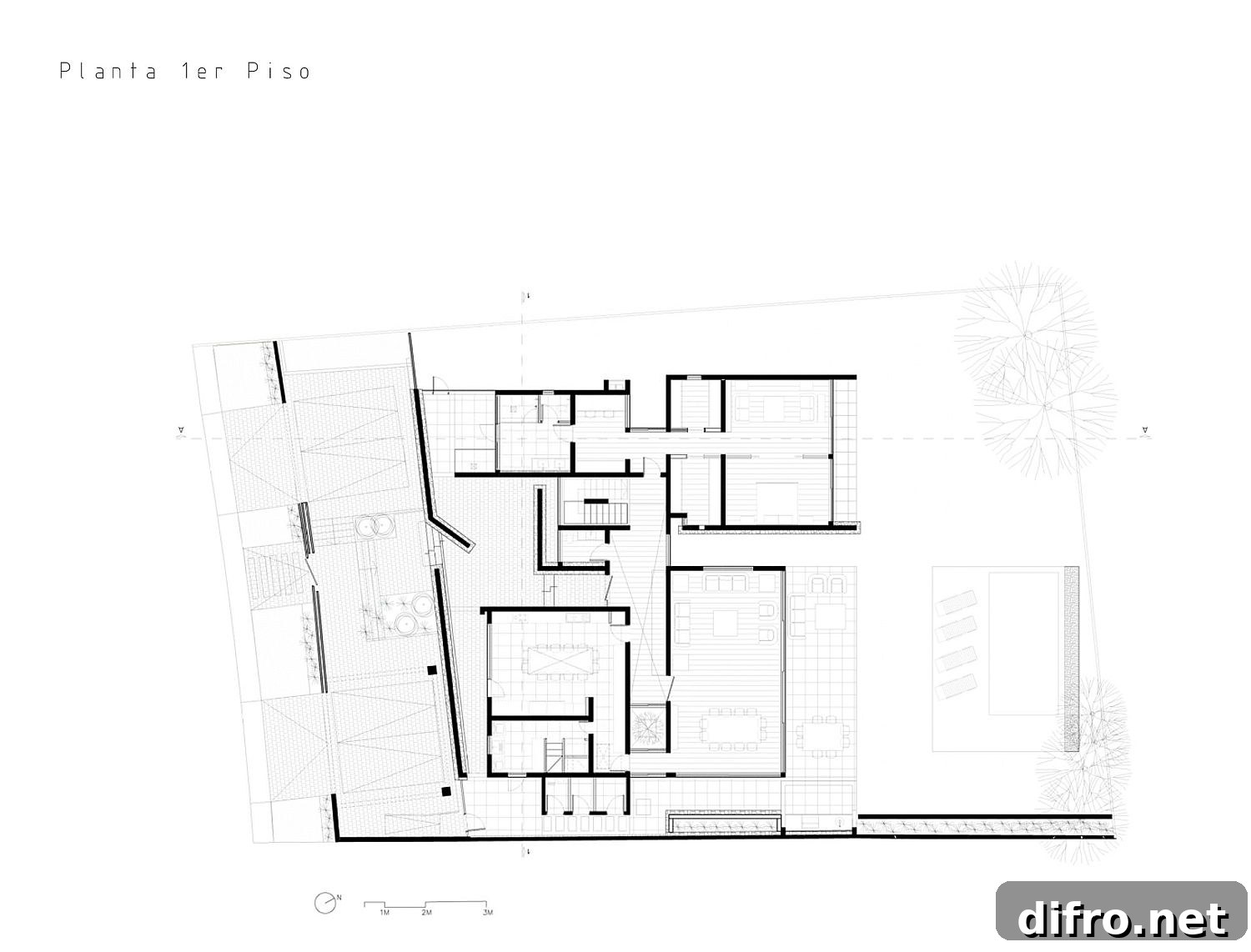
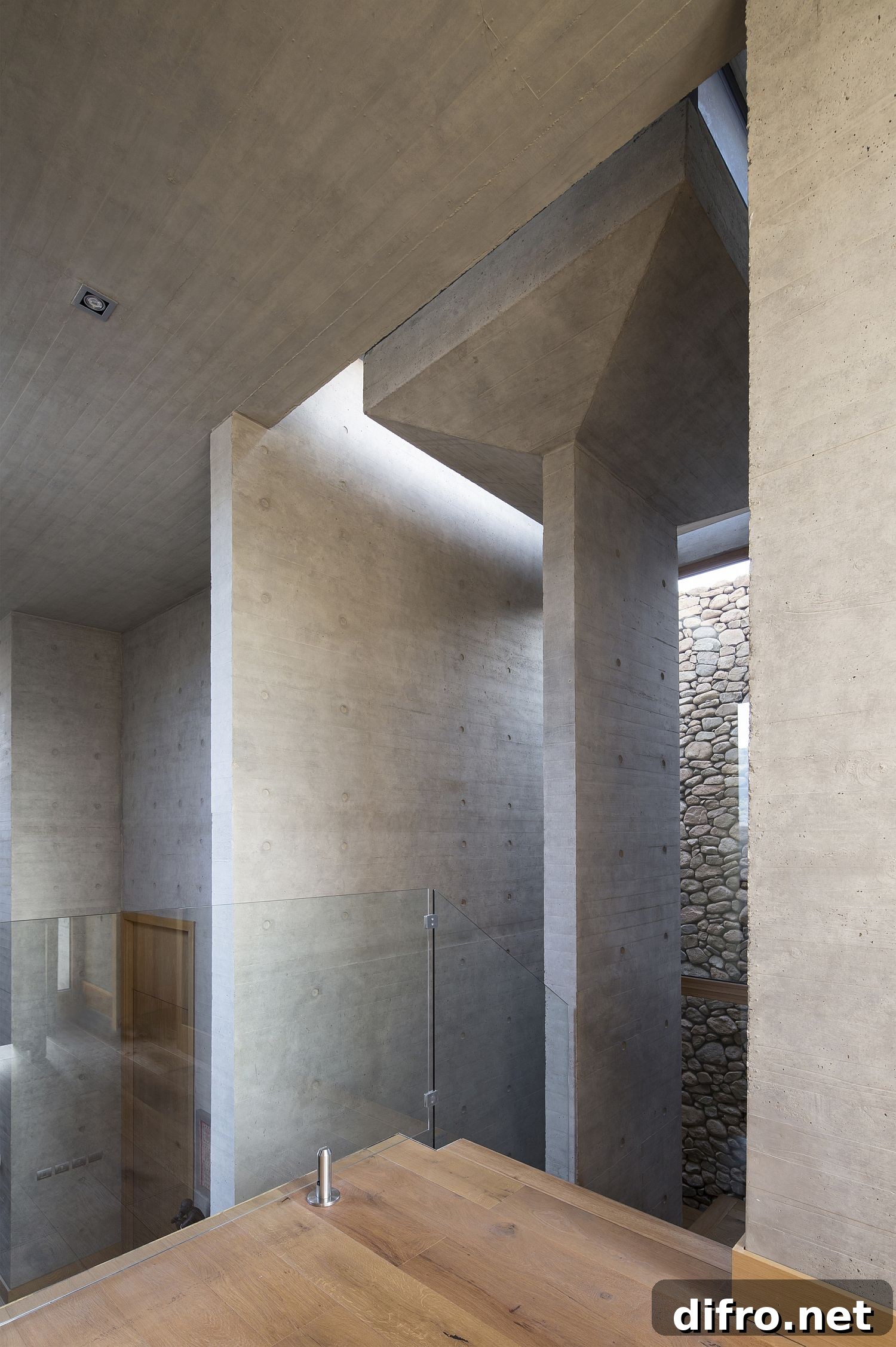
Inside, the language is spare and carefully composed. Smooth concrete surfaces and warm timber accents provide a restrained palette that highlights texture and light. The main circulation axis—a triple‑height hallway placed transversely through the center of the plan—organizes the living spaces. This vertical void brings daylight deep into the interior and creates views between levels while directing movement toward primary living areas that face north and secondary rooms oriented to the south. The house therefore reads as a sequence of framed views and volumetric spaces, each responding to orientation and privacy needs.
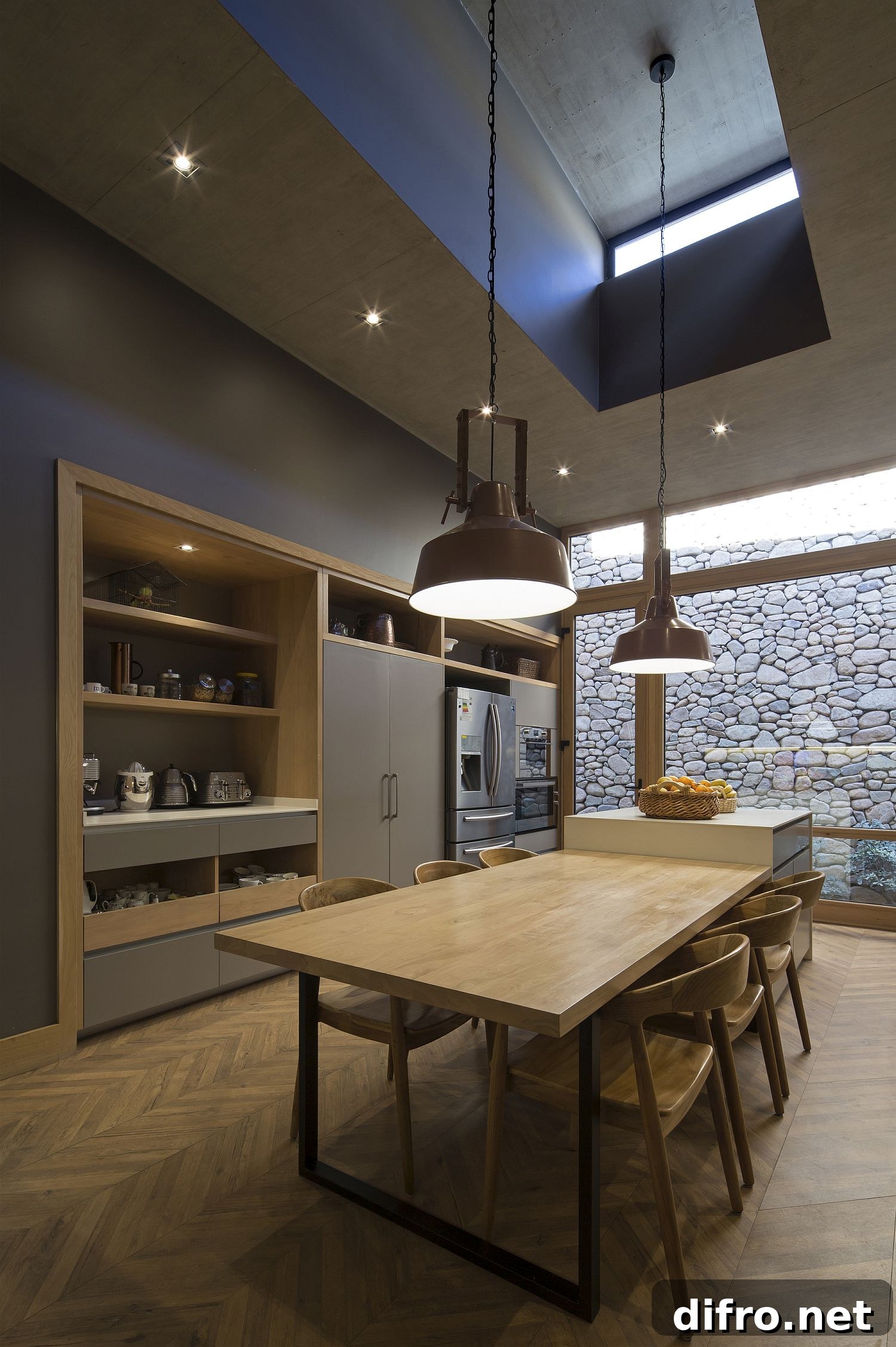
Lighting in the house is thoughtfully layered. Pendant fixtures suspended within the double‑height dining and kitchen volume add sculptural presence, while recessed lights provide ambient illumination that preserves the clean lines of the ceilings. These choices underscore the project’s minimalist ethos: fixtures are selected and positioned to emphasize architectural form rather than dominate it. The result is a refined environment where material textures—stone, concrete, wood and glass—are the primary protagonists.
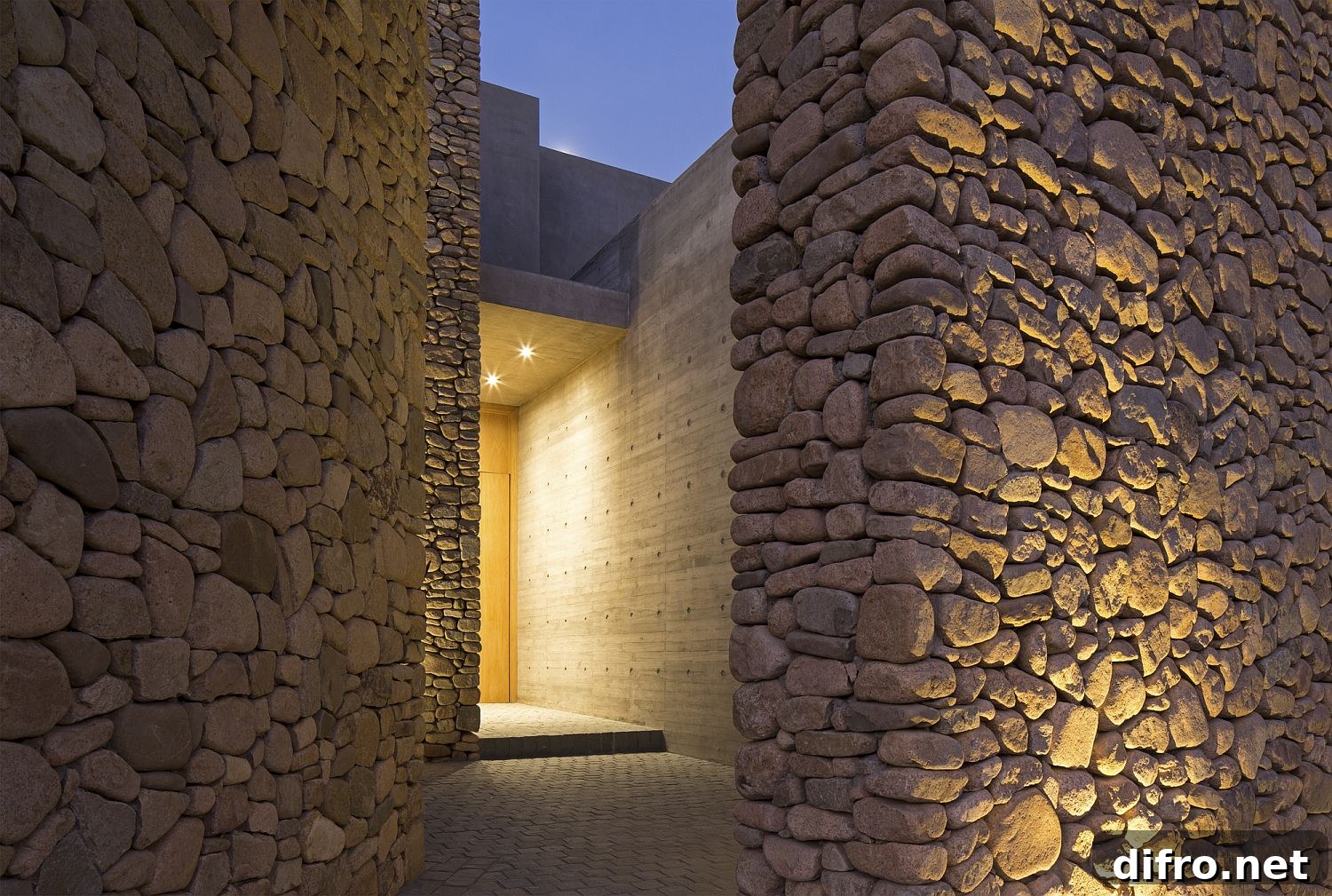
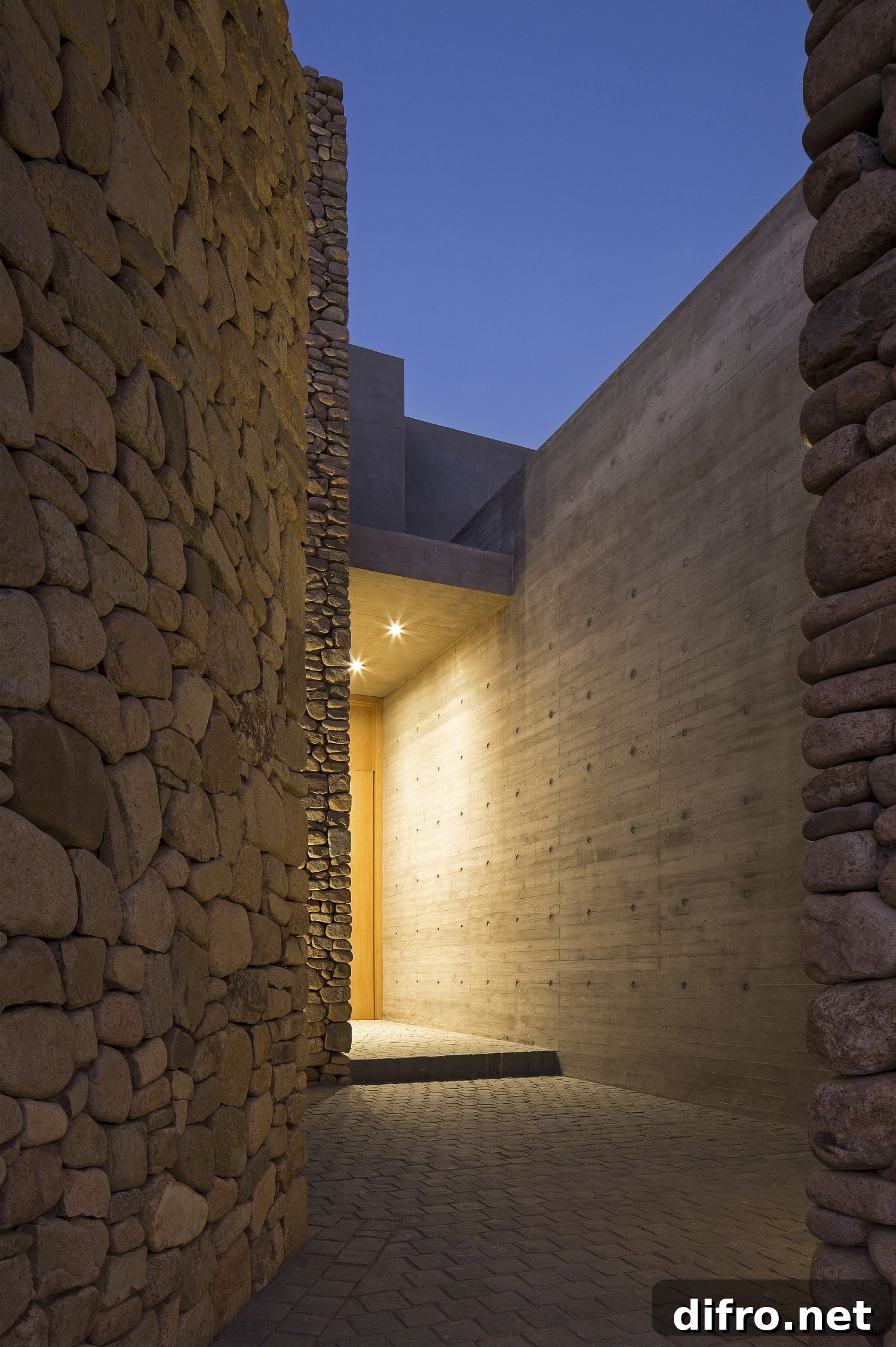
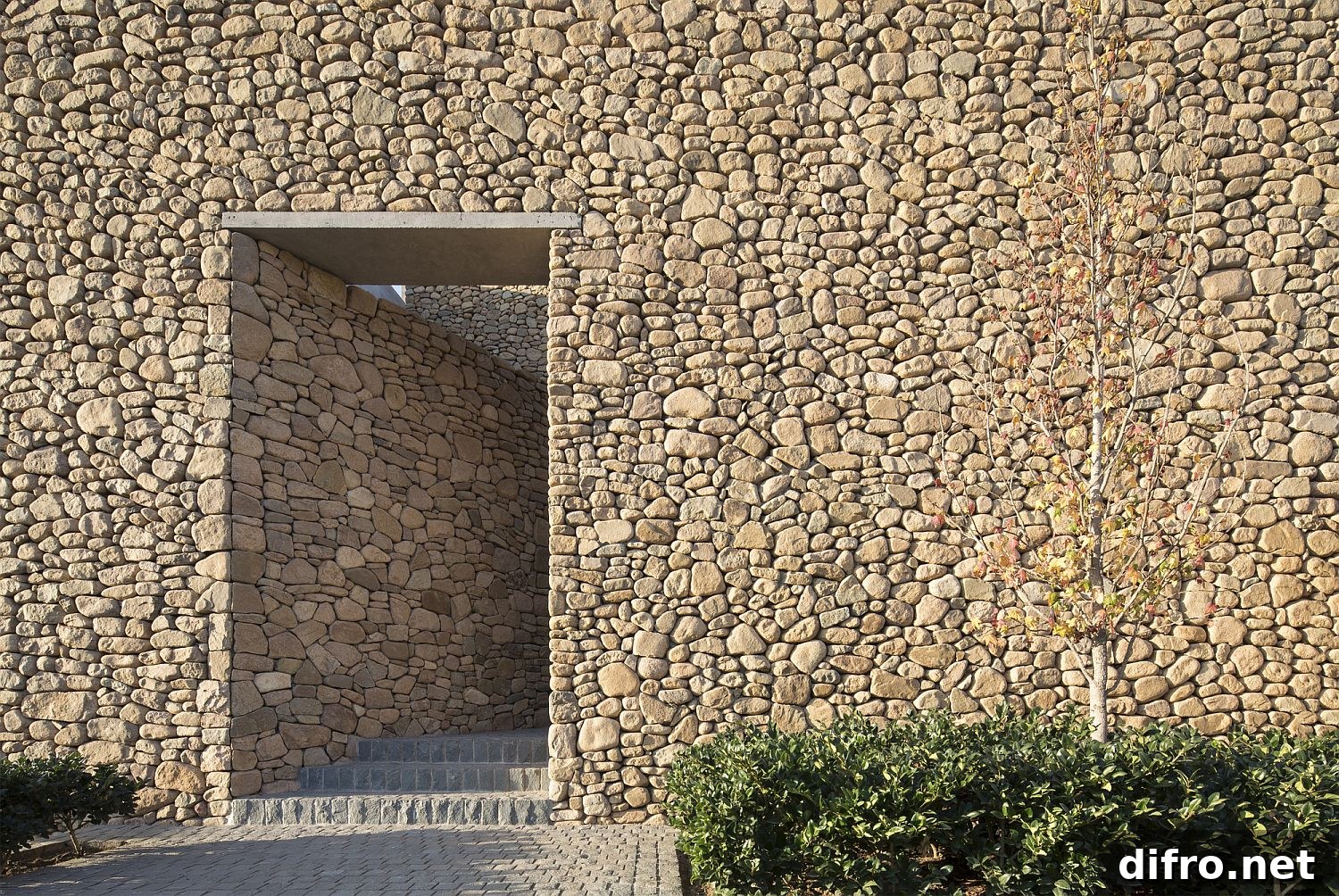
Stone plays a central role not just as cladding but as a generator of atmosphere. The robust stone walls that define the perimeter provide texture, acoustic insulation and a visual buffer from the street, while their scale and presence lend the property a sculptural, almost monumental quality. Within the courtyard and interior spaces, the contrast between the coarse natural stone and the smoothness of cast concrete or warm timber accents creates a tactile richness that reads as quietly luxurious rather than ostentatious.
Because the property steps down the slope, outdoor terraces and decks are integrated at various levels, creating a sequence of exterior rooms that extend daily life outdoors. These outdoor areas, including a dedicated barbecue zone and informal hangout spaces, are directly accessible from living areas and help blur the boundary between inside and outside, especially during mild Chilean weather. The landscape and orientation work with the architecture to maximize daylighting and views while maintaining essential privacy toward the street.
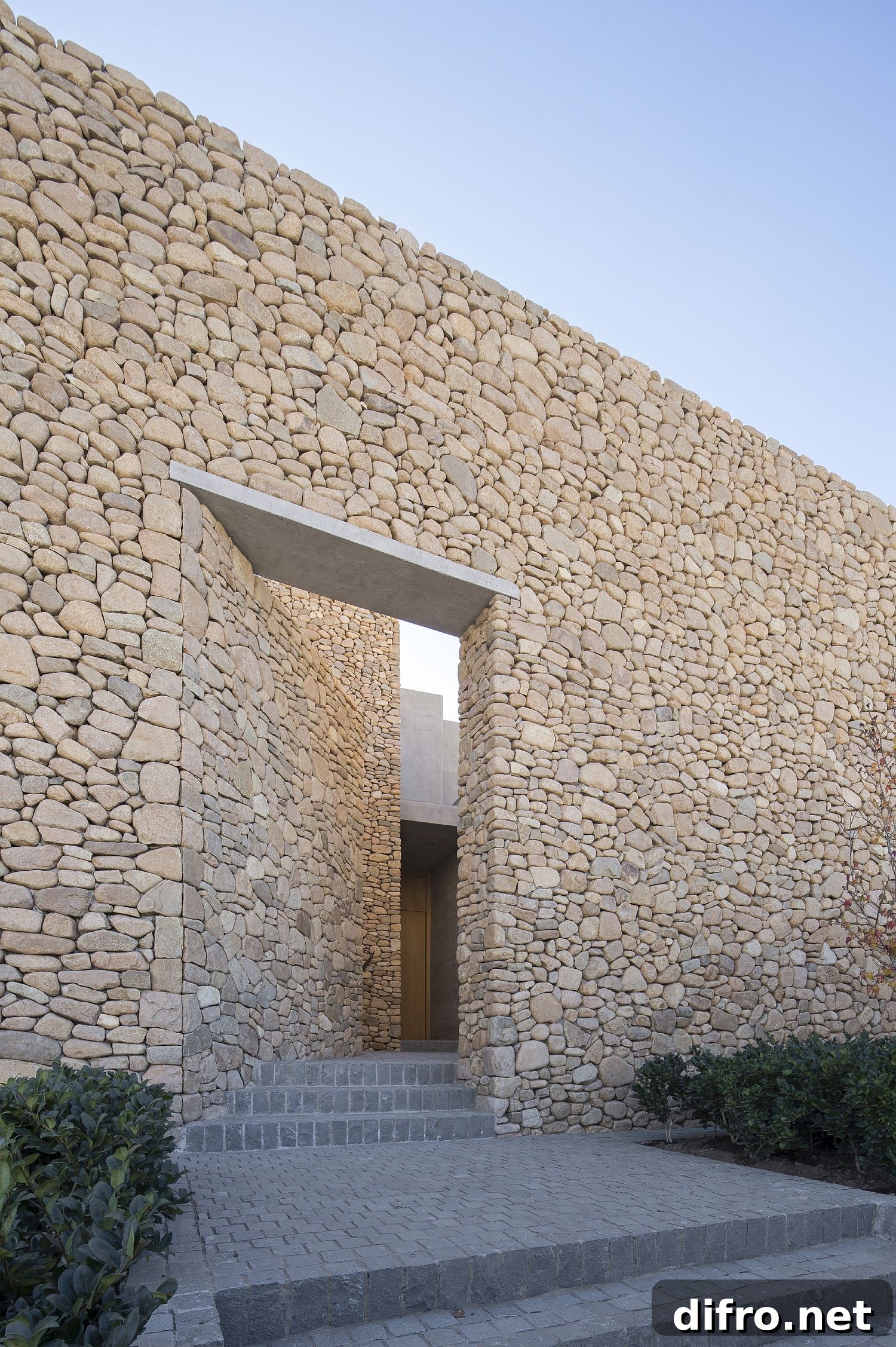
From the street, the house presents itself as a grand stone wall. Its scale and brutalist character reveal a glimpse of what to experience inside. A triple‑height hallway placed transversely in the center of the house directs the main rooms toward the north and the secondary ones toward the south.
Photographs of the project were taken by Nicolás Saieh, capturing both the material subtleties and the spatial relationships between enclosed and open areas. The Cerro la Cruz House stands as an expressive example of contemporary residential architecture in Chile, where thoughtful material choices, careful orientation and skillful integration with the site produce a home that is private, expansive and richly textured.
RELATED: Sculptural Design at Its Spectacular Best: Luxurious Mountain Home in Chile