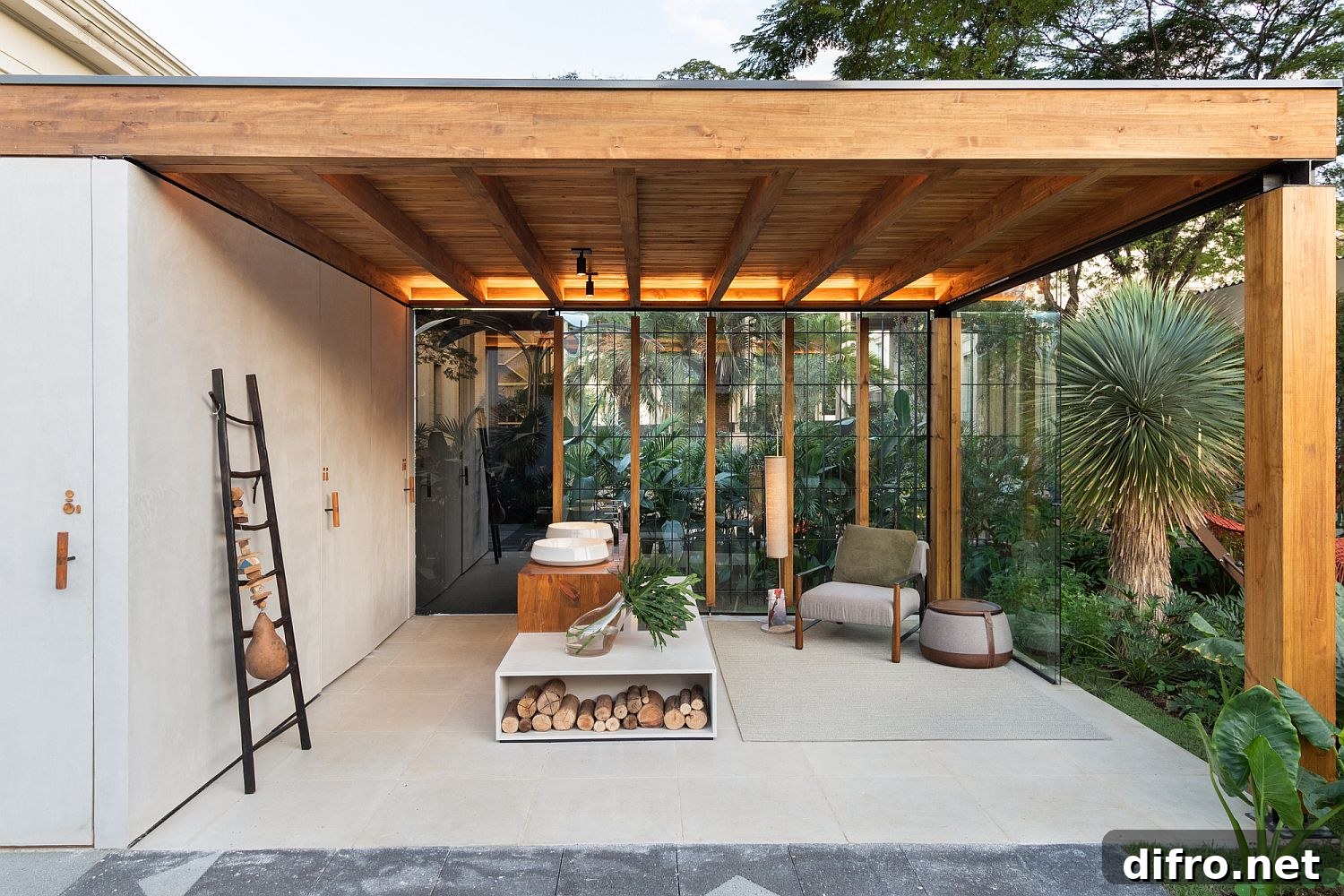
Nohara Terrace by Lucas Takaoka: A Compact Brazilian Pergola with Japanese Simplicity
The Nohara Terrace is distinctive in both concept and execution. This elegant Brazilian terrace merges the relaxed feel of outdoor living with a sheltered, intimate environment. Designed by Lucas Takaoka, the project draws from Brazilian traditions while integrating elements of Japanese minimalism, creating a refined hybrid of styles. Although the terrace covers only about 20 square meters, its careful layout and material choices create a sense of spaciousness and calm that belies its modest footprint.
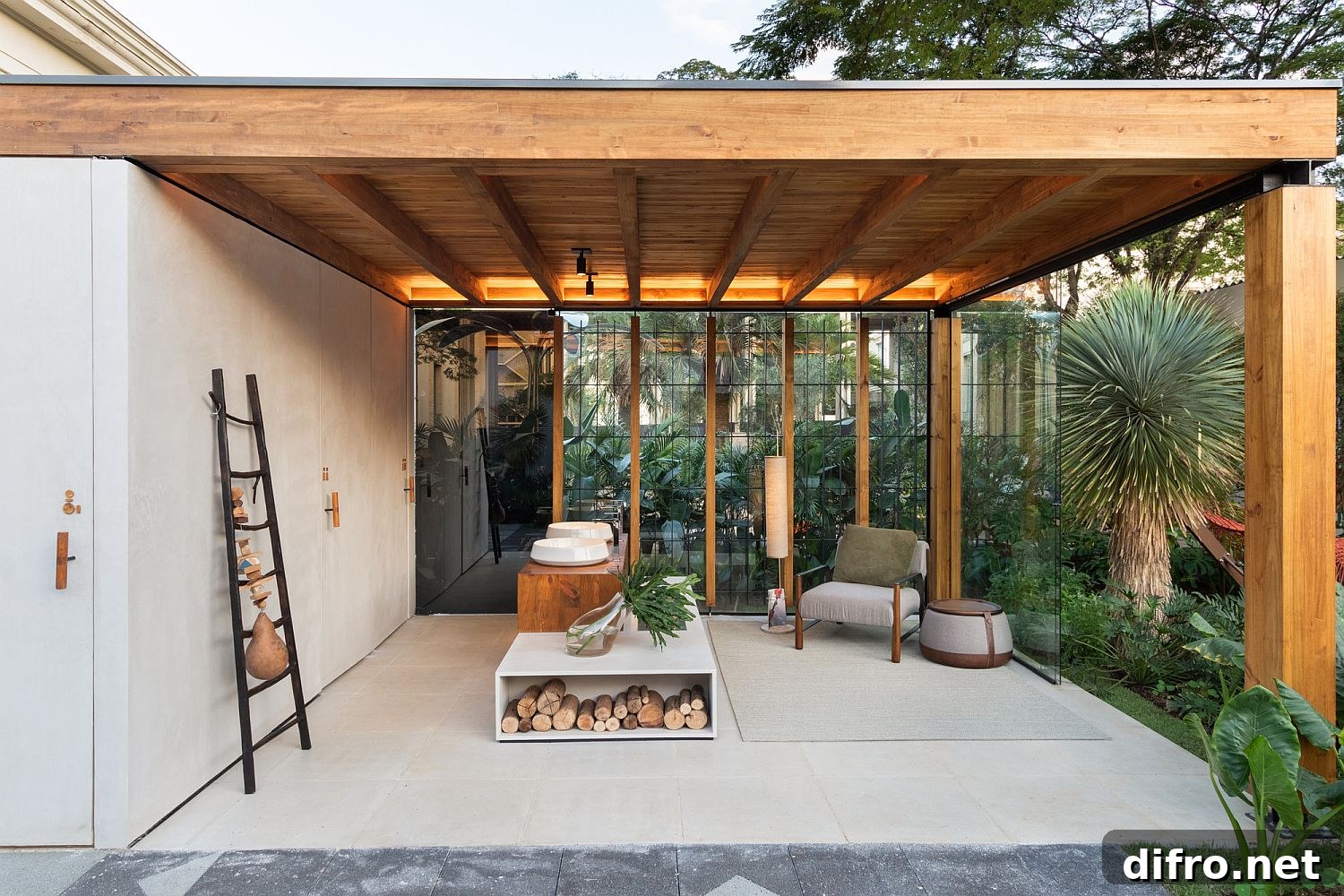
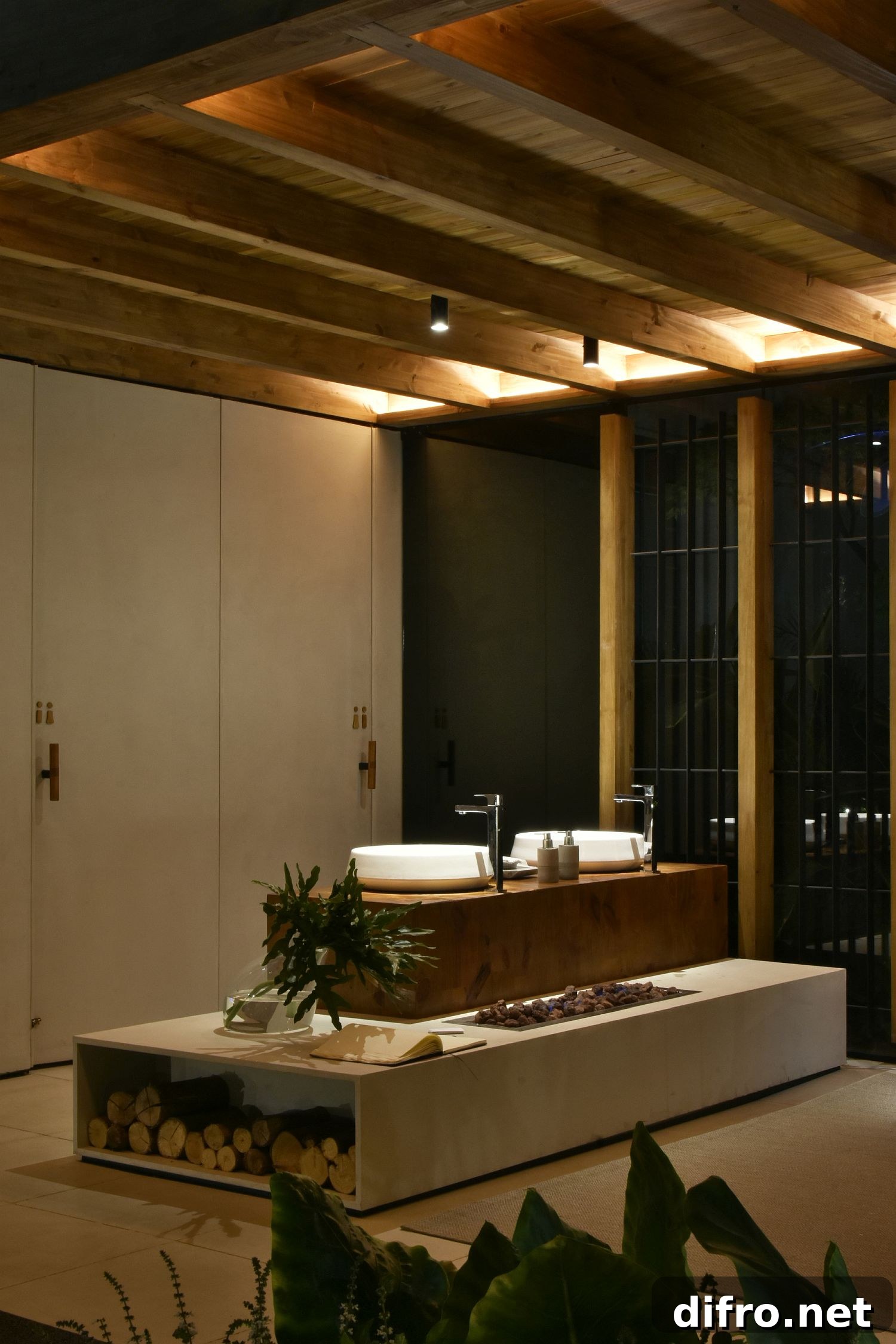
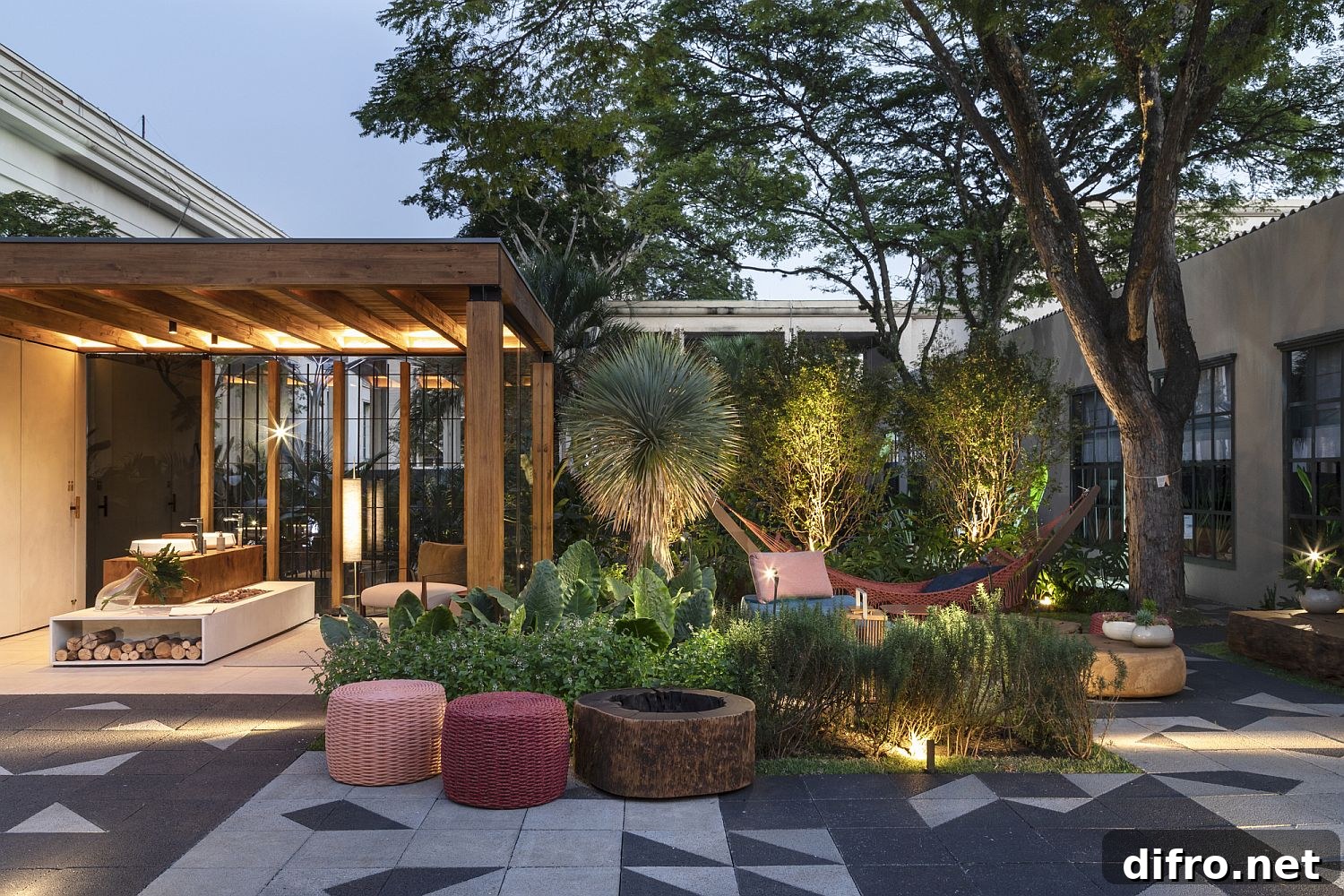
The terrace is organized into three primary zones. The first zone includes three toilets that form a functional beginning to the sequence. The central zone focuses on utility and warmth, featuring a washbasin and a fireplace that serve as a social nucleus. The final zone is an open sitting area designed for relaxation and for taking in the surrounding view. Together, these areas make the terrace feel like a complete outdoor room, blending living space with landscape in a fluid, intentional way.
Material choice anchors the design. The pergola-like structure is built from Brazilian pinus, a light, warm wood that reinforces the terrace’s organic appeal and connects the platform visually to the garden. White concrete finishes introduce a minimalist counterpoint that keeps the composition fresh and contemporary. This pairing of wood and white concrete produces a balanced palette — warm, natural tones softened by clean, architectural lines.
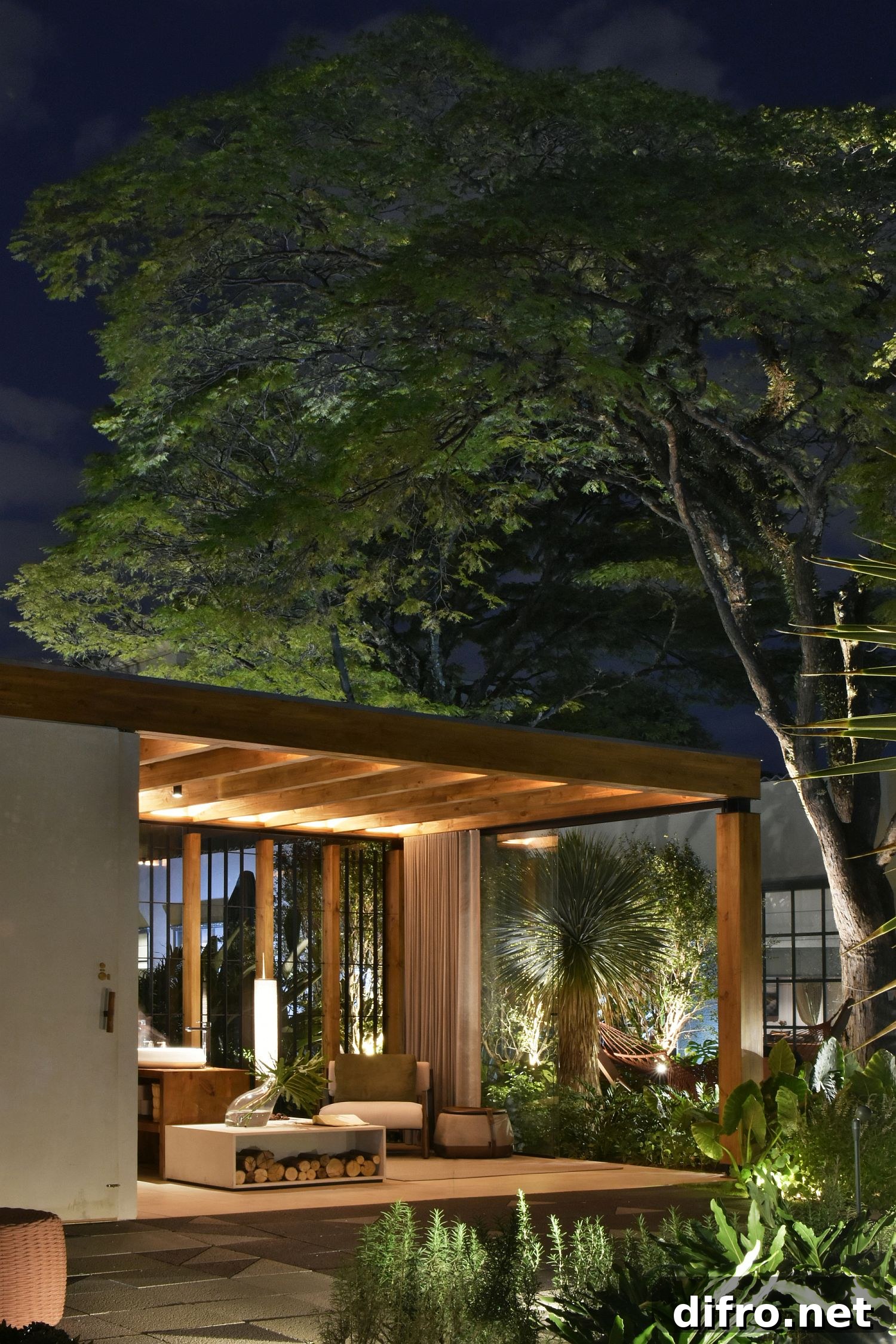
Thoughtful lighting enhances the terrace after dark. In-ground fixtures and recessed lights are placed to avoid shadows and emphasize the space’s textures and planting. These subtle light sources highlight pathways, architectural details and seating areas, transforming the terrace into an inviting evening retreat without overpowering the natural atmosphere.
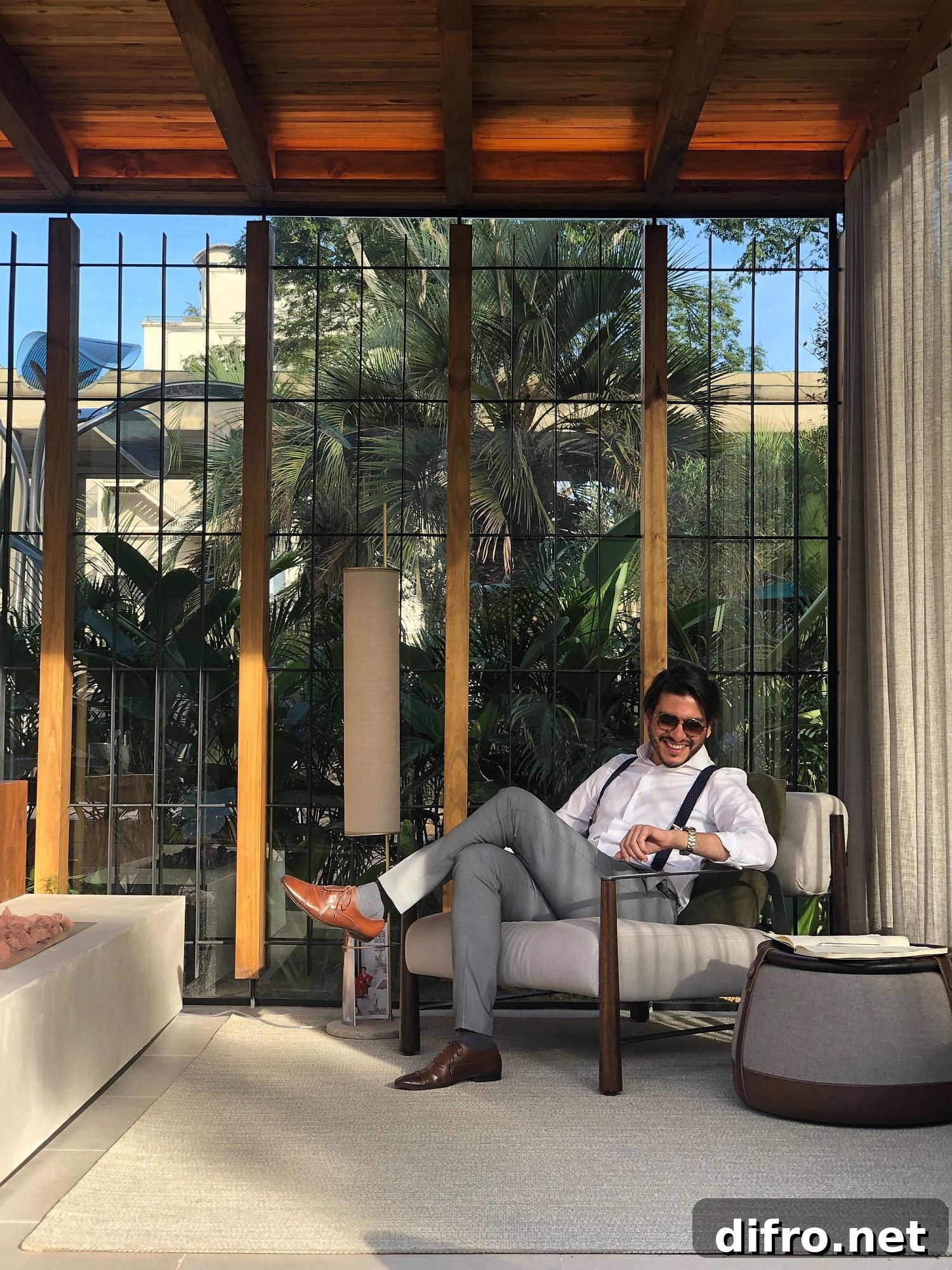
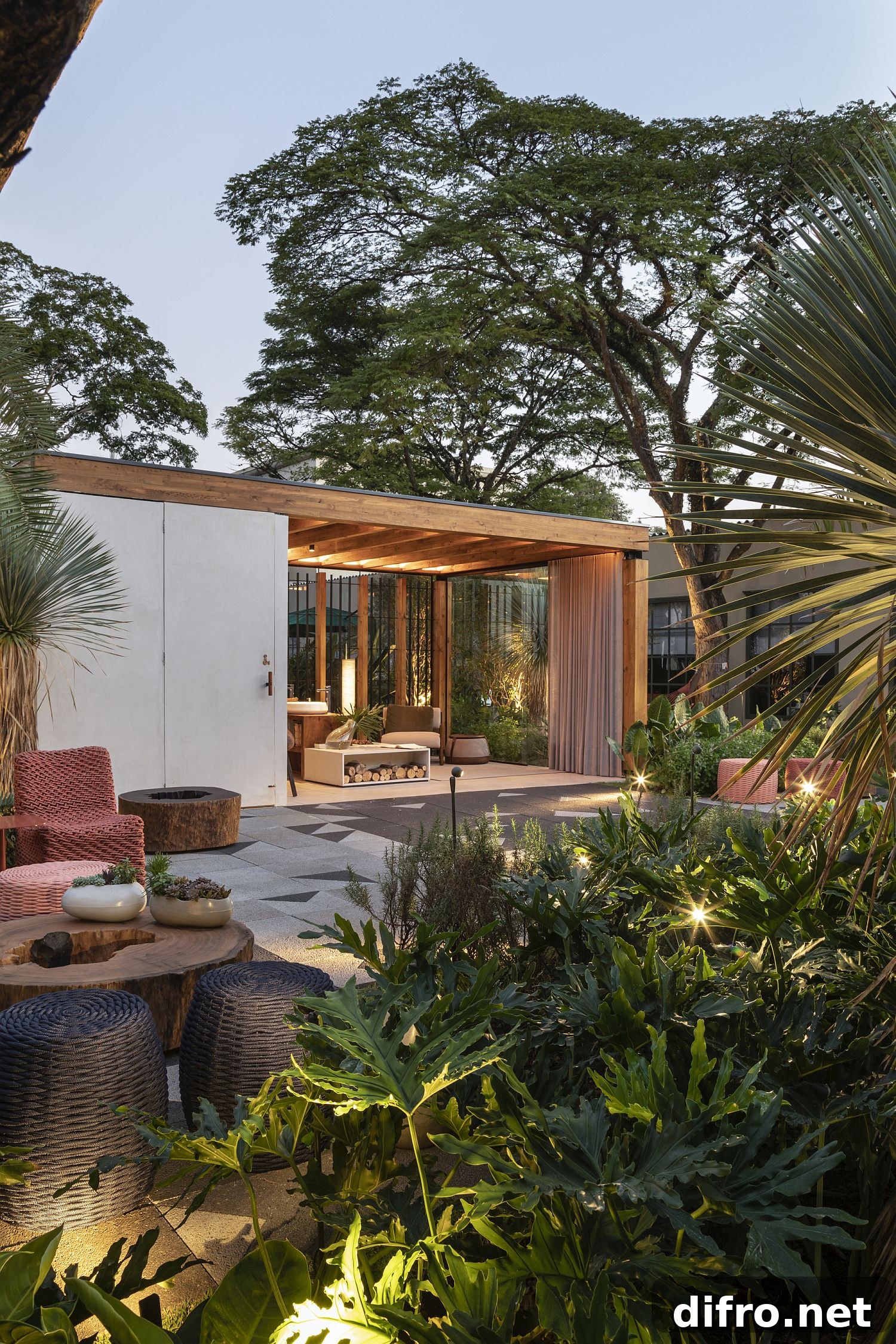
Vegetation operates as an extension of the terrace, blurring the border between built platform and garden. Plantings are used generously but with restraint, contributing texture and color without disrupting the terrace’s simple geometry. The result is a personal escape that feels both cultivated and effortlessly natural.
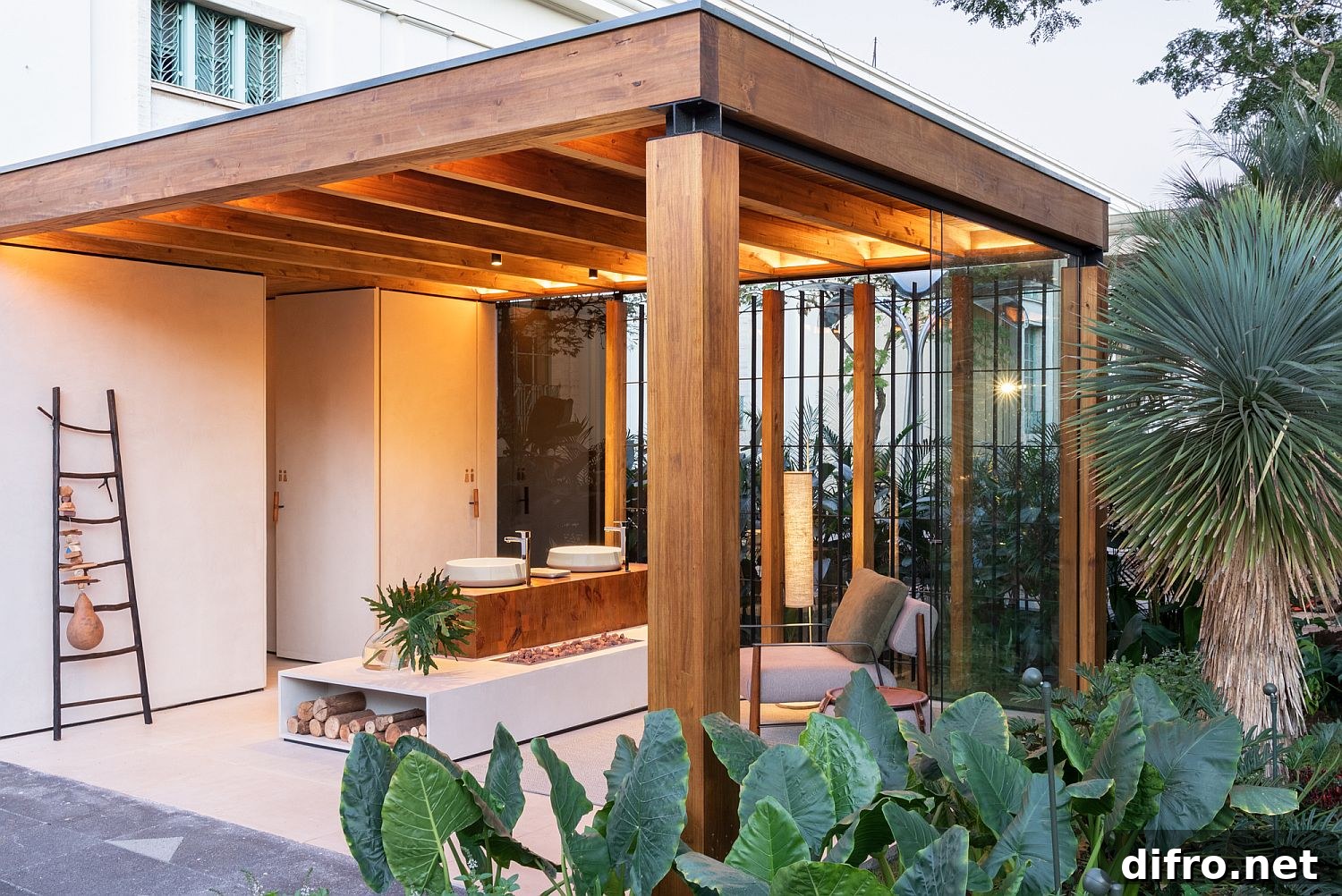
Functionality and aesthetics are balanced throughout. A pergola-like roof extends the living area into the garden while helping regulate light and shelter the seating areas. A central washbasin and a rounded “pod” element organize circulation and create an inviting focal point, while twin basins add practical convenience and visual symmetry. These features demonstrate how careful detailing can make a compact outdoor project both usable and beautiful.
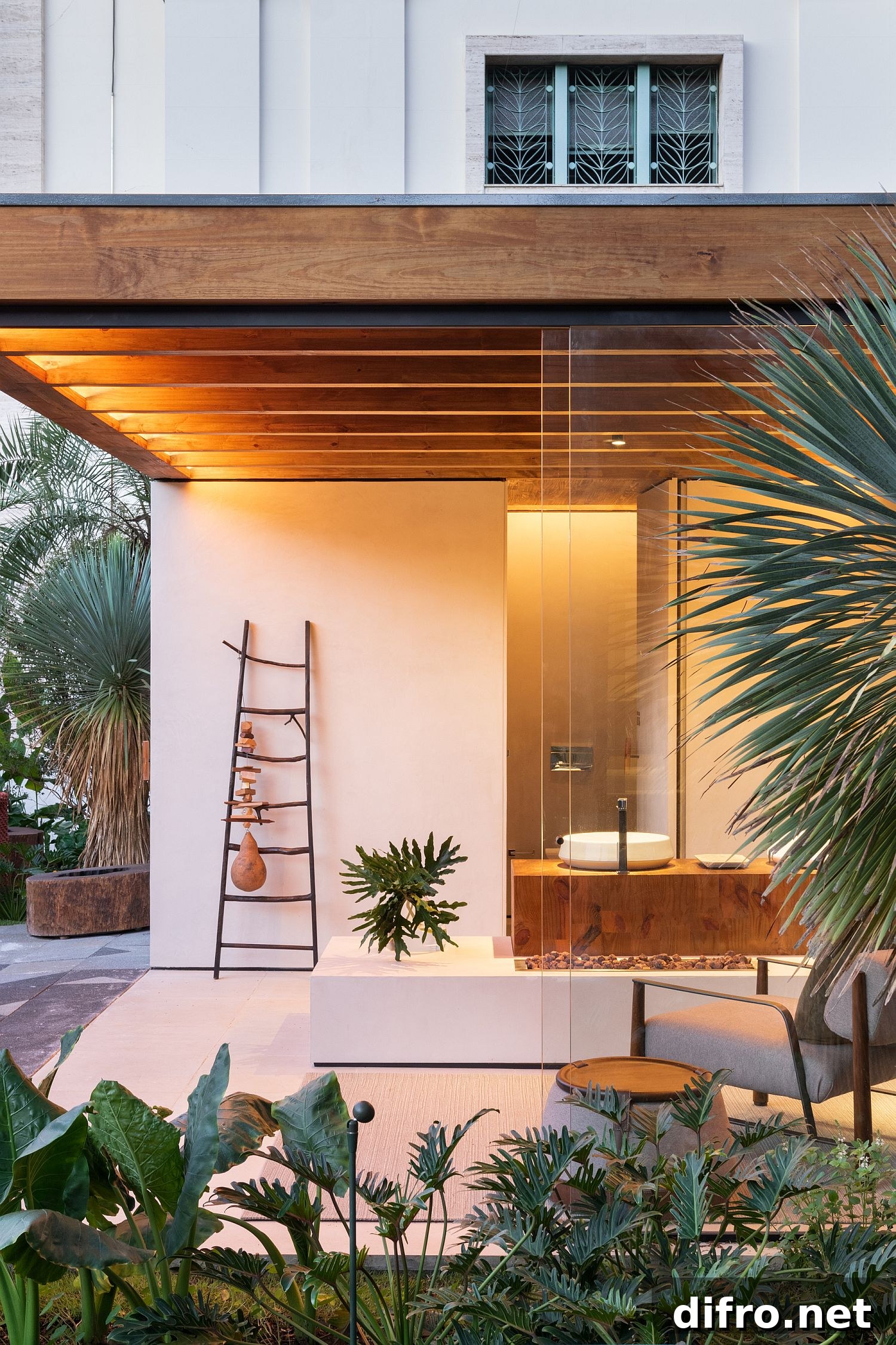
An interesting point about the project is that the furniture design is original by Lucas Takaoka, and all three pieces were presented directly from the factories: an armchair (Tati), a side table (Nômade) and a floor lamp (Nohara).
The furniture contributes to the terrace’s cohesive identity. Each piece was conceived for the space, reinforcing the interplay between comfort and sculptural form. The restored ladder used as a decorative element adds a native touch and a sense of crafted history, while casual, modern furnishings invite lingering conversation and quiet moments alike.
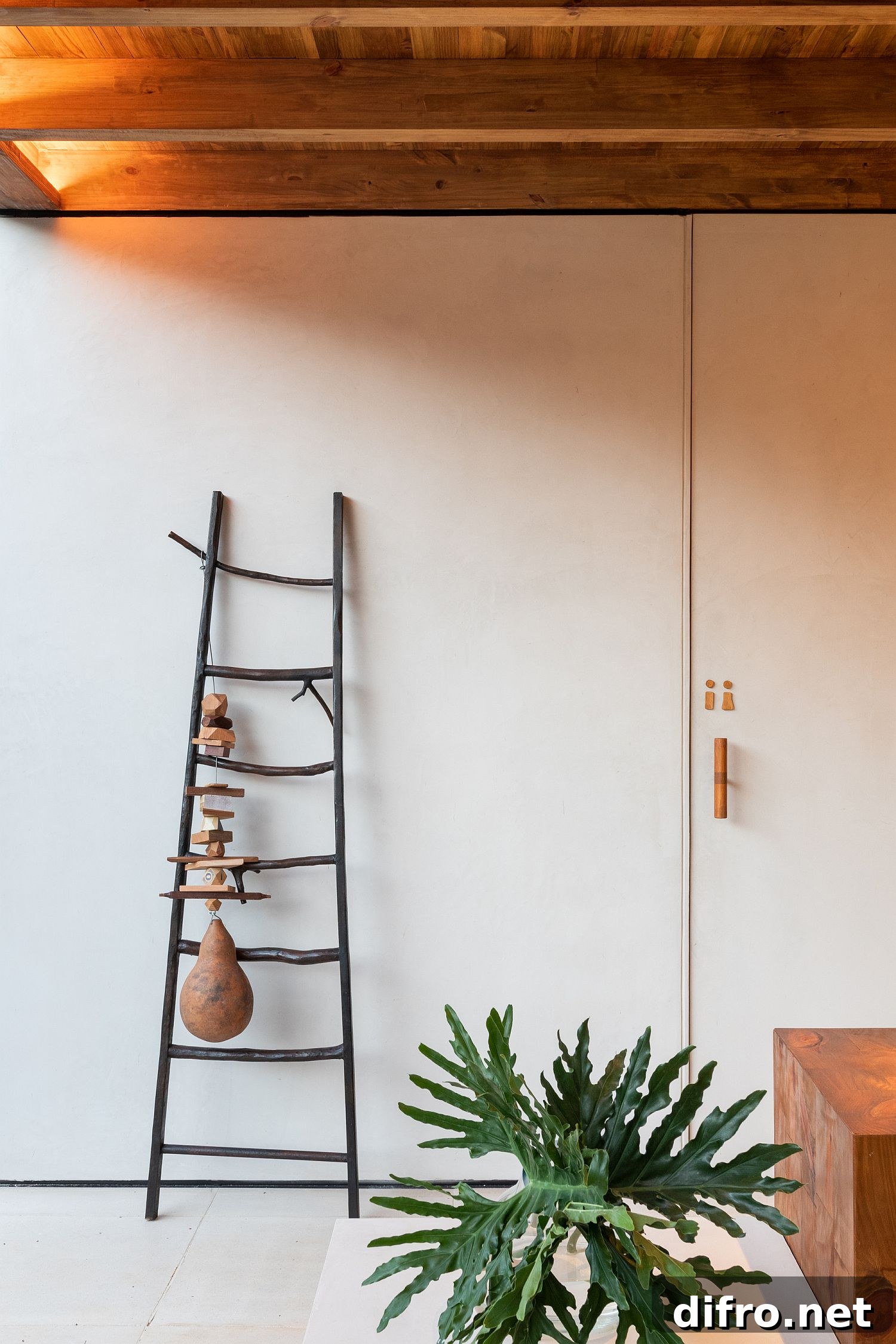
Viewed from a distance, the terrace reads as a restrained, minimal intervention that complements its landscape. The casual modern style combines ample greenery with Japanese simplicity, producing a quiet, refined space that works equally well for casual gatherings and solitary relaxation. Photography by Alexandre Disaro and Evelyn Müller documents the project’s balance of light, material and proportion.
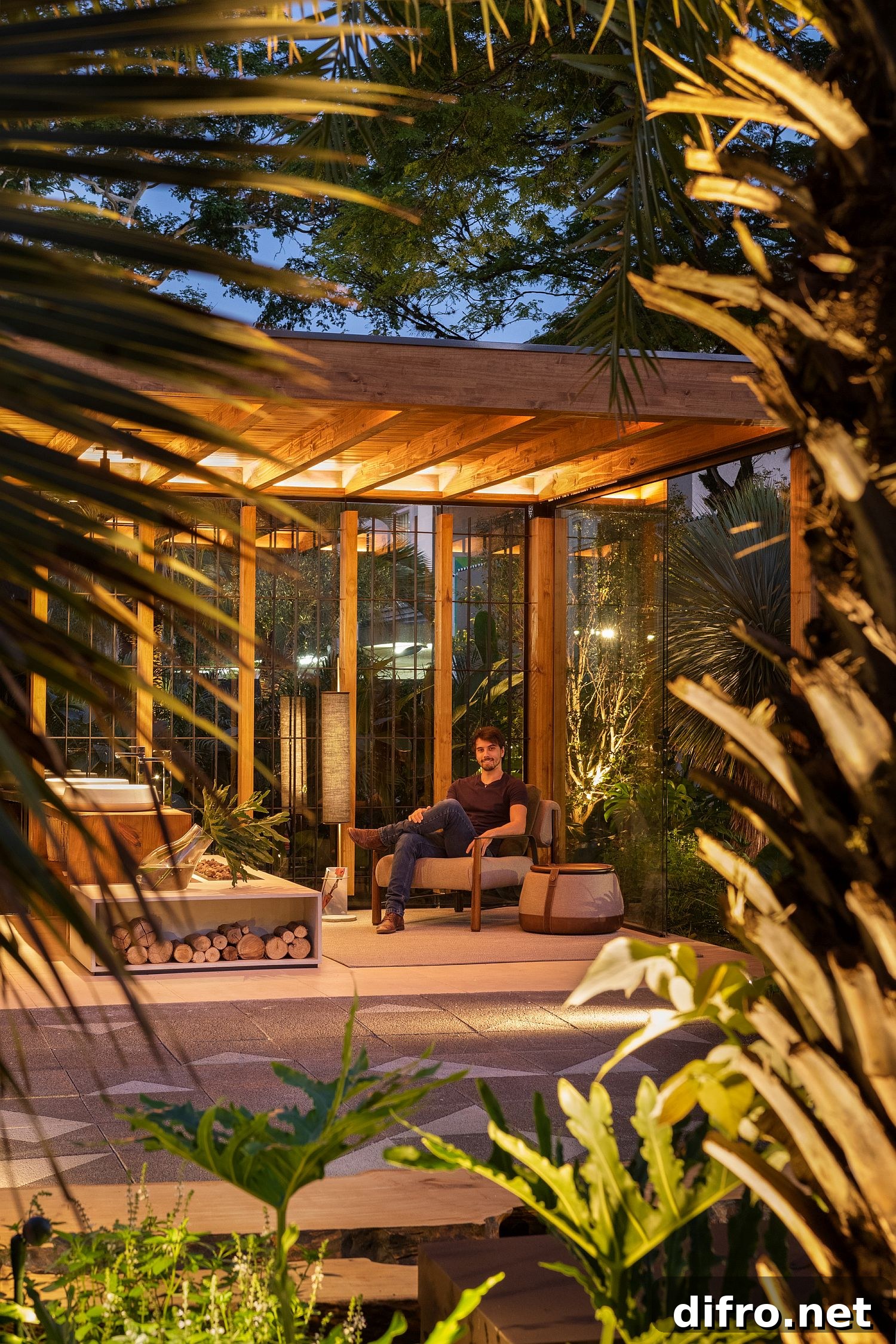
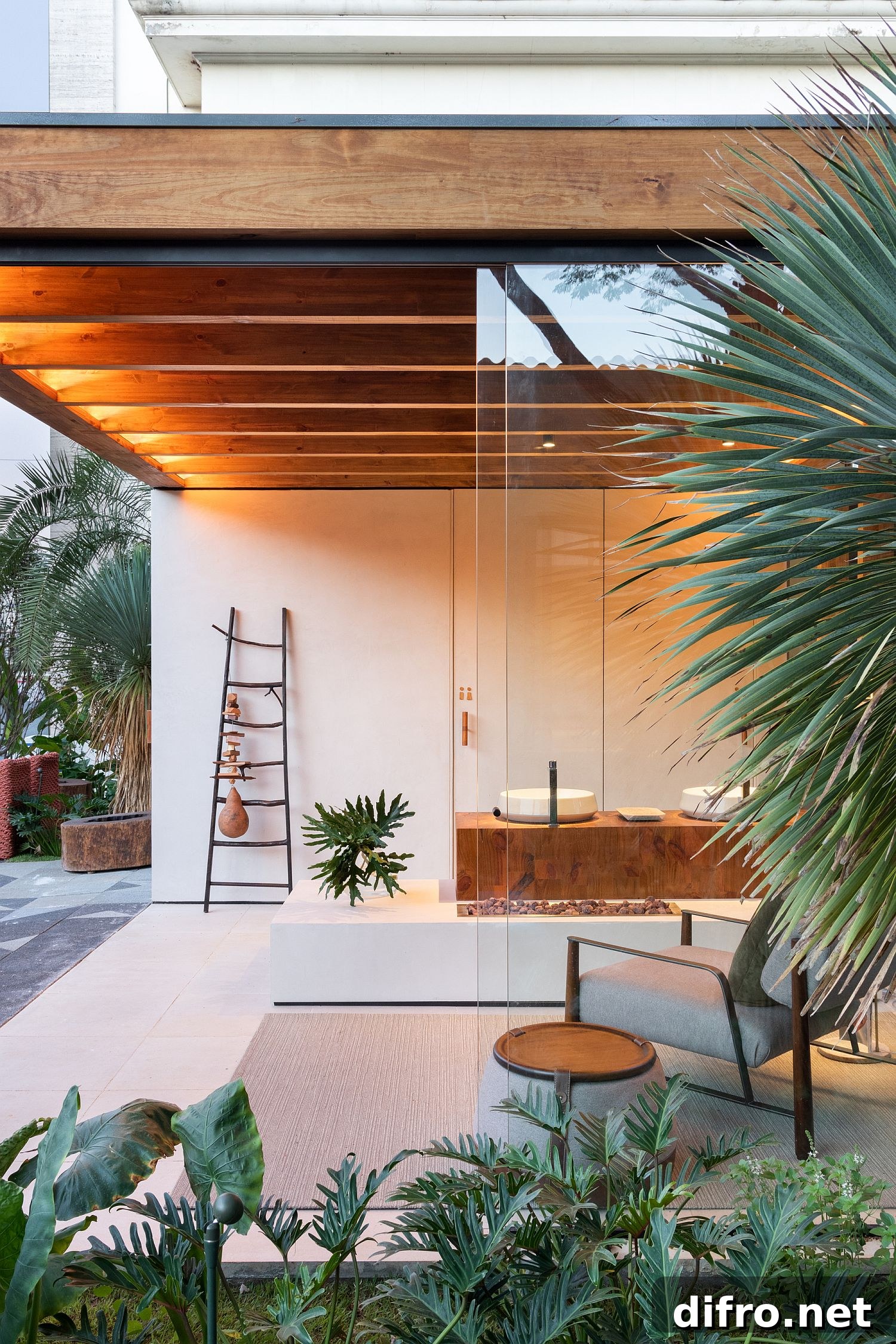
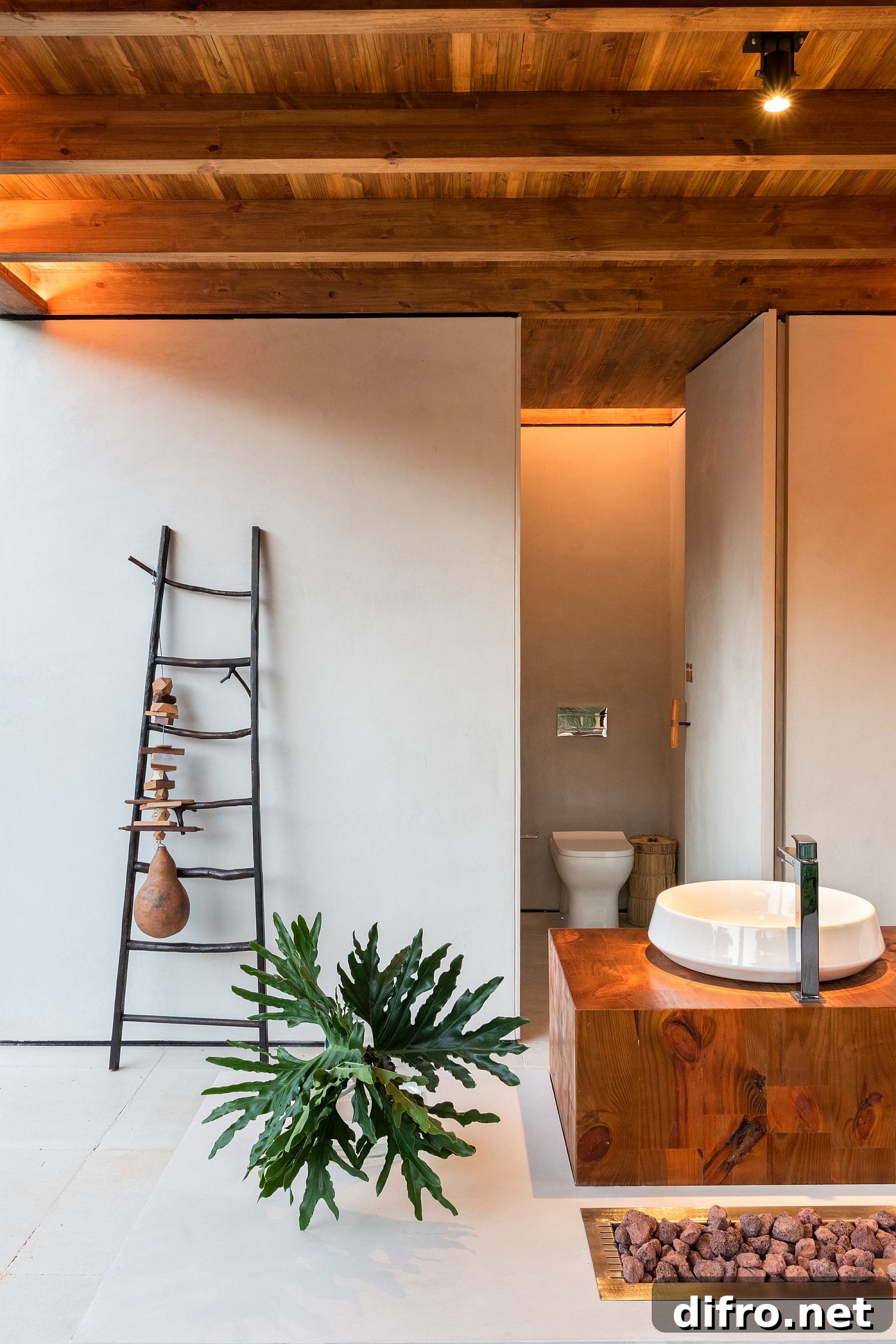
In summary, the Nohara Terrace exemplifies how careful planning, a restrained material palette and sensitive detailing can make a small outdoor space feel generous and composed. By combining local Brazilian materials with a quiet Japanese sensibility, Lucas Takaoka created a terrace that reads as both modern and timeless — a compact refuge that invites use and reflection in equal measure.