We know that photos can be an amazing source of design inspiration, so this article may contain affiliate references that point to particular decor items. Clicking on a link may result in a portion of proceeds being paid to the original publisher.
36 square meters is a modest footprint, but this compact, split-level apartment in Tel Aviv demonstrates how thoughtful design can make a small space feel comfortable, flexible and stylish. Reconfigured from a former commercial building, the two-tiered layout eliminates awkward partitions and organizes daily life across two distinct levels: one just above street level and the other slightly below. The result is an efficient, highly livable home tailored to an urban lifestyle.
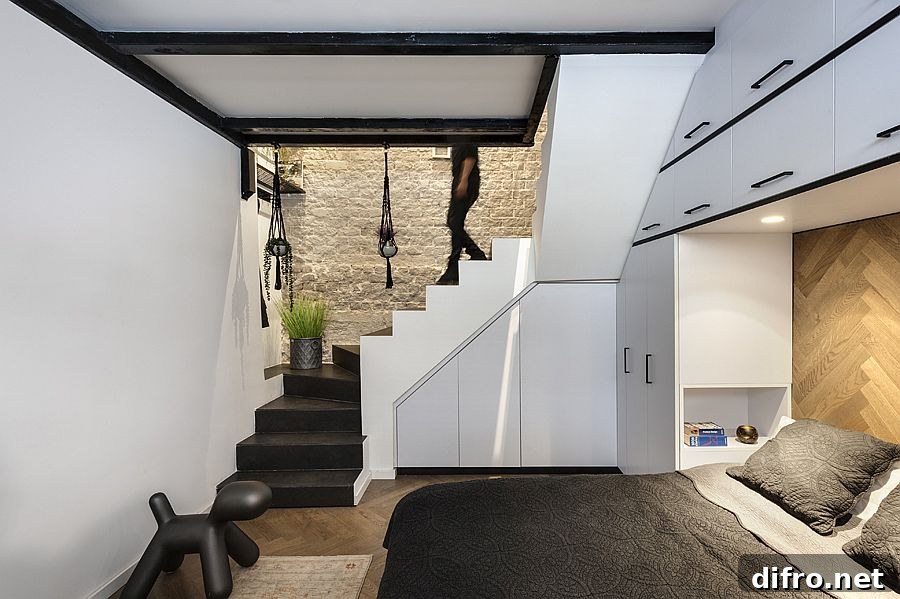
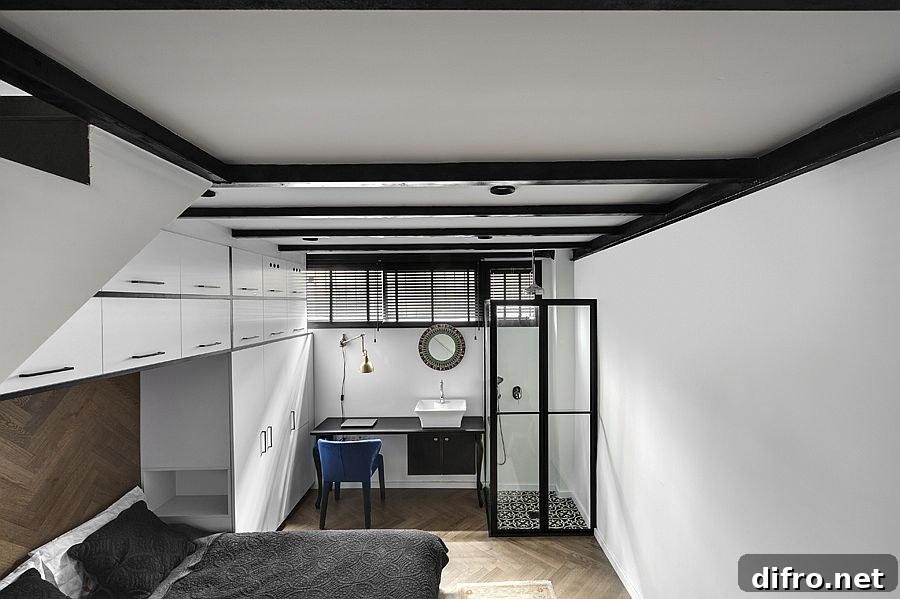
The renovation, led by Nitzan Horovitz Architectural Design studio, deliberately split the small footprint into private and public zones. The lower level houses the bedroom, bathroom and a compact study area, while the upper level contains the kitchen, dining nook and living space. This clear separation improves circulation and makes the apartment feel larger than it is, with each floor optimized for its purpose.
Built-in storage is a central element of the plan. Continuous runs of white Formica cabinets punctuated by black stripes create a unified visual language throughout both levels, concealing belongings while keeping surfaces crisp and minimal. The combination of closed storage and open shelving allows the resident to display selected objects and keep everyday items neatly tucked away—key to maintaining a tidy, uncluttered small home.
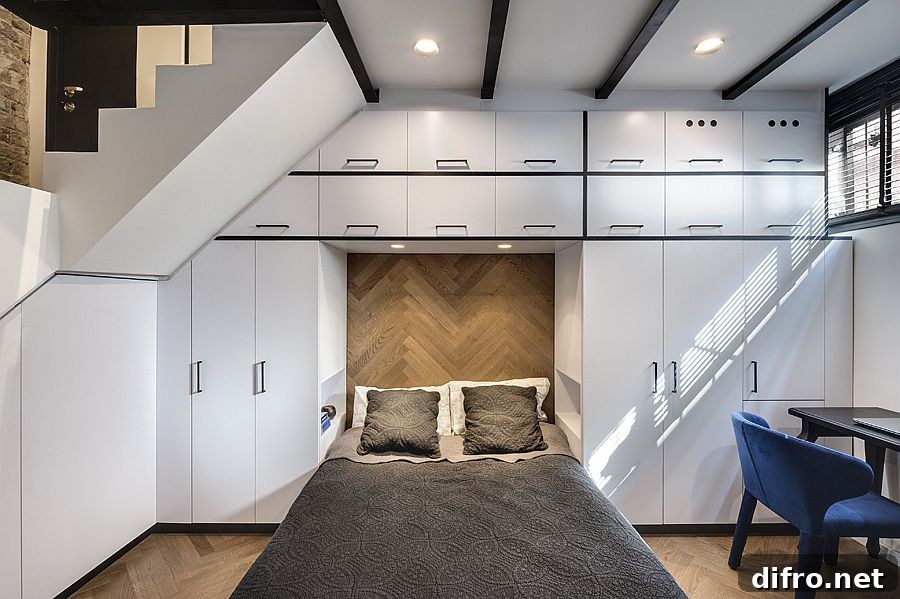
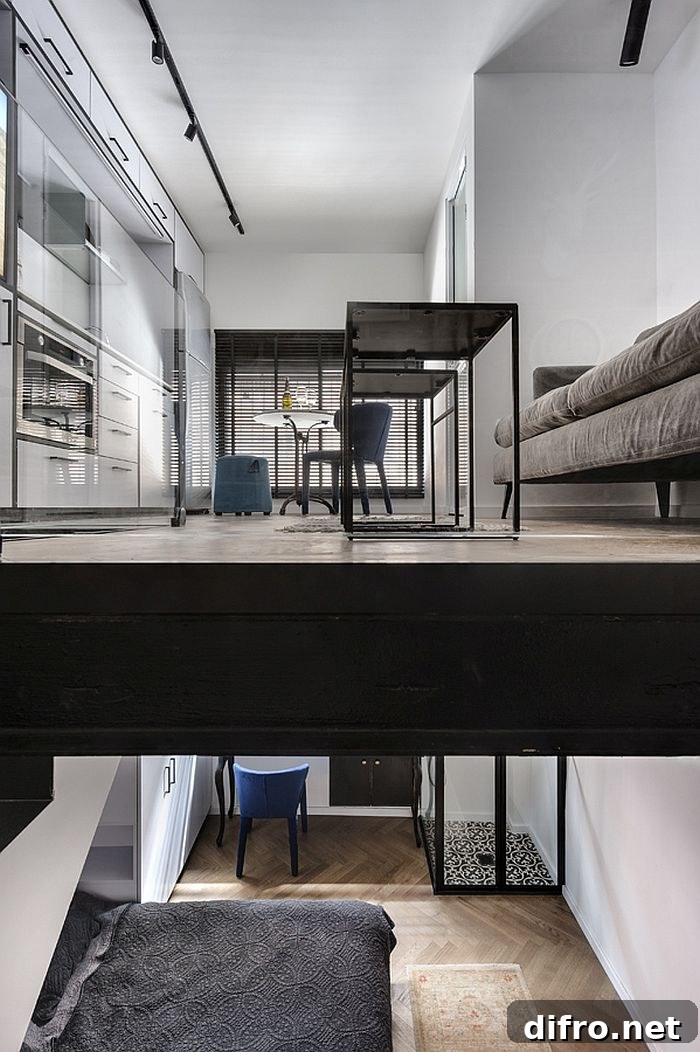
Material choices are restrained but tactful. The designers selected three dominant finishes—natural oak parquet, graphite porcelain tiles on the stairs, and white Formica for built-in elements—to keep the palette calm and cohesive. The deliberate limitation of materials enhances perceived space, reduces visual clutter and gives each surface a clear purpose. Black metallic accents and thin stripes provide contrast and a modern, slightly industrial edge that complements the timber warmth.
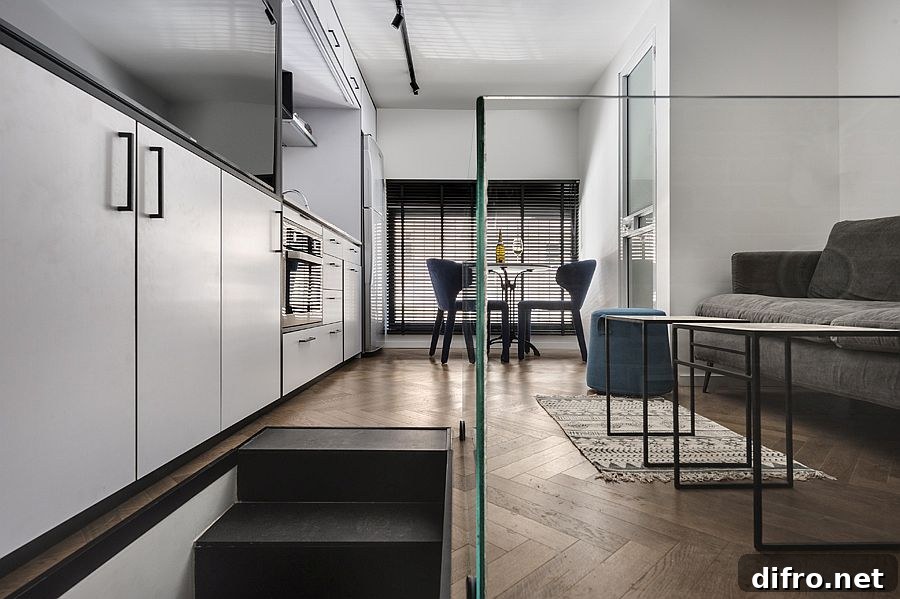
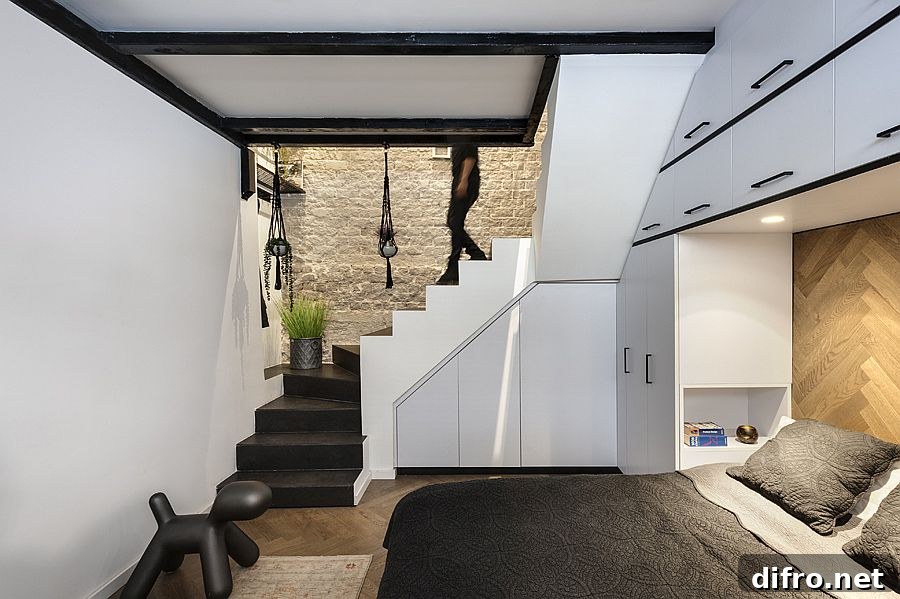
Staircases are used as more than circulation: they are a design motif and an organizational device. The graphite porcelain tiles on the steps contrast with the oak parquet, creating a deliberate transition between levels. In several places, risers and sidewalls become additional storage or display opportunities, turning otherwise wasted zones into useful, well-integrated features.
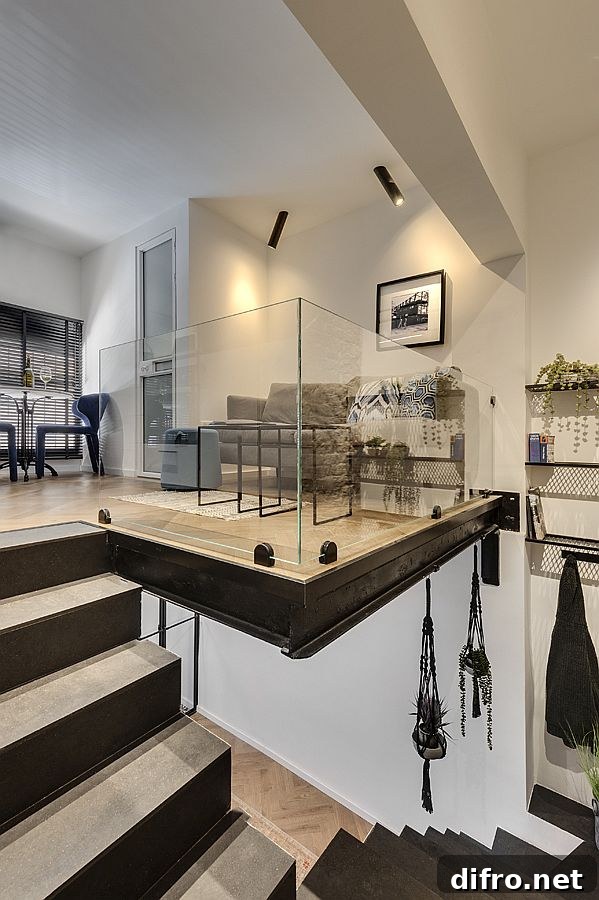
Small details enhance daily comfort. A compact desk near the bathroom doubles as a work surface, lit by a warm-toned wall lamp. Hanging planters bring greenery into the apartment without sacrificing floor area. Carefully chosen lighting, from task lights to ambient fixtures, ensures the compact rooms remain welcoming and functional at all hours.
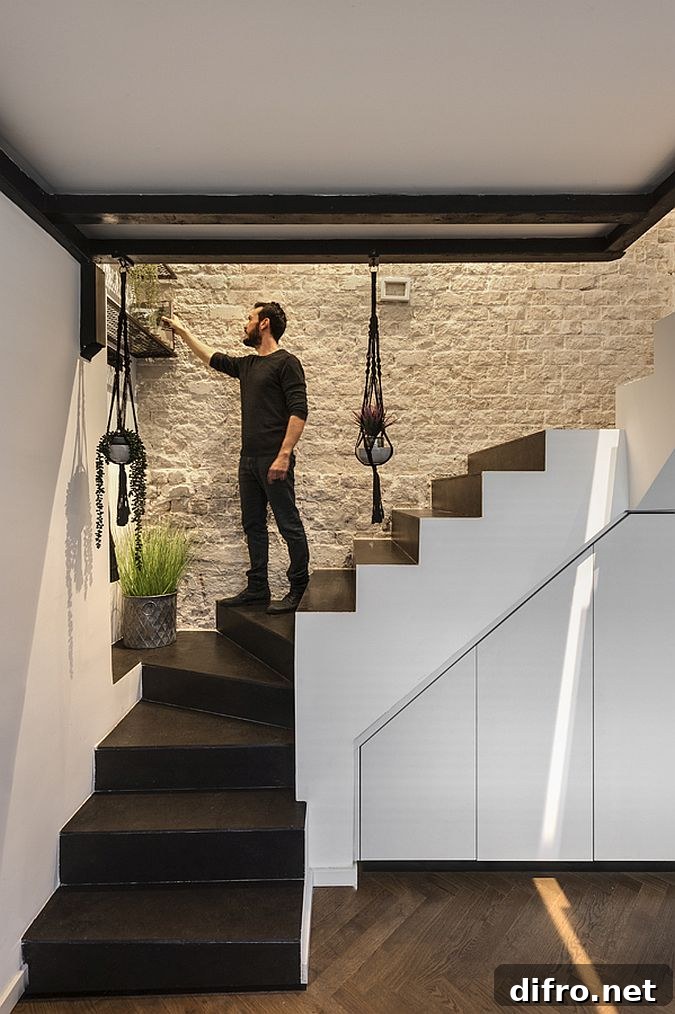
The kitchen remains contemporary and unpretentious: white Formica cabinetry with a striking black stripe defines the run of storage while keeping countertops uncluttered and functional. An interesting brick wall section introduces texture and visual contrast, adding personality without overwhelming the compact footprint.
Overall, this tiny Tel Aviv apartment is a strong example of how minimal materials, integrated storage and a split-level strategy can turn a small area into an efficient, beautiful home. The design balances form and function—prioritizing simplicity, continuity and clever solutions—so a modest 36 square meters becomes an adaptable, characterful urban retreat.
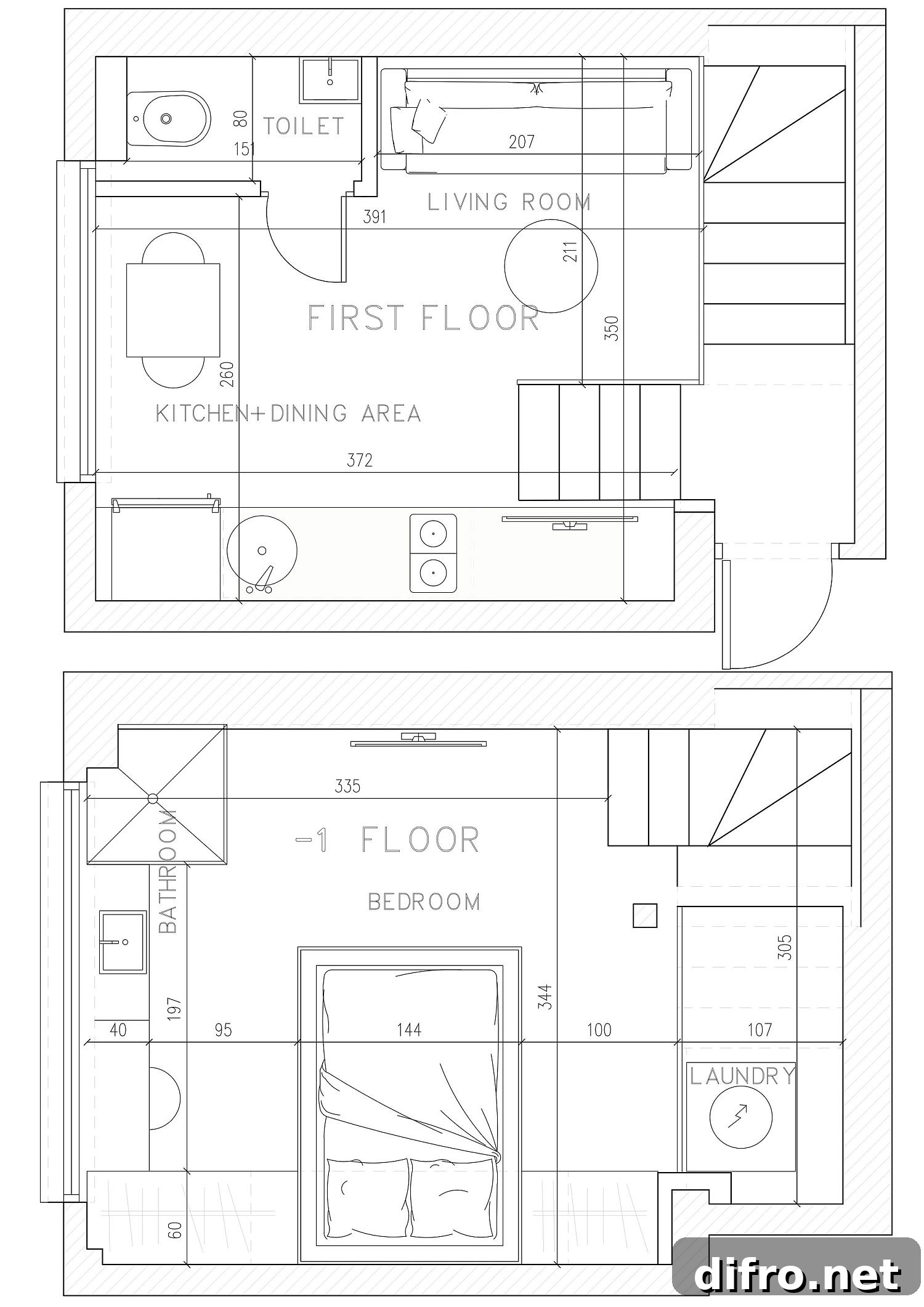
The stairs, which are an important motif, are paved with graphite porcelain tiles while the rest of the floor is covered with natural oak parquet. Three main materials stand out in the apartment – parquet, gray tile, and white Formica – reflecting the project’s goal of using minimal materials and maintaining simplicity in design.