Living Through Renovation: How Wooden Box Volumes Turned an Old Textile Factory into a Temporary Home
Renovating a home is always a major undertaking; moving out and renting elsewhere is the usual choice. In Waarschoot, Belgium, however, a young couple opted for a different path: they stayed on-site in an abandoned textile factory while it was gradually transformed into a loft-style residence. Instead of leaving, they created a set of carefully designed wooden box volumes to serve as temporary living spaces. Architect Julie D’Aubioul took inspiration from this pragmatic solution and incorporated the box-like elements into the final interior concept, producing a home that balances industrial character with warm, human-scaled interventions.
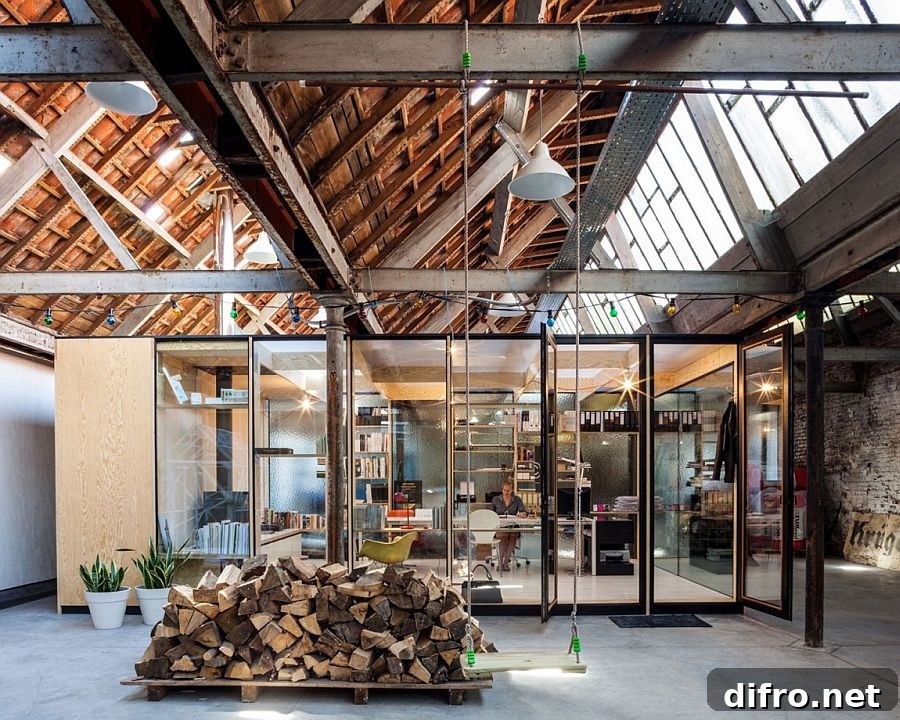
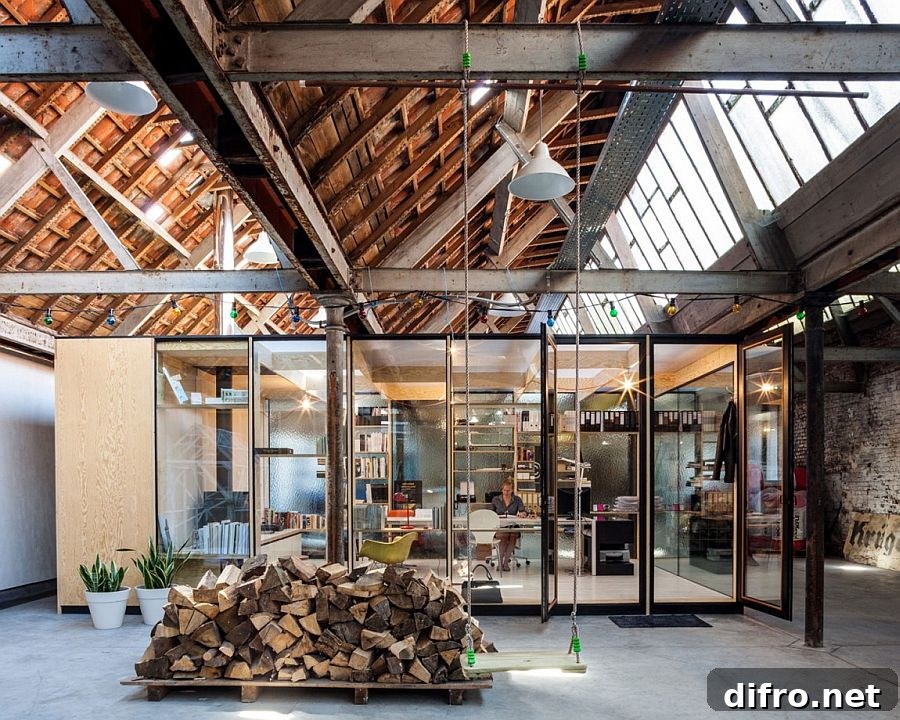
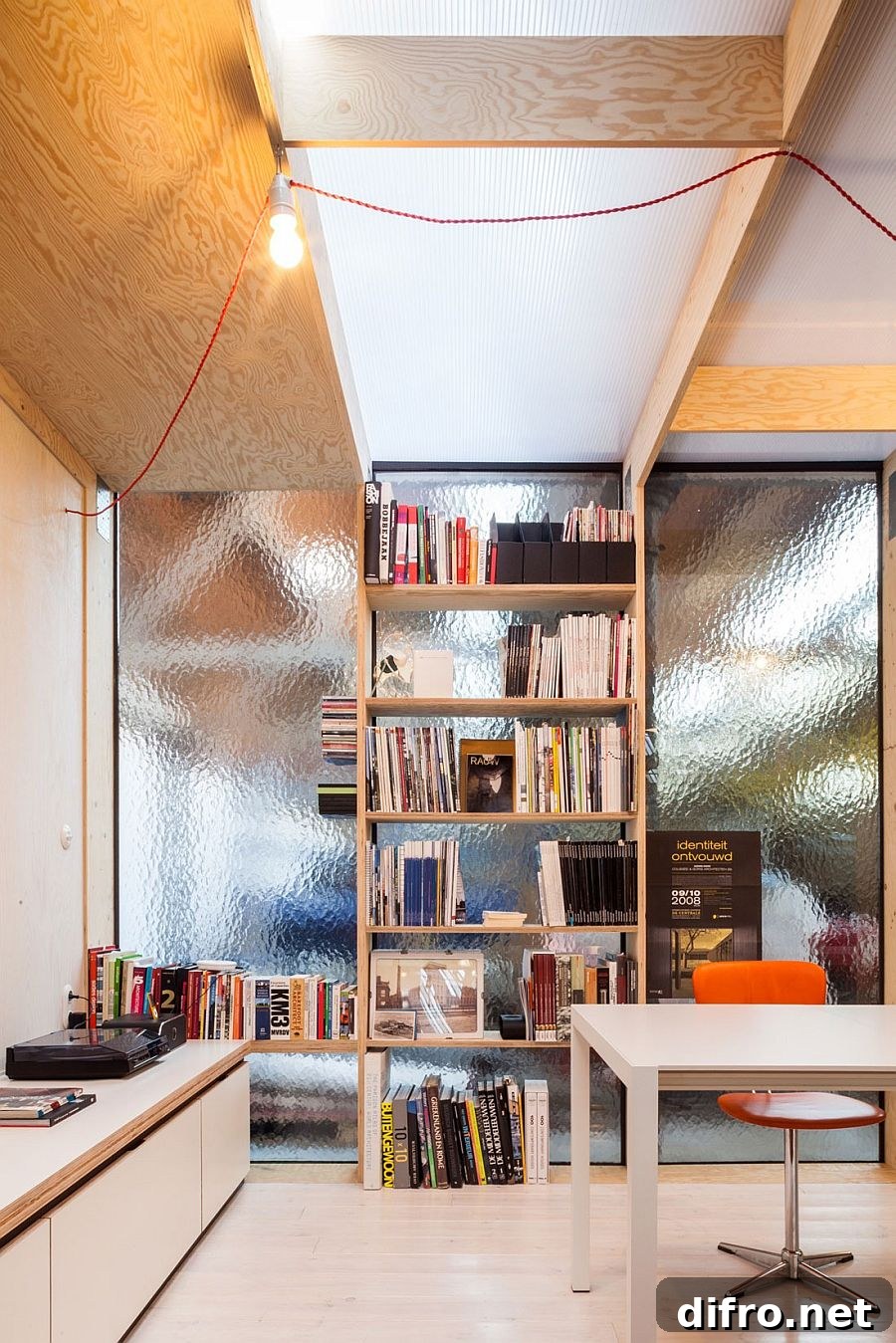
The first completed area was the home office, conceived as a compact, organized workspace with frosted glass and clean wooden lines. Around it, provisional wooden volumes enclose the living area and a private bedroom. The open spaces between these boxes are dedicated to the kitchen and dining area, creating a sequence of public and private zones while preserving the factory’s generous scale. This arrangement allowed the owners to remain close to the project at every stage—monitoring work, making decisions in real time, and avoiding the expense and disruption of relocating.
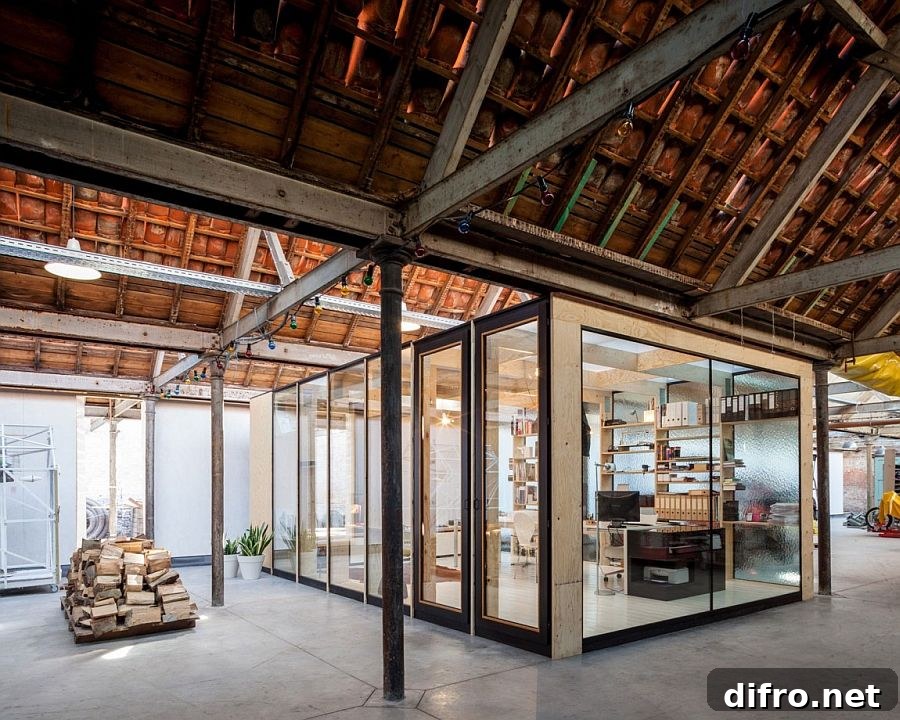
The wooden boxes act as modular rooms: they are simple to construct, thermally friendly, and easy to modify as the renovation progresses. Their geometry and finish introduce a human scale and tactile warmth that contrast with the factory’s exposed steel, concrete and industrial fixtures. Interior fittings inside these volumes are intentionally minimal—sleek shelving, hidden storage, and pared-back furnishings—so the temporary setup remains functional without feeling cluttered.
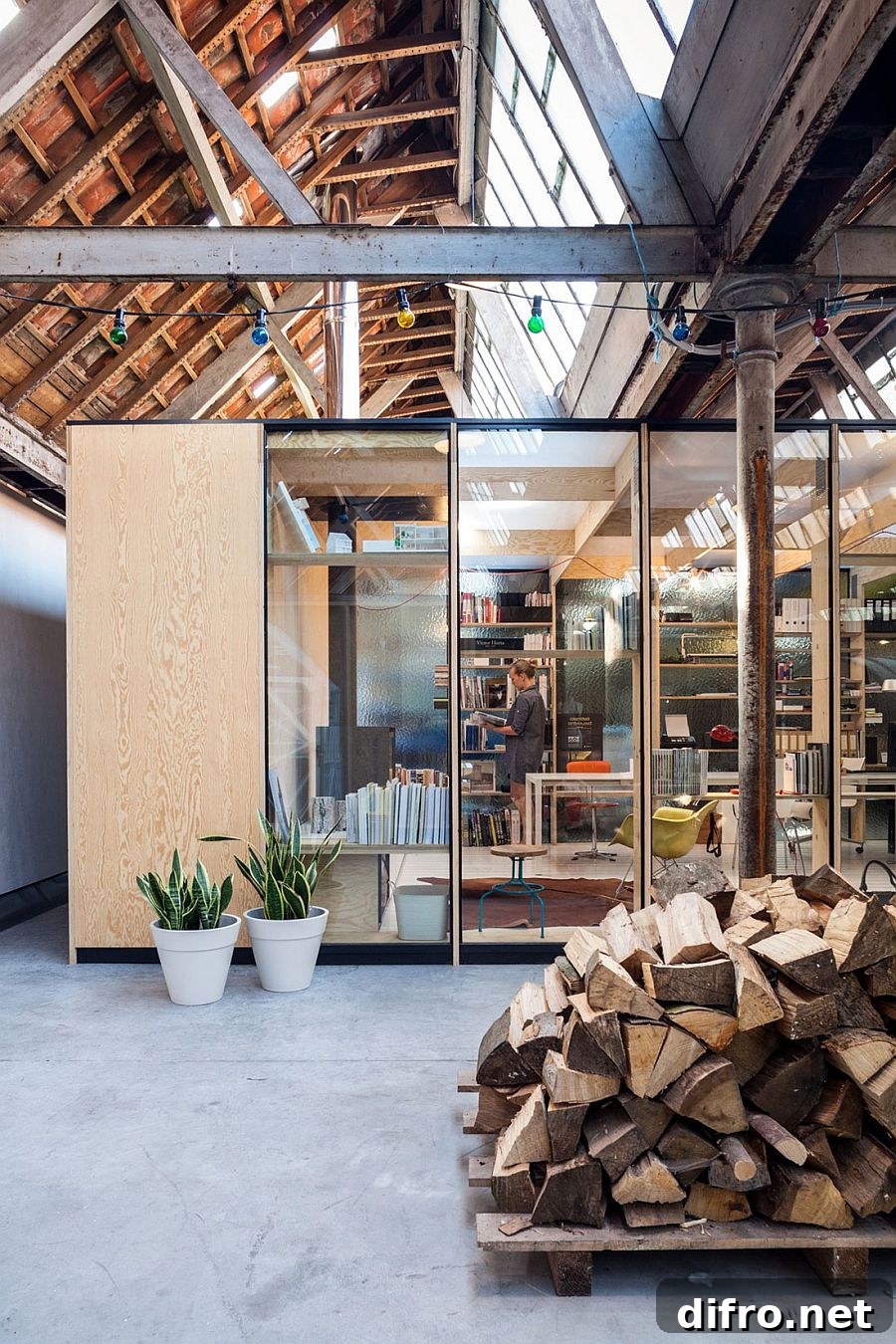
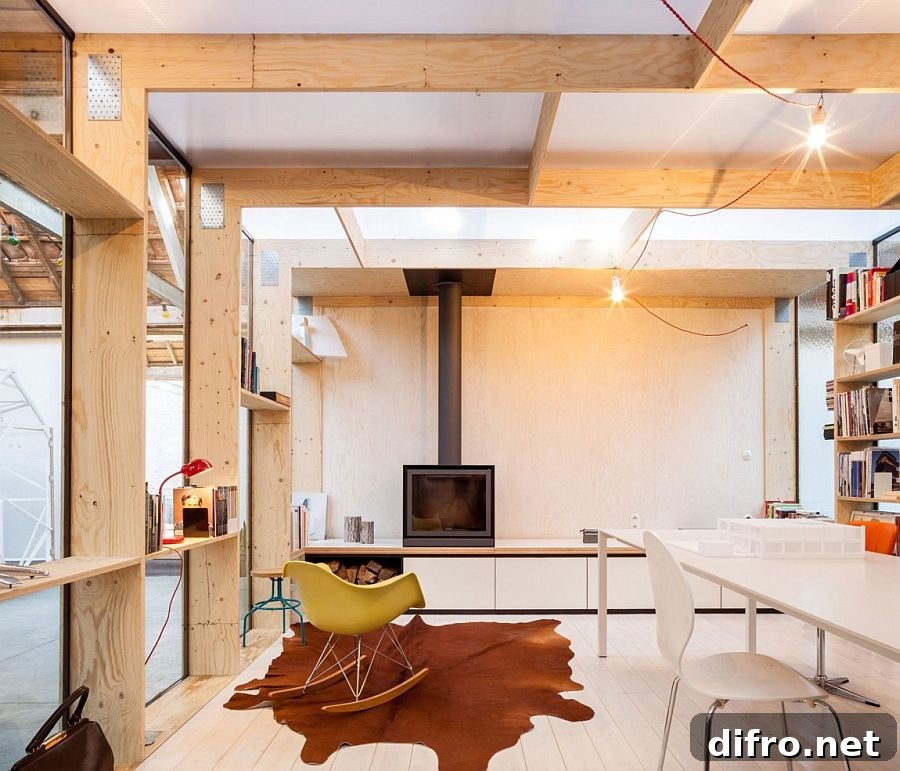
The office itself is a study in restraint and thoughtful detailing. Frosted glass offers privacy while allowing daylight to penetrate deep into the interior; timber framing and shelving create visual continuity with the wooden boxes. Lighting is kept simple and refined to suit long work hours, and a modest fireplace adds both warmth and a focal point—transforming the workspace into a comfortable central hub for daily life and project coordination.
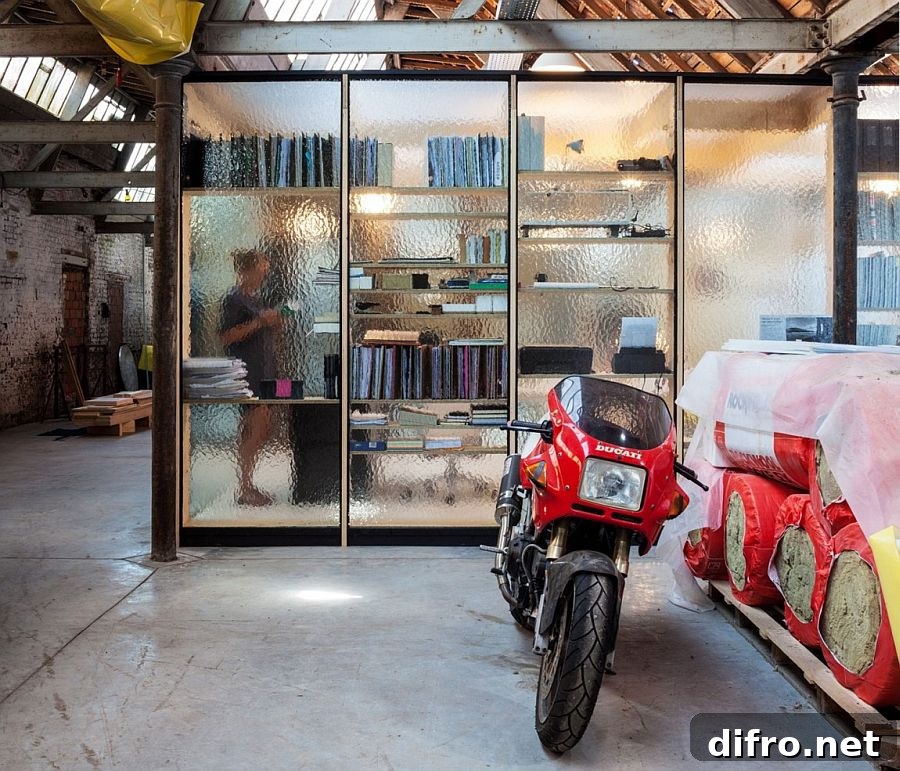
When the couple chose to live on-site, they prioritized efficiency and adaptability. Staying inside the building reduced commuting time to the job site, lowered overall project costs, and provided immediate access for decisions about materials, finishes, and sequencing. The wooden boxes made all of this possible: they are durable enough for everyday life but intentionally designed as interim structures that could be refined or replaced in the final fit-out.
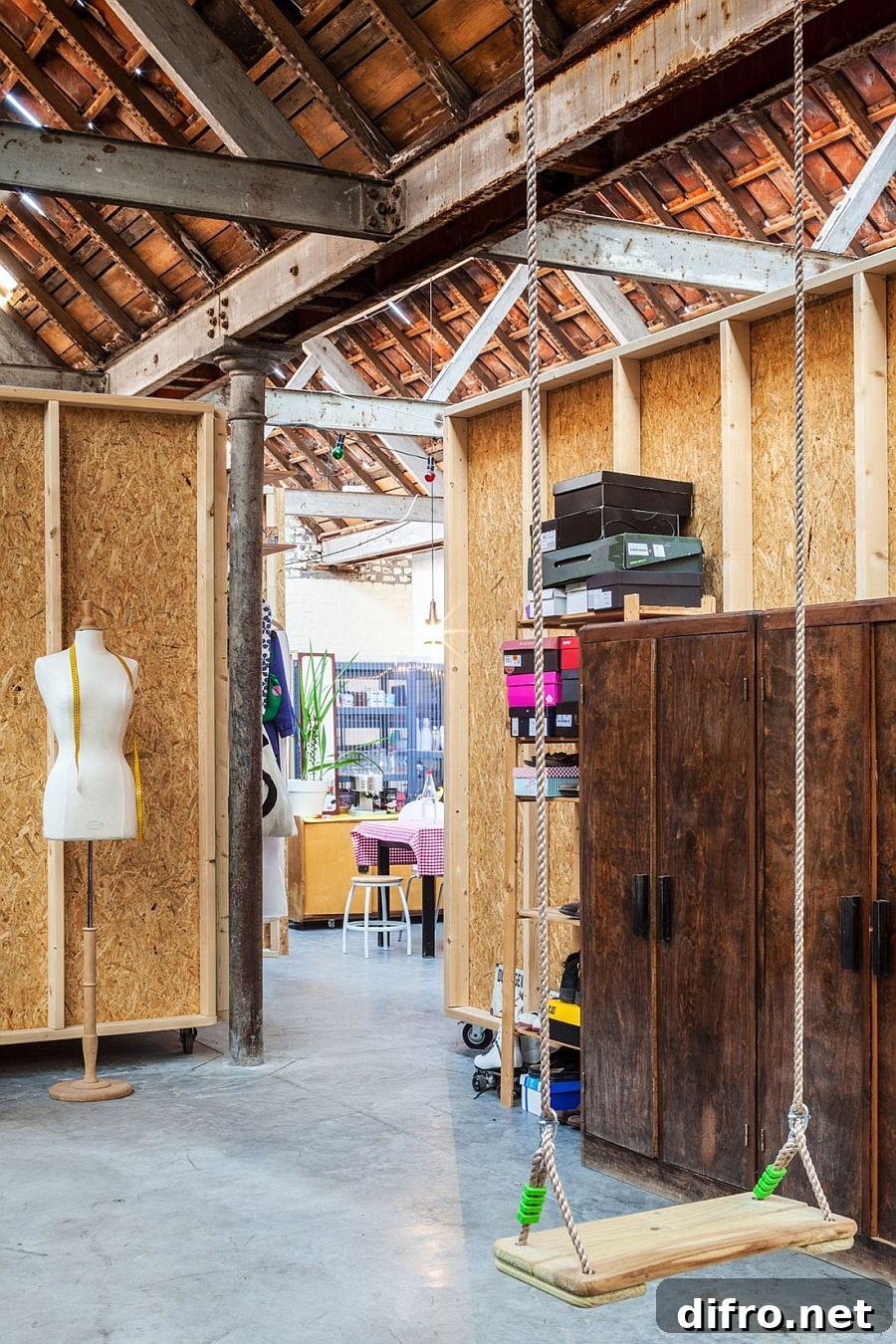
The interiors combine understated Scandinavian influences—simple lines, neutral palettes, and thoughtfully chosen furniture—with the patina of the industrial shell. Pops of color and carefully placed decor enliven the otherwise restrained scheme, while smart shelving and concealed storage keep the temporary spaces organized. This balance between austerity and warmth ensures daily comfort without distracting from the ongoing renovation work.
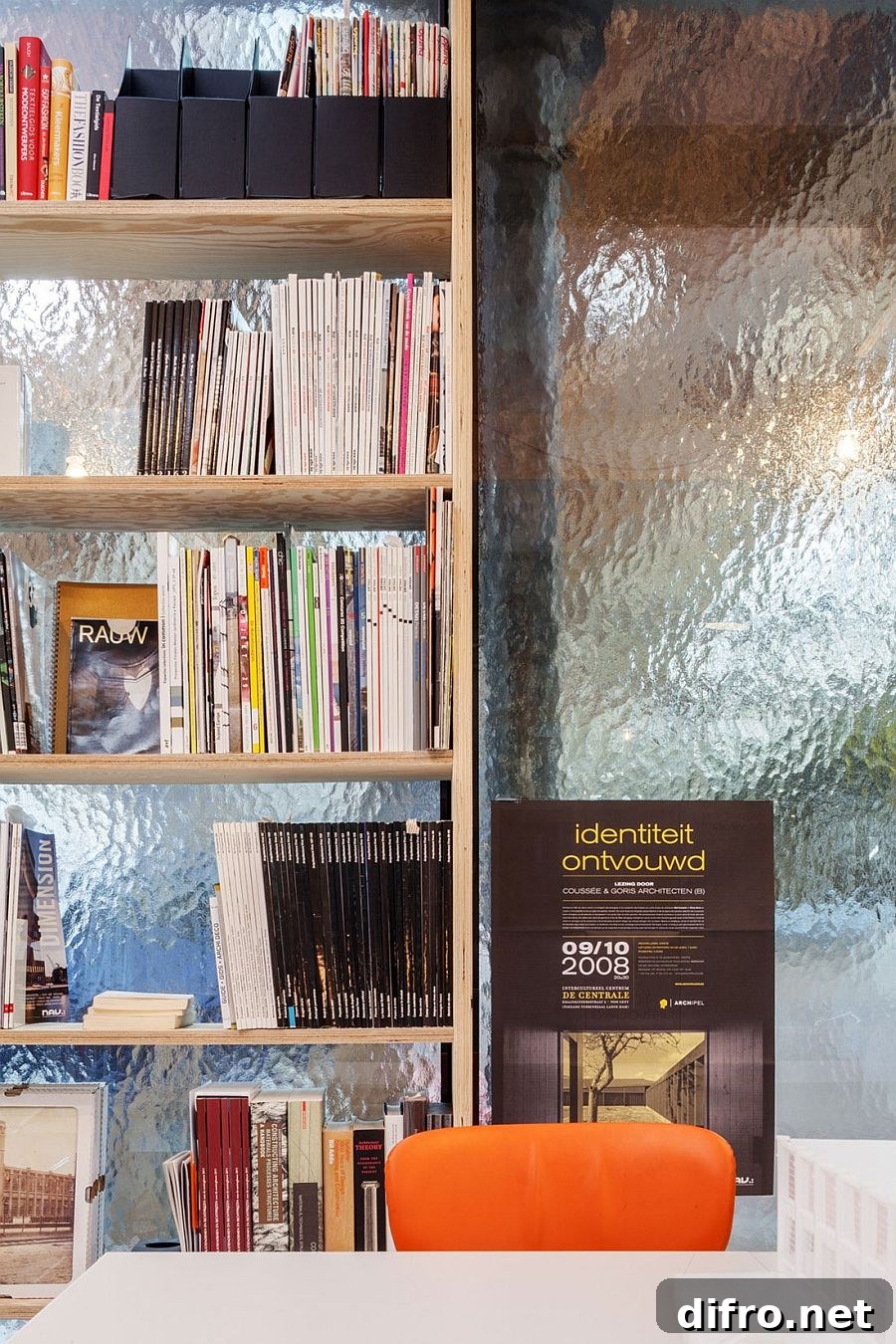
As a strategy, the wooden box approach demonstrates how temporary architecture can inform permanent design decisions. The couple’s lived experience within the evolving building helped refine spatial relationships, circulation patterns, and finish selections. The result is a home that retains the industrial identity of the original textile factory while introducing human-centered interventions—warm timber boxes, flexible living spaces, and an elegant, functional home office at its core.
In short, this project shows that thoughtful temporary solutions can become a meaningful part of the final design. By choosing to live on-site and by framing their interim living areas as simple, adaptable wooden volumes, the owners and architect crafted a renovation process that was efficient, economical, and deeply informed by everyday use.