Transforming the timber frame of a nineteenth-century barn into a modern, energy-conscious home capable of withstanding the harsh winters of the Catskills is a demanding undertaking. That’s exactly what Kimberly Peck Architect achieved with the Bovina House: a carefully considered adaptation that balances historic character with contemporary performance. The project focused on preserving the barn’s original structure while creating a tightly sealed, well-insulated home that remains comfortable and efficient year-round.
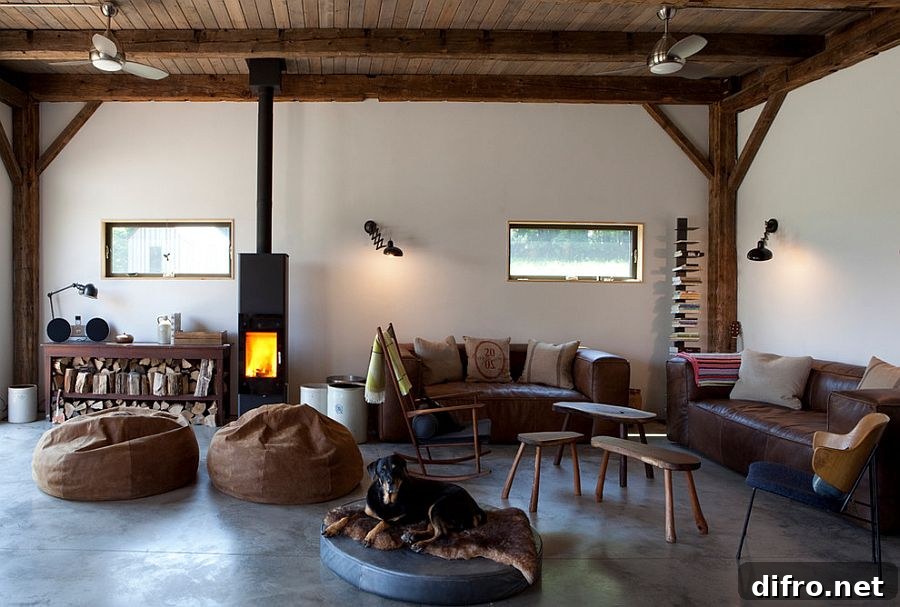
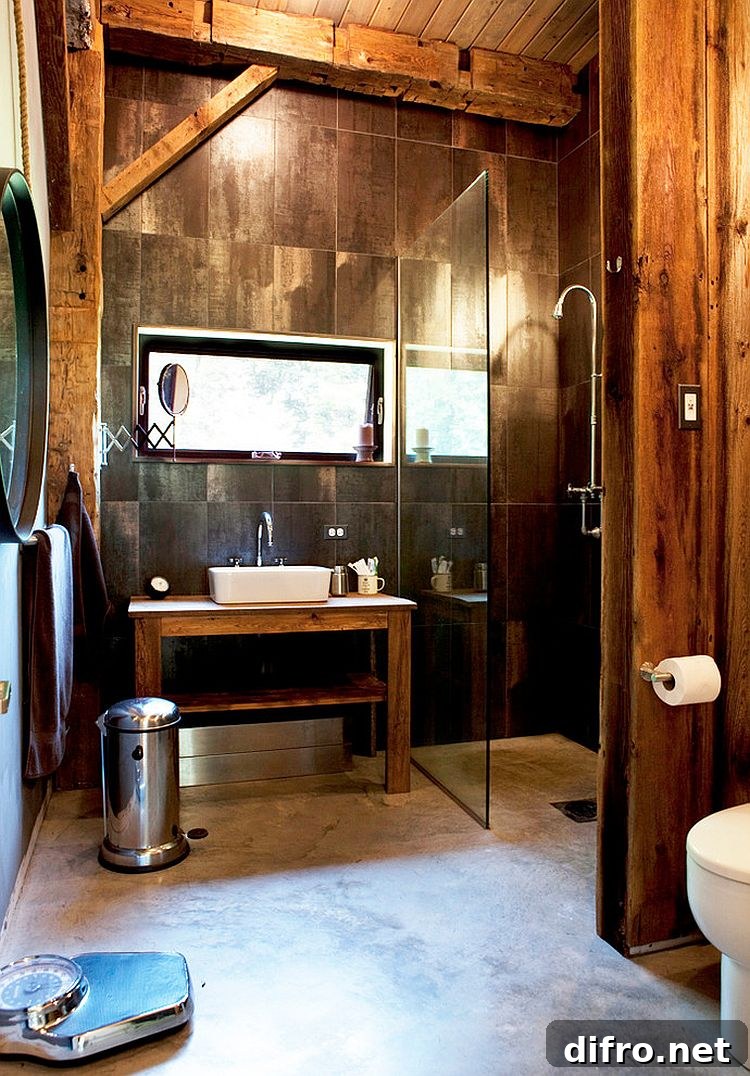
The core strategy centered on enclosing the original timber frame within a new, high-performance shell. Structural insulated panels (SIPs) were used for the walls and the roof to create a continuous thermal envelope; this dramatically reduces heat loss and simplifies installation compared with conventional framing and insulation. To deliver comfortable winter warmth without excessive energy use, the floor is a polished concrete slab with an integrated radiant heating system. The concrete slab also establishes a clean, low-maintenance base that contrasts with warm, tactile interior finishes.
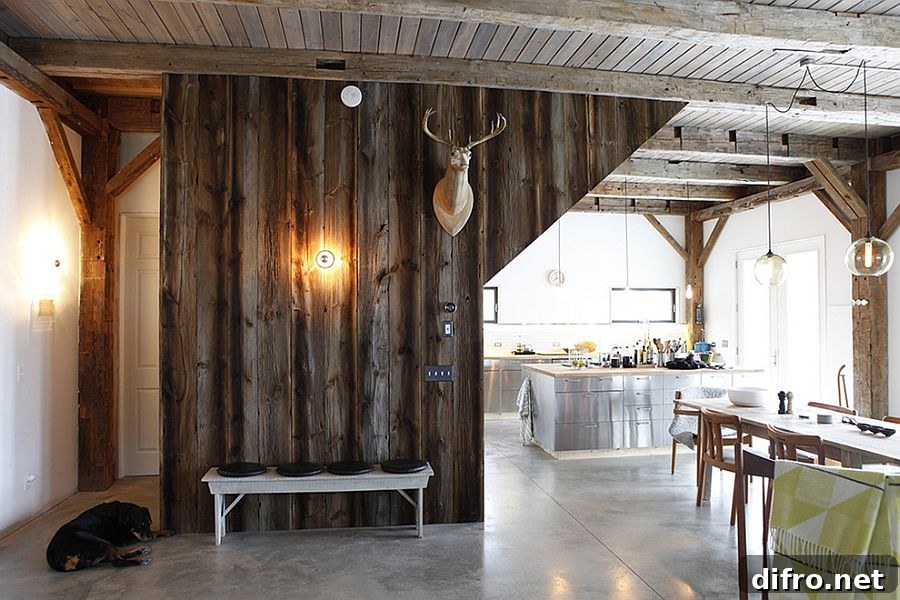
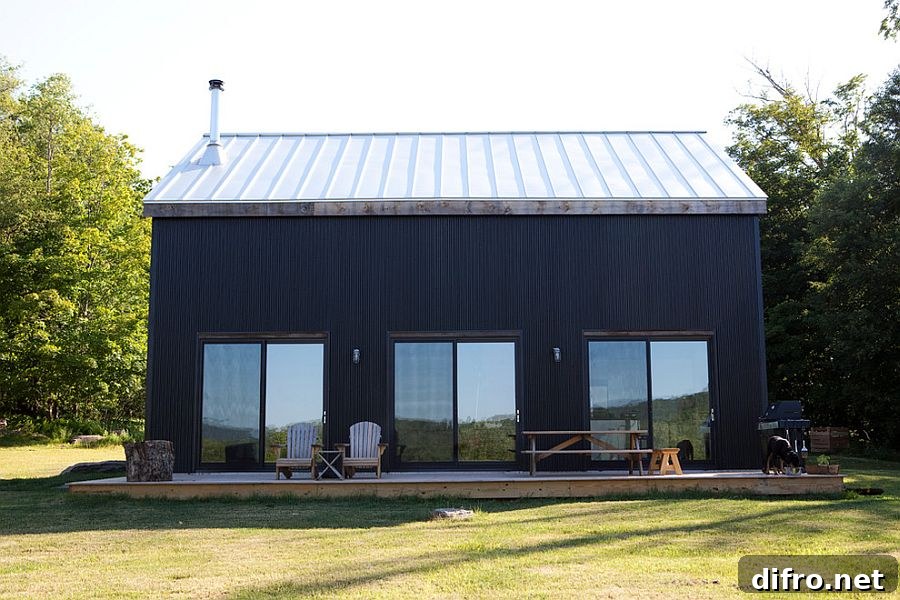
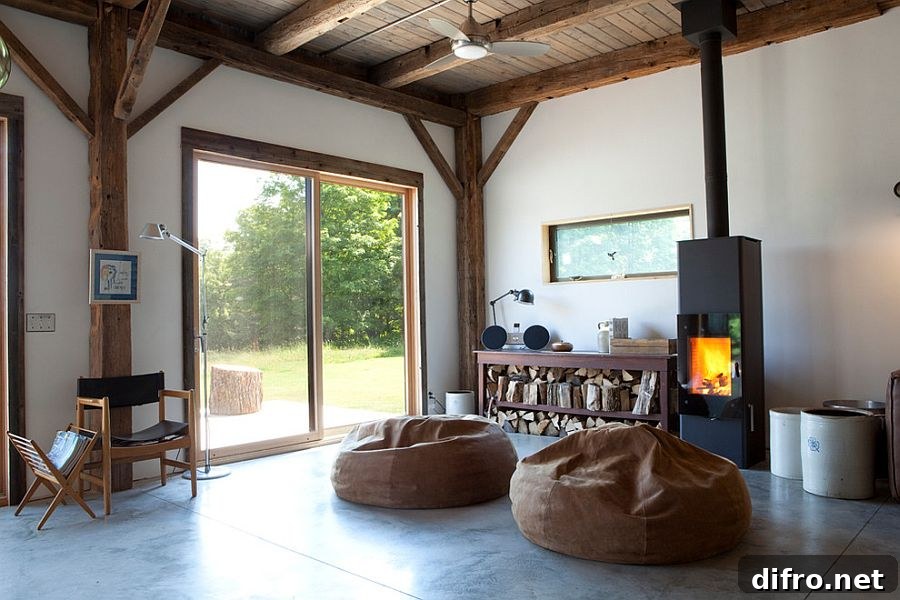
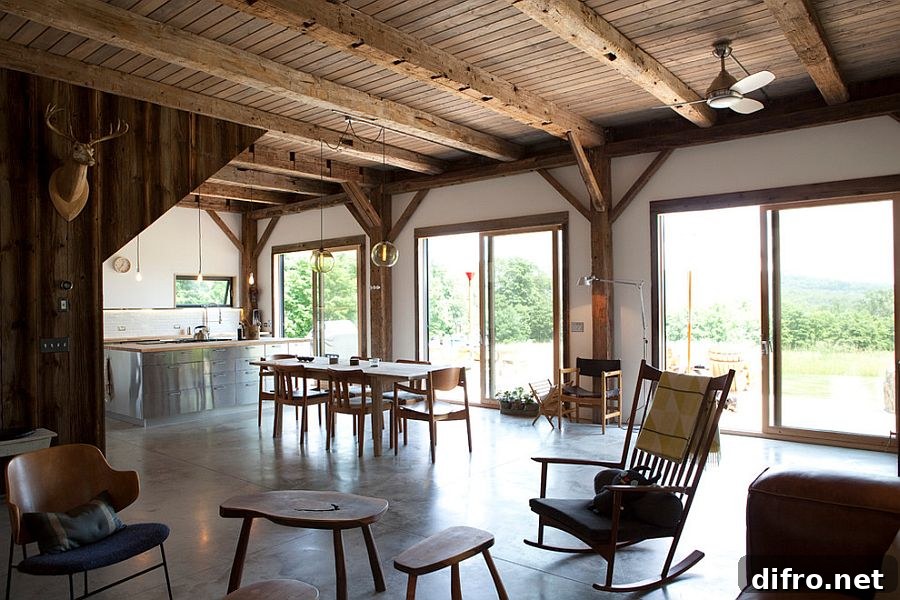
Interior glazing was limited and intentionally selective. Large expanses of glass are kept to a minimum—three main windows open the living area to expansive mountain views while minimizing unwanted heat loss. By reducing window area and using high-performance glazing where openings are provided, the design improves overall insulation and helps maintain a stable indoor temperature. Combined with controlled ventilation and a smart air circulation system, the home breathes efficiently: fresh air is provided without sacrificing thermal comfort.
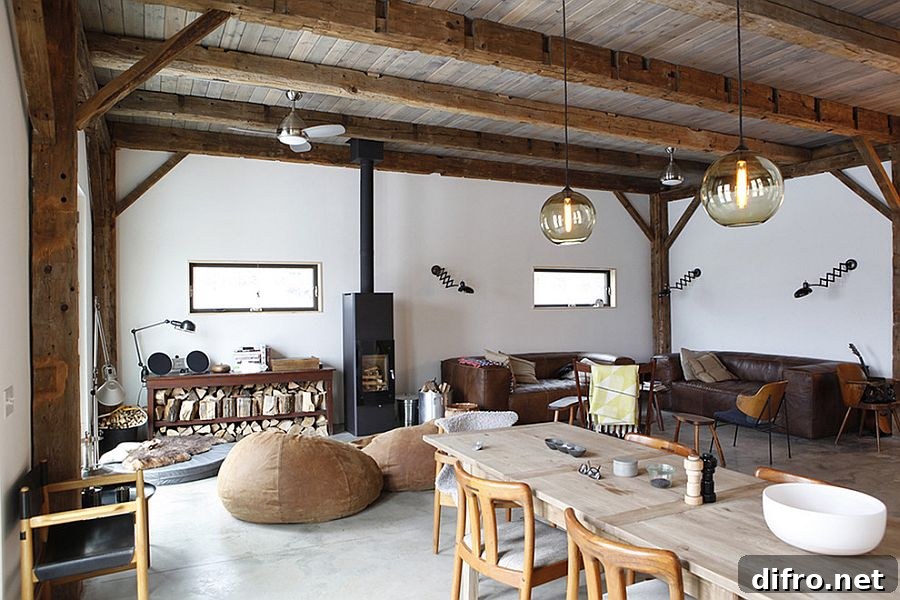
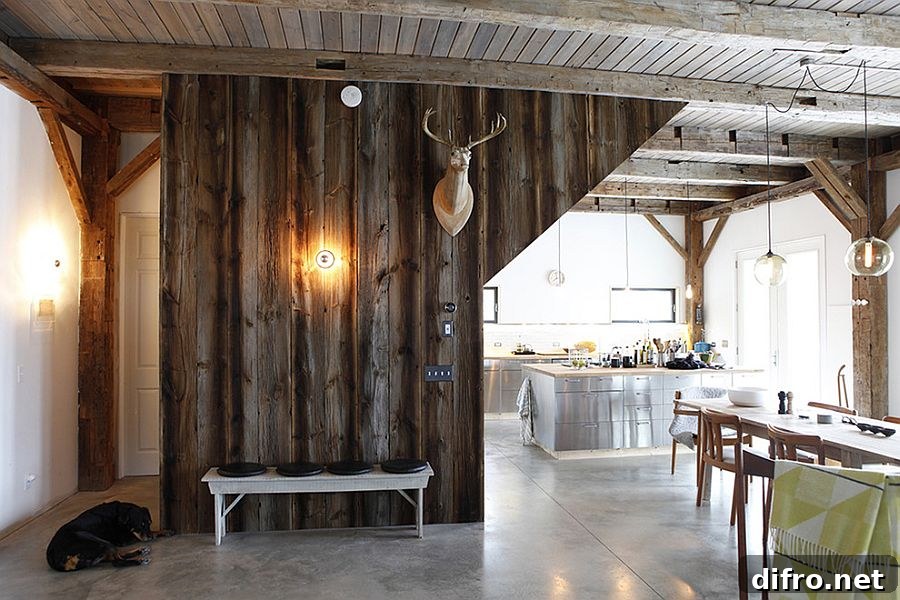
Material choices are both practical and sustainable. Reclaimed wood is used extensively throughout the house, lowering the demand for new materials while retaining the warm, textured character of the original barn. The juxtaposition of reclaimed timber, polished concrete, and simple, modern fittings creates a refined rustic aesthetic—an interior that feels curated, inviting, and connected to its landscape.
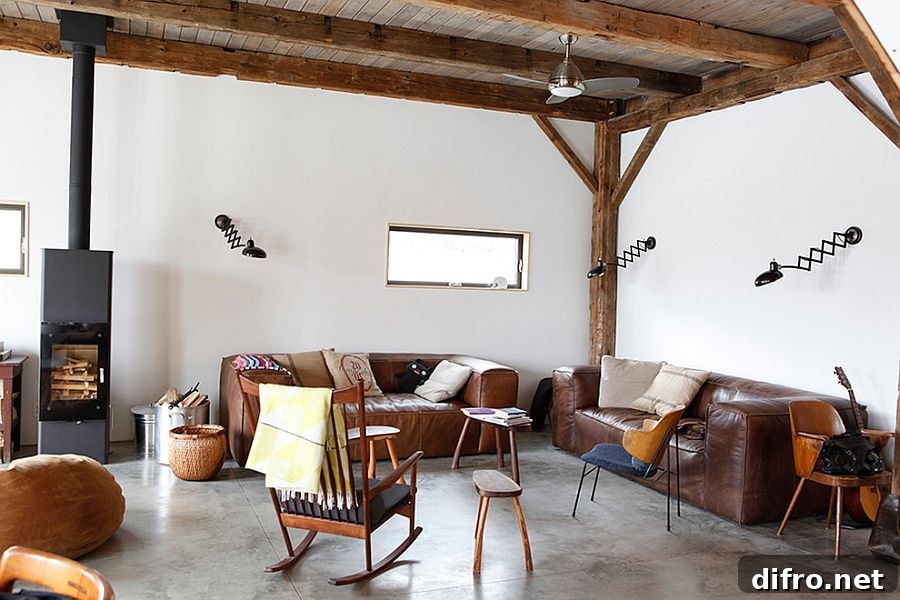
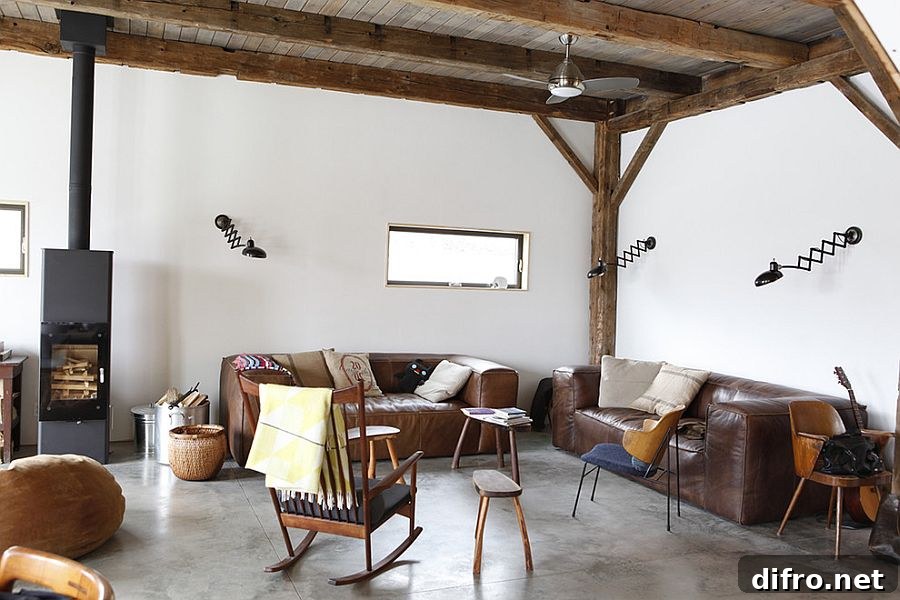
Comfort and atmosphere are enhanced through thoughtful details rather than ornate decoration. Simple, well-chosen furnishings and a restrained palette of natural materials allow the structure and views to take center stage. Leather seating, warm wood tones, and subtle lighting define intimate living areas that feel both contemporary and timeless.
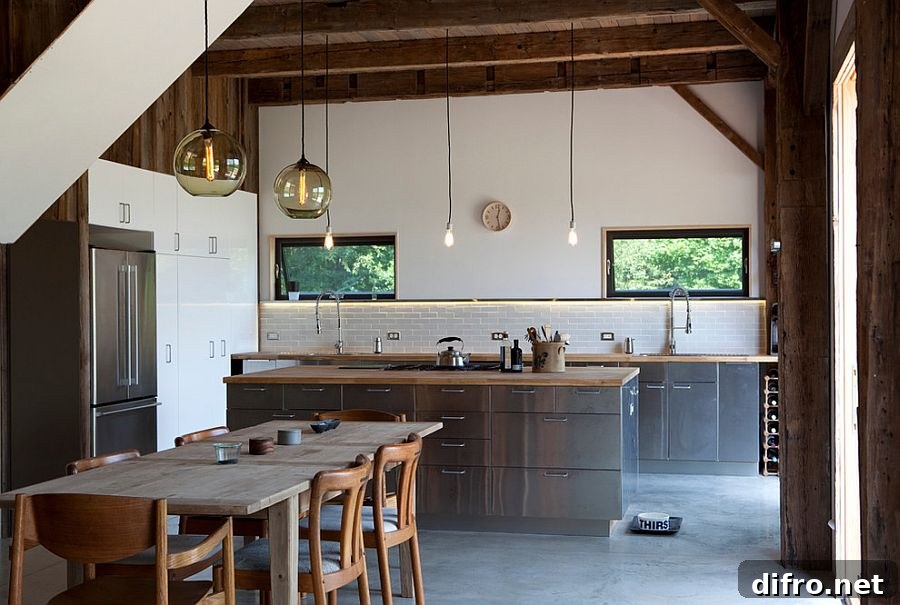
Functional elements such as the kitchen and dining spaces are integrated into the open plan to support everyday living and social gatherings. Butcher-block countertops and robust, straightforward cabinetry emphasize durability and connection to craft. The layout keeps daily activities efficient while reinforcing visual continuity between the kitchen, dining area, and living room.
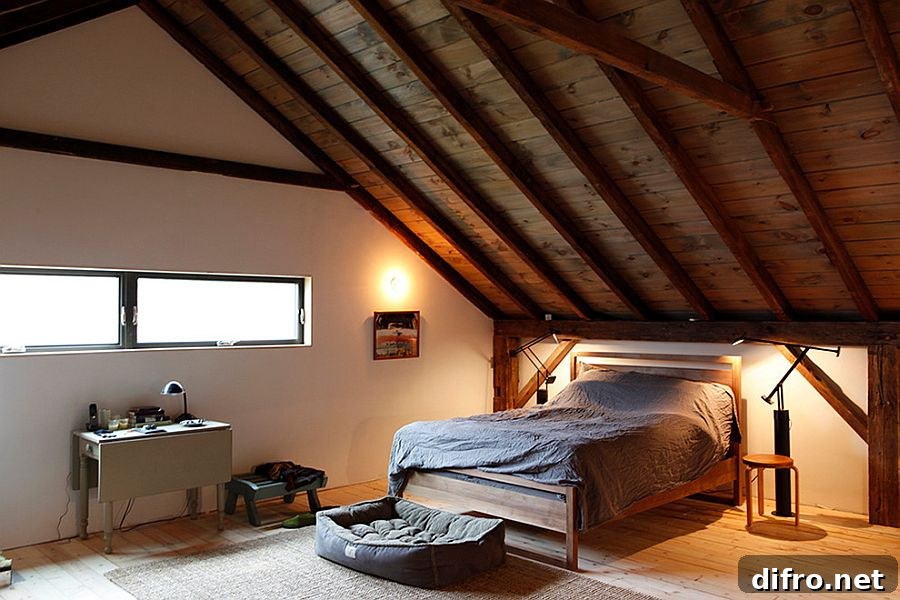
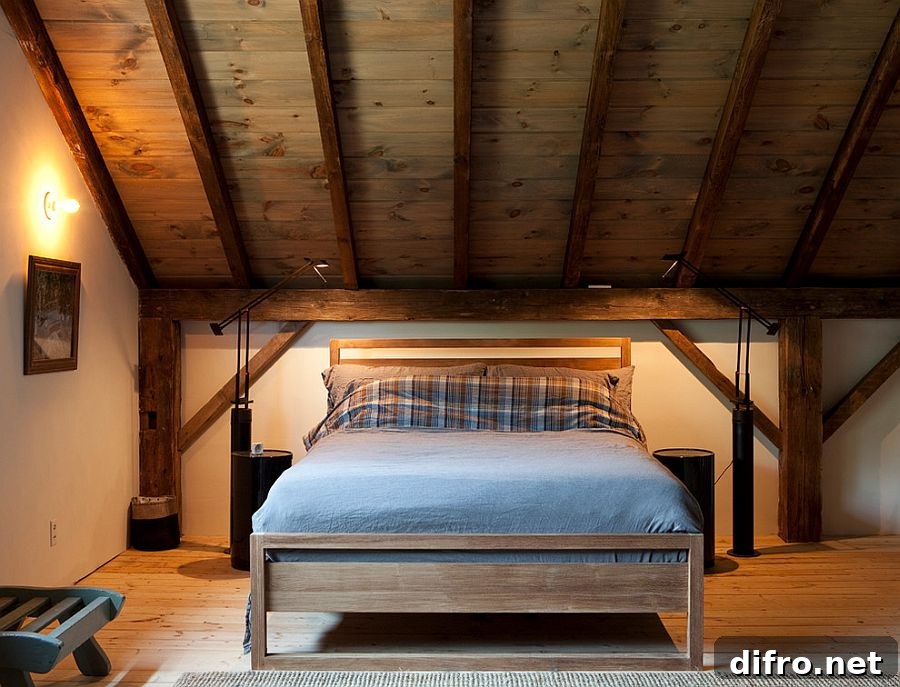
Bedrooms and private spaces continue the same design language: exposed timber, muted finishes, and carefully controlled daylight create calm, restful environments. Sloped ceilings and stained wood surfaces recall the building’s agricultural past while making the most of the barn’s volume and scale.
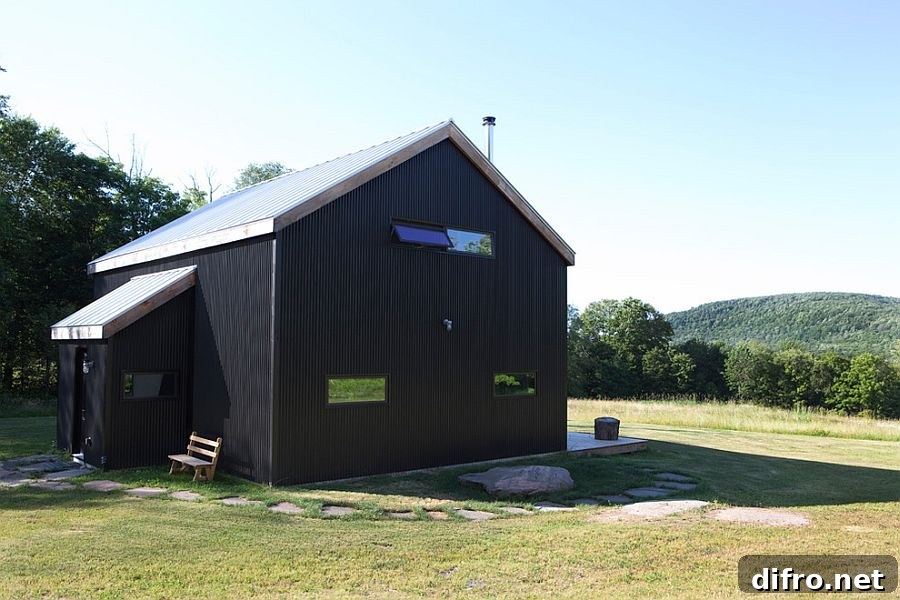
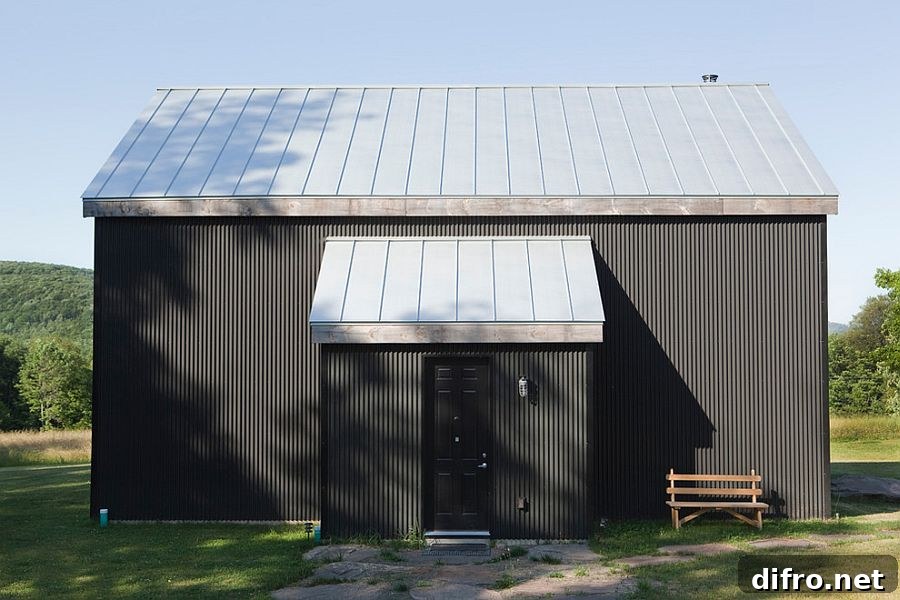
Externally, the house is wrapped in black corrugated metal, a pragmatic cladding choice that resists weather and simplifies maintenance while reinforcing the design’s clean, contemporary silhouette. The dark metal contrasts with the warm timber interiors and helps the home blend into the wooded surroundings. Together with the high-performance envelope and the mechanical systems, the cladding contributes to a durable, low-maintenance exterior that is well-suited to a mountain climate.
By combining historic structure, reclaimed materials, efficient building systems, and a restrained, modern aesthetic, the Bovina House demonstrates how a barn can be thoughtfully reimagined as a comfortable, energy-efficient home. The result is a residence that honors its past while responding practically to the challenges of a cold, rural climate—an inviting, resilient shelter that is both beautiful and responsible.