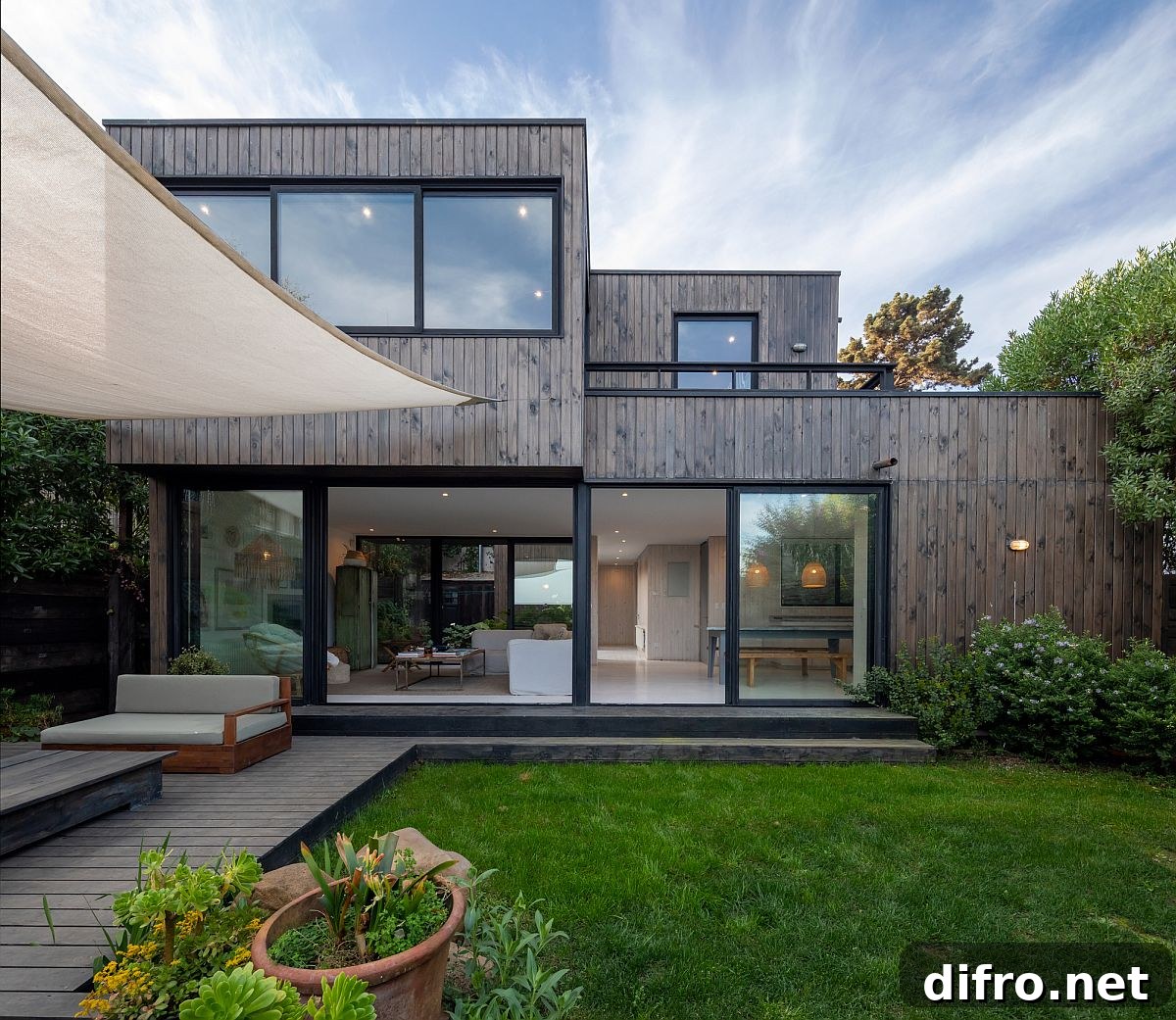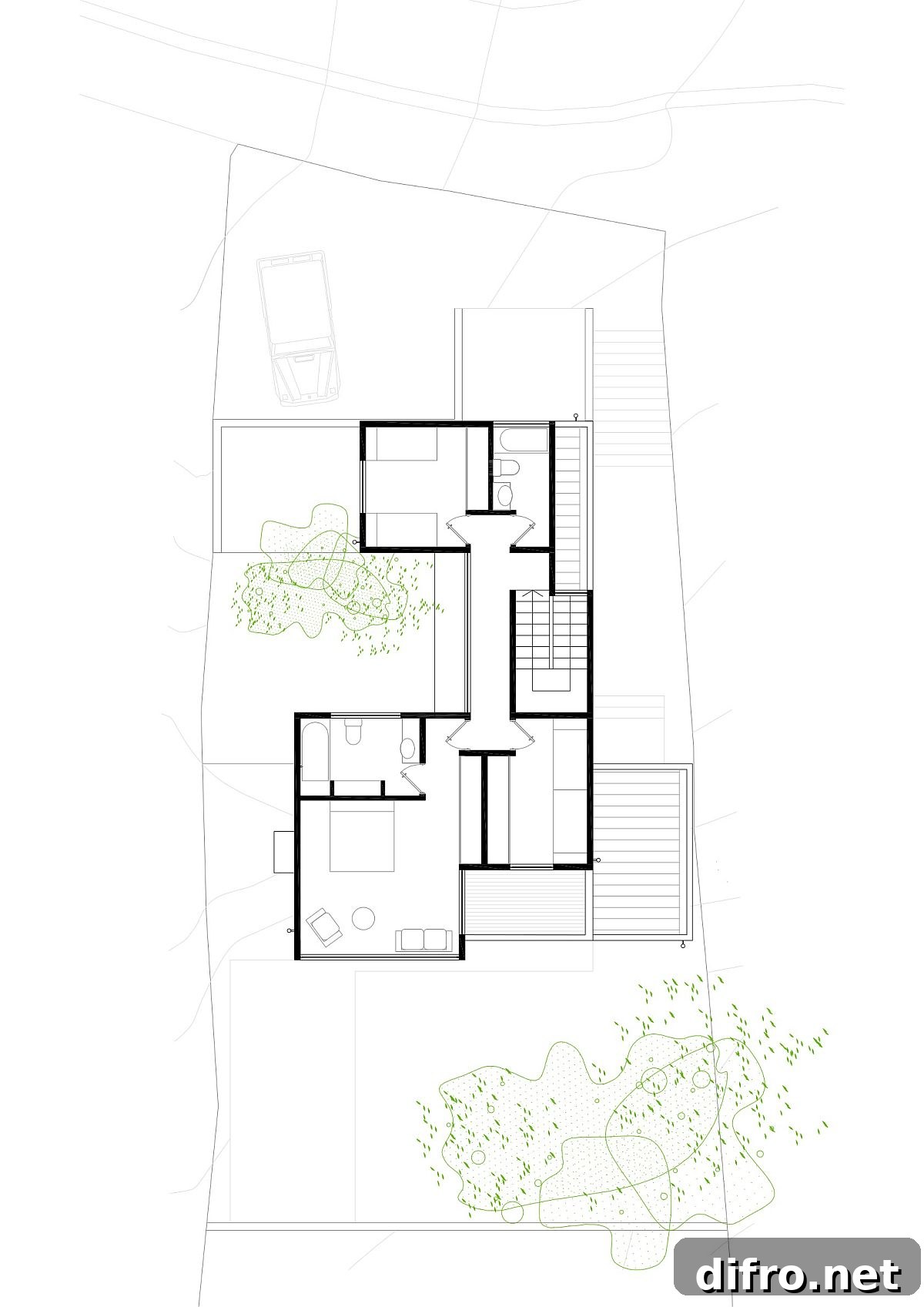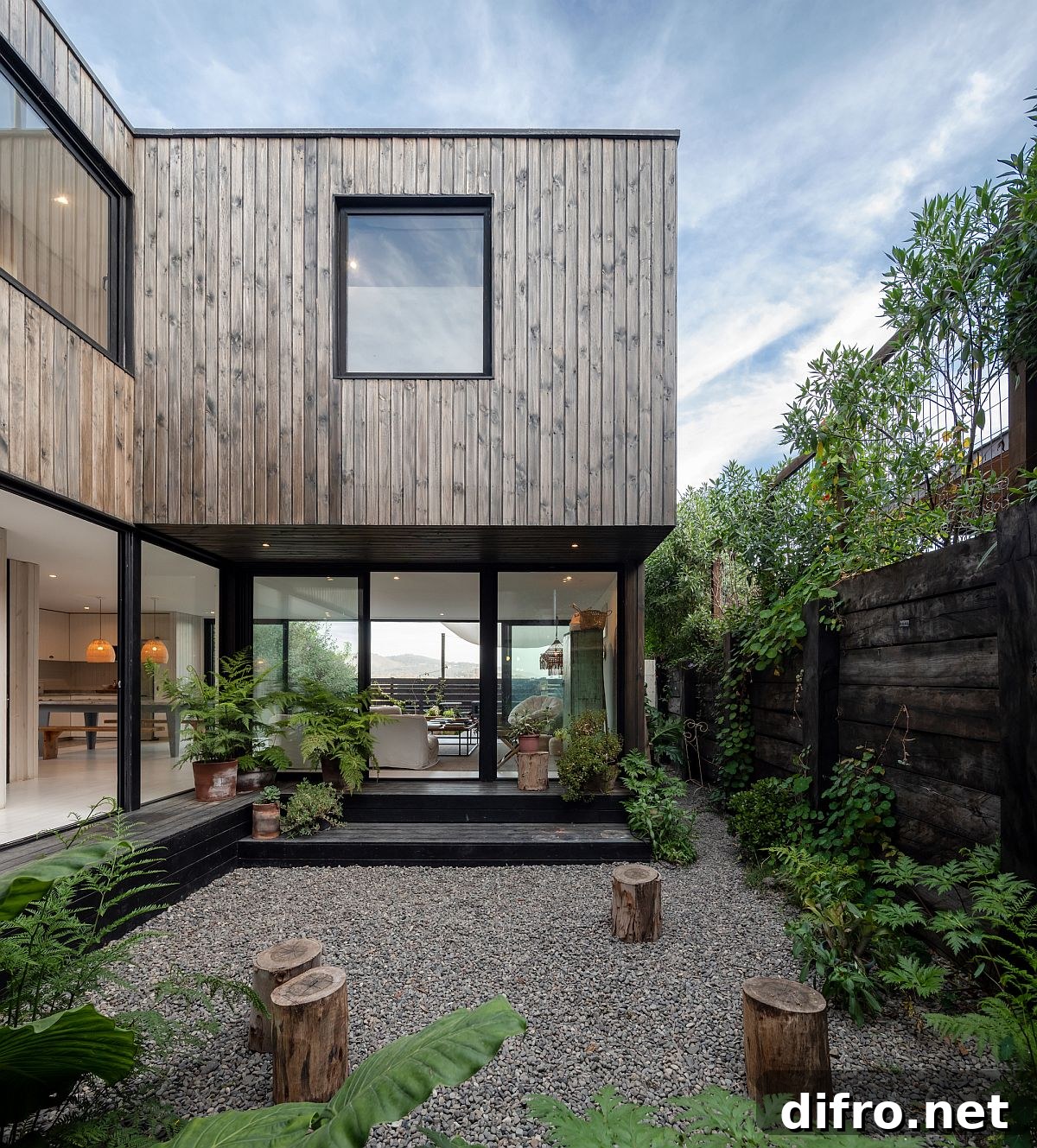
Every home responds to its site in a different way, shaped by the topography, the view and the surrounding landscape. In this contemporary residence in Cachagua, Chile, the design deliberately embraces two large patios, each with a distinct role: one frames the rugged Pacific coastline and ocean views, while the other channels bright northern sunlight into the house. The result is a clear dialogue between privacy and panorama, shelter and exposure.
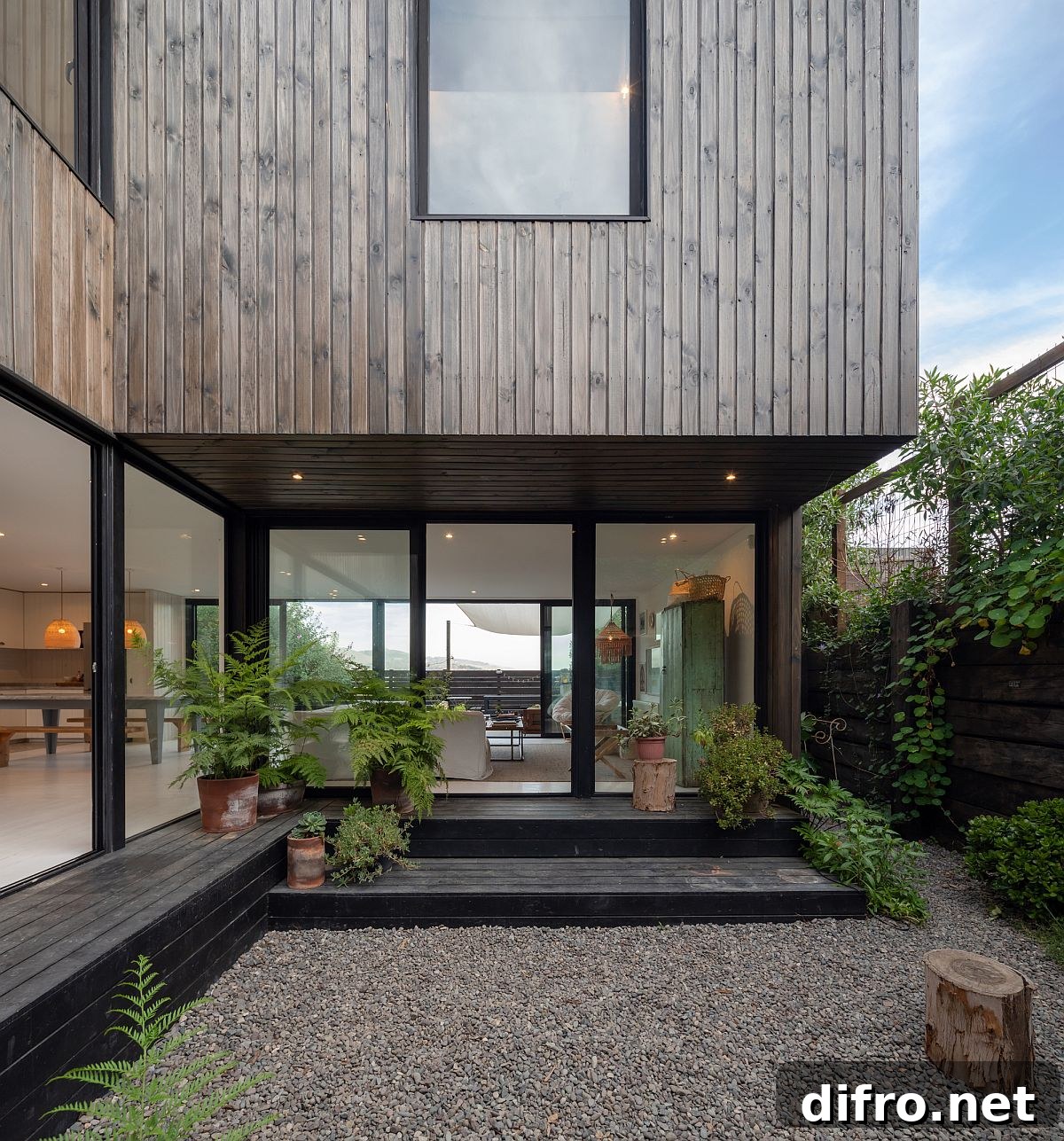
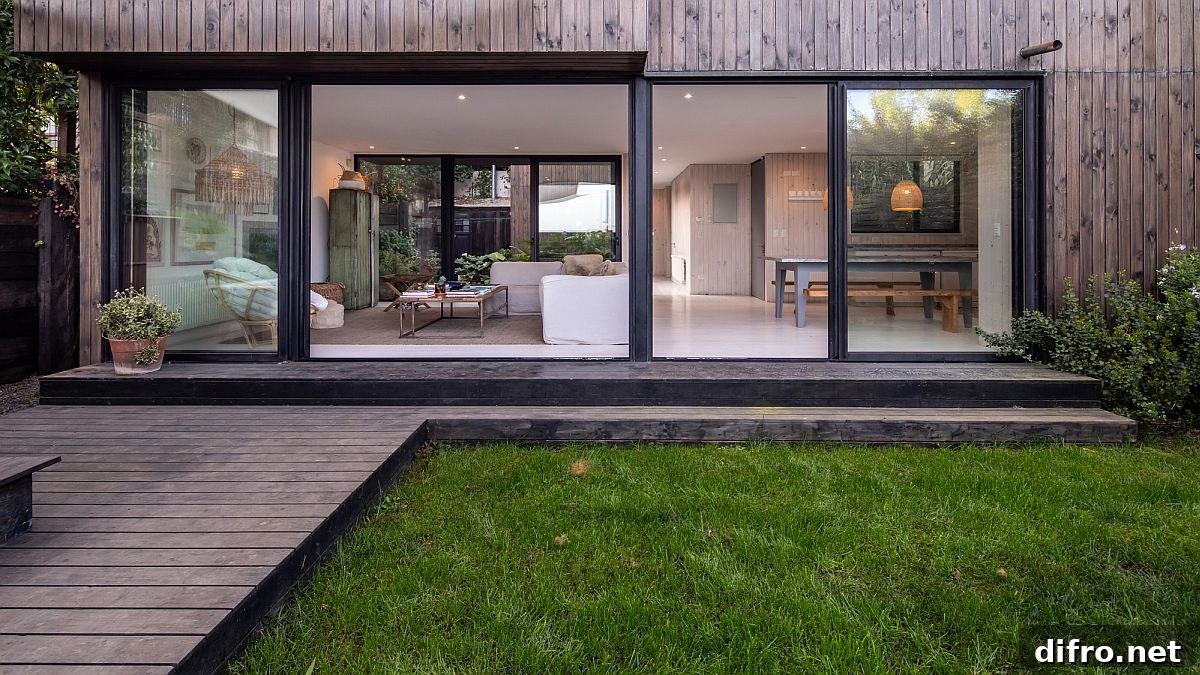
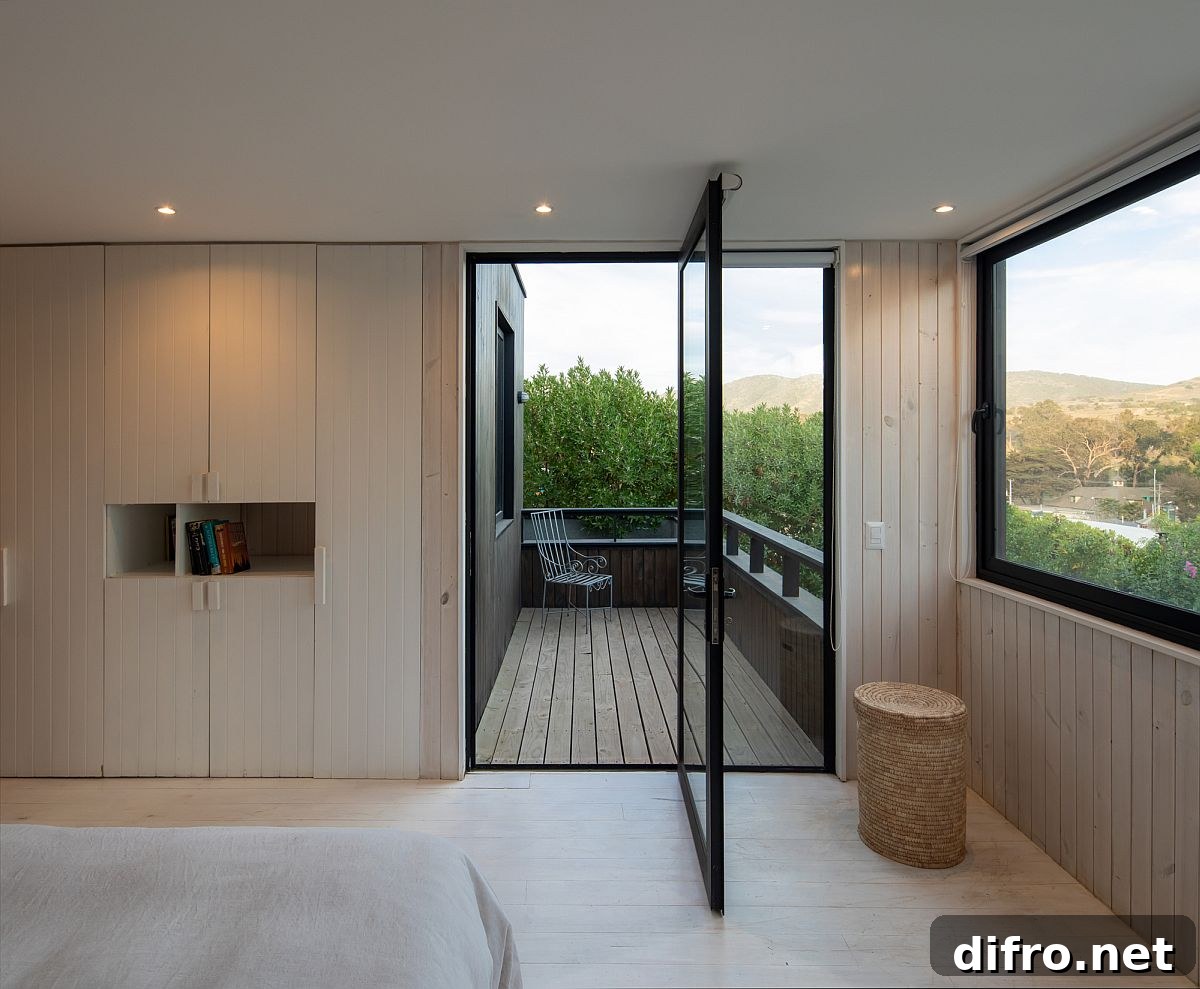
Designed by Ignacio Correa, the house blends modern architecture with coastal character. From the exterior, grooved pine cladding meets large sliding glass doors set within dark metal frames, creating a restrained yet tactile façade. These sliding doors operate as a primary design element: they connect both patios and an internal courtyard to the open-plan living area on the lower level, establishing a seamless relationship between the interior and the outdoors. The private rooms are deliberately located on the upper floor, where they enjoy greater seclusion and direct access to an elevated balcony and views.
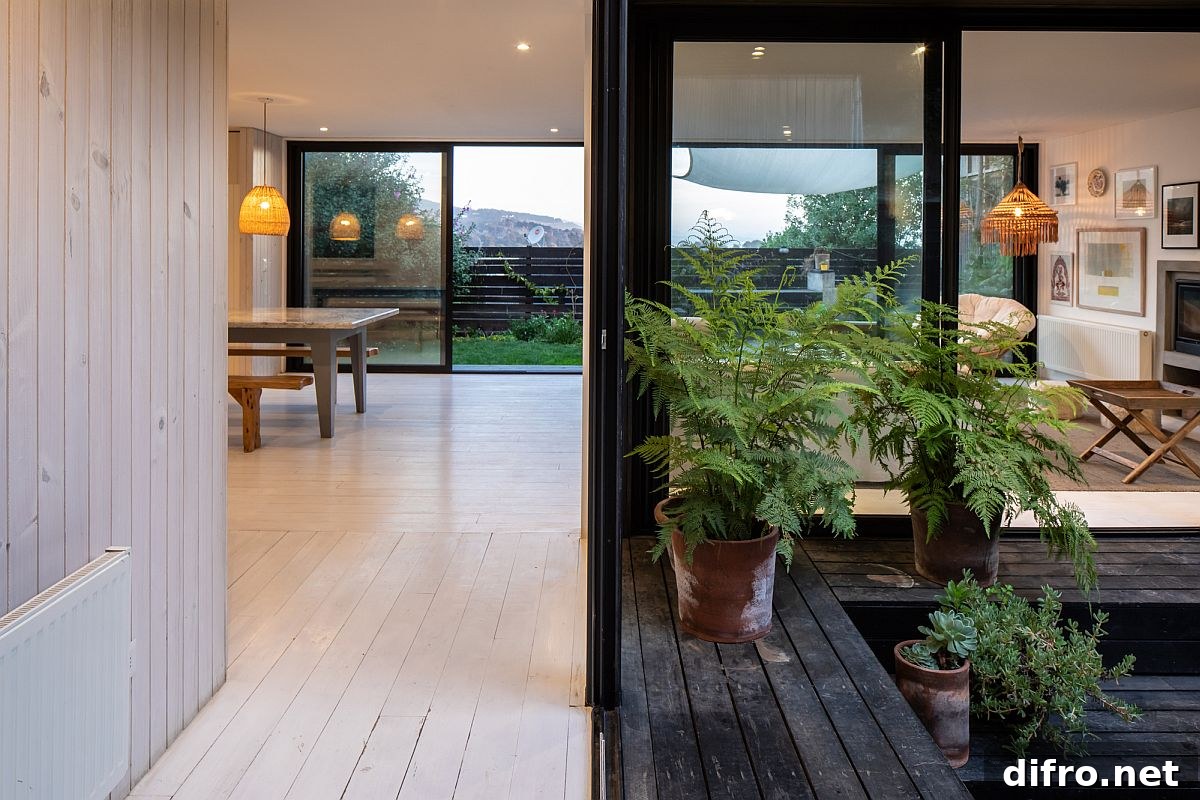
The interior adopts a neutral palette with white backdrops that enhance natural light and emphasize materiality. Wood and metal are the dominant materials throughout: warm timber cladding and reclaimed wood surfaces bring texture and warmth to the living spaces, while steel-framed glazing provides clean lines and durability. Reclaimed wood creates a cozy, modern interior that feels both relaxed and refined, a suitable counterpoint to the dramatic coastal setting.
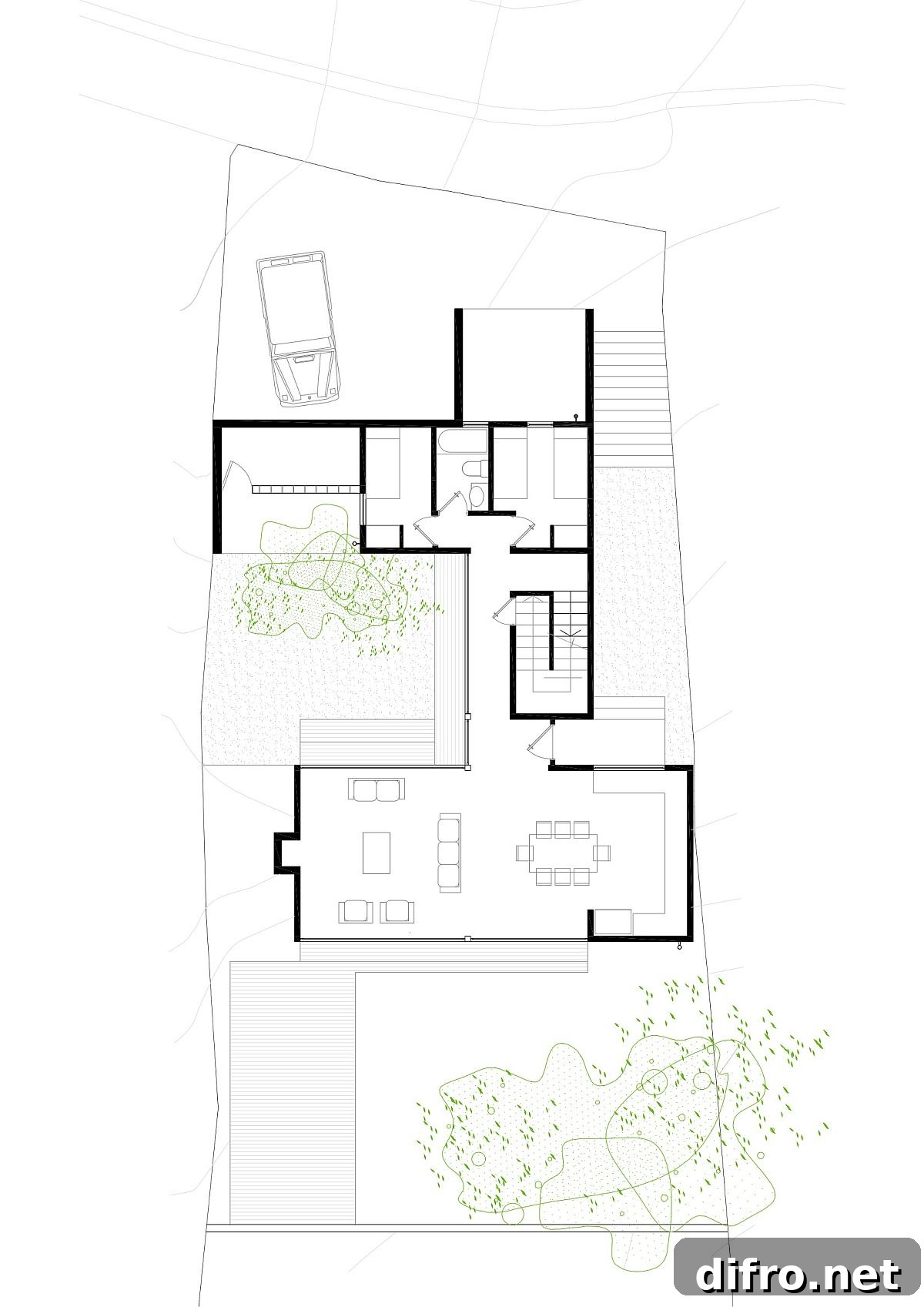
Functionality is central to the plan. On the ground floor, an open-plan arrangement brings together living, kitchen and dining areas, with uninterrupted visual and physical access to the patios on either end. The patio facing the ocean extends the living area outward, offering panoramic views and an opportunity to savor coastal breezes. The north-facing patio acts as a light well, admitting steady sunlight into the home and warming communal spaces during daytime hours. This dual-patio strategy optimizes both the views and the environmental comfort of the house, balancing exposure and shelter.
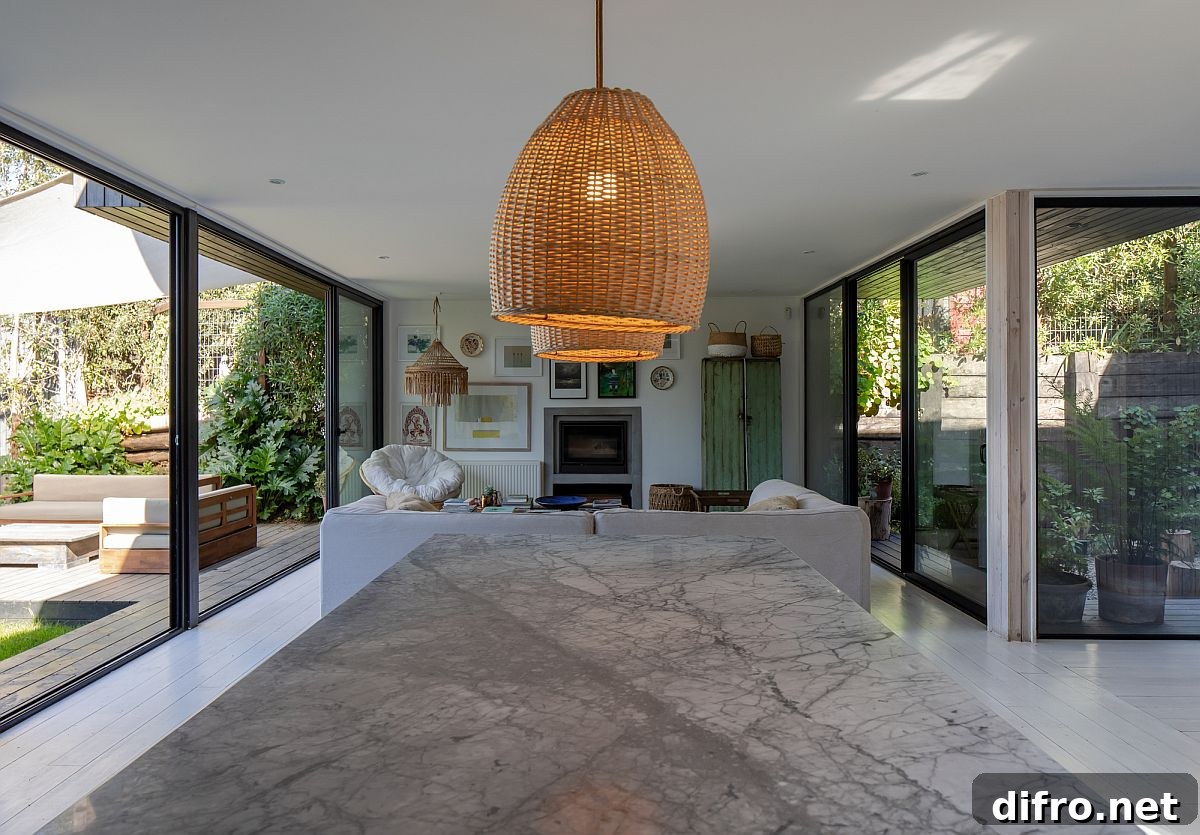
Sliding glass doors serve as smart thresholds, creating a continuous indoor-outdoor interface. When open, they expand the living space and blur the boundary between interior and exterior; when closed, they safeguard comfort and privacy without cutting off the view. The use of grooved pine on the façade adds rhythm and a tactile quality that ages gracefully in the coastal climate, while steel frames lend a contemporary precision to openings and structural lines.
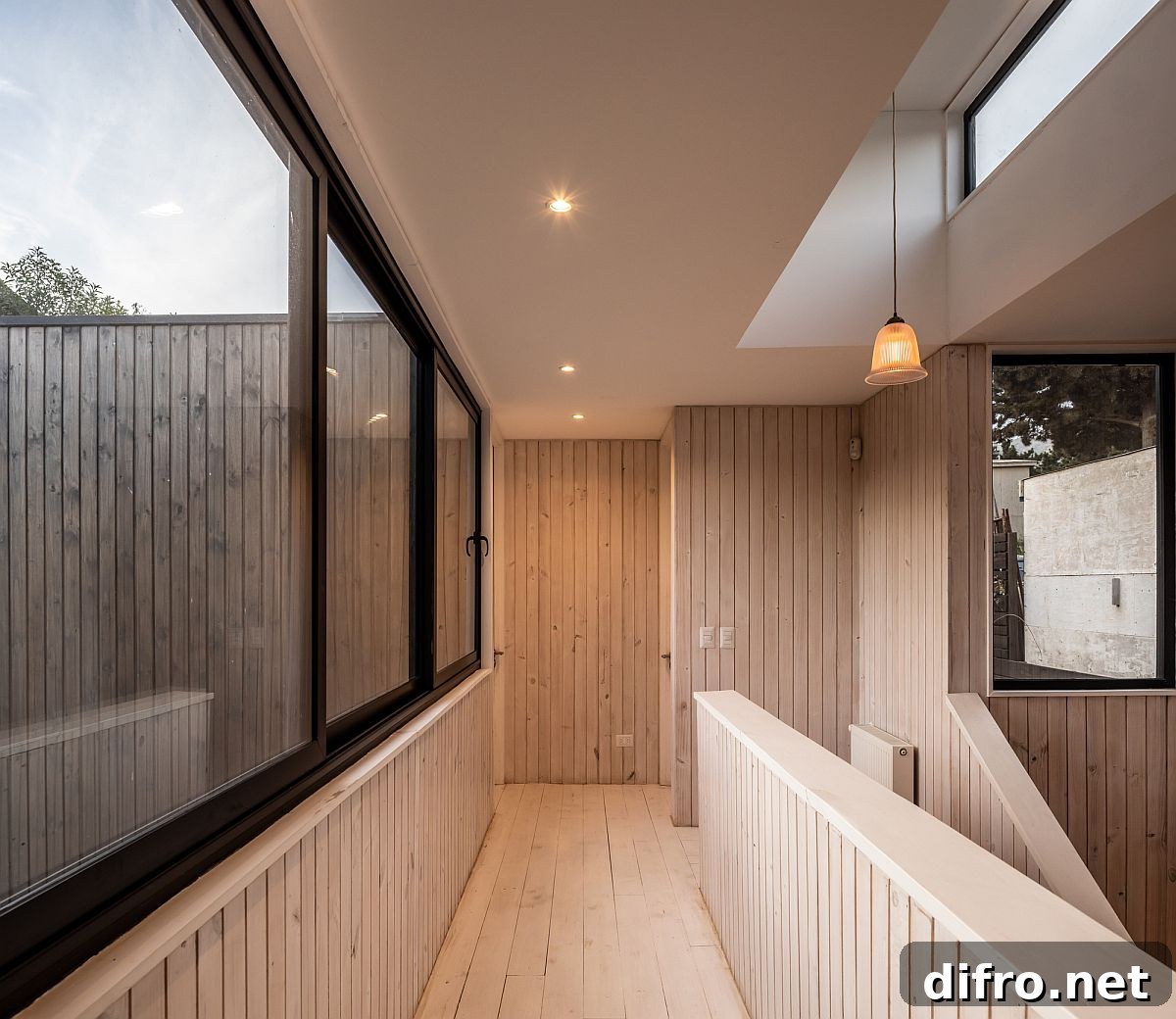
The upper level houses the private spaces, where pivoting doors open onto a spacious balcony that faces outward, connecting the bedrooms to fresh air and distant ocean views. This arrangement ensures a clear separation between public and private areas while maintaining continuity of material and architectural language throughout the house.
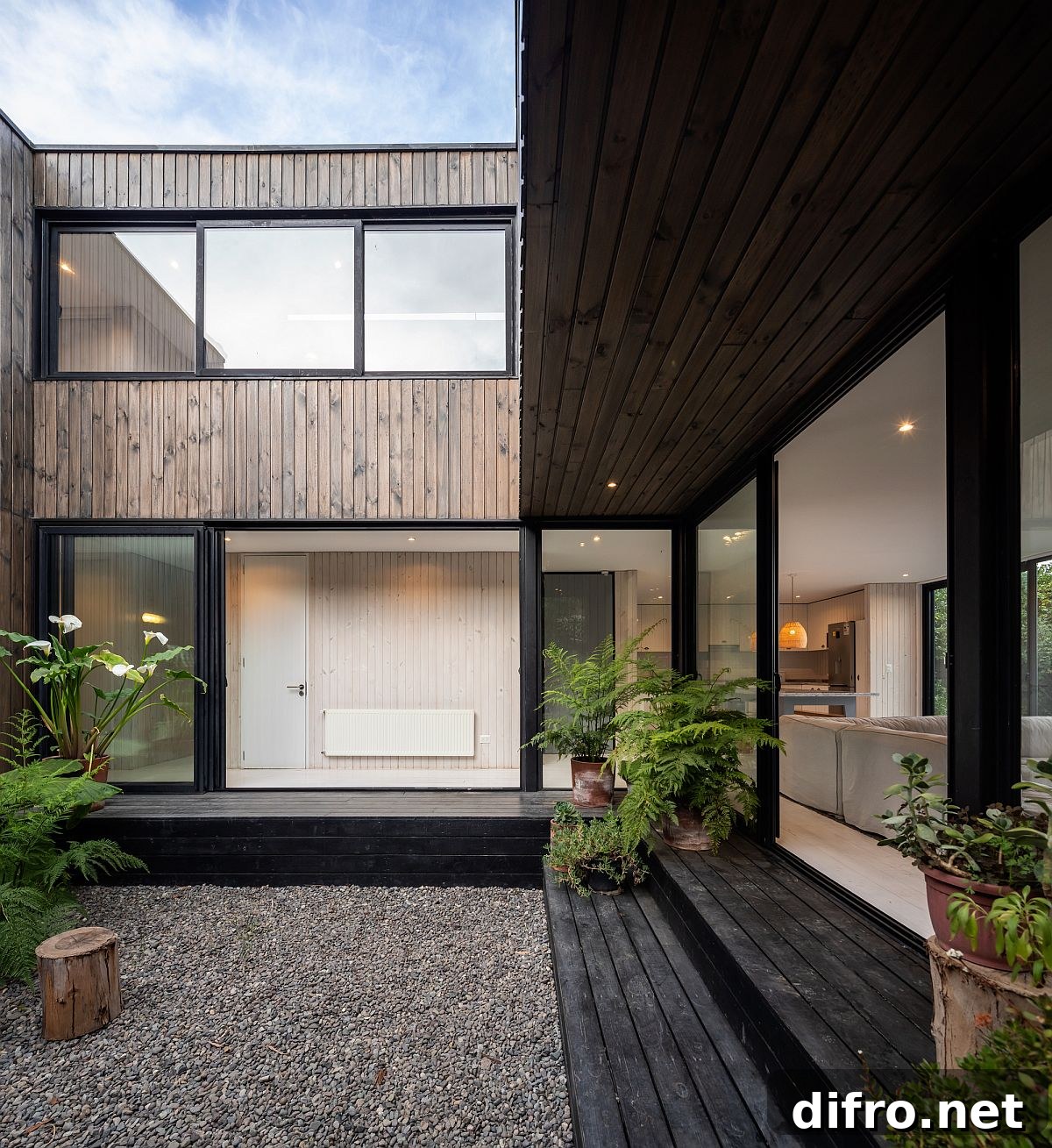
In summary, the Two Patios House in Cachagua offers a measured coastal modernism: a restrained material palette, a thoughtful interplay of light and view, and an efficient plan that celebrates both openness and intimacy. Wood and metal define the character, large glazed openings frame the landscape, and two well-placed patios deliver both ocean outlooks and nourishing sunlight. The thoughtful integration of indoor and outdoor spaces creates a relaxed, functional home that responds directly to its Pacific Coast setting. Photography: Aryeh Kornfeld.