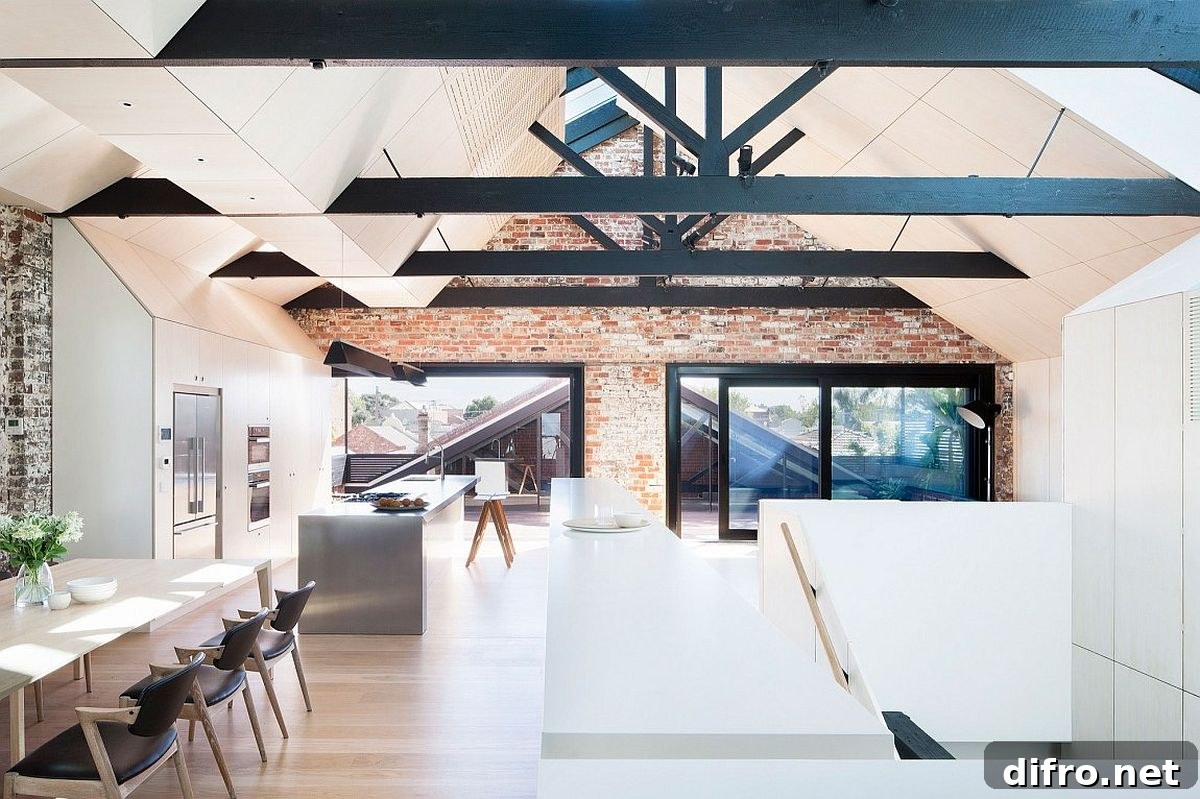
If you appreciate adaptive reuse and the transformation of industrial buildings into contemporary homes, the Water Factory in North Fitzroy, Victoria, is a striking example. Reimagined by Andrew Simpson Architects, this former warehouse blends a preserved heritage exterior with a carefully redesigned modern interior. The brick façade and external character were largely retained to respect the building’s history, while the interior footprint was thoughtfully reorganized to create two distinct, self-contained residences with separate entrances—an arrangement that suits extended family living and offers flexible, modern accommodation without compromising the site’s original identity.
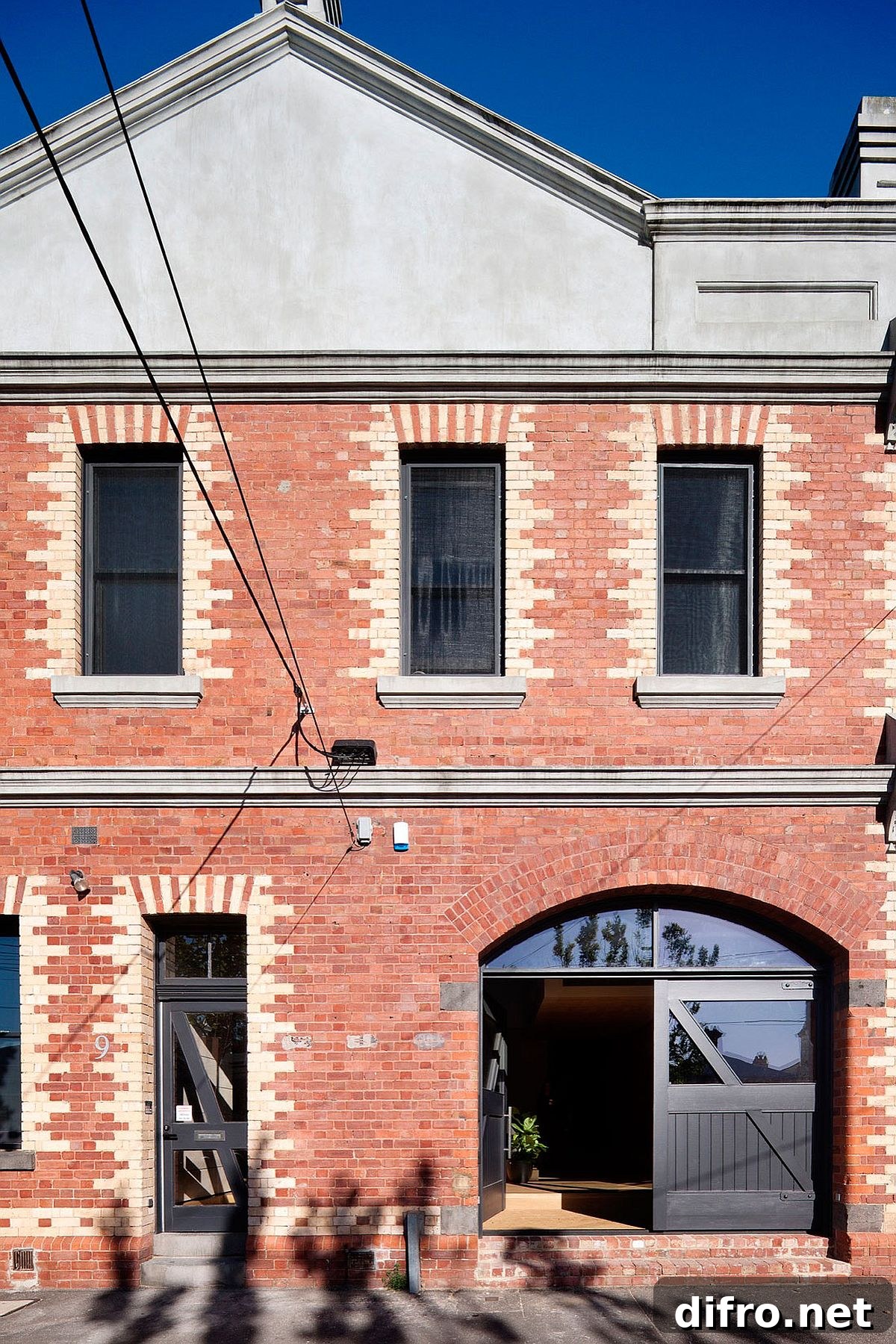
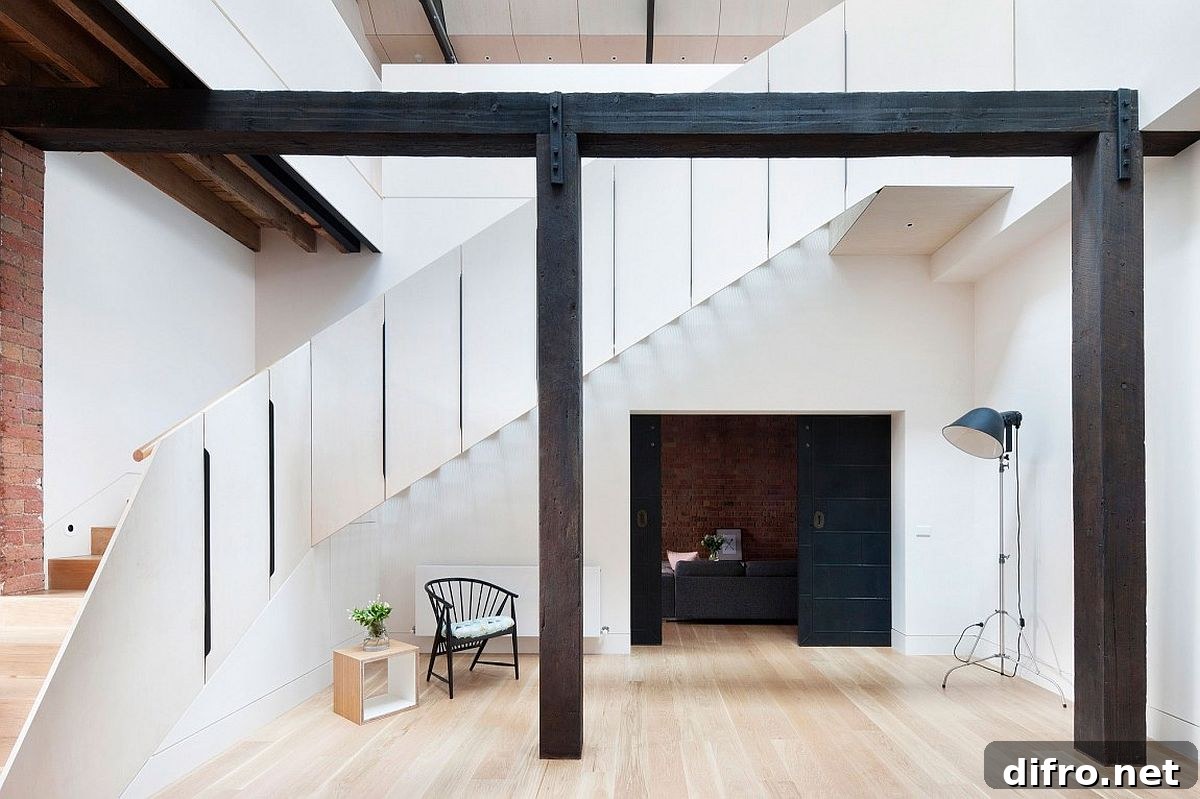
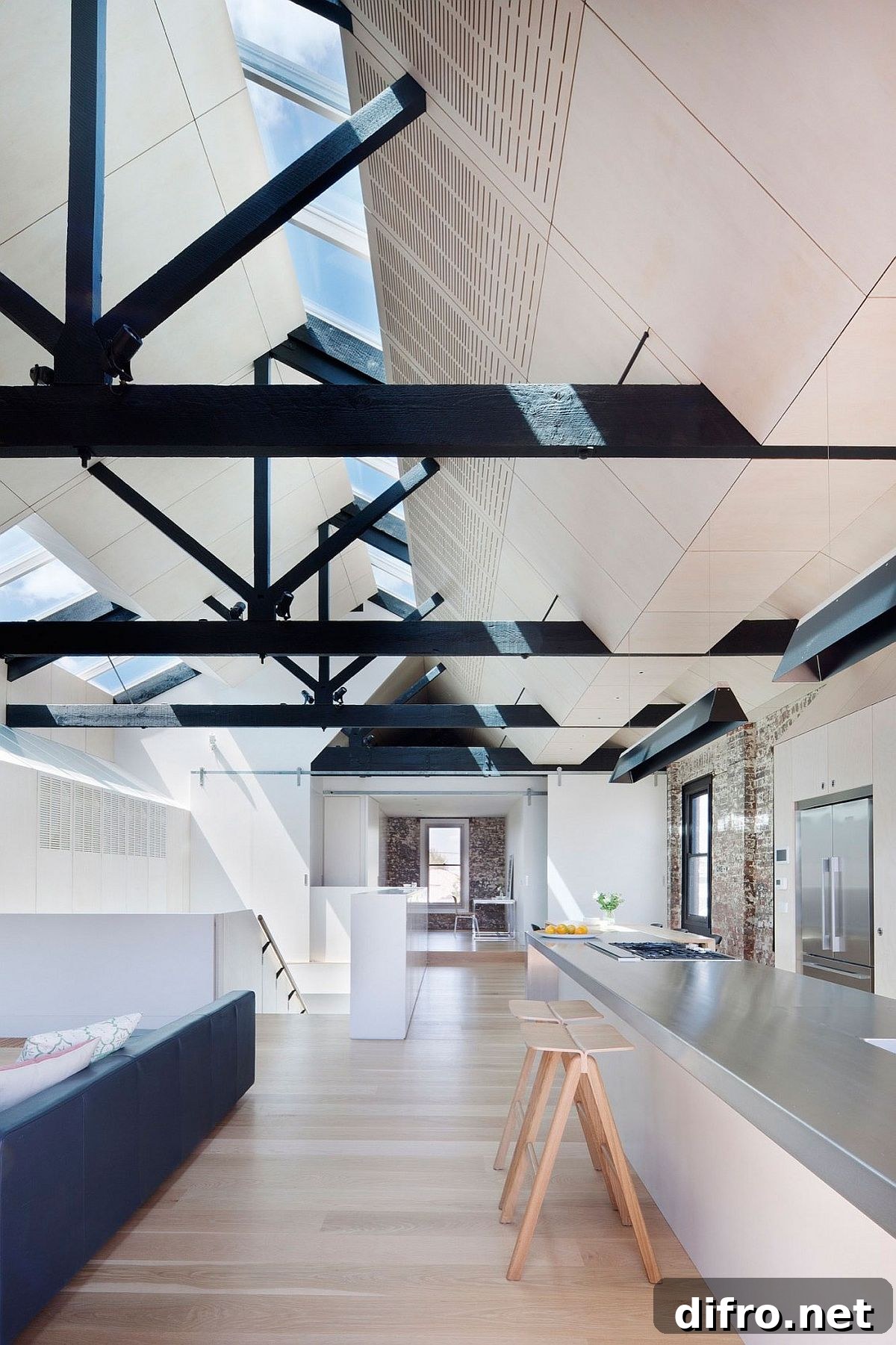
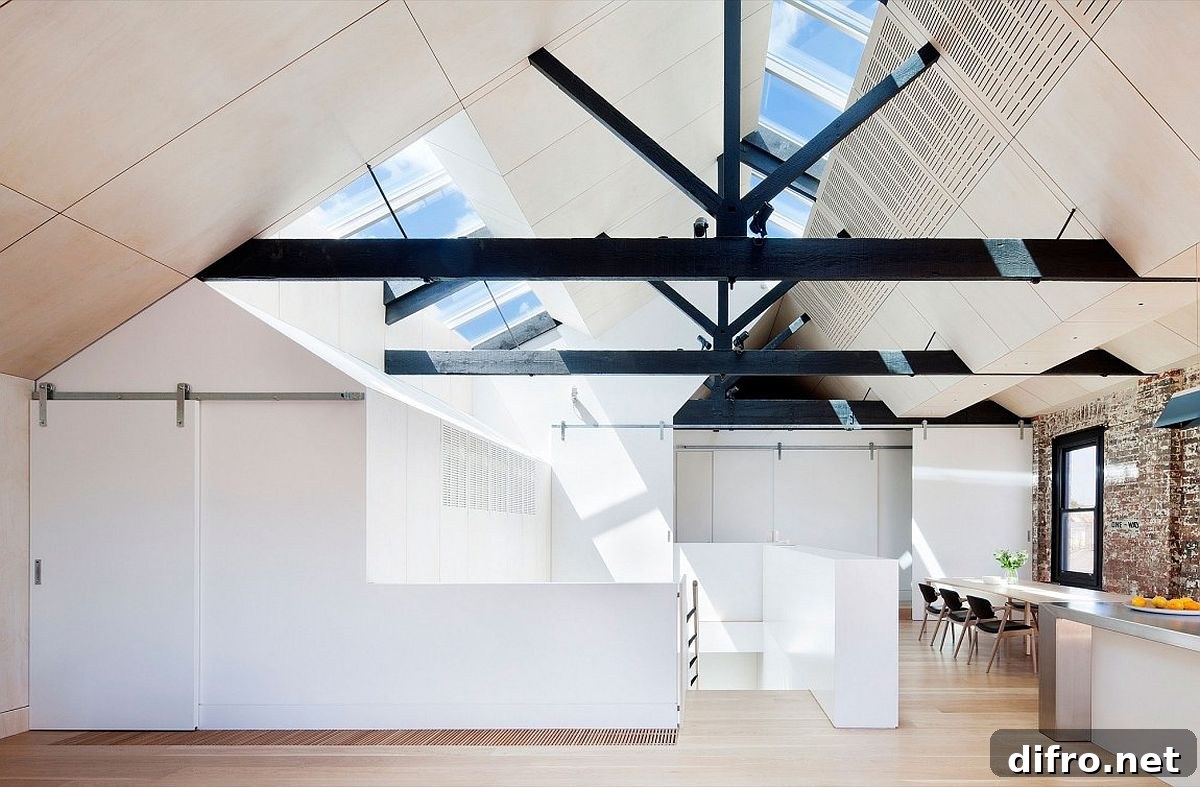
Inside, the design prioritizes light, ventilation and spatial clarity. A series of skylights and a central stairwell channel daylight from the roof into the lower level, creating bright, airy interiors that feel open and inviting. Internal volumes are largely finished in white to amplify natural light and to provide a neutral backdrop for the preserved timber trusses, which remain visible and are juxtaposed with a contemporary ceiling surface. These retained structural elements provide warmth and texture, while modern joinery and minimal detailing keep the palette restrained and contemporary.
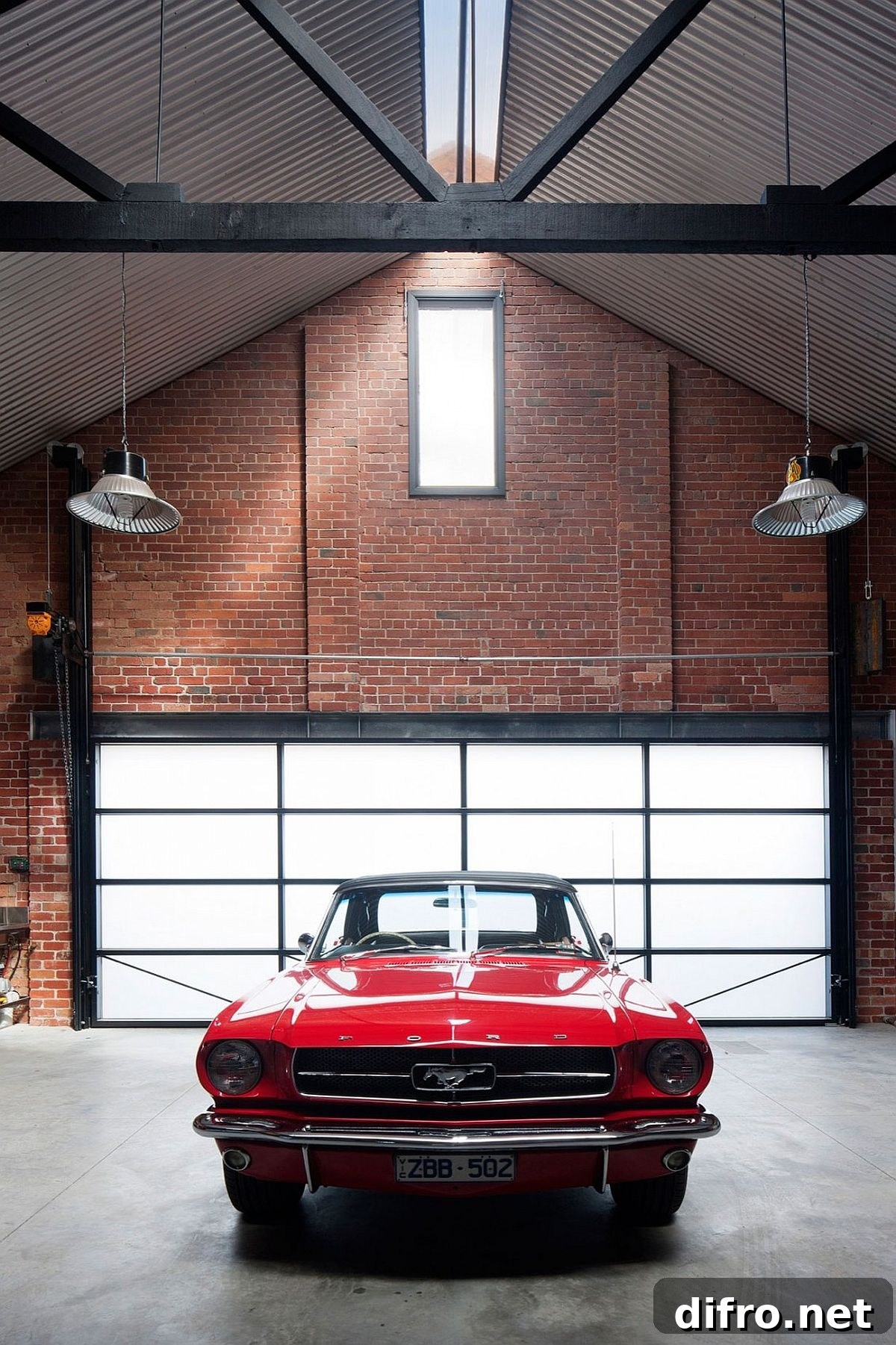
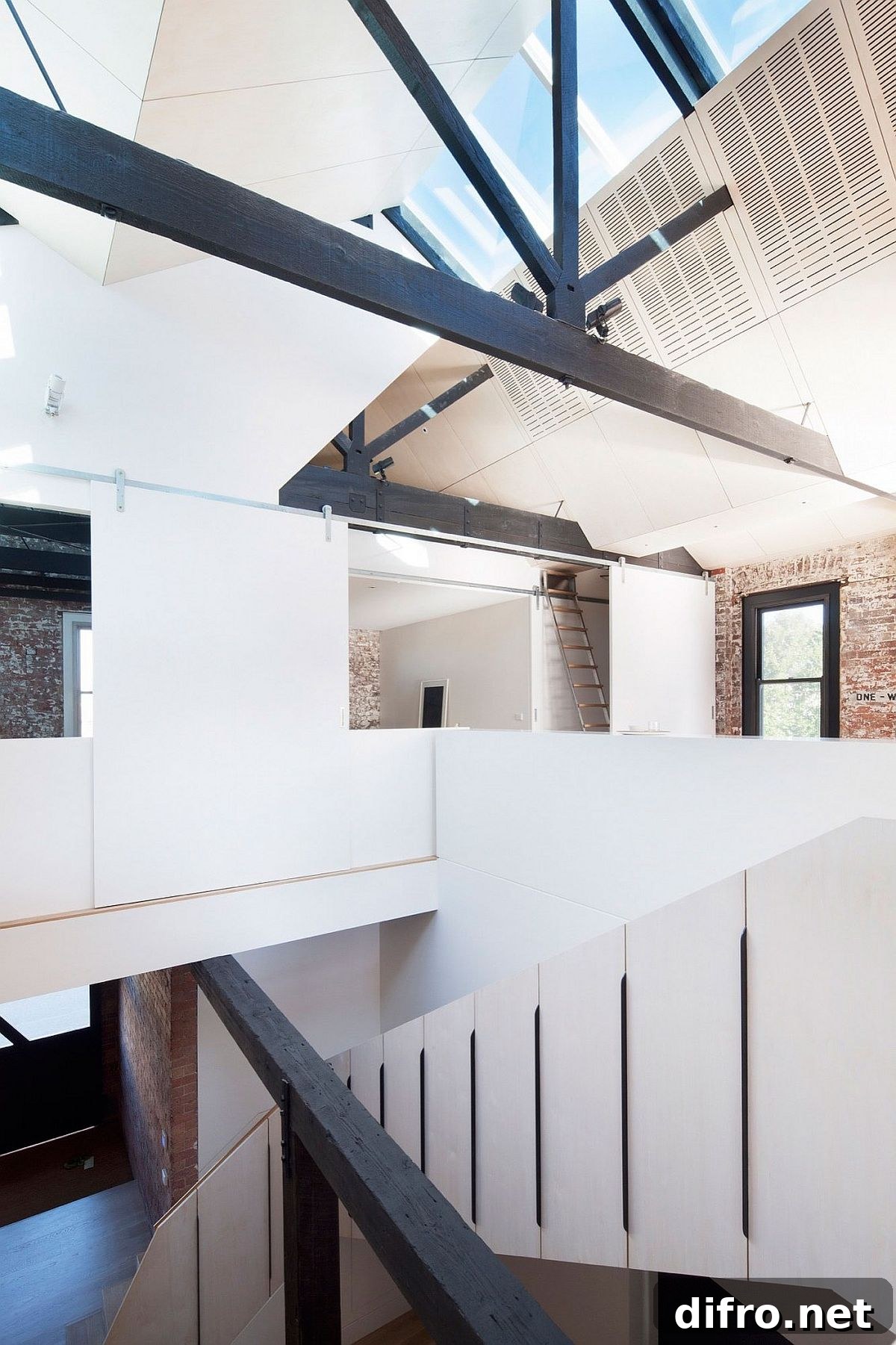
Exposed brick sections are retained in selected rooms, offering contrast against the bright finishes and reinforcing the building’s industrial past. The lower floor functions primarily as a living and communal area, while the upper level accommodates bedrooms alongside the kitchen and dining spaces. Because the two dwellings are arranged within the same volume, operable sliding panels, clever partitions and layered thresholds are used to create privacy when needed and openness when desired. This approach allows the interior to adapt through daily use, accommodating both private family life and communal gatherings.
The kitchen is positioned to take advantage of the indoor–outdoor relationship: it flows out to a timber deck that extends the entertaining and dining area and connects interior finishes with the external environment. Clean-lined cabinetry, contemporary fixtures and long sightlines keep the upper level feeling generous, while skylights above provide direct daylight and a strong visual connection to the roofline. The use of warm timber, crisp whites and exposed masonry gives each space a carefully balanced tactile quality.
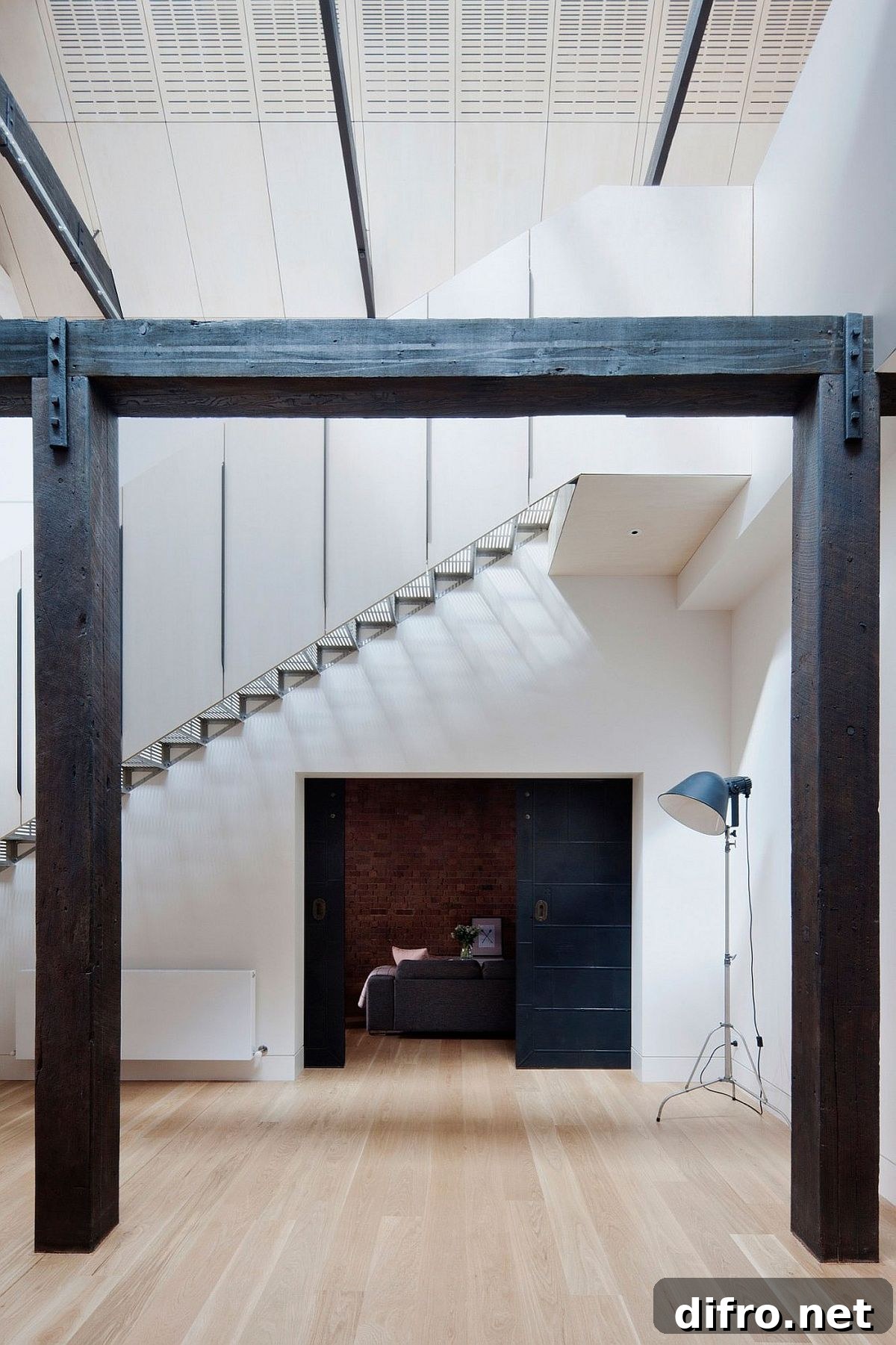
The ceiling geometry which intersects with the original warehouse roof trusses, varies and undulates along the cross-section of the building. It contains the electrical and mechanical services and in its gable pitches creates an abstract allusion of several houses being contained within the main volume.
Daylight strategies are central to the quality of the interiors. Skylights and high-level glazing draw sunlight deep into the plan, while the preserved trusses and the building’s pitched roof create a series of changing volumes that make each room feel distinct. The master bedroom and other private spaces benefit from this careful manipulation of light and form, resulting in quiet, well-lit retreats that contrast with the more public, social parts of the house. A contemporary bathroom—finished in white and topped with a skylight—adds calm, spa-like moments to the scheme.
Overall, the Water Factory renovation demonstrates how adaptive reuse can combine conservation and contemporary living. By preserving the brick envelope, exposing and celebrating structural timber, and inserting modern, light-filled interiors, the project keeps the building’s industrial heritage while delivering a comfortable, flexible home tailored to today’s lifestyle. The result is an industrial-modern residence that feels cohesive, airy and intimately connected to both its history and its neighbourhood.
Photography: Shannon McGrath