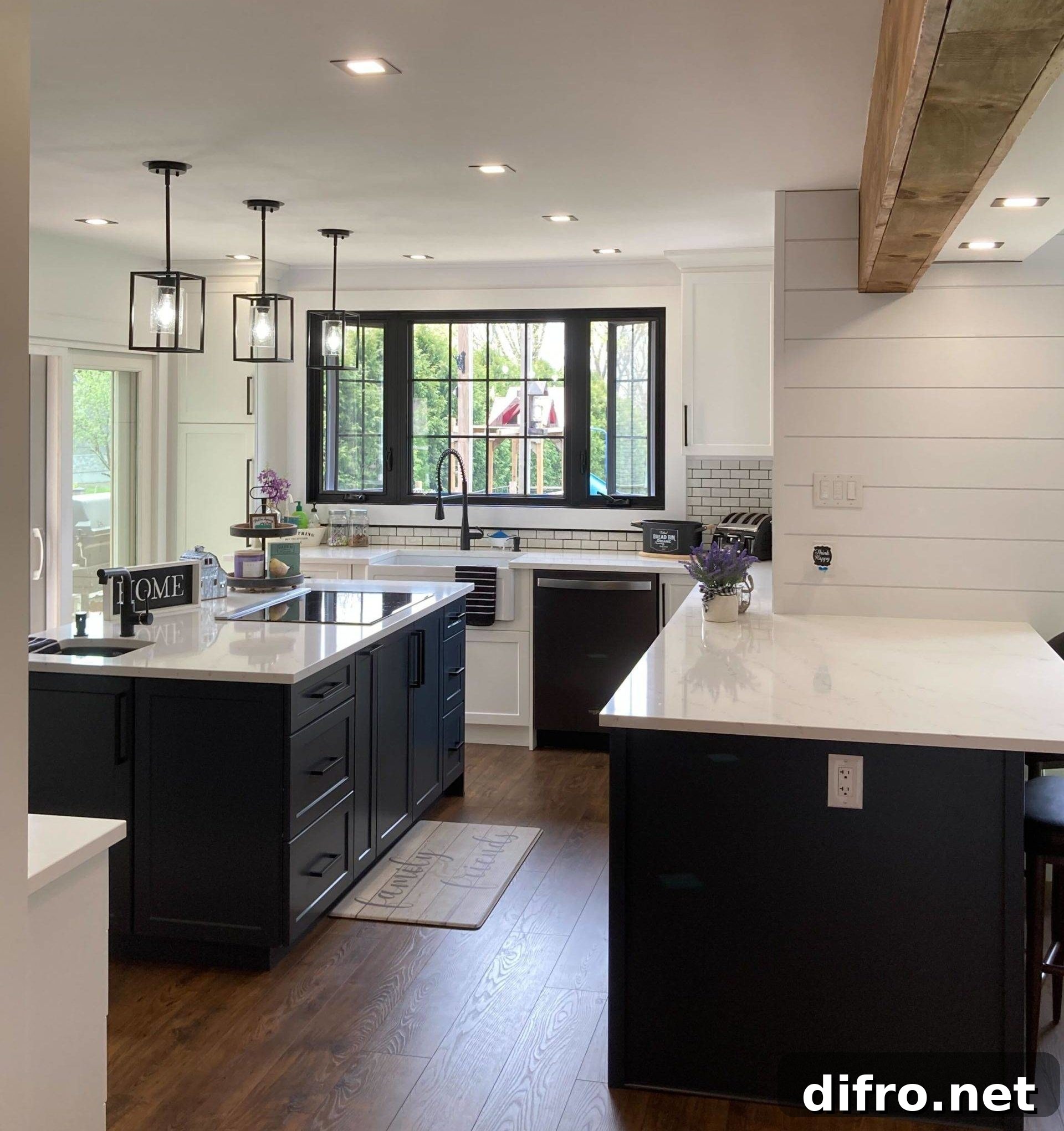
Finding the right home can feel impossible while house-hunting, something Kevin and Krista discovered when they began their search for a new family home. They started looking in 2018 and quickly concluded they wanted a turn-key property so they could focus on their children rather than tackle a major renovation. That plan changed when Kevin noticed one distinctive house on his commute home — a classic “country in the city” property with a large yard, originally built in 1982.
The couple attended the first open house but initially dismissed the house as too much work: “Good bones but outdated and awkward layout,” they remember. Two weeks later, after thinking it over, they returned for a second walk-through and decided the house was salvageable. A persuasive letter to the sellers and an offer $10,000 below asking sealed the deal.
With the keys in hand, Krista’s top priority was a complete kitchen overhaul. What began as a focused kitchen redesign quickly expanded to incorporate the dining room, fireplace, living room, front entrance, and powder room. By March 2020, Kevin and Krista were ready to begin the renovation that would transform their house into the family home they envisioned.
Step 1 – Opening Up the Space: Removing the Fireplace and a Load-Bearing Wall
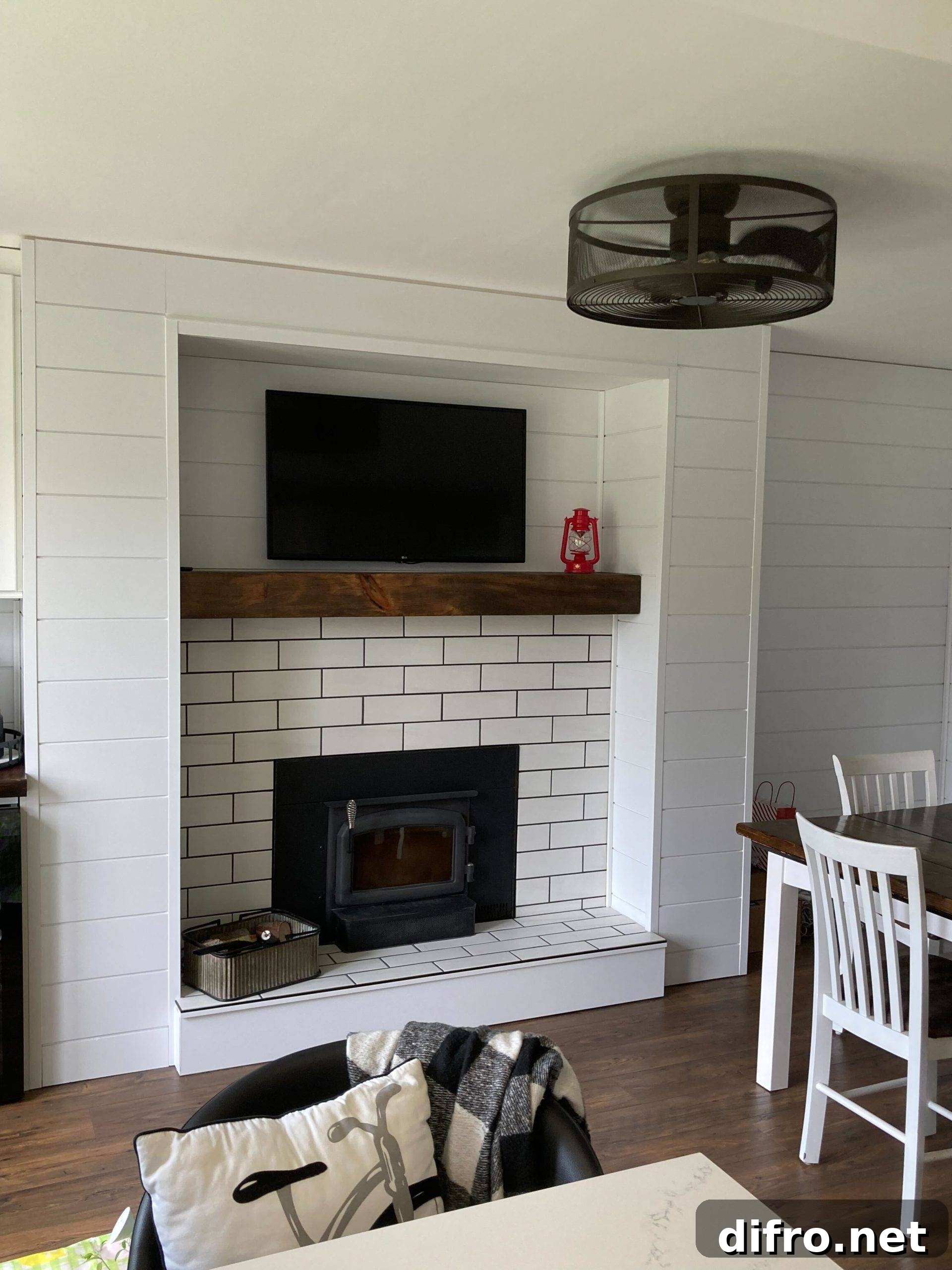
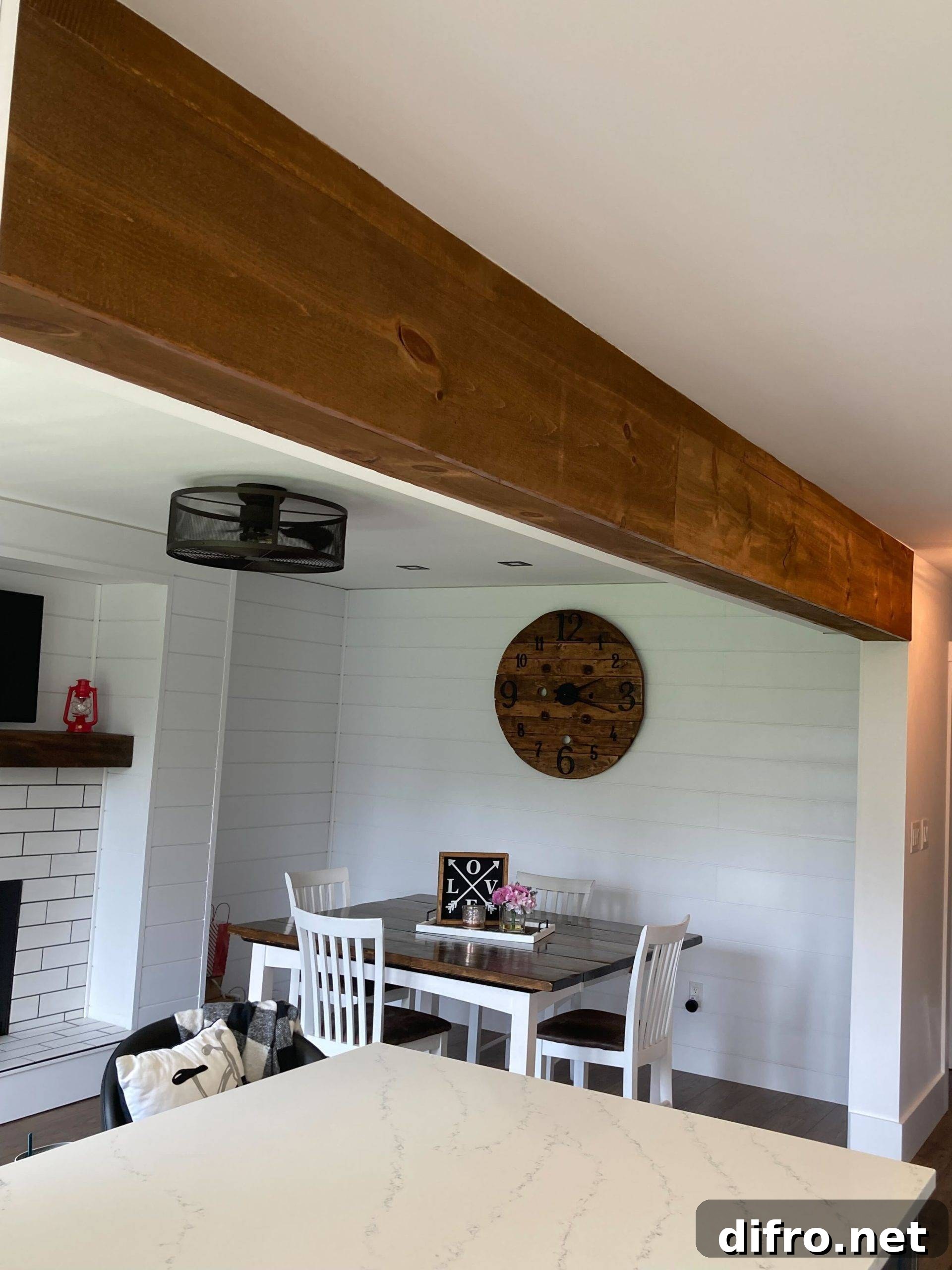
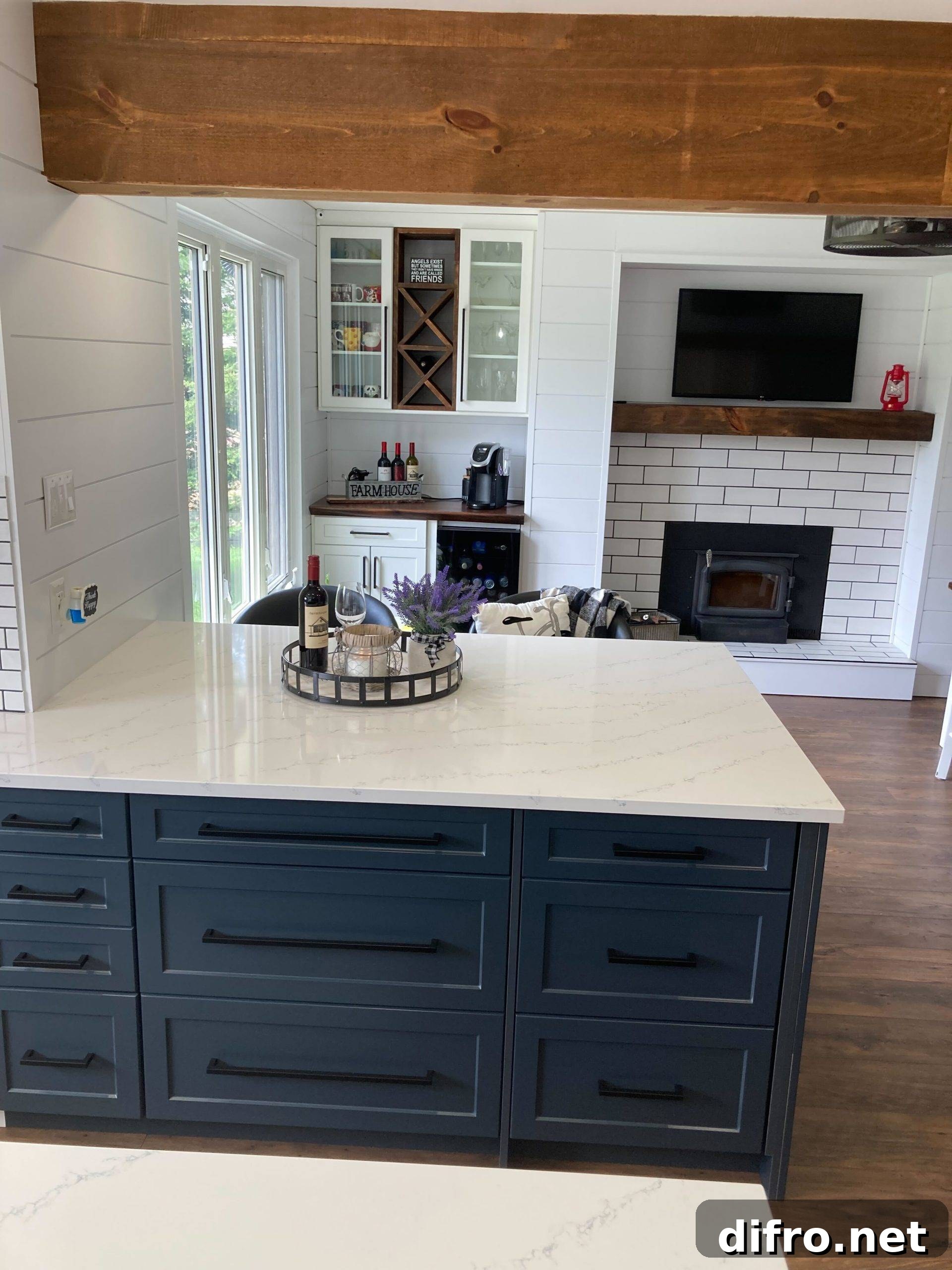
The first major move was to take down a load-bearing wall separating the kitchen and dining room. The dining room’s old stone fireplace had to go, so a licensed contractor handled demolition with the proper permits. While the family removed the wall, the contractor’s crew replaced the fireplace and installed an LVL beam that mimics a rustic barn beam.
Tearing down the wall revealed an unexpected need to reroute ventilation, which created bulky areas around the former fireplace. Once the ventilation was resolved, the open-concept layout fell into place.
Step 2 – Turning Kitchen Ideas into a Working Plan
The renovation hit an early snag when the COVID-19 pandemic disrupted supply chains and contractor availability. Communication, pricing, and scheduling problems led Kevin to step in and manage the project himself. The couple had sketched their ideal kitchen but needed a place to translate that sketch into accurate plans and cabinetry.
IKEA, a natural option for budget-friendly kitchens, was closed due to pandemic restrictions. Local specialty shops quoted prices beyond the couple’s budget and weren’t flexible. Ultimately, a Lowe’s kitchen designer helped them finalize a layout, choose finishes, and make custom tweaks. They placed their cabinet order during a promotional sale, saving 20% and proving that big-box stores can sometimes deliver affordability and design value.
Step 3 – Adding Windows for Light and a View
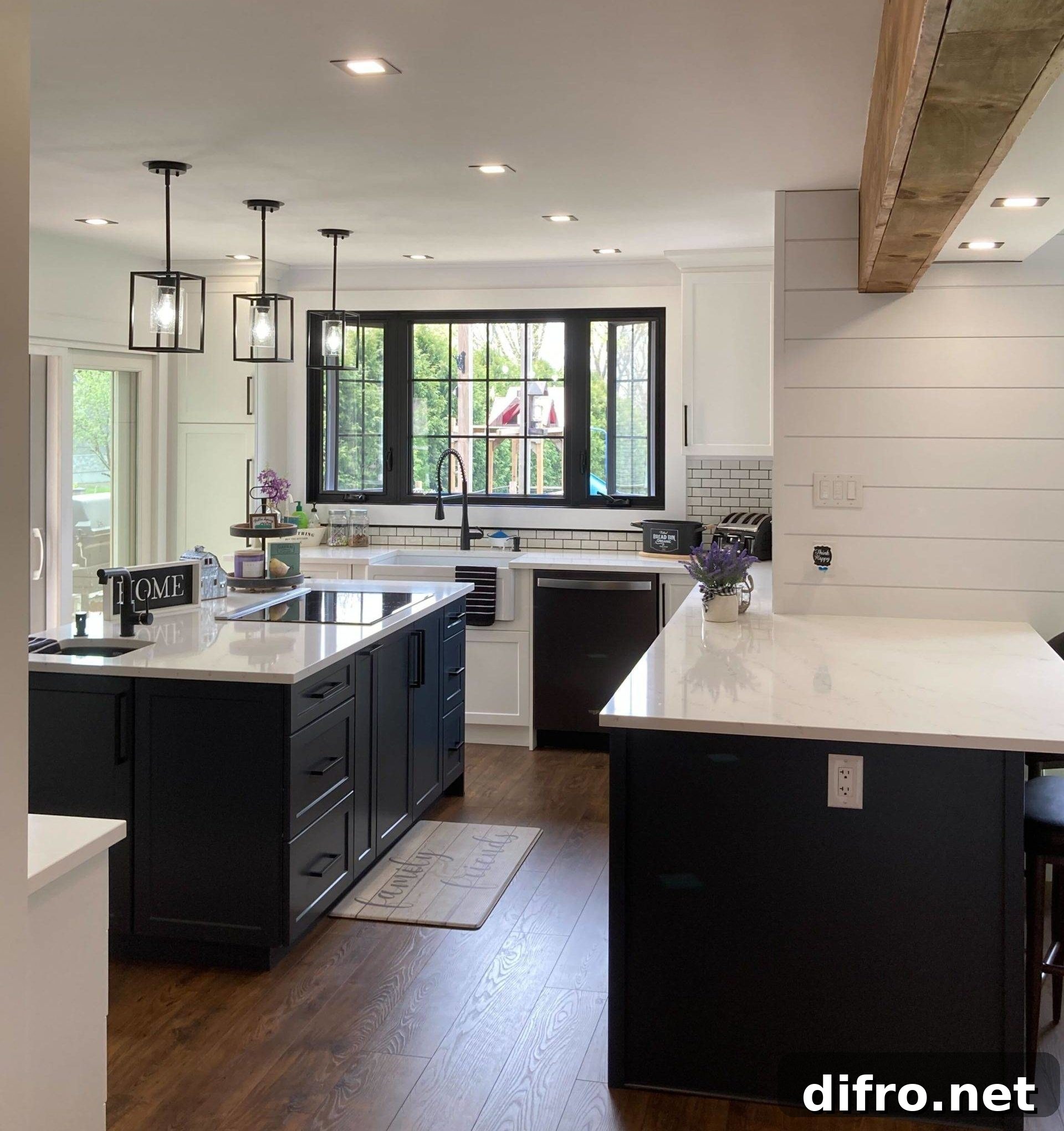
To brighten the space and better connect it to the yard, Kevin and Krista replaced a vertical kitchen window with a horizontal unit and added a second window. They selected black awning-style windows, a design choice that tied in nicely with the home’s emerging aesthetic. While updating windows, they also installed a new front door to refresh the home’s entrance.
Step 4 – Choosing Durable, Rustic-Looking Flooring
Flooring choices needed to balance the warm, rustic look they wanted with family-friendly durability. Laminate surprised them as the best-fit option: it captured the rustic wood appearance while offering resilience and an affordable price point. Again, high-end flooring retailers were more expensive than expected, and Lowe’s provided the best match to their original vision at a reasonable cost.
Step 5 – Selecting Maintenance-Friendly Countertops
With many countertop options available, the couple prioritized low maintenance and predictable patterning. Quartz — an engineered surface — offered consistent veining and durability, so they chose quartz over natural stone like granite, which can have more variation in appearance. Quartz gave them a clean, dependable look that fit their modern farmhouse aesthetic.
Step 6 – Choosing Appliances
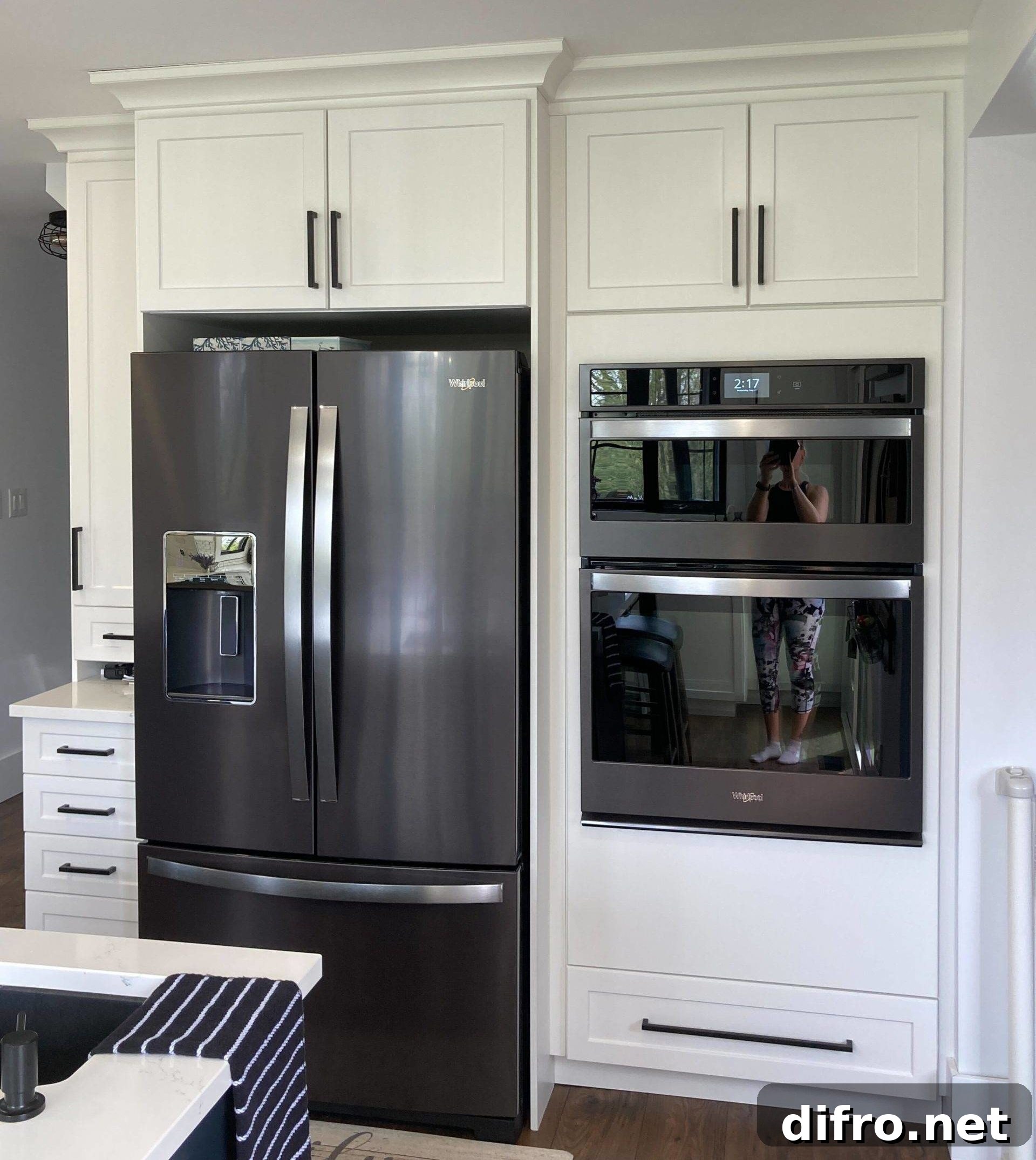
Appliances were sourced from a trusted local retailer. Kevin and Krista selected black stainless finishes to coordinate with their window frames and hardware. Because black stainless is less common, it carried a slightly higher price and required some items — such as the cooktop and vent — to be custom-ordered.
Step 7 – Finishing Touches and Budget Realities
The final phase brought together smaller items and a few unplanned expenses that are common in major renovations. Fortunately, their existing electrical panel had enough capacity for the new appliances and upgrades, so a costly panel replacement was avoided.
Hardware like cabinet handles and drawer pulls were ordered affordably online and offered good quality for the price. Light fixtures took longer to select, as the couple hunted for the right farmhouse look. A fortunate clearance find at Home Depot allowed them to buy a skid of shiplap at a deep discount, which they used to add texture and character. Finally, they repainted ceilings, walls, and that newly installed shiplap to complete the transformation.
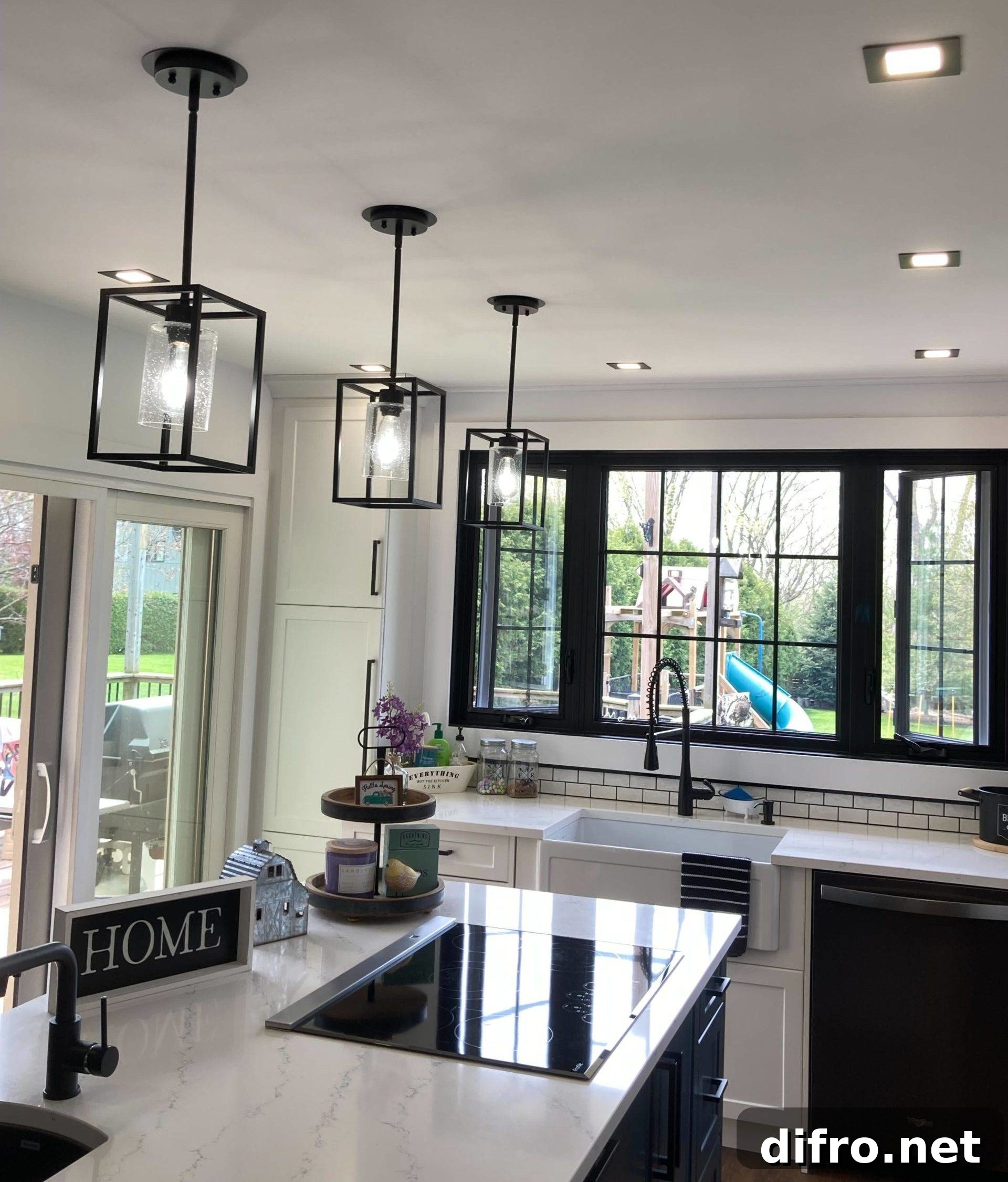
Today, Kevin and Krista enjoy their renovated home — a bright, functional, family-friendly space shaped by careful planning, adaptability during the pandemic, and thoughtful design choices. Their project shows how prioritizing needs, exploring multiple suppliers, and being willing to manage parts of the renovation can make a big remodel achievable on a realistic budget.
All photos featured in this article were submitted by the couple.