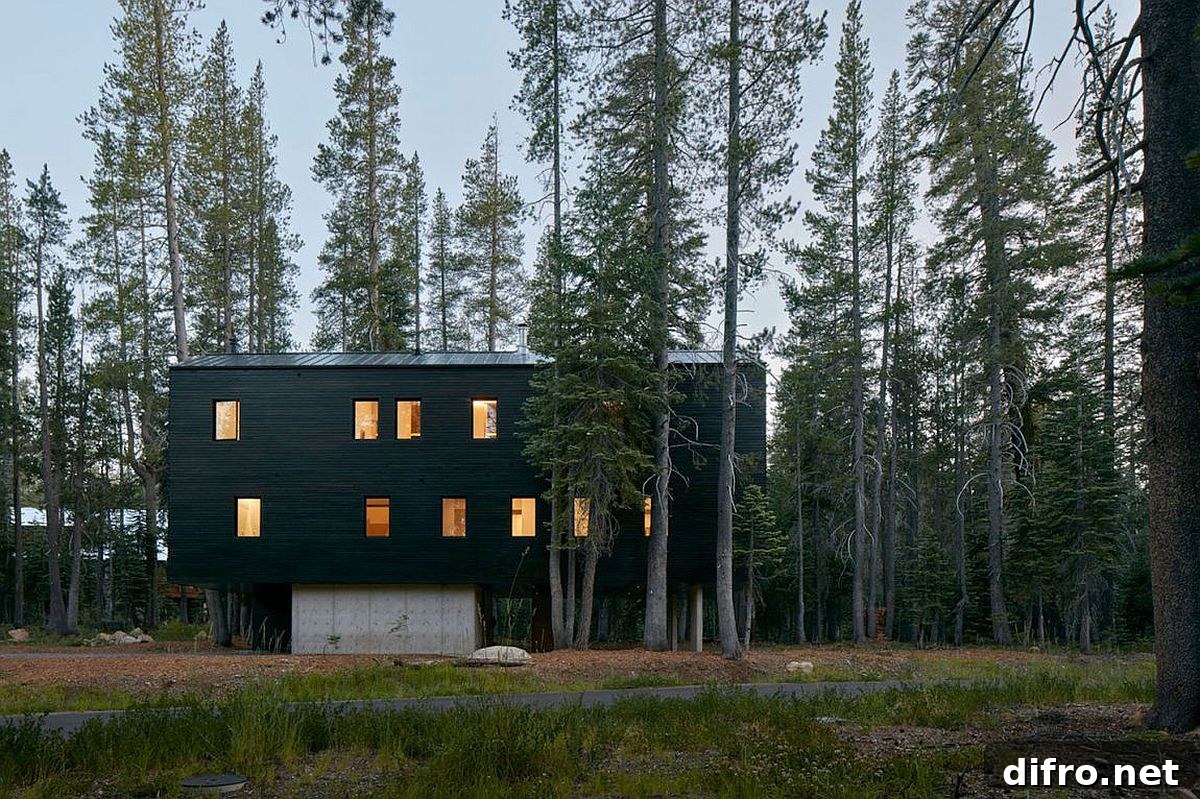
How do you make an already beautiful alpine chalet in the heart of Donner Pass even better? Mork-Ulnes Architects answered that question with Trollhus, a striking family retreat that blends a traditional ski-cabin character with a protective concrete base more commonly seen in contemporary urban homes. The design responds directly to an extreme mountain climate—this region receives more than 800 inches of snow annually—and sits within the renowned Sugar Bowl Ski Resort at an elevation of 6,800 feet. The result is an architecture tuned to landscape, weather and longtime use.
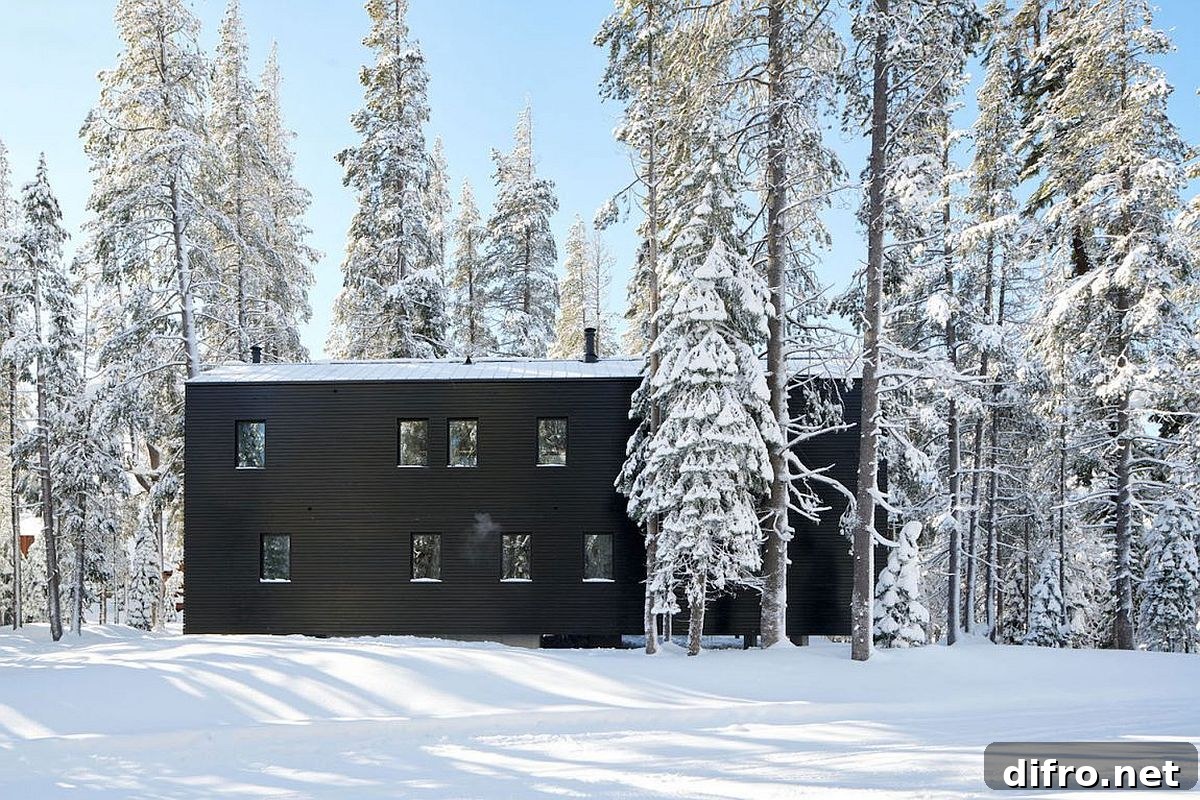
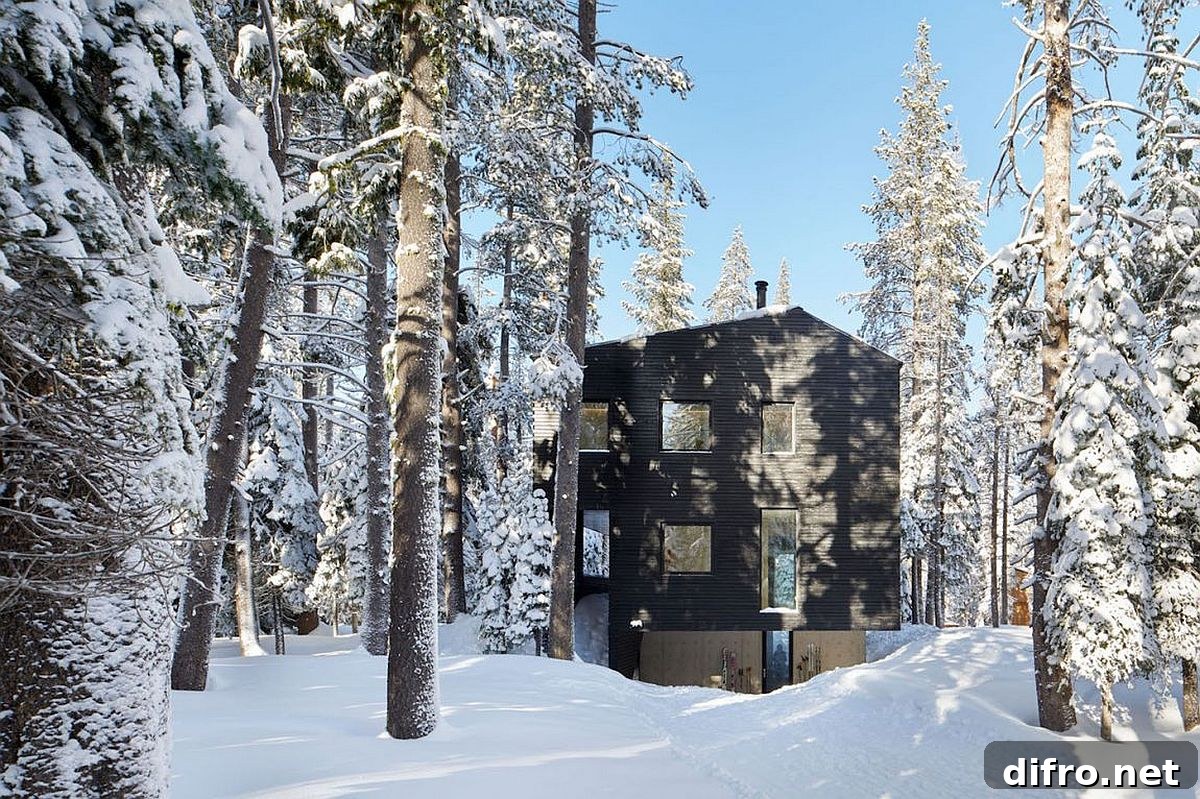
From a distance the house reads as a dark, low-slung structure framed by the forest—its exterior is clad in tar-treated wood siding that allows the building to recede into the landscape, especially after sunset. That dark skin conceals a robust concrete plinth that protects the home from deep winter snow and the seasonal forces of the high Sierra. Together, these materials—weather-resistant concrete at the base and charred wood above—create a compelling contrast that is practical, visually cohesive and rooted in place.
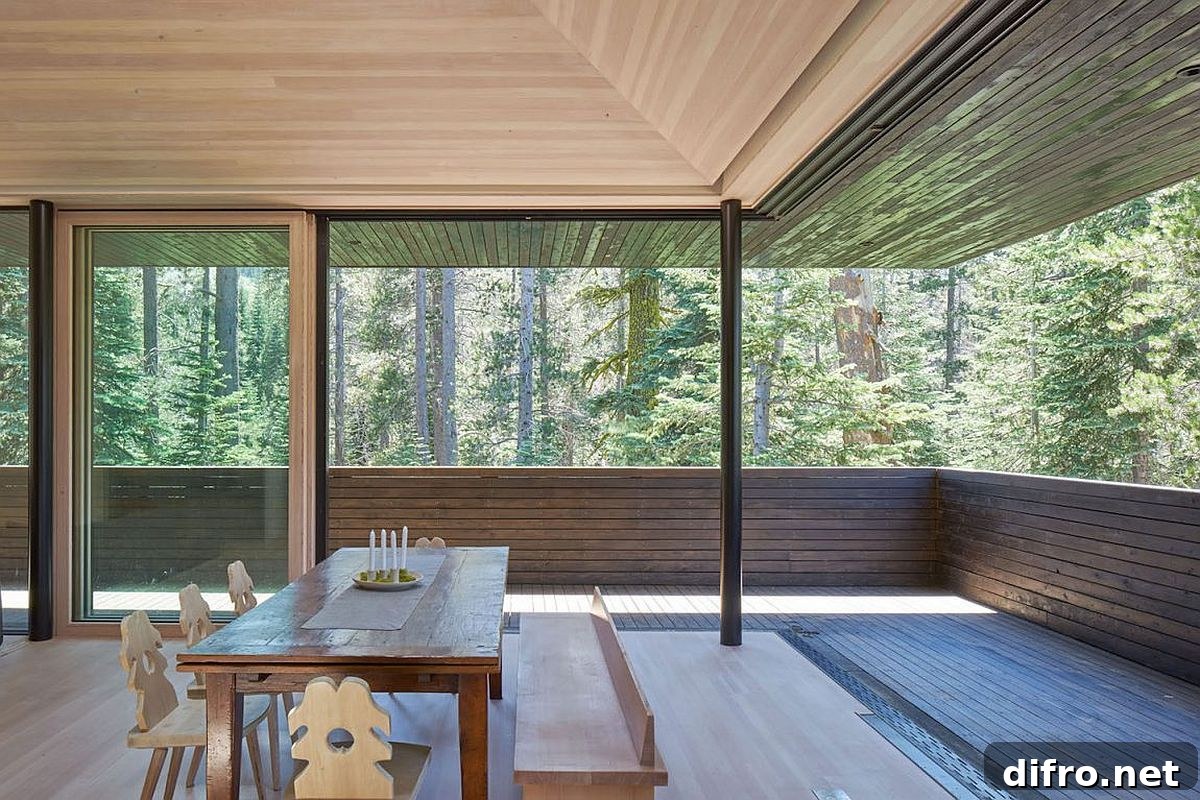
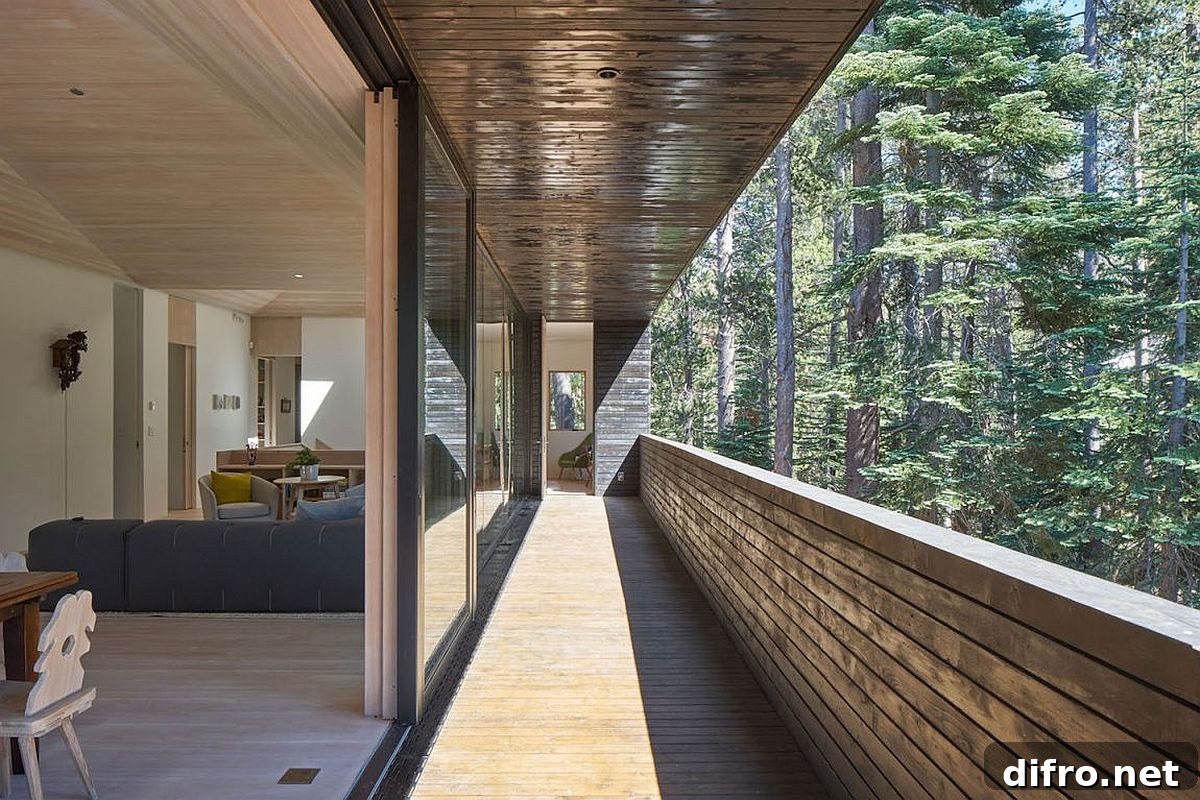
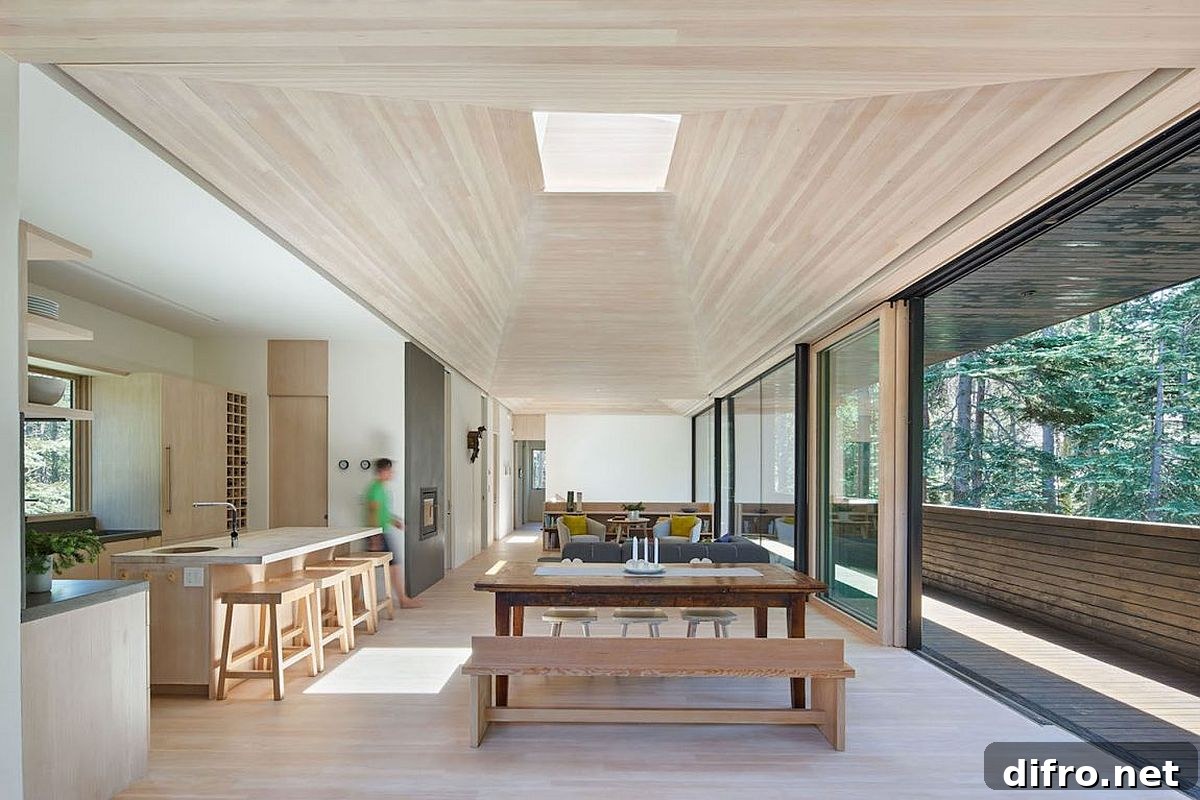
Inside the mood shifts to a warm, relaxed atmosphere. Minimally treated fir defines the interiors, lending a bright, natural finish that contrasts with the darker exterior. The house’s open-plan living level is intentionally simple and welcoming: a combined kitchen, dining and living area opens toward large sliding glass doors that blur the boundary between interior and exterior and frame views of the surrounding conifers and ridgelines.
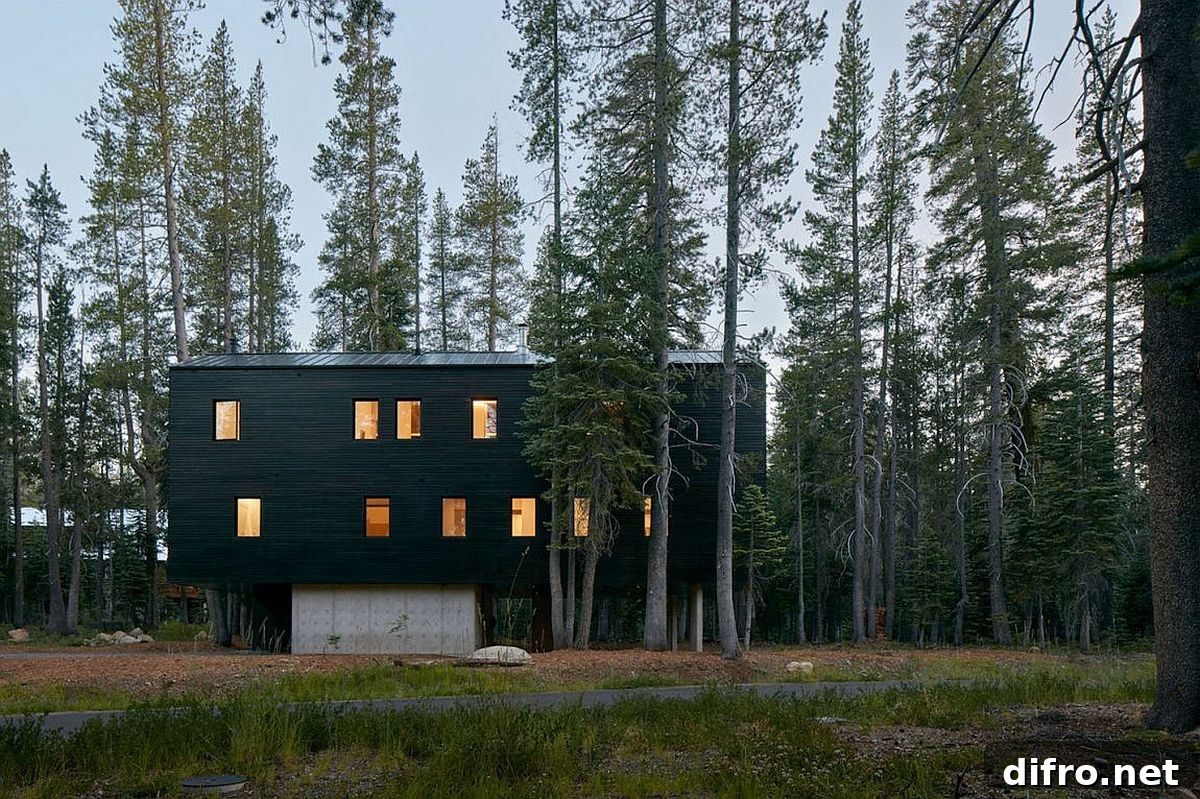
A long, open balcony runs the length of the main living level, inviting sunlight and fresh air into the interior while offering uninterrupted views across the valley. The orientation of the building and the internal layout were carefully planned to capitalize on those views while protecting privacy. Large sliding doors and generous glazing make the landscape feel like an extension of the living space, while the lower concrete plinth and durable exterior cladding minimize maintenance and risk during winter.
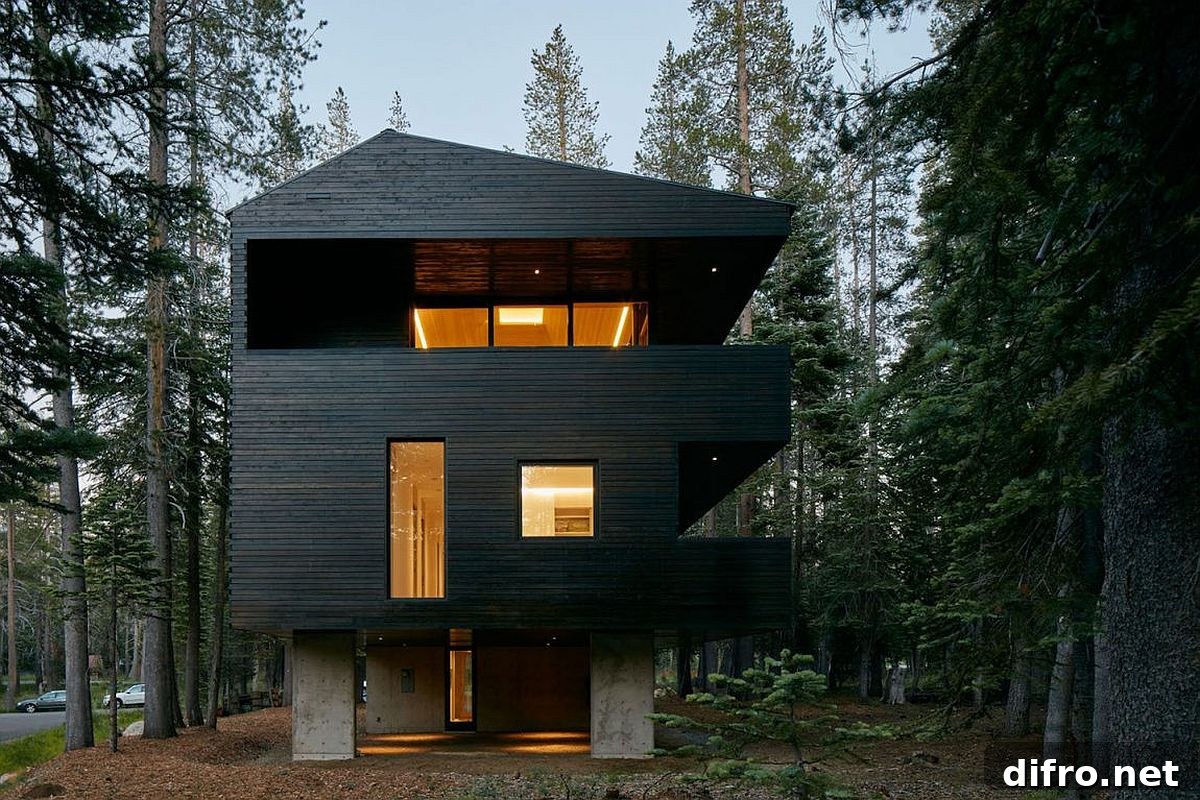
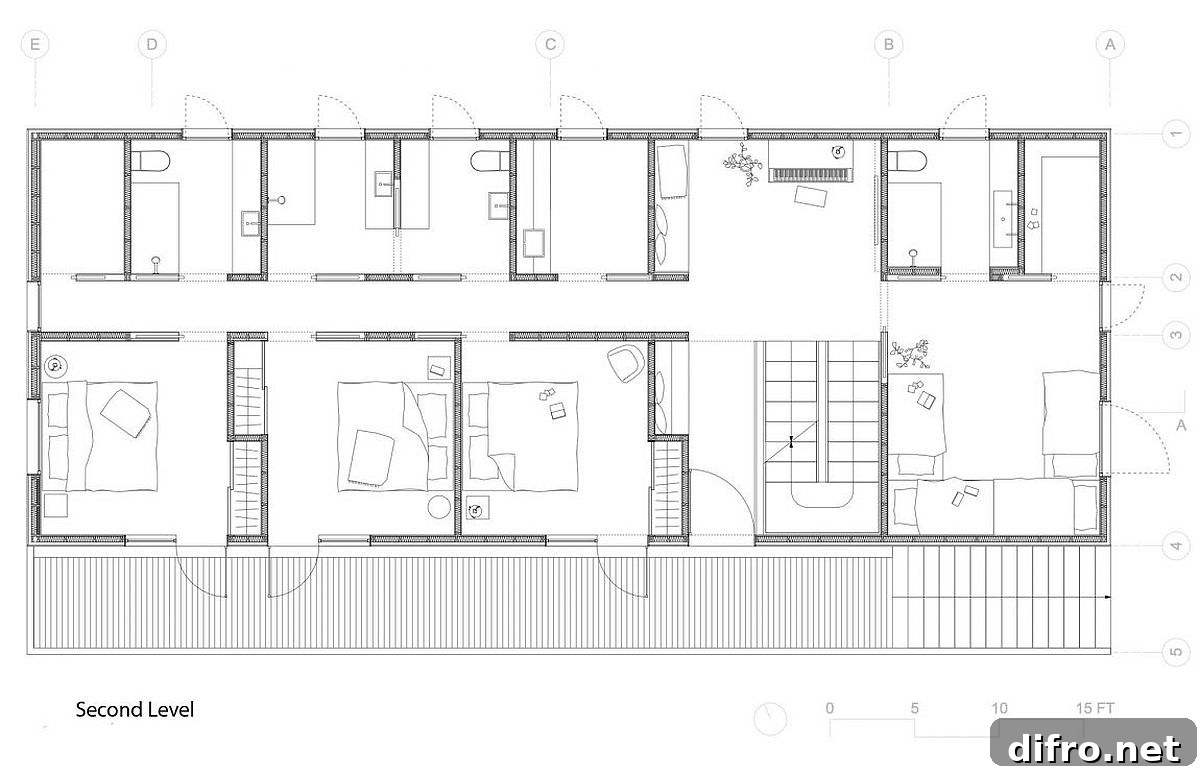
The five-bedroom cabin employs a restrained material palette that emphasizes longevity and regional character: tar-treated wood outside, concrete base, and warm fir on the interior. Fixtures and finishes remain unassuming and deliberately local, supporting the project’s goal of creating a durable, low-maintenance retreat that still feels intimately connected to its forested setting.
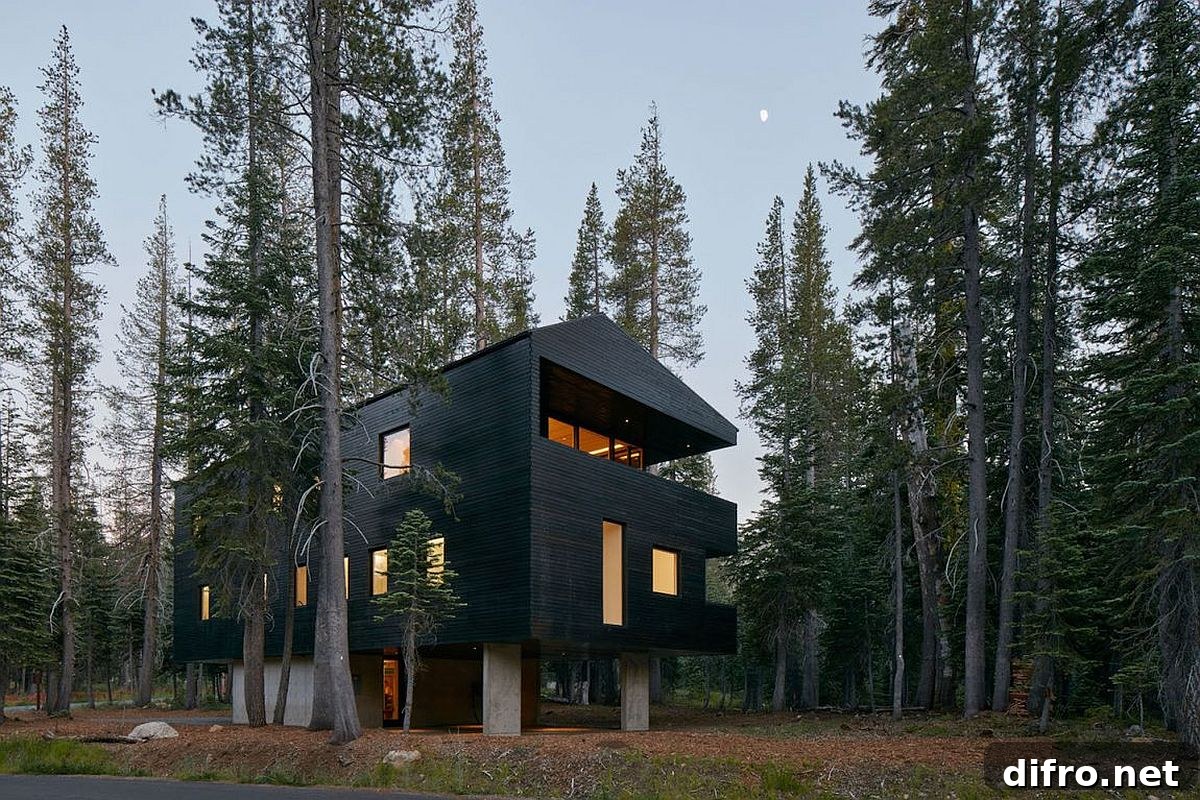
Trollhus is a clear example of architecture shaped by place: design decisions—material choices, massing and site orientation—respond to heavy snowfall, fragile mountain ecology and the desire for lasting family use. The layout balances shared open spaces and private rooms, while the exterior treatment ensures the home slips quietly into the wooded backdrop when viewed from a distance.
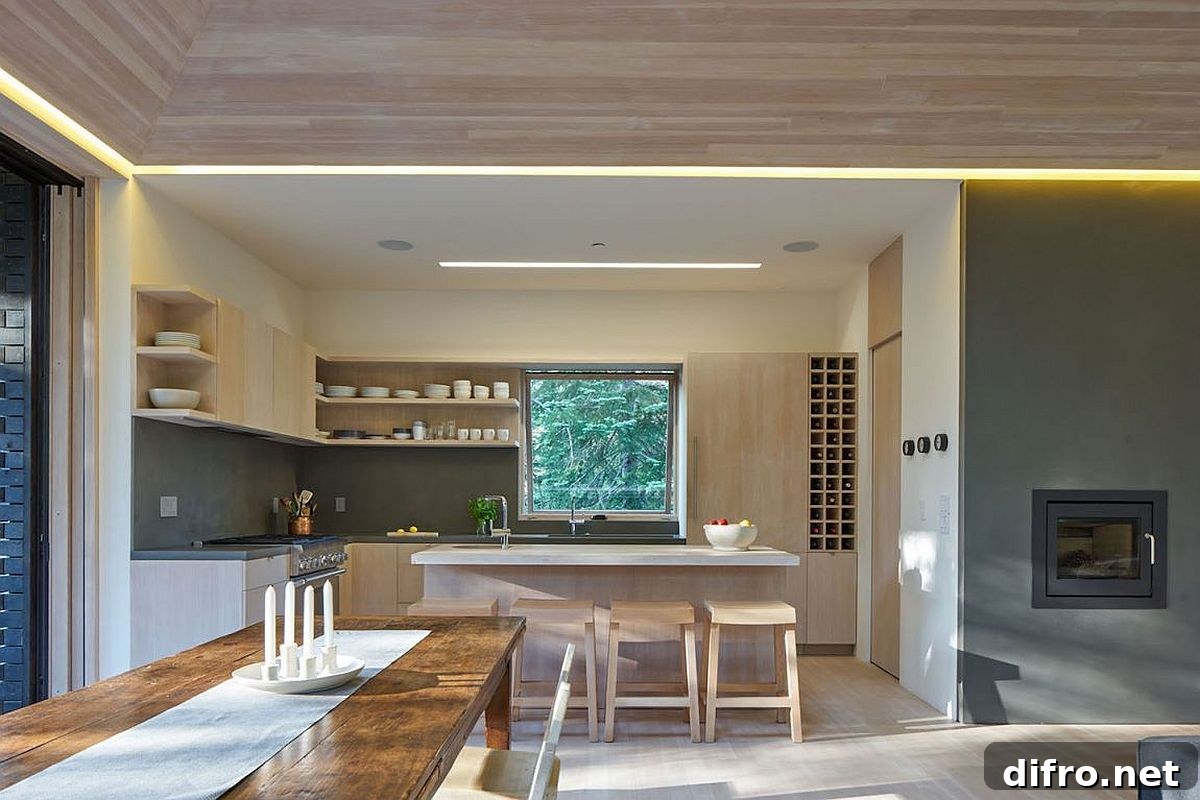
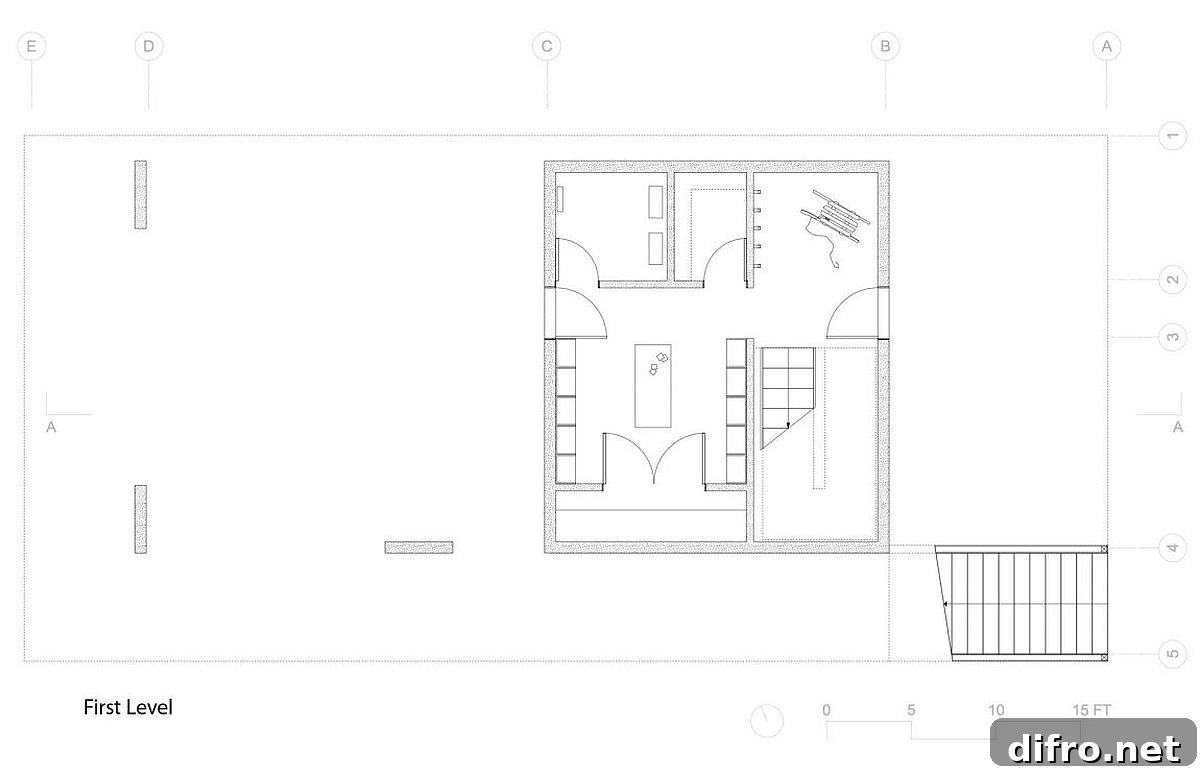
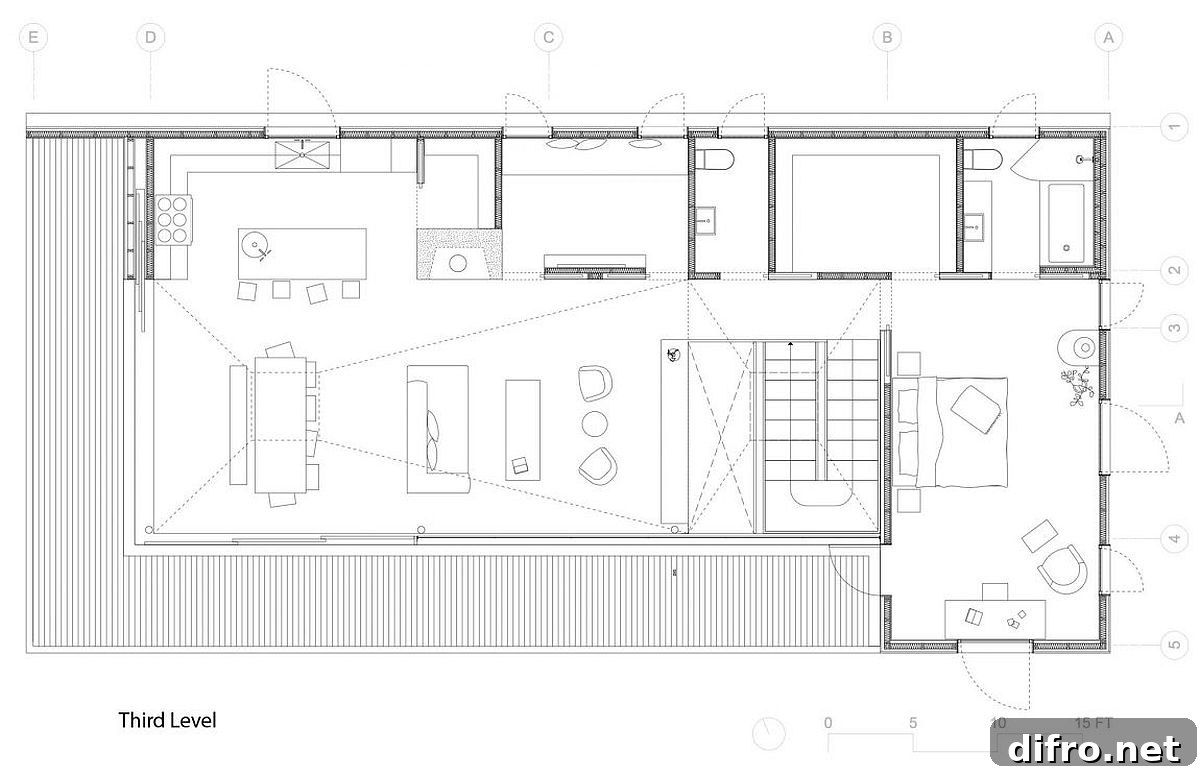
The plans and images included here show how the three levels function together: a solid, sheltered lower level; private bedrooms and utility spaces on the middle floors; and the open living level at the top, where the balcony and glazing take full advantage of seasonal light and views. Thoughtful detailing and local materials create a modern alpine home that is at once protective, warm and deeply connected to its site. [Photography: Bruce Damonte]