Parenting brings countless joys, but tripping over miniature cars, blocks and dolls is a universal low point. Fortunately, with a few clever storage ideas you can keep toys organized, accessible and attractive. Below are practical, kid-friendly DIY solutions that turn clutter into intentional storage—many of which are inexpensive, easy to build and fun for children to use. These ideas range from mobile crates to magnetic wall organizers and loft-style furniture, so you can pick solutions that suit your space and lifestyle.
Making Storage Fun
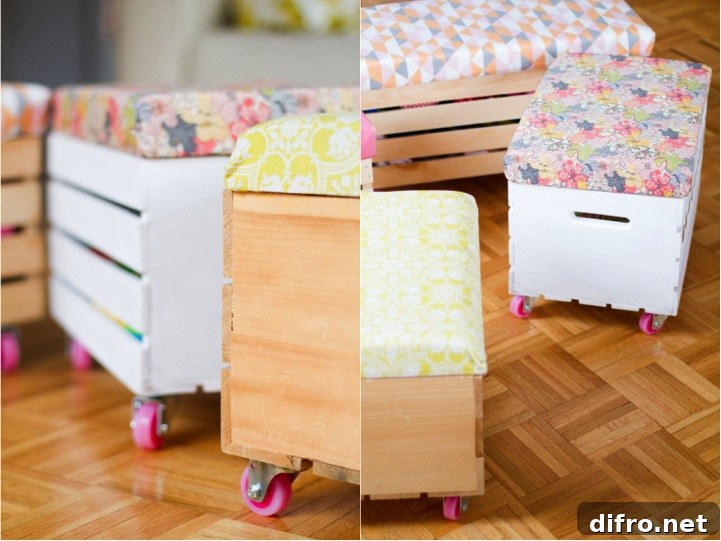
Storage that feels like play encourages kids to tidy up. Rolling crates with casters combine mobility and convenience: they travel wherever play happens and can be tucked under tables or benches when not in use. Add a soft cushion on top and the crate becomes both storage and a comfy seat, making it an inviting part of the play area.
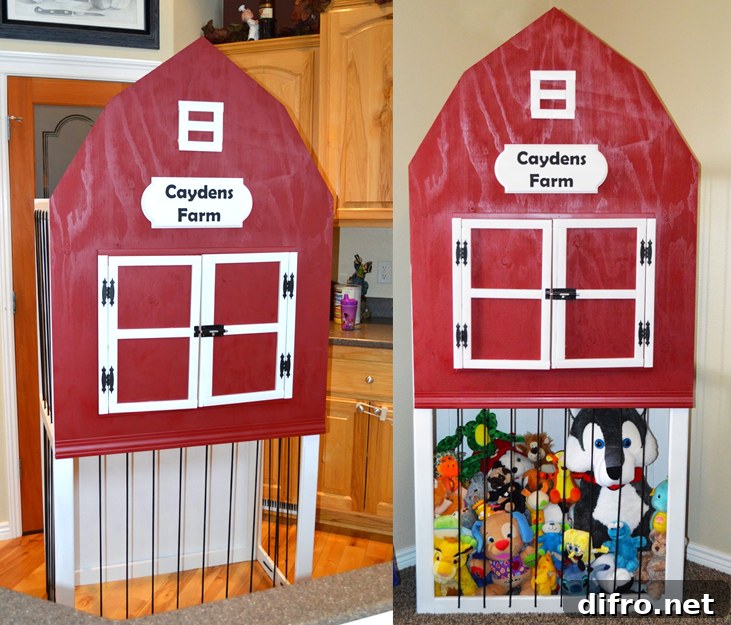
Another playful solution is a stuffed-animal corral or “zoo” made from simple plywood panels and bungee cords. The cords hold plush toys in an open-front grid so children can see and pull out favorites while still keeping everything in its place. Framing the storage like a farm fence or a zoo exhibit makes cleanup feel like rounding up animal friends rather than a chore.
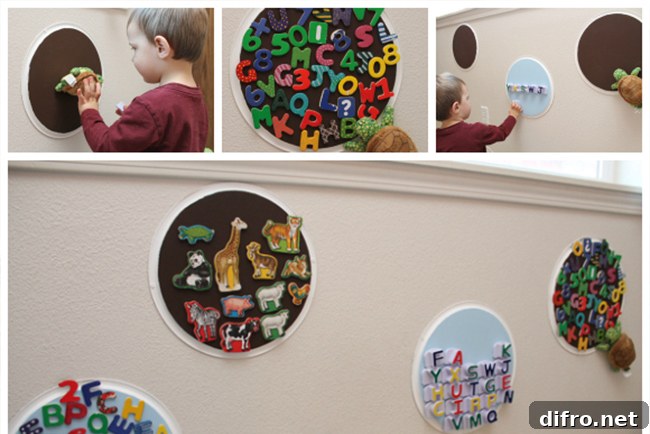
Magnetic wall storage made from inexpensive metal pans is another clever idea. Attach magnets or magnetized strips to toy components that will stick to pizza pans mounted on the wall. This keeps small metal toys, play kitchen pieces and magnetic blocks off surfaces and makes them visible at a child-friendly height. Always ensure magnets and small parts are secured safely and appropriate for a child’s age.
Smart Space-Savers
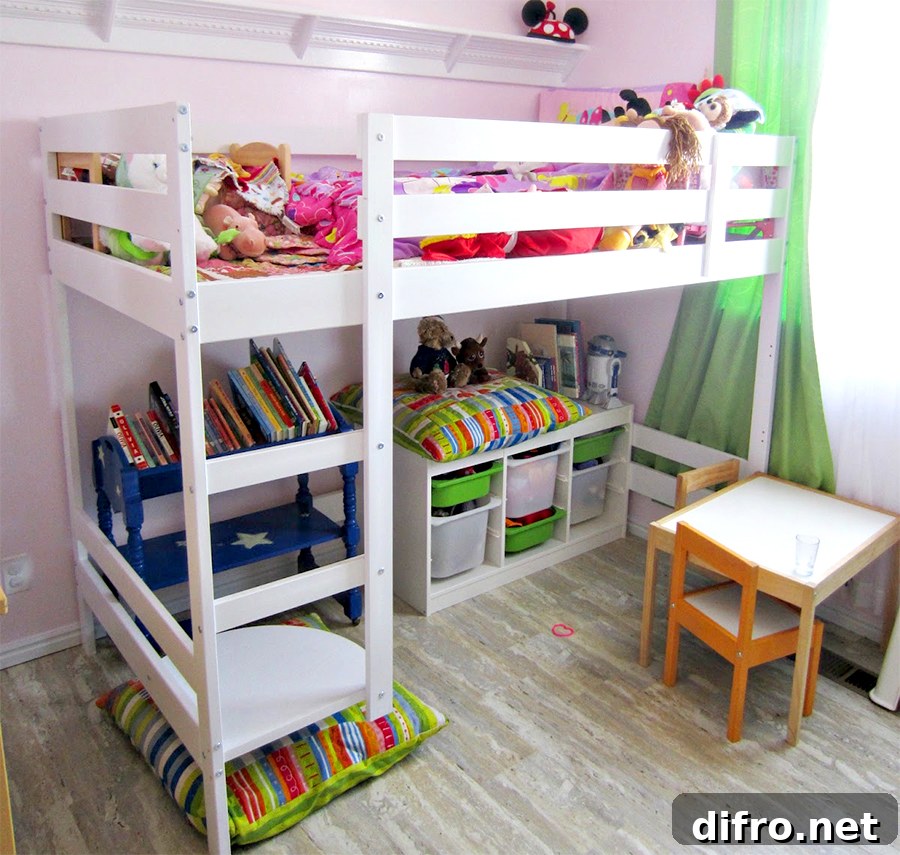
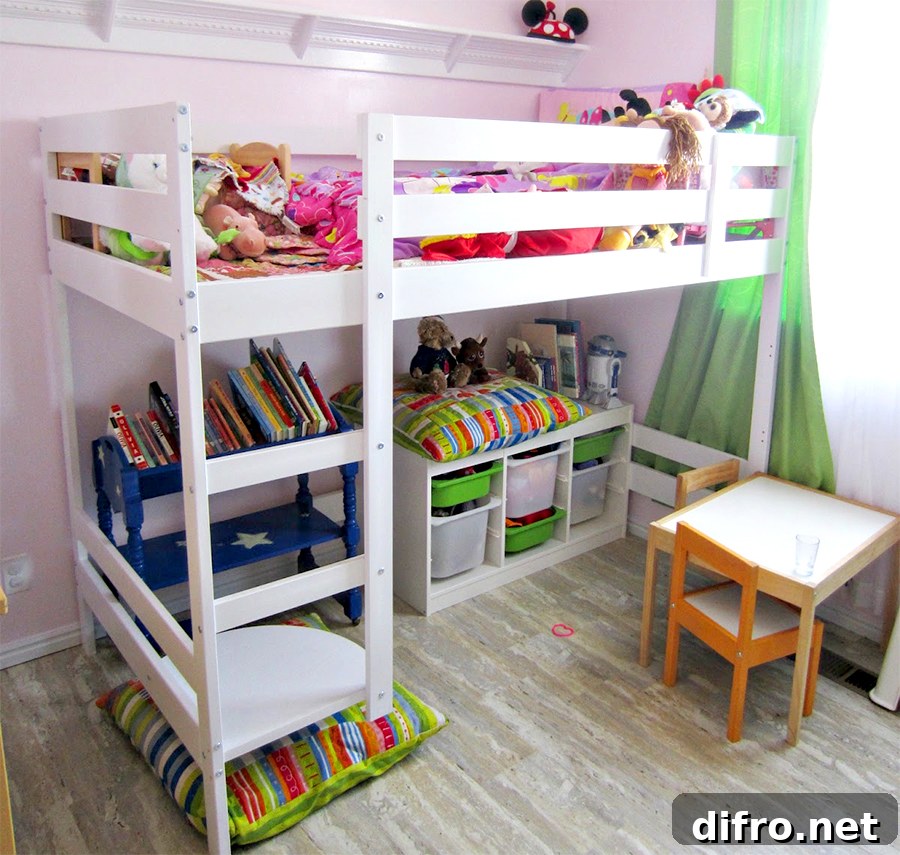
When floor space is limited, think vertically. Loft and bunk beds free up the area beneath for play and storage. A loft bed with shelving, cubbies or fabric bins underneath provides a dedicated zone for toys that keeps them out of the sleeping area. Painting or decorating the lower nook can also create a cozy play den that encourages children to store toys in a special place.
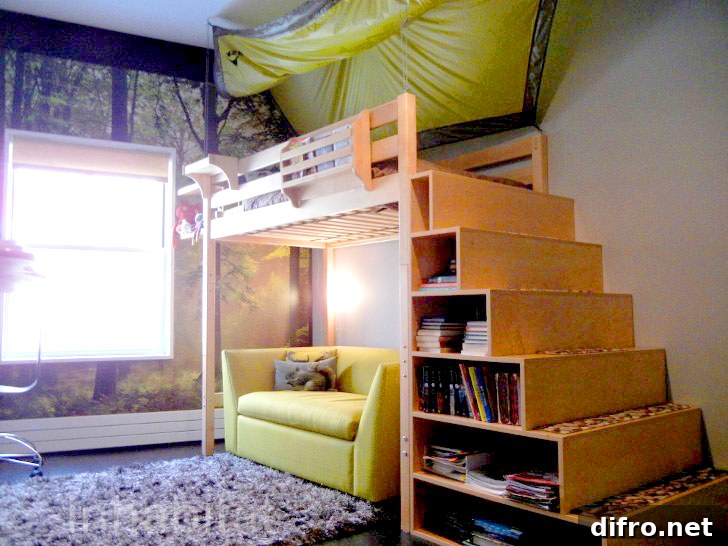
Tent-style loft beds or camper-inspired designs make tidying a reward: toys get stashed in cubbies that form the steps to the bed. This dual-purpose approach—combining stairs, storage and play—helps children see organizing as part of their daily routine. Use labeled bins or color-coded baskets in the steps to make cleanup fast and intuitive for younger kids.
Box Em’ Away with Style!
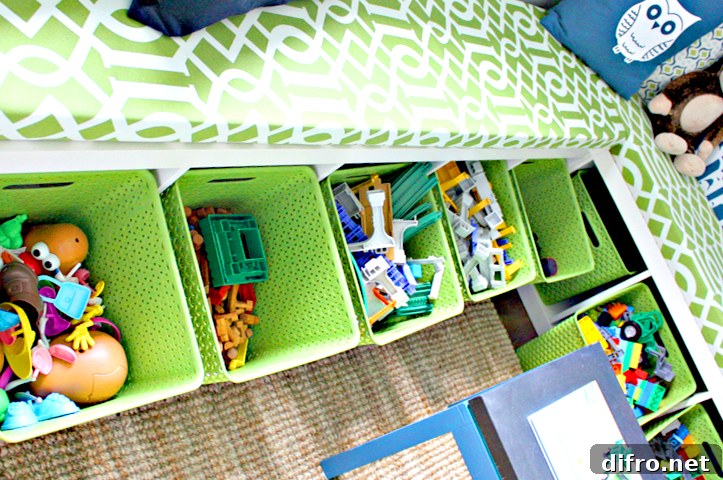
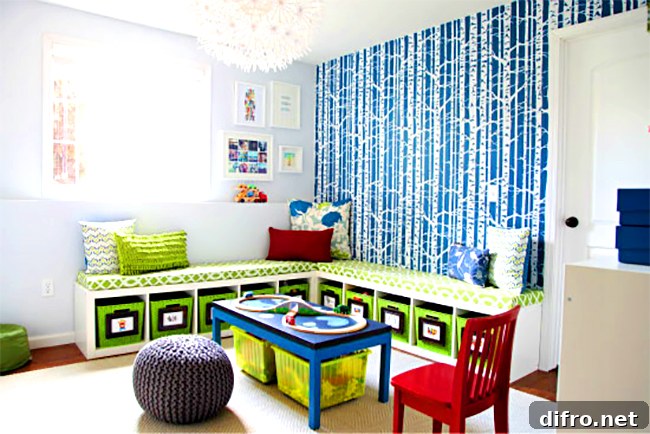
Open shelving units like cubbies can be transformed into attractive seating and storage. Laying a cube organizer on its side creates a low bench with square compartments for baskets. This provides easy access to toys while offering a comfortable place for a parent or child to sit during playtime. Adding washable fabric bins makes sorting by toy type simple and keeps small pieces contained.
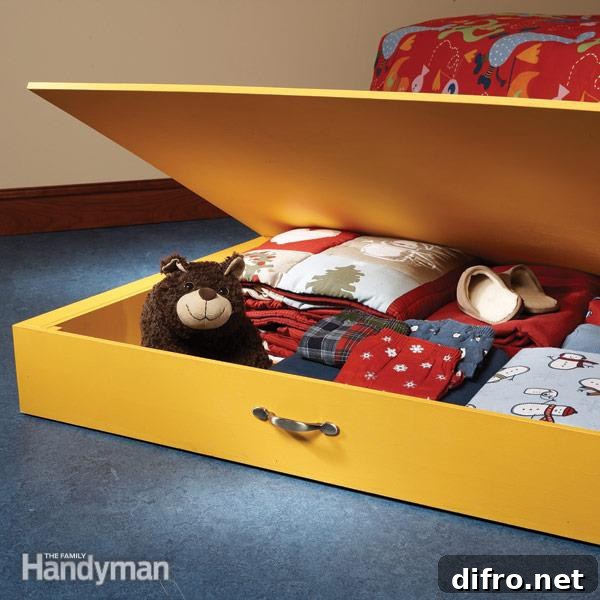
Underbed storage maximizes unused space and keeps seasonal or less-used toys out of sight but within reach. Simple DIY underbed boxes built from a single plywood sheet can include caster wheels for easy access. Clear-lidded boxes are especially useful so kids and parents can see what’s inside without constant rummaging.
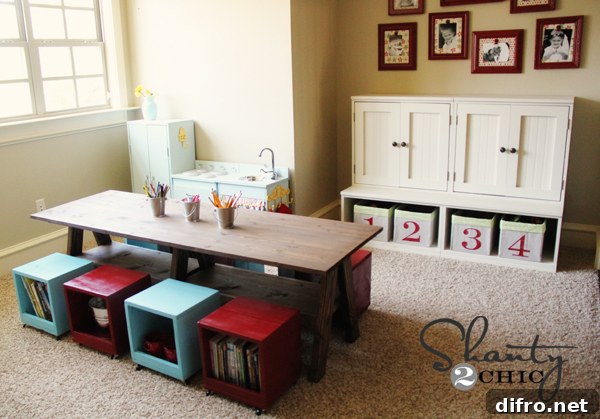
Rolling storage cube stools combine seating with hidden compartments—perfect for a playroom needing versatile furniture. Personalize each cube with a child’s name or a themed decal to encourage responsibility for their own toys. These stools can be moved around the room for group play and then rolled back to a storage wall when it’s time to clean up.
Practical tips to make any storage system successful: group toys by type, label bins with words and pictures for pre-readers, and involve children in the planning so storage matches how they play. Regularly rotate items so the play area stays fresh and crowded shelves don’t become overwhelming. Keep safety in mind—secure tall units to the wall, choose non-toxic finishes and avoid small magnets for young children.
Which of these storage ideas would work best in your child’s playroom?