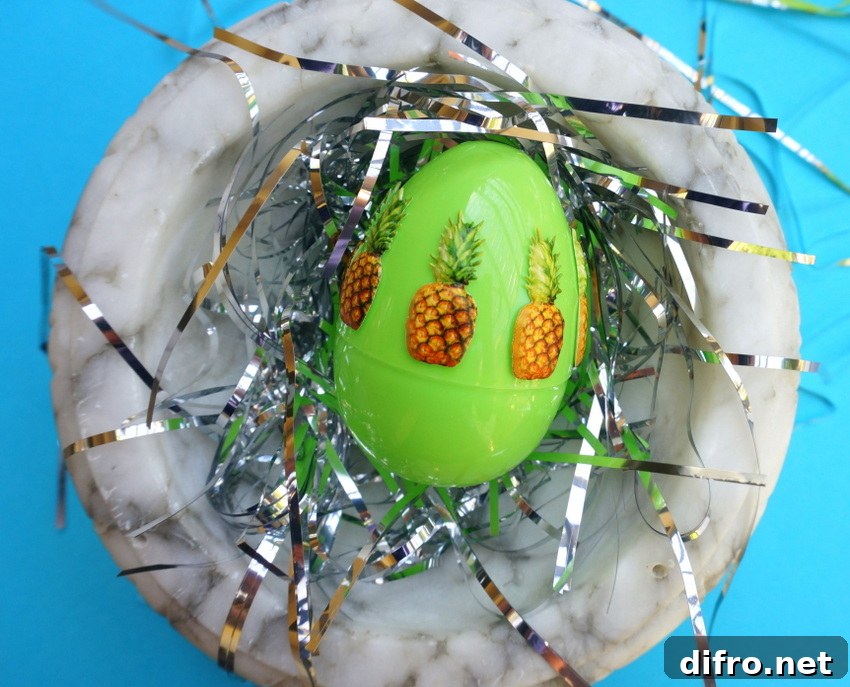
Today I’m sharing a quick, modern way to refresh your Easter celebration. With a handful of inexpensive plastic Easter eggs and a selection of stickers, you can personalize seasonal decorations in minutes. This simple DIY is perfect if you enjoy crafting but are short on time—fun, affordable, and full of style.
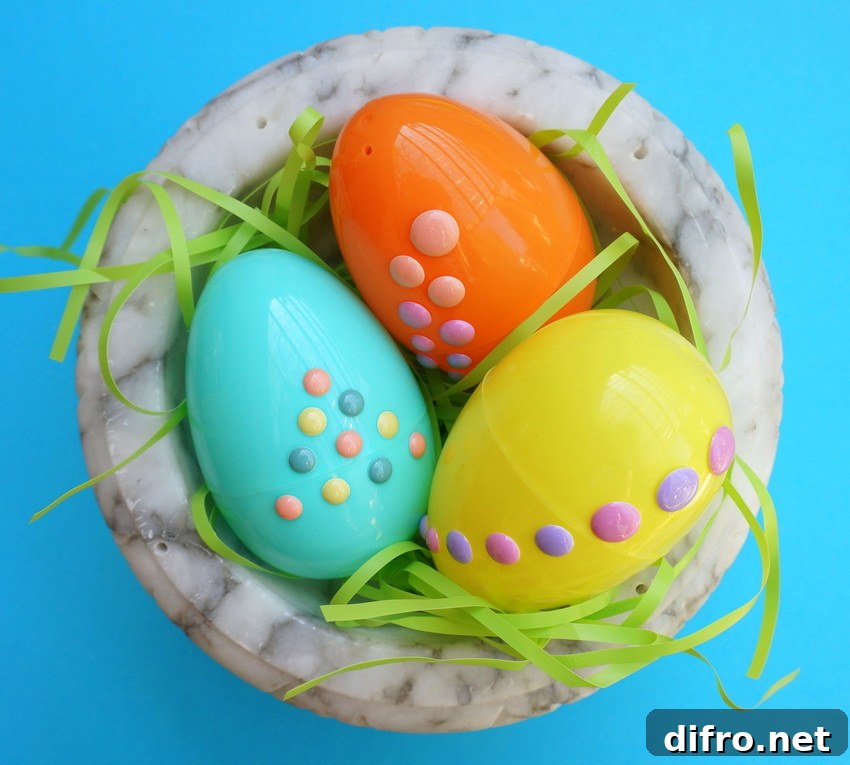
Getting Started
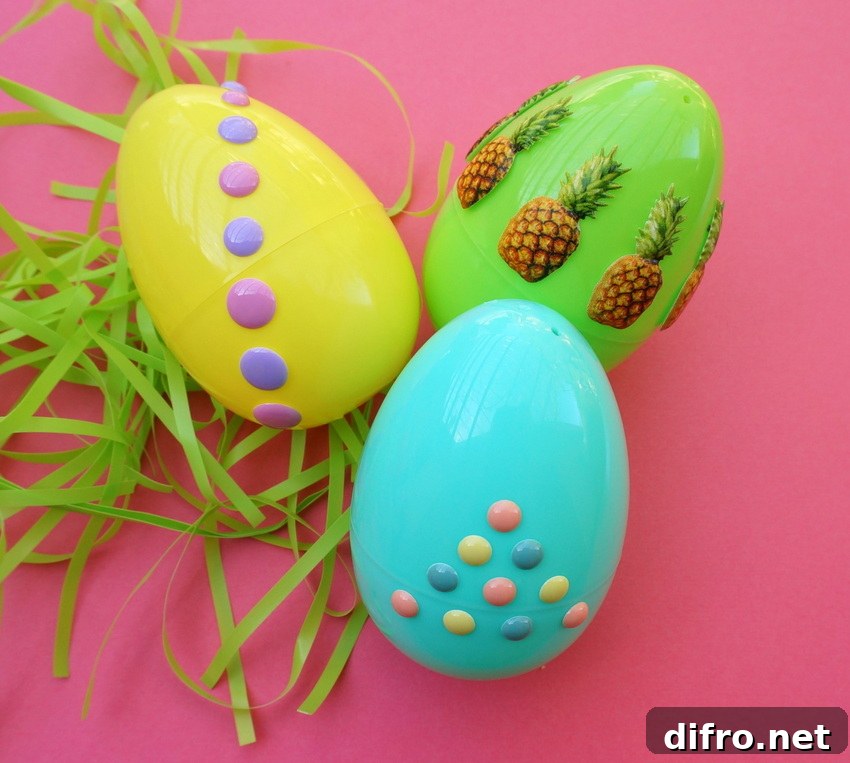
What you’ll need:
- Medium- or large-sized plastic Easter eggs
- Stickers in your favorite shapes and colors (dots, fruit motifs, geometric shapes, etc.)
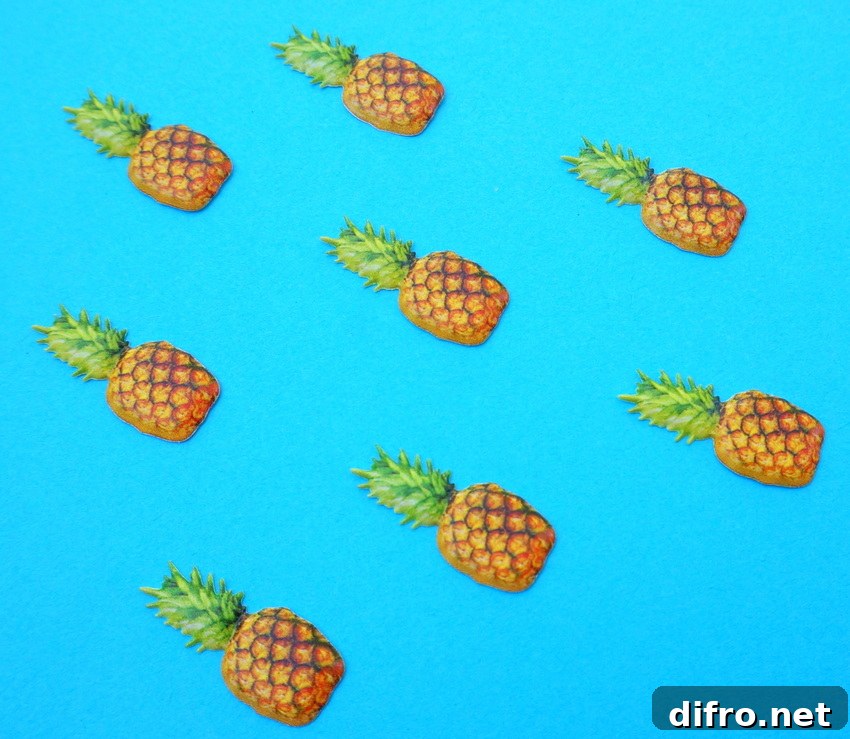
For my project I wanted simple dots and a fruit motif—I chose pineapples—because I love bright, still-life-inspired graphics and bold color contrasts. I picked up puffy dot stickers and pineapple decals at my local craft store. The puffy dots add texture and dimension, while flatter fruit stickers give a cleaner, smoother finish if you prefer a more subtle look.
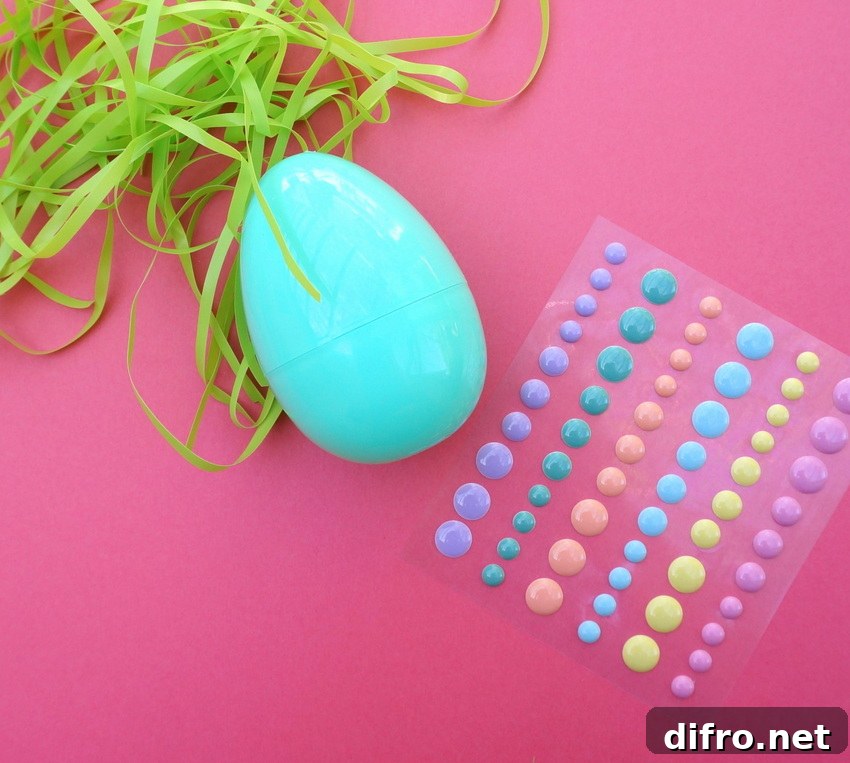
Puffy stickers can be playful and sculptural, but if you’re placing stickers around the curved top and bottom of a plastic egg, you may want to secure the edges with a tiny dab of craft glue so they stay flat. Flat stickers usually adhere more reliably on curved plastic.
Project Steps
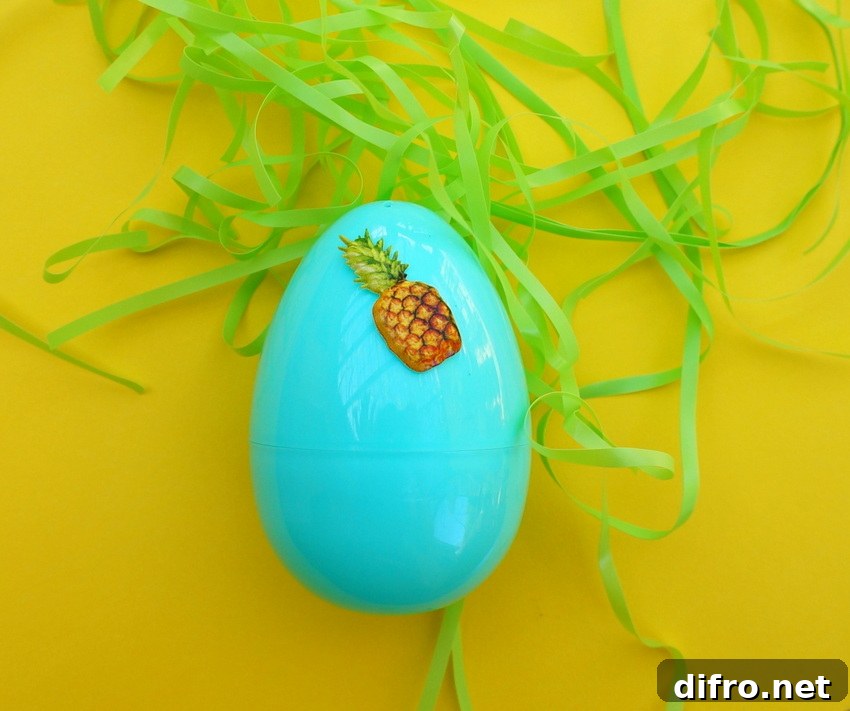
Step 1: Plan your design. You don’t need a perfect blueprint—many stickers can be repositioned—but it helps to have a general layout before you begin. Decide whether you want a repeated pattern, a single focal motif, or a gradient of colors.
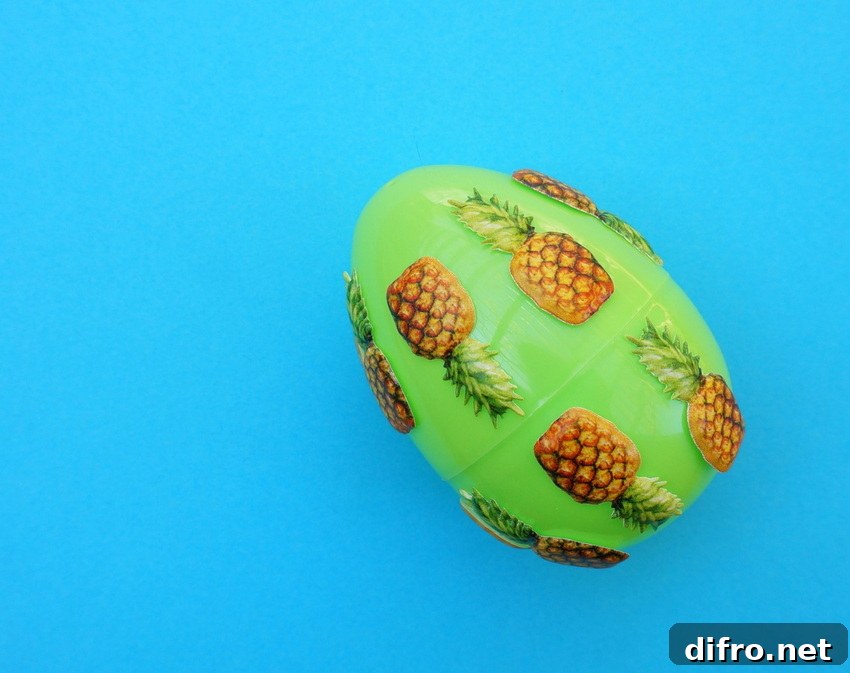
Step 2: Apply stickers one at a time. Place each sticker carefully and adjust as needed until the composition feels right. This step is intentionally simple: a few stickers in the right places make a big visual impact. If you have more time, experiment with different arrangements—rings, diagonal lines, clustered groups, or symmetrical motifs.
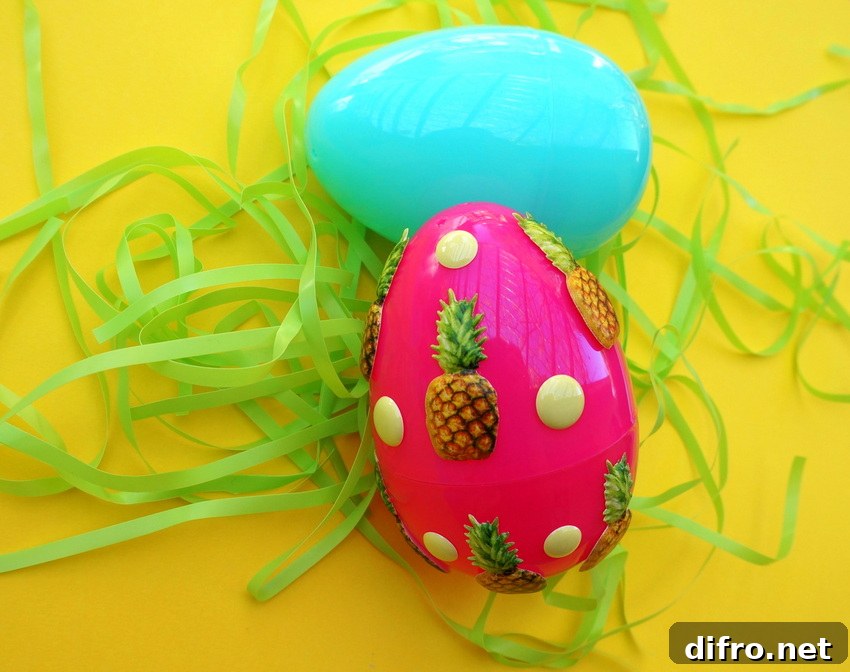
In some examples I combined pineapple stickers with small yellow dots to form a repeating pattern around the egg; in others I created a ring or a triangular cluster. Puffy pineapple stickers may lift slightly near seams, so press the edges gently or add a small amount of glue if needed. Smaller dot stickers tend to stay put and work well for geometric or gradient designs.
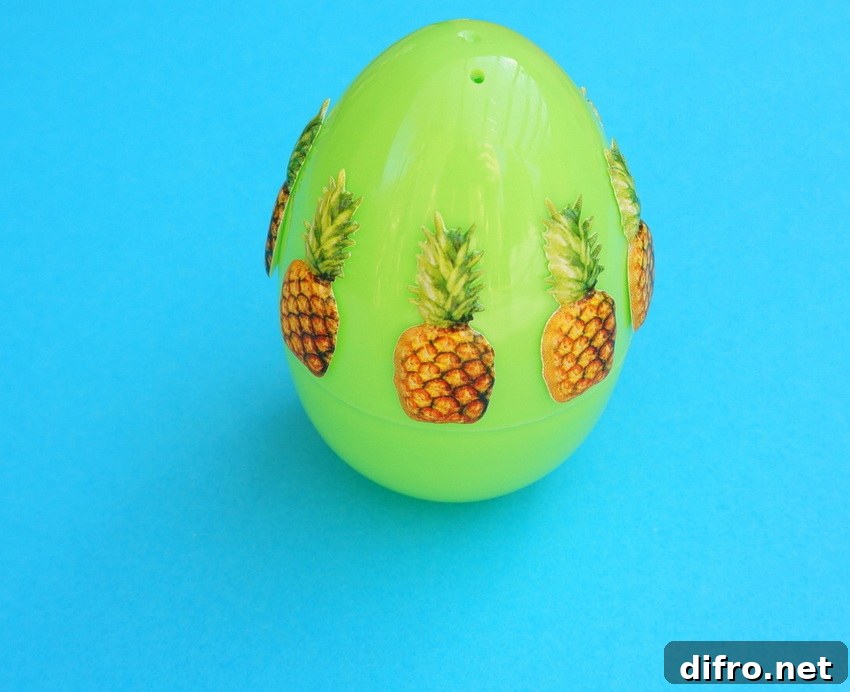
I also experimented with color transitions: arranging stickers from smallest to largest or darkest to lightest produces an ombré effect. A diagonal stripe of berry-toned dots, for example, creates movement and a contemporary feel, while ordered rows or rings emphasize pattern and repetition.
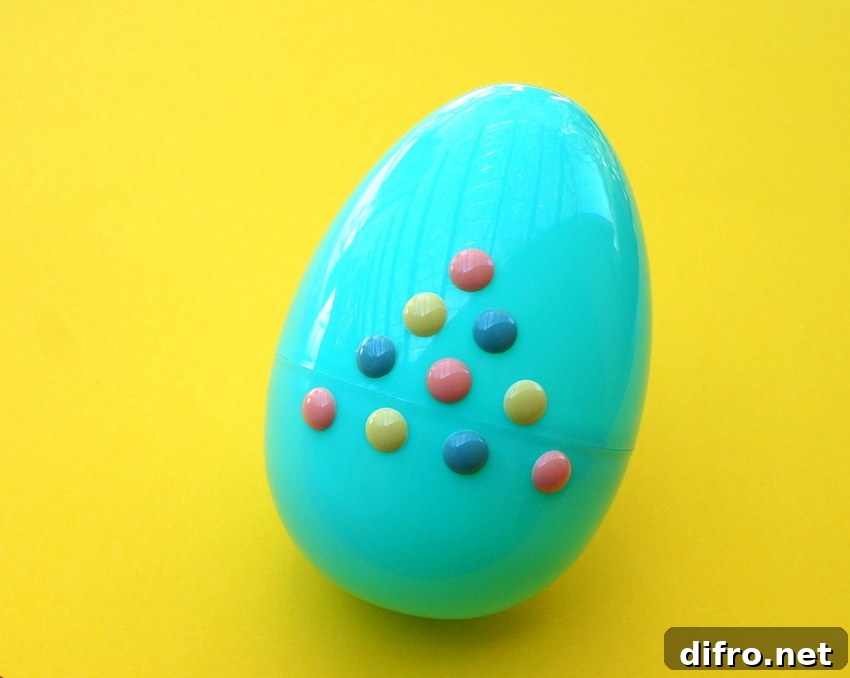
Because plastic eggs often open in the middle, avoid placing stickers over the seam so the egg can still be used for treats and favors. If you plan to fill and gift them, test that each egg closes cleanly after decorating.
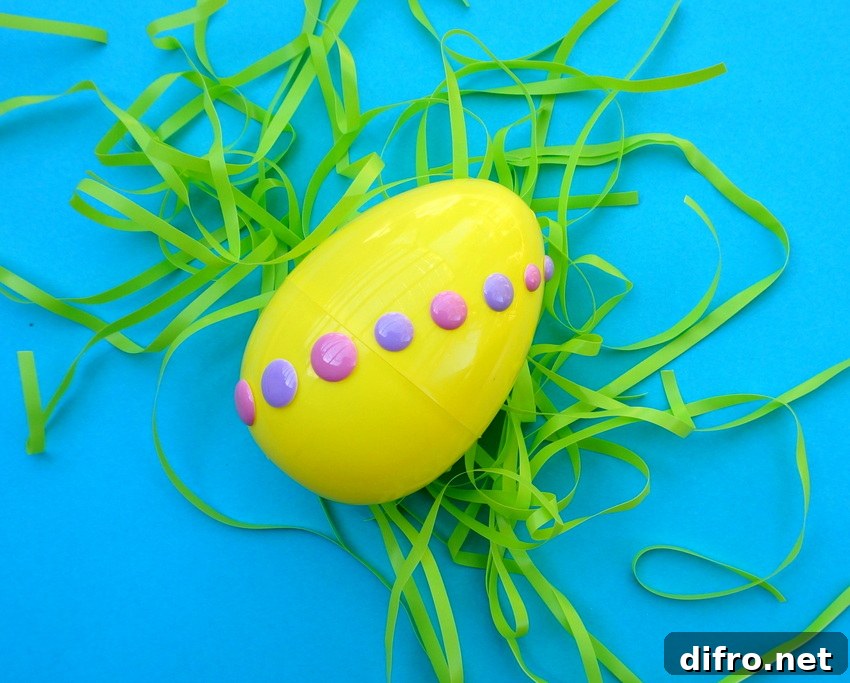
Easter Egg Styling
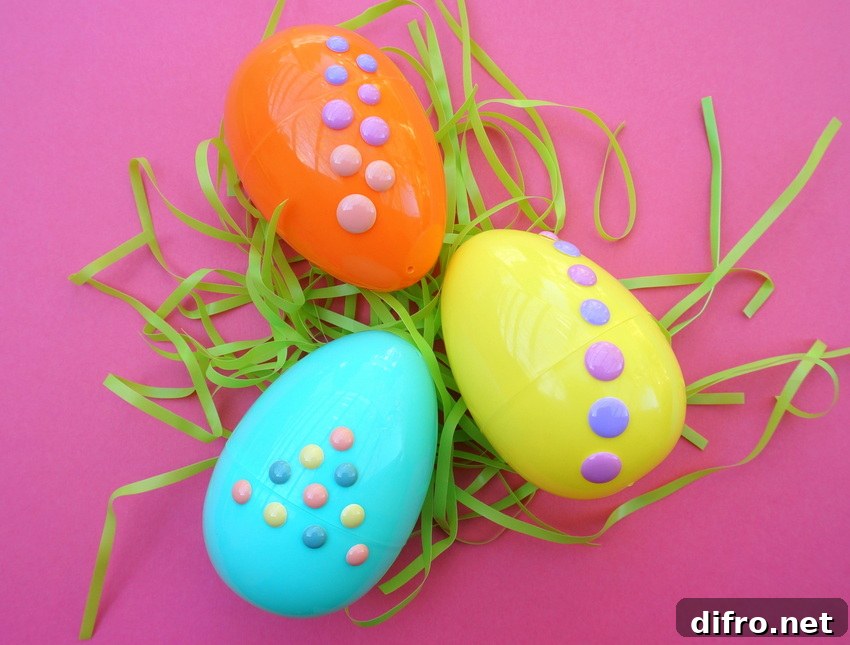
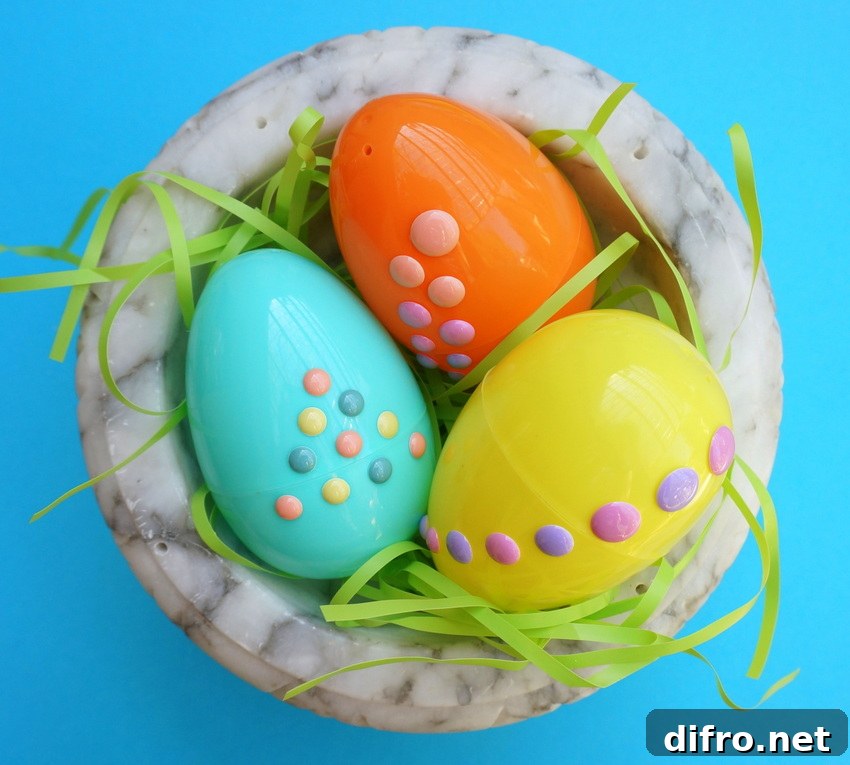
One of the best things about this project is how quickly inexpensive plastic eggs can be elevated into modern, eye-catching décor with a few well-chosen stickers. These decorated eggs make charming favors when filled with small treats, and they look great grouped together as a centerpiece or display.
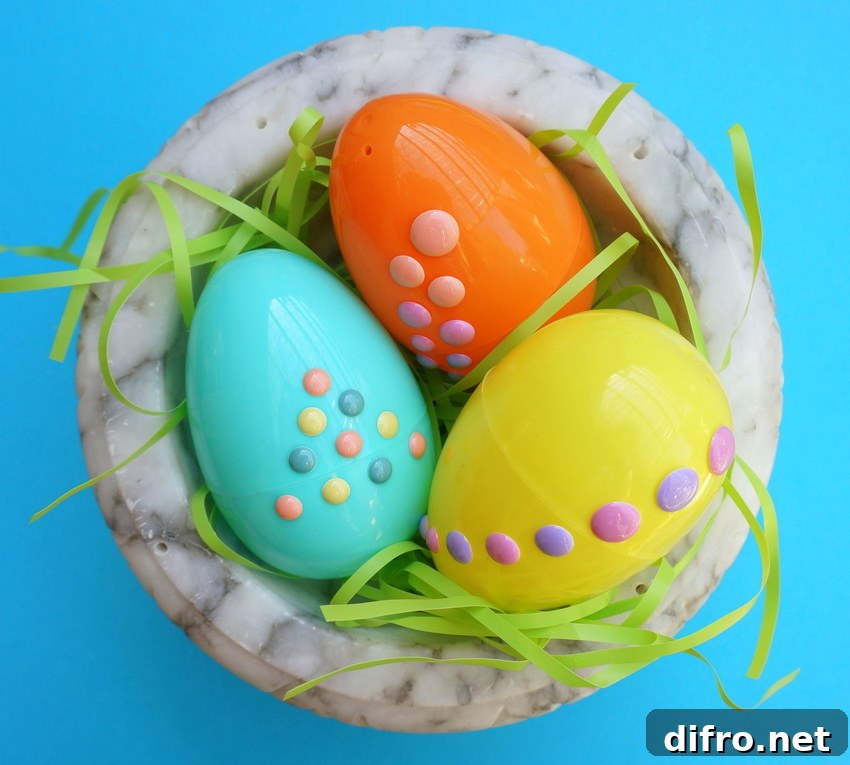
For a simple table display, arrange the finished eggs in a bowl or urn on a bed of Easter grass or metallic shred. If you want to create a still-life vignette, add a few complementary props—pieces of marble tile, a small tray, or sculptural objects—to enhance the modern aesthetic. To keep eggs upright on a shelf, a small roll of tape or a dab of museum putty on the bottom will stabilize them.
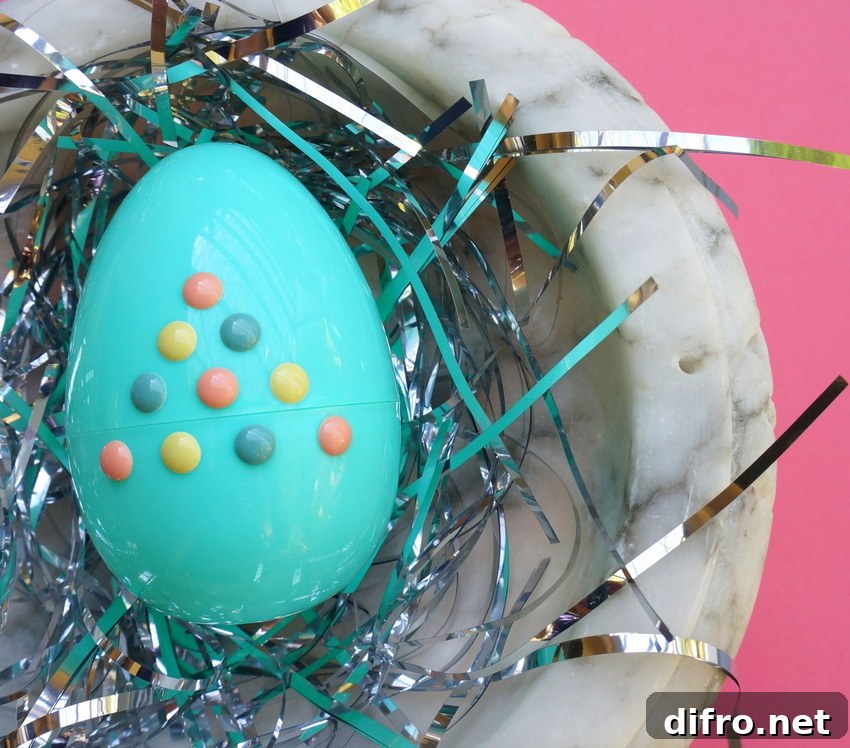
Whether you choose bold fruit stickers, tiny dots, or structured geometric patterns, this budget-friendly craft adapts to many styles. It’s an easy way to add contemporary flair to traditional Easter décor and a fun project to do with family or friends.
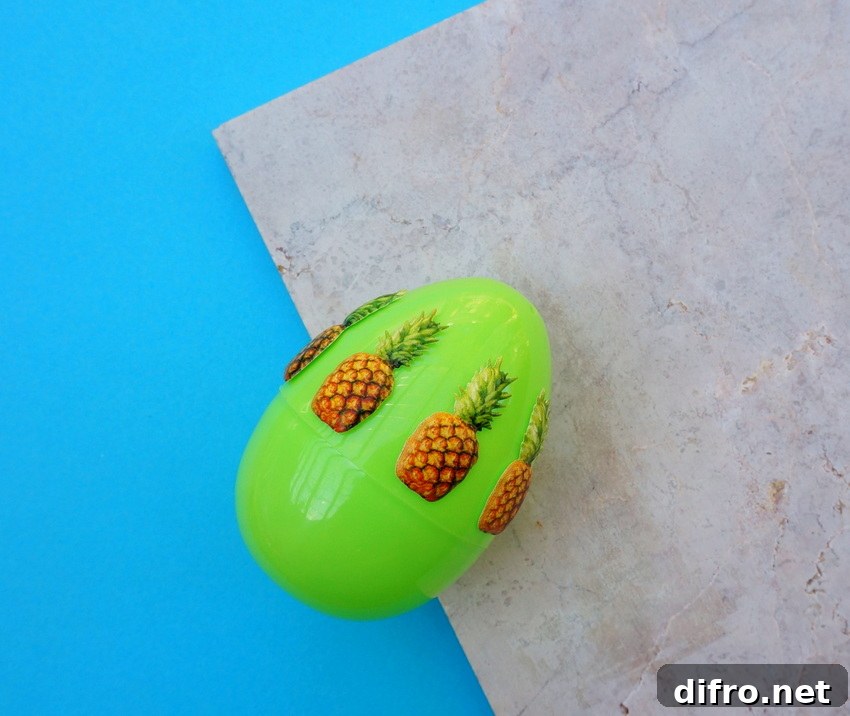
Wishing you a colorful Easter filled with good food and meaningful moments. Have fun customizing your eggs, and enjoy the process of making something cheerful and modern for the season.