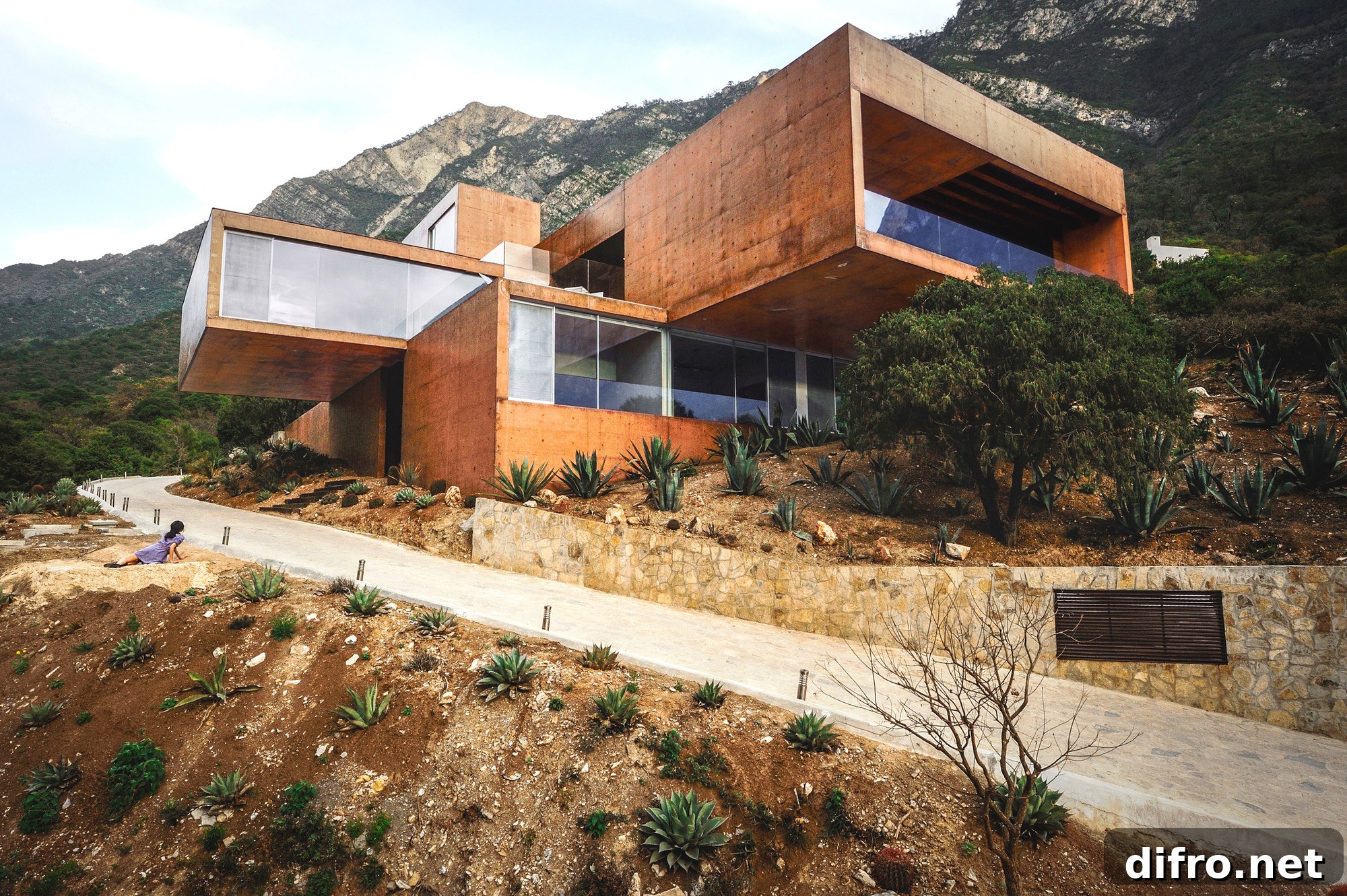
These 15 modern homes showcase bold cantilevered and overhanging volumes that define contemporary residential architecture. Each project demonstrates a distinct approach to structure and form, often creating dramatic visual tension by projecting living spaces beyond their supports. While some designs appear to defy gravity, all are conceived to respond sensitively to their sites and to enhance everyday life for their occupants. Keywords: cantilevered homes, contemporary architecture, modern houses, overhanging volumes.
Fly Out House
Fly Out House in Toyohashi, Japan, by architect Tatsuyuki Takag is a timber-framed residence elevated on a cantilevered concrete slab. The design lifts living areas above the ground plane, creating sheltered outdoor space below and generous views from the upper levels. Its careful structure balances lightweight timber construction with a robust concrete base to produce a refined, suspended aesthetic.
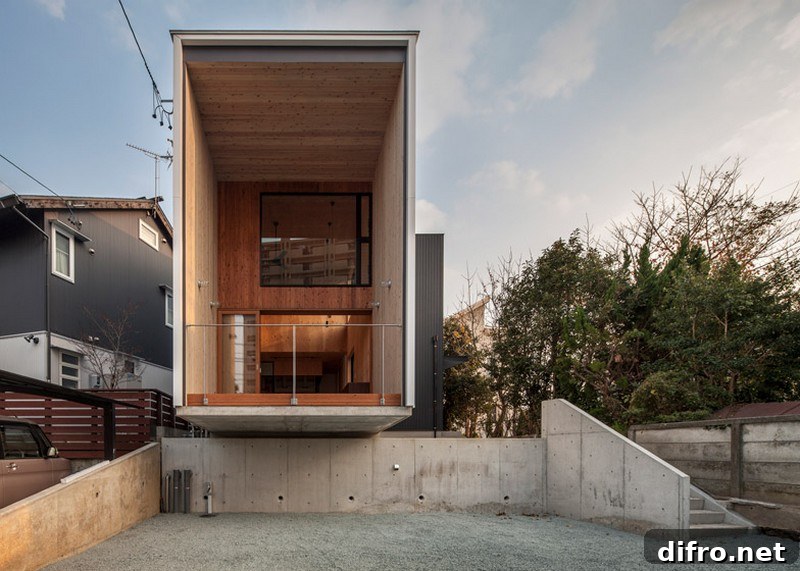
Photo credit: Freshome.
10 X 10
Perched in a Santiago suburb at the foothills of the Andes, 10 X 10 by Max Núñez Arquitectos reads as a restrained concrete volume from the exterior. Behind its severe facade lies a calm, carefully proportioned interior that prioritizes light and spatial clarity. The house demonstrates how a compact, monolithic exterior can conceal a thoughtful, human-centered living environment.
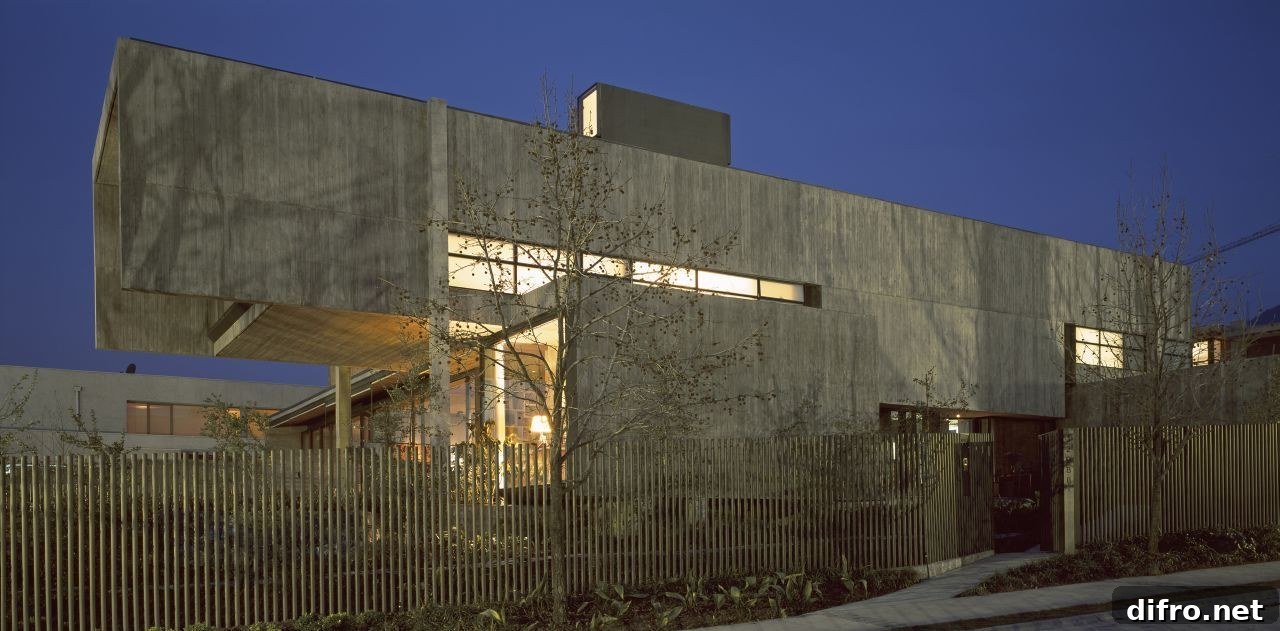
Photo credit: Erieta Attali / ArchDaily.
Residence Roy-Lawrence
Chevalier Morales Architectes reinterpreted the Swiss chalet typology in Residence Roy-Lawrence, producing a top-heavy, cantilevered timber house that integrates with Quebec’s mountainous terrain. The elevated forms respond to slope and view while referencing regional building traditions through materiality and pitched roof gestures adapted in a contemporary language.
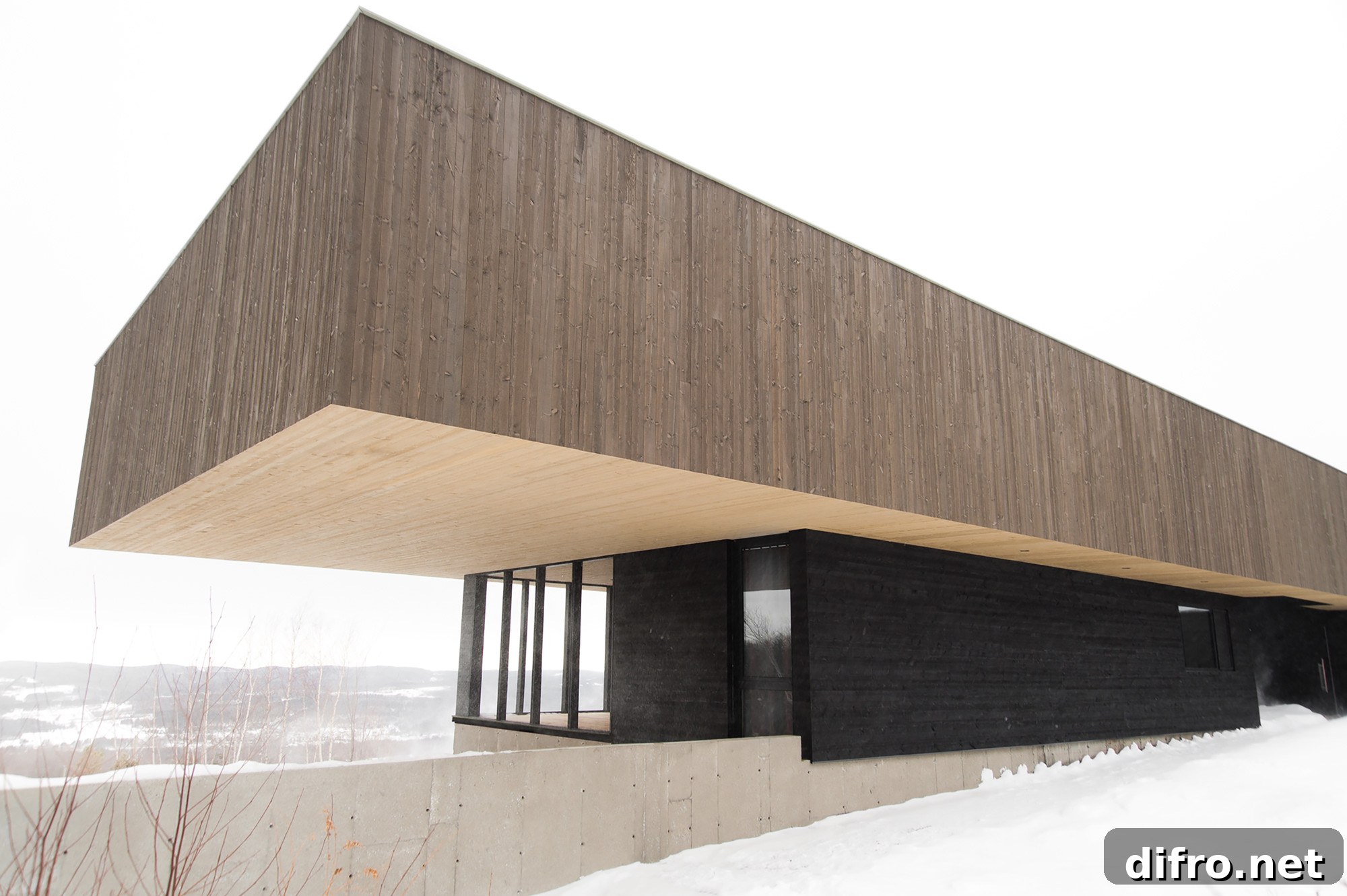
Photo credit: Chevalier Morales Architectes / ArchDaily.
Russet Residence
Located in West Vancouver, the Russet Residence by Splyce Design nestles into a steep hillside. A meticulously detailed dining space projects about fifteen feet from the slope, framing views of the forest canopy and the ocean beyond. The cantilever becomes both an architectural statement and a framing device for the surrounding landscape.
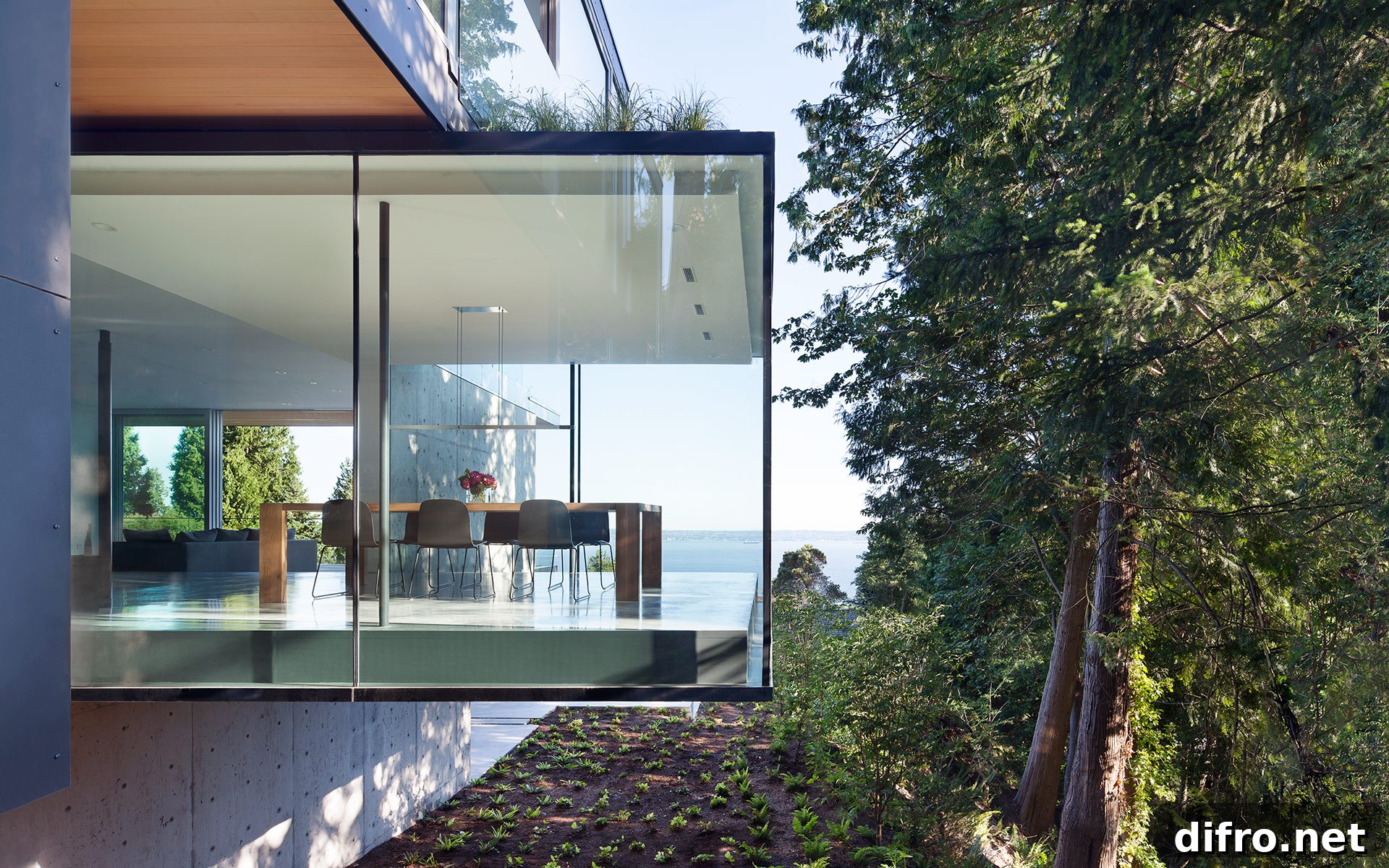
Photo credit: Splyce Design.
The Quest
Designed by Ström Architects and built for retired clients in Swanage, UK, The Quest is a single-story residence influenced by midcentury modernism. The projecting cantilevered element gives the house a distinctive horizontal expression while creating sheltered outdoor areas and uninterrupted sightlines to the surrounding landscape.
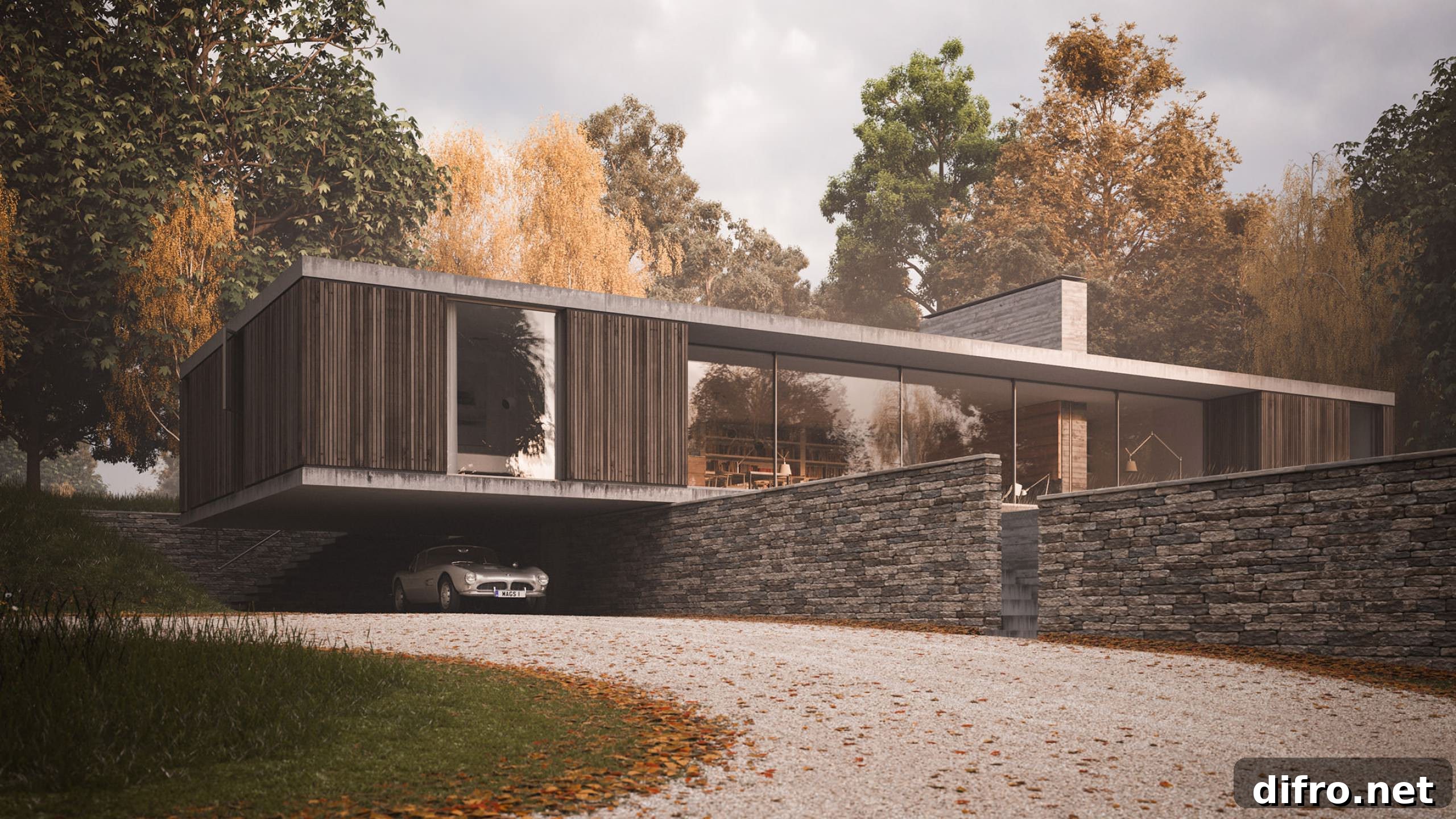
Rendered image credit: Ström Architects.
Narigua House
Narigua House, set in El Jonuco, Nuevo León, Mexico, is composed of overlapping and cantilevered volumes that step over the landscape. Architect David Pedroza Castañeda chose a warm, earthy red palette that harmonizes the project with its natural surroundings while emphasizing the tectonic layering of the volumes.
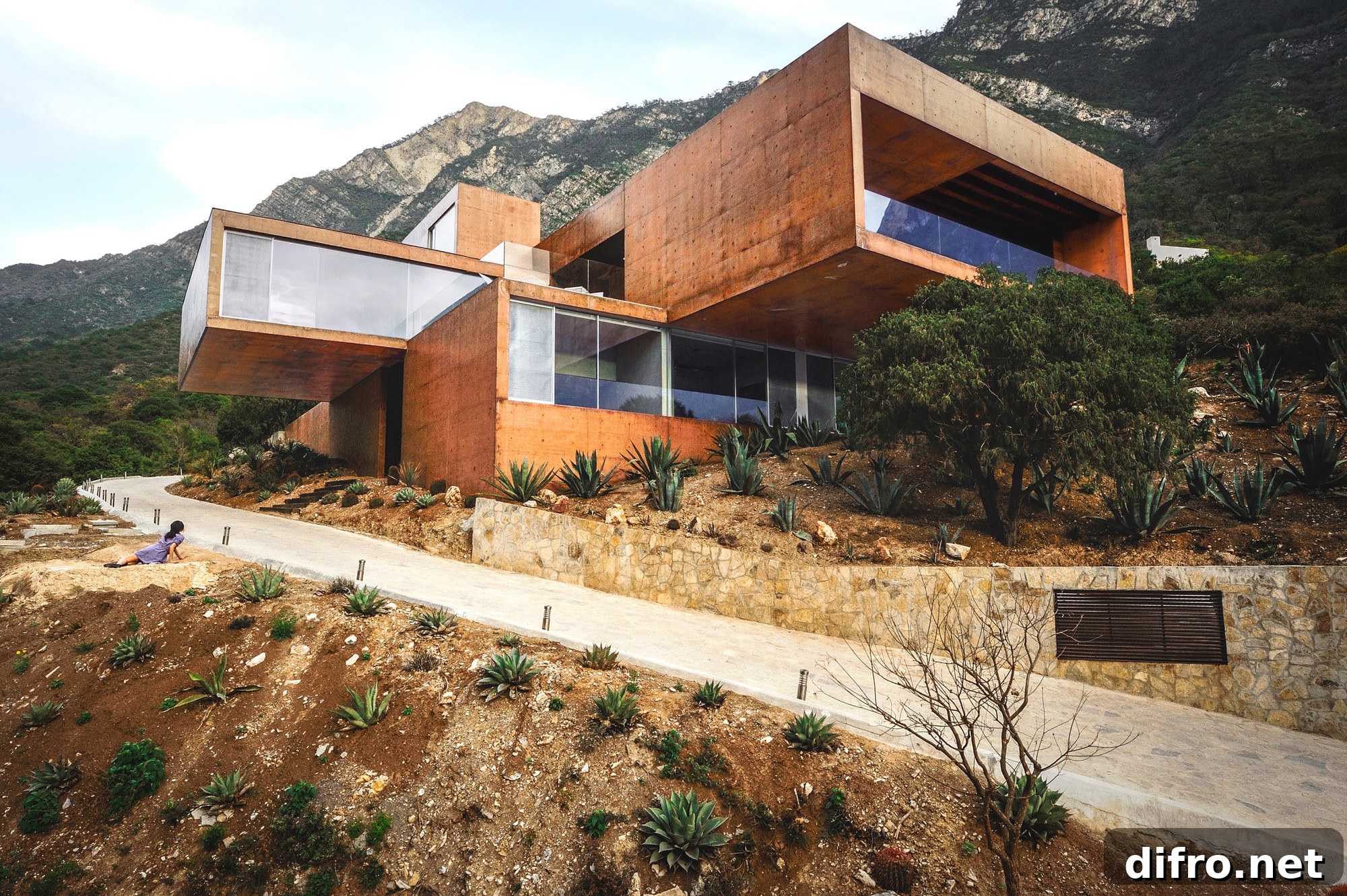
Photo credit: Sofia Flores Chapa / ArchDaily.
BT House
In São Paulo, Studio Guilherme Torres designed BT House as an arrangement of massive blocks: a large concrete volume seemingly rests on two substantial brickwork slabs. The composition reads as a study in contrasting materials and tectonic balance, producing strong horizontal lines and sculptural mass.
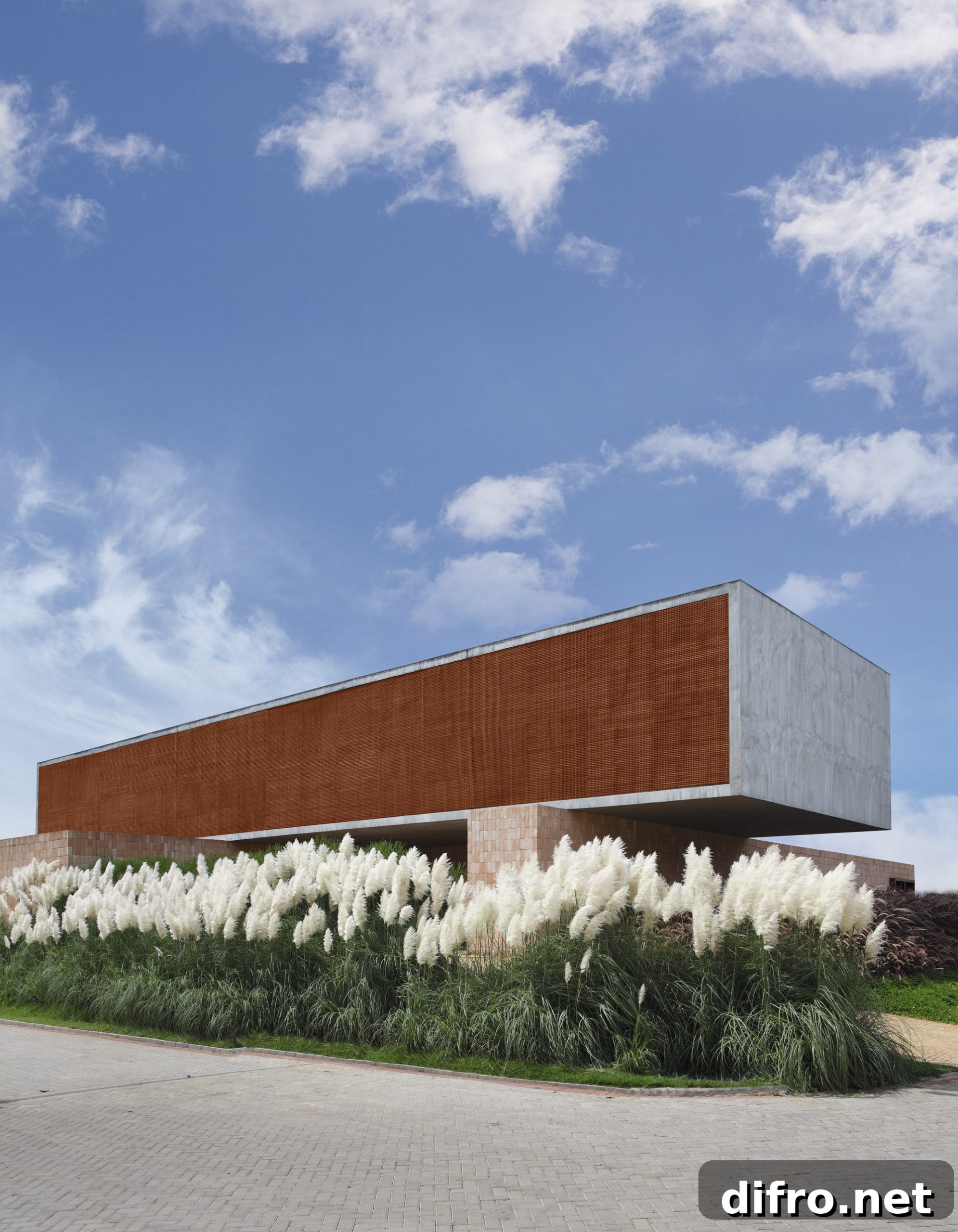
Photo credit: Wallpaper.com.
House in Ishikiri
This three-story family home in Ishikiri, Osaka, features a lively, layered composition. The top-floor master suite includes a cantilevered balcony that projects over lower levels, adding outdoor amenity and visual interest while contributing to the house’s playful, complex silhouette.
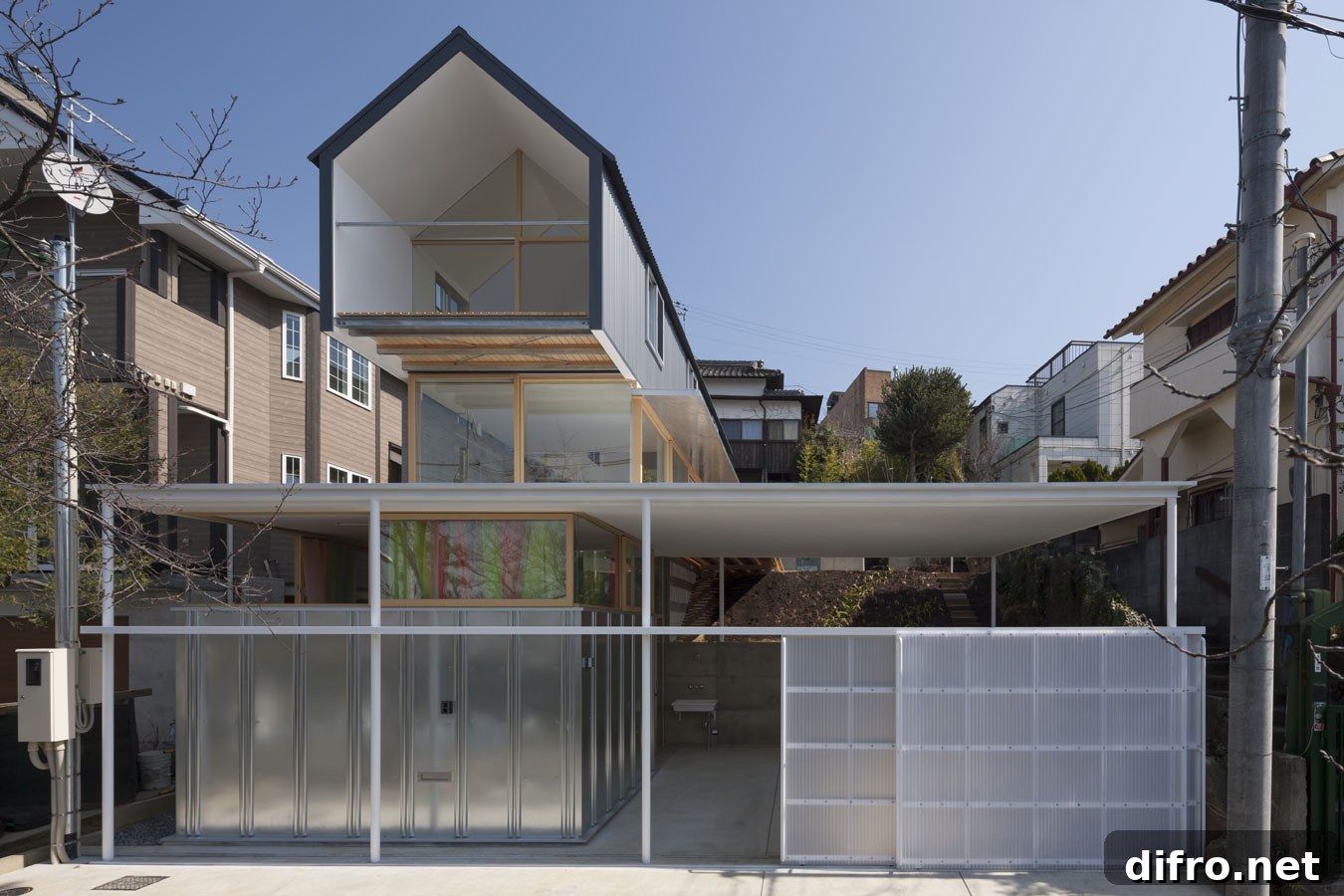
Photo credit: Shinkenchiku sha / Tato Architects.
Slip House
Slip House in Brixton, South London, by Carl Turner Architects is a contemporary urban home composed of three orthogonal boxes that appear to slip past one another. The cantilevered forms project toward the street, creating a bold street presence while optimizing internal plan relationships and daylighting.
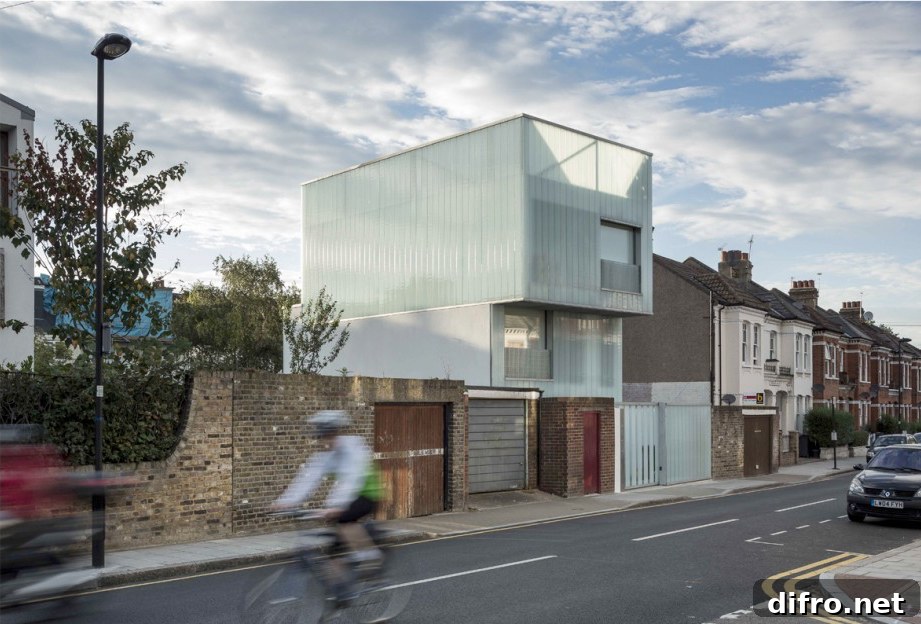
Photo credit: Tim Crocker / Carl Turner Architects.
Planalto Paulista
Planalto Paulista by Flavio Castro arranges two perpendicular volumes so the upper mass projects over the lower one. The resulting profile is bold and confident, with a strong sense of horizontality and compositional balance that makes a striking statement in its São Paulo context.
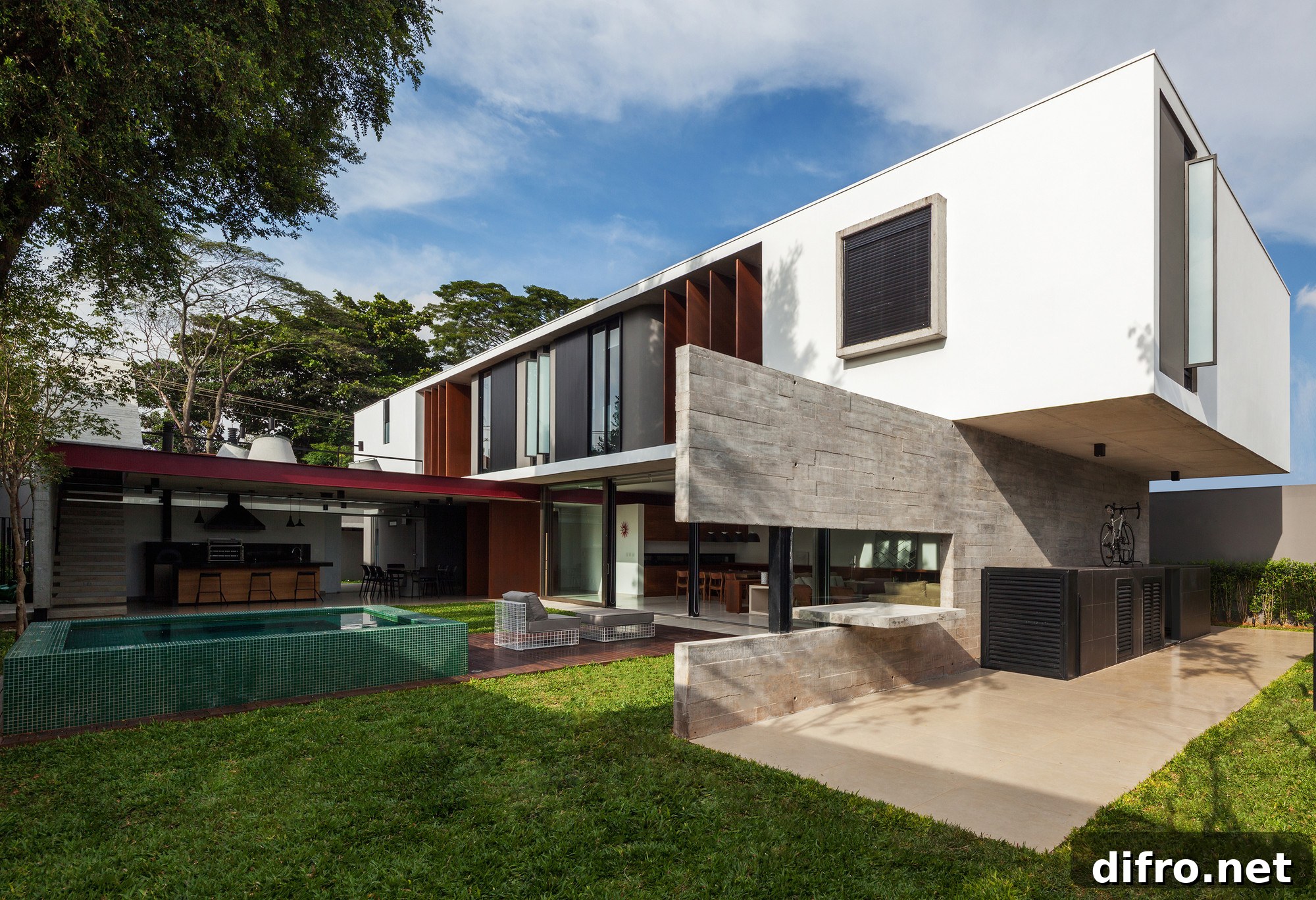
Photo credit: Nelson Kon / ArchDaily.
Lift
The “Lift” house in Sendai, Japan, by Apollo Architects & Associates features a pronounced geometric overhang. Narrow vertical and horizontal slots in the front facade provide controlled views and daylight while maintaining privacy, giving the house a sculptural, enigmatic street face.
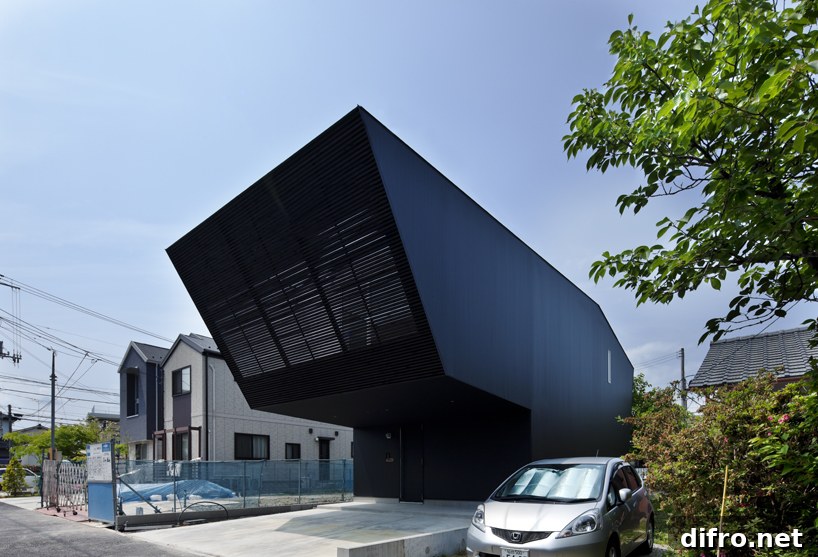
Photo credit: Masao Nishikawa / Designboom.
House in Naha City
Designed by Matsuyama Architect and Associates, this house in Naha City, Okinawa, uses a top-floor cantilever to reach toward the urban landscape. The bold, modern form contrasts with the surrounding vernacular while offering panoramic views and an elevated private living level.
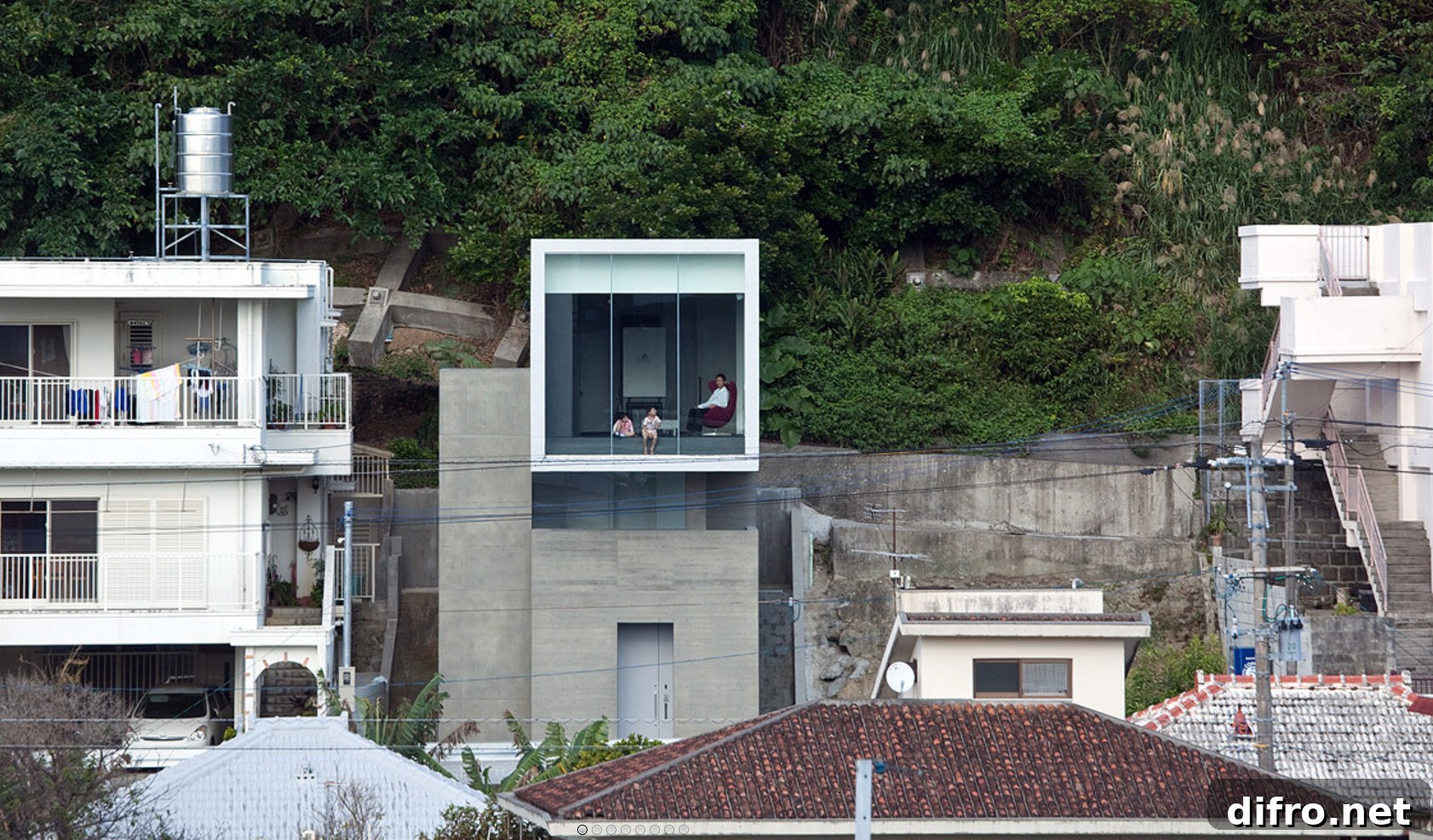
Photo credit: Matsuyama Architect and Associates.
House in Juso
ARX Portugal and Stefano Riva designed the House in Juso as a three-level home (including a lower ground) where a top-floor concrete enclosure houses private spaces and opens onto a rooftop with far-reaching views. The layout stacks functions vertically to make efficient use of a compact site and to maximize outlook toward the sea and Sintra’s mountain ranges.
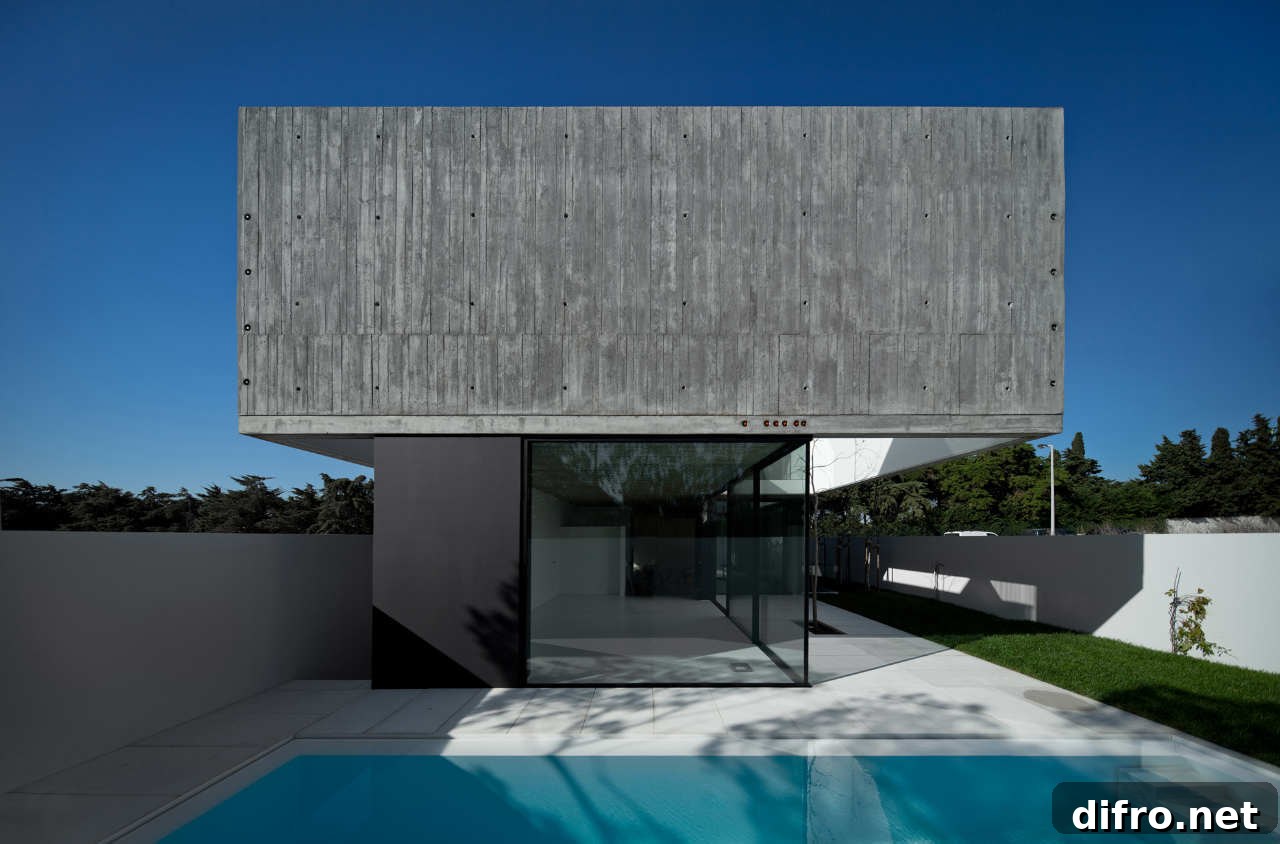
Photo credit: FG+SG fotografia de arquitectura; ARX Portugal.
View Hill House
Denton Corker Marshall’s View Hill House balances one story perpendicularly atop another, creating a dramatic cantilevered composition. The elevated vantage point offers expansive views across the Yarra Valley wine region, and the sculptural arrangement emphasizes both panorama and architectural tension.
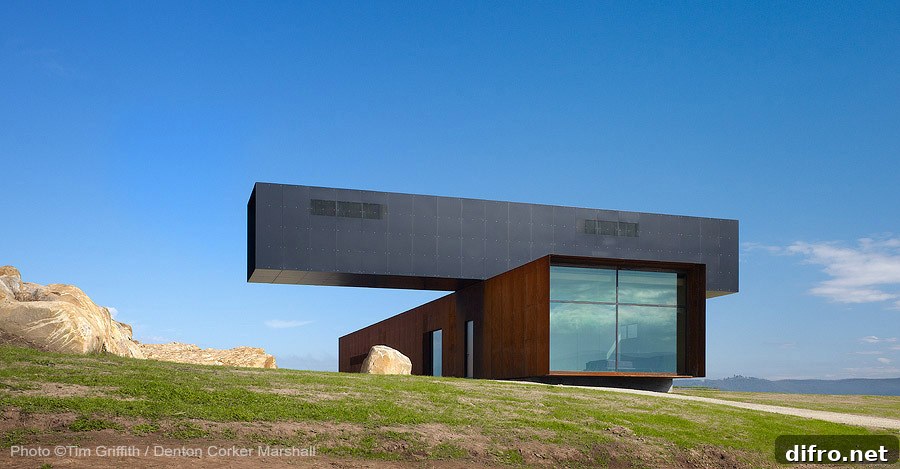
Photo credit: Tim Griffith / Divisare.
Living-Garden House
In Katowice, Poland, KWK Promes created the Living-Garden House with a sweeping cantilever supported by two mirrored concrete walls. The reflective surfaces intensify the visual drama, making the projection appear even more daring while integrating the house into its garden setting through clever optical effects.
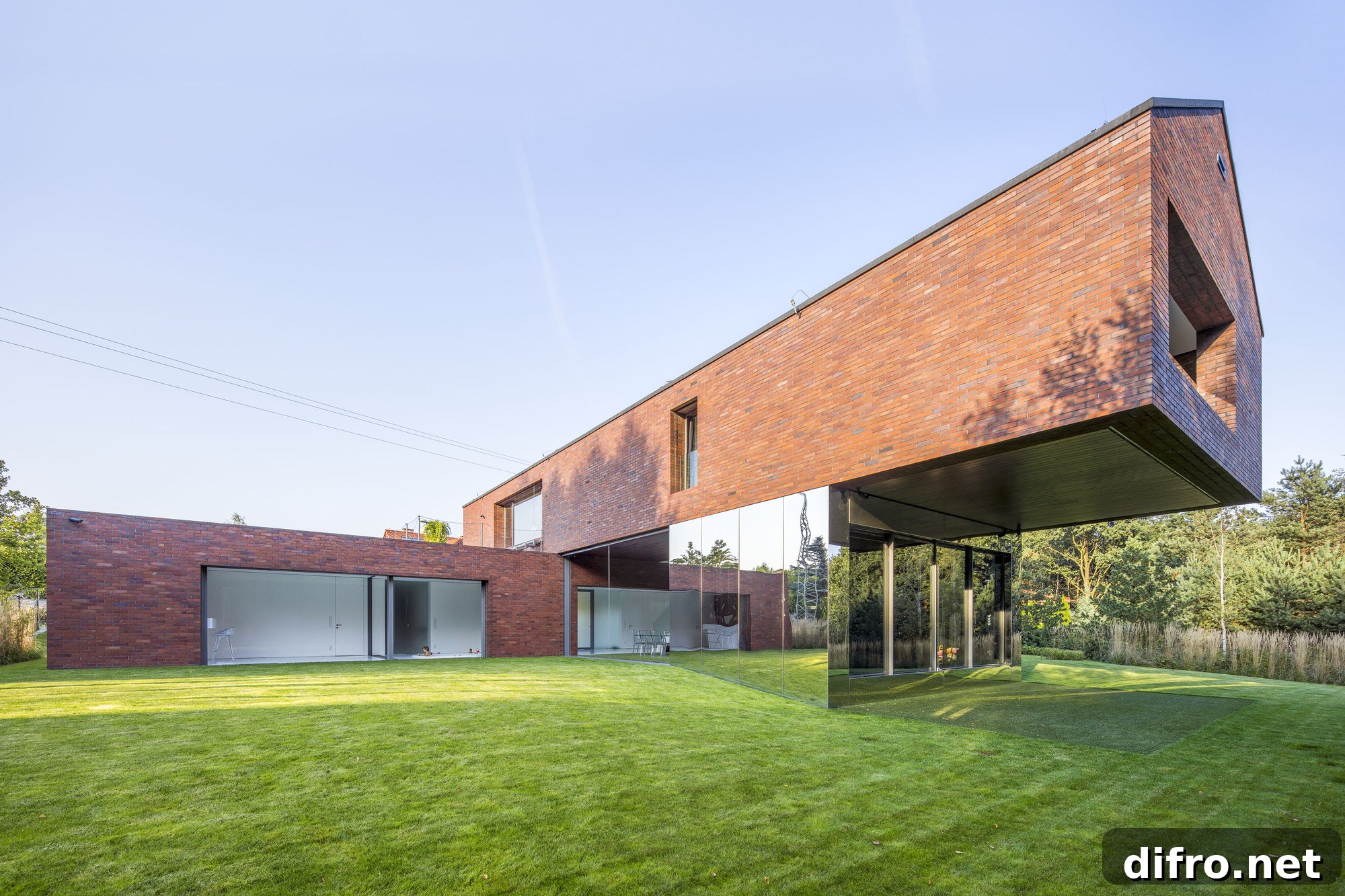
Photo credit: Jakub Certowicz / ArchDaily.