Hello, DIY lovers! If you’re planning to decorate Easter eggs this year and want fresh, creative ideas, you’re in the right place. Whether you prefer natural, minimalist styles, glamorous metallics, or playful designs for kids, there are plenty of approaches that are simple, stylish, and fun. Below are a variety of techniques and practical tips to inspire your next egg-decorating session—pick a few that match your supplies and mood, and get crafting.
Custom decorations with tattoo paper
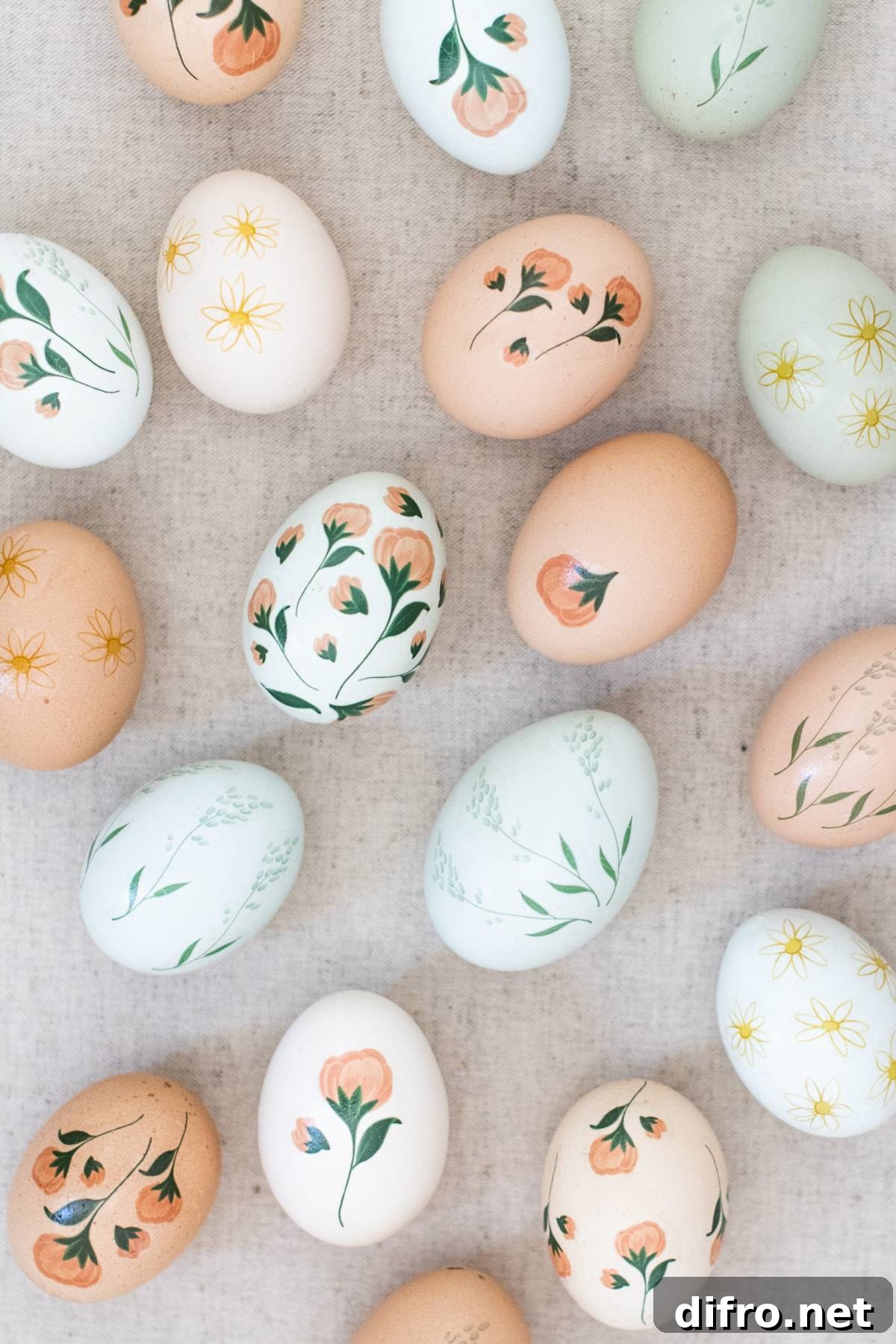
For a clean, customized look without the mess, printable tattoo paper is an excellent trick. You can design patterns or prints on your computer, print them onto tattoo paper, and transfer the images directly onto eggshells for a crisp, professional finish. This method works well for detailed illustrations, monograms, or themed designs for parties. Use temporary tattoo sheets made for smooth surfaces and apply gently so the shell doesn’t crack.
Gold foil Easter egg decoration
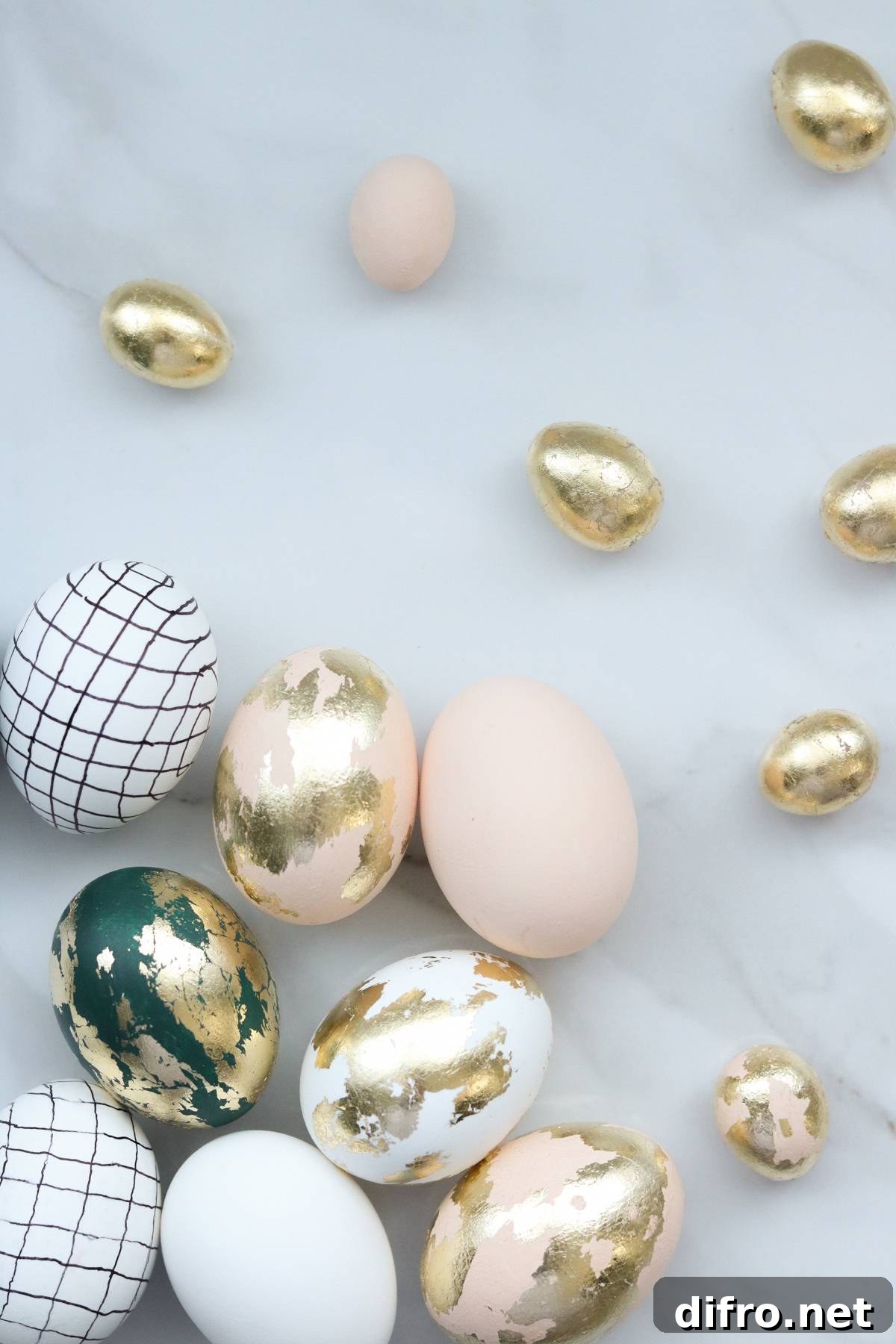
If you want a touch of glamour, gold foil or leaf creates stunning accents on dyed eggs. Apply small pieces of edible gold leaf or gold foil to a slightly tacky surface—brushed-on edible glue or a dab of honey can work—then smooth gently. This technique pairs especially well with soft pastels and jewel tones. For a food-safe option, look for edible gold leaf sold in baking sections; avoid craft foil on eggs you plan to eat.
Natural decorations
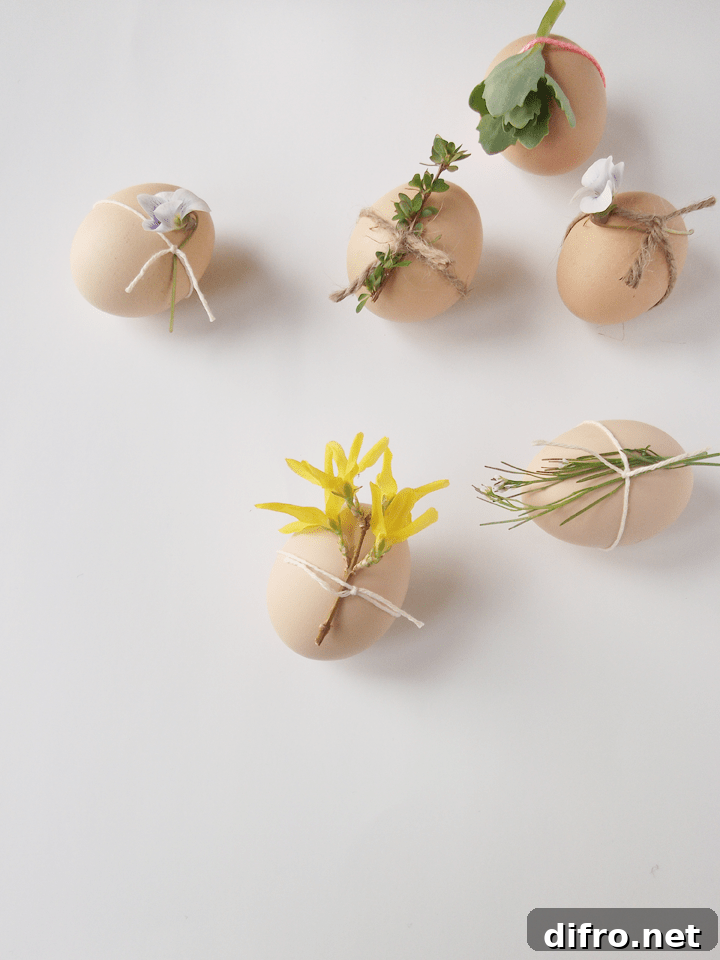
For a calm, minimalist aesthetic, decorate eggs with dried flowers, twine, or yarn. Pressed florals and delicate sprigs look beautiful against the eggshell’s natural tones. Wrap with fine yarn or secure pressed flowers with a thin layer of edible glue (a simple mix of powdered sugar and water works) to keep everything in place. These organic elements add texture and a soft, handmade feel to a table centerpiece.
Marble Easter egg technique
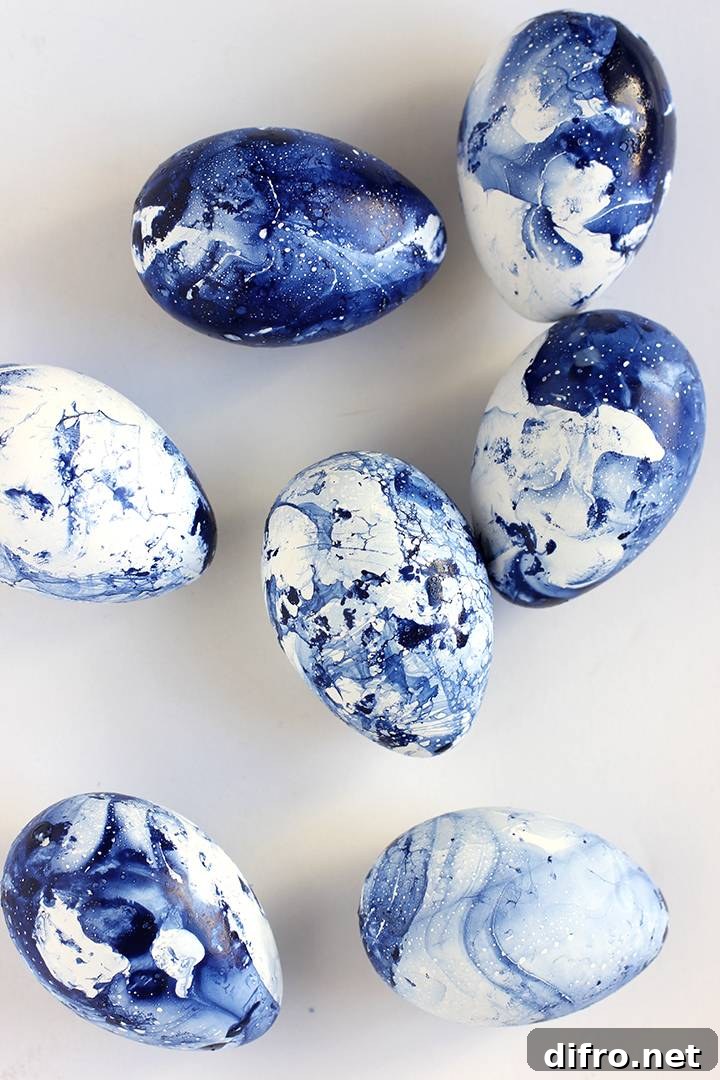
The marbling technique produces eye-catching, swirled patterns that look artistic and modern. One popular method uses nail polish to create marbled effects on the egg surface—dip the egg briefly into water with a few drops of polish swirled across the top. Note: nail polish is not food-safe, so eggs decorated this way are decorative only. For edible alternatives, experiment with food-safe oil paints or natural dye combinations to mimic the marbled look.
Easter bunny
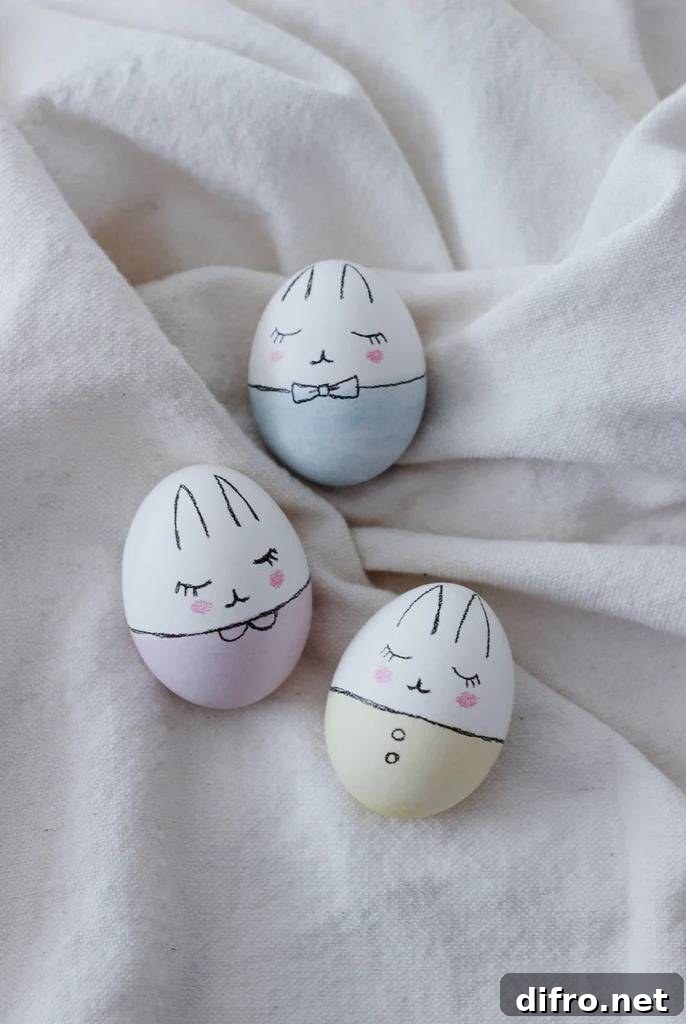
Minimalist bunny faces are simple and adorable—perfect for kids or a quick project. Dip the lower half of an egg in pastel dye and remove it early for a soft wash of color. Once dry, draw tiny eyes and long ears with a fine black marker or crayon; a small pink dot for a nose completes the look. This cute, understated style works particularly well on eggs with a pale wash or natural shell color.
Glitter Easter eggs
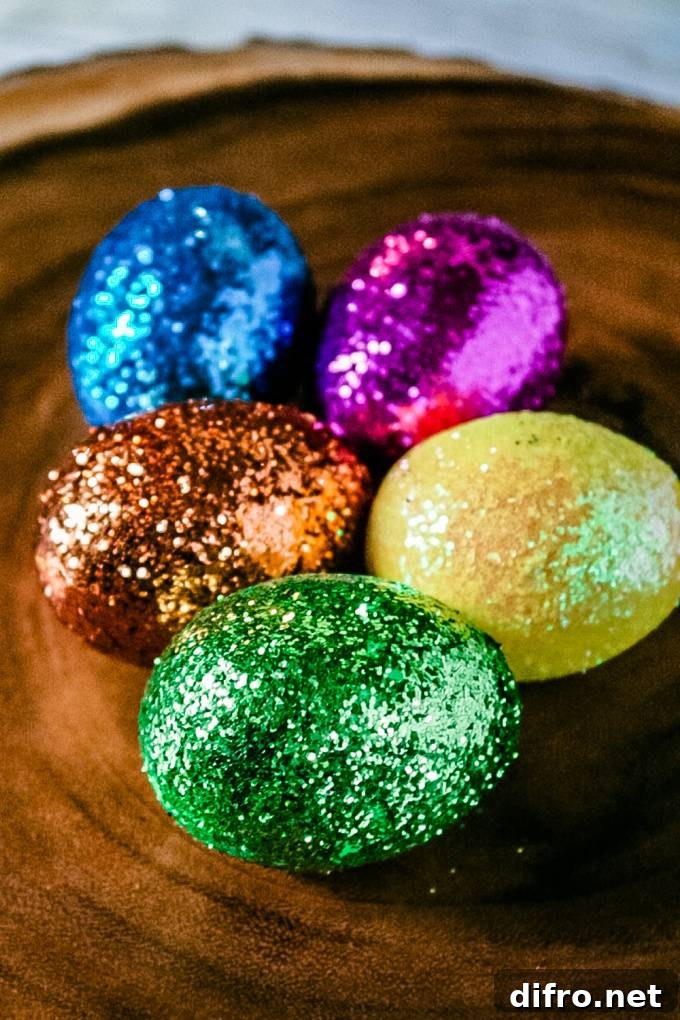
For sparkle that still feels refined, use edible glitter or lustrous glazes in rose gold, true gold, or soft metallic shades. Apply a thin layer of edible glue, sprinkle or brush on the glitter, and allow it to set. This creates elegant, celebratory eggs suitable for display or dessert plates—just be sure the glitter you choose is labeled edible when decorating eggs meant to be eaten.
Hand-painted florals
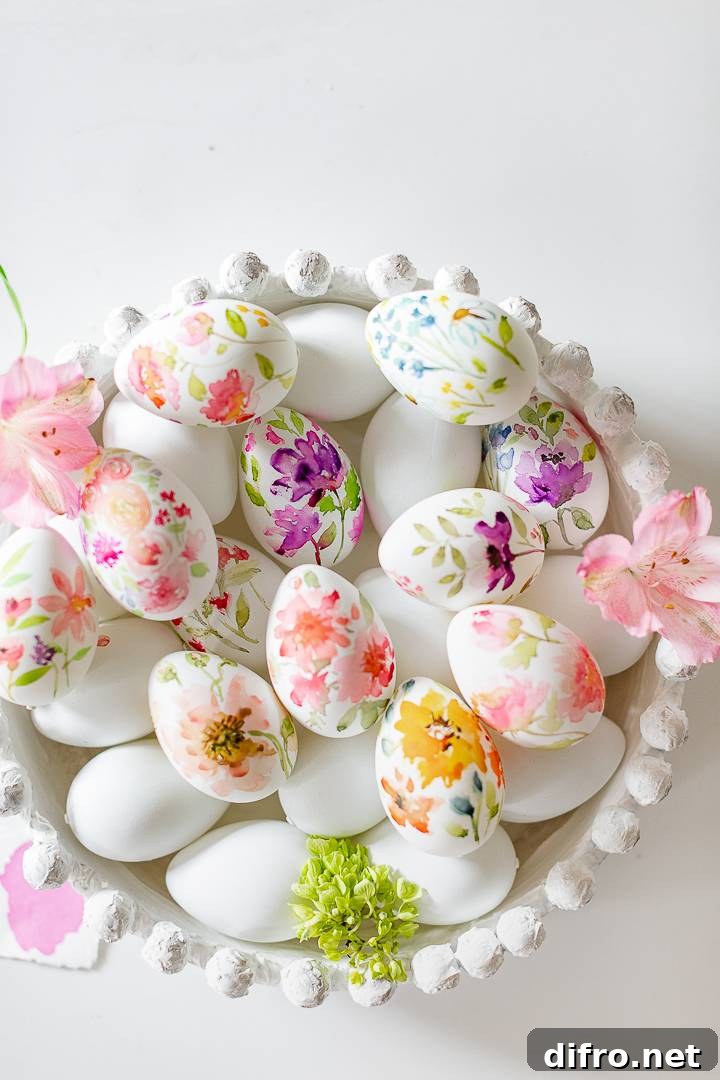
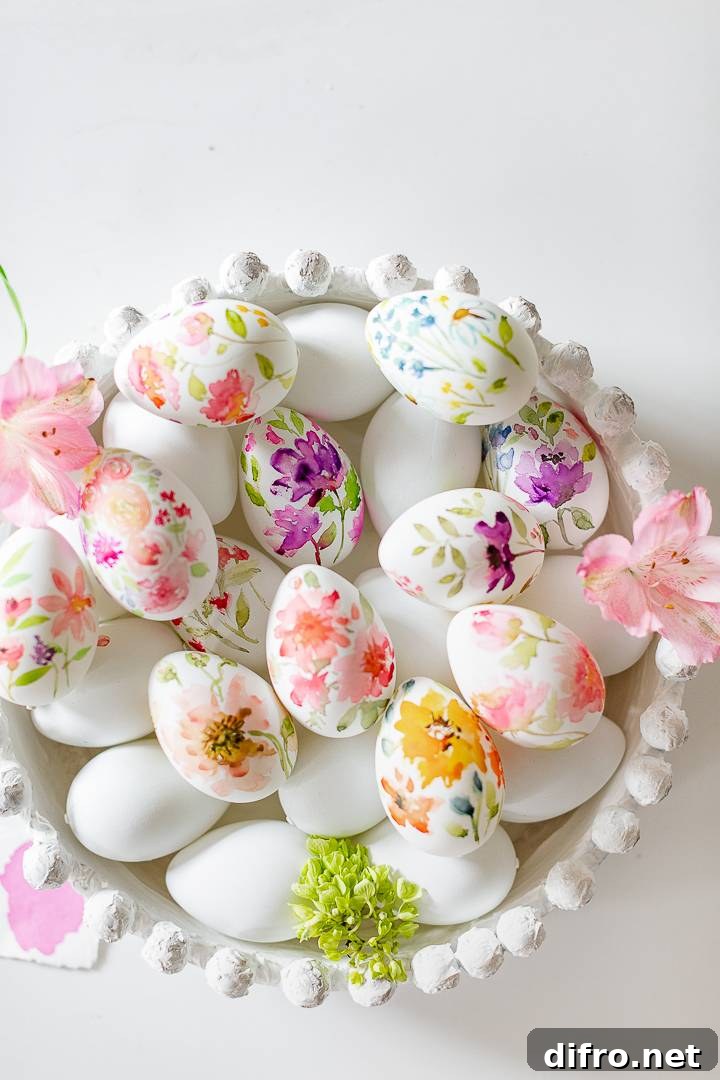
Hand-painted florals—especially watercolor-style blooms—offer a delicate, artistic finish and don’t require professional skill. Thin acrylics or watercolor paints work well on eggs: let washes blend naturally rather than trying for perfect shapes. Tiny dots, loose petals, and soft stems achieve a charming, painterly effect. These eggs make lovely table decorations and gifts when paired with simple kraft packaging.
Pressed flower Easter eggs
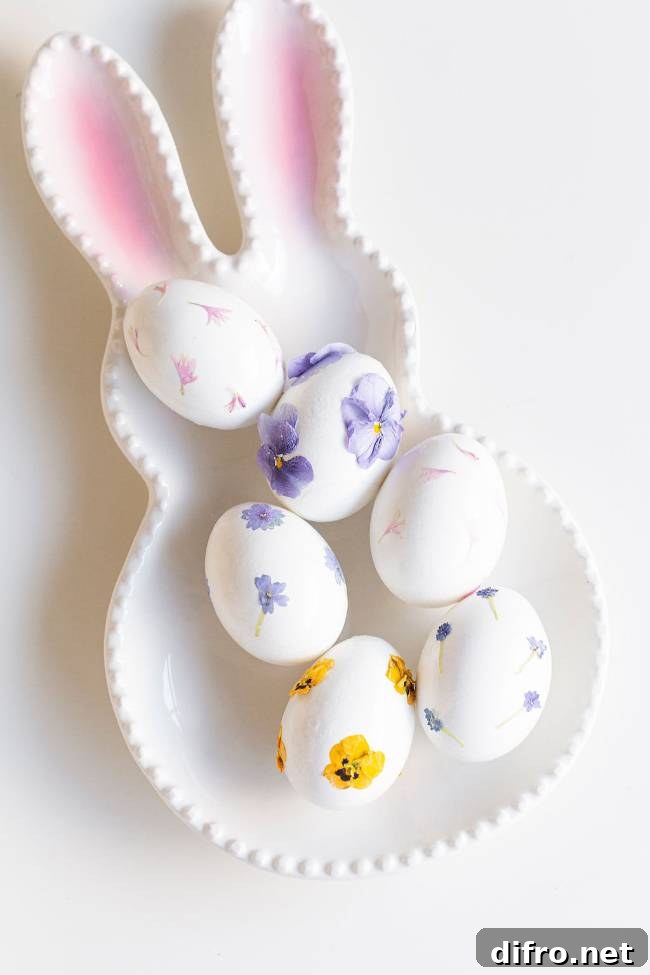
If you enjoy pressing flowers, apply small, edible pressed blooms to eggs for a vintage botanical look. Press edible flowers flat, then adhere them with an edible glue made from powdered sugar and water. Seal gently with a thin, food-safe glaze if you plan to handle the eggs often. This technique celebrates natural textures and is ideal for spring-themed displays.
Natural dye Easter eggs
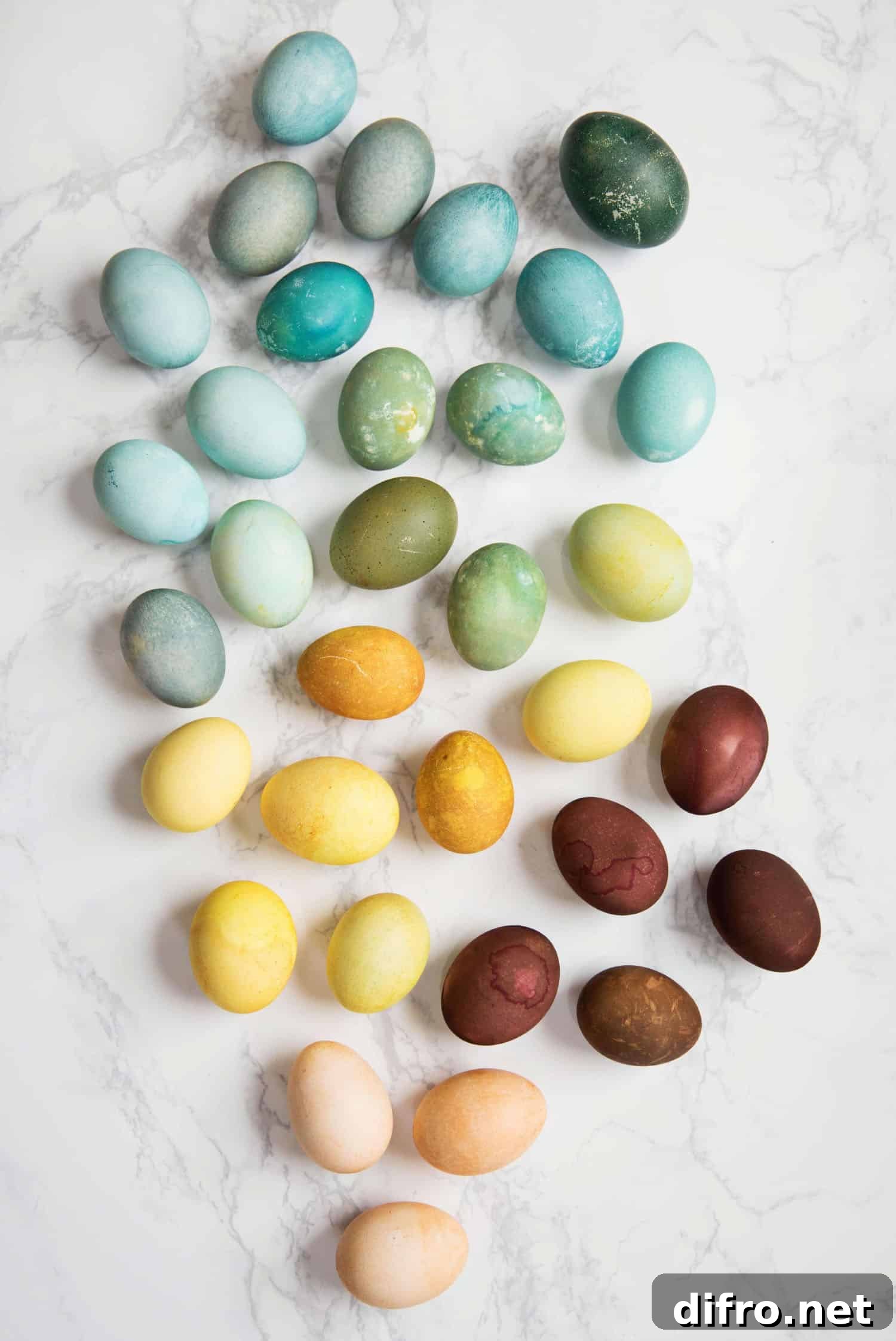
Natural dyes yield soft, organic tones and are a wonderful option if you prefer food-based colors. Use ingredients such as beets, turmeric, red cabbage, and spinach to create a palette of pale pinks, warm yellows, blue-greens, and muted greens. Adding a splash of white vinegar can intensify or shift some hues—for example, a little vinegar added to beet dye may produce a brighter or more violet-toned result. Colors vary with concentration and soaking time, so experiment to find the shades you like.