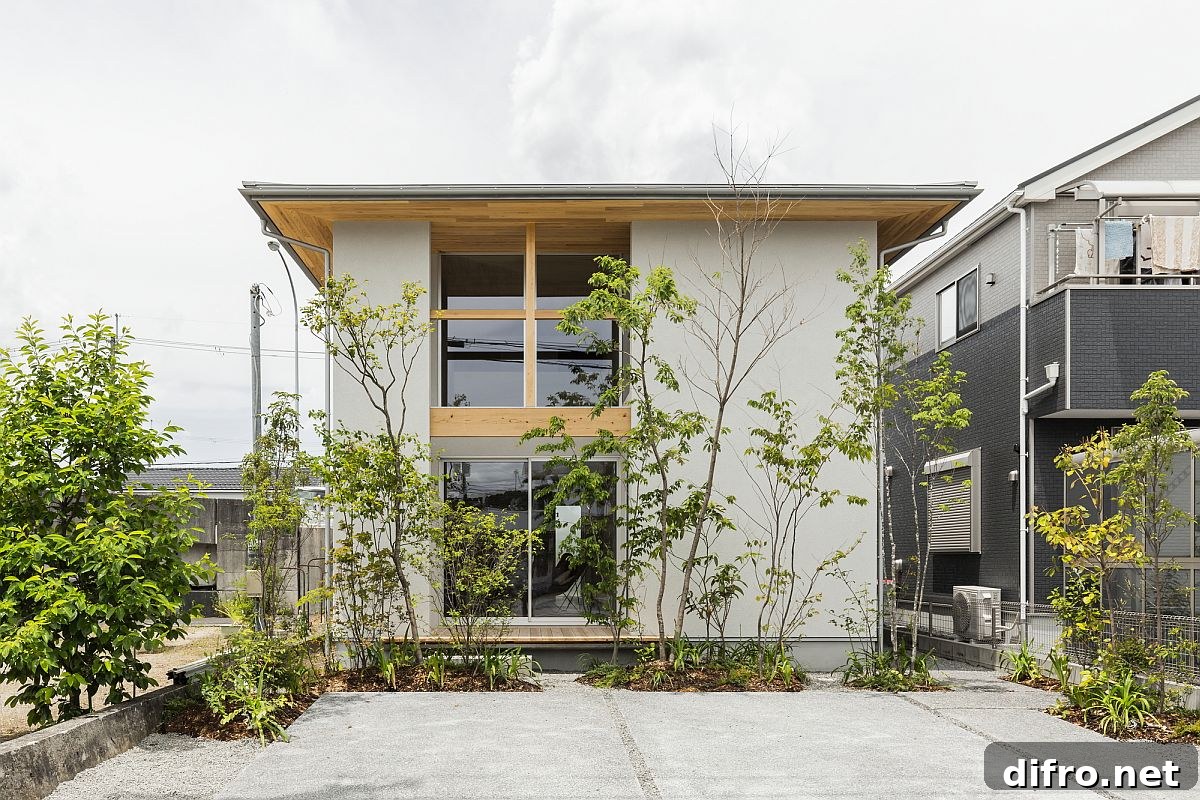
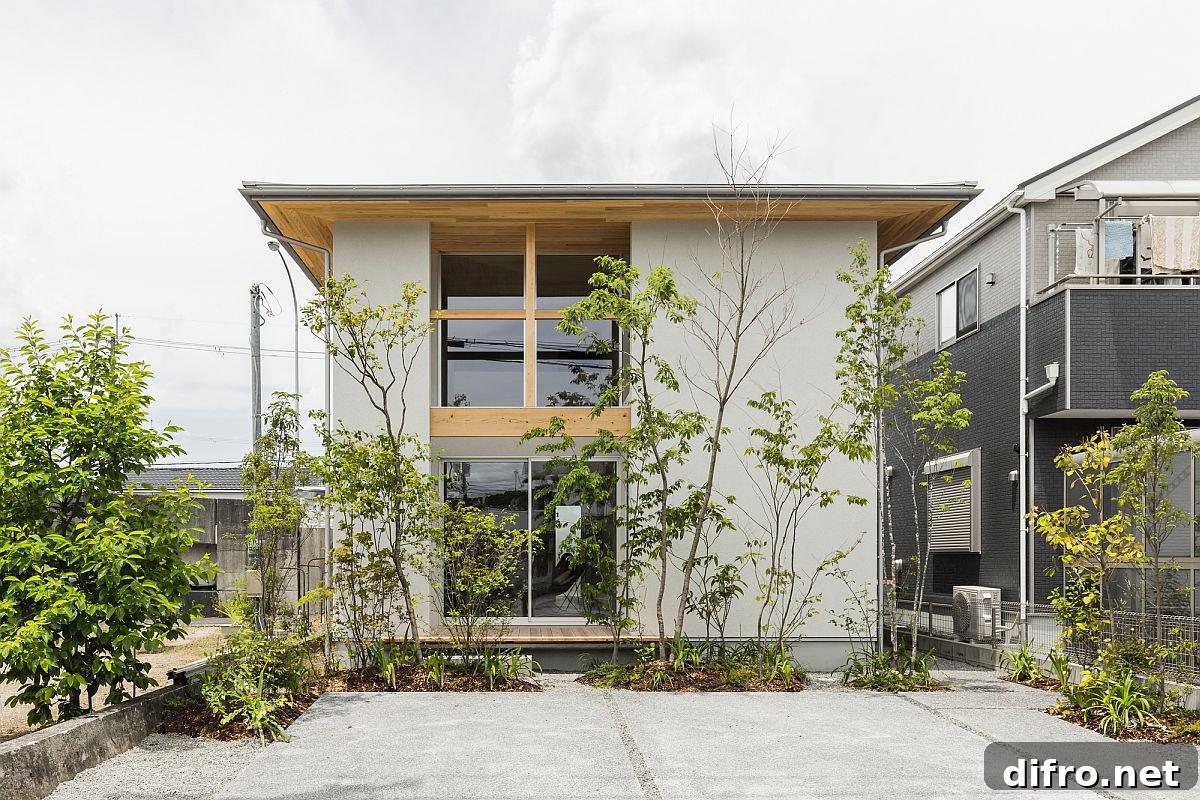
If you appreciate modern minimal homes clad in warm wood and crisp white, the Mushono House by Hearth Architects in Japan is a compelling example. Set unusually deep on its lot to create distance from the main road, this compact residence balances privacy and openness: modest gardens and yards on the north and south sides act as green buffers that soften sound and screen views while still allowing ventilation and daylight to reach the house.
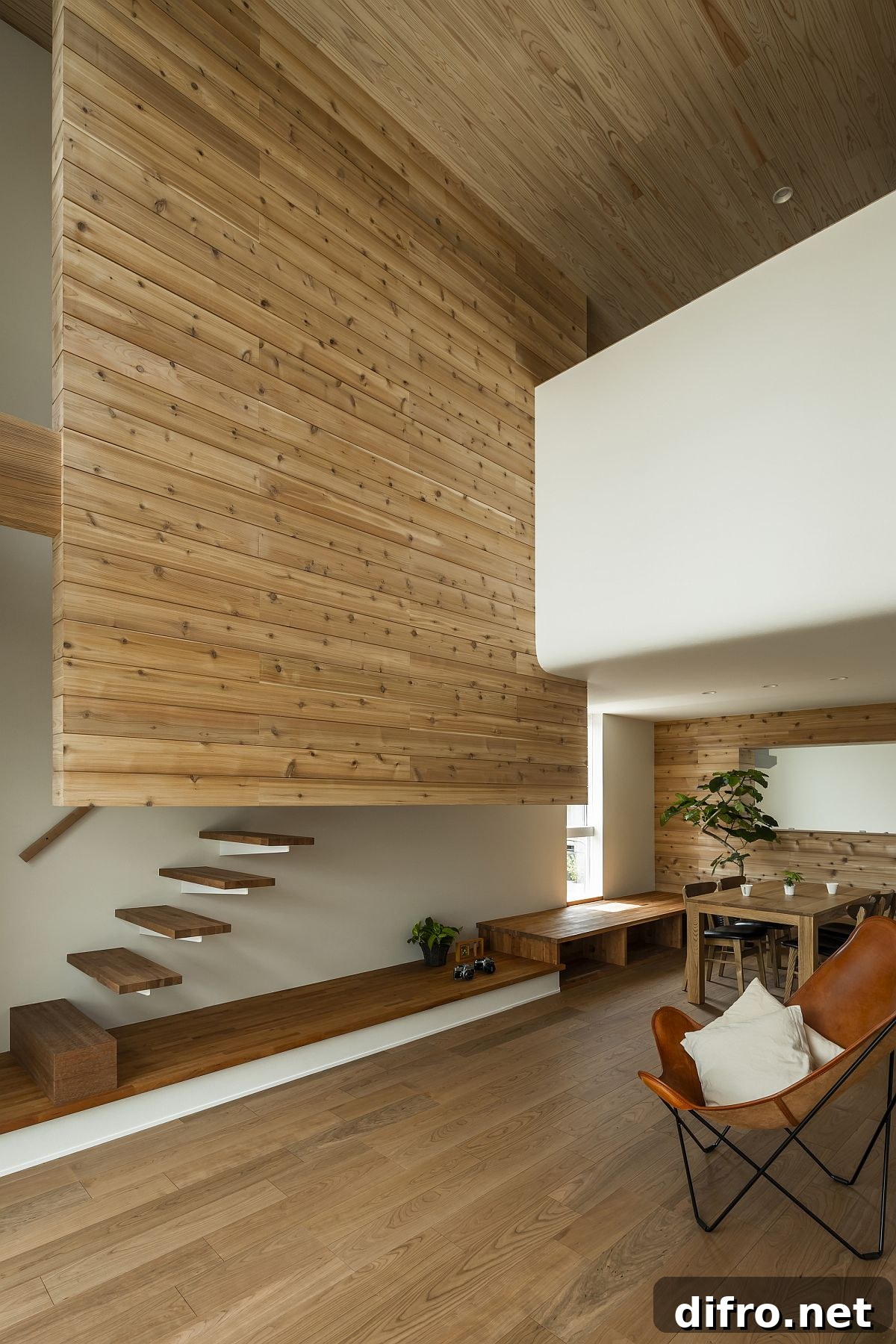
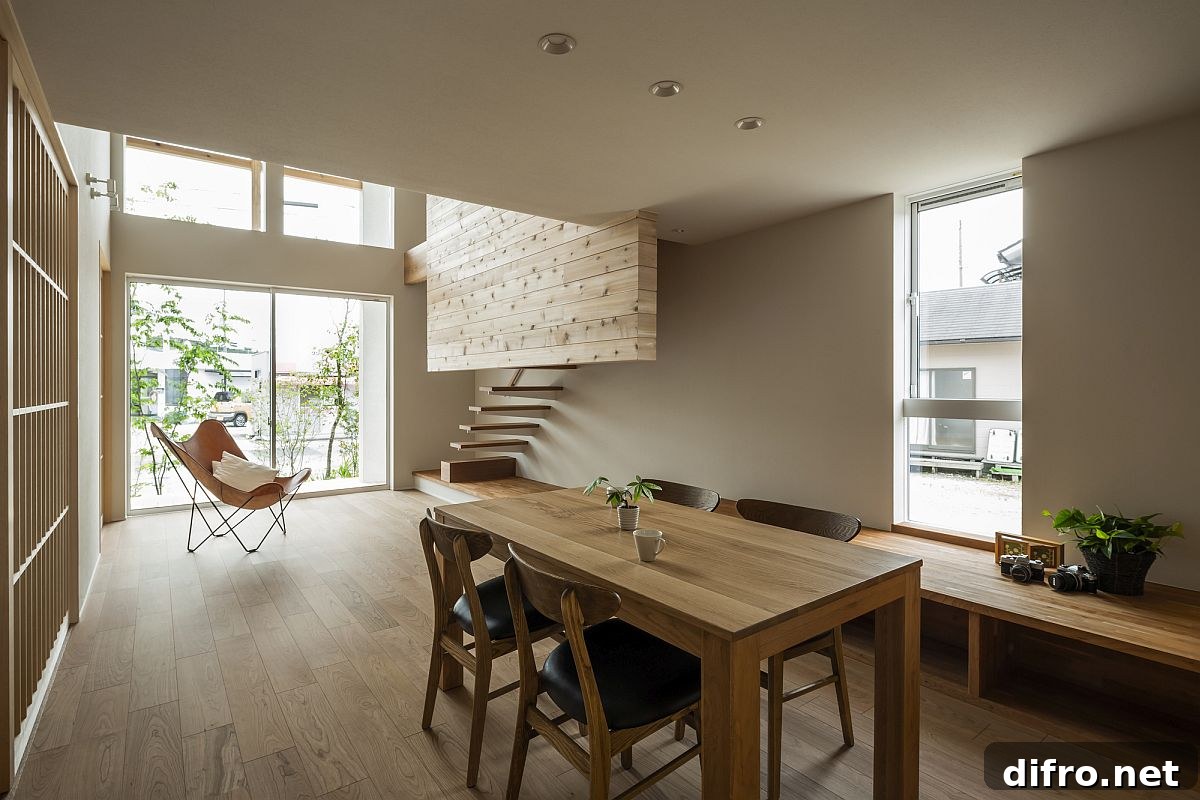
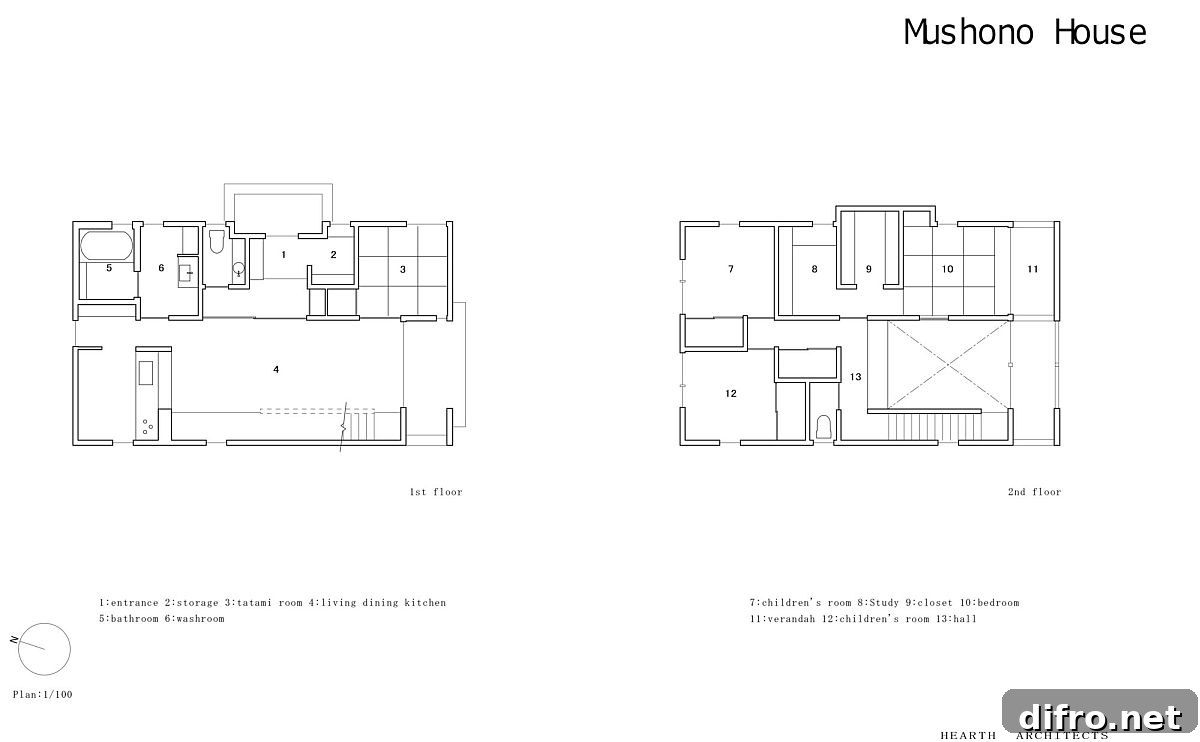
The home’s layout is simple and purposeful. It is arranged across two main levels: the lower floor contains the living area, kitchen and dining spaces, while the upper mezzanine accommodates bedrooms and bathrooms. The living room is the emotional center of the house—a double-height volume flooded with daylight that creates a strong sense of openness. Clerestory windows and sliding glass doors draw light into the interior throughout the day, emphasizing the vertical space and highlighting the natural texture of the wood-clad walls.
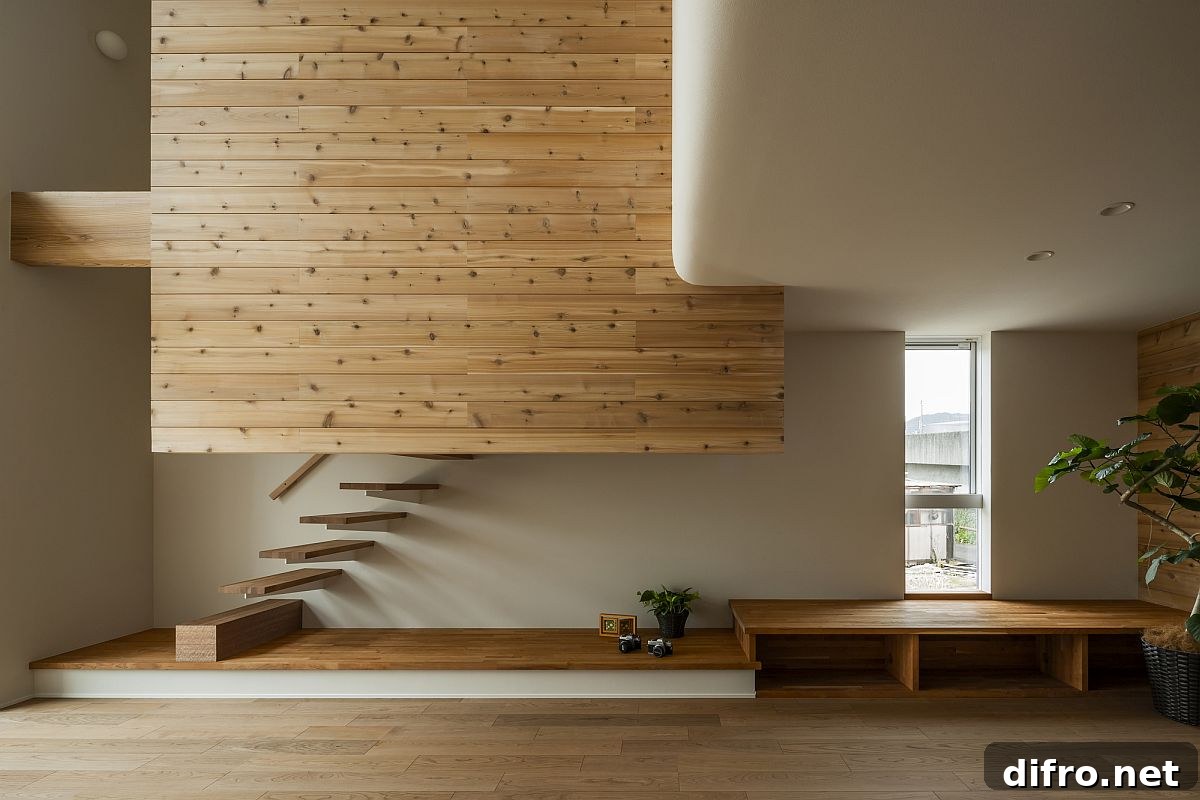
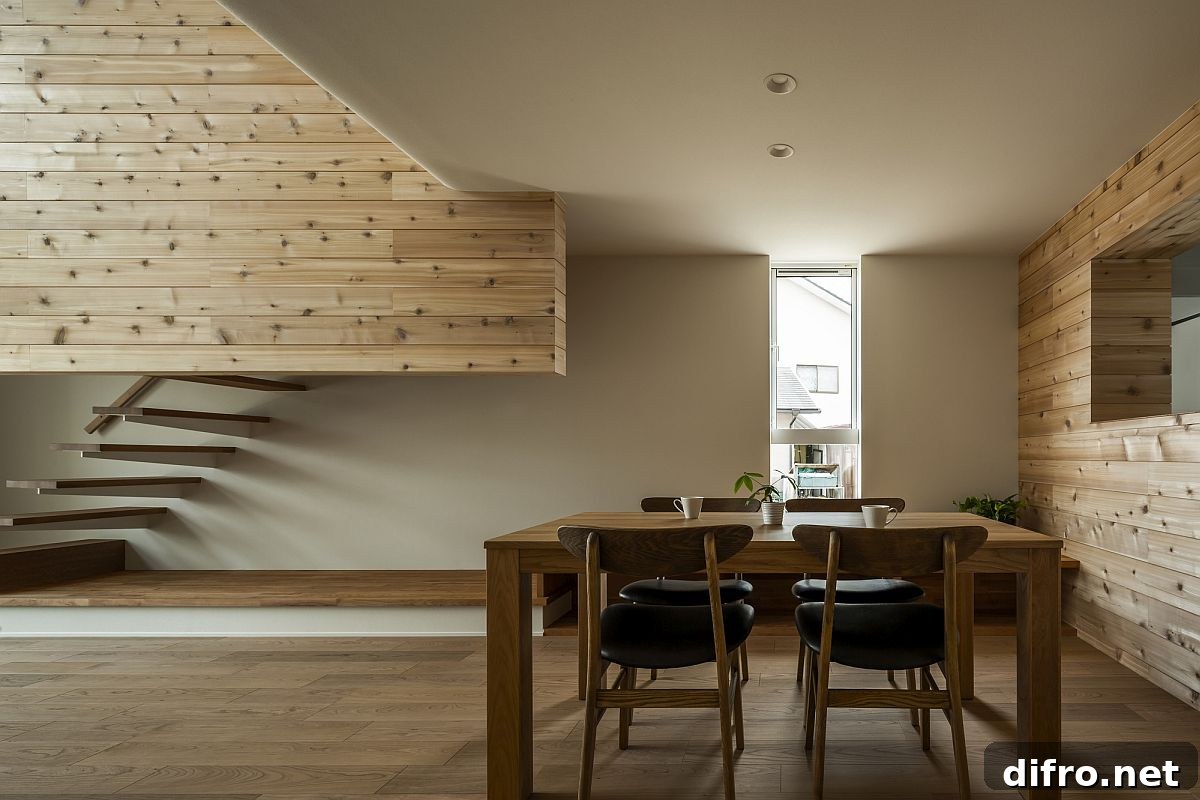
Architectural features are restrained and refined. A minimal, floating staircase links the lower level to the mezzanine, reinforcing the home’s contemporary simplicity while visually connecting the two floors. The kitchen and dining area sit beneath the mezzanine, which overlooks the ground floor and creates layered sightlines throughout the interior. Adjacent to these shared spaces is a tatami room that introduces a quieter, more traditional atmosphere and expands the home’s flexible living options.
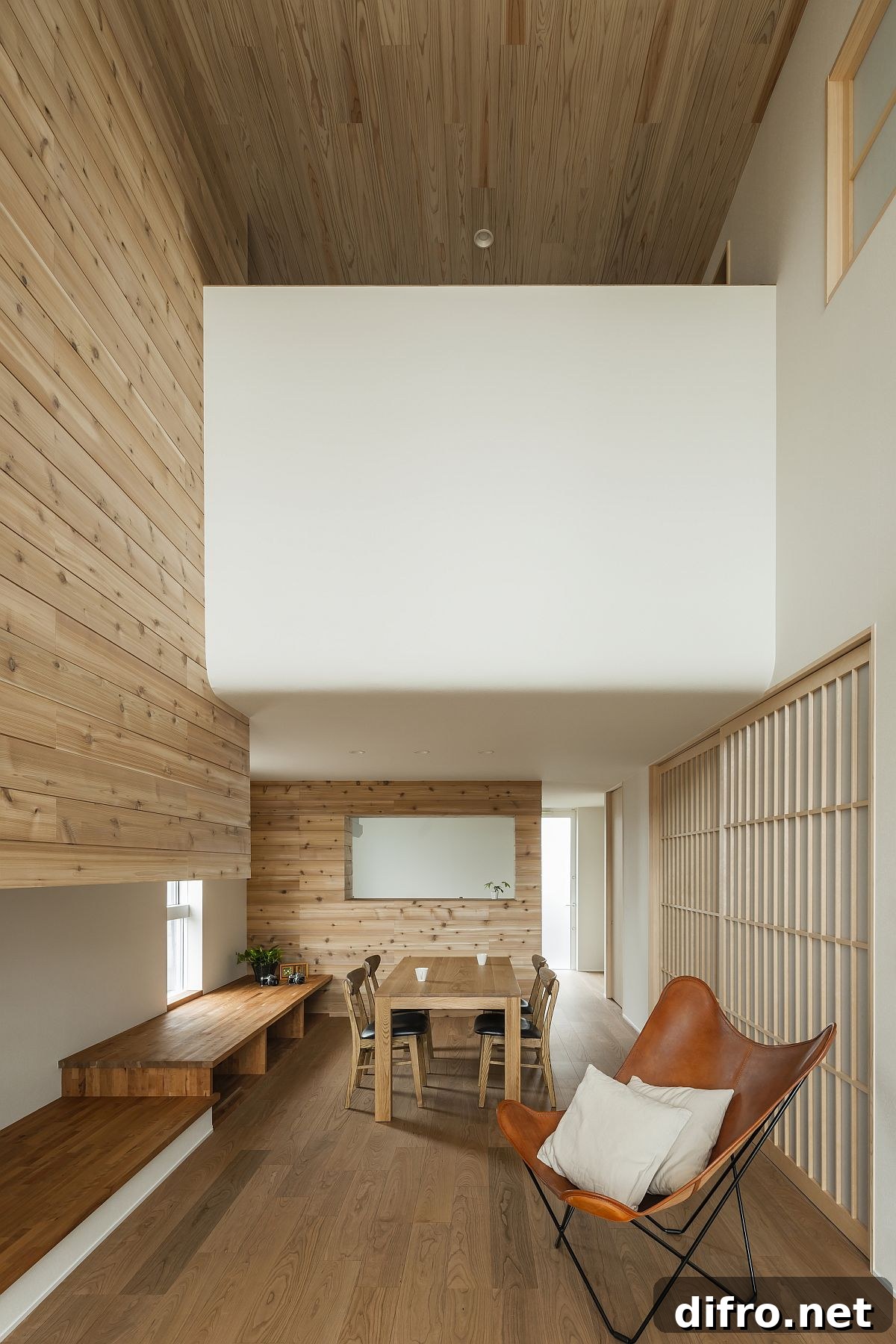
On the upper level, private rooms are arranged to maintain flow and light. A children’s bedroom, a secondary hall and the master bedroom are positioned to take advantage of the mezzanine’s visual connection to the living area below. The progression of spaces feels natural and effortless: one room leads to another, with repeated materials and a consistent palette of wood and white unifying the whole home.
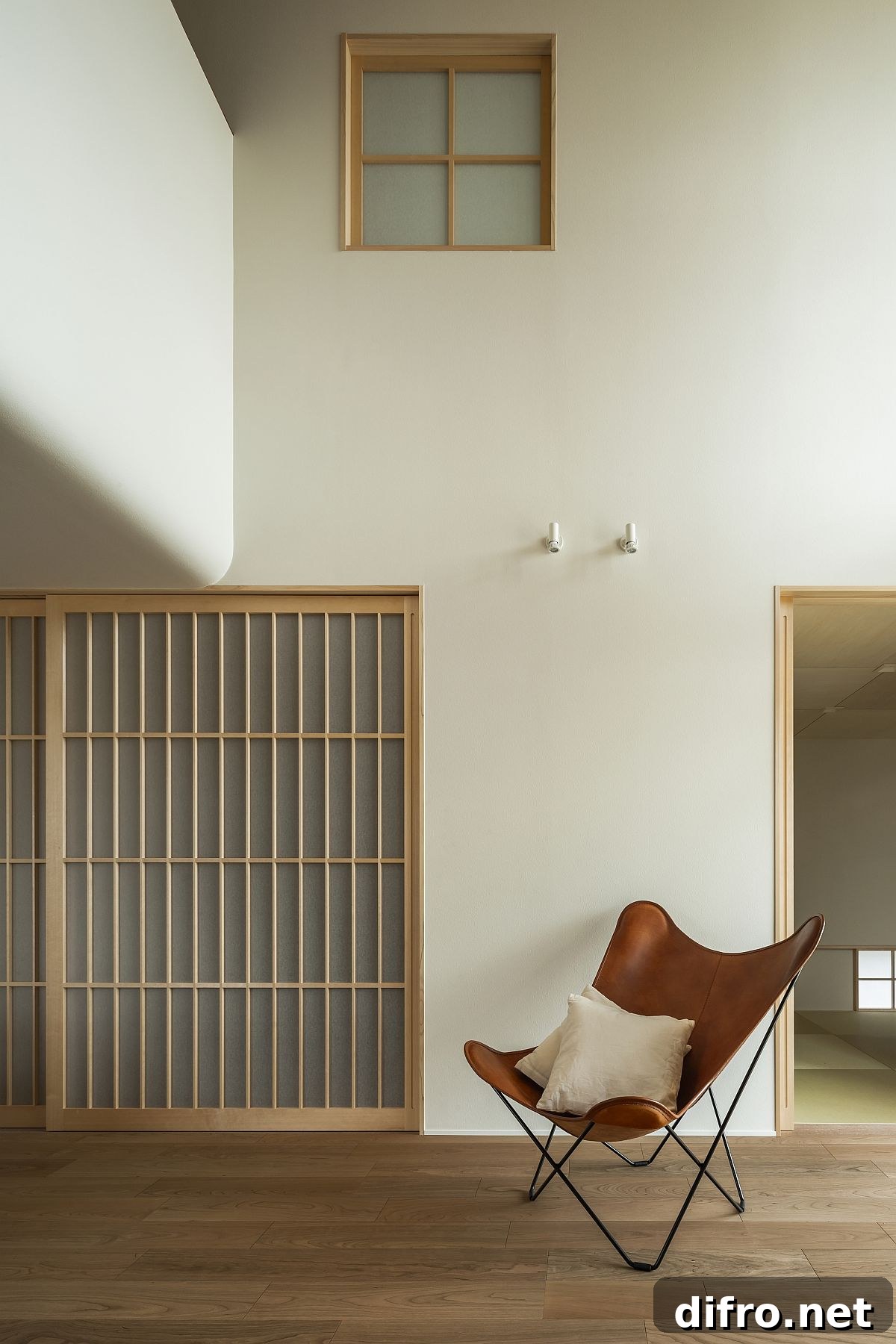
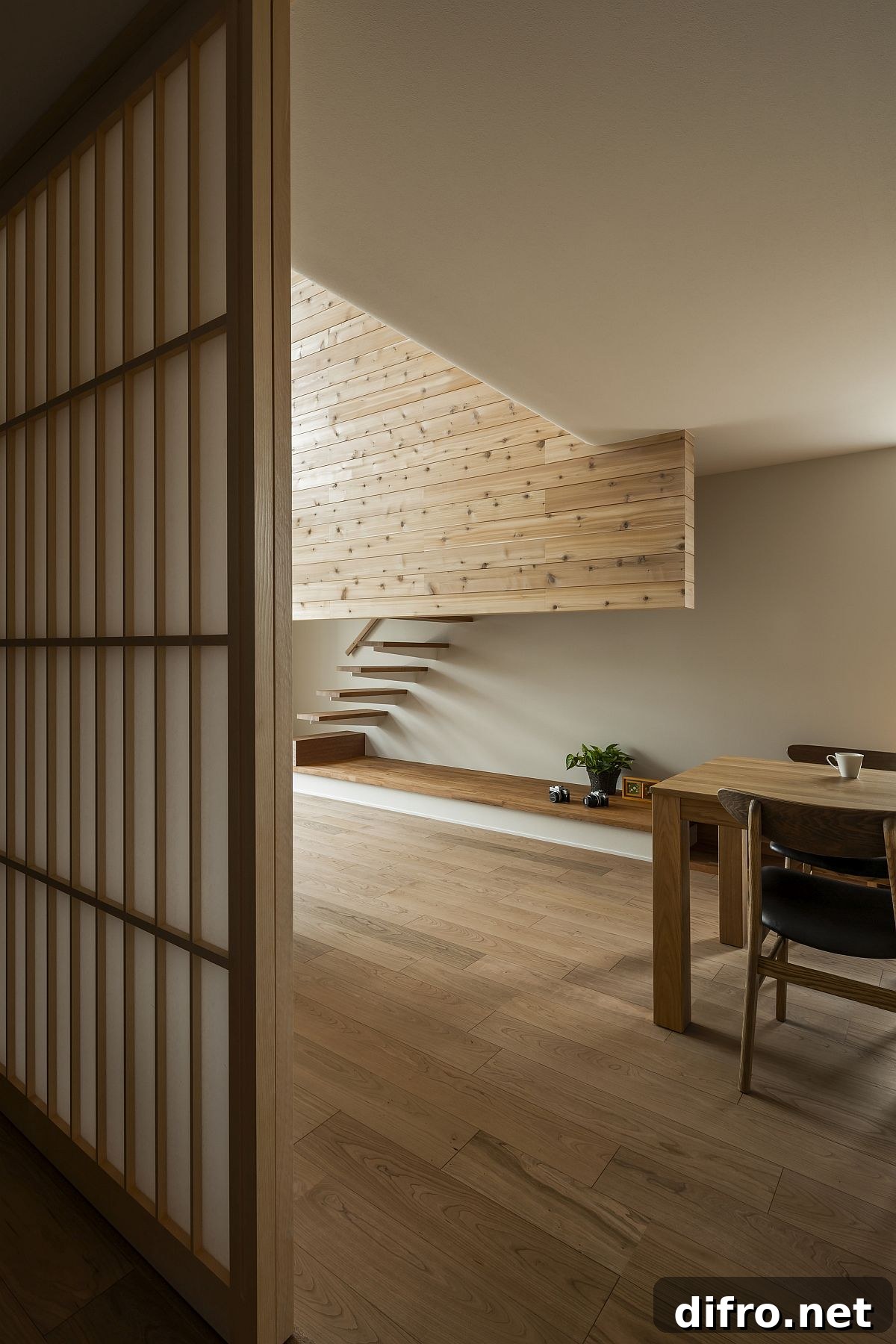
Beyond aesthetics, the house’s orientation and careful placement of windows harness natural light and breezes to support passive heating and cooling. In summer the interiors remain noticeably cooler than outdoor temperatures; in winter the configuration captures and retains warmth more effectively than a purely sealed form. These passive design strategies contribute to a more energy-efficient home while reinforcing the building’s comfortable, human scale.
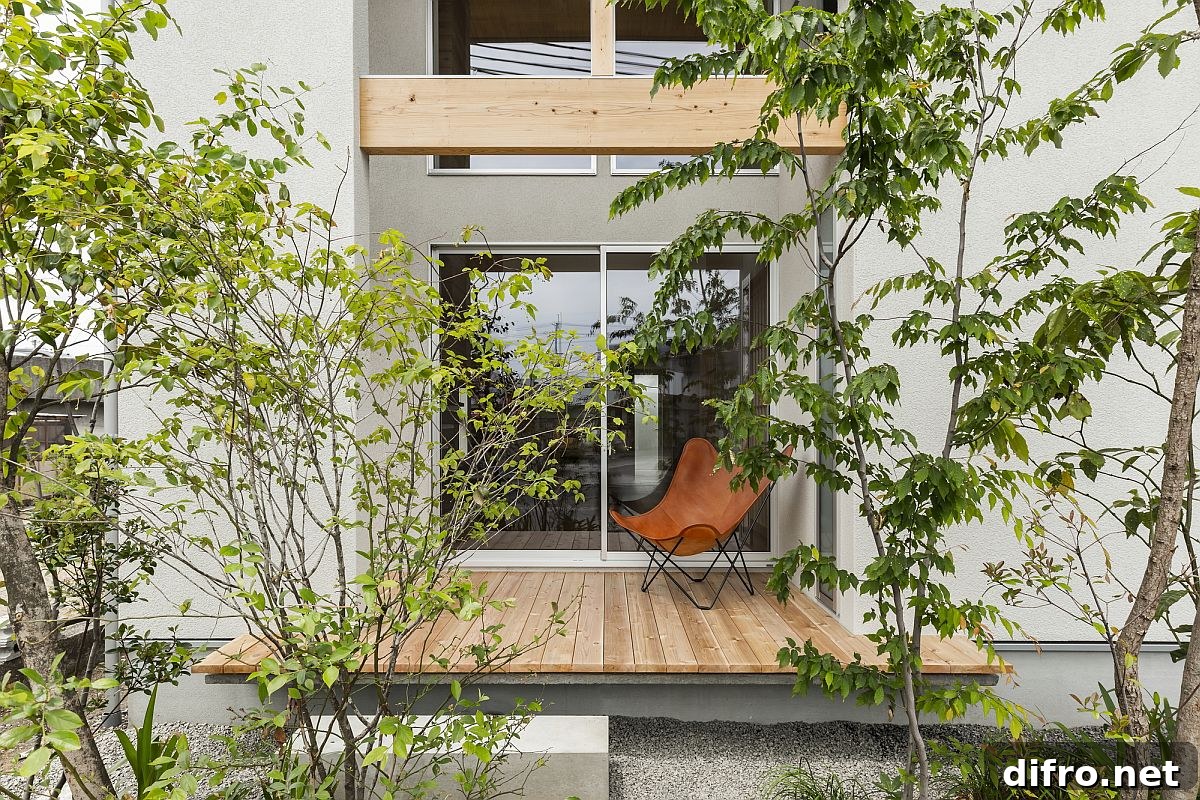
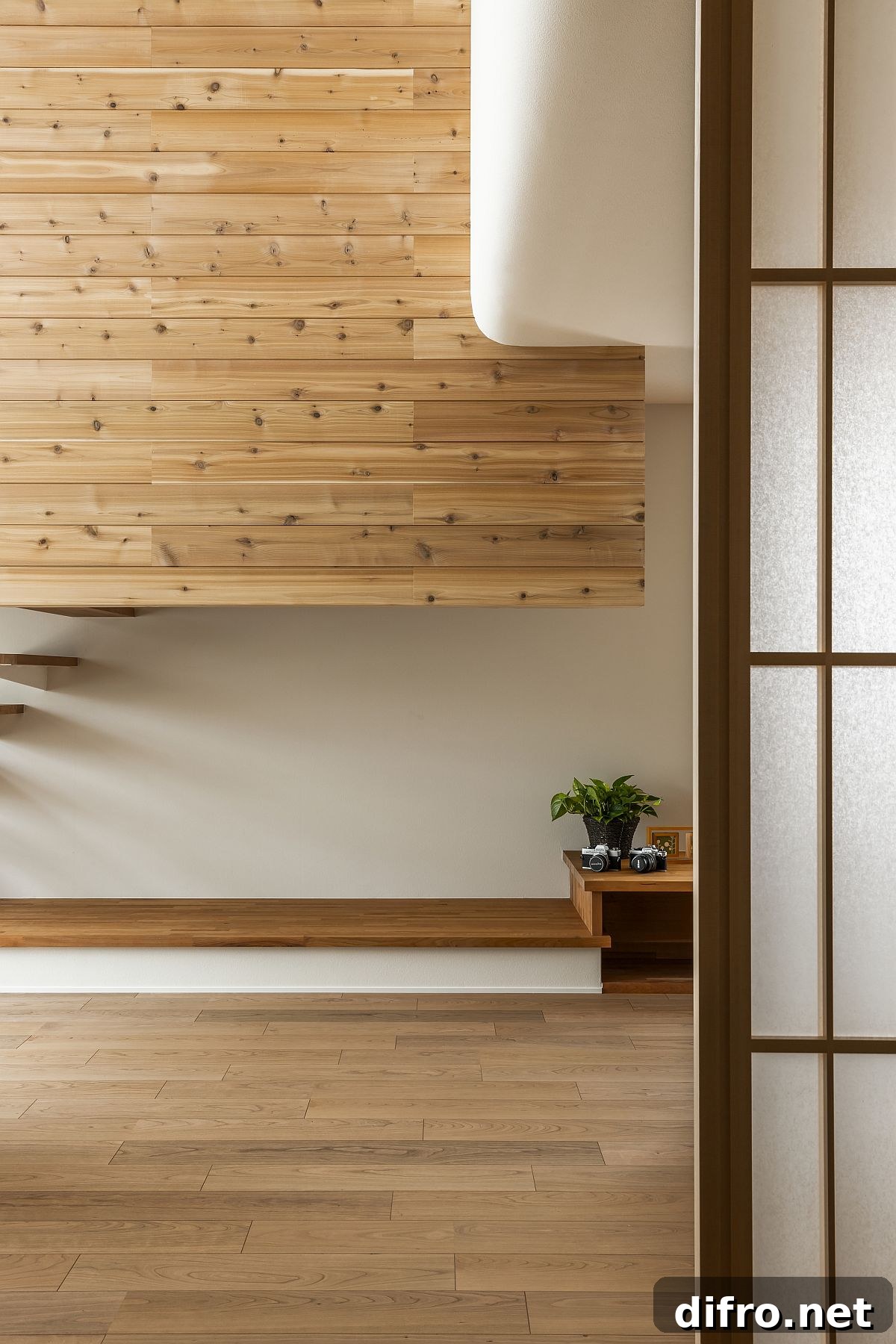
The interiors also respect tradition while embracing modernity. Screens and other Japanese design elements are woven into the contemporary plan, creating moments of privacy and framed views. Walls draped in wood bring warmth and texture, contrasting with clean white surfaces to produce a calm, elegant environment. A compact wooden deck tucked among the greenery provides an immediate outdoor retreat, extending the living space and strengthening the connection to the landscape.
The Mushono House demonstrates how careful siting, a restrained material palette and thoughtful spatial organization can produce a comfortable, energy-conscious family home. Its blend of double-height communal space, mezzanine intimacy and subtle references to Japanese tradition creates a residence that feels both contemporary and timeless. Photography: Yuta Yamada.